EP4545574A1 - Polymer, elektrodenfolie und batteriezelle, batterie und elektrische vorrichtung im zusammenhang damit - Google Patents
Polymer, elektrodenfolie und batteriezelle, batterie und elektrische vorrichtung im zusammenhang damit Download PDFInfo
- Publication number
- EP4545574A1 EP4545574A1 EP23915360.4A EP23915360A EP4545574A1 EP 4545574 A1 EP4545574 A1 EP 4545574A1 EP 23915360 A EP23915360 A EP 23915360A EP 4545574 A1 EP4545574 A1 EP 4545574A1
- Authority
- EP
- European Patent Office
- Prior art keywords
- polymer
- positive electrode
- electrode plate
- active material
- fluoropolymer
- Prior art date
- Legal status (The legal status is an assumption and is not a legal conclusion. Google has not performed a legal analysis and makes no representation as to the accuracy of the status listed.)
- Pending
Links
Images

Classifications
-
- C—CHEMISTRY; METALLURGY
- C09—DYES; PAINTS; POLISHES; NATURAL RESINS; ADHESIVES; COMPOSITIONS NOT OTHERWISE PROVIDED FOR; APPLICATIONS OF MATERIALS NOT OTHERWISE PROVIDED FOR
- C09D—COATING COMPOSITIONS, e.g. PAINTS, VARNISHES OR LACQUERS; FILLING PASTES; CHEMICAL PAINT OR INK REMOVERS; INKS; CORRECTING FLUIDS; WOODSTAINS; PASTES OR SOLIDS FOR COLOURING OR PRINTING; USE OF MATERIALS THEREFOR
- C09D127/00—Coating compositions based on homopolymers or copolymers of compounds having one or more unsaturated aliphatic radicals, each having only one carbon-to-carbon double bond, and at least one being terminated by a halogen; Coating compositions based on derivatives of such polymers
- C09D127/02—Coating compositions based on homopolymers or copolymers of compounds having one or more unsaturated aliphatic radicals, each having only one carbon-to-carbon double bond, and at least one being terminated by a halogen; Coating compositions based on derivatives of such polymers not modified by chemical after-treatment
- C09D127/12—Coating compositions based on homopolymers or copolymers of compounds having one or more unsaturated aliphatic radicals, each having only one carbon-to-carbon double bond, and at least one being terminated by a halogen; Coating compositions based on derivatives of such polymers not modified by chemical after-treatment containing fluorine atoms
- C09D127/16—Homopolymers or copolymers of vinylidene fluoride
-
- C—CHEMISTRY; METALLURGY
- C08—ORGANIC MACROMOLECULAR COMPOUNDS; THEIR PREPARATION OR CHEMICAL WORKING-UP; COMPOSITIONS BASED THEREON
- C08F—MACROMOLECULAR COMPOUNDS OBTAINED BY REACTIONS ONLY INVOLVING CARBON-TO-CARBON UNSATURATED BONDS
- C08F210/00—Copolymers of unsaturated aliphatic hydrocarbons having only one carbon-to-carbon double bond
- C08F210/02—Ethene
-
- C—CHEMISTRY; METALLURGY
- C08—ORGANIC MACROMOLECULAR COMPOUNDS; THEIR PREPARATION OR CHEMICAL WORKING-UP; COMPOSITIONS BASED THEREON
- C08F—MACROMOLECULAR COMPOUNDS OBTAINED BY REACTIONS ONLY INVOLVING CARBON-TO-CARBON UNSATURATED BONDS
- C08F214/00—Copolymers of compounds having one or more unsaturated aliphatic radicals, each having only one carbon-to-carbon double bond, and at least one being terminated by a halogen
- C08F214/18—Monomers containing fluorine
- C08F214/22—Vinylidene fluoride
- C08F214/225—Vinylidene fluoride with non-fluorinated comonomers
-
- C—CHEMISTRY; METALLURGY
- C08—ORGANIC MACROMOLECULAR COMPOUNDS; THEIR PREPARATION OR CHEMICAL WORKING-UP; COMPOSITIONS BASED THEREON
- C08F—MACROMOLECULAR COMPOUNDS OBTAINED BY REACTIONS ONLY INVOLVING CARBON-TO-CARBON UNSATURATED BONDS
- C08F214/00—Copolymers of compounds having one or more unsaturated aliphatic radicals, each having only one carbon-to-carbon double bond, and at least one being terminated by a halogen
- C08F214/18—Monomers containing fluorine
- C08F214/26—Tetrafluoroethene
-
- C—CHEMISTRY; METALLURGY
- C08—ORGANIC MACROMOLECULAR COMPOUNDS; THEIR PREPARATION OR CHEMICAL WORKING-UP; COMPOSITIONS BASED THEREON
- C08F—MACROMOLECULAR COMPOUNDS OBTAINED BY REACTIONS ONLY INVOLVING CARBON-TO-CARBON UNSATURATED BONDS
- C08F214/00—Copolymers of compounds having one or more unsaturated aliphatic radicals, each having only one carbon-to-carbon double bond, and at least one being terminated by a halogen
- C08F214/18—Monomers containing fluorine
- C08F214/28—Hexyfluoropropene
-
- H—ELECTRICITY
- H01—ELECTRIC ELEMENTS
- H01M—PROCESSES OR MEANS, e.g. BATTERIES, FOR THE DIRECT CONVERSION OF CHEMICAL ENERGY INTO ELECTRICAL ENERGY
- H01M10/00—Secondary cells; Manufacture thereof
- H01M10/05—Accumulators with non-aqueous electrolyte
- H01M10/052—Li-accumulators
- H01M10/0525—Rocking-chair batteries, i.e. batteries with lithium insertion or intercalation in both electrodes; Lithium-ion batteries
-
- H—ELECTRICITY
- H01—ELECTRIC ELEMENTS
- H01M—PROCESSES OR MEANS, e.g. BATTERIES, FOR THE DIRECT CONVERSION OF CHEMICAL ENERGY INTO ELECTRICAL ENERGY
- H01M10/00—Secondary cells; Manufacture thereof
- H01M10/42—Methods or arrangements for servicing or maintenance of secondary cells or secondary half-cells
- H01M10/4235—Safety or regulating additives or arrangements in electrodes, separators or electrolyte
-
- H—ELECTRICITY
- H01—ELECTRIC ELEMENTS
- H01M—PROCESSES OR MEANS, e.g. BATTERIES, FOR THE DIRECT CONVERSION OF CHEMICAL ENERGY INTO ELECTRICAL ENERGY
- H01M4/00—Electrodes
- H01M4/02—Electrodes composed of, or comprising, active material
- H01M4/13—Electrodes for accumulators with non-aqueous electrolyte, e.g. for lithium-accumulators; Processes of manufacture thereof
-
- H—ELECTRICITY
- H01—ELECTRIC ELEMENTS
- H01M—PROCESSES OR MEANS, e.g. BATTERIES, FOR THE DIRECT CONVERSION OF CHEMICAL ENERGY INTO ELECTRICAL ENERGY
- H01M4/00—Electrodes
- H01M4/02—Electrodes composed of, or comprising, active material
- H01M4/62—Selection of inactive substances as ingredients for active masses, e.g. binders, fillers
- H01M4/621—Binders
- H01M4/622—Binders being polymers
- H01M4/623—Binders being polymers fluorinated polymers
-
- C—CHEMISTRY; METALLURGY
- C08—ORGANIC MACROMOLECULAR COMPOUNDS; THEIR PREPARATION OR CHEMICAL WORKING-UP; COMPOSITIONS BASED THEREON
- C08K—Use of inorganic or non-macromolecular organic substances as compounding ingredients
- C08K3/00—Use of inorganic substances as compounding ingredients
- C08K3/32—Phosphorus-containing compounds
- C08K2003/321—Phosphates
- C08K2003/324—Alkali metal phosphate
-
- C—CHEMISTRY; METALLURGY
- C08—ORGANIC MACROMOLECULAR COMPOUNDS; THEIR PREPARATION OR CHEMICAL WORKING-UP; COMPOSITIONS BASED THEREON
- C08K—Use of inorganic or non-macromolecular organic substances as compounding ingredients
- C08K3/00—Use of inorganic substances as compounding ingredients
- C08K3/32—Phosphorus-containing compounds
- C08K2003/321—Phosphates
- C08K2003/328—Phosphates of heavy metals
-
- C—CHEMISTRY; METALLURGY
- C08—ORGANIC MACROMOLECULAR COMPOUNDS; THEIR PREPARATION OR CHEMICAL WORKING-UP; COMPOSITIONS BASED THEREON
- C08K—Use of inorganic or non-macromolecular organic substances as compounding ingredients
- C08K3/00—Use of inorganic substances as compounding ingredients
- C08K3/02—Elements
- C08K3/04—Carbon
-
- C—CHEMISTRY; METALLURGY
- C08—ORGANIC MACROMOLECULAR COMPOUNDS; THEIR PREPARATION OR CHEMICAL WORKING-UP; COMPOSITIONS BASED THEREON
- C08L—COMPOSITIONS OF MACROMOLECULAR COMPOUNDS
- C08L2205/00—Polymer mixtures characterised by other features
- C08L2205/02—Polymer mixtures characterised by other features containing two or more polymers of the same C08L -group
- C08L2205/025—Polymer mixtures characterised by other features containing two or more polymers of the same C08L -group containing two or more polymers of the same hierarchy C08L, and differing only in parameters such as density, comonomer content, molecular weight, structure
-
- C—CHEMISTRY; METALLURGY
- C08—ORGANIC MACROMOLECULAR COMPOUNDS; THEIR PREPARATION OR CHEMICAL WORKING-UP; COMPOSITIONS BASED THEREON
- C08L—COMPOSITIONS OF MACROMOLECULAR COMPOUNDS
- C08L2205/00—Polymer mixtures characterised by other features
- C08L2205/03—Polymer mixtures characterised by other features containing three or more polymers in a blend
-
- H—ELECTRICITY
- H01—ELECTRIC ELEMENTS
- H01M—PROCESSES OR MEANS, e.g. BATTERIES, FOR THE DIRECT CONVERSION OF CHEMICAL ENERGY INTO ELECTRICAL ENERGY
- H01M4/00—Electrodes
- H01M4/02—Electrodes composed of, or comprising, active material
- H01M2004/026—Electrodes composed of, or comprising, active material characterised by the polarity
- H01M2004/027—Negative electrodes
-
- H—ELECTRICITY
- H01—ELECTRIC ELEMENTS
- H01M—PROCESSES OR MEANS, e.g. BATTERIES, FOR THE DIRECT CONVERSION OF CHEMICAL ENERGY INTO ELECTRICAL ENERGY
- H01M4/00—Electrodes
- H01M4/02—Electrodes composed of, or comprising, active material
- H01M2004/026—Electrodes composed of, or comprising, active material characterised by the polarity
- H01M2004/028—Positive electrodes
-
- Y—GENERAL TAGGING OF NEW TECHNOLOGICAL DEVELOPMENTS; GENERAL TAGGING OF CROSS-SECTIONAL TECHNOLOGIES SPANNING OVER SEVERAL SECTIONS OF THE IPC; TECHNICAL SUBJECTS COVERED BY FORMER USPC CROSS-REFERENCE ART COLLECTIONS [XRACs] AND DIGESTS
- Y02—TECHNOLOGIES OR APPLICATIONS FOR MITIGATION OR ADAPTATION AGAINST CLIMATE CHANGE
- Y02E—REDUCTION OF GREENHOUSE GAS [GHG] EMISSIONS, RELATED TO ENERGY GENERATION, TRANSMISSION OR DISTRIBUTION
- Y02E60/00—Enabling technologies; Technologies with a potential or indirect contribution to GHG emissions mitigation
- Y02E60/10—Energy storage using batteries
Definitions
- the present application relates to the field of battery, in particular to a polymer, an electrode plate and an associated battery cell, battery and electrical device.
- Battery cells have the characteristics of high capacity and long life, so they are widely used in electronic devices, such as mobile phones, laptops, electrical bicycles, electric vehicles, electric aircraft, electric ships, electric toy cars, electric toy ships, electric toy aircraft and electric tools.
- the performance of the electrode plate inside the battery cell is usually optimized and improved.
- the poor interfacial properties of the active materials in the current electrode plate results in poor cycling performance and storage performance of battery cells when the electrode plate is applied to the battery cells.
- the purpose of the present application is to provide a polymer, an electrode plate and an associated battery cell, battery and electrical device.
- a first aspect of the present application provides a polymer for use in a battery cell, comprising a fluoropolymer, wherein, the fluoropolymer has a crystallinity of X C % as measured by differential scanning calorimetry, 0 ⁇ X C ⁇ 30; and the fluoropolymer has a melting temperature of Tm, in °C, 0 ⁇ Tm ⁇ 140.
- the polymer of the present application has relatively low crystallinity and melting temperature, so that the arrangement of molecular chains tends to be loose, the interaction between molecular chains is weaker, the adjacent molecular chains are more likely to become disentangled, and the chain segment movement is realized through intermolecular internal rotation to form a molecular chain structure with high flexibility.
- the electrode plate includes an active material layer containing a polymer and an active material.
- the solvent in the electrolytic solution can rapidly diffuse among the molecular chains of the polymer and be encapsulated by the molecular chain, forming an in-situ gel on the surface of the active material and attaching to the surface of the active material to play a protective role for the active material, thus closely linking the active material and the electrolytic solution, improving the solid-liquid interfacial properties, reducing the side reactions between the active material and the electrolytic solution, and improving the cycling performance and storage performance of the battery cell.
- a glass transition temperature of the fluoropolymer is Tg in °C, - 150 ⁇ Tg ⁇ 60.
- the glass transition temperature of polymer is relatively low, the chain segment flexibility of molecular chains is better, and adjacent molecular chains are more likely to become disentangled, and it is easier to form an in-situ gel on the surface of the active material to improve the solid-liquid interfacial properties.
- the fluoropolymer comprises at least one of structural units shown in Formula (I) to Formula (III),
- R 1 , R 2 , R 3 and R 4 each independently comprise a hydrogen atom, a fluorine atom, a chlorine atom, substituted or unsubstituted C1-C3 alkyl with a substituent comprising a fluorine atom, or substituted or unsubstituted C1-C3 alkoxy with a substituent comprising a fluorine atom, and at least one of R 1 , R 2 , R 3 and R 4 comprises a fluorine atom.
- p is selected from a positive integer selected from 1 to 3.
- n is selected from a positive integer selected from 1000 to 30000.
- R 1 , R 2 , R 3 and R 4 each independently comprise a hydrogen atom, a fluorine atom, a chlorine atom, substituted or unsubstituted C1-C2 alkyl, or substituted or unsubstituted C1-C2 alkoxy; further optionally, R 1 , R 2 , R 3 and R 4 each independently comprise a hydrogen atom, a fluorine atom, a chlorine atom, methyl, fluorinated methyl, methoxy or a perfluoromethoxy.
- the fluoropolymer comprises at least one of structural units shown in Formula (I-1) to Formula (I-11),
- the fluoropolymer further comprises at least one of structural units shown in Formula (II-1) to Formula (II-5),
- the fluoropolymer further comprises at least one of structural units shown in Formula (III-1) to Formula (III-3),
- n is selected from a positive integer selected from 5000 to 20000; and/or the fluoropolymer has a molecular weight of from 2 ⁇ 10 5 g/mol to 1.5 ⁇ 10 6 g/mol.
- the molecular weight of the polymer is within the above range, it can ensure that the polymer exhibits a certain solubility in the electrolytic solution while not being completely dissolved and dispersed by the electrolytic solution, which is beneficial for regulating the distribution and dispersion of the polymer on the surface of the active material.
- the polymer satisfies: 5 ⁇ m/n ⁇ 1000, in which n represents a mass of the polymer, in grams, and m represents a mass, in grams, of a first substance that is obtained by: adding the polymer to a first solvent at a first temperature to form a polymer system, allowing the polymer system to stand for 8 hours at the first temperature and for ⁇ 24 hours at a second temperature; and then filtering the polymer system through a 200-mesh screen to obtain remains on the screen as the first substance, wherein the first temperature is higher than the second temperature.
- the polymer can form an in-situ gel in the first solvent after two stages of standing treatment, and the solvent molecules can be locked inside the polymer to reduce their overflow content from the screen.
- the polymer meets the above conditions, the polymer is more likely to form an in-situ gel in the first solvent, which locks the solvent molecules inside the polymer and improves the liquid retention capacity, and further improve the cycling performance and storage performance of the battery cell.
- a second aspect of the present application provides a positive electrode plate, comprising a positive electrode current collector and a positive electrode active material layer disposed on the positive electrode current collector, wherein the positive electrode active material layer comprises a positive electrode active material and a polymer, and the polymer comprises a polymer as described in any embodiment of the first aspect of the present application.
- a third aspect of the present application provides a negative electrode plate, comprising a negative electrode current collector and a negative electrode active material layer disposed on the negative electrode current collector, wherein the negative electrode active material layer comprises a negative electrode active material and a polymer, and the polymer comprises a polymer as described in any embodiment of the first aspect of the present application.
- a fourth aspect of the present application provides a battery cell comprising a positive electrode plate and a negative electrode plate, wherein the positive electrode plate comprises a positive electrode plate as described in any embodiment of the second aspect of the present application; and/or the negative electrode plate comprises a negative electrode plate as described in any embodiment of the third aspect of the present application.
- a fifth aspect of the present application provides a battery, comprising a battery cell as described in the fourth aspect of the present application.
- a sixth aspect of the application provides an electrical device comprising a battery as described in the fifth aspect of the present application.
- ranges are defined in the form of lower and upper limits, and a given range is defined by selection of a lower limit and an upper limit that define boundary of the particular range. Ranges defined in this manner may or may not be inclusive of the endpoints, and may be arbitrarily combined. That is, any lower limit may be combined with any upper limit to form a range. For example, if the ranges of 60-120 and 80-110 are listed for a particular parameter, it is to be understood that the ranges of 60-110 and 80-120 are also contemplated.
- the numerical range "a-b" represents an abbreviated representation of any combination of real numbers between a and b, where both a and b are real numbers.
- the numerical range "0-5" means that all real numbers between "0-5" have been listed herein, and the range "0-5" is just an abbreviated representation of the combination of these numerical values.
- a parameter is expressed as an integer greater than or equal to 2, it is equivalent to disclose that the parameter is, for example, an integer of 2, 3, 4, 5, 6, 7, 8, 9, 10, 11, 12, and the like.
- the method includes steps (a) and (b), indicating that the method may include steps (a) and (b) performed in sequence, or that the method may include steps (b) and (a) performed in sequence.
- step (c) indicates that step (c) may be added to the method in any order.
- the method may comprises steps (a), (b) and (c), steps (a), (c) and (b), or steps (c), (a) and (b), and the like.
- transition phases “comprise/comprising”, “include/including”, and “contain/containing” mentioned in the present application mean that it is drafted in an open mode, or it may also mean a close mode.
- the transition phases “comprise/comprising”, “include/including”, and “contain/containing” may mean that other components not listed may also be included or contained, or only the listed components may be included or contained.
- the term "or” is inclusive.
- the phrase “A or B” means “A, B, or both A and B”. More specifically, any of the following conditions meets “A or B”: A is true (or present) and B is false (or absent); A is false (or absent) and B is true (or present); or both A and B are true (or present).
- the terms “multiple” and “more than one” mean two or more, unless otherwise stated and specifically limited.
- alkyl covers both linear and branched alkyl.
- alkyl may be C1-C5 alkyl, C1-C4 alkyl, C1-C3 alkyl, C1-C2 alkyl.
- alkyl includes methyl, ethyl, propyl, isopropyl, butyl, isobutyl, etc.
- alkyl may be optionally substituted. When substituted, the substituent includes a fluorine atom.
- alkoxy refers to a group in which alkyl is connected to an oxygen atom by a single bond.
- alkoxy may be C1-C5 alkoxy, C1-C3 alkoxy, C1-C2 alkoxy.
- alkoxy may comprise methoxy, ethoxy, propoxy.
- alkoxy may be optionally substituted.
- halogen atom means a fluorine atom, a chlorine atom, a bromine atom, etc.
- hydrogen refers to 1H(hydrogen, H), 2H(deuterium, D) or 3H(tritium, T). In each embodiment, “hydrogen” may be 1H(hydrogen, H).
- a battery cell includes a positive electrode plate, a negative electrode plate, and an electrolytic solution.
- the positive electrode plate as an example, there is a solid-liquid contact interface between the positive electrode active material contained in the positive electrode plate and the electrolytic solution, in the interface the positive electrode active material may have a side reaction with the electrolytic solution, resulting in the loss of the positive electrode active material and a decrease in the cycling performance of the battery cell, and the side reaction may produce products that are not conducive to the cycle of the battery cell, thereby deteriorating the storage performance of the battery cell.
- the present application provides a polymer.
- the polymer is used in a battery cell and comprises a fluoropolymer, wherein the fluoropolymer has a crystallinity of X C % as measured by differential scanning calorimetry, 0 ⁇ X C ⁇ 30; and the fluoropolymer has a melting temperature of Tm, in °C, 0 ⁇ Tm ⁇ 140.
- Crystallization refers to a process in which atoms, ions, or molecules in a material are arranged in a certain spatial order to form an ordered structure, and the conformation of the polymer in crystallization is determined by both intramolecular and intermolecular factors, and intermolecular forces will affect the stacking density between molecular chains.
- Crystallinity XC% is used to characterize the degree of crystallization of a material, which can be measured using a differential scanning calorimetry DSC.
- test procedure is as follows: 0.5g to 0.8g of the sample was placed in a carrier crucible, heated and cooled under nitrogen atmosphere, and heated at a rate of 10°C/min from an initial temperature of 20°C lower than the material's intrinsic Tg to the cutoff temperature of 20°C higher than the material's intrinsic Tm, and the actual glass transition temperature Tg and melting temperature Tm of the material were determined based on the heat absorption peak and exothermic peak or transition point of the material during the process.
- Fluorine polymers commonly used in secondary batteries in the art have relatively high crystallinity and melting temperatures, which provide the polymer with good resistance to liquid phase electrolytes, thus effectively providing adhesive or rebound inhibition effect of active materials for a long time during the use of the battery.
- the fluorine polymer used in the present application has relatively low crystallinity and melting temperature, so that the arrangement of molecular chains tends to be loose, the interaction between molecular chains is weaker, the adjacent molecular chains are more likely to become disentangled, and the chain segment movement is realized through intermolecular internal rotation to form a molecular chain structure with high flexibility.
- the electrode plate When the polymer is applied to the electrode plate of the battery cell, the electrode plate includes an active material layer containing a polymer and an active material. Since the polymer and the electrolytic solution in the battery cell have a good affinity, the solvent in the electrolytic solution can rapidly diffuse among the molecular chains of the polymer and be encapsulated by the molecular chain, forming an in-situ gel on the surface of the active material and attaching to the surface of the active material to play a protective role for the active material, thus closely linking the active material and the electrolytic solution, improving the solid-liquid interfacial properties, reducing the side reactions between the active material and the electrolytic solution, and improving the cycling performance and storage performance of the battery cell.
- the crystallinity X C % of the fluoropolymer as measured by differential scanning calorimetry, may be 5%, 10%, 15%, 20%, 25%, 30%, or a range consisting of any two of the above values.
- the melting temperature of the fluoropolymer may be 10°C, 20°C, 50°C, 70°C, 90°C, 100°C, 120°C, 140°C or a range consisting of any two of the above values.
- the glass transition temperature of the fluoropolymer is Tg in °C, - 150 ⁇ Tg ⁇ 60.
- the glass transition temperature is the temperature at which the chain segments of the polymer transition from freezing to movement, and the glass transition temperature has an effect on the flexibility of the polymer molecular chain.
- the lower the glass transition temperature the better the flexibility of the polymer molecular chain at room temperature, and the higher the glass transition temperature, the worse the flexibility of the molecular chain at room temperature.
- the glass transition temperature can be measured by differential scanning calorimetry DSC.
- the glass transition temperature of polymer is relatively low, the chain segment flexibility of molecular chains is better, and adjacent molecular chains are more likely to become disentangled.
- the glass transition temperature of the fluoropolymer may be -150 °C, -140 °C, -120 °C, -100 °C., -80 °C, - 60 °C, -30 °C, 0 °C, 30 °C, 60 °C, or a range consisting of any two of the above values.
- the fluoropolymer comprises at least one of structural units shown in Formula (I) to Formula (III),
- R 1 , R 2 , R 3 and R 4 each independently comprise a hydrogen atom, a fluorine atom, a chlorine atom, substituted or unsubstituted C1-C2 alkyl, or substituted or unsubstituted C1-C2 alkoxy; and at least one of R 1 , R 2 , R 3 and R 4 comprises a fluorine atom.
- R 1 , R 2 , R 3 and R 4 each independently comprise a hydrogen atom, a fluorine atom, a chlorine atom, methyl, fluorinated methyl, methoxy or a perfluoromethoxy.
- the fluoropolymer comprises at least one of structural units shown in Formula (I-1) to Formula (I-11),
- the fluoropolymer comprises at least two of structural units shown in formula (I-1) to formula (I-11).
- the fluoropolymer further comprises at least one of structural units shown in Formula (II-1) to Formula (II-5),
- the fluoropolymer further comprises at least one of structural units shown in Formula (III-1) to Formula (III-3),
- the fluoropolymer comprises one or more of polyperfluoroethylene PTFE, polyvinylidene fluoride PVDF, perfluoroethylene propylene copolymer FEP, perfluoroalkoxy polymer PFA, perfluoropolyether PFPE, polyvinylidene fluoride-hexafluoropropylene copolymer PVDF-HFP, polyvinylidene fluoride-trifluoroethylene copolymer PVDF-TrFE, and perfluoro(1-butenyl vinyl ether) polymer (CYTOP).
- polyperfluoroethylene PTFE polyperfluoroethylene PTFE
- polyvinylidene fluoride PVDF polyvinylidene fluoride
- FEP perfluoroethylene propylene copolymer
- perfluoroalkoxy polymer PFA perfluoropolyether PFPE
- the fluoropolymer comprises one or more of polyperfluoroethylene PTFE, polyvinylidene fluoride PVDF, perfluoroethylene propylene copolymer FEP, polyvinylidene fluoride-hexafluoropropylene copolymer PVDF-HFP, and polyvinylidene fluoride-trifluoroethylene copolymer PVDF-TrFE.
- the above fluoropolymer may be derived from one or more of the following monomers: fluorinated cyclohexane, fluoroethylene, 1,2-difluoroethylene, vinylidene fluoride, trifluoroethylene, trifluoroethylene chloride, tetrafluoroethylene, hexafluoropropylene, 3,3,3-trifluoropropylene, trifluoropropylene, tetrafluoropropylene, and pentafluoropropylene, and the like.
- the above fluoropolymer may be derived from at least two of the following monomers: fluorinated cyclohexane, fluoroethylene, 1,2-difluoroethylene, vinylidene fluoride, trifluoroethylene, trifluoroethylene chloride, tetrafluoroethylene, hexafluoropropylene, 3,3,3-trifluoropropylene, trifluoropropylene, tetrafluoropropylene, and pentafluoropropylene, and the like.
- the monomers used in the above fluoropolymer are all short-chain monomers, which are favorable for polymerization to form a linear structure or a short branched chain structure, and the degree of entanglement of this type of structure is low, which is favorable for improving the flexibility of the molecular chain, and the molecular chain can be fully stretched out in an electrolytic solution, which further improves the interfacial properties of the active material.
- the groups of the polymer of the present application can be detected by infrared spectrophotometry IR. Specifically, the polymer is tested with a Thermo Nicolet Nexus 670 Attenuated Total internal Reflectance Fourier Transform Infraredspectroscopy (FTIR-ATR), and then tested with reference to the standard GB/T6040-2002, the test range: ATR method 600-4000cm -1 ; repeatability: ⁇ 2cm -1 ; resolution: better than 4cm -1 ; transmission depth of 0.2-0.6 ⁇ m.
- FTIR-ATR Thermo Nicolet Nexus 670 Attenuated Total internal Reflectance Fourier Transform Infraredspectroscopy
- the structure of the polymer of the present application can be tested by nuclear magnetic resonance NMR. Specifically, 1H NMR and 13C NMR were performed on a Varian Mercury Plus-400 NMR Nuclear Magnetic Resonance Spectrometer at a testing temperature of 20 °C, with TMS as an internal standard, CDCl 3 as a solvent, and a proton resonance frequency of 400 MHz.
- n is selected from a positive integer selected from 5000 to 20000.
- the polymer has a molecular weight of is from 2 ⁇ 10 5 g/mol to 1.5 ⁇ 10 6 g/mol.
- the molecular weight of the polymer When the molecular weight of the polymer is within the above range, it can ensure that the polymer exhibits a certain solubility in the electrolytic solution while not being completely dissolved and dispersed by the electrolytic solution, which is beneficial for regulating the distribution and dispersion of the polymer on the surface of the active material. Furthermore, it can further enhance the mobility among the molecular chains of polymer, with a relatively weak intermolecular force, which is conducive to the solvent molecules in the electrolytic solution to unravel the molecular chains and enter the space among the molecular chains, and then be encapsulated by the molecular chains. This, in turn, facilitates the active ions to pass through the solvent into the active material, achieving smooth and rapid migration of the active ions.
- the molecular weight of the polymer may be 2 ⁇ 10 5 g/mol, 5 ⁇ 10 5 g/mol, 8 ⁇ 10 5 g/mol, 1 ⁇ 10 6 g/mol, 1.5 ⁇ 10 6 g/mol, or a range consisting of any two of the above values.
- the molecular weight of the polymer has a well known meaning in the art and can be determined by the equipment and methods commonly used in the art. It can be tested by gel permeation chromatography GPC. The specific test steps are as follows: An appropriate amount of the sample to be tested (the sample concentration is guaranteed to be 8%-12% shading) was taken, 20ml deionized water was added, and at the same time sonicated for 5min (53KHz/120W) to ensure that the sample is completely dispersed, and then the sample was determined according to the GB/T19077-2016/ISO 13320:2009 standard.
- a multi-angle laser light scatterer MALLS was used, specifically a GPC and Dawn Heleos II multi-angle laser light scatterer, Optilab T-rEX refractive index (RI) detector combined with Visco Star II viscometer (Wyatt Technology Corporation, USA). The test was carried out at 30° with THF as a mobile phase at a flow rate of 1.0 ml/min.
- the commercial software ASTRA6 was used to process the SEC-SAMLL data to obtain molecular weight parameters.
- the polymer can further improve the cycling performance and storage performance of the battery cell when it further meets one or more of the following conditions.
- the first substance is obtained by steps of adding the polymer to a first solvent at a first temperature to form a polymer system, allowing the polymer system to stand for 8 hours at the first temperature and for ⁇ 24 hours at a second temperature; partially transforming in-situ the polymer system into a gel-state material after undergoing two stages of standing treatment, and then filtering the polymer system through a 200-mesh screen to obtain remains on the screen as the first substance, wherein the first temperature is higher than the second temperature.
- the polymer and the first substance satisfy: 5 ⁇ m/n ⁇ 1000, optionally, 10 ⁇ m/n ⁇ 1000; further optionally, 10 ⁇ m/n ⁇ 50, in which n represents a mass of the polymer, in grams, and m represents a mass of the first substance, in grams.
- m/n may be 5, 10, 20, 25, 28, 30, 32, 35, 40, 50, 80, 100, 200, 500, 1000, or a range consisting of any two of the above values.
- the ratio of the mass content of the polymer to the mass content of the first solvent ranges from 1:100 to 1:10, such as, 3:50, based on the mass of the polymer system.
- the first solvent is the same or similar to the solvent of the electrolytic solution, and the first solvent may include a carbonate solvent.
- the carbonate solvent comprises a cyclic carbonate solvent and/or a linear carbonate solvent.
- the cyclic carbonate solvent comprises one or more of ethylene carbonate EC, vinylene carbonate VC, fluoroethylene carbonate FEC, difluoroethylene carbonate DFEC, vinyl ethylene carbonate VEC, and dicaprylyl carbonate CC.
- the linear carbonate solvent comprises one or more of dimethyl carbonate DMC, diethyl carbonate DEC, methyl ethyl carbonate EMC, diphenyl carbonate DPC, methyl allyl carbonate MAC, and polycarbonate VA.
- the first solvent may also simultaneously comprise lithium salts and electrolytic solution additives, such as lithium hexafluorophosphate, vinylene carbonate VC, fluoroethylene carbonate FEC.
- lithium salts and electrolytic solution additives such as lithium hexafluorophosphate, vinylene carbonate VC, fluoroethylene carbonate FEC.
- m/n is also referred to as a precipitation value, which characterizes the ability of the polymer and solvent to transform into a gel-state material.
- the first substance mainly comprises the gel-state material formed by the polymer and the first solvent, in which the molecular structure of the polymer basically does not change.
- the first substance is dried at 80°C for 12 hours to remove the first solvent from the first substance, and then tested by infrared spectrophotometry IR or nuclear magnetic resonance NMR spectroscopy.
- the main component of the first substance after drying is the polymer as described above.
- the glass transition temperature of the polymer ⁇ the first temperature ⁇ the melting temperature of the polymer, and the first temperature is the normal operating temperature of the battery cell.
- the first temperature is higher than the second temperature, and the first temperature and the second temperature can be set as the safe operating temperature range of the battery cell.
- the first temperature may be from 60°C to 80°C, such as 70°C
- the second temperature may be from -30°C to 30°C, such as 25°C. That is, the first temperature is the higher operating temperature of the battery cell, and the second temperature is approximately room temperature or the lower temperature.
- This application achieves the stretching of the polymer molecular chains within the safe operating temperature range of the battery cell by increasing the temperature, promoting the mutual attraction and physical binding between the polymer molecular chains and the solvent.
- the activity of the polymer molecular chain segments decreases, maintaining attachment to the surface of the active material and locking the electrolytic solution in the space environment of the polymer, forming a gel-like state in-situ, while protecting the interface of the active material and maintaining normal lithium-ion transmission, thereby establishing interface protection, reducing surface side reactions, and improving cycling performance and storage performance.
- the present application provides a positive electrode plate, comprising a positive electrode current collector and a positive electrode active material layer disposed on the positive electrode current collector, wherein the positive electrode active material layer comprises a positive electrode active material and a polymer, and the polymer comprises a polymer as described in any embodiment of the first aspect of the present application.
- the positive electrode current collector has two opposite surfaces in its thickness direction, and the positive electrode active material layer is disposed on either or both of the two opposite surfaces of the positive electrode current collector.
- the electrode plate can be formed by applying a slurry on a current collector, followed by drying and cold-pressing.
- the electrode plate is derived from a battery cell, by disassembling the battery cell, taking out the electrode plate infiltrated in an electrolytic solution in the battery cell, and placing the electrode plate infiltrated in the electrolytic solution under the condition of 100°C for vacuum drying for 12 hours to obtain the electrode plate, and the electrode plate is used for electrode plate tests such as test for liquid absorption rate.
- the polymer can be synthesized by emulsion polymerization, suspension polymerization, bulk polymerization, solution polymerization and the like.
- the polymer is derived from a battery cell, by disassembling the battery cell, taking out the electrode plate infiltrated in an electrolytic solution in the battery cell, peeling off the active material of the obtained electrode plate by an external force to form a powder sample, adding the powder sample to DMC, stirring at 80°C for 8 hours @ 500 rpm, then allowing to stand at room temperature for 10 minutes after the stirring is completed, and taking the supernatant at 80°C, and drying for 12 hours to obtain the polymer.
- the resulting polymer may be mixed with a little lithium salt, but the salt basically does not affect the infrared test and precipitation value test; In order to ensure the accuracy of tests on the polymer, flushing with DMC at room temperature may be used to remove the lithium salt.
- the actual compaction density P 1 refers to the ratio of the mass to the thickness of the positive electrode active material layer per unit area in the electrode plate.
- the actual compaction density is influenced by the force of rolling after coating the electrode plate, and expressed in g/cm 3 .
- the sample cup has a volume of 3.5 cm 3 , and helium is used as analytical gas.
- the porosity ⁇ of the active material layer can be calculated by using the actual compaction density and the true compaction density.
- Formula (2) can characterize the speed at which a certain point of an electrode plate basically completely absorbs the liquid (such as electrolytic solution) in capillary tube per unit time.
- a certain point of the electrode plate refers to a region in which the electrode plate has a certain area which corresponds to the cross-sectional area of the capillary tube.
- a method for measuring the liquid absorption rate of an electrode plate includes the following steps:
- the capillary tube has a capillary channel to enable the capillary tube to directly suck the electrolytic solution through capillary action, without the need for an external drive unit to provide the sucking force.
- the suction amount can be controlled more accurately;
- the electrode plate to be measured absorbs the electrolytic solution through its own capillary action only when the electrode plate is in contact with the capillary tube, the electrode plate sucks the electrolytic solution out from the capillary tube, and when the electrode plate is out of contact, the electrolytic solution in the capillary tube no longer flows out, so that the reduced amount of electrolytic solution in the capillary tube during the contact can accurately reflect the corresponding volume of electrolytic solution absorbed by the electrode plate, thereby further improving the accuracy of test results and realizing quantitative calculation of the absorption rate of electrolytic solution absorbed by the electrode plate.
- Formula (3) represents a liquid absorption rate of an electrode plate at a porosity ⁇ , and may be used to characterize the liquid absorption rate of the electrode plate.
- the polymer in the present application is introduced during the preparation process of the active material layer, which can form a uniform high infiltration point inside the active material layer and uniformly improve infiltration performance of the active material layer, thereby increasing liquid absorption speed of the entire active material layer and thus improving cycle performance of a battery cell using the electrode plate.
- v/ ⁇ may be 1.20, 1.40, 1.80, 2.00, 2.50, 3.00, 3.50, 3.60, 3.80, 3.90, or a range consisting of any two of the above values.
- the polymer has a mass percentage content of A%, based on a mass of the positive electrode active material layer; wherein, 0.1 ⁇ A ⁇ 1.5.
- the mass percentage content of the polymer When the mass percentage content of the polymer is within the above range, it can significantly improve the interfacial properties of the positive electrode active material layer.
- the mass percentage content of the polymer may be 0.1%, 0.2%, 0.5%, 0.8%, 1.0%, 1.2%, 1.5%, or a range consisting of any two of the above values.
- the positive electrode active material layer comprises a positive electrode active material
- the positive electrode active material may be a positive electrode active material known in the art for battery cell.
- the positive electrode active material may comprise at least one of the following materials: a positive electrode active material having layered structure (for example, ternary material, lithium/sodium nickel oxide, lithium/sodium cobalt oxide, lithium/sodium manganese oxide, lithium/sodium-rich materials having layered structure and rock-salt phase layered structure), an olivine-type phosphate active material, and a positive electrode active material having spinel structure (for example, spinel lithium manganese oxide, spinel lithium nickel manganese oxide, lithium-rich spinel lithium manganese oxide and lithium nickel manganese oxide, and the like).
- a positive electrode active material having layered structure for example, ternary material, lithium/sodium nickel oxide, lithium/sodium cobalt oxide, lithium/sodium manganese oxide, lithium/sodium-rich materials having layered structure and rock-salt phase
- the positive electrode active material having layered structure has the general formula: Li x A y Ni a Co b Mn c M (1-a-b-c) Y z , wherein 0 ⁇ x ⁇ 2.1, 0 ⁇ y ⁇ 2.1, and 0.9 ⁇ x + y ⁇ 2.1; 0 ⁇ a ⁇ 1, 0 ⁇ b ⁇ 1, 0 ⁇ c ⁇ 1, and 0.1 ⁇ a + b + c ⁇ 1; 1.8 ⁇ z ⁇ 3.5;
- A is selected from one or more of Na, K, Mg;
- M is selected from one or more of B, Mg, Al, Si, P, S, Ca, Sc, Ti, V, Cr, Fe, Cu, Zn, Sr, Y, Zr, Nb, Mo, Cd, Sn, Sb, Te, Ba, Ta, W, Yb, La, Ce; and Y is selected from one or more of O and F.
- the positive electrode active material having layered structure may comprise one or more of lithium cobalt oxide (LCO), lithium nickel oxide (LNO), lithium manganese oxide (LMO), LiNi 1/3 Co 1/3 Mn 1/3 O 2 (NCM333), LiNi 0.8 Co 0.1 Mn 0.1 O 2 (NCM811) and LiNi 0.5 CO 0.2 Mn 0.3 O 2 (NCM523).
- LCO lithium cobalt oxide
- LNO lithium nickel oxide
- LMO lithium manganese oxide
- NCM333 LiNi 1/3 Co 1/3 Mn 1/3 O 2
- NCM811 LiNi 0.8 Co 0.1 Mn 0.1 O 2
- NCM523 LiNi 0.5 CO 0.2 Mn 0.3 O 2
- the olivine-type phosphate active material has the general formula: Li x A y Me a M b P 1-c X c Y z , wherein 0 ⁇ x ⁇ 1.3, 0 ⁇ y ⁇ 1.3, and 0.9 ⁇ x + y ⁇ 1.3; 0.9 ⁇ a ⁇ 1.5, 0 ⁇ b ⁇ 0.5, and 0.9 ⁇ a + b ⁇ 1.5; 0 ⁇ c ⁇ 0.5; 3 ⁇ z ⁇ 5;
- A is selected from one or more of Na, K, Mg; Me is selected from Mn, Fe, Co, and Ni; M is selected from one or more of B, Mg, Al, Si, P, S, Ca, Sc, Ti, V, Cr, Cu, Zn, Sr, Y, Zr, Nb, Mo, Cd, Sn, Sb, Te, Ba, Ta, W, Yb, La, and Ce;
- X is selected from one or more of S
- the positive electrode active material having spinel structure has the general formula: Li x A y Mn a M 2-a Y z , wherein 0 ⁇ x ⁇ 2, 0 ⁇ y ⁇ 1, and 0.9 ⁇ x + y ⁇ 2; 0.5 ⁇ a ⁇ 2; 3 ⁇ z ⁇ 5;
- A is selected from one or more of Na, K, Mg;
- M is selected from one or more of Ni, Co, B, Mg, Al, Si, P, S, Ca, Sc, Ti, V, Cr, Fe, Cu, Zn, Sr, Y, Zr, Nb, Mo, Cd, Sn, Sb, Te, Ba, Ta, W, Yb, La, and Ce; and Y is selected from one or more of O and F.
- the positive electrode active material having spinel structure comprises one or more of LiMn 2 O 4 , LiNi 0.5 Mn 1.5 O 4 , LiCr 0.3 Mn 1.7 O 4 , Li 1.1 Al 0.1 Mn 1.9 O 4 , Li 2 Mn 2 O 4 and Li 1.5 Mn 2 O 4 .
- the positive electrode current collector may be a metal foil or a composite current collector.
- the metal foil an aluminum foil or an aluminum alloy foil may be used.
- the composite current collector may comprise a polymeric material base layer and a metal material layer formed on at least one surface of the polymeric material base layer.
- the metal material may comprise, one or more selected from aluminum, aluminum alloys, nickel, nickel alloys, titanium, titanium alloys, silver, and silver alloys.
- the polymeric material base layer may comprise one or more selected from polypropylene (PP), polyethylene terephthalate (PET), polybutylene terephthalate (PBT), polystyrene (PS), and polyethylene (PE).
- the positive electrode active material layer may optionally comprise a positive electrode conductive agent.
- the present application is not particularly limited to the type of the positive electrode conductive agent.
- the positive electrode conductive agent comprises one or more of superconducting carbon, conductive carbon black, conductive graphite, acetylene black, carbon black, Ketjen black, carbon dots, carbon nanotubes, graphene and carbon nanofibers.
- the mass percentage content of the positive electrode conductive agent is 5% or lower, based on the total mass of the positive electrode active material layer.
- the positive electrode active material layer may optionally comprise a positive electrode binder.
- the present application is not particularly limited to the type of the positive electrode binder.
- the positive electrode binder may comprise one or more selected from, polyvinylidene fluoride (PVDF), polytetrafluoroethylene (PTFE), vinylidene fluoride-tetrafluoroethylene-propylene terpolymer, vinylidene fluoride-hexafluoropropylene-tetrafluoroethylene terpolymer, tetrafluoroethylene-hexafluoropropylene copolymer, and fluoroacrylate resin.
- PVDF polyvinylidene fluoride
- PTFE polytetrafluoroethylene
- PTFE polytetrafluoroethylene
- vinylidene fluoride-hexafluoropropylene-tetrafluoroethylene terpolymer vinylidene fluoride-hexafluoropropylene-t
- the mass percentage content of the positive electrode binder is 5% or lower, based on the total mass of the positive electrode active material layer.
- the crystallinity of the positive electrode binder is higher than that of the fluoropolymer of this application, and the melting temperature of the positive electrode binder is higher than that of the fluoropolymer of this application.
- the positive electrode active material layer is usually formed by applying a positive electrode slurry on a positive electrode current collector, drying and cold-pressing.
- the positive electrode slurry is usually formed by dispersing a positive electrode active material, an optional conductive agent, an optional binder and any other components in a solvent and stirring them uniformly.
- the solvent may be N-methylpyrrolidone (NMP), but is not limited thereto.
- the present application provides a negative electrode plate, comprising a negative electrode current collector and a negative electrode active material layer disposed on the negative electrode current collector, wherein the negative electrode active material layer comprises a negative electrode active material and a polymer, and the polymer comprises a polymer as described in any embodiment of the first aspect of the present application.
- the negative electrode current collector has two opposite surfaces in its thickness direction, and the negative electrode active material layer is disposed on either or both of the two opposite surfaces of the negative electrode current collector.
- the negative electrode active material layer satisfies: v / ⁇ > 1.00
- v/ ⁇ may be 3.20, 3.40, 3.50, 4.00, 4.50, 5.00, 5.50, 6.00, 6.50, 7.00, 8.00, 9.00, 9.50, 10.00, 10.50, 11.00, 12.00, 13.00, 14.00, or a range consisting of any two of the above values.
- the mass percentage content of the polymer When the mass percentage content of the polymer is within the above range, it can significantly improve the interfacial properties of the negative electrode active material layer.
- the mass percentage content of the polymer may be 0.2%, 0.5%, 0.8%, 1.0%, 1.2%, 1.5%, 2.0%, 2.5%, 3.0%, 3.5%, 4.0%, 4.5%, 5.0%, or a range consisting of any two of the above values.
- the negative electrode current collector may be a metal foil or composite current collector.
- a metal foil a copper foil may be used.
- the composite current collector may include a polymeric material base layer and a metal layer formed on at least one surface of the polymeric material base layer.
- the composite current collector may be formed by forming a metal material (such as copper, copper alloy, nickel, nickel alloy, titanium, titanium alloy, silver, and silver alloy, etc.) on the polymeric material base layer (such as polypropylene (PP), polyethylene terephthalate (PET), polybutylene terephthalate (PBT), polystyrene (PS), polyethylene (PE), etc.).
- PP polypropylene
- PET polyethylene terephthalate
- PBT polybutylene terephthalate
- PS polystyrene
- PE polyethylene
- the negative electrode active material layer may further optionally include a negative electrode binder.
- the negative electrode binder may be selected from at least one of styrene butadiene rubber (SBR), polyacrylic acid (PAA), polyacrylic acid sodium (PAAS), polyacrylamide (PAM), polyvinyl alcohol (PVA), sodium alginate (SA), polymethacrylic acid (PMAA), and carboxymethyl chitosan (CMCS).
- the negative electrode active material layer may further optionally include a conductive agent.
- the conductive agent may be selected from at least one of superconducting carbon, acetylene black, carbon black, Ketjen black, carbon dots, carbon nanotubes, graphene, and carbon nanofibers.
- the negative electrode active material layer may further optionally include other auxiliaries, such as a thickener (such as carboxymethyl cellulose sodium (CMC-Na)), etc.
- a thickener such as carboxymethyl cellulose sodium (CMC-Na)
- CMC-Na carboxymethyl cellulose sodium
- the negative electrode plate may be prepared by the following steps: dispersing components for preparing the negative electrode plate, such as negative electrode active material, the polymer, conductive agent, binder, and any other components in a solvent (for example, deionized water) to form a negative electrode slurry; coating the negative electrode slurry onto the negative electrode current collector, and obtaining the negative electrode plate after processes such as drying and cold pressing.
- a solvent for example, deionized water
- the present application provides a battery cell comprising a positive electrode plate, a negative electrode plate, a separator disposed between the positive electrode plate and the negative electrode plate, and an electrolytic solution.
- the battery cell is a lithium-ion battery.
- the positive electrode plate may adopt the positive electrode plate of any embodiment of the second aspect of this application, thereby improving the cycling performance and storage performance of the battery cell.
- the negative electrode plate may adopt a conventional negative electrode plate.
- the negative electrode plate may adopt the negative electrode plate of any embodiment of the third aspect of this application, thereby improving the cycling performance and storage performance of the battery cell.
- the positive electrode plate may adopt a conventional positive electrode plate.
- the positive electrode plate may adopt the positive electrode plate of any embodiment of the second aspect of this application, and the negative electrode plate may adopt the negative electrode plate of any embodiment of the third aspect of this application, thereby improving the cycling performance and storage performance of the battery cell.
- the battery cell also includes an electrolyte, which serves to conduct ions between the positive electrode plate and the negative electrode plate.
- an electrolyte which serves to conduct ions between the positive electrode plate and the negative electrode plate.
- This application does not specifically limit the type of electrolyte, which can be selected according to needs.
- the electrolyte may be in a liquid state, a gel state, or a fully solid state.
- the electrolyte is an electrolytic solution comprising an electrolyte salt and a solvent.
- the lithium salts may include one or more of lithium hexafluorophosphate (LiPF 6 ), lithium tetrafluoroborate (LiBF 4 ), lithium perchlorate (LiClO 4 ), lithium hexafluoroarsenate (LiAsF 6 ), lithium bisfluorosulfonimide (LiFSI), lithium bistrifluoromethanesulfonimide (LiTFSI), lithium trifluoromethanesulfonate (LiTFS), lithium difluorooxalate (LiDFOB), lithium bisoxalate (LiBOB), lithium difluorophosphate (LiPO 2 F 2 ), lithium difluorobisoxalate phosphate (LiDFOP), and lithium tetrafluorooxalate phosphate (LiTFOP).
- LiPF 6 lithium hexafluorophosphate
- LiBF 4 lithium tetrafluoroborate
- LiClO 4 lithium
- the electrolytic solution may further optionally include additives.
- the additives may include a negative electrode film-forming additive, a positive electrode film-forming additive, as well as additives that can improve certain performance of batteries, such as an additive that improves overcharge performance of batteries, an additive that improves high-temperature performance of batteries, or an additive that improves low-temperature power performance of batteries.
- the battery cell further includes a separator.
- a separator There is no particular limitation on the type of the separator in the present application.
- the separator may be any known porous separator with good chemical and mechanical stability.
- the separator may be made of a material selected from one or more of glass fibers, a non-woven fabric, polyethylene, polypropylene, and polyvinylidene fluoride.
- the separator may be a single-layer thin film or a multi-layer composite thin film. When the separator is a multi-layer composite thin film, materials of various layers may be the same or different.
- the positive electrode plate, the separator and the negative electrode plate may be manufactured into an electrode assembly through a winding process or a stacking process.
- the present application does not have particular limitation to the shape of the battery cell.
- the battery cell may be cylindrical, square, or in any other shape.
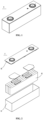
- Fig. 1 shows a battery cell 5 with a square structure as an example.
- the outer package may include a housing 51 and a cover plate 53.
- the housing 51 may include a bottom plate and side plates connected to the bottom plate, and the bottom plate and the side plates enclose an accommodating cavity.
- the housing 51 has an opening in communication with the accommodating cavity, and the cover plate 53 is used to close the opening to seal the accommodating cavity.
- the positive electrode plate, the negative electrode plate, and the separator may be wound or laminated to form an electrode assembly 52.
- the electrode assembly 52 is packaged in the accommodating cavity.
- the electrolytic solution infiltrates the electrode assembly 52.
- the battery cell 5 includes one or more electrode assemblies 52, which may be adjusted according to requirements.
- the positive electrode plate, the separator, the negative electrode plate, and the electrolytic solution may be assembled to form the battery cell.
- the positive electrode plate, the separator, and the negative electrode plate may form an electrode assembly through a winding or laminating process, the electrode assembly is placed in an outer package and dried, then the electrolytic solution is injected, followed by vacuum packaging, standing, formation, shaping, and other processes, thereby obtaining the battery cell.
- the battery cell according to the present application may be assembled into a battery module.
- the battery module may include a plurality of battery cells, and the specific quantity may be adjusted according to the application and capacity of the battery module.
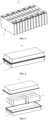
- Fig. 3 is a schematic diagram of a battery module 4 as an example.
- a plurality of battery cells 5 may be arranged in sequence along a length of the battery module 4.
- the battery cells may be arranged in any other manner.
- the plurality of battery cells 5 may be fixed by fasteners.
- the battery module 4 may further include a housing having an accommodating space, and the plurality of battery cells 5 are accommodated in the accommodating space.
- the above battery module may alternatively be assembled into a battery pack, and the quantity of the battery module included in the battery pack may be adjusted according to the application and capacity of the battery pack.
- Both battery module 4 and battery pack may be used as specific examples of the battery of this application.
- Fig. 4 and Fig. 5 are schematic diagrams of a battery pack 1 as an example.
- the battery pack 1 may include a battery box and a plurality of battery modules 4 disposed in the battery box.
- the battery box includes an upper box body 2 and a lower box body 3.
- the upper box body 2 is used to cover the lower box body 3 to form a closed space for accommodating the battery modules 4.
- a plurality of battery modules 4 may be arranged in the battery box in any manner.
- the present application provides an electrical device, which includes at least one of the battery cell, the battery module, and the battery pack of the present application.
- the battery cell, the battery module, and the battery pack may be used as a power source of the electrical device or as an energy storage the electrical device.
- the electrical device may be, but is not limited to, a mobile device (such as a mobile phone or a notebook computer), an electric vehicle (such as a pure electric vehicle, a hybrid electric vehicle, a plug-in hybrid electric vehicle, an electric bicycle, an electric scooter, an electric golf cart, or an electric truck), an electric train, a ship, a satellite, an energy storage system, or the like.
- the electrical device may select the battery cell, the battery module, or the battery pack according to its usage requirements.
- Fig. 6 is a schematic diagram of an electrical device as an example.
- the electrical device 6 is a pure electric vehicle, a hybrid electric vehicle, a plug-in hybrid electric vehicle, or the like.
- the battery pack 1 or the battery module may be used.
- the electrical device may be a mobile phone, a tablet computer, a notebook computer, or the like.
- the electrical device is generally required to be thin and light, so the battery cell may be used as a power source.
- An aluminum foil having a thickness of 12 ⁇ m was used as a positive electrode current collector.
- the fluoropolymer, LiFePO 4 as a positive electrode active material, carbon black as a conductive agent, a binder such as polyvinylidene fluoride (PVDF, having a crystallinity of 48% and a melting point of 164°C) were added into N-methylpyrrolidone (NMP) to prepare a positive electrode slurry.
- NMP N-methylpyrrolidone
- the mass ratio of fluoropolymer, LiFePO 4 , the conductive carbon black, PVDF and N-methylpyrrolidone (NMP) in the positive electrode slurry were 0.5:96.8:2:0.7:29.
- the positive electrode slurry was applied on the current collector of aluminum foil and dried at 85°C followed by cold-pressing, trimming, slicing and slitting, and then drying under vacuum at 85°C for 4h, to obtain a positive electrode plate.
- a copper foil with a thickness of 8 ⁇ m was used as a negative electrode current collector.
- Fluoropolymer, artificial graphite as a negative electrode active material, carbon black as a conductive agent, styrene butadiene rubber (SBR) as a binder, sodium hydroxymethylcellulose (CMC) as a thickener, and deionized water were mixed in a mass ratio of 2.5:94:0.5:2:100 to prepare a negative electrode slurry.
- the negative electrode slurry was applied on the current collector of copper foil and dried at 85°C followed by cold-pressing, trimming, slicing and slitting, and drying under vacuum at 120°C for 12h, to obtain a negative electrode plate.
- ethylene carbonate EC and methyl ethyl carbonate (EMC) as non-aqueous organic solvents were mixed in a volume ratio of 3:7 to obtain a solvent for electrolytic solution. Then, the mixed solvent was mixed with lithium salt LiPF 6 to prepare an electrolytic solution with a lithium salt concentration of 1 mol/L.
- Polyethylene film (PE) with 16-micron thickness was used as a separator.
- the positive electrode plate, the separator, and the negative electrode place were stacked in order, so that the separator was located between the positive electrode plate and the negative electrode plate to provide isolation, and they were then wound up to obtain an electrode assembly; the electrode assembly was placed in a shell of an outer packaging shell and dried, followed by injecting the electrolytic solution. After vacuum sealing, steady standing, formation, shaping and other processes, a lithium-ion battery was obtained.
- a lithium-ion battery was prepared in a similar manner to that of Example 1, except that a binder such as polyvinylidene fluoride (PVDF, having a crystallinity of 48% and a melting point of 164°C) was added in the positive electrode plate of Comparative Example 1, without adding other fluoropolymer; In the negative electrode plate of Comparative Example 1, styrene-butadiene rubber as a binder was added without adding a fluoropolymer.
- PVDF polyvinylidene fluoride
- a lithium-ion battery was prepared in a similar manner to that of Example 1, except that the type of fluoropolymer was changed in the positive electrode plate and the negative electrode plate of Comparative Example 2, respectively.
- a lithium-ion battery was prepared in a similar manner to that of Example 1, except that the type of fluoropolymer was changed in the positive electrode plate and the negative electrode plate of Examples 2 to 4, respectively.
- a lithium-ion battery was prepared in a similar manner to that of Example 1, except that a fluoropolymer is added to the positive electrode plate of Example 5; no fluoropolymer is added to the negative electrode plate of Example 5.
- a lithium-ion battery was prepared in a similar manner to that of Example 1, except that a fluoropolymer is added to the negative electrode plate of Example 6; no fluoropolymer is added to the positive electrode plate of Example 6.
- the internal resistance increase ratio of the battery (DCRn-DCR1)/DCR1 * 100%.
- the data in Table 1 were the data measured after storage for 180 days under the above test conditions.
- VDF vinylidene fluoride
- HFP hexafluoropropylene
- TFE tetrafluoroethylene
- 90% VDF refers to a molar percentage of VDF being 90% based on the total molar amount of VDF and HFP
- 10% FEP refers to a molar percentage of FEP being 10%.
Landscapes
- Chemical & Material Sciences (AREA)
- Chemical Kinetics & Catalysis (AREA)
- Electrochemistry (AREA)
- General Chemical & Material Sciences (AREA)
- Organic Chemistry (AREA)
- Engineering & Computer Science (AREA)
- Medicinal Chemistry (AREA)
- Health & Medical Sciences (AREA)
- Polymers & Plastics (AREA)
- Materials Engineering (AREA)
- Manufacturing & Machinery (AREA)
- Life Sciences & Earth Sciences (AREA)
- Wood Science & Technology (AREA)
- Battery Electrode And Active Subsutance (AREA)
- Secondary Cells (AREA)
- Addition Polymer Or Copolymer, Post-Treatments, Or Chemical Modifications (AREA)
Applications Claiming Priority (1)
| Application Number | Priority Date | Filing Date | Title |
|---|---|---|---|
| PCT/CN2023/072016 WO2024148591A1 (zh) | 2023-01-13 | 2023-01-13 | 聚合物、极片及其相关的电池单体、电池和用电装置 |
Publications (2)
| Publication Number | Publication Date |
|---|---|
| EP4545574A1 true EP4545574A1 (de) | 2025-04-30 |
| EP4545574A4 EP4545574A4 (de) | 2025-12-31 |
Family
ID=91897773
Family Applications (1)
| Application Number | Title | Priority Date | Filing Date |
|---|---|---|---|
| EP23915360.4A Pending EP4545574A4 (de) | 2023-01-13 | 2023-01-13 | Polymer, elektrodenfolie und batteriezelle, batterie und elektrische vorrichtung im zusammenhang damit |
Country Status (6)
| Country | Link |
|---|---|
| US (1) | US20260163003A1 (de) |
| EP (1) | EP4545574A4 (de) |
| JP (1) | JP2025524917A (de) |
| KR (1) | KR20250039406A (de) |
| CN (1) | CN119604548A (de) |
| WO (1) | WO2024148591A1 (de) |
Family Cites Families (12)
| Publication number | Priority date | Publication date | Assignee | Title |
|---|---|---|---|---|
| JP2003514036A (ja) * | 1999-11-03 | 2003-04-15 | アトフィナ・ケミカルズ・インコーポレイテッド | 低結晶度の弗化ビニリデンヘキサフルオルプロピレン共重合体 |
| EP2065441A1 (de) * | 2007-11-30 | 2009-06-03 | Solvay Solexis S.p.A. | Fluorelastomerzusammensetzung |
| WO2010107282A2 (ko) * | 2009-03-19 | 2010-09-23 | 주식회사 엘지화학 | 불소계 공중합체를 포함하는 태양전지 백시트 및 그 제조방법 |
| WO2011114626A1 (ja) * | 2010-03-17 | 2011-09-22 | パナソニック株式会社 | 非水電解質二次電池用正極、その製造方法および非水電解質二次電池 |
| CN103038061B (zh) * | 2010-05-06 | 2016-09-28 | Lg化学株式会社 | 多层板及其制备方法 |
| WO2012125786A2 (en) * | 2011-03-16 | 2012-09-20 | Arkema Inc. | High melting fluoropolymers |
| KR101993811B1 (ko) * | 2014-04-02 | 2019-06-27 | 니폰 제온 가부시키가이샤 | 이차전지용 정극, 이차전지용 정극의 제조방법 및 이차전지 |
| US20150332805A1 (en) * | 2014-05-16 | 2015-11-19 | E I Du Pont De Nemours And Company | Electrode compositions and energy storage devices |
| KR20160115599A (ko) * | 2015-03-27 | 2016-10-06 | 삼성에스디아이 주식회사 | 리튬 이차 전지용 세퍼레이터 및 이를 포함하는 리튬 이차 전지 |
| JP7003987B2 (ja) * | 2017-03-24 | 2022-01-21 | 日本ゼオン株式会社 | 非水系二次電池用バインダー組成物及び非水系二次電池用スラリー組成物 |
| CN108192009B (zh) * | 2017-12-29 | 2020-08-25 | 山东华夏神舟新材料有限公司 | 1,1-二氟乙烯共聚物及其制备方法 |
| EP3806190B1 (de) * | 2018-05-31 | 2022-08-24 | Kureha Corporation | Harzzusammensetzung für sekundärbatterie mit nichtwässrigem elektrolyten, separator für sekundärbatterie mit nichtwässrigem elektrolyten, harzzusammensetzung für sekundärbatterie, elektrode für sekundärbatterie mit nichtwässrigem elektrolyten und sekundärbatterie mit nichtwässrigem elektrolyten |
-
2023
- 2023-01-13 EP EP23915360.4A patent/EP4545574A4/de active Pending
- 2023-01-13 WO PCT/CN2023/072016 patent/WO2024148591A1/zh not_active Ceased
- 2023-01-13 KR KR1020257004650A patent/KR20250039406A/ko active Pending
- 2023-01-13 JP JP2025504042A patent/JP2025524917A/ja active Pending
- 2023-01-13 CN CN202380056626.1A patent/CN119604548A/zh active Pending
-
2025
- 2025-04-15 US US19/179,701 patent/US20260163003A1/en active Pending
Also Published As
| Publication number | Publication date |
|---|---|
| WO2024148591A1 (zh) | 2024-07-18 |
| JP2025524917A (ja) | 2025-08-01 |
| CN119604548A (zh) | 2025-03-11 |
| KR20250039406A (ko) | 2025-03-20 |
| EP4545574A4 (de) | 2025-12-31 |
| US20260163003A1 (en) | 2026-06-11 |
Similar Documents
| Publication | Publication Date | Title |
|---|---|---|
| US12542281B2 (en) | Electrode plate, and battery cell, battery and electrical device related thereto | |
| US20250246626A1 (en) | Electrode plate and battery cell, battery and electrical device related thereto | |
| US20250391907A1 (en) | Aldehyde-ketone polymer, electrode plate and related battery cell, battery and electrical device | |
| JP2025530348A (ja) | リチウム二次電池と電力消費装置 | |
| EP4604218A1 (de) | Polymer, elektrodenfolie und batteriezelle, batterie und elektrische vorrichtung im zusammenhang damit | |
| US20250246630A1 (en) | Polymer, electrode plate and associated battery cell, battery and electrical device | |
| US20250219057A1 (en) | Ether polymer, electrode plate, and battery cell, battery, and electrical device related thereto | |
| US20250343244A1 (en) | Electrode plate, and battery cell, battery, and electrical device related thereto | |
| EP4641702A1 (de) | Batteriezelle, batterie und elektrische vorrichtung | |
| JP2025524917A (ja) | ポリマー、極シート及びそれに関連する電池セル、電池及び電力消費装置 | |
| EP4664651A1 (de) | Separator, batteriezelle, batterie und elektrische vorrichtung | |
| EP4664571A1 (de) | Batteriezelle, batterie und elektrische vorrichtung | |
| EP4570846A1 (de) | Polymer, elektrodenfolie und batteriezelle, batterie und elektrische vorrichtung im zusammenhang damit | |
| JP2025532568A (ja) | ポリマー、極板及びそれに関連する電池セル、電池と電力消費装置 | |
| JP2025532562A (ja) | 極板及びそれに関連する電池セル、電池と電力消費装置 | |
| US20230369595A1 (en) | Positive electrode slurry, positive electrode plate, and secondary battery including such positive electrode plate |
Legal Events
| Date | Code | Title | Description |
|---|---|---|---|
| STAA | Information on the status of an ep patent application or granted ep patent |
Free format text: STATUS: THE INTERNATIONAL PUBLICATION HAS BEEN MADE |
|
| PUAI | Public reference made under article 153(3) epc to a published international application that has entered the european phase |
Free format text: ORIGINAL CODE: 0009012 |
|
| STAA | Information on the status of an ep patent application or granted ep patent |
Free format text: STATUS: REQUEST FOR EXAMINATION WAS MADE |
|
| 17P | Request for examination filed |
Effective date: 20250123 |
|
| AK | Designated contracting states |
Kind code of ref document: A1 Designated state(s): AL AT BE BG CH CY CZ DE DK EE ES FI FR GB GR HR HU IE IS IT LI LT LU LV MC ME MK MT NL NO PL PT RO RS SE SI SK SM TR |
|
| REG | Reference to a national code |
Ref country code: DE Ref legal event code: R079 Free format text: PREVIOUS MAIN CLASS: C08F0014180000 Ipc: H01M0004130000 |
|
| A4 | Supplementary search report drawn up and despatched |
Effective date: 20251201 |
|
| RIC1 | Information provided on ipc code assigned before grant |
Ipc: H01M 4/13 20100101AFI20251125BHEP Ipc: H01M 10/0525 20100101ALI20251125BHEP Ipc: H01M 4/62 20060101ALI20251125BHEP Ipc: C08F 14/18 20060101ALI20251125BHEP Ipc: H01M 4/02 20060101ALI20251125BHEP Ipc: H01M 10/42 20060101ALI20251125BHEP Ipc: C08F 16/24 20060101ALI20251125BHEP Ipc: C08F 214/22 20060101ALI20251125BHEP Ipc: C08K 3/04 20060101ALI20251125BHEP Ipc: C09D 127/16 20060101ALI20251125BHEP Ipc: C08K 3/32 20060101ALI20251125BHEP |
|
| DAV | Request for validation of the european patent (deleted) | ||
| DAX | Request for extension of the european patent (deleted) |