EP4545588A1 - Schwefelhaltige verbindung mit hohem molekulargewicht und verfahren zur herstellung davon, polymerzusammensetzung und schwefelhaltige verbindung - Google Patents
Schwefelhaltige verbindung mit hohem molekulargewicht und verfahren zur herstellung davon, polymerzusammensetzung und schwefelhaltige verbindung Download PDFInfo
- Publication number
- EP4545588A1 EP4545588A1 EP23826814.8A EP23826814A EP4545588A1 EP 4545588 A1 EP4545588 A1 EP 4545588A1 EP 23826814 A EP23826814 A EP 23826814A EP 4545588 A1 EP4545588 A1 EP 4545588A1
- Authority
- EP
- European Patent Office
- Prior art keywords
- sulfur
- macromolecular compound
- compound
- formula
- containing macromolecular
- Prior art date
- Legal status (The legal status is an assumption and is not a legal conclusion. Google has not performed a legal analysis and makes no representation as to the accuracy of the status listed.)
- Pending
Links
Images



Classifications
-
- C—CHEMISTRY; METALLURGY
- C08—ORGANIC MACROMOLECULAR COMPOUNDS; THEIR PREPARATION OR CHEMICAL WORKING-UP; COMPOSITIONS BASED THEREON
- C08G—MACROMOLECULAR COMPOUNDS OBTAINED OTHERWISE THAN BY REACTIONS ONLY INVOLVING UNSATURATED CARBON-TO-CARBON BONDS
- C08G75/00—Macromolecular compounds obtained by reactions forming a linkage containing sulfur with or without nitrogen, oxygen, or carbon in the main chain of the macromolecule
- C08G75/14—Polysulfides
-
- C—CHEMISTRY; METALLURGY
- C08—ORGANIC MACROMOLECULAR COMPOUNDS; THEIR PREPARATION OR CHEMICAL WORKING-UP; COMPOSITIONS BASED THEREON
- C08L—COMPOSITIONS OF MACROMOLECULAR COMPOUNDS
- C08L81/00—Compositions of macromolecular compounds obtained by reactions forming in the main chain of the macromolecule a linkage containing sulfur with or without nitrogen, oxygen or carbon only; Compositions of polysulfones; Compositions of derivatives of such polymers
- C08L81/04—Polysulfides
-
- C—CHEMISTRY; METALLURGY
- C09—DYES; PAINTS; POLISHES; NATURAL RESINS; ADHESIVES; COMPOSITIONS NOT OTHERWISE PROVIDED FOR; APPLICATIONS OF MATERIALS NOT OTHERWISE PROVIDED FOR
- C09D—COATING COMPOSITIONS, e.g. PAINTS, VARNISHES OR LACQUERS; FILLING PASTES; CHEMICAL PAINT OR INK REMOVERS; INKS; CORRECTING FLUIDS; WOODSTAINS; PASTES OR SOLIDS FOR COLOURING OR PRINTING; USE OF MATERIALS THEREFOR
- C09D181/00—Coating compositions based on macromolecular compounds obtained by reactions forming in the main chain of the macromolecule a linkage containing sulfur, with or without nitrogen, oxygen, or carbon only; Coating compositions based on polysulfones; Coating compositions based on derivatives of such polymers
- C09D181/04—Polysulfides
-
- C—CHEMISTRY; METALLURGY
- C09—DYES; PAINTS; POLISHES; NATURAL RESINS; ADHESIVES; COMPOSITIONS NOT OTHERWISE PROVIDED FOR; APPLICATIONS OF MATERIALS NOT OTHERWISE PROVIDED FOR
- C09J—ADHESIVES; NON-MECHANICAL ASPECTS OF ADHESIVE PROCESSES IN GENERAL; ADHESIVE PROCESSES NOT PROVIDED FOR ELSEWHERE; USE OF MATERIALS AS ADHESIVES
- C09J181/00—Adhesives based on macromolecular compounds obtained by reactions forming in the main chain of the macromolecule a linkage containing sulfur, with or without nitrogen, oxygen, or carbon only; Adhesives based on polysulfones; Adhesives based on derivatives of such polymers
- C09J181/04—Polysulfides
-
- Y—GENERAL TAGGING OF NEW TECHNOLOGICAL DEVELOPMENTS; GENERAL TAGGING OF CROSS-SECTIONAL TECHNOLOGIES SPANNING OVER SEVERAL SECTIONS OF THE IPC; TECHNICAL SUBJECTS COVERED BY FORMER USPC CROSS-REFERENCE ART COLLECTIONS [XRACs] AND DIGESTS
- Y02—TECHNOLOGIES OR APPLICATIONS FOR MITIGATION OR ADAPTATION AGAINST CLIMATE CHANGE
- Y02E—REDUCTION OF GREENHOUSE GAS [GHG] EMISSIONS, RELATED TO ENERGY GENERATION, TRANSMISSION OR DISTRIBUTION
- Y02E60/00—Enabling technologies; Technologies with a potential or indirect contribution to GHG emissions mitigation
- Y02E60/10—Energy storage using batteries
Definitions
- the present invention relates to a sulfur-containing macromolecular compound and a method for producing the same, a polymer composition, and a sulfur-containing compound.
- Macromolecular compounds that contain sulfur have properties that are not found in polymers composed of carbon atoms, and are therefore expected to be applicable in various fields.
- sulfur-containing polymers are known to be useful as positive electrode materials for various batteries because of their high capacitance and high transparency, and are expected to be applied to optical fields such as lenses.
- sulfur which is the raw material for sulfur-containing polymers, is a surplus resource and is inexpensive, so that sulfur-containing polymers are also attracting attention from an economic standpoint.
- NPL 1 discloses a method for producing a sulfur-containing polymer having a crosslinked structure by reacting sulfur and a monomer having two or more vinyl groups (so-called inverse vulcanization method). By employing the inverse vulcanization method, it is possible to suppress the degradation of raw materials during production, and to obtain a sulfur-containing polymer having a stable structure.
- NPL 1 Nature Chemistry, Vol. 5, 518-524 (2013 )
- An object of the present invention is to provide a novel sulfur-containing polymer and a method for producing the same.
- Another object of the present invention is to provide a composition comprising the novel sulfur-containing polymer, and a sulfur-containing compound.
- the present inventors conducted extensive research to achieve the above objects, and found that the objects can be achieved by introducing a polycondensable functional group into the structure, and by utilizing a polycondensation reaction.
- the present invention has been accomplished based on this finding.
- the present invention includes, for example, the subject matter described in the following items.
- the present invention can provide a novel sulfur-containing macromolecular compound. Further, according to the production method of the present invention, a novel sulfur-containing macromolecular compound can be easily obtained.
- the sulfur-containing macromolecular compound of the present invention has a structural unit represented by the following formula (1): -R 1 -R-R 1 -(S) n - (1) wherein in formula (1), n represents a number of 1 or more, R represents an organic group, and two R 1 s are the same or different and each represents a divalent organic group derived from a polycondensable functional group; the following formula (1'): -R 1 -R-(S) n - (1') wherein in formula (1'), n, R, and R 1 are respectively the same as n, R, and R 1 in formula (1); or the following formula (1"): -CO-(S) n - (1") wherein in formula (1"), n is the same as n in formula (1).
- the sulfur-containing macromolecular compound of the present invention is a macromolecular compound having a structure represented by formula (1) as a repeating unit, a macromolecular compound having a structure represented by formula (1') as a repeating unit, or a macromolecular compound having a structure represented by formula (1") as a repeating unit.
- the sulfur-containing macromolecular compound of the present invention is novel, is expected to exhibit functions not found in conventional sulfur polymers, and is unlikely to decompose.
- the sulfur-containing macromolecular compound of the present invention has excellent mechanical properties.
- the sulfur-containing macromolecular compound of the present invention can be obtained by a simple method.
- n is not particularly limited as long as it is a number of 1 or more. From the viewpoint of easily improving the mechanical properties of the sulfur-containing macromolecular compound, n is preferably 2 or more, more preferably 3 or more, even more preferably 4 or more, and particularly preferably 5 or more.
- the upper limit of n is also not particularly limited, and n can be, for example, 10000 or less, preferably 5000 or less, more preferably 3000 or less, even more preferably 1000 or less, and particularly preferably 500 or less. n can also be 10 or less.
- the value of n can be calculated based on the 1 H-NMR spectrum and elemental analysis results of the sulfur-containing macromolecular compound.
- R can be, for example, a divalent or higher-valent organic group, and preferably a divalent organic group.
- the divalent organic group refers to a group having one or more carbon atoms, such as a group formed by removing two hydrogen atoms from an organic compound.
- R in formula (1) examples include:
- the number of carbon atoms in the alkylene group and the alkylene group optionally having one or more ether bonds (-O-) inserted therein is not particularly limited, and can be, for example, 1 or more and 20 or less, preferably 2 or more, and preferably 15 or less, more preferably 10 or less, and even more preferably 8 or less.
- the number of carbon atoms in the alkenylene group is not particularly limited, and can be, for example, 2 or more and 20 or less, preferably 3 or more, and preferably 15 or less, more preferably 10 or less, and even more preferably 8 or less.
- the number of carbon atoms in the alkynylene group is not particularly limited, and can be, for example, 2 or more and 20 or less, preferably 3 or more, and preferably 15 or less, more preferably 10 or less, and even more preferably 8 or less.
- the number of carbon atoms in the cycloalkylene group, cycloalkenylene group, and cycloalkadienylene group is not particularly limited, and can be, for example, 3 or more and 20 or less, preferably 4 or more, and preferably 15 or less, more preferably 10 or less, and even more preferably 8 or less.
- the number of carbon atoms in the arylene group is not particularly limited, and can be, for example, 6 or more and 18 or less.
- the number of carbon atoms in the aralkylene group is not particularly limited, and can be, for example, 6 or more and 18 or less.
- the non-aromatic heterocyclic group may be a non-aromatic heterocyclic group that is monocyclic, bicyclic, tricyclic, or tetracyclic, and that contains, for example, 1 to 4 heteroatoms selected from oxygen, sulfur, and nitrogen atoms in addition to carbon atoms as ring-constituting atoms.
- the non-aromatic heterocyclic group is saturated or unsaturated.
- heteroarylene group examples include monocyclic aromatic heterocyclic groups (e.g., 5- or 6-membered monocyclic aromatic heterocyclic groups) and aromatic fused heterocyclic groups (e.g., 5- to 18-membered aromatic fused heterocyclic groups).
- R is preferably an alkylene group optionally having one or more substituents X, or an arylene group optionally having one or more substituents X. In this case, it is easy to produce the sulfur-containing macromolecular compound, and the mechanical properties are also easily improved.
- R is more preferably an alkylene group optionally having one or more substituents X, and even more preferably an alkylene group having no substituent X. In these cases, the number of carbon atoms in the alkylene group is preferably 1 to 10, more preferably 2 to 8, and particularly preferably 3 to 6.
- R 1 is not particularly limited as long as it is a divalent organic group derived from a polycondensable functional group.
- the divalent organic group refers to a group having one or more carbon atoms, such as a group formed by removing two hydrogen atoms from an organic compound.
- two R 1 s are preferably the same, and it is more preferable that the -R 1 -R-R 1 - moiety in formula (1) is symmetric around R.
- the type of polycondensable functional group is not particularly limited.
- the polycondensable functional group is preferably a functional group that can be polycondensed with a sulfur polymer represented by the following formula (4): Y-(S) n -Y (4) wherein in formula (4), n represents a number of 1 or more, and two Ys are the same or different and each represents a hydrogen atom or an alkali metal. In formula (4), two Ys are preferably the same.
- X is a halogen atom such as chlorine or fluorine
- the polycondensable functional group that forms R 1 is a group other than halo groups (fluoro group, chloro group, etc.).
- R 1 in formula (1) is -CH 2 -CHOH-.
- R 1 in formula (1) is -CH 2 -CHOH-, carbon with no hydroxyl group attached can be bonded to R, and carbon with a hydroxyl group attached can be bonded to S, or vice versa.
- carbon with a hydroxyl group attached can be bonded to S, and in the other, carbon with a hydroxyl group attached can be bonded to R.
- R 1 in formula (1) is -CH 2 -CH 2 -CHOH-.
- R 1 in formula (1) is -CH 2 -CH 2 -CHOH-, terminal carbon without a hydroxyl group attached can be bonded to R, and carbon with a hydroxyl group attached can be bonded to S, or vice versa.
- carbon with a hydroxyl group attached can be bonded to S, and in the other, carbon with a hydroxyl group attached can be bonded to R.
- R 1 in formula (1) is -CO-.
- R 1 in formula (1) is -COO-.
- R 1 is -COO-, in the two -COO- moieties, ester carbon is bonded to R, and ester oxygen is bonded to S.
- R 1 in formula (1) is -NHCO-.
- R 1 is -NHCO-, in the two -NHCO-moieties, nitrogen is bonded to R, and oxygen is bonded to S.
- R 1 is preferably -CH 2 -CH(OH)-, -CH 2 -CH 2 -CHOH-, -CO-, -COO-, or -NHCO- mentioned above. In this case, it is easy to produce the sulfur-containing macromolecular compound, the structure is stable because decomposition is unlikely to occur, and excellent mechanical properties tend to be ensured. R 1 is more preferably -CH 2 -CH(OH)-.
- any combination of R and R 1 is possible, and one embodiment may be a combination of R being an alkylene group optionally having one or more substituents X, and two R 1 s being -CH 2 -CH(OH)-, -CH 2 -CH 2 -CHOH-, -CO-, -COO-, or -NHCO-.
- the terminus of the -(S) n moiety is hydrogen or an alkali metal, which is described below.
- n, R, and R 1 are respectively the same as n, R, and R 1 in formula (1) as described above, and their preferred embodiments are also the same as those of n, R, and R 1 in formula (1).
- the sulfur-containing macromolecular compound of the present invention may have other structural units as long as it has the structural unit represented by formula (1), the structural unit represented by formula (1'), or the structural unit represented by formula (1").
- the sulfur-containing macromolecular compound of the present invention may be formed only from the structural unit represented by formula (1), the structural unit represented by formula (1'), or the structural unit represented by formula (1").
- the sulfur-containing macromolecular compound of the present invention preferably contains the structural unit represented by formula (1), the structural unit represented by formula (1'), or the structural unit represented by formula (1") in an amount of 80 mass% or more, more preferably 90 mass% or more, and even more preferably 95 mass% or more.
- the weight average molecular weight of the sulfur-containing macromolecular compound of the present invention is not particularly limited.
- the weight average molecular weight of the sulfur-containing macromolecular compound of the present invention is 1,000 or more and 100,000 or less.
- the weight average molecular weight of the sulfur-containing macromolecular compound of the present invention is preferably 4,000 or more and 20,000 or less.
- the weight average molecular weight (Mw) is a value measured by gel permeation chromatography (GPC).
- the content of S (sulfur element) in the sulfur-containing macromolecular compound of the present invention is not particularly limited.
- the content of S is preferably 30 mass% or more and 99 mass% or less, with a more preferred lower limit of 35 mass%, and with a more preferred upper limit of 80 mass%, a further more preferred upper limit of 70 mass%, and a particularly preferred upper limit of 50 mass%.
- the sulfur-containing macromolecular compound of the present invention is novel, and various structures can be introduced into the skeleton, allowing molecular design according to the application.
- the sulfur-containing macromolecular compound has excellent mechanical properties while retaining the properties of a sulfur-based polymer.
- it when made into a film material, it has excellent tensile strength and mechanical properties.
- Conventional sulfur-containing macromolecular compounds have insufficient mechanical properties, which is an obstacle to their application to various uses.
- the sulfur-containing macromolecular compound of the present invention has excellent mechanical properties, which facilitates its application to various uses.
- the refractive index of the sulfur-containing macromolecular compound of the present invention can be easily controlled.
- the sulfur-containing macromolecular compound of the present invention can exhibit a self-healing function and can also have adhesive performance. Therefore, by forming a material containing the sulfur-containing macromolecular compound of the present invention into a desired shape, it can also be used as a self-healing material or an adhesive material.
- the sulfur-containing macromolecular compound of the present invention has a suppressed odor compared to conventional sulfur polymers.
- the sulfur-containing macromolecular compound of the present invention can be applied to various uses, and is suitable for battery materials, electronic materials, optical materials, packaging materials, agricultural materials, and adhesives.
- the sulfur-containing macromolecular compound of the present invention can be made into a polymer composition, either alone or in combination with other compounds and/or additives. Since the polymer composition contains the sulfur-containing macromolecular compound, it can be applied to, for example, the various applications described above, and is suitable for, for example, various optical members such as lenses, as well as for films, molding, self-healing materials, and adhesives.
- the polymer composition can be used to form various materials, such as films, molded bodies, powder materials, solutions, dispersions, and pastes.
- the method for producing the sulfur-containing macromolecular compound of the present invention is not particularly limited. For example, it is preferable to employ the method for producing a sulfur-containing macromolecular compound of the present invention described below to produce the sulfur-containing macromolecular compound of the present invention.
- the method for producing a sulfur-containing macromolecular compound of the present invention comprises reacting a linear sulfur polymer and compound C having at least two polycondensable functional groups to obtain a sulfur-containing macromolecular compound. More specifically, a sulfur-containing macromolecular compound can be obtained by polycondensation of a linear sulfur polymer and compound C having two polycondensable functional groups.
- the linear sulfur polymer used in the production method of the present invention can be, for example, a sulfur polymer represented by the following formula (4): Y-(S) n -Y (4) wherein in formula (4), n represents a number of 1 or more, and two Ys are the same or different and each represents a hydrogen atom or an alkali metal. In particular, in terms of excellent reactivity, two Ys both are preferably alkali metals, and more preferably sodium.
- n is not particularly limited as long as it is a number of 1 or more.
- n is preferably 2 or more, more preferably 3 or more, even more preferably 4 or more, and particularly preferably 5 or more.
- the upper limit of n is also not particularly limited, and n can be, for example, 10000 or less, preferably 5000 or less, more preferably 3000 or less, even more preferably 1000 or less, and particularly preferably 500 or less.
- n can also be 10 or less.
- the value of n can be calculated from the MALDI-TOF MS spectrum.
- the linear sulfur polymer can be obtained, for example, by the reaction of a sulfur source and a metal source.
- the sulfur source may be, for example, elemental sulfur or a compound containing a sulfur atom.
- the sulfur source is preferably elemental sulfur.
- the elemental sulfur include cyclic sulfur composed of sulfur atoms.
- an eight-membered ring of sulfur can be used as the sulfur source.
- Such a sulfur source can be produced by a known method or can be obtained commercially.
- the metal source may be, for example, an alkali metal or an alkali metal compound.
- the alkali metal is not particularly limited, and examples include sodium, potassium, and lithium, with sodium being preferred.
- Examples of the alkali metal compound include alkali metal sulfides, with sodium sulfide being preferred.
- the alkali metal compound may be a hydrate.
- the metal source is preferably an alkali metal compound, more preferably an alkali metal sulfide, and particularly preferably sodium sulfide, in that the reaction is simple and mass synthesis is possible.
- the method for reacting the sulfur source and the metal source is not particularly limited.
- the sulfur source and the metal source can be mixed in a solvent.
- a solvent used in this reaction, the type thereof is not particularly limited, and water and various organic solvents can be used.
- the metal source is an alkali metal compound, particularly an alkali metal sulfide
- the solvent used is preferably a water-based solvent, and particularly preferably water.
- the solvent used is preferably an organic solvent, and particularly preferably a polar solvent, such as dimethylacetamide.
- the use ratio of both is not particularly limited.
- the amount of the metal source used per mole of the sulfur source is preferably 0.1 to 20 mol, more preferably 0.5 to 10 mol, even more preferably 0.8 to 8 mol, and particularly preferably 1 to 3 mol.
- the reaction temperature when reacting the sulfur source and the metal source is not particularly limited, and can be, for example, 0 to 200°C, and preferably 15 to 80°C.
- the reaction time between the sulfur source and the metal source is also not particularly limited, and can be, for example, 10 minutes to 48 hours, and preferably 30 minutes to 24 hours.
- the reaction can be carried out, for example, in an atmosphere of inert gas such as nitrogen.
- the linear sulfur polymer to be used in the production method of the present invention is obtained.
- the polycondensable functional group is the same as described above. Therefore, in compound C, the polycondensable functional group is preferably a functional group that can be polycondensed with the sulfur polymer represented by formula (4).
- the polycondensable functional group is preferably a group other than halo groups (fluoro group, chloro group, etc.).
- the polycondensable functional group may be, in addition to the monovalent group mentioned above, further a halogen atom.
- the two polycondensable functional groups may be halogen atoms.
- the number of polycondensable functional groups in compound C is preferably 6 or less, and more preferably 5 or less.
- the number of polycondensable functional groups in compound C may be two or three, and particularly preferably two.
- Compound C can be a compound represented by the following formula (2): R 2 -R-R 2 (2) wherein in formula (2), R is an organic group, and two R 2 s are the same or different and each is a polycondensable functional group. This compound is a so-called bifunctional compound.
- R is the same as R in formula (1) described above. Therefore, in formula (2), examples of R include:
- R is preferably an alkylene group optionally having one or more substituents X, or an arylene group optionally having one or more substituents X.
- R divalent organic group
- R (divalent organic group) is more preferably an alkylene group optionally having one or more substituents X, and even more preferably an alkylene group having no substituent X.
- the number of carbon atoms in the alkylene group is preferably 1 to 10, more preferably 2 to 8, and particularly preferably 3 to 6.
- X is a halogen atom such as chlorine or fluorine
- -COOH a halogen atom such as chlorine or fluorine
- -NCO a halogen atom
- the halo group is, for example, a chlorine atom, a fluorine atom, or a bromine atom.
- compound C When producing a sulfur-containing macromolecular compound having the structural unit represented by formula (1"), specific examples of compound C include COCl 2 .
- Compound C may be the bifunctional compound represented by formula (2) or a trifunctional or higher functional compound.
- compound C when compound C is a trifunctional compound, it may be, for example, a compound in which another R 2 is further bonded to R of the compound represented by formula (2).
- Specific examples include a compound in which the hydrogen atom of R in the compound represented by formula (2) is further replaced by R 2 .
- R 2 is also the same as R 2 in formula (2), and it is preferable that all three R 2 are the same.
- Compound C may be the bifunctional compound represented by formula (2) or a trifunctional or higher functional compound. Specific examples of such compounds include compounds represented by the following formulas (2-8) to (2-11).
- the method for reacting the linear sulfur polymer and compound C is not particularly limited.
- the linear sulfur polymer and compound C can be reacted in a solvent. From the viewpoint that the reactivity of both is likely to increase, it is preferable to react the linear sulfur polymer and compound C at the interface.
- solution 1 in which the linear sulfur polymer is dissolved and solution 2 in which compound C is dissolved are prepared, and the interfacial reaction can be carried out using these solutions. Therefore, solvents that phase-separate from each other (insoluble with each other) are used as a solvent for preparing solution 1 and a solvent for preparing solution 2.
- Another form of the method for reacting the linear sulfur polymer and compound C is to react the linear sulfur polymer and compound C in solvent A.
- the solvent used in the reaction to obtain the linear sulfur polymer and the solvent used in the reaction to obtain compound C may be the same or different, and is preferably the same in terms of simplicity.
- the reaction to obtain the linear sulfur polymer is the reaction between the sulfur source and the metal source described above.
- the solvent for preparing solution 1 may be water or a water-based solvent such as an alcohol compound.
- Other examples include polar solvents such as dimethylacetamide and acetonitrile. Of these, the solvent for preparing solution 1 is preferably water.
- the solvent for preparing solution 2 is preferably an organic solvent that phase-separates from the water-based solvent.
- organic solvents include hydrocarbon solvents, such as benzene, toluene, xylene, and hexane; ketone solvents, such as acetone, methyl ethyl ketone, and isophorone; alcohol solvents, such as tert-butyl alcohol, benzyl alcohol, phenoxyethanol, and phenylpropylene glycol; halogenated hydrocarbon solvents, such as methylene chloride and chloroform; ether solvents, such as 1,2-dimethoxyethane, tetrahydrofuran, 1,4-dioxane, and anisole; ester solvents, such as ethyl acetate, propyl acetate, ethyl carbitol acetate, and butyl carbitol acetate; amide solvents, such as N,N-
- the concentration of solution 1 is not particularly limited, and can be, for example, 0.1 to 500 g/L, preferably 0.5 to 300 g/L, more preferably 1 to 200 g/L, and even more preferably 2 to 100 g/L.
- the concentration of solution 2 is also not particularly limited, and can be, for example, 0.1 to 500 g/L, more preferably 0.2 to 300 g/L, and even more preferably 0.5 to 200 g/L.
- solvent A examples include the same solvents as those used to prepare solution 1 or solution 2. Among them, tetrahydrofuran, acetonitrile, N,N-dimethylformamide, dimethyl sulfoxide, and the like can be preferably used.
- the use ratio of both is not particularly limited.
- 0.05 to 10 mol of compound C can be used per mole of the linear sulfur polymer.
- compound C is preferably used in an amount of 0.1 to 8 mol, more preferably 0.2 to 5 mol, even more preferably 0.25 to 3 mol, and particularly preferably 0.3 to 2.5 mol, per mol of the linear sulfur polymer. Therefore, even when an interfacial reaction is performed using solution 1 and solution 2, the amount of compound C used per mol of the linear sulfur polymer can be within the above range.
- the interfacial reaction using solution 1 and solution 2 can be performed, for example, by the same method for known interfacial reactions.
- a catalyst can also be used, if necessary.
- the catalyst may be, for example, a phase-transfer catalyst conventionally used in interfacial reactions, and examples include ammonium salts with long-chain alkyl groups, such as hexadecyltrimethylammonium bromide.
- the amount of catalyst used is also not particularly limited, and can be the same amount for conventional interfacial reactions.
- the phase-transfer catalyst can be used in a so-called catalytic amount.
- the reaction temperature when reacting the linear sulfur polymer and compound C, is also not particularly limited.
- the reaction between the linear sulfur polymer and compound C is a polycondensation reaction; thus, the reaction temperature can be lower than that for conventional sulfur-containing macromolecular compounds, and can be, for example, 0 to 100°C, and preferably 10 to 80°C. The same temperature can also be used when the interfacial reaction is employed.
- the reaction time can be set appropriately depending on conditions, such as concentration and temperature.
- the reaction product can be separated and obtained by an appropriate method.
- the reaction product can be separated by one or more suitable means, such as filtration, centrifugation, distillation, and drying, in combination.
- suitable means such as filtration, centrifugation, distillation, and drying, in combination.
- insoluble matter is generated at the interface, and by taking the above appropriate measures, the reaction product can be obtained.
- the resulting reaction product is the target sulfur-containing macromolecular compound of the present invention.
- the resulting sulfur-containing macromolecular compound can be subjected to purification treatment or the like by an appropriate method.
- the reaction between the linear sulfur polymer and compound C is a polycondensation reaction. Specifically, the terminal sulfur of the linear sulfur polymer reacts with the polycondensable functional groups in compound C to let the polycondensation reaction proceed, thereby producing the sulfur-containing macromolecular compound of the present invention.
- a sulfur-containing macromolecular compound can be produced by a simpler method than conventional methods for producing sulfur-containing macromolecular compounds (e.g., compared to the above-mentioned inverse vulcanization method and other production methods). It is also advantageous in that the reaction temperature can be set low.
- the linear sulfur polymer and compound C which have little odor, are used as raw materials, deodorization during production is easy. Furthermore, for example, harmful hydrogen sulfide is less likely to be generated during production compared to the above-mentioned inverse vulcanization method and other production methods, and safety during production of the sulfur-containing macromolecular compound is likely to be improved.
- the production method of the present invention is suitable as a method for producing the sulfur-containing macromolecular compound of the present invention described above.
- the present invention also includes a sulfur-containing compound.
- the sulfur-containing compound has a structure in which an organic group derived from a polycondensable functional group is bonded to each end of a sulfur polymer represented by the following formula (3): -(S) n - (3) wherein in formula (1), n represents a number of 1 or more.
- n is not particularly limited as long as it is a number of 1 or more.
- n is preferably 2 or more, more preferably 3 or more, even more preferably 4 or more, and particularly preferably 5 or more.
- the upper limit of n is also not particularly limited, and n can be, for example, 10000 or less, preferably 5000 or less, more preferably 3000 or less, even more preferably 1000 or less, and particularly preferably 500 or less.
- n can also be 10 or less.
- the value of n can be calculated from the MALDI-TOF MS spectrum.
- the organic group derived from a polycondensable functional group can be a monovalent group represented by R 3 -R 1 -.
- R 1 is the same as R 1 in formula (1) described above. Therefore, R 1 in R 3 -R 1 can be -CH 2 -CH(OH)-, -CH 2 -CH 2 -CHOH-, -CO-, -COO-, or -NHCO-.
- R 3 in R 3 -R 1 is a monovalent organic group obtained by adding one hydrogen to R in formula (1). Therefore, R 3 can be:
- R 3 in R 3 -R 1 is preferably an alkyl group optionally having one or more substituents X, or an aryl group optionally having one or more substituents X.
- a sulfur-containing macromolecular compound was synthesized.
- sulfur (523 mg, 2.04 mmol) and Na 2 S (684 mg, 4.08 mmol, pentahydrate) were dissolved in 10 mL of water, followed by filtration, thereby obtaining solution 1 of a linear sulfur polymer (abbreviated as "LS").
- LS linear sulfur polymer
- a sulfur-containing macromolecular compound was obtained in the same manner as in Example 1, except that solution 1 and solution 2 were prepared so that the molar ratio of LS to OctdiEpo was 1.5:1.
- a sulfur-containing macromolecular compound was obtained in the same manner as in Example 1, except that solution 1 and solution 2 were prepared so that the molar ratio of LS to OctdiEpo was 3:1.
- a sulfur-containing macromolecular compound was obtained in the same manner as in Example 1, except that solution 1 and solution 2 were prepared so that the molar ratio of LS to OctdiEpo was 1:5.
- a sulfur-containing macromolecular compound was obtained in the same manner as in Example 1, except that solution 1 and solution 2 were prepared so that the molar ratio of LS to OctdiEpo was 1:2.
- a sulfur-containing macromolecular compound was obtained in the same manner as in Example 1, except that solution 1 and solution 2 were prepared so that the molar ratio of LS to OctdiEpo was 1:1.
- a sulfur-containing macromolecular compound was obtained in the same manner as in Example 1, except that solution 1 and solution 2 were prepared so that the molar ratio of LS to OctdiEpo was 5:1.
- a thioepoxy resin (Poly(S-OCtEpo-Bu)) with a low sulfur content was synthesized.
- 1,4-butanediol (316 mg, 3.52 mmol) and Na 2 S (591 mg, 3.52 mmol, pentahydrate) were dissolved in 5 mL of water, and chloroform (5.0 mL) in which OctdiEpo (500 mg, 3.52 mmol) was dissolved was added thereto.
- hexadecyltrimethylammonium bromide (7 mg, 19 ⁇ mol) was added as a phase-transfer catalyst, followed by stirring at room temperature (25°C) for 2 days (interfacial reaction). Insoluble matter generated between the water layer and the chloroform layer during the interfacial reaction was filtered, washed with water and chloroform, and then dried under reduced pressure. The resultant was obtained as the thioepoxy resin (Poly(S-OCtEpo-Bu)), which was the comparison sample.
- styrene epoxide (abbreviated as "StEpo,” 1.37 mL, 12.2 mmol) was dissolved in 30 mL of chloroform to prepare solution 2, and 0.005 mmol of hexadecyltrimethylammonium bromide was further added as a phase-transfer catalyst to solution 2, followed by stirring at room temperature (25°C) for 18 hours to perform an interfacial reaction (polycondensation reaction).
- Solution 1 and solution 2 were prepared so that the molar ratio of LS to StEpo was 1:1.
- the chloroform layer was extracted and dried over sodium sulfate, followed by filtration. The filtrate was evaporated and purified by column chromatography, thereby obtaining a sulfur-containing compound (LS-StEpo).
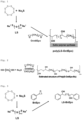
- a sulfur-containing macromolecular compound was obtained in the same manner as in Example 1 (see the reaction scheme in Fig. 10 described below), except that epichlorohydrin was used in place of 1,2,7,8-diepoxyoctane.
- a sulfur-containing macromolecular compound was obtained in the same manner as in Example 1, except that the amount of Na 2 S used was changed to 2.04 mmol.
- a sulfur-containing macromolecular compound was obtained in the same manner as in Example 1, except that the amount of Na 2 S used was changed to 12.24 mmol.
- a sulfur-containing macromolecular compound was obtained in the same manner as in Example 1, except that 1,2,7,8-diepoxyoctane was replaced with 11.7 mmol of adipoyl chloride.
- a sulfur-containing macromolecular compound was obtained in the same manner as in Example 1, except that sulfur was not used.
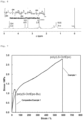
- Fig. 4 shows the 1 H-NMR spectrum (measurement solvent: DMSO-D6) of the sulfur-containing macromolecular compound obtained in Example 1.
- the upper spectrum in Fig. 4 is the 1 H-NMR spectrum of the raw material OctdiEpo, and the lower spectrum is the 1 H-NMR spectrum of the sulfur-containing macromolecular compound obtained in Example 1. From these spectra, the appearance of a peak due to OH groups, and peak shift and broadening due to OctdiEpo were observed.
- Fig. 5 shows the elemental mapping results of the sulfur-containing macromolecular compound obtained in Example 1.
- SEM-EDX revealed that sulfur was uniformly dispersed. This confirmed that sulfur was uniformly introduced into the sulfur-containing macromolecular compound obtained in Example 1. Further, the elemental analysis of the S content in the sulfur-containing macromolecular compound revealed that about 40 mass% of S was present (in detail, C: 37.01 mass%, hydrogen: 6.31 mass%, and S: 41.46 mass%).
- the sulfur-containing macromolecular compound obtained in Example 1 was a thioepoxy resin containing sulfur, and that the target product was obtained.
- n in formula (1) i.e., the number of S per structural unit
- the value of n in the sulfur-containing macromolecular compound produced in Example 10 was estimated to be about 3, and n in the sulfur-containing macromolecular compound produced in Example 11 was estimated to be about 2.
- the value of n in the sulfur-containing macromolecular compound produced in Comparative Example 2 was about 1.
- Table 1 shows the Mn, Mw, and S content of the sulfur-containing macromolecular compounds obtained in the Examples.
- Table 1 Example LS:OctdiEpo Mn Mw S content (mass%)
- Example 4 1:5 4500 4700 39.8 Example 5 1:2 5100 5300 39.6
- Example 6 1:1 4600 4700 41.5
- Example 1 2:1 4700 4900 41.5
- Example 7 5:1 4900 5000 34.0
- Fig. 7 shows the results of the tensile test of the sulfur-containing macromolecular compound obtained in Example 1 and the comparison sample obtained in Comparative Example 1.
- the tensile test (stroke-test force curve) was evaluated by observing the rupture point of the sample using an Autograph (model number: AGX-plus) produced by Shimadzu Corporation. With this rupture point taken as the final point, the maximum stress applied until the final point was determined to be the rupture stress of the macromolecular material.
- This tensile test was performed with the bottom end of the sheet-like macromolecular composite material fixed, and the upper end pulled at a tension rate of 1 mm/sec (upward operation). From this measurement, the Young's modulus and fracture energy of the macromolecular material were calculated.
- the sample was obtained by molding a dumbbell test piece (JIS K 6251, No. 2 dumbbell test piece, thickness: 0.2 mm).
- the comparison sample had a rupture stress of 1.20 MPa, a rupture strain of 29%, a Young's modulus of 3.04 MPa, and a fracture energy of 0.181 MJm -3
- the sulfur-containing macromolecular compound obtained in Example 1 had a rupture stress of 2.8 MPa, a rupture strain of 588%, a Young's modulus of 4.56 MPa, and a fracture energy of 10.3 MJm -3
- the fracture energy was 57 times higher than that of the comparison sample.
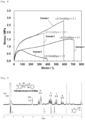
- Fig. 8 shows the results of the tensile test of the sulfur-containing macromolecular compounds obtained in the Examples.
- the mechanical strength increased as the amount of LS (linear sulfur polymer) increased, and was maximum at a LS:OctdiEpo ratio of 2:1.
- the mechanical strength of the sulfur-containing macromolecular compound obtained in Example 1 was found to be 4.4 times or more higher in fracture energy than the mechanical strength of polythioether (-(S) x -(CH 2 ) y -) previously reported (fracture energy of conventional polythioether: 1.37 to 2.32 MPa). It is presumed that this is because the sulfur-containing macromolecular compound obtained in Example 1 has hydroxyl groups in the molecule, which enable hydrogen bonds to be formed between polymers. Since hydrogen bonds can be formed and dissociated reversibly, when stress is applied to the material, the stress can be efficiently dispersed. In addition, the sulfur-containing macromolecular compound obtained in Example 1 was found to exhibit soft and tough mechanical properties that have not been seen in sulfur polymers so far, even when compared with polymers produced by the inverse vulcanization method.
- Example 1 The chemical stability of the sulfur-containing macromolecular compound obtained in Example 1 was evaluated using hydrogen sulfide test paper (Isis Co., Ltd., model number: MN90761). As a result, no change was observed on the test paper. Therefore, no generation of hydrogen sulfide from the sulfur-containing macromolecular compound obtained in Example 1 was observed, indicating high chemical stability.
- Chemical stability using hydrogen sulfide test paper was evaluated using test tubes of 30 m/m and 200 m/m in size, based on the presence or absence of coloration of hydrogen sulfide test paper 24 hours after placing about 0.5 g of the sample in each test tube together with the test paper.
- Fig. 9 shows the 1 H-NMR spectrum (measurement solvent: DMSO-D6) of the sulfur-containing compound obtained in Example 8. From this spectrum, a shift in the peak derived from StEpo and the appearance of a new peak derived from OH groups were observed. Elemental analysis measurement of the sulfur-containing compound obtained in Example 8 revealed that 35 mass% of sulfur was present (C: 52.35 mass%, H: 4.93 mass%, and S: 34.6 mass%).
- the sulfur-containing macromolecular compound obtained in Example 1 was used to form a material having a rectangular parallelepiped shape (length: 5 mm, width: 20 mm, thickness: 3 mm), and this material was cut with a utility knife. When the cut pieces were then brought into contact with each other at room temperature (25°C), they immediately adhered to each other and could be lifted up with tweezers. This result indicates that the sulfur-containing macromolecular compound obtained in Example 1 has a self-healing function.
- PTFE which has high water and oil repellency
- dissimilar materials such as glass-stainless steel and glass-aluminum, could also be bonded together, indicating that the sulfur-containing macromolecular compound obtained in Example 1 can also be used as a dissimilar adhesive material.
- a 300 ⁇ m thick film of the sulfur-containing macromolecular compound obtained in Example 1 was prepared, and gas permeation measurements were performed for four types of gases, CO 2 , O 2 , N 2 , and H 2 O, using a GTR-10XACT produced by GTR TEC Corporation. As a result, the order of permeation was N 2 , O 2 , and H 2 O, with CO 2 not permeating at all. These results revealed that the film of the sulfur-containing macromolecular compound obtained in Example 1 was not permeable to CO 2 .
- Example 1 The sample after the tensile test of the sulfur-containing macromolecular compound obtained in Example 1 (i.e., the broken sample) was hot-pressed at 80°C, and then punched out into a dumbbell test piece and remolded. The remolded sample was again subjected to the same tensile test (re-tensile test). As a result, the S-S curve of the re-tensile test was in good agreement with the S-S curve of the tensile test of the sulfur-containing macromolecular compound (original) before remolding, indicating that it had the same rupture stress and rupture strain. These results revealed that the sulfur-containing macromolecular compound obtained in Example 1 is material recyclable.
- the amount of hydrogen sulfide (H 2 S) gas generated in the process of the polycondensation reaction performed in Example 1 was measured.
- a conventional inverse vulcanization method 850 mass ppm of hydrogen sulfide was generated, whereas in Example 1, the amount of hydrogen sulfide generated was so small that it was not detectable, confirming that the production of sulfur-containing macromolecular compounds can be carried out more safely.
- the inverse vulcanization method was as follows.
- the odor measurement was carried out according to the following procedure.
- Fig. 10 shows the results of the tensile test of the sulfur-containing macromolecular compound obtained in Example 9. Above the graph in Fig. 10 , the production scheme for the sulfur-containing macromolecular compound obtained in Example 9 is shown. From Fig. 10 , the sulfur-containing macromolecular compound obtained in Example 9 was found to have a rupture stress of 0.81 MPa and a rupture strain of 89%, and had excellent mechanical properties.
- Fig. 11 shows the results of the tensile test of the sulfur-containing macromolecular compounds obtained in Examples 10 and 11 and Comparative Example 2.
- Fig. 12 (a) shows the 1 H-NMR spectrum of the sulfur-containing macromolecular compound obtained in Example 12, and (b) shows the microscopic Raman spectrum of the sulfur-containing macromolecular compound obtained in Example 12.
- the upper spectrum in Fig. 12 (a) is the 1 H-NMR spectrum of adipoyl chloride, and the lower spectrum is the 1 H-NMR spectrum of the sulfur-containing macromolecular compound obtained in Example 12.
Landscapes
- Chemical & Material Sciences (AREA)
- Chemical Kinetics & Catalysis (AREA)
- Organic Chemistry (AREA)
- Health & Medical Sciences (AREA)
- Medicinal Chemistry (AREA)
- Polymers & Plastics (AREA)
- Life Sciences & Earth Sciences (AREA)
- Engineering & Computer Science (AREA)
- Materials Engineering (AREA)
- Wood Science & Technology (AREA)
- Polymers With Sulfur, Phosphorus Or Metals In The Main Chain (AREA)
Applications Claiming Priority (2)
| Application Number | Priority Date | Filing Date | Title |
|---|---|---|---|
| JP2022102152 | 2022-06-24 | ||
| PCT/JP2023/017132 WO2023248625A1 (ja) | 2022-06-24 | 2023-05-02 | 硫黄含有高分子化合物及びその製造方法、ポリマー組成物並びに硫黄含有化合物 |
Publications (2)
| Publication Number | Publication Date |
|---|---|
| EP4545588A1 true EP4545588A1 (de) | 2025-04-30 |
| EP4545588A4 EP4545588A4 (de) | 2025-10-29 |
Family
ID=89379559
Family Applications (1)
| Application Number | Title | Priority Date | Filing Date |
|---|---|---|---|
| EP23826814.8A Pending EP4545588A4 (de) | 2022-06-24 | 2023-05-02 | Schwefelhaltige verbindung mit hohem molekulargewicht und verfahren zur herstellung davon, polymerzusammensetzung und schwefelhaltige verbindung |
Country Status (5)
| Country | Link |
|---|---|
| US (1) | US20250376563A1 (de) |
| EP (1) | EP4545588A4 (de) |
| JP (1) | JPWO2023248625A1 (de) |
| CN (1) | CN119325488A (de) |
| WO (1) | WO2023248625A1 (de) |
Families Citing this family (2)
| Publication number | Priority date | Publication date | Assignee | Title |
|---|---|---|---|---|
| WO2025183116A1 (ja) * | 2024-02-29 | 2025-09-04 | 国立大学法人大阪大学 | 硫黄含有高分子化合物の製造方法及び硫黄含有高分子化合物 |
| WO2026054084A1 (ja) * | 2024-09-09 | 2026-03-12 | 国立大学法人大阪大学 | 硫黄含有高分子化合物の製造方法 |
Family Cites Families (10)
| Publication number | Priority date | Publication date | Assignee | Title |
|---|---|---|---|---|
| FR1418067A (fr) * | 1964-07-23 | 1965-11-19 | Aquitaine Petrole | Soufre plastifié avec des composés polythiométhyléniques |
| JPS4890400A (de) * | 1972-03-06 | 1973-11-26 | ||
| JPS4890399A (de) * | 1972-03-06 | 1973-11-26 | ||
| JPS4945197A (de) * | 1972-09-07 | 1974-04-30 | ||
| JPS49117600A (de) * | 1973-03-14 | 1974-11-09 | ||
| KR101594407B1 (ko) * | 2009-08-26 | 2016-02-17 | 주식회사 케이오씨솔루션 | 맑고 투명한 폴리티올 화합물의 제조방법과 이를 이용한 광학렌즈용 조성물 및 광학렌즈의 제조방법 |
| US20180100037A1 (en) * | 2015-07-13 | 2018-04-12 | Arizona Board Of Regents On Behalf Of The University Of Arizona | Copolymerization of elemental sulfur and epoxy functional styrenics |
| CN108236717A (zh) * | 2016-12-27 | 2018-07-03 | 江苏豪森药业集团有限公司 | 聚乙二醇连接臂与所修饰多肽药物的偶合物 |
| CN110354270B (zh) * | 2019-08-30 | 2022-04-15 | 中国中医科学院中药研究所 | 一种青蒿琥酯聚乙二醇衍生物及其制备方法和应用 |
| US12534565B2 (en) * | 2020-02-05 | 2026-01-27 | Arizona Board Of Regents On Behalf Of The University Of Arizona | Sulfur-based functional prepolymers for polyurethanes and polymeric materials |
-
2023
- 2023-05-02 EP EP23826814.8A patent/EP4545588A4/de active Pending
- 2023-05-02 CN CN202380047701.8A patent/CN119325488A/zh active Pending
- 2023-05-02 US US18/876,977 patent/US20250376563A1/en active Pending
- 2023-05-02 JP JP2024528367A patent/JPWO2023248625A1/ja active Pending
- 2023-05-02 WO PCT/JP2023/017132 patent/WO2023248625A1/ja not_active Ceased
Also Published As
| Publication number | Publication date |
|---|---|
| EP4545588A4 (de) | 2025-10-29 |
| CN119325488A (zh) | 2025-01-17 |
| WO2023248625A1 (ja) | 2023-12-28 |
| US20250376563A1 (en) | 2025-12-11 |
| JPWO2023248625A1 (de) | 2023-12-28 |
Similar Documents
| Publication | Publication Date | Title |
|---|---|---|
| EP4545588A1 (de) | Schwefelhaltige verbindung mit hohem molekulargewicht und verfahren zur herstellung davon, polymerzusammensetzung und schwefelhaltige verbindung | |
| KR101519831B1 (ko) | 폴리이소부틸렌 및 그 제조방법 | |
| EP4240744A1 (de) | Oligomere epoxidvorpolymere mit isosorbideinheiten | |
| JP5996196B2 (ja) | 高分子固体電解質および高分子固体電解質フィルム | |
| EP1991605B1 (de) | Verfahren zur herstellung von polysulfiden, polysulfide und ihre verwendung | |
| KR20100099712A (ko) | 트라이메틸렌 카르보네이트 및 폴리(트라이메틸렌 에테르) 글리콜을 포함하는 공중합체 | |
| JP6907908B2 (ja) | アジド基含有フルオロポリマー及びその製造方法 | |
| EP2215142B1 (de) | Lösungsmittelfreie verfahren zur polymerisierung eines trimethylencarbonats in ein poly(trimethylenglycolcarbonat-trimethylenglycolether)diol | |
| JP6697903B2 (ja) | ビスフェノールf型エポキシ樹脂及びその製造方法 | |
| Thielen et al. | Model Compounds Based on Cyclotriphosphazene and Hexaphenylbenzene with Tethered Li+-Solvents and Their Ion-Conducting Properties | |
| AU2008329782A1 (en) | Compositions of and processes for producing a poly(trimethylene glycol carbonate trimethylene glycol ether) diol | |
| WO2014024322A1 (en) | Glycidyl 4-functionalized-1,2,3-triazole polymer derivatives and method for synthesis of the same | |
| KR20200020682A (ko) | 알콕시알킬기를 갖는 이소시아눌산유도체 및 그 제조방법 | |
| KR102549914B1 (ko) | 사슬 연장된 폴리올 조성물 및 이를 이용한 계면활성제 | |
| WO2026054084A1 (ja) | 硫黄含有高分子化合物の製造方法 | |
| JP5761600B2 (ja) | 含フッ素多官能エポキシ化合物、これを含む組成物、及び製造方法 | |
| EP3969499B1 (de) | Verfahren zur synthese von polycarbonaten aus zyklischen monothiocarbonaten | |
| EP3438092A1 (de) | Verfahren zur herstellung einer verbindung und verfahren zur herstellung eines polymers damit | |
| KR20140109619A (ko) | 폴리(에테르설폰) 수지 | |
| WO2021187352A1 (ja) | ポリエーテル化合物、イオン性組成物、および成形体 | |
| Kang et al. | Effect of Poly (ethylene glycol) dimethyl ether Plasticizer on Ionic Conductivity of Cross-Linked Poly [siloxane-g-oligo (ethylene oxide)] Solid Polymer Electrolytes | |
| JP2011505467A (ja) | ポリ(トリメチレンカーボネート)グリコールを製造する方法 | |
| Alferiev | Novel elastomeric polyurethanes with pendant epoxy groups as highly reactive auxiliary groups for further derivatizations | |
| WO2025142164A1 (ja) | 合成樹脂分解方法 | |
| KR20250135616A (ko) | 개질 폴리알킬렌이민 및 이를 포함하는 연속적인 재사용이 가능한 필름 제조용 조성물 |
Legal Events
| Date | Code | Title | Description |
|---|---|---|---|
| STAA | Information on the status of an ep patent application or granted ep patent |
Free format text: STATUS: THE INTERNATIONAL PUBLICATION HAS BEEN MADE |
|
| PUAI | Public reference made under article 153(3) epc to a published international application that has entered the european phase |
Free format text: ORIGINAL CODE: 0009012 |
|
| STAA | Information on the status of an ep patent application or granted ep patent |
Free format text: STATUS: REQUEST FOR EXAMINATION WAS MADE |
|
| 17P | Request for examination filed |
Effective date: 20250113 |
|
| AK | Designated contracting states |
Kind code of ref document: A1 Designated state(s): AL AT BE BG CH CY CZ DE DK EE ES FI FR GB GR HR HU IE IS IT LI LT LU LV MC ME MK MT NL NO PL PT RO RS SE SI SK SM TR |
|
| DAV | Request for validation of the european patent (deleted) | ||
| DAX | Request for extension of the european patent (deleted) | ||
| A4 | Supplementary search report drawn up and despatched |
Effective date: 20251001 |
|
| RIC1 | Information provided on ipc code assigned before grant |
Ipc: C08G 75/04 20160101AFI20250925BHEP Ipc: C09D 181/04 20060101ALI20250925BHEP Ipc: C09J 181/04 20060101ALI20250925BHEP |