EP4545659A1 - Tôle d'acier électrique non orientée et procédé de fabrication associé - Google Patents
Tôle d'acier électrique non orientée et procédé de fabrication associé Download PDFInfo
- Publication number
- EP4545659A1 EP4545659A1 EP23827415.3A EP23827415A EP4545659A1 EP 4545659 A1 EP4545659 A1 EP 4545659A1 EP 23827415 A EP23827415 A EP 23827415A EP 4545659 A1 EP4545659 A1 EP 4545659A1
- Authority
- EP
- European Patent Office
- Prior art keywords
- steel material
- temperature
- annealing
- oriented electrical
- cold
- Prior art date
- Legal status (The legal status is an assumption and is not a legal conclusion. Google has not performed a legal analysis and makes no representation as to the accuracy of the status listed.)
- Pending
Links
Images


Classifications
-
- H—ELECTRICITY
- H01—ELECTRIC ELEMENTS
- H01F—MAGNETS; INDUCTANCES; TRANSFORMERS; SELECTION OF MATERIALS FOR THEIR MAGNETIC PROPERTIES
- H01F1/00—Magnets or magnetic bodies characterised by the magnetic materials therefor; Selection of materials for their magnetic properties
- H01F1/01—Magnets or magnetic bodies characterised by the magnetic materials therefor; Selection of materials for their magnetic properties of inorganic materials
- H01F1/03—Magnets or magnetic bodies characterised by the magnetic materials therefor; Selection of materials for their magnetic properties of inorganic materials characterised by their coercivity
- H01F1/12—Magnets or magnetic bodies characterised by the magnetic materials therefor; Selection of materials for their magnetic properties of inorganic materials characterised by their coercivity of soft-magnetic materials
- H01F1/14—Magnets or magnetic bodies characterised by the magnetic materials therefor; Selection of materials for their magnetic properties of inorganic materials characterised by their coercivity of soft-magnetic materials metals or alloys
- H01F1/147—Alloys characterised by their composition
- H01F1/14766—Fe-Si based alloys
- H01F1/14791—Fe-Si-Al based alloys, e.g. Sendust
-
- B—PERFORMING OPERATIONS; TRANSPORTING
- B21—MECHANICAL METAL-WORKING WITHOUT ESSENTIALLY REMOVING MATERIAL; PUNCHING METAL
- B21C—MANUFACTURE OF METAL SHEETS, WIRE, RODS, TUBES, PROFILES OR LIKE SEMI-MANUFACTURED PRODUCTS OTHERWISE THAN BY ROLLING; AUXILIARY OPERATIONS USED IN CONNECTION WITH METAL-WORKING WITHOUT ESSENTIALLY REMOVING MATERIAL
- B21C47/00—Winding-up, coiling or winding-off metal wire, metal band or other flexible metal material characterised by features relevant to metal processing only
- B21C47/02—Winding-up or coiling
-
- C—CHEMISTRY; METALLURGY
- C21—METALLURGY OF IRON
- C21D—MODIFYING THE PHYSICAL STRUCTURE OF FERROUS METALS; GENERAL DEVICES FOR HEAT TREATMENT OF FERROUS OR NON-FERROUS METALS OR ALLOYS; MAKING METAL MALLEABLE, e.g. BY DECARBURISATION OR TEMPERING
- C21D1/00—General methods or devices for heat treatment, e.g. annealing, hardening, quenching or tempering
- C21D1/18—Hardening; Quenching with or without subsequent tempering
-
- C—CHEMISTRY; METALLURGY
- C21—METALLURGY OF IRON
- C21D—MODIFYING THE PHYSICAL STRUCTURE OF FERROUS METALS; GENERAL DEVICES FOR HEAT TREATMENT OF FERROUS OR NON-FERROUS METALS OR ALLOYS; MAKING METAL MALLEABLE, e.g. BY DECARBURISATION OR TEMPERING
- C21D6/00—Heat treatment of ferrous alloys
- C21D6/005—Heat treatment of ferrous alloys containing Mn
-
- C—CHEMISTRY; METALLURGY
- C21—METALLURGY OF IRON
- C21D—MODIFYING THE PHYSICAL STRUCTURE OF FERROUS METALS; GENERAL DEVICES FOR HEAT TREATMENT OF FERROUS OR NON-FERROUS METALS OR ALLOYS; MAKING METAL MALLEABLE, e.g. BY DECARBURISATION OR TEMPERING
- C21D6/00—Heat treatment of ferrous alloys
- C21D6/008—Heat treatment of ferrous alloys containing Si
-
- C—CHEMISTRY; METALLURGY
- C21—METALLURGY OF IRON
- C21D—MODIFYING THE PHYSICAL STRUCTURE OF FERROUS METALS; GENERAL DEVICES FOR HEAT TREATMENT OF FERROUS OR NON-FERROUS METALS OR ALLOYS; MAKING METAL MALLEABLE, e.g. BY DECARBURISATION OR TEMPERING
- C21D8/00—Modifying the physical properties of ferrous metals or ferrous alloys by deformation combined with, or followed by, heat treatment
- C21D8/12—Modifying the physical properties of ferrous metals or ferrous alloys by deformation combined with, or followed by, heat treatment during manufacturing of articles with special electromagnetic properties
-
- C—CHEMISTRY; METALLURGY
- C21—METALLURGY OF IRON
- C21D—MODIFYING THE PHYSICAL STRUCTURE OF FERROUS METALS; GENERAL DEVICES FOR HEAT TREATMENT OF FERROUS OR NON-FERROUS METALS OR ALLOYS; MAKING METAL MALLEABLE, e.g. BY DECARBURISATION OR TEMPERING
- C21D8/00—Modifying the physical properties of ferrous metals or ferrous alloys by deformation combined with, or followed by, heat treatment
- C21D8/12—Modifying the physical properties of ferrous metals or ferrous alloys by deformation combined with, or followed by, heat treatment during manufacturing of articles with special electromagnetic properties
- C21D8/1216—Modifying the physical properties of ferrous metals or ferrous alloys by deformation combined with, or followed by, heat treatment during manufacturing of articles with special electromagnetic properties characterised by the working steps
- C21D8/1222—Hot rolling
-
- C—CHEMISTRY; METALLURGY
- C21—METALLURGY OF IRON
- C21D—MODIFYING THE PHYSICAL STRUCTURE OF FERROUS METALS; GENERAL DEVICES FOR HEAT TREATMENT OF FERROUS OR NON-FERROUS METALS OR ALLOYS; MAKING METAL MALLEABLE, e.g. BY DECARBURISATION OR TEMPERING
- C21D8/00—Modifying the physical properties of ferrous metals or ferrous alloys by deformation combined with, or followed by, heat treatment
- C21D8/12—Modifying the physical properties of ferrous metals or ferrous alloys by deformation combined with, or followed by, heat treatment during manufacturing of articles with special electromagnetic properties
- C21D8/1216—Modifying the physical properties of ferrous metals or ferrous alloys by deformation combined with, or followed by, heat treatment during manufacturing of articles with special electromagnetic properties characterised by the working steps
- C21D8/1233—Cold rolling
-
- C—CHEMISTRY; METALLURGY
- C21—METALLURGY OF IRON
- C21D—MODIFYING THE PHYSICAL STRUCTURE OF FERROUS METALS; GENERAL DEVICES FOR HEAT TREATMENT OF FERROUS OR NON-FERROUS METALS OR ALLOYS; MAKING METAL MALLEABLE, e.g. BY DECARBURISATION OR TEMPERING
- C21D8/00—Modifying the physical properties of ferrous metals or ferrous alloys by deformation combined with, or followed by, heat treatment
- C21D8/12—Modifying the physical properties of ferrous metals or ferrous alloys by deformation combined with, or followed by, heat treatment during manufacturing of articles with special electromagnetic properties
- C21D8/1244—Modifying the physical properties of ferrous metals or ferrous alloys by deformation combined with, or followed by, heat treatment during manufacturing of articles with special electromagnetic properties characterised by the heat treatment
-
- C—CHEMISTRY; METALLURGY
- C21—METALLURGY OF IRON
- C21D—MODIFYING THE PHYSICAL STRUCTURE OF FERROUS METALS; GENERAL DEVICES FOR HEAT TREATMENT OF FERROUS OR NON-FERROUS METALS OR ALLOYS; MAKING METAL MALLEABLE, e.g. BY DECARBURISATION OR TEMPERING
- C21D8/00—Modifying the physical properties of ferrous metals or ferrous alloys by deformation combined with, or followed by, heat treatment
- C21D8/12—Modifying the physical properties of ferrous metals or ferrous alloys by deformation combined with, or followed by, heat treatment during manufacturing of articles with special electromagnetic properties
- C21D8/1244—Modifying the physical properties of ferrous metals or ferrous alloys by deformation combined with, or followed by, heat treatment during manufacturing of articles with special electromagnetic properties characterised by the heat treatment
- C21D8/1261—Modifying the physical properties of ferrous metals or ferrous alloys by deformation combined with, or followed by, heat treatment during manufacturing of articles with special electromagnetic properties characterised by the heat treatment following hot rolling
-
- C—CHEMISTRY; METALLURGY
- C21—METALLURGY OF IRON
- C21D—MODIFYING THE PHYSICAL STRUCTURE OF FERROUS METALS; GENERAL DEVICES FOR HEAT TREATMENT OF FERROUS OR NON-FERROUS METALS OR ALLOYS; MAKING METAL MALLEABLE, e.g. BY DECARBURISATION OR TEMPERING
- C21D8/00—Modifying the physical properties of ferrous metals or ferrous alloys by deformation combined with, or followed by, heat treatment
- C21D8/12—Modifying the physical properties of ferrous metals or ferrous alloys by deformation combined with, or followed by, heat treatment during manufacturing of articles with special electromagnetic properties
- C21D8/1244—Modifying the physical properties of ferrous metals or ferrous alloys by deformation combined with, or followed by, heat treatment during manufacturing of articles with special electromagnetic properties characterised by the heat treatment
- C21D8/1272—Final recrystallisation annealing
-
- C—CHEMISTRY; METALLURGY
- C21—METALLURGY OF IRON
- C21D—MODIFYING THE PHYSICAL STRUCTURE OF FERROUS METALS; GENERAL DEVICES FOR HEAT TREATMENT OF FERROUS OR NON-FERROUS METALS OR ALLOYS; MAKING METAL MALLEABLE, e.g. BY DECARBURISATION OR TEMPERING
- C21D9/00—Heat treatment, e.g. annealing, hardening, quenching or tempering, adapted for particular articles; Furnaces therefor
- C21D9/46—Heat treatment, e.g. annealing, hardening, quenching or tempering, adapted for particular articles; Furnaces therefor for sheet metals
-
- C—CHEMISTRY; METALLURGY
- C22—METALLURGY; FERROUS OR NON-FERROUS ALLOYS; TREATMENT OF ALLOYS OR NON-FERROUS METALS
- C22C—ALLOYS
- C22C38/00—Ferrous alloys, e.g. steel alloys
-
- C—CHEMISTRY; METALLURGY
- C22—METALLURGY; FERROUS OR NON-FERROUS ALLOYS; TREATMENT OF ALLOYS OR NON-FERROUS METALS
- C22C—ALLOYS
- C22C38/00—Ferrous alloys, e.g. steel alloys
- C22C38/001—Ferrous alloys, e.g. steel alloys containing N
-
- C—CHEMISTRY; METALLURGY
- C22—METALLURGY; FERROUS OR NON-FERROUS ALLOYS; TREATMENT OF ALLOYS OR NON-FERROUS METALS
- C22C—ALLOYS
- C22C38/00—Ferrous alloys, e.g. steel alloys
- C22C38/002—Ferrous alloys, e.g. steel alloys containing In, Mg, or other elements not provided for in one single group C22C38/001 - C22C38/60
-
- C—CHEMISTRY; METALLURGY
- C22—METALLURGY; FERROUS OR NON-FERROUS ALLOYS; TREATMENT OF ALLOYS OR NON-FERROUS METALS
- C22C—ALLOYS
- C22C38/00—Ferrous alloys, e.g. steel alloys
- C22C38/004—Very low carbon steels, i.e. having a carbon content of less than 0,01%
-
- C—CHEMISTRY; METALLURGY
- C22—METALLURGY; FERROUS OR NON-FERROUS ALLOYS; TREATMENT OF ALLOYS OR NON-FERROUS METALS
- C22C—ALLOYS
- C22C38/00—Ferrous alloys, e.g. steel alloys
- C22C38/02—Ferrous alloys, e.g. steel alloys containing silicon
-
- C—CHEMISTRY; METALLURGY
- C22—METALLURGY; FERROUS OR NON-FERROUS ALLOYS; TREATMENT OF ALLOYS OR NON-FERROUS METALS
- C22C—ALLOYS
- C22C38/00—Ferrous alloys, e.g. steel alloys
- C22C38/04—Ferrous alloys, e.g. steel alloys containing manganese
-
- C—CHEMISTRY; METALLURGY
- C22—METALLURGY; FERROUS OR NON-FERROUS ALLOYS; TREATMENT OF ALLOYS OR NON-FERROUS METALS
- C22C—ALLOYS
- C22C38/00—Ferrous alloys, e.g. steel alloys
- C22C38/06—Ferrous alloys, e.g. steel alloys containing aluminium
-
- C—CHEMISTRY; METALLURGY
- C22—METALLURGY; FERROUS OR NON-FERROUS ALLOYS; TREATMENT OF ALLOYS OR NON-FERROUS METALS
- C22C—ALLOYS
- C22C38/00—Ferrous alloys, e.g. steel alloys
- C22C38/14—Ferrous alloys, e.g. steel alloys containing titanium or zirconium
-
- H—ELECTRICITY
- H01—ELECTRIC ELEMENTS
- H01F—MAGNETS; INDUCTANCES; TRANSFORMERS; SELECTION OF MATERIALS FOR THEIR MAGNETIC PROPERTIES
- H01F1/00—Magnets or magnetic bodies characterised by the magnetic materials therefor; Selection of materials for their magnetic properties
- H01F1/01—Magnets or magnetic bodies characterised by the magnetic materials therefor; Selection of materials for their magnetic properties of inorganic materials
- H01F1/03—Magnets or magnetic bodies characterised by the magnetic materials therefor; Selection of materials for their magnetic properties of inorganic materials characterised by their coercivity
- H01F1/12—Magnets or magnetic bodies characterised by the magnetic materials therefor; Selection of materials for their magnetic properties of inorganic materials characterised by their coercivity of soft-magnetic materials
- H01F1/14—Magnets or magnetic bodies characterised by the magnetic materials therefor; Selection of materials for their magnetic properties of inorganic materials characterised by their coercivity of soft-magnetic materials metals or alloys
- H01F1/147—Alloys characterised by their composition
-
- C—CHEMISTRY; METALLURGY
- C22—METALLURGY; FERROUS OR NON-FERROUS ALLOYS; TREATMENT OF ALLOYS OR NON-FERROUS METALS
- C22C—ALLOYS
- C22C2202/00—Physical properties
- C22C2202/02—Magnetic
-
- Y—GENERAL TAGGING OF NEW TECHNOLOGICAL DEVELOPMENTS; GENERAL TAGGING OF CROSS-SECTIONAL TECHNOLOGIES SPANNING OVER SEVERAL SECTIONS OF THE IPC; TECHNICAL SUBJECTS COVERED BY FORMER USPC CROSS-REFERENCE ART COLLECTIONS [XRACs] AND DIGESTS
- Y02—TECHNOLOGIES OR APPLICATIONS FOR MITIGATION OR ADAPTATION AGAINST CLIMATE CHANGE
- Y02P—CLIMATE CHANGE MITIGATION TECHNOLOGIES IN THE PRODUCTION OR PROCESSING OF GOODS
- Y02P10/00—Technologies related to metal processing
- Y02P10/20—Recycling
Definitions
- the present invention relates to a non-oriented electrical steel sheet and a method of manufacturing the same, and more particularly, to a high-efficiency non-oriented electrical steel sheet and a method of manufacturing the same.
- Electrical steel sheets may be classified into oriented electrical steel sheets and non-oriented electrical steel sheets depending on their magnetic properties.
- Oriented electrical steel sheets exhibit excellent magnetic properties particularly in the rolling direction of the steel sheets because they are produced to be easily magnetized in the rolling direction, and thus are mostly used as cores for large, medium, and small-sized transformers which require low core loss and high magnetic permeability.
- non-oriented electrical steel sheets have uniform magnetic properties regardless of the direction of the steel sheets, and thus are commonly used as core materials for small motors, small power transformers, stabilizers, etc.
- the related document includes Korean Patent Publication No. 2015-0001467A .
- the present invention provides a high-efficiency non-oriented electrical steel sheet and a method of manufacturing the same.
- a method of manufacturing a non-oriented electrical steel sheet including providing a steel material containing silicon (Si), manganese (Mn), and aluminum (Al), hot rolling the steel material, first heat treating the hot-rolled steel material before coiling, coiling the first heat-treated steel material, uncoiling and cold rolling the coiled steel material, and cold annealing the cold-rolled steel material.
- the steel material may include Si: 2.0 wt% to 4.0 wt%, Mn: 0.1 wt% to 0.5 wt%, Al: 0.3 wt% to 0.9 wt%, carbon (C): more than 0 wt% and not more than 0.003 wt%, phosphorus (P): more than 0 wt% and not more than 0.015 wt%, sulfur (S): more than 0 wt% and not more than 0.003 wt%, nitrogen (N): more than 0 wt% and not more than 0.003 wt%, titanium (Ti): more than 0 wt% and not more than 0.003 wt%, and a balance of iron (Fe) and unavoidable impurities.
- Si 2.0 wt% to 4.0 wt%
- Mn 0.1 wt% to 0.5 wt%
- Al 0.3 wt% to 0.9 wt%
- the first heat treatment may be performed at a temperature higher than a temperature for the coiling, before the hot-rolled steel material is cooled to room temperature.
- the hot rolling may be performed at a slab reheating temperature (SRT) of 1110 °C to 1150 °C and a finishing delivery temperature (FDT) of 860 °C to 900 °C
- the first heat treatment may include maintaining a temperature of 850 °C to 1000 °C for 5 min. to 10 min.
- the coiling may be performed at a temperature of 550 °C to 650 °C.
- the cold annealing may include performing annealing under conditions of a heating rate: 20 °C/s or more, an annealing start temperature: 900 °C to 1100 °C, and a holding time: 30 sec. to 120 sec., and performing cooling under a condition of a cooling rate: 30 °C/s or more.
- the cold rolling may be performed without preliminary annealing after the steel material is coiled.
- a non-oriented electrical steel sheet including silicon (Si): 2.0 wt% to 4.0 wt%, manganese (Mn): 0.1 wt% to 0.5 wt%, aluminum (Al): 0.3 wt% to 0.9 wt%, carbon (C): more than 0 wt% and not more than 0.003 wt%, phosphorus (P): more than 0 wt% and not more than 0.015 wt%, sulfur (S): more than 0 wt% and not more than 0.003 wt%, nitrogen (N): more than 0 wt% and not more than 0.003 wt%, titanium (Ti): more than 0 wt% and not more than 0.003 wt%, and a balance of iron (Fe) and unavoidable impurities, wherein a ratio of an area fraction of inclusions with an average diameter of 5 ⁇ m or more to an
- a high-efficiency non-oriented electrical steel sheet and a method of manufacturing the same may be provided.
- Electrical steel sheets are generally classified into oriented electrical steel sheets and non-oriented electrical steel sheets. Oriented electrical steel sheets are mostly used in stationary machines such as transformers, and non-oriented electrical steel sheets are commonly used in rotating machines such as motors.
- the properties of electrical steel sheets may be evaluated based on magnetic flux density and core loss.
- the magnetic flux density is mostly evaluated as B 50
- the core loss is generally evaluated as W 15/50 but evaluated as W 10/400 when high-frequency characteristics are required as in electric vehicles.
- B 50 indicates the magnetic flux density at 5000 A/m
- W 15/50 indicates the core loss at 50 Hz and 1.5 T
- W 10/400 indicates the core loss at 400 Hz and 1.0 T.
- Non-oriented electrical steel sheets which are used as motor core materials, serve to convert electrical energy into mechanical energy in rotating machines, and magnetic properties, i.e., low core loss and high magnetic flux density, are critical for energy saving.
- non-oriented electrical steel sheets with low core loss at high frequency e.g., 400 Hz are required to improve motor efficiency during high-speed operation where energy loss is high.
- non-oriented electrical steel sheet products are being developed by increasing resistivity or reducing material thickness through the addition of elements such as silicon (Si), manganese (Mn), and aluminum (Al).
- elements such as silicon (Si), manganese (Mn), and aluminum (Al).
- Si silicon
- Mn manganese
- Al aluminum
- alloying elements such as Si, Mn, and Al increase, the rolling process may not be performed properly, leading to a reduced a cold rolling recovery rate and difficulties in thickness reduction, and when the thickness of the electrical steel sheets is reduced, advanced production techniques are required, production costs increase, and productivity decreases.
- FIG. 1 is a flowchart of a method of manufacturing a non-oriented electrical steel sheet, according to an embodiment of the present invention.
- the non-oriented electrical steel sheet manufacturing method includes providing a steel material containing Si, Mn, and Al (S10), hot rolling the steel material (S20), first heat treating the hot-rolled steel material before coiling (S30), coiling the first heat-treated steel material (S40), uncoiling and cold rolling the coiled steel material (S50), and cold annealing the cold-rolled steel material (S60).
- the steel material provided for the hot rolling process is a steel material for manufacturing a non-oriented electrical steel sheet, and includes, for example, Si: 2.0 wt% to 4.0 wt%, Mn: 0.1 wt% to 0.5 wt%, Al: 0.3 wt% to 0.9 wt%, carbon (C): more than 0 wt% and not more than 0.003 wt%, phosphorus (P): more than 0 wt% and not more than 0.015 wt%, sulfur (S): more than 0 wt% and not more than 0.003 wt%, nitrogen (N): more than 0 wt% and not more than 0.003 wt%, titanium (Ti): more than 0 wt% and not more than 0.003 wt%, and a balance of iron (Fe) and unavoidable impurities.
- Si 2.0 wt% to 4.0 wt%
- Mn 0.1 wt% to 0.5
- the non-oriented electrical steel sheet manufacturing method according to the technical feature of the present invention is not limited to the following example composition, and may be expanded to an arbitrary composition capable of enabling the functions of a non-oriented electrical steel sheet.
- Si is a major element added as a component for increasing resistivity and reducing core loss (or eddy current loss).
- core loss or eddy current loss.
- Si is less than 2.0 wt%, a desired low core loss value at high frequency is not easily achieved, and when the content increases, magnetic permeability and magnetic flux density decrease.
- Si is greater than 4.0 wt%, brittleness increases to cause difficulties in cold rolling and reduce productivity.
- Mn increases resistivity together with Si and improves texture.
- coarse MnS precipitates are formed to deteriorate magnetic properties, e.g., a decrease in magnetic flux density.
- the content of Mn is greater than 0.5 wt%, the decrease in core loss is small compared to the amount added, and cold rollability significantly deteriorates. Because fine MnS precipitates may be formed and grain growth may be suppressed when the content of Mn is less than 0.1 wt%, the composition of Mn may be controlled to 0.1 wt% to 0.5 wt%.
- Al is a major element added as a component for increasing resistivity and reducing core loss (or eddy current loss) together with Si.
- Al serves to reduce magnetic deviation by reducing magnetic anisotropy.
- Al induces AIN precipitation when combined with N.
- the content of Al is less than 0.3 wt%, the above-described effect may not be easily expected and fine nitrides may be formed to increase the deviation in magnetic properties, and when the content of Al is greater than 0.9 wt%, cold rollability deteriorates, and nitrides are excessively formed to reduce magnetic flux density and deteriorate magnetic properties.
- C is an element for forming carbides such as TiC and NbC to increase core loss, and the less the better.
- the content of C is limited to 0.003 wt% or less. When the content of C is greater than 0.003 wt%, magnetic aging occurs to deteriorate magnetic properties, and when the content of C is 0.003 wt% or less, magnetic aging is suppressed.
- P is a grain boundary segregation element and an element for developing texture.
- content of P is greater than 0.015 wt%, grain growth is suppressed, magnetic properties deteriorate, and cold rollability is reduced due to the segregation effect.
- S forms precipitates such as MnS and CuS to increase core loss, and suppresses grain growth, and thus the less the better.
- the content of S is limited to 0.003 wt% or less. When the content of S is greater than 0.003 wt%, core loss increases.
- N more than 0 wt% and not more than 0.003 wt%
- N forms precipitates such as AIN, TiN, and NbN to increase core loss, and suppresses grain growth, and thus the less the better.
- the content of N is limited to 0.003 wt% or less. When the content of N is greater than 0.003 wt%, core loss increases.
- Ti forms fine precipitates such as TiC and TiN and suppresses grain growth. Ti deteriorates magnetic properties, and thus the less the better.
- the content of Ti is limited to 0.003 wt% or less. When the content of Ti is greater than 0.003 wt%, magnetic properties deteriorate.
- the steel material having the above-described composition is hot-rolled.
- the hot rolling of the steel material (S20) may be performed under conditions of a slab reheating temperature (SRT): 1000 °C to 1200 °C (more strictly, 1110 °C to 1150 °C) and a finishing delivery temperature (FDT): 860 °C to 900 °C.
- SRT slab reheating temperature
- FDT finishing delivery temperature
- the hot-rolled plate may have a thickness of, for example, 1.8 mm to 2.6 mm. Because a cold rolling reduction ratio increases and texture deteriorates when the hot-rolled plate is thick, the thickness may be controlled to 2.6 mm or less.
- the hot-rolled steel material may be first heat-treated before coiling (S30).
- the first heat treatment (S30) may be continuously performed before the hot-rolled steel material is cooled to room temperature. After the first heat treatment, the steel material may be cooled to room temperature.
- the first heat treatment may be annealing.
- the first heat treatment (S30) may be performed at a temperature higher than the temperature of the subsequent coiling (S40). For example, when the coiling temperature is 550 °C to 650 °C, the first heat treatment (S30) may include maintaining a temperature of 850 °C to 1000 °C for 5 min. to 10 min.
- the first heat treatment temperature When the first heat treatment temperature is lower than 850 °C, fine inclusions such as nitrides are formed from the surface layer, and the magnetic properties of the final product deteriorate due to insufficient growth of the inclusions. On the other hand, when the first heat treatment temperature is higher than 1000 °C, inclusions are formed and grains grow excessively to cause a significant grain size deviation, and oxidation occurs seriously to negatively affect the final product. Therefore, to obtain a uniform microstructure of the hot-rolled plate, the first heat treatment temperature may be controlled to 850 °C to 1000 °C.
- the first heat-treated steel material may be coiled under a condition of a coiling temperature (CT): 550 °C to 650 °C.
- CT coiling temperature
- 550 °C the annealing effect of the steel material does not occur and thus grains do not grow
- 650 °C oxidation may increase during cooling and thus picklability may deteriorate.
- the coiled steel material is uncoiled and cold-rolled (S50).
- a cold rolling reduction ratio may be 80% to 85%, and the cold-rolled steel material may have a thickness of 0.35 mm or less (more strictly, 0.25 mm or less).
- the plate temperature may be increased to 150 °C to 200 °C for warm rolling.
- preliminary annealing e.g., annealing and pickling line (APL)
- the preliminary annealing may include performing annealing under conditions of a heating rate: 20 °C/s or more, an annealing temperature: 950 °C to 1100 °C, and a holding time: 30 sec. to 120 sec., performing cooling under a condition of a cooling rate: 30 °C/s or more, and performing picking.
- cold rolling may be performed without preliminary annealing immediately after the oxide layer formed on the surface is removed using a pickling solution.
- the cold-rolled steel material may be cold-annealed.
- the cold annealing (S60) may include performing annealing under conditions of a heating rate: 20 °C/s or more, an annealing temperature: 900 °C to 1100 °C, and a holding time: 30 sec. to 120 sec., and performing cooling under a condition of a cooling rate: 30 °C/s or more.
- the annealing temperature when the annealing temperature is lower than 900 °C, fine grains may be formed to increase hysteresis loss, and when the annealing temperature is higher than 1100 °C, coarse grains may be formed to increase eddy current loss.
- the cold annealing is performed with the cold-rolled plate obtained after the cold rolling.
- a temperature capable of achieving an optimal grain size is applied in consideration of core loss reduction and mechanical properties.
- heating is performed under a mixed atmosphere condition to prevent surface oxidation and nitrification.
- the surface is further smoothed in a mixed atmosphere of nitrogen and hydrogen.
- the cold annealing temperature is lower than 900 °C, fine grains may be formed to increase hysteresis loss, and when the cold annealing temperature is higher than 1100 °C, coarse grains may be formed to increase eddy current loss.
- a coating process may be performed to form an insulating coating layer after the final cold annealing.
- punchability may be improved and insulation may be ensured.
- the insulating coating layer formed on and under the cold-rolled material may have a thickness of about 1 ⁇ m to 2 ⁇ m.
- the non-oriented electrical steel sheet manufactured using the above-described method may be a non-oriented electrical steel sheet including Si: 2.0 wt% to 4.0 wt%, Mn: 0.1 wt% to 0.5 wt%, Al: 0.3 wt% to 0.9 wt%, C: more than 0 wt% and not more than 0.003 wt%, P: more than 0 wt% and not more than 0.015 wt%, S: more than 0 wt% and not more than 0.003 wt%, N: more than 0 wt% and not more than 0.003 wt%, Ti: more than 0 wt% and not more than 0.003 wt%, and a balance of Fe and unavoidable impurities, wherein an average grain size is 80 ⁇ m to 150 ⁇ m, and a ratio of an area fraction of inclusions with an average diameter of 5 ⁇ m or more to an area fraction of inclusions with an average diameter of 2
- the non-oriented electrical steel sheet may have a core loss (W 10/400 ) of 12.5 W/kg or less, a magnetic flux density (B 50 ) of 1.66 T or more, a yield strength of 400 MPa or more, and a tensile strength of 500 MPa or more.
- W 10/400 core loss
- B 50 magnetic flux density
- the present invention provides a non-oriented electrical steel sheet capable of achieving high magnetic flux density and low core loss by controlling the microstructure of a hot-annealed material based on mass-producible process conditions, and a method of manufacturing the same.
- a method of manufacturing a non-oriented electrical steel sheet generally includes producing a hot-rolled plate by reheating and then hot rolling a slab (S10, S20, and S40), preliminarily annealing (e.g., APL) the hot-rolled plate (S45), producing a cold-rolled plate by cold rolling the hot-annealed material (S50), and finally annealing (e.g., annealing and coating line (ACL)) the cold-rolled plate (S60).
- APL process is essential for high-alloy non-oriented electrical steel sheets. Through the APL process, cold rollability is imparted, and the magnetic properties of the final product are enhanced.
- the first heat treatment (S30) is continuously performed before the hot-rolled material is cooled to a temperature below the coiling temperature.
- the first heat treatment may include maintaining a temperature of 850 °C to 1000 °C for 5 min. to 10 min. Due to the first heat treatment, APL may be omitted and an electrical steel sheet with better properties may be manufactured.
- a microstructure in which a ratio of an area fraction of inclusions with an average diameter of 5 ⁇ m or more to an area fraction of inclusions with an average diameter of 2 ⁇ m or less among inclusions constituting the finally annealed material is greater than 0.3 may be ensured, and in this case, a core loss (W 10/400 ) of 12.5 W/kg or less and a magnetic flux density (B 50 ) of 1.66 T or more may be simultaneously achieved.
- the final product manufactured using the non-oriented electrical steel sheet manufacturing method of the present invention exhibits a uniform microstructure and improved magnetic properties.
- a core loss of 12.5 W/kg or less at W 10/400 and a magnetic flux density of 1.65 T or more, and more specifically, a core loss of 12.0 W/kg or less at W 10/400 and a magnetic flux density of 1.66 T or more, may be achieved.
- Non-oriented electrical steel sheets for high-efficiency electric vehicles are required to achieve high magnetic flux density and low core loss, and an optimal alloy composition and an advanced processing technique are required to increase resistivity.
- Si, Al, and Mn are major alloying elements used to increase resistivity.
- elements capable of improving cold rollability e.g., Cr, Cu, and Ni, are also being considered.
- Cr, Cu, and Ni are also being considered.
- such elements change the magnetic properties and the mechanical properties, and thus optimal conditions may not be easily found.
- APL is essential to achieve high magnetic flux density and low core loss in the final product of a non-oriented electrical steel sheet containing more than 3% Si.
- the texture may be improved by controlling a heating rate, magnetic properties deteriorate due to microstructural non-uniformity and thus microstructural control of a hot-rolled structure is essential starting from APL which is an intermediate process.
- a hot-rolled material is heat-treated after hot rolling and before cooling to room temperature. Due to the hot-rolled material heat treatment, recrystallization/grain growth may be induced in the hot-rolled material and thus cold rolling may be performed without APL. As such, the process may be simplified, productivity may be increased, and high-quality non-oriented electrical steel sheets may be manufactured.
- test examples will now be described for better understanding of the present invention. However, the following test examples are merely to promote understanding of the present invention, and the present invention is not limited to thereto.
- the present test examples provide samples with the alloying element composition (unit: wt%) of Table 1.
- Table 1 Si Mn Al C P S N Ti Fe 3.35 0.32 0.73 0.0025 0.0052 0.0014 0.0018 0.0011 Bal.
- the composition of non-oriented electrical steel sheets according to the test examples satisfies Si: 2.0 wt% to 4.0 wt%, Mn: 0.1 wt% to 0.5 wt%, Al: 0.3 wt% to 0.9 wt%, C: more than 0 wt% and not more than 0.003 wt%, P: more than 0 wt% and not more than 0.015 wt%, S: more than 0 wt% and not more than 0.003 wt%, N: more than 0 wt% and not more than 0.003 wt%, Ti: more than 0 wt% and not more than 0.003 wt%, and a balance of Fe.
- a hot-rolled plate with a thickness of 2.0 mm was produced by reheating a slab with the above-described composition to 1150 °C and performing hot rolling under a condition of a FDT of 890 °C. After the hot rolling, heat treatment was continuously performed under various temperature conditions. Then, a cold-rolled plate with a thickness of 0.25 t was produced by performing cold rolling, and final annealing was performed at 980 °C for 40 sec. Thereafter, a final product was manufactured through a coating process. The final annealing was performed in a mixed atmosphere of 30% hydrogen - 70% nitrogen. In this case, a heating rate of 20 °C/s and a cooling rate of 30 °C/s were used.
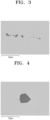
- FIG. 3 is a microscopic image of inclusions with an average diameter of 2 ⁇ m or less in the sample of Test Example 1
- FIG. 4 is a microscopic image of inclusions with an average diameter of 5 ⁇ m or more in the sample of Test Example 5.
- first heat treatment corresponds to the heat treatment (S30) according to an embodiment of the present invention, which is described above in relation to FIG. 1
- APL corresponds to the preliminary annealing (S45) according to an embodiment of the present invention, which is described above in relation to FIG. 2
- APL refers to preliminary annealing performed after hot rolling and before cold rolling, and the preliminary annealing includes performing annealing under conditions of a heating rate: 20 °C/s or more, an annealing temperature: 950 °C to 1100 °C, and a holding time: 30 sec. to 120 sec., and performing cooling under a condition of a cooling rate: 30 °C/s or more.
- the inclusion related items in Table 2 show the distribution of inclusions in the finally annealed material, and indicate area fractions (area%) of inclusions with an average diameter of 2 ⁇ m or less and inclusions with an average diameter of 5 ⁇ m or more, and a ratio therebetween.
- the magnetic properties of the final product were determined by measuring and averaging core loss and magnetic flux density values in the L and C directions using a single sheet tester (SST).
- test examples of the present invention show that, by heat treating a hot-rolled material after hot rolling and before cooling to room temperature, recrystallization/grain growth may be induced in the hot-rolled material and thus cold rolling may be performed without APL.
Landscapes
- Chemical & Material Sciences (AREA)
- Engineering & Computer Science (AREA)
- Mechanical Engineering (AREA)
- Materials Engineering (AREA)
- Metallurgy (AREA)
- Organic Chemistry (AREA)
- Physics & Mathematics (AREA)
- Thermal Sciences (AREA)
- Crystallography & Structural Chemistry (AREA)
- Electromagnetism (AREA)
- Manufacturing & Machinery (AREA)
- Dispersion Chemistry (AREA)
- Power Engineering (AREA)
- Manufacturing Of Steel Electrode Plates (AREA)
- Soft Magnetic Materials (AREA)
Applications Claiming Priority (2)
| Application Number | Priority Date | Filing Date | Title |
|---|---|---|---|
| KR1020220076986A KR102792056B1 (ko) | 2022-06-23 | 2022-06-23 | 무방향성 전기강판 및 그 제조 방법 |
| PCT/KR2023/007914 WO2023249295A1 (fr) | 2022-06-23 | 2023-06-09 | Tôle d'acier électrique non orientée et procédé de fabrication associé |
Publications (2)
| Publication Number | Publication Date |
|---|---|
| EP4545659A1 true EP4545659A1 (fr) | 2025-04-30 |
| EP4545659A4 EP4545659A4 (fr) | 2025-09-03 |
Family
ID=89380203
Family Applications (1)
| Application Number | Title | Priority Date | Filing Date |
|---|---|---|---|
| EP23827415.3A Pending EP4545659A4 (fr) | 2022-06-23 | 2023-06-09 | Tôle d'acier électrique non orientée et procédé de fabrication associé |
Country Status (6)
| Country | Link |
|---|---|
| US (1) | US20250122591A1 (fr) |
| EP (1) | EP4545659A4 (fr) |
| JP (1) | JP2025522540A (fr) |
| KR (1) | KR102792056B1 (fr) |
| CN (1) | CN119452108A (fr) |
| WO (1) | WO2023249295A1 (fr) |
Family Cites Families (13)
| Publication number | Priority date | Publication date | Assignee | Title |
|---|---|---|---|---|
| JPS60138014A (ja) * | 1983-12-26 | 1985-07-22 | Kawasaki Steel Corp | 無方向性珪素鋼板の製造方法 |
| JPS6254023A (ja) * | 1985-08-31 | 1987-03-09 | Nippon Steel Corp | 高級無方向性電磁鋼板用熱延板の製造方法 |
| JPS62102506A (ja) * | 1985-10-29 | 1987-05-13 | Kawasaki Steel Corp | 無方向性けい素鋼板の製造方法 |
| JP2992201B2 (ja) * | 1993-09-29 | 1999-12-20 | 川崎製鉄株式会社 | 鉄損の低い無方向性電磁鋼板およびその製造方法 |
| KR100544612B1 (ko) * | 2001-12-22 | 2006-01-24 | 주식회사 포스코 | 자성이 우수한 무방향성 전기강판의 제조방법 |
| JP4231278B2 (ja) * | 2002-11-21 | 2009-02-25 | 新日本製鐵株式会社 | 高級無方向性電磁鋼板の製造方法 |
| KR20140133100A (ko) * | 2013-05-09 | 2014-11-19 | 주식회사 포스코 | 무방향성 전기강판 및 그 제조방법 |
| KR101505300B1 (ko) | 2013-06-27 | 2015-03-23 | 현대제철 주식회사 | 방향성 전기강판 제조 방법 |
| WO2018025941A1 (fr) * | 2016-08-05 | 2018-02-08 | 新日鐵住金株式会社 | Feuille d'acier électromagnétique non orientée, procédé de production d'une feuille d'acier électromagnétique non orientée et procédé de production d'un noyau de moteur |
| JP6794704B2 (ja) * | 2016-08-05 | 2020-12-02 | 日本製鉄株式会社 | 無方向性電磁鋼板、無方向性電磁鋼板の製造方法及びモータコアの製造方法 |
| TWI658152B (zh) * | 2017-03-07 | 2019-05-01 | 日商新日鐵住金股份有限公司 | 無方向性電磁鋼板及無方向性電磁鋼板之製造方法 |
| KR102120276B1 (ko) * | 2018-09-27 | 2020-06-08 | 주식회사 포스코 | 무방향성 전기강판 및 그 제조방법 |
| KR102348508B1 (ko) * | 2019-12-19 | 2022-01-07 | 주식회사 포스코 | 무방향성 전기강판 및 그 제조방법 |
-
2022
- 2022-06-23 KR KR1020220076986A patent/KR102792056B1/ko active Active
-
2023
- 2023-06-09 CN CN202380048723.6A patent/CN119452108A/zh active Pending
- 2023-06-09 EP EP23827415.3A patent/EP4545659A4/fr active Pending
- 2023-06-09 WO PCT/KR2023/007914 patent/WO2023249295A1/fr not_active Ceased
- 2023-06-09 JP JP2024575267A patent/JP2025522540A/ja active Pending
-
2024
- 2024-12-19 US US18/987,670 patent/US20250122591A1/en active Pending
Also Published As
| Publication number | Publication date |
|---|---|
| CN119452108A (zh) | 2025-02-14 |
| KR20240000242A (ko) | 2024-01-02 |
| EP4545659A4 (fr) | 2025-09-03 |
| US20250122591A1 (en) | 2025-04-17 |
| KR102792056B1 (ko) | 2025-04-08 |
| JP2025522540A (ja) | 2025-07-15 |
| WO2023249295A1 (fr) | 2023-12-28 |
Similar Documents
| Publication | Publication Date | Title |
|---|---|---|
| KR102278897B1 (ko) | 무방향성 전기강판 및 그 제조방법 | |
| EP4534717A1 (fr) | Tôle d'acier électrique non orientée et procédé de fabrication associé | |
| JP7253054B2 (ja) | 磁性に優れる無方向性電磁鋼板およびその製造方法 | |
| KR101037159B1 (ko) | 가공성이 우수한 무방향성 전기강판 및 그 제조방법 | |
| EP4640875A1 (fr) | Tôle d'acier électrique non orientée et son procédé de fabrication | |
| JP4507316B2 (ja) | Dcブラシレスモーター | |
| EP4386100A1 (fr) | Tôle d'acier électrique non orientée et son procédé de fabrication | |
| EP4545659A1 (fr) | Tôle d'acier électrique non orientée et procédé de fabrication associé | |
| JP2024099357A (ja) | 高磁束密度および鉄損特性に優れた軟磁性鋼線およびその製造方法、ならびに軟磁性鋼線から作製したコア材を含む電磁部品 | |
| EP4560043A1 (fr) | Tôle d'acier électrique non orienté et procédé de fabrication associé | |
| EP4563715A1 (fr) | Tôle d'acier électrique non orienté et son procédé de fabrication | |
| EP4560042A1 (fr) | Tôle d'acier électrique non orienté et son procédé de fabrication | |
| KR102786631B1 (ko) | 무방향성 전기강판 및 그 제조 방법 | |
| US20250215520A1 (en) | Non-oriented electrical steel sheet and manufacturing method therefor | |
| KR102795297B1 (ko) | 무방향성 전기강판 및 그 제조 방법 | |
| KR102933968B1 (ko) | 무방향성 전기강판 | |
| KR102880796B1 (ko) | 무방향성 전기강판 및 그 제조방법 | |
| KR20260056385A (ko) | 열연소둔강판, 무방향성 전기 강판 및 이들의 제조 방법 | |
| KR20260004894A (ko) | 무방향성 전기강판 및 그 제조방법 | |
| KR20240088144A (ko) | 자기적 특성이 우수한 무방향성 전기강판 제조방법 및 이에 의해 제조된 무방향성 전기강판 | |
| KR20250094328A (ko) | 무방향성 전기강판 및 그 제조방법 | |
| KR20240063275A (ko) | 무방향성 전기강판 제조방법 및 이에 의해 제조된 무방향성 전기강판 | |
| KR20250105722A (ko) | 무방향성 전기강판 및 무방향성 전기강판 제조 방법 | |
| KR20250104800A (ko) | 무방향성 전기강판 | |
| KR20250105028A (ko) | 무방향성 전기강판 및 그 제조방법 |
Legal Events
| Date | Code | Title | Description |
|---|---|---|---|
| STAA | Information on the status of an ep patent application or granted ep patent |
Free format text: STATUS: THE INTERNATIONAL PUBLICATION HAS BEEN MADE |
|
| PUAI | Public reference made under article 153(3) epc to a published international application that has entered the european phase |
Free format text: ORIGINAL CODE: 0009012 |
|
| STAA | Information on the status of an ep patent application or granted ep patent |
Free format text: STATUS: REQUEST FOR EXAMINATION WAS MADE |
|
| 17P | Request for examination filed |
Effective date: 20250106 |
|
| AK | Designated contracting states |
Kind code of ref document: A1 Designated state(s): AL AT BE BG CH CY CZ DE DK EE ES FI FR GB GR HR HU IE IS IT LI LT LU LV MC ME MK MT NL NO PL PT RO RS SE SI SK SM TR |
|
| REG | Reference to a national code |
Ref country code: DE Ref legal event code: R079 Free format text: PREVIOUS MAIN CLASS: C21D0008120000 Ipc: C21D0006000000 |
|
| A4 | Supplementary search report drawn up and despatched |
Effective date: 20250801 |
|
| RIC1 | Information provided on ipc code assigned before grant |
Ipc: C21D 6/00 20060101AFI20250728BHEP Ipc: C21D 1/18 20060101ALI20250728BHEP Ipc: C21D 8/12 20060101ALI20250728BHEP Ipc: C22C 38/02 20060101ALI20250728BHEP Ipc: C22C 38/04 20060101ALI20250728BHEP Ipc: C22C 38/06 20060101ALI20250728BHEP Ipc: C22C 38/00 20060101ALI20250728BHEP Ipc: C22C 38/14 20060101ALI20250728BHEP Ipc: C21D 9/46 20060101ALI20250728BHEP Ipc: B21C 47/02 20060101ALI20250728BHEP Ipc: H01F 1/147 20060101ALI20250728BHEP |
|
| DAV | Request for validation of the european patent (deleted) | ||
| DAX | Request for extension of the european patent (deleted) |