EP4546132A1 - Procédé et système d'exécution d'une application critique pour la sécurité - Google Patents
Procédé et système d'exécution d'une application critique pour la sécurité Download PDFInfo
- Publication number
- EP4546132A1 EP4546132A1 EP23205580.6A EP23205580A EP4546132A1 EP 4546132 A1 EP4546132 A1 EP 4546132A1 EP 23205580 A EP23205580 A EP 23205580A EP 4546132 A1 EP4546132 A1 EP 4546132A1
- Authority
- EP
- European Patent Office
- Prior art keywords
- safety
- critical application
- critical
- hypervisor
- guest
- Prior art date
- Legal status (The legal status is an assumption and is not a legal conclusion. Google has not performed a legal analysis and makes no representation as to the accuracy of the status listed.)
- Pending
Links
Images

Classifications
-
- G—PHYSICS
- G06—COMPUTING OR CALCULATING; COUNTING
- G06F—ELECTRIC DIGITAL DATA PROCESSING
- G06F9/00—Arrangements for program control, e.g. control units
- G06F9/06—Arrangements for program control, e.g. control units using stored programs, i.e. using an internal store of processing equipment to receive or retain programs
- G06F9/46—Multiprogramming arrangements
- G06F9/50—Allocation of resources, e.g. of the central processing unit [CPU]
- G06F9/5061—Partitioning or combining of resources
- G06F9/5077—Logical partitioning of resources; Management or configuration of virtualized resources
-
- G—PHYSICS
- G06—COMPUTING OR CALCULATING; COUNTING
- G06F—ELECTRIC DIGITAL DATA PROCESSING
- G06F21/00—Security arrangements for protecting computers, components thereof, programs or data against unauthorised activity
- G06F21/50—Monitoring users, programs or devices to maintain the integrity of platforms, e.g. of processors, firmware or operating systems
- G06F21/57—Certifying or maintaining trusted computer platforms, e.g. secure boots or power-downs, version controls, system software checks, secure updates or assessing vulnerabilities
-
- G—PHYSICS
- G06—COMPUTING OR CALCULATING; COUNTING
- G06F—ELECTRIC DIGITAL DATA PROCESSING
- G06F9/00—Arrangements for program control, e.g. control units
- G06F9/06—Arrangements for program control, e.g. control units using stored programs, i.e. using an internal store of processing equipment to receive or retain programs
- G06F9/44—Arrangements for executing specific programs
- G06F9/455—Emulation; Interpretation; Software simulation, e.g. virtualisation or emulation of application or operating system execution engines
- G06F9/45533—Hypervisors; Virtual machine monitors
- G06F9/45558—Hypervisor-specific management and integration aspects
-
- G—PHYSICS
- G06—COMPUTING OR CALCULATING; COUNTING
- G06F—ELECTRIC DIGITAL DATA PROCESSING
- G06F9/00—Arrangements for program control, e.g. control units
- G06F9/06—Arrangements for program control, e.g. control units using stored programs, i.e. using an internal store of processing equipment to receive or retain programs
- G06F9/44—Arrangements for executing specific programs
- G06F9/455—Emulation; Interpretation; Software simulation, e.g. virtualisation or emulation of application or operating system execution engines
- G06F9/45533—Hypervisors; Virtual machine monitors
- G06F9/45558—Hypervisor-specific management and integration aspects
- G06F2009/45583—Memory management, e.g. access or allocation
Definitions
- the present invention generally, relates to the field of safety-critical applications. More specifically, the present invention relates to a method for executing a safety-critical application on a hardware platform comprising at least one processor and/or processor core. Further, the present invention relates to a computing system configured to perform steps of such method, to one or more computer programs for instructing a computing system to perform steps of such method, and to a machine-readable data carrier and/or download product storing such one or more computer programs.
- Safety-critical applications are usually defined or understood as software applications or programs whose failure or malfunction can at least in principle result in severe damage or harm, in particular damage or harm to one or more of machinery, equipment, human health, and environmental health. In other words, failure of a safety-critical application can cause an increase in the safety risk for human beings, machinery utilized, and/or environment involved.
- Safety-critical applications can, for example, be run or executed on so-called safety-critical systems, which can include computing systems running one or more software-based safety-critical applications as well as more complex systems involving additional components, such as one or more sensors, one or more actuators, and/or other hardware components.
- safety-critical systems and corresponding applications for controlling and/or monitoring one or more components can be found in vehicles, power plant control systems, manufacturing or production control systems, chemical plant control systems, building or facility control systems, and many others.
- safety-critical applications can also be run or executed in parallel, sequentially, or alternately with non-safety-critical applications, or more generally can coexist with applications not fulfilling the safety level of the safety-critical applications.
- safety-critical applications may be executed on top of a non-safety qualified OS or OS kernel.
- Such systems are usually referred to as mixed-criticality systems or mixed-criticality software systems.
- Mixed-criticality systems can be complex software-based systems, where software applications or software components of different criticality, including software of the OS, such as an OS kernel, can run on common hardware, for example one or more common processors, and the different applications are from different quality classes or safety levels, including at least one safety-critical application. This means not all of the applications in a mixed-criticality system are in adherence with the quality assurance measures as requested or recommended by standards like the ISO 26262 and with respect to the highest safety level any of the applications should comply with.
- isolation of private memory of applications can be guarded by memory protection or memory management units (MMUs), which can be implemented in processors, and which can deliver information about noticeable access violations.
- MMUs memory protection or memory management units
- Other safety measures can relate to context switching between programs or applications, which refers to the process of storing the state of a process, program, thread, and/or application, so that it can be restored and resume execution at a later point in time.
- correct context switching may mean that the state of a safety-critical application should not get erroneously corrupted during a context switch, for example between the safety-critical and a non-safety-critical application.
- the software used for making dedicated features of a processor of a hardware platform or computing system accessible is commonly encapsulated in a special program known as operating system kernel (also referred to as OS kernel or kernel herein).
- OS kernel also referred to as OS kernel or kernel herein
- the kernel, OS kernel, and/or system kernel referred to herein may be regarded as supervisor program, which may have elevated privilege level when compared to other software components, programs or software executed on top of the kernel.
- supervisor program which may have elevated privilege level when compared to other software components, programs or software executed on top of the kernel.
- the correctness of the hardware features one uses can require that the operating system kernel operates on the hardware in a correct way. Hence, correct functioning of a safety-critical application may rely or depend on correct functioning of the operating system kernel software.
- this dependency may not only involve the software unit or kernel software, which operates the hardware feature under consideration, but may rather involve all software code, which may potentially impact the software unit under consideration, for example the entire OS kernel.
- aspects of the present disclosure relate to a method for executing a safety-critical application on a hardware platform, to a computing system configured to perform steps of such method, to one or more computer programs for instructing a computing system to perform steps of such method, and to a machine-readable data carrier and/or download product storing such one or more computer programs. It is emphasized that any feature, function, element, and advantage described herein with reference to one aspect of the present disclosure, equally applies to any other aspect of the present disclosure described herein.
- a method for executing a safety-critical application on a hardware platform comprising at least one processor and/or processor core.
- the method comprises the steps of:
- the features and steps of the aforementioned method synergistically ensure or allow for safe execution of the safety-critical application on the hardware platform on top of any guest operating system ("OS"), for example including any guest OS kernel, kernel software, or kernel component.
- OS guest operating system
- the features and steps of the aforementioned method can synergistically interact to ensure freedom from interference (FFI) of the safety-critical application in terms of one or both space and time.
- FFI freedom from interference
- the method of the present disclosure can allow for safe execution of the safety-critical application without necessarily requiring the software components of the guest OS, such as the entire guest OS kernel, to be safety-qualified.
- this can allow for safe execution of the safety-critical application on various different hardware platforms, with software components, and optionally hardware components, which may not be safety qualified.
- the method and computing system according to the present disclosure can be used to advantage on safety-qualified systems and/or in mixed criticality systems.
- the present disclosure is not limited in this respect.
- the present invention can be used to advantage in conjunction with any kernel, including safety-qualified and non-safety-qualified kernels, such as e.g., a Linux-based kernel.
- application can refer to or include a software application or program.
- application as used herein is not necessarily limited to pure software applications, but can include software-based applications, which may optionally include one or more interfaces for receiving sensor signals from one or more sensors, and/or for transmitting one or more control signals, interchangeably used herein with actuation signal, to one or more actuators, and/or other hardware components.
- the present disclosure refers to an operating system architecture with a kernel.
- the kernel, OS kernel, and/or system kernel referred to herein may be regarded as supervisor program, which may have elevated privilege level compared to other software components, programs or software executed on top of the kernel. Accordingly, for those skilled in the art, it is understood that the general concept described herein can be applied to various architectures as long as exception levels and/or privilege levels mentioned in the present disclosure can be utilized.
- safety-critical application is typically understood as software(-based) application or program whose failure or malfunction can at least in principle result in damage or harm, in particular damage or harm to one or more of machinery, equipment, human health, and environmental health.
- Safety-related applications or systems may be defined or understood as comprising aspects not under the control of the respective safety-critical application or system, such as personnel operating the application or system.
- safety-critical and safety-related application or system can be interchangeably or synonymously used herein.
- safety-critical can include or refer to safety-related, and vice versa.
- the present disclosure may refer in various instances to a processor, which may typically be realized as single-core or multi-core Central Processing Unit (CPU) having one or more cores or processor cores, which may be used to run an operating system.
- CPU Central Processing Unit
- the present disclosure is not limited in this respect, but can also e.g., be applied to multi-processor hardware that shares a memory. Accordingly, the terms processor, processor core, and core can be used synonymously herein.
- the hardware platform can refer to or include a data processing platform or processing circuitry, which may include or refer to e.g., a CPU with one or more processor cores for data processing, or which may refer to a multi-processor architecture. Any reference to a single processor or processor core can include reference to multiple processors or processor cores. Also, the present disclosure is not limited to a particular processor architecture, but rather can be applied to any type or architecture of processors, such as ARM, x86, RISC and others, including multi-processor architectures that share memory.
- the hardware platform can include optional components and/or provide optional hardware resources for data processing, such as a physical memory, e.g., Random Access Memory, cache memory, and/or other components.
- a physical memory e.g., Random Access Memory, cache memory, and/or other components.
- the hardware platform may be implemented in, and/or may be part of the computing system described herein. Hence, the terms hardware platform and computing system may be interchangeably or synonymously used herein.
- Executing the hypervisor on the hardware platform may refer to or include running the hypervisor on the at least one processor core of the hardware platform and optional further components or hardware resources thereof. Alternatively, or additionally, executing the hypervisor may include activating the hypervisor on the at least one processor core of the hardware platform.
- the hypervisor may generally refer to or denote a supervisory software component allowing to execute the monitoring component on the processor, processor core(s), and/or hardware platform.
- the monitoring component may refer to a supervisory software element or supervisory component of the hypervisor.
- the monitoring component may refer to or denote a supervisory software or component configured to monitor execution of the safety-critical application.
- the term monitoring component may refer to a software component, which may implement error-detection and/or error-indication. While this definition may correspond to an established understanding in safety engineering, it may deviate from the understanding on the term supervisor software in context of operating systems as a component or program to control or schedule processes and other programs.
- the hypervisor and/or the monitoring component thereof may be configured to monitor, determine, and/or confirm safe execution of the safety-critical application.
- the hypervisor and/or the monitoring component thereof may be configured to analyze a control flow of the processor (core) and/or one or more actions associated with or involving one or more hardware resources of the hardware platform, such as a physical memory, cache, and/or processor buffer.
- the hypervisor may further be configured to instantiate the at least one virtual machine.
- the hypervisor may be configured to create at least one instance of at least one virtual machine, for example according to one or more predefined specifications for the one or more virtual machines.
- instantiating the at least one virtual machine may include providing one or more virtual hardware resources, for example according to one or more predefined specifications, to the at least one virtual machine.
- instantiating the at least one virtual machine may include mapping one or more physical hardware resources of the hardware platform, for example the at least one processor, processor core, and/or further resources, such as a physical memory of the hardware platform, to one or more virtual hardware resources for the at least one virtual machine.
- instantiating the at least one virtual machine may include booting and/or executing a guest operating system or operating system of the virtual machine. This may include running a guest operating system kernel or kernel software of the guest operating system. Accordingly, reference to the guest operating system herein can include reference to a guest operating system kernel, and vice versa.
- the present disclosure is not limited to a particular type of guest operating system and/or guest OS kernel, but rather can be used to advantage on any guest OS and/or guest OS kernel.
- the guest OS and/or guest OS kernel may be safety-qualified or may be non-safety-qualified.
- the guest OS kernel may be a monolithic kernel, a modular kernel, or a combination thereof.
- the guest OS and/or guest OS kernel may be proprietary or may be at least in part based on open source.
- the guest OS may be Linux-based, and/or the guest OS kernel may be a Linux-based kernel.
- One or more safety-critical applications may be executed on top of the guest operating system.
- the at least one virtual machine may provide a virtual computing environment with one or more virtual hardware resources and/or software resources, such as e.g., the guest OS and/or guest OS kernel.
- Execution of the one or more safety-critical applications on top of the guest OS may refer to or include running the one or more safety-critical applications in the guest OS provided by the virtual machine. Accordingly, one or more functions of the safety-critical application may involve, and/or be controlled by the guest OS and/or guest OS kernel.
- different privilege levels may define different sets of permissions or actions allowed to be performed by the respective component, wherein a higher privilege level includes more permissions when compared to a lower privilege level.
- a virtual computing environment can be created and/or controlled by the hypervisor, which maps and/or associates physical hardware resources of the hardware platform to virtual resources of the virtual machine, the guest OS, the guest OS kernel, as well as the processes, programs and applications executed therein, including the at least one safety-critical application.
- the monitoring component can comprehensively monitor, and/or analyze any action, and/or event associated with the safety-critical application, the guest OS, and/or the guest OS kernel. In turn, this can allow to detect one or more actions and/or events which could potentially affect correct functioning or safe execution of the safety-critical application, and optionally to perform countermeasures to ensure safe execution of the safety-critical application.
- actions, or synonymously events which could potentially affect correct functioning of the safety-critical application
- This can include any action or event that could possibly interfere with or influence execution of the safety-critical application or a part thereof, such as modify a virtual resource utilized by the safety-critical application and/or lead to a corrupted state of the safety-critical application.
- the list of predefined actions may, in the context of the present disclosure, refer to a single action or a plurality of actions, respectively events, which could directly and/or indirectly affect execution of the safety-critical application.
- the list can be provided in abstract form, and providing the list may mean or be construed as defining one or more actions, which may have a relevance for an integrity and/or functioning of the safety-critical application.
- the list may be defined and/or stored as data register or structure, for example maintained by, and/or accessible by the hypervisor, and/or its monitoring component. Alternatively, or additionally, the list may be defined based on configuring the at least one processor core, for example one or more MMUs or registers thereof.
- the list of predefined actions may be included or be associated with a memory register for physical memory or memory address space of the hardware platform and/or a page table tree for mapping physical memory or memory space to virtual memory or memory space of the at least one virtual machine.
- a memory register for physical memory or memory address space of the hardware platform
- a page table tree for mapping physical memory or memory space to virtual memory or memory space of the at least one virtual machine.
- other data structures and/or control means can be used instead or in addition.
- the hypervisor and/or its monitoring component may be configured to analyze a control flow of the processor and/or processor core.
- the processor's and/or processor core's control flow may refer to the order in which individual statements, instructions, function calls of one or more software components or applications are executed and/or evaluated by the at least one processor and/or processor core of the hardware platform.
- the hypervisor and/or its monitoring component may be configured to detect, based on analyzing the control flow, that an action on and/or defined in accordance with the list of predefined actions is scheduled or about to be performed. Accordingly, a "to-be-performed" action on the list may, in the context of the present disclosure, relate to an action defined in accordance with or contained in the list, which is scheduled for execution and/or evaluation by the at least one processor core or hardware platform in general.
- one or more criteria or conditions for each of the actions can be defined by or based on the list of predefined actions, and based on determining whether said one or more criteria or conditions for a single action are fulfilled, the hypervisor and/or monitoring component may identify or detect said action as to-be-performed action on the list, and divert the control flow towards the respective handler for said to-be-performed action.
- diverting the control flow by the hypervisor may include taking over control of the control flow and directing the control flow towards or to the respective handler of the monitoring component associated with said action on the list.
- the handler may refer to a software component including a routine, which may be specifically associated with one or more actions and/or events defined by the list, and which may be configured to trigger a predefined response in response to said one or more actions and/or events occurring. Accordingly, the handler can dictate a particular response or subsequent action or step to be triggered, once one or more actions and/or events defined by the list of predefined actions occur. It should be noted that one handler may be responsible for and/or associated with a single action or a plurality of actions on the list of predefined actions. Accordingly, the monitoring component may maintain or include one or more handlers associated with one or more actions defined in the list of predefined actions.
- the monitoring component and/or handler may be configured to determine whether the to-be-performed action is to be allowed for execution or whether the to-be-performed action is to be disallowed for execution. For example, actions that can be executed without affecting or without bearing the risk of affecting the safety-critical application may be allowed, and actions that may possibly affect functioning of the safety-critical application may be disallowed.
- the predetermined ruleset may define one or more criteria or conditions for each action.
- the handler may be configured to detect whether the one or more conditions or criteria are fulfilled in order to determine and/or check whether the to-be-performed action should be allowed and can be executed, or whether it should be disallowed, and execution is to be prevented.
- the handler of the monitoring component may be configured to cause said to-be-performed action to be actually performed or executed. This may include actual execution of the to-be-performed action on the hardware platform.
- the handler may be configured to perform at least one preparation step for the to-be-performed action, and then cause said to-be-performed action to be performed. Therein, causing the action to be performed may include scheduling said action for execution on the at least one processor core.
- preparation step may, for example, involve preparation of (computing) resources, e.g., virtual and/or physical computing resources, such that safe execution of the safety-critical application is ensured, as will be discussed in more detail hereinbelow.
- the control flow of the processor can be comprehensibly monitored and analyzed by the monitoring component and/or its one or more handlers.
- This enables the monitoring component and/or the one or more handlers to reliably detect and/or identify one or more actions, as defined by or in accordance with the list of predefined actions, which may have a relevancy for the safety-critical application and/or can affect execution thereof.
- it may be reliably determined whether a particular action can be executed without affecting the safety-critical application.
- a particular action is to be suppressed, e.g., because the safety-critical application may be compromised due to execution thereof.
- a preparatory measure or preparation step may be initiated by the monitoring component and/or the one or more handlers, which may ensure that a particular to-be-performed action can be safely executed, i.e., executed without possibly affecting or compromising the safety-critical application.
- this concept can provide a safe execution environment for executing the safety-critical application on top of the guest OS and/or guest OS kernel.
- freedom from interference of the safety-critical application from any process or software component running in the guest OS, including the guest OS kernel, as well as from any process that may be executed by the OS guest kernel, may be ensured. Consequential thereto, safe execution can be guaranteed or ensured, without requiring the entire guest OS and/or guest OS kernel to be safety-qualified.
- safety-critical functionality can be integrated in commonly available computing infrastructure, which can also allow for retrofitting such functionality to existing systems.
- the method of the present disclosure may therefore be of particular advantage in mixed-critical system, although not limited thereto.
- any (guest) OS kernel or guest OS utilized for hosting a safety-critical application can contribute to one or more safety-critical functions handled by the safety-critical application.
- any (guest) OS kernel or guest OS utilized for hosting a safety-critical application can contribute to one or more safety-critical functions handled by the safety-critical application.
- freedom from interference between the guest OS, the kernel and/or any other software component running on the guest OS or kernel should be ensured.
- freedom from interference can be ensured or guaranteed by providing comprehensive monitoring and control capabilities to the hypervisor, the monitoring, and/or the one or more handlers of the monitoring component.
- This can, for example, allow to isolate computing resources, for example virtual/physical hardware resources, e.g., memory pages and/or software-based resources used by the safety-critical application, from the guest OS, the guest OS kernel, and/or other software processes executed.
- this can allow to use an unqualified OS kernel software, such as the Linux-kernel, for the guest OS in which the safety-critical application is executed.
- a non-limiting example of spatial isolation of computing resources can for instance include spatial isolation of memory, for example private virtual memory, used by the safety-critical application from user processes running non-safety qualified code and/or from the underlying unqualified (guest) operating system or kernel.
- memory for example private virtual memory
- guest unqualified operating system or kernel.
- the latter property may hardly be established as the OS kernel typically has access to all resources commonly used for isolating processes from another or even itself.
- the method of the present disclosure exploits the benefits of a virtual computing environment. For instance, a virtualization mode of the at least one processor core or hardware platform may be utilized for this purpose.
- the hypervisor In combination with the high privilege level of the hypervisor, which exceeds the privilege level of any virtual machine in the virtual computing environment, execution of the monitoring component and capability to divert the control flow to one or more handlers can be ensured.
- the hypervisor may be safety-qualified, at least in part.
- the hypervisor may be considered as supervisory software, for example a meta-operating system or hypervisor kernel, which is active on the at least one processor core and allows one to execute the monitoring component.
- a hypervisor mode of the at least one processor core may be utilized for executing the hypervisor, wherein a code of the hypervisor may be limited, for example to a few thousand lines of code, such that it is accessible for any safety or security qualification. This way, freedom from interference can be ensured from one or both the OS kernel and one or more other processing executed based or using the kernel.
- PAN Privileged Access None
- SW-PAN software-based counterpart
- the goal of the PAN feature is to prevent unintended privileged accesses, for example from Linux kernel running at exception level 1, EL1, to unprivileged user memory, such as e.g., of a safety application running at exception level 0, EL0.
- the PAN feature cannot isolate between different user processes, and it would still allow the guest OS kernel to intentionally access user memory space using dedicated instructions like the LDTR and STTR instructions.
- the PAN and/or SW-PAN feature of conventional systems would be insufficient to allow for safe execution of the safety-critical application.
- conventional systems or techniques may be based on a memory integrity feature, also called hypervisor-protected code integrity or hypervisor enforced code integrity, that implements a hypervisor-based protection of OS kernel memory pages, such that those pages cannot be executed before code integrity has been successfully checked and such that no write to executable memory pages is possible.
- this approach is based on the assumption that only integrity validated and/or safety-qualified kernel code can be executed. Hence, also this approach may be insufficient for ensuring safe execution of the safety-critical application on a guest OS kernel.
- the method of the present disclosure can ensure freedom from interference, for example memory isolation, between a non-safety qualified guest OS, and/or guest OS kernel, and a safety-qualified application, respectively at least one safety-critical application, running in user space on top of this guest OS kernel by implementing the monitoring component executed on or by the hypervisor at higher privilege level than the virtual machine executing the guest OS and kernel.
- the hypervisor may optionally be safety-qualified.
- the to-be-performed action on the list of predefined actions comprises a transition of the control flow between the safety-critical application and the guest operating system.
- the to-be-performed action may include or involve a context switch between the safety-critical application and the guest operating system. This can include a context switch or switch of the control flow from the safety-critical application to the guest OS and/or a context switch from the guest OS to the safety-critical application.
- a context switch and/or corresponding transition of the control flow can include storing the state of one process, program, thread, and/or application, so that it can be restored and resume execution at a later point in time. Accordingly, storing the state and/or loading the state for resuming execution can in principle bear the risk of affecting the safety-critical application, for example when an interfering process corrupts the state. Hence, by defining such action on the list of predefined actions and instructing the hypervisor to divert the control flow towards the respective handler, context switching can be performed in safe manner or without affecting the safety-critical application.
- the handler may be configured to identify and/or detect a transition of the control flow between the safety-critical application and the guest operating system as the to-be-performed action and prepare for the transition of the control flow between the safety-critical application and the guest operating system as the to-be-performed action.
- the preparation can comprise changing access permissions to at least one resource, also referred to herein as computing resource, used by the safety-critical application.
- a resource and/or computing resource can refer to a virtual resource and/or physical resource, unless explicitly specified.
- any such resource can include memory (interchangeably used with memory page(s)) and/or processing resources by the processor.
- the computing resource may, for example, include a virtual resource, such as virtual memory (virtual private and/or shared memory), and/or virtual processing resources, physical computing resources, as well as software-based resources.
- Changing access permission can, for example, involve applying appropriate settings in one or more memory pages and/or memory registers.
- the to-be-performed action relates to a transition of the control flow from the safety-critical application to the guest operating system, wherein the preparation for the transition of the control flow from the safety-critical application to the guest operating system as the to-be-performed action comprises prohibiting or disabling write access to memory pages used by the safety-critical application.
- Memory pages of the safety-critical application may refer to virtual memory or memory space, private and/or shared memory, allocated to the safety-critical application, and used for executing the safety-critical application.
- Disabling write access can, for example, involve applying appropriate settings in one or more memory pages and/or memory registers, such as setting said memory pages to non-writable and/or read-only.
- any attempt of any process for example executed by the guest OS and/or guest kernel, triggers an exception, which can cause, trigger, and/or instruct the hypervisor to take over control of the control flow and divert it to the monitoring component and/or respective handler.
- a context switch cannot compromise or otherwise affect execution of the safety-critical application.
- the to-be-performed action relates to a transition of the control flow from guest OS and/or kernel to the safety-critical application, wherein the preparation for the transition of the control flow from the guest operating system to the safety-critical application comprises allowing or enabling write access to memory pages used by the safety-critical application.
- the safety-critical application can resume execution, for example based on loading its previous state, e.g., from the memory pages.
- the method further comprises, when prohibiting access to memory pages, leaving writable at least one memory area that is designated for data transfer between the safety-critical application and the guest operating system.
- Said at least one memory area may, for example, include shared memory that is dedicated for data exchange between the safety-critical application and the guest OS and/or kernel, which may in certain scenarios or use cases be wanted. For instance, access to data from other hard- and/or software components may be provided to the safety-critical application.
- shared memory may optionally be validated by the safety-critical application or only accessed for non-safety-relevant functions provided by the safety-critical application, such that leaving writable the at least one memory area cannot compromise or otherwise affect execution of the safety-critical application.
- access to one or more page tables and/or page table trees, PTT, maintained in the virtual machine is modified.
- Modifying and/or altering access to one or more page tables and/or page table trees can, for example, involve applying appropriate settings in one or more page tables, one or more levels of a page table tree, and/or one or more PTTs. This can ensure proper isolation of hardware resources and freedom from interference.
- a page table refers to a data structure used by a virtual memory system in a computer operating system to store the mapping between virtual memory addresses and a physical memory of the hardware platform, for example in the form of one or more page table entries in the page table and/or a page table tree.
- page tables can hold and/or be associated with permission settings on memory access and/or other settings.
- Page tables can further be arranged or structured as multilevel or multi- page table trees in hierarchical manner.
- page table entries of the level-1 page table can be pointers to a level-2 page table (tree) and entries of the level-2 page table (trees) can be pointers to a level 3 page table (tree) and so on.
- the entries of the last level page table (tree) store actual frame information of the memory, and the level-1 page table (tree) typically contains a single-page table, and the address of that table is typically stored in a Page Table Base Register, PTBR.
- PTBR Page Table Base Register
- pointers to the PTT can be stored in Translation Table Base Registers 0 and/or 1, referred to as TTBR0 and TTBR1.
- TTBR0 and TTBR1 Translation Table Base Registers 0 and/or 1
- the present disclosure is not limited to a particular processor architecture.
- the hypervisor may be responsible for a second stage address translation using stage-2 PTT(s), while within a virtual machine the guest OS may be responsible for the first stage using stage-1 PTT(s).
- stage-1 page table tree in addition to prohibiting write access to memory pages, access is prohibited to a stage-1 page table tree, PTT, maintained in the virtual machine.
- Prohibiting access permission to the stage-1 PTT can, for example, involve applying appropriate settings in the stage-1 PTT, and/or a base or memory register.
- the stage-1 PTT may be set non-readable, non-writable, and/or non-executable.
- any attempt of any process for example executed by the guest OS and/or guest kernel, to access the stage-1 PTT may trigger an exception, which can cause, trigger and/or instruct the hypervisor to take over control of the control flow and divert it to the monitoring component and/or respective handler.
- any modification of the stage-1 PTT can be effectively blocked, thereby ensuring integrity of the stage-1 PTT and its usability for the safety-critical application.
- by prohibiting access to the stage-1 PTT and/or one or more levels of the stage-1 PTT it can effectively be ensured that memory space pointed to by one or more page table entries of the stage-1 PTT, one or more levels thereof, and/or one or more PTTs of higher stage, such as stage-2 PTTs (and/or one or more levels of a stage-2 PTT), cannot be accessed by a component running at low privilege level, respectively can only be accessed by the hypervisor running at high privilege level. Consequential thereto, the physical memory allocated to the safety-critical application via the page table tree and its one or more stages can reliably be isolated, thereby ensuring safe execution of the safety-critical application.
- access is allowed to a stage-1 page table tree, PTT, maintained in the virtual machine.
- PTT stage-1 page table tree
- the instructing of the processor core to divert the control flow, and/or the prohibiting or allowing of access to memory pages comprises modifying a stage-2 page table tree, PTT, maintained by the hypervisor for the virtual machine.
- a stage-2 page table (PT) and/or page table tree may be maintained in and/or by the hypervisor for the at least one virtual machine, and a stage-1 page table and/or page table tree may be maintained in and/or by the virtual machine.
- one or more of the stage-1 and stage-2 PT and/or PTT can have one or more PTT levels. Accordingly, allowing or prohibiting access to a stage of a PT/PTT can include allowing or prohibiting access to one or more levels of the respective stage of the PT/PTT.
- instructing of the processor core to divert the control flow, and/or the prohibiting or allowing of access to memory pages may comprise modifying one or more settings for the stage-2 PT and/or PTT, so that in the at least one virtual machine, modifications to the stage-1 PT and/or PTT are prohibited or allowed.
- modifying the stage-2 PTT can include modifying one or more page table entries of the stage-2 PTT or one or more levels of the stage-2 PTT, for example such that a physical and/or virtual memory address mapped to the respective one or more page table entries is modified and/or changed.
- modification of a stage-2 PTT, one or more levels thereof, and/or one or more page table entries thereof can allow to switch physical and/or virtual memory used by the guest OS and/or the safety-critical application, and hence can provide an effective means for hardware or memory isolation, for example when a context switch between the guest OS or other software process running thereon and the safety-critical application occurs.
- modifying the stage-2 PTT can include modifying access permissions of one or more page table entries and/or one or more levels of the stage-2 PTT.
- modifying access permissions can include setting the stage-2 PTT to at least one of non-writable, non-readable, non-executable, writable, readable, and executable, as further discussed hereinbelow.
- translation lookaside buffers, TLBs, of other cores are flushed. This can avoid that other cores use cached PTT entries with outdated address mappings or permissions, and could for that reason accidently access or modify, for example write to, memory used by the safety-critical application.
- Providing the list of predefined actions can include activating, for example by the hypervisor and/or its monitoring component, one or more traps on the processor and/or processor core to divert the control flow to the respective handler.
- trapping also referred to as hardware-rooted or hardware-assisted trapping
- of the at least one processor and/or processor core may be used to trap and/or divert the control flow into the hypervisor, its monitoring component and/or the respective handler for the to-be-performed action.
- a trap may be considered as a condition or criterion, which when fulfilled triggers an exception, which may be detected by the hypervisor and/or monitoring component.
- a trap and/or corresponding exception can cause and/or instruct the hypervisor to take over control of the control flow and divert it to the monitoring component and/or the respective handler.
- trapping can provide a reliable tool for reliably detecting any action on the list of predefined actions, such as a context switch between the safety-critical application and the guest OS.
- the trapping and/or diverting of the control flow into the hypervisor may include, trigger, and/or be accompanied with executing an exit of the at least one virtual machine, which can be detected by the monitoring component, for example based on a corresponding exit signal or status code of the virtual machine.
- the exit of the at least one virtual machine, the corresponding exception and/or trap can allow to invoke the associated functions of the monitoring component and/or the respective handler.
- the trapping and/or diverting of the control flow can, in an exemplary implementation, be provoked, caused, and/or triggered by applying appropriate settings in a page table tree, for example a stage-2 page table tree (PTT) maintained by the hypervisor for the virtual machine running the safety-critical application.
- a page table tree for example a stage-2 page table tree (PTT) maintained by the hypervisor for the virtual machine running the safety-critical application.
- traps could be produced at least in part programmatically, for instance by so called Hypervisor Calls (HVC), and/or whenever the guest OS tries to re-write content of specific core registers of the processor, processor core, and/or memory pages (virtual and/or physical memory pages) that should be protected.
- HVC Hypervisor Calls
- An example of such memory pages are other stage-2 memory management unit protected (MMU protected) pages of memory.
- stages of the PTT may be stored at different locations and/or maintained by different entities or components, for example to further improve or increase hardware isolation.
- the stage-1 PTT may be maintained and/or stored at application or guest OS level, for instance at the safety-critical application and/or guest OS, whereas the stage-2 PTT, may be stored and/or maintained at the hypervisor. Handling the stage-2 PTT or higher stages at the hypervisor that has a higher privilege level than the virtual machine can allow to effectively control access to physical and/or virtual memory, and hence can allow for a more comprehensive overall control of the control flow and improved hardware isolation.
- the to-be-performed action comprises setting-up of a new safety-critical application by the guest operating system.
- Setting-up a new safety-critical application may include configuring the safety-critical application, for example in terms of one or more virtual and/or physical resources provided to the safety-critical application for its execution.
- setting-up a new safety-critical application may include creating and/or providing a safe execution environment for the safety-critical application based on configuring one or more virtual and/or physical resources provided to the safety-critical application for its execution.
- Including the setting-up of a new safety-critical application as an action on the list of predefined actions, which can trigger diverting the control flow to the hypervisor, can ensure that the hypervisor and/or monitoring component are aware of any new safety-critical application running in any one or more virtual machines on the hardware platform. Hence, correct monitoring and safe execution of the new safety-critical application can be ensured.
- the preparation for the to-be-performed action comprises allowing write access to memory pages that are to be used by the new safety-critical application.
- the hypervisor, monitoring component, and/or the respective handler for the to-be-performed action can allow the guest OS and/or guest OS kernel to populate memory pages of the new safety application to be set up. This can, for example, involve applying appropriate settings for different PTT level, which may affect stage-1 PTT and/or stage-2 PTT.
- the hypervisor, monitoring component and/or the respective handler may keep track of the new memory pages added to the stage-1 PTT for the new safety application.
- execution of code in these memory pages is disallowed. This can, for example, involve applying appropriate settings for different PTT level, which may affect stage-1 PTT and/or stage-2 PTT.
- Disallowing execution of code in the memory pages for the new safety-critical application can ensure that any attempt of any process to execute code, for example from the guest OS and/or guest OS kernel, is reliably detected and prevented, thereby ensuring that during start-up of the new safety-critical application no interference with resources provided to the safety-critical application can be comprised or modified. For instance, execution permission may be removed in stage-2 PTT, which can also be used to force a trap into the hypervisor when the new safety-critical application starts execution, e.g., to detect when a startup procedure of the safety-critical application is finished.
- execution of code in said memory pages is allowed.
- This can, for example, involve applying appropriate settings in one or more stages of a PTT.
- the memory pages referenced in a last stage of a PTT such as a stage-2 PTT, may be set to executable. Accordingly, after fully setting-up the new safety-critical application, and for example loading the new safety-critical application, execution of code in the memory pages allocated to the new safety-critical application can be allowed, thereby ensuring that the new safety-critical application can be executed.
- control flow in response to the control flow being diverted to a handler for and/or due to an attempt to execute code in non-executable memory pages of the safety-critical application, respectively of the guest operating system, it is determined that the control flow is transitioning to this safety-critical application, respectively to the guest operating system.
- setting the memory pages to non-executable can ensure that any attempt of any process of the guest OS and/or guest OS kernel to execute code in said memory pages is trapped and/or results in an exception.
- Such trapping and/or exception can further indicate that a context switch is occurring, which may instruct, or cause the monitoring component and/or respective handle to analyze and/or check the control flow to determine whether or not the action can be allowed and/or whether or not a preparation step should be performed in order to allow the action to be performed.
- the method further comprises executing, in the at least one virtual machine, at least one further application on top of the guest operating system.
- the at least one further application may be a non-safety-qualified application and/or have a lower safety level than the safety-critical application.
- the method may be performed and/or the safety-critical application may be executed in a mixed-critical system.
- the method described herein can allow to reliably ensure freedom from interference, although the present disclosure and method is not limited in this respect.
- a plurality of virtual machines each running one or more safety-critical applications and/or one or more non-safety-critical applications can be instantiated or set-up on the hardware platform and monitored by the hypervisor.
- a plurality of hypervisors and/or monitoring components may be utilized.
- the method further comprises processing, by the safety-critical application, measurement data acquired by at least one sensor into an actuation or control signal, and actuating at least one land, air, or sea vehicle, at least one robot, and/or any component thereof, with the actuation signal.
- the safety-critical application may determine the actuation signal to actuate at least one component of a land, air, or sea vehicle, and/or at least one robot, which can be any type of robotic equipment.
- an output of the safety-critical application may include the actuation signal, which can actuate one or more display components in a vehicle.
- a further aspect of the present disclosure relates to a computing system, which comprises a hardware platform with one or more processors, and/or processor cores, and a (physical and/or virtual) memory for data storage.
- the computing system is configured to perform steps of the method, as described hereinabove and hereinbelow. It is emphasized that any step, feature, function, and/or element described herein with reference to the method can be a feature, function, and/or element of the computing system, and vice versa.
- Yet another aspect of the present disclosure relates to one or more computer programs, comprising machine-readable instructions that, when executed by a computing system, cause the computing system to perform steps of the method, as described hereinabove and hereinbelow, and/or cause the computing system to perform the role of the monitoring component in the context of the method, as described hereinabove and hereinbelow.
- a further aspect of the present disclosure relates to a non-transitory machine-readable data carrier, and/or a download product with, and/or storing, one or more computer programs comprising machine-readable instructions that, when executed by a computing system, cause the computing system to perform steps of the method, as described hereinabove and hereinbelow, and/or cause the computing system to perform the role of the monitoring component in the context of the method, as described hereinabove and hereinbelow.
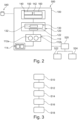
- Figure 1 shows a flowchart illustrating an exemplary computer-implemented method of executing a safety-critical application on a hardware platform, for example the hardware platform 100 described with reference to Figure 2 .
- FIG. 2 shows a block diagram illustrating an exemplary hardware platform 100, computing system 500 and method for executing a safety-critical application 150. In the following, it is mutually or commonly be referred to Figures 1 and 2 .
- the hardware platform 100 includes a processing circuitry 110, Central Processing Unit 110 and/or processor 110, which includes two processor cores 112a, 112b.
- the hardware platform 100 may include a single processor core 112a or more than two processor cores 112a, 112b.
- the hardware platform 100 further comprises a physical data storage 114 or memory 114.
- the memory 114 can be any type of hardware-based memory 114, such as Random Access Memory or other type, which can be used as computing resource by the processing circuitry 110.
- the hardware platform 100 can be embodied as computing system 500 and/or can be part of a computing system 500, which may comprise optional other components 520, 540, such as one or more communication interfaces 520 and/or one or more other data storages 540. Via the one or more communication interfaces 520, one or more other components or entities may be communicatively and/or operatively coupled to the computing system 500, respectively, the hardware platform 100. For instance, one or more sensors 522 may be coupled to the one or more communication interfaces 520 to provide sensor signals. Alternatively, or additionally, one or more actuators 524 may be coupled to the one or more communication interfaces 520, for example to receive one or more control or actuation signals from the computing system 500 and/or hardware platform 100.
- the hardware platform 100 further comprises a hypervisor 120 with a monitoring component 130 and one or more handlers 132. Moreover, the hardware platform 100 comprises at least one virtual machine 140 running a guest operating system 142 and/or guest OS kernel 142. On top of the guest OS 142, one or more safety applications 150 are executed and optionally one or more non-safety-critical applications 160 are executed.
- the OS kernel 142 may, for example, be a Linux-based kernel. Also, more than one virtual machine 140 may be executed. The functionalities of the hypervisor 120 in conjunction with the virtual machine 140 and safety-critical application150 are further illustrated in the flowchart of Figure 1 .
- the method shown in Figure 1 comprises, in step S1, executing, on the hardware platform 100, a hypervisor 120, said hypervisor 120 comprising a monitoring component 130 for one or more safety-critical applications 150.
- the method comprises in step S2, instantiating, by the hypervisor 120, at least one virtual machine 140 on a lower privilege level of the hardware platform 100 than a privilege level of the hypervisor 120.
- step S3 the method comprises executing, in the at least one virtual machine 140, at least the safety-critical application 150 on top of a guest operating system 142.
- the safety-critical application 150 may be executed.
- one or more non-safety-critical applications 160 may be executed.
- the method comprises in step S4, providing a list of one or more predefined actions that, when executed by the processor core 112a, 112b, have a relevancy for an integrity and/or a functioning of the safety-critical application 150.
- Providing the list of action may for example mean defining one or more actions potentially affecting integrity and/or a functioning of the safety-critical application 150, for instance based on defining one or more criteria for said one or more actions.
- the method comprises a further step S5 of instructing, by the hypervisor 120, the processor core 112a, 112b, when about to execute a to-be-performed action on the list and/or when such action is scheduled for execution on the processor core 112a, 112b, divert the control flow of the processor core 112a, 112b towards a respective handler 132 for this to-be-performed action in the monitoring component 130.
- steps S1 to S5 can be performed in arbitrary sequence or simultaneously, at least in part.
- the method comprises a further step S6a, which includes, when the control flow is diverted to a handler 132 for a to-be-performed action, checking and/or analyzing, by the handler 132, according to a predetermined ruleset, whether to allow or to disallow the to-be-performed action, and when the to-be-performed action is to be allowed, causing the action to be performed.
- the to-be-performed action may, for example, relate to setting-up a new safety-critical application and/or the to-be-performed action comprises a transition of the control flow between the safety-critical application 150 and the guest operating system 142 or other process.
- the method comprises a step S6b of performing, by the handler 132, at least one preparation for the to-be-performed action, and then causing this to-be-performed action to be performed.
- Spatial and/or temporal freedom-from-interference, for example memory isolation, between a not safety qualified guest OS kernel 142 and a safety qualified application 150 running in user space on top of this guest OS kernel 142 can be achieved by implementing a monitoring component 130 executed on a preferably safety-qualified hypervisor 120.
- FIG. 2 depicts an exemplary configuration with a hypervisor 120, e.g., with a Linux-kernel based hypervisor 120, running on two processors cores 112a, 112b, not limiting the pattern to the case of microkernel-rooted hypervisors or others.
- the hypervisor 120 may be implemented as user-space application.
- the monitoring component 130 can be considered or referred to as Virtual Machine Monitor (VMM) application that can allow to run the virtual machine 140 (VM) on top of the hypervisor 120, including a guest OS Kernel 142 such as the Linux kernel. In the illustrated setup, only safety-critical applications 150 are running on top of guest OS Kernel 142.
- the supervision executed by the hypervisor 120 and/or monitoring component 130 allows one to establish a safe execution environment on top of the unsafe guest OS kernel 142.
- the monitoring component 130 can either be integrated into the hypervisor 120 or can be implemented as stand-alone application of the hypervisor 120.
- This setup can, for example, target a detection of unauthorized memory accesses as a or in the course of a "to-be-performed action" that is defined on or in accordance with the list of predefined actions.
- unauthorized memory access may come from the guest OS kernel 142 into the private memory of any safety-critical application 150 that may run on top of the guest OS and/or kernel 142.
- prevention of such accesses can be achieved by the hardware-assisted or hardware-rooted trapping into the hypervisor 120, which may result in executing a VM exit from the virtual machine 140, in which the safety-critical application150 runs. Moreover, prevention of such accesses can be achieved by invoking the related monitoring component 130 and/or the respective handler 132 functions in the hypervisor 120.
- the trapping can be provoked by applying appropriate settings in a stage-2 page table tree (PTT) maintained by the hypervisor 120 for the virtual machine 140 under consideration, respectively running the safety-critical application 150.
- PTT stage-2 page table tree
- traps could be produced by so called Hypervisor Calls (HVC), or whenever the guest OS 142 tries to re-write content of specific core registers or other stage-2 memory management unit protected pages of memory.
- HVC Hypervisor Calls
- the hypervisor 120 is enabled to detect and or notice, as to-be-performed action that could impact integrity and/or functioning of the safety-critical application 150, one or more of the setting-up of a (new) safety-critical application 150, when the setup of a (new) safety-critical application 150 has been completed and starts its regular execution, and when a context switch inside the virtual machine 140 is made, e.g., by a system call or other process running in user space.
- the control flow is diverted, for example by trapping, into the monitoring component 130 and the respective handler 132.
- the monitoring component 130 and/or handler 132 applies a stage-2 PTT with permissions set such that guest OS and/or kernel 142 cannot access stage-1 PTT and pages allocated to any of the safety-critical applications 150.
- permissions may be set on a per-CPU-core base, i.e., only the CPU core which is currently executing safety-critical application 150 in the virtual machine may get permission to access the safety-critical application's 150 private memory.
- the monitoring component 130 and/or handler 132 applies a stage-2 PTT with permissions set, such that stage-1 PTT and pages allocated to this safety-critical application 150 (also referred to as safety application 150 herein), can be accessed without limitations.
- the above pattern can be utilized in case of static memory mapped to the safety-critical user process or for the case of dynamically mapped memory.
- the physical memory 114 used for that purpose must be defined constantly, e.g., as part of the configuration of a VM 140.
- an interaction pattern between hypervisor 120 and guest OS 142 can be implemented on the basis of shared memory and a notification mechanism of choice and/or by letting the guest OS 142 making HVC and passing in the data as payload to this kind of meta system calls.
- Figure 3 show a flowchart illustrating an exemplary computer-implemented method of executing a safety-critical application 150 on a hardware platform 100.
- Figure 3 illustrates the start-up process or setting-up of a (new) safety-critical application 150, as described inter alia with reference to Figures 1 and 2 .
- step S10 Setting-up a (new) safety-critical application 150 starts in Figure 3 with step S10 that may include diverting the control flow into the hypervisor 120 and/or monitoring component as described with reference to the foregoing Figures.
- the monitoring component 130 and/or handler 132 can allow, in step S12, the guest OS 142 to populate memory pages of the safety-critical application150 to be set up by applying appropriate settings in the stage-2 PTT in step S12. Accordingly, the memory pages of the safety-critical application150 may be configured without restrictions in steps S12 during start-up or setting-up of the safety-critical application 150.
- the monitoring component 130 may also keep track of the new memory pages added to the stage-1 PTT for the safety-critical application 150 in step S12.
- the monitoring component 130 and/or handler 132 removes access rights in the stage-2 PTT to user space memory and memory pages holding page table trees of the safety-critical application 150.
- write access rights can be provided or added to user space memory of the safety-critical application 150 in the stage-2 PTT, and execution rights may be removed for memory pages holding one or more exception handlers. Accordingly, a trap into the hypervisor 120 may be forced when an exception occurs, and the exception handler may start execution.
- the hypervisor 120 may set the permission for memory pages of the safety-critical application 150 pointed to by stage-1 PTT leaves, in particular change them from no-execute to execute in stage-2 PTT in order to allow execution of the safety-critical application 150 under consideration.
- stage-2 PTT modifications are carried out by monitoring component 130 on one CPU core 112a it may be ensured that on other CPU cores 112b the unmodified stage-2 PTT is still enforced.
- TLB flushes of affected modified PTT entries can be done on all used CPU cores 112a, 112b in order to avoid that other CPU cores 112b are using cached PTT entries with outdated address mapping or permissions.
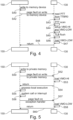
- Figure 4 and 5 each show a flowchart illustrating an exemplary computer-implemented method of executing a safety-critical application on a hardware platform.
- Figures 4 and 5 illustrate a sequence of events for handling private memory and PTTs of the safety-critical application 150, including context switching.
- Linux is used as guest OS 142 and ARM architecture-based processor cores 112a, 112b, e.g., ARMv8 architecture.
- each instance of the hypervisor's 120 user-level virtual machine monitor (VMM) and/or monitoring component 130 may manage one VM 140 only. This is, however, not a pre-requisite.
- the monitoring component 130 may maintain one set of memory areas mapped to the VM 140. This set can commonly be defined and administered by a page table tree.
- PTT page table tree
- VM object a microkernel 122
- VMO VM object
- a plurality of VM objects may be utilized, each being associated with a particular stage-2 PTT.
- multiple PTTs per VM 140 can be introduced, each managed as part of a separate VM object. This can allow each thread of the monitoring component 130 running on a core 112a, 112b to select its own PTT used for the stage-2 MMU (memory management unit) on the respective core 112a, 112b.
- stage-2 MMU memory management unit
- the thread of the monitoring component 130 on the relevant core 112a, 112b may re-iterate the decision which VM object and/or which stage-2 PTT should be the active one.
- the intended guarantee for spatial freedom from interference can be based on concept of the stage-2 MMU marking the memory pages of the safety-critical (user) process, referred to as safety-critical application 150, to be guarded as read-only whilst the safety-critical process or safety-critical application 150 itself is not the executing process on the respective core 112a, 112b.
- safety-critical application 150 to be guarded as read-only whilst the safety-critical process or safety-critical application 150 itself is not the executing process on the respective core 112a, 112b.
- modifications to the memory pages from outside the context of the safety-critical process or safety-critical application 150 can be prevented.
- stage-1 PTT modifications of the safety-critical application's 150 PTT may be prevented.
- the core-local stage 2 MMU to deliver an exception upon any write access to them.
- the write protection can be lifted if and only if the safety-critical user process or safety-critical application 150 which should be guarded needs write access to its memory.
- At least two VM objects may be used, where the following configurations may be present.
- a first VM object may be used whenever software in a safety context or of high criticality is active.
- the corresponding VM object may be referred to herein as VMO-HI and its configuration may be stored inside the respective VM object.
- VMO-HI may define that all pages mapped to the VM 140 under consideration are marked as read, write and executable, optionally wherein memory pages containing the exception handlers of the guest OS kernel may be marked as non-executable (see steps S14, S16 in Figure 3 ). This can ensure that any attempt of a system call inside the guest OS 142 whilst VMO-HI is active, can provoke a VM exit into the hypervisor 120.
- memory which holds the safety-critical processes' or safety-critical application's 150 page table may be marked as read only, once booting or setting-up is completed.
- each safety process' or safety-critical application's 150 may optionally exclude a few pages of each safety process' or safety-critical application's 150 private memory and mark these pages in both VM objects as writeable.
- This memory may be used, whenever guest OS 142 interaction with the safety user process or safety-critical application 150 is foreseen. From the view of a safety-critical process, this memory may be considered non-trustworthy.
- VMO-HI and VMO-LOW activation of VMO-HI and VMO-LOW is discussed in more detail.
- startup of the safety-critical application 150 and indication of startup completion can be implemented as follows.
- a VM exit can be used for informing the monitoring component 130 about the private memory of the processes and the location of the stage-1 PTT.
- exchange of data can be done via HVC from exception level 1, EL1 (e.g., the Linux kernel) or by letting the process under consideration write to a memory page which is not mapped to the EL2 related stage-2 MMU.
- Agreement on the address of this memory page can be done by configuring it as a shared memory device and let the safety-critical process or safety-critical application 150 write to it via sysfs. In both cases a VM exit is happening and the hypervisor 120 can take over control for setting the memory guarding up.
- Figure 4 illustrates events between the safety-critical application 150 and the monitoring component 130.
- the safety-critical application 150 may attempt to write to its memory at step or event S40, which triggers a page fault on write at step S42 leading to diverting of the control flow to the monitoring component 130.
- the private memory of the safety-critical process or safety-critical application 150 i.e., the set of relevant memory pages, may be obtained from the process-specific PTT as generated by the guest OS 142. This may involve a complete traversal of all related page tables, e.g., page table scan, at step S44.
- the starting address of the PTT may be provided in the TTBR0 register once a VM exit happened and whilst the safety-critical process or safety-critical application 150 under consideration has been the active one or it is passed to the monitoring component 130 via HVC. This allows the monitoring component 130 to set up VMO-HI and VMO-LOW at step S45 and record the address of the entry node as well as the memory pages where the PTTs of the safety-critical process(es) or safety-critical applications 150 are stored. These memory pages may optionally also be protected.
- the monitoring component 130 can mark the memory pages which are carrying the safety-critical process or safety-critical application 150 specific page tables inside the guest OS kernel 142 write protected, e.g., for both VMOs VMO-HI and VMO-LOW. This can ensure that the guest OS kernel 142 cannot silently or unnoticedly modify the memory mapped to a safety-critical process or safety-critical application 150 at any later stage.
- the monitoring component 130 can check the memory regions used for different safety-critical processes or applications 150 and ensure that these are only overlapping for the case of shared memory and that the set of shared memory pages is consistent through the processes involved.
- VMO-LOW may be activated or loaded at step S47, and it may be returned to the safety-critical application 150 at step S48.
- Figure 5 illustrates events between the safety-critical application 150 and the monitoring component 130.
- the monitoring component 130 can deactivate VMO-HI, activate, or switch to the VMO-LOW at step S58, and return to the guest OS kernel 142 at step S60. This allows the guest OS kernel 142 to proceed with the exception handler's execution.
- VM exit e.g., as generated by the guest OS kernel 142
- Other write access yielding a VM exit may be considered as erroneous behavior and may be flagged accordingly, or generally speaking handled as needed and/or defined (e.g., including killing of the VM 140).
Landscapes
- Engineering & Computer Science (AREA)
- Software Systems (AREA)
- Theoretical Computer Science (AREA)
- General Engineering & Computer Science (AREA)
- Physics & Mathematics (AREA)
- General Physics & Mathematics (AREA)
- Computer Hardware Design (AREA)
- Computer Security & Cryptography (AREA)
- Safety Devices In Control Systems (AREA)
- Hardware Redundancy (AREA)
- Debugging And Monitoring (AREA)
Priority Applications (2)
| Application Number | Priority Date | Filing Date | Title |
|---|---|---|---|
| EP23205580.6A EP4546132A1 (fr) | 2023-10-24 | 2023-10-24 | Procédé et système d'exécution d'une application critique pour la sécurité |
| PCT/EP2023/081152 WO2025087552A1 (fr) | 2023-10-24 | 2023-11-08 | Procédé et système pour exécuter une application critique à la sécurité |
Applications Claiming Priority (1)
| Application Number | Priority Date | Filing Date | Title |
|---|---|---|---|
| EP23205580.6A EP4546132A1 (fr) | 2023-10-24 | 2023-10-24 | Procédé et système d'exécution d'une application critique pour la sécurité |
Publications (1)
| Publication Number | Publication Date |
|---|---|
| EP4546132A1 true EP4546132A1 (fr) | 2025-04-30 |
Family
ID=88511175
Family Applications (1)
| Application Number | Title | Priority Date | Filing Date |
|---|---|---|---|
| EP23205580.6A Pending EP4546132A1 (fr) | 2023-10-24 | 2023-10-24 | Procédé et système d'exécution d'une application critique pour la sécurité |
Country Status (2)
| Country | Link |
|---|---|
| EP (1) | EP4546132A1 (fr) |
| WO (1) | WO2025087552A1 (fr) |
Citations (1)
| Publication number | Priority date | Publication date | Assignee | Title |
|---|---|---|---|---|
| US20220114009A1 (en) * | 2020-10-13 | 2022-04-14 | BedRock Systems, Inc. | Formally Verified Trusted Computing Base with Active Security and Policy Enforcement |
-
2023
- 2023-10-24 EP EP23205580.6A patent/EP4546132A1/fr active Pending
- 2023-11-08 WO PCT/EP2023/081152 patent/WO2025087552A1/fr active Pending
Patent Citations (1)
| Publication number | Priority date | Publication date | Assignee | Title |
|---|---|---|---|---|
| US20220114009A1 (en) * | 2020-10-13 | 2022-04-14 | BedRock Systems, Inc. | Formally Verified Trusted Computing Base with Active Security and Policy Enforcement |
Non-Patent Citations (2)
| Title |
|---|
| HERADON DOUGLAS: "Thin hypervisor-based security architectures for embedded platforms", MASTERS THESIS, 12 March 2010 (2010-03-12), Stockholm, Sweden, pages 1 - 112, XP055220175, Retrieved from the Internet <URL:http://soda.swedishict.se/3865/> [retrieved on 20151012] * |
| LIONEL LITTY ET AL: "Hypervisor Support for Identifying Covertly Executing Binaries", SS'08 PROCEEDINGS OF THE 17TH CONFERENCE ON SECURITY SYMPOSIUM, 31 December 2008 (2008-12-31), pages 1 - 16, XP055007124, Retrieved from the Internet <URL:https://lagarcavilla.org/publications/LittySecurity08.pdf> [retrieved on 20110914] * |
Also Published As
| Publication number | Publication date |
|---|---|
| WO2025087552A1 (fr) | 2025-05-01 |
| WO2025087552A8 (fr) | 2026-04-09 |
Similar Documents
| Publication | Publication Date | Title |
|---|---|---|
| US12585757B2 (en) | Technologies for object-oriented memory management with extended segmentation | |
| US11200080B1 (en) | Late load technique for deploying a virtualization layer underneath a running operating system | |
| Azab et al. | HIMA: A hypervisor-based integrity measurement agent | |
| US8464251B2 (en) | Method and apparatus for managing page tables from a non-privileged software domain | |
| RU2723668C1 (ru) | Фильтрация событий для приложений безопасности виртуальных машин | |
| US9129106B2 (en) | Systems and methods for secure in-VM monitoring | |
| US8745308B2 (en) | System and method to enhance memory protection for programs in a virtual machine environment | |
| US9015704B2 (en) | Context agent injection using virtual machine introspection | |
| US7802250B2 (en) | Support for transitioning to a virtual machine monitor based upon the privilege level of guest software | |
| KR102003663B1 (ko) | 디버그 예외 생성 제어 | |
| US9189620B2 (en) | Protecting a software component using a transition point wrapper | |
| KR102547479B1 (ko) | 명령 세트의 변경을 제어하는 장치 및 방법 | |
| US20190227724A1 (en) | Method and device for protecting a working memory | |
| WO2024023204A1 (fr) | Isolation d'applications par un noyau | |
| EP4546132A1 (fr) | Procédé et système d'exécution d'une application critique pour la sécurité | |
| US20250061000A1 (en) | Vehicle, apparatus, computer program, and method for a data processing circuit and for executing applications | |
| EP4546133A1 (fr) | Procédé et système d'exécution d'une application critique pour la sécurité | |
| EP4546130B1 (fr) | Procédé et système d'exécution d'une application critique pour la sécurité | |
| CN122003666A (zh) | 用于执行安全关键型应用程序的方法和系统 | |
| CN110008001B (zh) | 虚拟机监控器的安全加固方法、系统及硬件安全监控卡 | |
| Lampka et al. | Safety Certification with the Open Source Microkernel-Based Operating System L4Re | |
| US20260064606A1 (en) | Control-flow based Memory Access Manipulation For Isolating Code and Data | |
| CN121785991A (zh) | 一种片上系统、异常处理方法、存储介质和电子设备 | |
| Wojtczuk | A stitch in time saves nine a stitch in time saves nine: A case of multiple os vulnerability |
Legal Events
| Date | Code | Title | Description |
|---|---|---|---|
| STAA | Information on the status of an ep patent application or granted ep patent |
Free format text: STATUS: EXAMINATION IS IN PROGRESS |
|
| PUAI | Public reference made under article 153(3) epc to a published international application that has entered the european phase |
Free format text: ORIGINAL CODE: 0009012 |
|
| 17P | Request for examination filed |
Effective date: 20231024 |
|
| AK | Designated contracting states |
Kind code of ref document: A1 Designated state(s): AL AT BE BG CH CY CZ DE DK EE ES FI FR GB GR HR HU IE IS IT LI LT LU LV MC ME MK MT NL NO PL PT RO RS SE SI SK SM TR |
|
| RIN1 | Information on inventor provided before grant (corrected) |
Inventor name: TEWS, HENDRIK Inventor name: HILDEBRAND, UWE Inventor name: BUTT, MUHAMMAD AQIB JAVAID Inventor name: LAMPKA, KAI |