EP4546745A1 - Auf feinkörniger kapazität basierendes flutungsverfahren, feinkörniges konfigurationsverfahren, knoten und medium - Google Patents
Auf feinkörniger kapazität basierendes flutungsverfahren, feinkörniges konfigurationsverfahren, knoten und medium Download PDFInfo
- Publication number
- EP4546745A1 EP4546745A1 EP23829560.4A EP23829560A EP4546745A1 EP 4546745 A1 EP4546745 A1 EP 4546745A1 EP 23829560 A EP23829560 A EP 23829560A EP 4546745 A1 EP4546745 A1 EP 4546745A1
- Authority
- EP
- European Patent Office
- Prior art keywords
- fine granularity
- fine
- granularity
- client
- network
- Prior art date
- Legal status (The legal status is an assumption and is not a legal conclusion. Google has not performed a legal analysis and makes no representation as to the accuracy of the status listed.)
- Pending
Links
Images


Classifications
-
- H—ELECTRICITY
- H04—ELECTRIC COMMUNICATION TECHNIQUE
- H04L—TRANSMISSION OF DIGITAL INFORMATION, e.g. TELEGRAPHIC COMMUNICATION
- H04L45/00—Routing or path finding of packets in data switching networks
- H04L45/32—Flooding
-
- H—ELECTRICITY
- H04—ELECTRIC COMMUNICATION TECHNIQUE
- H04L—TRANSMISSION OF DIGITAL INFORMATION, e.g. TELEGRAPHIC COMMUNICATION
- H04L41/00—Arrangements for maintenance, administration or management of data switching networks, e.g. of packet switching networks
- H04L41/08—Configuration management of networks or network elements
- H04L41/0896—Bandwidth or capacity management, i.e. automatically increasing or decreasing capacities
-
- H—ELECTRICITY
- H04—ELECTRIC COMMUNICATION TECHNIQUE
- H04L—TRANSMISSION OF DIGITAL INFORMATION, e.g. TELEGRAPHIC COMMUNICATION
- H04L45/00—Routing or path finding of packets in data switching networks
-
- H—ELECTRICITY
- H04—ELECTRIC COMMUNICATION TECHNIQUE
- H04L—TRANSMISSION OF DIGITAL INFORMATION, e.g. TELEGRAPHIC COMMUNICATION
- H04L45/00—Routing or path finding of packets in data switching networks
- H04L45/02—Topology update or discovery
-
- H—ELECTRICITY
- H04—ELECTRIC COMMUNICATION TECHNIQUE
- H04L—TRANSMISSION OF DIGITAL INFORMATION, e.g. TELEGRAPHIC COMMUNICATION
- H04L45/00—Routing or path finding of packets in data switching networks
- H04L45/02—Topology update or discovery
- H04L45/03—Topology update or discovery by updating link state protocols
-
- H—ELECTRICITY
- H04—ELECTRIC COMMUNICATION TECHNIQUE
- H04L—TRANSMISSION OF DIGITAL INFORMATION, e.g. TELEGRAPHIC COMMUNICATION
- H04L45/00—Routing or path finding of packets in data switching networks
- H04L45/62—Wavelength based
-
- H—ELECTRICITY
- H04—ELECTRIC COMMUNICATION TECHNIQUE
- H04L—TRANSMISSION OF DIGITAL INFORMATION, e.g. TELEGRAPHIC COMMUNICATION
- H04L41/00—Arrangements for maintenance, administration or management of data switching networks, e.g. of packet switching networks
- H04L41/08—Configuration management of networks or network elements
- H04L41/0803—Configuration setting
- H04L41/0806—Configuration setting for initial configuration or provisioning, e.g. plug-and-play
Definitions
- the present application relates to the field of communication technology, for example, a flooding method for a fine granularity capability, a fine granularity configuration method, a node, and a medium.
- An embodiment of the present application provides a flooding method for a fine granularity capability applied to a communication node supporting the fine granularity capability.
- the flooding method for the fine granularity capability includes the step described below.
- Fine granularity interface information of the communication node is flooded, where the fine granularity interface information includes fine granularity interface switching capability description information, and the fine granularity interface switching capability description information includes a fine granularity interface switching capability, a fine granularity encoding type, and a fine-grained slot granularity.
- An embodiment of the present application provides a fine granularity configuration method applied to a communication node supporting a fine granularity capability.
- the fine granularity configuration method includes the steps described below.
- Fine granularity information on a fine granularity path is acquired, where the fine granularity path is configured to transmit a low-rate service, and the fine granularity information is used for instructing the communication node on the fine granularity path to allocate a fine granularity resource.
- the communication node is configured according to the fine granularity information.
- An embodiment of the present application provides a communication node.
- the communication node includes a processor configured to perform the method of any preceding embodiment when executing a computer program.
- An embodiment of the present application further provides a computer-readable storage medium storing a computer program which, when executed by a processor, performs the method of any preceding embodiment.
- a slicing packet network is a next-generation converged bearer network architecture oriented to bearers in the fifth-generation communication system (5G) and having advantages such as a low latency, a large bandwidth, ultra-high precision synchronization, and flexible management and control.
- a slicing channel layer (SCL) is referred to as an MTN.
- the Time Division Multiplexing (TDM)-based Flexible Ethernet (FlexE) technology implements the 5 Gbps granularity slicing technology through slot cross-connection, which has initially met 5G commercialization demands.
- MTN has introduced the Fine Granularity Unit (FGU) technology, refining the granularity of a hard slice from 5 Gbps to 10 Mbps.
- FGU Fine Granularity Unit
- This technology aims to meet the demands of service scenarios such as 5G+ vertical industry applications and private lines.
- OSU optical service unit
- Traditional optical channel data units ODU0-3 and ODU Flex are oriented to high-rate services while the OSU can provide a bearing container that supports services at rates of Mbit/s and above.
- FIG. 1 is a networking diagram of a communication system according to an embodiment.
- the communication system includes at least one edge node, such as E1 and E2 in FIG. 1 and may also include at least one intermediate node (also referred to as a forwarding node or a routing node), such as P1, P2, and Pn in FIG. 1 .
- edge node such as E1 and E2 in FIG. 1
- intermediate node also referred to as a forwarding node or a routing node
- P1, P2, and Pn in FIG. 1 .
- FIG. 2 is a schematic diagram of a communication interface for a transmission service according to an embodiment.
- the flooding method for the fine granularity capability, the fine granularity configuration method, a node, and a medium are provided and are operable in the preceding communication system.
- the fine granularity capability of each of links can be flooded, unified management and control at a fine granularity level can be implemented, and the fine granularity processing capabilities can be provided for the forwarding-plane interfaces based on the different forwarding technologies.
- FIG. 3 is a flowchart of the flooding method for the fine granularity capability according to an embodiment. As shown in FIG. 3 , the method provided in this embodiment is applicable to a communication node (also referred to as a node) that supports the fine granularity capability. The method includes the steps described below.
- fine granularity interface information of the communication node is flooded, where the fine granularity interface information includes fine granularity interface switching capability description information, and the fine granularity interface switching capability description information includes a fine granularity interface switching capability, a fine granularity encoding type, and a fine-grained slot granularity.
- the International Telecommunication Union Telecommunication Standardization Sector proposes the establishment of universal (sub-1G) client layers with unified bandwidths below 1 GHz.
- the sub-1G client layers are applicable in both MTN networks and OTN networks.
- MTN and OTN may serve as service layers of sub-1G network layers, providing hard channel services for sub-1G clients.
- the fine granularity interface switching capability description information is carried in a sub-type-length-value (sub-TLV) of a type-length-value (TLV) of a link network using a routing protocol.
- sub-TLV sub-type-length-value
- TLV type-length-value
- each fine granularity traffic engineering-link state advertisement carries one top-level link TLV.
- the top-level link TLV includes a node TLV and a traffic engineering-link TLV.
- the top-level link TLV includes one or more nested sub-TLVs.
- the present application may exemplarily select Open Shortest Path First-Traffic Engineering (OSPF-TE) in the related art for extension.
- OSPF-TE Open Shortest Path First-Traffic Engineering
- the fine granularity interface switching capability is a TDM interface switching capability.
- Synchronous Digital Hierarchy indicates that for data received by nodes through TDM interfaces, channels in SDH payloads may be multiplexed or demultiplexed.
- a fine granularity as a universal TDM interface, may multiplex the TDM interface switching capability (such as a TDM forwarding capability) in the related art.
- TDM interface switching capability such as a TDM forwarding capability
- the interface switching capability with a TDM value of 100 defined in RFC 4203 in the related art may be directly used as the fine granularity interface switching capability, or a specific TDM value may be allocated to the fine granularity interface switching capability.
- the present application may provide a new comfgu to express the fine granularity encoding type.
- the fine granularity encoding type is a requested LSP encoding type.
- the LSP encoding type is specified per networking layer.
- a transit or an egress node must generate a path error message with an "unsupported encoding" indication if the fine granularity requested LSP encoding type is not supported on an interface.
- an Encoding field is provided in the comfgu to represent the fine granularity encoding type.
- the fine granularity interface switching capability description information may further include a fine granularity signal type.
- the fine granularity signal type is one of an FGU based on the metro transport network (MTN) technology, an OSU based on the OTN technology, or the sub-1G.
- a SignalType field is provided in the comfgu to represent the fine granularity signal type.
- the base rate of the OSU is 2.6 Mb/s.
- Both fixed-rate constant bit rate (CBR) services and variable-rate services can use C*the base rate, that is, C*2.6 Mb/s, to represent a bit rate of the OSU.
- the FGU of MTN is based on a 5 Gbps channel that is divided into 480 slots of 10 M to bear client signals separately.
- the fine granularity interface switching capability description information also includes the fine-grained slot granularity.
- a Granularity field is provided in the comfgu to represent the fine-grained slot granularity.
- the fine granularity interface switching capability description information includes the fine granularity interface switching capability, the fine granularity encoding type, and the fine-grained slot granularity. It can also be understood that the fine granularity interface switching capability description information includes, under the interface switching capability of TDM, three types of fine granularity signal types and the slot granularity currently supported by each fine granularity signal type.
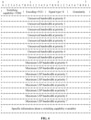
- FIG. 4 is a schematic diagram of a TLV that carries the fine granularity interface switching capability description information according to an embodiment.
- FIG. 5 is another schematic diagram of a TLV that carries the fine granularity interface switching capability description information according to an embodiment.
- FIG. 6 is a schematic diagram of a TLV that carries specific information about the fine granularity interface switching capability according to an embodiment. From the TLV shown in FIG. 4 or in conjunction with the TLVs shown in FIGS. 5 and 6 , the fine granularity interface switching capability description information may be obtained: the fine granularity interface switching capability TDM, the fine granularity encoding type, the fine granularity signal type, and the fine-grained slot granularity.
- the routing protocol is extended to support the transmission of sufficient information to identify a fine granularity traffic engineering topology.
- the maximum bandwidth supportable by one FGU of MTN is 5 GHz
- the maximum bandwidth supported by one OSU is 10 GHz. Operators can deploy policies to freely determine priorities supported in the network.
- all devices supporting the fine granularity need to enter, based on their priorities, different sorting queues for processing respectively so that the respective maximum available bandwidth supportable on a fine granularity link based on each of the priorities is specified.
- RFC 4202 defines interface switching capability descriptors (ISCDs) to describe resource availability at eight priorities and present a constraint for LSP path computation. As defined, each priority in the network should be advertised irrespective of the number of the priorities. Maximum LSP bandwidths are advertised according to the priorities in an ISCD.
- ISCDs interface switching capability descriptors
- the fine granularity supports a link at a level of a megahertz and a large number of links exist. Therefore, under a distributed architecture, to reduce a network bandwidth and the number of links to be processed by the routing protocol, the fine granularity needs to support the binding of links so that fine granularity links at the same rate between a pair of nodes are bound together and advertised. Unreserved bandwidths of the bound links and the maximum bandwidth of a single LSP supportable by each of these bound links can be advertised centrally.
- the routing protocol is one of an Open Shortest Path First (OSPF) routing protocol, an Intermediate System to Intermediate System (IS-IS) routing protocol, a Border Gateway Protocol-Link State (BGP-LS) routing protocol, or a Path Computation Element Communication Protocol-Link State (PCEP-LS) routing protocol.
- OSPF Open Shortest Path First
- IS-IS Intermediate System to Intermediate System
- BGP-LS Border Gateway Protocol-Link State
- PCEP-LS Path Computation Element Communication Protocol-Link State
- one or more IS-IS link state protocol data units may be advertised in routing information.
- RFC 5307 an interface switching capability descriptor of type 21 is described.
- the fine granularity interface switching capability description information provided in the present application may be used as an interface capability of type 21 to describe a fine granularity interface capability.
- BGP-LS is a BGP multiprotocol extension that transmits an interior gateway protocol (IGP) link state through a BGP protocol.
- IGP interior gateway protocol
- BGP-LS relevant topology information of multiple IGP domains may be acquired.
- the source of link description TLVs in BGP-LS may come from OSPF and IS-IS.
- BGP-LS With BGP-LS, a link state topology may be learned during the path computation without understanding any specific information of the OSPF or IS-IS protocols.
- the fine granularity interface switching capability description information provided in the present application may be used as a sub-TLV of an opaque link attribute TLV to describe fine granularity interface capabilities of two ends of a link.
- fine granularity interface switching capability description information is also applicable in an extension link attribute TLV in a PCEP-LS extension described in draft-dhodylee-pce-pcep-ls-23 and is used as an interface switching capability TLV particularly applied in the fine granularity for a device and a PCE to complete the interaction of the fine granularity interface capabilities.
- fine granularity information on a fine granularity path is acquired, where the fine granularity path is configured to transmit a low-rate service, and the fine granularity information is used for instructing the communication node on the fine granularity path to allocate a fine granularity resource.
- the fine granularity information may also be understood as a fine granularity processing capability model directly made on an OSU network layer of OTN or an FGU layer of MTN and include a supportable fine granularity capability, a client layer type that can be processed by the fine granularity, and a client layer mapping manner.
- the model may be made as follows:
- the fine granularity information includes at least one of fine granularity client identification client-id, a client layer type, a mapping manner, a client demand, a fine granularity signal type, a fine-grained granularity, or a service layer interface.
- the fine granularity client-id is a current fine granularity slot allocation identifier.
- the fine granularity client-id occupies two bytes, and the first 12 bits of the two bytes are valid bits.
- the fine granularity signal type is one of the FGU based on the MTN technology, the OSU based on the OTN technology, or the sub-1G.
- the fine-grained granularity may be configured according to actual demands, for example, the fine-grained granularity is 2.6 MHz or 10 MHz.
- client-type represents a current fine granularity client layer message type, that is, a payload identifier borne by a fine granularity LSP, for indicating a service type such as a standard Ethernet service or a CBR service
- mapping-type represents a manner in which an upper-layer service is mapped into a fine granularity network message, where a bit-synchronous mapping procedure (BMP), a generic mapping procedure (GMP), and an idle mapping procedure (IMP) are included currently, the BMP requires the lock of a client to be synchronized with the clock of a device, the GMP is typically applied to the CBR service, and the IMP is applicable to an Ethernet service of a packet switching technology; and client-demand represents a current service requirement that may include a bandwidth requirement and a slot allocation requirement.
- the slot allocation requirement may include a delay requirement flag bit and whether a bidirectional delay difference is required.
- the fine granularity configuration method further includes receiving service request information, where the service request information includes a service requirement borne by a current fine granularity network, the service requirement includes at least one of the bandwidth requirement or the slot allocation requirement, and the slot allocation requirement includes at least one of the delay requirement flag bit and whether the bidirectional delay difference is required.
- the fine granularity configuration method is applied to a southbound Network Configuration Protocol (NETCONF) between the communication node and a network management device or a Path Computation Element Communication Protocol (PCEP) between a path computation element and a network element.
- NETCONF southbound Network Configuration Protocol
- PCEP Path Computation Element Communication Protocol
- a management and control architecture characterized by a coexistence of centralization and distribution is generally deployed in the fine granularity network.
- the flooding method for the fine granularity capability in the preceding embodiment is supportable on the network element.
- the flooded fine granularity interface information is reported to a centralized management and control system.
- the management and control system maintains a fine granularity topology and completes centralized path computation.
- the result of the path computation may be converted into multiple pieces of config-client information in the preceding embodiment.
- the multiple pieces of config-client information may be issued to each forwarding node on a connection separately or may be issued to only an ingress node. In the latter case, the ingress node completes establishing a connection and reserving resources according to the path information issued by the centralized management and control system.
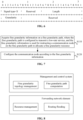
- FIG. 8 is an architecture diagram of a management and control system and a forwarding network element according to an embodiment. As shown in FIG. 8 , a fine granularity topology management module and a fine granularity path computation module are deployed in the management and control system, and a resource allocation module and a routing flooding module are deployed in the forwarding network element.
- FIG. 9 is a structural diagram of a flooding apparatus for a fine granularity capability according to an embodiment.
- the apparatus may be configured in a communication node. As shown in FIG. 9 , the apparatus includes a flooding module 10.
- the flooding module 10 is configured to flood fine granularity interface information of the communication node, where the fine granularity interface information includes fine granularity interface switching capability description information, and the fine granularity interface switching capability description information includes a fine granularity interface switching capability, a fine granularity encoding type, and a fine-grained slot granularity.
- the flooding apparatus for the fine granularity capability provided in this embodiment is configured to perform the flooding method for the fine granularity capability provided in the embodiment shown in FIG. 3 .
- the implementation principles and technical effects of the flooding apparatus for the fine granularity capability provided in this embodiment are similar to those of the preceding embodiment and thus are not described here again.
- the fine granularity interface switching capability description information further includes a fine granularity signal type.
- the fine granularity signal type is one of a fine granularity unit (FGU) based on the metro transport network (MTN) technology, an optical service unit (OSU) based on the optical transport network (OTN) technology, or a universal sub-1G with a bandwidth below 1 GHz.
- FGU fine granularity unit
- MTN metro transport network
- OSU optical service unit
- OTN optical transport network
- the fine granularity interface switching capability is a time-division multiplexing (TDM) interface switching capability.
- TDM time-division multiplexing
- the fine granularity interface switching capability description information is carried in a network sub-type-length-value (sub-TLV) of a type-length-value (TLV) of a link network using a routing protocol.
- sub-TLV network sub-type-length-value
- TLV type-length-value
- the routing protocol is one of an Open Shortest Path First (OSPF) routing protocol, an Intermediate System to Intermediate System (IS-IS) routing protocol, a Border Gateway Protocol-Link State (BGP-LS) routing protocol, or a Path Computation Element Communication Protocol-Link State (PCEP-LS) routing protocol.
- OSPF Open Shortest Path First
- IS-IS Intermediate System to Intermediate System
- BGP-LS Border Gateway Protocol-Link State
- PCEP-LS Path Computation Element Communication Protocol-Link State
- FIG. 10 is a structural diagram of a fine granularity configuration apparatus according to an embodiment.
- the apparatus may be configured in a communication node. As shown in FIG. 10 , the apparatus includes an acquisition module 20 and a configuration module 21.
- the acquisition module 20 is configured to acquire fine granularity information on a fine granularity path.
- the fine granularity path is configured to transmit a low-rate service.
- the fine granularity information is used for instructing the communication node on the fine granularity path to allocate a fine granularity resource.
- the configuration module 21 is configured to configure the communication node according to the fine granularity information.
- the fine granularity configuration apparatus provided in this embodiment is configured to perform the fine granularity configuration method provided in the embodiment shown in FIG. 7 .
- the implementation principles and technical effects of the fine granularity configuration apparatus provided in this embodiment are similar to those of the preceding embodiment and thus are not described here again.
- the fine granularity information includes at least one of fine granularity client identification client-id, a client layer type, a mapping manner, a client demand, a fine granularity signal type, a fine-grained granularity, or a service layer interface.
- the fine granularity client-id is a current fine granularity slot allocation identifier.
- the fine granularity client-id is used for indicating slot allocation according to a client-id in the MTN technology, slot allocation according to a tributary port number (TPN) in the OSU technology, or slot allocation according to a client identifier in the sub-1G.
- TPN tributary port number
- the fine granularity client-id occupies two bytes, and the first 12 bits of the two bytes are valid bits.
- the acquisition module 20 is further configured to receive service request information, where the service request information includes a service requirement borne by a current fine granularity network, the service requirement includes at least one of a bandwidth requirement or a slot allocation requirement, and the slot allocation requirement includes at least one of a delay requirement flag bit and whether a bidirectional delay difference is required.
- the method is applied to a southbound Network Configuration Protocol (NETCONF) between the communication node and a network management device or a Path Computation Element Communication Protocol (PCEP) between a path computation element and a network element.
- NETCONF southbound Network Configuration Protocol
- PCEP Path Computation Element Communication Protocol
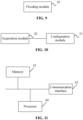
- FIG. 11 is a structural diagram of a communication node according to an embodiment.
- the communication node includes a processor 60, a memory 61, and a communication interface 62.
- One or more processors 60 may be provided in the communication node, and one processor 60 is used as an example in FIG. 11 .
- the processor 60, the memory 61, and the communication interface 62 that are in the communication node may be connected through a bus or in other manners. In FIG. 11 , the connection through the bus is used as an example.
- the bus represents one or more of several types of bus structures, including a memory bus or a memory controller, a peripheral bus, an Accelerated Graphics Port (AGP), a processor, or a local bus using any bus structure among multiple bus structures.
- AGP Accelerated Graphics Port
- the memory 61 may be configured to store software programs, computer-executable programs, and modules, such as program instructions/modules corresponding to the methods in the embodiment of the present application.
- the processor 60 runs the software programs, instructions, and modules stored in the memory 61 to execute at least one of function applications and data processing of the communication node, that is, to implement the preceding method.
- the memory 61 may include a program storage region and a data storage region.
- the program storage region may store an operating system and an application program required by at least one function, and the data storage region may store data created depending on the use of the terminal.
- the memory 61 may include a high-speed random-access memory and may also include a nonvolatile memory, such as at least one magnetic disk memory, a flash memory, or another nonvolatile solid-state memory.
- the memory 61 may include memories which are remotely disposed relative to the processor 60, and these remote memories may be connected to the communication node via a network. Examples of the preceding network include, but are not limited to, the Internet, an intranet, a network, a communication network, and a combination thereof.
- the communication interface 62 may be configured to receive and send data.
- An embodiment of the present application further provides a computer-readable storage medium.
- the computer-readable storage medium is configured to store a computer program which, when executed by a processor, performs the method provided in any embodiment of the present application.
- the computer-readable storage medium includes (a non-exhaustive list): an electrical connection having one or more wires, a portable computer disk, a hard disk, a random access memory (RAM), a read-only memory (ROM), an electrically erasable, programmable read-only memory (EPROM), a flash memory, an optical fiber, a portable compact disk read-only memory (CD-ROM), an optical memory device, a magnetic memory device, or any appropriate combination thereof.
- the computer-readable storage medium may be any tangible medium including or storing a program. The program may be used by or used in conjunction with an instruction execution system, apparatus, or device.
- the computer-readable signal medium may include a data signal propagated in a baseband or as part of a carrier.
- the data signal carries computer-readable program codes.
- the data signal propagated in this manner may be in multiple forms and includes, but is not limited to, an electromagnetic signal, an optical signal, or any appropriate combination thereof.
- the computer-readable signal medium may also be any computer-readable medium other than the computer-readable storage medium.
- the computer-readable medium may send, propagate, or transmit a program used by or used in conjunction with an instruction execution system, apparatus, or device.
- Computer program codes for executing the operations of the present disclosure may be written in one or more programming languages or a combination of multiple programming languages.
- the programming languages include object-oriented programming languages (such as Java, Smalltalk, C++, Ruby, and Go) and conventional procedural programming languages (such as "C" or similar programming languages).
- the program codes may be executed entirely on a user computer, executed partly on a user computer, executed as a stand-alone software package, executed partly on a user computer and partly on a remote computer, or executed entirely on a remote computer or a server.
- the remote computer may be connected to the user computer via any type of network (including a local area network (LAN) or a wide area network (WAN)) or may be connected to an external computer (for example, via the Internet provided by an Internet service provider).
- LAN local area network
- WAN wide area network
- an Internet service provider for example, via the Internet provided by an Internet service provider.
- radio user equipment encompasses any suitable type of radio user device such as a mobile phone, a portable data processing apparatus, a portable web browser, or an in-vehicle mobile station.
- Embodiments of the present application may be implemented through the execution of computer program instructions by a data processor of a mobile apparatus, for example, implemented in a processor entity, by hardware, or by a combination of software and hardware.
- the computer program instructions may be assembly instructions, instruction set architecture (ISA) instructions, machine instructions, machine-related instructions, microcodes, firmware instructions, status setting data, or source or object codes written in any combination of one or more programming languages.
- ISA instruction set architecture
- a block diagram of any logic flow among the drawings of the present application may represent program steps, may represent interconnected logic circuits, modules, and functions, or may represent a combination of program steps and logic circuits, modules, and functions.
- Computer programs may be stored in a memory.
- the memory may be of any type suitable for a local technical environment and may be implemented by using any suitable data storage technology, such as, but not limited to, a read-only memory (ROM), a random-access memory (RAM), and an optical memory apparatus and system (a digital video disc (DVD) or a compact disc (CD)).
- Computer-readable media may include non-transitory storage media.
- a data processor may be of any type suitable for the local technical environment, such as, but not limited to, a general-purpose computer, a special-purpose computer, a microprocessor, a digital signal processor (DSP), an application-specific integrated circuit (ASIC), a field-programmable gate array (FPGA), and a processor based on multi-core processor architecture.
- DSP digital signal processor
- ASIC application-specific integrated circuit
- FPGA field-programmable gate array
Landscapes
- Engineering & Computer Science (AREA)
- Computer Networks & Wireless Communication (AREA)
- Signal Processing (AREA)
- Data Exchanges In Wide-Area Networks (AREA)
- Communication Control (AREA)
Applications Claiming Priority (2)
| Application Number | Priority Date | Filing Date | Title |
|---|---|---|---|
| CN202210771252.9A CN117376145B (zh) | 2022-06-30 | 2022-06-30 | 细粒度能力的洪泛方法、细粒度的配置方法,节点及介质 |
| PCT/CN2023/085692 WO2024001370A1 (zh) | 2022-06-30 | 2023-03-31 | 细粒度能力的洪泛方法、细粒度的配置方法,节点及介质 |
Publications (1)
| Publication Number | Publication Date |
|---|---|
| EP4546745A1 true EP4546745A1 (de) | 2025-04-30 |
Family
ID=89382638
Family Applications (1)
| Application Number | Title | Priority Date | Filing Date |
|---|---|---|---|
| EP23829560.4A Pending EP4546745A1 (de) | 2022-06-30 | 2023-03-31 | Auf feinkörniger kapazität basierendes flutungsverfahren, feinkörniges konfigurationsverfahren, knoten und medium |
Country Status (3)
| Country | Link |
|---|---|
| EP (1) | EP4546745A1 (de) |
| CN (1) | CN117376145B (de) |
| WO (1) | WO2024001370A1 (de) |
Families Citing this family (1)
| Publication number | Priority date | Publication date | Assignee | Title |
|---|---|---|---|---|
| CN120881744A (zh) * | 2024-04-30 | 2025-10-31 | 华为技术有限公司 | 一种通信方法、装置、存储介质以及计算机程序产品 |
Family Cites Families (10)
| Publication number | Priority date | Publication date | Assignee | Title |
|---|---|---|---|---|
| CN1187994C (zh) * | 2003-01-16 | 2005-02-02 | 上海交通大学 | 多粒度混合光网络的自动交换控制方法 |
| CN101127628B (zh) * | 2006-08-14 | 2010-07-21 | 华为技术有限公司 | 一种管理和传送细粒度业务的方法和装置 |
| CN101621451B (zh) * | 2008-06-30 | 2012-01-11 | 华为技术有限公司 | 一种承载业务的方法、节点和系统 |
| CN102014313A (zh) * | 2009-09-08 | 2011-04-13 | 华为技术有限公司 | 一种实现节点发布链路信息的方法和装置 |
| CN102201973B (zh) * | 2010-03-25 | 2015-08-12 | 中兴通讯股份有限公司 | 一种基于g.709的多级复用路由控制方法和网关网元 |
| CN102572618B (zh) * | 2010-12-17 | 2015-09-16 | 中兴通讯股份有限公司 | 一种基于g.709的多级复用路由控制方法和网关网元 |
| US9805442B2 (en) * | 2012-10-03 | 2017-10-31 | Avago Technologies General Ip (Singapore) Pte. Ltd. | Fine-grained bit-rate control |
| CN104869021B (zh) * | 2015-05-22 | 2018-02-09 | 清华大学 | 多粒度多域异构光网络资源配置方法 |
| WO2020185588A1 (en) * | 2019-03-08 | 2020-09-17 | Idac Holdings, Inc. | Methods and apparatuses for supporting resource mobility and volatility in fog environments |
| CN113784437B (zh) * | 2020-06-10 | 2023-09-26 | 烽火通信科技股份有限公司 | 一种FlexE承载小颗粒业务的实现方法和装置 |
-
2022
- 2022-06-30 CN CN202210771252.9A patent/CN117376145B/zh active Active
-
2023
- 2023-03-31 WO PCT/CN2023/085692 patent/WO2024001370A1/zh not_active Ceased
- 2023-03-31 EP EP23829560.4A patent/EP4546745A1/de active Pending
Also Published As
| Publication number | Publication date |
|---|---|
| CN117376145B (zh) | 2026-02-17 |
| WO2024001370A1 (zh) | 2024-01-04 |
| CN117376145A (zh) | 2024-01-09 |
Similar Documents
| Publication | Publication Date | Title |
|---|---|---|
| CN106803814B (zh) | 一种灵活以太网路径的建立方法、装置及系统 | |
| EP2627043B1 (de) | Verfahren, vorrichtung und system zur verlustlosen bandbreiteneinstellung | |
| US10505655B2 (en) | FlexE GMPLS signaling extensions | |
| US9825845B2 (en) | Path computation method, path computation element, node device, and network system | |
| US9172658B2 (en) | Call setup systems and methods using dynamic link tagging and overbooking of links in multi-domain transport networks | |
| EP2451186B1 (de) | Verfahren zur zuweisung und verarbeitung von kennzeichnungen in einem optischen netzwerk, optische netzwerkvorrichtung und optisches kommunikationssystem | |
| US20160373317A1 (en) | Bandwidth on-demand services in multiple layer networks | |
| WO2017156987A1 (zh) | 一种灵活以太网路径建立的方法和装置 | |
| US20090103533A1 (en) | Method, system and node apparatus for establishing identifier mapping relationship | |
| WO2017201953A1 (zh) | 一种客户业务处理的方法和设备 | |
| Zhang et al. | Framework for GMPLS and PCE Control of G. 709 Optical Transport Networks | |
| WO2022193751A1 (zh) | 时隙配置方法、业务路径创建方法、装置、设备及介质 | |
| US12368655B2 (en) | Service resource preconfiguration method and device, and system | |
| CN102136865B (zh) | 业务恢复方法、系统和节点设备 | |
| US20230412493A1 (en) | Timeslot cross path configuration method, computer device and computer readable medium | |
| EP4546745A1 (de) | Auf feinkörniger kapazität basierendes flutungsverfahren, feinkörniges konfigurationsverfahren, knoten und medium | |
| CN112532522B (zh) | 一种业务路径的建立方法、装置、电子设备 | |
| EP1983712B1 (de) | Automatisches entdeckungsverfahren und einrichtung für die client-schicht-strecke | |
| CN117955814A (zh) | 一种报文处理方法及相关设备 | |
| EP2665324B1 (de) | Verbindungsherstellungsverfahren und vorrichtung zur weiterleitung eines benachbarten label-switch-pfades | |
| CN102547490B (zh) | 一种连接建立的方法和系统 | |
| EP2658168A1 (de) | Verfahren, vorrichtung und system zur herstellung mehrschichtiger pfade | |
| WO2026092104A1 (zh) | 传输通道的创建方法、设备及存储介质 | |
| CN120378343A (zh) | 一种路径信息处理方法及装置 | |
| Li et al. | RFC 7062: Framework for GMPLS and PCE Control of G. 709 Optical Transport Networks |
Legal Events
| Date | Code | Title | Description |
|---|---|---|---|
| STAA | Information on the status of an ep patent application or granted ep patent |
Free format text: STATUS: THE INTERNATIONAL PUBLICATION HAS BEEN MADE |
|
| PUAI | Public reference made under article 153(3) epc to a published international application that has entered the european phase |
Free format text: ORIGINAL CODE: 0009012 |
|
| STAA | Information on the status of an ep patent application or granted ep patent |
Free format text: STATUS: REQUEST FOR EXAMINATION WAS MADE |
|
| 17P | Request for examination filed |
Effective date: 20250121 |
|
| AK | Designated contracting states |
Kind code of ref document: A1 Designated state(s): AL AT BE BG CH CY CZ DE DK EE ES FI FR GB GR HR HU IE IS IT LI LT LU LV MC ME MK MT NL NO PL PT RO RS SE SI SK SM TR |
|
| DAV | Request for validation of the european patent (deleted) | ||
| DAX | Request for extension of the european patent (deleted) |