EP4549471A1 - Billes de cellulose non modifiée et leur procédé de fabrication - Google Patents
Billes de cellulose non modifiée et leur procédé de fabrication Download PDFInfo
- Publication number
- EP4549471A1 EP4549471A1 EP23830917.3A EP23830917A EP4549471A1 EP 4549471 A1 EP4549471 A1 EP 4549471A1 EP 23830917 A EP23830917 A EP 23830917A EP 4549471 A1 EP4549471 A1 EP 4549471A1
- Authority
- EP
- European Patent Office
- Prior art keywords
- cellulose
- average particle
- unmodified
- cellulose beads
- defibration
- Prior art date
- Legal status (The legal status is an assumption and is not a legal conclusion. Google has not performed a legal analysis and makes no representation as to the accuracy of the status listed.)
- Pending
Links
Images

Classifications
-
- C—CHEMISTRY; METALLURGY
- C08—ORGANIC MACROMOLECULAR COMPOUNDS; THEIR PREPARATION OR CHEMICAL WORKING-UP; COMPOSITIONS BASED THEREON
- C08J—WORKING-UP; GENERAL PROCESSES OF COMPOUNDING; AFTER-TREATMENT NOT COVERED BY SUBCLASSES C08B, C08C, C08F, C08G or C08H
- C08J3/00—Processes of treating or compounding macromolecular substances
- C08J3/12—Powdering or granulating
-
- D—TEXTILES; PAPER
- D21—PAPER-MAKING; PRODUCTION OF CELLULOSE
- D21C—PRODUCTION OF CELLULOSE BY REMOVING NON-CELLULOSE SUBSTANCES FROM CELLULOSE-CONTAINING MATERIALS; REGENERATION OF PULPING LIQUORS; APPARATUS THEREFOR
- D21C9/00—After-treatment of cellulose pulp, e.g. of wood pulp, or cotton linters ; Treatment of dilute or dewatered pulp or process improvement taking place after obtaining the raw cellulosic material and not provided for elsewhere
-
- A—HUMAN NECESSITIES
- A61—MEDICAL OR VETERINARY SCIENCE; HYGIENE
- A61K—PREPARATIONS FOR MEDICAL, DENTAL OR TOILETRY PURPOSES
- A61K8/00—Cosmetics or similar toiletry preparations
- A61K8/02—Cosmetics or similar toiletry preparations characterised by special physical form
- A61K8/0241—Containing particulates characterized by their shape and/or structure
- A61K8/025—Explicitly spheroidal or spherical shape
-
- A—HUMAN NECESSITIES
- A61—MEDICAL OR VETERINARY SCIENCE; HYGIENE
- A61K—PREPARATIONS FOR MEDICAL, DENTAL OR TOILETRY PURPOSES
- A61K8/00—Cosmetics or similar toiletry preparations
- A61K8/02—Cosmetics or similar toiletry preparations characterised by special physical form
- A61K8/0241—Containing particulates characterized by their shape and/or structure
- A61K8/027—Fibers; Fibrils
-
- A—HUMAN NECESSITIES
- A61—MEDICAL OR VETERINARY SCIENCE; HYGIENE
- A61K—PREPARATIONS FOR MEDICAL, DENTAL OR TOILETRY PURPOSES
- A61K8/00—Cosmetics or similar toiletry preparations
- A61K8/02—Cosmetics or similar toiletry preparations characterised by special physical form
- A61K8/04—Dispersions; Emulsions
-
- A—HUMAN NECESSITIES
- A61—MEDICAL OR VETERINARY SCIENCE; HYGIENE
- A61K—PREPARATIONS FOR MEDICAL, DENTAL OR TOILETRY PURPOSES
- A61K8/00—Cosmetics or similar toiletry preparations
- A61K8/18—Cosmetics or similar toiletry preparations characterised by the composition
- A61K8/72—Cosmetics or similar toiletry preparations characterised by the composition containing organic macromolecular compounds
- A61K8/73—Polysaccharides
-
- A—HUMAN NECESSITIES
- A61—MEDICAL OR VETERINARY SCIENCE; HYGIENE
- A61K—PREPARATIONS FOR MEDICAL, DENTAL OR TOILETRY PURPOSES
- A61K8/00—Cosmetics or similar toiletry preparations
- A61K8/18—Cosmetics or similar toiletry preparations characterised by the composition
- A61K8/72—Cosmetics or similar toiletry preparations characterised by the composition containing organic macromolecular compounds
- A61K8/73—Polysaccharides
- A61K8/731—Cellulose; Quaternized cellulose derivatives
-
- A—HUMAN NECESSITIES
- A61—MEDICAL OR VETERINARY SCIENCE; HYGIENE
- A61Q—SPECIFIC USE OF COSMETICS OR SIMILAR TOILETRY PREPARATIONS
- A61Q19/00—Preparations for care of the skin
-
- A—HUMAN NECESSITIES
- A61—MEDICAL OR VETERINARY SCIENCE; HYGIENE
- A61Q—SPECIFIC USE OF COSMETICS OR SIMILAR TOILETRY PREPARATIONS
- A61Q19/00—Preparations for care of the skin
- A61Q19/02—Preparations for care of the skin for chemically bleaching or whitening the skin
-
- C—CHEMISTRY; METALLURGY
- C08—ORGANIC MACROMOLECULAR COMPOUNDS; THEIR PREPARATION OR CHEMICAL WORKING-UP; COMPOSITIONS BASED THEREON
- C08B—POLYSACCHARIDES; DERIVATIVES THEREOF
- C08B1/00—Preparatory treatment of cellulose for making derivatives thereof, e.g. pre-treatment, pre-soaking, activation
-
- C—CHEMISTRY; METALLURGY
- C08—ORGANIC MACROMOLECULAR COMPOUNDS; THEIR PREPARATION OR CHEMICAL WORKING-UP; COMPOSITIONS BASED THEREON
- C08B—POLYSACCHARIDES; DERIVATIVES THEREOF
- C08B1/00—Preparatory treatment of cellulose for making derivatives thereof, e.g. pre-treatment, pre-soaking, activation
- C08B1/003—Preparation of cellulose solutions, i.e. dopes, with different possible solvents, e.g. ionic liquids
-
- C—CHEMISTRY; METALLURGY
- C08—ORGANIC MACROMOLECULAR COMPOUNDS; THEIR PREPARATION OR CHEMICAL WORKING-UP; COMPOSITIONS BASED THEREON
- C08B—POLYSACCHARIDES; DERIVATIVES THEREOF
- C08B15/00—Preparation of other cellulose derivatives or modified cellulose, e.g. complexes
- C08B15/02—Oxycellulose; Hydrocellulose; Cellulosehydrate, e.g. microcrystalline cellulose
-
- C—CHEMISTRY; METALLURGY
- C08—ORGANIC MACROMOLECULAR COMPOUNDS; THEIR PREPARATION OR CHEMICAL WORKING-UP; COMPOSITIONS BASED THEREON
- C08B—POLYSACCHARIDES; DERIVATIVES THEREOF
- C08B16/00—Regeneration of cellulose
-
- C—CHEMISTRY; METALLURGY
- C08—ORGANIC MACROMOLECULAR COMPOUNDS; THEIR PREPARATION OR CHEMICAL WORKING-UP; COMPOSITIONS BASED THEREON
- C08J—WORKING-UP; GENERAL PROCESSES OF COMPOUNDING; AFTER-TREATMENT NOT COVERED BY SUBCLASSES C08B, C08C, C08F, C08G or C08H
- C08J3/00—Processes of treating or compounding macromolecular substances
- C08J3/12—Powdering or granulating
- C08J3/122—Pulverisation by spraying
-
- C—CHEMISTRY; METALLURGY
- C08—ORGANIC MACROMOLECULAR COMPOUNDS; THEIR PREPARATION OR CHEMICAL WORKING-UP; COMPOSITIONS BASED THEREON
- C08L—COMPOSITIONS OF MACROMOLECULAR COMPOUNDS
- C08L1/00—Compositions of cellulose, modified cellulose or cellulose derivatives
- C08L1/02—Cellulose; Modified cellulose
-
- A—HUMAN NECESSITIES
- A61—MEDICAL OR VETERINARY SCIENCE; HYGIENE
- A61K—PREPARATIONS FOR MEDICAL, DENTAL OR TOILETRY PURPOSES
- A61K2800/00—Properties of cosmetic compositions or active ingredients thereof or formulation aids used therein and process related aspects
- A61K2800/40—Chemical, physico-chemical or functional or structural properties of particular ingredients
- A61K2800/41—Particular ingredients further characterized by their size
- A61K2800/412—Microsized, i.e. having sizes between 0.1 and 100 microns
-
- A—HUMAN NECESSITIES
- A61—MEDICAL OR VETERINARY SCIENCE; HYGIENE
- A61K—PREPARATIONS FOR MEDICAL, DENTAL OR TOILETRY PURPOSES
- A61K2800/00—Properties of cosmetic compositions or active ingredients thereof or formulation aids used therein and process related aspects
- A61K2800/80—Process related aspects concerning the preparation of the cosmetic composition or the storage or application thereof
- A61K2800/805—Corresponding aspects not provided for by any of codes A61K2800/81 - A61K2800/95
-
- C—CHEMISTRY; METALLURGY
- C08—ORGANIC MACROMOLECULAR COMPOUNDS; THEIR PREPARATION OR CHEMICAL WORKING-UP; COMPOSITIONS BASED THEREON
- C08J—WORKING-UP; GENERAL PROCESSES OF COMPOUNDING; AFTER-TREATMENT NOT COVERED BY SUBCLASSES C08B, C08C, C08F, C08G or C08H
- C08J2301/00—Characterised by the use of cellulose, modified cellulose or cellulose derivatives
- C08J2301/02—Cellulose; Modified cellulose
Definitions
- the present invention relates to unmodified cellulose beads and a production method therefor.
- SDGs Sustainable Development Goals
- microplastics are sometimes used in cosmetics such as foundations to improve the mixability with other ingredients and the spread and feel during use.
- microplastics have been raised as a problem, and in particular, as one of the causes of worsening pollution of the marine environment, and efforts are being made to reduce the amount of microplastics generated and to recover them.
- cellulose a biodegradable natural material
- cellulose is processed using the viscose process, which chemically modifies and dissolves the cellulose.
- this process uses chemicals such as organic solvents which have a high environmental impact, there are concerns regarding the environment and product safety.
- cellulose fine fibers such as cellulose nanofibers and cellulose microfibers, which can be processed into beads or films, and are expected to be an alternative raw material to microplastics.
- Examples of production methods for cellulose fine fibers include a method in which cellulose is oxidized in water using a catalyst and the resulting oxidized cellulose is defibrated to obtain a cellulose nanofiber dispersion (refer to Patent Literature 1); a method in which, in the carboxymethylation of cellulose, carboxymethylation is carried out in a mixed solvent of water and an organic solvent, and the resulting carboxymethylated cellulose is defibrated to obtain a highly transparent carboxymethylated cellulose nanofiber dispersion (refer to Patent Literature 2); and a production method in which an anion-modified cellulose nanofiber salt is desalted by carrying out a cation exchange reaction using a cation exchange resin to obtain anion-modified cellulose nanofibers (refer to Patent Literature 3).
- the cellulose fine fibers obtained by these production methods are type I cellulose fine fibers having a small fiber diameter, and are chemically modified cellulose that is obtained by chemical defibration and mechanical (physical) defibration.
- defibration is performed using chemicals such as organic solvents, not only does the process require a chemical removal step, complicating the process, but there are also issues such as chemicals remaining in the product making it unusable in cosmetics and the like, limiting applications and raising concerns regarding the safety and environmental impact of the chemicals used.
- unmodified cellulose which does not use chemical defibration, does not use chemicals such as organic solvents during defibration, and does not have the issues such as chemicals remaining in the cellulose fine fibers after defibration
- the unmodified cellulose is expected to be usable in a wide range of applications such as cosmetics.
- unmodified cellulose beads obtained from unmodified cellulose can serve as a substitute for microplastics used in cosmetics.
- the microplastics used in cosmetics have suitable textures such as slipperiness.
- the textures of cosmetics containing microbeads are thought to be affected by the fineness and uniformity of the microbead particles.
- cosmetics are also required to have soft-focus properties such as dullness removal, it has conventionally been difficult to achieve both textures and soft-focus properties in cosmetics containing conventional microplastics.
- the present inventors have repeatedly studied and improved unmodified cellulose beads obtained from unmodified cellulose as an alternative to microplastics used in cosmetics. As a result, unmodified cellulose beads which achieve both textures and soft-focus properties suitable for use in cosmetics, as well as a production method therefor have been invented.
- the present invention has been conceived in light of the points described above, and provides unmodified cellulose beads which achieve both textures and soft-focus properties suitable for use in cosmetics, as well as a production method therefor.
- the invention of claim 1 relates to unmodified cellulose beads for mixing into a cosmetic, having an average particle diameter (D50) of 1 to 20 ⁇ m, an average particle diameter (D10) of 4.0 ⁇ m or less, an average particle diameter (D20) of 6.0 ⁇ m or less, and an average particle diameter (D90) of 30.0 ⁇ m or less, wherein a standard deviation (SD) of average particle size divided by the average particle diameter (D50) (SD/D50) is 0.4 to 1.5.
- SD standard deviation
- the invention of claim 2 relates to the unmodified cellulose beads according to claim 1, which are produced from a raw material pulp without being subjected to a defibration step by chemical defibration.
- the invention of claim 3 relates to the unmodified cellulose beads according to claim 2, having a Hunter Whiteness (W value) of 85 or more and a Hunter Yellowness (YI value) of 20 or less.
- the invention of claim 4 relates to the unmodified cellulose beads according to claim 1, wherein a dispersion in which 0.05% by weight of the unmodified cellulose beads are dispersed in 50% trimethylsiloxysilicate and 50% cyclopentasiloxane has a haze value of 50% or more.
- the invention of claim 5 relates to a production method for the unmodified cellulose beads according to claim 1, the method comprising a mercerization step of mercerizing a cellulose to obtain mercerized cellulose, a depolymerization step for reducing a degree of polymerization of the mercerized cellulose to 760 or less, a defibration step in which a raw cellulose obtained via the mercerization step and the depolymerization step is defibrated by adding an alkali metal hydroxide to the raw cellulose so that the total concentration of the alkali metal hydroxide is 2.5 to 17.5%, to obtain cellulose fine fibers, a neutralization step of neutralizing the cellulose fine fibers with an acid, and a drying step of spray-drying the neutralized cellulose fine fibers at an air pressure of 0.025 to 0.6 MPa.
- unmodified cellulose beads of the invention of claim 1 since there are provided unmodified cellulose beads for mixing into a cosmetic, having an average particle diameter (D50) of 1 to 20 ⁇ m, an average particle diameter (D10) of 4.0 ⁇ m or less, an average particle diameter (D20) of 6.0 ⁇ m or less, and an average particle diameter (D90) of 30.0 ⁇ m or less, wherein a standard deviation (SD) of average particle size divided by the average particle diameter (D50) (SD/D50) is 0.4 to 1.5, it is possible to achieve both textures and soft-focus properties suitable for use in cosmetics.
- SD standard deviation
- the unmodified cellulose beads of the invention of claim 2 since the unmodified cellulose beads in the invention of claim 1 are produced from a raw material pulp without being subjected to a defibration step by chemical defibration, the safety thereof in cosmetic applications is improved.
- the unmodified cellulose beads of the invention of claim 3 since the unmodified cellulose beads in the invention of claim 2 have a Hunter Whiteness (W value) of 85 or more and a Hunter Yellowness (YI value) of 20 or less, high purity cellulose beads can be obtained.
- W value Hunter Whiteness
- YI value Hunter Yellowness
- the unmodified cellulose beads of the invention of claim 4 since a dispersion in which 0.05% by weight of the unmodified cellulose beads in the invention of claim 1 are dispersed in 50% trimethylsiloxysilicate and 50% cyclopentasiloxane has a haze value of 50% or more, excellent soft-focus properties can be achieved.
- a production method for the unmodified cellulose beads comprising a mercerization step of mercerizing a cellulose to obtain mercerized cellulose, a depolymerization step for reducing a degree of polymerization of the mercerized cellulose to 760 or less, a defibration step in which a raw cellulose obtained via the depolymerization step and the depolymerization step is defibrated by adding an alkali metal hydroxide to the raw cellulose so that the total concentration of the alkali metal hydroxide is 2.5 to 17.5%, to obtain cellulose fine fibers, a neutralization step of neutralizing the cellulose fine fibers with an acid, and a drying step of spray-drying the neutralized cellulose fine fibers at an air pressure of 0.025 to 0.6 MPa, unmodified cellulose beads which achieve both textures and soft-focus properties suitable for use in cosmetics can be obtained
- the unmodified cellulose beads of the present invention are to be mixed with a cosmetic and are used as an alternative raw material to microplastics (beads).
- the cellulose beads are a molded body of cellulose fine fibers, and from the viewpoint of textures when added to cosmetics, type II cellulose fine fibers are preferably used, which are softer than type I cellulose fine fibers having a strong type I crystal structure.
- the unmodified cellulose beads are a molded body of type II cellulose fine fibers which are not chemically modified (unmodified), and from the viewpoint of safety in cosmetic applications, it is preferable that they be produced from raw a material pulp without being subjected to a defibration step by chemical defibration.
- Pulp is a raw material primarily produced by pulverizing wood and removing impurities such as lignin to increase the purity of the cellulose components.
- Cotton linter pulp which is produced by removing impurities from cotton to increase the purity of the cellulose components, can also be used.
- pulp is fibrous and highly reactive with chemicals, making it a preferable cellulose raw material.
- animal cellulose such as bacterial cellulose produced by microorganisms can also be used. Purified cellulose obtained by refining these raw materials can be used.
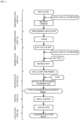
- the unmodified cellulose beads of the present invention are obtained by a production method comprising a mercerization step (S1), a depolymerization step (S2), a defibration step (S3), a neutralization step (S4), and a drying step (S5), as shown in FIG. 1 .
- the mercerization step (S1) is a step in which cellulose is mercerized to obtain mercerized cellulose.
- the raw cellulose is added to an alkali metal hydroxide such as caustic soda (NaOH), and the mixture is heated and stirred as necessary to cause the cellulose fibers to swell.
- an alkali metal hydroxide such as caustic soda (NaOH)
- the cellulose fibers are immersed in an alkali metal hydroxide, they are negatively charged and a Coulomb force is generated, which causes the individual fibers to repel each other and make them susceptible to defibration. Since the mercerized cellulose is susceptible to defibration as described above, it is possible to reduce the energy required in the subsequent defibration step (S3).
- alkali metal hydroxide used in the mercerization step examples include caustic soda (NaOH), lithium hydroxide, and potassium hydroxide. From the viewpoints of cost, safety, and environmental impact, caustic soda is preferably used.
- the depolymerization step (S2) is a step for reducing the degree of polymerization of the mercerized cellulose obtained in the mercerization step (S1) to 760 or less.
- the mercerized cellulose having the adjusted solid content is appropriately pulverized and then aged by oxidative decomposition with oxygen in the air to reduce the degree of polymerization. In this case, the degree of polymerization is set to 760 or less.
- the degree of polymerization of the mercerized cellulose is set to 760 or less, the transparency of the dispersion of the obtained cellulose fine fibers is secured. Furthermore, the lower the degree of polymerization of the mercerized cellulose, the easier it is to defibrate the cellulose fibers in the subsequent defibration step.
- the aging of the mercerized cellulose in the depolymerization step (S2) is carried out at room temperature or under heating conditions. In order to accelerate the depolymerization rate, heating conditions which do not dry the raw material are preferably used. An aging accelerator, such as manganese(II) sulfate, which accelerates the aging reaction can be added.
- an alkali metal hydroxide and a solvent are added to the raw cellulose to adjust the total concentration to 2.5 to 17.5%, and defibration is performed.
- the alkali metal hydroxide used here can be caustic soda, lithium hydroxide, potassium hydroxide, etc., and from the viewpoints of cost and safety, caustic soda is preferably used.
- the raw cellulose is defibrated by mechanical (physical) defibration. Mechanical (physical) defibration is performed by a known method using a homogenizer, water jet, etc.
- the raw cellulose is in a state where the fibers are swollen and susceptible to defibration by mercerization, and the degree of polymerization is reduced by the depolymerization step, defibration can be easily performed without applying high pressure, which is also advantageous in terms of equipment.
- the concentration of the alkali metal hydroxide is less than 2.5%, the swelling of the cellulose may be insufficient, and defibration may be difficult. If the concentration of the alkali metal hydroxide is greater than 17.5%, the salt concentration becomes high, whereby the cellulose fibers are more likely to aggregate, which may make defibration more difficult. If the alkali metal hydroxide is outside the range and defibration is insufficient, un-defibrated fibers remain in the resulting dispersion of cellulose fine fibers, resulting in low transparency and insufficient uniformity, which may cause fibrous substances to be mixed into the cellulose beads or the surface condition of the cellulose beads to become rough, resulting in a defective product.
- Defibration may be performed in a plurality of steps. For example, by performing preliminary defibration using a mixer and then primary defibration using a homogenizer, cellulose fine fibers having uniform fiber diameters and small fiber diameters can be obtained. Preliminary defibration can avoid problems such as clogging of the defibration device with the raw cellulose. Preliminary defibration is performed by a known method using a mixer, refiner, etc. The defibration of cellulose fine fibers is sufficient if the average fiber diameter is defibrated to a nano-size to several hundred nano-size. When the average fiber diameter is approximately 2 to 800 nm, and more preferably 100 nm or less, the transparency of the dispersion of cellulose fine fibers is improved and the processing suitability of cellulose beads is improved.
- the cellulose fine fibers obtained via the defibration step (S3) are neutralized with an acid in the neutralization step (S4).
- the cellulose fine fibers obtained via the defibration step are strongly alkaline and thus require neutralization.
- acids which can be used include sulfuric acid, hydrochloric acid, and lactic acid.
- the neutralized cellulose fine fibers are appropriately washed and re-defibrated to obtain type II unmodified cellulose fine fibers.
- the drying step (S5) is a step in which the dispersion of cellulose fine fibers obtained via the neutralization step (S4) is spray-dried to form unmodified cellulose beads.
- the dispersion of cellulose fine fibers is dried and is caused to aggregate by spray drying, and formed into granules (beads).
- the conditions for spray drying include an air pressure of 0.025 to 0.6 MPa. If the air pressure for spray drying is insufficient, the cellulose fine fibers are not atomized, whereby the particle size becomes large and the physical properties and textures thereof deteriorate. Furthermore, if the air pressure is higher than 0.6 MPa, the air generator becomes excessively large, which is not practical.
- a collection step (S6) is carried out after the drying step (S5) as necessary.
- the collection step (S6) is a step of removing unnecessary particles from the cellulose beads formed via the drying step (S5) to recover cellulose beads of suitable particles.
- the collection means is not particularly limited as long as it is capable of recovering suitable particles, and collection can be carried out by known collection means such as a bag filter or a cyclone dust collector.
- the unmodified cellulose beads obtained by the production method of the present invention have an average particle size (D50) at 50% cumulative value, an average particle diameter (D10) at 10% cumulative value, an average particle diameter (D20) at 20% cumulative value, and an average particle diameter (D90) at 90% cumulative value, in the particle size distribution, and a standard deviation (SD) of average particle size divided by the average particle diameter (D50) (CV value: SD/D50) as specified below.
- D50 average particle size
- D10 average particle diameter
- D20 average particle diameter
- D90 average particle diameter
- the average particle size (D50) is the median diameter
- the average particle sizes (D10), (D20), (D90) and the CV value (SD/D50) indicate the tendency of the particle size distribution
- the CV value (SD/D50) is an index indicating the uniformity of the particle size, and the smaller the value thereof, the more uniform the particle size.
- the average particle size (D50) at 50% cumulative value is 1 to 20 ⁇ m, and more preferably 2.5 to 10 ⁇ m.
- the average particle diameter (D10) at 10% cumulative value is 4.0 ⁇ m or less, and more preferably 3.0 ⁇ m or less.
- the average particle diameter (D20) at 20% cumulative value is 6.0 ⁇ m or less, and more preferably 4.5 ⁇ m or less.
- the average particle diameter (D90) at 90% cumulative value is 30.0 ⁇ m or less, and more preferably 20.0 ⁇ m or less.
- the CV value (SD/D50) is 0.4 to 1.5, and more preferably 0.5 to 1.0.
- the unmodified cellulose beads of the present invention are particles having a median diameter (D50) of 1 to 20 ⁇ m and a D90 of 30.0 ⁇ m or less, contain a large number of fine particles such as those having a D10 of 4.0 ⁇ m or less and a D20 of 6.0 ⁇ m or less, and have a CV value (SD/D50) of 0.4 to 1.5, and thus, the particles as a whole have a relatively non-uniform particle size, resulting in suitable textures with good slipperiness and little roughness and squeakiness.
- D50 median diameter
- the unmodified cellulose beads have excellent soft-focus properties.
- Soft-focus properties require a high degree of light diffusion. It is known that the smaller the particle size of cellulose beads is, the higher the haze value is, and the greater the light diffusion effect tends to be.
- the unmodified cellulose beads of the present invention contain a large number of fine particles, the light diffusion effect is enhanced and excellent soft-focus properties are obtained.
- the haze value of a dispersion in which 0.05% by weight of the unmodified cellulose beads is dispersed in 50% trimethylsiloxysilicate and 50% cyclopentasiloxane is 50% or more, and more preferably 60% or more.
- the unmodified cellulose beads of the present invention can achieve both textures and soft-focus properties.
- the unmodified cellulose beads have a higher purity than conventional cellulose beads.
- Whiteness is used as an index of purity of cellulose beads.
- Conventional cellulose beads are produced from viscose obtained by, for example, chemically modifying cellulose.
- the viscose contains sulfur compounds such as by-products (sodium trithiocarbonate, etc.) and is colored yellow, and the cellulose after production also has residual sulfur compounds (sodium trithiocarbonate, etc.) and is yellowish, which reduces the whiteness of the powder.
- the preferable purity of the unmodified cellulose beads is a Hunter Whiteness (W value) of 85 or more and a Hunter Yellowness (YI value) of 20 or less.
- the unmodified cellulose beads of Trial Examples 1 to 7 were produced under the following conditions in accordance with the operation flowchart of FIG. 1 .
- Comparative Example 1 commercially available cellulose beads (CELLOBEADS D-10, manufactured by Daito Kasei Kogyo Co., Ltd.) were used.
- caustic soda 18% by weight caustic soda was heated to 50°C, pulp was added so as to achieve 2% by weight, the mixture was stirred until it became a slurry, and mercerization was carried out (mercerization step). Excess caustic soda was then removed to adjust the solid content to 33% by weight. Aging treatment was performed at 50°C to reduce the degree of polymerization of the mercerized cellulose to 760 or less, whereby raw cellulose was obtained (depolymerization step). Ion-exchanged water and caustic soda were added to the treated sample, and defibration was performed using a homogenizer (manufactured by SMT Co., Ltd.) (defibration step).
- the sample was spray-dried using a spray dryer (manufactured by Ohkawara Kakohki Co., Ltd.) at an air pressure of 0.25 MPa (throughput of 75 kg/hr) (drying step).
- the particles were collected using a cyclone dust collector (manufactured by Ohkawara Kakohki Co., Ltd.) and then recovered from a bag filter (manufactured by Ohkawara Kakohki Co., Ltd.) (collection step), whereby the unmodified cellulose beads of Trial Example 1 were obtained.
- caustic soda 18% by weight caustic soda was heated to 50°C, pulp was added so as to achieve 2% by weight, the mixture was stirred until it became a slurry, and mercerization was carried out (mercerization step). Excess caustic soda was then removed to adjust the solid content to 33% by weight. Aging treatment was performed at 50°C to reduce the degree of polymerization of the mercerized cellulose to 760 or less, whereby raw cellulose was obtained (depolymerization step). Ion-exchanged water and caustic soda were added to the treated sample, and defibration was performed using a homogenizer (manufactured by SMT Co., Ltd.) (defibration step).
- the sample was spray-dried using a spray dryer (manufactured by Ohkawara Kakohki Co., Ltd.) at an air pressure of 0.25 MPa (throughput of 75 kg/hr) (drying step).
- the particles were recovered by single-point collection using a bag filter (manufactured by Ohkawara Kakohki Co., Ltd.) (collection step), whereby the unmodified cellulose beads of Trial Example 2 were obtained.
- caustic soda 18% by weight caustic soda was heated to 50°C, pulp was added so as to achieve 2% by weight, the mixture was stirred until it became a slurry, and mercerization was carried out (mercerization step). Excess caustic soda was then removed to adjust the solid content to 33% by weight. Aging treatment was performed at 50°C to reduce the degree of polymerization of the mercerized cellulose to 760 or less, whereby raw cellulose was obtained (depolymerization step). Ion-exchanged water and caustic soda were added to the treated sample, and defibration was performed using a homogenizer (manufactured by SMT Co., Ltd.) (defibration step).
- the sample was spray-dried using a spray dryer (manufactured by Ohkawara Kakohki Co., Ltd.) at an air pressure of 0.25 MPa (throughput of 75 kg/hr) (drying step).
- the particles were recovered using a cyclone dust collector (manufactured by Ohkawara Kakohki Co., Ltd.) (collection step), whereby the unmodified cellulose beads of Trial Example 3 were obtained.
- caustic soda 18% by weight caustic soda was heated to 50°C, pulp was added so as to achieve 2% by weight, the mixture was stirred until it became a slurry, and mercerization was carried out (mercerization step). Excess caustic soda was then removed to adjust the solid content to 33% by weight. Aging treatment was performed at 50°C to reduce the degree of polymerization of the mercerized cellulose to 760 or less, whereby raw cellulose was obtained (depolymerization step). Ion-exchanged water and caustic soda were added to the treated sample, and defibration was performed using a homogenizer (manufactured by SMT Co., Ltd.) (defibration step).
- This sample was spray-dried using a spray dryer (manufactured by GF Corporation) at an air pressure of 0.6 MPa (throughput of 2.64 kg/hr) (drying step).
- the particles were recovered using a bag filter (manufactured by GF Corporation) (collection step), whereby the unmodified cellulose beads of Trial Example 4 were obtained.
- caustic soda 18% by weight caustic soda was heated to 50°C, pulp was added so as to achieve 2% by weight, the mixture was stirred until it became a slurry, and mercerization was carried out (mercerization step). Excess caustic soda was then removed to adjust the solid content to 33% by weight. Aging treatment was performed at 50°C to reduce the degree of polymerization of the mercerized cellulose to 760 or less, whereby raw cellulose was obtained (depolymerization step). Ion-exchanged water and caustic soda were added to the treated sample, and defibration was performed using a homogenizer (manufactured by SMT Co., Ltd.) (defibration step).
- This sample was spray-dried using a spray dryer (manufactured by GF Corporation) at an air pressure of 0.06 MPa (throughput of 2.40 kg/hr) (drying step).
- the particles were recovered using a bag filter (manufactured by GF Corporation) (collection step), whereby the unmodified cellulose beads of Trial Example 5 were obtained.
- caustic soda 18% by weight caustic soda was heated to 50°C, pulp was added so as to achieve 2% by weight, the mixture was stirred until it became a slurry, and mercerization was carried out (mercerization step). Excess caustic soda was then removed to adjust the solid content to 33% by weight. Aging treatment was performed at 50°C to reduce the degree of polymerization of the mercerized cellulose to 760 or less, whereby raw cellulose was obtained (depolymerization step). Ion-exchanged water and caustic soda were added to the treated sample, and defibration was performed using a homogenizer (manufactured by SMT Co., Ltd.) (defibration step).
- This sample was spray-dried using a spray dryer (manufactured by GF Corporation) at an air pressure of 0.025 MPa (throughput of 2.40 kg/hr) (drying step).
- the particles were recovered using a bag filter (manufactured by GF Corporation) (collection step), whereby the unmodified cellulose beads of Trial Example 6 were obtained.
- caustic soda 18% by weight caustic soda was heated to 50°C, pulp was added so as to achieve 2% by weight, the mixture was stirred until it became a slurry, and mercerization was carried out (mercerization step). Excess caustic soda was then removed to adjust the solid content to 33% by weight. Aging treatment was performed at 50°C to reduce the degree of polymerization of the mercerized cellulose to 760 or less, whereby raw cellulose was obtained (depolymerization step). Ion-exchanged water and caustic soda were added to the treated sample, and defibration was performed using a homogenizer (manufactured by SMT Co., Ltd.) (defibration step).
- This sample was spray-dried using a spray dryer (manufactured by GF Corporation) at an air pressure of 0.02 MPa (throughput of 2.64 kg/hr) (drying step).
- the particles were recovered using a bag filter (manufactured by GF Corporation) (collection step), whereby the unmodified cellulose beads of Trial Example 7 were obtained.
- FIGS. 2 and 3 are graphs of the particle size distributions of the unmodified cellulose beads of Trial Examples 1 to 7 and Comparative Example 1 obtained by this measurement.
- a laser diffraction/scattering particle size distribution measuring device (“MT3200II” manufactured by Microtrack Bell Corp.) was used to measure the average particle size of each of the cellulose beads.
- a sample circulator was first filled with a slurry in which the cellulose beads were mixed with ion-exchanged water. This slurry was in a state in which it was stirred to the extent that no unevenness was visible to the naked eye immediately before being supplied.
- each measurement parameter was set to a refractive index of 1.33 for ion-exchanged water, light transmittance of the particles to be measured treated as transparent, and a measurement time of 10 seconds.
- the particle size (D10) corresponding to 10% of the cumulative particle size distribution (volume basis), the particle size (D20) corresponding to 20% of the cumulative particle size distribution (volume basis), the particle size (D50) corresponding to 50% of the cumulative particle size distribution (volume basis), the particle size (D90) corresponding to 90% of the cumulative particle size distribution (volume basis), and the standard deviation (SD) of average particle size were measured.
- a dispersion of 0.05% by mass of each of the cellulose beads of Trial Examples 1 to 7 and Comparative Example 1 was prepared, and the hazes (%) thereof were measured in accordance with JIS K7136 (2000).
- Haze (%) is an index of transparency, and a haze meter ("NDH-4000" manufactured by Nippon Denshoku Industries Co., Ltd.) was used.
- the dispersion was placed in a glass cell for liquids (manufactured by Fujiwara Seisakusho Co., Ltd.: "MG-40") having an optical path of 1 cm using a 50% trimethylsiloxysilicate/50% cyclopentasiloxane solution (manufactured by Shin-Etsu Chemical Co., Ltd.: "KF7312J”) to adjust the concentration.
- Zero-point measurement was performed by putting a 50% trimethylsiloxysilicate/50% cyclopentasiloxane solution into the same glass cell.
- the hazes of the cellulose beads of Trial Examples 1 to 7 and Comparative Example 1 were evaluated as “Good (G)" when the measurement result was 50% or more, and "Poor (P)" when the measurement result was less than 50%.
- the Hunter Whiteness (W value) and Hunter Yellowness (YI value) of the cellulose beads of Trial Examples 1 to 7 and Comparative Example 1 were calculated in accordance with JIS P8123.
- the whiteness of the cellulose beads of Trial Examples 1 to 7 and Comparative Example 1 was evaluated such that a Hunter Whiteness (W value) of 85 or more and a Hunter Yellowness (YI value) of 20 or less was evaluated as “Good (G)”; and a Hunter Whiteness (W value) of less than 85 or a Hunter Yellowness (YI value) of greater than 20 was evaluated as "Poor (P)".
- the cellulose beads of Trial Examples 1 to 7 and Comparative Example 1 were spread on the skin with the fingers, and ten testers evaluated the slipperiness, roughness, and squeakiness on a five-point scale for each.
- the texture of each item was evaluated such that an average score of 5.0 to 4.5 was evaluated as "E”, 4.4 to 3.5 was evaluated as “G”, 3.5 to 2.5 was evaluated as “OK”, and 2.4 or less was evaluated as "X”.
- the commercially available cellulose beads of Comparative Example 1 have a particle size distribution that is sharp at a particle size of approximately 10 ⁇ m, as shown in FIG. 3 , and have a CV value (SD/D50) of 0.28. As can be seen therefrom, the particle size of the cellulose beads of Comparative Example 1 is relatively uniform at approximately 10 ⁇ m. As a result, while the textures in terms of slipperiness and roughness were suitable, there was strong squeakiness due to the uniformity of the particle size, and in addition, the haze value was low, which indicated that the soft-focus properties were insufficient.
- the cellulose beads of Trial Examples 1 to 7 have a relatively flat particle size distribution (horizontally spread graph) and a high CV value (SD/D50) as compared to Comparative Example 1, indicating that the particle size varies widely, and specifically, the particle size is relatively non-uniform.
- the cellulose beads of Trial Examples 1 to 7 exhibited an improvement in squeakiness as compared to the cellulose beads of Comparative Example 1.
- Trial Examples 1 to 6 and Comparative Example 1 are compared with each other, it is shown that the cellulose beads of Trial Examples 1 to 6 had a particle size distribution flatter on the smaller particle size side as compared to the cellulose beads of Comparative Example 1, which indicates that the particles as a whole in Trial Examples 1 to 6 were relatively non-uniform in particle size and a large number of particles (fine particles) having smaller particle sizes were contained as compared to Comparative Example 1. Though it has conventionally been considered good that a particle size be relatively uniform (a sharp peak appears in the particle size distribution), Trial Examples 1 to 6 had an overall non-uniform particle size and contained a large number of fine particles (a slightly flat peak appears on the smaller diameter side in the particle size distribution), which made it possible to achieve both textures and soft-focus properties.
- the cellulose beads of Trial Example 7 contained a large number of particles having a large particle size as compared to Comparative Example 1, with the overall particle size being relatively non-uniform.
- the cellulose beads of Trial Example 7 had improved squeakiness as compared to Comparative Example 1, the other textures, slipperiness and roughness, were reduced, and haze was low, which indicated reduced soft-focus properties. From the differences between the characteristics of Trial Examples 1 to 6 and the characteristics of Trial Example 7 relative to Comparative Example 1, it is clear that in order to achieve both textures and soft-focus properties, it is preferable for the particle diameter of the cellulose beads to be non-uniform and for a large number of fine particles to be contained in the cellulose beads.
- the cellulose beads of Comparative Example 1 were chemically modified cellulose beads, and the Hunter Whiteness (W value) and Hunter Yellowness (YI value) thereof indicated a tendency to be weakly white and strongly yellow. Conversely, the cellulose beads of Trial Examples 1 to 7 were unmodified cellulose beads, and all had suitable Hunter Whiteness (W value) and Hunter Yellowness (YI value), indicating that they were of higher purity than Comparative Example 1.
Landscapes
- Health & Medical Sciences (AREA)
- Life Sciences & Earth Sciences (AREA)
- Chemical & Material Sciences (AREA)
- Animal Behavior & Ethology (AREA)
- General Health & Medical Sciences (AREA)
- Public Health (AREA)
- Veterinary Medicine (AREA)
- Birds (AREA)
- Epidemiology (AREA)
- Medicinal Chemistry (AREA)
- Chemical Kinetics & Catalysis (AREA)
- Polymers & Plastics (AREA)
- Organic Chemistry (AREA)
- Engineering & Computer Science (AREA)
- Biochemistry (AREA)
- Materials Engineering (AREA)
- Dermatology (AREA)
- Dispersion Chemistry (AREA)
- Wood Science & Technology (AREA)
- Polysaccharides And Polysaccharide Derivatives (AREA)
- Cosmetics (AREA)
- Processes Of Treating Macromolecular Substances (AREA)
Applications Claiming Priority (2)
| Application Number | Priority Date | Filing Date | Title |
|---|---|---|---|
| JP2022107237A JP7448590B2 (ja) | 2022-07-01 | 2022-07-01 | Ii型未修飾セルロースビーズ及びその製造方法 |
| PCT/JP2023/019567 WO2024004466A1 (fr) | 2022-07-01 | 2023-05-25 | Billes de cellulose non modifiée et leur procédé de fabrication |
Publications (2)
| Publication Number | Publication Date |
|---|---|
| EP4549471A1 true EP4549471A1 (fr) | 2025-05-07 |
| EP4549471A4 EP4549471A4 (fr) | 2026-01-07 |
Family
ID=89382703
Family Applications (1)
| Application Number | Title | Priority Date | Filing Date |
|---|---|---|---|
| EP23830917.3A Pending EP4549471A4 (fr) | 2022-07-01 | 2023-05-25 | Billes de cellulose non modifiée et leur procédé de fabrication |
Country Status (9)
| Country | Link |
|---|---|
| US (1) | US20260009179A1 (fr) |
| EP (1) | EP4549471A4 (fr) |
| JP (2) | JP7448590B2 (fr) |
| KR (1) | KR20250029911A (fr) |
| CN (1) | CN119768438A (fr) |
| CA (1) | CA3260119A1 (fr) |
| GB (1) | GB2636641A (fr) |
| TW (1) | TW202406937A (fr) |
| WO (1) | WO2024004466A1 (fr) |
Families Citing this family (2)
| Publication number | Priority date | Publication date | Assignee | Title |
|---|---|---|---|---|
| GB2636872A (en) * | 2023-12-29 | 2025-07-02 | Futamura Chemical Uk Ltd | Composition |
| KR102921101B1 (ko) * | 2025-05-30 | 2026-02-02 | 한국콜마주식회사 | 셀룰로오스 입자를 포함하는 블러 효과가 우수한 화장료 조성물 |
Family Cites Families (13)
| Publication number | Priority date | Publication date | Assignee | Title |
|---|---|---|---|---|
| JP3287798B2 (ja) * | 1997-12-17 | 2002-06-04 | レンゴー株式会社 | 球状セルロース微粒子の製造方法 |
| EP1334132A1 (fr) * | 2000-11-01 | 2003-08-13 | BKI Holding Corporation | Ethers de cellulose et leur procede de preparation |
| AU2003274052A1 (en) * | 2002-11-12 | 2004-06-03 | L'oreal | Use of cellulose microbeads to make the skin matt |
| JP4998981B2 (ja) | 2006-06-20 | 2012-08-15 | 国立大学法人 東京大学 | 微細セルロース繊維 |
| JP6360408B2 (ja) * | 2014-01-21 | 2018-07-18 | 株式会社スギノマシン | 乳化剤とその製造方法、及びオーガニック化粧料 |
| WO2019059079A1 (fr) | 2017-09-20 | 2019-03-28 | 日本製紙株式会社 | Procédé de production de nanofibres de cellulose anioniquement modifiées |
| JP6351821B1 (ja) | 2017-12-07 | 2018-07-04 | 日本製紙株式会社 | カルボキシメチル化セルロースナノファイバーの製造方法 |
| EP3722327B1 (fr) * | 2017-12-07 | 2022-11-02 | Nippon Paper Industries Co., Ltd. | Procédé de fabrication de nanofibres de cellulose carboxyméthylée |
| JP2019206662A (ja) * | 2018-05-30 | 2019-12-05 | 東レ株式会社 | セルロース粒子、およびその製造方法 |
| WO2020227816A1 (fr) * | 2019-05-10 | 2020-11-19 | Anomera Inc. | Microparticules poreuses de cellulose et leurs procédés de fabrication |
| CN111333875B (zh) * | 2020-04-13 | 2023-02-07 | 牡丹江霖润药用辅料有限责任公司 | 一种超细的高性能微晶纤维素产品及其制备方法 |
| JP6921293B1 (ja) * | 2020-12-23 | 2021-08-18 | 大日精化工業株式会社 | 樹脂ビーズ、樹脂ビーズの製造方法、及び樹脂ビーズを用いた製品 |
| JP7212732B1 (ja) * | 2021-08-10 | 2023-01-25 | フタムラ化学株式会社 | Ii型未修飾セルロース微細繊維、及びii型未修飾セルロース微細繊維並びにその成形体の製造方法 |
-
2022
- 2022-07-01 JP JP2022107237A patent/JP7448590B2/ja active Active
-
2023
- 2023-05-25 EP EP23830917.3A patent/EP4549471A4/fr active Pending
- 2023-05-25 CA CA3260119A patent/CA3260119A1/fr active Pending
- 2023-05-25 GB GB2418409.5A patent/GB2636641A/en active Pending
- 2023-05-25 US US18/880,310 patent/US20260009179A1/en active Pending
- 2023-05-25 KR KR1020257002593A patent/KR20250029911A/ko active Pending
- 2023-05-25 CN CN202380050176.5A patent/CN119768438A/zh active Pending
- 2023-05-25 WO PCT/JP2023/019567 patent/WO2024004466A1/fr not_active Ceased
- 2023-06-05 TW TW112120858A patent/TW202406937A/zh unknown
-
2024
- 2024-01-17 JP JP2024005508A patent/JP2024036377A/ja active Pending
Also Published As
| Publication number | Publication date |
|---|---|
| JP7448590B2 (ja) | 2024-03-12 |
| US20260009179A1 (en) | 2026-01-08 |
| GB202418409D0 (en) | 2025-01-29 |
| TW202406937A (zh) | 2024-02-16 |
| EP4549471A4 (fr) | 2026-01-07 |
| CN119768438A (zh) | 2025-04-04 |
| JP2024006410A (ja) | 2024-01-17 |
| WO2024004466A1 (fr) | 2024-01-04 |
| CA3260119A1 (fr) | 2025-06-07 |
| JP2024036377A (ja) | 2024-03-15 |
| KR20250029911A (ko) | 2025-03-05 |
| GB2636641A (en) | 2025-06-25 |
Similar Documents
| Publication | Publication Date | Title |
|---|---|---|
| EP4549471A1 (fr) | Billes de cellulose non modifiée et leur procédé de fabrication | |
| FI122776B (fi) | Menetelmä ja järjestelmä nanoselluloosan valmistamiseksi sekä nanoselluloosa | |
| KR102140499B1 (ko) | 저중합도 수용성 셀룰로오스에테르의 제조 방법 및 이것을 포함하는 필름 코팅용 조성물의 제조 방법 | |
| CN110446722A (zh) | 硫酸酯化修饰纤维素纳米纤维和纤维素纳米纤维的制造方法 | |
| EP3395837A1 (fr) | Nanofibres de xanthate de cellulose | |
| JP2018150499A (ja) | 酸型カルボキシメチル化セルロースナノファイバー及びその製造方法 | |
| US6427933B1 (en) | Method for manufacturing crystalline superfine silk powder | |
| Kaco et al. | Transparent and Printable Regenerated Kenaf Cellulose/PVA Film. | |
| Lyu et al. | Reusing ethanol-water and recovering residual gum in hemp degumming | |
| JP6891352B2 (ja) | アルギン酸ナトリウム、その製造方法及び使用 | |
| Aisy et al. | Isolation and characterization of cellulose nanofibrils (CNF) from dates by-product via citric acid hydrolysis | |
| JP7756626B2 (ja) | Ii型未修飾セルロース微細繊維、ii型未修飾セルロース微細繊維成形体及びii型未修飾セルロース微細繊維並びにその成形体の製造方法 | |
| EP3643743A1 (fr) | Composition de résine contenant des fibres fines de xanthate de cellulose | |
| KR102755346B1 (ko) | 미생물 셀룰로즈로부터 비스코스 도프의 생산 방법 | |
| Motaung et al. | Effects of mechanical fibrillation on cellulose reinforced poly (ethylene oxide) | |
| US20120223165A1 (en) | Method for Obtaining Microcrystalline Cellulose from Residues Derived from Acid Delinting of Cottonseed | |
| TWI857036B (zh) | 粉末狀纖維素及其製造方法、以及其用途 | |
| JP7015970B2 (ja) | ゴム組成物及びその製造方法 | |
| Oboh et al. | Isolation of Cellulosic Nanoparticles from Coir Fibre for the Preparation of Natural Rubber Composites | |
| KR20260062937A (ko) | 재생 셀룰로오스 유래 셀룰로오스 분산액 및 재생 셀룰로오스 유래 셀룰로오스 성형체의 제조 방법, 그리고 재생 셀룰로오스 유래 셀룰로오스 분산액, 재생 셀룰로오스 유래 셀룰로오스 비즈 및 재생 셀룰로오스 유래 셀룰로오스 성형체 | |
| WO2026088658A1 (fr) | Procédé de production d'une dispersion de cellulose dérivée de cellulose régénérée, procédé de production d'un corps moulé en cellulose dérivée de cellulose régénérée, billes de cellulose dérivées de cellulose régénérée et matériau cosmétique | |
| TW202511044A (zh) | 源自再生纖維素之纖維素分散液及源自再生纖維素之纖維素成形體之製造方法以及源自再生纖維素之纖維素分散液、源自再生纖維素之纖維素珠及源自再生纖維素之纖維素成形體 | |
| TWI870661B (zh) | 聚苯二甲酸烷二醇酯材的處理方法 | |
| CN105820376A (zh) | 一种耐热柔性纳米复合材料薄片及其制备方法 | |
| CN120769870A (zh) | 纤维素细纤维组合物、纤维素细纤维的水分散体、聚合物组合物、模制制品以及生产纤维素细纤维组合物的方法 |
Legal Events
| Date | Code | Title | Description |
|---|---|---|---|
| STAA | Information on the status of an ep patent application or granted ep patent |
Free format text: STATUS: THE INTERNATIONAL PUBLICATION HAS BEEN MADE |
|
| PUAI | Public reference made under article 153(3) epc to a published international application that has entered the european phase |
Free format text: ORIGINAL CODE: 0009012 |
|
| STAA | Information on the status of an ep patent application or granted ep patent |
Free format text: STATUS: REQUEST FOR EXAMINATION WAS MADE |
|
| 17P | Request for examination filed |
Effective date: 20250115 |
|
| AK | Designated contracting states |
Kind code of ref document: A1 Designated state(s): AL AT BE BG CH CY CZ DE DK EE ES FI FR GB GR HR HU IE IS IT LI LT LU LV MC ME MK MT NL NO PL PT RO RS SE SI SK SM TR |
|
| DAV | Request for validation of the european patent (deleted) | ||
| DAX | Request for extension of the european patent (deleted) | ||
| A4 | Supplementary search report drawn up and despatched |
Effective date: 20251209 |
|
| RIC1 | Information provided on ipc code assigned before grant |
Ipc: C08B 1/00 20060101AFI20251203BHEP Ipc: C08J 3/12 20060101ALI20251203BHEP Ipc: A61Q 19/00 20060101ALI20251203BHEP Ipc: A61K 8/73 20060101ALI20251203BHEP |