EP4549584A2 - Verfahren - Google Patents
Verfahren Download PDFInfo
- Publication number
- EP4549584A2 EP4549584A2 EP25161085.3A EP25161085A EP4549584A2 EP 4549584 A2 EP4549584 A2 EP 4549584A2 EP 25161085 A EP25161085 A EP 25161085A EP 4549584 A2 EP4549584 A2 EP 4549584A2
- Authority
- EP
- European Patent Office
- Prior art keywords
- polynucleotide
- adapter
- target
- polynucleotides
- sample
- Prior art date
- Legal status (The legal status is an assumption and is not a legal conclusion. Google has not performed a legal analysis and makes no representation as to the accuracy of the status listed.)
- Pending
Links
Images













Classifications
-
- C—CHEMISTRY; METALLURGY
- C12—BIOCHEMISTRY; BEER; SPIRITS; WINE; VINEGAR; MICROBIOLOGY; ENZYMOLOGY; MUTATION OR GENETIC ENGINEERING
- C12Q—MEASURING OR TESTING PROCESSES INVOLVING ENZYMES, NUCLEIC ACIDS OR MICROORGANISMS; COMPOSITIONS OR TEST PAPERS THEREFOR; PROCESSES OF PREPARING SUCH COMPOSITIONS; CONDITION-RESPONSIVE CONTROL IN MICROBIOLOGICAL OR ENZYMOLOGICAL PROCESSES
- C12Q1/00—Measuring or testing processes involving enzymes, nucleic acids or microorganisms; Compositions therefor; Processes of preparing such compositions
- C12Q1/68—Measuring or testing processes involving enzymes, nucleic acids or microorganisms; Compositions therefor; Processes of preparing such compositions involving nucleic acids
- C12Q1/6806—Preparing nucleic acids for analysis, e.g. for polymerase chain reaction [PCR] assay
-
- C—CHEMISTRY; METALLURGY
- C12—BIOCHEMISTRY; BEER; SPIRITS; WINE; VINEGAR; MICROBIOLOGY; ENZYMOLOGY; MUTATION OR GENETIC ENGINEERING
- C12Q—MEASURING OR TESTING PROCESSES INVOLVING ENZYMES, NUCLEIC ACIDS OR MICROORGANISMS; COMPOSITIONS OR TEST PAPERS THEREFOR; PROCESSES OF PREPARING SUCH COMPOSITIONS; CONDITION-RESPONSIVE CONTROL IN MICROBIOLOGICAL OR ENZYMOLOGICAL PROCESSES
- C12Q1/00—Measuring or testing processes involving enzymes, nucleic acids or microorganisms; Compositions therefor; Processes of preparing such compositions
- C12Q1/68—Measuring or testing processes involving enzymes, nucleic acids or microorganisms; Compositions therefor; Processes of preparing such compositions involving nucleic acids
- C12Q1/6869—Methods for sequencing
Definitions
- the invention relates to methods of selectively adapting a target polynucleotide in a sample of polynucleotides.
- the invention also relates to methods of characterising the modified polynucleotides.
- Nanopores Transmembrane pores have great potential as direct, electrical biosensors for polymers and a variety of small molecules.
- recent focus has been given to nanopores as a potential DNA sequencing technology.
- Nanopore detection of the nucleotide gives a current change of known signature and duration.
- Strand sequencing can involve the use of a molecular brake to control the movement of the polynucleotide through the pore.
- the inventors have devised a method of selectively adapting a target polynucleotide in a sample of polynucleotides.
- the ends of the polynucleotides are protected to prevent non-specific addition of adapters to the ends of the polynucleotides in the sample.
- the method utilises a guide polynucleotide and a polynucleotide-guided effector protein to cut within a target polypeptide and add one or more adapter to at least one of the cut ends.
- the target polynucleotide can then be characterised, such as by strand sequencing, without needing to physically separate the target polynucleotide from other polynucleotides in the sample. For example, in nanopore sequencing methods, the signals obtained from the target polynucleotides are effectively enhanced as the background signals resulting from polynucleotides adapted at their ends are very low.
- the ends of the polynucleotides in the sample can be protected simply by chemically altering the ends of the polynucleotides.
- the 5' ends of a polynucleotide are normally phosphorylated.
- an adapter may be attached (e.g. ligated) to the cut ends but not to the dephoshorylated ends. This enables an adapter to be selectively covalently attached to the cut ends of the target polynucleotide.
- Dephosphorylation of the ends can be achieved simply and easily by adding a dephosphorylase to the sample of polynucleotides.
- the dephosphorylase does not need to be removed from the sample prior to further processing of the sample.
- the dephosphorylase can simply be heat inactivated prior to addition of the cutting enzyme.
- Another example of a method of chemically altering the ends of the polynucleotides is to extend the 3' ends of the polynucleotides using a terminal transferase to add a 3' tail comprising at least one nucleotide. This prevents ligation to an adapter bearing a 3' overhang.. This enables an adapter being covalently attached to the cut ends of the target polynucleotide. Thus, no complicated steps are required to protect the ends of the polynucleotides in the sample and no adapters are added to polynucleotides in the sample that are not cut by the polynucleotide-guided effector protein.
- the selective addition of adapters to the target polynucleotides enables detection and/or characterisation of the target polypeptides without needing to physically separate the target polynucleotides from other polynucleotides in the sample, and the background signal in any detection/characterisation method is reduced compared to methods in which the ends are not protected.
- the selective addition of adapters to the target polynucleotides can also be used to physically separate the target polynucleotides from other polynucleotides in a sample.
- the adapter may be used as a tag to separate the target polynucleotide, such as by using the adapter to attach biotin to the target polynucleotide, allowing the target polynucleotide to be attached to beads.
- the polynucleotide is preferably DNA, RNA or a DNA/RNA hybrid, most preferably DNA.
- the target polynucleotide preferably comprises a double stranded region to which the guide-polynucleotide and polynucleotide-guided effector protein bind.
- the target polynucleotide may be double stranded.
- the target polypeptide may be single stranded and a small single stranded polynucleotide may be hybridised to the target site of the guide polynucleotide and polynucleotide-guided effector protein.
- the nuclease activity of the RNA-guided endonuclease may be partially disabled.
- One or more of the catalytic nuclease sites of the RNA-guided endonuclease may be inactivated, provided that the enzyme retains the ability to cut at least one strand of the target polynucleotide.
- the RNA-guided endonuclease comprises two catalytic nuclease sites
- one of the catalytic sites may be inactivated.
- one of the catalytic sites will cut one strand of the polynucleotide to which it specifically binds and the other catalytic site will cut the opposite strand of the polynucleotide. Therefore, the RNA-guided endonuclease may cut both strands or one strand of a double stranded region of a target polynucleotide.
- the first and second nickases may be guided by different guide polynucleotide so that the nickases cut at different places in the double stranded target polynucleotide such that a cut end with an overhang of the desired length is produced.
- Catalytic sites of a RNA-guided endonuclease may be inactivated by mutation.
- the mutation may be a substitution, insertion or deletion mutation.
- one or more, such as 2, 3, 4, 5, or 6 amino acids may be substituted or inserted into or deleted from the catalytic site.
- the mutation is preferably a substitution or insertion, more preferably a substitution of a single amino acid at the catalytic site.
- the skilled person will be readily able to identify the catalytic sites of a RNA-guided endonuclease and mutations that inactivate them.
- the RNA-guided endonuclease is Cas9
- one catalytic site may be inactivated by a mutation at D10 and the other by a mutation at H640.
- the method may further comprise adding an enzyme with 5' to 3' or 3' to 5' exonuclease activity to the sample to remove nucleotides adjacent to one side of the nick in the nicked strand of the target polynucleotide to expose a stretch of single stranded polynucleotide to which an adapter, such as an adapter comprising a single stranded portion (typically 3') comprising a universal sequence, can hybridise.
- an enzyme with 5' to 3' or 3' to 5' exonuclease activity
- a polymerase may be used to close any gap between the end of the adapter (typically 3') and the end of the double stranded region of the target polynucleotide (typically 5') prior to covalent attachment, such as ligation of the adapter to the target polynucleotide.
- the guide polynucleotide comprises a sequence that is capable of hybridising to a target polynucleotide and is also capable of binding to a polynucleotide-guided effector protein.
- the guide polynucleotide may have any structure that enables it to bind to the target polynucleotide and to a polynucleotide-guided effector protein.
- the guide polynucleotide typically hybridizes to a sequence of about 20 nucleotides in the target polynucleotide.
- the sequence to which the guide RNA binds may be from about 10 to about 40, such as about 15 to about 30, preferably from about 18 to about 25 nucleotides, such as 21, 22, 23 or 24 nucleotides.
- the guide polynucleotide is typically complementary to a portion of one strand of a double stranded region of the target polynucleotide.
- the guide RNA may be complementary to a region in the target polynucleotide that is 5' or 3' to a PAM. This is preferred where the target polynucleotide comprises DNA, particularly where the RNA effector protein is Cas9 or Cpf1.
- the guide RNA may be complementary to a region in the target polynucleotide that is flanked by a guanine. This is preferred where the target polynucleotide comprises RNA, particularly where the RNA effector protein is C2c2.
- the guide RNA may have any structure that enables it to bind to the target polynucleotide and to a RNA-guided effector protein.
- the guide RNA may comprise a crRNA that binds to a sequence in the target polynucleotide and a tracrRNA.
- the tracrRNA typically binds to the RNA-guided effector protein.
- Typical structures of guide RNAs are known in the art.
- the crRNA is typically a single stranded RNA and the tracrRNA typically has a double stranded region of which one strand is attached to the 3' end of the crRNA and a part that forms a hairpin loop at the 3' end of the strand that is not attached to the crRNA.
- the crRNA and tracrRNA may be transcribed in vitro as a single piece sgRNA.
- the guide RNA may comprise other components, such as additional RNA bases or DNA bases or other nucleobases.
- the RNA and DNA bases in the guide RNA may be natural bases or modified bases.
- a guide DNA may be used in place of a guide RNA, and a DNA-guided effector protein used instead of a RNA-guided effector protein.
- the use of a guide DNA and a DNA-guided effector protein may be preferred where the target polynucleotide is RNA.
- Customised guide polynucleotides are commercially available, for example from Integrated DNA Technologies (IDT).
- the method may comprise contacting the sample of polynucleotides with multiple guide polynucleotides.
- multiple guide polynucleotides For example, from 1 to 100, such as 2 to 50, for example 4, 6, 8, 10, 20 or 30 guide polynucleotides may be used.
- the multiple guide polynucleotides may bind to sequences at different sites in the same target polynucleotide, for example at the ends of (flanking) a region of interest in the target polynucleotide, or such that coverage of all of or a long length of the target polynucleotide can be obtained by generating fragments of the target polynucleotide to which adapters can be attached. The fragments may be distinct or overlapping fragments.
- the multiple guide polynucleotides may bind to sequences in different target polynucleotides.
- the method may utilise two guide polynucleotides designed so that one guide polynucleotide directs a nickase to cut one strand of a double stranded target polynucleotide and the other guide polynucleotide guides a nickase to cut the other strand of the double stranded polynucleotide. In this way opposing cut ends each with an overhang may be produced.
- the method may utilise two or more pairs of such guide polynucleotides to produce cut ends with overhangs at two or more in a target polynucleotide.
- the cut site may include one or more of the terminal 20 nucleotides of a region of interest in the target polynucleotide and/or may be within from 0 to 50 nucleotides of the end of the region of interest in the target polynucleotide, such as from 1 to 40, 5 to 30 or 10 to 20 nucleotides.
- the polynucleotide-guided effector protein cuts at one site in the target polynucleotide.
- the polynucleotide-guided effector protein cuts at two or more sites in the target polynucleotide.
- the two sites are preferably at the ends of the target polynucleotide or at the ends of a region of interest in the target polynucleotide.
- the method may comprise contacting a sample of polynucleotides with two or more guide polynucleotides, wherein a first guide polynucleotide binds to a sequence near one end of the target polynucleotide and a second guide polynucleotide binds to a sequence near the other end of the target polynucleotide, or wherein a first guide polynucleotide binds to a sequence near one end of the region of interest and a second guide polynucleotide binds to a sequence near the other end of the region of interest.
- the method may comprise contacting a sample of polynucleotides with two or more pairs of guide polynucleotides, wherein a first pair directs a pair of nickases to cut at one end of the target polynucleotide, or region of interest, and a second directs a pair of nickases to cut at the other end of the target polynucleotide, or region of interest.
- three or more sites for example 4, 5, 6, 7, 8, 9, 10 or more sites, within a target polynucleotide are cut.
- the method may, for example, involve using three guide polynucleotides, or three pairs of guide polynucleotides, wherein one binds to a sequence within the target polynucleotide, or region of interest, and the other two bind to sequences at the ends of the target polynucleotide, or region of interest.
- the guide polynucleotides may be designed such that the action of the polynucleotide-guided effector proteins cuts out the region of interest from a longer polynucleotide or such that it cuts out the entire target polynucleotide.
- the method may utilise two guide polynucleotides, or two pairs of guide polynucleotides, wherein one guide polynucleotide, or one pair of guide polynucleotides, binds to a site at one end of the target polynucleotide and the other guide polynucleotide or pair of guide polynucleotides binds to a site at the other end of the target polynucleotide.
- the guide polynucleotide may be bound to the polynucleotide-guided effector protein, i.e. the guide polynucleotide and polynucleotide-guided effector protein may form a complex which may be referred to as a ribonucleoprotein (RNP).
- RNP ribonucleoprotein
- an equimolar pool of crRNA may be annealed to tracrRNA at about 95°C for about 5 minutes to form the guide polynucleotide which is then cooled to room temperature before adding the polynucleotide-guided effector protein and incubating for at least about 10 minutes to allow the polynucleotide-guided effector protein to bind to the guide polynucleotide.
- the complex comprising the guide polynucleotide and the polynucleotide-guided effector protein may be added to the sample.
- the method uses two or more different guide polynucleotides each may be complexed with a polynucleotide-guided effector protein.
- the method may therefore comprise adding two or more, for example 3, 4, 5, 7, 8, 9, 10 or more, such complexes to the sample.
- the guide polynucleotides may be used to attach adapters within or flanking at least one region of interest in each of the target polynucleotides.
- the polynucleotide-guided effector protein cuts the target polynucleotide to produce two opposing cut ends.
- the polynucleotide-guided effector protein and guide polynucleotide are typically incubated with the dephosphorylated sample of polynucleotides at a temperature of about 20°C to about 40°C, such as about 30°C, preferably about 37°C for a period of about 15 minutes to about an hour or more, such as about 30 minutes.
- the reaction conditions including for example the amount of sample, the effector protein concentration, the incubation temperature and the incubation time period can be adjusted as appropriate.
- the polynucleotide-guided effector protein typically cuts the target polynucleotide in a double stranded region to produce two opposing cut ends.
- the opposing cut ends may be in just one strand of the double stranded polynucleotide, for example, where the polynucleotide-guided effector protein is a nickase.
- the opposing cut ends may be in both strands of the double stranded polynucleotide.
- the opposing cut ends may be blunt ended, i.e. the polynucleotide-guided effector protein may cut both strands of the double stranded polynucleotide at the same point.
- the cut ends each comprise a single stranded overhang.
- the single stranded overhang may be produced by a single polynucleotide-guided effector protein, such as for example Cas12a (Cpf1).
- the cut end comprising a single stranded overhang is produced by the action of two polynucleotide-guided effector proteins, wherein each protein cuts a different strand of the target polynucleotide.
- an adapter is attached to one or both of the cut ends produced by the effector protein(s).
- the overhang may be of any suitable length. Typically, the overhang comprises from 4 to 30, such as 5 to 25, 6 to 20, 7 to 15, 8 to 12 or 9 to 10 nucleotides.
- the sequence of the single stranded overhang in the adapter is a universal sequence.
- the universal sequence in the adapter may be from about 3 to about 15 nucleotides in length, such as from about 4, 5, 6 or 7 to about 12, 10 or 8 nucleotides in length.
- the universal sequence comprises universal nucleotides that can hybridise to any polynucleotide sequence in the overhang produced by cutting the double stranded polynucleotide.
- a universal nucleotide is one which will hybridise to some degree to all of the nucleotides in the template polynucleotide.
- a universal nucleotide is preferably one which will hybridise to some degree to nucleotides comprising the nucleosides adenosine (A), thymine (T), uracil (U), guanine (G) and cytosine (C).
- the universal nucleotides used in the adapter hybridise to all of the nucleotides in the double stranded polynucleotide.
- the universal nucleotides in the adapter need only bind to A, C, G and T.
- a universal nucleotide may comprise one of the following nucleobases: hypoxanthine, 4-nitroindole, 5-nitroindole, 6-nitroindole, 3-nitropyrrole, nitroimidazole, 4-nitropyrazole, 4-nitrobenzimidazole, 5-nitroindazole, 4-aminobenzimidazole or phenyl (C6-aromatic ring.
- the universal nucleotide more preferably comprises one of the following nucleosides: 2'-deoxyinosine, inosine, 7-deaza-2'-deoxyinosine, 7-deaza-inosine, 2-aza-deoxyinosine, 2-aza-inosine, 4-nitroindole 2'-deoxyribonucleoside, 4-nitroindole ribonucleoside, 5-nitroindole 2'-deoxyribonucleoside, 5-nitroindole ribonucleoside, 6-nitroindole 2'-deoxyribonucleoside, 6-nitroindole ribonucleoside, 3-nitropyrrole 2'-deoxyribonucleoside, 3-nitropyrrole ribonucleoside, an acyclic sugar analogue of hypoxanthine, nitroimidazole 2'-deoxyribonucleoside, nitroimidazole ribonucleoside, 4-nitropyrazole 2'
- the complementary or universal single stranded region is at the 5' end of a single stranded adapter, or is a single stranded 5' overhang on a double stranded adapter.
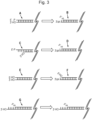
- the adapter has a universal overhang or a single stranded overhang complementary to the overhang of the cut end, if the overhang of the cut end is a 5' overhang on the top strand, the overhang of the adapter is a 5' overhang on the bottom strand, or vice versa.
- the universal or complementary single stranded region is at the 3' end of a single stranded adapter, or is a 3' overhang on a double stranded adapter.
- the overhang of the cut end is a 3' overhang on the bottom strand
- the overhang of the adapter is a 3' overhang on the top strand, or vice versa.
- the length of the overhang on the adapter is typically the same as the length of the overhang on the cut end. It is possible that one of the overhangs may be shorter than the other overhang.
- the overhangs are capable of hybridizing over a region of from 4 to 30, such as 5 to 25, 6 to 20, 7 to 15, 8 to 12 or 9 to 10 nucleotides. Where, after hybridization, there is a stretch of single stranded nucleotides, the gap may be filled, for example using a polymerase.
- the lengths of the two complementary overhangs are identical, or the length of the overhang in the target sequence and the universal overhang are identical.
- the method may comprise contacting the sample with a polymerase and dNTPs to fill in the overhang to produce a blunt end.
- the method may further comprise contacting the sample with a polymerase and dATP to add a dA tail to at least one of the cut ends in the target polynucleotide.
- the dA tail may be added to a blunt end or to an single strand overhang.
- the method may further comprise contacting the sample with a polymerase and dTTP to add a dT tail to at least one of the cut ends in the target polynucleotide.
- dG and dC could be used in place of dA and dT.
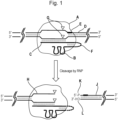
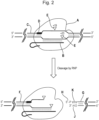
- the polynucleotide-guided effector protein may remain bound to one side of the cut site, or may be released from the target polynucleotide. Where the polynucleotide-guided effector protein remains bound to one side of the cut site, binding of an adapter to the cut end on the side of the cut site to which the effector protein remains attached may be prevented. In this case there is a bias to addition of the adapter to the cut end on the side of the cut site to which the effector protein is not attached.
- the polynucleotide-guided effector protein remains attached to one of the two opposing cut ends and the adapter is attached to the other one of the two opposing cut ends.
- the guide polynucleotide may be designed to direct the polynucleotide-guided effector protein to cut the polynucleotide and remain on the opposite side of the cut site to the region of interest.
- Guide polynucleotides may be designed to direct the polynucleotide-guided effector protein to cut the polynucleotide and remain on the opposite side of the cut site upstream of the region of interest and to cut the polynucleotide and remain on the opposite side of the cut site downstream of the region of interest.
- the polynucleotide-guided effector protein remains attached to the PAM-distal side of the cut site, leaving the PAM-proximal side of the cut site accessible to a dA-tailing enzyme and/ore adapter attachment.
- Polynucleotide-guided effector proteins do not cut at each targeted site 100% of the time.
- the inventors have devised a method to increase the likelihood of a target polynucleotide being cut and adapted.
- the method may be used, for example, to ensure that an adapter is added at both sides of a region of interest.
- the guide polynucleotides are designed to direct polynucleotide-guided effector proteins to two or more, such as 3, 4, 5, 6 or more, sites in the same region of the target polynucleotide, typically wherein the polynucleotide-guided effector proteins are in the same orientation, e.g.
- the two cut sites in the same region may be located within about 10kb, 5kb, 1kb, 500 nucleotides or 100 nucleotides of each other, such as within about 90, 80, 70, 60, 50, 40, 30, 20 or 10 nucleotides of each other. Where there are cut sites at both sides of a defined region of interest, there may be two or more, such as 3, 4, 5, 6 or more, cut sites at either side of the region of interest.
- the cut sites in the same region of the target polynucleotide may be sites to which the same polynucleotide guided effector protein is directed, or sites to which different polynucleotide guided effector proteins, such as for example Cas9 and Cas12a (Cpf1), are directed.
- a method for selectively adapting a target polynucleotide in a sample of polynucleotides comprising: contacting the polynucleotides in the sample with two guide polynucleotides that bind to a sequences in the target polynucleotide and a polynucleotide-guided effector protein, wherein the sequences to which the two guide polynucleotides bind direct the polynucleotide-guided effector protein to two closely located sites, such that the polynucleotide-guided effector protein cuts the target polynucleotide at at least one of the two sites to produce two opposing cut ends; and attaching an adapter to one or both of the two opposing cut ends in the target polynucleotide.
- the region of interest is a region of the target polynucleotide to be characterised, such as sequenced.
- the region of interest may be defined by targeted cut sites at its ends.
- the region of interest may be "open ended" in the sense that one end is defined by the position of a target cut site and the region of interest extends away from the target cut site in one or both directions. Characterisation of the region of interest in one particular direction away from the cut site can be biased by designing the guide polynucleotide such that the effector protein remains attached to the opposite side of the cut site to the side it is wished preferentially to characterise, e.g. the region of interest.
- the target polynucleotide may comprise a polymorphism, such as for example a SNP.
- the guide polynucleotide/polynucleotide guided effector protein may be designed to target the site of a polymorphism, such as a SNP, and may only bind to and cut the target polynucelotide in the presence (or absence) of the polymorphism.
- the guide polynucleotide/polynucleotide guided effector protein may alternatively be designed to cut the target polynucleotide such that the region containing the polymorphism can be characterised, e.g. so that the region of interest is the region that may or may not include the polymorphism.
- the ends may be modified to facilitate adapter ligation.
- the adapter has a dT tail, such as a single or polyT tail
- the cut ends may be dA-tailed, for example to add a single dT or a polyT tail.
- Methods for adding a dA tail to a blunt end are known in the art. Any suitable method may be used.
- a dA tail is added using a polymerase.
- the polymerase may, for example, be a heat resistant or thermostable polymerase.
- the heat resistant polymerase or thermostable polymerase typically remains stable at temperatures over about 50°C, about 60°C, about 70°C about 75°C or about 80°C.
- the heat resistant polymerase or thermostable polymerase has polymerase activity at temperatures over about 50°C, about 60°C, about 70°C, about 75°C or about 80°.
- the heat resistant polymerase or thermostable polymerase may be Taq polymerase. Where Taq polymerase is used, the dA tail may be added at a temperature of about 72°C, for example.
- the effector protein Prior to dA tailing the cut sites, the effector protein may be inactivated. Typically inactivation may be achieved by heating the sample, for example to at least about 50°C, about 60°C, about 70°C, about 75°C or about 80°C. The sample may be heated to inactivate the effector protein for about 2 minutes to about 20 minutes, such as about 5 minutes to about 15 minutes or about 10 minutes. Where a heat resistant polymerase or thermostable polymerase is used for dA tailing, it may be added prior to heat inactivation of the effector protein. For example, the heat stable polymerase may be added to the sample at the same time as the polynucleotide-guided effector protein.
- the dA tail can be added to the cut sites during the effector protein inactivation step.
- a polymerase that is not active at the temperature used to inactivate the effector protein is used for dA tailing, e.g. a mesophilic polymerase
- the sample is typically cooled to the temperature at which the polymerase used for dA tailing is optimally active, such as for example about 37°C or room temperature, prior to adding the polymerase to the sample.
- the mesophilic polymerase may be added to the sample at the same time as the polynucleotide-guided effector protein such that it is active concomitantly with the polynucleotide-guided effector protein.
- the number of ends which are accessible for dA tailing may be less than when dA tailing is carried out after heat inactivation of the effector protein.
- An example of a suitable mesophilic polymerase is a Klenow fragment, such as 3'-5' exo- Klenow, an exonuclease mutant of E. coli DNA Polymerase I.
- the polynucleotide-guided effector protein is removed from the target polynucleotide. In another embodiment of the method, the polynucleotide-guided effector protein does not remain attached to the target polynucleotide.
- Heat inactivation of the effector protein may aid dissociation of the effector protein from the target polynucleotide and hence increase the number of cut ends accessible for dA tailing and/or adapter attachment, and in particular, facilitate attachment of adapters to both of the two opposing ends formed at a cut site.
- the effector protein is typically denatured in this step.
- the sample may, in one embodiment, be deproteinised to remove any effector proteins that remain bound to the target polynucleotide after cutting.
- a proteinase may be added to the sample after the sample has been incubated with the effector protein for a sufficient period, either before or after heat inactivation of the effector protein.
- the deproteinising step is carried out before adding a polymerase to carry out a dA tailing step.
- the aim of the deproteinisation step is to release bound effector proteins so that adapters can be attached to both of the opposing cut ends formed by the action of the effector protein.
- the effector protein may be released from the target polynucleotide after cutting, for example where the effector protein is Cas12a (Cpf1) or a homologue of S . pyogenes Cas9.
- the effector protein is Cas12a (Cpf1) or a homologue of S . pyogenes Cas9.
- deproteinisation is not required in order to attach adapters to both of the two opposing ends at the cut site. Heat inactivation of the effector protein may also not be necessary.
- the method may comprise contacting the polynucleotides in the sample with one or more guide polynucleotides that bind to one or more target polynucleotide.
- the one or more guide polynucleotides may bind to a target polynucleotide within a region of interest, or outside a region of interest.
- the method may comprise adding two or more, for example 3, 4, 5, 7, 8, 9, 10, 20, 50, 100, 200, 300, 400, 500, 1000, 5000, 10,000 or 100,000 or more, guide polynucleotides to the sample of polynucleotides.
- the guide polynucleotides may be targeted to one, two or more, such as, for example, 3, 4, 5, 7, 8, 9, 10, 50, 100, 500, 1000, 10,000 or 100,000 or more, target polynucleotides.
- the polynucleotide-guided effector protein may cut the target polynucleotide at two or more sites to produce two opposing cut ends at each site.
- at least one of the two or more sites is located on a first side of the region of interest in the target polynucleotide, at least one of the two or more sites is located on a second side of the region of interest in the target polynucleotide, and none of the two or more sites is located within the region of interest.
- the two or more sites targeted by guide polynucleotides comprise at least two sites on either side of a region of interest in the target polynucleotide.
- the same polynucleotide-guided effector protein is used to cut at all of the two or more sites.
- different polynucleotide-guided effector proteins are used to cut at the two or more sites.
- the adapter may be hybridised to one or more cut ends, or one or more modified cut end, such as, for example, a cut end that has been dA tailed.
- the adapter hybridises to the target polynucleotide such that there is a gap between the terminal end (e.g. the 3' end) of the adapter and the terminal end (e.g. the 5' end) of the target polynucleotide strand hybridised to the target polynucleotide strand to which the adapter has also hybridised, the gap can be filled.
- the terminal end (e.g. the 3' end) of the adapter and the terminal end (e.g. the 5' end) of the target polynucleotide to be covalently attached to each other.
- the gaps can be repaired using a polymerase and a ligase, such as DNA polymerase and a DNA ligase.
- the gaps can be repaired using random oligonucleotides of sufficient length to bridge the gaps and a ligase.
- a polymerase that acts in the 5' to 3' direction may be used to extend the end of the adapter after hybridisation of the adapter to the single stranded region to close the gap between the 3' end of the adapter and the 5' end of the flanking double stranded DNA.
- Suitable polymerases that act in the 5' to 3' direction include Taq polymerase, E. coli DNA polymerase I , Klenow fragment, Bst DNA polymerase, M-MuLV reverse transcriptase, phi29 polymerase, T4 DNA polymerase, T7 DNA polymerase, Vent and Deep Vent DNA polymerase.
- the method may further comprise covalently attaching the adapter to the double stranded polynucleotide.
- the 3' terminal nucleotide of the adapter is covalently attached to the 5' terminal nucleotide adjacent to the single stranded region.
- the covalent attachment may be achieved by any suitable means, for example by ligation or click chemistry.
- the method may further comprise covalently attaching, for example ligating the adapter to the double stranded polynucleotide.
- a ligase such as for example T4 DNA ligase
- T4 DNA ligase may be added to the sample to ligate the adapter to the double stranded polynucleotide.
- the adapter may be ligated to the double stranded polynucleotide in the absence of ATP or using gamma-S-ATP (ATP ⁇ S) instead of ATP.
- ligases that can be used include T4 DNA ligase, E. coli DNA ligase, Taq DNA ligase, Tma DNA ligase and 9°N DNA ligase.
- the adapter may be attached using a topoisomerisase.
- the topoisomerase may, for example be a member of any of the Moiety Classification (EC) groups 5.99.1.2 and 5.99.1.3.
- the adapter may typically comprise a 3' portion, or region, and a 5' portion, or region.
- the 3' portion of the adapter comprises a 3' stretch of single stranded polynucleotide that hybridises to the exposed stretch of single stranded polynucleotide in the double stranded polynucleotide.
- the 3' stretch of single stranded polynucleotide in the adapter may be from about 1, 2 or 3 to about 15 nucleotides in length, such as from about 4, 5, 6 or 7 to about 12, 10 or 8 nucleotides in length.
- the 3' stretch of single stranded polynucleotide in the adapter comprises universal nucleotides that can hybridise to any polynucleotide sequence in the exposed stretch of single stranded polynucleotide in the double stranded polynucleotide.
- the 3' stretch of single stranded polynucleotide in the adapter comprises a sequence that is at least about 80%, such as at least about 90% or 95%, complementary to a polynucleotide sequence which is exposed in a single stranded overhang in a targeted cut site.
- the 3' stretch of single stranded polynucleotide in the adapter may comprise a sequence that is exactly complementary to a polynucleotide sequence in the exposed stretch of single stranded polynucleotide in the double stranded polynucleotide.
- the 3' stretch of single stranded polynucleotide in the adapter hybridises to the exposed stretch of single stranded polynucleotide in the double stranded polynucleotide such that nucleotide at the 3' terminus of the 3' portion of the adapter hybridises to the nucleotide at the 5' end of the single stranded overhang.
- the 5' portion may have a length of, for example, from about 3 to about 45 nucleotides, such as about 6, 8, 10 or 15 to about 30, 25 or 20 nucleotides.
- the single stranded region of the 5' portion which may be all of the 5 portion, is typically at least about 3, 6, 8, 10 or 15 nucleotides in length.
- the adapter is or comprises a single stranded polynucleotide.
- the single stranded polynucleotide may have a 3' portion that is designed to hybridise, e.g. is complementary, to the sequence that will be exposed in a targeted cut site in a target polynucleotide, e.g. in a 5' overhang, when the target polynucleotide is cut by a polynucleotide-guided effector protein at the cut site.
- the adapter may be present in a library of single stranded polynucleotide.
- the library may comprise single stranded polynucleotide designed to hybridise to multiple different cut sites in one or more target polynucleotide.
- the single stranded polynucleotides may be referred to as barcodes.
- Each single stranded polynucleotide in the library may have a common sequence to which a complementary strand may be hybridised to produce an adapter comprising a 5' or central double stranded portion.
- the single stranded polynucleotides in the library have sequences that are exactly complementary to the sequence that will be exposed in a targeted cut site in a target polynucleotide, e.g.
- the single stranded polynucleotides may be considered to be specific barcodes.
- the single stranded polynucleotides in the library have sequences that are only partially complementary to the sequence that will be exposed in a targeted cut site in a target polynucleotide, e.g. in a 5' overhang, when the target polynucleotide is cut by a polynucleotide-guided effector protein at the cut site, the single stranded polynucleotides may be considered to be generic barcodes.
- the adapter comprises a double stranded polynucleotide, wherein the two strands are hybridised in a central region and one strand of the double stranded polynucleotide comprises a 3' portion comprising a first single stranded overhang.
- the first single stranded overhang may comprise a first sequence that is complementary to the sequence of an overhang produced when the polynucleotide-guided effector protein cuts a target polynucleotide, or the first single stranded overhang may comprise, for example, a dT tail that can hybridise to a dA tail.
- the adapter may comprise a second single stranded overhang having a sequence at the opposite side of the central region to the first single stranded overhang, wherein the second sequence is different to the first sequence.
- the second single stranded overhang may be in the same strand as the first single stranded overhang, or may be in the opposite strand to the first single stranded overhang.
- the second single stranded overhang may have a length of from 1, 2, 3 or 4 to 30, such as 5 to 25, 6 to 20, 7 to 15, 8 to 12 or 9 to 10 nucleotides.
- the second single stranded overhang may be a 5' overhang or a 3' overhang.
- the method further comprises attaching a further adapter to an adapter attached to a cut end in the target polynucleotide by hybridising the further adapter to the second single stranded overhang sequence.
- the adapter is typically a polynucleotide and may comprise DNA, RNA, modified DNA (such as a basic DNA), RNA, PNA, LNA, BNA and/or PEG.
- the adapter preferably comprises single stranded and/or double stranded DNA and/or RNA.
- the adapter may further comprise a chemical group (e.g. click chemistry) for attachment of the 5' portion of the adapter to a further adapter and/or a chemical group (e.g. click chemistry) for attachment of the 3' portion of the adapter to the double stranded polynucleotide.
- a chemical group e.g. click chemistry
- a chemical group e.g. click chemistry
- the adapter may further comprise a reactive group in the 3' portion and/or in the 5' portion.
- the reactive group in the 3' portion may be used to covalently attach the adapter to the double stranded polynucleotide and/or the reactive group in the 5' portion may be used to covalently attach the adapter to a further adapter.
- the reactive group may be used to ligate the fragments to the overhangs using click chemistry.
- Click chemistry is a term first introduced by Kolb et al. in 2001 to describe an expanding set of powerful, selective, and modular building blocks that work reliably in both small- and large-scale applications ( Kolb HC, Finn, MG, Sharpless KB, Click chemistry: diverse chemical function from a few good reactions, Angew. Chem. Int. Ed. 40
- the reaction must be modular, wide in scope, give very high yields, generate only inoffensive by-products that can be removed by non-chromatographic methods, and be stereospecific (but not necessarily enantioselective).
- the required process characteristics include simple reaction conditions (ideally, the process should be insensitive to oxygen and water), readily available starting materials and reagents, the use of no solvent or a solvent that is benign (such as water) or easily removed, and simple product isolation. Purification if required must be by non-chromatographic methods, such as crystallization or distillation, and the product must be stable under physiological conditions".
- Suitable examples of click chemistry include, but are not limited to, the following:
- the reactive group may be one that is suitable for click chemistry.
- the reactive group may be any of those disclosed in WO 2010/086602 , particularly in Table 4 of that application.
- the adapter attached to the cut site may be a sequencing adapter.
- the adapter may be ligated to a cut end of the target polynucleotide.
- the adapter may be ligated to the target polynucleotide in the absence of ATP or using gamma-S-ATP (ATP ⁇ S) instead of ATP. It is preferred that the adapter is ligated to the polynucleotide in the absence of ATP where the adapter is a sequencing adapter to which a nucleic acid handling enzyme is bound.
- the overhangs produced at the cut ends may have different nucleotide sequences.
- the method may comprise contacting the sample with multiple adapters, wherein different adapters comprise different single stranded polynucleotide sequences, which are typically overhang sequences.
- the different sequences in the different adapters are designed to hybridize to different overhang sequences produced by the action of the polynucleotide-guided effector protein on different target polynucleotides or at different sites in the same target polynucleotide.
- all of the adapters may comprise the same second sequence.
- the second sequence may be used to further process all of the target polynucleotides to which an adapter has been attached in the same manner.
- a further adapter comprising a single stranded polynucleotide capable of hybridizing to the second sequence in the 5' overhang on the first adapter may be attached to all of the target polynucleotides in the sample.
- the further adapter typically comprises a single stranded overhang having a sequence that is complementary to the second sequence in the first.
- the second sequence in the first adapter is capable of hybridizing to the complementary sequence in the overhang of the further adapter.
- the further adapter may hybridise to all or part of the single stranded adapter that forms an overhang when the first adapter binds to the cut end.
- the second sequence in the first adapter is exactly complementary to the overhang sequence in the further adapter. It is possible that there may be one or more base pair mismatches between the two overhang sequences. For example, there may be from 1 to 4 base pair mismatches, such as two or three base pair mismatches. Typically however, there will be at least 4, such as from 5 to 20, 6 to 15 or 8 to 10 matched bases between the two overhang sequences.
- the complementary single stranded region is preferably a 5' overhang on a double stranded further adapter.
- the overhang of the adapter exposed when it is bound to the cut end is a 5' overhang on the top strand
- the overhang of the further adapter is a 5' overhang on the bottom strand, or vice versa.
- the complementary single stranded region is typically a 3' overhang on a double stranded adapter.
- the overhang of the adapter exposed when it is bound to cut end is a 3' overhang on the bottom strand
- the overhang of the adapter is a 3' overhang on the top strand, or vice versa.
- the length of the overhang on the further adapter is typically the same as the length of the overhang in the first adapter that is exposed when the first adapter is attached to the cut end. It is possible that one of the overhangs may be shorter than the other overhang.
- the overhangs are capable of hybridizing over a region of from 4 to 30, such as 5 to 25, 6 to 20, 7 to 15, 8 to 12 or 9 to 10 nucleotides. Where, after hybridization, there is a stretch of single stranded nucleotides, the gap may be filled, for example using a polymerase.
- the lengths of the two complementary overhangs are identical.
- the further adapter that is attached to the universal overhang may, for example, be a sequencing adapter.
- the sequencing adapter may be an adapter designed for sequencing methods that utilize a transmembrane pore.
- the target polynucleotide may be sequenced from within a single cut site within the target polynucleotide.
- the whole target polynucleotide may be sequenced.
- only a region of interest within the target polynucleotide may be sequenced.
- the adapter or the further adapter may be an adapter for characterising the target polynucleotide using a transmembrane pore.
- the adapter for characterising the target polynucleotide using a transmembrane pore preferably comprises a leader sequence, a polynucleotide binding protein and/or a membrane or pore anchor.
- the first adapter and/or further adapter may comprise a single stranded polynucleotide to which a nucleic acid handling enzyme is bound.
- An adapter or the further adapter may comprise a tag for binding to a bead.
- the adapter is preferably synthetic or artificial.
- the adapter preferably comprises a polymer.
- the polymer is preferably a polynucleotide.
- the polynucleotide adapter may comprise DNA, RNA, modified DNA (such as a basic DNA), RNA, PNA, LNA, BNA and/or PEG.
- the adapter more preferably comprises DNA or RNA.
- the first adapter or the further adapter may be a sequencing adapter.
- the sequencing adapter may be a Y adapter.
- a Y adapter is typically a polynucleotide adapter.
- a Y adapter is typically double stranded and comprises (a) a region where the two strands are hybridised together and (b) an end region where the two strands are not complementary. The non-complementary parts of the strands form overhangs. The presence of a non-complementary region in the Y adapter gives the adapter its Y shape since the two strands typically do not hybridise to each other unlike the double stranded portion.
- the double-stranded portion preferably has a length of from 5 to about 50, such as 6 to about 30, 7 to about 20, 8 to 15, or 9 to about 12 nucleotides base pairs.
- the overhang regions preferably have lengths of from 5 to about 50, such as 6 to about 30, 7 to about 20, 8 to 15, or 9 to about 12 nucleotides.
- the leader sequence typically comprises a polymer.
- the polymer is preferably negatively charged.
- the polymer is preferably a polynucleotide, such as DNA or RNA, a modified polynucleotide (such as abasic DNA), PNA, LNA, polyethylene glycol (PEG) or a polypeptide.
- the leader preferably comprises a polynucleotide and more preferably comprises a single stranded polynucleotide.
- the single stranded leader sequence most preferably comprises a single strand of DNA, such as a poly dT section.
- the leader sequence preferably comprises the one or more spacers.
- the leader sequence can be any length, but is typically 10 to 150 nucleotides in length, such as from 20 to 120, 30 to 100, 40 to 80 or 50 to 70 nucleotides in length.
- a nucleic acid handling enzyme may be bound to an overhang, which is preferably a overhang comprising a leader sequence, and/or to the double stranded region.
- the enzyme is preferably stalled, typically by or at a spacer. Any configuration of enzymes and spacers disclosed in WO 2014/135838 may be used.
- Preferred spacers include from 2 to 20, such as 4, 6, 8 or 12 iSpC3 groups, iSp18 groups or iSp9 groups, more preferably 4, 12 or 20 iSpC3 groups, 6 iSpC9 groups or 2 or 6 iSpC18 groups.
- One of the non-complementary strands Y adapter typically comprises a leader sequence, which when contacted with a transmembrane pore is capable of threading into the pore.
- the Y adapter comprises a membrane anchor or a pore anchor.
- the anchor may be attached to a polynucleotide that is complementary to and hence that is hybridised to the overhang to which an enzyme is not bound.
- the polynucleotide to which the anchor is attached is preferably from 5 to about 50, such as 6 to about 30, 7 to about 20, 8 to 15, or 9 to about 12 nucleotides in length.
- the Y adapter typically comprises a further single stranded overhang at the opposite end of the hybridised region to the overhangs that give the adapter its Y shape.
- the first adapter is a Y adapter
- the Y adapter comprises a single stranded region which is complementary to the overhang at the cut end of the target polynucleotide, and which is at the opposite end of the Y adapter to the end region where the two strands are not complementary.
- the Y adapter comprises a single stranded overhang which is complementary to the overhang at the end of a first adapter attached to at the cut end of the target polynucleotide, and which is at the opposite end of the Y adapter to the end region where the two strands are not complementary.
- one of the adapters may be a hairpin loop adapter, or the further adapter added to a adapter at one of the two ends may be a hairpin loop adapter.
- a hairpin loop adapter is an adapter comprising a single polynucleotide strand, wherein the ends of the polynucleotide strand are capable of hybridising to each other, or are hybridized to each other, and wherein the middle section of the polynucleotide forms a loop.
- Suitable hairpin loop adapters can be designed using methods known in the art.
- the loop may be any length.
- the loop is preferably from about 2 to 400, from 5 to 300, from 10 to 200, from 20 to 100 nucleotides or from 30 to 50 in length.
- the double stranded section of the adapter formed by two hybridized sections of the polynucleotide strand is called a stem.
- the stem of the hairpin loop is preferably from 4 to 200, such as 5 to 150, 10 to 100, 20 to 90, 30 to 80, 40 to 70 or 50 to 60 nucleotide pairs in length.
- a nucleic acid handling enzyme is bond to or binds to a hairpin adapter, it typically binds to the loop of the hairpin, rather than to the stem.
- a Y adapter may be added to one end of a target polynucleotide and a hairpin loop adapter to the other end.
- the sequencing adapter such as the Y adapter and/or hairpin adapter, further comprises a membrane anchor or pore anchor.
- Suitable anchors are known in the art, as described, for example, in WO 2012/164270 and WO 2015/150786 .
- the anchor is a membrane anchor.
- the membrane anchor comprises cholesterol or a fatty acyl chain.
- any fatty acyl chain having a length of from 6 to 30 carbon atom, such as hexadecanoic acid, may be used.
- the adapter or the further adapter comprises a barcode sequence.
- Polynucleotide barcodes are well-known in the art ( Kozarewa, et al (2011) Methods Mol. Biol. 733: 279-298 ).
- the adapter or further adapter may comprise a sequence complementary to an amplification primer, such as a PCR primer or a primer for isothermal amplification.
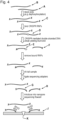
- the method may further comprise amplifying a region of interest in a target polynucleotide using a pair of PCR sequences that hybridise to sequences within the adapters that flank the region of interest in the adapted polynucleotide.
- the method may further comprise amplifying a region of interest in a target polynucleotide using an one or more primers that hybridise to a sequence within an adapter attached to a target polynucleotide.
- the cleaved target polynucleotide may be amplified prior to adapter attachment.
- an amplification adapter such as a PCR adapter
- An amplification reaction is then carried out prior to addition of a sequencing adapter.
- the amplification adapter such as a PCR adapter, may be phosphorylated or dephosphorylated. Dephosphorylation of the amplification adapter is preferred in some embodiments. Amplification increases the number of target reads, for example by up to at least about 5%, at least about 10% or more.
- the effector protein(s) is/are targeted to cut sites on either side of a target polynucleotide such that amplification adapters (e.g. PCR adapters) are ligated to both ends of the target polynucleotide, which is then amplified using primers (e.g. PCR primers) that bind to an overhang on the amplification adapters (e.g. PCR adapters) ligated to the target DNA.
- amplification adapters e.g. PCR adapters
- primers e.g. PCR primers
- the overhang is typically a 5' overhang that is complementary to the primer.
- the amplification primer typically comprises a double stranded portion and a single stranded portion.
- the single stranded portion is typically a 5' overhang.
- the single stranded portion may, for example, have a length of from about 10 to about 100, such as from about 30 to about 80, or about 40 to about 60, such as about 50 nucleotides. All or part of the single stranded region is complementary to a primer for amplification, such as a PCR primer.
- the double stranded portion may have a blunt end. The blunt end may be ligated to a blunt ended cut site.
- the double stranded region may be central in the amplification adapter, and the amplification adapter may comprise a second single stranded region, wherein the second single stranded region is a 3' overhang.
- the 3' overhang is a 3' stretch of single stranded polynucleotide that may have the same features as the 3' stretch of single stranded polynucleotide of the adapter described above.
- the first adapter or further adapter may enable the targeted polynucleotides to be captured, for example by using a biotinylated first adapter or a biotinylated further adapter, or a first adapter or further adapter to which is attached another affinity molecule or a polynucleotide sequence that can bind to a capture strand.
- a signal may be attached to the first adapter or further adapter to enable the easy detection and/or identification of a target polynucleotide.
- the signal may, for example, be a molecular beacon or a fluorophore.
- the first adapter may comprise a quencher and the further adapter may comprise a fluorophore, or vice versa.
- the adapter may comprise a barcode sequence.
- Barcode sequences are known in the art.
- a barcode is a specific sequence of polynucleotide that produces a distinctive signal, for example by affecting the current flowing through the pore in a specific and known manner.
- the method may be a multiplex method for analysing multiple samples, wherein multiple adapters, each with a different barcode are utilised. For example, in one embodiment, multiple, such as for example from two to about 100 or more, such as about 5, about 10, about 20, or about 50, samples are analysed, wherein each sample is treated by a method as disclosed herein and wherein an adapter comprising a unique barcode is used for each sample tested.
- the products of the methods using the samples may be pooled after barcode-adapter ligation.
- the barcodes may be comprised in intermediate adapters, for example amplification adapters, and/or in sequencing adapters.
- the products of the methods carried out on different samples may be pooled prior to, or after, attachment of the sequencing adapter.
- the method further comprises attaching a sequencing adapter to the 5' portion of the adapter that us attached to the cut site.
- the adapter may act as a first adapter or an intermediate adapter.
- the sequencing adapter may comprise a single stranded portion that hybridises to a stretch of single stranded polynucleotide in the 5' portion of the first adapter.
- the sequencing adapter may comprises a single stranded leader sequence, a polynucleotide binding protein and/or a membrane or pore anchor.
- the sequencing adapter may have any of the features of an adapter described above.
- the sequencing adapter may be covalently attached to the adapter using a ligase or by click chemistry.
- the ligase may, for example, be T4 DNA ligase, E. coli DNA ligase, Taq DNA ligase, Tma DNA ligase and 9°N DNA ligase.
- the adapter may be attached using a topoisomerisase.
- the topoisomerase may, for example be a member of any of the Moiety Classification (EC) groups 5.99.1.2 and 5.99.1.3.
- the sequencing adapter may be ligated to the target polynucleotide in the absence of ATP or using gamma-S-ATP (ATP ⁇ S) instead of ATP. It is preferred that the adapter is ligated to the polynucleotide in the absence of ATP where the a nucleic acid handling enzyme is bound to the sequencing adapter.
- ATP ⁇ S gamma-S-ATP
- the sequencing adapter may be attached to the first adapter before the first adapter is attached to the target polynucleotide. Also, the method may comprise attaching a first adapter to the target polynucleotide and attaching a sequencing adapter to the first adapter in a single step. Thus, the sequencing adapter and the first (intermediate) adapter may be added to the sample at the same time.
- the sequencing adapter may, in one embodiment, be added to the target polynucleotide after amplification of a target polynucleotide to which amplification adapters have been attached.
- the nucleic acid handling enzyme on the adapter may be any protein that is capable of binding to a polynucleotide and processing the polynucleotide. In processing the polynucleotide, the nucleic acid handling enzyme moves along the polynucleotide. The direction of movement of the enzyme is consistent. Consistent movement means that the enzyme moves from the 5' end to the 3' end of the polynucleotide or vice versa.
- the enzyme may modify the polynucleotide as it processes it. It is not essential that modification of the polynucleotide occurs. Therefore, the nucleic acid handling enzyme may be a modified enzyme that retains its ability to move along a polynucleotide.
- the nucleic acid handling enzyme may be, for example, a translocase, a helicase, a polymerase or an exonuclease.
- the nucleic acid handling enzyme may move along a single stranded polynucleotide, such as single stranded DNA or single stranded RNA, or may move along a double stranded polynucleotide such as double stranded DNA or a DNA/RNA hybrid.
- helicases or translocases that act on either single stranded or double stranded DNA may be used.
- suitable helicases include Dda, Hel308, NS3 and TraI. These helicases typically work on single stranded DNA.
- Examples of helicases that can move along both strands of a double stranded DNA include FtfK and hexameric enzyme complexes such as RecBCD.
- the helicase may be any of the helicases, modified helicases or helicase constructs disclosed in WO 2013/057495 , WO 2013/098562 , WO2013098561 , WO 2014/013260 , WO 2014/013259 , WO 2014/013262 and WO/2015/055981 .
- the Dda helicase preferably comprises any of the modifications disclosed in WO/2015/055981 and WO 2016/055777 .
- the nucleic acid handling enzyme may be a polymerase.
- a polymerase will typically synthesize a complementary polynucleotide strand as it moves along a polynucleotide. Otherwise, a polymerase may be used in a similar manner to a translocase.
- the polymerase may be a modified polymerase which retains its ability to move along a polynucleotide, but which does not synthesize a complementary strand.
- the polymerase may, for example, be PyroPhage ® 3173 DNA Polymerase (which is commercially available from Lucigen ® Corporation), SD Polymerase (commercially available from Bioron ® ) or variants thereof.
- the enzyme is preferably Phi29 DNA polymerase or a variant thereof.
- the topoisomerase is preferably a member of any of the Moiety Classification (EC) groups 5.99.1.2 and 5.99.1.3.
- the nucleic acid handling enzyme may be an exonuclease.
- An exonuclease typically digest the polynucleotide as it moves along it.
- the exonuclease typically cleaves one strand of a double stranded polynucleotide to form individual nucleotides or shorter chains of nucleotides, such as di- or tri-nucleotides.
- the polynucleotides which are ultimately selected are the undigested strands of double stranded polynucleotide, or polynucleotides in which one of the strands is partially digested and the other strand is intact.
- the nucleic acid handling enzyme is preferably one that is able to process long polynucleotide strands.
- the nucleic acid handling enzyme is capable of moving along a polynucleotide strand of from 500 nucleotide base pairs up to 250 million nucleotide base pairs, such as from 1,000, 2,000, 5,000, 10,000, 50,000 or 100,000 nucleotide base pairs up to 200 million, 100 million, 10 million or 1 million nucleotide base pairs.
- the enzyme may be modified or unmodified.
- the enzyme may be modified to form a closed-complex.
- a closed-complex is an enzyme in which the polynucleotide binding site is modified such that the enzyme is closed around the polynucleotide in such a way that the enzyme does not fall off the polynucleotide other than when it reaches the end of the polynucleotide. Examples of suitable closed-complex enzymes and methods for modifying enzymes to produce closed complexes are disclosed in, for example, WO 2014/013260 and WO 2015/055981 .
- a method of characterising a polynucleotide is provided.
- the method described above may further comprise characterising the target polynucleotide.
- the method of detecting and/or characterising a target polynucleotide typically comprises:
- the method may involve measuring two, three, four or five or more characteristics of each polynucleotide.
- the one or more characteristics are preferably selected from (i) the length of the polynucleotide, (ii) the identity of the polynucleotide, (iii) the sequence of the polynucleotide, (iv) the secondary structure of the polynucleotide and (v) whether or not the polynucleotide is modified.
- any combination of (i) to (v) may be measured in accordance with the invention, such as ⁇ i ⁇ , ⁇ ii ⁇ , ⁇ iii ⁇ , ⁇ iv ⁇ , ⁇ v ⁇ , ⁇ i,ii ⁇ , ⁇ i,ii ⁇ , ⁇ i,iv ⁇ , ⁇ i,v ⁇ , ⁇ ii,ii ⁇ , ⁇ ii,iv ⁇ , ⁇ iii,v ⁇ , ⁇ iii,v ⁇ , ⁇ iv,v ⁇ , ⁇ i,iiii ⁇ , ⁇ i,
- the target polynucleotide is preferably characterised by sequencing.
- the length of the polynucleotide may be measured for example by determining the number of interactions between the polynucleotide and the pore or the duration of interaction between the polynucleotide and the pore.
- the identity of the polynucleotide may be measured in a number of ways.
- the identity of the polynucleotide may be measured in conjunction with measurement of the sequence of the polynucleotide or without measurement of the sequence of the polynucleotide.
- the former is straightforward; the polynucleotide is sequenced and thereby identified.
- the latter may be done in several ways. For instance, the presence of a particular motif in the polynucleotide may be measured (without measuring the remaining sequence of the polynucleotide). Alternatively, the measurement of a particular electrical and/or optical signal in the method may identify the polynucleotide as coming from a particular source.
- the sequence of the polynucleotide can be determined as described previously. Suitable sequencing methods, particularly those using electrical measurements, are described in Stoddart D et al., Proc Natl Acad Sci, 12;106(19):7702-7 , Lieberman KR et al, J Am Chem Soc. 2010;132(50):17961-72 , and International Application WO 2000/28312 .
- the secondary structure may be measured in a variety of ways. For instance, if the method involves an electrical measurement, the secondary structure may be measured using a change in dwell time or a change in current flowing through the pore. This allows regions of single-stranded and double-stranded polynucleotide to be distinguished.
- the presence or absence of any modification may be measured.
- the method preferably comprises determining whether or not the polynucleotide is modified by methylation, by oxidation, by damage, with one or more proteins or with one or more labels, tags or spacers. Specific modifications will result in specific interactions with the pore which can be measured using the methods described below. For instance, methylcyotsine may be distinguished from cytosine on the basis of the current flowing through the pore during its interaction with each nucleotide.
- the methods may be carried out using any apparatus that is suitable for investigating a membrane/pore system in which a pore is present in a membrane.
- the method may be carried out using any apparatus that is suitable for transmembrane pore sensing.
- the apparatus comprises a chamber comprising an aqueous solution and a barrier that separates the chamber into two sections.
- the barrier typically has an aperture in which the membrane containing the pore is formed.
- the barrier forms the membrane in which the pore is present.
- Transmembrane pores are known in the art. Suitable membranes and devices are also known, as are methods for analysing the current signal to determine sequence and other characteristics of the polynucleotides. The methods may be carried out using the apparatus described in WO 2008/102120 .
- a variety of different types of measurements may be made. This includes without limitation: electrical measurements and optical measurements.
- a suitable optical method involving the measurement of fluorescence is disclosed by J. Am. Chem. Soc. 2009, 131 1652-1653 .
- Possible electrical measurements include: current measurements, impedance measurements, tunnelling measurements ( Ivanov AP et al., Nano Lett. 2011 Jan 12; 11(1):279-85 ), and FET measurements (International Application WO 2005/124888 ).
- Optical measurements may be combined with electrical measurements ( Soni GV et al., Rev Sci Instrum. 2010 Jan; 81(1):014301 ).
- the measurement may be a transmembrane current measurement such as measurement of ionic current flowing through the pore.
- the characterisation method typically comprises measuring the current passing through the transmembrane pore as the polynucleotide moves with respect to the transmembrane pore.
- kits for selectively modifying a target polynucleotide in a sample of polynucleotides comprises a dephosphorylase, an adapter, and optionally one or more of a polymerase, a ligase, a polynucleotide-guided effector protein and a guide polynucleotide.
- the kit may further comprises one or more guide polynucleotides and/or one or more polynucleotide-guided effector proteins.
- the adapter in the kit may comprise a dN tail, such as a single N or a polyN tail, wherein N is the nucleotide A, T, C or G.
- the kit may comprise one or more first adapters together with one or more guide polynucleotides and/or one or more first adapters as described herein.
- the kit may further comprise one or more polynucleotide-guided effector proteins and/or one or more further adapters as defined herein.
- the kit may comprise: a guide polynucleotide that binds to a sequence in the target polynucleotide; a polynucleotide-guided effector protein capable of cutting the target polynucleotide to produce a cut ends comprising an overhang; and a first adapter comprising a central double-stranded region, a first single stranded region at one end having a first sequence that is complementary to the sequence of an overhang produced when the polynucleotide-guided effector protein cuts the target polynucleotide
- the first adapter may be any of the adapters defined herein.
- the first adapter may optionally further comprise a second single stranded overhang at the other end of the adapter to the first single stranded overhang, wherein the second single stranded overhang has a second sequence that is different to the first sequence and the kit may comprise a further adapter comprising a single stranded region having a sequence that is complementary to the second sequence in the first adapter.
- kits comprising: a first adapter comprising a central double-stranded region, a first single stranded region at one end having a first sequence that is complementary to the sequence of an overhang produced when the polynucleotide-guided effector protein cuts the target polynucleotide and a second single stranded region at the other end having a second sequence, wherein the second sequence is different to the first sequence; and a further adapter comprising a single stranded region having a sequence that is complementary to the second sequence in the first adapter.
- the first adapter may be any of the adapters defined herein.
- the further adapter may be any of the further adapters defined herein.
- the kit may comprise one or more, such as from 2 to 50, 3 to 40, 5 to 30 or 10 to 20, first adapters as described herein and one or more further adapter, such as from 2 to 50, 3 to 40, 5 to 30 or 10 to 20 further adapters as defined herein.
- the kit comprises a panel of first adapters, wherein each adapter has a different sequence in the first overhang region and the same sequence in the second overhang region. Where the first adapters in the panel have the same sequence in the second overhang region, the kit preferably comprises one type of further adapter.
- a system for selectively adapting a target polynucleotide in a sample of polynucleotides comprising:
- the means for protecting the ends of polynucleotides is a dephosphorylase.
- the dephosphorylase protects the ends of the polynucleotides in the sample by dephosphorylating the 5' ends of the polynucleotides.
- a system for detecting the presence of a target polynucleotide in a sample the system further comprising a nanopore, for example, a nanopore present in a membrane.
- the system comprises a flow cell compatible with a sequencing device or apparatus.
- the polynucleotide-guided effector protein is, in some embodiments, an RNA-guided effector protein, such as Cas3, Cas4, Cas8a, Cas8b, Cas8c, Cas9, Cas10, Cas10d, Cas12a, Cas13, Csn2, Csf1, Cmr5, Csm2, Csy1, Cse1, C2c2, Cas14, CasX or CasY.
- the polynucleotide-guided effector protein cuts one strand of a double stranded polynucleotide.
- the polynucleotide-guided effector protein cuts both strands of a double stranded polynucleotide to produce a blunt end. In yet other embodiments, the polynucleotide-guided effector protein cuts both strands of a double stranded polynucleotide to produce a single stranded overhang.
- the adapter comprises a single N or polyN tail, wherein N is the nucleotide A, T, C or G.
- the adapter comprises a single T or polyT tail.
- the adapter is an intermediate adapter and the system further comprises a sequencing adapter comprising a portion complementary to the intermediate adapter.
- the sequencing adapter may, for example, a single stranded leader sequence, a polynucleotide binding protein and/or a membrane or pore anchor.
- the system comprises two or more guide polynucleotides that bind to different sequences in the target polynucleotide such that the polynucleotide-guided effector protein cuts the target polynucleotide at two or more sites to produce two opposing cut ends at each site.
- system further comprises a pair of PCR primers complementary to sequences within the adapter.
- the system further comprises a polymerase and/or a ligase.
- This Example demonstrates how a single degenerate synthetic crRNA probe can be used to enrich for a duplicated region of a bacterial genome for nanopore sequencing.
- the enrichment occurs not by physical separation of target versus non-target DNA, but by protection and deprotection of DNA ends against adapter ligation by dephosphorylation and CRISPR/Cas9-mediated cleavage of the target region, respectively.
- a simple, one-pot approach in which the enzymatic steps (dephosphorylation, Cas9-mediated cleavage, dA-tailing, and adapter ligation) are performed sequentially.
- gDNA High-molecular weight genomic DNA
- strain SCS110 Escherichia coli
- Qiagen tip-500 a Qiagen tip-500
- 5 ⁇ g gDNA was dephosphorylated via treatment with calf intestinal dephosphorylase.
- 2.5 ⁇ L Quick CIP from 'NEB Quick CIP kit', New England Biolabs, Inc., Cat # M0508
- Wild-type S. pyogenes Cas9 ribonucleoprotein complexes were prepared as follows. Oligonucleotides AR363 (synthetic tracrRNA bearing 5' DNA extension, here not used) and AR400 (synthetic crRNA) were first annealed by incubating 1 ⁇ L of AR363 (at 100 ⁇ M), 1 ⁇ L AR400 (at 100 ⁇ M) and 8 ⁇ L nuclease-free duplex buffer (Integrated DNA Technologies, Inc., Cat # 11-01-03-01) at 95°C for 5 min, followed by cooling to room temperature to form 10 ⁇ M tracrRNA-crRNA complex.
- Oligonucleotides AR363 (synthetic tracrRNA bearing 5' DNA extension, here not used) and AR400 (synthetic crRNA) were first annealed by incubating 1 ⁇ L of AR363 (at 100 ⁇ M), 1 ⁇ L AR400 (at 100 ⁇ M) and 8 ⁇ L nu
- RNPs were then formed by incubating 9 ⁇ L of tracrRNA-crRNA complex (600 nM final concentration) with 200 nM S. pyogenes Cas9 (New England Biolabs, Inc., Cat # M0386M) in a total of 150 ⁇ L NEB CutSmart buffer at room temperature for 20 minutes. This step yielded 150 ⁇ L of "Cas9
- sequencing adapter was ligated to each sample.
- Adapter ligation was performed in the same tube by incubating target-cleaved, dA-tailed gDNA with 40 ⁇ L 4x ligation buffer ( ONLS13117 ), 2.35 ⁇ L AMX 1D (from Oxford Nanopore LSK-108, concentrated to 1.7 ⁇ M using a Vivaspin-500 concentrator; Sartorius), 10 ⁇ L T4 DNA ligase (2 million units/mL, from NEB Quick Ligase kit; NEB, Cat # M2200) and 26.7 ⁇ L nuclease-free water for a total volume of ⁇ 160 ⁇ L.
- the beads were pelleted once more, the excess wash buffer removed, and the DNA eluted from the beads by resuspension of the bead pellet in 16 ⁇ L Tris elution buffer (10 mM Tris-Cl, 20 mM NaCl, pH 7.5 at room temperature) for 10 min at room temperature.
- the beads were pelleted once more and the eluate (supernatant), containing purified gDNA, adapted at the target sites, retained. 23.3 ⁇ L RBF and 11.7 ⁇ L LLB (both from Oxford Nanopore Technologies' LSK-108) were added to 15 ⁇ L of the eluate to yield
- an Oxford Nanopore Technologies FLO-MIN106 flowcell was prepared by introducing 800 ⁇ L flowcell preparation mix (prepared using: 480 ⁇ L RBF from Oxford Nanopore LSK-108, 520 ⁇ L nuclease-free water, 0.5 ⁇ L of 100 ⁇ M of a cholesterol adapter-tether SK43 ) via the inlet port.
- the SpotON port was subsequently opened and a further 200 ⁇ L flowcell preparation mix perfused via the inlet port.
- 50 ⁇ L of MinION sequencing mix were added to the flowcell via the SpotON port, and the ports closed. 6 h of sequencing data were collected using Oxford Nanopore Technologies' MinKNOW (version 1.10.6), and subsequently basecalled (using Albacore ) and aligned to the E. coli SCS110 reference genome offline.
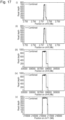
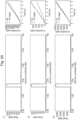
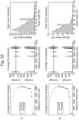
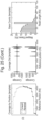
- FIG. 15 and Table 1 below examine the bias between forwards and reverse orientation reads from the Taq polymerase condition (condition (1)).
- condition (1) The rrs gene, targeted by the degenerate crRNA probe, is found in both orientations in the E. coli SCS110 reference.
- Six out of the seven rrs genes exhibited a clear bias in read direction, which correlated with the orientation of the gene in the reference genome. Very similar bias was observed with the other two conditions (conditions (2) and (3), Figure 15 ).
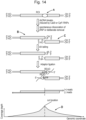
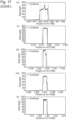
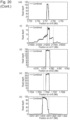
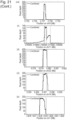
- Figure 16 shows the pileups resulting from alignment of sequencing reads to the E. coli reference.
- the crRNA used in the experiment described above targets a protospacer sequence common to all seven copies of the rrs gene in strain E. coli SCS110. Enrichment of the target region as observed, as expected, at each of the seven rrs genes (the locations of which are shown in Table 1 below), showing that Cas9 cut predominantly in the correct location, an that the cut sites were released (to varying extents) and dA-tailed, and that the adapter was efficiently ligated to the cut sites.
- Figure 16 also highlights the differences between the approaches used.
- the highest on-target throughput (8698) was obtained when the cleaved sample was dA-tailed at 72°C using Taq polymerase (condition (1)).
- the lowest number of on-target reads (1095) was obtained when the cleaved sample was dA-tailed concomitantly with Cas9 cleavage at 37°C (condition (2)).
- An intermediate number of reads (5191) was obtained when the sample was dA-tailed following heat-inactivation of Cas9 (condition (3)).
- the percentage of on target reads was 84.1% when the cleaved sample was dA-tailed at 72°C using Taq polymerase (condition (1)), 75.9% when the cleaved sample was dA-tailed concomitantly with Cas9 cleavage at 37°C (condition (2)), and 86.3% when the sample was dA-tailed following heat-inactivation of Cas9 (condition (3)).
- Table 1 The locations of the rrs gene in E.Coli and the read bias between forward and reverse orientation reads obtained when the cleaved sample was dA-tailed at 72°C using Taq polymerase Peak Gene Genomic coordinates Location of crRNA Chromosomal orientation Number of + reads Number of - reads Overall read bias (+ : -) i rrsH 223771-225312 223960 + 971 158 6.1:1 ii rrsG 2729616-2731157 2730968 - 372 364 1:1 iii rrsD 3427221-3428762 3428573 - 100 163 1:1.63 iv rrsC 3941808-3943349 3941997 + 1053 184 5.7:1 v rrsA 4035531-4037072 4035720 + 1035 166 6.2:1 vi rrsB 4166659-4168200 4166848 + 1149 330 3.5:1 vii rr
- nuclease-deficient S. pyogenes dCas9 dissociates from target DNA upon incubation of the enzyme above ⁇ 60°C for 5 min.
- the heat-inactivation of wild-type Cas9 was either 5 min at 72°C (for the Taq condition, condition (1)), or 20 min at 75°C (for the Klenow exo-sequential condition, condition (2)).
- the similarity of the percentage of on-target reads for conditions (1) and (2) demonstrates that 5 min at 72°C is sufficient to render at least the PAM-proximal side of a Cas9-generated double-stranded break accessible to a dA-tailing enzyme.
- This Example demonstrates that a plurality of synthetic crRNA probes may be used to excise and sequence multiple regions of interest (ROIs) from a human genomic DNA (gDNA) sample.
- ROIs regions of interest
- gDNA human genomic DNA
- ten human gene targets were excised, using a series of redundant probes, and sequenced using Cas9 to high coverage depth (>100x per allele) without amplification.
- the lack of amplification preserves certain interesting structural features such as disease-relevant nucleotide expansion repeats.
- dephosphorylation of the gDNA library is required to reduce the number of background DNA strands that are read, thus increasing the throughput of on-target DNA reads.
- gDNA High-molecular weight genomic DNA
- a control library was prepared adding 5 ⁇ g of non-dephosphorylated GM12878 to a total of 50 ⁇ L NEB CutSmart buffer. This step yielded "non-dephosphorylated gDNA".
- Wild-type S. pyogenes Cas9 ribonucleoprotein complexes were prepared as follows. An equimolar mix of 41 custom Alt-R Cas9 crRNAs (synthesized by Integrated DNA Technologies, Inc.) was prepared by mixing 1 ⁇ L of each crRNA (resuspended at 100 ⁇ M TE buffer, pH 7.5) in an Eppendorf DNA Lo-Bind tube.
- Oligonucleotides AR363 synthetic tracrRNA bearing 5' DNA extension, here not used
- the 41-probe pool of synthetic crRNAs were annealed by incubating 1 ⁇ L of AR363 (at 100 ⁇ M), 1 ⁇ L crRNA mix (at 100 ⁇ M) and 8 ⁇ L nuclease-free duplex buffer (Integrated DNA Technologies, Inc., Cat # 11-01-03-01) at 95°C for 5 min, followed by cooling to room temperature, to form 10 ⁇ M tracrRNA-crRNA complex.
- RNPs were then formed by incubating 7.5 ⁇ L of tracrRNA-crRNA complex (600 nM final concentration) with 300 nM S.
- the gDNA was dA-tailed by the addition, to the same tube, of 1.6 ⁇ L of 10 mM dATP, and 4.5 ⁇ L of Klenow exo- (NEB, Cat # M0212), and incubation at 37°C for 30 min, followed by heat-inactivation at 75°C for 20 min. This procedure replicates condition (3) as described in Example 1. This procedure yielded Library A (75 ⁇ L).
- NEB CutSmart buffer was added to 50 ⁇ L (5 ⁇ g) end-protected gDNA. The mixture was incubated for 37°C for 60 min, followed by heat inactivation at 75°C for 20 min, followed by slow-cooling to room temperature.
- the gDNA was dA-tailed by the addition, to the same tube, of 1.6 ⁇ L of 10 mM dATP, and 4.5 ⁇ L of Klenow exo- (NEB, Cat # M0212), and incubation at 37°C for 30 min, followed by heat-inactivation at 75°C for 20 min. This procedure replicates condition (3) as described in Example 1. This procedure yielded Library C (75 ⁇ L).
- Adapter ligation to Libraries A, B and C was performed by incubating Library A, Library B or Library C, separately, with 40 ⁇ L 4x ligation buffer ( ONLS13117 ), 2.35 ⁇ L AMX 1D (from Oxford Nanopore LSK-108, concentrated to 1.7 ⁇ M using a Vivaspin-500 concentrator; Sartorius), 10 ⁇ L T4 DNA ligase (2 million units/mL, from NEB Quick Ligase kit; NEB, Cat # M2200) and 26.7 ⁇ L nuclease-free water for a total volume of ⁇ 154 ⁇ L. This mixture was incubated for 10 min at room-temperature to yield adapter-ligated gDNA.
- 4x ligation buffer ONLS13117
- AMX 1D from Oxford Nanopore LSK-108, concentrated to 1.7 ⁇ M using a Vivaspin-500 concentrator; Sartorius
- 10 ⁇ L T4 DNA ligase (2 million units/mL, from NEB Quick Ligase kit;
- SPRI beads (AMPure XP beads, Beckman Coulter, Inc.) were added to adapter-ligated DNA, mixed gently by inversion, and incubated for 10 min at room temperature to bind the adapter-ligated DNA to the beads.
- the beads were pelleted using a magnetic separator, the supernatant removed, and washed twice with 250 ⁇ L ABB (from Oxford Nanopore LSK-108), with complete resuspension of the beads at each wash and repelleting of the beads following the wash.
- ABB Oxford Nanopore LSK-108
- the beads were pelleted once more, the excess wash buffer removed, and the DNA eluted from the beads by resuspension of the bead pellet in 16 ⁇ L Tris elution buffer (10 mM Tris-Cl, 20 mM NaCl, pH 7.5 at room temperature) for 10 min at room temperature.
- the beads were pelleted once more and the eluate (supernatant), containing purified gDNA, adapted at the target sites, retained. 23.3 ⁇ L RBF and 11.7 ⁇ L LLB (both from Oxford Nanopore Technologies' LSK-108) were added to 15 ⁇ L of the eluate to yield "MinION sequencing mixes A, B and C" pertaining to Libraries A, B and C respectively.
- Figure 17 shows the pileups resulting from alignment of sequencing reads to the human NA12878 reference for Library A.
- the crRNAs used in the experiment described above target protospacer sequences in ten human genes. Enrichment of the target regions was observed, as expected, showing that Cas9 cut predominantly in the correct location, the cut sites were released (to varying extents), dA-tailed, and adapter efficiently ligated to the cut sites. Approximately 10% of all reads mapped to one of the ten target regions. An itemized list of reads for each target is given in Table 2 below.
- Table 2 Locations, number or reads and % on target reads for each target polynucleotide in Library A Target Genomic coordinates of cut sites Reads % on target HTT Chr4:3072436, 3072537, 3077290, 3079447 1156 1.03 FMR1 ChrX:147911805, 147911857, 147910984, 147911228, 147932674 250 0.22 SCA10 Chr22:45791502, 45792656, 45798180, 45798335 677 0.60 SCA2 Chr12:111596525, 111597802, 111600589, 111602312 3471 3.09 SCA3 Chr14:92068270, 92068306, 92073109, 92074370 634 0.56 SCA17 Chr6:170557049, 170557884, 170563749, 170565282 679 0.61 SCA6 Chr19:13205503, 13205664, 13210029, 13210853 1433 1.28 C9orf72 Chr9
- Table 3 shows that approximately one-third the number of reads for the same ten-gene target panel was obtained when the sample was not dephosphorylated before initiating the Cas9 cut, but was otherwise identical to Library A ( Library B ). Only 1 in 300 reads mapped to one of the target regions ( ⁇ 0.33%), compared with 1 in 10 for Library A. Thus, dephosphorylation of non-target DNA significantly reduced the number of non-target reads.
- Table 3 Locations, number or reads and % on target reads for each target polynucleotide in Library A Target Genomic coordinates of cut sites Reads % on target HTT Chr4:3072436, 3072537, 3077290, 3079447 386 0.031 FMR1 ChrX:147911805, 147911857, 147910984, 147911228, 147932674 78 0.006 SCA10 Chr22:45791502, 45792656, 45798180, 45798335 252 0.020 SCA2 Chr12:111596525, 111597802, 111600589, 111602312 1380 0.111 SCA3 Chr14:92068270, 92068306, 92073109, 92074370 193 0.016 SCA17 Chr6:170557049, 170557884, 170563749, 170565282 244 0.020 SCA6 Chr19:13205503, 13205664, 13210029, 13210853 438 0.035
- Table 4 below shows that only a single read corresponding to the FMR1 gene was obtained when the library was dephosphorylated, but not cut with Cas9 ( Library C ). Thus, cutting by Cas9 is absolutely required to yield on-target reads when the library is dephosphorylated.
- Table 4 Locations, number or reads and % on target reads for each target polynucleotide in Library A Target Genomic coordinates of cut sites Reads % on target HTT Chr4:3072436, 3072537, 3077290, 3079447 0 0 FMR1 ChrX:147911805, 147911857, 147910984, 147911228, 147932674 1 0.0066 SCA10 Chr22:45791502, 45792656, 45798180, 45798335 0 0 SCA2 Chr12:111596525, 111597802, 111600589, 111602312 0 0 SCA3 Chr14:92068270, 92068306, 92073109, 92074370 0 0 SCA17 Chr6:170557049, 170557884, 170563749, 170565282 0 0 SCA6 Chr19:13205503, 13205664, 13210029, 13210853 0 0 C9orf72 Chr
- tracrRNA Sequence (5' ⁇ 3') AR363 crRNA
- the crRNAs used throughout were custom purchased from IDT ("Alt-R ® CRISPR-Cas9 crRNA")
- Cas9 crRNA Sequence (5' ⁇ 3') AR400 AGACCAAAGAGGGGGACCTT HTT_Cas9_2561_+ TTTGCCCATTGGTTAGAAGC HTT_Cas9_2662_+ TCTTATGAGTCTGCCCACTG HTT_Cas9_7412_- GGACAAAGTTAGGTACTCAG HTT_Cas9_9569_- CTAGACTCTTAACTCGCTTG SCA10_Cas9_1149_+ AATAGGGGCTAAGCATGGTC SCA10_Cas9_2303_+ TCCCTGAGAAAGTCTTGGTA SCA10_Cas9_7824_- CGGATTTGGGAACAGAGTAA SCA10_Cas9_7979_- CGGCTG
- This Example demonstrates how a synthetic crRNA probes can be used to excise and sequence regions of interest (ROIs) for a duplicated region of a bacterial genome for nanopore sequencing.
- ROIs sequence regions of interest
- gDNA High-molecular weight genomic DNA
- strain SCS110 Escherichia coli
- Qiagen tip-500 a Qiagen tip-500
- 2 ⁇ g gDNA was dephosphorylated via treatment with calf intestinal dephosphorylase.
- 6 ⁇ L Quick CIP from 'NEB Quick CIP kit', New England Biolabs, Inc., Cat # M0508
- NEB CutSmart Buffer New England Biolabs, Inc., Catalogue # B7204
- Oligonucleotides AR630 to AR643 were pooled together and diluted to 10 ⁇ M with nuclease-free water. Prior to complex formation, 500 nM “guide RNAs” in CutSmart buffer (New England Biolabs B72004) were incubated at 95°C for 4 minutes and then cooled to 21°C. CRISPR-Cpf1 complexes were formed by adding 500 nM L.bacterium Cpf1 (New England Biolabs M0653) to the reaction, for 20 minutes at 21°C, yielding 500 nM of CRISPR-Cpf1 complex.
- CutSmart buffer New England Biolabs B72004
- End-protected gDNA was cleaved with the addition of a final concentration of 125 nM of CRISPR-Cpf1 complex and incubated for 15 minutes at 37°C, resulting in a complex known as "probe-target complex".
- SPRI magnetic beads Each mixture was subjected to purification step using SPRI magnetic beads, as follows: 0.4 volume equivalents of AMPure XP SPRI magnetic beads (Beckman Coulter) were added to the mixture and incubated for 10 min at 21°C. The magnetic beads were pelleted using a magnetic separator, the supernatant aspirated, and 250 ⁇ L of ABB ( ONT SQK-LSK108 ) diluted with DLB added to resuspend the beads. The beads were immediately pelleted once more and the supernatant aspirated, after which the tube was removed from the rack and 16 ⁇ L Tris elution buffer (10 mM Tris-Cl, 20 mM NaCl, pH 7.5 at room temperature) for 10 min at room temperature. The beads were pelleted using the magnetic separator, and the eluate retained. This yielded a double-stranded DNAs bearing an adapter on each end, known as "MinION sequencing mix A, B, C and D".
- an Oxford Nanopore Technologies FLO-MIN106 flowcell was prepared by introducing 800 ⁇ L flowcell preparation mix (prepared using: 480 ⁇ L RBF from Oxford Nanopore LSK-108, 520 ⁇ L nuclease-free water, 0.5 ⁇ L of 100 ⁇ M of a cholesterol adapter-tether SK43 ) via the inlet port.
- the SpotON port was subsequently opened and a further 200 ⁇ L flowcell preparation mix perfused via the inlet port.
- 50 ⁇ L of MinION sequencing mix A, B, C or D were added to the flowcell via the SpotON port, and the ports closed. 6 h of sequencing data were collected using Oxford Nanopore Technologies' MinKNOW (version 1.10.6), and subsequently basecalled (using Albacore ) and aligned to the E. coli SCS110 reference genome offline.
- Figure 18 shows the pileups resulting from alignment of sequencing reads to the E. coli reference. Enrichment of the target regions was observed, as expected, at each of the seven rrs genes (the locations of which are shown in Table 5) showing that Cpf1 cut predominantly in the correct locations. The locations of the crRNA used to excise each copy of the rrs gene in strain E. coli SCS110 are listed in Table 5, which shows the seven expected binding locations of the single probe used in the pulldown.
- Figure 19 compares the pileups resulting from the four different approaches (A to D) following Cpf1 cutting described above.
- Table 6 shows the number of reads and the percentage of on target reads for each of the approaches (A to D). The highest on-target throughput (90%) was obtained when the cleaved sample was barcoded using specific barcodes (condition A). The highest number of reads on target (118208) was achieved using dA-tailing with Taq polymerase.
- Table 5 The locations of the seven rrs genes in E.
- This Example demonstrates that a plurality of synthetic crRNA probes may be used to excise and sequence multiple regions of interest (ROIs) from a human genomic DNA sample.
- ROIs regions of interest
- ten human gene targets were excised, using a series of redundant probes, and sequenced using Cpf1 to high coverage depth (>100x per allele) without amplification.
- Cpf1 regions of interest
- the lack of amplification preserves certain interesting structural features such as disease-relevant nucleotide expansion repeats.
- gDNA High-molecular weight genomic DNA
- CRISPR-Cpf1 complexes were formed by adding 500 nM L.bacterium Cpf1 (New England Biolabs M0653) to the reaction, for 20 minutes at 21°C, yielding 500 nM of CRISPR-Cpf1 complex. 125 nM of CRISPR-Cpf1 complex were added to the end-protected gDNA and incubated for 15 minutes at 37°C, resulting in a complex known as "probe-target complex".
- SPRI beads AMPure XP beads, Beckman Coulter, Inc.
- SPRI beads AMPure XP beads, Beckman Coulter, Inc.
- the beads were pelleted using a magnetic separator, the supernatant removed, and washed twice with 250 ⁇ L ABB (from Oxford Nanopore LSK-108), with complete resuspension of the beads at each wash and repelleting of the beads following the wash.
- the beads were pelleted once more, the excess wash buffer removed, and the DNA eluted from the beads by resuspension of the bead pellet in 16 ⁇ L Tris elution buffer (10 mM Tris-Cl, 20 mM NaCl, pH 7.5 at room temperature) for 10 min at room temperature.
- the beads were pelleted once more and the eluate (supernatant), containing purified gDNA, adapted at the target sites, retained. 23.3 ⁇ L RBF and 11.7 ⁇ L LLB (both from Oxford Nanopore Technologies' LSK-108) were added to 15 ⁇ L of the eluate to yield "MinION sequencing mixes A and B".
- Figure 20 shows the pileups resulting from alignment of sequencing reads to the human NA12878 reference following the specific barcode approach.
- the crRNAs used in the experiment described above target protospacer sequences in ten human genes. Enrichment of the target regions was observed, as expected, showing that Cpf1 cut predominantly in the correct location, the cut sites were released (to varying extents), barcoded, and adapter efficiently ligated to the cut sites. Approximately 5% of all reads mapped to one of the ten target regions. An itemized list of reads for each target is given in Table 7.
- Figure 21 shows the pileups resulting from alignment of sequencing reads to the human NA12878 reference following the dA-tailing with Klenow (exo-) approach.
- the crRNAs used in the experiment described above target protospacer sequences in ten human genes. Enrichment of the target regions was observed, as expected, showing that Cpf1 cut predominantly in the correct location, the cut sites were released (to varying extents), dA-tailed, and adapter efficiently ligated to the cut sites. Approximately 0.2% of all reads mapped to one of the ten target regions. An itemized list of reads for each target is given in Table 8.
- Table 7 Locations, number or reads and % on target reads for each target polynucleotide obtained using a specific barcode in approach A Target Genomic coordinates of cut sites reads % on target (i) HTT Chr4:3072436,3076713 363 1.1 (ii) FMR1 ChrX:147910462,147913441 109 0.3 (iii) SCA10 Chr22:45793272,45798243 167 0.5 (iv) SCA17 Chr12:170561302,170565756 374 1.1 (v) SCA2 Chr14:111597110,111600537 231 0.7 (vi) SCA3 Chr6:92069092,92073524 193 0.6 (vii) SCA6 Chr19:13206830,13210486 52 0.2 (viii) C9orf72 Chr9:27571959,27573673 118 0.3 (ix) MUC1 Chr1:155182116,155193330 124 0.4 (x
- the crRNAs used throughout were custom purchased from IDT ("Alt-R ® CRISPR-Cpf1 crRNA") Probes 21 mer protospacer sequence (5' ⁇ 3') AR630 CCGAAGCACAGTTTGAAACGC AR631 TGCAGCTGGTCAAGGGGAAGC AR632 AAGCGCGCGTTTCTTGTTGCG AR633 TTGGCATTAACCAGGCAGGGC AR634 CCCACACGACCAACGCTGGCG AR635 TTGAAGGAGAACTGCACGCGC AR636 TATCGCTGAAAGATGGCGCGC AR637 TGGCAGGGGCGGAGAGACTCG AR638 TCAAAAAACATGCGACGCGGC AR639 TGGTGGAGTGGATGCAAAAGC AR640 TATGGCAATGACGCCAGGAGC AR641 TGTCTTACATGATGCGCCAGC AR642 TGCTGTCAGAAAGGGATGAGC AR643 AATACCCGATCAAAGCCCGGC FMR1_Cpf1_147913435_
- This Example demonstrates that a plurality of synthetic crRNA probes may be used to excise and sequence multiple regions of interest (ROIs) from different human genomic DNA (gDNA) samples.
- ROIs regions of interest
- gDNA human genomic DNA
- ten human gene targets were excised from 5 different reactions, using a series of probes and barcodes, and sequenced using Cas9 to high coverage depth (>100x per allele) without amplification.
- gDNA High-molecular weight genomic DNA
- Wild-type S. pyogenes Cas9 ribonucleoprotein complexes were prepared as follows. An equimolar mix of 41 custom Alt-R Cas9 crRNAs (synthesized by Integrated DNA Technologies, Inc.) was prepared by mixing 1 ⁇ L of each crRNA (resuspended at 100 ⁇ M TE buffer, pH 7.5) in an Eppendorf DNA Lo-Bind tube.
- Alt-R ® CRISPR-Cas9 tracrRNA (Integrated DNA Technologies, Inc.) and the 41-probe pool of synthetic crRNAs were annealed by incubating 1 ⁇ L of tracrRNA (at 100 ⁇ M), 1 ⁇ L crRNA mix (at 100 ⁇ M) and 8 ⁇ L nuclease-free duplex buffer (Integrated DNA Technologies, Inc., Cat # 11-01-03-01) at 95°C for 5 min, followed by cooling to room temperature, to form 10 ⁇ M tracrRNA-crRNA complex. RNPs were then formed by incubating 4.8 ⁇ L of tracrRNA-crRNA complex (800 nM final concentration) with 400 nM S.
- SPRI magnetic beads Each mixture was subjected to purification step using SPRI magnetic beads, as follows: 1 volume equivalent of IDTE (Integrated DNA Technologies) and 0.3 volume equivalents of AMPure XP SPRI magnetic beads (Beckman Coulter) were added to the mixture and incubated for 10 min at 21°C. The magnetic beads were pelleted using a magnetic separator, the supernatant aspirated, and 250 ⁇ L of LFB (from Oxford Nanopore SQK-LSK109 ) added to resuspend the beads. The beads were immediately pelleted once more and the supernatant aspirated, after which the tube was removed from the rack and 16 ⁇ L EB buffer (Oxford Nanopore - LSK109) for 10 min at room temperature.
- IDTE Integrated DNA Technologies
- AMPure XP SPRI magnetic beads (Beckman Coulter) were added to the mixture and incubated for 10 min at 21°C.
- LFB from Oxford Nanopore SQK-LSK109
- an Oxford Nanopore Technologies FLO-MIN106 flowcell was prepared by introducing 800 ⁇ L flowcell preparation mix (prepared using: 1170 ⁇ L FLB from Oxford Nanopore LSK-109, 30 ⁇ L FLT from Oxford Nanopore LSK-109) via the inlet port.
- the SpotON port was subsequently opened and a further 200 ⁇ L flowcell preparation mix perfused via the inlet port.
- 50 ⁇ L of MinION sequencing mix A, B were added to the flowcell via the SpotON port, and the ports closed. 16 h of sequencing data were collected using Oxford Nanopore Technologies' MinKNOW (version 1.15), and basecalled online using MinKNOW during the sequencing run, and aligned to the NA12878 human reference genome offline using minimap2.
- Library B was demultiplexed using Oxford Nanopore Technologies' Guppy basecaller.
- Figure 23 shows the pileups resulting from alignment of sequencing reads to the human NA12878 reference (HTT gene) for Library A and B as well as the number of reads per barcodes per gene in library B.
- the crRNAs used in the experiment described above target protospacer sequences in ten human genes. Enrichment of the target regions was observed, as expected, showing that Cas9 cut predominantly in the correct location, the cut sites were released (to varying extents), dA-tailed, barcoding, and adapter efficiently ligated to the cut sites. Approximately 10% of all reads mapped to one of the ten target regions. An itemized list of reads for each target is given in Table 9.
- Table 9 Locations, number or reads and % on target reads for each target polynucleotide in Library A Target Genomic coordinates of cut sites Reads % on target HTT Chr4:3072436, 3072537, 3077290, 3079447 973 0.34 FMR1 ChrX:147911805, 147911857, 147910984, 147911228, 147932674 537 0.19 SCA10 Chr22:45791502, 45792656, 45798180, 45798335 1408 0.50 SCA2 Chr12:111596525, 111597802, 111600589, 111602312 3260 1.15 SCA3 Chr14:92068270, 92068306, 92073109, 92074370 1436 0.50 SCA17 Chr6:170557049, 170557884, 170563749, 170565282 1738 0.61 SCA6 Chr19:13205503, 13205664, 13210029, 13210853 1675 0.59 C9orf72 Chr
- Table 10 shows that approximately as many reads for the same ten-gene target panel were obtained when the 5 different samples were barcoded and pooled together ( Library B ). Only 1 in 150 reads mapped to one of the target regions ( ⁇ 0.6%), compared with 1 in 10 for Library A. Because the samples were pooled, more background reads were sequenced hence a reduction in percentage of reads on target was observed.
- Table 10 Locations, number or reads and % on target reads for each target polynucleotide in Library B (all barcodes) Target Genomic coordinates of cut sites Reads % on target HTT Chr4:3072436, 3072537, 3077290, 3079447 633 0.038 FMR1 ChrX:147911805, 147911857, 147910984, 147911228, 147932674 387 0.023 SCA10 Chr22:45791502, 45792656, 45798180, 45798335 956 0.057 SCA2 Chr12:111596525, 111597802, 111600589, 111602312 2601 0.155 SCA3 Chr14:92068270, 92068306, 92073109, 92074370 1167 0.070 SCA17 Chr6:170557049, 170557884, 170563749, 170565282 1375 0.082 SCA6 Chr19:13205503, 13205664, 13210029, 132108
- This Example demonstrates how a synthetic crRNA probe can be used to excise and sequence regions of interest (ROIs) for a duplicated region of a low input bacterial genome for nanopore sequencing.
- ROIs sequence regions of interest
- gDNA High-molecular weight genomic DNA
- strain SCS110 Escherichia coli
- Qiagen tip-500 a Qiagen tip-500
- 2 ⁇ g gDNA was dephosphorylated via treatment with calf intestinal dephosphorylase.
- 3 ⁇ L Quick CIP (from 'NEB Quick CIP kit', New England Biolabs, Inc., Cat # M0508) was added to the 2 ⁇ g of gDNA in a total of 30 ⁇ L NEB CutSmart Buffer (New England Biolabs, Inc., Catalogue # B7204) for 10 min at 37°C, followed by heat inactivation of the dephosphorylase at 80°C for 2 min. This step yielded "end-protected gDNA".
- Wild-type S. pyogenes Cas9 ribonucleoprotein complexes were prepared as follows. Oligonucleotides CPD1 and CPD8 (known as "guide RNAs") were first pooled together at equimolar ratio.
- Alt-R ® CRISPR-Cas9 tracrRNA (Integrated DNA Technologies, Inc.) and the guide crRNAs were then annealed by incubating 1 ⁇ L of tracrRNA (at 100 ⁇ M), 1 ⁇ L guide RNAs (at 100 ⁇ M) and 8 ⁇ L nuclease-free duplex buffer (Integrated DNA Technologies, Inc., Cat # 11-01-03-01) at 95°C for 5 min, followed by cooling to room temperature to form 10 ⁇ M tracrRNA-crRNA complex.
- RNPs were then formed by incubating 2.4 ⁇ L of tracrRNA-crRNA complex (800 nM final concentration) with 400 nM HiFi Cas9 V3 (Integrated DNA Technologies, Inc.) in a total of 30 ⁇ L NEB CutSmart buffer at room temperature for 20 minutes. This step yielded 30 ⁇ L of " Cas9 RNPs".
- This mixture was incubated at 37°C for 30 min to cleave target sites using Cas9, then 72°C for 5 min to both denature Cas9 and dA-tail all accessible 3' ends, using a PCR thermocycler, to yield 300 ng "target-cleaved DNA, dA-tailed by Taq polymerase". This step was performed in the same tube as the dephosphorylation step above and carried forwards for the next ligation step.
- SPRI beads (AMPure XP beads, Beckman Coulter, Inc.) were added to the mixture, mixed gently by inversion, and incubated for 10 min at room temperature to bind the DNA to the beads.
- the beads were pelleted using a magnetic separator, the supernatant removed, and washed twice with 250 ⁇ L LFB (from Oxford Nanopore LSK-109), with complete resuspension of the beads at each wash and repelleting of the beads following the wash.
- the beads were pelleted once more, the excess wash buffer removed, and the DNA eluted from the beads by resuspension of the bead pellet in 25 ⁇ L Nuclease-free water for 10 min at room temperature. This step yielded respectively 100 ⁇ g "PCA adapted target-cleaved DNA” and 100 ⁇ g "dephosphorylated PCA adapted target-cleaved DNA”.
- Adapter ligation was performed using 50 nM AMX (from Oxford Nanopore - LSK109), 10 ⁇ L of T4 ligase (from Oxford Nanopore) and 20 ⁇ L of LNB Buffer (from Oxford Nanopore LSK-109) for 10 minutes at 21°C.
- SPRI magnetic beads 1 volume equivalent of IDTE pH8 (Integrated DNA Technologies) and 0.3 volume equivalents of AMPure XP SPRI magnetic beads (Beckman Coulter) were added to the mixture and incubated for 10 min at 21°C.
- the magnetic beads were pelleted using a magnetic separator, the supernatant aspirated, and 250 ⁇ L of LFB (ONT SQK-LSK109) added to resuspend the beads.
- LFB ONT SQK-LSK109
- the beads were immediately pelleted once more and the supernatant aspirated, after which the tube was removed from the rack and 16 ⁇ L EB buffer (Oxford Nanopore - LSK109) for 10 min at room temperature.
- the beads were pelleted using the magnetic separator, and the eluate retained. This yielded a doublestranded DNAs bearing an adapter on each end, known as "MinION sequencing mix (1), (2) and (3)".
- an Oxford Nanopore Technologies FLO-MIN106 flowcell was prepared by introducing 800 ⁇ L flowcell preparation mix (prepared using: 1170 ⁇ L FLB from Oxford Nanopore LSK-109, 30 ⁇ L FLT from Oxford Nanopore LSK-109) via the inlet port.
- the SpotON port was subsequently opened and a further 200 ⁇ L flowcell preparation mix perfused via the inlet port.
- 50 ⁇ L of MinION sequencing mix (1), (2) and (3) were added to the flowcell via the SpotON port, and the ports closed. 16 h of sequencing data were collected using Oxford Nanopore Technologies' MinKNOW (version 1.15), and basecalled online using MinKNOW during the sequencing run, and aligned to the E. coli SCS110 reference genome offline.
- crRNA probes Sequence 5' ⁇ 3' CPD1 TAATGAGGATTTTTTCCGCG CPD8 TCGCCATTACGCATCAACAG CasAmp oligonucleotides Sequence 5' ⁇ 3' Top Strand GGTTGTTTCTGTTGGTGCTGATATTGCGGCGTCTGCTTGGGTGTTTAACCT Bottom Strand GGTTAAACACCCAAGCAGACGCCG PCR oligonucleotide Sequence 5' ⁇ 3' PCR Primer P-GGTGCTGAAGAAAGTTGTCGGTGTCTTTGTGTTAACCTTTCTGTTGGTGCTGATATTGC
- This Example demonstrates how a synthetic crRNA probe can be used to excise and sequence regions of interest (ROIs) for a duplicated region of a bacterial genome for nanopore sequencing and how the bias in the read directions can be modulated with the use of RNAse.
- ROIs sequence regions of interest
- gDNA High-molecular weight genomic DNA
- strain SCS110 Escherichia coli
- Qiagen tip-500 a Qiagen tip-500
- 1.5 ⁇ g gDNA was dephosphorylated via treatment with calf intestinal dephosphorylase.
- 7.5 ⁇ L Quick CIP from 'NEB Quick CIP kit', New England Biolabs, Inc., Cat # M0508
- Wild-type S. pyogenes Cas9 ribonucleoprotein complexes were prepared as follows. Alt-R ® CRISPR-Cas9 tracrRNA (Integrated DNA Technologies, Inc.) and AR400 (synthetic crRNA) were first annealed by incubating 1 ⁇ L of tracrRNA (at 100 ⁇ M), 1 ⁇ L AR400 (at 100 ⁇ M) and 8 ⁇ L nuclease-free duplex buffer (Integrated DNA Technologies, Inc., Cat # 11-01-03-01) at 95°C for 5 min, followed by cooling to room temperature to form 10 ⁇ M tracrRNA-crRNA complex.
- Alt-R ® CRISPR-Cas9 tracrRNA Integrated DNA Technologies, Inc.
- AR400 synthetic crRNA
- RNPs were then formed by incubating 4.5 ⁇ L of tracrRNA-crRNA complex (600 nM final concentration) with 300 nM S. pyogenes Cas9 (New England Biolabs, Inc., Cat # M0386M) in a total of 75 ⁇ L NEB CutSmart buffer at room temperature for 20 minutes. This step yielded 75 ⁇ L of "Cas9 RNPs".
- Sequencing adapter was then ligated to each library by adding 25 nM of AMX 1D (from Oxford Nanopore LSK-108, concentrated to 1.7 ⁇ M using a Vivaspin-500 concentrator; Sartorius), 10 ⁇ L of T4 ligase (from Oxford Nanopore internal production) in 165 ⁇ L ligation buffer (ONLS13117). Following a 10 minute incubation at 21°C, each mixture was subjected to purification step using SPRI magnetic beads, as follows: 1 volume equivalent of IDTE pH8 (Integrated DNA Technologies) and 0.4 volume equivalents of AMPure XP SPRI magnetic beads (Beckman Coulter) were added to the mixture and incubated for 10 min at 21°C.
- the beads were pelleted using a magnetic separator, the supernatant removed, and washed twice with 250 ⁇ L ABB (from Oxford Nanopore LSK-108) ) diluted with DLB, with complete resuspension of the beads at each wash and repelleting of the beads following the wash. Following the second wash, the beads were pelleted once more, the excess wash buffer removed, and the DNA eluted from the beads by resuspension of the bead pellet in 15 ⁇ L ELB (From Oxford Nanopore SQK-LSK108) for 10 min at room temperature. 25 ⁇ L SQB and 10 ⁇ L LB (both from Oxford Nanopore Technologies' LSK-109) were added to 15 ⁇ L of the eluate to yield "MinION sequencing mix".
- ABB from Oxford Nanopore LSK-108
- an Oxford Nanopore Technologies FLO-MIN106 flowcell was prepared by introducing 800 ⁇ L flowcell preparation mix (prepared using: 1170 ⁇ L FLB from Oxford Nanopore LSK-109, 30 ⁇ L FLT from Oxford Nanopore LSK-109) via the inlet port.
- the SpotON port was subsequently opened and a further 200 ⁇ L flowcell preparation mix perfused via the inlet port.
- 50 ⁇ L of MinION sequencing mix (1), (2) and (3) were added to the flowcell via the SpotON port, and the ports closed. 6 h of sequencing data were collected using Oxford Nanopore Technologies' MinKNOW (version 1.10.6), and subsequently basecalled (using Albacore ) and aligned to the E. coli SCS110 reference genome offline.
- Figure 25 shows the pileups resulting from alignment of sequencing reads to the E. coli reference.
- the crRNA used in the experiment described above targets a protospacer sequence common to all seven copies of the rrs gene in strain E. coli SCS110. Enrichment of the target region was observed, as expected, at each of the seven rrs genes (the locations of which are shown in Tables 13 to 15), showing that Cas9 cut predominantly in the correct location, and that the cut sites were released (to varying extents) and dA-tailed, and that the adapter was efficiently ligated to the cut sites.
- This figure also highlights that more bidirectional reads are observed with the addition of RNAseH following Cas9 cleavage and denaturation.
- Table 13 examines the bias between forwards and reverse orientation reads from the Taq polymerase condition (library (1)).
- the rrs gene targeted by the degenerate crRNA probe, is found in both orientations in the E. coli SCS110 reference.
- Six out of the seven rrs genes exhibited a clear bias in read direction, which correlated with the orientation of the gene in the reference genome.
- a similar bias was observed with other conditions (library (2), Table 14, Figure 25 ).
- Table 15 examining the read bias in library (3) shows that the addition of RNAseH following Cas9 cleavage and denaturation relieved some of the read bias compared to libraries (1) and (2).
- the read bias for the peak i corresponding to rrsH gene was lowered to about 42% with the addition of RNAseH compared to 34% in library (1).
- Table 13 The locations of the rrs gene in E.coli and the read bias between forward and reverse orientation reads obtained for library (1) when the cleaved sample was dA-tailed at 72°C using Taq polymerase Peak Gene Genomic coordinates Location of crRNA Chromosomal orientation Number of + reads Number of - reads Overall read bias (% of - reads) i rrsH 223771-225312 223960 + 807 422 34.34 ii rrsG 2729616-2731157 2730968 - 366 682 65.08 iii rrsD 3427221-3428762 3428573 - 101 549 84.46 iv rrsC 3941808-3943349 3941997 + 934 417 30.87 v rrsA 4035531-4037072 4035720 + 778 409 34.46 vi rrsB 4166659-4168200 4166848 + 968 394 28.93 vii
- This Example demonstrates how a synthetic crRNA probe can be used to excise and sequence regions of interest (ROIs) for a duplicated region of a bacterial genome for nanopore sequencing and how the sequencing direction of the reads originating from the cleavage can be biased to one direction via the use of T4 polymerase.
- ROIs sequence regions of interest
- gDNA High-molecular weight genomic DNA
- strain SCS110 Escherichia coli
- Qiagen tip-500 a Qiagen tip-500
- 1.5 ⁇ g gDNA was dephosphorylated via treatment with calf intestinal dephosphorylase.
- 7.5 ⁇ L Quick CIP from 'NEB Quick CIP kit', New England Biolabs, Inc., Cat # M0508
- Wild-type S. pyogenes Cas9 ribonucleoprotein complexes were prepared as follows. Alt-R ® CRISPR-Cas9 tracrRNA (Integrated DNA Technologies, Inc.) and AR400 (synthetic crRNA) were first annealed by incubating 1 ⁇ L of tracrRNA (at 100 ⁇ M), 1 ⁇ L AR400 (at 100 ⁇ M) and 8 ⁇ L nuclease-free duplex buffer (Integrated DNA Technologies, Inc., Cat # 11-01-03-01) at 95°C for 5 min, followed by cooling to room temperature to form 10 ⁇ M tracrRNA-crRNA complex.
- Alt-R ® CRISPR-Cas9 tracrRNA Integrated DNA Technologies, Inc.
- AR400 synthetic crRNA
- RNPs were then formed by incubating 4.5 ⁇ L of tracrRNA-crRNA complex (600 nM final concentration) with 300 nM S. pyogenes Cas9 (New England Biolabs, Inc., Cat # M0386M) in a total of 75 ⁇ L NEB CutSmart buffer at room temperature for 20 minutes. This step yielded 75 ⁇ L of "Cas9 RNPs".
- Sequencing adapter was then ligated to each library by adding 25 nM of AMX 1D (from Oxford Nanopore LSK-108, concentrated to 1.7 ⁇ M using a Vivaspin-500 concentrator; Sartorius), 10 ⁇ L of T4 ligase (from Oxford Nanopore internal production) in 165 ⁇ L ligation buffer (ONLS13117). Following a 10 mins incubation at 21°C, each mixture was subjected to purification step using SPRI magnetic beads, as follows: 1 volume equivalent of IDTE pH8 (Integrated DNA Technologies) and 0.4 volume equivalents of AMPure XP SPRI magnetic beads (Beckman Coulter) were added to the mixture and incubated for 10 min at 21°C.
- the beads were pelleted using a magnetic separator, the supernatant removed, and washed twice with 250 ⁇ L ABB (from Oxford Nanopore LSK-108) ) diluted with DLB, with complete resuspension of the beads at each wash and repelleting of the beads following the wash. Following the second wash, the beads were pelleted once more, the excess wash buffer removed, and the DNA eluted from the beads by resuspension of the bead pellet in 15 ⁇ L ELB (From Oxford Nanopore SQK-LSK108) for 10 min at room temperature. 25 ⁇ L SQB and 10 ⁇ L LB (both from Oxford Nanopore Technologies' LSK-109) were added to 15 ⁇ L of the eluate to yield "MinION sequencing mix".
- ABB from Oxford Nanopore LSK-108
- an Oxford Nanopore Technologies FLO-MIN106 flowcell was prepared by introducing 800 ⁇ L flowcell preparation mix (prepared using: 1170 ⁇ L FLB from Oxford Nanopore LSK-109, 30 ⁇ L FLT from Oxford Nanopore LSK-109) via the inlet port.
- the SpotON port was subsequently opened and a further 200 ⁇ L flowcell preparation mix perfused via the inlet port.
- 50 ⁇ L of MinION sequencing mix (1), (2) and (3) were added to the flowcell via the SpotON port, and the ports closed. 6 h of sequencing data were collected using Oxford Nanopore Technologies' MinKNOW (version 1.10.6), and subsequently basecalled (using Albacore ) and aligned to the E. coli SCS110 reference genome offline.
- Figure 26 shows the pileups resulting from alignment of sequencing reads to the E. coli reference.
- the crRNA used in the experiment described above targets a protospacer sequence common to all seven copies of the rrs gene in strain E. coli SCS110. Enrichment of the target region as observed, as expected, at each of the seven rrs genes (the locations of which are shown in tables 17 to 19), showing that Cas9 cut predominantly in the correct location, and that the cut sites were released (to varying extents) and dA-tailed, and that the adapter was efficiently ligated to the cut sites.
- This figure also highlights that fewer bidirectional reads were observed with the addition of T4 DNA Polymerase following Cas9 cleavage.
- Tables 17 to 19 examine the bias between forwards and reverse orientation reads from the Taq polymerase condition (library (1)).
- the rrs gene, targeted by the degenerate crRNA probe, is found in both orientations in the E. coli SCS110 reference.
- Six out of the seven rrs genes exhibited a clear bias in read direction, which correlated with the orientation of the gene in the reference genome.
- Table 17 The locations of the rrs gene in E.Coli and the read bias between forward and reverse orientation reads obtained for library (1) when the cleaved sample was dA-tailed at 72°C using Taq polymerase Peak Gene Genomic coordinates Location of crRNA Chromosomal orientation Number of + reads Number of - reads Overall read bias (% of + reads) i rrsH 223771-225312 223960 + 836 444 65.31 ii rrsG 2729616-2731157 2730968 - 338 674 33.40 iii rrsD 3427221-3428762 3428573 - 93 534 14.83 iv rrsC 3941808-3943349 3941997 + 893 361 71.21 v rrsA 4035531-4037072 4035720 + 748 403 64.99 vi rrsB 4166659-4168200 4166848 + 1040 425 70.99 vii r
Landscapes
- Chemical & Material Sciences (AREA)
- Life Sciences & Earth Sciences (AREA)
- Organic Chemistry (AREA)
- Proteomics, Peptides & Aminoacids (AREA)
- Zoology (AREA)
- Wood Science & Technology (AREA)
- Health & Medical Sciences (AREA)
- Engineering & Computer Science (AREA)
- Analytical Chemistry (AREA)
- Biophysics (AREA)
- Biochemistry (AREA)
- Microbiology (AREA)
- Molecular Biology (AREA)
- Biotechnology (AREA)
- Physics & Mathematics (AREA)
- Genetics & Genomics (AREA)
- Immunology (AREA)
- Bioinformatics & Cheminformatics (AREA)
- General Engineering & Computer Science (AREA)
- General Health & Medical Sciences (AREA)
- Chemical Kinetics & Catalysis (AREA)
- Measuring Or Testing Involving Enzymes Or Micro-Organisms (AREA)
- Saccharide Compounds (AREA)
Applications Claiming Priority (3)
| Application Number | Priority Date | Filing Date | Title |
|---|---|---|---|
| GBGB1808554.8A GB201808554D0 (en) | 2018-05-24 | 2018-05-24 | Method |
| EP19727476.4A EP3802862A1 (de) | 2018-05-24 | 2019-05-24 | Verfahren |
| PCT/GB2019/051444 WO2019224560A1 (en) | 2018-05-24 | 2019-05-24 | Method |
Related Parent Applications (1)
| Application Number | Title | Priority Date | Filing Date |
|---|---|---|---|
| EP19727476.4A Division EP3802862A1 (de) | 2018-05-24 | 2019-05-24 | Verfahren |
Publications (2)
| Publication Number | Publication Date |
|---|---|
| EP4549584A2 true EP4549584A2 (de) | 2025-05-07 |
| EP4549584A3 EP4549584A3 (de) | 2025-07-30 |
Family
ID=62812420
Family Applications (2)
| Application Number | Title | Priority Date | Filing Date |
|---|---|---|---|
| EP25161085.3A Pending EP4549584A3 (de) | 2018-05-24 | 2019-05-24 | Verfahren |
| EP19727476.4A Ceased EP3802862A1 (de) | 2018-05-24 | 2019-05-24 | Verfahren |
Family Applications After (1)
| Application Number | Title | Priority Date | Filing Date |
|---|---|---|---|
| EP19727476.4A Ceased EP3802862A1 (de) | 2018-05-24 | 2019-05-24 | Verfahren |
Country Status (8)
| Country | Link |
|---|---|
| US (1) | US20210198732A1 (de) |
| EP (2) | EP4549584A3 (de) |
| JP (1) | JP7365363B2 (de) |
| CN (1) | CN112105744A (de) |
| AU (1) | AU2019274949B2 (de) |
| CA (1) | CA3096856A1 (de) |
| GB (1) | GB201808554D0 (de) |
| WO (1) | WO2019224560A1 (de) |
Families Citing this family (12)
| Publication number | Priority date | Publication date | Assignee | Title |
|---|---|---|---|---|
| US11046995B2 (en) | 2016-08-16 | 2021-06-29 | The Regents Of The University Of California | Method for finding low abundance sequences by hybridization (FLASH) |
| EP3731959B1 (de) | 2017-12-29 | 2025-10-08 | Clear Labs, Inc. | Automatisierte priming- und bibliotheksladevorrichtung |
| TW202039845A (zh) * | 2018-12-20 | 2020-11-01 | 北京大學 | 使用加標籤的嚮導rna構建體進行高效基因篩選的組合物和方法 |
| CN112029838B (zh) * | 2020-07-23 | 2022-07-12 | 东南大学 | 一种用于DNA均相检测的CRISPR/Cas9分型PCR方法及其应用 |
| LT4211260T (lt) | 2020-09-11 | 2025-06-25 | New England Biolabs, Inc. | Imobilizuotų fermentų taikymas nanoporų bibliotekos konstravimui |
| WO2022243437A1 (en) * | 2021-05-19 | 2022-11-24 | KWS SAAT SE & Co. KGaA | Sample preparation with oppositely oriented guide polynucleotides |
| WO2023107899A2 (en) * | 2021-12-07 | 2023-06-15 | Caribou Biosciences, Inc. | A method of capturing crispr endonuclease cleavage products |
| CN114457145B (zh) * | 2022-01-29 | 2023-08-11 | 成都齐碳科技有限公司 | 用于表征靶多核苷酸测序的接头、构建体、方法和应用 |
| CN114921533A (zh) * | 2022-05-05 | 2022-08-19 | 成都齐碳科技有限公司 | 用于表征目标多核苷酸的方法及衔接体 |
| CN114921535B (zh) * | 2022-05-19 | 2023-05-23 | 四川大学华西医院 | 一种rna长片段靶向测序方法 |
| CN114921534B (zh) * | 2022-05-19 | 2023-05-30 | 四川大学华西医院 | 一种高靶向效率和数据产量的rna长片段靶向测序方法 |
| WO2024138517A1 (zh) * | 2022-12-29 | 2024-07-04 | 深圳华大生命科学研究院 | 提升测序通量的文库接头设计 |
Citations (17)
| Publication number | Priority date | Publication date | Assignee | Title |
|---|---|---|---|---|
| WO2000028312A1 (en) | 1998-11-06 | 2000-05-18 | The Regents Of The University Of California | A miniature support for thin films containing single channels or nanopores and methods for using same |
| WO2005124888A1 (en) | 2004-06-08 | 2005-12-29 | President And Fellows Of Harvard College | Suspended carbon nanotube field effect transistor |
| WO2008102120A1 (en) | 2007-02-20 | 2008-08-28 | Oxford Nanopore Technologies Limited | Lipid bilayer sensor system |
| WO2010086602A1 (en) | 2009-01-30 | 2010-08-05 | Oxford Nanopore Technologies Limited | Hybridization linkers |
| WO2012164270A1 (en) | 2011-05-27 | 2012-12-06 | Oxford Nanopore Technologies Limited | Coupling method |
| WO2013057495A2 (en) | 2011-10-21 | 2013-04-25 | Oxford Nanopore Technologies Limited | Enzyme method |
| WO2013098562A2 (en) | 2011-12-29 | 2013-07-04 | Oxford Nanopore Technologies Limited | Enzyme method |
| WO2013098561A1 (en) | 2011-12-29 | 2013-07-04 | Oxford Nanopore Technologies Limited | Method for characterising a polynucelotide by using a xpd helicase |
| WO2014013259A1 (en) | 2012-07-19 | 2014-01-23 | Oxford Nanopore Technologies Limited | Ssb method |
| WO2014013260A1 (en) | 2012-07-19 | 2014-01-23 | Oxford Nanopore Technologies Limited | Modified helicases |
| WO2014013262A1 (en) | 2012-07-19 | 2014-01-23 | Oxford Nanopore Technologies Limited | Enzyme construct |
| WO2014135838A1 (en) | 2013-03-08 | 2014-09-12 | Oxford Nanopore Technologies Limited | Enzyme stalling method |
| WO2015055981A2 (en) | 2013-10-18 | 2015-04-23 | Oxford Nanopore Technologies Limited | Modified enzymes |
| WO2015150786A1 (en) | 2014-04-04 | 2015-10-08 | Oxford Nanopore Technologies Limited | Method for characterising a double stranded nucleic acid using a nano-pore and anchor molecules at both ends of said nucleic acid |
| WO2016055777A2 (en) | 2014-10-07 | 2016-04-14 | Oxford Nanopore Technologies Limited | Modified enzymes |
| WO2016059375A1 (en) | 2014-10-17 | 2016-04-21 | Oxford Nanopore Technologies Limited | Methods for delivering an analyte to transmembrane pores |
| WO2018060740A1 (en) | 2016-09-29 | 2018-04-05 | Oxford Nanopore Technologies Limited | Method for nucleic acid detection by guiding through a nanopore |
Family Cites Families (5)
| Publication number | Priority date | Publication date | Assignee | Title |
|---|---|---|---|---|
| FR2861405A1 (fr) * | 2003-10-24 | 2005-04-29 | Centre Nat Rech Scient | METHODE DE PRODUCTION D'ADNc PLEINE LONGUEUR PAR LIGATURATION D'ADAPTATEUR A EXTREMITE COHESIVE |
| EP3183358B1 (de) * | 2014-08-19 | 2020-10-07 | President and Fellows of Harvard College | Rna-geführte systeme zur sondierung und abbildung von nukleinsäuren |
| WO2017044843A1 (en) * | 2015-09-11 | 2017-03-16 | The General Hospital Corporation | Full interrogation of nuclease dsbs and sequencing (find-seq) |
| WO2017162754A1 (en) * | 2016-03-22 | 2017-09-28 | Vib Vzw | Means and methods for amplifying nucleotide sequences |
| US11046995B2 (en) * | 2016-08-16 | 2021-06-29 | The Regents Of The University Of California | Method for finding low abundance sequences by hybridization (FLASH) |
-
2018
- 2018-05-24 GB GBGB1808554.8A patent/GB201808554D0/en not_active Ceased
-
2019
- 2019-05-24 US US17/057,863 patent/US20210198732A1/en active Pending
- 2019-05-24 CA CA3096856A patent/CA3096856A1/en active Pending
- 2019-05-24 WO PCT/GB2019/051444 patent/WO2019224560A1/en not_active Ceased
- 2019-05-24 EP EP25161085.3A patent/EP4549584A3/de active Pending
- 2019-05-24 AU AU2019274949A patent/AU2019274949B2/en active Active
- 2019-05-24 CN CN201980029513.6A patent/CN112105744A/zh active Pending
- 2019-05-24 EP EP19727476.4A patent/EP3802862A1/de not_active Ceased
- 2019-05-24 JP JP2020562111A patent/JP7365363B2/ja active Active
Patent Citations (17)
| Publication number | Priority date | Publication date | Assignee | Title |
|---|---|---|---|---|
| WO2000028312A1 (en) | 1998-11-06 | 2000-05-18 | The Regents Of The University Of California | A miniature support for thin films containing single channels or nanopores and methods for using same |
| WO2005124888A1 (en) | 2004-06-08 | 2005-12-29 | President And Fellows Of Harvard College | Suspended carbon nanotube field effect transistor |
| WO2008102120A1 (en) | 2007-02-20 | 2008-08-28 | Oxford Nanopore Technologies Limited | Lipid bilayer sensor system |
| WO2010086602A1 (en) | 2009-01-30 | 2010-08-05 | Oxford Nanopore Technologies Limited | Hybridization linkers |
| WO2012164270A1 (en) | 2011-05-27 | 2012-12-06 | Oxford Nanopore Technologies Limited | Coupling method |
| WO2013057495A2 (en) | 2011-10-21 | 2013-04-25 | Oxford Nanopore Technologies Limited | Enzyme method |
| WO2013098562A2 (en) | 2011-12-29 | 2013-07-04 | Oxford Nanopore Technologies Limited | Enzyme method |
| WO2013098561A1 (en) | 2011-12-29 | 2013-07-04 | Oxford Nanopore Technologies Limited | Method for characterising a polynucelotide by using a xpd helicase |
| WO2014013259A1 (en) | 2012-07-19 | 2014-01-23 | Oxford Nanopore Technologies Limited | Ssb method |
| WO2014013260A1 (en) | 2012-07-19 | 2014-01-23 | Oxford Nanopore Technologies Limited | Modified helicases |
| WO2014013262A1 (en) | 2012-07-19 | 2014-01-23 | Oxford Nanopore Technologies Limited | Enzyme construct |
| WO2014135838A1 (en) | 2013-03-08 | 2014-09-12 | Oxford Nanopore Technologies Limited | Enzyme stalling method |
| WO2015055981A2 (en) | 2013-10-18 | 2015-04-23 | Oxford Nanopore Technologies Limited | Modified enzymes |
| WO2015150786A1 (en) | 2014-04-04 | 2015-10-08 | Oxford Nanopore Technologies Limited | Method for characterising a double stranded nucleic acid using a nano-pore and anchor molecules at both ends of said nucleic acid |
| WO2016055777A2 (en) | 2014-10-07 | 2016-04-14 | Oxford Nanopore Technologies Limited | Modified enzymes |
| WO2016059375A1 (en) | 2014-10-17 | 2016-04-21 | Oxford Nanopore Technologies Limited | Methods for delivering an analyte to transmembrane pores |
| WO2018060740A1 (en) | 2016-09-29 | 2018-04-05 | Oxford Nanopore Technologies Limited | Method for nucleic acid detection by guiding through a nanopore |
Non-Patent Citations (10)
| Title |
|---|
| ANDERSON ET AL., CLIN. CHEM., vol. 56, 2010, pages 177 - 185 |
| EDWARDS ET AL., MOL. CELL. PROTEOMICS, vol. 7, 2008, pages 1824 - 1837 |
| IVANOV AP ET AL., NANO LETT, vol. 11, no. 1, 12 January 2011 (2011-01-12), pages 279 - 85 |
| J. AM. CHEM. SOC., vol. 131, 2009, pages 1652 - 1653 |
| JACQUET ET AL., MOL. CELL. PROTEOMICS, vol. 8, 2009, pages 2687 - 2699 |
| KOLB HCFINN, MGSHARPLESS KB: "Click chemistry: diverse chemical function from a few good reactions", ANGEW. CHEM. INT. ED, vol. 40, 2001, pages 2004 - 2021, XP055718455, DOI: 10.1002/1521-3773(20010601)40:11<2004::AID-ANIE2004>3.0.CO;2-5 |
| KOZAREWA ET AL., METHODS MOL. BIOL, vol. 733, 2011, pages 279 - 298 |
| LIEBERMAN KR ET AL., J AM CHEM SOC., vol. 132, no. 50, 2010, pages 17961 - 72 |
| SONI GV ET AL., REV SCI INSTRUM., vol. 81, no. 1, January 2010 (2010-01-01), pages 014301 |
| STODDART D ET AL., PROC NATL ACAD SCI, vol. 12, no. 19, pages 7702 - 7 |
Also Published As
| Publication number | Publication date |
|---|---|
| WO2019224560A1 (en) | 2019-11-28 |
| CN112105744A (zh) | 2020-12-18 |
| AU2019274949B2 (en) | 2025-08-14 |
| EP3802862A1 (de) | 2021-04-14 |
| US20210198732A1 (en) | 2021-07-01 |
| JP2021523704A (ja) | 2021-09-09 |
| AU2019274949A1 (en) | 2020-10-15 |
| CA3096856A1 (en) | 2019-11-28 |
| JP7365363B2 (ja) | 2023-10-19 |
| GB201808554D0 (en) | 2018-07-11 |
| EP4549584A3 (de) | 2025-07-30 |
Similar Documents
| Publication | Publication Date | Title |
|---|---|---|
| AU2019274949B2 (en) | Method | |
| US20250109426A1 (en) | Compositions and methods for targeted depletion, enrichment, and partitioning of nucleic acids using crispr/cas system proteins | |
| US20250179477A1 (en) | Creation and use of guide nucleic acids | |
| EP4095259A1 (de) | Verfahren zur nukleinsäureanreicherung mit ortsspezifischen nukleasen und anschliessender erfassung | |
| EP3985111A1 (de) | Erfassung von nukleinsäuren mittels eines nukleinsäuregeführten systems auf nukleasebasis | |
| EP3871695A1 (de) | Verfahren und zusammensetzungen zur herstellung und verwendung von leitnukleinsäuren | |
| JP2002509703A (ja) | 錠型(padlock)プローブのローリングサークル複製 | |
| WO2020099675A1 (en) | Optimization of in vitro isolation of nucleic acids using site-specific nucleases | |
| EP3768855B1 (de) | Verfahren und zusammensetzungen für rekombinase-vermittelte spaltung von nukleinsäuren | |
| AU2020407850A1 (en) | NGS library preparation using covalently closed nucleic acid molecule ends | |
| EP1756302A1 (de) | Verfahren zum selektiven nachweis von teilmengen von nukleinsäuremolekülen | |
| WO2025114477A1 (en) | Adaptors for ligation | |
| HK40038012A (en) | Methods and compositions for recombinase-mediated selective cleavage of nucleic acids | |
| HK40038012B (en) | Methods and compositions for recombinase-mediated selective cleavage of nucleic acids |
Legal Events
| Date | Code | Title | Description |
|---|---|---|---|
| PUAI | Public reference made under article 153(3) epc to a published international application that has entered the european phase |
Free format text: ORIGINAL CODE: 0009012 |
|
| STAA | Information on the status of an ep patent application or granted ep patent |
Free format text: STATUS: THE APPLICATION HAS BEEN PUBLISHED |
|
| AC | Divisional application: reference to earlier application |
Ref document number: 3802862 Country of ref document: EP Kind code of ref document: P |
|
| AK | Designated contracting states |
Kind code of ref document: A2 Designated state(s): AL AT BE BG CH CY CZ DE DK EE ES FI FR GB GR HR HU IE IS IT LI LT LU LV MC MK MT NL NO PL PT RO RS SE SI SK SM TR |
|
| REG | Reference to a national code |
Ref country code: DE Ref legal event code: R079 Free format text: PREVIOUS MAIN CLASS: C12Q0001686900 Ipc: C12Q0001680600 |
|
| PUAL | Search report despatched |
Free format text: ORIGINAL CODE: 0009013 |
|
| AK | Designated contracting states |
Kind code of ref document: A3 Designated state(s): AL AT BE BG CH CY CZ DE DK EE ES FI FR GB GR HR HU IE IS IT LI LT LU LV MC MK MT NL NO PL PT RO RS SE SI SK SM TR |
|
| RIC1 | Information provided on ipc code assigned before grant |
Ipc: C12Q 1/6806 20180101AFI20250626BHEP Ipc: C12Q 1/6869 20180101ALI20250626BHEP |
|
| STAA | Information on the status of an ep patent application or granted ep patent |
Free format text: STATUS: REQUEST FOR EXAMINATION WAS MADE |
|
| 17P | Request for examination filed |
Effective date: 20260129 |