EP4550706A1 - Procédé et appareil pour déterminer une retour de demande automatique de répétition hybride (harq) - Google Patents
Procédé et appareil pour déterminer une retour de demande automatique de répétition hybride (harq) Download PDFInfo
- Publication number
- EP4550706A1 EP4550706A1 EP22948320.1A EP22948320A EP4550706A1 EP 4550706 A1 EP4550706 A1 EP 4550706A1 EP 22948320 A EP22948320 A EP 22948320A EP 4550706 A1 EP4550706 A1 EP 4550706A1
- Authority
- EP
- European Patent Office
- Prior art keywords
- time domain
- information
- cell
- harq feedback
- configuration information
- Prior art date
- Legal status (The legal status is an assumption and is not a legal conclusion. Google has not performed a legal analysis and makes no representation as to the accuracy of the status listed.)
- Pending
Links
Images


Classifications
-
- H—ELECTRICITY
- H04—ELECTRIC COMMUNICATION TECHNIQUE
- H04L—TRANSMISSION OF DIGITAL INFORMATION, e.g. TELEGRAPHIC COMMUNICATION
- H04L5/00—Arrangements affording multiple use of the transmission path
- H04L5/003—Arrangements for allocating sub-channels of the transmission path
- H04L5/0053—Allocation of signalling, i.e. of overhead other than pilot signals
- H04L5/0055—Physical resource allocation for ACK/NACK
-
- H—ELECTRICITY
- H04—ELECTRIC COMMUNICATION TECHNIQUE
- H04L—TRANSMISSION OF DIGITAL INFORMATION, e.g. TELEGRAPHIC COMMUNICATION
- H04L1/00—Arrangements for detecting or preventing errors in the information received
- H04L1/12—Arrangements for detecting or preventing errors in the information received by using return channel
- H04L1/16—Arrangements for detecting or preventing errors in the information received by using return channel in which the return channel carries supervisory signals, e.g. repetition request signals
- H04L1/18—Automatic repetition systems, e.g. Van Duuren systems
- H04L1/1829—Arrangements specially adapted for the receiver end
- H04L1/1854—Scheduling and prioritising arrangements
-
- H—ELECTRICITY
- H04—ELECTRIC COMMUNICATION TECHNIQUE
- H04L—TRANSMISSION OF DIGITAL INFORMATION, e.g. TELEGRAPHIC COMMUNICATION
- H04L1/00—Arrangements for detecting or preventing errors in the information received
- H04L1/12—Arrangements for detecting or preventing errors in the information received by using return channel
- H04L1/16—Arrangements for detecting or preventing errors in the information received by using return channel in which the return channel carries supervisory signals, e.g. repetition request signals
- H04L1/18—Automatic repetition systems, e.g. Van Duuren systems
- H04L1/1812—Hybrid protocols; Hybrid automatic repeat request [HARQ]
-
- H—ELECTRICITY
- H04—ELECTRIC COMMUNICATION TECHNIQUE
- H04L—TRANSMISSION OF DIGITAL INFORMATION, e.g. TELEGRAPHIC COMMUNICATION
- H04L1/00—Arrangements for detecting or preventing errors in the information received
- H04L1/12—Arrangements for detecting or preventing errors in the information received by using return channel
- H04L1/16—Arrangements for detecting or preventing errors in the information received by using return channel in which the return channel carries supervisory signals, e.g. repetition request signals
- H04L1/18—Automatic repetition systems, e.g. Van Duuren systems
- H04L1/1829—Arrangements specially adapted for the receiver end
- H04L1/1861—Physical mapping arrangements
-
- H—ELECTRICITY
- H04—ELECTRIC COMMUNICATION TECHNIQUE
- H04L—TRANSMISSION OF DIGITAL INFORMATION, e.g. TELEGRAPHIC COMMUNICATION
- H04L1/00—Arrangements for detecting or preventing errors in the information received
- H04L1/12—Arrangements for detecting or preventing errors in the information received by using return channel
- H04L1/16—Arrangements for detecting or preventing errors in the information received by using return channel in which the return channel carries supervisory signals, e.g. repetition request signals
- H04L1/18—Automatic repetition systems, e.g. Van Duuren systems
- H04L1/1867—Arrangements specially adapted for the transmitter end
- H04L1/1896—ARQ related signaling
-
- H—ELECTRICITY
- H04—ELECTRIC COMMUNICATION TECHNIQUE
- H04L—TRANSMISSION OF DIGITAL INFORMATION, e.g. TELEGRAPHIC COMMUNICATION
- H04L5/00—Arrangements affording multiple use of the transmission path
- H04L5/0091—Signalling for the administration of the divided path, e.g. signalling of configuration information
- H04L5/0094—Indication of how sub-channels of the path are allocated
-
- H—ELECTRICITY
- H04—ELECTRIC COMMUNICATION TECHNIQUE
- H04W—WIRELESS COMMUNICATION NETWORKS
- H04W72/00—Local resource management
- H04W72/04—Wireless resource allocation
- H04W72/044—Wireless resource allocation based on the type of the allocated resource
- H04W72/0446—Resources in time domain, e.g. slots or frames
-
- H—ELECTRICITY
- H04—ELECTRIC COMMUNICATION TECHNIQUE
- H04W—WIRELESS COMMUNICATION NETWORKS
- H04W72/00—Local resource management
- H04W72/12—Wireless traffic scheduling
-
- H—ELECTRICITY
- H04—ELECTRIC COMMUNICATION TECHNIQUE
- H04W—WIRELESS COMMUNICATION NETWORKS
- H04W72/00—Local resource management
- H04W72/20—Control channels or signalling for resource management
- H04W72/23—Control channels or signalling for resource management in the downlink direction of a wireless link, i.e. towards a terminal
- H04W72/231—Control channels or signalling for resource management in the downlink direction of a wireless link, i.e. towards a terminal the control data signalling from the layers above the physical layer, e.g. RRC or MAC-CE signalling
Definitions
- the present disclosure relates to the field of communication technology, and in particular to a method and apparatus for determining hybrid automatic repeat request (HARQ) feedback.
- HARQ hybrid automatic repeat request
- the data transmission of multiple cells or multiple carriers can be scheduled through a scheduling instruction. Since the scheduling instruction can schedule the data transmission of multiple cells or multiple carriers, how to determine the time domain information of the Hybrid Automatic Repeat reQuest (HARQ) feedback of each scheduled cell or carrier is an urgent problem to be solved.
- HARQ Hybrid Automatic Repeat reQuest
- the embodiments of the present disclosure provide a method and device for determining hybrid automatic repeat request (HARQ) feedback, which can be applied in the field of communication technology.
- HARQ hybrid automatic repeat request
- an embodiment of the present disclosure provides a method for determining hybrid automatic repeat request (HARQ) feedback, the method being executed by a terminal device, and the method including:
- an embodiment of the present disclosure provides another method for determining hybrid automatic repeat request (HARQ) feedback, the method being executed by a network device, and the method including: sending a scheduling instruction for scheduling data transmission on multiple cells, wherein the scheduling instruction includes time domain configuration information for determining time domain information of the HARQ feedback of each of the scheduled multiple cells.
- HARQ hybrid automatic repeat request
- the network device sends time domain configuration information to the terminal device through a scheduling instruction, so that the terminal device can determine the time domain information of the HARQ feedback of each cell among multiple scheduled cells according to the time domain configuration information, so that the terminal device and the network device can have a consistent understanding of the transmission of HRQA information, thereby ensuring the reliability of information transmission.
- an embodiment of the present disclosure provides a terminal device, including:
- the terminal device can determine the time domain information of the HARQ feedback of each of the multiple scheduled cells according to the time domain configuration information included in the scheduling instruction sent by the network device, so that the terminal device and the network device can have a consistent understanding of the transmission of the HRQA information, thereby ensuring the reliability of information transmission.
- an embodiment of the present disclosure provides a network device, including: a transceiver module, configured to send a scheduling instruction for scheduling data transmission on multiple cells, wherein the scheduling instruction includes time domain configuration information for determining time domain information of a HARQ feedback of each of the multiple scheduled cells.
- the network device sends time domain configuration information to the terminal device through a scheduling instruction, so that the terminal device can determine the time domain information of the HARQ feedback of each cell among multiple scheduled cells according to the time domain configuration information, so that the terminal device and the network device can have a consistent understanding of the transmission of HRQA information, thereby ensuring the reliability of information transmission.
- an embodiment of the present disclosure provides a communication device, which includes a processor.
- the processor calls a computer program in a memory, the method described in the first aspect is executed.
- an embodiment of the present disclosure provides a communication device, which includes a processor.
- the processor calls a computer program in a memory, the method described in the second aspect is executed.
- an embodiment of the present disclosure provides a communication device, which includes a processor and a memory, in which a computer program is stored; when the computer program is executed by the processor, the communication device executes the method described in the first aspect above.
- an embodiment of the present disclosure provides a communication device, which includes a processor and a memory, in which a computer program is stored; when the computer program is executed by the processor, the communication device executes the method described in the second aspect above.
- an embodiment of the present disclosure provides a communication device, which includes a processor and an interface circuit, wherein the interface circuit is used to receive code instructions and transmit the code instructions to the processor, and the processor is used to run the code instructions to enable the device to execute the method described in the first aspect above.
- an embodiment of the present disclosure provides a communication device, which includes a processor and an interface circuit, wherein the interface circuit is used to receive code instructions and transmit the code instructions to the processor, and the processor is used to run the code instructions to enable the device to execute the method described in the second aspect above.
- an embodiment of the present disclosure provides a communication system, the system including the communication device described in the third aspect and the communication device described in the fourth aspect, or the system including the communication device described in the fifth aspect and the communication device described in the sixth aspect, or the system including the communication device described in the seventh aspect and the communication device described in the eighth aspect, or the system including the communication device described in the ninth aspect and the communication device described in the tenth aspect.
- an embodiment of the present invention provides a computer-readable storage medium for storing instructions used by the above-mentioned terminal device, and when the instructions are executed, the method described in the above-mentioned first aspect is implemented.
- an embodiment of the present invention provides a computer-readable storage medium for storing instructions used by the above-mentioned network device. When the instructions are executed, the method described in the above-mentioned second aspect is implemented.
- the present disclosure further provides a computer program product including a computer program, which, when executed on a computer, enables the computer to execute the method described in the first aspect above.
- the present disclosure further provides a computer program product including a computer program, which, when executed on a computer, enables the computer to execute the method described in the second aspect above.
- the present disclosure provides a chip system, which includes at least one processor and an interface, for supporting a terminal device to implement the functions involved in the first aspect, for example, determining or processing at least one of the data and information involved in the above method.
- the chip system also includes a memory, which is used to store computer programs and data necessary for the terminal device.
- the chip system can be composed of a chip, or it can include a chip and other discrete devices.
- the present disclosure provides a chip system, which includes at least one processor and an interface, and is used to support a network device to implement the functions involved in the second aspect, for example, determining or processing at least one of the data and information involved in the above method.
- the chip system also includes a memory, and the memory is used to store computer programs and data necessary for the network device.
- the chip system can be composed of a chip, or it can include a chip and other discrete devices.
- the present disclosure provides a computer program, which, when executed on a computer, enables the computer to execute the method described in the first aspect.
- the present disclosure provides a computer program which, when executed on a computer, enables the computer to execute the method described in the second aspect.
- HARQ is a technology that combines forward error correction (FEC) and automatic repeat request (ARQ).
- FEC forward error correction
- ARQ automatic repeat request
- the key words of HARQ are storage, request retransmission, and combined demodulation.
- the receiver saves the received data and asks the sender to retransmit the data.
- the receiver combines the retransmitted data with the previously received data before decoding.
- DCI Downlink control information
- DCI is carried by the physical downlink control channel (PDCCH), which may include uplink and downlink resource allocation, hybrid automatic repeat request (HARQ) information, power control and other indication information.
- PDCCH is a physical channel used to carry downlink control information.
- PDSCH Physical Downlink Shared Channel
- the PDSCH is a downlink channel that carries user data and transmits the data through each transmission element (e.g., antenna).
- PUCCH Physical Uplink Control Channel
- PUCCH can carry different types of uplink control information (UCI), such as HARQ feedback, scheduling request, channel state information (CSI) feedback (including possible beam-related information) and their combinations.
- UCI uplink control information
- HARQ feedback scheduling request
- CSI feedback channel state information (CSI) feedback (including possible beam-related information) and their combinations.
- FIG. 1 is a schematic diagram of the architecture of a communication system provided by an embodiment of the present disclosure.
- the communication system may include, but is not limited to, a network device and a terminal device.
- the number and form of devices shown in FIG. 1 are only used as examples and do not constitute a limitation on the embodiment of the present disclosure. In actual applications, two or more network devices and two or more terminal devices may be included.
- the communication system shown in FIG. 1 may include a network device 11 and a terminal device 12.
- LTE long term evolution
- 5G fifth generation
- NR 5G new radio
- the network device 11 in the embodiment of the present disclosure is an entity on the network side for transmitting or receiving signals.
- the network device 11 may be an evolved NodeB (eNB), a transmission reception point (TRP), a next generation NodeB (gNB) in an NR system, a base station in other future mobile communication systems, or an access node in a wireless fidelity (WiFi) system.
- eNB evolved NodeB
- TRP transmission reception point
- gNB next generation NodeB
- WiFi wireless fidelity
- the embodiment of the present disclosure does not limit the specific technology and specific device form adopted by the network device.
- the network device provided in the embodiment of the present disclosure may include a central unit (CU) and a distributed unit (DU), wherein the CU may also be referred to as a control unit.
- CU central unit
- DU distributed unit
- the CU-DU structure may be used to split the protocol layer of a network device, such as a base station, and the functions of some protocol layers are placed in the CU for centralized control, and the functions of the remaining part or all of the protocol layers are distributed in the DU, and the DU is centrally controlled by the CU.
- a network device such as a base station
- the terminal device 12 in the embodiment of the present disclosure is an entity on the user side for receiving or transmitting signals, such as a mobile phone.
- the terminal device may also be referred to as a terminal device (terminal), user equipment (UE), mobile station (MS), mobile terminal (MT), etc.
- the terminal device may be a car with communication function, a smart car, a mobile phone, a wearable device, a tablet computer (Pad), a computer with wireless transceiver function, a virtual reality (VR) terminal device, an augmented reality (AR) terminal device, a wireless terminal device in industrial control (industrial control), a wireless terminal device in self-driving, a wireless terminal device in remote medical surgery, a wireless terminal device in smart grid (smart grid), a wireless terminal device in transportation safety (transportation safety), a wireless terminal device in smart city (smart city), a wireless terminal device in smart home (smart home), etc.
- the embodiment of the present disclosure does not limit the specific technology and specific device form adopted by the terminal device.
- the communication system described in the embodiment of the present disclosure is for the purpose of more clearly illustrating the technical solution of the embodiment of the present disclosure, and does not constitute a limitation on the technical solution provided by the embodiment of the present disclosure.
- a person skilled in the art can know that with the evolution of the system architecture and the emergence of new business scenarios, the technical solution provided by the embodiment of the present disclosure is also applicable to similar technical problems.
- the present disclosure proposes a method that can accurately determine the time domain information of the HARQ feedback corresponding to each of the multiple scheduled cells, so that the terminal device first obtains the time domain configuration information from the scheduling instruction sent by the network device for scheduling data transmission on multiple cells, and then determines the time domain information of the HARQ feedback of each of the multiple scheduled cells according to the time domain configuration information, so that the terminal device and the network device maintain a consistent understanding of the transmission of HRQA information, thereby ensuring the reliability of data transmission.
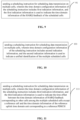
- FIG. 2 is a flow chart of a method for determining hybrid automatic repeat request (HARQ) feedback provided by an embodiment of the present disclosure, and the method is executed by a terminal device.
- the method may include but is not limited to the following steps: Step 21, receiving a scheduling instruction for scheduling data transmission on multiple cells.
- the multiple cells scheduled by the scheduling instruction may be multiple cells in a cell group, or multiple cells in multiple cell groups, or multiple carriers, etc., which is not limited in the present disclosure.
- a terminal device can obtain scheduling instructions and the like by receiving physical layer information from a network device, which is not limited in the present disclosure.
- the scheduling instruction may be downlink control information (DCI), so that when the terminal device receives the DCI, it may determine that the scheduling instruction has been received, etc., which is not limited in the present disclosure.
- DCI downlink control information
- Step 22 obtaining time domain configuration information from the scheduling instruction.
- the scheduling instruction may further include time domain configuration information for determining time domain information of HARQ feedback of each scheduled cell while scheduling data transmission on the multiple cells.
- the time domain configuration information may include the time domain information of the HARQ feedback corresponding to each scheduled cell, or may include the time domain information of the HARQ feedback corresponding to a reference cell in multiple scheduled cells, etc., which is not limited in the present disclosure.
- the time domain configuration information may be a physical downlink shared channel (PDSCH)-to-HARQ timing indicator (PDSCH-to-HARQ_timing indicator) information field in the DCI. That is, the time domain configuration information is stored in the PDSCH-to-HARQ timing indicator information field in the DCI, and the terminal device may parse the data in the PDSCH-to-HARQ timing indicator information field after receiving the DCI to obtain the time domain configuration information.
- PDSCH physical downlink shared channel
- PDSCH-to-HARQ_timing indicator a physical downlink shared channel
- the terminal device may parse the data in the PDSCH-to-HARQ timing indicator information field after receiving the DCI to obtain the time domain configuration information.
- Step 23 determining the time domain information of the HARQ feedback of each cell among the multiple scheduled cells according to the time domain configuration information.
- the time domain information of the HARQ feedback of the cell may be the time when the target user sends the HARQ feedback to the network device.
- the terminal device can determine the time domain information of the HARQ feedback of each cell among the multiple scheduled cells according to the time domain configuration information, thereby realizing the configuration of the time domain information of the HARQ feedback of multiple scheduled cells through one scheduling instruction, which saves the resources.
- the terminal device first receives a scheduling instruction for scheduling data transmission on multiple cells, then obtains time domain configuration information from the scheduling instruction, and determines the time domain information of HARQ feedback of each of the multiple scheduled cells according to the time domain configuration information.
- the terminal device can determine the time domain information of HARQ feedback of each of the multiple scheduled cells according to the time domain configuration information contained in the scheduling instruction sent by the network device, so that the terminal device and the network device can have a consistent understanding of the transmission of HRQA information, thereby ensuring the reliability of information transmission.
- FIG. 3 is a flow chart of a method for determining hybrid automatic repeat request (HARQ) feedback provided by an embodiment of the present disclosure, and the method is executed by a terminal device.
- the method may include but is not limited to the following steps: Step 31, receiving a scheduling instruction for scheduling data transmission on multiple cells.
- step 31 may refer to the detailed description of any embodiment of the present disclosure, and will not be repeated here.
- Step 32 acquiring time domain configuration information from the scheduling instruction, wherein the time domain configuration information includes first indication information, and the first indication information is used to indicate time domain information of HARQ feedback of the scheduled cell.
- the time domain configuration information may include a first indication information, where the indication information is used to indicate the time domain information of the HARQ feedback of each cell among multiple scheduled cells.
- the time domain configuration information may include multiple pieces of first indication information, where one piece of the first indication information is used to indicate the time domain information of the HARQ feedback of one scheduled cell. This disclosure is not limited to this.
- the first indication information may include an identifier of a cell and time domain information of HARQ feedback corresponding to the cell.
- the multiple cells scheduled by the same scheduling instruction are cell 1, cell 2, and cell 3, and the time domain configuration information includes three pieces of first indication information, wherein the first indication information 1 may include an identifier corresponding to cell 1 and time domain information of HARQ feedback corresponding to cell 1; the first indication information 2 may include an identifier corresponding to cell 2 and time domain information of HARQ feedback corresponding to cell 2; and the first indication information 3 may include an identifier corresponding to cell 3 and time domain information of HARQ feedback corresponding to cell 3.
- the first indication information 1 may include an identifier corresponding to cell 1 and time domain information of HARQ feedback corresponding to cell 1
- the first indication information 2 may include an identifier corresponding to cell 2 and time domain information of HARQ feedback corresponding to cell 2
- the first indication information 3 may include an identifier corresponding to cell 3 and time domain information of HARQ feedback corresponding to cell 3.
- the first indication information may only include the time domain information of the HARQ feedback corresponding to the target cell.
- the multiple cells scheduled by the same scheduling instruction are cell 1, cell 2, and cell 3, then the time domain configuration information includes 3 pieces of first indication information, wherein the first indication information 1 may include the time domain information of the HARQ feedback corresponding to cell 1; the first indication information 2 may include the time domain information of the HARQ feedback corresponding to cell 2; and the first indication information 3 may include the time domain information of the HARQ feedback corresponding to cell 3.
- the terminal determines, through a predefined rule, which cell the first indication information corresponds to for the time domain information of the HARQ feedback.
- the first indication information 1, the first indication information 2, and the first indication information 3 are arranged sequentially in the DCI, and the terminal determines, based on the cell ID information of the scheduled cell1, cell2, and cell3, which cell the first indication information corresponds to for the time domain information of the HARQ feedback.
- This disclosure is not limited to this.
- Step 33 determining the time domain information of the HARQ feedback of each cell among the multiple scheduled cells according to the time domain configuration information.
- the time domain configuration information includes the first indication information
- the first indication information is used to indicate the time domain information of the HARQ feedback of the scheduled cell
- the time domain information of the HARQ feedback of each cell among the multiple scheduled cells can be accurately obtained from the time domain configuration information.
- the terminal device first receives a scheduling instruction for scheduling data transmission on multiple cells, and then obtains time domain configuration information including first indication information from the scheduling instruction, wherein the first indication information is used to indicate the time domain information of the HARQ feedback of the scheduled cell, and finally determines the time domain information of the HARQ feedback of each cell among the scheduled cells according to the time domain configuration information.
- the terminal device can determine the time domain information of the HARQ feedback of each cell among the scheduled cells through one scheduling instruction, so that the terminal device and the network device have a consistent understanding of the transmission of HRQA information, thereby ensuring the reliability of data transmission.
- FIG. 4 is a flow chart of a method for determining hybrid automatic repeat request (HARQ) feedback provided by an embodiment of the present disclosure, and the method is executed by a terminal device. As shown in FIG. 4 , the method may include but is not limited to the following steps:
- Step 41 receiving a scheduling instruction for scheduling data transmission on multiple cells.
- Step 42 acquiring time domain configuration information from the scheduling instruction, where the time domain configuration information includes second indication information.
- the second indication information can be used to indicate a unified identification or number of multiple scheduled cells.
- the second indication information can be the value of the PDSCH-to-HARQ_timing indicator information field in the DCI.
- the second indication information can occupy 2 bits or 3 bits in the PDSCH-to-HARQ_timing indicator information field in the DCI. This is not limited in the present disclosure. If the second indication information occupies 3 bits, it can be 000, 001, 111, etc., and this is not limited in the present disclosure.
- Step 43 obtaining a time domain configuration table.
- the time domain configuration table may include information field values in the DCI, and timing configuration information of HARQ feedback of one or more cells corresponding to each information field value.
- the terminal device may obtain the time domain configuration table through high-level signaling or physical layer signaling of the network device. Then, the timing configuration information of the HARQ feedback of the cell indicated by the second indication information may be determined through the corresponding relationship, the information domain value in the scheduling instruction, and the timing configuration information of the HARQ feedback.
- the time domain configuration table may be as shown in Table 1 below: Table 1 Information field value in DCI HARQ feedback timing configuration information 000 K1 cell1 , K1 cell2 , K1 cell3 , K1 cell4 , 001 K1 cell1 , K1 cell3 ... ... 111 K1 cell1
- K1 cell1 may be the timing configuration information of the HARQ feedback corresponding to cell 1
- K1 cell2 may be the timing configuration information of the HARQ feedback corresponding to cell 2
- K1 cell3 may be the timing configuration information of the HARQ feedback corresponding to cell 3
- K1 cell4 may be the timing configuration information of the HARQ feedback corresponding to cell 4, which is not limited in the present disclosure.
- each element and each corresponding relationship in Table 1 exist independently; these elements and corresponding relationships are exemplarily listed in the same table, but it does not mean that all elements and corresponding relationships in the table must exist at the same time as shown in Table 1.
- the value of each element and each corresponding relationship is independent of any other element value or corresponding relationship in Table 1. Therefore, those skilled in the art can understand that the value of each element and each corresponding relationship in Table 1 are all independent embodiments.
- Step 44 looking up in the time domain configuration table according to the second indication information to determine the time domain information of the HARQ feedback of each cell among the multiple scheduled cells.
- the timing configuration information of the HARQ feedback of each cell in the scheduled cells can be obtained from the time domain configuration table according to the second indication information, and then the time domain information of the HARQ feedback of each cell can be determined.
- the terminal device first receives a scheduling instruction for scheduling data transmission on multiple cells, then obtains the time domain configuration information containing the second indication information from the scheduling instruction, then obtains the time domain configuration table, and finally looks up in the time domain configuration table according to the second indication information to determine the time domain information of the HARQ feedback of each of the multiple scheduled cells.
- the terminal device can determine the time domain information of the HARQ feedback of each of the multiple scheduled cells according to the time domain configuration information contained in the scheduling instruction, so that the terminal device and the network device have a consistent understanding of the transmission of the HRQA information, thereby ensuring the reliability of data transmission.
- FIG. 5 is a flow chart of a method for determining hybrid automatic repeat request (HARQ) feedback provided by an embodiment of the present disclosure, and the method is executed by a terminal device. As shown in FIG. 5 , the method may include but is not limited to the following steps:
- the third indication information is used to indicate the time offset between the time domain information of the HARQ feedback corresponding to other cells except a reference cell among the multiple scheduled cells and the time domain information of a reference uplink time domain unit.
- the time domain configuration information may be a PDSCH-to-HARQ_timing indicator information field in the DCI. That is, the third indication information is indicated by the network device through the PDSCH-to-HARQ_timing indicator information field in the DCI.
- Step 53 determining a reference PDSCH from the PDSCHs of multiple scheduled cells, wherein the cell corresponding to the reference PDSCH is the reference cell.
- the reference PDSCH may be the last PDSCH whose transmission is completed in the time domain.
- the reference PDSCH may also be agreed upon by a protocol.
- the reference PDSCH may also be a PDSCH transmission on a reference cell, and the reference cell may be pre-configured.
- the reference PDSCH may also be indicated by a scheduling instruction. This disclosure is not limited to this.
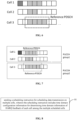
- FIG. 6 is a schematic diagram of determining the reference PDSCH from the PDSCHs of multiple scheduled cells provided by an embodiment of the present disclosure.
- the cells scheduled by the scheduling instruction are cell 1 (cell1), cell 2 (cell2), and cell 3 (cell3), wherein the PDSCH of cell 3 (cell3) is the last PDSCH the last PDSCH whose transmission is completed in the time domain. Therefore, the PDSCH of cell 3 (cell3) is determined as the reference PDSCH.
- FIG. 7 is another schematic diagram of determining the reference PDSCH from the PDSCHs of multiple scheduled cells provided by an embodiment of the present disclosure.
- the cells scheduled by the scheduling instruction are cell 1 (cell1), cell 2 (cell2), and cell 3 (cell3), wherein cell 1 (cell1) and cell 2 (cell2) belong to the same PUCCH cell group, namely PUCCH group1, and cell 3 (cell3) belongs to PUCCH group2.
- the PDSCH of cell 1 (cell1) is the last PDSCH whose transmission is completed in PUCCH group1, therefore, the PDSCH of cell 1 (cell1) is determined to be the reference PDSCH in PUCCH group1.
- the PDSCH of cell 3 (cell3) is the reference PDSCH in PUCCH group2.
- Step 54 obtaining a reference uplink time domain unit corresponding to the reference PDSCH.
- the reference uplink time domain unit may be the last uplink time domain unit corresponding to the downlink time domain unit where the reference PDSCH is located.
- Step 55 determining the time domain information of HARQ feedback of other cells according to the reference uplink time domain unit and the third indication information.
- PUCCH physical uplink control channel
- the time domain information of the HARQ feedback of cell 2 can be determined according to the time offset between the time domain information of the HARQ feedback corresponding to cell 2 and the time domain information of the reference uplink time domain unit corresponding to the reference PDSCH of reference cell 1.
- the time domain information of the HARQ feedback of cell 4 is determined according to the time offset between the time domain information of the HARQ feedback corresponding to cell 4 and the time domain information of the reference uplink time domain unit corresponding to the reference PDSCH of reference cell 3.
- the time domain information of the HARQ feedback of other cells among the multiple scheduled cells can be determined.
- the reference cell corresponding to the reference PDSCH is cell 1
- the reference uplink time domain unit corresponding to the reference PDSCH is the fifth slot.
- the time domain information of the HARQ feedback corresponding to cell 2 indicated by the third indication information is 1 slot relative to the time domain information of the reference uplink time domain unit of the reference PDSCH, and the time domain information of the HARQ feedback of cell 2 can be the sixth slot. This disclosure is not limited to this.
- the terminal device first receives a scheduling instruction for scheduling data transmission on multiple cells, then obtains the time domain configuration information including the third indication information from the scheduling instruction, and then determines the reference PDSCH from the PDSCHs of the multiple scheduled cells, and obtains the reference uplink time domain unit corresponding to the reference PDSCH, and finally determines the time domain information of the HARQ feedback of other cells among the multiple scheduled cells according to the reference uplink time domain unit and the third indication information.
- the terminal device can determine the time domain information of the HARQ feedback of each of the multiple scheduled cells according to the time domain configuration information contained in the scheduling instruction, so that the terminal device and the network device have a consistent understanding of the transmission of HRQA information, thereby ensuring the reliability of data transmission.
- FIG. 8 is a flow chart of a method for determining hybrid automatic repeat request (HARQ) feedback provided by an embodiment of the present disclosure, and the method is executed by a network device.
- the method may include but is not limited to the following steps: Step 81, sending a scheduling instruction for scheduling data transmission on multiple cells, wherein the scheduling instruction includes time domain configuration information for determining time domain information of HARQ feedback of each cell among the multiple scheduled cells.
- the multiple cells scheduled by the scheduling instruction may be multiple cells in a cell group, or multiple cells in multiple cell groups, or multiple carriers, etc., and this disclosure is not limited to this.
- the network device can send scheduling instructions, etc. to the terminal device through physical layer information, and this disclosure is not limited to this.
- the scheduling instruction may be downlink control information (DCI).
- DCI downlink control information
- the scheduling instruction may further include time domain configuration information for determining time domain information of HARQ feedback of each scheduled cell.
- the time domain configuration information may include the time domain information of the HARQ feedback corresponding to each scheduled cell, or may include the time domain information of the HARQ feedback corresponding to the reference cell in multiple scheduled cells, etc., which is not limited in the present disclosure.
- the time domain information of the HARQ feedback of the cell may be the time when the target user sends the HARQ feedback to the network device.
- the network device sends a scheduling instruction for scheduling data transmission on multiple cells to the terminal device, wherein the scheduling instruction includes time domain configuration information for determining the time domain information of the HARQ feedback of each cell among the multiple scheduled cells.
- the terminal device can determine the time domain information of the HARQ feedback of each cell among the multiple scheduled cells according to the time domain configuration information, so that the terminal device and the network device can have a consistent understanding of the transmission of HRQA information, thereby ensuring the reliability of information transmission.
- FIG. 9 is a flow chart of a method for determining hybrid automatic repeat request (HARQ) feedback provided by an embodiment of the present disclosure, and the method is executed by a network device.
- the method may include but is not limited to the following steps: Step 91, sending a scheduling instruction for scheduling data transmission on multiple cells, wherein the time domain configuration information of the scheduling instruction includes first indication information, and the first indication information is used to indicate the time domain information of the HARQ feedback of the scheduled cells.
- the time domain configuration information may include one piece of first indication information, where the one piece of indication information is used to indicate the time domain information of the HARQ feedback of each cell among multiple scheduled cells.
- the time domain configuration information may include multiple pieces of first indication information, where one piece of the first indication information is used to indicate the time domain information of the HARQ feedback of one scheduled cell. This disclosure is not limited to this.
- the first indication information may include an identifier of a cell and time domain information of HARQ feedback corresponding to the cell.
- the time domain configuration information includes three pieces of first indication information, wherein the first indication information 1 may include an identifier corresponding to cell 1 and time domain information of HARQ feedback corresponding to cell 1; the first indication information 2 may include an identifier corresponding to cell 2 and time domain information of HARQ feedback corresponding to cell 2; and the first indication information 3 may include an identifier corresponding to cell 3 and time domain information of HARQ feedback corresponding to cell 3.
- the first indication information 1 may include an identifier corresponding to cell 1 and time domain information of HARQ feedback corresponding to cell 1
- the first indication information 2 may include an identifier corresponding to cell 2 and time domain information of HARQ feedback corresponding to cell 2
- the first indication information 3 may include an identifier corresponding to cell 3 and time domain information of HARQ feedback corresponding to cell 3.
- the first indication information may only include the time domain information of the HARQ feedback corresponding to the target cell.
- the multiple cells scheduled by the same scheduling instruction are cell 1, cell 2, and cell 3, then the time domain configuration information includes 3 pieces of first indication information, wherein the first indication information 1 may include the time domain information of the HARQ feedback corresponding to cell 1; the first indication information 2 may include the time domain information of the HARQ feedback corresponding to cell 2; and the first indication information 3 may include the time domain information of the HARQ feedback corresponding to cell 3.
- the terminal determines, through a predefined rule, which cell the first indication information corresponds to for the time domain information of the HARQ feedback.
- the first indication information 1, the first indication information 2, and the first indication information 3 are arranged sequentially in the DCI, and the terminal may determine, based on the cell ID information of the scheduled cell1, cell2, and cell3, which cell the first indication information corresponds to for the time domain information of the HARQ feedback.
- This disclosure is not limited to this.
- the network device sends a scheduling instruction for scheduling data transmission on multiple cells to the terminal device, wherein the time domain configuration information of the scheduling instruction includes multiple pieces of first indication information, and the first indication information is used to indicate the time domain information of the HARQ feedback of the scheduled cell.
- the terminal device can determine the time domain information of the HARQ feedback of each of the multiple scheduled cells through one scheduling instruction, so that the terminal device and the network device have a consistent understanding of the transmission of HRQA information, thereby ensuring the reliability of data transmission.
- FIG. 10 is a flow chart of a method for determining hybrid automatic repeat request (HARQ) feedback provided by an embodiment of the present disclosure, and the method is executed by a network device.
- the method may include but is not limited to the following steps: Step 101, sending a scheduling instruction for scheduling data transmission on multiple cells, wherein time domain configuration information of the scheduling instruction includes second indication information, and the second indication information is used to indicate a unified identification of the scheduled multiple cells.
- the second indication information can be used to indicate the unified identification or number of multiple cells scheduled.
- the second indication information can be the value of the PDSCH-to-HARQ_timing indicator information field in the DCI.
- the second indication information can occupy 2 bits or 3 bits in the PDSCH-to-HARQ_timing indicator information field in the DCI. This disclosure is not limited to this. If the second indication information occupies 3 bits, it can be 000, 001, 111, etc., and this disclosure is not limited to this.
- the network device can send the time domain configuration table to the terminal device through high-layer signaling or physical layer signaling, so that after the network device sends the second indication information to the terminal device, the terminal device can look up in the time domain configuration table according to the second indication information to determine the time domain information of the HARQ feedback of each cell among multiple scheduled cells.
- the terminal device can obtain the timing configuration information of the HARQ feedback of each cell in the scheduled cells indicated by the second indication information from the time domain configuration table, and then determine the time domain information of the HARQ feedback of each cell.
- the terminal device can determine the time domain information of the HARQ feedback of each cell in the scheduled multiple cells through one scheduling instruction, so that the terminal device and the network device have a consistent understanding of the transmission of the HRQA information, thereby ensuring the reliability of data transmission.
- FIG. 11 is a flow chart of a method for determining hybrid automatic repeat request (HARQ) feedback provided by an embodiment of the present disclosure, and the method is executed by a network device. As shown in FIG. 11 , the method may include but is not limited to the following steps:
- Step 111 sending a scheduling instruction for scheduling data transmission on multiple cells, wherein the time domain configuration information of the scheduling instruction includes third indication information, and the third indication information is used to indicate the time offset between the time domain information of HARQ feedback corresponding to other cells among the multiple scheduled cells except a reference cell and the time domain information of the reference uplink time domain unit corresponding to a reference PDSCH, wherein the reference PDSCH can be the PDSCH corresponding to the reference cell.
- the reference PDSCH may be the last PDSCH whose transmission is completed in the time domain.
- the reference PDSCH may also be agreed upon by a protocol.
- the reference PDSCH may also be a PDSCH transmission on a reference cell, and the reference cell may be pre-configured, which is not limited in the present disclosure.
- the terminal device may first determine the reference PDSCH and the reference uplink time domain unit corresponding to the reference PDSCH, and then determine the time domain information of the HARQ feedback of other cells according to the reference uplink time domain unit and the third indication information.
- the time domain information of the HARQ feedback of each cell among the multiple scheduled cells can be determined.
- a network device sends a scheduling instruction for scheduling data transmission on multiple cells to a terminal device, wherein the time domain configuration information of the scheduling instruction includes a third indication information, and the third indication information is used to indicate that the reference PDSCH is the PDSCH corresponding to the reference cell, and the terminal device determines the time domain information of the HARQ feedback corresponding to the other cells according to the reference uplink time domain unit and the third indication information.
- the terminal device can determine the time domain information of the HARQ feedback of each of the multiple cells scheduled through the time domain configuration information contained in a scheduling instruction, so that the terminal device and the network device have a consistent understanding of the transmission of HRQA information, thereby ensuring the reliability of data transmission.
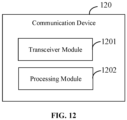
- FIG. 12 is a schematic diagram of the structure of a communication device 1200 provided in an embodiment of the present disclosure.
- the communication device 1200 shown in FIG. 12 may include a processing module 1201 and a transceiver module 1202.
- the transceiver module 1202 may include a sending module and/or a receiving module.
- the sending module is used to implement a sending function
- the receiving module is used to implement a receiving function.
- the transceiver module 1202 may implement a sending function and/or a receiving function.
- the communication device 1200 can be a terminal device, or an apparatus in a terminal device, or an apparatus that can be used in conjunction with a terminal device.
- the communication device 1200 on the terminal device side, includes:
- the scheduling instruction is downlink control information (DCI)
- the time domain configuration information is a physical downlink shared channel (PDSCH)-to-HARQ timing indicator information field in the DCI.
- DCI downlink control information
- PDSCH physical downlink shared channel
- the time domain configuration information includes first indication information, where the first indication information is used to indicate time domain information of HARQ feedback of the scheduled cell.
- the time domain configuration information includes second indication information
- the processing module 1201 is specifically configured to:
- the time domain configuration information includes third indication information
- the processing module 1201 is specifically configured to:
- the reference PDSCH is the last PDSCH whose transmission is completed in the time domain
- the reference uplink time domain unit is the last uplink time domain unit corresponding to the downlink time domain unit where the reference PDSCH is located.
- the other cells and the cell corresponding to the reference PDSCH belong to the same physical uplink control channel (PUCCH) cell group.
- PUCCH physical uplink control channel
- the terminal device first receives a scheduling instruction for scheduling data transmission on multiple cells, then obtains time domain configuration information from the scheduling instruction, and determines the time domain information of HARQ feedback of each of the multiple scheduled cells according to the time domain configuration information.
- the terminal device can determine the time domain information of HARQ feedback of each of the multiple scheduled cells according to the time domain configuration information contained in the scheduling instruction sent by the network device, so that the terminal device and the network device can have a consistent understanding of the transmission of HRQA information, thereby ensuring the reliability of information transmission.
- the communication device 120 can be a network device, an apparatus in a network device, or an apparatus that can be used in conjunction with a network device.
- the communication device 120 on the network device side, includes: a transceiver module 1202, configured to send a scheduling instruction for scheduling data transmission on multiple cells, wherein the scheduling instruction includes time domain configuration information for determining time domain information of HARQ feedback of each cell among the multiple scheduled cells.
- the scheduling instruction is downlink control information (DCI)
- the time domain configuration information is a physical downlink shared channel (PDSCH) to HARQ_timing instruction information field in the DCI.
- DCI downlink control information
- PDSCH physical downlink shared channel
- the time domain configuration information includes multiple pieces of first indication information, and the first indication information is used to indicate the time domain information of the HARQ feedback of the scheduled cell.
- the time domain configuration information includes second indication information, and the second indication information is used to indicate a unified identifier of multiple scheduled cells.
- the time domain configuration information includes third indication information, and the third indication information is used to indicate the time offset between the time domain information of HARQ feedback corresponding to other cells among multiple scheduled cells except a reference cell and the time domain information of the reference uplink time domain unit corresponding to a reference PDSCH, wherein the reference PDSCH is the PDSCH corresponding to the reference cell.
- the reference PDSCH is the last PDSCH whose transmission is completed in the time domain
- the reference uplink time domain unit is the last uplink time domain unit corresponding to the downlink time domain unit where the reference PDSCH is located.
- the network device sends a scheduling instruction for scheduling data transmission on multiple cells to the terminal device, wherein the scheduling instruction includes time domain configuration information for determining the time domain information of HARQ feedback of each cell among the multiple scheduled cells, thereby enabling the terminal device to determine the time domain information of HARQ feedback of each cell among the multiple scheduled cells according to the time domain configuration information, so that the terminal device and the network device can have a consistent understanding of the transmission of HRQA information, thereby ensuring the reliability of information transmission.
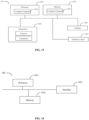
- FIG. 13 is a schematic structural diagram of another communication device 130 provided by an embodiment of the present disclosure.
- the communication device 130 may be a network device, or may be a terminal device, or may be a chip, a chip system, a processor or the like that supports the network device to implement the above method, or may be a chip, a chip system, a processor or the like that supports the terminal device to implement the above method.
- the device can be used to implement the method described in the above method embodiments. For details, reference may be made to the description in the above method embodiments.
- the communication device 130 may include one or more processors 1301.
- the processor 1301 may be a general-purpose processor or a dedicated processor, or the like.
- the processor 1301 may be a baseband processor or a central processing unit.
- the baseband processor can be used to process communication protocols and communication data.
- the central processor can be used to control the communication devices (such as base stations, baseband chips, terminal devices, terminal device chips, DU or CU, or the like), execute computer programs, and process data for the computer programs.
- the communication device 130 may also include one or more memories 1302, on which a computer program 1304 may be stored.
- the processor 1301 executes the computer program 1304, so that the communication device 130 performs the method described in the above method embodiments.
- the memory 1302 may also store data.
- the communication device 130 and the memory 1302 can be provided separately or integrated together.
- the communication device 130 may also include a transceiver 1305 and an antenna 1306.
- the transceiver 1305 may be referred to as a transceiver unit, a transceiver, a transceiver circuit, or the like, and is used to implement transceiver functions.
- the transceiver 1305 may include a receiver and a transmitter.
- the receiver may be referred to as a receiver or a receiving circuit, or the like, and is used to implement the receiving function; and the transmitter may be referred to as a transmitter, a transmitting circuit, or the like, and is used to implement the transmitting function.
- the communication device 130 may also include one or more interface circuits 1307.
- the interface circuit 1307 is used to receive code instructions and transmit the code instructions to the processor 1301.
- the processor 1301 executes the code instructions to cause the communication device 130 to perform the method described in the above method embodiments.
- the communication device 130 is terminal device: the processor 1301 is used to perform step 22, step 23 in FIG. 2 , step 32, step 33 in FIG. 3 , step 42, step 43, step 44 in FIG. 4 , etc.
- the transceiver 1305 is used to perform step 21 in FIG. 2 ; step 31 in FIG. 3 ; step 41 in FIG. 4 , etc.
- the communication device 130 is a network device: the transceiver 1305 is used to perform step 81 in FIG. 8 ; or step 91 in FIG. 9 , etc.
- the processor 1301 may include a transceiver for implementing receiving and transmitting functions.
- the transceiver may be a transceiver circuit, an interface, or an interface circuit.
- the transceiver circuits, interfaces or interface circuits used to implement the receiving and transmitting functions can be separate or integrated together.
- the above-mentioned transceiver circuit, interface or interface circuit can be used for reading and writing codes/data, or the above-mentioned transceiver circuit, interface or interface circuit can be used for signal transmission or transfer.
- the processor 1301 may be stored with a computer program 1303, and the computer program 1303 is executed by the processor 1301, causing the communication device 130 to perform the method described in the above method embodiments.
- the computer program 1303 may be solidified in the processor 1301, in which case the processor 1301 may be implemented by hardware.
- the communication device 130 may include a circuit, and the circuit may implement the functions of sending or receiving or communicating in the foregoing method embodiments.
- the processors and transceivers described in this disclosure may be implemented on an integrated circuit (IC), an analog IC, a radio frequency integrated circuit (RFIC), a mixed signal IC, an application specific integrated circuit (ASIC), a printed circuit boards (PCB), an electronic device, and the like.
- IC integrated circuit
- RFIC radio frequency integrated circuit
- ASIC application specific integrated circuit
- PCB printed circuit boards
- the processor and transceiver can also be manufactured using various IC process technologies, such as complementary metal oxide semiconductor (CMOS), N-type metal oxide semiconductor (nMetal-oxide- semiconductor, NMOS), P-type metal oxide semiconductor (positive channel metal oxide semiconductor, PMOS), bipolar junction transistor (BJT), bipolar CMOS (BiCMOS), silicon germanium (SiGe), gallium arsenide (GaAs), and the like.
- CMOS complementary metal oxide semiconductor
- N-type metal oxide semiconductor nMetal-oxide- semiconductor
- PMOS P-type metal oxide semiconductor
- BJT bipolar junction transistor
- BiCMOS bipolar CMOS
- SiGe silicon germanium
- GaAs gallium arsenide
- the communication device described in the above embodiments may be a network device or aterminal device, but the scope of the communication device described in this disclosure is not limited thereto, and the structure of the communication device may not be limited by FIG. 13 .
- the communication device may be a stand-alone device or may be part of a larger device.
- the communication device may be:
- the communication device may be a chip or a chip system
- the chip shown in FIG. 14 includes a processor 1401 and an interface 1402.
- the processor 1401 may include one or more processors, and the interface 1402 may include multiple interfaces.
- the processor 1401 is used to perform step 22, step 23 in FIG. 2 , step 32, step 33 in FIG. 3 , step 42, step 43, step 44 in FIG. 4 , etc.
- the interface 1402 is configured to execute the step 21 in FIG. 2 ; step 31 in FIG. 3 ; step 41 in FIG. 4 , etc.
- the processor 1401 is configured to execute the step 81 in FIG. 8 ; or step 91 in FIG. 9 , etc.
- the interface 1402 is configured to execute the step 81 in FIG. 8 ; or step 91 in FIG. 9 , etc.
- the chip also includes a memory 1403, which is used to store necessary computer programs and data.
- Embodiments of the present disclosure also provide a communication system.
- the system includes a communication device as a terminal device and a communication device as a network device in the embodiment of FIG. 13 , or the system includes a communication device as a terminal device and a communication device as a network device in the embodiment of FIG. 14 .
- the present disclosure also provides a computer-readable storage medium on which instructions are stored. When the instructions are executed by a computer, the functions of any of the above method embodiments are implemented.
- the present disclosure also provides a computer program product, which, when been executed by a computer, implements the functions of any of the above method embodiments.
- the above embodiments it may be implemented in whole or in part by software, hardware, firmware, or any combination thereof.
- software it may be implemented in whole or in part in the form of a computer program product.
- the computer program product includes one or more computer programs.
- the computer program When the computer program is loaded and executed on a computer, the processes or functions described in accordance with the embodiments of the present disclosure are generated in whole or in part.
- the computer may be a general-purpose computer, a dedicated computer, a computer network, or other programmable device.
- the computer program may be stored in a computer-readable storage medium, or been transferred from one computer-readable storage medium to another, for example, the computer program may be transferred from a website, computer, server, or data center to another website, computer, server or data center via wired (such as coaxial cable, optical fiber, digital subscriber line (DSL)) or wireless (such as infrared, wireless, microwave, or the like) means.
- the computer-readable storage medium may be any available medium that can be accessed by a computer, or a data storage device such as an integrated server, data center, or the like, that includes one or more available media.
- the available media may be magnetic media (e.g., floppy disks, hard disks, magnetic tapes), optical media (e.g., high-density digital video discs (DVD)), or semiconductor media (e.g., solid state disks, SSD)) or the like.
- magnetic media e.g., floppy disks, hard disks, magnetic tapes
- optical media e.g., high-density digital video discs (DVD)
- DVD digital video discs
- semiconductor media e.g., solid state disks, SSD
- At least one in the present disclosure can also be described as one or more, and the plurality can be two, three, four or more, which is not limited in the present disclosure.
- first”, “second”, “third”, “A”, “B”, “C” and “D”, or the like are used to distinguish the technical features in the type of technical feature, and the technical features described with “first”, “second”, “third”, “A”, “B”, “C” and “D” are in no order of precedence or order of size.
- first, second, third, etc. may be used to describe various information in the embodiments of the present application, these information should not be limited to these terms. These terms are only used to distinguish the same type of information from each other.
- first information may also be referred to as the second information, and similarly, the second information may also be referred to as the first information.
- the words "if” and “if” as used herein may be interpreted as “at the time of” or “when” or “in response to determination” or “under the circumstances of ".
- each table in this disclosure can be configured or predefined.
- the values of the information in each table are only examples and can be configured as other values, which is not limited by this disclosure.
- the corresponding relationships shown in some rows may not be configured.
- appropriate deformation adjustments can be made based on the above table, such as splitting, merging, or the like.
- the names of the parameters shown in the titles of the above tables may also be other names understandable by the communication device, and the values or expressions of the parameters may also be other values or expressions understandable by the communication device.
- other data structures can also be used, such as arrays, queues, containers, stacks, linear lists, pointers, linked lists, trees, graphs, structures, classes, heaps, hash tables, or the like.
- Predefinition in this disclosure may be understood as definition, pre-definition, storage, pre-storage, pre-negotiation, pre-configuration, firming, or pre-burning.
Landscapes
- Engineering & Computer Science (AREA)
- Signal Processing (AREA)
- Computer Networks & Wireless Communication (AREA)
- Mobile Radio Communication Systems (AREA)
Applications Claiming Priority (1)
| Application Number | Priority Date | Filing Date | Title |
|---|---|---|---|
| PCT/CN2022/102070 WO2024000200A1 (fr) | 2022-06-28 | 2022-06-28 | Procédé et appareil pour déterminer une retour de demande automatique de répétition hybride (harq) |
Publications (2)
| Publication Number | Publication Date |
|---|---|
| EP4550706A4 EP4550706A4 (fr) | 2025-05-07 |
| EP4550706A1 true EP4550706A1 (fr) | 2025-05-07 |
Family
ID=83915302
Family Applications (1)
| Application Number | Title | Priority Date | Filing Date |
|---|---|---|---|
| EP22948320.1A Pending EP4550706A1 (fr) | 2022-06-28 | 2022-06-28 | Procédé et appareil pour déterminer une retour de demande automatique de répétition hybride (harq) |
Country Status (4)
| Country | Link |
|---|---|
| US (1) | US20250385759A1 (fr) |
| EP (1) | EP4550706A1 (fr) |
| CN (1) | CN115336222B (fr) |
| WO (1) | WO2024000200A1 (fr) |
Families Citing this family (2)
| Publication number | Priority date | Publication date | Assignee | Title |
|---|---|---|---|---|
| CN118945853A (zh) * | 2023-05-11 | 2024-11-12 | 大唐移动通信设备有限公司 | 信息处理方法、装置、终端及网络设备 |
| WO2025076707A1 (fr) * | 2023-10-10 | 2025-04-17 | Oppo广东移动通信有限公司 | Procédé et appareil de renvoi de harq-ack, dispositif et support de stockage |
Family Cites Families (12)
| Publication number | Priority date | Publication date | Assignee | Title |
|---|---|---|---|---|
| CN110034892B (zh) * | 2018-01-12 | 2020-07-14 | 维沃移动通信有限公司 | Harq-ack反馈时间的确定方法、指示方法、终端设备和网络设备 |
| CN114629601B (zh) * | 2019-02-15 | 2025-06-20 | 中兴通讯股份有限公司 | 信息确定方法、信息确定装置及存储介质 |
| WO2020206581A1 (fr) * | 2019-04-08 | 2020-10-15 | Oppo广东移动通信有限公司 | Procédé de transmission de signal, dispositif terminal, et dispositif de réseau |
| WO2021092732A1 (fr) * | 2019-11-11 | 2021-05-20 | 北京小米移动软件有限公司 | Procédé et appareil de transmission harq-ack, et dispositif de communication |
| CN113259067B (zh) * | 2020-02-12 | 2022-08-16 | 北京紫光展锐通信技术有限公司 | Harq-ack反馈时刻、位置的确定以及设备和介质 |
| CN113285788B (zh) * | 2020-02-19 | 2023-12-29 | 维沃移动通信有限公司 | 一种确定反馈资源的方法和通信设备 |
| CN113472487B (zh) * | 2020-03-30 | 2023-04-28 | 维沃移动通信有限公司 | Harq-ack反馈方法及设备 |
| CN113543321B (zh) * | 2020-04-15 | 2024-04-05 | 大唐移动通信设备有限公司 | Harq-ack反馈时序的确定方法及设备 |
| WO2022027551A1 (fr) * | 2020-08-07 | 2022-02-10 | Lenovo (Beijing) Limited | Procédé et appareil de détermination de livre de codes harq-ack pour une planification à porteuses multiples |
| US20230412316A1 (en) * | 2020-10-14 | 2023-12-21 | Telefonaktiebolaget Lm Ericsson (Publ) | Harq timing for dci scheduling multiple cells |
| JP7639903B2 (ja) * | 2020-10-15 | 2025-03-05 | 富士通株式会社 | 情報フィードバック方法及び装置 |
| CN114666023A (zh) * | 2020-10-21 | 2022-06-24 | 北京三星通信技术研究有限公司 | 发送和接收混合自动重传请求应答信息的方法和设备 |
-
2022
- 2022-06-28 US US18/877,200 patent/US20250385759A1/en active Pending
- 2022-06-28 CN CN202280002203.7A patent/CN115336222B/zh active Active
- 2022-06-28 WO PCT/CN2022/102070 patent/WO2024000200A1/fr not_active Ceased
- 2022-06-28 EP EP22948320.1A patent/EP4550706A1/fr active Pending
Also Published As
| Publication number | Publication date |
|---|---|
| CN115336222A (zh) | 2022-11-11 |
| US20250385759A1 (en) | 2025-12-18 |
| WO2024000200A1 (fr) | 2024-01-04 |
| CN115336222B (zh) | 2024-09-06 |
Similar Documents
| Publication | Publication Date | Title |
|---|---|---|
| JP7686877B2 (ja) | 伝送設定指示(tci)状態設定方法及びその装置 | |
| US20240188054A1 (en) | Method and device for time-domain resource allocation | |
| CN118450519B (zh) | 一种跨载波的波束使用时间的确定方法及其装置 | |
| EP4550905A1 (fr) | Procédé de détermination du temps d'utilisation d'état d'indication de configuration de transmission (tci), et appareil associé | |
| US20240297702A1 (en) | Channel state feedback method and apparatus | |
| EP4550706A1 (fr) | Procédé et appareil pour déterminer une retour de demande automatique de répétition hybride (harq) | |
| CN115735350B (zh) | 一种信息确定方法/装置/设备及存储介质 | |
| CN115516797B (zh) | 一种harq反馈方法及其装置 | |
| US20240163017A1 (en) | Methods for processing data reception, related communication apparatus and storage medium | |
| US20250089045A1 (en) | Method and apparatus for determining processing time parameter of physical downlink shared channel | |
| EP4362564A1 (fr) | Procédé et appareil d'ajustement de relation de synchronisation | |
| US20240214130A1 (en) | Timing method and apparatus for determining harq feedback information | |
| CN114026907A (zh) | 一种上行波束的测量方法及其装置 | |
| CN115316023B (zh) | 一种指示方法及装置 | |
| CN115315918B (zh) | 一种多小区调度的调度信息的检测方法及其装置 | |
| CN115486023B (zh) | 一种传输方法及其装置 | |
| CN116097845B (zh) | 一种时间偏移量的确定方法及其装置 | |
| US12621065B2 (en) | Communication method and apparatus | |
| US20240340879A1 (en) | Semi-persistent scheduling method and apparatus for multicast broadcast service (mbs) | |
| US20240188052A1 (en) | Method and device for determining time domain resources | |
| US20240275508A1 (en) | Communication method and apparatus | |
| WO2024124562A1 (fr) | Procédé et appareil de transmission de requête automatique de répétition hybride (harq) |
Legal Events
| Date | Code | Title | Description |
|---|---|---|---|
| STAA | Information on the status of an ep patent application or granted ep patent |
Free format text: STATUS: THE INTERNATIONAL PUBLICATION HAS BEEN MADE |
|
| PUAI | Public reference made under article 153(3) epc to a published international application that has entered the european phase |
Free format text: ORIGINAL CODE: 0009012 |
|
| STAA | Information on the status of an ep patent application or granted ep patent |
Free format text: STATUS: REQUEST FOR EXAMINATION WAS MADE |
|
| 17P | Request for examination filed |
Effective date: 20250113 |
|
| A4 | Supplementary search report drawn up and despatched |
Effective date: 20250227 |
|
| AK | Designated contracting states |
Kind code of ref document: A1 Designated state(s): AL AT BE BG CH CY CZ DE DK EE ES FI FR GB GR HR HU IE IS IT LI LT LU LV MC MK MT NL NO PL PT RO RS SE SI SK SM TR |
|
| DAV | Request for validation of the european patent (deleted) | ||
| DAX | Request for extension of the european patent (deleted) |