EP4552634A1 - Mikrokügelchen-formulierung mit verzögerter freisetzung mit semaglutid oder pharmazeutisch akzeptablem salz daraus und herstellungsverfahren dafür - Google Patents
Mikrokügelchen-formulierung mit verzögerter freisetzung mit semaglutid oder pharmazeutisch akzeptablem salz daraus und herstellungsverfahren dafür Download PDFInfo
- Publication number
- EP4552634A1 EP4552634A1 EP23835845.1A EP23835845A EP4552634A1 EP 4552634 A1 EP4552634 A1 EP 4552634A1 EP 23835845 A EP23835845 A EP 23835845A EP 4552634 A1 EP4552634 A1 EP 4552634A1
- Authority
- EP
- European Patent Office
- Prior art keywords
- acid
- semaglutide
- pharmaceutically acceptable
- acceptable salt
- release
- Prior art date
- Legal status (The legal status is an assumption and is not a legal conclusion. Google has not performed a legal analysis and makes no representation as to the accuracy of the status listed.)
- Pending
Links
Images


Classifications
-
- A—HUMAN NECESSITIES
- A61—MEDICAL OR VETERINARY SCIENCE; HYGIENE
- A61P—SPECIFIC THERAPEUTIC ACTIVITY OF CHEMICAL COMPOUNDS OR MEDICINAL PREPARATIONS
- A61P1/00—Drugs for disorders of the alimentary tract or the digestive system
- A61P1/16—Drugs for disorders of the alimentary tract or the digestive system for liver or gallbladder disorders, e.g. hepatoprotective agents, cholagogues, litholytics
-
- A—HUMAN NECESSITIES
- A61—MEDICAL OR VETERINARY SCIENCE; HYGIENE
- A61K—PREPARATIONS FOR MEDICAL, DENTAL OR TOILETRY PURPOSES
- A61K38/00—Medicinal preparations containing peptides
- A61K38/16—Peptides having more than 20 amino acids; Gastrins; Somatostatins; Melanotropins; Derivatives thereof
- A61K38/17—Peptides having more than 20 amino acids; Gastrins; Somatostatins; Melanotropins; Derivatives thereof from animals; from humans
- A61K38/22—Hormones
- A61K38/26—Glucagons
-
- A—HUMAN NECESSITIES
- A61—MEDICAL OR VETERINARY SCIENCE; HYGIENE
- A61K—PREPARATIONS FOR MEDICAL, DENTAL OR TOILETRY PURPOSES
- A61K9/00—Medicinal preparations characterised by special physical form
- A61K9/14—Particulate form, e.g. powders, Processes for size reducing of pure drugs or the resulting products, Pure drug nanoparticles
- A61K9/16—Agglomerates; Granulates; Microbeadlets ; Microspheres; Pellets; Solid products obtained by spray drying, spray freeze drying, spray congealing,(multiple) emulsion solvent evaporation or extraction
- A61K9/1605—Excipients; Inactive ingredients
- A61K9/1611—Inorganic compounds
-
- A—HUMAN NECESSITIES
- A61—MEDICAL OR VETERINARY SCIENCE; HYGIENE
- A61K—PREPARATIONS FOR MEDICAL, DENTAL OR TOILETRY PURPOSES
- A61K9/00—Medicinal preparations characterised by special physical form
- A61K9/14—Particulate form, e.g. powders, Processes for size reducing of pure drugs or the resulting products, Pure drug nanoparticles
- A61K9/16—Agglomerates; Granulates; Microbeadlets ; Microspheres; Pellets; Solid products obtained by spray drying, spray freeze drying, spray congealing,(multiple) emulsion solvent evaporation or extraction
- A61K9/1605—Excipients; Inactive ingredients
- A61K9/1617—Organic compounds, e.g. phospholipids, fats
-
- A—HUMAN NECESSITIES
- A61—MEDICAL OR VETERINARY SCIENCE; HYGIENE
- A61K—PREPARATIONS FOR MEDICAL, DENTAL OR TOILETRY PURPOSES
- A61K9/00—Medicinal preparations characterised by special physical form
- A61K9/14—Particulate form, e.g. powders, Processes for size reducing of pure drugs or the resulting products, Pure drug nanoparticles
- A61K9/16—Agglomerates; Granulates; Microbeadlets ; Microspheres; Pellets; Solid products obtained by spray drying, spray freeze drying, spray congealing,(multiple) emulsion solvent evaporation or extraction
- A61K9/1605—Excipients; Inactive ingredients
- A61K9/1617—Organic compounds, e.g. phospholipids, fats
- A61K9/1623—Sugars or sugar alcohols, e.g. lactose; Derivatives thereof; Homeopathic globules
-
- A—HUMAN NECESSITIES
- A61—MEDICAL OR VETERINARY SCIENCE; HYGIENE
- A61K—PREPARATIONS FOR MEDICAL, DENTAL OR TOILETRY PURPOSES
- A61K9/00—Medicinal preparations characterised by special physical form
- A61K9/14—Particulate form, e.g. powders, Processes for size reducing of pure drugs or the resulting products, Pure drug nanoparticles
- A61K9/16—Agglomerates; Granulates; Microbeadlets ; Microspheres; Pellets; Solid products obtained by spray drying, spray freeze drying, spray congealing,(multiple) emulsion solvent evaporation or extraction
- A61K9/1605—Excipients; Inactive ingredients
- A61K9/1629—Organic macromolecular compounds
- A61K9/1641—Organic macromolecular compounds obtained otherwise than by reactions only involving carbon-to-carbon unsaturated bonds, e.g. polyethylene glycol, poloxamers
-
- A—HUMAN NECESSITIES
- A61—MEDICAL OR VETERINARY SCIENCE; HYGIENE
- A61K—PREPARATIONS FOR MEDICAL, DENTAL OR TOILETRY PURPOSES
- A61K9/00—Medicinal preparations characterised by special physical form
- A61K9/14—Particulate form, e.g. powders, Processes for size reducing of pure drugs or the resulting products, Pure drug nanoparticles
- A61K9/16—Agglomerates; Granulates; Microbeadlets ; Microspheres; Pellets; Solid products obtained by spray drying, spray freeze drying, spray congealing,(multiple) emulsion solvent evaporation or extraction
- A61K9/1605—Excipients; Inactive ingredients
- A61K9/1629—Organic macromolecular compounds
- A61K9/1641—Organic macromolecular compounds obtained otherwise than by reactions only involving carbon-to-carbon unsaturated bonds, e.g. polyethylene glycol, poloxamers
- A61K9/1647—Polyesters, e.g. poly(lactide-co-glycolide)
-
- A—HUMAN NECESSITIES
- A61—MEDICAL OR VETERINARY SCIENCE; HYGIENE
- A61K—PREPARATIONS FOR MEDICAL, DENTAL OR TOILETRY PURPOSES
- A61K9/00—Medicinal preparations characterised by special physical form
- A61K9/14—Particulate form, e.g. powders, Processes for size reducing of pure drugs or the resulting products, Pure drug nanoparticles
- A61K9/16—Agglomerates; Granulates; Microbeadlets ; Microspheres; Pellets; Solid products obtained by spray drying, spray freeze drying, spray congealing,(multiple) emulsion solvent evaporation or extraction
- A61K9/1605—Excipients; Inactive ingredients
- A61K9/1629—Organic macromolecular compounds
- A61K9/1652—Polysaccharides, e.g. alginate, cellulose derivatives; Cyclodextrin
-
- A—HUMAN NECESSITIES
- A61—MEDICAL OR VETERINARY SCIENCE; HYGIENE
- A61K—PREPARATIONS FOR MEDICAL, DENTAL OR TOILETRY PURPOSES
- A61K9/00—Medicinal preparations characterised by special physical form
- A61K9/14—Particulate form, e.g. powders, Processes for size reducing of pure drugs or the resulting products, Pure drug nanoparticles
- A61K9/16—Agglomerates; Granulates; Microbeadlets ; Microspheres; Pellets; Solid products obtained by spray drying, spray freeze drying, spray congealing,(multiple) emulsion solvent evaporation or extraction
- A61K9/1682—Processes
-
- A—HUMAN NECESSITIES
- A61—MEDICAL OR VETERINARY SCIENCE; HYGIENE
- A61P—SPECIFIC THERAPEUTIC ACTIVITY OF CHEMICAL COMPOUNDS OR MEDICINAL PREPARATIONS
- A61P25/00—Drugs for disorders of the nervous system
- A61P25/28—Drugs for disorders of the nervous system for treating neurodegenerative disorders of the central nervous system, e.g. nootropic agents, cognition enhancers, drugs for treating Alzheimer's disease or other forms of dementia
-
- A—HUMAN NECESSITIES
- A61—MEDICAL OR VETERINARY SCIENCE; HYGIENE
- A61P—SPECIFIC THERAPEUTIC ACTIVITY OF CHEMICAL COMPOUNDS OR MEDICINAL PREPARATIONS
- A61P3/00—Drugs for disorders of the metabolism
- A61P3/04—Anorexiants; Antiobesity agents
-
- A—HUMAN NECESSITIES
- A61—MEDICAL OR VETERINARY SCIENCE; HYGIENE
- A61P—SPECIFIC THERAPEUTIC ACTIVITY OF CHEMICAL COMPOUNDS OR MEDICINAL PREPARATIONS
- A61P3/00—Drugs for disorders of the metabolism
- A61P3/06—Antihyperlipidemics
-
- A—HUMAN NECESSITIES
- A61—MEDICAL OR VETERINARY SCIENCE; HYGIENE
- A61P—SPECIFIC THERAPEUTIC ACTIVITY OF CHEMICAL COMPOUNDS OR MEDICINAL PREPARATIONS
- A61P3/00—Drugs for disorders of the metabolism
- A61P3/08—Drugs for disorders of the metabolism for glucose homeostasis
- A61P3/10—Drugs for disorders of the metabolism for glucose homeostasis for hyperglycaemia, e.g. antidiabetics
-
- A—HUMAN NECESSITIES
- A61—MEDICAL OR VETERINARY SCIENCE; HYGIENE
- A61P—SPECIFIC THERAPEUTIC ACTIVITY OF CHEMICAL COMPOUNDS OR MEDICINAL PREPARATIONS
- A61P9/00—Drugs for disorders of the cardiovascular system
- A61P9/12—Antihypertensives
Definitions
- the present disclosure relates to a sustained-release microsphere containing semaglutide or a pharmaceutically acceptable salt thereof with enhanced bioavailability.
- a pharmaceutical composition comprising the sustained-release microsphere containing a high content of semaglutide, and a method for preparing the sustained-release microsphere.
- Glucagon-like peptide-1 is a peptide derived from pre-proglucagon which is a 158 amino acid precursor polypeptide that are differentially processed in the tissues to form a number of different proglucagon-derived peptides, including glucagon, glucagon-like peptide-1 (GLP-1), glucagon-like peptide-2 (GLP-2) and oxyntomodulin (OXM). These molecules are involved in a wide variety of physiological functions, including glucose homeostasis, insulin secretion, gastric emptying and intestinal growth, as well as regulation of food intake.
- GLP-1 is produced as a 37-amino acid peptide that corresponds to amino acids 72 to 108 of pre-proglucagon (pre-proglucagon 92 to 128).
- GLP-1(7-36) amide or GLP-1(7-37) acid is a biologically active form of GLP-1 that exhibits essentially equivalent activity at the GLP-1 receptor.
- GLP-1 and GLP-1 analogues acting as agonists at the GLP-1 receptor have been shown to provide effective glycemic control, for example for treating patients with type 2 diabetes, and additionally provide weight loss effects, preservation of ⁇ -cell function, and reduction of hypertension, hypoglycemia and/or hyperlipidemia.
- GLP-1 analogues including Byetta ® Bydureon ® & Bydurepn PEN ® & Bydureon BCise ® (exenatide), Ozempic ® & Wegovy ® (semaglutide), Victoza ® & Saxenda ® (liraglutide), Adlyxin ® (lixisenatide); Tanzeum ® (albiglutide), and Trulicity ® (dulaglutide), are commercially available or under development.
- GLP-1 agonists such as semaglutide
- GLP-1 agonists are peptides, and administration of such peptides is performed mainly through injection due to several barriers such as enzymatic degradation in the gastrointestinal tract and intestinal mucosa, insufficient absorption from the intestinal mucosa, and first pass metabolism in the liver.
- oral administration agent has also been commercialized, but its bioavailability is much lower compared to injection formulations, and requires significantly higer doses.
- dosage forms containing semaglutide are formulated to be directly administered by patients themselves (self-administered) for sustainable management of obesity or diabetes, so that is very important to regulate pain, inflammatory response, etc. that may occur at the administration site.
- the present disclosure has been designed to solve the above problems, and an object of the present disclosure is to provide a pharmaceutical composition comprising a sustained-release microsphere consisting of semaglutide or a pharmaceutically acceptable salt thereof, a bioavailability enhancer, and a biodegradable polymer having a high bioavailability of semiglutide and long-term stable drug release properties, and a pharmaceutical composition comprising a sustained-release microsphere consisting of semaglutide or a pharmaceutically acceptable salt thereof and a biodegradable polymer and exhibiting stable drug release properties with a high drug content and a low initial release, and a method for preparing the sustained-release microsphere.
- the term "at least one' refers to the number corresponding to one or more.
- the number of any component when the number of any component is one or more, it may preferably be one, two or more, three or more, one to three, or one to two, but is not limited thereto.
- a pharmaceutical composition comprising a semaglutide sustained-release microsphere containing a biodegradable polymer, wherein the content of semaglutide is at least 8 wt% as semaglutide based on the total weight of the microspheres, and wherein a bioavailability enhancer is contained in an amount of 2.5wt% to 250 wt% based on the weight of semaglutide.
- a pharmaceutical composition for preventing or treating diabetes, type 2 diabetes, preservation of beta-cell function, obesity, non-alcoholic steatohepatitis, or neurodegenerative disease comprising a sustained-release microsphere consisting of semaglutide or a pharmaceutically acceptable salt thereof, an initial-release inhibitor and a biodegradable polymer, wherein the semaglutide or a pharmaceutically acceptable salt thereof is contained in an amount of 8 wt% or more as semaglutide based on the total weight of the microspheres, and the initial-release inhibitor is contained at 5ppm to 2,000 ppm.
- the biodegradable polymer may be at least one selected from the group consisting of: a polymer selected from the group consisting of polylactide (PLA), polyglycolide (PGA), polylactide-co-glycolide (PLGA) which is a copolymer of lactide and glycolide, polydioxanone, polycaprolactone (PCL), polylactide-co-glycolide-co-caprolactone (PLGC), polylactide-co-hydroxymethyl glycolide (PLGMGA), polyalkylcarbonate, polytrimethylenecarbonate (PTMC), polylactide-co-trimethylenecarbonate (PLTMC), polyhydroxybutyric acid (PHB), polyhydroxybutyrate-co-hydroxyvalerate (PHBV), polyorthoester, polyanhydride, polyanhydride-co-imide, polypropylene fumarate, pseudo polyaminoacid, polyalkyl cyanoacrylate, polyphosphazene, poly
- the bioavailability enhancer may be at least one selected from the group consisting of: sodium decanoate, disodium phosphate, choline, meglumine, basic aluminum carbonate, dihydroxyaluminum sodium carbonate, ammonium phosphate, histidine, HEPES, HEPPS, spermine, spermidine, putrescine, methylene blue, proline, sugar, glycerol, surfactant, arginine, glycine, guanidine hydrochloride, urea, sodium chloride, potassium chloride, triethylamine, ethanolamine, triethanolamine, ethylenediamine, poloxamer, benzathine, procaine, lidocaine, bupivacaine, ropivacaine, oxytetracycline, sunitinib, rhizolutin, benzofuran, magnesium carbonate, magnesium hydroxide, magnesium oxide, magnesium trisilicate, zinc carbonate, zinc hydroxide, zinc phosphate
- the pharmaceutically acceptable salt of semaglutide are sodium salt, acetate, benzoate, hydroxynaphthoate, napadisilate, or pamoate of semaglutide.
- poly(lactide-co-glycolide), polyglycolide or polylactide among the biodegradable polymers has an intrinsic viscosity of 0.16 dL/g to 1.7 dL/g.
- the microspheres containing the semaglutide or a pharmaceutically acceptable salt thereof and a bioavailability enhancer may have an average particle size of 5 ⁇ m to 100 ⁇ m.
- microspheres containing the semaglutide or a pharmaceutically acceptable salt thereof and a bioavailability enhancer may have a span value of 1.5 or less.
- the weight of the microspheres containing the semaglutide or a pharmaceutically acceptable salt thereof and a bioavailability enhancer may be 20 to 1,000 mg, 20 mg to 800 mg, 20 mg to 600 mg, 20 mg to 400 mg, 20 mg to 200 mg, 20 mg to 100 mg, 30 mg to 1,000 mg, 30 mg to 800 mg, 30 mg to 600 mg, 30 mg to 400 mg, 30 mg to 200 mg, 30 mg to 100 mg, 40 mg to 1,000 mg, 40 mg to 800 mg, 40 mg to 600 mg, 40 mg to 400 mg, 40 mg to 200 mg, 40 mg to 100 mg, 50 mg to 1,000 mg, 50 mg to 800 mg, 50 mg to 600 mg, 50 mg to 400 mg, 50 mg to 200 mg, or 50 mg to 100 mg.
- one or more release controlling agents selected from the group consisting of butyric acid, valeric acid, caproic acid, enanthic acid, caprylic acid, pelargonic acid, capric acid, undecylic acid, lauric acid, tridecylic acid, myristic acid, pentadecylic acid, palmitic acid, heptadecylic acid, stearic acid, nonadecylic acid, behenic acid, arachidic acid, isocrotonic acid, oleic acid, elaidic acid, sorbic acid, linoleic acid, arachidonic acid, benzoic acid, hydroxynaphthoic acid, naphadicylic acid, naphthalene sulfonic acid and pamoic acid may be further comprised.
- the microspheres may contain 1 to 100 mg/kg of Na.
- the microspheres may contain 10 to 500 mg/kg of P.
- a method for preparing a sustained-release microsphere containing semaglutide or a pharmaceutically acceptable salt thereof and a bioavailability enhancer in another aspect of the present disclosure, there is provided a method for preparing a sustained-release microsphere containing semaglutide or a pharmaceutically acceptable salt thereof and a bioavailability enhancer.
- the preparation method may use a continuous phase containing an initial-release inhibitor.
- the initial-release inhibitor may be a salt that is dissolved in the continuous phase to maintain the pH of the continuous phase at 7.0 or higher, when the microspheres containing semaglutide is prepared.
- the initial-release inhibitor may be at least one substance that forms one or more anions selected from alkali metal, alkaline earth metal or ammonium phosphate salt, phosphide salt, carbonate salt, chromate salt, dichromate salt, oxide, oxalate salt, silicate salt, sulfate salt, sulfide salt, sulfite salt, tartrate salt, tetraborate salt, thiosulfate salt, arsenate salt, arsenite salt, citrate salt, ferricyanide salt and nitride salt.
- the initial-release inhibitor may be at least one selected from the group consisting of disodium phosphate, dipotassium phosphate, and diammonium phosphate.
- a pharmaceutical composition comprising a sustained-release microsphere containing a biodegradable polymer, wherein the content of semaglutide is 8 wt% or more as semaglutide based on the total weight of the microspheres, and the initial release of the drug is less than 10%, and a method preparing the same.
- a sustained-release pharmaceutical composition comprising semaglutide or a pharmaceutically acceptable salt thereof and a bioavailability enhancer according to Preparation Examples of the present disclosure can contain a high amount of drug relative to the particle size, and have a high bioavailability when administered into the body, thereby reducing the dosage while exhibiting long-lasting effects. Thus, it can minimize pain and inflammatory response of patient that may occur when administered.
- the present disclosure includes semaglutide or a pharmaceutically acceptable salt thereof as an active ingredient.
- Semaglutide is GLP-1 receptor agonist N 6.26 - ⁇ 18-[N-(17-carboxy-heptadecanoyl)-L- ⁇ -glutamyl]-10-oxo3,6,12,15-tetraoxa-9,18-diazaoctadecanoyl ⁇ -[8-(2-amino-2-propanoic acid), 34-L-arginine]human glucagon-like peptide 1(7-37), and may also be called N-epsilon26-[2-(2- ⁇ 2-[2-(2- ⁇ 2-[(S)-4-carboxy-4-(17-carboxyheptadecanoylamino)butyrylamino]ethoxy ⁇ ethoxy)acetylamino]ethoxy ⁇ ethoxy) acetyl][Aib8,Arg34]GLP-1-(7-37).
- the structure of semaglutide is represented by the following Chemical Formula 1.
- semaglutide can be prepared as described in Preparation Example 4 of International Patent Publication WO2006/097537 , and commercially available semaglutide can also be used.
- Semaglutide may be present in the form of a salt, particularly a pharmaceutically acceptable salt.
- a salt commonly used in the art can be used without limitation.
- pharmaceutically acceptable salt refers to any organic or inorganic addition salt of the compound whose concentration exhibits relatively non-toxic and harmless effective actions to a patient, and whose side effects do not decrease the beneficial efficacy of the above compound. Specific examples include, but are not limited to, the sodium salt, acetate, benzoate, hydroxynaphthoate, naphadisylate, or pamoate of semaglutide.
- Semaglutide or a pharmaceutically acceptable salt thereof, which is an active ingredient of the present disclosure may be in various forms, for example, amorphous or crystalline.
- bioavailability enhancer is a substance that is encapsulated in microparticles together with the active ingredient, semaglutide or a pharmaceutically acceptable salt thereof to enhance the bioavailability.
- AUC blood concentration-time curve
- sustained-release microsphere when it is contained in the sustained-release microsphere containing semaglutide or a pharmaceutically acceptable salt thereof and the microsphere is administered into the body, it refers to a substance in which the area under the blood concentration-time curve (AUC) of semaglutide increases compared to that of microspheres that do not contain a "bioavailability enhancer.”
- AUC blood concentration-time curve
- the sustained-release microsphere is administered to rats, it refers to a substance that the area under the blood concentration-time curve of semaglutide (AUC total /(mg/kg)) when administering 1 mg/kg as semaglutide appears at 600 ng*day/mL or more, preferably 1,000 ng*day/mL or more, more preferably 1,300 ng*day/m
- the bioavailability enhancer may be at least one selected from the group consisting of: sodium decanoate, disodium phosphate, choline, meglumine, basic aluminum carbonate, dihydroxyaluminum sodium carbonate, ammonium phosphate, histidine, HEPES(hydroxyethyl piperazine ethane sulfonic acid) HEPPS(4-(2-hydroxyethyl)piperazine-1-propanesulfonic acid), spermine, spermidine, putrescine, methylene blue, proline, sugar, glycerol, surfactant, arginine, glycine, guanidine hydrochloride, urea, sodium chloride, potassium chloride, triethylamine, ethanolamine, triethanolamine, ethylenediamine, poloxamer, benzathine, procaine, lidocaine, bupivacaine, ropivacaine, oxytetracycline, sunitinib
- the bioavailability enhancer may be at least one selected from the group consisting of sodium decanoate, disodium phosphate, choline, histidine, HEPES, glycerol, surfactants such as Tween 80 and Span 80, arginine, poloxamer, benzathine and bupivacaine, but is not limited thereto.
- the bioavailability enhancer may be at least one selected from the group consisting of sodium decanoate, disodium phosphate, poloxamer F127 and benzathine, but is not limited thereto.
- the bioavailability enhancer may be included in an amount of 2.5 wt% to 250 wt%, 2.5 wt% to 200 wt%, 2.7 wt% to 150 wt%, or 2.7 wt% to 100 wt% based on the weight of semaglutide, but is not limited thereto.
- the pharmaceutical composition according to the present disclosure has an area under the blood concentration-time curve of semaglutide up to 24 hours after administration (AUC 0-24hr ) of 20% or less, 10% or less, 5% or less, 0.1 to 20%, 1 to 10%, or 1 to 5% relative to the area under the whole blood concentration-time curve (AUC total ).
- the pharmaceutical composition according to the present disclosure may have an area under the blood concentration-time curve of semaglutide from administration to the administration interval day (AUC 0-QXM ) of 95% or less, 90% or less, 85% or less, 0.1 to 95%, 1 to 95%, 10 to 95%, 1 to 90%, 10 to 90%, 20 to 95%, 30 to 95%, 40 to 95%, 50 to 95%, 60 to 95%, 70 to 95%, 80 to 95%, or 70 to 85%, relative to the area under the whole blood concentration-time curve (AUC total ).
- AUC 0-QXM area under the blood concentration-time curve of semaglutide from administration to the administration interval day
- the pharmaceutical composition according to the present disclosure may be a pharmaceutical composition containing sustained-release microspheres in which the semaglutide content is 12 wt% or more as semaglutide based on the total weight of microspheres, and the initial release of the drug is less than 10% within 24 hours.
- the biodegradable polymer contained in the semaglutide sustained-release microspheres contained in the pharmaceutical composition according to the present disclosure is at least one selected from the group consisting of: a polymer selected from the group consisting of polylactide (PLA), polyglycolide (PGA), polylactide-co-glycolide (PLGA), which is a copolymer of lactide and glycolide, polydioxanone, polycaprolactone (PCL), polylactide-co-glycolide-co-caprolactone (PLGC), polylactide-co-hydroxymethyl glycolide (PLGMGA), polyalkylcarbonate, polytrimethylenecarbonate (PTMC), polylactide-co-trimethylenecarbonate (PLTMC), polyhydroxybutyric acid (PHB), polyhydroxybutyrate-co-hydroxyvalerate (PHBV), polyorthoester, polyanhydride, polyanhydride-co-imide, polypropylene fumarate, pseudo polyaminoacid
- the pharmaceutical composition according to the present disclosure may include microspheres containing two or more types of the above-mentioned biodegradable polymers.
- the pharmaceutical composition according to the present disclosure may contain two or more types of microspheres each containing one or more types of two or more polymers selected from the above-mentioned biodegradable polymers.
- the two or more polymers selected from the group consisting of poly-lactide-co-glycolide and polylactide polymers have an intrinsic viscosity of 0.16 dL/g to 1.7 dL/g, 0.2 dL/g to 1.3 dL/g, or 0.24 dL/g to 1.2 dL/g, but is not limited thereto.
- the intrinsic viscosity of poly-lactide-co-glycolide or polylactide used in the present disclosure refers to an intrinsic viscosity measured at a concentration of 0.1% (w/v) in chloroform at 25°C using an Ubbelohde viscometer. If the intrinsic viscosity of poly-lactide-co-glycolide or polylactide is less than 0.16 dL/g, the molecular weight of the polymer is not sufficient and thus, it is difficult to exhibit the sustained-release effect of the semaglutide or its pharmaceutically acceptable salt. If the intrinsic viscosity exceeds 1.7 dL/g, it may exhibit the effect of excessively delaying the release of the semaglutide or its pharmaceutically acceptable salt.
- Examples of commercially available polymers having the above-mentioned properties include RG502H, RG503H, RG504H, RG502, RG503, RG504, RG653H, RG752H, RG752S, RG755S, RG750S, RG757S, RG858S, R202H, R203H, R205H, R202S, R203S, R205S, R206S, and R207S (Resomer ® series available from Evonik), and PDL 02A, PDL 02, PDL 04, PDL 05, PDLG 7502A, PDLG 7502, PDLG 7507, PDLG 5002A, PDLG 5002, PDLG 5004A and PDLG 5004 (available from Corbion Purac), and the like.
- the content of the biodegradable polymer in the sustained-release microsphere containing semaglutide or a pharmaceutically acceptable salt thereof and a bioavailability enhancer according to the present disclosure may be 60 to 95 wt%, 65 to 93 wt%, or 70 to 90 wt% based on the total weight of the microsphere, but is not limited thereto.
- the content of semaglutide or a pharmaceutically acceptable salt thereof in the sustained-release microsphere containing semaglutide or a pharmaceutically acceptable salt thereof and a bioavailability enhancer of the present disclosure is preferably 8 wt% or more, 12 wt% or more, 14 wt% or more, 37 wt% or less, 35 wt% or less, or 33 wt% or less as semaglutide based on the total weight of the microsphere. If the content of semaglutide or its pharmaceutically acceptable salt in the microsphere is less than 8 wt% as semaglutide, the amount of the polymer used is too high relative to the drug, which may reduce the bioavailability of of semaglutide or its pharmaceutically acceptable salt. If the content is excessively high, there is a problem that the initial release of semaglutide or a pharmaceutically acceptable salt thereof may increase, which is not preferable.
- microspheres containing semaglutide or a pharmaceutically acceptable salt thereof and a bioavailability enhancer preferably have a uniform particle distribution profile with an average particle size of 5 ⁇ m to 100 ⁇ m, 5 to 90 ⁇ m, 5 ⁇ m to 80 ⁇ m, 10 ⁇ m to 90 ⁇ m, 10 ⁇ m to 80 ⁇ m, 15 ⁇ m to 100 ⁇ m, 15 ⁇ m to 90 ⁇ m, 15 ⁇ m to 80 ⁇ m, 70 ⁇ m to 100 ⁇ m, 70 ⁇ m to 90 ⁇ m, 70 ⁇ m to 80 ⁇ m, 60 ⁇ m to 100 ⁇ m, 60 ⁇ m to 80 ⁇ m, 60 ⁇ m to 70 ⁇ m, 20 ⁇ m to 90 ⁇ m, 20 ⁇ m to 70 ⁇ m, 20 ⁇ m to 60 ⁇ m, 30 ⁇ m to 80 ⁇ m, 30 ⁇ m to 60 ⁇ m, 40 ⁇ m to 70 ⁇ m, 40 ⁇ m to 50 ⁇ m, 30 ⁇ m
- the average particle size of the microspheres containing semaglutide or its pharmaceutically acceptable salt and a bioavailability enhancer is less than 5 ⁇ m, the semaglutide or its pharmaceutically acceptable salt drug from the microsphere is released too rapidly, which is not preferable. If the average particle size is greater than 100 ⁇ m, an injection needle becomes too thicker when administered in a human body, which causes pain during injection, or leak of drug at the injection site after injection, which is not preferable.
- the microparticles containing semaglutide or its pharmaceutically acceptable salt and a bioavailability enhancer of the present disclosure has a uniform particle size distribution.
- the microparticles having a uniform particle size distribution which contain semaglutide or its pharmaceutically acceptable salt and a bioavailability enhancer can be administered in a more accurate amount with less deviation during injection than the microspheres having non-uniform particle size distribution.
- the span value of the microsphere containing semaglutide or its pharmaceutically acceptable salt and a bioavailability enhancer of the present disclosure is 1.5 or less. More preferably, the span value is 1.2 or less.
- the span value may be 1.5 or less, 1.2 or less, 0.1 to 1.5, 0.3 to 1.5, 0.5 to 1.5, 0.1 to 1.0, 0.4 to 1.0, 0.6 to 1.0, 0.2 to 0.8, or 0.4 to 0.8.
- Dv0.1 means a particle size corresponding to 10% of the volume% in the particle size distribution curve of the microsphere
- Dv0.5 refers to a particle size corresponding to 50% of the volume % in the particle size distribution curve of the microsphere
- Dv0.9 means a particle size corresponding to 90% of the volume % in the particle size distribution curve of the microsphere.
- sustained-release microsphere containing semaglutide or its pharmaceutically acceptable salt and a bioavailability enhancer of the present disclosure is administered by an injection route, for example, subcutaneous injection, and can be particularly self-administered, it is preferable that semaglutide is released over a relatively long period of time.
- the sustained-release microsphere in the pharmaceutical composition according to the present disclosure can release semaglutide or a pharmaceutically acceptable salt thereof for 1 month or more, 2 months or more, 3 months or more, 1 month to 2 months, 1 month to 3 months, 1 month to 4 months, 1 month to 5 months, 1 month to 6 months, 2 months to 6 months, 2 months to 5 months, 2 months to 4 months, 2 months to 3 months, 3 months to 5 months, or 3 months to 4 months, but are not limited thereto.
- sustained-release microsphere containing semaglutide or a pharmaceutically acceptable salt thereof and a bioavailability enhancer of the present disclosure are not particularly limited in this release mode, but when administered in vivo, it is preferable that less than 10%, less than 15%, or less than 20% of semaglutide or a pharmaceutically acceptable salt thereof is released within 24 hours.
- the total amount of the sustained-release microsphere formulation containing semaglutide or a pharmaceutically acceptable salt thereof and a bioavailability enhancer may be 20 to 1,000 mg, 20 mg to 800 mg, 20 mg to 600 mg, 20 mg to 400 mg, 20 mg to 200 mg, 20 mg to 100 mg, 30 mg to 1,000 mg, 30 mg to 800 mg, 30 mg to 600 mg, 30 mg to 400 mg, 30 mg to 200 mg, 30 mg to 100 mg, 40 mg to 1,000 mg, 40 mg to 800 mg, 40 mg to 600 mg, 40 mg to 400 mg, 40 mg to 200 mg, 40 mg to 100 mg, 50 mg to 1,000 mg, 50 mg to 800 mg, 50 mg to 600 mg, 50 mg to 400 mg, 50 mg to 200 mg, or 50 mg to 100 mg.
- sustained-release microspheres containing semaglutide or a pharmaceutically acceptable salt thereof and a bioavailability enhancer in the composition is included within the above range, it has the advantage that the composition according to the present disclosure not only minimizes inflammatory response at the administration site, but also can be self-administered by patients.
- the microsphere containing semaglutide or a pharmaceutically acceptable salt thereof and a bioavailability enhancer contained in the composition of the present disclosure may further include a release controlling agent.
- the material used as the release controlling agent may include, for example, at least one selected from the group consisting of butyric acid, valeric acid, caproic acid, enanthic acid, caprylic acid, pelargonic acid, capric acid, undecylenic acid, lauric acid, tridecylic acid, myristic acid, pentadecylic acid, palmitic acid, heptadecylic acid, stearic acid, nonadecylic acid, behenic acid, arachidic acid, isocrotonic acid, oleic acid, elaidic acid, sorbic acid, linoleic acid, arachidonic acid, benzoic acid, hydroxynaphthoic acid, naphadicylic acid, naphthalene sulfonic acid and pamoi
- a pharmaceutical composition comprising microspheres containing semaglutide or a pharmaceutically acceptable salt thereof and a bioavailability enhancer according to the present disclosure may be formulated in various forms of preparations, for example, it may be in the form of a known parenteral formulation. Therefore, the pharmaceutical composition according to the present disclosure may further include a thickener, a stabilizer, an isotonic agent, an initial-release inhibitor, a surfactant, an excipient and/or a carrier in addition to the semaglutide or a pharmaceutically acceptable salt thereof and a bioavailability enhancer.
- the isotonic agent that can be used may be water-soluble excipients or sugars such as mannitol, sucrose, sorbitol, trehalose, lactose, sodium chloride, and the like, and examples of the thickener include carmellose sodium, carboxymethyl cellulose sodium, and povidone. Additionally, sodium monohydrogen phosphate, anhydrous citric acid, sodium hydroxide, sodium chloride, and the like can be used as a buffering agent.
- the pharmaceutical composition containing a sustained-release microsphere according to the present disclosure may contain less than a certain amount of an initial-release inhibitor among the microsphere.
- the initial-release inhibitor is a substance that is included in the continuous phase in order to suppress the rapid release of the active ingredient in the microsphere preparation process, and is characterized by being present in less than a certain amount in the microsphere according to the present disclosure.
- the initial-release inhibitor may be included in an amount of 5 to 2000 ppm, preferably 10 to 1500 ppm, more preferably 20 to 1,000 ppm, and most preferably 20 to 500 ppm based on the total weight of the microsphere.
- the initial-release inhibitor is a material that can maintain the pH of the continuous phase at 7 or more, more specifically, 7 or more, 7.2 or more, 7.4 or more, or 8.0 or more, 8.5 or more, 9.0 or more, 7.0 to 9.0, or 7.0 to 8.5 when dissolved in the continuous phase, and any material can be used as long as it can form divalent or higher anions in the continuous phase.
- the initial-release inhibitor may be at least one substance selected from alkali metal, alkaline earth metal or ammonium phosphate salt, phosphide salt, carbonate salt, chromate salt, dichromate salt, oxide, oxalate salt, silicate salt, sulfate salt, sulfide salt, sulfite salt, tartrate salt, tetraborate salt, thiosulfate salt, arsenate salt, arsenite salt, citrate salt, ferricyanide salt and nitride salt, but is not limited thereto.
- the initial-release inhibitor may be at least one substance selected from disodium phosphate, dipotassium phosphate, and diammonium phosphate, but is not limited thereto.
- the pharmaceutical composition according to the present disclosure can be administered with a therapeutically effective amount of semaglutide, for example, in an amount effective to treat diabetes, specifically type 2 diabetes, preservation of beta cell function, hypertension, hyperlipidemia, obesity, non-alcoholic steatohepatitis, or neurodegenerative diseases such as Alzheimer's disease and Parkinson's disease.
- the therapeutically effective amount of semaglutide can be assessed by a physician.
- the pharmaceutical composition of the present disclosure containing semaglutide may be administered once a month to once a quarter of year.
- the monthly dosage of the composition according to the present disclosure may be 1 mg to 100 mg, 1 mg to 80 mg, 1 mg to 60 mg, 1 mg to 30 mg, 1 mg to 20 mg, 1 mg to 10 mg, 1 mg to 8 mg, 1 mg to 6 mg, 2 mg to 100 mg, 2 mg to 80 mg, 2 mg to 60 mg, 2 mg to 30 mg, 2 mg to 20 mg, 2 mg to 10 mg, 2 mg to 8 mg, 2 mg to 6 mg, 4 mg to 100 mg, 4 mg to 80 mg, 4 mg to 60 mg, 4 mg to 30 mg, 4 mg to 20 mg, 8 mg to 100 mg, 8 mg to 80 mg, 8 mg to 60 mg, 8 mg to 30 mg, 10 mg to 100 mg, 10 mg to 80 mg, 10 mg to 60 mg, 10 mg to 30 mg, 20 mg to 100 mg, 20 mg to 80 mg, 10 mg to 60 mg, 10 mg to 30 mg, 20 mg to 100 mg, 20 mg to 80 mg, 20 mg to 60 mg, 10 mg to 30 mg, 20 mg to 100 mg, 20 mg to 80 mg, 20 mg to 60 mg, 10
- the pharmaceutical composition according to the present disclosure comprising microspheres containing semaglutide or a pharmaceutically acceptable salt thereof according to the present disclosure and a bioavailability enhancer may be administered parenterally, for example, by subcutaneous injection.
- the pharmaceutical composition according to the present disclosure may consist of a drug part containing microspheres containing semaglutide or a pharmaceutically acceptable salt thereof and a bioavailability enhancer and a solvent part used to suspend the microspheres.
- the pharmaceutical composition may be in the form of a dual chamber syringe containing a drug part in one chamber and a solvent part in another chamber, or a prefilled syringe in which the drug part is suspended in the solvent part.
- the solvent part used may be an injectable oil containing medium chain oil, mineral oil, etc.
- the sustained-release microspheres containing semaglutide or a pharmaceutically acceptable salt thereof and a bioavailability enhancer contained in the pharmaceutical composition according to the present disclosure have a high drug content compared to the content of the microspheres, suppress the initial excessive release of the drug that can lead to fatal side effects, and have high bioavailability, showing sufficient efficacy as a GLP-1 agonist for the desired period of time, and thus, is useful for the prevention or treatment of diabetes, specifically type 2 diabetes, preservation of beta-cell function, hypertension, hyperlipidemia, obesity, non-alcoholic steatohepatitis, or neurodegenerative diseases such as Alzheimer's disease and Parkinson's disease.
- a sustained-release microsphere containing semaglutide or a pharmaceutically acceptable salt thereof and a bioavailability enhancer there is provided a method for preparing a sustained-release microsphere containing semaglutide or a pharmaceutically acceptable salt thereof and a bioavailability enhancer.
- sustained-release microsphere injection formulation containing semaglutide or a pharmaceutically acceptable salt thereof and a bioavailability enhancer according to the present disclosure may be prepared using, for example, a "solvent extraction and evaporation method" but not limited thereto.
- a sustained-release microsphere containing semaglutide or a pharmaceutically acceptable salt thereof and a bioavailability enhancer comprising the steps of:
- the bioavailability enhancer in step (a) is at least one selected from the group consisting of: poloxamer, benzathine, procaine, lidocaine, bupivacaine, ropivacaine, oxytetracycline, sunitinib, rhizolutin and benzofuran.
- a sustained-release microsphere containing semaglutide or a pharmaceutically acceptable salt thereof and a bioavailability enhancer comprising the steps of:
- the bioavailability enhancer in step (a') is at least one selected from the group consisting of: sodium decanoate, disodium phosphate, choline, meglumine, basic aluminum carbonate, dihydroxyaluminum sodium carbonate, ammonium phosphate, histidine, HEPES, HEPPS, spermine, spermidine, putrescine, methylene blue, proline, sugar, glycerol, surfactant, arginine, glycine, guanidine hydrochloride, urea, sodium chloride, potassium chloride, triethyleneamine, ethanolamine, triethanolamine, and ethylenediamine.
- a sustained-release microsphere containing semaglutide or a pharmaceutically acceptable salt thereof and a bioavailability enhancer comprising the steps of:
- the bioavailability enhancer in step (a") is at least one selected from the group consisting of: magnesium carbonate, magnesium hydroxide, magnesium oxide, magnesium trisilicate, zinc carbonate, zinc hydroxide, zinc phosphate, aluminum hydroxide, aluminum phosphate, dihydrxoyaluminum aminoacetate, calcium phosphate, calcium hydroxide, magaldrate, and benzofuran derivatives.
- the pH of the continuous phase used in the above preparation methods may be 7 or more.
- the sustained-release microsphere containing semaglutide or a pharmaceutically acceptable salt thereof and a bioavailability enhancer in order to suppresses excessive release of the initial semaglutide or a pharmaceutically acceptable salt thereof while containing a high amount of semaglutide or a pharmaceutically acceptable salt thereof relative to the weight of the microparticle, have high bioavailability, and be released at a constant concentration for a desired long period of time, e.g.
- biodegradable polymers for one month or more, 3 months or more, 1 month to 2 months, 1 month to 3 months, 1 month to 4 months, 1 month to 5 months, 1 month to 6 months, 2 months to 6 months, 2 months to 5 months, 2 months to 4 months, 2 months to 3 months, 3 months to 5 months, or 3 months to 4 months, the following biodegradable polymers can be used, but are not limited thereto.
- the biodegradable polymer that can be used may be at least one polymer, preferably two or more polymers, selected from the group consisting of: a polymer selected from the group consisting of polylactide (PLA), polyglycolide (PGA), polylactide-co-glycolide (PLGA), which is a copolymer of lactide and glycolide, polydioxanone, polycaprolactone(PCL), polylactide-co-glycolide-co-caprolactone (PLGC), polylactide-co-hydroxymethyl glycolide (PLGMGA), polyalkylcarbonate, polytrimethylenecarbonate (PTMC), polylactide-co-trimethylenecarbonate (PLTMC), polyhydroxybutyric acid (PHB), polyhydroxybutyrate-co-hydroxyvalerate (PHBV), polyorthoester, polyanhydride, polyanhydride-co-imide, polypropylene fumarate, pseudo polyaminoacid, polyalkyl cyan
- two or more different types of biodegradable polymers may include two or more polymers having different repeating units constituting the polymer and two or more polymers having different molar ratios of the repeating units when containing two or more repeating units.
- the microsphere may be a mixture of a microsphere containing poly-lactide-co-glycolide and a microsphere containing a polylactide polymer, or may be a microsphere containing both poly-lactide-co-glycolide and polylactide polymer.
- the content ratio of these biodegradable polymers may be 0.5:10 to 10:0.5, 0.5:8 to 8:0.5, 1:10 to 10:1, 1:4 to 4:1, 1:3 to 3:1, or 1:2 to 2:1, but is not limited thereto.
- a sustained-release microsphere containing semaglutide or a pharmaceutically acceptable salt thereof and a bioavailability enhancer in order to prepare a sustained-release microsphere containing semaglutide or a pharmaceutically acceptable salt thereof and a bioavailability enhancer according to the present disclosure, when polylactide-co-glycolide is used as two or more types of biodegradable polymers, at least one biodegradable polymer having a viscosity of 0.16 dL/g to 0.45 dL/g may be included.
- the organic solvent used to dissolve one or more biodegradable polymers is one or more organic solvents.
- the organic solvent a mixed organic solvent in which two or more types of organic solvents are mixed can also be used.
- the mixed solvent may be a mixed solvent of an organic solvent that is miscible with water and an organic solvent that is immiscible with water.
- the organic solvent that is immiscible with water is preferably used in an amount of at least 50% (v/v) or more, 60 (v/v)% or more, 50 to 99.9 (v/v)%, 50 to 90 (v/v), 50 to 80 (v/v)%, 50 to 70 (v/v)%, 60 to 90 (v/v)%, or 60 to 80 (v/v)%.
- the continuous phase containing a surfactant in step (b), (b'), or (b") described below can be homogeneously mixed with the dispersed phase to form an emulsion.
- the type of organic solvent that dissolves one or more of these biodegradable polymers is not particularly limited, but preferably, a mixed solvent of one or more solvents selected from the group consisting of dichloromethane, chloroform, ethyl acetate, methyl ethyl ketone, acetone, acetonitrile, dimethyl sulfoxide, dimethylformamide, N-methylpyrrolidone, acetic acid, methyl alcohol, ethyl alcohol, propyl alcohol and benzyl alcohol, more preferably, a solvent selected from dichloromethane and ethyl acetate, and one or more organic solvents selected from dimethyl sulfoxide, N-methylpyrrolidone, methyl alcohol, and acetic acid can be used.
- the method of homogeneously mixing the dispersed phase and the continuous phase containing the surfactant in step (b), (b') or (b") is not particularly limited, but can be performed using a high-speed stirrer, an in-line mixer, a membrane emulsion method, a microfluidics emulsion method, an ultrasonic mixer, a static mixer, or the like.
- the type of surfactant used in step (b), (b') or (b") is not particularly limited, and any surfactant can be used as long as it can assist the dispersed phase to form a stable liquid droplet dispersed phase within the continuous phase.
- Polyvinyl alcohol can be used as the surfactant.
- the content of the surfactant in the continuous phase containing the surfactant may be 0.01 w/v% to 20 w/v%, preferably 0.03 w/v% to 18 w/v, 0.05 w/v% to 15 w/v%, 0.07 w/v% to 10 w/v%, or 0.1 w/v% to 5 w/v% based on the total volume of the continuous phase containing the surfactant.
- the surfactant content is less than 0.01 w/v%, a dispersed phase or emulsion in the form of droplets may not be formed in the continuous phase, and if the surfactant content exceeds 20 w/v%, fine particles are formed in the continuous phase due to an excess of surfactant, and then it may be difficult to remove the surfactant.
- the continuous phase used in step (b), (b') or (b") may be water, and in order to control the initial release of microspheres in which a high content of drug is encapsulated, a substance that forms multivalent anions when dissolved in water may be further included as an initial-release inhibitor.
- the type of initial-release inhibitor is not particularly limited, and can be used without limitation as long as it is any basic salt that can be dissolved in the continuous phase and maintain the pH at 7.0 or higher.
- the initial-release inhibitor at least one substance selected from alkali metal, alkaline earth metal or ammonium phosphate salt, phosphide salt, carbonate salt, chromate salt, dichromate salt, oxide, oxalate salt, silicate salt, sulfate salt, sulfide salt, sulfite salt, tartrate salt, tetraborate salt, thiosulfate salt, arsenate salt, arsenite salt, citrate salt, ferricyanide salt and nitride salt can be used.
- the initial-release inhibitor may be at least one substance selected from the group consisting of disodium phosphate, dipotassium phosphate, and diammonium phosphate, but is not limited thereto.
- the content of the initial-release inhibitor contained in the continuous phase used may be 0.05 w/v% to 20 w/v%, preferably 0.1 w/v% to 15 w/v%, more preferably 0.2 w/v% to 12.5 w/v%, most preferably 0.3 w/v% to 10 w/v% based on the total volume of the continuous phase including the initial-release inhibitor.
- the content of the initial-release inhibitor exceeds 20 w/v%, a phenomenon in which emulsion droplets break up may occur during the preparation of microsphere. Conversely, if the content is lower than 0.05 w/v%, the initial release of a microsphere containing a high content of semaglutide may not be sufficiently suppressed.
- the initial release from microspheres containing 12 (w/w)% or more of semaglutide can be reduced to preferably 10% or less, more preferably 8% or less, most preferably, 5% or less.
- the continuous phase used in step (b), (b') or (b") may be water, and in order to regulate the extraction rate of the organic solvent from the dispersed phase in an emulsion state, water containing a part of one or more selected from the group consisting of methyl alcohol, ethyl alcohol, propyl alcohol, and ethyl acetate can be used.
- the pH of the continuous phase may be 7.0 or more, 7.2 or more, 7.4 or more, 8.0 or more, 8.5 or more, 9.0 or more, 7.0 to 9.0, or 7.0 to 8.5, but is not limited thereto.
- the pH of the continuous phase is adjusted within the above range, the bioavailability of the microsphere containing semaglutide or a pharmaceutically acceptable salt thereof may be further increased.
- step (c), (c') or (c") when an emulsion containing a dispersed phase in the form of droplets and a continuous phase containing a surfactant is maintained or stirred at a temperature below the boiling point of the organic solvent for a certain period of time, for example 2 to 48 hours, the organic solvent may be extracted into a continuous phase from a semaglutide or its pharmaceutically acceptable salt-bioavailability enhancer-polymer solution in the form of a droplet which is a dispersed phase. A part of the organic solvent extracted into the continuous phase can be evaporated from the surface of the continuous phase. As the organic solvent is extracted and evaporated from the a semaglutide or its pharmaceutically acceptable salt-bioavailability enhancer-polymer solution in the form of droplets, the dispersed phase in the form of droplets can be solidified to form microspheres.
- the temperature of the continuous phase may be heated for a certain period of time.
- the heating temperature is not limited and can be appropriately adjusted by a person skilled in the art depending on the organic solvent used. For example, when dichloromethane is used as the organic solvent, heat may be applied to maintain the temperature at 30°C or higher, 40°C or higher, 45°C or higher, 30 to 50°C, 40 to 50°C, or 45°C.
- step (d), (d') or (d") the method of recovering the microspheres containing semaglutide or its pharmaceutically acceptable salt and a bioavailability enhancer may be performed using several known techniques, and for example, a method such as filtration or centrifugation can be used.
- the residual surfactant may be removed through filtration and washing, and then the filtration may be performed again to recover the microspheres.
- the washing step for removing the residual surfactant can be generally performed using water, and the washing step may be repeated several times.
- a uniform microsphere can be obtained by additionally using a seiving step between steps (c) and (d) and between steps (c') and (d') or between steps (c") and (d").
- a sieving step can be performed using a known technique, and microspheres of small particles and large particles can be filtered using a sieve membrane having different sizes to obtain microspheres of uniform size.
- step (d) after step (d), step (d') or step (d") or after the filtration and washing steps, the obtained microspheres are dried using a conventional drying method to finally obtain the dried microspheres.
- the preparation method of the present disclosure it is possible to prepare a sustained-release microsphere injection formulation containing semaglutide or a pharmaceutically acceptable salt thereof with high bioavailability in which the drug is maintained at an effective concentration for a desired period of time without rapid temporary release. Further, it is possible to prepare a sustained-release microsphere injection formulation containing semaglutide or a pharmaceutically acceptable salt thereof and a bioavailability enhancer in uniform particles which has good administrability.
- the primary emulsion (dispersed phase) was prepared by dispersing the aqueous phase in the organic phase using a homogenizer.
- a homogenizer 2,000 mL of a 0.1% polyvinyl alcohol aqueous solution (viscosity: 4.8 ⁇ 5.8 mPa ⁇ s) was used.
- the continuous phase was connected to an emulsification device equipped with a porous membrane with a diameter of 40 ⁇ m, and the prepared dispersed phase was injected into the porous membrane together with the continuous phase.
- An emulsion having dispersed biodegradable polymer microdroplets containing semaglutide was prepared, and the suspension was placed in a preparation container and stirred at a speed of 200 rpm.
- the temperature of the preparation container was maintained at 25°C, and when the injection of the dispersed phase was completed, the organic solvent was removed while maintaining the suspension temperature at 40°C for 3 hours. Subsequently, after the temperature was cooled to 25°C, the microspheres were filtered, treated for removing residual polyvinyl alcohol by using tertiary distilled water, and lyophilized.
- Preparation Example 2 (w/o/w method): Preparation of biodegradable polymer microsphere containing semaglutide and bioavailability enhancer dissolved in the internal aqueous phase and an initial-release inhibitor contained in the continuous phase
- 0.2 g of semaglutide sodium salt as a drug and 0.02 g of disodium phosphate as a bioavailability enhancer were dissolved in 1.0 g of tertiary distilled water to prepare a primary aqueous phase.
- the organic phase was prepared by dissolving 0.8 g of PDL 04A (manufacturer: Corbion, Netherlands) as a biodegradable polymer in 6.65 g of dichloromethane.
- the primary emulsion (dispersed phase) was prepared by dispersing the aqueous phase in the organic phase using a homogenizer.
- the continuous phase 2,000 mL of a 0.1% polyvinyl alcohol aqueous solution containing 2% (w/w) disodium phosphate as an initial-release inhibitor was used.
- the continuous phase was connected to an emulsification device equipped with a porous membrane with a diameter of 40 ⁇ m, and the prepared dispersed phase was injected into the porous membrane together with the continuous phase.
- An emulsion having dispersed biodegradable polymer microdroplets containing semaglutide was prepared, and the suspension was placed in a preparation container and stirred at a speed of 200 rpm.
- the temperature of the preparation container was maintained at 25°C, and when the injection of the dispersed phase was completed, the organic solvent was removed while maintaining the suspension temperature at 40°C for 3 hours. Subsequently, the temperature was cooled to 25°C, the microspheres were filtered, treated for removing residual polyvinyl alcohol by using tertiary distilled water, and lyophilized.
- Preparation Example 3 (w/o/w method): Preparation of biodegradable polymer microsphere containing semaglutide, release controlling agent and bioavailability enhancer dissolved in the internal aqueous phase and initial-release inhibitor contained in the continuous phase
- 0.2 g of semaglutide free base as a drug (manufacturer: Chengdu Kaijie Biopharm Co., Ltd, China) and 0.02 g each of sodium decanoate and disodium phosphate as a release controlling agent and a bioavailability enhancer were dissolved in 1.8 g of tertiary distilled water to prepare a primary aqueous phase.
- the organic phase was prepared by dissolving 0.76 g of PDLG 7504A (manufacturer: Corbion, Netherlands) as a biodegradable polymer in 14.4 g of dichloromethane.
- the primary emulsion (dispersed phase) was prepared by dispersing the aqueous phase in the organic phase using a homogenizer.
- the continuous phase 2,000 mL of a 0.1% polyvinyl alcohol aqueous solution containing 2% (w/w) disodium phosphate as an initial-release inhibitor was used.
- the continuous phase was connected to an emulsification device equipped with a porous membrane with a diameter of 40 ⁇ m, and the prepared dispersed phase was injected into the porous membrane together with the continuous phase.
- An emulsion having dispersed biodegradable polymer microdroplets containing semaglutide was prepared, and the suspension was placed in a preparation container and stirred at a speed of 200 rpm.
- the temperature of the preparation container was maintained at 25°C, and when the injection of the dispersed phase was completed, the organic solvent was removed while maintaining the suspension temperature at 40°C for 3 hours. Subsequently, the temperature was cooled to 25°C, the microspheres were filtered, treated for removing residual polyvinyl alcohol by using tertiary distilled water, and lyophilized.
- Preparation Example 4 (o/w method): Preparation of biodegradable polymer microsphere containing semaglutide and bioavailability enhancer dissolved in the organic phase and an initial-release inhibitor contained in the continuous phase
- the dispersed phase was prepared by mixing 0.79 g of PDLG 7504A as a biodegradable polymer, 0.2 g of semaglutide free base as a drug and 0.006 g of benzathine as a bioavailability enhancer and thoroughly stirring the mixture using 19.9 g of a mixed solvent of dichloromethane, glacial acetic acid (manufacturer: Daejeong, Korea) and methanol (manufacturer: Daejeong, Korea) (weight ratio of about 16:4:1) for 30 minutes or more.
- a mixed solvent of dichloromethane glacial acetic acid
- methanol manufacturedufacturer: Daejeong, Korea
- the continuous phase was connected to an emulsification device equipped with a porous membrane with a diameter of 40 ⁇ m, and the prepared dispersed phase was injected into the porous membrane together with the continuous phase.
- An emulsion having dispersed biodegradable polymer microdroplets containing semaglutide was prepared, and the suspension was placed in a preparation container and stirred at a speed of 200 rpm.
- the temperature of the preparation container was maintained at 25°C, and when the injection of the dispersed phase was completed, the organic solvent was removed while maintaining the suspension temperature at 40°C for 3 hours. Subsequently, the temperature was cooled to 25°C, the microspheres were filtered, treated for removing residual polyvinyl alcohol by using tertiary distilled water, and lyophilized.
- Dichloromethane was used as a solvent to prepare the dispersed phase
- Preparation Examples 4 to 29 and Preparation Examples 31 and 32 were homogeneously dissolved using at least one of glacial acetic acid and methanol as a co-solvent.
- the primary emulsion was prepared by dispersing the aqueous phase in the organic phase using a 40 ⁇ m porous emulsion membrane.
- Preparation Examples 2 to 32 2,000 ml of an aqueous solution containing 0.1% of polyvinyl alcohol (viscosity: 4.8 ⁇ 5.8 mPa.s) and 2.0% of Na 2 HPO 4 (disodium phosphate) were used as the continuous phase, and in Preparation Example 1, 2,000 ml of an aqueous solution containing polyvinyl alcohol (viscosity: 4.8 ⁇ 5.8 mPa.s) and 1.0% of NaCl were used.
- the continuous phase was connected to an emulsification device equipped with a porous membrane with a diameter of 40 ⁇ m, and the prepared dispersed phase was injected into the porous membrane together with the continuous phase.
- An emulsion having dispersed biodegradable polymer microdroplets containing semaglutide was prepared, and the suspension was placed in a preparation container and stirred at a speed of 200 to 300 rpm.
- the temperature of the preparation container was maintained at 25°C, and when the injection of the dispersed phase was completed, the organic solvent was removed while maintaining the suspension temperature at 40°C for 3 hours. Subsequently, the temperature was cooled to 25°C, the microspheres were filtered, treated for removing residual polyvinyl alcohol by using tertiary distilled water, and lyophilized.
- Preparation Examples 5 and 10 did not include an initial-release inhibitor in the continuous phase.
- Preparation Examples 1 to 4 show the preparation of microsphere depending on different bioavailability enhancers by using poloxamer F127, disodium phosphate, sodium decanoate and disodium phosphate, and benzathine as bioavailability enhancers, respectively.
- Preparation Examples 4 to 9 show the preparation of microsphere depending on the content of benzathine
- Preparation Examples 11 to 15 show the preparation of microsphere depending on the content of semaglutide
- Preparation Examples 16 to 29 show the preparation of microspheres depending on the polymer.
- the dispersed phase includes at least one of Purasorb PDLG 7502A (i.v 0.16-0.24 dl/g; manufacturer: Purac, Netherlands), RG 752H (i.v 0.14-0.22 dl/g; manufacturer: Evonik, Germany) and RG 753H (i.v 0.32-0.44 dl/g; manufacturer: Evonik, Germany), PDL04A, PDL02, PDLG 7504A (manufacturer: Corbion, Netherlands), which are biocompatible polymers, and 0.200 to 0.400 g of dexamethasone acetate (manufacturer: Pfizer, USA) was mixed with dichloromethane (manufacturer: J.T Baker, USA), dimethyl sulfoxide (manufacturer: J.T Baker, USA), and benzyl alcohol (manufacturer: Junsei, Japan) to prepare a microsphere.
- Purasorb PDLG 7502A i.v 0.16-0.24
- Preparation Examples 33 to 37 show the preparation of microspheres depending on the type of polymer and the used amount of dexamethasone acetate.
- the blood concentration of semaglutide was measured after administration to rats.
- microspheres were measured so as to the amount of semaglutide be 1.2 mg (4.0 mg/kg) or 3.6 mg (12.0 mg/kg), dispersed in 0.5 mL suspension, and then injected into SD rats (Sprague-Dawley Rat, 300 g). 0.5 mL of blood was collected at pre-planned times, and the blood concentration of semaglutide was measured using HPLC. The measured AUC and C max are shown in Table 5 below.
- the microsphere containing semaglutide prepared in Preparation Examples 1 to 4 of the present disclosure shows a high AUC and less than 10 % of the cumulative AUC ratio of from administration time to 24 hours after adminstration, which can represent the initial releasing profile at the time of administration.
- the bioavailability (%) after administration to rats was measured. Specifically, the content of benzathine relative to the total weight of the batch was set at 0.6 (w/w)%, 1.2 (w/w)%, 2.3 (w/w)%, and 5 (w/w)%, respectively.
- the AUC was measured after administration to rats.
- the semaglutide sustained-release microspheres containing 0.125, 0.150, 0.350, and 0.400 g of semaglutide, respectively, and 1.2 g of benzathine as a bioavailability enhancer, and semaglutide sustained-release microspheres containing 0.400 g of semaglutide and no bioavailability enhancer were injected into rats.
- the sustained-release microspheres containing 3.6 mg (12.0 mg/kg) as semaglutide was dispersed in 0.5 mL suspension and then injected into SD rats (Sprague-Dawley Rat, 300 g).
- Table 8 below shows the initial release depending on whether or not an initial-release inhibitor is included in the continuous phase.
- Initial-release inhibitor Initial release Preparation Example 10 N/A 9.1
- Preparation Example 15 Disodium phosphate 1.5
- Preparation Example 5 N/A 40.8
- Preparation Example 6 Disodium phosphate 1.9
- Preparation Examples 55 to 58 of Tables 1 and 9 when Na 2 HPO 4 or K 2 HPO 4 was added as an initial-release inhibitor, the initial release decreased to less than 1% as compared to the control formulation. However, when NaH 2 PO 4 was added to the continuous phase as an initial-release inhibitor, the initial release was 17%, which appeared to be very higher than that of the control formulation. These confirmed that even the salts similar to disodium phosphate did not show the effect of suppressing initial release.
- Preparation Examples 56 and 57 had about pH 7
- Preparation Example 58 had about pH 5. Although it does not show linear data, the reason of high initial release in Preparation Examples 55 and 58 may be considered as a pH factor.
- This experiment was carried out to compare the characteristics due to the type of an initial-release inhibitor when preparing the microsphere using Na 2 CO 3 , NaHCO 3 , (NH 4 ) 2 SO 4 , and (NH 4 ) 2 HPO 4 as an initial-release inhibitor.
- Preparation Examples 66, 68 to 71 of Tables 1 and 10 the initial release appeared to be slightly higher in Preparation Examples 66 and 70.
- Preparation Examples 66 and 70 having high initial release showed acidic pH values of about 3 and about 5, respectively, and Preparation Examples 68, 69 and 71 with neutral and basic pH values exhibited less than 3% of an initial release.
- the initial release of semaglutide appeared to be significantly high.
- an initial-release inhibitor that causes basic pH to appear at pH 7 or higher (neutral or basic) the initial release of semaglutide was clearly suppressed.
- the initial release was suppressed more when it was basic than when it was neutral, but the suppression of initial release did not increase linearly depending on the degree of basicity.
- the test result of the change in initial release confirmed that the effect of suppressing the initial release on the microsphere was maintained even if the pH was changed after adding the initial-release inhibitor.
- the control formulation (Preparation Example 66) without addition of the initial-release inhibitor in Table 1 and the formulation that 2 (w/v)% of disodium phosphate was added as an initial-release inhibitor but pH was not intentionally adjusted was shown as Preparation Example 63
- the formulation in which the pH was adjusted to pH 2 (acidic) using HCl was shown as Preparation Example 64
- the formulation in which the pH was adjusted to pH 12 using NaOH was shown as Preparation Example 65.
- Table 11 below shows the main characteristics and initial release of Preparation Examples 63 to 66.
- Preparation Example No. Preparation Example 63
- Preparation Example 64 Preparation Example 65
- Preparation Example 66 Initial-release inhibitor 2(w/v)% Na 2 HPO 4 2(w/v)% Na 2 HPO 4 2(w/v)% Na 2 HPO 4 N/A initial release (%) 0.86 0.7 0.8 8.2 pH ⁇ 8 ⁇ 2 ⁇ 12 ⁇ 3 Remarks Adjusting pH after adding Na 2 HPO 4 (using HCl) Adjusting pH after adding Na 2 HPO 4 (using NaOH)
- Preparation Example 55 A control formulation without addition of Na 2 HPO 4 in Table 1 (Preparation Example 55) and formulations containing 0.5(w/v)%, 1(w/v)%, 2(w/v)%, 3(w/v)%, and 4(w/v)% of Na 2 HPO 4 were shown as Preparation Examples 59, 60, 56, 61 and 62, respectively.
- Table 12 shows the main characteristics and initial release of Preparation Examples 55, 56 and 59 to 62. [Table 12] Preparation Example No.
- Preparation Example 55 Preparation Example 59
- Preparation Example 60 Preparation Example 56
- Preparation Example 61 Preparation Example 62 initial-release inhibitor N/A 0.5(w/v)% Na 2 HPO 4 1(w/v)% Na 2 HPO 4 2(w/v)% Na 2 HPO 4 3 (w/v)% Na 2 HPO 4 4(w/v)% Na 2 HPO 4 initial release (%) 4.6 0.64 0.56 0.4 0.77 0.86
- the control formulation had 4.6 % of the initial release, whereas the initial release of the formulation containing 0.5 (w/v)% of Na 2 HPO 4 decreased to 0.64%.
- the initial release rates were confirmed to be lowered to 0.56% and 0.4%, respectively.
- 3 (w/v)% or 4 (w/v)% of Na 2 HPO 4 was added, the initial release tended to increase to 0.77% and 0.86%, respectively, as compared to when 2% of Na 2 HPO 4 was added.
- the residual content of the initial-release inhibitor in the microspheres was 10 ppm to 200 ppm based on sodium, and 5 ppm to 100 ppm based on phosphorus.
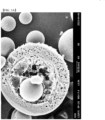
- FIG. 3A shows the microspheres prepared using only 0.1 (w/v)% of PVA in the continuous phase
- FIG. 3B shows the microspheres prepared using 0.1 (w/v)% of PVA and 2 (w/v)% of Na 2 HPO 4 in the continuous phase.
- the microparticle prepared using only 0.1% of PVA in the continuous phase had many pores present in the cross section of the microsphere. It was confirmed that the microspheres prepared using 0.1 (w/v)% of PVA and 2 (w/v)% of Na 2 HPO 4 in the continuous phase, most pores disappeared or that even if pores existed, the number and size of pores decreased significantly. This may be suggested to exhibit the effect of reducing the channels being capable of affecting the initial release of the drug.
Landscapes
- Health & Medical Sciences (AREA)
- Engineering & Computer Science (AREA)
- Bioinformatics & Cheminformatics (AREA)
- Life Sciences & Earth Sciences (AREA)
- Chemical & Material Sciences (AREA)
- Veterinary Medicine (AREA)
- Public Health (AREA)
- General Health & Medical Sciences (AREA)
- Medicinal Chemistry (AREA)
- Pharmacology & Pharmacy (AREA)
- Animal Behavior & Ethology (AREA)
- Epidemiology (AREA)
- Organic Chemistry (AREA)
- Nuclear Medicine, Radiotherapy & Molecular Imaging (AREA)
- General Chemical & Material Sciences (AREA)
- Chemical Kinetics & Catalysis (AREA)
- Diabetes (AREA)
- Neurosurgery (AREA)
- Biomedical Technology (AREA)
- Neurology (AREA)
- Endocrinology (AREA)
- Gastroenterology & Hepatology (AREA)
- Hematology (AREA)
- Obesity (AREA)
- Biophysics (AREA)
- Molecular Biology (AREA)
- Heart & Thoracic Surgery (AREA)
- Immunology (AREA)
- Zoology (AREA)
- Hospice & Palliative Care (AREA)
- Emergency Medicine (AREA)
- Proteomics, Peptides & Aminoacids (AREA)
- Psychiatry (AREA)
- Cardiology (AREA)
- Child & Adolescent Psychology (AREA)
- Inorganic Chemistry (AREA)
- Medicinal Preparation (AREA)
- Pharmaceuticals Containing Other Organic And Inorganic Compounds (AREA)
- Medicines That Contain Protein Lipid Enzymes And Other Medicines (AREA)
Applications Claiming Priority (5)
| Application Number | Priority Date | Filing Date | Title |
|---|---|---|---|
| KR20220082383 | 2022-07-05 | ||
| KR20220110883 | 2022-09-01 | ||
| KR20230012166 | 2023-01-30 | ||
| KR1020230059478A KR102743392B1 (ko) | 2022-07-05 | 2023-05-08 | 세마글루타이드 또는 이의 약학적으로 허용가능한 염을 포함하는 서방성 미립구 제제 및 이의 제조방법 |
| PCT/KR2023/009535 WO2024010379A1 (ko) | 2022-07-05 | 2023-07-05 | 세마글루타이드 또는 이의 약학적으로 허용가능한 염을 포함하는 서방성 미립구 제제 및 이의 제조방법 |
Publications (1)
| Publication Number | Publication Date |
|---|---|
| EP4552634A1 true EP4552634A1 (de) | 2025-05-14 |
Family
ID=89453851
Family Applications (1)
| Application Number | Title | Priority Date | Filing Date |
|---|---|---|---|
| EP23835845.1A Pending EP4552634A1 (de) | 2022-07-05 | 2023-07-05 | Mikrokügelchen-formulierung mit verzögerter freisetzung mit semaglutid oder pharmazeutisch akzeptablem salz daraus und herstellungsverfahren dafür |
Country Status (8)
| Country | Link |
|---|---|
| EP (1) | EP4552634A1 (de) |
| JP (1) | JP2025521774A (de) |
| KR (1) | KR20250004573A (de) |
| CN (1) | CN119907661A (de) |
| AU (1) | AU2023303333A1 (de) |
| IL (1) | IL318154A (de) |
| MX (1) | MX2025000202A (de) |
| WO (1) | WO2024010379A1 (de) |
Family Cites Families (11)
| Publication number | Priority date | Publication date | Assignee | Title |
|---|---|---|---|---|
| CA2563533C (en) * | 2004-04-15 | 2013-10-01 | Shmuel A. Ben-Sasson | Compositions capable of facilitating penetration across a biological barrier |
| TWI362392B (en) | 2005-03-18 | 2012-04-21 | Novo Nordisk As | Acylated glp-1 compounds |
| KR20090116494A (ko) * | 2008-05-07 | 2009-11-11 | 가톨릭대학교 산학협력단 | 폴리-락티드-코-글리콜라이드 미립구, 그 제조방법, 및그것을 포함하는 단백질 또는 펩티드 약물 제제 |
| KR101651101B1 (ko) * | 2014-07-23 | 2016-08-26 | 동국제약 주식회사 | 서방성 미립구 및 이의 제조방법 |
| KR101695440B1 (ko) * | 2014-09-12 | 2017-01-11 | 주식회사 고려비엔피 | 불화퀴놀론계 항생제를 담지한 생분해성 고분자 미립구형 서방출 제제의 제조방법 |
| ES2630106T3 (es) * | 2014-10-07 | 2017-08-18 | Cyprumed Gmbh | Formulaciones farmacéuticas para la administración oral de fármacos peptídicos o proteicos |
| IL312012A (en) * | 2016-11-18 | 2024-06-01 | Opiant Pharmaceuticals Inc | Compositions and methods for the treatment of opioid overdose |
| KR20240051304A (ko) * | 2018-07-23 | 2024-04-19 | 일라이 릴리 앤드 캄파니 | Gip/glp1 공효능제 화합물 |
| KR102212717B1 (ko) * | 2019-11-08 | 2021-02-08 | 환인제약 주식회사 | 지속 방출을 위한 마이크로스피어 및 이의 제조 방법 |
| KR20210100986A (ko) * | 2020-02-07 | 2021-08-18 | 동국제약 주식회사 | 고밀도 서방출성 미립구의 제조방법 |
| CN115484935A (zh) * | 2020-02-14 | 2022-12-16 | G2G生物公司 | 包括含有glp-1类似物或其药学上可接受的盐的缓释微球的药物组合物 |
-
2023
- 2023-07-05 CN CN202380063876.8A patent/CN119907661A/zh active Pending
- 2023-07-05 JP JP2024577062A patent/JP2025521774A/ja active Pending
- 2023-07-05 WO PCT/KR2023/009535 patent/WO2024010379A1/ko not_active Ceased
- 2023-07-05 AU AU2023303333A patent/AU2023303333A1/en active Pending
- 2023-07-05 IL IL318154A patent/IL318154A/en unknown
- 2023-07-05 EP EP23835845.1A patent/EP4552634A1/de active Pending
-
2024
- 2024-12-10 KR KR1020240183066A patent/KR20250004573A/ko active Pending
-
2025
- 2025-01-06 MX MX2025000202A patent/MX2025000202A/es unknown
Also Published As
| Publication number | Publication date |
|---|---|
| WO2024010379A1 (ko) | 2024-01-11 |
| IL318154A (en) | 2025-03-01 |
| KR20250004573A (ko) | 2025-01-08 |
| AU2023303333A1 (en) | 2025-02-13 |
| CN119907661A (zh) | 2025-04-29 |
| MX2025000202A (es) | 2025-06-02 |
| JP2025521774A (ja) | 2025-07-10 |
Similar Documents
| Publication | Publication Date | Title |
|---|---|---|
| KR102875041B1 (ko) | Glp-1 유사체, 또는 이의 약학적으로 허용가능한 염을 포함하는 서방형 미립구를 포함하는 약학적 조성물 | |
| KR102743392B1 (ko) | 세마글루타이드 또는 이의 약학적으로 허용가능한 염을 포함하는 서방성 미립구 제제 및 이의 제조방법 | |
| RU2463040C2 (ru) | Композиция и микросфера с контролируемым высвобождением экзендина и способ получения микросферы | |
| EP1958623A1 (de) | Mikrokapseln mit verzögerter Freisetzung auf Poly(Lactid-Co-Glycolid)-Basis mit einem Polypeptid und einem Zucker | |
| US20240307500A1 (en) | Sustained release formulation composition comprising semaglutide or pharmaceutically acceptable salt thereof | |
| EP4552634A1 (de) | Mikrokügelchen-formulierung mit verzögerter freisetzung mit semaglutid oder pharmazeutisch akzeptablem salz daraus und herstellungsverfahren dafür | |
| CA3260727A1 (en) | Sustained-release microsphere formulation containing semaglutide or pharmaceutically acceptable salt thereof and method for preparing the same | |
| KR102792620B1 (ko) | 터제파타이드 또는 이의 약학적으로 허용가능한 염을 포함하는 서방성 미립구 제제 및 이의 제조방법 | |
| KR102792621B1 (ko) | 카그릴린타이드 또는 이의 약학적으로 허용가능한 염을 포함하는 서방성 미립구 제제 및 이의 제조방법 | |
| CA3294255A1 (en) | Sustained-release microsphere preparation comprising tirzepatide or pharmaceutically acceptable salt thereof and method for preparing same | |
| CA3294262A1 (en) | Pharmaceutical composition comprising sustained-release microsphere comprising cagrilintide or pharmaceutically acceptable salt thereof and preparation method therefor | |
| RU2834992C1 (ru) | Фармацевтическая композиция, содержащая микросферы с пролонгированным высвобождением, содержащие аналог гпп-1 или его фармацевтически приемлемую соль | |
| KR20240149356A (ko) | Glp-1 수용체 작용제, gip/glp-1 수용체 이중작용제, 및 glp-1/gip/gcg 수용체 삼중작용제로 이루어진 군으로부터 선택되는 1종 이상을 포함하는 액상 제형 및 미립구 제형을 포함하는 약학 조성물 | |
| KR20240173155A (ko) | Glp-1 수용체 작용제, gip/glp-1 수용체 작용제 및/또는 glp-1/gip/gcg 수용체 삼중작용제를 포함하는 약학적 조성물 | |
| EP4721726A1 (de) | Pharmazeutische zusammensetzung mit glp-1-rezeptoragonist, gip/glp-1-rezeptoragonist und/oder glp-1/gip/gcg-rezeptor-triple-agonist | |
| CN118201604A (zh) | 左旋甲状腺素的缓释可注射药物制剂及其制备方法 | |
| HK1139320A (en) | Poly(lactide-co-glycolide)-based sustained release microcapsules comprising a polypeptide and a sugar |
Legal Events
| Date | Code | Title | Description |
|---|---|---|---|
| STAA | Information on the status of an ep patent application or granted ep patent |
Free format text: STATUS: THE INTERNATIONAL PUBLICATION HAS BEEN MADE |
|
| PUAI | Public reference made under article 153(3) epc to a published international application that has entered the european phase |
Free format text: ORIGINAL CODE: 0009012 |
|
| STAA | Information on the status of an ep patent application or granted ep patent |
Free format text: STATUS: REQUEST FOR EXAMINATION WAS MADE |
|
| 17P | Request for examination filed |
Effective date: 20250204 |
|
| AK | Designated contracting states |
Kind code of ref document: A1 Designated state(s): AL AT BE BG CH CY CZ DE DK EE ES FI FR GB GR HR HU IE IS IT LI LT LU LV MC ME MK MT NL NO PL PT RO RS SE SI SK SM TR |
|
| DAV | Request for validation of the european patent (deleted) | ||
| DAX | Request for extension of the european patent (deleted) |