EP4552641A2 - Verbesserte arzneimittelformulierungen - Google Patents
Verbesserte arzneimittelformulierungen Download PDFInfo
- Publication number
- EP4552641A2 EP4552641A2 EP25151222.4A EP25151222A EP4552641A2 EP 4552641 A2 EP4552641 A2 EP 4552641A2 EP 25151222 A EP25151222 A EP 25151222A EP 4552641 A2 EP4552641 A2 EP 4552641A2
- Authority
- EP
- European Patent Office
- Prior art keywords
- poly
- copolymer
- glycerol
- active pharmaceutical
- methacrylate
- Prior art date
- Legal status (The legal status is an assumption and is not a legal conclusion. Google has not performed a legal analysis and makes no representation as to the accuracy of the status listed.)
- Pending
Links
Images



Classifications
-
- A—HUMAN NECESSITIES
- A61—MEDICAL OR VETERINARY SCIENCE; HYGIENE
- A61K—PREPARATIONS FOR MEDICAL, DENTAL OR TOILETRY PURPOSES
- A61K31/00—Medicinal preparations containing organic active ingredients
- A61K31/33—Heterocyclic compounds
- A61K31/395—Heterocyclic compounds having nitrogen as a ring hetero atom, e.g. guanethidine or rifamycins
- A61K31/41—Heterocyclic compounds having nitrogen as a ring hetero atom, e.g. guanethidine or rifamycins having five-membered rings with two or more ring hetero atoms, at least one of which being nitrogen, e.g. tetrazole
- A61K31/4196—1,2,4-Triazoles
-
- A—HUMAN NECESSITIES
- A61—MEDICAL OR VETERINARY SCIENCE; HYGIENE
- A61K—PREPARATIONS FOR MEDICAL, DENTAL OR TOILETRY PURPOSES
- A61K31/00—Medicinal preparations containing organic active ingredients
- A61K31/33—Heterocyclic compounds
- A61K31/395—Heterocyclic compounds having nitrogen as a ring hetero atom, e.g. guanethidine or rifamycins
- A61K31/435—Heterocyclic compounds having nitrogen as a ring hetero atom, e.g. guanethidine or rifamycins having six-membered rings with one nitrogen as the only ring hetero atom
- A61K31/4353—Heterocyclic compounds having nitrogen as a ring hetero atom, e.g. guanethidine or rifamycins having six-membered rings with one nitrogen as the only ring hetero atom ortho- or peri-condensed with heterocyclic ring systems
- A61K31/437—Heterocyclic compounds having nitrogen as a ring hetero atom, e.g. guanethidine or rifamycins having six-membered rings with one nitrogen as the only ring hetero atom ortho- or peri-condensed with heterocyclic ring systems the heterocyclic ring system containing a five-membered ring having nitrogen as a ring hetero atom, e.g. indolizine, beta-carboline
-
- A—HUMAN NECESSITIES
- A61—MEDICAL OR VETERINARY SCIENCE; HYGIENE
- A61K—PREPARATIONS FOR MEDICAL, DENTAL OR TOILETRY PURPOSES
- A61K31/00—Medicinal preparations containing organic active ingredients
- A61K31/33—Heterocyclic compounds
- A61K31/395—Heterocyclic compounds having nitrogen as a ring hetero atom, e.g. guanethidine or rifamycins
- A61K31/495—Heterocyclic compounds having nitrogen as a ring hetero atom, e.g. guanethidine or rifamycins having six-membered rings with two or more nitrogen atoms as the only ring heteroatoms, e.g. piperazine or tetrazines
- A61K31/496—Non-condensed piperazines containing further heterocyclic rings, e.g. rifampin, thiothixene or sparfloxacin
-
- A—HUMAN NECESSITIES
- A61—MEDICAL OR VETERINARY SCIENCE; HYGIENE
- A61K—PREPARATIONS FOR MEDICAL, DENTAL OR TOILETRY PURPOSES
- A61K9/00—Medicinal preparations characterised by special physical form
- A61K9/20—Pills, tablets, discs, rods
- A61K9/2004—Excipients; Inactive ingredients
- A61K9/2009—Inorganic compounds
-
- A—HUMAN NECESSITIES
- A61—MEDICAL OR VETERINARY SCIENCE; HYGIENE
- A61K—PREPARATIONS FOR MEDICAL, DENTAL OR TOILETRY PURPOSES
- A61K9/00—Medicinal preparations characterised by special physical form
- A61K9/20—Pills, tablets, discs, rods
- A61K9/2004—Excipients; Inactive ingredients
- A61K9/2013—Organic compounds, e.g. phospholipids, fats
-
- A—HUMAN NECESSITIES
- A61—MEDICAL OR VETERINARY SCIENCE; HYGIENE
- A61K—PREPARATIONS FOR MEDICAL, DENTAL OR TOILETRY PURPOSES
- A61K9/00—Medicinal preparations characterised by special physical form
- A61K9/20—Pills, tablets, discs, rods
- A61K9/2004—Excipients; Inactive ingredients
- A61K9/2022—Organic macromolecular compounds
- A61K9/2027—Organic macromolecular compounds obtained by reactions only involving carbon-to-carbon unsaturated bonds, e.g. polyvinyl pyrrolidone, poly(meth)acrylates
-
- A—HUMAN NECESSITIES
- A61—MEDICAL OR VETERINARY SCIENCE; HYGIENE
- A61K—PREPARATIONS FOR MEDICAL, DENTAL OR TOILETRY PURPOSES
- A61K9/00—Medicinal preparations characterised by special physical form
- A61K9/20—Pills, tablets, discs, rods
- A61K9/2004—Excipients; Inactive ingredients
- A61K9/2022—Organic macromolecular compounds
- A61K9/205—Polysaccharides, e.g. alginate, gums; Cyclodextrin
- A61K9/2054—Cellulose; Cellulose derivatives, e.g. hydroxypropyl methylcellulose
Definitions
- the present disclosure relates in general to the field of pharmaceutical preparation and manufacturing, and more particularly, pharmaceutical formulations of poorly soluble drugs that include a lubricant disposed within an amorphous solid dispersion.
- lubricants are essential components of a drug formula since lubrication is often required to ensure the success of pharmaceutical manufacturing.
- the application of lubrication or tribology in drug development has become increasingly important for developing a successful manufacturing process.
- lubrication is essential in order to reduce the friction between the surfaces of manufacturing equipment and that of organic solids as well as to ensure the continuation of an operation.
- Pharmaceutical lubricants are added to tablet and capsule formulations to improve the processing properties of formulations. Even though used in small amounts, lubricants play an important role.
- they help decrease friction at the interface between a tablet's surface and a die wall during ejection so that the wear on punches and dies are reduced. They can prevent sticking of tablets to punch faces as well as sticking of capsules to dosators and tamping pins. And lubricants can improve the flowability of blends and aid unit operations.
- a method of making a pharmaceutical composition comprising (a) providing an active pharmaceutical ingredient (API), or a pharmaceutically acceptable salt, ester, derivative, analog, prodrug or solvate thereof, and one or more pharmaceutically acceptable excipients including a non-polymeric lubricant; (b) processing the materials of step (a) using thermal processing or solvent evaporation, wherein the processing of the API and the one or more pharmaceutically acceptable excipients forms an amorphous pharmaceutical composite.
- the resulting composition thus contains the non-polymeric lubricant in an amorphous solid dispersion phase, and it exists there in an amorphous state.
- the non-polymeric lubricant and the drug are supersaturated in the aqueous media, leading to stabilizing solution interactions.
- the non-polymeric lubricant may be poorly soluble in water, or water insoluble, and/or or may be crystalline in its pre-compounding state.
- the thermal processing may be hot melt extrusion or thermokinetic processing.
- the pharmaceutical composition may comprise a more than one active pharmaceutical ingredients.
- the one or more pharmaceutically acceptable excipient may comprise a surfactant and/or a pharmaceutical polymer, including one or more surfactants and one or more polymer carriers.
- Step (b) may be performed at a maximum temperature of about 250 °C, about 225 °C, about 200 °C, about 180 °C, about 150 °C, about 150 °C to 250 °C, or about 180 °C to 250 °C.
- the API specifically does not include vemurafenib.
- the non-polymeric lubricant may comprise magnesium stearate, glyceryl behenate, calcium stearate, (sodium) stearyl fumarate, glyceryl monostearate, glyceryl palmitostearate, myristic acid, palmitic acid, stearic acid, or zinc stearate.
- the pharmaceutically acceptable excipients may further comprise an agent selected from the group consisting of poly(vinyl acetate)-co-poly(vinylpyrrolidone) copolymer, ethylcellulose, hydroxypropylcellulose, cellulose acetate butyrate, poly(vinylpyrrolidone), poly(ethylene glycol), poly(ethylene oxide), poly(vinyl alcohol), hydroxypropyl methylcellulose, ethylcellulose, hydroxyethylcellulose, sodium carboxymethyl-cellulose, dimethylaminoethyl methacrylate-methacrylic acid ester copolymer, ethylacrylate-methylmethacrylate copolymer, cellulose acetate phthalate, cellulose acetate trimelletate, poly(vinyl acetate) phthalate, hydroxypropylmethylcellulose phthalate, poly(methacrylate ethylacrylate) (1:1) copolymer, poly(methacrylate methylmethacrylate) (1
- the pharmaceutical polymer may comprise an agent selected from the group consisting of poly(vinyl acetate)-co-poly(vinylpyrrolidone) copolymer, ethylcellulose, hydroxypropylcellulose, cellulose acetate butyrate, poly(vinylpyrrolidone), poly(ethylene glycol), poly(ethylene oxide), poly(vinyl alcohol), hydroxypropyl methylcellulose, ethylcellulose, hydroxyethylcellulose, sodium carboxymethyl-cellulose, dimethylaminoethyl methacrylate-methacrylic acid ester copolymer, ethylacrylate-methylmethacrylate copolymer, cellulose acetate phthalate, cellulose acetate trimelletate, poly(vinyl acetate) phthalate, hydroxypropylmethylcellulose phthalate, poly(methacrylate ethylacrylate) (1:1) copolymer, poly(methacrylate methylmethacrylate) (1:1) copoly
- the surfactant may comprise an agent selected from the group consisting of sodium dodecyl sulfate, dioctyl sodium sulphosuccinate, polyoxyethylene (20) sorbitan monooleate, glycerol polyethylene glycol oxystearate-fatty acid glycerol polyglycol esters-polyethylene glycols-glycerol ethoxylate, glycerol-polyethylene glycol ricinoleate-fatty acid esters of polyethyleneglycol-polyethylene glycols-ethoxylated glycerol, vitamin E TPGS, and sorbitan laurate, and the pharmaceutical polymer comprises an agent selected from a group consisting of poly(vinylpyrrolidone), ethylacrylate-methylmethacrylate copolymer, poly(methacrylate ethylacrylate) (1:1) copolymer, hydroxypropylmethylcellulose acetate succinate, poly(butyl methacylate-
- the one or more pharmaceutically acceptable excipients may comprise a processing agent, such as a plasticizer.
- the one or more pharmaceutically acceptable excipients may comprise a pharmaceutical polymer of high melt viscosity and/or a thermally labile pharmaceutical polymer.
- a pharmaceutical composition comprising an amorphous dispersion of an active pharmaceutical ingredient, or a pharmaceutically acceptable salt, ester, derivative, analog, prodrug or solvate thereof, and one or more pharmaceutically acceptable excipients, wherein the one or more pharmaceutically acceptable excipients comprises a non-polymeric lubricant that is co-processed with the API.
- the composition thus contains the non-polymeric lubricant in an amorphous solid dispersion phase, and it exists there in an amorphous state.
- the pharmaceutical may comprise more than one active pharmaceutical ingredient.
- the API specifically does not include vemurafenib.
- the non-polymeric lubricant may be poorly soluble in water, or water insoluble, and/or or may be crystalline in its pre-compounding state.
- the non-polymeric lubricant may comprise magnesium stearate, glyceryl behenate, calcium stearate, (sodium) stearyl fumarate, glyceryl monostearate, glyceryl palmitostearate, myristic acid, palmitic acid, stearic acid, or zinc stearate.
- the one or more pharmaceutically acceptable excipient may comprise a surfactant, a processing agent, or a plasticizer.
- the pharmaceutically acceptable excipients may further comprise an agent selected from the group consisting of poly(vinyl acetate)-co-poly(vinylpyrrolidone) copolymer, ethylcellulose, hydroxypropylcellulose, cellulose acetate butyrate, poly(vinylpyrrolidone), poly(ethylene glycol), poly(ethylene oxide), poly(vinyl alcohol), hydroxypropyl methylcellulose, ethylcellulose, hydroxyethylcellulose, sodium carboxymethyl-cellulose, dimethylaminoethyl methacrylate-methacrylic acid ester copolymer, ethylacrylate-methylmethacrylate copolymer, cellulose acetate phthalate, cellulose acetate trimelletate, poly(vinyl acetate) phthalate, hydroxypropylmethylcellulose phthalate, poly(methacrylate ethylacrylate) (1:1) copolymer, poly(methacrylate methylmethacrylate) (1
- the pharmaceutical polymer may comprise an agent selected from the group consisting of poly(vinyl acetate)-co-poly(vinylpyrrolidone) copolymer, ethylcellulose, hydroxypropylcellulose, cellulose acetate butyrate, poly(vinylpyrrolidone), poly(ethylene glycol), poly(ethylene oxide), poly(vinyl alcohol), hydroxypropyl methylcellulose, ethylcellulose, hydroxyethylcellulose, sodium carboxymethyl-cellulose, dimethylaminoethyl methacrylate-methacrylic acid ester copolymer, ethylacrylate-methylmethacrylate copolymer, cellulose acetate phthalate, cellulose acetate trimelletate, poly(vinyl acetate) phthalate, hydroxypropylmethylcellulose phthalate, poly(methacrylate ethylacrylate) (1:1) copolymer, poly(methacrylate methylmethacrylate) (1:1) copoly
- the surfactant may comprise an agent selected from the group consisting of sodium dodecyl sulfate, dioctyl sodium sulphosuccinate, polyoxyethylene (20) sorbitan monooleate, glycerol polyethylene glycol oxystearate-fatty acid glycerol polyglycol esters-polyethylene glycols-glycerol ethoxylate, glycerol-polyethylene glycol ricinoleate-fatty acid esters of polyethyleneglycol-polyethylene glycols-ethoxylated glycerol, vitamin E TPGS, and sorbitan laurate, and the pharmaceutical polymer comprises an agent selected from a group consisting of poly(vinylpyrrolidone), hydroxypropylcellulose, poly(vinyl alcohol), hydroxypropyl methylcellulose, hydroxyethylcellulose, and sodium carboxymethyl-cellulose.and polyvinyl caprolactam-polyvinyl acetate-polyethylene glycol
- the pharmaceutically acceptable excipients may further comprise an agent selected from the group consisting of sodium dodecyl sulfate, dioctyl sodium sulphosuccinate, polyoxyethylene (20) sorbitan monooleate, glycerol polyethylene glycol oxystearate-fatty acid glycerol polyglycol esters-polyethylene glycols-glycerol ethoxylate, glycerol-polyethylene glycol ricinoleate-fatty acid esters of polyethyleneglycol-polyethylene glycols-ethoxylated glycerol, vitamin E TPGS, sorbitan laurate, poly(vinyl acetate)-co-poly(vinylpyrrolidone) copolymer, hydroxypropylcellulose, poly(vinylpyrrolidone), poly(ethylene glycol), poly(ethylene oxide), poly(vinyl alcohol), hydroxypropyl methylcellulose, ethylcellulose, hydroxyethy
- the pharmaceutical composition may not contain a processing agent, and/or may not contain a plasticizer.
- the composition may be a composite and is a homogenous, heterogeneous, or heterogeneously homogenous composition.
- the one or more pharmaceutically acceptable excipients may further comprise a pharmaceutical polymer of high melt viscosity, and or a thermally labile pharmaceutical polymer.
- the peak solubility of the active pharmaceutical ingredient and the reference standard the active pharmaceutical ingredient in an aqueous buffer with a pH range of 4 to 8 have a ratio of greater than 3:1, greater than 10:1, greater than 20:1 or greater than 30:1.
- the C max of the active pharmaceutical ingredient in the composition and C max of the reference standard the active pharmaceutical ingredient have a ratio that is greater than 6:1.
- the pharmaceutical composition may be formulated into an oral dosage form, such as a tablet, a capsule, or a sachet.
- a pharmaceutical composition produced by a process comprising the steps of (a) providing an active pharmaceutical ingredient and one or more pharmaceutically acceptable excipients including a non-polymeric lubricant; (b) processing the materials of step (a) using thermal processing or solvent evaporation, wherein the processing of the active pharmaceutical ingredient and the one or more pharmaceutically acceptable excipients forms an amorphous pharmaceutical composition.
- the composition thus contains the non-polymeric lubricant in an amorphous solid dispersion phase, and it exists there in an amorphous state.
- the thermal processing may be hot melt extrusion or thermokinetic processing.
- the non-polymeric lubricant may be poorly soluble in water, or water insoluble, and/or or may be crystalline in its pre-compounding state.
- the one or more pharmaceutically acceptable excipients may further include a non-ionic pharmaceutical polymer, an ionic pharmaceutical polymer, a water soluble pharmaceutical polymer, cellulosic pharmaceutical polymer, a non-ionic, water soluble pharmaceutical polymer, a non-ionic, cellulosic pharmaceutical polymer, a water soluble, cellulosic pharmaceutical polymer, a thermally labile pharmaceutical polymer, a high melt viscosity pharmaceutical polymer, and/or a cross-linked pharmaceutical polymer.
- the API specifically does not include vemurafenib.
- the non-polymeric lubricant may comprise magnesium stearate, glyceryl behenate, calcium stearate, (sodium) stearyl fumarate, glyceryl monostearate, glyceryl palmitostearate, myristic acid, palmitic acid, stearic acid, or zinc stearate.
- the pharmaceutical composition may comprise a processing agent, such as a plasticizer.
- the pharmaceutical composition may further comprise one or more active pharmaceutical ingredient(s).
- the pharmaceutical composition may be combined with a co-processed with one or more active pharmaceutical ingredient(s) in a final dosage form.
- the pharmaceutical composition may be admixed with one or more active pharmaceutical ingredient(s) in a final dosage form.
- thermokinetic processing may be conducted in a thermokinetic chamber.
- a thermokinetic chamber is an enclosed vessel or chamber in which TKC occurs.
- the average temperature inside the chamber is ramped up to a pre-defined final temperature over the duration of processing to achieve optimal thermokinetic mixing of the active pharmaceutical ingredient and the one or more pharmaceutically acceptable excipients, adjuvants, additional APIs, or any combination thereof, into a composite.
- multiple speeds are used during a single, rotationally continuous TKC operation to achieve optimal thermokinetic mixing of the active pharmaceutical ingredient and one or more pharmaceutically acceptable excipients, adjuvants, additional APIs, or any combination thereof, into a composite with minimal thermal degradation.
- thermokinetic processing is performed at an average temperature at or below the melting point of the active pharmaceutical ingredient, excipient(s), adjuvant(s), or additional API(s); the thermokinetic processing is performed at an average temperature at or below the glass transition temperature of the active pharmaceutical ingredient, excipient(s), adjuvant(s), or additional API(s); or the thermokinetic processing is performed at an average temperature at or below the molten transition point of the active pharmaceutical ingredient, excipient(s), adjuvant(s), or additional API(s).
- the active pharmaceutical ingredient composite made by thermal processing or solvent evaporation is a homogenous, heterogeneous, or heterogeneously homogenous composite or an amorphous composite.
- the method, the active pharmaceutical ingredient compositions and composite of the present disclosure may be adapted for oral or non-oral administration, for example buccal, sublingual, intravenous, parenteral, pulmonary, rectal, vaginal, topical, urethral, otic, ocular, or transdermal administration.
- the non-polymeric lubricant and the drug are supersaturated in the aqueous media, leading to stabilizing solution interactions.
- the thermal processing may be conducted with or without a processing agent.
- processing agents include a plasticizer, a thermal lubricant, an organic solvent, an agent that facilitates melt blending, and an agent that facilitates downstream processing (e.g. , lecithin).
- the composite may also include a carrier, e.g. , a polymer with a high melt viscosity.
- the release rate profile of the active pharmaceutical ingredient is determined by the one or more excipients of the composition. As such, the composition may be formulated for immediate release, mixed release, extended release or combinations thereof.
- the particle size of the active pharmaceutical ingredient is reduced in an excipient/carrier system in which the active pharmaceutical ingredient is not miscible, not compatible, or not miscible or compatible.
- the active pharmaceutical ingredient is formulated as a nanocomposite with an excipient, a carrier, an adjuvant, or any combination thereof.
- the API specifically does not include vemurafenib.
- the non-polymeric lubricant may be poorly soluble in water, or water insoluble, and/or or may be crystalline in its pre-compounding state.
- the non-polymeric lubricant may comprise magnesium stearate, glyceryl behenate, calcium stearate, (sodium) stearyl fumarate, glyceryl monostearate, glyceryl palmitostearate, myristic acid, palmitic acid, stearic acid, or zinc stearate.
- the thermokinetic processing substantially eliminates the active pharmaceutical ingredient, excipient, adjuvant or additional API degradation.
- TKC may generate compositions and composites with less than about 2.0%, 1.0%, 0.75%, 0.5%, 0.1%, 0.05%, or 0.01% degradation products of the active pharmaceutical ingredient, adjuvant, excipient or additional API. This advantage is important for the active pharmaceutical ingredient, which is subject to recrystallization during washing and drying during the MBP process.
- TKC may generate compositions with a minimum of at least about 90%, 91%, 92%, 93%, 94%, 95%, 96%, 97%, 98%, 99%, or 99.9% drug potency with respect to the active pharmaceutical ingredient.
- TKC may be performed for less than 5, 10, 15, 20, 25, 30, 35, 40, 45, 50, 55, 60, 75, 100, 120, 150, 180, 240 and 300 seconds. Generally, TKC may be performed for less than 5, 10, 15, 20, 25, 30, 35, 40, 45, 50, 55, 60, 75, 100, 120, 150, 180, 240 and 300 seconds, and any ranges therein.
- the active pharmaceutical ingredient has amorphous, crystalline, or intermediate morphology.
- the formulations may provide for enhanced solubility of the active pharmaceutical ingredient through the mixing of the active pharmaceutical ingredient with pharmaceutically acceptable polymers, carriers, surfactants, excipients, adjuvants or any combination thereof.
- compositions which display enhanced solubility are comprised of the active pharmaceutical ingredient and a surfactant or surfactants, the active pharmaceutical ingredient and a pharmaceutical carrier (thermal binder) or carriers, or the active pharmaceutical ingredient and a combination of a surfactant and pharmaceutical carrier or surfactants and carriers.
- the API specifically does not include vemurafenib.
- a further embodiment of the present disclosure is a pharmaceutical composition
- a pharmaceutical composition comprising the active pharmaceutical ingredient, and one or more pharmaceutically acceptable excipients including a non-polymeric lubricant, adjuvants, additional APIs, or a combination thereof, wherein a peak solubility of the active pharmaceutical ingredient in the composition is greater than about 6 ⁇ g/mL, about 7 ⁇ g/mL, about 8 ⁇ g/mL, about 9 ⁇ g/mL, about 10 ⁇ g/mL, about 11 ⁇ g/mL, about 12 ⁇ g/mL, about 13 ⁇ g/mL, about 14 ⁇ g/mL, about 15 ⁇ g/mL, about 16 ⁇ g/mL, about 20 ⁇ g/mL, about 25 ⁇ g/mL, about 30 ⁇ g/mL, about 35 ⁇ g/mL, about 40 ⁇ g/mL, 45 ⁇ g/mL, about 50 ⁇ g/mL or about 60 ⁇ g/mL in an
- a further embodiment of the present disclosure is a pharmaceutical composition
- a pharmaceutical composition comprising the active pharmaceutical ingredient and one or more pharmaceutically acceptable excipients including a non-polymeric lubricant, adjuvants, additional APIs, or a combination thereof, wherein a ratio of peak solubility of the active pharmaceutical ingredient in the composition over peak solubility of a reference standard of the active pharmaceutical ingredient is greater than about 3:1, about 4:1, about 5:1, about 6:1, about 7:1, about 8:1, about 9:1, or about 10:1.
- the API specifically does not include vemurafenib.
- the non-polymeric lubricant may be poorly soluble in water, or water insoluble, and/or or may be crystalline in its pre-compounding state.
- a further embodiment of the present disclosure is a method of formulating a pharmaceutical composition comprising the active pharmaceutical ingredient and one or more pharmaceutically acceptable excipients including a non-polymeric lubricant, adjuvants, additional APIs, or any combination thereof, by TKC to increase bioavailability of the active pharmaceutical ingredient, comprising thermokinetic processing of the active pharmaceutical ingredient with the one or more pharmaceutically acceptable excipients, adjuvants, additional APIs, or any combination thereof until melt blended into a composite.
- the API specifically does not include vemurafenib.
- the non-polymeric lubricant may be poorly soluble in water, or water insoluble, and/or or may be crystalline in its pre-compounding state.
- a further embodiment of the present disclosure is a pharmaceutical composition
- a pharmaceutical composition comprising the active pharmaceutical ingredient and one or more pharmaceutically acceptable excipients including a non-polymeric lubricant, adjuvants, additional APIs, or any combination thereof, processed into a composite, wherein the composite is a homogenous, heterogeneous, or heterogeneously homogenous composition which has a less than about 1.0%, about 2%, about 3%, about 4% or about 5%, about 6%, about 7%, about 8%, about 9%, or about 10% degradation products of the active pharmaceutical ingredient.
- the API specifically does not include vemurafenib.
- the non-polymeric lubricant may be poorly soluble in water, or water insoluble, and/or or may be crystalline in its pre-compounding state.
- the rendering of the conventional pharmaceutical crystalline powder lubricants amorphous in the solid dispersion is an important feature since, in a crystalline form, the non-polymeric lubricant material would promote nucleation and crystal growth of the drug in aqueous media because the non-polymeric lubricant would not enter aqueous solution, and thus it would act as a surface for nucleation and crystal growth of the drug.
- the non-polymeric lubricant when rendered amorphous in the solid dispersion, the non-polymeric lubricant is able to supersaturate the aqueous media with the drug, thus allowing for intermolecular interactions in aqueous media between the drug and lubricant that stabilize the drug against precipitating from solution.
- the proposed mechanism of solution stabilization of supersaturated aqueous solutions with poorly water soluble drug molecules by conventional lubricants is identical to the literature descriptions of the stabilizing mechanism by traditional surfactants.
- the inventors' research also shows the mechanism of solution stabilization of a drug by a lubricant molecule is more efficient than that of a traditional surfactant. Indeed, they have observed substantial concentration enhancement with lubricants levels as low as 0.5%, and also observed marked increases in aqueous drug concentrations with the addition of lubricants to amorphous solid dispersions already containing a substantial concentration (>5% w/w) of a conventional surfactant.
- thermokinetic compounding Unlike spray drying and melt extrusion, the inclusion of a conventional pharmaceutical crystalline powder lubricants has inherent processing advantages with TKC as there is a powder flow component to the initial stage of the process and the incorporation of the non-polymeric lubricant mitigates powder adhesion to the processing chamber and thus enhances product yield and uniformity. Therefore, conventional pharmaceutical crystalline powder lubricants are commonly incorporated into TKC formulations to improve processing efficiency and product quality.
- the dissolution and bioavailability enhancing effects of incorporating lubricants into amorphous solid dispersion (ASD) formulations was surprisingly observed when comparing in vitro and in vivo performance of drug-polymer ASD formulations with and without a lubricant and realizing a substantial performance enhancing effect with the inclusion of lubricant at concentrations as low as 0.5% (w/w) in the formulation. Even more surprisingly, performance enhancing effect was also observed for drug-polymer-surfactant formulations by comparing in-vitro and/or in-vivo performance of such formulations with and without a lubricant.
- compositions described here are not limited to those made using TKC processing.
- these disclosed compositions can be created using melt extrusion, and potentially spray drying, given a common organic solvent for the drug and all excipient components including the non-polymeric lubricant. Therefore, the current disclosure provides new pharmaceutical compositions comprising at least one API, at least one excipient carrier, and at least one conventional pharmaceutical lubricant that is poorly water soluble and crystalline in its bulk form, wherein the drug and the non-polymeric lubricant are substantially amorphous.
- This composition can be achieved by co-processing the above components by thermal and solvent processing methods, e.g., TKC, HME, and spray drying, for example.
- Applicants thus describe improved active pharmaceutical ingredient compositions and methods for their manufacture. These methods permit thermal processing to produce an amorphous solid dispersion of the active pharmaceutical ingredient with high amorphous drug loading.
- they include a composition that includes at least one active pharmaceutical ingredient and a crystalline, non-polymeric, poorly soluble lubricant. After processing, both the active pharmaceutical ingredient and the lubricant are amorphous in the composition. While exemplified, the processing is not necessarily limited to thermokinetic mixing.
- the words “comprising” (and any form of comprising, such as “comprise” and “comprises”), “having” (and any form of having, such as “have” and “has”), "including” (and any form of including, such as “includes” and “include”) or “containing” (and any form of containing, such as “contains” and “contain”) are inclusive or open-ended and do not exclude additional, unrecited elements or method steps.
- thermokinetic compounding refers to a method of thermokinetic mixing until melt blended.
- TKC may also be described as a thermokinetic mixing process or thermokinetic processing in which processing ends at a point sometime prior to agglomeration.
- the commercial name for this process is "KinetiSol ® ".
- a homogenous, heterogenous, or heterogeneously homogenous composite or an amorphous composite refers to the various compositions that can be made using the TKC method.
- heterogeneously homogenous composite refers to a material composition having at least two different materials that are evenly and uniformly distributed throughout the volume.
- reference standard active pharmaceutical ingredient means the most thermodynamically stable form of the active pharmaceutical ingredient that is currently available.
- the term “substantial degradation,” in conjunction with the term “the active pharmaceutical ingredient” or “additional API(s)” refers to degradation leading to the generation of impurities at levels beyond the threshold that has been qualified by toxicology studies, or beyond the allowable threshold for unknown impurities. See , for example Guidance for Industry, Q3B(R2) Impurities in New Drug Products (International Committee for Harmonization, published by the U.S. Department of Health and Human Services, Food and Drug Administration, Center for Drug Evaluation and Research (CDER), Center for Biologics Evaluation and Research, July, 2006 .
- the term “substantial degradation,” in conjunction with the term “excipient” refers to decomposition of the excipient to the extent that the excipient would no longer meet the specifications set forth in an official monograph of an accepted pharmacopeia, e . g ., the United States Pharmacopeia.
- melt viscosity refers to melt viscosities greater than 10,000 Pa*s.
- thermally labile API refers to an API that degrades at its crystalline melting point, or one that degrades at temperatures below the crystalline melting point when in a non-crystalline (amorphous) form.
- thermalolabile polymer refers to a polymer that degrades at or below about 200°C.
- the TKC processing conditions can produce a composition with a glass transition temperature that is higher than the glass transition temperature of an identical combination of the drug and pharmaceutically acceptable excipients, adjuvants, additional APIs, or any combination thereof, thermally processed or processed using the MBP method, for example either with or without the use of a plasticizer.
- the TKC processing conditions can also produce a composition with a single glass transition temperature, wherein an identical combination of the identical API and pharmaceutically acceptable excipients, adjuvants, additional APIs, or any combination thereof, processed thermally or processed using the MBP method, has two or more glass transition temperatures.
- the pharmaceutical compositions of the present disclosure have a single glass transition temperature that is at least about 20%, 30%, 40%, 50%, 60%, 70%, 80%, or 90% higher than the lowest glass transition temperature of the identical combination processed thermally or processed using the MBP method.
- the compositions made using thermokinetic processing may generate compositions with a minimum of at least about 90%, 91%, 92%, 93%, 94%, 95%, 96%, 97%, 98%, 99%, or 99.9% therapeutic potency with respect to each drug.
- the term "significantly higher" in conjunction with glass transition temperatures refers to compositions that have a glass transition temperature that is at least about 20% higher than the lowest glass transition temperature of the identical formulation thermally processed or processed using the MBP method.
- thermokinetic chamber refers to an enclosed vessel or chamber in which the TKC method is used to make the novel compositions of the present disclosure.
- thermally processed or “processed thermally” means that components are processed by hot melt extrusion, melt granulation, compression molding, tablet compression, capsule filling, film-coating, or injection molding.
- extrusion is the well-known method of applying pressure to a damp or melted composition until it flows through an orifice or a defined opening.
- the extrudable length varies with the physical characteristics of the material to be extruded, the method of extrusion, and the process of manipulation of the particles after extrusion.
- Various types of extrusion devices can be employed, such as screw, sieve and basket, roll, and ram extruders.
- the extrusion can be carried out through melt extrusion.
- Components of the present disclosure can be melted and extruded with a continuous, solvent free extrusion process, with or without inclusion of additives. Such processes are well-known to skilled practitioners in the art.
- spray congealing is a method that is generally used in changing the structure of materials, to obtain free flowing powders from liquids and to provide pellets.
- Spray congealing is a process in which a substance of interest is allowed to melt, disperse, or dissolve in a hot melt of other additives, and is then sprayed into an air chamber wherein the temperature is below the melting point of the formulation components, to provide congealed pellets. Such a process is well-known to skilled practitioners in the art.
- solvent dehydration or “spray drying technique” is commonly employed to produce a dry powder from a liquid or slurry by rapidly drying with a hot gas. This is one preferred method of drying many thermally-sensitive materials such as foods and pharmaceuticals.
- Water or organic solvent based formulations can be spray dried by using inert process gas, such as nitrogen, argon and the like. Such a process is well-known to skilled practitioners in the art.
- the pharmaceutical formulations of the present disclosure can be processed by the techniques of extrusion, melt extrusion, spray congealing, spray drying or any other conventional technique to provide solid compositions from solution, emulsions suspensions or other mixtures of solids and liquids or liquids and liquids.
- bioavailability is a term meaning the degree to which a drug becomes available to the target tissue after being administered to the body. Poor bioavailability is a significant problem encountered in the development of pharmaceutical compositions, particularly those containing a drug that is not highly soluble.
- the proteins may be water soluble, poorly soluble, not highly soluble, or not soluble.
- various methodologies may be used to increase the solubility of proteins, e.g., use of different solvents, excipients, carriers, formation of fusion proteins, targeted manipulation of the amino acid sequence, glycosylation, lipidation, degradation, combination with one or more salts and the addition of various salts.
- pharmaceutically acceptable refers to molecular entities, compositions, materials, excipients, carriers, and the like that do not produce an allergic or similar untoward reaction when administered to humans in general.
- “poorly soluble” refers to drug having a solubility such that the dose to be administered can be dissolved in 250 ml of aqueous media ranging in pH from 1 to 7.5, a drug with a slow dissolution rate, and a drug with a low equilibrium solubility, for example resulting in decreased bioavailability of the pharmacological effect of the therapeutic drug being delivered.
- derivative refers to chemically modified inhibitors or stimulators that still retain the desired effect or property of the original drug.
- Such derivatives may be derived by the addition, removal, or substitution of one or more chemical moieties on the parent molecule.
- moieties may include, but are not limited to, an element such as a hydrogen or a halide, or a molecular group such as a methyl group.
- Such a derivative may be prepared by any method known to those of skill in the art. The properties of such derivatives may be assayed for their desired properties by any means known to those of skill in the art.
- analogs include structural equivalents or mimetics.
- the solution agent used in the solution can be aqueous such as water, one or more organic solvents, or a combination thereof.
- the organic solvents can be water miscible or non-water miscible.
- Suitable organic solvents include but are not limited to ethanol, methanol, tetrahydrofuran, acetonitrile, acetone, tert-butyl alcohol, dimethyl sulfoxide, N,N-dimethyl formamide, diethyl ether, methylene chloride, ethyl acetate, isopropyl acetate, butyl acetate, propyl acetate, toluene, hexanes, heptane, pentane, and combinations thereof.
- immediate release is meant a release of an API to an environment over a period of seconds to no more than about 30 minutes once release has begun and release begins within no more than about 2 minutes after administration.
- An immediate release does not exhibit a significant delay in the release of drug.
- rapid release is meant a release of an API to an environment over a period of 1-59 minutes or 0.1 minute to three hours once release has begun and release can begin within a few minutes after administration or after expiration of a delay period (lag time) after administration.
- extended release profile assumes the definition as widely recognized in the art of pharmaceutical sciences.
- An extended release dosage form will release an API at a substantially constant rate over an extended period of time or a substantially constant amount of API will be released incrementally over an extended period of time.
- An extended release tablet generally effects at least a two-fold reduction in dosing frequency as compared to the API presented in a conventional dosage form (e.g. , a solution or rapid releasing conventional solid dosage forms).
- controlled release is meant a release of an API to an environment over a period of about eight hours up to about 12 hours, 16 hours, 18 hours, 20 hours, a day, or more than a day.
- sustained release is meant an extended release of an active agent to maintain a constant drug level in the blood or target tissue of a subject to which the device is administered.
- controlled release includes the terms “extended release,” “prolonged release,” “sustained release,” or “slow release,” as these terms are used in the pharmaceutical sciences.
- a controlled release can begin within a few minutes after administration or after expiration of a delay period (lag time) after administration.
- a “slow release dosage form” is one that provides a slow rate of release of API so that API is released slowly and approximately continuously over a period of 3 hours, 6 hours, 12 hours, 18 hours, a day, 2 or more days, a week, or 2 or more weeks, for example.
- mixed release refers to a pharmaceutical agent that includes two or more release profiles for one or more active pharmaceutical ingredients.
- the mixed release may include an immediate release and an extended release portion, each of which may be the same API or each may be a different API.
- a "timed release dosage form” is one that begins to release an API after a predetermined period of time as measured from the moment of initial exposure to the environment of use.
- a “targeted release dosage form” generally refers to an oral dosage form that is designed to deliver an API to a particular portion of the gastrointestinal tract of a subject.
- An exemplary targeted dosage form is an enteric dosage form that delivers a drug into the middle to lower intestinal tract but not into the stomach or mouth of the subject.
- Other targeted dosage forms can deliver to other sections of the gastrointestinal tract such as the stomach, jejunum, ileum, duodenum, cecum, large intestine, small intestine, colon, or rectum.
- delayed release is meant that initial release of an API occurs after expiration of an approximate delay (or lag) period. For example, if release of an API from an extended release composition is delayed two hours, then release of the API begins at about two hours after administration of the composition, or dosage form, to a subject. In general, a delayed release is opposite of an immediate release, wherein release of an API begins after no more than a few minutes after administration. Accordingly, the API release profile from a particular composition can be a delayed-extended release or a delayed-rapid release.
- a “delayed-extended” release profile is one wherein extended release of an API begins after expiration of an initial delay period.
- a “delayed-rapid” release profile is one wherein rapid release of an API begins after expiration of an initial delay period.
- a “pulsatile release dosage form” is one that provides pulses of high API concentration, interspersed with low concentration troughs.
- a pulsatile profile containing two peaks may be described as "bimodal.”
- a pulsatile profile of more than two peaks may be described as multimodal.
- a "pseudo-first order release profile” is one that approximates a first order release profile.
- a first order release profile characterizes the release profile of a dosage form that releases a constant percentage of an initial API charge per unit time.
- a "pseudo-zero order release profile” is one that approximates a zero-order release profile.
- a zero-order release profile characterizes the release profile of a dosage form that releases a constant amount of API per unit time.
- the pharmaceutical formulations of the present disclosure are processed in a thermokinetic chamber as disclosed in U.S. Patent No. 8,486,423 , which is incorporated herein by reference.
- This disclosure is directed to a method of blending certain heat sensitive or thermolabile components in a thermokinetic mixer by using multiple speeds during a single, rotationally continuous operation on a batch containing thermolabile components in order to minimize any substantial thermal degradation, so that the resulting pharmaceutical compositions have increased bioavailability and stability.
- thermokinetic compounding In a TKC chamber the average temperature inside the chamber is ramped up to a pre-defined final temperature over the duration of processing to achieve thermokinetic compounding of an API and the one or more pharmaceutically acceptable excipients, adjuvants, additional APIs, or combinations thereof, into a composite.
- the length of processing and exposure to elevated temperatures during thermokinetic compounding will generally be below the thermal sensitivity threshold of the API, the excipients, the adjuvants, the additional APIs, or all of these.
- Multiple speeds may be used during a single, rotationally continuous TKC operation to achieve optimal thermokinetic mixing of the API and the one or more pharmaceutically acceptable excipients, adjuvants and additional APIs, or combinations thereof, into a composite with minimal thermal degradation.
- the pre-defined final temperature and speed(s) are selected to reduce the possibility that the API, excipients, adjuvants, additional APIs and/or processing agents are degraded or their functionality is impaired during processing.
- the pre-defined final temperature, pressure, time of processing and other environmental conditions e . g ., pH, moisture, buffers, ionic strength, O 2
- One embodiment is a method for continuous blending and melting of an autoheated mixture in the mixing chamber of a high speed mixer, where a first speed is changed mid-processing to a second speed upon achieving a first desired process parameter.
- Another embodiment is the use of variations in the shape, width and angle of the facial portions of the shaft extensions or projections that intrude into the main processing volume to control translation of rotational shaft energy delivered to the extensions or projections into heating energy within particles impacting the portions of the extensions or projections.
- Other embodiments include:
- compositions of the present disclosure may be processed using any technique known to one skilled in the art to produce a solid formulation, including fusion or solvent based techniques.
- fusion or solvent based techniques include extrusion, melt extrusion, hot-melt extrusion, spray congealing, spray drying, hot-spin mixing, ultrasonic compaction, and electrostatic spinning.
- a variety of administration routes are available for delivering the active pharmaceutical ingredient to a patient in need.
- the particular route selected will depend upon the particular drug selected, the weight and age of the patient, and the dosage required for therapeutic effect.
- the pharmaceutical compositions may conveniently be presented in unit dosage form.
- the active pharmaceutical ingredient suitable for use in accordance with the present disclosure, and its pharmaceutically acceptable salts, derivatives, analogs, prodrugs, and solvates thereof, can be administered alone, but will generally be administered in admixture with a suitable pharmaceutical excipient, adjuvant, diluent, or carrier selected with regard to the intended route of administration and standard pharmaceutical practice, and can in certain instances be administered with one or more additional API(s), preferably in the same unit dosage form.
- the active pharmaceutical ingredient may be used in a variety of application modalities, including oral delivery as tablets, capsules or suspensions; pulmonary and nasal delivery; topical delivery as emulsions, ointments or creams; transdermal delivery; and parenteral delivery as suspensions, microemulsions or depot.
- parenteral includes subcutaneous, intravenous, intramuscular, or infusion routes of administration.
- the lubricants as envisioned for applications within the scope of this disclosure are crystalline, poorly water-soluble to insoluble, and non-polymeric. Though starting in a crystalline form, the lubricants are made amorphous during thermokinetic processing. The resulting amorphous lubricant is more water soluble and able to interact with drug in-solution and providing a solubility/bioavailability benefit.
- magnesium stearate and stearic acid are the most frequently used lubricants in the pharmaceutical industry, there are other lubricants in use as well.
- fatty acids, fatty acid esters, metallic salts of fatty acids, as well as inorganic materials and polymers can fill this role.
- Lubricants are often classified by their water solubility, i.e. , water soluble or insoluble. Selection of the type of lubricant will depend on the type of administration, tablet architecture, desired dissolution and pharmacodynanic properties, and cost.
- Some water insoluble lubricants include the stearates (magnesium stearate, calcium stearate, sodium stearate), talc, sterotex, waxes, stearowet, glyceryl behapate (Compritol ® 888) and liquid paraffin.
- Some water soluble lubricants include boric acid, sodium benzoate, sodium oleate, sodium acetate, and magnesium lauryl sulfate.
- Anti-adherents are a subclass of lubricants that counter the strong adhesive properties of some drugs towards metals used in tablet formation, and can prevent sticking.
- agents include talc, cornstarch, colloidal silica, DL-leucine, sodium lauryl sulfate and the stearate molecules mentioned above.
- Glidants another subcategory of agents that includes lubricants mentioned above, are used to improve flow properties of materials, include talc, starches, and colloidal silicas (e.g., syloid, pyrogenic silica, hydrated sodium silioaluminate).
- excipients and adjuvants that may be used in the presently disclosed compositions and composites, while potentially having some activity in their own right, for example, antioxidants, are generally defined for this application as compounds that enhance the efficiency and/or efficacy of the active pharmaceutical ingredient. It is also possible to have more than one API in a given solution, so that the particles formed contain more than one API.
- excipients Any pharmaceutically acceptable excipient known to those of skill in the art may be used to produce the composites and compositions disclosed herein.
- excipients for use with the present disclosure include, but are not limited to, e.g. , a pharmaceutically acceptable polymer, a thermolabile polymeric excipient, or a non-polymeric exicipient.
- excipients include, lactose, glucose, starch, calcium carbonate, kaoline, crystalline cellulose, silicic acid, water, simple syrup, glucose solution, starch solution, gelatin solution, carboxymethyl cellulose, shellac, methyl cellulose, polyvinyl pyrrolidone, dried starch, sodium alginate, powdered agar, calcium carmelose, a mixture of starch and lactose, sucrose, butter, hydrogenated oil, a mixture of a quaternary ammonium base and sodium lauryl sulfate, glycerine and starch, lactose, bentonite, colloidal silicic acid, talc, stearates, and polyethylene glycol, sorbitan esters, polyoxyethylene sorbitan fatty acid esters, polyoxyethylene alkyl ethers, poloxamers (polyethylene-polypropylene glycol block copolymers), sucrose esters, sodium lauryl s
- excipients and adjuvants may be used to enhance the efficacy and efficiency of the API.
- Additional non-limiting examples of compounds that can be included are binders, carriers, cryoprotectants, lyoprotectants, surfactants, fillers, stabilizers, polymers, protease inhibitors, antioxidants, bioavailability enhancers and absorption enhancers.
- the excipients may be chosen to modify the intended function of the active ingredient by improving flow, or bio-availability, or to control or delay the release of the API.
- sucrose sucrose, trehaolose, Span 80, Span 20, Tween 80, Brij 35, Brij 98, Pluronic, sucroester 7, sucroester 11, sucroester 15, sodium lauryl sulfate (SLS, sodium dodecyl sulfate.
- sucrose trehaolose
- Span 80 Span 20
- Tween 80 Brij 35
- Brij 98 Pluronic
- sucroester 7 sucroester 11
- sucroester 15 sucroester 15
- SLS sodium lauryl sulfate
- Exemplary polymer carriers or thermal binders that may be used in the presently disclosed compositions and composites include but are not limited to polyethylene oxide; polypropylene oxide; polyvinylpyrrolidone; polyvinylpyrrolidone-co-vinylacetate; acrylate and methacrylate copolymers; polyethylene; polycaprolactone; polyethylene-co-polypropylene; alkylcelluloses such as methylcellulose; hydroxyalkylcelluloses such as hydroxymethylcellulose, hydroxyethylcellulose, hydroxypropylcellulose, and hydroxybutylcellulose; hydroxyalkyl alkylcelluloses such as hydroxyethyl methylcellulose and hydroxypropyl methylcellulose; starches, pectins; polysaccharides such as tragacanth, gum arabic, guar gum, and xanthan gum.
- binder poly(ethylene oxide) (PEO), which can be purchased commercially from companies such as the Dow Chemical Company, which markets PEO under the POLY OX ® exemplary grades of which can include WSR N80 having an average molecular weight of about 200,000; 1,000,000; and 2,000,000.
- PEO poly(ethylene oxide)
- Suitable polymer carriers or thermal binders that may or may not require a plasticizer include, for example, Eudragit ® RS PO, Eudragit ® S100, Kollidon ® SR (poly(vinyl acetate)-co-poly(vinylpyrrolidone) copolymer), Ethocel ® (ethylcellulose), HPC (hydroxypropylcellulose), cellulose acetate butyrate, poly(vinylpyrrolidone) (PVP), poly(ethylene glycol) (PEG), poly(ethylene oxide) (PEO), poly(vinyl alcohol) (PVA), hydroxypropyl methylcellulose (HPMC), ethylcellulose (EC), hydroxyethylcellulose (HEC), sodium carboxymethyl-cellulose (CMC), dimethylaminoethyl methacrylate-methacrylic acid ester copolymer, ethylacrylate-methylmethacrylate copolymer (GA-MMA), C-5 or 60 SH-50 (S
- the stabilizing and non-solubilizing carrier may also contain various functional excipients, such as: hydrophilic polymer, antioxidant, super-disintegrant, surfactant including amphiphilic molecules, wetting agent, stabilizing agent, retardant, similar functional excipient, or combination thereof, and plasticizers including citrate esters, polyethylene glycols, PG, triacetin, diethylphthalate, castor oil, and others known to those or ordinary skill in the art.
- Extruded material may also include an acidifying agent, adsorbent, alkalizing agent, buffering agent, colorant, flavorant, sweetening agent, diluent, opaquant, complexing agent, fragrance, preservative or a combination thereof.
- hydrophilic polymers which can be a primary or secondary polymeric carrier that can be included in the composites or composition disclosed herein include poly(vinyl alcohol) (PVA), polyethylene-polypropylene glycol ( e . g ., POLOXAMER ® ), carbomer, polycarbophil, or chitosan.
- Hydrophilic polymers for use with the present disclosure may also include one or more of hydroxypropyl methylcellulose, carboxymethylcellulose, hydroxypropyl cellulose, hydroxyethyl cellulose, methylcellulose, natural gums such as gum guar, gum acacia, gum tragacanth, or gum xanthan, and povidone.
- Hydrophilic polymers also include polyethylene oxide, sodium carboxymethycellulose, hydroxyethyl methyl cellulose, hydroxymethyl cellulose, carboxypolymethylene, polyethylene glycol, alginic acid, gelatin, polyvinyl alcohol, polyvinylpyrrolidones, polyacrylamides, polymethacrylamides, polyphosphazines, polyoxazolidines, poly(hydroxyalkylcarboxylic acids), carrageenate alginates, carbomer, ammonium alginate, sodium alginate, or mixtures thereof.
- compositions with enhanced solubility may comprise a mixture of the active pharmaceutical ingredient and an additive that enhances the solubility of the active pharmaceutical ingredient.
- additives include but are not limited to surfactants, polymer carriers, pharmaceutical carriers, thermal binders or other excipients.
- a particular example may be a mixture of the active pharmaceutical ingredient with a surfactant or surfactants, the active pharmaceutical ingredient with a polymer or polymers, or the active pharmaceutical ingredient with a combination of a surfactant and polymer carrier or surfactants and polymer carriers.
- a further example is a composition where the active pharmaceutical ingredient is a derivative or analog thereof.
- Surfactants that can be used in the disclosed compositions to enhance solubility have been previously presented. Particular examples of such surfactants include but are not limited to sodium dodecyl sulfate, dioctyl docusate sodium, Tween 80, Span 20, Cremophor ® EL or Vitamin E TPGS.
- Polymer carriers that can be used in the disclosed composition to enhance solubility have been previously presented. Particular examples of such polymer carriers include but are not limited to Soluplus ® , Eudragit ® L100-55, Eudragit ® EPO, Kollidon ® VA 64, Luvitec ® . K 30, Kollidon ® , AQOAT ® -HF, and AQOAT ® -LF.
- the composition of the present disclosure can thus be any combination of one or more of the APIs, zero, one or more of surfactants or zero, one or more of polymers presented herein.
- Solubility can be indicated by peak solubility, which is the highest concentration reached of a species of interest over time during a solubility experiment conducted in a specified medium.
- the enhanced solubility can be represented as the ratio of peak solubility of the agent in a pharmaceutical composition of the present disclosure compared to peak solubility of the reference standard agent under the same conditions.
- an aqueous buffer with a pH in the range of from about pH 4 to pH 8, about pH 5 to pH 8, about pH 6 to pH 7, about pH 6 to pH 8, or about pH 7 to pH 8, such as, for example, pH 4.0, 4.5, 5.0, 5.5, 6.0, 6.2, 6.4, 6.6, 6.7, 6.8, 6.9, 7.0, 7.1, 7.2, 7.4, 7.6, 7.8, or 8.0, may be used for determining peak solubility.
- This peak solubility ratio can be about 2:1, 3:1, 4:1, 5:1, 6:1, 7:1, 8:1, 9:1, 10:1, 12:1, 15:1, 20:1, 25:1, 30:1, 35:1, 40:1, 45:1, 50:1, 55:1 or higher.
- compositions of the active pharmaceutical ingredient that enhance bioavailability may comprise a mixture of the active pharmaceutical ingredient and one or more pharmaceutically acceptable adjuvants that enhance the bioavailability of the active pharmaceutical ingredient.
- adjuvants include but are not limited to enzymes inhibitors.
- enzyme inhibitors include but are not limited to inhibitors that inhibit cytochrome P-450 enzyme and inhibitors that inhibit monoamine oxidase enzyme.
- Bioavailability can be indicated by the C max of the active pharmaceutical ingredient as determined during in vivo testing, where C max is the highest reached blood level concentration of the active pharmaceutical ingredient over time of monitoring.
- Enhanced bioavailability can be represented as the ratio of C max of the active pharmaceutical ingredient in a pharmaceutical composition of the present disclosure compared to C max of the reference standard the active pharmaceutical ingredient under the same conditions.
- This C max ratio reflecting enhanced bioavailability can be about 5:1, 6:1, 7:1, 8:1, 9:1, 10:1, 12:1, 15:1, 20:1, 25:1, 30:1, 35:1, 40:1, 45:1, 50:1, 55:1, 60:1, 65:1, 70:1, 75:1, 80:1, 85:1, 90:1, 95:1, 98:1, 99:1, 100:1 or higher.
- Lubricants as defined above may be added to the processing methods as a processing aid to improve yield when processing by thermo-kinetic mixing.
- amorphous compositions were prepared containing vemurafenib (active pharmaceutical ingredient), pharmaceutical polymer (hypromellose acetate succinate), and with/without 0.5% lubricant (sodium stearyl fumarate).
- solubility performance was improved significantly for the composition containing sodium stearyl fumarate.
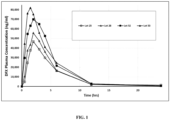
- amorphous compositions were prepared containing deferasirox (active pharmaceutical ingredient), pharmaceutical polymers (methacrylic acid and vinylpyrrolidone-vinyl acetate copolymers), and with/without 0.4% lubricant (magnesium stearate). These amorphous compositions were formulated into final tablets (see Table 1) and comparatively evaluated for pharmacokinetic performance in an in vivo dog model. From this study it was determined that bioavailability was improved significantly for the compositions containing magnesium stearate inside the amorphous dispersion relative to the same compositions not containing magnesium stearate in the amorphous dispersion (see Table 2 and FIG. 1 ).
- thermokinetic compounding was performed on compositions of itraconazole (active pharmaceutical ingredient), various grades of hypromellose (pharmaceutical polymer), and magnesium stearate (lubricant). These compositions are summarized in Table 3.
- Batch 17-1 utilizes hypromellose 2910, 5 cps as the polymer carrier.
- Batch 17-2 utilizes hypromellose 2910 E5 as the polymer carrier and contains the addition of 2% magnesium stearate (MgSt) as a lubricant.
- Batch 17-3 utilizes hypromellose 2910 E15 (HPMC E15) as the polymer carrier.
- Batch 17-4 utilizes hypromellose 2910 E15 as the polymer carrier and contains the addition of 2% magnesium stearate (MgSt) as a lubricant.
- Batch 17-5 utilizes hypromellose 2910 E50 (HPMC E50) as the polymer carrier.
- Batch 17-6 utilizes hypromellose 2910 E50 as the polymer carrier and contains the addition of 2% magnesium stearate (MgSt) as a lubricant.
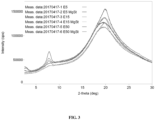
- thermokinetic compounding of batches 17-1 through 17-6 are provided in FIG. 2 .
- This figure signifies that the target amorphous dispersions were achieved by thermokinetic compounding at a peak temperature below the melting point of itraconazole and with a time at elevated temperature of less than 20 seconds. Both the low temperature and brief processing duration are critical to producing the amorphous dispersion without degradation to the drug and/or polymer.
- Batches 3 and 4 utilized hypromellose 2910 E15 as the polymer carrier.
- Batches 5 and 6 utilized hypromellose 2910 E50 as the polymer carrier.
- Batches 2, 4, and 6 contained 2% magnesium stearate as a lubricant.
- thermokinetic compounding was performed on compositions of itraconazole (active pharmaceutical ingredient), hypromellose 2910 E15 (pharmaceutical polymer), and various lubricants. These compositions are summarized in Table 4.
- Batch 28-1 contains the addition of 2% sodium stearyl fumarate (SSF) as a lubricant.
- Batch 28-2 contains the addition of 2% glyceryl monostearate (GMS) as a lubricant.
- Batch 28-3 contains the addition of 2% stearic acid (SA) as a lubricant.
- Batch 28-4 contains the addition of 2% myristic acid (MA) as a lubricant.
- thermokinetic compounding of batches 28-1 through 28-4 are provided in FIG. 4 .
- This figure signifies that the target amorphous dispersions were achieved by thermokinetic compounding at a peak temperature below the melting point of itraconazole and with a time at elevated temperature of less than 10 seconds. Both the low temperature and brief processing duration are critical to producing the amorphous dispersion without degradation to the drug and/or polymer.
- Batch 1 contained 2% sodium stearyl fumarate as a lubricant.
- Batch 2 contained 2% glyceryl monostearate as a lubricant.
- Batch 3 contained 2% stearic acid as a lubricant.
- Batch 4 contained 2% myristic acid as a lubricant.
- compositions and methods disclosed and claimed herein can be made and executed without undue experimentation in light of the present disclosure. While the compositions and methods of this disclosure have been described in terms of preferred embodiments, it will be apparent to those of skill in the art that variations may be applied to the compositions and methods, and in the steps or in the sequence of steps of the methods described herein without departing from the concept, spirit and scope of the disclosure. More specifically, it will be apparent that certain agents which are both chemically and physiologically related may be substituted for the agents described herein while the same or similar results would be achieved. All such similar substitutes and modifications apparent to those skilled in the art are deemed to be within the spirit, scope and concept of the disclosure as defined by the appended claims. Particularly preferred embodiments of the invention are set forth in items 1 to 53 below:
Landscapes
- Health & Medical Sciences (AREA)
- Life Sciences & Earth Sciences (AREA)
- Chemical & Material Sciences (AREA)
- Public Health (AREA)
- Epidemiology (AREA)
- Pharmacology & Pharmacy (AREA)
- Animal Behavior & Ethology (AREA)
- General Health & Medical Sciences (AREA)
- Medicinal Chemistry (AREA)
- Veterinary Medicine (AREA)
- Inorganic Chemistry (AREA)
- Biophysics (AREA)
- Molecular Biology (AREA)
- Medicinal Preparation (AREA)
- Pharmaceuticals Containing Other Organic And Inorganic Compounds (AREA)
- Medicines That Contain Protein Lipid Enzymes And Other Medicines (AREA)
Applications Claiming Priority (4)
| Application Number | Priority Date | Filing Date | Title |
|---|---|---|---|
| US201662333482P | 2016-05-09 | 2016-05-09 | |
| US201662334576P | 2016-05-11 | 2016-05-11 | |
| PCT/US2017/031521 WO2017196712A1 (en) | 2016-05-09 | 2017-05-08 | Improved drug formulations |
| EP17796620.7A EP3454847A4 (de) | 2016-05-09 | 2017-05-08 | Verbesserte arzneimittelformulierungen |
Related Parent Applications (1)
| Application Number | Title | Priority Date | Filing Date |
|---|---|---|---|
| EP17796620.7A Division EP3454847A4 (de) | 2016-05-09 | 2017-05-08 | Verbesserte arzneimittelformulierungen |
Publications (2)
| Publication Number | Publication Date |
|---|---|
| EP4552641A2 true EP4552641A2 (de) | 2025-05-14 |
| EP4552641A3 EP4552641A3 (de) | 2025-07-30 |
Family
ID=60267508
Family Applications (2)
| Application Number | Title | Priority Date | Filing Date |
|---|---|---|---|
| EP25151222.4A Pending EP4552641A3 (de) | 2016-05-09 | 2017-05-08 | Verbesserte arzneimittelformulierungen |
| EP17796620.7A Withdrawn EP3454847A4 (de) | 2016-05-09 | 2017-05-08 | Verbesserte arzneimittelformulierungen |
Family Applications After (1)
| Application Number | Title | Priority Date | Filing Date |
|---|---|---|---|
| EP17796620.7A Withdrawn EP3454847A4 (de) | 2016-05-09 | 2017-05-08 | Verbesserte arzneimittelformulierungen |
Country Status (10)
| Country | Link |
|---|---|
| US (1) | US20200009060A1 (de) |
| EP (2) | EP4552641A3 (de) |
| JP (2) | JP7112333B2 (de) |
| CN (1) | CN109069460A (de) |
| AU (1) | AU2017262586B2 (de) |
| CA (1) | CA3022878C (de) |
| IL (1) | IL262745B (de) |
| MA (1) | MA44987A (de) |
| WO (1) | WO2017196712A1 (de) |
| ZA (1) | ZA201807446B (de) |
Families Citing this family (8)
| Publication number | Priority date | Publication date | Assignee | Title |
|---|---|---|---|---|
| WO2019094688A1 (en) * | 2017-11-10 | 2019-05-16 | Dispersol Technologies, Llc | Improved drug formulations |
| WO2021086565A1 (en) * | 2019-11-01 | 2021-05-06 | Dispersol Technologies, Llc | Weakly basic drug and ionic polymer pharmaceutical formulations and methods of formation and administration thereof |
| CN115209876A (zh) * | 2020-03-11 | 2022-10-18 | 泽井制药株式会社 | 颗粒和使用该颗粒的制剂 |
| WO2022094817A1 (en) * | 2020-11-04 | 2022-05-12 | Janssen Pharmaceuticals, Inc. | Pharmaceutical formulation |
| NL2028762B1 (en) * | 2021-07-16 | 2023-01-23 | Seranovo Holding B V | Micelle-generating formulations for enhanced bioavailability |
| CN116173018A (zh) * | 2021-11-26 | 2023-05-30 | 上海宣泰医药科技股份有限公司 | 一种达罗他胺药物组合物及其制备方法和用途 |
| CN114190538B (zh) * | 2021-12-21 | 2023-11-24 | 郑州轻工业大学 | 一种促β′晶型形成的油脂促结晶剂及应用 |
| AU2025207356A1 (en) | 2024-01-11 | 2026-08-06 | Minneamrita Therapeutics Llc | Triptolide formulations |
Citations (1)
| Publication number | Priority date | Publication date | Assignee | Title |
|---|---|---|---|---|
| US8486423B2 (en) | 2007-08-21 | 2013-07-16 | Board Of Regents, The University Of Texas System | Thermo-kinetic mixing for pharmaceutical applications |
Family Cites Families (15)
| Publication number | Priority date | Publication date | Assignee | Title |
|---|---|---|---|---|
| US6509038B2 (en) * | 1996-05-20 | 2003-01-21 | Janssen Pharmaceutica N.V. | Antifungal compositions with improved bioavailability |
| JP2009530415A (ja) * | 2006-03-20 | 2009-08-27 | バーテックス ファーマシューティカルズ インコーポレイテッド | 医薬組成物 |
| EP2259777A2 (de) * | 2008-02-28 | 2010-12-15 | BIAL - Portela & Ca., S.A. | Pharmazeutische zusammensetzung für schwer lösliche arzneimittel |
| US20090269403A1 (en) * | 2008-04-24 | 2009-10-29 | Shaked Ze Ev | Oral contraceptive dosage forms and methods of making such dosage forms |
| US20110065800A1 (en) * | 2008-05-14 | 2011-03-17 | Haihong Fan | Formulations for cathepsin k inhibitors |
| CA2799110A1 (en) | 2010-05-10 | 2011-11-17 | Evonik Roehm Gmbh | Pharmaceutical dosage form comprising one or more antiretroviral active ingredients |
| US20140039031A1 (en) * | 2011-02-23 | 2014-02-06 | Dispersol Technologies. LLC | Pharmaceutical formulations of acetyl-11-keto-b-boswellic acid, diindolylmethane, and curcumin for pharmaceutical applications |
| WO2012122279A1 (en) * | 2011-03-08 | 2012-09-13 | Zalicus Pharmaceuticals Ltd. | Solid dispersion formulations and methods of use thereof |
| WO2014170026A1 (en) * | 2013-04-18 | 2014-10-23 | Zentiva, K.S. | Stabilized amorphous ticagrelor |
| WO2015152433A1 (en) * | 2014-03-31 | 2015-10-08 | Hanmi Pharm. Co., Ltd. | Amorphous solid dispersion comprising paclitaxel, tablet comprising the same, and method for preparing the same |
| AU2014391109B2 (en) * | 2014-04-18 | 2019-01-17 | AustinPx, LLC | Multiple speed process for preserving heat sensitive portions of a thermokinetically melt blended batch |
| WO2015175505A1 (en) | 2014-05-15 | 2015-11-19 | Lundbeck Llc | Tetrabenazine modified release formulation |
| US20170333404A1 (en) * | 2014-11-03 | 2017-11-23 | Dispersol Technologies, Llc | Improved formulations of vemurafenib and methods of making the same |
| CN104434809B (zh) * | 2014-12-10 | 2018-10-16 | 北京科莱博医药开发有限责任公司 | 一种奥拉帕尼固体分散体制剂及其制备方法 |
| JOP20170127A1 (ar) * | 2016-06-02 | 2017-12-02 | Gilead Pharmasset Llc | صيغة مشتركة مكونة من ثلاث مركبات مضادة للفيروسات |
-
2017
- 2017-05-08 CN CN201780028973.8A patent/CN109069460A/zh active Pending
- 2017-05-08 IL IL262745A patent/IL262745B/en unknown
- 2017-05-08 US US16/098,145 patent/US20200009060A1/en active Pending
- 2017-05-08 WO PCT/US2017/031521 patent/WO2017196712A1/en not_active Ceased
- 2017-05-08 JP JP2018558764A patent/JP7112333B2/ja active Active
- 2017-05-08 AU AU2017262586A patent/AU2017262586B2/en active Active
- 2017-05-08 MA MA044987A patent/MA44987A/fr unknown
- 2017-05-08 EP EP25151222.4A patent/EP4552641A3/de active Pending
- 2017-05-08 EP EP17796620.7A patent/EP3454847A4/de not_active Withdrawn
- 2017-05-08 CA CA3022878A patent/CA3022878C/en active Active
-
2018
- 2018-11-06 ZA ZA2018/07446A patent/ZA201807446B/en unknown
-
2022
- 2022-05-31 JP JP2022088284A patent/JP7458440B2/ja active Active
Patent Citations (1)
| Publication number | Priority date | Publication date | Assignee | Title |
|---|---|---|---|---|
| US8486423B2 (en) | 2007-08-21 | 2013-07-16 | Board Of Regents, The University Of Texas System | Thermo-kinetic mixing for pharmaceutical applications |
Also Published As
| Publication number | Publication date |
|---|---|
| MA44987A (fr) | 2019-03-20 |
| WO2017196712A1 (en) | 2017-11-16 |
| CN109069460A (zh) | 2018-12-21 |
| EP3454847A1 (de) | 2019-03-20 |
| AU2017262586A1 (en) | 2018-11-22 |
| IL262745B (en) | 2022-07-01 |
| CA3022878A1 (en) | 2017-11-16 |
| JP7112333B2 (ja) | 2022-08-03 |
| US20200009060A1 (en) | 2020-01-09 |
| JP7458440B2 (ja) | 2024-03-29 |
| ZA201807446B (en) | 2025-05-28 |
| JP2022116234A (ja) | 2022-08-09 |
| AU2017262586B2 (en) | 2023-04-13 |
| IL262745A (en) | 2018-12-31 |
| EP4552641A3 (de) | 2025-07-30 |
| CA3022878C (en) | 2024-04-30 |
| JP2019514993A (ja) | 2019-06-06 |
| EP3454847A4 (de) | 2019-12-18 |
Similar Documents
| Publication | Publication Date | Title |
|---|---|---|
| AU2017262586B2 (en) | Improved drug formulations | |
| AU2024202528B2 (en) | Improved formulations of deferasirox and methods of making the same | |
| US20250360085A1 (en) | Improved drug formulations | |
| US20140039031A1 (en) | Pharmaceutical formulations of acetyl-11-keto-b-boswellic acid, diindolylmethane, and curcumin for pharmaceutical applications | |
| CA3008634A1 (en) | Pharmaceutical compositions comprising phenylaminopyrimidine derivative | |
| US20250255822A1 (en) | Triptolide formulations | |
| HK40000762A (en) | Improved drug formulations | |
| WO2024184927A1 (en) | Solid oral composition of olaparib and its salts thereof | |
| EP4404920A1 (de) | Pharmazeutische zusammensetzung und verfahren zu ihrer herstellung | |
| NZ623628A (en) | Solid oral pharmaceutical formulations comprising amorphous (s)-methyl (1- ((4-(3-(5-chloro-2-fluoro-3-(methylsulfonamido)phenyl)-1-isopropy1-1h-pyrazo1-4-yl)pyrimidin-2-yl)amino)propan-2-yl)carbamate (compound a) |
Legal Events
| Date | Code | Title | Description |
|---|---|---|---|
| PUAI | Public reference made under article 153(3) epc to a published international application that has entered the european phase |
Free format text: ORIGINAL CODE: 0009012 |
|
| STAA | Information on the status of an ep patent application or granted ep patent |
Free format text: STATUS: THE APPLICATION HAS BEEN PUBLISHED |
|
| AC | Divisional application: reference to earlier application |
Ref document number: 3454847 Country of ref document: EP Kind code of ref document: P |
|
| AK | Designated contracting states |
Kind code of ref document: A2 Designated state(s): AL AT BE BG CH CY CZ DE DK EE ES FI FR GB GR HR HU IE IS IT LI LT LU LV MC MK MT NL NO PL PT RO RS SE SI SK SM TR |
|
| REG | Reference to a national code |
Ref country code: DE Ref legal event code: R079 Free format text: PREVIOUS MAIN CLASS: A61K0031419600 Ipc: A61K0031192000 |
|
| PUAL | Search report despatched |
Free format text: ORIGINAL CODE: 0009013 |
|
| AK | Designated contracting states |
Kind code of ref document: A3 Designated state(s): AL AT BE BG CH CY CZ DE DK EE ES FI FR GB GR HR HU IE IS IT LI LT LU LV MC MK MT NL NO PL PT RO RS SE SI SK SM TR |
|
| RIC1 | Information provided on ipc code assigned before grant |
Ipc: A61K 31/192 20060101AFI20250626BHEP Ipc: A61K 9/20 20060101ALI20250626BHEP Ipc: A61K 31/4196 20060101ALI20250626BHEP Ipc: A61K 31/437 20060101ALI20250626BHEP Ipc: A61K 31/496 20060101ALI20250626BHEP |
|
| REG | Reference to a national code |
Ref country code: HK Ref legal event code: DE Ref document number: 40125176 Country of ref document: HK |
|
| STAA | Information on the status of an ep patent application or granted ep patent |
Free format text: STATUS: REQUEST FOR EXAMINATION WAS MADE |
|
| 17P | Request for examination filed |
Effective date: 20260129 |
|
| STAA | Information on the status of an ep patent application or granted ep patent |
Free format text: STATUS: EXAMINATION IS IN PROGRESS |
|
| 17Q | First examination report despatched |
Effective date: 20260513 |