EP4552647A1 - Anti-ccr8-antikörper und verwendung davon - Google Patents
Anti-ccr8-antikörper und verwendung davon Download PDFInfo
- Publication number
- EP4552647A1 EP4552647A1 EP23834877.5A EP23834877A EP4552647A1 EP 4552647 A1 EP4552647 A1 EP 4552647A1 EP 23834877 A EP23834877 A EP 23834877A EP 4552647 A1 EP4552647 A1 EP 4552647A1
- Authority
- EP
- European Patent Office
- Prior art keywords
- antibody
- seq
- ccr8
- chain variable
- variable region
- Prior art date
- Legal status (The legal status is an assumption and is not a legal conclusion. Google has not performed a legal analysis and makes no representation as to the accuracy of the status listed.)
- Pending
Links
Images



Classifications
-
- C—CHEMISTRY; METALLURGY
- C07—ORGANIC CHEMISTRY
- C07K—PEPTIDES
- C07K16/00—Immunoglobulins [IG], e.g. monoclonal or polyclonal antibodies
- C07K16/18—Immunoglobulins [IG], e.g. monoclonal or polyclonal antibodies against material from animals or humans
- C07K16/28—Immunoglobulins [IG], e.g. monoclonal or polyclonal antibodies against material from animals or humans against receptors, cell surface antigens or cell surface determinants
- C07K16/2866—Immunoglobulins [IG], e.g. monoclonal or polyclonal antibodies against material from animals or humans against receptors, cell surface antigens or cell surface determinants against receptors for cytokines, lymphokines, interferons
-
- A—HUMAN NECESSITIES
- A61—MEDICAL OR VETERINARY SCIENCE; HYGIENE
- A61P—SPECIFIC THERAPEUTIC ACTIVITY OF CHEMICAL COMPOUNDS OR MEDICINAL PREPARATIONS
- A61P35/00—Antineoplastic agents
-
- A—HUMAN NECESSITIES
- A61—MEDICAL OR VETERINARY SCIENCE; HYGIENE
- A61K—PREPARATIONS FOR MEDICAL, DENTAL OR TOILETRY PURPOSES
- A61K39/00—Medicinal preparations containing antigens or antibodies
- A61K2039/505—Medicinal preparations containing antigens or antibodies comprising antibodies
-
- C—CHEMISTRY; METALLURGY
- C07—ORGANIC CHEMISTRY
- C07K—PEPTIDES
- C07K2317/00—Immunoglobulins specific features
- C07K2317/20—Immunoglobulins specific features characterized by taxonomic origin
- C07K2317/24—Immunoglobulins specific features characterized by taxonomic origin containing regions, domains or residues from different species, e.g. chimeric, humanized or veneered
-
- C—CHEMISTRY; METALLURGY
- C07—ORGANIC CHEMISTRY
- C07K—PEPTIDES
- C07K2317/00—Immunoglobulins specific features
- C07K2317/30—Immunoglobulins specific features characterized by aspects of specificity or valency
- C07K2317/33—Crossreactivity, e.g. for species or epitope, or lack of said crossreactivity
-
- C—CHEMISTRY; METALLURGY
- C07—ORGANIC CHEMISTRY
- C07K—PEPTIDES
- C07K2317/00—Immunoglobulins specific features
- C07K2317/50—Immunoglobulins specific features characterized by immunoglobulin fragments
- C07K2317/56—Immunoglobulins specific features characterized by immunoglobulin fragments variable (Fv) region, i.e. VH and/or VL
- C07K2317/565—Complementarity determining region [CDR]
-
- C—CHEMISTRY; METALLURGY
- C07—ORGANIC CHEMISTRY
- C07K—PEPTIDES
- C07K2317/00—Immunoglobulins specific features
- C07K2317/70—Immunoglobulins specific features characterized by effect upon binding to a cell or to an antigen
-
- C—CHEMISTRY; METALLURGY
- C07—ORGANIC CHEMISTRY
- C07K—PEPTIDES
- C07K2317/00—Immunoglobulins specific features
- C07K2317/70—Immunoglobulins specific features characterized by effect upon binding to a cell or to an antigen
- C07K2317/72—Increased effector function due to an Fc-modification
-
- C—CHEMISTRY; METALLURGY
- C07—ORGANIC CHEMISTRY
- C07K—PEPTIDES
- C07K2317/00—Immunoglobulins specific features
- C07K2317/70—Immunoglobulins specific features characterized by effect upon binding to a cell or to an antigen
- C07K2317/73—Inducing cell death, e.g. apoptosis, necrosis or inhibition of cell proliferation
-
- C—CHEMISTRY; METALLURGY
- C07—ORGANIC CHEMISTRY
- C07K—PEPTIDES
- C07K2317/00—Immunoglobulins specific features
- C07K2317/70—Immunoglobulins specific features characterized by effect upon binding to a cell or to an antigen
- C07K2317/73—Inducing cell death, e.g. apoptosis, necrosis or inhibition of cell proliferation
- C07K2317/732—Antibody-dependent cellular cytotoxicity [ADCC]
-
- C—CHEMISTRY; METALLURGY
- C07—ORGANIC CHEMISTRY
- C07K—PEPTIDES
- C07K2317/00—Immunoglobulins specific features
- C07K2317/70—Immunoglobulins specific features characterized by effect upon binding to a cell or to an antigen
- C07K2317/76—Antagonist effect on antigen, e.g. neutralization or inhibition of binding
-
- C—CHEMISTRY; METALLURGY
- C07—ORGANIC CHEMISTRY
- C07K—PEPTIDES
- C07K2317/00—Immunoglobulins specific features
- C07K2317/90—Immunoglobulins specific features characterized by (pharmaco)kinetic aspects or by stability of the immunoglobulin
- C07K2317/92—Affinity (KD), association rate (Ka), dissociation rate (Kd) or EC50 value
-
- C—CHEMISTRY; METALLURGY
- C07—ORGANIC CHEMISTRY
- C07K—PEPTIDES
- C07K2317/00—Immunoglobulins specific features
- C07K2317/90—Immunoglobulins specific features characterized by (pharmaco)kinetic aspects or by stability of the immunoglobulin
- C07K2317/94—Stability, e.g. half-life, pH, temperature or enzyme-resistance
Definitions
- the present disclosure relates to the field of biomedical or biopharmaceutical technology, and more specifically, to anti-CCR8 antibodies and their use.
- Tregs Regulatory T cells
- Regulatory T cells are a subset of T cells that control the body's autoimmune reactivity and are closely related to the occurrence of autoimmune diseases. They also promote tumor immune evasion and accelerate tumor cell proliferation. Therefore, the development of antibody drugs targeting Tregs has become an important research direction in tumor immunotherapy.
- CCR8 (C-C chemokine receptor type 8) is a G-protein-coupled receptor with a seven-transmembrane structure, consisting of 355 amino acids. It includes a short extracellular N-terminus (1-35 amino acids), and serine/threonine residues in the intracellular C-terminus serve as phosphorylation sites during receptor regulation, mediating cellular responses.
- CCR8 is a chemokine receptor highly expressed on tumor-infiltrating Tregs, with low expression in Tregs of the thymus, spleen, and peripheral blood, as well as in Th2 cells.
- the ligand for CCR8 is chemokine CCL1, which is upregulated at sites of inflammation.
- CCL1 recruits FOXP3+CCR8+ Treg cells to infiltrate tumor tissues, where they exert immunosuppressive functions.
- CCL1 induces upregulation of CCR8 expression on FOXP3+ Treg cells, triggers Ca2+ flux, and induces STAT3-dependent upregulation of FOXP3, CD39, IL-10, and granzyme B, enhancing the immunosuppressive activity of these tumor-infiltrating Tregs.
- CCR8 is significantly upregulated in tumor-infiltrating Tregs compared to Tregs in normal tissues, indicating that CCR8 is a promising therapeutic target on Tregs in the tumor microenvironment (TME) without causing systemic autoimmunity. Therefore, antibodies targeting CCR8 can clear Tregs in the TME, improve immune function in the TME, and exhibit anti-tumor potential.
- BMS Bristol-Myers Squibb
- the present disclosure develops novel anti-CCR8 antibodies or antibody fragments capable of binding to CCR8 derived from primates (human and/or monkey). It also provides anti-CCR8 antibodies, their antibody fragments, or antigen-binding portions thereof, which can be utilized as cancer therapeutics.
- the present disclosure provides an antibody comprising a heavy chain variable region, wherein the heavy chain variable region comprises HCDR1, HCDR2, and HCDR3, selected from any of the following combinations of amino acid sequences:
- a light chain variable region comprising LCDR1, LCDR2, and LCDR3, selected from the following combinations of amino acid sequences:
- the aforementioned antibody specifically binds to one or more amino acids in the extracellular domain of CCR8, and the amino acid sequences further include derivative sequences by adding, deleting, modifying, and/or substituting one or more amino acids, while retaining the ability to bind CCR8.
- the antibody comprises HCDR1, HCDR2, HCDR3, LCDR1, LCDR2, and LCDR3, selected from the following combinations of amino acid sequences:
- the aforementioned antibody specifically binds to one or more amino acids in the extracellular domain of CCR8, and the amino acid sequences further include derivative sequences by adding, deleting, modifying, and/or substituting one or more amino acids, while retaining the ability to bind CCR8.
- the aforementioned heavy chain further comprises a heavy chain constant region and/or the light chain further comprises a light chain constant region.
- the aforementioned heavy chain variable region comprises any of the amino acid sequences of SEQ ID NO: 1, 18, 35.
- the aforementioned light chain variable region comprises any of the amino acid sequences of SEQ ID NO: 2, 19, 36.
- the aforementioned antibody comprises the heavy chain variable region and the light chain variable region selected from any of the following combinations of amino acid sequences:
- the aforementioned antibody comprises the following light chain variable region and heavy chain variable region; wherein the heavy chain variable region comprises any of the amino acid sequences of SEQ ID NO: 1, 18, 35, or is more than 95% identical to the amino acid sequences of SEQ ID NO: 1, 18, 35; the light chain variable region comprises any of the amino acid sequences of SEQ ID NO: 2, 19, 36, or is more than 95% identical to the amino acid sequences of SEQ ID NO: 2, 19, 36.
- the aforementioned antibody is capable of binding to CCR8 derived from primates, preferably humans.
- the aforementioned antibody's heavy chain variable region further comprises a human, humanized, or human framework region
- the antibody's light chain variable region further comprises a human, humanized, or human framework region.
- the aforementioned antibody includes monoclonal antibodies, chimeric antibodies, recombinant antibodies, fully human antibodies, humanized antibodies, bispecific antibodies, multispecific antibodies, their antibody fragments, or antigen-binding portions thereof.
- the aforementioned antibody is selected from the following combinations: (i) single-chain antibody or single-chain variable fragment, or monovalent antibody lacking a hinge region; (ii) Fab, Fab', F(ab')2; (iii) full-length antibody; (iv) antibodies comprising human IgG Fc domains.
- the aforementioned antibody has one or more of the following biological activities:
- the present disclosure also provides a recombinant protein comprising the aforementioned antibody, antibody fragment, or antigen-binding fragment.
- the aforementioned recombinant protein further comprises a tag sequence to aid in expression and/or purification.
- the present disclosure also provides a nucleic acid molecule encoding the aforementioned antibody, antibody fragment, antigen-binding fragment, or recombinant protein.
- the aforementioned vector includes bacterial plasmids, bacteriophages, yeast plasmids, plant cell viruses, mammalian cell viruses such as adenoviruses, lentiviruses, or retroviruses.
- the present disclosure also provides an engineered host cell comprising the aforementioned nucleic acid molecule or vector.
- the present disclosure provides an antibody-drug conjugate comprising: (i) cytotoxic agents, detection tags, drugs, cytokines, radionuclides, enzymes, or combinations thereof; and (ii) the aforementioned antibody, recombinant protein, or combinations thereof.
- the present disclosure also provides a pharmaceutical composition
- a pharmaceutical composition comprising: (i) the aforementioned antibody, antibody fragment, antigen-binding fragment, recombinant protein, nucleic acid molecule, vector, engineered host cell, antibody-drug conjugate, or combinations thereof; and (ii) a pharmaceutically acceptable carrier.
- the aforementioned pharmaceutical composition is used to block the binding of CCR8 with any of its ligands, or used as a neutralizing antibody.
- the aforementioned pharmaceutical composition is used for depleting tumor-infiltrating Treg cells or for treating cancer.
- the present disclosure provides a kit or a drug delivery device comprising the aforementioned antibody, antibody fragment, antigen-binding fragment, recombinant protein, nucleic acid molecule, vector, engineered host cell, antibody-drug conjugate, or pharmaceutical composition.
- the aforementioned kit further comprises a secondary antibody against the primary antibody.
- the present disclosure provides a method for producing recombinant polypeptides, the method comprising:
- the anti-CCR8 antibodies of the present disclosure have the following advantages:
- the antibodies of the present disclosure refer to proteins that specifically bind to primate (preferably human) CCR8, including monoclonal antibodies, chimeric antibodies, recombinant antibodies, fully human antibodies, humanized antibodies, bispecific antibodies, multispecific antibodies, antibody fragments, or antigen-binding portions thereof.
- this also includes single-chain antibodies (single chain Fv), single-chain variable fragments, monovalent antibodies lacking hinge regions, disulfide-stabilized antibodies (dsFv), antigen-binding fragments (Fab), Fab', F(ab')2, full-length antibodies, and antibodies containing the human IgG Fc domain, among others.
- the present disclosure also includes recombinant proteins, which are the antibodies, antibody fragments, or antigen-binding fragments of the disclosure, along with tag sequences to facilitate expression and/or purification.
- the present disclosure includes nucleic acid molecules or polynucleotides encoding the antibodies of this disclosure (light chain variable region or heavy chain variable region). It also includes expression vectors containing such nucleic acid molecules, with types of vectors including bacterial plasmids, bacteriophages, yeast plasmids, plant cell viruses, and mammalian cell viruses (e.g., adenoviruses, lentiviruses, or retroviruses).
- types of vectors including bacterial plasmids, bacteriophages, yeast plasmids, plant cell viruses, and mammalian cell viruses (e.g., adenoviruses, lentiviruses, or retroviruses).
- this disclosure includes cells for expressing the disclosed antibodies, which contain the aforementioned nucleic acid molecules or vectors.
- the antibodies disclosed herein can be used as drug conjugates, including cytotoxic agents, detection labels, drugs, cytokines, radionuclides, enzymes, or combinations thereof, as well as the antibodies, recombinant proteins, or combinations thereof.
- compositions can also be used as pharmaceutical compositions, particularly those that recognize human CCR8.
- These compositions may contain the disclosed antibodies, their fragments, or antigen-binding fragments; recombinant proteins; nucleic acid molecules; vectors; engineered host cells; antibody-drug conjugates; or combinations of the above.
- the compositions may include pharmaceutically acceptable carriers, such as AAV vectors.
- the pharmaceutical compositions of this disclosure can block the binding of CCR8 to any of its ligands, and are used for the treatment and/or prevention of cancer, for removing tumor-infiltrating Treg cells, or as neutralizing antibodies.
- the amino acid sequence of human CCR8 was referenced from the UniProt protein database (P51685), and the sequence of human CCR4 was referenced from UniProt (P51679).
- the amino acid sequence of cynomolgus monkey CCR8 was obtained from the NCBI protein database (XP_015300839.1). These sequences were codon-optimized by General Biosystems and synthesized into lentiviral vector pLVX or pCDNA3.4.
- Viruses were prepared using a lentiviral packaging system and were used to infect HEK293T and BaF3 cells.
- Stable cell lines were obtained through puromycin selection (Invivogen, Cat# ant-pr-1), including HEK293T-h.CCR8 (human), HEK293T-h.CCR4 (human), HEK293T-c.CCR8 (cynomolgus monkey), and BaF3-h.CCR8 (human).
- Target expression was confirmed by flow cytometry (FACS), and the resulting cell lines were used for further experiments.
- the N-terminal extracellular domain of human and cynomolgus monkey CCR8 contains 35 amino acids (1-35 AA).
- the N-terminal extracellular domain proteins were synthesized into the pTT5-hFc or pTT5-mFc vectors. Plasmids were transiently transfected into HEK293-EBNA cells using PEImax (Polysciences, Cat# 24765-1). After seven days, the h.CCR8 (1-35 AA) and c.CCR8 (1-35 AA) antigen proteins were purified using a ProA column (GE, Mabselect XL).
- mice Three strains of wild-type mice (Balb/C, KM, and CD1), aged 5-6 weeks, were immunized in two batches.
- the first batch was immunized with the h.CCR8 (1-35 AA) protein antigen at multiple sites in the abdominal and back areas.
- the second batch was immunized with pCDNA3.4-h.CCR8 plasmid via tail vein injection. After four immunizations in the first batch and five in the second, serum titers were assessed using flow cytometry (FACS).
- the experimental steps are as follows: Digest and centrifuge to collect HEK293T-h.CCR8, HEK293T-h.CCR4, and HEK293T-c.CCR8 cells, then wash three times with pre-cooled PBS, resuspend the cells in PBS (containing 1% BSA), and seed 3 ⁇ 10 ⁇ 5 cells per well in a 96-well V-bottom plate. Add 100-fold, 300-fold, and 900-fold diluted serum and incubate at 4°C for 1 hour. After washing three times with pre-cooled PBS, add 1 ⁇ L of anti-mouse fluorescent secondary antibody to each well and incubate at 4°C for 0.5 hours.
- mice After washing three times with pre-cooled PBS, resuspend the cells and analyze them on a flow cytometer (Beckman, model: CytoFLEX). Select mice that show high potency with HEK293T-h.CCR8 and HEK293T-c.CCR8 and low potency with HEK293T-h.CCR4 for hybridoma fusion.
- mice spleen and lymph nodes to prepare a cell suspension, and mix it with SP2/0 mouse myeloma cells at a 1:1 ratio. Resuspend using a cell electrofusion buffer and perform electrofusion reactions using BTX-ECM2001. After the electrofusion reaction, resuspend in complete fusion medium (RPMI1640 + 20% FBS + OPI + 1 ⁇ HAT) and seed 20,000-25,000 cells per well in a 96-well cell culture plate, incubating at 37°C with 5% CO2.
- complete fusion medium RPMI1640 + 20% FBS + OPI + 1 ⁇ HAT
- mice antibody clones for sequencing are as follows: 76H1F11, 96F1C4, and 13F3H6.
- Table 1 Summary of Evaluation Results for Mouse Antibodies Clone Number Clone ID HEK293T-h.CCR8 EC 50 (nM) HEK293T-h.CCR4 Positive Rate (%) 1 76H1F11 0.48 0.35% 2 96F1C4 0.16 0.49% 3 13F3H6 0.37 0.23%
- the highest homologous human germline sequence to the original mouse sequence was identified through standard BLAST analysis and used as a template.
- the CDRs from the mouse antibody were grafted onto the human template to construct a chimeric antibody.
- structural analysis was conducted to identify the FR amino acids in the mouse antibody that could retain their original conformation.
- Corresponding amino acids in the chimeric antibody were reverted to the mouse-derived amino acids to maintain the original affinity.
- the constructed humanized antibody underwent computational and immunogenicity analysis to identify high immunogenicity fragments, which were then replaced with low immunogenicity fragments.
- the heavy chain variable regions and light chain variable regions of the humanized monoclonal antibodies 96F1C4-hz, 13F3H6-hz, and 76H1F11-hz, along with the variable region amino acid sequence of the control antibody were submitted to General Biologics for gene synthesis. After codon optimization, these sequences were constructed into the pTT5-h. IgG1 vector (light chain constant region SEQ NO: 52, heavy chain constant region SEQ NO: 53).
- the 13F3H6-hz-eADCC is an enhanced version of the 13F3H6-hz antibody with augmented antibody-dependent cell-mediated cytotoxicity (ADCC).
- This variant includes five amino acid mutations (F243L, R292P, Y300L, L235V, P396L) at the Fc region of the wild-type IgG1 (SEQ ID NO: 53) to generate a candidate antibody with stronger ADCC activity (SEQ ID NO: 54).
- F243L, R292P, Y300L, L235V, P396L five amino acid mutations
- HEK293E cells were extracted from bacterial cultures, and HEK293E cells were transiently transfected with PEImax. Following approximately seven days of expression, the supernatant was collected by centrifugation. The expressed supernatant was purified using MabSelectSure affinity resin. The purified antibodies were concentrated by ultrafiltration into PBS buffer, their concentrations were measured, and they were aliquoted and stored at -20°C. Table 4.
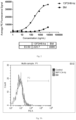
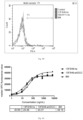
- the affinity of humanized monoclonal antibodies against human CCR8 was assessed using FACS.
- the experimental procedure was as follows: HEK293T-h.CCR8 cells were digested and collected by centrifugation, 5 followed by three washes with pre-cooled PBS. The cells were resuspended in 1% BSA (in PBS), with 3 ⁇ 10 ⁇ 5 cells added to each well of a 96-well V-bottom plate (50 ⁇ L per well). Prepare the antibody dilution series in 1% BSA (in PBS), starting from 40 ⁇ g/mL. Perform a 3-fold serial dilution across 10 concentration points. Add 50 ⁇ L per well to the cells, so that the final antibody concentration in the wells starts from 20 ⁇ g/mL.
- HEK293T-h.CCR4 cells were collected, washed, and resuspended in 1% BSA (in PBS). Each well of a 96-well V-bottom plate received 3 ⁇ 10 ⁇ 5 cells, followed by the addition of the test antibodies at a final concentration of 20 ⁇ g/mL and incubation at 4°C for one hour. After washing, 1 ⁇ L of fluorescent secondary antibody (Biolegend, Catalog No.: 410708) was added, and the mixture was incubated. The cells were washed and resuspended for detection using a flow cytometer (Beckman, Model: CytoFLEX).
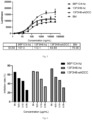
- HEK293T-h.CCR8 cells were collected and incubated with the test antibodies at a concentration of 10 ⁇ g/mL at 4°C for one hour. After washing, cells were resuspended in DMEM+10% FBS and split into two groups for incubation at 37°C for either 0 or 5 hours. After incubation, cells were washed and incubated with 1 ⁇ L of fluorescent secondary antibody for 30 minutes, followed by washing and resuspension for detection.
- Endocytosis Rate (%) [1 - (5h Sample Avg. Fluorescence - 5h Negative Control Avg. Fluorescence) / (0h Sample Avg. Fluorescence - 0h Negative Control Avg. Fluorescence] *100.
- ADCC activity was detected using a luciferase reporter system.
- the procedure involved collecting HEK293T-h.CCR8 cells and resuspending them in DMEM+1% FBS, followed by adding 50,000 cells per well.
- Jurkat-NFAT-CD16a cells were collected and resuspended in RPMI1640+1% FBS, with 100,000 cells added to each well.
- Gradient-diluted test antibodies were incubated with cells at 37°C for five hours. After incubation, 50 ⁇ L of Bio-Glory One-Step luciferase substrate (Suzhou Ruian, RA-GO04) was added, and the readings were taken using a microplate reader (MD, i3x).
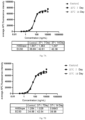
- the ADCP activity of humanized monoclonal antibodies against human CCR8 was assessed using a luciferase reporter system.
- the procedure involved collecting HEK293T-h.CCR8 cells, resuspending them in DMEM+1% FBS, and plating 50,000 cells per well.
- Jurkat-Fc ⁇ RIIa-H131 (Vazyme Biotech Co.,Ltd, DD1304) cells were collected and resuspended in RPMI1640+1% FBS, with 100,000 cells added to each well. Gradient-diluted test antibodies were incubated with cells at 37°C for five hours.
- Bio-Glory One-Step luciferase substrate (Suzhou Rhinobio, RA-GO04) was added, and the readings were taken using a microplate reader (MD, i3x).
- the experimental steps are as follows: BaF3-h.CCR8 cells were centrifuged, and collected, then resuspended in medium (RPMI1640 + 10% FBS + 1% P/S) and adjusted to a density of 800,000/mL. A total of 125 ⁇ L of the suspension was added to the upper chamber of a Transwell (Corning, Cat. No. 3421), and 125 ⁇ L of antibody diluted in medium was also added. CCL1 was diluted in medium to 5 ng/mL, and 500 ⁇ L was added to the lower chamber. The plates were incubated for 5 hours in a 37°C, 5% CO2 incubator.
- the comparative data of the examples are presented in Table 5.
- 13F3H6-hz, 13F3H6-hz-eADCC, and 96F1C4-hz exhibited stronger affinity for human CCR8.
- 13F3H6-hz showed strong affinity for cynomolgus CCR8.
- the ADCC activity of the four clones, 96F1C4-hz, 76H1F11-hz, 13F3H6-hz, and 13F3H6-hz-eADCC was higher than that of the control antibody BM, with the ADCP activity of 13F3H6-hz-eADCC being higher than that of the control antibody BM.
- the accelerated stability of the humanized anti-human CCR8 antibody was assessed using the following method.
- the SEC-HPLC detection method is as follows: Instrument: Waters Alliance e2695 HPLC; Column: Thermo MabPac SEC-1, 5 ⁇ m, 7.8*300 mm; Mobile phase: 61 mmol/L Na2HPO4, 39 mmol/L NaH2PO4, 200 mmol/L NaCl, 5% IPA; Instrument parameters: Sample chamber temperature: 8°C; Column temperature: 30°C; Flow rate: 0.5 mL/min; Injection volume: 20 ⁇ g; Detection wavelength: 280 nm; Isocratic run: 30 min.
- the CE-SDS detection method is as follows: The sample was diluted to 4 mg/mL with ultrapure water. A 25 ⁇ L aliquot was placed in a centrifuge tube, and 75 ⁇ L of a pre-mixed solution (SDS Sample buffer + iodoacetamide) was added, mixed, and centrifuged at 10,000 g for 1 minute. It was treated at 70°C for 5 minutes. Afterward, it was allowed to cool to room temperature, centrifuged again at 10,000 g for 1 minute, mixed, and transferred to an injection vial.
- SDS Sample buffer + iodoacetamide a pre-mixed solution
- the analysis was performed using a SCIEX PA800 plus capillary electrophoresis instrument, with the following instrument parameters set: Capillary: 30.2 cm * 50 ⁇ m (bare), effective length: 20 cm, capillary column temperature: 25°C, sample tray temperature: 15°C, detection wavelength set at 220 nm; sampling frequency: 4 Hz.
- Humanized candidate antibodies 13F3H6-hz and 13F3H6-eADCC were diluted to 20 ⁇ g/mL in human plasma, filtered through a 0.22 ⁇ m filter for sterilization, with each candidate set at two time points of 7 days and 14 days, 500 ⁇ L per tube. After sealing with a sealing film, the tubes were placed in a 37°C incubator for incubation, and samples were collected at 7 days and 14 days for storage at -80°C. The affinity of the samples after plasma incubation was assessed using FACS, as described in the previous examples.
- the candidate samples 13F3H6-hz and 13F3H6-eADCC were administered via tail vein injection to male rats (Chengdu Dossy Experimental Animal Co., Ltd., China.), with 3 rats per group and a dosage of 10 mg/kg. Serum samples were collected at 1h, 2h, 6h, 24h, 48h, 96h, 168h, and 336h post-administration.
- the blood concentration was measured using ELISA with the following detection method:
- Example 18 In Vivo Efficacy Testing of Humanized Anti-Human CCR8 Antibody
- mice 6-8 week old female human CCR8 transgenic mice (C57BL/6J-Ccr8em3(hCCR8)/Smoc, purchased from Shanghai Model Organisms Center, Inc.) were used.
- MC38 cells Suduan Xpiscoric
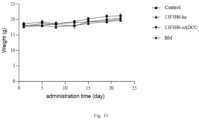
- Each mouse was subcutaneously injected with 5 ⁇ 10 ⁇ 6 cells. Once the tumors reached a size of 100-200 mm 3 , intravenous administration was performed twice a week at a dose of 10 mg/kg for a total of 6 doses. Tumor volume and mouse weight were measured throughout the experiment.
Landscapes
- Health & Medical Sciences (AREA)
- Chemical & Material Sciences (AREA)
- Organic Chemistry (AREA)
- Life Sciences & Earth Sciences (AREA)
- Immunology (AREA)
- General Health & Medical Sciences (AREA)
- Medicinal Chemistry (AREA)
- Nuclear Medicine, Radiotherapy & Molecular Imaging (AREA)
- Biochemistry (AREA)
- Animal Behavior & Ethology (AREA)
- General Chemical & Material Sciences (AREA)
- Public Health (AREA)
- Veterinary Medicine (AREA)
- Chemical Kinetics & Catalysis (AREA)
- Pharmacology & Pharmacy (AREA)
- Biophysics (AREA)
- Genetics & Genomics (AREA)
- Molecular Biology (AREA)
- Proteomics, Peptides & Aminoacids (AREA)
- Peptides Or Proteins (AREA)
- Medicines Containing Antibodies Or Antigens For Use As Internal Diagnostic Agents (AREA)
Applications Claiming Priority (2)
| Application Number | Priority Date | Filing Date | Title |
|---|---|---|---|
| CN202210802103 | 2022-07-07 | ||
| PCT/CN2023/105817 WO2024008110A1 (zh) | 2022-07-07 | 2023-07-05 | 抗ccr8抗体及其应用 |
Publications (1)
| Publication Number | Publication Date |
|---|---|
| EP4552647A1 true EP4552647A1 (de) | 2025-05-14 |
Family
ID=89454434
Family Applications (1)
| Application Number | Title | Priority Date | Filing Date |
|---|---|---|---|
| EP23834877.5A Pending EP4552647A1 (de) | 2022-07-07 | 2023-07-05 | Anti-ccr8-antikörper und verwendung davon |
Country Status (3)
| Country | Link |
|---|---|
| US (1) | US20250388684A1 (de) |
| EP (1) | EP4552647A1 (de) |
| WO (1) | WO2024008110A1 (de) |
Families Citing this family (3)
| Publication number | Priority date | Publication date | Assignee | Title |
|---|---|---|---|---|
| JPWO2024248037A1 (de) | 2023-05-30 | 2024-12-05 | ||
| WO2025145207A1 (en) | 2023-12-29 | 2025-07-03 | Bristol-Myers Squibb Company | Combination therapy of kras inhibitor and treg-depleting agent |
| WO2025191147A1 (en) * | 2024-03-14 | 2025-09-18 | Synabs | Anti-ccr8 antibodies and uses thereof |
Family Cites Families (6)
| Publication number | Priority date | Publication date | Assignee | Title |
|---|---|---|---|---|
| WO2007044756A2 (en) * | 2005-10-11 | 2007-04-19 | Icos Corporation | Monoclonal antibodies recognizing human ccr8 |
| CN110835371A (zh) * | 2018-08-19 | 2020-02-25 | 普米斯生物技术(苏州)有限公司 | 抗ccr8单克隆抗体及其应用 |
| WO2020138489A1 (ja) | 2018-12-27 | 2020-07-02 | 塩野義製薬株式会社 | 新規抗ccr8抗体 |
| CA3160204A1 (en) * | 2020-01-06 | 2021-07-15 | Vaccinex, Inc. | Anti-ccr8 antibodies and uses thereof |
| EP4186926A4 (de) * | 2020-08-28 | 2024-06-05 | Harbour Biomed US, Inc. | Ccr8-antikörper und anwendung davon |
| EP4010378B1 (de) * | 2020-10-16 | 2026-05-06 | LaNova Medicines Limited | Monoklonale anti-ccr8-antikörper und verwendungen davon |
-
2023
- 2023-07-05 EP EP23834877.5A patent/EP4552647A1/de active Pending
- 2023-07-05 US US18/879,748 patent/US20250388684A1/en active Pending
- 2023-07-05 WO PCT/CN2023/105817 patent/WO2024008110A1/zh not_active Ceased
Also Published As
| Publication number | Publication date |
|---|---|
| CN119562828A (zh) | 2025-03-04 |
| US20250388684A1 (en) | 2025-12-25 |
| WO2024008110A1 (zh) | 2024-01-11 |
Similar Documents
| Publication | Publication Date | Title |
|---|---|---|
| JP2023075294A (ja) | 抗cd47抗体及びその応用 | |
| EP4141029A1 (de) | Antikörper gegen nectin-4 und anwendung davon | |
| EP4552647A1 (de) | Anti-ccr8-antikörper und verwendung davon | |
| CN112500485B (zh) | 一种抗b7-h3抗体及其应用 | |
| US11578138B2 (en) | Anti-human TLR7 antibody | |
| WO2020056790A1 (zh) | 特异结合人及猴cd38抗原的单克隆抗体及其制备方法与应用 | |
| EP4682169A1 (de) | Spezifisch an claudin18.2 bindender antikörper und herstellungsverfahren dafür und verwendung davon | |
| CN115109154A (zh) | 一种靶向cldn18.2的抗体或其抗原结合片段及其应用 | |
| CN116396388A (zh) | 一种抗b7-h3抗体及其应用 | |
| EP4059963A1 (de) | Molekül, das an menschliches 4-1bb binden kann, und anwendung des moleküls | |
| EP4714973A1 (de) | Spezifisch an cll1, herstellungsverfahren dafür und verwendung davon bindender antikörper | |
| EP4406970A1 (de) | Gegen tigit gerichteter monoklonaler antikörper | |
| CN113354737B (zh) | 一种磷脂酰肌醇蛋白聚糖3抗体及其应用 | |
| CN119562828B (zh) | 抗ccr8抗体及其应用 | |
| EP4253415A1 (de) | Antikörper und herstellungsverfahren dafür | |
| KR20240045310A (ko) | 이중특이성 항체 및 그 응용 | |
| WO2024007358A1 (zh) | 一种结合人cd207的抗体、抗人cd207的嵌合抗原受体及其应用 | |
| CN117897169A (zh) | Il-21多肽和靶向构建体 | |
| CN120865418B (zh) | 抗ror1抗体及其应用 | |
| CN120887991B (zh) | 抗ror1抗体及其应用 | |
| WO2024234988A1 (zh) | 特异性结合cd38的抗体及其制法和应用 | |
| CN117285628A (zh) | 抗vista抗体及其应用 | |
| JP2024509369A (ja) | 抗pd-l1抗体及びその使用 | |
| HK40038037A (en) | Antibodies binding to human il-4r, preparation method therefor and use thereof |
Legal Events
| Date | Code | Title | Description |
|---|---|---|---|
| STAA | Information on the status of an ep patent application or granted ep patent |
Free format text: STATUS: THE INTERNATIONAL PUBLICATION HAS BEEN MADE |
|
| PUAI | Public reference made under article 153(3) epc to a published international application that has entered the european phase |
Free format text: ORIGINAL CODE: 0009012 |
|
| STAA | Information on the status of an ep patent application or granted ep patent |
Free format text: STATUS: REQUEST FOR EXAMINATION WAS MADE |
|
| 17P | Request for examination filed |
Effective date: 20241217 |
|
| AK | Designated contracting states |
Kind code of ref document: A1 Designated state(s): AL AT BE BG CH CY CZ DE DK EE ES FI FR GB GR HR HU IE IS IT LI LT LU LV MC ME MK MT NL NO PL PT RO RS SE SI SK SM TR |
|
| DAV | Request for validation of the european patent (deleted) | ||
| DAX | Request for extension of the european patent (deleted) |