EP4552692A2 - Zufuhr von cns-genen mithilfe von peripherer verabreicherung von aav-vektoren - Google Patents
Zufuhr von cns-genen mithilfe von peripherer verabreicherung von aav-vektoren Download PDFInfo
- Publication number
- EP4552692A2 EP4552692A2 EP25150571.5A EP25150571A EP4552692A2 EP 4552692 A2 EP4552692 A2 EP 4552692A2 EP 25150571 A EP25150571 A EP 25150571A EP 4552692 A2 EP4552692 A2 EP 4552692A2
- Authority
- EP
- European Patent Office
- Prior art keywords
- aav
- cells
- vectors
- injection
- cns
- Prior art date
- Legal status (The legal status is an assumption and is not a legal conclusion. Google has not performed a legal analysis and makes no representation as to the accuracy of the status listed.)
- Pending
Links
Images


Classifications
-
- C—CHEMISTRY; METALLURGY
- C12—BIOCHEMISTRY; BEER; SPIRITS; WINE; VINEGAR; MICROBIOLOGY; ENZYMOLOGY; MUTATION OR GENETIC ENGINEERING
- C12N—MICROORGANISMS OR ENZYMES; COMPOSITIONS THEREOF; PROPAGATING, PRESERVING, OR MAINTAINING MICROORGANISMS; MUTATION OR GENETIC ENGINEERING; CULTURE MEDIA
- C12N15/00—Mutation or genetic engineering; DNA or RNA concerning genetic engineering, vectors, e.g. plasmids, or their isolation, preparation or purification; Use of hosts therefor
- C12N15/09—Recombinant DNA-technology
- C12N15/63—Introduction of foreign genetic material using vectors; Vectors; Use of hosts therefor; Regulation of expression
- C12N15/79—Vectors or expression systems specially adapted for eukaryotic hosts
- C12N15/85—Vectors or expression systems specially adapted for eukaryotic hosts for animal cells
- C12N15/86—Viral vectors
-
- A—HUMAN NECESSITIES
- A61—MEDICAL OR VETERINARY SCIENCE; HYGIENE
- A61K—PREPARATIONS FOR MEDICAL, DENTAL OR TOILETRY PURPOSES
- A61K48/00—Medicinal preparations containing genetic material which is inserted into cells of the living body to treat genetic diseases; Gene therapy
- A61K48/0075—Medicinal preparations containing genetic material which is inserted into cells of the living body to treat genetic diseases; Gene therapy characterised by an aspect of the delivery route, e.g. oral, subcutaneous
-
- A—HUMAN NECESSITIES
- A61—MEDICAL OR VETERINARY SCIENCE; HYGIENE
- A61P—SPECIFIC THERAPEUTIC ACTIVITY OF CHEMICAL COMPOUNDS OR MEDICINAL PREPARATIONS
- A61P25/00—Drugs for disorders of the nervous system
-
- C—CHEMISTRY; METALLURGY
- C12—BIOCHEMISTRY; BEER; SPIRITS; WINE; VINEGAR; MICROBIOLOGY; ENZYMOLOGY; MUTATION OR GENETIC ENGINEERING
- C12N—MICROORGANISMS OR ENZYMES; COMPOSITIONS THEREOF; PROPAGATING, PRESERVING, OR MAINTAINING MICROORGANISMS; MUTATION OR GENETIC ENGINEERING; CULTURE MEDIA
- C12N2750/00—MICROORGANISMS OR ENZYMES; COMPOSITIONS THEREOF; PROPAGATING, PRESERVING, OR MAINTAINING MICROORGANISMS; MUTATION OR GENETIC ENGINEERING; CULTURE MEDIA ssDNA viruses
- C12N2750/00011—Details
- C12N2750/14011—Parvoviridae
- C12N2750/14111—Dependovirus, e.g. adenoassociated viruses
- C12N2750/14141—Use of virus, viral particle or viral elements as a vector
- C12N2750/14143—Use of virus, viral particle or viral elements as a vector viral genome or elements thereof as genetic vector
Definitions
- the present invention relates to compositions and methods for the delivery of therapeutic proteins to the CNS using recombinant AAV vectors. More specifically, the invention relates to compositions and methods for delivering proteins into the cerebrospinal fluid of mammalian subjects through peripheral administration of AAV vectors.
- the invention may be used to treat various disorders of the central nervous system, including degenerative diseases and motor neuron diseases.
- VEGF vascular endothelial growth factor
- ICV injection of recombinant gene vectors is a convenient way to induce the continuous production of therapeutic proteins into the cerebrospinal fluid (CSF) through the transduction of the ependymal and choroids plexus cells ⁇ Broekman, 2007 #37 ⁇ .
- CSF cerebrospinal fluid
- This approach has been reported to be efficient for correction of the neuropathology in animal models of lysosomal diseases, by mediating gene delivery of lysosomal enzymes to the brain.
- the delivery of proteins into the CSF thus represents an effective approach for the treatment of central nervous system (CNS) pathologies.
- CNS central nervous system
- the existing techniques to achieve such delivery require direct injection of gene vectors into the brain and/or surgery, and substantial risks related to the injection procedure (e.g., intracerebral surgery, infection or inflammation due to the blood brain barrier breaking, etc.), circumvent the clinical applications of this strategy.
- WO2005/056807 relates to the identification of bovine AAV and proposes to use the same for gene delivery in vivo, including for treating CNS disorders.
- This application includes a discussion of the transcytosis property (i.e., active membrane transport) of AAV through the epithelium barrier. It is suggested the possibility of achieving CNS gene delivery either through ex vivo transplantation or injection of AAV-engineered cells, or through direct in vivo injection of the vectors.
- the present invention relates to novel compositions and methods for the delivery of therapeutic proteins to the CNS using recombinant AAV vectors. More specifically, the invention relates to compositions and methods for delivering proteins into the cerebrospinal fluid of mammalian subjects through peripheral administration of AAV vectors.
- An object of this invention more specifically relates to the use of an AAV vector encoding a therapeutic protein for the manufacture of a medicament for treating a CNS disorder in a subject, wherein said AAV vector is administered by peripheral injection to said subject, said injection allowing infection of cerebrospinal fluid secretory cells of the brain (e.g., the epithelial cells of the plexus choroids and/or the ependyma and/or a meningeal membrane) and subsequent secretion of the therapeutic protein into the cerebrospinal fluid.
- cerebrospinal fluid secretory cells of the brain e.g., the epithelial cells of the plexus choroids and/or the ependyma and/or a meningeal membrane
- a further object of this invention resides in the use of an AAV vector encoding a therapeutic protein for the manufacture of a medicament for treating a CNS disorder through secretion of said therapeutic protein into the cerebrospinal fluid following peripheral injection of said vector.
- Another object of this invention relates to the use of an AAV vector for the manufacture of a medicament for secreting a protein into the cerebrospinal fluid of a subject by peripheral injection of said vector under conditions allowing infection of cerebrospinal fluid secretory cells of the brain (e.g., the epithelial cells of the plexus choroids and/or of the ependyma and/or a meningeal membrane).
- AAV vector for the manufacture of a medicament for secreting a protein into the cerebrospinal fluid of a subject by peripheral injection of said vector under conditions allowing infection of cerebrospinal fluid secretory cells of the brain (e.g., the epithelial cells of the plexus choroids and/or of the ependyma and/or a meningeal membrane).
- the invention also relates to the use of an AAV vector for the manufacture of a medicament for expressing a recombinant protein into cerebrospinal fluid secretory cells of the brain (e.g., the epithelial cells of the plexus choroids and/or of the ependyma and/or a meningeal membrane) of a subject, wherein said vector is administered to the subject by peripheral injection.
- a recombinant protein into cerebrospinal fluid secretory cells of the brain (e.g., the epithelial cells of the plexus choroids and/or of the ependyma and/or a meningeal membrane) of a subject, wherein said vector is administered to the subject by peripheral injection.
- Still a further object of this invention is a method of delivering a protein to the cerebrospinal fluid of a subject, the method comprising peripherally administering to said subject an AAV vector encoding said protein, said peripheral administration allowing infection of cerebrospinal fluid secretory cells of the brain (e.g., the epithelial cells of the plexus choroids and/or of the ependyma and/or a meningeal membrane) in said subject and secretion of said protein into the cerebrospinal fluid.
- cerebrospinal fluid secretory cells of the brain e.g., the epithelial cells of the plexus choroids and/or of the ependyma and/or a meningeal membrane
- a further object of this invention is a method of infecting cerebrospinal fluid secretory cells of the brain (e.g., the epithelial cells of the plexus choroids and/or of the ependyma and/or a meningeal membrane) of a subject, comprising peripherally administering to the subject an amount of an AAV vector effective at infecting such cells.
- cerebrospinal fluid secretory cells of the brain e.g., the epithelial cells of the plexus choroids and/or of the ependyma and/or a meningeal membrane
- a further object of this invention is a method of treating a CNS disorder in a subject by delivering a therapeutic protein into the cerebrospinal fluid of said subject, the method comprising peripherally administering to the subject an amount of an AAV vector encoding said protein effective to allow infection of cerebrospinal fluid secretory cells of the brain (e.g., the epithelial cells of the plexus choroids and/or of the ependyma and/or a meningeal membrane) by said AAV vectors in the subject, said infection causing expression of the encoded therapeutic protein into the cerebrospinal fluid and treating said disorder.
- an AAV vector encoding said protein effective to allow infection of cerebrospinal fluid secretory cells of the brain (e.g., the epithelial cells of the plexus choroids and/or of the ependyma and/or a meningeal membrane) by said AAV vectors in the subject, said infection causing expression of the encoded therapeutic protein into the cere
- a further object of this invention is an improvement to methods of treating a CNS disorder in a subject by delivery of a therapeutic protein into the cerebrospinal fluid of said subject, the improvement comprising delivering said therapeutic protein through peripheral administration to the subject of an AAV vector in an amount effective to cause infection of cerebrospinal fluid secretory cells of the brain (e.g., the epithelial cells of the plexus choroids and/or of the ependyma and/or a meningeal membrane).
- cerebrospinal fluid secretory cells of the brain e.g., the epithelial cells of the plexus choroids and/or of the ependyma and/or a meningeal membrane.
- this invention represents a safe and convenient means to deliver therapeutic proteins to the CNS through their secretion into the CSF.
- the invention is suitable for delivering any therapeutic protein, in any mammalian subject, including human subjects, for treating various CNS conditions.
- This method is based on transgene delivery to cerebrospinal fluid secretory cells of the brain (i.e., cell populations or types which, within the brain, allow secretion of a product into the cerebrospinal fluid, such as the epithelial cells of the plexus choroids and/or of the ependyma and/or a meningeal membrane) through peripheral delivery of recombinant AAV gene vectors, allowing secretion of encoded therapeutic proteins into the CSF.
- cerebrospinal fluid secretory cells of the brain i.e., cell populations or types which, within the brain, allow secretion of a product into the cerebrospinal fluid, such as the epithelial cells of the plexus choroids and/or of the ependyma and/or a meningeal membrane
- transgene expression after peripheral administration e.g., i.m., i.p, or i.v. injections
- ss single stranded
- sc double-stranded self-complementary AAV vectors in neonatal and adult C57Bl/6 mice
- SEAP murine secreted alkaline phosphatase
- GFP green fluorescent protein
- Such a peripheral delivery of recombinant AAV vectors allows the targeting and the long-term secretion of therapeutic proteins into the CSF.
- the i.v. injection of a scAAV9 encoding the vascular endothelial growth factor (VEGF) in neonatal mice allowed the production of the secreted protein in the CNS up to 5 months following injection (the last time that was examined).
- VEGF vascular endothelial growth factor
- This gene transfer strategy represents therefore an efficient and non-invasive procedure to reach the CNS, which allows avoiding the risks linked to the surgery procedure and by-passing the problem of the blood brain barrier.
- the present invention thus has many implications and utilities in the treatment of CNS disorders, including neurodegenerative diseases and motor neuron diseases.
- AAV vector designates any vector which comprises or derives from components of AAV and is suitable to infect mammalian cells, preferably human cells.
- AAV vector typically designates an AAV type viral particle (or virion) comprising at least a nucleic acid molecule encoding a therapeutic protein.
- the AAV may be derived from various serotypes, including combinations of serotypes (i.e., "pseudotyped” AAV) or from various genomes (e.g. single-stranded or self-complementary).
- the AAV vector may be replication defective and/or targeted.
- Adeno-associated virus is a dependent parvovirus, of approximately twenty nanometers in size. Like other parvoviruses, AAV is a single-stranded, non-enveloped DNA virus, having a genome of about 5000 nucleotides in length, containing two open reading frames. The left-hand open reading frame codes for the proteins responsible for replication (Rep), while the right-hand open reading frame encodes the structural proteins of the capsid (Cap). The open reading frames are flanked by two ITR sequences, which serve as the origin of replication of the viral genome. Furthermore, the genome also contains a packaging sequence, allowing packaging of the viral genome into an AAV capsid.
- AAV requires co-helper functions (which may be provided e.g. by an adenovirus, or by suitable packaging cells or helper plasmids) to undergo a productive infection in cultured cells.
- helper functions which may be provided e.g. by an adenovirus, or by suitable packaging cells or helper plasmids
- the AAV virions essentially enter the cells, migrate to the nucleus as a single-stranded DNA molecule, and integrate into the cells' genome.
- AAV has a broad host range for infectivity, including human cells, is ubiquitous in humans, and is completely non-pathogenic.
- AAV vectors have been designed, produced and used to mediate gene delivery in human subjects, including for therapeutic purposes. Clinical trials are presently ongoing in various countries using AAV vectors.
- AAV vectors for use in gene transfer comprise a replication defective AAV genome lacking functional Rep and Cap coding viral sequences. Such replication defective AAV vectors more preferably lack most or all of the Rep and Cap coding sequences, and essentially retain one or two AAV ITR sequences and a packaging sequence.
- AAV vectors Methods of producing such AAV vectors have been disclosed in the literature, including using packaging cells, auxiliary viruses or plasmids, and/or baculovirus systems ( Samulski et al., (1989) J. Virology 63, 3822 ; Xiao et al., (1998) J. Virology 72, 2224 ; Inoue et al., (1998) J. Virol. 72, 7024 ; WO98/22607 ; WO2005/072364 ).
- AAV vectors may be prepared or derived from various serotypes of AAVs, which may be even mixed together or with other types of viruses to produce chimeric (e.g. pseudotyped) AAV viruses.
- the AAV vector for use in the present invention is a human serotype AAV vector .
- a human AAV may be derived from any known serotype, e,g. from any one of serotypes 1-11, more preferably from AAV1, AAV2, AAV4, AAV6 and AAV9.
- AAV vectors comprising an AAV1-derived genome (a nucleic acid molecule comprising an AAV1-derived ITR and an AAV1-derived packaging sequence, operatively linked to a nucleic acid encoding a therapeutic protein, preferably two AAV1-derived ITR flanking an AAV1-derived packaging sequence and a nucleic acid encoding a therapeutic protein) in an AAV1-derived capsid ; vectors comprising and AAV2-derived genome in an AAV2-derived capsid ; vectors comprising and AAV4-derived genome in an AAV4-derived capsid ; vectors comprising and AA V6-derived genome in an AA V6-derived capsid or vectors comprising and AAV9-derived genome in an AAV9-derived capsid
- the AAV vector is a pseudotyped AAV vector, i.e. comprises sequences or components originating from at least two distinct AAV serotypes.
- the pseudotyped AAV vector comprises an AAV genome derived from one AAV serotype, and a Capsid derived at least in part from a distinct AAV serotype.
- pseudotyped AAV vectors include, without limitation, vectors comprising an AAV2-derived genome in an AAV1-derived capsid ; or vectors comprising an AAV2-derived genome in an AAV6-derived capsid ; or vectors comprising an AAV2-derived genome in an AAV4-derived capsid or vectors comprising an AAV2-derived genome in an AAV9-derived capsid.
- the AAV vector may comprise a modified capsid, including proteins or peptides of non viral origin or structurally modified, to alter the tropism of the vector.
- the capsid may include a ligand of a particular receptor, or a receptor of a particular ligand, to target the vector towards cell type(s) expressing said receptor or ligand, respectively.
- the AAV genome may be either a single stranded nucleic acid or a double stranded, self complementary nucleic acid ( McCarty et al., Gene Therapy, 2001 ).
- the AAV-derived genome comprises a nucleic acid encoding a therapeutic protein.
- the nucleic acid also comprises regulatory sequences allowing expression and, preferably, secretion of the encoded protein, such as e.g., a promoter, enhancer, polyadenylation signal, internal ribosome entry sites (IRES), sequences encoding protein transduction domains (PTD), and the like.
- the nucleic acid most preferably comprises a promoter region, operably linked to the coding sequence, to cause or improve expression of the therapeutic protein in infected cells.
- Such a promoter may be ubiquitous, tissue-specific, strong, weak, regulated, chimeric, etc., to allow efficient and suitable production of the protein in the infected tissue.
- the promoter may be homologous to the encoded protein, or heterologous, including cellular, viral, fungal, plant or synthetic promoters.
- Most preferred promoters for use in the present invention shall be functional in human cells, particularly in human epithelial cells, most preferably in the plexus choroids or ependyma cells.
- Examples of such regulated promoters include, without limitation, Tet on/off element-containing promoters, rapamycin-inducible promoters and metallothionein promoters.
- promoters specific for the epithelial cells of the choroid plexus or ependyma cells include that of the aquaporin 1 (AQP1) or the HNF-3/ fork head homolog-4 (HFH-4) or the insulin-like growth factor II.
- ubiquitous promoters include viral promoters, particularly the CMV promoter, the RSV promoter, the SV40 promoter, etc. and cellular promoters such as the PGK (phosphoglycerate kinase) promoter.
- the nucleic acid comprises a leader sequence allowing secretion of the encoded protein.
- Fusion of the transgene of interest with a sequence encoding a secretion signal peptide will allow the production of the therapeutic protein in a form that can be secreted from the transduced cell into the CSF.
- signal peptides include the albumin, the ⁇ -glucuronidase, the alkaline protease or the fibronectin secretory signal peptides.
- the transgene is fused with PTD sequences, such as the Tat or VP22 sequences, in order to cause or improve secretion of the therapeutic protein from the transduced cells and re-uptake by neighbour ones.
- PTD sequences such as the Tat or VP22 sequences
- the nucleic acid comprises, operably linker, a promoter and a leader sequence, to allow expression and secretion of the encoded protein.
- the nucleic acid comprises, operably linker, a promoter, a leader sequence and a PTD sequence, to allow expression and secretion of the encoded protein.
- the promoter is specific for the epithelial cells of the choroids plexus or the ependyma, i.e., allows preferential expression of the transgene in said cells.
- the AAV vectors may be produced by techniques known per se in the art, as further illustrated in the examples.
- peripheral administration includes, without limitation, any administration route which does not imply direct injection into the brain. More particularly, peripheral administration comprises systemic injections, such as intramuscular (i.m.), intravenous (i.v.), intraperitoneal (i.p.), intra-arterial, subcutaneous or transdermic injections. Peripheral administration also includes oral administration of AAV vectors ( WO96/40954 ), delivery using implants ( WO01/91803 ), or administration by instillation through the respiratory system, e.g., using sprays, aerosols or any other appropriate formulations.
- systemic injections such as intramuscular (i.m.), intravenous (i.v.), intraperitoneal (i.p.), intra-arterial, subcutaneous or transdermic injections.
- Peripheral administration also includes oral administration of AAV vectors ( WO96/40954 ), delivery using implants ( WO01/91803 ), or administration by instillation through the respiratory system, e.g., using sprays,
- peripheral administration includes peripheral injection, in particular systemic injection, most preferably i.m., i.p. or i.v. injection.
- AAV vectors may be easily adapted by the skilled artisan, e.g., depending on the disease condition, the subject, the treatment schedule, etc.
- from 10 5 to 10 14 viral genomes (transducing units) are administered per dose, typically from 10 5 to 10 12 , from 10 6 to 10 11 , from 10 7 to 10 11 , from 10 8 to 10 11 .
- Exemplary doses for achieving therapeutic effects are virus titers of at least about 10 5 , 10 6 , 10 7 , 10 8 , 10 9 , 10 10 or 10 11 transducing units or more, preferably between about 10 10 and 10 13 .
- a preferred effective dose within the context of this invention is a dose allowing infection of cells of the plexus choroids or ependyma.
- the AAV vector may be administered in any suitable form, either as a liquid solution or suspension, as a solid form suitable for solution or suspension in liquid prior to injection, as a gel or as an emulsion.
- the AAV vectors are typically formulated with any appropriate and pharmaceutically acceptable excipient, carrier, adjuvant, diluent, etc.
- the excipient may be a liquid, isotonic solution, buffer, such as a sterile and pyrogen-free water or a sterile and pyrogen-free phosphate-buffered saline solution.
- the excipient may be in particulate form.
- the AAV vectors are typically administered in a "therapeutically-effective" amount, i.e., an amount that is sufficient to alleviate (e.g., decrease, reduce) at least one of the symptoms associated with the disease state, or to provide improvement in the condition of the subject. It should be pointed out that repeated administrations may be performed, if required, using either the same or different peripheral administration route and/or the same or distinct AAV serotypes.
- the invention may be used to treat a variety of disorders through delivery of a therapeutic product into the CSF.
- the therapeutic product may be any protein, peptide or RNA that may alleviate or reduce symptoms that result from an absence or defect in a protein in a cell or subject or that otherwise confers a benefit to a subject.
- therapeutic proteins include growth factors, cytokines, hormones, neurotransmitters, enzymes, anti-apoptotic factors, angiogenic factors, and any protein known to be mutated in pathological disorders such as the "survival of motor neuron" protein (SMN).
- SNS motor neuron
- the invention can be used to treat various diseases, including any disease which may be treated or prevented by expressing therapeutic proteins into nervous tissue.
- diseases include CNS disorders, preferably selected from neurodegenerative diseases, neuromuscular diseases, lysosomal diseases, trauma, bone marrow injuries, cancers of the nervous system, demyelinating diseases, autoimmune diseases of the nervous system, neurotoxic syndromes, sleeping disorders.
- diseases include Alzheimer's Disease, Parkinson's Disease, Huntington's Disease, Tourette Syndrome, schizophrenia, Sly disease, Hunter's disease, dementia, paranoia, obsessive compulsive disorder, learning disabilities, ALS, spinal muscular atrophy, Charcot-Marie Tooth disease, Kennedy's disease, glioblastoma, neuroblastoma, autism, Gaucher's disease, Hurler's disease, Krabbe's disease and altered behaviors (e. g., disorders in sleeping, perception or cognition).
- the invention may be used in any mammalian, particularly in human subjects, including adults, for preventive or curative treatment.
- the serotype 1 and 9 conventional single-stranded (ss) and self-complementary double-stranded (sc) ssAAV vectors were generated by packaging AAV2 genomes in AAV1 and 9 capsids. Briefly, the vectors were produced using a helper-virus free three-plasmid transfection with (1) the adenovirus helper plasmid (2) the AAV packaging plasmid encoding the rep and cap genes (3) the AAV2 vector plasmid containing mSEAP or GFP (under control of the cytomegalovirus promoter) as ss or sc genome. This latter plasmid was constructed by deleting the "D" and terminal resolution site (TRS) sequences at the 5' end of the genome ⁇ Veron, 2007 #40 ⁇ .
- TRS terminal resolution site
- the recombinant vectors were purified by double-CsCl ultracentrifugation followed by dialysis against phosphate buffer saline. Physical particles were quantified by Taqman and the vectors titers were expressed as viral genome (vg) per ml.
- mice Pregnant C57B1/6 mice were purchased from Charles River Laboratories (Les Oncins, France) and neonates were injected on the day of birth (PN1). All animal experiments were carried out according to the European guidelines for the human care and use of experimental animals.
- Muscles, brains and spinal cords were removed at one (PN2), three (PN4) or seven (PN8) days post-injection, frozen in cold isopentane (-50°C), and maintained at -80°C for extemporal use.
- Tissue sections of 16 ⁇ m thick for brain and spinal cord, and 8 ⁇ m thick for muscles were performed in a cryostat and subsequently processed for transgene expression.
- the sections were washed with PBS and endogenous alkaline phosphatase was heat-inactivated for 30 min at 65°C.
- Sections were then incubated overnight at 37°C in 0.165 mg/ml 5-bromo-4-chloro-3-indolylphosphate and 0.33 mg/ml of nitroblue tetrazolium in 100 mM Tris-HCl, 100 mM NaCl and 50 mM MgCl2, counterstained with hematoxylin-eosin, and mounted with Eukit.
- Muscles, brains and spinal cords were removed at one, three or seven days post-injection and fixed for 4 h with 4% paraformaldehyde in PBS. Tissues were then cryoprotected overnight at 4°C in 15% sucrose for brains and muscles, and 30% sucrose for spinal cord and then frozen in cold isopentane (-50°C). Serial sections were cut on a cryostat and stored at -80°C for further analysis.
- Sections were washed in PBS and incubated for 30 min in a solution of hydrogen peroxide (Peroxydase-Blocking solution, Dako) for inhibition of the endogenous peroxidases. After washing in PBS, sections were blocked for one hour at room temperature in PBS with 10% goat serum (Dako) and 0.4% Triton and then incubated overnight with a rabbit polyclonal anti-GFP (Abcam; 1/3000).
- a biotin-conjugated secondary antibody (Vectastain, 1:200) and the Vectastain Elite ABC kit were used, and DAB staining was revealed with the DAB substrate kit for peroxydase from Vector Laboratories. Sections were dehydrated in alcohol and xylen, and mounted with Eukit.
- Frozen tissues were lysed in 700 ⁇ l of nuclei lysis Buffer included in the Wizard genomic DNA extraction kit (Promega corporation, Madison, WI) containing a cocktail of protease inhibitor (Sigma-Aldrich, St.Louis, MO). The tissues were first homogenized for 30 sec with an Ultra-Turrax and then submitted to three successive homogenizations to achieve complete lysis. Cells membranes and debris were pelleted by centrifugation 2 minutes at 10,000 g at 4°C. mSEAP activity was measured in the supernatant using a chemiluminescent assay.
- VEGF immunoassay kit Quantitative analysis of VEGF levels was performed using a mouse VEGF immunoassay kit (Quantikine, R&D systems). 5 months after scAAV9-VEGF injection, the animals were deeply anaesthetized with pentobarbital and sacrificed by decapitation. Tissues samples were removed and frozen at -80°C. Tissues were homogenized in TSAI buffer (50mM Tris-HCl, 250mM NaCl, 5mM EDTA, 0.1% NP40, 5mM DTT, 10mM NaF) containing a cocktail of protease inhibitor (Complete mini, Roche) using a motor pellet pestle for brain and spinal cord, and an Ultra-Turrax for heart and liver. The lysates were then centrifuged 20 min at 4°C, supernatants were collected and ELISA was performed following the manufacturer's protocol. Protein concentration was assessed using the BCA protein assay kit (Pierce).
- ssAAV1, ssAAV9, scAAV1, or scAAV9 encoding mSEAP were injected into both triceps and gastrocnemius muscles in one day old C57Bl6 mice (8.10 +9 to 2.10 +10 viral genome per mouse).
- the injected muscles, brains and spinal cords were removed one, three or seven days post injection, and mSEAP expression was determined using histochemistry (see materials and methods).
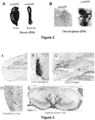
- Transgene expression was also detected in the CNS after i.m. injection of scAAV9, and interestingly, the expression was specifically detected in the choroids plexus and ependymal cells ( Figure 1 B) , which are highly specialized epithelium in the secretion and the clearance of many proteins and toxins in the CSF ⁇ Redzic, 2005 #38 ⁇ .
- the mSEAP expression in the CNS was found as soon as 3 days post-injection when using scAAV9, and the expression levels again increased with time. A weak expression was found with AAV1sc, but could be due to non-specific staining of the endogenous mSEAP.
- ssAAV1, ssAAV9, scAAV1 and scAAV9 were injected intraperitoneally in one day old C57Bl6 mice (100 ⁇ l, 3.10 +10 to 1.10 +11 viral genome per mouse) and transgene expression was evaluated in muscle or CNS tissue at 1, 3 or 7 days post injection.
- GFP green fluorescent protein
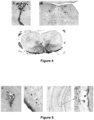
- GFP-immunoreactive cells were observed in both the choroids plexus and ependy ma cells ( Fig. 3A,B and Fig. 4A ).
- GFP expression was observed in many brain cells located for example in the hippocampus ( Fig. 3A, C ), in the entorhinal cortex ( Fig. 3D ) or in the septum ( Fig. 4B ).
- Fig. 3A, C hippocampus
- Fig. 3D entorhinal cortex
- Fig. 4B septum
- a higher number of GFP-immunopositive cells were observed after i.p. than i.m. injection, but this could be due to the higher titre of vector used in the i.p. procedure. Additional data are required to confirm this observation.
- a particularly high GFP-expression was found in the hippocampus, likely due to its location close to the cerebral ventricles and to the preferential diffusion of the vectors through the blood brain barrier at the choroids plexus level.
- highly transduced neuronal cells were also observed in the enthorhinal cortex, probably resulting from the retrograde axonal transport of the AAV vectors from the hippocampus.
- the presence of transduced neuronal cell in the septum could also result from similar axonal transport mechanisms.
- GFP expression was further detected in blood vessels throughout the brain and the spinal cord.
- GFP-positive fibers were also observed in the spinal grey matter innervating neuronal cells (that were identified using GFP/NeuN immunostaining). These fibers probably originate from the dorsal root ganglion which also appeared strongly positive ( Fig. 3E and 4C ).
- a scAAV9 vector expressing GFP was injected intravenously into the temporal vein of one day old C57Bl6 mice (50 ⁇ l, 1,5.10 +10 viral genome per mouse) and transgene expression was analysed 7 days post-injection using immunohistochemistry against GFP.
- the immunohistochemical analysis of brain tissue sections revealed a strong GFP expression in both the choroids plexus and ependyma cells ( Fig. 5A ), and in the brain blood vessels Again, we found GFP expression within brain cells, with both a neuron-like and a glial-like phenotype, located for example in the hippocampus or in the entorhinal cortex ( Fig.5B-D ).
- mice were injected into the tail vein of adult mice (3 x 10¹¹ or 1x10¹² vg per mouse) and mSEAP activity was analyzed 4 weeks later by biochemical analysis.
- ss- and sc AAV1 and AAV9 vectors encoding mSEAP were injected into the tail vein of adult mice (3 x 10¹¹ or 1x10¹² vg per mouse) and mSEAP activity was analyzed 4 weeks later by biochemical analysis.
- scAAV9 vector including non-nervous organs like the heart, skeletal muscle, liver and kidney
- mSEAP activity was also found to be increased in the CNS from was observed between mice AAV1-injected mice.
- mSEAP activity was higher in the spinal cord of ssAAV1-injected mice compared to ssAAV9 injected mice (and possibly in that of scAAV1-injected mice although not statistically significant).
- VEGF vascular endothelial growth factor
- Item 1 The use of an AAV vector encoding a therapeutic protein for the manufacture of a medicament for treating a CNS disorder in a subject by peripheral administration of said AAV vector to said subject, said administration allowing infection of cerebrospinal fluid secretory cells of the brain and subsequent secretion of the therapeutic protein into the cerebrospinal fluid.
- Item 2 The use of an AAV vector encoding a therapeutic protein for the manufacture of a medicament for treating a CNS disorder through secretion of said therapeutic protein into the cerebrospinal fluid upon peripheral injection of said vector.
- Item 3 The use of an AAV vector for secreting a protein into the cerebrospinal fluid of a subject by peripheral injection of said vector under conditions allowing infection of cerebrospinal fluid secretory cells of the brain, particularly the epithelial cells of the plexus choroids and/or of the ependyma and/or a meningeal membrane).
- Item 4 The use of any one of items 1 to 3, wherein said peripheral injection comprises intraperitoneal (i.p.), intramuscular (i.m.) or intravenous (i.v.) injection.
- said peripheral injection comprises intraperitoneal (i.p.), intramuscular (i.m.) or intravenous (i.v.) injection.
- AAV vector is a human serotype AAV vector, preferably selected from serotypes 1, 2, 3, 4, 5, 6, 7, 8, 9, 10 and 11, more preferably from AAV1, AAV2, AAV6 and AAV9.
- Item 6 The use of any one of items 1 to 5, wherein the AAV vector is a pseudotyped AAV vector.
- Item 7 The use of any one of items 1 to 6, wherein the AAV vector is a single stranded AAV vector.
- Item 8 The use of any one of items 1 to 6, wherein the AAV vector is a double-stranded self-complementary AAV vector.
- Item 9 The use of any one of items 1 to 7, wherein the AAV vector comprises a replication defective AAV genome lacking functional Rep and Cap coding viral sequences.
- Item 10 The use of any one of the preceding items, wherein the therapeutic protein is selected from growth factors, cytokines, hormones, neurotransmitters, enzymes, anti-apoptotic factors, angiogenic factors, and any protein known to be mutated in pathological disorders such as the "survival of motor neuron" protein (SMN).
- SNS motor neuron
- Item 11 The use of any one of the preceding items, wherein the CNS disorder is selected from neurodegenerative diseases, neuromuscular diseases, lysosomal diseases, trauma, bone marrow injuries, cancers of the nervous system, demyelinating diseases, autoimmune diseases of the nervous system, neurotoxic syndromes, sleeping disorders.
- the CNS disorder is selected from neurodegenerative diseases, neuromuscular diseases, lysosomal diseases, trauma, bone marrow injuries, cancers of the nervous system, demyelinating diseases, autoimmune diseases of the nervous system, neurotoxic syndromes, sleeping disorders.
- Item 12 The use of any one of the preceding items, wherein the vector is a pseudotyped AAV vector comprising an AAV2-derived genome packaged in an AAV1- or AAV9-derived capsid.
- Item 13 The use of any one of the preceding items, wherein expression of the therapeutic protein in the vector is controlled by an ubiquitous, regulated and/or tissue-specific promoter.
Landscapes
- Health & Medical Sciences (AREA)
- Life Sciences & Earth Sciences (AREA)
- Genetics & Genomics (AREA)
- Engineering & Computer Science (AREA)
- Chemical & Material Sciences (AREA)
- Biotechnology (AREA)
- Organic Chemistry (AREA)
- Biomedical Technology (AREA)
- General Health & Medical Sciences (AREA)
- Bioinformatics & Cheminformatics (AREA)
- Molecular Biology (AREA)
- Zoology (AREA)
- Wood Science & Technology (AREA)
- General Engineering & Computer Science (AREA)
- Pharmacology & Pharmacy (AREA)
- Public Health (AREA)
- Medicinal Chemistry (AREA)
- Animal Behavior & Ethology (AREA)
- Veterinary Medicine (AREA)
- Epidemiology (AREA)
- Plant Pathology (AREA)
- Microbiology (AREA)
- Biophysics (AREA)
- Physics & Mathematics (AREA)
- Biochemistry (AREA)
- Virology (AREA)
- Neurology (AREA)
- Neurosurgery (AREA)
- Chemical Kinetics & Catalysis (AREA)
- General Chemical & Material Sciences (AREA)
- Nuclear Medicine, Radiotherapy & Molecular Imaging (AREA)
- Medicines That Contain Protein Lipid Enzymes And Other Medicines (AREA)
- Medicines Containing Material From Animals Or Micro-Organisms (AREA)
- Medicinal Preparation (AREA)
Priority Applications (1)
| Application Number | Priority Date | Filing Date | Title |
|---|---|---|---|
| EP25187268.5A EP4603144A3 (de) | 2007-07-23 | 2008-07-22 | Zufuhr von cns-genen mithilfe von peripherer verabreicherung von aavvektoren |
Applications Claiming Priority (5)
| Application Number | Priority Date | Filing Date | Title |
|---|---|---|---|
| EP07301263A EP2019143A1 (de) | 2007-07-23 | 2007-07-23 | Gentherapie des ZNS mit peripher verabreichten AAV-Vektoren |
| EP18212543.5A EP3498851B1 (de) | 2007-07-23 | 2008-07-22 | Zufuhr von cns-genen mithilfe von peripherer verabreicherung von aav-vektoren |
| EP12172848A EP2514827A1 (de) | 2007-07-23 | 2008-07-22 | Zufuhr von CNS-Genen über periphere Verabreichung von AAV10-Vektoren |
| EP08786331.2A EP2185712B1 (de) | 2007-07-23 | 2008-07-22 | Zns-genzuführung mittels peripherer verabreichung von aav-vektoren |
| PCT/EP2008/059595 WO2009013290A1 (en) | 2007-07-23 | 2008-07-22 | Cns gene delivery using peripheral administration of aav vectors |
Related Parent Applications (4)
| Application Number | Title | Priority Date | Filing Date |
|---|---|---|---|
| EP18212543.5A Division EP3498851B1 (de) | 2007-07-23 | 2008-07-22 | Zufuhr von cns-genen mithilfe von peripherer verabreicherung von aav-vektoren |
| EP18212543.5A Division-Into EP3498851B1 (de) | 2007-07-23 | 2008-07-22 | Zufuhr von cns-genen mithilfe von peripherer verabreicherung von aav-vektoren |
| EP12172848A Division EP2514827A1 (de) | 2007-07-23 | 2008-07-22 | Zufuhr von CNS-Genen über periphere Verabreichung von AAV10-Vektoren |
| EP08786331.2A Division EP2185712B1 (de) | 2007-07-23 | 2008-07-22 | Zns-genzuführung mittels peripherer verabreichung von aav-vektoren |
Related Child Applications (1)
| Application Number | Title | Priority Date | Filing Date |
|---|---|---|---|
| EP25187268.5A Division EP4603144A3 (de) | 2007-07-23 | 2008-07-22 | Zufuhr von cns-genen mithilfe von peripherer verabreicherung von aavvektoren |
Publications (2)
| Publication Number | Publication Date |
|---|---|
| EP4552692A2 true EP4552692A2 (de) | 2025-05-14 |
| EP4552692A3 EP4552692A3 (de) | 2025-07-16 |
Family
ID=38573418
Family Applications (6)
| Application Number | Title | Priority Date | Filing Date |
|---|---|---|---|
| EP07301263A Withdrawn EP2019143A1 (de) | 2007-07-23 | 2007-07-23 | Gentherapie des ZNS mit peripher verabreichten AAV-Vektoren |
| EP25150571.5A Pending EP4552692A3 (de) | 2007-07-23 | 2008-07-22 | Zufuhr von cns-genen mithilfe von peripherer verabreicherung von aav-vektoren |
| EP18212543.5A Active EP3498851B1 (de) | 2007-07-23 | 2008-07-22 | Zufuhr von cns-genen mithilfe von peripherer verabreicherung von aav-vektoren |
| EP12172848A Ceased EP2514827A1 (de) | 2007-07-23 | 2008-07-22 | Zufuhr von CNS-Genen über periphere Verabreichung von AAV10-Vektoren |
| EP08786331.2A Active EP2185712B1 (de) | 2007-07-23 | 2008-07-22 | Zns-genzuführung mittels peripherer verabreichung von aav-vektoren |
| EP25187268.5A Pending EP4603144A3 (de) | 2007-07-23 | 2008-07-22 | Zufuhr von cns-genen mithilfe von peripherer verabreicherung von aavvektoren |
Family Applications Before (1)
| Application Number | Title | Priority Date | Filing Date |
|---|---|---|---|
| EP07301263A Withdrawn EP2019143A1 (de) | 2007-07-23 | 2007-07-23 | Gentherapie des ZNS mit peripher verabreichten AAV-Vektoren |
Family Applications After (4)
| Application Number | Title | Priority Date | Filing Date |
|---|---|---|---|
| EP18212543.5A Active EP3498851B1 (de) | 2007-07-23 | 2008-07-22 | Zufuhr von cns-genen mithilfe von peripherer verabreicherung von aav-vektoren |
| EP12172848A Ceased EP2514827A1 (de) | 2007-07-23 | 2008-07-22 | Zufuhr von CNS-Genen über periphere Verabreichung von AAV10-Vektoren |
| EP08786331.2A Active EP2185712B1 (de) | 2007-07-23 | 2008-07-22 | Zns-genzuführung mittels peripherer verabreichung von aav-vektoren |
| EP25187268.5A Pending EP4603144A3 (de) | 2007-07-23 | 2008-07-22 | Zufuhr von cns-genen mithilfe von peripherer verabreicherung von aavvektoren |
Country Status (7)
| Country | Link |
|---|---|
| US (4) | US10208318B2 (de) |
| EP (6) | EP2019143A1 (de) |
| CA (2) | CA2694241C (de) |
| ES (1) | ES2586434T3 (de) |
| FR (1) | FR20C1058I1 (de) |
| PT (1) | PT2185712T (de) |
| WO (1) | WO2009013290A1 (de) |
Families Citing this family (72)
| Publication number | Priority date | Publication date | Assignee | Title |
|---|---|---|---|---|
| EP2019143A1 (de) | 2007-07-23 | 2009-01-28 | Genethon | Gentherapie des ZNS mit peripher verabreichten AAV-Vektoren |
| EP2058401A1 (de) | 2007-10-05 | 2009-05-13 | Genethon | Weitverbreitete Genverabreichung an Motorneuronen unter Verwendung einer peripheren Injektion von AAV-Vektoren |
| EP2271763A2 (de) * | 2008-04-03 | 2011-01-12 | Yeda Research And Development Company Ltd. | Verfahren zur expression eines polypeptids im gehirn und dazu fähige nukleinsäurekonstrukte |
| US9415121B2 (en) | 2008-12-19 | 2016-08-16 | Nationwide Children's Hospital | Delivery of MECP2 polynucleotide using recombinant AAV9 |
| US11219696B2 (en) | 2008-12-19 | 2022-01-11 | Nationwide Children's Hospital | Delivery of polynucleotides using recombinant AAV9 |
| HRP20250897T1 (hr) | 2009-05-02 | 2025-09-26 | Genzyme Corporation | Genska terapija za neurodegenerativne poremećaje |
| US8734809B2 (en) | 2009-05-28 | 2014-05-27 | University Of Massachusetts | AAV's and uses thereof |
| EP2561073B1 (de) | 2010-04-23 | 2016-08-24 | University of Massachusetts | Auf das zentralnervensystem abzielende vektoren und verfahren zu ihrer verwendung |
| US20130039888A1 (en) | 2011-06-08 | 2013-02-14 | Nationwide Children's Hospital Inc. | Products and methods for delivery of polynucleotides by adeno-associated virus for lysosomal storage disorders |
| WO2013184209A1 (en) | 2012-06-04 | 2013-12-12 | Ludwig Institute For Cancer Research Ltd. | Mif for use in methods of treating subjects with a neurodegenerative disorder |
| US20150182637A1 (en) * | 2012-06-21 | 2015-07-02 | Association Institut De Myologie | Widespread gene delivery of gene therapy vectors |
| AU2013296425B2 (en) | 2012-08-01 | 2018-06-07 | Nationwide Children's Hospital | Intrathecal delivery of recombinant adeno-associated virus 9 |
| US9539307B2 (en) | 2012-09-17 | 2017-01-10 | The Research Institute At Nationwide Children's Hospital | Compositions and methods for treating amyotrophic lateral sclerosis |
| EP2900686B1 (de) * | 2012-09-28 | 2020-06-10 | The University of North Carolina At Chapel Hill | Gegen oligodendrozyten gerichtete aav-vektoren |
| EP2749569A1 (de) | 2012-12-28 | 2014-07-02 | Annibale Alessandro Puca | Variante des BPIFB4-Proteins |
| MX380973B (es) | 2013-05-01 | 2025-03-12 | Genzyme Corp | Composiciones y metodos para tratar la atrofia muscular espinal. |
| SI3702466T1 (sl) | 2013-08-27 | 2023-04-28 | Research Institute At Nationwide Children's Hospital | Proizvodi in postopki za zdravljenje amiotrofične lateralne skleroze |
| US9725719B2 (en) | 2013-11-05 | 2017-08-08 | The Research Institute At Nationwide Children's Hospital | Compositions and methods for inhibiting NF-κB and SOD-1 to treat amyotrophic lateral sclerosis |
| WO2015109034A1 (en) * | 2014-01-14 | 2015-07-23 | The Trustees Of Columbia University In The City Of New York | Biological pacemakers incorporating hcn2 and skm1 genes |
| US12503495B2 (en) | 2014-04-14 | 2025-12-23 | Association Institut De Myologie | Treatment of myotonic dystrophy |
| WO2015158365A1 (en) * | 2014-04-14 | 2015-10-22 | Association Institut De Myologie | Treatment of myotonic dystrophy |
| CN107073051B (zh) | 2014-10-21 | 2021-08-24 | 马萨诸塞大学 | 重组aav变体及其用途 |
| WO2016077687A1 (en) | 2014-11-14 | 2016-05-19 | Voyager Therapeutics, Inc. | Compositions and methods of treating amyotrophic lateral sclerosis (als) |
| KR20230145206A (ko) | 2014-11-14 | 2023-10-17 | 보이저 테라퓨틱스, 인크. | 조절성 폴리뉴클레오티드 |
| EP4344741A3 (de) | 2014-11-21 | 2024-08-28 | The University of North Carolina at Chapel Hill | Auf das zentrale nervensystem gerichtete aav-vektoren |
| WO2016100575A1 (en) | 2014-12-16 | 2016-06-23 | Board Of Regents Of The University Of Nebraska | Gene therapy for juvenile batten disease |
| WO2017075335A1 (en) | 2015-10-28 | 2017-05-04 | Voyager Therapeutics, Inc. | Regulatable expression using adeno-associated virus (aav) |
| WO2017085317A1 (en) * | 2015-11-19 | 2017-05-26 | Universitat Autonoma De Barcelona | Secreted splicing variant of mammal klotho as a medicament for cognition and behaviour impairments |
| EP3411484B1 (de) | 2016-02-05 | 2023-10-04 | Emory University | Injektion von einzelsträngigem oder selbstkomplementärem adeno-assoziiertem virus 9 in den liquor |
| KR20240056729A (ko) | 2016-05-18 | 2024-04-30 | 보이저 테라퓨틱스, 인크. | 조절성 폴리뉴클레오티드 |
| KR102427379B1 (ko) | 2016-05-18 | 2022-08-02 | 보이저 테라퓨틱스, 인크. | 헌팅톤 질환을 치료하기 위한 조성물 및 방법 |
| CN109415730A (zh) | 2016-06-13 | 2019-03-01 | 北卡罗来纳大学教堂山分校 | 优化的cln1基因和表达盒以及它们的应用 |
| WO2018044933A1 (en) | 2016-08-30 | 2018-03-08 | The Regents Of The University Of California | Methods for biomedical targeting and delivery and devices and systems for practicing the same |
| AU2017341849B2 (en) | 2016-10-13 | 2024-03-21 | University Of Massachusetts | AAV capsid designs |
| MX2019011772A (es) | 2017-04-03 | 2020-01-09 | Encoded Therapeutics Inc | Expresion transgenica selectiva de tejidos. |
| JP2020518258A (ja) | 2017-05-05 | 2020-06-25 | ボイジャー セラピューティクス インコーポレイテッドVoyager Therapeutics,Inc. | 筋萎縮性側索硬化症(als)治療組成物および方法 |
| JP2020518259A (ja) | 2017-05-05 | 2020-06-25 | ボイジャー セラピューティクス インコーポレイテッドVoyager Therapeutics,Inc. | ハンチントン病治療組成物および方法 |
| CA3070087A1 (en) | 2017-07-17 | 2019-01-24 | Voyager Therapeutics, Inc. | Trajectory array guide system |
| EP3808849A1 (de) | 2017-08-03 | 2021-04-21 | Voyager Therapeutics, Inc. | Zusammensetzungen und verfahren zur aav-freisetzung |
| EP3697908A1 (de) | 2017-10-16 | 2020-08-26 | Voyager Therapeutics, Inc. | Behandlung von amyotropher lateralsklerose (als) |
| TW202413649A (zh) | 2017-10-16 | 2024-04-01 | 美商航海家醫療公司 | 肌萎縮性脊髓側索硬化症(als)之治療 |
| EP3717505A4 (de) | 2017-12-01 | 2021-12-01 | Encoded Therapeutics, Inc. | Gentechnisch veränderte dna-bindende proteine |
| KR20210019996A (ko) | 2018-05-15 | 2021-02-23 | 보이저 테라퓨틱스, 인크. | 파킨슨병의 치료를 위한 조성물 및 방법 |
| WO2019222329A1 (en) | 2018-05-15 | 2019-11-21 | Voyager Therapeutics, Inc. | Compositions and methods for delivery of aav |
| US20210214749A1 (en) | 2018-05-16 | 2021-07-15 | Voyager Therapeutics, Inc. | Directed evolution |
| US20210254103A1 (en) | 2018-07-02 | 2021-08-19 | Voyager Therapeutics, Inc. | Treatment of amyotrophic lateral sclerosis and disorders associated with the spinal cord |
| WO2020010035A1 (en) | 2018-07-02 | 2020-01-09 | Voyager Therapeutics, Inc. | Cannula system |
| CN112770812A (zh) | 2018-07-24 | 2021-05-07 | 沃雅戈治疗公司 | 产生基因治疗制剂的系统和方法 |
| EP3856762A1 (de) | 2018-09-28 | 2021-08-04 | Voyager Therapeutics, Inc. | Frataxin-expressionskonstrukte mit gentechnisch veränderten promotoren und verfahren zu deren verwendung |
| WO2020072849A1 (en) | 2018-10-04 | 2020-04-09 | Voyager Therapeutics, Inc. | Methods for measuring the titer and potency of viral vector particles |
| US20210371470A1 (en) | 2018-10-12 | 2021-12-02 | Voyager Therapeutics, Inc. | Compositions and methods for delivery of aav |
| KR20220022107A (ko) | 2018-12-05 | 2022-02-24 | 아베오나 테라퓨틱스 인코퍼레이티드 | 유전자 전달을 위한 재조합 아데노-연관 바이러스 벡터 |
| SG11202107645RA (en) | 2019-01-18 | 2021-08-30 | Voyager Therapeutics Inc | Methods and systems for producing aav particles |
| PL3976798T3 (pl) | 2019-05-29 | 2026-04-07 | Encoded Therapeutics, Inc. | Kompozycje i sposoby selektywnej regulacji genów |
| WO2021046155A1 (en) | 2019-09-03 | 2021-03-11 | Voyager Therapeutics, Inc. | Vectorized editing of nucleic acids to correct overt mutations |
| JP7713956B2 (ja) | 2020-04-15 | 2025-07-28 | ボイジャー セラピューティクス インコーポレイテッド | タウ結合化合物 |
| TWI900553B (zh) | 2020-05-13 | 2025-10-11 | 美商航海家醫療公司 | Aav蛋白殼之趨性重定向 |
| WO2022187548A1 (en) | 2021-03-03 | 2022-09-09 | Voyager Therapeutics, Inc. | Controlled expression of viral proteins |
| WO2023044483A2 (en) | 2021-09-20 | 2023-03-23 | Voyager Therapeutics, Inc. | Compositions and methods for the treatment of her2 positive cancer |
| EP4426716A1 (de) | 2021-11-02 | 2024-09-11 | Voyager Therapeutics, Inc. | Aav-kapsidvarianten und verwendungen davon |
| EP4433169A1 (de) | 2021-11-17 | 2024-09-25 | Voyager Therapeutics, Inc. | Aav-kapsidvarianten und verwendungen davon |
| CA3249551A1 (en) | 2022-02-08 | 2023-08-17 | Voyager Therapeutics, Inc. | AAV Capsid Variants and Their Uses |
| EP4532515A1 (de) | 2022-06-02 | 2025-04-09 | Voyager Therapeutics, Inc. | Aav-kapsidvarianten und verwendungen davon |
| CA3259902A1 (en) | 2022-06-28 | 2024-01-04 | Voyager Therapeutics, Inc. | AAV Capsid Variants and Their Uses |
| US20250388626A1 (en) | 2022-07-06 | 2025-12-25 | Voyager Therapeutics, Inc. | Aav capsid variants and uses thereof |
| JP2025528068A (ja) | 2022-08-03 | 2025-08-26 | ボイジャー セラピューティクス インコーポレイテッド | 血液脳関門を通過させるための組成物及び方法 |
| KR20250069606A (ko) | 2022-09-15 | 2025-05-19 | 보이저 테라퓨틱스, 인크. | 타우 결합 화합물 |
| KR20250129743A (ko) | 2022-12-29 | 2025-08-29 | 보이저 테라퓨틱스, 인크. | Mapt를 조절하기 위한 조성물 및 방법 |
| WO2024226790A1 (en) | 2023-04-26 | 2024-10-31 | Voyager Therapeutics, Inc. | Aav capsid variants and uses thereof |
| TW202444917A (zh) | 2023-05-04 | 2024-11-16 | 美商航海家醫療公司 | Aav衣殼變異體及其用途 |
| WO2025038430A1 (en) | 2023-08-16 | 2025-02-20 | Voyager Therapeutics, Inc. | Aav capsid variants and uses thereof |
| WO2025147436A1 (en) | 2024-01-03 | 2025-07-10 | Voyager Therapeutics, Inc. | Aav capsid variants and uses thereof |
Citations (11)
| Publication number | Priority date | Publication date | Assignee | Title |
|---|---|---|---|---|
| WO1996040954A1 (en) | 1995-06-07 | 1996-12-19 | Yale University | Oral delivery of adeno-associated viral vectors |
| WO1998022607A1 (fr) | 1996-11-22 | 1998-05-28 | Rhone-Poulenc Rorer S.A. | Procede de production de virus recombinants |
| WO1999006562A1 (en) | 1997-07-31 | 1999-02-11 | Chiron Corporation | Method enabling readministration of aav vector via immunosuppression of host |
| WO2000028004A1 (en) | 1998-11-10 | 2000-05-18 | The University Of North Carolina At Chapel Hill | Virus vectors and methods of making and administering the same |
| WO2000073316A2 (en) | 1999-05-28 | 2000-12-07 | Cell Genesys, Inc. | Virus immunologic determinants |
| WO2001023001A2 (en) | 1999-09-29 | 2001-04-05 | The Trustees Of The University Of Pennsylvania | Rapid peg-modification |
| WO2001091803A2 (en) | 2000-06-01 | 2001-12-06 | University Of North Carolina At Chapel Hill | Methods and compounds for controlled release of recombinant parvovirus vectors |
| WO2004112727A2 (en) | 2003-06-19 | 2004-12-29 | Avigen, Inc. | Aav virions with decreased immunoreactivity and uses therefor |
| WO2005005610A2 (en) | 2003-06-30 | 2005-01-20 | The Regents Of The University Of California | Mutant adeno-associated virus virions and methods of use thereof |
| WO2005056807A2 (en) | 2003-12-04 | 2005-06-23 | The Government Of The United States Of America, As Represented By The Secretary, Department Of Health And Human Services, National Institutes Of Health | Bovine adeno-associated viral (baav) vector and uses thereof |
| WO2005072364A2 (en) | 2004-01-27 | 2005-08-11 | University Of Florida | A modified baculovirus expression system for production of pseudotyped raav vector |
Family Cites Families (20)
| Publication number | Priority date | Publication date | Assignee | Title |
|---|---|---|---|---|
| US20040076613A1 (en) | 2000-11-03 | 2004-04-22 | Nicholas Mazarakis | Vector system |
| US6582692B1 (en) * | 1999-11-17 | 2003-06-24 | Avigen, Inc. | Recombinant adeno-associated virus virions for the treatment of lysosomal disorders |
| ATE318923T1 (de) | 2000-06-01 | 2006-03-15 | Univ North Carolina | Doppelsträngige parvovirus-vektoren |
| EP1402043A1 (de) * | 2001-07-03 | 2004-03-31 | Institut National De La Sante Et De La Recherche Medicale (Inserm) | Verfahren zur verabreichung von vektoren an synaptisch verbundene neuronen |
| DK2573170T3 (en) * | 2001-12-17 | 2018-04-09 | Univ Pennsylvania | Sequences of adeno-associated virus (AAV) serotype 9, vectors containing them, and their use |
| EP1463530A4 (de) * | 2001-12-19 | 2006-09-06 | Lijun Wang | Adeno-assoziierte virusvermittelte abgabe von gdnf an skelettmuskeln |
| US6998118B2 (en) * | 2001-12-21 | 2006-02-14 | The Salk Institute For Biological Studies | Targeted retrograde gene delivery for neuronal protection |
| IL162630A0 (en) | 2001-12-21 | 2005-11-20 | Salk Inst For Biological Studi | A composition containing a viral vector containinga heterologous gene to be transduced into a neuron |
| EP2345731B1 (de) * | 2003-09-30 | 2015-10-21 | The Trustees of the University of Pennsylvania | Adenoassoziierte Virus-Claden, Sequenzen, diese enthaltende Vektoren und ihre Verwendungen |
| US8734810B2 (en) * | 2003-10-29 | 2014-05-27 | Allergan, Inc. | Botulinum toxin treatments of neurological and neuropsychiatric disorders |
| US20060110364A1 (en) | 2004-08-20 | 2006-05-25 | Ludwig Institute For Cancer Research | Vector-mediated delivery of polynucleotides encoding soluble VEGF receptors |
| US20080188431A1 (en) * | 2004-09-08 | 2008-08-07 | Chiorini John A | Transcytosis of Adeno-Associated Viruses |
| WO2006119432A2 (en) | 2005-04-29 | 2006-11-09 | The Government Of The U.S.A., As Rep. By The Sec., Dept. Of Health & Human Services | Isolation, cloning and characterization of new adeno-associated virus (aav) serotypes |
| CA2606490C (en) * | 2005-05-02 | 2018-02-06 | Genzyme Corporation | Gene therapy for spinal cord disorders |
| US7867484B2 (en) | 2006-01-27 | 2011-01-11 | University Of North Carolina At Chapel Hill | Heparin and heparan sulfate binding chimeric vectors |
| EP2132309A4 (de) * | 2007-02-23 | 2011-01-05 | Univ Florida | Zusammensetzungen und verfahren zur behandlung von glykogenspeicherkrankheiten |
| WO2008150459A1 (en) * | 2007-05-30 | 2008-12-11 | The Trustees Of The University Of Pennsylvania | A method for transducing cells with primary cilia |
| EP2019143A1 (de) | 2007-07-23 | 2009-01-28 | Genethon | Gentherapie des ZNS mit peripher verabreichten AAV-Vektoren |
| CA2694091A1 (en) | 2007-10-01 | 2009-04-09 | Alcon Research, Ltd. | Self complementary aav-mediated delivery of interfering rna molecules to treat or prevent ocular disorders |
| EP2058401A1 (de) | 2007-10-05 | 2009-05-13 | Genethon | Weitverbreitete Genverabreichung an Motorneuronen unter Verwendung einer peripheren Injektion von AAV-Vektoren |
-
2007
- 2007-07-23 EP EP07301263A patent/EP2019143A1/de not_active Withdrawn
-
2008
- 2008-07-22 EP EP25150571.5A patent/EP4552692A3/de active Pending
- 2008-07-22 PT PT87863312T patent/PT2185712T/pt unknown
- 2008-07-22 CA CA2694241A patent/CA2694241C/en active Active
- 2008-07-22 CA CA2999549A patent/CA2999549C/en active Active
- 2008-07-22 WO PCT/EP2008/059595 patent/WO2009013290A1/en not_active Ceased
- 2008-07-22 EP EP18212543.5A patent/EP3498851B1/de active Active
- 2008-07-22 US US12/452,789 patent/US10208318B2/en active Active
- 2008-07-22 EP EP12172848A patent/EP2514827A1/de not_active Ceased
- 2008-07-22 EP EP08786331.2A patent/EP2185712B1/de active Active
- 2008-07-22 ES ES08786331.2T patent/ES2586434T3/es active Active
- 2008-07-22 EP EP25187268.5A patent/EP4603144A3/de active Pending
-
2018
- 2018-12-10 US US16/214,214 patent/US20190153474A1/en not_active Abandoned
-
2020
- 2020-11-17 FR FR20C1058C patent/FR20C1058I1/fr active Active
-
2023
- 2023-08-01 US US18/363,453 patent/US12351816B2/en active Active
-
2025
- 2025-07-02 US US19/258,034 patent/US20250333765A1/en active Pending
Patent Citations (11)
| Publication number | Priority date | Publication date | Assignee | Title |
|---|---|---|---|---|
| WO1996040954A1 (en) | 1995-06-07 | 1996-12-19 | Yale University | Oral delivery of adeno-associated viral vectors |
| WO1998022607A1 (fr) | 1996-11-22 | 1998-05-28 | Rhone-Poulenc Rorer S.A. | Procede de production de virus recombinants |
| WO1999006562A1 (en) | 1997-07-31 | 1999-02-11 | Chiron Corporation | Method enabling readministration of aav vector via immunosuppression of host |
| WO2000028004A1 (en) | 1998-11-10 | 2000-05-18 | The University Of North Carolina At Chapel Hill | Virus vectors and methods of making and administering the same |
| WO2000073316A2 (en) | 1999-05-28 | 2000-12-07 | Cell Genesys, Inc. | Virus immunologic determinants |
| WO2001023001A2 (en) | 1999-09-29 | 2001-04-05 | The Trustees Of The University Of Pennsylvania | Rapid peg-modification |
| WO2001091803A2 (en) | 2000-06-01 | 2001-12-06 | University Of North Carolina At Chapel Hill | Methods and compounds for controlled release of recombinant parvovirus vectors |
| WO2004112727A2 (en) | 2003-06-19 | 2004-12-29 | Avigen, Inc. | Aav virions with decreased immunoreactivity and uses therefor |
| WO2005005610A2 (en) | 2003-06-30 | 2005-01-20 | The Regents Of The University Of California | Mutant adeno-associated virus virions and methods of use thereof |
| WO2005056807A2 (en) | 2003-12-04 | 2005-06-23 | The Government Of The United States Of America, As Represented By The Secretary, Department Of Health And Human Services, National Institutes Of Health | Bovine adeno-associated viral (baav) vector and uses thereof |
| WO2005072364A2 (en) | 2004-01-27 | 2005-08-11 | University Of Florida | A modified baculovirus expression system for production of pseudotyped raav vector |
Non-Patent Citations (4)
| Title |
|---|
| INOUE ET AL., J. VIROL., vol. 72, 1998, pages 7024 |
| MCCARTY ET AL., GENE THERAPY, 2001 |
| SAMULSKI ET AL., J. VIROLOGY, vol. 63, 1989, pages 3822 |
| XIAO ET AL., J. VIROLOGY, vol. 72, 1998, pages 2224 |
Also Published As
| Publication number | Publication date |
|---|---|
| US20250333765A1 (en) | 2025-10-30 |
| CA2694241A1 (en) | 2009-01-29 |
| EP3498851B1 (de) | 2025-05-07 |
| PT2185712T (pt) | 2016-08-12 |
| US12351816B2 (en) | 2025-07-08 |
| US20100130594A1 (en) | 2010-05-27 |
| US20190153474A1 (en) | 2019-05-23 |
| US20230374547A1 (en) | 2023-11-23 |
| EP2185712B1 (de) | 2016-05-18 |
| US10208318B2 (en) | 2019-02-19 |
| EP2514827A1 (de) | 2012-10-24 |
| EP3498851A1 (de) | 2019-06-19 |
| FR20C1058I1 (fr) | 2020-12-25 |
| EP2019143A1 (de) | 2009-01-28 |
| EP4552692A3 (de) | 2025-07-16 |
| EP4603144A3 (de) | 2025-12-10 |
| WO2009013290A1 (en) | 2009-01-29 |
| CA2999549A1 (en) | 2009-01-29 |
| EP4603144A2 (de) | 2025-08-20 |
| CA2999549C (en) | 2021-10-19 |
| ES2586434T3 (es) | 2016-10-14 |
| CA2694241C (en) | 2018-05-15 |
| EP2185712A1 (de) | 2010-05-19 |
Similar Documents
| Publication | Publication Date | Title |
|---|---|---|
| US12351816B2 (en) | CNS gene delivery using peripheral administration of AAV vectors | |
| US11767538B2 (en) | Widespread gene delivery to motor neurons using peripheral injection of AAV vectors | |
| US20160361440A1 (en) | Widespread gene delivery of gene therapy vectors | |
| HK40125802A (en) | Cns gene delivery using peripheral administration of aav vectors | |
| HK40009616A (en) | Cns gene delivery using peripheral administration of aav vectors | |
| HK40056924A (en) | Widespread gene delivery to motor neurons using peripheral injection of aav vectors | |
| HK40010155A (en) | Widespread gene delivery to motor neurons using peripheral injection of aav vectors | |
| HK40010155B (en) | Widespread gene delivery to motor neurons using peripheral injection of aav vectors |
Legal Events
| Date | Code | Title | Description |
|---|---|---|---|
| STAA | Information on the status of an ep patent application or granted ep patent |
Free format text: STATUS: UNKNOWN |
|
| PUAI | Public reference made under article 153(3) epc to a published international application that has entered the european phase |
Free format text: ORIGINAL CODE: 0009012 |
|
| STAA | Information on the status of an ep patent application or granted ep patent |
Free format text: STATUS: THE APPLICATION HAS BEEN PUBLISHED |
|
| AC | Divisional application: reference to earlier application |
Ref document number: 2185712 Country of ref document: EP Kind code of ref document: P Ref document number: 2514827 Country of ref document: EP Kind code of ref document: P Ref document number: 3498851 Country of ref document: EP Kind code of ref document: P |
|
| AK | Designated contracting states |
Kind code of ref document: A2 Designated state(s): AT BE BG CH CY CZ DE DK EE ES FI FR GB GR HR HU IE IS IT LI LT LU LV MC MT NL NO PL PT RO SE SI SK TR |
|
| REG | Reference to a national code |
Ref country code: DE Ref legal event code: R079 Free format text: PREVIOUS MAIN CLASS: A61P0025000000 Ipc: C12N0015864000 |
|
| PUAL | Search report despatched |
Free format text: ORIGINAL CODE: 0009013 |
|
| AK | Designated contracting states |
Kind code of ref document: A3 Designated state(s): AT BE BG CH CY CZ DE DK EE ES FI FR GB GR HR HU IE IS IT LI LT LU LV MC MT NL NO PL PT RO SE SI SK TR |
|
| RIC1 | Information provided on ipc code assigned before grant |
Ipc: C12N 15/864 20060101AFI20250611BHEP Ipc: A61P 25/00 20060101ALI20250611BHEP |
|
| P01 | Opt-out of the competence of the unified patent court (upc) registered |
Free format text: CASE NUMBER: UPC_APP_2517_4552692/2025 Effective date: 20250805 |
|
| REG | Reference to a national code |
Ref country code: HK Ref legal event code: DE Ref document number: 40125802 Country of ref document: HK |
|
| STAA | Information on the status of an ep patent application or granted ep patent |
Free format text: STATUS: REQUEST FOR EXAMINATION WAS MADE |
|
| 17P | Request for examination filed |
Effective date: 20260113 |