EP4553055A1 - Procédé et appareil pour la production de ciment et pour la production d'un conglomérat cimenteux - Google Patents
Procédé et appareil pour la production de ciment et pour la production d'un conglomérat cimenteux Download PDFInfo
- Publication number
- EP4553055A1 EP4553055A1 EP24211404.9A EP24211404A EP4553055A1 EP 4553055 A1 EP4553055 A1 EP 4553055A1 EP 24211404 A EP24211404 A EP 24211404A EP 4553055 A1 EP4553055 A1 EP 4553055A1
- Authority
- EP
- European Patent Office
- Prior art keywords
- additional component
- ceramic material
- fdr
- cas
- return sludge
- Prior art date
- Legal status (The legal status is an assumption and is not a legal conclusion. Google has not performed a legal analysis and makes no representation as to the accuracy of the status listed.)
- Pending
Links
Images



Classifications
-
- C—CHEMISTRY; METALLURGY
- C04—CEMENTS; CONCRETE; ARTIFICIAL STONE; CERAMICS; REFRACTORIES
- C04B—LIME, MAGNESIA; SLAG; CEMENTS; COMPOSITIONS THEREOF, e.g. MORTARS, CONCRETE OR LIKE BUILDING MATERIALS; ARTIFICIAL STONE; CERAMICS; REFRACTORIES; TREATMENT OF NATURAL STONE
- C04B28/00—Compositions of mortars, concrete or artificial stone, containing inorganic binders or the reaction product of an inorganic and an organic binder, e.g. polycarboxylate cements
- C04B28/02—Compositions of mortars, concrete or artificial stone, containing inorganic binders or the reaction product of an inorganic and an organic binder, e.g. polycarboxylate cements containing hydraulic cements other than calcium sulfates
-
- C—CHEMISTRY; METALLURGY
- C04—CEMENTS; CONCRETE; ARTIFICIAL STONE; CERAMICS; REFRACTORIES
- C04B—LIME, MAGNESIA; SLAG; CEMENTS; COMPOSITIONS THEREOF, e.g. MORTARS, CONCRETE OR LIKE BUILDING MATERIALS; ARTIFICIAL STONE; CERAMICS; REFRACTORIES; TREATMENT OF NATURAL STONE
- C04B7/00—Hydraulic cements
- C04B7/02—Portland cement
Definitions
- This invention relates to a method and a plant for the production of cement.
- the first step is homogenization, in which the raw materials are homogenized and mixed with each other to form what in the jargon of the trade is called "flour".
- the second step is firing, in which the flour is fired in kilns, usually rotary kilns, to allow different chemical reactions to take place, leading up to the production of the cement base, which, in technical terms, is called "clinker”.
- the last step is grinding, in which the clinker is mixed with other components and ground to a predetermined particle size.
- the clinker is mixed with components, such as fly ash for example, which are highly impactful on the environment, hard to find and very expensive. In other cases, on the other hand, there are additional components which appreciably reduce the properties of the final cement and which cannot therefore be used in high percentages.
- grinding is a step which generates a lot of heat which is not dispersed and which, in some cases, can have undesirable effects.
- cement industry is highly impactful on the environment and it is now well known that there is a need to reduce the CO 2 footprint due to the cement production process.
- this disclosure relates to cementitious conglomerate, a cementitious composite and a method for preparing a cementitious conglomerate.
- cementitious conglomerates In the sector of cementitious conglomerates, it is known that adding water to a cementitious composite which comprises a binder, an aggregate and a filling material allows obtaining a cementitious conglomerate which can be used for building construction, for example to make conglomerates such as concrete or bitumens.
- powders derived from the processing of ceramic tiles can be used and are normally collected by dispersion in water to form return sludges containing these ceramic powders.
- the aim of this disclosure is to provide a method and a plant for the production of cement to overcome the above-mentioned problems of the prior art.
- This disclosure also has for an aim to provide a method and a related apparatus for the production of a cementitious conglomerate.
- this disclosure provides a method for the production of cement.
- the method comprises a step of mixing a combination of raw materials.
- the raw materials are calcium carbonate and clay, used for the production of Portland cement, but other raw materials could be used for other kinds of cement.
- the step of mixing is carried out in a homogenizer and allows forming a first mixed composite.
- the method comprises a step of firing the first mixed composite in a kiln to form a base of the cement.
- the base of the cement is commonly known as "clinker”.
- the method comprises a step of feeding the base into a grinding mill.
- the method comprises a step of adding (mixing) a primary additional component, based on calcium, (preferably calcium sulphate) into the base.
- the primary additional component is commonly gypsum, which is used to control setting properties.
- the method comprises a step of adding (mixing) a secondary additional component into the base.
- the primary additional component and the secondary additional component are mixed into the base in the grinding mill to allow grinding them to a predetermined particle size.
- additives are also added to the grinding mill as grinding aids to facilitate grinding.
- the method comprises a step of grinding the base, the primary additional component and the secondary additional component to a predetermined particle size to form the cement.
- the secondary additional component comprises ceramic material derived from the processing of ceramic tiles.
- the ceramic material is derived from the processing of ceramic stoneware tiles.
- the secondary additional component is at least partly fed in the form of return sludge having a predetermined moisture content and in which the ceramic material is dispersed.
- the ceramic material is derived from products which have to be recycled, such as, for example, ceramic (preferably stoneware) tiles.
- the ceramic tiles may be:
- the recycled material must be treated, where necessary.
- the tiles must be treated to remove the additive present, for example, the glue used to lay the tiles.
- This embodiment offers an important advantage both in terms of efficient reuse and in terms of efficiency of the cement production process.
- direct use of the sludge allows reuse without processing the waste (sludge), hence with zero energy expenditure.
- using the sludge with the moisture it contains, allows cooling the grinding mill and prevents the grinding mill from reaching temperatures which could lead to unwanted effects on the cement.
- the predetermined moisture content is less than 40%. In effect, this moisture content allows preventing the problems caused by clumping which reduce grinding efficiency during the grinding process.
- the moisture content is in a range between 5% and 20%.
- this percentage of moisture refers to the quantity of water per unit volume. In other words, a unit volume of sludge contains that percentage of water.
- the wet sludge with the clinker avoids the problem of cement setting because, in practice, the size of the clinker is such as not to produce this type of reaction with the water.
- the sludge is mixed during a step of grinding the clinker, when its particle size is such as not to initiate the setting process (before grinding the clinker, it is common practice to store it outdoors, even when it rains).
- the heat produced during grinding has the effect of dehydrating the sludge and, after grinding, there is no longer any component which can react with the clinker.
- the method comprises a step of regulating the moisture in the return sludge to obtain the predetermined moisture content starting from a return moisture content.
- the step of regulating comprises a step of adding dry ceramic material to the return sludge.
- the step of regulating comprises a step of mixing the return sludge with the dry ceramic material to reduce the moisture content of the return sludge to the predetermined moisture content.
- the step of regulating comprises a step of removing water from the return sludge.
- a step of removing water is performed through one or more of the following steps:
- the secondary additional component is at least partly fed in the form of dry ceramic material.
- the method comprises a step of providing a secondary additional component in the form of dry ceramic material.
- the method comprises a step of providing a secondary additional component in the form of return sludge having a return moisture content.
- the method comprises a step of detecting the return moisture content via a moisture sensor.
- the method comprises a step of determining a corrective quantity of dry ceramic material to be added to the return sludge to reduce the return moisture content to a predetermined moisture content.
- the method comprises a step of feeding the corrective quantity of dry ceramic material and the return sludge into a mixer to obtain return sludge having the predetermined moisture content.
- This fine tuned adjustment of the moisture content enhances process control over the cement production process, preventing the problem of variable moisture in the cement leaving the grinding mill.
- this disclosure provides a cement.
- the cement comprises a base.
- the base is clinker.
- the cement comprises a primary additional component, based on calcium (preferably calcium sulphate).
- the primary additional component is preferably gypsum.
- the cement comprises a secondary additional component.
- the secondary additional component comprises ceramic material derived from the processing of ceramic tiles.
- this disclosure provides an apparatus for the production of cement.
- the apparatus comprises a homogenizer, configured for mixing a combination of raw materials, preferably calcium carbonate and clay, to form a first mixed composite.
- the apparatus comprises a kiln configured for firing the first mixed composite to form a base of the cement.
- the apparatus comprises a grinding mill, configured to be fed with the base, a primary additional component based on calcium (preferably calcium sulphate) and a secondary additional component.
- a grinding mill configured to be fed with the base, a primary additional component based on calcium (preferably calcium sulphate) and a secondary additional component.
- the apparatus comprises a storage unit.
- the storage unit contains ceramic material derived from the processing of ceramic tiles.
- the ceramic material is added in the form of return sludge and/or dry ceramic material.
- the ceramic material is used as at least part of the secondary additional component.
- the storage unit comprises a first container, configured to contain return sludge.
- the storage unit comprises a second container configured to contain dry ceramic material.
- the storage unit comprises a mixer, configured to receive return sludge and dry ceramic material and mix them therein.
- the apparatus comprises a moisture sensor, configured to detect the moisture of the return sludge in the first container and to generate a moisture signal.
- the apparatus comprises an extractor, configured for extracting dry ceramic material from the second container and sending it to the mixer.
- the apparatus comprises a pump configured for pumping a quantity of return sludge from the first container to the mixer.
- the apparatus comprises a control unit.
- the control unit is configured for calculating a quantity of corrective ceramic material, based on the quantity of return sludge pumped into the mixer and on the moisture signal.
- the control unit is configured for generating a command signal, representing the quantity of corrective ceramic material.
- the control unit is configured for sending the command signal to the extractor, to instruct it to feed the mixer with the quantity of corrective ceramic material.
- the apparatus comprises a dryer, configured for reducing the percentage of water in the return sludge.
- the dryer may comprise a thermal conditioning system to condition the temperature of the return sludge and/or a fan to ventilate the sludge to allow it to dry more quickly.
- the apparatus comprises a drying zone, in which the return sludge is placed to allow natural drying to reduce the percentage of water in the return sludge.
- this disclosure is also intended to protect the use of a ceramic material derived from the processing of ceramic (preferably stoneware) tiles as an additional component in the cement.
- ceramic material whether dry or wet, as used in this disclosure, means ceramic material of all particle sizes, be it (dry) ceramic powder or aggregate of larger size or even very large pieces of waste material which is ground down to the predetermined particle size in the grinding mill.
- this disclosure provides a cementitious conglomerate for building construction (preferably civil building construction).
- the cementitious conglomerate comprises mixing water.
- the cementitious conglomerate comprises a binder configured to bind to the mixing water.
- the conglomerate is a cementitious conglomerate such as concrete or cement mortar.
- the binder is a cement configured to bind to water.
- the binder is bitumen.
- the conglomerate for building construction is asphalt.
- the cementitious conglomerate comprises an aggregate.
- the aggregate comprises a plurality of aggregate particles of a first material.
- the aggregate comprises a filling material comprising a plurality of filler particles.
- the plurality of filler particles is preferably made of ceramic material.
- the plurality of aggregate particles has an average particle size that is greater than the average particle size of the filler particles.
- the filling material is a sludge comprising the plurality of filler particles and return water. It is specified that the return water is water derived from a certain degree of moisture of the sludge.
- Direct use of the sludge in the cementitious conglomerate offers important advantages in terms of rapidity of sludge reuse, cost-effectiveness of the process and reduced environmental impact.
- the return water from the sludge is used as part of the mixing water, thus making it possible not only to reduce the time needed to process the waste (the sludge) but also the amount of water required for preparing the conglomerate, with a twofold advantage.
- the plurality of filler particles is made of stoneware. This ensures a good supply of filling material, since stoneware is widely used in the tile industry.
- the first material is also ceramic material.
- the particles of the plurality of aggregate particles comprise comminuted tiles or semifinished tile products. That means having a product which further reduces the environmental impact.
- the particles of the plurality of filler particles consist of powders derived from the processing of ceramic tiles or semifinished ceramic tile products.
- the filling material is derived from return sludge derived from the processing of ceramic tiles or semifinished ceramic tile products.
- this disclosure provides a cementitious composite to be premixed before use in a cementitious conglomerate for building construction.
- the cementitious composite comprises a binder configured to bind to the mixing water.
- the cementitious composite comprises a filling material comprising a plurality of filler particles.
- the plurality of filler particles is preferably made of ceramic material.
- the plurality of filler particles has an average particle size of less than 1.5 mm.
- the particles of the plurality of filler particles have a particle size such that 50% of the particles can pass through a screen with 0.5 mm apertures. Still more advantageously, for even better performance, the particles of the plurality of filler particles have a particle size such that 80% of the particles can pass through a screen with 0.3 mm apertures.
- the particles of the plurality of filler particles have a particle size such that 90% of the particles can pass through a screen with 0.1 mm apertures.
- the filling material is a sludge comprising the plurality of filler particles and return water.
- the cementitious composite comprises an aggregate.
- the aggregate comprises a plurality of aggregate particles of a first material.
- the cementitious conglomerate might also not comprise aggregates.
- the conglomerate comprises a plurality of additives, configured to reduce the quantity of mixing water.
- the quantity of mixing water is calculated on the basis of a moisture content of the filling material and/or of the quantity of additives present in the conglomerate.
- the additive may belong to the family of polycarboxylates.
- this disclosure provides a container for a cementitious composite to be premixed before use in the production of a cementitious conglomerate.
- container is used herein in a very broad, generic sense, that is to say, including bags, containers, silos or anything else capable of holding solids and/or liquids.
- the container is transportable.
- the container comprises a first casing having a first containing space in which there is a binder which is configured to bind to mixing water.
- the first casing might, where necessary, also contain the aggregate (that is to say, the plurality of aggregate particles which in any case do not activate the binding properties of the binder).
- the container comprises a second casing having a second containing space in which there is a filling sludge comprising a plurality of filler particles, made of ceramic material and having a particle size such that 50% of the particles can pass through a screen with 0.5 mm apertures (or such that 80% of the particles can pass through a screen with 0.3 mm apertures, or such that 90% of the particles can pass through a screen with 0.1 mm apertures) and return water.
- a filling sludge comprising a plurality of filler particles, made of ceramic material and having a particle size such that 50% of the particles can pass through a screen with 0.5 mm apertures (or such that 80% of the particles can pass through a screen with 0.3 mm apertures, or such that 90% of the particles can pass through a screen with 0.1 mm apertures) and return water.
- the first containing space is hydraulically isolated from the second containing space to prevent undesirable contact between the binder and the return water.
- the container might comprise a silo, for storing the sludge, and a mixing bay, for storing the powders (binder and aggregates).
- a silo for storing the sludge
- a mixing bay for storing the powders (binder and aggregates).
- this disclosure is also intended to protect the use of a filling sludge comprising a plurality of filler particles, made of ceramic material and having a particle size such that 50% of the particles can pass through a screen with 0.5 mm apertures (such that 80% of the particles can pass through a screen with 0.3 mm apertures, or such that 90% of the particles can pass through a screen with 0.1 mm apertures) and return water in (the preparation of) a cementitious conglomerate.
- this disclosure provides an apparatus for mixing concrete.
- the apparatus for mixing concrete comprises a mixing zone in which mixing water, a hydraulic binder, an aggregate including a plurality of aggregate particles having a first average particle size, and a filling sludge including a plurality of filler particles made of ceramic material and having a second average particle size, less than the first particle size, can be mixed.
- the mixing zone may be a rotary concrete mixer.
- the apparatus comprises a mixing actuator, configured for moving the mixing zone.
- the mixing actuator may be a motor for driving the rotary concrete mixer in rotation or a rotary mixer which rotates inside the concrete mixer.
- the mixing actuator might be a group of mixing actuators which mix the contents in a mixing tank.
- the apparatus comprises a delivery mouth, configured to allow the cementitious conglomerate to be delivered from the mixing zone.
- the apparatus comprises a feed mouth, configured to allow the binder, the mixing water, the aggregate and the filling material to be fed into the mixing zone.
- the apparatus comprises a sensor, configured to detect a moisture signal, representing a quantity of return water contained in the filling sludge.
- the apparatus comprises a silo, for the storage of the filling sludge.
- the silo is connected to the mixing zone by a feeding duct.
- the sensor is located in the feeding duct to determine the percentage of water in the sludge.
- the apparatus comprises a control unit, configured for determining the quantity of mixing water based on the moisture signal detected.
- the apparatus comprises a pump for delivering mixing water.
- the control unit is configured to control the pump so that it delivers the correct quantity of mixing water, calculated on the basis of the moisture signal.
- the apparatus comprises an additive container, containing additives which are configured to reduce the quantity of mixing water.
- the control unit is configured for determining the quantity of mixing water based on the moisture signal and/or on the quantity of additives present in the conglomerate.
- this disclosure provides a method for preparing a cementitious conglomerate.
- the method comprises a step of calculating a quantity of mixing water.
- the method comprises a step of combining mixing water and a binder which binds to the mixing water.
- the method preferably comprises a step of adding an aggregate comprising a plurality of aggregate particles of a first material.
- the method comprises a step of adding a filling sludge comprising a plurality of filler particles (preferably) made of ceramic material and return water.
- the plurality of aggregate particles has an average particle size that is greater than the average particle size of the filler particles.
- calculating the quantity of mixing water is carried out on the basis of a quantity of return water contained in the filling sludge.
- the method comprises a step of detecting a quantity of return water in the filling sludge by means of a sensor.
- Calculating the quantity of mixing water is carried out on the basis of a quantity of return water determined by the sensor.
- the method comprises a step of adding additives to reduce the quantity of mixing water.
- calculating the quantity of mixing water is carried out on the basis of a quantity of return water contained in the filling sludge and/or on the basis of the quantity of additives added.
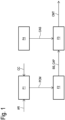
- the letter M denotes a method for the production of cement.
- the method comprises a step of mixing F1 calcium carbonate CC and clay AR in a homogenizer 10 to form a first mixed composite PCM.
- the step of mixing F1 involves feeding pieces of wet clay AR and calcium carbonate CC which, after being mixed, produce what in the jargon of the trade is called "flour", that is to say, the first mixed composite PCM.
- the method comprises a step of firing F2 the first mixed composite in a kiln 11 to form a base BS for the cement.
- the base BS is a clinker in which the first mixed composite PCM undergoes several chemical reactions on account of the high temperature in the kiln 11.
- the method comprises feeding the base BS into a grinding mill 12.
- the method comprises a step of feeding a primary additional component CAP, based on calcium sulphate, into the mill 12. This step is preferably a step of adding gypsum CAP.
- the method comprises a step of feeding a secondary additional component CAS into the mill 12.
- the method M comprises using, as secondary additional component CAS, ceramic powders derived from the processing of ceramic tiles, preferably stoneware tiles.
- ceramic powders derived from the processing of ceramic tiles, preferably stoneware tiles.
- grinding and other mechanical machining processes which produce very fine ceramic powder are commonplace.
- its particle size is particularly suitable for use as secondary additional component CAS in cements.
- the secondary additional component CAS may be in the form of dry powder PVS or in the form of return sludge FDR.
- the powder is collected by suction through specific extractors, which thus allow recovering the dry powder PVS.
- the powder is sprayed with water (preferably nebulized), thus producing return sludge FDR having a certain degree of moisture.
- the return sludge FDR for the return sludge FDR to be suitable for direct use as secondary additional component CAS, it should preferably have a moisture content of less than 40%, preferably between 5% and 20%.
- the method comprises a step of regulating F4 the moisture content of the return sludge FDR to bring it to a predetermined moisture content value for the production process of the cement CMT.
- This step of regulating may be carried out in different ways, all of which fall within the scope of this disclosure, as specified in the foregoing.
- one way that could be used is to add dry powder PVS to the return sludge FDR until the sludge has the required moisture content.
- the step of regulating F4 comprises a step of providing (or storing) F41 dry powder PVS.
- the step of regulating F4 comprises a step of providing (storing) F42 return sludge FDDR having a return moisture content UDR.
- the step of regulating F4 comprises a step of detecting F43 the return moisture content UDR via a moisture sensor 134.
- the step of regulating F4 comprises a step of determining F44 a corrective quantity QC of dry powder PVS to be added to the return sludge FDR to reduce the return moisture content UDR to a predetermined moisture content.
- the step of regulating F4 comprises a step of feeding F45 the corrective quantity QC of dry powder PVS and the return sludge FDR into a mixer to obtain return sludge FDR having the predetermined moisture content. This therefore allows having return sludge FDR with the exact moisture content, without further energy expenditure, by simply mixing two return products derived from the processing of tiles, with evident advantages for the environment and reuse.
- dry powder PVS can be used directly as secondary additional component CAS without the need to control its moisture content.
- sludge having a controlled moisture content allows automatically cooling the grinding mill and recovering the waste in each of its forms.
- the method comprises a step of grinding F3 the base BS, the primary additional component CAP and the secondary additional component CAS to a predetermined particle size to form the cement CMT.
- the numeral 100 denotes an apparatus for the production of cement CMT.
- the apparatus 100 comprises a homogenizer 10 into which clay AR and calcium carbonate CC are fed.
- the homogenizer 10 comprises a homogenizing mechanism 101, for example, a mixing screw or a rotary blade which, by rotating, homogenizes the calcium carbonate CC and the clay AR to create the first premixed composite PCM, ready for firing.
- the apparatus 100 comprises a kiln 11.
- the kiln 11 is preferably a rotary kiln.
- the kiln 11 is a rotary kiln whose inclination relative to a horizontal plane perpendicular to the weight force is such that the first premixed composite PCM can flow progressively from the inlet to the outlet of the kiln.
- the kiln 11 is a countercurrent flow kiln, that is to say, a kiln in which the first premixed composite PCM advances in a direction that is the opposite of the direction of the flow of the hot air in the kiln 11.
- the first premixed composite PCM is thus fired at temperatures which allow chemical reactions in the clay AR and the calcium carbonate CC such as to produce what is known in the jargon of the trade as "clinker", that is to say base BS for the Portland cement.
- the apparatus 100 comprises a grinding mill 12.
- the grinding mill 12 is preferably a ball mill, in which the tumbling action of the balls causes them to impact and crush the clinker, the gypsum and the secondary additional component CAS.
- the grinding mill 12 thus contains the clinker, the gypsum and the secondary additional component CAS, which, in accordance with this invention, may be dry powder PVS or return sludge FDR, both including ceramic particles derived from the processing of ceramic tiles.
- the secondary additional component CAS which, in accordance with this invention, may be dry powder PVS or return sludge FDR, both including ceramic particles derived from the processing of ceramic tiles.
- the percentage of primary additional components CAP and secondary additional components CAS is determined on the basis of the type of cement to be made, according to normative tables, where the known types of secondary additional components can be replaced with the ceramic powder, obtaining the important advantages set out in the foregoing.
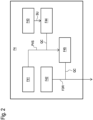
- the apparatus 100 comprises a regulating unit 13, configured to allow regulating and controlling the moisture of the return sludge and/or regulating and controlling the quantity of secondary additional component CAS to be fed into the mill 12.
- the regulating unit 13 comprises a first container 131 configured to store dry powder PVS.
- the regulating unit 13 comprises a second container 132 configured to store return sludge FDR.
- the regulating unit 13 comprises a mixer 133, configured to receive dry powder PVS from the first container 131 and return sludge FDR from the second container 132. In the mixer 133, the dry powder PVS is mixed into the return sludge FDR to allow reducing the moisture content of the sludge.
- the regulating unit 13 comprises a sensor 134, configured to detect a moisture signal SU, representing a return moisture content of the return sludge FDR in the second container 132.
- the apparatus 100 comprises a control unit 14, configured to control components and actuators of the apparatus 100.
- the sensor 134 is connected to the control unit 14 to send it the moisture signal SU.
- the regulating unit 13 comprises an extractor 135, configured to extract dry powder PVS from the first container 131 and to convey it to the mixer 133.
- the regulating unit 13 comprises a pump 136 for pumping the return sludge FDR from the second container 132 to the mixer 133.
- the control unit 14 is programmed, based on the moisture signal SU, to calculate a correct quantity of dry powder PVS and return sludge FDR to be fed into the mixer 133 so as to regulate the moisture content in the return sludge FDR until obtaining a predetermined value (that is to say, a design value of moisture content for the method for the production of the cement CMT).
- control unit 14 commands the extractor 135 and the pump 136 to pump a correct quantity of dry powder PVS and return sludge FDR into the mixer 133 so that, after they have been mixed together, the moisture content of the return sludge is equal to the predetermined value (that is to say, the design value of moisture content for the method for the production of the cement CMT).
- the regulating unit 13 comprises a control sensor 137, configured to measure the moisture in the return sludge FDR after mixing in the mixer 133, so as to have a control parameter for the moisture that is going into the grinding mill 12.
- control sensor 137 is configured to measure the moisture in the return sludge FDR during mixing in the mixer 133, to send a transfer signal, identifying when the moisture in the return sludge FDR inside the mixer 133 reaches the predetermined moisture content (obviously with a certain, predetermined degree of tolerance).
- the reference label 1C denotes a cementitious conglomerate for building construction (preferably civil building construction).
- the cementitious conglomerate 1C comprises mixing water 10C.
- the cementitious conglomerate comprises a binder 11C configured to bind to the mixing water 10C.
- the conglomerate 1C is a cementitious conglomerate such as concrete or cement mortar.
- the binder 11C is a cement configured to bind to the water 10C.
- the binder 11C is bitumen.
- the conglomerate 1C for building construction is asphalt.
- the cementitious conglomerate 1C comprises an aggregate 12C.
- the aggregate 12C comprises a plurality of aggregate particles of a first material.
- the first material is a ceramic material.
- the aggregate is preferably an inert material.
- the inert material 12C includes fired ceramic material. In an embodiment, the inert material 12C includes stoneware. In an embodiment, the inert material 12C includes fired ceramic material derived from ceramic tiles. In an embodiment, the inert material 12C includes fired ceramic material derived from ceramic stoneware tiles.
- the plurality of aggregate particles includes a first group of aggregate particles 121C and a second group of aggregate particles 122C.
- the first group of aggregate particles 121C forms a sand. In an embodiment, the first group of aggregate particles 121C forms a ceramic sand.
- the first group of aggregate particles 121C may be characterized by one or more of the following parameters:
- the second group of aggregate particles may be characterized by one or more of the following parameters:
- 100% of the aggregate particles of the first group of aggregate particles 121C pass through a 4 mm diameter sieve or a 6 mm diameter sieve.
- the percentage of particles of the first group of aggregate particles 121C that pass through a 4 mm sieve is greater than 85%.
- the percentage of particles of the second group of aggregate particles 122C that pass through a 16 mm sieve is 100%. In an embodiment, the percentage of particles of the second group of aggregate particles 122C that pass through an 8 mm sieve is greater than 80%. In an embodiment, the percentage of particles of the second group of aggregate particles 122C that pass through a 6 mm sieve is 0%.
- the conglomerate 1C comprises a filling material 13C comprising a plurality of filler particles.
- the plurality of filler particles is preferably made of ceramic material.
- the plurality of filler particles is preferably made of fired ceramic tiles, or stoneware tiles.
- the plurality of aggregate particles 12C has an average particle size that is greater than the average particle size of the filler particles 13C (that is to say, of the inert material 13C).
- the filling material 13C is a sludge material 13C comprising the plurality of filler particles and return water.
- the filling material 13C (the plurality of filler particles has a particle size preferably less than 0.063 mm: that is, it passes through a 0.063 mm sieve.
- the particle size requirements for the filling material 131C are the following:
- this disclosure provides a solution where, in the granulometric curve of the filling material, the percentage of the filling material that passes through a 1.5 mm sieve is 100%. Further, the percentage of particles smaller than 0.063 mm in size is between 60% and 95%, preferably between 75% and 90%.
- the filling material 13C has one or more of the following properties:
- the filling material 13 according to this disclosure shows a latent hydraulicity which the filler material 13 shows in combination with hydraulic binders.
- the particles of the plurality of filler particles consist of powders derived from the processing of ceramic tiles or semifinished ceramic tile products.
- the particles of the plurality of filler particles have a particle size such that 50% of the particles can pass through a screen with 0.5 mm apertures. Still more advantageously, for even better performance, the particles of the plurality of filler particles have a particle size such that 80% of the particles can pass through a screen with 0.3 mm apertures.
- the particles of the plurality of filler particles have a particle size such that 90% of the particles can pass through a screen with 0.1 mm apertures.
- this disclosure provides even just one cementitious composite 1 C' for building construction, to be premixed before use in the production of a cementitious conglomerate, which is substantially only a material comprising only the binder 10C and the filling material 13C. Furthermore, the inert material, 13C (that is to say, the aggregate 13C) may also be added to this composite.
- this disclosure provides a container 2C for a cementitious composite 1 C' to be premixed before use in the production of a cementitious conglomerate.
- the container is transportable.
- the container 2C comprises a first casing 21C having a first containing space V1C in which there is a binder 11C which is configured to bind to mixing water 10C.
- the first casing 21C might, where necessary, also contain the aggregate (that is to say, the plurality of aggregate particles which in any case do not activate the binding properties of the binder).
- the container 2C comprises a second casing 22C, having a second containing space V2C in which there is a filling sludge.
- the container 2C is a containing bag which comprises, inside it, a first pouch 21C and a second pouch 22C.
- the first pouch comprises the binder 11C and, if necessary, the aggregates), while the second pouch 22C comprises the filling sludge 13C.
- the first and second pouches 21C, 22C are separate so the filling sludge (which contains water) cannot come into contact with, and activate, the binder 11C.
- the first containing space 21C s hydraulically isolated from the second containing space 22C to prevent undesirable contact between the binder 11C and the return water.
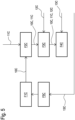
- the reference label 100C denotes an apparatus for mixing concrete, or a cementitious conglomerate.
- the concrete mixing apparatus 100C comprises a mixing zone ZMC in which mixing water 10C, a hydraulic binder 11C, an aggregate 12C and a filling sludge 13C can be mixed.
- the mixing zone ZMC comprises, for example, a rotary concrete mixer 101C.
- the apparatus 100C comprises a mixing actuator 102C, configured to move the concrete mixer 101C.
- the mixing actuator 102C may be a motor for driving the rotary concrete mixer in rotation or a rotary mixer 101C which rotates inside the concrete mixer.
- the apparatus comprises a delivery mouth 101AC, configured to allow the cementitious conglomerate 1C to be delivered from the mixing zone.
- the apparatus 100C comprises a feed mouth 101BC through which the mixing water 10C, the hydraulic binder 11C, the aggregate 12C and the filling sludge 13C are fed.
- the apparatus 100C comprises a silo 102C, configured to contain the filling sludge 13C.
- the silo 102C is preferably connected to the concrete mixer 101C by a feeding duct 102AC to allow feeding the filling sludge 13C.
- the apparatus 100C preferably comprises a control unit UCC, configured to manage the feeding of the binder 1C, the mixing water 10C, the aggregate 12C and/or the filling material 13C.
- the apparatus 100C comprises a sensor 104C.
- the sensor 104C is configured to detect a moisture signal SUC, representing a quantity of return water contained in the filling sludge 13C.
- the sensor 104C is configured to detect the quantity of ceramic powder in the return water.
- control unit UCC knows the quantity of ceramic powder (thus, of dry filling material 13C) and the quantity of return water.
- the sensor 104C may be mounted inside the silo 102C or on the feeding duct 102AC.
- control unit UCC is configured to derive a quantity of mixing water 10C necessary (which must be delivered) for the sum of waste water plus mixing water 10C to be substantially equal to the total quantity of water necessary for activating the binder 11C, that is to say, for making the cementitious conglomerate 1C.
- the apparatus 100C comprises a pump 105C for delivering mixing water 10C.
- the control unit UCC is configured to control the pump 105C so that it delivers the correct quantity of mixing water 10C, calculated on the basis of the moisture signal detected by the sensor 104C.
- this disclosure provides a method for preparing a cementitious conglomerate 1C.
- the method comprises a step of calculating F1C a quantity of mixing water 10C.
- the method comprises a step of combining F2C mixing water 10C and a binder 11C, which binds to the mixing water 10C.
- the method preferably comprises a step of adding F3C an aggregate 12C comprising a plurality of aggregate particles 121C, 122C of a first material.
- the method comprises a step of adding F4C a filling sludge 13C comprising a plurality of filler particles (preferably) made of ceramic material and return water.
- the step of calculating F1C the quantity of mixing water is carried out on the basis of a quantity of return water contained in the filling sludge 13C.
- the method comprises a step of detecting F5C a quantity of return water in the filling sludge 13C by means of a sensor 104C.
- Calculating F1C the quantity of mixing water is carried out on the basis of a quantity of return water determined by the sensor 104C.
- a cementitious conglomerate 1C for building construction comprising:
- a cementitious composite 1 C' for building construction premixable prior to its use in a cementitious conglomerate comprising:
- a container 2C for a cementitious composite 1 C' to be premixed prior to its use in a cementitious conglomerate comprising:
- a use of a filling sludge 13C comprising a plurality of filler particles, made of ceramic material and having a particle size such that 50% of the particles can pass through a screen with 0.5 mm apertures, and return water, in a cementitious conglomerate.
- An apparatus 100C for mixing a cementitious conglomerate comprising:
- the apparatus 100C according to paragraph D0 comprising a control unit UCC, configured for determining the quantity of mixing water 10C based on the moisture signal SUC detected.
- a method for preparing a cementitious conglomerate 1C comprising the following steps:
Landscapes
- Chemical & Material Sciences (AREA)
- Engineering & Computer Science (AREA)
- Ceramic Engineering (AREA)
- Materials Engineering (AREA)
- Structural Engineering (AREA)
- Organic Chemistry (AREA)
- Chemical Kinetics & Catalysis (AREA)
- Inorganic Chemistry (AREA)
- Treatment Of Sludge (AREA)
Applications Claiming Priority (3)
| Application Number | Priority Date | Filing Date | Title |
|---|---|---|---|
| IT202300023652 | 2023-11-09 | ||
| IT202300023661 | 2023-11-09 | ||
| IT202400013570 | 2024-06-13 |
Publications (1)
| Publication Number | Publication Date |
|---|---|
| EP4553055A1 true EP4553055A1 (fr) | 2025-05-14 |
Family
ID=93335393
Family Applications (1)
| Application Number | Title | Priority Date | Filing Date |
|---|---|---|---|
| EP24211404.9A Pending EP4553055A1 (fr) | 2023-11-09 | 2024-11-07 | Procédé et appareil pour la production de ciment et pour la production d'un conglomérat cimenteux |
Country Status (1)
| Country | Link |
|---|---|
| EP (1) | EP4553055A1 (fr) |
Citations (3)
| Publication number | Priority date | Publication date | Assignee | Title |
|---|---|---|---|---|
| CN104710118A (zh) * | 2015-03-25 | 2015-06-17 | 淄博环亿资源综合利用有限公司 | 陶瓷砖抛光泥建筑垃圾基充填材料及其制备方法 |
| CN104446510B (zh) * | 2014-11-25 | 2016-03-02 | 广州市翔龙环保科技有限公司 | 一种陶瓷砖硅粉的制备方法及其利用 |
| EP3722269A1 (fr) | 2019-04-05 | 2020-10-14 | Cesare Tosi | Conglomerat pour la construction de bâtiments |
-
2024
- 2024-11-07 EP EP24211404.9A patent/EP4553055A1/fr active Pending
Patent Citations (3)
| Publication number | Priority date | Publication date | Assignee | Title |
|---|---|---|---|---|
| CN104446510B (zh) * | 2014-11-25 | 2016-03-02 | 广州市翔龙环保科技有限公司 | 一种陶瓷砖硅粉的制备方法及其利用 |
| CN104710118A (zh) * | 2015-03-25 | 2015-06-17 | 淄博环亿资源综合利用有限公司 | 陶瓷砖抛光泥建筑垃圾基充填材料及其制备方法 |
| EP3722269A1 (fr) | 2019-04-05 | 2020-10-14 | Cesare Tosi | Conglomerat pour la construction de bâtiments |
Similar Documents
| Publication | Publication Date | Title |
|---|---|---|
| US8636841B2 (en) | Cement manufacturing apparatus and method | |
| US10494298B1 (en) | Cement-SCM compositions and methods and systems for their manufacture | |
| US11746048B2 (en) | Cement-SCM compositions and methods and systems for their manufacture | |
| CN109664406A (zh) | 一种建筑废弃物资源化处理系统 | |
| CN109675906A (zh) | 一种建筑废弃物全资源回收再利用系统 | |
| JP5459655B2 (ja) | 尾鉱の処理方法 | |
| US20240375314A1 (en) | Accelerated carbonatation method and implementation thereof in a method for valorizing concrete wastes and industrial gaseous discharges | |
| CN103553503B (zh) | 一种低胶凝材的c50再生混凝土的制备方法 | |
| JPH09165244A (ja) | 石膏ボードの製造方法 | |
| CN1826297A (zh) | 制造水泥的方法和装置 | |
| US20170211243A1 (en) | Method and plant for the production of hot asphalt mixes with reclaimed asphalt mix material | |
| SE527086C2 (sv) | Processsystem för framställning av en komposit av cementitmaterial med reducerade koldioxidemissioner | |
| CA2708501A1 (fr) | Materiau agglomere fabrique et procede | |
| CN101384518B (zh) | 干燥和粉碎潮湿的矿物原料的方法和装置 | |
| CN104108892B (zh) | 一种以工业炉渣及建筑垃圾再生利用生产轻质隔墙条板的方法 | |
| EP4553055A1 (fr) | Procédé et appareil pour la production de ciment et pour la production d'un conglomérat cimenteux | |
| WO2019033187A1 (fr) | Procédé de pelletisation à froid de fines de minerai de fer avec flexibilité de mélanges | |
| EP0376690A1 (fr) | Produit fritté utilisant des cendres d'incinération et méthode pour le fabriquer | |
| US20110239904A1 (en) | Manufactured aggregate material and method | |
| CN103724003A (zh) | 一种制备陶粒砂的方法 | |
| CN103708752A (zh) | 一种利用瓷砖研磨废料生产陶粒砂的方法 | |
| US20100294170A1 (en) | Method and installation for producing multi-component cements | |
| KR101292162B1 (ko) | 습회의 시멘트 첨가 장치 및 첨가 방법 | |
| JP6975408B2 (ja) | セメントの製造方法および製造設備 | |
| RU2312013C1 (ru) | Технологическая линия для производства прессованных строительных материалов |
Legal Events
| Date | Code | Title | Description |
|---|---|---|---|
| PUAI | Public reference made under article 153(3) epc to a published international application that has entered the european phase |
Free format text: ORIGINAL CODE: 0009012 |
|
| STAA | Information on the status of an ep patent application or granted ep patent |
Free format text: STATUS: THE APPLICATION HAS BEEN PUBLISHED |
|
| AK | Designated contracting states |
Kind code of ref document: A1 Designated state(s): AL AT BE BG CH CY CZ DE DK EE ES FI FR GB GR HR HU IE IS IT LI LT LU LV MC ME MK MT NL NO PL PT RO RS SE SI SK SM TR |
|
| STAA | Information on the status of an ep patent application or granted ep patent |
Free format text: STATUS: REQUEST FOR EXAMINATION WAS MADE |
|
| 17P | Request for examination filed |
Effective date: 20251114 |