EP4553078A1 - 5h-pyrrolo[2,3-d]pyrimidine-6(7h)-one, et cristaux de sel de celui-ci - Google Patents
5h-pyrrolo[2,3-d]pyrimidine-6(7h)-one, et cristaux de sel de celui-ci Download PDFInfo
- Publication number
- EP4553078A1 EP4553078A1 EP23835509.3A EP23835509A EP4553078A1 EP 4553078 A1 EP4553078 A1 EP 4553078A1 EP 23835509 A EP23835509 A EP 23835509A EP 4553078 A1 EP4553078 A1 EP 4553078A1
- Authority
- EP
- European Patent Office
- Prior art keywords
- crystal
- compound
- free base
- powder
- ray diffraction
- Prior art date
- Legal status (The legal status is an assumption and is not a legal conclusion. Google has not performed a legal analysis and makes no representation as to the accuracy of the status listed.)
- Pending
Links
Images







Classifications
-
- A—HUMAN NECESSITIES
- A61—MEDICAL OR VETERINARY SCIENCE; HYGIENE
- A61P—SPECIFIC THERAPEUTIC ACTIVITY OF CHEMICAL COMPOUNDS OR MEDICINAL PREPARATIONS
- A61P35/00—Antineoplastic agents
-
- C—CHEMISTRY; METALLURGY
- C07—ORGANIC CHEMISTRY
- C07D—HETEROCYCLIC COMPOUNDS
- C07D487/00—Heterocyclic compounds containing nitrogen atoms as the only ring hetero atoms in the condensed system, not provided for by groups C07D451/00 - C07D477/00
- C07D487/02—Heterocyclic compounds containing nitrogen atoms as the only ring hetero atoms in the condensed system, not provided for by groups C07D451/00 - C07D477/00 in which the condensed system contains two hetero rings
- C07D487/04—Ortho-condensed systems
-
- A—HUMAN NECESSITIES
- A61—MEDICAL OR VETERINARY SCIENCE; HYGIENE
- A61K—PREPARATIONS FOR MEDICAL, DENTAL OR TOILETRY PURPOSES
- A61K31/00—Medicinal preparations containing organic active ingredients
- A61K31/33—Heterocyclic compounds
- A61K31/395—Heterocyclic compounds having nitrogen as a ring hetero atom, e.g. guanethidine or rifamycins
- A61K31/495—Heterocyclic compounds having nitrogen as a ring hetero atom, e.g. guanethidine or rifamycins having six-membered rings with two or more nitrogen atoms as the only ring heteroatoms, e.g. piperazine or tetrazines
- A61K31/505—Pyrimidines; Hydrogenated pyrimidines, e.g. trimethoprim
- A61K31/519—Pyrimidines; Hydrogenated pyrimidines, e.g. trimethoprim ortho- or peri-condensed with heterocyclic rings
-
- C—CHEMISTRY; METALLURGY
- C07—ORGANIC CHEMISTRY
- C07C—ACYCLIC OR CARBOCYCLIC COMPOUNDS
- C07C57/00—Unsaturated compounds having carboxyl groups bound to acyclic carbon atoms
- C07C57/02—Unsaturated compounds having carboxyl groups bound to acyclic carbon atoms with only carbon-to-carbon double bonds as unsaturation
- C07C57/13—Dicarboxylic acids
- C07C57/145—Maleic acid
-
- C—CHEMISTRY; METALLURGY
- C07—ORGANIC CHEMISTRY
- C07B—GENERAL METHODS OF ORGANIC CHEMISTRY; APPARATUS THEREFOR
- C07B2200/00—Indexing scheme relating to specific properties of organic compounds
- C07B2200/13—Crystalline forms, e.g. polymorphs
Definitions
- the present disclosure relates to: crystals of 4-(4-(3-((2-(tert-butylamino)ethyl)amino)-6-(5-(trifluoromethyl)-1,3,4-oxadiazol-2-yl)pyridin-2-yl)piperidin-1-yl)-5,5-dimethyl-5H-pyrrolo[2,3-d]pyrimidin-6(7H)-one and a saltthereof, which are excellent in terms of preservation stability and hygroscopicity and are useful as pharmaceutical products or drug substances for pharmaceutical products; and pharmaceutical compositions comprising said crystals.
- the compound when a compound is used as an active ingredient of a pharmaceutical product, the compound needs to be chemically and physically stable in order to stably maintain its quality and/or to facilitate storage and management.
- Patent Literature 1 discloses 4-(4-(3-((2-(tert-butylamino)ethyl)amino)-6-(5-(trifluoromethyl)-1,3,4-oxadiazol-2-yl)pyridin-2-yl)piperidin-1-yl)-5,5-dimethyl-5H-pyrrolo[2,3-d]pyrimidin-6(7H)-one (hereinafter also referred to as "Compound (I)”), which is represented by the following formula (I):
- Patent Literature 1 does not disclose a crystal form of the present compound, and the stable crystal form of Compound (I) and a method for producing the same are not currently known.
- Patent Literature 1 International Publication WO2017/200087
- the present inventors have found three crystal forms (type I crystal, type II crystal, and type III crystal) as free bodies of Compound (I). Furthermore, the present inventors have discovered a crystal of a hydrochloride of Compound (I) and a crystal of a maleate of Compound (I). The present inventors have found that these crystals have excellent solid state stability and low hygroscopicity.
- the present disclosure provides the following [1] to [32].
- the stable crystal form of Compound (I) of the present disclosure and a method for producing the same are not currently known.
- crystal forms of a free base of Compound (I) i.e., type I crystal, type II crystal, and type III crystal
- a crystal of a hydrochloride of Compound (I) i.e., type II crystal, and type III crystal
- a crystal of a hydrochloride of Compound (I) i.e., type II crystal, and type III crystal
- a crystal of a hydrochloride of Compound (I) i.e., type II crystal, and type III crystal
- crystal of a hydrochloride of Compound (I) i.e., type II crystal, and type III crystal
- a crystal of a hydrochloride of Compound (I) i.e., type II crystal, and type III crystal
- Compound (I) when merely the term “Compound (I)” is used, it means 4-(4-(3-((2-(tert-butylamino)ethyl)amino)-6-(5-(trifluoromethyl)-1,3,4-oxadiazol-2-yl)pyridin-2-yl)piperidin-1-yl)-5,5-dimethyl-5H-pyrrolo[2,3-d]pyrimidin-6(7H)-one, and this term is used to mean to include both an "amorphous form” and a "crystal.”
- the molar equivalent of the acid relative to Compound (I) can be analyzed, for example, by NMR or liquid chromatography.
- the molar ratio between Compound (I) and hydrochloric acid, maleic acid or acetic acid is 1 : 1, and can be determined by analysis such as 1H-NMR.
- the molar ratio between the acid and the organic compound can be determined by comparing the integral value of the methyl proton of the acid with the integral value of at least one proton of the organic compound.
- Compound (I) can be synthesized, for example, according to the method described in International Publication WO2017/200087 (for example, the method described in Example 32 of the present publication), but the synthetic method is not limited thereto.
- crystal and related terms used in the present description are used to describe a compound, a substance, modification, a material, an ingredient, or a product, these terms mean that the compound, substance, modification, material, ingredient, or product is substantially a crystal when determined by X-ray diffraction. Please refer to, for example, Remington: The Science and Practice of Pharmacy, 21st edition, Lippincott, Williams and Wilkins, Baltimore, MD (2005); United States Pharmacopeia, 23rd edition, 1843-1844 (1995).
- the term “crystal” also include a hydrate or a solvate (pseudopolymorph), and a cocrystal.
- crystal and “crystalline form” are used interchangeably in the present description.
- a main component a drug substance for pharmaceutical products
- subcomponents a coformer, a counterion, and a solvent
- a hydrogen bond e.g., Cryst. Growth Des. 2012, 12, 2147-2152 dx.doi.org/10.1021/cg3002948 .
- crystal of a “salt” in the present disclosure also includes such a crystal of a complex formed by multiple components (i.e., a "cocrystal").
- amorphous and amorphous form mean that the substance, component, or product is not substantially a crystal when determined by X-ray diffraction.
- amorphous form describes an irregular solid form, i.e., a solid form that lacks a crystalline order over a long distance.
- pharmaceutically acceptable salt refers to a salt derived from a variety of organic and inorganic counterions known in the present technical field.
- the pharmaceutically acceptable salt may be safe for ingestion by animals or humans.
- the techniques of determining the properties of a crystalline form and an amorphous form may include, but are not limited to, publicly known techniques in the present technical field, such as thermogravimetric analysis (TGA), differential scanning calorimetry (DSC), X-ray powder diffraction (XRPD), single-crystal X-ray diffraction, vibrational spectroscopy such as, for example, infrared (IR) and Raman spectroscopy, solid-state nuclear magnetic resonance (NMR) spectroscopy, optical microscopy, hot stage optical microscopy, scanning electron microscopy (SEM), electron crystallography, quantitative analysis, and solubility measurement.
- TGA thermogravimetric analysis
- DSC differential scanning calorimetry
- XRPD X-ray powder diffraction
- XRPD single-crystal X-ray diffraction
- vibrational spectroscopy such as, for example, infrared (IR) and Raman spectroscopy, solid-state nuclear magnetic resonance (N
- Characteristic unit cell parameters can be determined using one or more techniques, such as, but not limited to, X-ray diffraction and neutron diffraction, including single crystal diffraction and powder diffraction as typical examples.
- the technique useful for analyzing powder diffraction data may be profile refinement such as Rietveld refinement, which can be used, for example, to analyze diffraction peaks associated with a single phase in a sample containing two or more solid phases.
- Another method useful for analyzing powder diffraction data may be unit cell indexing, and this method allows those skilled in the art to determine unit cell parameters from samples containing crystalline powders.
- the diffraction angle and overall pattern are important when determining the identity of the crystal. Since the relative intensity of a powder X-ray diffraction pattern may vary somewhat depending on the direction of crystal growth, the size of the particles, and the measurement conditions, it should not be interpreted strictly.
- the crystal is specified by a peak in a powder X-ray diffraction pattern.
- the "peak” is selected to be one having 5% or more, 6% or more, 7% or more, 8% or more, 9% or more, 10% or more, 15% or more, or 20% or more of the intensity of the maximum peak among the intensity peaks obtained by the powder X-ray diffraction spectrum (CuK ⁇ ).
- the peak is 5% or more of the intensity of the maximum peak among the obtained intensity peaks, more preferably 6% or more of the intensity of the maximum peak among the obtained intensity peaks, even more preferably 7% or more of the intensity of the maximum peak among the obtained intensity peaks, further preferably 8% or more of the intensity of the maximum peak among the obtained intensity peaks, still further preferably 9% or more of the intensity of the maximum peak among the obtained intensity peaks, still further preferably 10% or more of the intensity of the maximum peak among the obtained intensity peaks, still further preferably 15% or more of the intensity of the maximum peak among the obtained intensity peaks, and particularly preferably 20% or more of the intensity of the maximum peak among the obtained intensity peaks.
- the numerical values obtained from various patterns may have some errors depending on the direction of crystal growth, the size of the particles, the measurement conditions, etc.
- the numerical value of the diffraction angle (2 ⁇ ) in the powder X-ray diffraction pattern may have a measurement error of about ⁇ 0.2°.
- the measurement temperature may vary, depending on the temperature rise width per minute, the purity of the sample, etc.
- the term "around" in the TG-DTA measured temperature value means a temperature value within ⁇ 2, 3, 4, or 5°C of the value.
- the temperature range is preferably ⁇ 5°C, more preferably ⁇ 4°C, even more preferably ⁇ 3°C, and particularly preferably ⁇ 2°C.
- the crystalline form of Compound (I) disclosed in the present description may contain multiple crystals (crystal polymorphs) having spatially regular atomic arrangements and may result in different physicochemical properties.
- the crystalline form disclosed in the present description may be a mixture containing crystal polymorphs.
- the crystalline form of Compound (I) of the present disclosure may be characterized by a combination of the below-mentioned embodiments, which do not contradict one another.
- the crystalline form of Compound (I) may be characterized by a combination of the above-described peaks in an X-ray diffraction pattern and the above-described endothermic peaks measured by TG-DTA.
- the crystalline forms of some Compounds (I) disclosed in the present description are stable, when they are exposed to conditions of a temperature of about 25°C, 30°C, 35°C, 40°C, 45°C, 50°C, 55°C, 60°C, 65°C or 70°C, and a relative humidity of about 65%, 70%, 75%, 80% or 85%, for about 1, 2, 3, 4, 5, 6, 7, 8, 12, 16, 24, 36, 48, 60, 72, 84, 96, 108, 120, 132, 144, or 156 weeks or more, and for about 160, 156, 150, 138, 126, 114, 102, 90, 78, 66, 54, 42, 30, 24, 18, 12, or 6 weeks or less.
- the conditions may be closed conditions or open conditions.
- the "closed" conditions mean conditions in which the lids of the bottles containing samples are closed or hermetically sealed during stability experiments, whereas the "open” conditions mean conditions in which the lids of the bottles are open.
- the crystalline form of Compound (I) disclosed in the present description is stable upon exposure to conditions of about 70°C and a relative humidity of about 75% for about 2 weeks. That is, the crystalline form of Compound (I) disclosed in the present description exhibits excellent storage stability over a long period of time.
- “stable” means that the increase in impurities is about 1.0%, 0.5%, 0.4%, 0.3%, 0.2%, 0.1%, 0.05%, or 0.01% or less, compared to the initial amount of impurities.
- the increase in impurities is preferably 1.0% or less, more preferably 0.5% or less, even more preferably 0.4% or less, further preferably 0.3% or less, still further preferably 0.2% or less, still further preferably 0.1% or less, still further preferably 0.05% or less, and particularly preferably 0.01% or less.
- the crystalline form of Compound (I) disclosed in the present description can be physically and/or chemically highly pure.
- the crystal disclosed in the present description can be, at least, about 100%, 99%, 98%, 97%, 96%, 95%, 94%, 93%, 92%, 91%, 90%, 89%, 88%, 87%, 86%, 85%, 84%, 83%, 82%, 81%, or 80% physically and/or chemically pure.
- the crystal disclosed in the present description is substantially pure. As used in the present description, and unless otherwise clearly specified, the term "substantially pure" means that, for example, the present crystal does not substantially contain other solid forms and/or other compounds.
- the crystal disclosed in the present description contains about 20%, 15%, 10%, 9%, 8%, 7%, 6%, 5%, 4%, 3%, 2%, 1%, 0.75%, 0.5%, 0.25%, or less than 0.1% by weight of one or more other solid forms and/or other compounds.
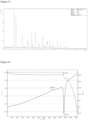
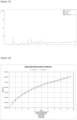
- the type I crystal of the free base of Compound (I) has, for example, the powder X-ray diffraction spectrum (CuK ⁇ ) shown in Figure 1 and the thermogravimetry-differential thermal analysis (TG-DTA) curve shown in Figure 2 .
- CuK ⁇ powder X-ray diffraction spectrum
- TG-DTA thermogravimetry-differential thermal analysis
- the characteristic peaks of the type I crystal of the free base of Compound (I) in the powder X-ray diffraction spectrum may be, as diffraction angles (2 ⁇ 0.2°), 6.2°, 6.7°, 8.3°, 8.7°, 9.3°, 9.7°, 11.1°, 13.0°, 13.7°, 15.4°, 16.3°, 16.9°, 17.7°, 18.7°, 19.4°, 20.3°, 25.1°, 25.9°, and 26.5°.
- the characteristic peaks of the type I crystal of the free base of Compound (I) in the powder X-ray diffraction spectrum (CuK ⁇ ) have diffraction angles (2 ⁇ 0.2°) of 6.2°, 6.7°, 8.3°, 8.7°, 9.3°, 9.7°, 11.1°, 13.0°, 13.7°, 15.4°, 16.3°, 16.9°, 17.7°, 18.7°, 19.4°, 20.3°, 25.1°, 25.9° and 26.5°, when measured by the reflection method.
- the type I crystal of the free base of Compound (I) in one embodiment of the present disclosure has peaks at, at least, 2 diffraction angles (2 ⁇ 0.2°) selected from the following (a), and at, at least, 2 diffraction angles (2 ⁇ 0.2°) selected from the following (b), in the powder X-ray diffraction spectrum (CuK ⁇ ):
- the type I crystal of the free base of Compound (I) in a preferred embodiment of the present disclosure has, as diffraction angles (2 ⁇ 0.2°), at least 2 peaks selected from the above-described group (a), and at least 2 peaks selected from the above-described group (b), in the powder X-ray diffraction spectrum. More preferably, the type I crystal of the free base of Compound (I) has, as diffraction angles (2 ⁇ 0.2°), at least 3 peaks selected from the above-described group (a), and at least 2 peaks selected from the above-described group (b), in the powder X-ray diffraction spectrum.
- the type I crystal of the free base of Compound (I) has, as diffraction angles (2 ⁇ 0.2°), at least 4 peaks selected from the above-described group (a), and at least 2 peaks selected from the above-described group (b), in the powder X-ray diffraction spectrum. Further preferably, the type I crystal of the free base of Compound (I) has, as diffraction angles (2 ⁇ 0.2°), at least 5 peaks selected from the above-described group (a), and at least 2 peaks selected from the above-described group (b), in the powder X-ray diffraction spectrum.
- the type I crystal of the free base of Compound (I) has, as diffraction angles (2 ⁇ 0.2°), all peaks selected from the above-described group (a), and at least 2 peaks selected from the above-described group (b), in the powder X-ray diffraction spectrum.
- the type I crystal of the free base of Compound (I) in a preferred embodiment of the present disclosure has, as diffraction angles (2 ⁇ 0.2°), at least 2 peaks selected from the above-described group (a), and at least 2, preferably at least 3, more preferably at least 4, even more preferably at least 5, further preferably at least 6, still further preferably at least 7, still further preferably at least 8, still further preferably at least 9, still further preferably at least 10, still further preferably at least 11, still further preferably at least 12, and particularly preferably all peaks selected from the above-described group (b), in the powder X-ray diffraction spectrum.
- the type I crystal of the free base of Compound (I) has, as diffraction angles (2 ⁇ 0.2°), at least 3 peaks selected from the above-described group (a), and at least 2, preferably at least 3, more preferably at least 4, even more preferably at least 5, further preferably at least 6, still further preferably at least 7, still further preferably at least 8, still further preferably at least 9, still further preferably at least 10, still further preferably at least 11, still further preferably at least 12, and particularly preferably all peaks selected from the above-described group (b), in the powder X-ray diffraction spectrum.
- the type I crystal of the free base of Compound (I) has, as diffraction angles (2 ⁇ 0.2°), at least 4 peaks selected from the above-described group (a), and at least 2, preferably at least 3, more preferably at least 4, even more preferably at least 5, further preferably at least 6, still further preferably at least 7, still further preferably at least 8, still further preferably at least 9, still further preferably at least 10, still further preferably at least 11, still further preferably at least 12, and particularly preferably all peaks selected from the above-described group (b), in the powder X-ray diffraction spectrum.
- the type I crystal of the free base of Compound (I) has, as diffraction angles (2 ⁇ 0.2°), at least 5 peaks selected from the above-described group (a), and at least 2, preferably at least 3, more preferably at least 4, even more preferably at least 5, further preferably at least 6, still further preferably at least 7, still further preferably at least 8, still further preferably at least 9, still further preferably at least 10, still further preferably at least 11, still further preferably at least 12, and particularly preferably all peaks selected from the above-described group (b), in the powder X-ray diffraction spectrum.
- the type I crystal of the free base of Compound (I) has, as diffraction angles (2 ⁇ 0.2°), all peaks selected from the above-described group (a), and at least 2, preferably at least 3, more preferably at least 4, even more preferably at least 5, further preferably at least 6, still further preferably at least 7, still further preferably at least 8, still further preferably at least 9, still further preferably at least 10, still further preferably at least 11, still further preferably at least 12, and particularly preferably all peaks selected from the above-described group (b), in the powder X-ray diffraction spectrum.
- the endothermic peak of the type I crystal of the free base of Compound (I) in the thermogravimetry-differential thermal analysis (TG-DTA) curve may be around 233°C to 237°C, and preferably around 235°C.
- the chemical purity of Compound (I) is 90% or more, and it can be measured by high performance liquid chromatography (HPLC). It is preferably the type I crystal of the free base of Compound (I) in which the chemical purity of Compound (I) is 95% or more, and it is more preferably the type I crystal of the free base of Compound (I) in which the chemical purity of Compound (I) is 99% or more.
- the type I crystal of the free base of Compound (I) may be any crystal, as long as it contains a free base type I crystal, and it may be either a single crystal of type I crystal of a free base, or a polymorphic mixture containing crystals other than the type I crystal.
- the type I crystal of the free base of Compound (I) is preferably a crystal containing 90% or more of the free base type I crystal, and is more preferably a crystal containing 95% or more of the free base type I crystal.
- type I crystals of the free base of Compound (I) can be obtained.
- the particle diameter obtained tends to be non-uniform.
- a flake-like portion that can be easily separated and collected with a sieve with a pore diameter of 340 ⁇ m and a powder-like portion that passes through the sieve had differences in the amounts of analogous substances and the amounts of residual solvents contained in the portions.
- both are type I crystals of the free base of Compound (I)
- the amount of a residual solvent is required to be as small as possible.
- the regulatory limit for ethyl acetate is required to be 5000 ppm or less, that for tetrahydrofuran is required to be 720 ppm or less, and that for dimethyl sulfoxide is required to be 5000 ppm or less.
- the residual amount of ethyl acetate is preferably 5000 ppm or less, more preferably 4000 ppm or less, even more preferably 3000 ppm or less, further preferably 2000 ppm or less, and particularly preferably 1000 ppm or less.
- the residual amount of tetrahydrofuran is preferably 720 ppm or less, more preferably 500 ppm or less, and further preferably 300 ppm or less.
- the residual amount of dimethyl sulfoxide is preferably 5000 ppm or less, and more preferably 3000 ppm or less.
- the type I crystal of the free base of Compound (I) according to the present disclosure can be produced, for example, by a method comprising a step (1) of dissolving Compound (I) in a solvent 1 (rich solvent), and a step (2) of adding a solvent 2 (poor solvent) to the resulting solution in the step (1) to obtain solid Compound (I).
- Preferred dissolution solvents (solvent 1) used in step (1) may include dimethyl sulfoxide or tetrahydrofuran.
- the dissolution solvent used is more preferably dimethyl sulfoxide.
- Preferred solvents (solvent 2) added in the step (2) may include normal heptane, ethyl acetate or 2-propanol, when tetrahydrofuran is used in the step (1); and the preferred solvent 2 may be water, when dimethyl sulfoxide is used in the step (1).
- the solvent 1 used in the step (1) is dimethyl sulfoxide
- the solvent 2 used in the step (2) is water.
- an appropriate amount of the type I crystal of the free base of Compound (I) may be or may not be added as a seed crystal.
- the temperature at which Compound (I) is dissolved can be set, as appropriate.
- the temperature is preferably room temperature to 70°C.
- the type I crystals of the free base of Compound (I) can be precipitated in the step (2) by adding water while the internal temperature is set to be from room temperature to 70°C.
- the temperature at this time is preferably maintained at 40 C to 70 C, more preferably 60 C to 70 C.
- the temperature of water added in the step (2) is more preferably 40 C to 60 C.
- the amount of water added at this time is preferably 3 v/w or more, more preferably 20 v/w to 25 v/w, with respect to Compound (I).
- the water is slowly added dropwise over 0.5 to 6 hours, so that the type I crystal of the free base of Compound (I) can be obtained.
- crystallization by increasing the water-adding rate, crystals with a small particle diameter can be obtained, while by decreasing the water-adding rate, crystals with a large particle diameter can be obtained.
- the precipitated crystals can be isolated and purified from the suspension containing the crystals by known separation and purification means such as, for example, filtration, washing with water, drying under reduced pressure, etc.
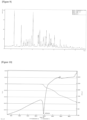
- the type II crystal of the free base of Compound (I) has, for example, the powder X-ray diffraction spectrum shown in Figure 3 and the thermogravimetry-differential thermal analysis (TG-DTA) curve shown in Figure 4 .
- the characteristic peaks of the type II crystal of the free base of Compound (I) in the powder X-ray diffraction spectrum (CuK ⁇ ) may be, as diffraction angles (2 ⁇ 0.2°), 6.7°, 7.5°, 10.4°, 12.7°, 13.4°, 14.6°, 16.5°, 17.9°, 18.3°, 19.8°, 20.6°, 21.8°, 22.9°, 26.5° and 27.9°.
- the characteristic peaks of the type II crystal of the free base of Compound (I) in the powder X-ray diffraction spectrum have diffraction angles (2 ⁇ 0.2°) of 6.7°, 7.5°, 10.4°, 12.7°, 13.4°, 14.6°, 16.5°, 17.9°, 18.3°, 19.8°, 20.6°, 21.8°, 22.9°, 26.5° and 27.9°, when measured by the reflection method.
- the type II crystal of the free base of Compound (I) in one embodiment of the present disclosure has peaks at, at least, 2 diffraction angles (2 ⁇ 0.2°) selected from the following (a), and at, at least, 2 diffraction angles (2 ⁇ 0.2°) selected from the following (b), in the powder X-ray diffraction spectrum (CuK ⁇ ):
- the type II crystal of the free base of Compound (I) in a preferred embodiment of the present disclosure has, as diffraction angles (2 ⁇ 0.2°), at least 2 peaks selected from the above-described group (a), and at least 2, preferably at least 3, more preferably at least 4, even more preferably at least 5, further preferably at least 6, still further preferably at least 7, still further preferably at least 8, still further preferably at least 9, still further preferably at least 10, still further preferably at least 11, and particularly preferably all peaks selected from the above-described group (b), in the powder X-ray diffraction spectrum.
- the type II crystal of the free base of Compound (I) may have, as diffraction angles (2 ⁇ 0.2°), all peaks selected from the above-described group (a), in the powder X-ray diffraction spectrum.
- the type II crystal of the free base of Compound (I) has, as diffraction angles (2 ⁇ 0.2°), all peaks selected from the above-described group (a), and at least 2, preferably at least 3, more preferably at least 4, even more preferably at least 5, further preferably at least 6, still further preferably at least 7, still further preferably at least 8, still further preferably at least 9, still further preferably at least 10, still further preferably at least 11, and particularly preferably all peaks selected from the above-described group (b), in the powder X-ray diffraction spectrum.
- thermogravimetry-differential thermal analysis (TG-DTA) curve may be around 232°C to 236°C, and preferably around 234°C.
- the type II crystal of the free base of Compound (I) can be obtained, for example, by a method comprising a step (3) of adding Compound (I) to a solvent and dissolving it therein, then, a step (4) of heating and suspending the resulting solution, and then, a step (5) of cooling the solution of Compound (I) to crystallize the Compound (I).
- the solvent used in the step (3) may be, for example, methanol or the like.
- the solvent used in the step (3) is preferably methanol.
- the temperature at which the heating and suspending are carried out can be 50°C to 100°C, and the reaction time can be 0.5 to 48 hours.
- the temperature is preferably 50°C, and the reaction time is 22 hours.
- the crystallization in the step (5) may be performed under stirring.
- the stirring is performed using a stirrer, stirring blades, etc., as appropriate, depending on the amount of a solvent, the size of a reaction vessel, etc.
- the stirring operation can also be performed, for example, by shaking the reaction vessel.
- the stirring speed is usually 1 to 600 rpm, and preferably 10 to 100 rpm.
- the temperature for cooling may be room temperature, and the temperature is preferably room temperature.
- the chemical purity of Compound (I) is 90% or more, and it can be measured by high performance liquid chromatography (HPLC). It is preferably the type II crystal of the free base of Compound (I) in which the chemical purity of Compound (I) is 95% or more, and it is more preferably the type II crystal of the free base of Compound (I) in which the chemical purity of Compound (I) is 99% or more.
- the type II crystal of the free base of Compound (I) may be any crystal, as long as it contains a free base type II crystal, and it may be either a single crystal of type II crystal of a free base, or a polymorphic mixture containing crystals other than the type II crystal.
- the type II crystal of the free base of Compound (I) is preferably a crystal containing 90% or more of the free base type II crystal, and is more preferably a crystal containing 95% or more of the free base type II crystal.
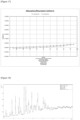
- the type III crystal of the free base of Compound (I) has, for example, the powder X-ray diffraction spectrum shown in Figure 5 and the thermogravimetry-differential thermal analysis (TG-DTA) curve shown in Figure 6 .
- the characteristic peaks of the type III crystal of the free base of Compound (I) in the powder X-ray diffraction spectrum (CuK ⁇ ) may be, as diffraction angles (2 ⁇ 0.2°), 6.8°, 7.5°, 8.8°, 11.7°, 12.9°, 13.9°, 14.9°, 16.7°, 17.8°, 18.8°, 19.7°, 20.7°, 22.0°, 23.4°, 24.2°, 26.2° and 26.7°.
- the characteristic peaks of the type III crystal of the free base of Compound (I) in the powder X-ray diffraction spectrum have diffraction angles (2 ⁇ 0.2°) of 6.8°, 7.5°, 8.8°, 11.7°, 12.9°, 13.9°, 14.9°, 16.7°, 17.8°, 18.8°, 19.7°, 20.7°, 22.0°, 23.4°, 24.2°, 26.2° and 26.7°, when measured by the reflection method.
- the type III crystal of the free base of Compound (I) in a preferred embodiment of the present disclosure has, as diffraction angles (2 ⁇ 0.2°), at least 2 peaks selected from the above-described group (a), and at least 2, preferably at least 3, more preferably at least 4, even more preferably at least 5, further preferably at least 6, still further preferably at least 7, still further preferably at least 8, still further preferably at least 9, still further preferably at least 10, still further preferably at least 11, still further preferably at least 12, still further preferably at least 13, and particularly preferably all peaks selected from the above-described group (b), in the powder X-ray diffraction spectrum.
- the type III crystal of the free base of Compound (I) may have, as diffraction angles (2 ⁇ 0.2°), all peaks selected from the above-described group (a), in the powder X-ray diffraction spectrum.
- the type III crystal of the free base of Compound (I) has, as diffraction angles (2 ⁇ 0.2°), all peaks selected from the above-described group (a), and at least 2, preferably at least 3, more preferably at least 4, even more preferably at least 5, further preferably at least 6, still further preferably at least 7, still further preferably at least 8, still further preferably at least 9, still further preferably at least 10, still further preferably at least 11, still further preferably at least 12, still further preferably at least 13, and particularly preferably all peaks selected from the above-described group (b), in the powder X-ray diffraction spectrum.
- thermogravimetry-differential thermal analysis (TG-DTA) curve may be around 232°C to 236°C, and preferably around 234°C.
- the type III crystal of the free base of Compound (I) can be obtained, for example, by a method comprising a step (6) of adding Compound (I) to a solvent and heating it to reflux, and then, a step (7) of quenching the reaction mixture to crystallize the Compound (I).
- the solvent used in the step (6) may be, for example, a single solvent selected from ethanol, 2-methyltetrahydrofuran and the like, or a mixed solvent of ethanol and 2-methyltetrahydrofuran.
- the solvent used in the step (6) is preferably ethanol.
- the crystallization in the step (7) may be performed under stirring.
- the stirring is performed using a stirrer, stirring blades, etc., as appropriate, depending on the amount of a solvent, the size of a reaction vessel, etc.
- the stirring operation can also be performed, for example, by shaking the reaction vessel.
- the stirring speed is usually 1 to 600 rpm, and preferably 10 to 100 rpm.
- the chemical purity of Compound (I) is 90% or more, and it can be measured by high performance liquid chromatography (HPLC). It is preferably the type III crystal of the free base of Compound (I) in which the chemical purity of Compound (I) is 95% or more, and it is more preferably the type III crystal of the free base of Compound (I) in which the chemical purity of Compound (I) is 99% or more.
- the type III crystal of the free base of Compound (I) may be any crystal, as long as it contains a free base type III crystal, and it may be either a single crystal of type III crystal of a free base, or a polymorphic mixture containing crystals other than the type III crystal.
- the type III crystal of the free base of Compound (I) is preferably a crystal containing 90% or more of the free base type III crystal, and is more preferably a crystal containing 95% or more of the free base type III crystal.
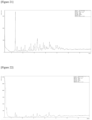
- the crystal of the hydrochloride of Compound (I) has, for example, the powder X-ray diffraction spectrum shown in Figure 7 and the thermogravimetry-differential thermal analysis (TG-DTA) curve shown in Figure 8 .
- TG-DTA thermogravimetry-differential thermal analysis
- the characteristic peaks of the crystal of the hydrochloride of Compound (I) in the powder X-ray diffraction spectrum (CuK ⁇ ) may be, as diffraction angles (2 ⁇ 0.2°), 6.7°, 7.4°, 11.2°, 12.6°, 14.1°, 16.6°, 20.0°, 21.1°, 22.0°, 22.6°, 23.2°, 24.5°, 26.4°, 28.0°, 30.0° and 31.6°.
- the characteristic peaks of the crystal of the hydrochloride of Compound (I) in the powder X-ray diffraction spectrum have diffraction angles (2 ⁇ 0.2°) of 6.7°, 7.4°, 11.2°, 12.6°, 14.1°, 16.6°, 20.0°, 21.1°, 22.0°, 22.6°, 23.2°, 24.5°, 26.4°, 28.0°, 30.0° and 31.6°, when measured by the reflection method.
- the crystal of the hydrochloride of Compound (I) according to the present disclosure is, for example, a crystal having at least 3 peaks selected from the above-described peaks, preferably a crystal having at least 4 peaks selected from the above-described peaks, more preferably a crystal having at least 5 peaks selected from the above-described peaks, even more preferably a crystal having at least 6 peaks selected from the above-described peaks, further preferably a crystal having at least 6 peaks selected from the above-described peaks, still further preferably a crystal having at least 7 peaks selected from the above-described peaks, still further preferably a crystal having at least 8 peaks selected from the above-described peaks, still further preferably a crystal having at least 9 peaks selected from the above-described peaks, still further preferably a crystal having at least 10 peaks selected from the above-described peaks, still further preferably a crystal having at least 11 peaks selected from the above-described peaks, still further preferably a crystal having
- the endothermic peak of the crystal of the hydrochloride of Compound (I) in the thermogravimetry-differential thermal analysis (TG-DTA) curve may be around 239°C to 243°C, and preferably around 241°C.
- the crystal of the hydrochloride of Compound (I) can be obtained, for example, by a method comprising a step (8) of adding Compound (I) to a solvent and then adding hydrochloric acid thereto, followed by stirring the mixture at room temperature for crystallization.
- the solvent that can be used in the step (8) may be, for example, ethyl acetate, methanol, ethanol, etc. or a mixed solvent thereof.
- the solvent used in the step (8) is preferably a mixed solvent of ethyl acetate and methanol.
- the crystallization in the step (8) may be performed under stirring.
- the stirring is performed using a stirrer, stirring blades, etc., as appropriate, depending on the amount of a solvent, the size of a reaction vessel, etc.
- the stirring operation can also be performed, for example, by shaking the reaction vessel.
- the stirring speed is usually 1 to 600 rpm, and preferably 10 to 100 rpm.
- the amount of hydrochloric acid added can be 0.9 to 1.1 molar equivalent, with respect to the amount of Compound (I).
- the amount of hydrochloric acid added is preferably 1.0 molar equivalent.
- the chemical purity of Compound (I) is 90% or more, and it can be measured by high performance liquid chromatography (HPLC). It is preferably the crystal of the hydrochloride of Compound (I) in which the chemical purity of Compound (I) is 95% or more, and it is more preferably the crystal of the hydrochloride of Compound (I) in which the chemical purity of Compound (I) is 99% or more.
- the crystal of the hydrochloride of Compound (I) may be any crystal, as long as it contains a crystal of the hydrochloride, and it may be either a single crystal of hydrochloride, or a polymorphic mixture containing crystals other than the crystal of the hydrochloride.
- the crystal of the hydrochloride of Compound (I) is preferably a crystal containing 90% or more of the crystal of the hydrochloride, and is more preferably a crystal containing 95% or more of the crystal of the hydrochloride.
- the crystal of the maleate of Compound (I) has, for example, the powder X-ray diffraction spectrum shown in Figure 9 and the thermogravimetry-differential thermal analysis (TG-DTA) curve shown in Figure 10 .
- TG-DTA thermogravimetry-differential thermal analysis
- the characteristic peaks of the crystal of the maleate of Compound (I) in the powder X-ray diffraction spectrum (CuK ⁇ ) may be, as diffraction angles (2 ⁇ 0.2°), 6.5°, 9.8°, 12.1°, 13.0°, 13.9°, 14.7°, 15.2°, 15.9°, 17.7°, 18.4°, 19.0°, 20.1°, 20.9°, 21.5°°, 22.9°, 23.4°, 25.3°, 28.0°, 29.7° and 30.8°.
- the characteristic peaks of the crystal of the maleate of Compound (I) in the powder X-ray diffraction spectrum have diffraction angles (2 ⁇ 0.2°) of 6.5°, 9.8°, 12.1°, 13.0°, 13.9°, 14.7°, 15.2°, 15.9°, 17.7°, 18.4°, 19.0°, 20.1°, 20.9°, 21.5°, 22.9°, 23.4°, 25.3°, 28.0°, 29.7° and 30.8°, when measured by the reflection method.
- the crystal of the maleate of Compound (I) according to the present disclosure is, for example, a crystal having at least 3 peaks selected from the above-described peaks, preferably a crystal having at least 4 peaks selected from the above-described peaks, more preferably a crystal having at least 5 peaks selected from the above-described peaks, even more preferably a crystal having at least 6 peaks selected from the above-described peaks, further preferably a crystal having at least 6 peaks selected from the above-described peaks, still further preferably a crystal having at least 7 peaks selected from the above-described peaks, still further preferably a crystal having at least 8 peaks selected from the above-described peaks, still further preferably a crystal having at least 9 peaks selected from the above-described peaks, still further preferably a crystal having at least 10 peaks selected from the above-described peaks, still further preferably a crystal having at least 11 peaks selected from the above-described peaks, still further preferably a crystal having at least
- thermogravimetry-differential thermal analysis (TG-DTA) curve may be around 243°C to 247°C, and preferably around 245°C.
- the crystal of the maleate of Compound (I) can be obtained, for example, by a method comprising a step (10) of adding Compound (I) and maleic acid to a solvent and then heating and stirring the resulting solution to obtain an amorphous body, then, a step (11) of heating the resulting amorphous body to reflux, and then, a step (12) of stirring the reaction mixture at room temperature and then cooling the resultant on ice for crystallization.
- the solvent that can be used in the step (10) may be, for example, chloroform, methanol, etc., or a mixed solvent thereof.
- the solvent used in the step (10) is preferably a mixed solvent of chloroform and methanol.
- acetonitrile can be used as a solvent.
- the amorphous body can be heated to reflux at a temperature of around the boiling point of the solvent, and when the solvent is acetonitrile, the applied temperature is preferably 85°C.
- the maleic acid added in the step (10) must be added in the same molar equivalent as the amount of Compound (I).
- the crystallization in the step (9) may be performed under stirring.
- the stirring is performed using a stirrer, stirring blades, etc., as appropriate, depending on the amount of a solvent, the size of a reaction vessel, etc.
- the stirring operation can also be performed, for example, by shaking the reaction vessel.
- the chemical purity of Compound (I) is 90% or more, and it can be measured by high performance liquid chromatography (HPLC). It is preferably the crystal of the maleate of Compound (I) in which the chemical purity of Compound (I) is 95% or more, and it is more preferably the crystal of the maleate of Compound (I) in which the chemical purity of Compound (I) is 99% or more.
- the crystal of the maleate of Compound (I) may be any crystal, as long as it contains a crystal of the maleate, and it may be either a single crystal of maleate, or a polymorphic mixture containing crystals other than the crystal of the maleate.
- the crystal of the maleate of Compound (I) is preferably a crystal containing 90% or more of the crystal of the maleate, and is more preferably a crystal containing 95% or more of the crystal of the maleate.
- crystal forms (type I crystal, type II crystal, and type III crystal) of the free base of Compound (I), the crystal of the hydrochloride of Compound (I), and the crystal of the maleate of Compound (I) according to the present disclosure is described above, but these are merely examples.
- the crystal forms (type I crystal, type II crystal, and type III crystal) of the free base of Compound (I), the crystal of the hydrochloride of Compound (I), and the crystal of the maleate of Compound (I) according to the present disclosure are not limited to those obtained by the above-mentioned embodiment of obtaining them.
- the type I crystal, type II crystal and type III crystal of the free base of Compound (I), the crystal of the hydrochloride of Compound (I), and the crystal of the maleate of Compound (I) according to the present disclosure have low hygroscopicity and excellent solid state stability (preservation stability, etc.). It is important for a drug substance of a pharmaceutical product and an active ingredient in a pharmaceutical product to have solid state stability in terms of both industrial operations and to maintain quality.
- solvents used in the production of pharmaceutical products may have toxicity, and from the viewpoint of safety, it is desirable to have as little solvent remaining in the production process as possible.
- the type I crystal of the free base of Compound (I) does not contain residual solvents at levels equal to or greater than the regulation values set by the ICH (International Council for Harmonisation of Technical Requirements for Pharmaceuticals for Human Use) Guidelines.
- the type I crystal, type II crystal and type III crystal of the free base of Compound (I), the crystal of the hydrochloride of Compound (I) and the crystal of the maleate of Compound (I) according to the present disclosure have excellent antitumor effects, and are useful as pharmaceutical products for treating tumors.
- the type I crystal, type II crystal or type III crystal of the free base of Compound (I), the crystal of the hydrochloride of Compound (I), or the crystal of the maleate of Compound (I) as a medicament
- various types of dosage forms can be adopted depending on the preventive or therapeutic purpose with or without crushing the crystal.
- the dosage form may include all of oral agents such as a tablet, a capsule, a granule, a fine granule, a powder agent, and a dry syrup agent; and parenteral agents such as a suppository, an inhalant, nasal drops, an ointment, a patch, and an injection.
- the type I crystal, type II crystal or type III crystal of the free base of Compound (I), the crystal of the hydrochloride of Compound (I), or the crystal of the maleate of Compound (I) is preferably utilized for oral agents.
- These pharmaceutical compositions can be produced by commonly used production methods that are known to skilled persons, using pharmaceutically acceptable carriers.
- examples of the pharmaceutically acceptable carrier mixed into the compound of the present disclosure may include an excipient, a binder, a disintegrator, a lubricant, and a coating agent.
- examples of the pharmaceutically acceptable carrier mixed into the compound of the present disclosure may include a solvent, a solubilizer, a suspending agent, a tonicity agent, a buffer, and a soothing agent.
- preparation additives such as an antiseptic, an antioxidant, a coloring agent, a sweetener, and a stabilizer can also be used, as necessary.
- excipient examples include lactose, sucrose, D-mannitol, starch, crystalline cellulose, and calcium silicate.
- binder examples include hydroxypropyl cellulose, methyl cellulose, polyvinylpyrrolidone, candy powder, and hypromellose.
- disintegrator may include sodium starch glycolate, carmellose calcium, croscarmellose sodium, crospovidone, low-substituted hydroxypropyl cellulose, and partially pregelatinized starch.
- Examples of the lubricant may include talc, magnesium stearate, sucrose fatty acid ester, stearic acid, and sodium stearyl fumarate.
- Examples of the coating agent may include ethyl cellulose, aminoalkyl methacrylate copolymer RS, hypromellose, and sucrose.
- Examples of the solvent may include water, propylene glycol, and physiological saline.
- solubilizer may include polyethylene glycol, ethanol, ⁇ -cyclodextrin, macrogol 400, and polysorbate 80.
- suspending agent examples include carrageenan, crystalline cellulose/carmellose sodium, and polyoxyethylene hydrogenated castor oil.
- Examples of the tonicity agent may include sodium chloride, glycerin, and potassium chloride.
- pH adjuster/buffer may include sodium citrate, hydrochloric acid, lactic acid, phosphoric acid, and sodium dihydrogen phosphate.
- Examples of the soothing agent may include procaine hydrochloride and lidocaine.
- antiseptic examples include ethyl paraoxybenzoate, cresol, and benzalkonium chloride.
- antioxidant examples include sodium sulfite, ascorbic acid, and natural vitamin E.
- coloring agent examples include titanium oxide, iron sesquioxide, edible blue No. 1, and copper chlorophyll.
- Examples of the corrigent may include aspartame, saccharin, sucralose, l-menthol, and mint flavor.
- Examples of the stabilizer may include sodium pyrosulfite, sodium edetate, erythorbic acid, magnesium oxide, and dibutylhydroxytoluene.
- an excipient and as necessary, a binder, a disintegrator, a lubricant, a coloring agent, a corrigent, and the like are added to the type I crystal, type II crystal or type III crystal of the free base of Compound (I), the crystal of the hydrochloride of Compound (I), or the crystal of the maleate of Compound (I), and thereafter, a tablet, a coated tablet, a granule, a powder agent, a capsule, and the like can be produced according to ordinary methods.
- the amount of the type I crystal, type II crystal or type III crystal of the free base of Compound (I), the crystal of the hydrochloride of Compound (I), or the crystal of the maleate of Compound (I) to be mixed into the above-described each dosage unit form depends on the symptoms of a patient to whom the crystal should be applied, the dosage form, or the like, and thus, the amount of the compound of the present disclosure is not constant.
- the applied dose is set to be about 0.05 to 1000 mg per dosage unit form in the case of an oral agent, it is set to be about 0.1 to 500 mg per dosage unit form in the case of an injection, and it is set to be about 1 to 1000 mg per dosage unit form in the case of a suppository or a topical agent.
- the daily dose of the type I crystal, type II crystal or type III crystal of the free base of Compound (I), the crystal of the hydrochloride of Compound (I), or the crystal of the maleate of Compound (I) in a drug having each dosage form is different, depending on the symptoms, body weight, age, sex and the like of a patient, and thus, it cannot be generally determined.
- the crystal may be administered to an adult (body weight: 50 kg) at a daily dose of, for example, about 20 mg/day, about 40 mg/day, about 60 mg/day, about 80 mg/day, about 100 mg/day, about 200 mg/day, or about 300 mg/day, at a dose level of intermittent administration.
- the aforementioned crystal may also be administered at a dose level of about 400 mg/day, about 500 mg/day, about 600 mg/day, and about 3000 mg/day, about 2,500 mg/day, about 2,000 mg/day, about 1,500 mg/day, about 1,000 mg/day, about 900 mg/day, about 800 mg/day, about 700 mg/day, or any dose level in the aforementioned dose range.
- the crystal with the aforementioned dose is preferably administered once a day or in 2 to 3 divided doses a day.
- Compound (I) or a pharmaceutically acceptable salt thereof can be administered, for example, continuously (administered for 7 days per week) or intermittently, depending on pharmacokinetics and the clearance/accumulation of a drug in a specific subject.
- intermittently for example, a 4-day on, 3-day off (drug holiday) schedule per week may be applied, or other intermittent administration schedules that are deemed appropriate using sound medical judgment may also be applied.
- Continuous administration is preferable.
- Administration can be carried out once per day (QD) or twice or more per day (b.i.d., t.i.d., etc.), with a dose of about 20 to 960 mg/day QD being preferable.
- the daily dose may be administered in a single dose or in multiple individual divided doses.
- two tablets each containing 40 mg of Compound (I) or a pharmaceutically acceptable salt thereof can be administered to a subject, once per day (QD) at a total dose of 80 mg/day.
- two tablets each containing 40 mg of Compound (I) or a pharmaceutically acceptable salt thereof preferably the hydrochloride or maleate
- the amount of Compound (I) or a pharmaceutically acceptable salt thereof administered is the amount converted to the amount of Compound (I).
- administration continues for a specific treatment cycle, typically, at least a 28-days cycle, which can be repeated with or without drug holidays.
- a longer or shorter cycle can also be used, such as 14 days, 18 days, 21 days, 24 days, 35 days, 42 days, 48 days, or any range therebetween.
- This cycle can be repeated without or with drug holidays, depending on the subject.
- Other schedules can also be applied, depending on the presence or absence of adverse events, the cancer's response to treatment, patient convenience, etc.
- the "adverse event” refers to any undesirable or unintended illness or symptoms thereof occurring in a patient who has been administered with the drug. It does not matter whether or not there is a causal relationship with the drug.
- administration can be performed, for example, on days 1, 3, 5, 7, 9, 11, 13, 15, 17, 19, 21, 23, 25, and 27; on days 1, 4, 8, 11, 15, 19, 23, and 27; and on days 1, 3, 5, 8, 10, 12, 15, 17, 19, 22, 24, and 26 in a 28-day cycle.
- the powder X-ray diffraction measurement method performed for the crystals of Compound (I) according to the present disclosure can be measured by a reflection method.
- the morphology of many crystal particles tends to give selective orientation to a sample in a sample holder.
- the selective orientation in the sample gives influence on the intensity of various reflections, and as a result, the reflection is sometimes observed to be stronger and sometimes weaker than the reflection predicted for a completely unoriented sample.
- NMR spectra were measured using an AL400 (400MHz; JEOL). When tetramethylsilane was contained in a deuterated solvent, tetramethylsilane was used as an internal standard. In other cases, measurements were carried out using a non-deuterated proton peak remaining in the NMR solvent as an internal standard. All ⁇ values were expressed in ppm.
- Powder X-ray diffraction analysis was carried out according to the following test conditions, after lightly pulverizing an appropriate amount of a test substance in an agate mortar, as needed.
- Residual solvent measurement was carried out according to the following test conditions.
- thermogravimetry-differential thermal analysis (TG-DTA) curve of the obtained type I crystal of the free base are as follows.
- Characteristic diffraction angles are as follows.
- Characteristic diffraction angles (2 ⁇ 0.2°): 6.2°, 6.7°, 8.3°, 8.7°, 9.3°, 9.7°, 11.1°, 13.0°, 13.7°, 15.4°, 16.3°, 16.9°, 17.7°, 18.7°, 19.4°, 20.3°, 25.1°, 25.9°, and 26.5°.
- thermogravimetry-differential thermal analysis (TG-DTA) curve is shown in Figure 2 .
- the type I crystal of the free base of Compound (I) can also be produced by the following method.
- the obtained Compound (I) (20.00 g) was suspended in dimethyl sulfoxide (400 mL, 20 v/w) under stirring, followed by deaeration at room temperature for 5 minutes, and nitrogen gas was sealed therein.
- the obtained suspension was heated and stirred in an oil bath at 65°C for 25 minutes to dissolve the crude Compound (I) to obtain a light yellow solution.
- the internal temperature at this time was 59°C.
- the present solution was subjected to clear filtration through a Glass-Fiber Filter (Whatman, GF/B, ⁇ 60mm), and the container was fully washed with 20 mL (1 v/w) of dimethyl sulfoxide. At this time, the temperature of the filtrate at this time was 40°C.
- the resulting suspension was filtrated through Kiriyama filter papers (2 sheets, No. 3, ⁇ 95 mm (top) and No. 4, ⁇ 95 mm (bottom)), and the filtrated wet crystals of Compound (I) were washed with water (300 mL, 15 v/w).
- the resulting wet crystals of the type I crystal of Compound (I) were dried under reduced pressure at 70°C for 14 hours to obtain a type I crystal of the free base of Compound (I) (19.13 g; yield: 96%; chemical purity 99.12%), which was light yellow in color.
- the residual solvent was calculated to be about 2400 ppm of dimethyl sulfoxide, but ethyl acetate and tetrahydrofuran were not detected.
- the amount of the residual solvent was calculated in the same manner as that in Example 1.
- ND means below the limit of quantification
- the values below the limit of quantification for each solvent in the GC analysis were set to be 235 ppm dimethyl sulfoxide, 900 ppm ethyl acetate, and 145 ppm tetrahydrofuran.
- thermogravimetry-differential thermal analysis (TG-DTA) curve of the obtained type II crystal of the free base are as follows.
- Characteristic diffraction angles are as follows.
- Characteristic diffraction angles (2 ⁇ 0.2°) are 6.7°, 7.5°, 10.4°, 12.7°, 13.4°, 14.6°, 16.5°, 17.9°, 18.3°, 19.8°, 20.6°, 21.8°, 22.9°, 26.5°, and 27.9°.
- thermogravimetry-differential thermal analysis (TG-DTA) curve is shown in Figure 4 .
- thermogravimetry-differential thermal analysis (TG-DTA) curve of the obtained type III crystal of the free base are as follows.
- Characteristic diffraction angles are as follows.
- Characteristic diffraction angles (2 ⁇ 0.2°) are 6.8°, 7.5°, 8.8°, 11.7°, 12.9°, 13.9°, 14.9°, 16.7°, 17.8°, 18.8°, 19.7°, 20.7°, 22.0°, 23.4°, 24.2°, 26.2°, and 26.7°.
- thermogravimetry-differential thermal analysis (TG-DTA) curve is shown in Figure 6 .
- thermogravimetry-differential thermal analysis (TG-DTA) curve of the obtained crystal of the hydrochloride are as follows.
- Characteristic diffraction angles are as follows.
- Characteristic diffraction angles (2 ⁇ 0.2°): 6.7°, 7.4°, 11.2°, 12.6°, 14.1°, 16.6°, 20.0°, 21.1°, 22.0°, 22.6°, 23.2°, 24.5°, 26.4°, 28.0°, 30.0°, and 31.6°.
- thermogravimetry-differential thermal analysis was measured according to the test conditions for TG-DTA measurement described in the above section " ⁇ Reagents and Measurement Methods >. However, regarding the temperature-increasing rate, the temperature was increased at 10°C/min to 400°C.
- thermogravimetry-differential thermal analysis (TG-DTA) curve is shown in Figure 8 .
- thermogravimetry-differential thermal analysis (TG-DTA) curve of the obtained crystal of the maleate are as follows.
- Characteristic diffraction angles are as follows.
- Characteristic diffraction angles (2 ⁇ 0.2°): 6.5°, 9.8°, 12.1°, 13.0°, 13.9°, 14.7°, 15.2°, 15.9°, 17.7°, 18.4°, 19.0°, 20.1°, 20.9°, 21.5°, 22.9°, 23.4°, 25.3°, 28.0°, 29.7°, and 30.8°.
- thermogravimetry-differential thermal analysis was measured according to the test conditions for TG-DTA measurement described in the above section ⁇ Reagents and Measurement Methods >. However, regarding the temperature-increasing rate, the temperature was increased at 10°C/min to 400°C.
- thermogravimetry-differential thermal analysis (TG-DTA) curve is shown in Figure 10 .
- thermogravimetry-differential thermal analysis (TG-DTA) curve of the obtained crystal of the 1/2 malate of Compound (I) are as follows.
- Characteristic diffraction angles are as follows.
- thermogravimetry-differential thermal analysis (TG-DTA) curve is shown in Figure 12 .
- the temperature of the obtained solution was increased to 50°C, and 9 mL of butyl acetate was added thereto.
- the obtained mixture was stirred for 1 hour, and a solid was then precipitated.
- the reaction mixture was allowed to cool, as was, to room temperature, and thereafter, it was stirred under cooling on ice for 1 hour, and a solid was collected by filtration.
- the solid was dried under reduced pressure at 40°C for 20 hours to obtain 693 mg of acetate (yield: 63%).
- thermogravimetry-differential thermal analysis (TG-DTA) curve of the obtained acetate of Compound (I) are as follows.
- Characteristic diffraction angles are as follows.
- Characteristic diffraction angles (2 ⁇ 0.2°): 11.2°, 11.5°, 12.6°, 13.3°, 15.4°, 15.8°, 17.1°, 17.7°, 18.2°, 18.8°, 19.9°, 21.1°, 21.7°, 22.0°, 23.2°, 23.4°, 23.8°, 26.2°, 26.9°, and 27.8°.
- thermogravimetry-differential thermal analysis (TG-DTA) curve is shown in Figure 14 .
- the powder X-ray diffraction of the sample after preservation was measured according to the aforementioned method.
- a change in the amount of analogous substances was measured by weighing out about 1 mg of the sample, dissolving it in about 5 mL of a water/acetonitrile mixed solution (1 : 1), accurately measuring 5 ⁇ L of this solution, and analyzing it by HPLC using the following method.
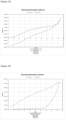
- a VTI-SA+ (TA Instruments) was used. About 10 mg of each of a free base type I crystal, a free base type II crystal, and a free base type III crystal was weighed, and was placed in a pan. While confirming that the weight fluctuation was within 0.0100% in 5 minutes, the temperature was raised up to 60°C at 1 degree per minute. If the weight fluctuated, the temperature was maintained for a maximum of 5 hours before proceeding to the next step. Thereafter, the temperature was lowered to 25°C, and the humidity was raised from 5% RH to 95% RH, and was then lowered to 5% RH. At that time, the humidity was changed by 5% RH while confirming that the weight fluctuation was within 0.00100% in 5 minutes. If the weight fluctuated, the humidity was maintained for a maximum of 2 hours before proceeding to the next step.
- the free base type I crystal, the free base type II crystal, and the free base type III crystal could be confirmed to have low hygroscopicity. It became clear that, in particular, the type I crystal and type III crystal of the free base exhibit excellent low hygroscopicity.
- Powder X-ray diffraction measurement was carried out at 25°C, and the temperature was raised to 50°C over 30 minutes, after which powder X-ray diffraction measurement was carried out. Thereafter, the temperature was further raised to 210°C at 10°C/10 minutes, and powder X-ray diffraction measurement was then carried out. After that, the temperature was lowered to 25°C over 30 minutes, and powder X-ray diffraction measurement was then carried out. In the obtained spectra, whether new peaks appeared in the target spectrum before and after initiation of the test, or the presence or absence of decrease in the peaks was confirmed.
- both the crystal of the hydrochloride of Compound (I) and the crystal of the maleate of Compound (I) showed no changes in the powder X-ray diffraction patterns, and it was found that these crystals are extremely stable crystals.
- both the crystal of the hydrochloride of Compound (I) and the crystal of the maleate of Compound (I) had only small amounts of analogous substances after preservation, and no change was observed in appearance.
Landscapes
- Chemical & Material Sciences (AREA)
- Organic Chemistry (AREA)
- Health & Medical Sciences (AREA)
- Animal Behavior & Ethology (AREA)
- Life Sciences & Earth Sciences (AREA)
- Pharmacology & Pharmacy (AREA)
- General Health & Medical Sciences (AREA)
- Public Health (AREA)
- Veterinary Medicine (AREA)
- Medicinal Chemistry (AREA)
- Epidemiology (AREA)
- Chemical Kinetics & Catalysis (AREA)
- General Chemical & Material Sciences (AREA)
- Nuclear Medicine, Radiotherapy & Molecular Imaging (AREA)
- Pharmaceuticals Containing Other Organic And Inorganic Compounds (AREA)
Priority Applications (1)
| Application Number | Priority Date | Filing Date | Title |
|---|---|---|---|
| MA71401A MA71401A (fr) | 2022-07-05 | 2023-07-04 | 5h-pyrrolo[2,3-d]pyrimidine-6(7h)-one, et cristaux de sel de celui-ci |
Applications Claiming Priority (2)
| Application Number | Priority Date | Filing Date | Title |
|---|---|---|---|
| JP2022108654 | 2022-07-05 | ||
| PCT/JP2023/024703 WO2024009977A1 (fr) | 2022-07-05 | 2023-07-04 | 5h-pyrrolo[2,3-d]pyrimidine-6(7h)-one, et cristaux de sel de celui-ci |
Publications (1)
| Publication Number | Publication Date |
|---|---|
| EP4553078A1 true EP4553078A1 (fr) | 2025-05-14 |
Family
ID=89453401
Family Applications (1)
| Application Number | Title | Priority Date | Filing Date |
|---|---|---|---|
| EP23835509.3A Pending EP4553078A1 (fr) | 2022-07-05 | 2023-07-04 | 5h-pyrrolo[2,3-d]pyrimidine-6(7h)-one, et cristaux de sel de celui-ci |
Country Status (7)
| Country | Link |
|---|---|
| US (1) | US20260001883A1 (fr) |
| EP (1) | EP4553078A1 (fr) |
| JP (1) | JPWO2024009977A1 (fr) |
| CN (1) | CN119403807A (fr) |
| MA (1) | MA71401A (fr) |
| TW (1) | TW202421127A (fr) |
| WO (1) | WO2024009977A1 (fr) |
Family Cites Families (3)
| Publication number | Priority date | Publication date | Assignee | Title |
|---|---|---|---|---|
| WO2005117909A2 (fr) * | 2004-04-23 | 2005-12-15 | Exelixis, Inc. | Modulateurs des proteines kinases et leurs methodes d'utilisation |
| AR074072A1 (es) * | 2008-11-11 | 2010-12-22 | Lilly Co Eli | Compuesto de imidazol -piperidin -pirrol-pirimidin-6-ona, composicion farmaceutica que lo comprende y su uso para preparar un medicamento util para tratar el glioblastoma multiforme |
| RU2713181C1 (ru) | 2016-05-20 | 2020-02-04 | Тайхо Фармасьютикал Ко., Лтд. | Новое производное 5h-пирроло[2,3-d]пиримидин-6(7h)-она |
-
2023
- 2023-07-04 MA MA71401A patent/MA71401A/fr unknown
- 2023-07-04 JP JP2024532139A patent/JPWO2024009977A1/ja active Pending
- 2023-07-04 WO PCT/JP2023/024703 patent/WO2024009977A1/fr not_active Ceased
- 2023-07-04 EP EP23835509.3A patent/EP4553078A1/fr active Pending
- 2023-07-04 US US18/880,293 patent/US20260001883A1/en active Pending
- 2023-07-04 CN CN202380051803.7A patent/CN119403807A/zh active Pending
- 2023-07-04 TW TW112124881A patent/TW202421127A/zh unknown
Also Published As
| Publication number | Publication date |
|---|---|
| WO2024009977A1 (fr) | 2024-01-11 |
| TW202421127A (zh) | 2024-06-01 |
| US20260001883A1 (en) | 2026-01-01 |
| CN119403807A (zh) | 2025-02-07 |
| JPWO2024009977A1 (fr) | 2024-01-11 |
| MA71401A (fr) | 2025-04-30 |
Similar Documents
| Publication | Publication Date | Title |
|---|---|---|
| AU2020382214B2 (en) | Novel salt of terphenyl compound | |
| EP3263573B1 (fr) | Cristal d'imidazo-oxazine, composition pharmaceutique contenant ledit cristal, et procédé de production dudit cristal | |
| IL267464B2 (en) | Polymorphs and solid forms of (s)-2-((2-((s-4-(difluoromethyl)-2-oxoxazolidin-3-yl)-5,6-dihydrobenzo[f]imidazo[1,2-d][ 1,4]oxazepine-9-yl)amino)propanamide and methods of production | |
| EP2455368B1 (fr) | Benzène-sulfonate de 2-[[[2-[(hydroxyacétyl)amino]-4-pyridinyl]méthyl]thio]-n-[4-(trifluorométhoxy)phényl]-3-pyridinecarboxamide, cristaux de celui-ci, ses polymorphes et ses procédés de fabrication | |
| US10464946B2 (en) | Crystalline forms of thienopyrimidine compound | |
| US20260001883A1 (en) | 5h-pyrrolo[2,3-d]pyrimidin-6(7h)-one and crystal of salt thereof | |
| EP4177257A1 (fr) | Succinate de composé octahydrothiénoquinoline et cristaux de celui-ci | |
| KR102170422B1 (ko) | 토파시티닙의 신규 염, 이의 제조방법 및 이를 포함하는 약학 조성물 | |
| JP7835785B2 (ja) | シクロヘキセノン化合物の結晶形 | |
| WO2024143236A1 (fr) | Cristaux de chlorhydrate d'acétate | |
| JP7282787B2 (ja) | ピラゾロ[3,4-d]ピリミジンの結晶 | |
| HK40121018A (zh) | 5h-吡咯并[2,3-d]嘧啶-6(7h)-酮及其盐体的结晶 | |
| HK40076742A (en) | Novel salt of terphenyl compound | |
| HK40041062A (en) | Crystal of imidazo-oxazine, pharmaceutical composition containing said crystal, and method for producing said crystal | |
| WO2025242163A1 (fr) | Sel d'inhibiteur de protéine kinase mek et son utilisation | |
| HK40041642A (en) | Crystal of pyrazolo[3,4-d]pyrimidine | |
| NZ743659A (en) | Crystalline forms of thienopyrimidine compound |
Legal Events
| Date | Code | Title | Description |
|---|---|---|---|
| STAA | Information on the status of an ep patent application or granted ep patent |
Free format text: STATUS: THE INTERNATIONAL PUBLICATION HAS BEEN MADE |
|
| PUAI | Public reference made under article 153(3) epc to a published international application that has entered the european phase |
Free format text: ORIGINAL CODE: 0009012 |
|
| STAA | Information on the status of an ep patent application or granted ep patent |
Free format text: STATUS: REQUEST FOR EXAMINATION WAS MADE |
|
| 17P | Request for examination filed |
Effective date: 20250203 |
|
| AK | Designated contracting states |
Kind code of ref document: A1 Designated state(s): AL AT BE BG CH CY CZ DE DK EE ES FI FR GB GR HR HU IE IS IT LI LT LU LV MC ME MK MT NL NO PL PT RO RS SE SI SK SM TR |