EP4553166A1 - Procédé de préparation d'un échantillon pour analyse - Google Patents
Procédé de préparation d'un échantillon pour analyse Download PDFInfo
- Publication number
- EP4553166A1 EP4553166A1 EP23208361.8A EP23208361A EP4553166A1 EP 4553166 A1 EP4553166 A1 EP 4553166A1 EP 23208361 A EP23208361 A EP 23208361A EP 4553166 A1 EP4553166 A1 EP 4553166A1
- Authority
- EP
- European Patent Office
- Prior art keywords
- sample
- seq
- ndm
- beta
- variant
- Prior art date
- Legal status (The legal status is an assumption and is not a legal conclusion. Google has not performed a legal analysis and makes no representation as to the accuracy of the status listed.)
- Withdrawn
Links
Images

Classifications
-
- C—CHEMISTRY; METALLURGY
- C12—BIOCHEMISTRY; BEER; SPIRITS; WINE; VINEGAR; MICROBIOLOGY; ENZYMOLOGY; MUTATION OR GENETIC ENGINEERING
- C12Q—MEASURING OR TESTING PROCESSES INVOLVING ENZYMES, NUCLEIC ACIDS OR MICROORGANISMS; COMPOSITIONS OR TEST PAPERS THEREFOR; PROCESSES OF PREPARING SUCH COMPOSITIONS; CONDITION-RESPONSIVE CONTROL IN MICROBIOLOGICAL OR ENZYMOLOGICAL PROCESSES
- C12Q1/00—Measuring or testing processes involving enzymes, nucleic acids or microorganisms; Compositions therefor; Processes of preparing such compositions
- C12Q1/02—Measuring or testing processes involving enzymes, nucleic acids or microorganisms; Compositions therefor; Processes of preparing such compositions involving viable microorganisms
- C12Q1/18—Testing for antimicrobial activity of a material
-
- C—CHEMISTRY; METALLURGY
- C12—BIOCHEMISTRY; BEER; SPIRITS; WINE; VINEGAR; MICROBIOLOGY; ENZYMOLOGY; MUTATION OR GENETIC ENGINEERING
- C12N—MICROORGANISMS OR ENZYMES; COMPOSITIONS THEREOF; PROPAGATING, PRESERVING, OR MAINTAINING MICROORGANISMS; MUTATION OR GENETIC ENGINEERING; CULTURE MEDIA
- C12N9/00—Enzymes; Proenzymes; Compositions thereof; Processes for preparing, activating, inhibiting, separating or purifying enzymes
- C12N9/14—Hydrolases (3)
- C12N9/78—Hydrolases (3) acting on carbon to nitrogen bonds other than peptide bonds (3.5)
- C12N9/86—Hydrolases (3) acting on carbon to nitrogen bonds other than peptide bonds (3.5) acting on amide bonds in cyclic amides, e.g. penicillinase (3.5.2)
-
- C—CHEMISTRY; METALLURGY
- C12—BIOCHEMISTRY; BEER; SPIRITS; WINE; VINEGAR; MICROBIOLOGY; ENZYMOLOGY; MUTATION OR GENETIC ENGINEERING
- C12Q—MEASURING OR TESTING PROCESSES INVOLVING ENZYMES, NUCLEIC ACIDS OR MICROORGANISMS; COMPOSITIONS OR TEST PAPERS THEREFOR; PROCESSES OF PREPARING SUCH COMPOSITIONS; CONDITION-RESPONSIVE CONTROL IN MICROBIOLOGICAL OR ENZYMOLOGICAL PROCESSES
- C12Q1/00—Measuring or testing processes involving enzymes, nucleic acids or microorganisms; Compositions therefor; Processes of preparing such compositions
- C12Q1/02—Measuring or testing processes involving enzymes, nucleic acids or microorganisms; Compositions therefor; Processes of preparing such compositions involving viable microorganisms
- C12Q1/24—Methods of sampling, or inoculating or spreading a sample; Methods of physically isolating an intact microorganisms
-
- C—CHEMISTRY; METALLURGY
- C12—BIOCHEMISTRY; BEER; SPIRITS; WINE; VINEGAR; MICROBIOLOGY; ENZYMOLOGY; MUTATION OR GENETIC ENGINEERING
- C12Y—ENZYMES
- C12Y305/00—Hydrolases acting on carbon-nitrogen bonds, other than peptide bonds (3.5)
- C12Y305/02—Hydrolases acting on carbon-nitrogen bonds, other than peptide bonds (3.5) in cyclic amides (3.5.2)
- C12Y305/02006—Beta-lactamase (3.5.2.6)
-
- G—PHYSICS
- G01—MEASURING; TESTING
- G01N—INVESTIGATING OR ANALYSING MATERIALS BY DETERMINING THEIR CHEMICAL OR PHYSICAL PROPERTIES
- G01N33/00—Investigating or analysing materials by specific methods not covered by groups G01N1/00 - G01N31/00
- G01N33/48—Biological material, e.g. blood, urine; Haemocytometers
- G01N33/50—Chemical analysis of biological material, e.g. blood, urine; Testing involving biospecific ligand binding methods; Immunological testing
- G01N33/53—Immunoassay; Biospecific binding assay; Materials therefor
- G01N33/569—Immunoassay; Biospecific binding assay; Materials therefor for microorganisms, e.g. protozoa, bacteria, viruses
- G01N33/56911—Bacteria
-
- G—PHYSICS
- G01—MEASURING; TESTING
- G01N—INVESTIGATING OR ANALYSING MATERIALS BY DETERMINING THEIR CHEMICAL OR PHYSICAL PROPERTIES
- G01N33/00—Investigating or analysing materials by specific methods not covered by groups G01N1/00 - G01N31/00
- G01N33/48—Biological material, e.g. blood, urine; Haemocytometers
- G01N33/50—Chemical analysis of biological material, e.g. blood, urine; Testing involving biospecific ligand binding methods; Immunological testing
- G01N33/53—Immunoassay; Biospecific binding assay; Materials therefor
- G01N33/569—Immunoassay; Biospecific binding assay; Materials therefor for microorganisms, e.g. protozoa, bacteria, viruses
- G01N33/56911—Bacteria
- G01N33/56944—Streptococcus
-
- G—PHYSICS
- G01—MEASURING; TESTING
- G01N—INVESTIGATING OR ANALYSING MATERIALS BY DETERMINING THEIR CHEMICAL OR PHYSICAL PROPERTIES
- G01N2333/00—Assays involving biological materials from specific organisms or of a specific nature
- G01N2333/90—Enzymes; Proenzymes
- G01N2333/914—Hydrolases (3)
- G01N2333/978—Hydrolases (3) acting on carbon to nitrogen bonds other than peptide bonds (3.5)
- G01N2333/986—Hydrolases (3) acting on carbon to nitrogen bonds other than peptide bonds (3.5) acting on amide bonds in cyclic amides (3.5.2), e.g. beta-lactamase (penicillinase, 3.5.2.6), creatinine amidohydrolase (creatininase, EC 3.5.2.10), N-methylhydantoinase (3.5.2.6)
-
- G—PHYSICS
- G01—MEASURING; TESTING
- G01N—INVESTIGATING OR ANALYSING MATERIALS BY DETERMINING THEIR CHEMICAL OR PHYSICAL PROPERTIES
- G01N2469/00—Immunoassays for the detection of microorganisms
- G01N2469/20—Detection of antibodies in sample from host which are directed against antigens from microorganisms
Definitions
- the technology proposed herein relates to the fields of microbiology and vaccine technology and concerns a method for preparing a sample for analysis. More particularly, the technology proposed herein relates to a method for preparing a sample for analysis, such that any residual content of antimicrobial substances in the sample does not interfere with the later analysis.
- GBS Group B Streptococcus
- GBS vaginal carriers of GBS
- vertical transmission from the maternal genital tract is probably the most common source of infection in neonatal disease caused by this bacterium.
- GBS can also cause mastitis in cows, a bovine disease that is of considerable economic importance.
- An integral part of vaccine development is the testing of vaccine efficacy by analyzing samples from vaccinated subjects for determining the protective effect of a vaccine.
- samples may however contain further substances which may interfere with the analysis.
- Test subjects may for example be treated with antimicrobial substances, either for the specific microorganism the vaccine is to protect against, or for another microbe. In either case the substances may interfere with the analysis so that the corresponding samples must be discarded. This is disadvantageous both for the developer of the vaccine, due to the costs involved with enrolling and managing further test subjects in clinical studies, and for the test subject.
- NDM-1 New Delhi metallo-beta-lactamase 1
- NDM-1 New Delhi metallo-beta-lactamase 1
- NDM-1 New Delhi metallo-beta-lactamase 1
- a first aspect of the technology proposed herein relates to a method for preparing a sample for analysis, wherein said method comprises:
- the present invention is accordingly based on the discovery that otherwise unusable samples may still be used in the analysis provided that the activity of the antimicrobial substance contained in the sample is inactivated using the enzyme. As shown in the examples, this inactivation prevents killing of any microbes involved in the subsequent analysis. This allows the sample to be used in the analysis without the risk of incorrect analysis results.
- a second aspect of the technology proposed herein relates to a method comprising a microbial viability assay of a sample, said method comprising the steps of:
- a third aspect of the technology proposed herein relates to a recombinant New Delhi metallo-beta-lactamase 1 (NDM-1) polypeptide, said NDM-1 polypeptide comprising an amino acid sequence according to SEQ ID NO: 2, or a variant thereof having at least 95% sequence identity thereto.
- NDM-1 polypeptide comprising an amino acid sequence according to SEQ ID NO: 2, or a variant thereof having at least 95% sequence identity thereto.
- a fourth aspect the technology proposed herein relates to a method for recombinantly producing a New Delhi metallo-beta-lactamase 1 (NDM-1) protein according to SEQ ID NO: 1 or a variant thereof having at least 95% sequence identity thereto, said method comprising the steps of:
- a fifth aspect of the technology proposed herein relates to the use of an antimicrobial inactivating enzyme as defined herein for preparing a sample for an analysis as defined herein.
- Sixth, seventh, and eight aspects of the technology proposed herein relates to a nucleic acid sequence encoding an amino acid sequence of SEQ ID NO: 2 or encoding a variant of the amino acid sequence of SEQ ID NO: 2 having at least 95% sequence identity thereto, a vector, such as a plasmid vector, comprising such a nucleic acid, and a host cell comprising such a nucleic acid or vector, respectively.
- a first aspect of the present invention relates to a method for preparing a sample for analysis, wherein said method comprises:
- the technology proposed herein relates to a method comprising a microbial viability assay of a sample.
- the method comprising a microbial viability assay of a sample comprises the steps of a) preparing a sample for analysis according to the method of the first aspect and b) performing a microbial viability assay on the prepared sample of step a).
- the present inventors have considered that, when performing an assay of a sample, it is very important that no other factors but the factor to be studied, e.g., whether or not a vaccine has generated an immune response, influences the result. This is particularly a problem when the analysis to be performed involves determining microbial viability and when the sample contains antimicrobial substance(s). Antimicrobial substances in a sample inevitably will risk interfering with any assay involving microbial viability or microbial killing measurement and skew the results. However, due to the widespread use of antimicrobial substances, such substances are present in many samples, sometimes without the subject or the treating medical doctor being aware of it. This leads to problems when performing assays involving microbial viability measurements as it has not been possible to trust the results without knowledge of the antimicrobial treatment history of the subject.
- the present inventors surprisingly found that by employing an enzyme inactivating antimicrobial substances in a pre-treatment step before analysis of a sample, it was possible to dispense with the need for information regarding any antimicrobial treatment of the subject. Consequently, samples can be used without the need for the subject to be free from antimicrobial substances. This represents a major advantage since samples neither need to be tested for antimicrobial substances, nor discarded if antimicrobial substances are found. Further, there is no longer a need to remove subjects from a clinical study for vaccine efficacy even if/when the subjects are treated with antimicrobial substances. Correspondingly, there is no need to overpopulate a clinical study to compensate for unusable samples due to treatment with antimicrobial substances.
- the method for preparing a sample for analysis may alternatively be considered a method for pretreating a sample for analysis, a method for conditioning a sample for analysis, and/or a method for reducing the risk that substances in a sample interfere with a subsequent analysis.
- the method may be considered a method of purifying a sample by removing or inactivating one or more substances in the sample.
- the methods according to the first and second aspects of the technology proposed herein do not constitute treatment of the subject, nor do they constitute diagnostic methods. Rather, the methods provide for preparing a sample for subsequent analysis and a method comprising a microbial viability assay of a sample.
- Preparing encompasses treating, pretreating, and conditioning. Preparing may further comprise purifying and/or removing an interfering substance from the serum sample.
- the sample is preferably a biological sample.
- the sample may be a liquid sample.
- the sample is selected from the group consisting of whole blood, plasma, serum, saliva, and urine.
- the sample may also be a solid sample such as faeces or a tissue sample. If the sample is a solid sample, then the sample may be homogenized and/or otherwise disintegrated before being treated with the enzyme.
- the sample is a serum sample.
- Serum is the clear, yellowish fluid remaining after clotting factors (such as fibrinogen and prothrombin) have been removed from blood plasma by clot formation.
- the serum sample may be obtained from a subject, such as human or animal subject.
- the serum sample may be a serum sample from a vaccinated subject, such as a vaccinated female subject. Further, the serum sample may be obtained from the offspring of a vaccinated female subject.
- the serum sample may be a serum sample from a subject that is or has been treated with one or more antimicrobial substance(s) or the offspring of such a subject.
- antimicrobial substance(s) potentially present in the serum sample is inactivated before further analysis of the serum sample.
- Form analysis encompasses that the sample is prepared to render it suitable for a subsequent analysis that is performed on the sample after the sample has been prepared using the method according to the first aspect of the technology proposed herein.
- the sample may be provided by way of for example a standard blood test. Providing the sample does not involve treatment of the human or animal body by therapy or surgery. In particular, blood tests and/or blood samples obtained as routine for other uses may be used to provide the sample for the methods according to the first and second aspects of the technology proposed herein.
- the sample may be from a subject.
- the subject may be a human or animal subject.
- the subject may be a vaccinated subject, e.g., a subject vaccinated with a vaccine against a microbe.
- the subject may be a female subject, e.g., a vaccinated female subject, or the offspring of such a female subject.
- the methods according to the first and second aspects of the technology proposed herein refer to a sample potentially containing an antimicrobial substance.
- the term potentially encompasses that it is not known whether the sample contains the antimicrobial substance, that it is expected that the sample contains the antimicrobial substance, that it is known that the sample contains the antimicrobial substance, and that it has been determined, by an analysis on the sample which detects the antimicrobial substance, that the sample contains the antimicrobial substance.
- the sample may in particular be from a subject potentially treated with the antimicrobial substance.
- the sample is from the offspring of a subject potentially treated with the antimicrobial substance.
- Potentially treated has the same corresponding possible meanings as given for potentially containing above, mutatis mutandis.
- treated with an antimicrobial substance comprises that the sample contains the antimicrobial substance.
- treated with an antimicrobial substance comprises that the sample contains the antimicrobial substance in active form, i.e., the antimicrobial substance is present in the sample in a form, e.g., its normal, functional form, in which it exerts and antimicrobial effect on microbes.
- the sample containing the antimicrobial substance preferably corresponds to the sample containing the antimicrobial substance in a form, e.g., its normal, functional form, in which it exerts and antimicrobial effect on microbes.
- the antimicrobial substance is any antimicrobial substance that exerts an antimicrobial effect.
- the antimicrobial substance is further understood to encompass antimicrobial substances that can be enzymatically inactivated. Such enzymatic inactivation may e.g., involve hydrolysis, transfer of functional groups or redox reactions.
- the antimicrobial substance is an antibiotic.
- An antibiotic is any substance that kills bacteria.
- Treating is to be understood as encompassing contacting as well as mixing.
- treating the sample with the enzyme may comprise any of mixing the sample with the enzyme, where the enzyme may be free or immobilized on a carrier, passing the sample along a surface on which the enzyme is immobilized, etc.
- the sample is treated with the inactivating enzyme for a time sufficient to inactivate all or substantially all of any antimicrobial substance(s) in the sample.
- substantially all is in the context of the technology proposed herein intended that enough of any antimicrobial substance(s) in the sample are inactivated to not interfere with a later analysis of the sample.
- a sufficient time is a time whereafter the sample does not affect the viability of microbes subjected to the sample.
- the enzyme inactivating the antimicrobial substance may be any enzyme that can inactivate an antimicrobial substance. Such enzymes may in context of the technology proposed herein be denoted “inactivating enzyme” and the like.
- inactivate and the like as used herein is intended any treatment that results in an inactive antimicrobial substance, i.e., an antimicrobial substance that no longer exerts an antimicrobial effect, preferably its intended antimicrobial effect, on microbes.
- inactivation may for example involve, but is not limited to, a cleavage (hydrolysis) of the antimicrobial molecule (such as by hydrolases) or a formation of inactive derivatives (such as by transferases or redox enzymes) of the antimicrobial molecule.
- the inactivation comprises a cleavage (hydrolysis) of the antimicrobial molecule (such as by hydrolases).
- Performing a microbial viability assay comprises performing an assay in which the viability of microbes is determined, and in particular an assay in which the viability of microbes is used as an indication for determining a property of the sample.
- a prepared sample is a sample which has been treated with an enzyme to inactivate an antimicrobial substance in the sample.
- the problem with presence of antimicrobial substance(s) in a sample is in particular a problem when the analysis comprises determining microbial viability, preferably wherein said analysis comprises determining an immunological activity against microbes.
- Determining microbial viability may comprise measuring or studying microbial viability.
- an analysis comprising determining microbial viability may use the viability of a microbe, e.g., whether a microbe or population of microbes survives, multiplies, goes dormant, or dies, as an indication for determining a property of the sample.
- the microbes may be fungi or bacteria, preferably bacteria.
- the analysis may thus comprise exposing a microbe or population of microbes to the sample, alone or in combination with other compounds, to determine whether the sample has or elicits an immunological activity against the microbe.
- the analysis is an OpsonoPhagocytosis killing Assay (OPkA assay).
- OkA assay OpsonoPhagocytosis killing Assay
- opsonophagocytosis is the engulfment, by macrophages and other phagocytic cells like neutrophils, of bacteria opsonized with antibodies and/or complement proteins.
- microbial cells in the blood or within a specific tissue that become coated with IgG are soon recognized by patrolling macrophages and neutrophils.
- recognition occurs through specific surface-expressed FcyRs on the phagocytes, but the effect may also involve complement receptors.
- Fc ⁇ Rs When multiple Fc ⁇ Rs are engaged simultaneously, it cues the phagocyte to envelope its prey and confine it within an intracellular compartment known as the phagosome.
- the phagosome is a dead-end for most microbial pathogens.
- the encased bacteria are exposed to reactive oxygen species, acidic pH and a bar
- phagocytic cells are co-cultured with bacterial cells.
- the phagocytic immune cells will phagocytose and kill the bacterial cells in a complement-dependent manner and the assay can be used to study the ability of such phagocytic immune cells to respond to and kill bacterial cells under different conditions.
- the OpkA assay can be used to measure the functionality of antibodies and for example assess protective immunity of Group B Streptococcus (GBS) vaccines. The efficiency of vaccines can thus be studied using an OpkA assay.
- GBS Group B Streptococcus
- the OpkA analysis can determine whether vaccination with a vaccine, e.g., a GBS vaccine candidate, results in the vaccinated subjects obtaining opsonizing antibodies, i.e., antibodies which when contacted with bacteria, bind to the bacteria and induce phagocytic cells to phagocytose the bacteria.
- the OPkA assay is preferably configured for assaying the binding of antibodies to GBS bacteria, in particular to surface proteins of GBS bacteria.
- Such an OPkA assay preferably involves the binding of IgG to the GBS bacteria leading to a cascade of complement activation, resulting in deposition of C3b on the bacterial surface. This leads to phagocytosis by neutrophils through recognition of C3b by complement receptors on the neutrophils.
- the antibiotic is a beta-lactam antibiotic.
- Beta-lactam antibiotics are so called “broad spectrum” antibiotics and are among the most widely used group of antibiotics.
- the antibiotic to be inactivated according to the technology proposed herein may thus for example be a beta-lactam.
- Beta-lactams are mainly active against Gram-positive bacteria, although beta-lactam antibiotics active against Gram-negative bacteria have also been developed.
- beta-lactam antibiotic is a penicillin, Cephalosporin, cephamycin, monobactam, carbapenem or carbacephems.
- beta lactam antibiotic is penicillin, cephalosporin or carbapenem.
- the enzyme is preferably a beta-lactamase, preferably a carbapenemase, more preferably a class B carbapenemase.
- Beta-lactamases are a group of enzymes that provide bacterial resistance to beta-lactam antibiotics by breaking the antibiotic's structure by hydrolysis.
- the beta-lactamases used according to the technology proposed herein are preferably recombinantly produced.
- Carbapenemases are members of the molecular class A, B, or D ⁇ -lactamases. Class A and D enzymes have a serine-based hydrolytic mechanism, while class B enzymes are metallo- ⁇ -lactamases containing zinc in their active site.
- Carbapenemases can inactivate not only carbapenems but e.g also other broad-spectrum antibiotics such as penicillins, oxymino-cephalosporins, and cephamycins and are thus suitable to use as the inactivating enzyme according to the technology proposed herein as they can inactivate a wide range of antibiotics.
- broad-spectrum antibiotics such as penicillins, oxymino-cephalosporins, and cephamycins
- the carbapenemase is preferably a class B carbapenemase.
- the class B carbapenemase may preferably be a New Delhi metallo-beta-lactamase (NDM).
- NDM New Delhi metallo-beta-lactamase
- the enzyme may be New Delhi metallo-beta-lactamase 1 (NDM-1).
- NDM-1 enzymes confer resistance to all ⁇ -lactams except aztreonam and are therefore an attractive choice as the inactivating enzyme according to the technology proposed herein as it will inactivate the majority of beta-lactam antibiotics by cleaving the beta-lactam ring of such antibiotics.
- the NDM-1 used according to the technology proposed herein comprises are consists of an amino acid sequence according to SEQ ID NO: 1, or a variant thereof having at least 95% sequence identity thereto.
- This sequence is based on sequence NCBI ID: NG_049326.1 from Klebsiella pneumoniae.
- the sample is treated with the inactivating enzyme for from about 10 minutes to about 40 minutes.
- concentration of the inactivating enzyme when used in a method according to the technology proposed herein has to be adjusted depending on the specific enzyme used.
- nanomolar to micromolar concentrations of the enzyme is used, such as from about 10 nM to about 1 ⁇ M), such as from about 100 nM to about 500 nM, such as from about 100 nM to about 300 nM, such as about 200 nM (0.2 ⁇ M), in particular when NDM-1 is used as the inactivating enzyme.
- the sample is from a subject from that has been vaccinated against a bacterial infection, or is from the offspring of a subject that has been vaccinated against a bacterial infection.
- the subject is preferably a female subject.
- bacterial infection is a Group B streptococcal infection.
- a sample may contain antibodies against Group B streptococci.
- Such antibodies may be studied using the above referred to OPkA assay.
- the method according to the first aspect of the technology proposed herein may comprise the step of performing a microbial viability assay on the prepared sample, i.e., as per step (b) of the method according to the second aspect of the technology proposed herein.
- the subject from which the sample is provided has been vaccinated, or is the offspring of a female subject who has been vaccinated, against Group B streptococcal (GBS) infection using the immunogenic fusion protein disclosed in WO2008/127179 or WO 2022/207657 , alone or in combination with the immunogenic fusion protein disclosed in WO2017/068112 .
- GCS Group B streptococcal
- the subject from which the sample is provided has been vaccinated, or is the offspring of a female subject who has been vaccinated, against Group B streptococcal (GBS) infection using a combination of an immunogenic fusion protein comprising the N terminals of the Rib and AlpC GBS surface proteins, combined with a further immunogenic fusion protein comprising the N terminals of the Alp1 and Alp2 GBS surface proteins.
- GBS Group B streptococcal
- the subject from which the sample is provided has been vaccinated, or is the offspring of a female subject who has been vaccinated, against Group B streptococcal (GBS) infection using a GBS vaccine candidate comprises an immunogenic fusion protein consisting of SEQ ID NO: 5 combined with a further immunogenic fusion protein consisting of SEQ ID NO: 6 in a buffer further comprising the adjuvant aluminum hydroxide.
- the sample is preferably a serum sample.
- the third aspect of the technology proposed herein is related to a New Delhi metallo-beta-lactamase 1 (NDM-1) polypeptide wherein the polypeptide comprises or consists of an amino acid sequence according to SEQ ID NO: 2, or a variant thereof having at least 95% sequence identity thereto.
- SEQ ID NO: 2 comprises an amino acid sequence for an NDM-1 protein, such as the NDM-1 protein of SEQ ID NO: 1 or a variant thereof as described elsewhere herein, preceded by a PelB leader sequence, a His-tag and a TEV protease recognition site on the N-terminal side of the NDM-1 amino acid sequence.
- the PelB leader sequence has the function of ensuring that the produced peptide is directed to the bacterial periplasm.
- the PelB leader sequence is removed by a signal peptidase.
- the function of the His-tag is to allow the protein to be purified by affinity chromatography.
- the function of the TEV protease recognition site is to allow the His-tag to be cleaved off, rendering the final NDM-1 protein according to SEQ ID NO: 3. This polypeptide is therefore optimized for recombinant expression and purification of an NDM-1 protein.
- the fourth aspect the technology proposed herein relates to a method for recombinantly producing a New Delhi metallo-beta-lactamase 1 (NDM-1) protein according to SEQ ID NO: 1 or a variant thereof having at least 95% sequence identity thereto, said method comprising the steps of:
- Expressing comprises that a DNA sequence corresponding to the amino acid sequence according to SEQ ID NO: 2, or the variant thereof having at least 95% sequence identity thereto, is inserted, transiently or stably, into the bacterial host cell so that the bacterial host cell produces, i.e., expresses, the amino acid sequence according to SEQ ID NO: 2, or the variant thereof having at least 95% sequence identity thereto.
- the bacterial host cell should be able to express a signal peptidase that can cleave the PelB leader sequence off from the expressed amino acid sequence of SEQ ID NO: 2, or the variant thereof, resulting in an amino acid sequence according to SEQ ID NO: 3.
- the bacterial host cell is typically an E. coli host cell since these types of host cells are commonly used and easy to utilize.
- no special step or measures are needed for allowing said bacterial host to cleave off the leader sequence, as long as the bacterial host cell has the capacity, i.e., has within it, the proteins and/or enzymes needed to cleave of the leader sequence. Accordingly, no special step or measures are generally needed for providing the amino acid sequence according to SEQ ID NO: 3 or the variant thereof having at least 95% sequence identity thereto.
- the bacterial host cells that have produced an amino acid sequence according to SEQ ID NO: 3, or said variant thereof are lysed, i.e., treated to obtain said amino acid sequence in solution.
- Such lysing involves disrupting the bacterial host cell so that the intracellular material, including the amino acid sequence according to SEQ ID NO: 3, or said variant thereof, is released into the solution in which the bacterial host cell is grown or stored.
- Techniques for cell lysis are well-known to the person skilled in the art and include, but are not limited to, sonication, freeze-thawing, manual grinding, osmotic shock, enzymatical lysis, use of detergents etc.
- the cell lysis results in the amino acid sequence according to SEQ ID NO: 3, or said variant thereof, to become accessible for affinity chromatography purification thereof using the His-tag expressed.
- step (b) is optional, it is preferred. If step b is not performed, then an expression system configured to cause the amino acid sequence according to SEQ ID NO: 3, or said variant thereof, to be transported out of the bacterial host cell into the solution in which the bacterial host cell is grown or stored, may be used instead.
- step c) the amino acid sequence according to SEQ ID NO: 3, or said variant thereof, is purified by using affinity chromatography by using a chromatography matrix binding to the His-tag of the amino acid sequence according to SEQ ID NO: 3, or said variant thereof.
- affinity chromatography by using a chromatography matrix binding to the His-tag of the amino acid sequence according to SEQ ID NO: 3, or said variant thereof.
- antibody mediated purification can be used as an alternative to affinity chromatography in step (c) to separate said amino acid sequence of SEQ ID NO: 3, or said variant thereof, from said solution of step b).
- This His-tag is typically cleaved off using a TEV protease to render, e.gg. provide or obtain, the NDM-1 protein according to SEQ ID NO: 1, or a variant thereof having at least 95% sequence identity thereto.
- the method according to the fourth aspect may also comprise a step of separating the NDM-1 protein from the cleaved off His-tag and the TEV protease, such as by affinity chromatography and size exclusion chromatography.
- a fifth aspect the technology proposed herein relates to the use of an antimicrobial inactivating enzyme as defined herein for preparing a sample for an analysis as defined elsewhere herein.
- Sixth, seventh, and eight aspects of the technology proposed herein relates to a nucleic acid sequence encoding an amino acid sequence of SEQ ID NO: 2 or encoding a variant of the amino acid sequence of SEQ ID NO: 2 having at least 95% sequence identity thereto, a vector, such as a plasmid vector, comprising such a nucleic acid, and a host cell comprising such a nucleic acid or vector, respectively.
- sequence identity is calculated in the following manner.
- sequence identity is calculated in the following manner.
- amino acid sequence having a sequence identity of at least 95% up to 5% of the amino acids in the reference sequence may be deleted or substituted with another amino acid, or a number of amino acids up to 5% of the total number of amino acids in the reference sequence may be inserted into the reference sequence. If the two sequences to be compared are not of equal length, they must be aligned to best possible fit, and the sequence identity calculated over the length of the reference sequence.
- These amino acid changes of the reference sequence may occur at the amino and/or carboxy terminal positions of a reference amino acid sequence or anywhere between those terminal positions, interspersed either individually within the reference sequence or in one or more contiguous groups within the reference sequence.
- no substitutions, deletions or additions are present in the parts of the sequences referred to herein corresponding to the PelB leader sequence, the His-tag and/or the TEV protease recognition site.
- the technology proposed herein will be illustrated in the experimental section in connection with a OPkA assay, the technology proposed herein according to the different aspects can of course be used also in connection with other assays where remaining antimicrobials may interfere with the assay as disclosed elsewhere herein.
- the technology proposed herein can be used in connection with any assay where it is important that any remaining antimicrobials do not interfere with the assay.
- the technology proposed herein is particularly suitable to use in assays involving microbial viability such as for example Complement deposition assays, such as Crb deposition assays, and bactericidal assays
- the serum sample analysed in Example 1 is a serum sample from subject vaccinated with a GBS vaccine candidate
- the technology proposed herein is not limited to assays of vaccination efficiency, nor to serum samples, but is suitable for analysis of any type of biological samples where antimicrobial presence may interfere with the subsequent analysis.
- Example 1 Survival of GBS in maternal antibiotic-containing serum samples in the absence or presence of NDM-1.
- Table 2 Antibiotics found in serum samples Antibiotic found in serum sample Total number of subjects/serum samples Number of Sera with remaining antibiotic activity % of Sera with remaining antibiotic activity Ampicilin 3 1 33 Ampiclox 8 2 25 Cefazolin 25 9 36 Kefzol 16 11 69 Ceftriaxone 19 11 58 Augmentin 6 3 50 Cefotaxime 1 1 100 Cefixime 1 0 0 Ampicillin/Flagyl/Kefzol 1 1 100 Ampicillin/Gentamycin 1 1 100 Ampicillin/Cefazolin 1 1 100 Augmentin/Kefzol 1 1 100 (Azithromycin+Kefzol) 1 0 0 Total 84 42 50
- the antibiotics shown in table 2 all belong to the Penicillin or Cephalosporin groups. These are all beta lactam antibiotics and would thus be targets for the NDM-1 enzyme.
- the serum samples in table 2 are infant cordblood serum samples from infants born to mothers who received antibiotics during delivery. These 42 subjects/samples represent about 50% of the number of subjects in a study into the efficacy of a GBS vaccine candidate.
- adult healthy women were immunized with the GBS vaccine candidate, which candidate comprised an immunogenic fusion protein consisting of SEQ ID NO: 5 combined with a further immunogenic fusion protein consisting of SEQ ID NO: 6 in a buffer further comprising the adjuvant aluminum hydroxide.
- the serum samples were screened for any present GBS, and once it was found that no live GBS bacteria was found in the samples, 20 ⁇ L of each serum was incubated with or without 0.2 ⁇ M NDM-1 enzyme evaluate whether NDM-1 could cleave and inactivate the remaining beta-lactams. The incubation time was 30 minutes. After the incubation, 10 ⁇ L of titrated GBS stocks, i.e., live GBS bacteria, were added to the treated and untreated sera and incubated for an additional 30 minutes. The bacteria were then plated, and their viability assessed.
- GBS serotypes expression the surface proteins Rib, AlpC, Alp1, and Alp2/3, all sera were tested against these GBS serotypes.
- treatment of the serum samples with NDM-1 provided that the each of the four serotypes of GBS bacteria, i.e., GBS bacteria expressing each of the Rib, AlpC, Alp1 and Alp2/3 survived in the sera despite the initial content of the antibiotics.
- the treatment with NDM-1 has inactivated each of the antibiotics listed in table 2 such that the GBS bacteria can survive in the sera, wherefrom follows that these sera can now be subjected to the OPkA analysis to determine if the sera contained opsonizing antibodies.
- the use of NDM-1 in preparing serum samples that contain antibiotics allows the subsequent performance of an OPkA analysis which would otherwise be hampered by the antibiotics killing the bacteria in the background. While other beta lactamases could be used, none of them have as wide spectrum as NDM-1.
- NDM-1 enzyme provides for using serum samples from infants born to mother who received antibiotics close to or during delivery, but many sera from IGbsD cases are likely to also contain antibiotics, which could prevent development of a CoP (correlate of protection) assay based on the OPkA.
- a beta-lactamase that efficiently inactivates all beta-lactams should also facilitate the development of a functional CoP.
- This example sought to elucidate the NDM-1 concentrations needed in, and thus the amount of NDM-1 to be added to, serum samples to efficiently inactivate all clinically relevant concentrations of antibiotics.
- GBS survival of GBS was evaluated in normal human serum spiked with excessive concentrations of beta-lactams, in the absence or presence of graded doses of NDM-1.
- Normal human serum was thus spiked with high concentrations of beta-lactams [Ceftriaxone, Cefazolin (same as Kefzol), Ampiclox, Ampicillin and Cefotaxime].
- beta-lactam from table 2 not assessed in this example is Augmentin (a combination of the beta-lactam Amoxicillin and the betalactamase inhibitor clavulanic acid), which however is covered in the Example 3 further below.
- the concentration of antibiotics used corresponds to the maximal dose administered in the study of Example 1 divided by 5 liters; roughly corresponding to the total blood volume of an adult woman.
- the concentration of beta-lactams in the spiked sera should by far exceed the maximal physiological serum concentrations reached following iv administration.
- the example was conducted to mimic the initial step of the standard OPkA analysis; mixing 20 ⁇ L of serum with 10 ⁇ L of a titrated GBS stock (GASTON strain NCTC14091; Rib/CPS III) followed by an incubation at 37°C for 30 min.
- a titrated GBS stock GASTON strain NCTC14091; Rib/CPS III
- undiluted serum is never used but instead 20 ⁇ L of serially diluted serum, starting at a 1:3 dilution, is added to the bacteria. After incubation, the mixture was plated and the CFU counted the day after.
- NDM-1 already at a concentration of 0.02 ⁇ M starts to promote bacterial survival and at a concentration of 0.19 ⁇ M (corresponding to 4.7 ⁇ g/mL) the enzyme has completely inhibited all five beta-lactams tested.
- Example 3 - NDM-1 does not interfere with an OPkA analysis
- the NDM-1 enzyme was tested directly in OPkA analyses against all four GASTON GBS Alp serotypes. To this end, various sera (not containing antibiotics) were selected to cover a wide range of OPkA titers against all GBS target strains.
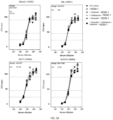
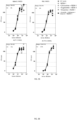
- Fig. 3A and 3B shows essentially identical OPkA killing curves for a test serum analyzed against all GASTON GBS strains in the absence or presence of high concentrations of beta-lactams and NDM-1 (0.2 ⁇ M).
- the graphs in figure 3A and 3B show GBS bacterial survival (CFU) as a function of increasing serum dilution.
- CFU GBS bacterial survival
- FIG. 3A shows results for experiments assessing Cefazolin (839 ⁇ M), Ceftriaxone (604 ⁇ M), Ampicillin (1000 ⁇ M) and a beta-lactam cocktail consisting of Ampicillin, Ceftriaxone and Cefazolin (1000, 604 and 839 ⁇ M, respectively), whereas Figure 3B shows results for experiments assessing Cefotaxime (878 ⁇ M), Augmentin (200 ⁇ M based on clavulanic acid), Ampiclox (459 ⁇ M) and the same beta-lactam cocktail as in (A).
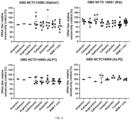
- Figure 4 finally shows that shows that the result seen for a single serum in Fig 3A and 3B was reproduced when several sera were spiked with high concentrations of beta-lactams and tested in the OPkA against all four GBS target strains.
Landscapes
- Health & Medical Sciences (AREA)
- Life Sciences & Earth Sciences (AREA)
- Chemical & Material Sciences (AREA)
- Engineering & Computer Science (AREA)
- Organic Chemistry (AREA)
- Immunology (AREA)
- Zoology (AREA)
- Wood Science & Technology (AREA)
- Molecular Biology (AREA)
- Biochemistry (AREA)
- General Health & Medical Sciences (AREA)
- Bioinformatics & Cheminformatics (AREA)
- Microbiology (AREA)
- Biomedical Technology (AREA)
- Genetics & Genomics (AREA)
- Biotechnology (AREA)
- Physics & Mathematics (AREA)
- Urology & Nephrology (AREA)
- General Engineering & Computer Science (AREA)
- Analytical Chemistry (AREA)
- Hematology (AREA)
- Proteomics, Peptides & Aminoacids (AREA)
- Pathology (AREA)
- Medicinal Chemistry (AREA)
- Virology (AREA)
- Tropical Medicine & Parasitology (AREA)
- Cell Biology (AREA)
- Biophysics (AREA)
- Food Science & Technology (AREA)
- General Physics & Mathematics (AREA)
- Toxicology (AREA)
- Measuring Or Testing Involving Enzymes Or Micro-Organisms (AREA)
Priority Applications (3)
| Application Number | Priority Date | Filing Date | Title |
|---|---|---|---|
| EP23208361.8A EP4553166A1 (fr) | 2023-11-07 | 2023-11-07 | Procédé de préparation d'un échantillon pour analyse |
| CN202480063842.3A CN121969763A (zh) | 2023-11-07 | 2024-11-05 | 制备用于分析的样品的方法 |
| PCT/EP2024/081120 WO2025098960A1 (fr) | 2023-11-07 | 2024-11-05 | Procédé de préparation d'un échantillon en vue d'une analyse |
Applications Claiming Priority (1)
| Application Number | Priority Date | Filing Date | Title |
|---|---|---|---|
| EP23208361.8A EP4553166A1 (fr) | 2023-11-07 | 2023-11-07 | Procédé de préparation d'un échantillon pour analyse |
Publications (1)
| Publication Number | Publication Date |
|---|---|
| EP4553166A1 true EP4553166A1 (fr) | 2025-05-14 |
Family
ID=88745956
Family Applications (1)
| Application Number | Title | Priority Date | Filing Date |
|---|---|---|---|
| EP23208361.8A Withdrawn EP4553166A1 (fr) | 2023-11-07 | 2023-11-07 | Procédé de préparation d'un échantillon pour analyse |
Country Status (3)
| Country | Link |
|---|---|
| EP (1) | EP4553166A1 (fr) |
| CN (1) | CN121969763A (fr) |
| WO (1) | WO2025098960A1 (fr) |
Citations (5)
| Publication number | Priority date | Publication date | Assignee | Title |
|---|---|---|---|---|
| WO2008127179A1 (fr) | 2007-04-16 | 2008-10-23 | Lunds Universitets Utvecklingsaktiebolag | Vaccin à protéine de fusion |
| WO2010130882A1 (fr) * | 2009-05-15 | 2010-11-18 | Licentia Ltd. | Procédé et kit pour détecter des bactéries résistant aux antibiotiques |
| WO2016137993A1 (fr) * | 2015-02-23 | 2016-09-01 | Synthetic Biologics, Inc. | Carbapénémases à utiliser avec des antibiotiques pour la protection du microbiome intestinal |
| WO2017068112A1 (fr) | 2015-10-21 | 2017-04-27 | Minervax Aps | Protéine de fusion immunogène |
| WO2022207657A1 (fr) | 2021-03-29 | 2022-10-06 | Minervax Aps | Protéine de fusion immunogène |
-
2023
- 2023-11-07 EP EP23208361.8A patent/EP4553166A1/fr not_active Withdrawn
-
2024
- 2024-11-05 WO PCT/EP2024/081120 patent/WO2025098960A1/fr active Pending
- 2024-11-05 CN CN202480063842.3A patent/CN121969763A/zh active Pending
Patent Citations (5)
| Publication number | Priority date | Publication date | Assignee | Title |
|---|---|---|---|---|
| WO2008127179A1 (fr) | 2007-04-16 | 2008-10-23 | Lunds Universitets Utvecklingsaktiebolag | Vaccin à protéine de fusion |
| WO2010130882A1 (fr) * | 2009-05-15 | 2010-11-18 | Licentia Ltd. | Procédé et kit pour détecter des bactéries résistant aux antibiotiques |
| WO2016137993A1 (fr) * | 2015-02-23 | 2016-09-01 | Synthetic Biologics, Inc. | Carbapénémases à utiliser avec des antibiotiques pour la protection du microbiome intestinal |
| WO2017068112A1 (fr) | 2015-10-21 | 2017-04-27 | Minervax Aps | Protéine de fusion immunogène |
| WO2022207657A1 (fr) | 2021-03-29 | 2022-10-06 | Minervax Aps | Protéine de fusion immunogène |
Non-Patent Citations (5)
| Title |
|---|
| "NCBI", Database accession no. NG_049326.1 |
| BECKER DENNIS ET AL: "Removal of antibiotics in wastewater by enzymatic treatment with fungal laccase - Degradation of compounds does not always eliminate toxicity", BIORESOURCE TECHNOLOGY, ELSEVIER, AMSTERDAM, NL, vol. 219, 4 August 2016 (2016-08-04), pages 500 - 509, XP029715131, ISSN: 0960-8524, DOI: 10.1016/J.BIORTECH.2016.08.004 * |
| DE BOER SABRINA ROSE ET AL: "Towards oxidoreductase-based processes for the removal of antibiotics from wastewater", REVIEWS IN ENVIRONMENTAL SCIENCE AND BIO-TECHNOLOGY, vol. 22, no. 4, 27 October 2023 (2023-10-27), NL, pages 899 - 932, XP093148324, ISSN: 1569-1705, DOI: 10.1007/s11157-023-09676-x * |
| NAHM MOON H ET AL: "Protocol for Opsonophagocytic Killing Assay for Antibodies against Group B Streptococcus (UAB GBS OPA).", 1 March 2016 (2016-03-01), Birmingham AL, pages 1 - 24, XP093148040, Retrieved from the Internet <URL:https://www.vaccine.uab.edu/uploads/mdocs/UAB-GBS-OPA.pdf> [retrieved on 20240404] * |
| NASROLLAHI NAZANIN ET AL: "Removal of antibiotics from wastewaters by membrane technology: Limitations, successes, and future improvements", SCIENCE OF THE TOTAL ENVIRONMENT, vol. 838, 1 September 2022 (2022-09-01), AMSTERDAM, NL, pages 156010, XP093136659, ISSN: 0048-9697, DOI: 10.1016/j.scitotenv.2022.156010 * |
Also Published As
| Publication number | Publication date |
|---|---|
| CN121969763A (zh) | 2026-05-01 |
| WO2025098960A1 (fr) | 2025-05-15 |
Similar Documents
| Publication | Publication Date | Title |
|---|---|---|
| RU2580248C2 (ru) | Бактериофаг, обладающий активностью против pseudomonas aeruginosa, белки бактериофага и способы их применения | |
| US9981028B2 (en) | Polypeptides and immunizing compositions containing gram positive polypeptides and methods of use | |
| US12435352B2 (en) | Mass spectrometric measurement of β-lactamase resistances | |
| DUNNE et al. | Group B streptococcal meningitis in adults | |
| Jaskulski et al. | Assessment of extended-spectrum β-lactamase, KPC carbapenemase and porin resistance mechanisms in clinical samples of Klebsiella pneumoniae and Enterobacter spp. | |
| Chan et al. | The perils of medical tourism: NDM-1-positive Escherichia coli causing febrile neutropenia in a medical tourist | |
| Cai et al. | Molecular epidemiology and antimicrobial resistance of Klebsiella pneumoniae strains isolated from dairy cows in Xinjiang, China | |
| EP4553166A1 (fr) | Procédé de préparation d'un échantillon pour analyse | |
| WO2009151346A1 (fr) | Procédé de détermination d'une résistance aux antibiotiques bactériens ou d'une sensibilité bactérienne, coffret de diagnostic pour la détection de la résistance aux antibiotiques et utilisation d'un tel coffret de diagnostic | |
| Amer et al. | Comparison of the in vitro activities of ceftazidime/avibactam with other drugs used to treat carbapenem-resistant Enterobacteriaceae | |
| Favier et al. | Living with dogs and cats: Is it a risk factor for community acquired methicillin-resistant Staphylococcus aureus skin and soft tissue infections in humans? | |
| Malcata | Tools for targeted treatment of bovine clinical mastitis | |
| Chaudhari et al. | Unusual presentation of Streptococcus uberis bacteremia in a complex patient: a case report | |
| Cunha | Non-invasive pneumococcal disease in the adult population in Portugal (2019-2022) | |
| Karell | A retrospective analysis of the changes in antimicrobial resistance of Staphylococcus aureus and MRSA in bovine quarter milk samples from Southern Germany between 2012 and 2022 | |
| Mcheet et al. | Comparing the Effects of Nanoparticles on Staphylococcus aureus Bacteria Isolated from Pathological Samples with Some Antibiotics Effects | |
| Antony et al. | Increased bactericidal activity as documented by serum bactericidal titers for a triple combination of cell wall active agents against gentamicin-resistant enterococci | |
| Kaur | „Assessment of intramammary infections and their control in periparturient dairy cows‟ | |
| WO2003035899A1 (fr) | Procede de separation des globules sanguins d'un micro-organisme dans le sens et procede de detection de ce micro-organisme dans le sang | |
| AU2015258239B2 (en) | Polypeptides from staphylococcus aureus and methods of use | |
| Behring et al. | OKP-B-14, a new OKP-B variant isolated from Klebsiella pneumoniae in Brazil | |
| Korir | Biochemical and molecular characterization of Streptococcus pneumoniae strains resistant to beta-lactam antibiotics | |
| Wade | Evaluation and Management of Bacterial and Fungal Infections Occurring in Patients with a Hematological Malignancy: A 2011 Update | |
| HK1117746B (en) | Polypeptides and immunizing compositions containing gram positive polypeptides and methods of use | |
| HK1186126A (en) | Polypeptides from staphylococcus aureus and methods of use |
Legal Events
| Date | Code | Title | Description |
|---|---|---|---|
| PUAI | Public reference made under article 153(3) epc to a published international application that has entered the european phase |
Free format text: ORIGINAL CODE: 0009012 |
|
| STAA | Information on the status of an ep patent application or granted ep patent |
Free format text: STATUS: THE APPLICATION HAS BEEN PUBLISHED |
|
| AK | Designated contracting states |
Kind code of ref document: A1 Designated state(s): AL AT BE BG CH CY CZ DE DK EE ES FI FR GB GR HR HU IE IS IT LI LT LU LV MC ME MK MT NL NO PL PT RO RS SE SI SK SM TR |
|
| STAA | Information on the status of an ep patent application or granted ep patent |
Free format text: STATUS: THE APPLICATION IS DEEMED TO BE WITHDRAWN |
|
| 18D | Application deemed to be withdrawn |
Effective date: 20251115 |