EP4553171A2 - Procédé de séquençage d'acide nucléique - Google Patents
Procédé de séquençage d'acide nucléique Download PDFInfo
- Publication number
- EP4553171A2 EP4553171A2 EP25154432.6A EP25154432A EP4553171A2 EP 4553171 A2 EP4553171 A2 EP 4553171A2 EP 25154432 A EP25154432 A EP 25154432A EP 4553171 A2 EP4553171 A2 EP 4553171A2
- Authority
- EP
- European Patent Office
- Prior art keywords
- reaction
- sequencing
- solutions
- nucleic acid
- solid supports
- Prior art date
- Legal status (The legal status is an assumption and is not a legal conclusion. Google has not performed a legal analysis and makes no representation as to the accuracy of the status listed.)
- Pending
Links
Images


Classifications
-
- C—CHEMISTRY; METALLURGY
- C12—BIOCHEMISTRY; BEER; SPIRITS; WINE; VINEGAR; MICROBIOLOGY; ENZYMOLOGY; MUTATION OR GENETIC ENGINEERING
- C12Q—MEASURING OR TESTING PROCESSES INVOLVING ENZYMES, NUCLEIC ACIDS OR MICROORGANISMS; COMPOSITIONS OR TEST PAPERS THEREFOR; PROCESSES OF PREPARING SUCH COMPOSITIONS; CONDITION-RESPONSIVE CONTROL IN MICROBIOLOGICAL OR ENZYMOLOGICAL PROCESSES
- C12Q1/00—Measuring or testing processes involving enzymes, nucleic acids or microorganisms; Compositions therefor; Processes of preparing such compositions
- C12Q1/68—Measuring or testing processes involving enzymes, nucleic acids or microorganisms; Compositions therefor; Processes of preparing such compositions involving nucleic acids
- C12Q1/6869—Methods for sequencing
- C12Q1/6874—Methods for sequencing involving nucleic acid arrays, e.g. sequencing by hybridisation
-
- C—CHEMISTRY; METALLURGY
- C12—BIOCHEMISTRY; BEER; SPIRITS; WINE; VINEGAR; MICROBIOLOGY; ENZYMOLOGY; MUTATION OR GENETIC ENGINEERING
- C12Q—MEASURING OR TESTING PROCESSES INVOLVING ENZYMES, NUCLEIC ACIDS OR MICROORGANISMS; COMPOSITIONS OR TEST PAPERS THEREFOR; PROCESSES OF PREPARING SUCH COMPOSITIONS; CONDITION-RESPONSIVE CONTROL IN MICROBIOLOGICAL OR ENZYMOLOGICAL PROCESSES
- C12Q1/00—Measuring or testing processes involving enzymes, nucleic acids or microorganisms; Compositions therefor; Processes of preparing such compositions
- C12Q1/68—Measuring or testing processes involving enzymes, nucleic acids or microorganisms; Compositions therefor; Processes of preparing such compositions involving nucleic acids
- C12Q1/6869—Methods for sequencing
-
- C—CHEMISTRY; METALLURGY
- C12—BIOCHEMISTRY; BEER; SPIRITS; WINE; VINEGAR; MICROBIOLOGY; ENZYMOLOGY; MUTATION OR GENETIC ENGINEERING
- C12Q—MEASURING OR TESTING PROCESSES INVOLVING ENZYMES, NUCLEIC ACIDS OR MICROORGANISMS; COMPOSITIONS OR TEST PAPERS THEREFOR; PROCESSES OF PREPARING SUCH COMPOSITIONS; CONDITION-RESPONSIVE CONTROL IN MICROBIOLOGICAL OR ENZYMOLOGICAL PROCESSES
- C12Q1/00—Measuring or testing processes involving enzymes, nucleic acids or microorganisms; Compositions therefor; Processes of preparing such compositions
- C12Q1/68—Measuring or testing processes involving enzymes, nucleic acids or microorganisms; Compositions therefor; Processes of preparing such compositions involving nucleic acids
- C12Q1/6876—Nucleic acid products used in the analysis of nucleic acids, e.g. primers or probes
-
- G—PHYSICS
- G01—MEASURING; TESTING
- G01N—INVESTIGATING OR ANALYSING MATERIALS BY DETERMINING THEIR CHEMICAL OR PHYSICAL PROPERTIES
- G01N21/00—Investigating or analysing materials by the use of optical means, i.e. using sub-millimetre waves, infrared, visible or ultraviolet light
- G01N21/62—Systems in which the material investigated is excited whereby it emits light or causes a change in wavelength of the incident light
- G01N21/63—Systems in which the material investigated is excited whereby it emits light or causes a change in wavelength of the incident light optically excited
- G01N21/64—Fluorescence; Phosphorescence
- G01N21/6486—Measuring fluorescence of biological material, e.g. DNA, RNA, cells
-
- B—PERFORMING OPERATIONS; TRANSPORTING
- B01—PHYSICAL OR CHEMICAL PROCESSES OR APPARATUS IN GENERAL
- B01L—CHEMICAL OR PHYSICAL LABORATORY APPARATUS FOR GENERAL USE
- B01L2200/00—Solutions for specific problems relating to chemical or physical laboratory apparatus
- B01L2200/10—Integrating sample preparation and analysis in single entity, e.g. lab-on-a-chip concept
Definitions
- the present invention pertains to a field of nucleic acid sequencing. Specifically, the present invention relates to a method for sequencing a nucleic acid by using an immersion reaction protocol, in which the immersion reaction protocol comprises sequentially immersing a solid support having nucleic acid molecules immobilized thereon in different reaction containers to realize nucleic acid sequencing.
- the second-generation sequencing technology is developed based on the first-generation Sanger sequencing technology, and has features of low cost, high throughput, and automation, and the like. It has greatly promoted the development of the gene sequencing industry. Recently, the second-generation sequencing technology has been widely used in whole genome sequencing, transcriptome sequencing and metagenome sequencing, etc. , is a powerful tool for analyzing evolution and classification of organisms, studying genes associated with diseases such as cancers and autism and the like, and conducting in vitro diagnostics, etc. , and promotes further understanding of life sciences and the development of health industry.
- the existing second-generation sequencing technologies mainly include SBS technology (Sequencing-by-Synthesis) from Illumina, semiconductor sequencing technology from Life Technologies, and combinatorial probe-anchor synthesis technology (cPAS) from BGI.
- SBS technology Sequencing-by-Synthesis
- cPAS combinatorial probe-anchor synthesis technology
- dNTPs i.e., dATP, dCTP, dGTP, dTTP
- two modified moieties fluorescent label and blocking group
- each of dATP, dCTP, dGTP and dTTP carries different fluorescent labels. Due to the presence of a blocking group, only one complementary dNTP is added to each nucleic acid template during the polymerization reaction.
- the identity of the added complementary dNTP can be determined by detecting the fluorescent label carried by the dNTP.
- the reversible blocking group and fluorescent label can be removed subsequently by reagents (known as a regeneration reaction) so as to perform next polymerization reaction (P085, Genomics, First Edition, 2016, edited by Yang Huanming).
- reagents known as a regeneration reaction
- next polymerization reaction P085, Genomics, First Edition, 2016, edited by Yang Huanming
- the change in pH caused by pyrophosphate released by dNTP polymerized during template chain extension is used, and this change is detected by sensors at the bottom of chip to obtain sequence information of DNA chain ( P083, Genomics, First Edition, 2016, edited by Yang Huamning ).
- the second-generation sequencing technology protocol SOLiD developed by ABI company (USA) uses SBL method (Sequencing-by-Ligation) for high-throughput sequencing.
- SBL method of SOLiD uses a mixture of a ligase and 8-base single-stranded fluorescent probes, which can be combined with the circular ligation of different primers to achieve a read length between 35 and 70 nt, and its advantage is high accuracy ( P093, Genomics, First Edition, 2016, edited by Yang Huanming ).
- the combinatorial probe-anchor synthesis uses a DNA molecular anchor and a fluorescent probe to perform polymerization on DNA nanospheres (DNB), and then a high-resolution imaging system collects optical signals, and the sequence to be tested can be obtained after digital processing of the optical signals; in which the DNB enhances the signal by linear amplification so as to reduce the error rate of single copy (see BGISEQ-500 sequencing platform).
- the biochemical reaction part of the existing second-generation sequencing technology is mainly carried out by using a flow channel system.
- a typical flow channel system can be found in WO2007123744 , which uses a solid substrate including a flow cell, wherein the flow cell includes one or more fluid channels to which a polynucleotide is attached, and a fluorescently labeled reagent can be controlled by a flow guide system to flow through the fluid channel to contact the polynucleotide.
- Illumina's HiSeq 2500 platform uses a flow cell, the sequencing reaction reagents are pumped from a refrigeration device to the flow cell at a specific position and a specific time and flow through sequencing chip under control of a complex set of fluid control equipment and under assistance of a sophisticated temperature control facility, so that the biochemical reaction is ensured to be sufficiently performed in a time period as short as possible (HiSeq ® 2500 System Guide, Illumina, 2015).
- the existing second-generation sequencing methods require precise temperature control and fluid control, have higher cost, and are prone to occurrence of nonuniform reactions.
- the reagents are disposable and have low utilization rate, which further increase sequencing cost.
- the existing second-generation sequencing platforms such as HiSeq 2500 and the like that use flow channel protocol still have low throughput, that is, the throughput of each unit is less than 1 WGS/day (referring to https://www.illumina.com.cn/systems/hiseq_2500_1500/ performance specifications.html).
- the present invention provides a method for sequencing a nucleic acid using an immersion reaction protocol, in which the immersion reaction protocol comprises sequentially immersing a solid support having nucleic acid molecules immobilized thereon in different reaction containers to perform nucleic acid sequencing.
- immersion reaction protocol as used herein is mentioned with respect to the flow channel system used in the prior art, which means that during the nucleic acid sequencing, the nucleic acid to be sequenced is moved to contact each reaction reagent, rather than the reaction reagent is moved by a flow channel to contact the nucleic acid.
- the washing is performed by immersing the solid support in a reaction container containing a washing solution.
- nucleic acids are as follows: genes or gene fragments (e.g., probes, primers, EST or SAGE tags), genomic DNA, genomic DNA fragments, exons, introns, a messenger RNA (mRNA), transit RNA, a ribosomal RNA, a ribozyme, cDNA, a nucleic acid library, recombinant polynucleotides, synthetic polynucleotides, branched polynucleotides, plasmids, vectors, an isolated DNA of any sequence, an isolated RNA of any sequence, and nucleic acid probes, primers or amplified copies of any of the above sequences.
- genes or gene fragments e.g., probes, primers, EST or SAGE tags
- the nucleic acid can comprise nucleotides or nucleotide analogs.
- the nucleotide usually comprises a ribose, a nucleobase, and at least one phosphate group.
- the nucleotide can be base-free (i.e., absence of nucleobase).
- the nucleotides comprise deoxyribonucleotides, modified deoxyribonucleotides, ribonucleotides, modified ribonucleotides, peptide nucleotides, modified peptide nucleotides, modified phosphate saccharide backbone nucleosides, and mixtures thereof.
- the nucleic acid molecule to be sequenced in specific embodiments of the invention can be of any length.
- exemplary lengths of useful nucleic acids include, for example, at least about 5, 10, 20, 30, 40, 50, 60, 70, 80, 90, 100, 150, 200, 300, 400, 500, 1,000, 5,000 or 10,000, 100,000 nucleotides or longer.
- the length may be no longer than 1,000,000, 100,000, 10,000, 1,000, 100 nucleotides or less.
- the length of the nucleic acid molecule may also include all integers between the above exemplary numbers.
- the nucleic acid that can be sequenced using the method described herein can, for example, be within the scope of short polynucleotides, fragments, cDNAs, genes, and genomic fragments.
- the number of the nucleic acid molecules to be sequenced in a specific embodiment of the present invention can be any number, for example, it can be 2, 3, 4, 5, 6, 7, 8, 9, 10, 20, 30, 40, 50, 60, 70, 80, 90, or 100 or more identical or different nucleic acid molecules.
- the number of nucleic acid molecules to be sequenced can also be, for example, 200, 300, 400, 500, 1000, 5000, 10000, 50000, 1 ⁇ 10 5 , 2 ⁇ 10 5 , 3 ⁇ 10 5 , 4 ⁇ 10 5 , 5 ⁇ 10 5 , 6 ⁇ 10 5 , 7 ⁇ 10 5 , 8 ⁇ 10 5 , 9 ⁇ 10 5 , 1 ⁇ 10 6 , 2 ⁇ 10 6 , 3 ⁇ 10 6 , 4 ⁇ 10 6 , 5 ⁇ 10 6 , 6 ⁇ 10 6 , 7 ⁇ 10 6 , 8 ⁇ 10 6 , 9 ⁇ 10 6 , or 1 ⁇ 10 7 or more identical or different nucleic acid molecules.
- the number of nucleic acid molecules to be sequenced may also include all integers between the above exemplary numbers.
- the nucleic acids can be obtained from any source.
- the nucleic acid can be prepared from a nucleic acid molecule obtained from one organism, or from a population of nucleic acid molecules obtained from a natural source including one or more organisms.
- the sources of nucleic acid molecules include, but are not limited to, organelles, cells, tissues, organs, or organisms.
- the cells that can be used as a source of nucleic acid molecules can be prokaryotic (e.g., bacteria); or eukaryotic, such as fungi (e.g., yeast), plants, protozoa, and other parasites, and animals (including insects, nematodes), and mammals (e.g., rat, mouse, monkey, non-human primate, and human); or the nucleic acid molecule may be derived from a virus.
- prokaryotic e.g., bacteria
- eukaryotic such as fungi (e.g., yeast), plants, protozoa, and other parasites, and animals (including insects, nematodes), and mammals (e.g., rat, mouse, monkey, non-human primate, and human); or the nucleic acid molecule may be derived from a virus.
- the nucleic acid can be obtained from a particular biological source.
- the nucleic acid is a human nucleic acid obtained from a human, for example, a sample of human tissue.
- the nucleic acid is a human mitochondrial nucleic acid.
- the nucleic acid can be obtained from a metagenomic sample.
- the nucleic acid can be obtained from an environmental source that no longer contains a living organism.
- immobilized means direct or indirect attachment to a solid support via a covalent or non-covalent bond.
- a covalent attachment may be used, but what is required is generally only that the nucleic acid is stably immobilized or attached to a solid support under a condition desirable to use a solid support (e.g., in an application requiring nucleic acid amplification and/or sequencing).
- an oligonucleotide to be used as a capture primer or an amplification primer is immobilized such that the 3' end is available for enzymatic extension and at least a portion of the primer sequence is capable of hybridizing to a complementary nucleic acid sequence.
- the immobilization can occur via hybridization to a surface-attached oligonucleotide, in which case the immobilized oligonucleotide or polynucleotide can be in 3'-5 'direction.
- solid support refers to any insoluble substrate or matrix to which the nucleic acid can be attached, such as, for example, latex beads, dextran beads, polystyrene surfaces, polypropylene surfaces, polypropylene amide gels, gold surfaces, glass surfaces, chips, sensors, electrodes, and silicon wafers.
- the surface of the solid support may be of any desired shape, and the shape includes, for example, planar, spherical or porous shape suitable for a particular application.
- the solid support may be a flat glass surface.
- the solid support can also be installed inside a flow cell to allow interaction with a solution of multiple reagents.
- the solid support may include an inert substrate or matrix, and the inert substrate or matrix has been chemically functionalized, for example, by applying an intermediate material layer or coating, and the intermediate material has reactive groups allowing covalent attachment to a polynucleotide.
- the intermediate material may be directly or indirectly attached to the solid support via a covalent or non-covalent bond.
- this type of support may comprise a polyacrylamide hydrogel layer on an inert substrate such as glass.
- the polynucleotide may be directly covalently attached to an intermediate layer (e.g., a hydrogel), but the intermediate layer itself may be non-covalently attached to another substrate or matrix (e.g., a glass substrate) layer.
- an intermediate layer e.g., a hydrogel
- another substrate or matrix e.g., a glass substrate
- the reaction container may have any suitable size, for example, its size can be adjusted arbitrarily according to the volume of reaction solution to be accommodated, for example, it may have a size capable of accommodating at least 1 ⁇ L, at least 5 ⁇ L, at least 10 ⁇ L, at least 20 ⁇ L, at least 50 ⁇ L, at least 100 ⁇ L, at least 1 mL, at least 5 mL, at least 10 mL, at least 20 mL, at least 50 mL, at least 100 mL, at least 200 mL, at least 500 mL, at least 1 L or more of the reaction solution, or a size capable of accommodating at most 1 ⁇ L, at most 5 ⁇ L, at most 10 ⁇ L, at most 20 ⁇ L, at most 50 ⁇ L, at most 100 ⁇ L, at most 1 mL, at most 5 mL, at most 10 mL, at most 20 mL, at most 50 mL, at most 100 mL, at most 200 mL, at most 500
- reaction solution refers to reagents used in any sequencing method suitable for use in the immersion reaction protocol described herein.
- sequencing methods may include, but are not limited to, sequencing-by-electrophoresis, sequencing-by-synthesis, sequencing-by-ligation, sequencing by combinatorial probe-anchor synthesis, sequencing-by-hybridization, single molecule sequencing, and real-time sequencing methods. Therefore, the one or more reaction solutions used in the step b) and the regeneration solution used in the step d) of the immersion reaction protocol of the present invention depend on the sequencing method as used. It is within the capability of those skilled in the art to determine the one or more reaction solutions used in the step b) and the regeneration solution used in the step d) of the immersion reaction protocol of the present invention according to the sequencing method.
- the present invention relates to a method for sequencing-by-ligation of a nucleic acid molecule using the immersion reaction protocol as described herein.
- the one or more reaction solutions of step b) comprise a reagent for generating a ligation product on the nucleic acid molecule to be sequenced and generating a signal representing a nucleotide sequence of the nucleic acid molecule to be sequenced in the sequencing-by-ligation
- the regeneration solution of step d) comprises a reagent for eliminating the signal from the nucleic acid molecule to be sequenced and enabling the initiation of the next sequencing-by-ligation reaction.
- the sequencing-by-ligation as used herein can be any of a variety of sequencing-by-ligation methods well known in the art. Basically, the sequencing-by-ligation involves hybridization and ligation of a labeled (e.g., fluorescently labeled) sequencing probe and an anchor probe (also known as "primer” in SOLiD sequencing) to a DNA strand.
- the sequencing probe comprises one or two intrinsically known sequencing bases (single-base sequencing probes or two-base sequencing probes) and a series of degenerate or universal bases, which allow complementary pairing between the sequencing probe and the nucleic acid template.
- the anchoring probe sequence is a known sequence which is complementary to an adaptor sequence on a nucleic acid template (the adaptor sequence means an oligonucleotide whose sequence is known in the nucleic acid template) and provides a site for initial ligation. After ligation, the template is imaged and the one or two known bases in the sequencing probe are identified. After the anchor probe-sequencing probe complex has been completely removed or the label (such as a fluorophore) has been removed by cleavage and the ligation site is regenerated, the next sequencing-by-ligation cycle begins.
- the adaptor sequence means an oligonucleotide whose sequence is known in the nucleic acid template
- the solid support with nucleic acid molecules immobilized thereon is allowed to contact with the anchor probe (also known as "primer" in SOLiD sequencing), so that the anchoring probe hybridizes to the nucleic acid molecule on the solid support
- the one or more reaction solutions of the step b) comprise a solution containing a labeled (e.g., fluorescently labeled) sequencing probe, a ligase, or a mixture thereof, provided that the solid support is in contact with either of the labeled sequencing probe and the ligase, and wherein the signal on the solid support is generated by the labeled sequencing probe that complementarily binds to the nucleic acid molecule on the solid support, the labeled sequencing probe is linked via the ligase to the anchor probe that complementarily binds to the same nucleic acid molecule.
- the anchor probe also known as "primer” in SOLiD sequencing
- the specific composition of the one or more reaction solutions in the step b) varies depending on the specific sequencing-by-ligation method as used.
- the one or more reaction solutions of the step b) may comprise only one reaction solution, wherein the reaction solution comprises a ligase and a labeled sequencing probe, optionally, also comprises an anchor probe; alternatively, the one or more reaction solutions of the step b) may also comprise two reaction solutions, wherein, one of the reaction solutions comprises an anchor probe and the other reaction solution comprises a labeled sequencing probe, and at least one of these two reaction solutions comprises a ligase, and thus, in this case, the step b) comprises the following process: immersing the solid support in the reaction solution containing the anchor probe, washing, and then immersing in the reaction solution containing the labeled sequencing probe, and washing.
- the one or more reaction solutions of the step b) may further comprise three reaction solutions, each of which comprises an anchor probe, a labeled sequencing probe, and a ligase, respectively; and in such a case, the step b) comprises the following process: immersing the solid support in the reaction solution containing the anchor probe and washing, then immersing in the reaction solution containing the labeled sequencing probe and washing, and then immersing in the reaction solution containing the ligase and washing.
- the one or more reaction solutions of the step b) may comprise only one reaction solution simultaneously containing a ligase, a first anchor probe, a second anchor probe, and a labeled sequencing probe, or a plurality of reaction solutions each containing a ligase, a first anchor probe, a second anchor probe, a labeled sequencing probe, or a mixture thereof.
- the sequencing-by-ligation comprises sequencing by combinatorial probe-anchor ligation (cPAL) (see the description of WO2013066975 ).
- ligase refers to a nucleic acid modifying enzyme that catalyzes formation of intramolecular and intermolecular phosphodiester bonds between 5'-phosphate and 3'-hydroxy termini of nucleic acid chain.
- the ligase can be obtained from recombinant or natural sources.
- One or more low temperature (e.g., room temperature or lower) ligases e.g., T3 DNA ligase, T4 DNA ligase, T7 DNA ligase, and/or E. coli DNA ligase
- the ligase may also be a thermostable ligase. Thermostable ligases from thermophiles can be used.
- thermostable DNA ligase examples include, but are not limited to: Tth DNA ligase (from Thermus thermophilus, which is available from, for example, Eurogentec and GeneCraft); Pfu DNA ligase (a hyperthermophilic ligase from Pyrococcus furiosus); Taq ligase (from Thermus aquaticus), and any other suitable thermostable ligases, or any combination thereof.
- the present invention relates to a method of sequencing-by-synthesis of a nucleic acid molecule by using the immersion reaction protocol described herein.
- the one or more reaction solutions of the step b) comprise a reagent for carrying out a polymerization reaction using a nucleic acid molecule to be sequenced as a template in the sequencing-by-synthesis and generating a signal representing a nucleotide sequence of the nucleic acid molecule
- the regeneration solution of the step d) contains a reagent for eliminating the signal from the nucleic acid molecule to be sequenced and enabling the initiation of the next sequencing-by-synthesis reaction.
- the sequencing-by-synthesis as used herein can be any of a variety of sequencing-by-synthesis methods well known in the art. Basically, the sequencing-by-synthesis involves firstly hybridizing a nucleic acid molecule to be sequenced with sequencing primers, and then polymerizing a labeled (e.g., fluorescently labeled) nucleotide at 3' end of the sequencing primers with the nucleic acid molecule to be sequenced as a template in the presence of a polymerase. After polymerization, the labeled nucleotide is identified by detecting the label. After removing the label (such as fluorophore) from the labeled nucleotide, the next sequencing-by-synthesis cycle begins.
- a labeled e.g., fluorescently labeled
- the nucleic acid molecule to be sequenced is immobilized on a solid support by hybridizing to sequencing primers immobilized on the solid support.
- the solid support having nucleic acid molecules immobilized thereon is contacted with the sequencing primers before the step b), so that the sequencing primers hybridize to the nucleic acid molecule on the solid support.
- the one or more reaction solutions of the step b) contain a polymerase, a labeled (e.g., fluorescently-labeled) nucleotide, or a mixture thereof, provided that the solid support is in contact with either of the polymerase and the labeled nucleotide, and wherein the signal on the solid support is generated by the labeled nucleotide of the nucleic acid that complementarily binds to the solid support, and the labeled nucleotide is polymerized to a 3' end of the sequencing primers via the polymerase with the nucleic acid molecule on the solid support as a template.
- a labeled nucleotide e.g., fluorescently-labeled
- the regeneration solution of the step d) contains a reagent for removing the label from the labeled (e.g., fluorescently labeled) nucleotide.
- the solid support in the step b), is immersed in a reaction solution, wherein the reaction solution comprises a polymerase and a labeled (e.g., fluorescently labeled) nucleotide.
- the labeled nucleotide may further comprise a 3' blocking group.
- the 3' blocking group prevents incorporation of other nucleotides when the labeled nucleotide is polymerized into a growing nucleotide chain.
- the 3' blocking group is removed together with the label in the step d).
- Suitable 3' blocking groups and reagents for removing 3' blocking groups from nucleotides are well known in the art, and non-limiting examples of such 3' blocking groups and reagents can be found in, for example: Greene & Wuts, Protective Groups in Organic Synthesis, John Wiley & Sons. Guillier ; Metzker et al.
- the label itself on the labeled nucleotide can be used as the 3' blocking group.
- such label may be of a size or structure sufficient to block the incorporation of other nucleotides into the polynucleotide chain.
- the blocking may be due to steric hindrance or may be due to a combination of size, charge, and structure.
- the label and the blocking group on the labeled nucleotide can be different, but preferably the label and the blocking group can be removed from the nucleotide by same means.
- the regeneration reagent of the step d) described herein may comprise a reagent that can simultaneously remove the label and the 3' blocking group from the labeled nucleotide.
- the step d) described herein may comprise immersing the solid support respectively into a reagent capable of removing the label from the labeled nucleotide and a reagent capable of removing the 3' blocking group from the labeled nucleotide.
- polymerase refers to an enzyme for synthesizing a nucleic acid chain or polymer, including DNA polymerases and RNA polymerases.
- the polymerase used herein is a DNA polymerase.
- One polymerase that can be used is Sequenase TM (an enzyme derived from phage 7 DNA polymerase that is modified to improve its sequencing properties, see Tabor and Richarson, Proc. Nat. Acad. Sci. USA, 84: 4767-4771 (1987 ), available from, for example, United States Biochemical Corporation, Cleveland, Ohio).
- Sequenase TM include, but are not limited to, Klenow fragment of DNA polymerase I, AMV reverse transcriptase, and Taq polymerase. Further descriptions about the polymerases useful in the methods of the invention can also be found in WO05024010 and WO06120433 , the entire contents of which are incorporated herein by reference.
- the polymerization conditions commonly used are those of these enzymes known in the art.
- the polymerization conditions comprise: at a temperature in the range of about room temperature to about 45 °C; a buffer solution of pH 7 to 8, preferably pH 7.3 to 7.7; an enzyme concentration of about 0.01 unit/ ⁇ L to about 1 unit/ ⁇ L, a reaction time of about 1 to about 20 minutes, preferably 1 to 5 minutes.
- a typical buffer for Sequenase TM consists of: 0.040M Tris HCl (pH 7.5), 0.050M sodium chloride, 0.010M magnesium chloride, 0.010 M dithiothreitol.
- the typical condition comprises: at a temperatures in the range of about 10 °C to about 45 °C, preferably about 15 °C to about 40 °C; a buffer of pH 6.8 to 7.4, preferably pH 7.0 To 7.4; an enzyme concentration of about 0.01 unit/ilL to about 1 unit/ ⁇ L, preferably about 0.02 to about 0.15 unit/ ⁇ L, and a reaction time of about 1 to about 40 minutes.
- a typical buffer for the Klenow fragment of DNA polymerase I consists of: 0.05M trihydroxymethyl aminomethane chloride, pH 7.5, 0.05M magnesium chloride, 0.05M sodium chloride, 0.010M dithiothreitol.
- complementary refers to hybridization or base pairing or duplex formation between nucleotides or nucleic acids. If a nucleotide of a nucleic acid can form a hydrogen bond with a nucleotide of another nucleic acid at a given position, the two nucleic acids are considered to be complementary to each other at that position.
- Complementary nucleotides are typically A and T (or A and U) or C and G.
- nucleotide insertions or deletions are appropriately introduced, if at least about 80%, usually at least about 90% to about 95%, even approximately 98% to 100%, of the nucleotides of one strand and the other are paired, these two single-stranded RNA or DNA molecules are considered to be substantially complementary.
- T m generally refers to a temperature at which half of double-stranded nucleic acid molecules are dissociated into single strands.
- the formula for calculating the T m of a nucleic acid is well known in the art.
- T m 81.5 + 16.6 (log10 [Na+]) 0.41 (% [G+C]) - 675/n - 1.0m can be simply used to estimate the value of T m , in which (G+C) content is between 30% and 70%, n is the number of bases, and m is the percentage of mismatched base pairs (see, for example, Sambrook J et al. (2001), Molecular Cloning, A Laboratory Manual, (3rd Ed., Cold Spring Harbor Laboratory Press ).
- the temperature of each reaction container may be dependent on the sequencing method and determined routinely based on the reaction performed in the reaction container, and the temperature of each reaction container may be, for example, but not limited to, at least about 0 °C, at least about 5 °C, at least about 10 °C, at least about 15 °C, at least about 20 °C, at least about 25 °C, at least about 30 °C, at least about 35 °C, at least about 40 °C, at least about 45 °C, at least about 50 °C, at least about 55 °C, at least about 60 °C or higher. In some cases, temperatures below 0 °C may be required.
- the term “signal” refers to any signal that can be detected, including but not limited to optical signals, electrical signals, electromagnetic signals, radiation signals, and the like.
- the term “signal representing a nucleotide sequence of a nucleic acid molecule” means that the signal carries information about the nucleotide sequence and can be decoded into the nucleotide sequence of the nucleic acid molecule to be sequenced.
- the signal generated by the label carries the nucleotide sequence information of the sequencing probe, and the signal can be used to obtain the nucleotide sequence of the nucleic acid molecule to be sequenced at the position complementary to the sequencing probe.
- the signal generated by the label carries the identity information of the nucleotide, and the signal can be used to obtain the nucleotide sequence of the nucleic acid molecule to be sequenced at the position complementary to the nucleotide.
- the signal is a fluorescent signal.
- the label is a fluorescent label.
- the methods for detecting the fluorescent label or signal are well known in the art. This can be achieved, for example, by a device that detects the wavelength of fluorescence. Such devices are well known in the art.
- a device may be a confocal scanning microscope that scans the surface of a solid support with a laser in order to image a fluorophore that directly binds to a nucleic acid molecule to be sequenced.
- each of the generated signals can be observed, for example, with a sensitive 2-D detector, such as a charge-coupled detector (CCD).
- CCD charge-coupled detector
- Other techniques such as scanning near-field optical microscopy (SNOM) can also be used, for example.
- the solid support prior to the step c), i.e., prior to detecting the signal on the solid support, the solid support is contacted with a protecting reagent for protecting the nucleic acid molecule, the labeled probe, and/or the labeled nucleotide during detection; for example, the solid support can be immersed in a reaction container containing the protecting reagent.
- the protecting agent as used herein may be, for example, an agent that prevents dehydration or degradation of nucleic acids, an agent that prevents fluorescence quenching, and the like.
- the washing solution as used herein can be any solution that is capable of washing off a substance non-specifically bound to the solid support and does not adversely affect subsequent reactions.
- the washing reagent contains a buffer, such as an organic salt, to maintain a stable pH of about pH 6 to pH 9, and may also contain a monovalent or divalent cation to remove a non-specifically bound molecule from the solid support.
- Exemplary washing reagents may include, for example, 100 mM Tris-HCl buffer at pH 6.5, TE buffer (Tris-HCl pH 8, 10 mM and EDTA, 1 mM), and the like.
- the washing solution used in each step of the immersion reaction protocol described herein may be the same or different, and may be adaptively adjusted and selected depending on the sequencing method in use, and such adjustments and selections are all within the capabilities of those skilled in the art.
- the number of times of reusing the reaction solutions is related to the weakening degree of the sequencing signal. That is, if the sequencing signal is significantly weakened after the reaction solutions are reused so that the sequencing result is inaccurate, such reuse is inappropriate, and thus, the reaction solutions should be replaced with fresh reaction solutions.
- the one or more reaction solutions in the step b) can be reused at least 10 times without significantly affecting the strength of the sequencing signal.
- the regeneration solution in the step d) can be reused at least 20 times without significantly affecting the strength of the sequencing signal.
- the time for replacing the reaction solution may be determined according to the reaction time between the reaction solution and the solid support during each reaction procedure.
- the reaction time between the reaction solution and the solid support during each sequencing reaction depends on the reaction to be performed and the reaction temperature.
- the reaction temperature may be a temperature suitable for exerting the function of the used sequencing enzyme (such as ligase or polymerase), and for example, may be at least about 5 °C, at least about 10 °C, at least about 15 °C, at least about 20 °C, at least about 25 °C, at least about 30 °C, at least about 35 °C, at least about 40 °C, at least about 45 °C, at least about 50 °C, at least about 55 °C, at least about 60 °C or higher, such as a temperature in the range of about 10 °C to about 45 °C, preferably about 15 °C to about 40 °C.
- the time of each sequencing reaction may be the time required for the sequencing enzyme as used to incorporate the labeled probe or nucleotide into the template nucleic acid strand, and such time can be easily determined by those skilled in the art, for example, it can be at least 1s, at least 5s, at least 10s, at least 15s, at least 20s, at least 25s, at least 30s, at least 40s, at least 50s, at least 1 minute, at least 1.5 minutes, at least 2 minutes, at least 2.5 minutes, at least 3 minutes, at least 3.5 minutes, at least 4 minutes, at least 5 minutes, at least 10 minutes, at least 15 minutes, at least 20 minutes, at least 30 minutes, or longer.
- the reaction temperature may be a temperature suitable for the reaction to be performed, for example, it may be at least about 5 °C, at least about 10 °C, at least about 15 °C, at least about 20 °C, at least about 25 °C, at least about 30 °C, at least about 35 °C, at least about 40 °C, at least about 45 °C, at least about 50 °C, at least about 55 °C, at least about 60 °C, or higher, such temperature can be readily determined by those skilled in the art based on the method or reagent used to remove the label from the labeled probe or nucleotide.
- the time for such reaction can be easily determined by those skilled in the art, for example, it can be at least 1 s, at least 5 s, at least 10 s, at least 15 s, at least 20 s, at least 25 s, at least 30 s, at least 40 s, at least 50 s, at least 1 minute, at least 1.5 minutes, at least 2 minutes, at least 2.5 minutes, at least 3 minutes, at least 3.5 minutes, at least 4 minutes, at least 5 minutes, at least 10 minutes, at least 15 minutes, at least 20 minutes, at least 30min or more.
- the immersion reaction protocol of the present invention is at least different in that the method of the present invention allows simultaneously immersing more than one solid support, thereby greatly improving the sequencing throughput.
- the method of the present invention allows simultaneously immersing 2, 3, 4, 5, 6, 7, 8, 9, 10, 11, 12, 13, 14, 15, 16, 17, 18, 19, 20 or more solid supports.
- Such more than one solid support that are simultaneously immersed is referred to herein as a batch of solid supports.
- a batch of solid supports may also consist of only one solid support.
- N ⁇ 120s/40s 3 batches of solid supports can be performed in nested batch processing manner in a single sequencing cycle.
- the immersion reaction protocol provided by the present invention further comprises: adding an appropriate amount of a humectant to the one or more reaction solutions in the step b), the regeneration solution and/or the washing solution in the step d).
- an appropriate amount of a humectant is added to a first reaction solution. Without being bound by any theory, it is believed that the addition of such a humectant may help to avoid the drying of surface of solid supports that may be caused by evaporation and hydrophobicity when the solid supports are removed from the reaction solution and/or washing solution to expose to air.
- humectants include, but are not limited to, polyhydric alcohols such as glycerol, propylene glycol, 1,3-butanediol, sorbitol, polyethylene glycol, and the like. It should be understood that the addition of such a humectant should not cause any adverse effect on the reaction solution and/or the washing solution, the solid supports, and the nucleic acid molecules on the solid supports, and it should not cause a significant increase of the amount of reagents carried on the solid supports.
- an appropriate amount of glycerol is added to the one or more reaction solutions of the step b), the regeneration solution and/or the washing solution in the step d).
- the amount of the added humectant may be any effective amount capable of keeping the surface of the solid support moist. It should be understood that such an amount should not cause any adverse effects on the reaction solution and/or the washing solution, the solid support, and the nucleic acid molecules on the solid supports, and it should not cause a significant increase in the amount of reagents carried on the solid supports.
- the amount of the added humectant may be, for example, based on the volume of the reaction solution and/or the washing solution, an amount of at least about 0.05%, at least about 0.1%, at least about 0.5%, at least about 1%, at least about 2%, at least about 3%, at least about 4%, at least about 5%, at least about 6%, at least about 7%, at least about 8%, at least about 9%, at least about 10%, at least about 11%, at least about 12%, at least about 13%, at least about 14%, at least about 15%, at least about 20% or more.
- about 5% to 10% glycerol (v/v) is added to the one or more reaction solutions in the step b), the regeneration solution and/or the washing solution in the step d).
- the immersion reaction protocol provided by the present invention further comprises: adding into the one or more reaction solutions in the step b), the regeneration solution and/or the washing solution in the step d) an appropriate amount of a reagent for retaining the reaction solution and/or the washing solution remaining on the solid support thereon when the solid support is taken out from the reaction solution and/or the washing solution.
- a reagent for retaining the reaction solution and/or the washing solution remaining on the solid support thereon when the solid support is taken out from the reaction solution and/or the washing solution.
- the upper end of the solid support refers to an end that is firstly exposed to air when the solid support is taken out from the solution.
- an reagent may be, for example, a surfactant.
- surfactant may include, but is not limited to, Tween-20, stearic acid, lauric acid, sodium lauryl sulfate, sodium dioctyl succinate sulfonate (Aerosol-OT), sodium dodecylbenzenesulfonate, sodium glycocholate, benzalkonium chloride, benzalkonium bromide, lecithin, fatty glycerides and the like.
- reagent such as a surfactant
- an appropriate amount of Tween-20 is added to the one or more reaction solutions of the step b), the regeneration solution and/or the washing solution of the step d).
- a reagent for example, a surfactant
- Such a reagent may be added in any effective amount capable of retaining the reaction solution and/or the washing solution remaining on the solid support thereon when the solid support is taken out from the reaction solution and/or the washing solution.
- the amount of such added reagent, such as a surfactant can be, for example, at least about 0.001 %, at least about 0.005%, at least about 0.01%, at least about 0.02%, at least about 0.03%, at least about 0.04%, at least about 0.05%, at least about 0.06%, at least about 0.07%, at least about 0.08%, at least about 0.09%, at least about 0.1%, at least about 0.2%, at least about 0.3%, at least about 0.4%, at least about 0.5%, at least about 0.6%, at least about 0.7%, at least about 0.8%, at least about 0.9%, at least about 1%, at least about 2%, at least about 3%, at least about 4%, at least about 5%, or more, based on the volume of the reaction solution and/or the washing solution.
- about 0.05% to 1% of Tween-20 (v/v) is added to the one or more reaction solutions of the step b), the regeneration solution and/or the washing solution of the step
- the immersion reaction protocol provided by the present invention further comprises: optimizing a motion speed of the solid support between the reaction containers, so as to minimize the time that the solid support is exposed to the air. It should be understood that such optimization of the motion speed should not cause any adverse effects on the reaction solution, the solid support, and the nucleic acid molecules carried on the solid support.
- optimizing the motion speed of the solid support between the reaction containers comprises optimizing the speed at which the solid support is taken out from the solution or reagent in the reaction container so that the solid support is taken out from the solution or reagent as quickly as possible without causing any adverse effects on the reaction solution, the solid support, and the nucleic acid molecules carried on the solid support due to the faster removal.
- the faster removal of the solid support from the solution or reagent can help to avoid the drying of the surface thereof due to evaporation and hydrophobicity, and can also help to reduce the amount of solution or reagent carried on the surface thereof, thereby reducing the contamination to subsequent procedures.
- the removal speed may be optimized depending on the specific solid support as used, the nucleic acid molecules immobilized thereon and the reaction solution or reagent.
- the speed at which the solid support is removed from the solution or reagent in the reaction container may be, for example, but not limited to, at least 1 mm/s, at least 5 mm/s, at least 10 mm/s, at least 15 mm/s, at least 20 mm/s, at least 25 mm/s, at least 30 mm/s, at least 40 mm/s, at least 50 mm/s or more.
- the speed at which the solid support is removed from the solution or reagent in the reaction container may be, for example, but not limited to, not higher than 50 mm/s, not higher than 40 mm/s, not higher than 30 mm/s, not higher than 20mm/s, not higher than 10mm/s, or lower. In a preferred embodiment, the speed at which the solid support is removed from the solution or reagent in the reaction container may be, for example, about 20 mm/s.
- optimizing the motion speed of the solid support between the reaction containers comprises optimizing the motion speed of the solid support after being taken out from the solution or reagent in the reaction container, so as to minimize the time that the solid support is exposed to air.
- moving the solid support as quickly as possible after removing it from the solution or reagent in the reaction container helps to avoid the drying of the surface thereof which may be caused by evaporation and hydrophobicity.
- the motion speed of the solid support after being removed from the solution or reagent in the reaction container is optimized so that the solid support is exposed to air for a time of less than or equal to 100 ms, less than or equal to 200 ms, less than or equal to 500ms, less than or equal to 1s, less than or equal to 1.5s, less than or equal to 2s, less than or equal to 2.5s, less than or equal to 3s, less than or equal to 3.5s, less than or equal to 4s, less than or equal to 4.5s, less than or equal to 5s , less than or equal to 5.5s, less than or equal to 6s, less than or equal to 6.5s, less than or equal to 7s, less than or equal to 7.5s, less than or equal to 8s, less than or equal to 8.5s, less than or equal to 9s, less than or equal to 9.5s, less than or equal to 10s, less than or equal to 15s, less than or equal to 20s, less than or equal to 30s, less than or equal
- the present invention provides a method for sequencing a nucleic acid using an immersion reaction protocol, wherein the immersion reaction protocol comprises the following steps:
- the present invention provides a method for sequencing-by-ligation of a nucleic acid using an immersion reaction protocol, wherein the immersion reaction protocol comprises the following steps:
- the present invention provides a method for sequencing-by-synthesis of a nucleic acid using an immersion reaction protocol, wherein the immersion reaction protocol comprises the following steps:
- the present invention also provides an apparatus for sequencing a nucleic acid molecule using the immersion reaction protocol described herein, the apparatus comprising:
- a MGIeasy TM DNA library preparation kit (Shenzhen Huada Zhizao Technology Co., Ltd.) was used to extract DNA from an E. coli standard strain as raw materials to prepare a library for sequencing, which was loaded on a sequencing chip.
- the reagents in BGISEQ-500 high-throughput kit (SE50 V3.0, Shenzhen Huada Zhizao Technology Co., Ltd., article number: PF-UM-PEV30) were used, and the flowchart in Figure 1A (an exemplary embodiment of the immersion reaction protocol described herein) was followed to perform 10 cycles of sequencing of the nucleic acid molecule on the obtained chip, in which 3 chips were simultaneously immersed.
- the obtained sequencing data were uploaded to BGI Online (see https://www.bgionline.cnl) for analysis, or the software of the BGISEQ-500 sequencer was used to analyze the quality of the sequencing data and a visual report was output, as shown in Figure 2 .
- the MGIEasy TM DNA library preparation kit was used to extract DNA from an E. coli standard strain as raw materials to prepare a library for sequencing, which was loaded on a sequencing chip, and the sequencing reagents in the BGISEQ-500 high-throughput kit (SE50 V3.0) were used, to perform a sequencing reaction as control on a BGISEQ-500 sequencer.
- Q30 referred to the occurrence of one error in 1000 bases as sequenced, in which the larger the number was, the better the sequencing quality was;
- ESR was a sequencing indicator of the BGISEQ-500 sequencer and referred to the effective DNA nanosphere ratio, in which the larger the number was, the better the sequencing quality was;
- MappingRate referred to the comparison rate of the sequencing data relative to the reference genome, in which the larger the number was, the better the sequencing quality was;
- BarcodeSplitRate referred to the barcode split rate, in which the larger the number was, the better the sequencing quality was.
- the quality of the sequencing data obtained by the immersion reaction protocol of the present invention was basically similar to the quality of those obtained by the BGISEQ-500 sequencer (the difference was within 5%, and the BarcodeSplitRate was better than that of the BGISEQ-500 sequencer).
- Example 2 Using an experimental procedure similar to Example 1, the chip was subjected to 15 sequencing cycles using different immersion reaction protocols.
- the chip was sequenced using the following immersion protocol:
- the decrease rate of the fluorescence signal intensity detected in the 15th sequencing cycle relative to the fluorescence signal intensity detected in the 5th sequencing cycle was calculated For these three kinds of sequencing procedures, respectively.
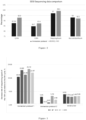
- the results were shown in Figure 3 , where A represented the fluorescence signal for detecting base A; C represented the fluorescence signal for detecting base C; G represented the fluorescence signal for detecting base G; T represented the fluorescence signal for detecting base T; AVG represented the average value of the fluorescence signals for detecting the four bases.
- Example 3 Nested batch processing of the immersion reaction protocol of the present invention
- a nested batch processing of chips was applied in the experimental procedure of Example 1.
- a sequencing reaction reagent i.e., a first reaction solution
- the polymerization reagent was replaced every 10 sequencing cycles, and the regeneration reagent was replaced every 20 sequencing cycles.
- the cost was 25% of the same kind of sequencing of BGISEQ-500 sequencer.
- a total of 60 complete sequencing cycles for all of the two groups of chips were completed in 2 hours.
- the sequencing throughput of the present invention was more than five times that of the BGISEQ-500 sequencer or HiSeq-2500 platform, and the throughput could be further increased and the cost could be further reduced by increasing the number of batches for the nested batch processing.
- Example 1 The sequencing reagents that had been used in Example 1 were again used to perform the sequencing procedure described in Example 1, and the sequencing data were analyzed as described in Example 1 and compared with the unused reagents. The comparison results were shown in Table 1 below, showing that the used reagents could perform sequencing normally.
- Table 1 Comparison of the used and unused reagents: Conditions Sequencing reagents after 60 sequencing cycles Unused sequencing reagents Number of cycles 50 50 Total reads number (M) 185.14 185.98 Reads number on alignment (M) 184.17 184.75 Q30% 92.17 91.35 Effective reads rate, % 84.39 84.33 Comparison rate, % 99.47 99.34 Sequencing error rate, % 0.1 0.17
- Example 5 Study on the stability of reagents used in the immersion reaction protocol of the present invention
- the sequencing reagents (the sequencing reagents referred to Example 1, including polymerization reagent, washing reagent 1, washing reagent 2, and regeneration reagent) were separately placed in 45 °C and 55 °C water baths and processed for different times, including 4 hours, 8 hours, and 24 hours.
- the heat-treated reagents were then used to perform nucleic acid sequencing on a BGISEQ-500 sequencer, and the qualities of the sequencing data were compared by using the software provided by the BGISEQ-500 sequencer to determine the reagent stability.
- Table 2 Stability analysis of sequencing reagents in immersion reaction protocol: Sequencing reagents heat-treated at 45 °C Q30% ESR% Mapping Rate% Sequencing error rate, % Control 92 78.6 98.4 0.41 Heat-treatment, 4 h 89.2 78 90.2 0.59 Heat-treatment, 8 h 90.1 92.3 98.3 0.43 Heat-treatment, 24 h 85.5 80.1 96.8 0.68 Sequencing reagents heat-treated at 55 °C Q30% ESR% Mapping Rate% Sequencing error rate, % Control 92.2 78.4 97.8 0.41 Heat-treatment, 4 h 92.1 79.6 95.2 0.39 Heat-treatment, 8 h 89.8 77.5 91.5 0.66 Heat-treatment, 24 h 79.7 79.2 79.3 1.39
Landscapes
- Life Sciences & Earth Sciences (AREA)
- Chemical & Material Sciences (AREA)
- Proteomics, Peptides & Aminoacids (AREA)
- Organic Chemistry (AREA)
- Health & Medical Sciences (AREA)
- Engineering & Computer Science (AREA)
- Zoology (AREA)
- Wood Science & Technology (AREA)
- Analytical Chemistry (AREA)
- General Health & Medical Sciences (AREA)
- Immunology (AREA)
- Biochemistry (AREA)
- Molecular Biology (AREA)
- Physics & Mathematics (AREA)
- Microbiology (AREA)
- Biophysics (AREA)
- Bioinformatics & Cheminformatics (AREA)
- General Engineering & Computer Science (AREA)
- Biotechnology (AREA)
- Genetics & Genomics (AREA)
- Biomedical Technology (AREA)
- Nuclear Medicine, Radiotherapy & Molecular Imaging (AREA)
- General Physics & Mathematics (AREA)
- Pathology (AREA)
- Measuring Or Testing Involving Enzymes Or Micro-Organisms (AREA)
Priority Applications (1)
| Application Number | Priority Date | Filing Date | Title |
|---|---|---|---|
| EP25154432.6A EP4553171A3 (fr) | 2017-08-01 | 2017-08-01 | Procédé de séquençage d'acide nucléique |
Applications Claiming Priority (4)
| Application Number | Priority Date | Filing Date | Title |
|---|---|---|---|
| EP23155047.6A EP4212628B1 (fr) | 2017-08-01 | 2017-08-01 | Procédé de séquençage d'acide nucléique |
| EP25154432.6A EP4553171A3 (fr) | 2017-08-01 | 2017-08-01 | Procédé de séquençage d'acide nucléique |
| EP17920285.8A EP3663407B1 (fr) | 2017-08-01 | 2017-08-01 | Procédé de séquence d'acide nucléique |
| PCT/CN2017/095520 WO2019023951A1 (fr) | 2017-08-01 | 2017-08-01 | Procédé de séquence d'acide nucléique |
Related Parent Applications (2)
| Application Number | Title | Priority Date | Filing Date |
|---|---|---|---|
| EP23155047.6A Division EP4212628B1 (fr) | 2017-08-01 | 2017-08-01 | Procédé de séquençage d'acide nucléique |
| EP17920285.8A Division EP3663407B1 (fr) | 2017-08-01 | 2017-08-01 | Procédé de séquence d'acide nucléique |
Publications (2)
| Publication Number | Publication Date |
|---|---|
| EP4553171A2 true EP4553171A2 (fr) | 2025-05-14 |
| EP4553171A3 EP4553171A3 (fr) | 2025-10-22 |
Family
ID=65232180
Family Applications (5)
| Application Number | Title | Priority Date | Filing Date |
|---|---|---|---|
| EP17920285.8A Active EP3663407B1 (fr) | 2017-08-01 | 2017-08-01 | Procédé de séquence d'acide nucléique |
| EP25154432.6A Pending EP4553171A3 (fr) | 2017-08-01 | 2017-08-01 | Procédé de séquençage d'acide nucléique |
| EP25154434.2A Pending EP4553172A3 (fr) | 2017-08-01 | 2017-08-01 | Procédé de séquençage d'acide nucléique |
| EP23155059.1A Active EP4209597B1 (fr) | 2017-08-01 | 2017-08-01 | Procédé de séquençage d'acide nucléique |
| EP23155047.6A Active EP4212628B1 (fr) | 2017-08-01 | 2017-08-01 | Procédé de séquençage d'acide nucléique |
Family Applications Before (1)
| Application Number | Title | Priority Date | Filing Date |
|---|---|---|---|
| EP17920285.8A Active EP3663407B1 (fr) | 2017-08-01 | 2017-08-01 | Procédé de séquence d'acide nucléique |
Family Applications After (3)
| Application Number | Title | Priority Date | Filing Date |
|---|---|---|---|
| EP25154434.2A Pending EP4553172A3 (fr) | 2017-08-01 | 2017-08-01 | Procédé de séquençage d'acide nucléique |
| EP23155059.1A Active EP4209597B1 (fr) | 2017-08-01 | 2017-08-01 | Procédé de séquençage d'acide nucléique |
| EP23155047.6A Active EP4212628B1 (fr) | 2017-08-01 | 2017-08-01 | Procédé de séquençage d'acide nucléique |
Country Status (11)
| Country | Link |
|---|---|
| US (3) | US11692221B2 (fr) |
| EP (5) | EP3663407B1 (fr) |
| CN (5) | CN118086480A (fr) |
| DK (1) | DK3663407T3 (fr) |
| ES (3) | ES3014460T3 (fr) |
| FI (1) | FI3663407T3 (fr) |
| HU (1) | HUE061474T2 (fr) |
| PL (1) | PL3663407T3 (fr) |
| PT (1) | PT3663407T (fr) |
| RS (1) | RS64086B1 (fr) |
| WO (1) | WO2019023951A1 (fr) |
Families Citing this family (4)
| Publication number | Priority date | Publication date | Assignee | Title |
|---|---|---|---|---|
| WO2022104138A1 (fr) * | 2020-11-14 | 2022-05-19 | Life Technologies Corporation | Système et procédé pour le séquençage automatisé des répétitions |
| US20230051226A1 (en) | 2021-08-10 | 2023-02-16 | Mgi Tech Co., Ltd. | Flow cell imaging systems and methods, and flow cells and other substrates for use in the same |
| CN115433675B (zh) * | 2022-08-03 | 2024-02-23 | 深圳赛陆医疗科技有限公司 | 核酸测序系统及测序控制方法 |
| WO2025137866A1 (fr) * | 2023-12-26 | 2025-07-03 | 深圳华大智造科技股份有限公司 | Procédé de récupération d'une solution contenant des acides nucléiques utilisée pour le séquençage sur machine |
Citations (20)
| Publication number | Priority date | Publication date | Assignee | Title |
|---|---|---|---|---|
| WO1991006678A1 (fr) | 1989-10-26 | 1991-05-16 | Sri International | Sequençage d'adn |
| US5639603A (en) | 1991-09-18 | 1997-06-17 | Affymax Technologies N.V. | Synthesizing and screening molecular diversity |
| US5641658A (en) | 1994-08-03 | 1997-06-24 | Mosaic Technologies, Inc. | Method for performing amplification of nucleic acid with two primers bound to a single solid support |
| WO2000006770A1 (fr) | 1998-07-30 | 2000-02-10 | Solexa Ltd. | Biomolecules en rangees et leur utilisation dans une procedure de sequençage |
| US6172218B1 (en) | 1994-10-13 | 2001-01-09 | Lynx Therapeutics, Inc. | Oligonucleotide tags for sorting and identification |
| WO2001012862A2 (fr) | 1999-08-18 | 2001-02-22 | Illumina, Inc. | Compositions et procedes de preparation de solutions d'oligonucleotides |
| WO2001062982A2 (fr) | 2000-02-25 | 2001-08-30 | Mosaic Technologies, Inc. | Procedes destines a une amplification en phase solide en plusieurs etapes d'acides nucleiques |
| US6306597B1 (en) | 1995-04-17 | 2001-10-23 | Lynx Therapeutics, Inc. | DNA sequencing by parallel oligonucleotide extensions |
| WO2002029003A2 (fr) | 2000-10-06 | 2002-04-11 | The Trustees Of Columbia University In The City Of New York | Methode d'analyse massivement parallele destinee a decoder l'adn et l'arn |
| WO2004018497A2 (fr) | 2002-08-23 | 2004-03-04 | Solexa Limited | Nucleotides modifies |
| WO2004018493A1 (fr) | 2002-08-23 | 2004-03-04 | Solexa Limited | Nucleotides marques |
| WO2005024010A1 (fr) | 2003-09-11 | 2005-03-17 | Solexa Limited | Polymerases modifies pour l'incorporation amelioree d'analogues nucleotidiques |
| US6969488B2 (en) | 1998-05-22 | 2005-11-29 | Solexa, Inc. | System and apparatus for sequential processing of analytes |
| US7057026B2 (en) | 2001-12-04 | 2006-06-06 | Solexa Limited | Labelled nucleotides |
| WO2006120433A1 (fr) | 2005-05-10 | 2006-11-16 | Solexa Limited | Polymerases ameliorees |
| WO2007111937A1 (fr) | 2006-03-23 | 2007-10-04 | Applera Corporation | enrichissement dirige d'adn genomique pour un sequencage a haut rendement |
| WO2007123744A2 (fr) | 2006-03-31 | 2007-11-01 | Solexa, Inc. | Systèmes et procédés pour analyse de séquençage par synthèse |
| US20100248991A1 (en) | 2009-02-25 | 2010-09-30 | Angelika Roesler | Solid support for high-throughput nucleic acid analysis |
| WO2013066975A1 (fr) | 2011-11-02 | 2013-05-10 | Complete Genomics, Inc. | Traitement pour stabiliser des réseaux d'acides nucléiques |
| WO2014139596A1 (fr) | 2013-03-15 | 2014-09-18 | Illumina Cambridge Limited | Nucléosides ou nucléotides modifiés |
Family Cites Families (10)
| Publication number | Priority date | Publication date | Assignee | Title |
|---|---|---|---|---|
| JP3419850B2 (ja) | 1993-10-26 | 2003-06-23 | 株式会社日立製作所 | 核酸分別方法 |
| AR021833A1 (es) * | 1998-09-30 | 2002-08-07 | Applied Research Systems | Metodos de amplificacion y secuenciacion de acido nucleico |
| US6274320B1 (en) * | 1999-09-16 | 2001-08-14 | Curagen Corporation | Method of sequencing a nucleic acid |
| CN101189345A (zh) * | 2005-02-01 | 2008-05-28 | Ab先进基因分析公司 | 珠基测序的试剂、方法和文库 |
| WO2006084132A2 (fr) | 2005-02-01 | 2006-08-10 | Agencourt Bioscience Corp. | Reactifs, methodes et bibliotheques pour sequençage fonde sur des billes |
| US20060246576A1 (en) * | 2005-04-06 | 2006-11-02 | Affymetrix, Inc. | Fluidic system and method for processing biological microarrays in personal instrumentation |
| WO2007120208A2 (fr) | 2005-11-14 | 2007-10-25 | President And Fellows Of Harvard College | Séquençage de l'adn en cercle tournant sur nanogrille |
| CN101495654A (zh) | 2006-04-19 | 2009-07-29 | 阿普里拉股份有限公司 | 无凝胶珠基测序的试剂、方法和文库 |
| JP2010539982A (ja) * | 2007-10-01 | 2010-12-24 | アプライド バイオシステムズ, エルエルシー | チェイスライゲーション配列決定法 |
| CN103993100B (zh) * | 2014-06-17 | 2017-02-15 | 东南大学 | 一种提高基因连接测序准确性的方法 |
-
2017
- 2017-08-01 CN CN202410439618.1A patent/CN118086480A/zh active Pending
- 2017-08-01 EP EP17920285.8A patent/EP3663407B1/fr active Active
- 2017-08-01 EP EP25154432.6A patent/EP4553171A3/fr active Pending
- 2017-08-01 ES ES23155047T patent/ES3014460T3/es active Active
- 2017-08-01 WO PCT/CN2017/095520 patent/WO2019023951A1/fr not_active Ceased
- 2017-08-01 PL PL17920285.8T patent/PL3663407T3/pl unknown
- 2017-08-01 ES ES23155059T patent/ES3018947T3/es active Active
- 2017-08-01 CN CN201780093472.8A patent/CN111032883B/zh active Active
- 2017-08-01 EP EP25154434.2A patent/EP4553172A3/fr active Pending
- 2017-08-01 CN CN202410439381.7A patent/CN118086478A/zh active Pending
- 2017-08-01 PT PT179202858T patent/PT3663407T/pt unknown
- 2017-08-01 CN CN202410439435.XA patent/CN118086479A/zh active Pending
- 2017-08-01 CN CN202410439616.2A patent/CN118109572A/zh active Pending
- 2017-08-01 HU HUE17920285A patent/HUE061474T2/hu unknown
- 2017-08-01 EP EP23155059.1A patent/EP4209597B1/fr active Active
- 2017-08-01 ES ES17920285T patent/ES2941083T3/es active Active
- 2017-08-01 EP EP23155047.6A patent/EP4212628B1/fr active Active
- 2017-08-01 FI FIEP17920285.8T patent/FI3663407T3/fi active
- 2017-08-01 DK DK17920285.8T patent/DK3663407T3/da active
- 2017-08-01 US US16/635,131 patent/US11692221B2/en active Active
- 2017-08-01 RS RS20230242A patent/RS64086B1/sr unknown
-
2023
- 2023-05-05 US US18/144,124 patent/US20230323445A1/en active Pending
- 2023-05-05 US US18/144,121 patent/US20230272467A1/en active Pending
Patent Citations (21)
| Publication number | Priority date | Publication date | Assignee | Title |
|---|---|---|---|---|
| WO1991006678A1 (fr) | 1989-10-26 | 1991-05-16 | Sri International | Sequençage d'adn |
| US5639603A (en) | 1991-09-18 | 1997-06-17 | Affymax Technologies N.V. | Synthesizing and screening molecular diversity |
| US5641658A (en) | 1994-08-03 | 1997-06-24 | Mosaic Technologies, Inc. | Method for performing amplification of nucleic acid with two primers bound to a single solid support |
| US6172218B1 (en) | 1994-10-13 | 2001-01-09 | Lynx Therapeutics, Inc. | Oligonucleotide tags for sorting and identification |
| US6306597B1 (en) | 1995-04-17 | 2001-10-23 | Lynx Therapeutics, Inc. | DNA sequencing by parallel oligonucleotide extensions |
| US6969488B2 (en) | 1998-05-22 | 2005-11-29 | Solexa, Inc. | System and apparatus for sequential processing of analytes |
| WO2000006770A1 (fr) | 1998-07-30 | 2000-02-10 | Solexa Ltd. | Biomolecules en rangees et leur utilisation dans une procedure de sequençage |
| WO2001012862A2 (fr) | 1999-08-18 | 2001-02-22 | Illumina, Inc. | Compositions et procedes de preparation de solutions d'oligonucleotides |
| WO2001062982A2 (fr) | 2000-02-25 | 2001-08-30 | Mosaic Technologies, Inc. | Procedes destines a une amplification en phase solide en plusieurs etapes d'acides nucleiques |
| WO2002029003A2 (fr) | 2000-10-06 | 2002-04-11 | The Trustees Of Columbia University In The City Of New York | Methode d'analyse massivement parallele destinee a decoder l'adn et l'arn |
| US7427673B2 (en) | 2001-12-04 | 2008-09-23 | Illumina Cambridge Limited | Labelled nucleotides |
| US7057026B2 (en) | 2001-12-04 | 2006-06-06 | Solexa Limited | Labelled nucleotides |
| WO2004018493A1 (fr) | 2002-08-23 | 2004-03-04 | Solexa Limited | Nucleotides marques |
| WO2004018497A2 (fr) | 2002-08-23 | 2004-03-04 | Solexa Limited | Nucleotides modifies |
| WO2005024010A1 (fr) | 2003-09-11 | 2005-03-17 | Solexa Limited | Polymerases modifies pour l'incorporation amelioree d'analogues nucleotidiques |
| WO2006120433A1 (fr) | 2005-05-10 | 2006-11-16 | Solexa Limited | Polymerases ameliorees |
| WO2007111937A1 (fr) | 2006-03-23 | 2007-10-04 | Applera Corporation | enrichissement dirige d'adn genomique pour un sequencage a haut rendement |
| WO2007123744A2 (fr) | 2006-03-31 | 2007-11-01 | Solexa, Inc. | Systèmes et procédés pour analyse de séquençage par synthèse |
| US20100248991A1 (en) | 2009-02-25 | 2010-09-30 | Angelika Roesler | Solid support for high-throughput nucleic acid analysis |
| WO2013066975A1 (fr) | 2011-11-02 | 2013-05-10 | Complete Genomics, Inc. | Traitement pour stabiliser des réseaux d'acides nucléiques |
| WO2014139596A1 (fr) | 2013-03-15 | 2014-09-18 | Illumina Cambridge Limited | Nucléosides ou nucléotides modifiés |
Non-Patent Citations (9)
| Title |
|---|
| "Genomics", 2016, article "P085" |
| ANDERSONYOUNG: "Quantitative Filter Hybridization, Nucleic Acid Hybridization, and Allawi and Santa Lucia", BIOCHEMISTRY, vol. 36, 1985, pages 10581 - 94 |
| AUSUBEL ET AL.: "Short Protocols in Molecular Biology", 1999, JOHN WILEY & SONS |
| G. STEINBERG-TATMAN ET AL., BIOCONJUGATE CHEMISTRY, vol. 17, 2006, pages 841 - 848 |
| LANDEGREN, U.KAISER, RSANDERS, J.HOOD, L.: "A ligase-mediated gene detection technique", SCIENCE, vol. 241, 1988, pages 1077 - 1080, XP000676556, DOI: 10.1126/science.3413476 |
| METZKER ET AL., NUCLEIC ACIDS RESEARCH, vol. 22, no. 20, 1994, pages 4259 - 4267 |
| SAMBROOK ET AL.: "Molecular Cloning, A Laboratory Manual", 2001, COLD SPRING HARBOR LABORATORY PRESS |
| TABORRICHARSON, PROC. NAT. ACAD. SCI. USA, vol. 84, 1987, pages 4767 - 4771 |
| XU X. ET AL., JOURNAL OF AMERICAN CHEMICAL SOCIETY, vol. 128, 2006, pages 9286 - 9287 |
Also Published As
| Publication number | Publication date |
|---|---|
| EP3663407A4 (fr) | 2021-03-03 |
| EP4212628C0 (fr) | 2025-01-29 |
| US20200318177A1 (en) | 2020-10-08 |
| EP4553171A3 (fr) | 2025-10-22 |
| ES2941083T3 (es) | 2023-05-16 |
| EP4209597A1 (fr) | 2023-07-12 |
| EP4553172A2 (fr) | 2025-05-14 |
| EP4212628B1 (fr) | 2025-01-29 |
| WO2019023951A1 (fr) | 2019-02-07 |
| CN118086480A (zh) | 2024-05-28 |
| DK3663407T3 (da) | 2023-04-03 |
| EP4209597B1 (fr) | 2025-02-26 |
| PL3663407T3 (pl) | 2023-05-08 |
| RS64086B1 (sr) | 2023-04-28 |
| ES3018947T3 (en) | 2025-05-19 |
| EP3663407B1 (fr) | 2023-03-15 |
| CN118109572A (zh) | 2024-05-31 |
| CN111032883A (zh) | 2020-04-17 |
| CN118086479A (zh) | 2024-05-28 |
| ES3014460T3 (en) | 2025-04-22 |
| FI3663407T3 (fi) | 2023-04-18 |
| CN111032883B (zh) | 2024-05-03 |
| PT3663407T (pt) | 2023-03-27 |
| HUE061474T2 (hu) | 2023-07-28 |
| EP4553172A3 (fr) | 2025-06-25 |
| EP4212628A1 (fr) | 2023-07-19 |
| US11692221B2 (en) | 2023-07-04 |
| US20230272467A1 (en) | 2023-08-31 |
| US20230323445A1 (en) | 2023-10-12 |
| CN118086478A (zh) | 2024-05-28 |
| EP4209597C0 (fr) | 2025-02-26 |
| EP3663407A1 (fr) | 2020-06-10 |
Similar Documents
| Publication | Publication Date | Title |
|---|---|---|
| US20230323445A1 (en) | Nucleic acid sequencing method | |
| CN109486902B (zh) | 核酸扩增 | |
| US8541172B2 (en) | Method for sequencing a polynucelotide template | |
| US20190119738A1 (en) | Nucleic acid amplification | |
| CN110997932A (zh) | 用于甲基化测序的单细胞全基因组文库 | |
| EP3461910B1 (fr) | Amplification d'acides nucléiques | |
| KR20030055343A (ko) | 고체 서포트에서 핵산의 등온 증폭 | |
| US20230295696A1 (en) | Method for loading nucleic acid molecule on solid support | |
| WO2017196676A1 (fr) | Procédés de détection de post-incorporation de métaux de chélation | |
| HK40088759B (en) | Nucleic acid sequencing method | |
| US20220145384A1 (en) | Detecting materials in a mixture using oligonucleotides | |
| WO2019075711A1 (fr) | Procédé d'élimination de résidu d'agent de régénération | |
| WO2024073714A1 (fr) | Procédés de modulation de cinétique de regroupement |
Legal Events
| Date | Code | Title | Description |
|---|---|---|---|
| PUAI | Public reference made under article 153(3) epc to a published international application that has entered the european phase |
Free format text: ORIGINAL CODE: 0009012 |
|
| STAA | Information on the status of an ep patent application or granted ep patent |
Free format text: STATUS: THE APPLICATION HAS BEEN PUBLISHED |
|
| AC | Divisional application: reference to earlier application |
Ref document number: 3663407 Country of ref document: EP Kind code of ref document: P Ref document number: 4212628 Country of ref document: EP Kind code of ref document: P |
|
| AK | Designated contracting states |
Kind code of ref document: A2 Designated state(s): AL AT BE BG CH CY CZ DE DK EE ES FI FR GB GR HR HU IE IS IT LI LT LU LV MC MK MT NL NO PL PT RO RS SE SI SK SM TR |
|
| REG | Reference to a national code |
Ref country code: DE Ref legal event code: R079 Free format text: PREVIOUS MAIN CLASS: C12Q0001687400 Ipc: C12Q0001680000 |
|
| RIC1 | Information provided on ipc code assigned before grant |
Ipc: C12Q 1/6874 20180101ALI20250523BHEP Ipc: C12Q 1/68 20180101AFI20250523BHEP |
|
| PUAL | Search report despatched |
Free format text: ORIGINAL CODE: 0009013 |
|
| AK | Designated contracting states |
Kind code of ref document: A3 Designated state(s): AL AT BE BG CH CY CZ DE DK EE ES FI FR GB GR HR HU IE IS IT LI LT LU LV MC MK MT NL NO PL PT RO RS SE SI SK SM TR |
|
| RIC1 | Information provided on ipc code assigned before grant |
Ipc: C12Q 1/68 20180101AFI20250916BHEP Ipc: C12Q 1/6874 20180101ALI20250916BHEP |
|
| STAA | Information on the status of an ep patent application or granted ep patent |
Free format text: STATUS: REQUEST FOR EXAMINATION WAS MADE |
|
| 17P | Request for examination filed |
Effective date: 20251217 |
|
| GRAP | Despatch of communication of intention to grant a patent |
Free format text: ORIGINAL CODE: EPIDOSNIGR1 |
|
| STAA | Information on the status of an ep patent application or granted ep patent |
Free format text: STATUS: GRANT OF PATENT IS INTENDED |
|
| INTG | Intention to grant announced |
Effective date: 20260223 |