EP4553183A1 - Alliages à base de mo-ni pour le traitement de surface d'applications de métal fondu - Google Patents
Alliages à base de mo-ni pour le traitement de surface d'applications de métal fondu Download PDFInfo
- Publication number
- EP4553183A1 EP4553183A1 EP23209420.1A EP23209420A EP4553183A1 EP 4553183 A1 EP4553183 A1 EP 4553183A1 EP 23209420 A EP23209420 A EP 23209420A EP 4553183 A1 EP4553183 A1 EP 4553183A1
- Authority
- EP
- European Patent Office
- Prior art keywords
- present
- based alloy
- alloy
- powder composition
- exceeding
- Prior art date
- Legal status (The legal status is an assumption and is not a legal conclusion. Google has not performed a legal analysis and makes no representation as to the accuracy of the status listed.)
- Pending
Links
Images



Classifications
-
- C—CHEMISTRY; METALLURGY
- C22—METALLURGY; FERROUS OR NON-FERROUS ALLOYS; TREATMENT OF ALLOYS OR NON-FERROUS METALS
- C22C—ALLOYS
- C22C1/00—Making non-ferrous alloys
- C22C1/04—Making non-ferrous alloys by powder metallurgy
- C22C1/045—Alloys based on refractory metals
-
- B—PERFORMING OPERATIONS; TRANSPORTING
- B22—CASTING; POWDER METALLURGY
- B22F—WORKING METALLIC POWDER; MANUFACTURE OF ARTICLES FROM METALLIC POWDER; MAKING METALLIC POWDER; APPARATUS OR DEVICES SPECIALLY ADAPTED FOR METALLIC POWDER
- B22F7/00—Manufacture of composite layers, workpieces, or articles, comprising metallic powder, by sintering the powder, with or without compacting wherein at least one part is obtained by sintering or compression
- B22F7/02—Manufacture of composite layers, workpieces, or articles, comprising metallic powder, by sintering the powder, with or without compacting wherein at least one part is obtained by sintering or compression of composite layers
- B22F7/04—Manufacture of composite layers, workpieces, or articles, comprising metallic powder, by sintering the powder, with or without compacting wherein at least one part is obtained by sintering or compression of composite layers with one or more layers not made from powder, e.g. made from solid metal
-
- B—PERFORMING OPERATIONS; TRANSPORTING
- B23—MACHINE TOOLS; METAL-WORKING NOT OTHERWISE PROVIDED FOR
- B23K—SOLDERING OR UNSOLDERING; WELDING; CLADDING OR PLATING BY SOLDERING OR WELDING; CUTTING BY APPLYING HEAT LOCALLY, e.g. FLAME CUTTING; WORKING BY LASER BEAM
- B23K35/00—Rods, electrodes, materials, or media, for use in soldering, welding, or cutting
- B23K35/22—Rods, electrodes, materials, or media, for use in soldering, welding, or cutting characterised by the composition or nature of the material
- B23K35/24—Selection of soldering or welding materials proper
- B23K35/32—Selection of soldering or welding materials proper with the principal constituent melting at more than 1550°C
-
- C—CHEMISTRY; METALLURGY
- C22—METALLURGY; FERROUS OR NON-FERROUS ALLOYS; TREATMENT OF ALLOYS OR NON-FERROUS METALS
- C22C—ALLOYS
- C22C19/00—Alloys based on nickel or cobalt
- C22C19/03—Alloys based on nickel or cobalt based on nickel
- C22C19/05—Alloys based on nickel or cobalt based on nickel with chromium
- C22C19/051—Alloys based on nickel or cobalt based on nickel with chromium and Mo or W
-
- C—CHEMISTRY; METALLURGY
- C22—METALLURGY; FERROUS OR NON-FERROUS ALLOYS; TREATMENT OF ALLOYS OR NON-FERROUS METALS
- C22C—ALLOYS
- C22C19/00—Alloys based on nickel or cobalt
- C22C19/03—Alloys based on nickel or cobalt based on nickel
- C22C19/05—Alloys based on nickel or cobalt based on nickel with chromium
- C22C19/051—Alloys based on nickel or cobalt based on nickel with chromium and Mo or W
- C22C19/057—Alloys based on nickel or cobalt based on nickel with chromium and Mo or W with the maximum Cr content being less 10%
-
- C—CHEMISTRY; METALLURGY
- C23—COATING METALLIC MATERIAL; COATING MATERIAL WITH METALLIC MATERIAL; CHEMICAL SURFACE TREATMENT; DIFFUSION TREATMENT OF METALLIC MATERIAL; COATING BY VACUUM EVAPORATION, BY SPUTTERING, BY ION IMPLANTATION OR BY CHEMICAL VAPOUR DEPOSITION, IN GENERAL; INHIBITING CORROSION OF METALLIC MATERIAL OR INCRUSTATION IN GENERAL
- C23C—COATING METALLIC MATERIAL; COATING MATERIAL WITH METALLIC MATERIAL; SURFACE TREATMENT OF METALLIC MATERIAL BY DIFFUSION INTO THE SURFACE, BY CHEMICAL CONVERSION OR SUBSTITUTION; COATING BY VACUUM EVAPORATION, BY SPUTTERING, BY ION IMPLANTATION OR BY CHEMICAL VAPOUR DEPOSITION, IN GENERAL
- C23C30/00—Coating with metallic material characterised only by the composition of the metallic material, i.e. not characterised by the coating process
-
- C—CHEMISTRY; METALLURGY
- C23—COATING METALLIC MATERIAL; COATING MATERIAL WITH METALLIC MATERIAL; CHEMICAL SURFACE TREATMENT; DIFFUSION TREATMENT OF METALLIC MATERIAL; COATING BY VACUUM EVAPORATION, BY SPUTTERING, BY ION IMPLANTATION OR BY CHEMICAL VAPOUR DEPOSITION, IN GENERAL; INHIBITING CORROSION OF METALLIC MATERIAL OR INCRUSTATION IN GENERAL
- C23C—COATING METALLIC MATERIAL; COATING MATERIAL WITH METALLIC MATERIAL; SURFACE TREATMENT OF METALLIC MATERIAL BY DIFFUSION INTO THE SURFACE, BY CHEMICAL CONVERSION OR SUBSTITUTION; COATING BY VACUUM EVAPORATION, BY SPUTTERING, BY ION IMPLANTATION OR BY CHEMICAL VAPOUR DEPOSITION, IN GENERAL
- C23C4/00—Coating by spraying the coating material in the molten state, e.g. by flame, plasma or electric discharge
- C23C4/04—Coating by spraying the coating material in the molten state, e.g. by flame, plasma or electric discharge characterised by the coating material
- C23C4/06—Metallic material
- C23C4/073—Metallic material containing MCrAl or MCrAlY alloys, where M is nickel, cobalt or iron, with or without non-metal elements
-
- C—CHEMISTRY; METALLURGY
- C23—COATING METALLIC MATERIAL; COATING MATERIAL WITH METALLIC MATERIAL; CHEMICAL SURFACE TREATMENT; DIFFUSION TREATMENT OF METALLIC MATERIAL; COATING BY VACUUM EVAPORATION, BY SPUTTERING, BY ION IMPLANTATION OR BY CHEMICAL VAPOUR DEPOSITION, IN GENERAL; INHIBITING CORROSION OF METALLIC MATERIAL OR INCRUSTATION IN GENERAL
- C23C—COATING METALLIC MATERIAL; COATING MATERIAL WITH METALLIC MATERIAL; SURFACE TREATMENT OF METALLIC MATERIAL BY DIFFUSION INTO THE SURFACE, BY CHEMICAL CONVERSION OR SUBSTITUTION; COATING BY VACUUM EVAPORATION, BY SPUTTERING, BY ION IMPLANTATION OR BY CHEMICAL VAPOUR DEPOSITION, IN GENERAL
- C23C4/00—Coating by spraying the coating material in the molten state, e.g. by flame, plasma or electric discharge
- C23C4/12—Coating by spraying the coating material in the molten state, e.g. by flame, plasma or electric discharge characterised by the method of spraying
- C23C4/129—Flame spraying
-
- C—CHEMISTRY; METALLURGY
- C23—COATING METALLIC MATERIAL; COATING MATERIAL WITH METALLIC MATERIAL; CHEMICAL SURFACE TREATMENT; DIFFUSION TREATMENT OF METALLIC MATERIAL; COATING BY VACUUM EVAPORATION, BY SPUTTERING, BY ION IMPLANTATION OR BY CHEMICAL VAPOUR DEPOSITION, IN GENERAL; INHIBITING CORROSION OF METALLIC MATERIAL OR INCRUSTATION IN GENERAL
- C23C—COATING METALLIC MATERIAL; COATING MATERIAL WITH METALLIC MATERIAL; SURFACE TREATMENT OF METALLIC MATERIAL BY DIFFUSION INTO THE SURFACE, BY CHEMICAL CONVERSION OR SUBSTITUTION; COATING BY VACUUM EVAPORATION, BY SPUTTERING, BY ION IMPLANTATION OR BY CHEMICAL VAPOUR DEPOSITION, IN GENERAL
- C23C4/00—Coating by spraying the coating material in the molten state, e.g. by flame, plasma or electric discharge
- C23C4/12—Coating by spraying the coating material in the molten state, e.g. by flame, plasma or electric discharge characterised by the method of spraying
- C23C4/134—Plasma spraying
-
- B—PERFORMING OPERATIONS; TRANSPORTING
- B22—CASTING; POWDER METALLURGY
- B22F—WORKING METALLIC POWDER; MANUFACTURE OF ARTICLES FROM METALLIC POWDER; MAKING METALLIC POWDER; APPARATUS OR DEVICES SPECIALLY ADAPTED FOR METALLIC POWDER
- B22F7/00—Manufacture of composite layers, workpieces, or articles, comprising metallic powder, by sintering the powder, with or without compacting wherein at least one part is obtained by sintering or compression
- B22F7/02—Manufacture of composite layers, workpieces, or articles, comprising metallic powder, by sintering the powder, with or without compacting wherein at least one part is obtained by sintering or compression of composite layers
- B22F7/04—Manufacture of composite layers, workpieces, or articles, comprising metallic powder, by sintering the powder, with or without compacting wherein at least one part is obtained by sintering or compression of composite layers with one or more layers not made from powder, e.g. made from solid metal
- B22F2007/042—Manufacture of composite layers, workpieces, or articles, comprising metallic powder, by sintering the powder, with or without compacting wherein at least one part is obtained by sintering or compression of composite layers with one or more layers not made from powder, e.g. made from solid metal characterised by the layer forming method
-
- C—CHEMISTRY; METALLURGY
- C22—METALLURGY; FERROUS OR NON-FERROUS ALLOYS; TREATMENT OF ALLOYS OR NON-FERROUS METALS
- C22C—ALLOYS
- C22C1/00—Making non-ferrous alloys
- C22C1/04—Making non-ferrous alloys by powder metallurgy
- C22C1/0433—Nickel- or cobalt-based alloys
Definitions
- the present disclosure concerns a coating system and application process for prolonging the service lifetime of guiding rollers for galvanizing baths or the like.
- the present disclosure concerns a coating system and application process for prolonging the service lifetime of guiding rollers for galvanizing baths or the like. Further, the use of hazardous sealers is at least partially avoided.
- Steel sheets require corrosion protection and are therefore coated with materials that form a protective layer by self-passivation.
- Typical coating materials on the steel sheets are zinc, zinc-aluminum, aluminum or Al x Si y since they offer a high corrosion protection and can be efficiently applied by passing the steel sheet through a bath of the molten material. All these overlay materials possess melting point temperatures below 700°C. In this temperature range the structural integrity of the components of these galvanizing lines made from high strength steels is given. The steel sheet is guided through the melt by so-called pot or sink rolls that are made from high strength steel.
- a major issue in the galvanizing process is the high reactivity of zinc and aluminum with especially iron-based materials.
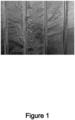
- aluminum or zinc chemically react and alloy with the substrate material of the pot roll or with debris from the steel sheet that may get deposited on the pot roll forming dross buildup ( Figure 1 ).
- Typical melt compositions are [ EP2010690B1 ]:
- Dross buildup on pot rolls was identified by galvanizers as a major cause of coating defects and line stoppages. This buildup is even more severe in Galvalume production than in galvanizing or galvanneal. It is known that the steel sheet dissolves in Galvalume at high rate due to the high bath temperature and high aluminum content, thus the high affinity of Fe to Al is the driver for a strong reaction. As example, whilst line stoppage, the steel sheet dissolves completely in Galvalume whilst it stays largely intact in galvanizing and galvanneal. The large amount of dissolved Fe precipitates out from the molten alloy as dross which is an Al-Fe-Si ternary intermetallic.
- the dross particles are carried around in the bath and become induced by the moving steel strip and the inductors and starts to gradually build-up on the roll and journal surfaces.
- the pot roll surface is preferred for dross build-up due each of change compared other elements of the galvanizing bath, a process driven e.g., by the higher Fe concentration of the melt (from steel dissolution) and lower temperature than the bath.
- a pot roll in Galvalume is typically changed every week due to excessive dross build-up, resulting in frequent line stoppages ( Dross Buildup on Various Alloys in a Galvalume Bath, Y.H. Liu, A.B. File, N.-Y. Tang et al, 2007 ).
- the present inventors have investigated alloys of molybdenum and nickel and have surprisingly found that when molybdenum and nickel alloys in accordance with the herein detailed compositions are formed it is possible to coat pot rolls using e.g., laser cladding methods, and form dense and wear resistant coatings of the present alloys, which have a higher service lifetime than what can currently be achieved with other alloys on the market, such as e.g., Tribaloy TM T-800 or Stellites TM , and at the same time sealing becomes superfluous.
- molybdenum alloys for wear-resistant coating of screws or other machine parts are known from e.g., US 4,949,836 to Schostek , the alloys comprising 40-70 wt% Mo, 0-10 wt% Cr, 0.5-5 wt% boron, 0-1 wt% Zr, 0-1 wt% Ti, and the remainder being Ni, Co, or a mixture of Ni and Co.
- the investigations of the present inventors have indicated that the alloys of the present invention advantageously form phases of Mo 5 Si 3 and/or Cr 5 B 3 which may be at the cause in application of the hot aluminum or Al x Si y -liquid, why a significantly higher wear resistance as it is for Tribaloy TM T-800 or Stellite TM 6 is recognizable.
- the alloys can be applied via plasma transferred arc welding (PTAW), laser cladding (LC), High velocity oxygen fuel spraying (HVOF), High velocity air fuel spraying (HVAF), and/or atmospheric plasma spraying (APS) on any rotational symmetric geometry.
- PTAW plasma transferred arc welding
- LC laser cladding
- HVOF High velocity oxygen fuel spraying
- HVAC High velocity air fuel spraying
- APS atmospheric plasma spraying
- the coating can be applied in single or multiple layers via PTA or LC and in several layers via APS. Since the coatings are dense, a sealing is not necessary.
- Mo-Ni-based alloy consisting by total weight of the alloy of: Molybdenum (Mo) 48.0 wt% - 52.0 wt%, Chromium (Cr) 2.5 wt% - 4.0 wt%, Silicon (Si) 1.4 wt% - 2.7 wt%, Boron (B) 1.0 wt% - 1.5 wt%, Aluminum (Al) 0.75 wt% - 1.25 wt%, Carbon (C) 0.10 wt% - 0.20 wt%, Iron (Fe) present but not exceeding 1.5 wt%, Nitrogen (N) not exceeding 0.05 wt%, Oxygen (O) not exceeding 0.02 wt%, the balance being nickel (Ni) and unavoidable impurities.
- Mo Molybdenum
- Cr Chromium
- Si Silicon
- B Boron
- B 1.0 wt% - 1.5 wt%
- the composition disclosed in US 4,949,836 comprises 49-51 wt% Mo, 3.0-3.5 wt% Cr, 1.1-1.4 wt% B, 1.8-2.25 wt% Si, 0.12-0.18 wt% C, 0-1.5 wt% Fe, and 40.17-44.48 wt% Ni.
- the present invention builds on the present inventors' surprising realization, that when aluminum is present within the given ranges of 0.75-1.25 wt%, when iron is present above the limit of an unavailable impurity, but below 1.5 wt%, and the amount of nitrogen and oxygen are limited as given above, the resulting alloys obtain a surprising resistance to molten galvanizing compositions, such as e.g., those mentioned in EP2010690B1 , such as galvanizing or aluminizing, galvanneal, galvalume solutions.
- nickel is in balance to the total contents of the further elements of the alloy. Accordingly, while the total amount of nickel can vary between 38.3 wt% to 46.2 wt%, nickel is always added for balance. This is in contrast to the alloys of US 4,949,836 where nickel was not ubiquitously the balancing element of these alloys.
- the present inventors have found that when alloys of the present are used for coating pot rolls, e.g., when coated using PTAW, LC, HVOF, HVAF and/or APS, dense and resistant coatings are formed.
- the alloys of the present invention are applied in thicknesses from 0.1 - 5 mm, suitable coatings for pot rolls can be created.
- Mo-Ni-based alloy consisting by total weight of the alloy of: Molybdenum (Mo) 49.0 wt% - 51.0 wt%, Chromium (Cr) 3.0 wt% - 3.5 wt%, Silicon (Si) 1.8 wt% - 2.3 wt%, Boron (B) 1.1 wt% - 1.4 wt%, Aluminum (Al) 0.9 wt% - 1.1 wt%, Carbon (C) 0.12 wt% - 0.18 wt%, Iron (Fe) present but not exceeding 1.5 wt%, Nitrogen (N) not exceeding 0.05 wt%, Oxygen (O) not exceeding 0.02 wt%, the balance being nickel (Ni) and unavoidable impurities.
- Mo Molybdenum
- Cr Chromium
- Si Silicon
- B 1.1 wt% - 1.4 wt%
- the alloys themselves are rather robust to the present of iron (Fe) in the alloys, which can be present in amounts up to 1.5 wt% without causing detrimental effects to the present alloys.
- iron is not present in the alloys of the present invention to a level above the level of an unavoidable impurity, the alloys are not functional.
- iron (Fe) is present in the alloys of the present invention from 0.01 wt% to 1.5 wt%, preferably from 0.02 wt% to 1.0 wt%, or more preferably from 0.03 wt% to 0.5 wt% iron, with lower amounts of iron being preferrable for durability of use.
- iron cannot be absent.
- molybdenum (Mo) can be varied within the herein below limits in accordance with the general, preferred and more preferred embodiments of the present invention, and accordingly there is herein disclosed a Mo-Ni-based alloy according to the present invention, wherein molybdenum (Mo) is present from 48.3 wt% to 51.7 wt%, from 48.5 wt% to 51.5 wt%, or from 48.7 wt% to 51.3 wt%; preferably from 49.0 wt% to 51.0 wt%, or from 49.3 wt% to 50.7 wt%; more preferably from 49.5 wt% to 50.5 wt%, or from 49.7 wt% to 50.3 wt%; in the Mo-Ni-based alloy.
- chromium (Cr) can be varied within the herein below limits in accordance with the general, preferred and more preferred embodiments of the present invention, and accordingly there is herein disclosed a Mo-Ni-based alloy according to the present invention, wherein chromium (Cr) is present from 2.7 wt% to 3.8 wt%, preferably from 3.0 wt% to 3.5 wt%, more preferably from 3.1 wt% to 3.4 wt%, in the Mo-Ni-based alloy.
- silicon (Si) can be varied within the herein below limits in accordance with the general, preferred and more preferred embodiments of the present invention, and accordingly there is herein disclosed a Mo-Ni-based alloy according to the present invention, wherein silicon (Si) is present from 1.5 wt% to 2.6 wt%, from 1.6 wt% to 2.5 wt%, or from 1.7 wt% to 2.4 wt%; preferably from 1.8 wt% to 2.3 wt%, or from 1.9 wt% to 2.2 wt%; or more preferably from 2.0 wt% to 2.1 wt%; in the Mo-Ni-based alloy.
- boron (B) can be varied within the herein below limits in accordance with the general, preferred and more preferred embodiments of the present invention, and accordingly there is herein disclosed a Mo-Ni-based alloy according to the present invention, wherein boron (B) is present from 1.05 wt% to 1.45 wt%, preferably from 1.1 wt% to 1.4 wt%, more preferably from 1.15 to 1.35 wt%, most preferably from 1.2 wt% to 1.3 wt%, in the in the Mo-Ni-based alloy.
- aluminum (Al) can be varied within the herein below limits in accordance with the general, preferred and more preferred embodiments of the present invention, and accordingly there is herein disclosed a Mo-Ni-based alloy according to the present invention, wherein aluminum (Al) is present from 0.80 wt% to 1.2 wt%, preferably from 0.85 wt% to 1.15 wt%, more preferably from 0.90 wt% to 1.10 wt%, or most preferably from 0.95 wt% to 1.05 wt%, in the Mo-Ni-based alloy.
- carbon (C) can be varied within the herein below limits in accordance with the general, preferred and more preferred embodiments of the present invention, and accordingly there is herein disclosed a Mo-Ni-based alloy according to the present invention, wherein carbon (C) is present from 0.11 wt% to 0.19 wt%, preferably from 0.12 wt% to 0.18 wt%, more preferably from 0.12 wt% to 0.17 wt%, from 0.12 wt% to 0.16 wt%, or most preferably from 0.12 wt% to 0.15 wt%, in the Mo-Ni-based alloy.
- carbon (C) can be varied within the herein below limits in accordance with the general, preferred and more preferred embodiments of the present invention, and accordingly there is herein disclosed a Mo-Ni-based alloy according to the present invention, wherein iron (Fe) is present from 0.02 wt% to 1.5 wt%, from 0.03 to 1.3 wt%, or from 0.04 wt% to 1.0 wt%; preferably from 0.05 wt% to 0.9 wt%, from 0.06 wt% to 0.8 wt%, or from 0.07 wt% to 0.7 wt%; more preferably from 0.08 wt% to 0.6 wt%, from 0.08 wt% to 0.5 wt%, from 0.9 wt% to 0.4 wt%, or from 0.09 wt% to 0.3 wt%; most preferably from 0.10 wt% to 0.2 wt%, in the Mo-Ni-based alloy.
- iron (Fe) is a necessary component of the present alloys, however it also serves the role of filler to a certain extent, such that minimizing the content of iron is preferable for function, but having more than optimal iron for function in the alloys can be beneficial for reasons of cost.
- Mo-Ni-based powder composition consisting by total weight of the power composition of: Molybdenum (Mo) 48.0 wt% - 52.0 wt%, Chromium (Cr) 2.5 wt% - 4.0 wt%, Silicon (Si) 1.4 wt% - 2.7 wt%, Boron (B) 1.0 wt% - 1.5 wt%, Aluminum (Al) 0.75 wt% - 1.25 wt%, Carbon (C) 0.10 wt% - 0.20 wt%, Iron (Fe) present but not exceeding 1.5 wt%, Nitrogen (N) not exceeding 0.05 wt%, Oxygen (O) not exceeding 0.02 wt%, the balance being nickel (Ni) and unavoidable impurities, for forming a Mo-Ni-based alloy according to any of the preceding claims.
- Mo Molybdenum
- Cr Chromium
- Si Silicon
- B Boron
- B 1.0 w
- Mo-Ni-based powder composition consisting by total weight of the power composition of: Molybdenum (Mo) 49.0 wt% - 51.0 wt%, Chromium (Cr) 3.0 wt% - 3.5 wt%, Silicon (Si) 1.8 wt% - 2.3 wt%, Boron (B) 1.1 wt% - 1.4 wt%, Aluminum (Al) 0.9 wt% - 1.1 wt%, Carbon (C) 0.12 wt% - 0.18 wt%, Iron (Fe) present but not exceeding 1.5 wt%, Nitrogen (N) not exceeding 0.05 wt%, Oxygen (O) not exceeding 0.02 wt%, the balance being nickel (Ni) and unavoidable impurities.
- Mo Molybdenum
- Cr Chromium
- Si Silicon
- B 1.1 wt% - 1.4 wt%
- the Mo-Ni-based powder composition is a pre-alloyed powder composition.
- Such pre-alloyed powder compositions are particular suitable for use in surface cladding, such as PTAW, LC, HVOF, HVAF and/or APS, for homogeneity of the resulting coating.
- the individual chemical elements contained in the powders may be varied as detailed herein below.
- molybdenum (Mo) is present from 48.3 wt% to 51.7 wt%, from 48.5 wt% to 51.5 wt%, or from 48.7 wt% to 51.3 wt%; preferably from 49.0 wt% to 51.0 wt%, or from 49.3 wt% to 50.7 wt%; more preferably from 49.5 wt% to 50.5 wt%, or from 49.7 wt% to 50.3 wt%; in the Mo-Ni-based power composition.
- chromium (Cr) is present from 2.7 wt% to 3.8 wt%, preferably from 3.0 wt% to 3.5 wt%, more preferably from 3.1 wt% to 3.4 wt%, in the Mo-Ni-based power composition.
- silicon (Si) is present from 1.5 wt% to 2.6 wt%, from 1.6 wt% to 2.5 wt%, or from 1.7 wt% to 2.4 wt%; preferably from 1.8 wt% to 2.3 wt%, or from 1.9 wt% to 2.2 wt%; or more preferably from 2.0 wt% to 2.1 wt%; in the Mo-Ni-based power composition.
- boron (B) is present from 1.05 wt% to 1.45 wt%, preferably from 1.1 wt% to 1.4 wt%, more preferably from 1.15 to 1.35 wt%, most preferably from 1.2 wt% to 1.3 wt%, in the Mo-Ni-based power composition.
- aluminum (Al) is present from 0.80 wt% to 1.2 wt%, preferably from 0.85 wt% to 1.15 wt%, more preferably from 0.90 wt% to 1.10 wt%, or most preferably from 0.95 wt% to 1.05 wt%, in the Mo-Ni-based power composition.
- carbon (C) is present from 0.11 wt% to 0.19 wt%, preferably from 0.12 wt% to 0.18 wt%, more preferably from 0.12 wt% to 0.17 wt%, from 0.12 wt% to 0.16 wt%, or most preferably from 0.12 wt% to 0.15 wt%, in the Mo-Ni-based power composition.
- iron (Fe) is present from 0.02 wt% to 1.5 wt%, from 0.03 to 1.3 wt%, or from 0.04 wt% to 1.0 wt%; preferably from 0.05 wt% to 0.9 wt%, from 0.06 wt% to 0.8 wt%, or from 0.07 wt% to 0.7 wt%; more preferably from 0.08 wt% to 0.6 wt%, from 0.08 wt% to 0.5 wt%, from 0.9 wt% to 0.4 wt%, or from 0.09 wt% to 0.3 wt%; most preferably from 0.10 wt% to 0.2 wt%, in the Mo-Ni-based power composition.
- a coated object comprising a coated layer of an Mo-Ni-based alloy, wherein the Mo-Ni-base alloy is according to any of the embodiments detailed herein.
- the coating layer thickness is from 0.1 to 5 mm.
- the coated object is a pot roll for a zinc and/or aluminum galvanizing sink.
- coating is done by one or more of plasma transfer arc welding (PTAW), laser cladding (LC), High velocity oxygen fuel spraying (HVOF), High velocity air fuel spraying (HVAF) and/or atmospheric plasma spraying (APS) using a Mo-Ni-based powder according to any of the embodiments detailed herein.
- PTAW plasma transfer arc welding
- LC laser cladding
- HVOF High velocity oxygen fuel spraying
- HVAC High velocity air fuel spraying
- APS atmospheric plasma spraying
- an Mo-Ni-based alloy according to any of the embodiments detailed herein in a coating process.
- coating is done by one or more of plasma transfer arc welding (PTAW), laser cladding (LC), High velocity oxygen fuel spraying (HVOF), High velocity air fuel spraying (HVAF) and/or atmospheric plasma spraying (APS) using a Mo-Ni-based powder according to any of the embodiments detailed herein.
- PTAW plasma transfer arc welding
- LC laser cladding
- HVOF High velocity oxygen fuel spraying
- HVAC High velocity air fuel spraying
- APS atmospheric plasma spraying
- the present inventors have found that when alloys of the present are used for coating pot rolls, e.g., when coated using PTAW, LC, HVOF, HVAF and/or APS, dense and resistant coatings are formed.
- the material can be applied via in thicknesses from 0.1 - 5 mm. Coatings with a high content of borides are created.
- Calphad-based calculations were used to predict the phases formed during the process.
- Calphad (CALculation of PHAse Diagrams) is a phenomenological method, based on Gibbs energy minimization to find stable phases under equilibrium and has been used for more than 3 decades for material design and development. Thermo-Calc program version 2022b with the help of TCFE9 database was used for calculations.
- Phase fractions of different alloys versus temperature were calculated to obtain an understanding of each alloy. Then, 1 mole of each alloy was assumed in contact with a mole liquid Al containing 8 %wt Si to predict the behavior of the alloy during galvanization.
- Example 2 Test samples - Macroscopic properties
- Table 1 Composition of tested samples Sample C Al Cr Fe Mo B Si Ni S1 0.14 1.02 3.35 0.17 50.29 1.23 2.13 Rest S2 0.14 1.04 3.08 0.13 50.02 1.39 1.94 Rest S3 0.13 1.13 3.10 0.14 49.86 1.18 2.12 Rest S4 0.13 1.10 3.10 0.10 49.90 1.20 2.12 Rest
- Samples S1- S4 were prepared according to the compositions given in Table 1.
- the samples were PTAW to a thickness of 3 mm (c.f., Figure 3 ) and tested with respect to hardness (HV0.1) for the boride phase, the intermediate phases and the matrix, and the overall elasticity module was measured (cf. Table 2).
- the pre-alloyed powders used in the experiments were determined by sieving to have the following particle distribution: max 5% > 125 ⁇ m; 89.5% - 98.5 %, 63 ⁇ m ⁇ powder ⁇ 125 ⁇ m; max 5% 38 ⁇ m ⁇ powder ⁇ 63 ⁇ m; max 0.5% ⁇ 0.38 ⁇ m.
- Table 2 Measured hardness of alloy phases. Alloy phase Hardness [HV0.1] Borides 2200-2300 Intermediate phases 1000-1200 Matrix 700-750 Overall elasticity module 240 GPa
- the samples according to the Table 1 were subjected to examination using light optical microscopy.
- Figure 3 shows a sample according to the invention in cross-section.
- the coated alloy layer is without defects and the interstitial phases in the matrix-alloy are clearly visible.
- the layer is approximately 3 mm thick.
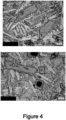
- Figure 4 shows two close-ups of the coated alloy layer from top view with a focus on the interstitial phases.
- Example 4 Microstructure examined using XRD.
- the coated alloy layer was subjected to wide-angle (2Theta) XRD examination. The results are shown in Figure 5 together with the determined constituent phases giving rise to the observed peaks in the XRD image.
Landscapes
- Chemical & Material Sciences (AREA)
- Engineering & Computer Science (AREA)
- Mechanical Engineering (AREA)
- Materials Engineering (AREA)
- Metallurgy (AREA)
- Organic Chemistry (AREA)
- Physics & Mathematics (AREA)
- Plasma & Fusion (AREA)
- Chemical Kinetics & Catalysis (AREA)
- Composite Materials (AREA)
- Manufacturing & Machinery (AREA)
- Powder Metallurgy (AREA)
- Coating With Molten Metal (AREA)
Priority Applications (3)
| Application Number | Priority Date | Filing Date | Title |
|---|---|---|---|
| EP23209420.1A EP4553183A1 (fr) | 2023-11-13 | 2023-11-13 | Alliages à base de mo-ni pour le traitement de surface d'applications de métal fondu |
| PCT/EP2024/080093 WO2025103731A1 (fr) | 2023-11-13 | 2024-10-24 | Alliages à base de mo-ni aux fins d'un traitement de surface d'applications de métal fondu |
| TW113142660A TW202530432A (zh) | 2023-11-13 | 2024-11-07 | 用於熔融金屬應用之表面處理之鉬-鎳基合金 |
Applications Claiming Priority (1)
| Application Number | Priority Date | Filing Date | Title |
|---|---|---|---|
| EP23209420.1A EP4553183A1 (fr) | 2023-11-13 | 2023-11-13 | Alliages à base de mo-ni pour le traitement de surface d'applications de métal fondu |
Publications (1)
| Publication Number | Publication Date |
|---|---|
| EP4553183A1 true EP4553183A1 (fr) | 2025-05-14 |
Family
ID=88833897
Family Applications (1)
| Application Number | Title | Priority Date | Filing Date |
|---|---|---|---|
| EP23209420.1A Pending EP4553183A1 (fr) | 2023-11-13 | 2023-11-13 | Alliages à base de mo-ni pour le traitement de surface d'applications de métal fondu |
Country Status (3)
| Country | Link |
|---|---|
| EP (1) | EP4553183A1 (fr) |
| TW (1) | TW202530432A (fr) |
| WO (1) | WO2025103731A1 (fr) |
Citations (3)
| Publication number | Priority date | Publication date | Assignee | Title |
|---|---|---|---|---|
| US4949836A (en) | 1987-06-04 | 1990-08-21 | Krauss-Maffei A.G. | Screw with wear resistant surface |
| US20040194662A1 (en) * | 2003-03-31 | 2004-10-07 | Tsuyoshi Itsukaichi | Thermal spraying powder and method of forming a thermal sprayed coating using the same |
| EP2010690B1 (fr) | 2006-04-26 | 2010-02-24 | ThyssenKrupp Steel Europe AG | Procédé de revêtement par immersion en fusion d'un produit plat en acier hyperrésistant |
-
2023
- 2023-11-13 EP EP23209420.1A patent/EP4553183A1/fr active Pending
-
2024
- 2024-10-24 WO PCT/EP2024/080093 patent/WO2025103731A1/fr active Pending
- 2024-11-07 TW TW113142660A patent/TW202530432A/zh unknown
Patent Citations (4)
| Publication number | Priority date | Publication date | Assignee | Title |
|---|---|---|---|---|
| US4949836A (en) | 1987-06-04 | 1990-08-21 | Krauss-Maffei A.G. | Screw with wear resistant surface |
| US20040194662A1 (en) * | 2003-03-31 | 2004-10-07 | Tsuyoshi Itsukaichi | Thermal spraying powder and method of forming a thermal sprayed coating using the same |
| EP2010690B1 (fr) | 2006-04-26 | 2010-02-24 | ThyssenKrupp Steel Europe AG | Procédé de revêtement par immersion en fusion d'un produit plat en acier hyperrésistant |
| US8636854B2 (en) * | 2006-04-26 | 2014-01-28 | Thyssenkrupp Steel Ag | Method for melt immersion coating of a flat steel product made of high strength steel |
Non-Patent Citations (2)
| Title |
|---|
| BARBERO E J ET AL: "DEVELOPMENT OF THE NEXT GENERATION OF BATH HARDWARE MATERIALS", IRON & STEEL TECHNOLOGY, AIST, WARRENDALE, PA, US, vol. 1, no. 10, 1 October 2004 (2004-10-01), pages 31 - 37, XP001212388, ISSN: 1547-0423 * |
| Y.H. LIUA.B. FILEN.-Y. TANG ET AL.: "Dross Buildup on Various Alloys", GALVALUME BATH, 2007 |
Also Published As
| Publication number | Publication date |
|---|---|
| TW202530432A (zh) | 2025-08-01 |
| WO2025103731A1 (fr) | 2025-05-22 |
Similar Documents
| Publication | Publication Date | Title |
|---|---|---|
| TWI726875B (zh) | 新粉末組合物及其用途 | |
| EP3642377B3 (fr) | Alliage à base de fer approprié pour fournir un revêtement dur et résistant à la corrosion sur un substrat, article comprenant un revêtement dur et résistant à la corrosion, et son procédé de production | |
| He et al. | Effect of solution treated 316L layer fabricated by laser cladding on wear and corrosive wear resistance | |
| Aghili et al. | Investigation of powder fed laser cladding of NiCr-chromium carbides single-tracks on titanium aluminide substrate | |
| Gholipour et al. | Microstructure and wear behavior of stellite 6 cladding on 17-4 PH stainless steel | |
| Liu et al. | Microstructure and properties of AlCoCrFeNiTi high-entropy alloy coating on AISI1045 steel fabricated by laser cladding | |
| JP3502281B2 (ja) | ガルバナイジング浴のためのレーザクラッドされたポットロールスリーブ及びブッシュ | |
| WO2022223835A1 (fr) | Revêtement à base de fer résistant à l'usure et à la corrosion | |
| Ding et al. | Effect of Mo and nano-Nd2O3 on the microstructure and wear resistance of laser cladding Ni-based alloy coatings | |
| EP1704263B1 (fr) | Alliages au cobalt ductiles a phase de laves | |
| Matthews et al. | Review of thermal spray coating applications in the steel industry: Part 2—Zinc pot hardware in the continuous galvanizing line | |
| Çömez et al. | Fe-Cr-CV hardfacing coatings with molybdenum addition: Wear, corrosion, and cavitation performances | |
| Kanyane et al. | Synthesis and characterization of Al–SiC composite coatings on 316L stainless steel fabricated via laser cladding technique | |
| Walczak et al. | Effect of molybdenum addition on microstructure and behavior of AlCoCrFeNi high-entropy alloys in wet environments | |
| Xie et al. | Corrosion Resistance to Molten Zinc of a Novel Cermet Coating Deposited by Activated Combustion High-Velocity Air Fuel (AC-HVAF) | |
| EP4553183A1 (fr) | Alliages à base de mo-ni pour le traitement de surface d'applications de métal fondu | |
| Sassatelli et al. | Manufacturing and properties of high-velocity oxygen fuel (HVOF)-sprayed FeVCrC coatings | |
| JP2758707B2 (ja) | 溶融亜鉛めっき浴用の溶射被覆部材 | |
| Wang et al. | Characteristics and thermal shock resistance of HVOF-sprayed TiAlNb coatings | |
| Surzhenkov et al. | High temperature erosion wear of cermet particles reinforced self-fluxing alloy matrix HVOF sprayed coatings | |
| AT400726B (de) | Metallischer bauteil zur verwendung in einem metallbad | |
| Zhang et al. | Corrosion resistance of TiAl–Nb coating on 316L stainless steel in liquid zinc | |
| RU2161211C1 (ru) | Способ обработки поверхностей трения | |
| EP0552194A1 (fr) | Cermet a base de nickel et de cobalt avec carbure de niobium disperse | |
| Kulevich et al. | Aluminizing of the EP33 alloy by hot-dipping |
Legal Events
| Date | Code | Title | Description |
|---|---|---|---|
| PUAI | Public reference made under article 153(3) epc to a published international application that has entered the european phase |
Free format text: ORIGINAL CODE: 0009012 |
|
| STAA | Information on the status of an ep patent application or granted ep patent |
Free format text: STATUS: THE APPLICATION HAS BEEN PUBLISHED |
|
| AK | Designated contracting states |
Kind code of ref document: A1 Designated state(s): AL AT BE BG CH CY CZ DE DK EE ES FI FR GB GR HR HU IE IS IT LI LT LU LV MC ME MK MT NL NO PL PT RO RS SE SI SK SM TR |
|
| STAA | Information on the status of an ep patent application or granted ep patent |
Free format text: STATUS: REQUEST FOR EXAMINATION WAS MADE |
|
| 17P | Request for examination filed |
Effective date: 20251111 |