EP4555933A1 - Procédé de détection de phase temporelle de signal en ligne, unité de détection de phase temporelle, et système de régulation et de commande en boucle fermée - Google Patents
Procédé de détection de phase temporelle de signal en ligne, unité de détection de phase temporelle, et système de régulation et de commande en boucle fermée Download PDFInfo
- Publication number
- EP4555933A1 EP4555933A1 EP23856132.8A EP23856132A EP4555933A1 EP 4555933 A1 EP4555933 A1 EP 4555933A1 EP 23856132 A EP23856132 A EP 23856132A EP 4555933 A1 EP4555933 A1 EP 4555933A1
- Authority
- EP
- European Patent Office
- Prior art keywords
- signal
- detection
- time
- period
- minimum
- Prior art date
- Legal status (The legal status is an assumption and is not a legal conclusion. Google has not performed a legal analysis and makes no representation as to the accuracy of the status listed.)
- Pending
Links
Images









Classifications
-
- A—HUMAN NECESSITIES
- A61—MEDICAL OR VETERINARY SCIENCE; HYGIENE
- A61B—DIAGNOSIS; SURGERY; IDENTIFICATION
- A61B5/00—Measuring for diagnostic purposes; Identification of persons
- A61B5/24—Detecting, measuring or recording bioelectric or biomagnetic signals of the body or parts thereof
- A61B5/316—Modalities, i.e. specific diagnostic methods
- A61B5/369—Electroencephalography [EEG]
-
- A—HUMAN NECESSITIES
- A61—MEDICAL OR VETERINARY SCIENCE; HYGIENE
- A61B—DIAGNOSIS; SURGERY; IDENTIFICATION
- A61B5/00—Measuring for diagnostic purposes; Identification of persons
- A61B5/72—Signal processing specially adapted for physiological signals or for diagnostic purposes
- A61B5/7235—Details of waveform analysis
-
- A—HUMAN NECESSITIES
- A61—MEDICAL OR VETERINARY SCIENCE; HYGIENE
- A61B—DIAGNOSIS; SURGERY; IDENTIFICATION
- A61B5/00—Measuring for diagnostic purposes; Identification of persons
- A61B5/72—Signal processing specially adapted for physiological signals or for diagnostic purposes
- A61B5/7235—Details of waveform analysis
- A61B5/7264—Classification of physiological signals or data, e.g. using neural networks, statistical classifiers, expert systems or fuzzy systems
- A61B5/7267—Classification of physiological signals or data, e.g. using neural networks, statistical classifiers, expert systems or fuzzy systems involving training the classification device
Definitions
- the present disclosure relates to the technical field of signal detection, and in particular, to a time-phase detection method for an online signal, a time-phase detection unit, and a closed-loop regulation and control system.
- a time-domain signal is a segment of data whose signal feature changes over time.
- An electroencephalogram (EEG) signal is also a segment of time-domain signal.
- EEG electroencephalogram
- the EEG signal is mostly analyzed through frequency-domain analysis, time-domain analysis, wavelet analysis, and other methods. These methods have a low detection rate for an abnormal signal and often result in missed detection.
- the present disclosure is intended to solve a technical problem of low accuracy of a detection result of a detection method in the prior art.
- the present disclosure provides a time-phase detection method for an online signal, a time-phase detection unit, and a closed-loop regulation and control system, which adopt a plurality of detectors to detect an online signal, thereby improving accuracy of signal detection and preventing missed detection.
- a time-phase detection method for an online signal includes: using one or more detectors to run a detection algorithm and detect an online signal in parallel, to output time-phase detection results of the online signal;
- a number of the one or more detectors is one, namely a first detector is provided; and the first detector adopts the classification algorithm based on the minimum window to output the normal period, the continuous abnormal period with the sudden amplitude change, the instantaneous abnormal period, or the continuous abnormal period with the gradual amplitude change in the time-phase detection result.
- a number of the one or more detectors is at least two;
- a number of the one or more detectors is two, namely a first detector and a second detector are provided, where
- a number of the one or more detectors is three, namely a first detector, a second detector, and a third detector are provided, where
- classification algorithm based on the minimum window includes:
- the detection result of the single minimum window segment is obtained by:
- the selecting the detection results of the N minimum window segments to obtain the determining result of the detection window segment includes:
- the detecting the time phase of the online signal based on the determining result of the at least one detection window segment includes:
- the early-warning algorithm based on the zero-crossing coefficient includes:
- the extracted signal eigenvalue of each of the plurality of data segments in the early-warning algorithm based on the zero-crossing coefficient is set as a sum of signal eigenvalues of the minimum window segments of the detection window segment in the classification algorithm based on the minimum window, where the signal eigenvalues each include at least one of the zero-crossing coefficient, a line length, and a curvature.
- the present disclosure further provides a time-phase detection unit.
- the time-phase detection unit adopts the above time-phase detection method for the online signal, and includes:
- the present disclosure also provides a closed-loop regulation and control system, including the above time-phase detection unit, and a regulation and control module configured to perform closed-loop regulation and control based on a time phase of an online signal.
- the present disclosure achieves the following advantages:
- the present disclosure adopts a plurality of detectors to simultaneously detect an online signal, and each detector can detect a waveform characteristic in a different time phase, achieving stronger specificity. This significantly improves accuracy of detecting the online signal, and achieves more precise closed-loop regulation and control.
- orientations or position relationships indicated by terms “central”, “longitudinal”, “transverse”, “long”, “wide”, “thick”, “upper”, “lower”, “front”, “rear”, “left”, “right”, “vertical”, “horizontal”, “top”, “bottom”, “inner”, “outer”, “clockwise”, “anticlockwise”, “axial”, “radial”, and “circumferential” are based on the orientations or position relationships shown in the accompanying drawings. These terms are merely intended to facilitate a simple description of the present disclosure, rather than to indicate or imply that the mentioned apparatus or elements must have a specific orientation or be constructed and operated in a specific orientation.
- connection may be a fixed connection, a removable connection, or an integral connection; may be a mechanical connection or an electrical connection; may be a direct connection or an indirect connection using a medium; and may be a communication between two elements.
- connection may be a fixed connection, a removable connection, or an integral connection; may be a mechanical connection or an electrical connection; may be a direct connection or an indirect connection using a medium; and may be a communication between two elements.
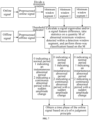
- a time-phase detection method for an online signal in the present disclosure includes the following steps: S1: One or more detectors are used to run a detection algorithm and detect an online signal in parallel, to output a time-phase detection result of the online signal. S2: A time phase of the online signal is determined based on each time-phase detection result.
- the time-phase detection result of the online signal includes an abnormal period and a normal period.
- the abnormal period includes at least one of a continuous abnormal period with a sudden amplitude change, a continuous abnormal period with a gradual amplitude change, and an instantaneous abnormal period.
- the detection algorithm includes at least one of a classification algorithm based on a minimum window and an early-warning algorithm based on a zero-crossing coefficient.
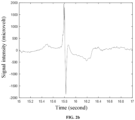
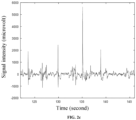
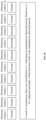
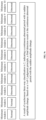
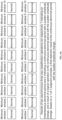
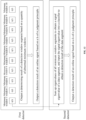
- one segment of the online signal may contain a plurality of time phases (as shown in FIG. 2a to FIG. 2d ), and waveform characteristics presented in different time phases may differ. If a same detection algorithm is used to detect the online signal, the detection result may be inaccurate, and some time phases cannot be detected.
- the present disclosure adopts a plurality of detectors to simultaneously detect an online signal, and each detector can detect a waveform characteristic in a different time phase, achieving stronger specificity. This significantly improves accuracy of detecting the online signal, and achieves more precise closed-loop regulation and control.
- one, at least two, or at least three detectors may be adopted, depending on actual needs.
- Core logic for selecting a quantity of detectors in the present disclosure is that the quantity of detectors corresponds to a quantity of types of the abnormal period in the time phase. Based on this, it is preferable to adopt one detector for time phases of a plurality of abnormal periods to reduce a computational amount and improve computational efficiency.
- one detector uses the classification algorithm based on the minimum window to pursue detection time resolution for the instantaneous abnormal period and the continuous abnormal period with the sudden amplitude change
- the other detector uses the early-warning algorithm based on the zero-crossing coefficient to pursue detection specificity for the continuous abnormal period with the gradual amplitude change.
- one detector is adopted, which is denoted as a first detector.
- the first detector adopts the classification algorithm based on the minimum window to output the normal period, the continuous abnormal period with the sudden amplitude change, the instantaneous abnormal period, or the continuous abnormal period with the gradual amplitude change in the time-phase detection result.
- the instantaneous abnormal period is a waveform that appears instantaneously and lasts for a short time, and cannot be detected by a conventional detection algorithm. Therefore, the first detector adopts the classification algorithm based on the minimum window, such that the normal period, the continuous abnormal period with the sudden amplitude change, the instantaneous abnormal period, and the continuous abnormal period with the gradual amplitude change in the online signal can be accurately detected and identified.
- the computational amount can be reduced, thereby improving detection efficiency.
- the time phase of the online signal is determined based on severity grades or occurrence frequencies of the abnormal periods.
- the severity grades of the abnormal periods are as follows: a severity grade of the continuous abnormal period with the sudden amplitude change > a severity grade of the continuous abnormal period with the gradual amplitude change > a severity grade of the instantaneous abnormal period.
- a specified first logical operation is selected to determine the time phase of the online signal.
- the first logical operation includes any one of an "OR” operation, an "AND” operation, a "NOR” operation, and a “NAND” operation, and the first logical operation is specified based on a collection region where the signal is located.
- the time phase of the online signal is determined based on the severity grade or occurrence frequency of the abnormal period, which can prevent missed detection and improve accuracy of closed-loop regulation and control.
- a final detection result of the online signal needs to be determined based on a collection region where the online signal is located.
- the collection region where the signal is located includes a lesion region and a non-lesion region. If the collection region of the signal is in the non-lesion region, when the detection results of the detectors include both the normal period and the abnormal period, the first logical operation may be the "AND" or "NOR" operation.
- a result of the "AND” operation is 0, a result of the "NOR” operation is 0, and a finally output time-phase detection result is the normal period.
- a waveform characteristic of the continuous abnormal period with the sudden amplitude change, the continuous abnormal period with the gradual amplitude change, or the instantaneous abnormal period is generally not produced. Therefore, if the detector detects the abnormal period in the non-lesion region, the abnormal period is generally an artifact, and no closed-loop regulation and control is required. Therefore, an impact of the artifact needs to be excluded when the abnormal period is detected in the non-lesion region.
- the first logical operation may be the "OR” or "NAND” operation. For example, if 0 is output in the normal period and 1 is output in the abnormal period, a result of the "OR” operation is 1, a result of the "NAND” operation is 1, and the finally output time-phase detection result is the abnormal period. This can prevent the missed detection and improve the accuracy of the closed-loop regulation and control.
- the first detector adopts the classification algorithm based on the minimum window to output the normal period, the continuous abnormal period with the sudden amplitude change, or the instantaneous abnormal period in the time-phase detection result.
- the second detector adopts the classification algorithm based on the minimum window or the early-warning algorithm based on the zero-crossing coefficient to output the normal period or the continuous abnormal period with the gradual amplitude change in the time-phase detection result.
- a same detection algorithm or different detection algorithms may be adopted to detect different time phases.
- the first detector uses the classification algorithm based on the minimum window to pursue the detection time resolution for the instantaneous abnormal period and the continuous abnormal period with the sudden amplitude change
- the second detector uses the early-warning algorithm based on the zero-crossing coefficient to pursue the detection specificity for the continuous abnormal period with the gradual amplitude change. In this way, both the detection accuracy of the time phases and the high computational efficiency can be achieved.
- the first detector adopts the classification algorithm based on the minimum window to output the normal period or the continuous abnormal period with the sudden amplitude change in the time-phase detection result.
- the second detector adopts the classification algorithm based on the minimum window to output the normal period or the instantaneous abnormal period in the time-phase detection result.
- the third detector adopts the classification algorithm based on the minimum window or the early-warning algorithm based on the zero-crossing coefficient to output the normal period or the continuous abnormal period with the gradual amplitude change in the time-phase detection result.
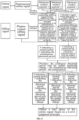
- the classification algorithm based on the minimum window in the present disclosure is to divide the online signal into a plurality of minimum window segments, and calculate signal eigenvalues of the minimum window segments to obtain a detection result of a single minimum window segment. Detection results of N minimum window segments are selected to obtain a determining result of a detection window segment. The time phase of the online signal is detected based on a determining result of at least one detection window segment.
- a window width of the minimum window segment is less than or equal to duration of an instantaneous abnormal period in an offline signal, and a window width of the detection window segment is greater than duration of the instantaneous abnormal period in the offline signal.
- the online signal in the present disclosure may be a physiological signal, such as an EEG signal, an electromyogram (EMG) signal, an electro-oculogram (EOE) signal, or an electrocardiogram (ECG) signal.
- EEG electromyogram
- EEE electro-oculogram
- ECG electrocardiogram
- One segment of the online signal may contain different time phases, and time phases of various signals may also have different presentation forms, time-phase determining characteristics, and thresholds.
- a principle or steps of a method for detecting the online signal based on the minimum window can be shared or adaptively adjusted.
- the continuous abnormal period with the sudden amplitude change has a significantly different waveform characteristic from the normal period, and has longer duration. Therefore, the continuous abnormal period with the sudden amplitude change is marked first.
- the instantaneous abnormal period is marked. Finally, a remaining time period is marked as the normal period. The marking is completed manually.
- Both the continuous abnormal period with the sudden amplitude change and the instantaneous abnormal period belong to abnormal time phases.
- the window width of the minimum window segment is less than or equal to the duration of the instantaneous abnormal period in the offline signal, and the window width of the detection window segment is greater than the duration of the instantaneous abnormal period in the offline signal.
- the window width of the minimum window segment and the window width of the detection window segment are obtained based on the offline signal, and the window width is duration of the segment.
- the window width of the minimum window segment is less than or equal to the duration of the instantaneous abnormal period in the offline signal, sufficient time resolution can be ensured to identify a single instantaneous abnormal period.
- the detection window segment is composed of a plurality of minimum window segments. Therefore, the window width of the detection window segment is greater than the duration of the instantaneous abnormal period in the offline signal.
- the detection method in the present disclosure can accurately distinguish the continuous abnormal period with the sudden amplitude change, the instantaneous abnormal period, and the normal period in the online signal by using a stepwise detection method of "minimum window segment ⁇ detection window segment ⁇ online signal", thereby improving accuracy of signal detection and reducing a probability of missed detection of an abnormal signal.
- a method of "detecting the minimum window and determining a detection window” can also reduce the computational amount and improve the detection efficiency.
- the window width of the detection window segment is greater than the duration of the instantaneous abnormal period in the offline signal and less than or equal to the duration of the continuous abnormal period with the sudden amplitude change in the offline signal.
- the duration of the continuous abnormal period with the sudden amplitude change and the duration of the instantaneous abnormal period are generally selected based on design requirements, which may be average, maximum, or minimum duration of a corresponding time phase of a historical offline signal.
- the duration of the continuous abnormal period with the sudden amplitude change and the duration of the instantaneous abnormal period vary for different types of offline signals. For example, for the EEG signal, the duration of the continuous abnormal period with the sudden amplitude change is generally 5 seconds to 300 seconds, and the duration of the instantaneous abnormal period is generally 0.01 seconds to 0.2 seconds.
- a window width of a minimum window segment of the EEG signal is ⁇ 0.5 seconds, and preferably is ⁇ 0.2 seconds, which may be 0.16 seconds, 0.1 seconds, 0.06 seconds, 0.03 seconds, 0.01 seconds, 0.005 seconds, 0.001 seconds, or the like.
- a window width of a detection window segment of the EEG signal is generally 0.2 seconds to 300 seconds, which is preferably 0.5 seconds, 1 second, 2 seconds, 6 seconds, 10 seconds, 30 seconds, 60 seconds, 120 seconds, 200 seconds, or 240 seconds.
- the ECG signal, the EMG signal, and the EOE signal only have the instantaneous abnormal period. In this case, the minimum window segment completely overlaps with the detection window segment.
- an instantaneous abnormal period in the ECG signal is generally 0.01 seconds to 0.3 seconds. Therefore, a window width of a minimum window segment of the ECG signal is ⁇ 0.5 seconds, and preferably is ⁇ 0.3 seconds, which may be 0.26 seconds, 0.22 seconds, 0.16 seconds, 0.1 seconds, 0.06 seconds, 0.03 seconds, 0.01 seconds, or the like.
- An instantaneous abnormal period in the EMG signal is generally 0.001 seconds to 0.1 seconds. Therefore, a window width of a minimum window segment of the EMG signal is ⁇ 0.5 seconds, and preferably is ⁇ 0.1 seconds, which may be 0.08 seconds, 0.06 seconds, 0.03 seconds, 0.01 seconds, 0.006 seconds, 0.003 seconds, 0.001 seconds, or the like.
- a window width of a minimum window segment of the EOG signal is ⁇ 0.5 seconds, and preferably is ⁇ 0.2 seconds, which may be 0.16 seconds, 0.12 seconds, 0.1 seconds, 0.06 seconds, 0.03 seconds, 0.01 seconds, 0.006 seconds, or the like.
- a quantity N of minimum window segments can be adaptively adjusted based on the window width of the minimum window segment and the window width of the detection window segment.
- the obtaining the detection result of the single minimum window segment includes: A time phase of the offline signal is marked; a threshold indicator corresponding to at least one time phase is obtained; and the single minimum window segment is classified, that is, the single minimum window segment in the online signal is compared with a threshold indicator corresponding to any one time phase, to classify the single minimum window segment as a normal minimum window or an abnormal minimum window.
- the threshold indicator includes at least one of a signal feature threshold and a feature difference threshold.
- threshold indicators corresponding to different time phases are first obtained based on the offline signal, and then the threshold indicators are used to detect and classify each minimum window segment of the online signal. For example, a signal eigenvalue of each minimum window segment is calculated, and is compared with the signal feature threshold. If the calculated signal eigenvalue is greater than the signal feature threshold, the minimum window segment is marked as the abnormal minimum window. Otherwise, the minimum window segment is marked as the normal minimum window. Corresponding signal feature thresholds and feature difference thresholds of different time phases may be different.
- the single minimum window segment there may be three methods for classifying the single minimum window segment: (1) A signal eigenvalue of the single minimum window segment in the online signal is compared with the signal feature threshold, and the single minimum window segment is classified as the abnormal minimum window when the signal eigenvalue of the single minimum window segment is greater than or equal to the signal feature threshold. (2) A signal feature difference of the single minimum window segment is compared with the feature difference threshold, and the single minimum window segment is classified as the abnormal minimum window when the signal feature difference of the single minimum window segment is greater than or equal to the feature difference threshold.
- the signal eigenvalue and the signal feature difference of the single minimum window segment are respectively compared with the signal feature threshold and the feature difference threshold, and the single minimum window segment is classified as the abnormal minimum window when the signal eigenvalue is greater than or equal to the signal feature threshold or the signal feature difference is greater than or equal to the feature difference threshold.
- the signal feature threshold, the feature difference threshold, or both the signal feature threshold and the feature difference threshold may be used to classify the single minimum window segment.
- the signal eigenvalue and the signal feature difference can be compared with their corresponding thresholds.
- the minimum window segment is classified as the abnormal minimum window.
- the "feature" mentioned in the present disclosure may be a line length, the zero-crossing coefficient, or the like.
- the signal feature difference of the single minimum window segment can be calculated in the following three manners:
- the obtaining the threshold indicator corresponding to the at least one time phase includes: Based on an offline signal marked as the normal period, a change curve P1 of a quantity proportion of detected minimum window segments of the offline signal under different signal feature thresholds or feature difference thresholds is obtained. Based on an offline signal marked as the "instantaneous abnormal period", a change curve P2 of a quantity proportion of detected minimum window segments of the offline signal under the different signal feature thresholds or feature difference thresholds is obtained. Based on an offline signal marked as the "continuous abnormal period with the sudden amplitude change", a change curve P3 of a quantity proportion of detected minimum window segments of the offline signal under the different signal feature thresholds or feature difference thresholds is obtained. Based on an offline signal marked as the "continuous abnormal period with the gradual amplitude change", a change curve P4 of a quantity proportion of detected minimum window segments of the offline signal under the different signal feature thresholds or feature difference thresholds is obtained.
- Corresponding feature thresholds of different time phases are obtained based on the change curve P1, a difference curve of the change curves P2 and P1, a difference curve of the change curves P3 and P1, and a difference curve of the change curves P4 and P1.
- a threshold indicator corresponding to the instantaneous abnormal period is a specified value of the change curve P1, a maximum difference of a P2-P1 curve, or a maximum difference of a P2 ⁇ P1 curve.
- a threshold indicator corresponding to the continuous abnormal period with the sudden amplitude change is the specified value of the change curve P1, a maximum difference of a P3-P1 curve, or a maximum difference of a P3 ⁇ P1 curve.
- a threshold indicator corresponding to the continuous abnormal period with the gradual amplitude change is the specified value of the change curve P1, a maximum difference of a P4-P1 curve, or a maximum difference of a P4 ⁇ P1 curve.
- the threshold indicator corresponding to the continuous abnormal period with the sudden amplitude change is taken as an example.
- FIG. 3 is a curve chart showing that the signal feature threshold changes with the proportion of the detected minimum window segments.
- the signal feature threshold may be the specified value 890 of the change curve P1 (under this specified value, the proportion of the detected minimum window segments in the normal period is 1%).
- the change curve P3 is subtracted from the change curve P1 to obtain the P3-P1 curve.
- the signal feature threshold is 230, there is a maximum difference between the change curve P3 and the change curve P1.
- the change curve P3 is divided by the change curve P1 to obtain the P3 ⁇ P1 curve.
- FIG. 4 is a curve chart showing that the feature difference threshold changes with the proportion of the detected minimum window segments.
- the feature difference threshold may be a specified value 510 of the change curve P1 (under this specified value, the proportion of the detected minimum window segments in the normal period is 1%).
- the change curve P3 is subtracted from the change curve P1 to obtain the P3-P1 curve.
- the feature difference threshold is 100, there is a maximum difference between the change curve P3 and the change curve P1.
- the change curve P3 is divided by the change curve P1 to obtain the P3 ⁇ P1 curve.
- the feature difference threshold is 360, there is a maximum difference between the change curve P3 and the change curve P1. Therefore, the signal difference threshold corresponding to the continuous abnormal period with the sudden amplitude change may be 510, 100, or 360.
- the selecting the detection results of the N minimum window segments to obtain the determining result of the detection window segment includes: Statistics is taken on a quantity of abnormal minimum window segments detected within the detection window segment, and numerical relationships between the quantity of abnormal minimum window segments detected and each of M 1 , M 2 , and the N is obtained by using a classification method, to obtain the determining result of the detection window segment.
- the M 1 is a threshold for a quantity of minimum windows obtained through traversal and selection in the continuous abnormal period with the sudden amplitude change
- the M 2 is a threshold for a quantity of minimum windows obtained through the traversal and selection in the instantaneous abnormal period.
- a method for the traversal and selection includes: Traversal is performed within a range of (0, N) to obtain a value of the threshold for the quantity of minimum windows; a detection performance indicator of the threshold for the quantity of minimum windows under each value is separately calculated; and the threshold M 1 for the quantity of minimum windows in the continuous abnormal period with the sudden amplitude change and the threshold M 2 for the quantity of minimum windows in the instantaneous abnormal period are selected based on the detection performance indicator.
- the detection performance indicator includes at least one of a false detection rate and a detection delay. For example, the false detection rate is less than 1 time per hour, and the detection delay is less than 12 seconds.
- the threshold M 1 for the quantity of minimum windows in the continuous abnormal period with the sudden amplitude change As an example, assuming that the N is set to 10, the threshold M 1 for the quantity of minimum windows is within (0,10), and the value is taken at intervals of 1, the false detection rate (as shown in FIG. 5 ) and the detection delay (as shown in FIG. 6 ) of the threshold M 1 for the quantity of minimum windows under each value are calculated. During the calculation, data that does not meet the detection performance indicators is denoted as "null", otherwise a value of the detection performance indicators is given.
- the threshold M 1 for the quantity of minimum windows is 5 or 6, and a proportion of the normal period in the offline signal is 1%, the false detection rate is 0%. From the figure, it can be seen that when the threshold M 1 for the quantity of minimum windows is 2, and the proportion of the normal period in the offline signal is 1%, the detection delay is shortest. In a practical application, if a lower false detection rate is pursued, the threshold M 1 for the quantity of minimum windows may be set to 5 or 6. If a shorter detection delay is pursued, the threshold M 1 for the quantity of minimum windows may be set to 2.
- the classification method in the present disclosure includes at least one of a synchronous three-way classification method and an asynchronous three-way classification method.
- the synchronous three-way classification method is to perform threshold comparison once to obtain the quantity M of abnormal minimum window segments detected within the detection window segment, and compare numerical relationships between the M and each of the M 1 , the M 2 , and the N.
- M 1 ⁇ M ⁇ N the determining result of the detection window segment indicates the continuous abnormal period with the sudden amplitude change.
- M 2 ⁇ M ⁇ M 1 the determining result of the detection window segment indicates the instantaneous abnormal period.
- 0 ⁇ M ⁇ M 2 the determining result of the detection window segment indicates the normal period.
- Asynchronous three-way classification is to perform the threshold comparison twice to respectively obtain quantities K 1 and K 2 of abnormal minimum window segments detected within the detection window segment (the online signal is compared based on a first threshold to distinguish between the normal minimum window and the abnormal minimum window, and the first quantity K 1 of abnormal minimum windows detected is obtained, where the first threshold is the threshold indicator corresponding to the continuous abnormal period with the sudden amplitude change; and the online signal is compared based on a second threshold to distinguish between the normal minimum window and the abnormal minimum window, and the second quantity K 2 of abnormal minimum windows detected is obtained, where the second threshold is the threshold indicator corresponding to the instantaneous abnormal period).
- the online signal is divided into a plurality of minimum window segments after being preprocessed, a signal feature threshold and/or a feature difference threshold of each minimum window segment are/is calculated, and N minimum windows are selected to form a detection window segment.
- the signal feature threshold and/or the feature difference threshold are/is separately compared with threshold indicator (namely, determining is performed based on the first threshold) to obtain a detection result of each minimum window segment (namely, a quantity of abnormal minimum windows and a quantity of normal minimum windows).
- a suitable threshold needs to be selected between the threshold indicator corresponding to the instantaneous abnormal period and the threshold indicator corresponding to the continuous abnormal period with the sudden amplitude change for the specified threshold indicator (this threshold can balance a quantity of detected instantaneous abnormal periods and a quantity of detected continuous abnormal periods with the sudden amplitude change).
- a quantity of abnormal minimum windows within the detection window segment is M
- the M is compared with the M 1 , the M 2 , and the N simultaneously, and a determining result of the detection window segment is output, for example, 0 indicates the normal period, 1 indicates the instantaneous abnormal period, and 2 indicates the continuous abnormal period with the sudden amplitude change.
- the threshold comparison is performed only once on each minimum window segment to obtain the quantity M of abnormal minimum windows, and then three-way classification is performed on the detection window segment based on a value of the M.
- the online signal is divided into a plurality of minimum window segments after being preprocessed, a signal feature threshold and/or a feature difference threshold of each minimum window segment are/is calculated, and N minimum windows are selected to form a detection window segment.
- the signal feature threshold and/or the feature difference threshold of each minimum window segment are/is compared with the threshold indicator corresponding to the continuous abnormal period with the sudden amplitude change to obtain a detection result of each minimum window segment, and the quantity K 1 of abnormal minimum windows detected is obtained through statistics.
- the signal feature threshold and/or the feature difference threshold of each minimum window segment are/is compared with the threshold indicator corresponding to the instantaneous abnormal period to obtain a detection result of each minimum window segment, and the quantity K 2 of abnormal minimum windows detected is obtained through the statistics.
- the K 1 is compared with the M 1 and the N to obtain a binary classification result of the detection window segment (that is, 0 indicates the normal period, and 2 indicates the continuous abnormal period with the sudden amplitude change).
- the K 2 is compared with the M 2 and the N to obtain a binary classification result of the detection window segment (that is, 0 indicates the normal period, and 1 indicates the instantaneous abnormal period).
- the results of the two classification operations are further distinguished through the logical operation to obtain a final determining result of the detection window segment.
- the priorities of the logical operation in the continuous abnormal period with the sudden amplitude change, the instantaneous abnormal period, and the normal period are in the descending order. For example, if the classification result obtained for the detection window segment by comparing the K 1 with the M 1 and the N is 0, and the classification result obtained for the detection window segment by comparing the K 2 with the M 2 and the N is 1, the output final determining result of the detection window segment is 1.
- the output final determining result of the detection window segment is 2.
- the missed detection can be avoided.
- the threshold determining is performed twice for the minimum window segment, and then the logical operation is performed on the results of the two binary classification operations to obtain the final determining result of the detection window segment.
- the threshold comparison only needs to be performed once for the minimum window to complete three-way classification of the detection window segment.
- the threshold comparison needs to be performed twice for the minimum window, resulting in high computational complexity.
- a stronger capability to distinguish between the instantaneous abnormal period and the continuous abnormal period with the sudden amplitude change is achieved.
- the former is suitable for an application scenario of pursuing computational efficiency, a low power consumption, and high real-time performance, while the latter is suitable for an application scenario that requires high detection accuracy.
- the detecting the time phase of the online signal based on the determining result of the at least one detection window segment includes: After determining results of a plurality of detection window segments are obtained, determining is performed based on a k-of-n judgment principle.
- the k-of-n judgment principle requires that k detection window segments are detected continuously.
- the k-of-n judgment principle requires that the k detection window segments are detected discontinuously.
- n represents a quantity of detection window segments contained in the online signal
- k represents a quantity of detection window segments detected among the n detection window segments.
- the determining result of each detection window segment can be obtained through the synchronous or asynchronous three-way classification.
- One segment of the online signal can contain a plurality of detection window segments, and each detection window segment contains a plurality of minimum window segments. After the detection window segments are obtained, the determining is performed based on the k-of-n judgment principle to obtain the time phase of the online signal. This can further improve accuracy of the detection result.
- the N is set to 10
- the M 1 is set to 8
- the M 2 is set to 2
- a 1-of-1 judgment principle is followed.
- a criterion for the synchronous three-way classification is as follows: When 8 ⁇ M ⁇ 10, the determining result of the detection window segment indicates the continuous abnormal period with the sudden amplitude change. When 2 ⁇ M ⁇ 8, the determining result of the detection window segment indicates the instantaneous abnormal period. When 0 ⁇ M ⁇ 2, the determining result of the detection window segment indicates the normal period.
- a criterion for the asynchronous three-way classification is as follows: When 8 ⁇ K 1 ⁇ 10, the determining result of the detection window segment indicates the continuous abnormal period with the sudden amplitude change.
- the determining result of the detection window segment indicates normal period.
- the determining result of the detection window segment indicates the instantaneous abnormal period.
- the determining result of the detection window segment indicates the normal period.
- the detection result of the online signal is 1, indicating the instantaneous abnormal period.
- the detection result of the online signal is 2, indicating the continuous abnormal period with the sudden amplitude change.
- K 2 ⁇ M 2 and the determining result of the detection window segment is 0, indicating the normal period.
- K 1 ⁇ M 1 and the determining result of the detection window segment is 0, indicating the normal period.
- the two determining results are the same. Therefore, the final determining result of the detection window segment is 0, indicating the normal period.
- the detection result of the online signal is 0, indicating the normal period.
- K 2 >M 2
- the determining result of the detection window segment is 1, indicating the instantaneous abnormal period.
- K 1 ⁇ M 1
- the determining result of the detection window segment is 0, indicating the normal period.
- the two determining results are different. Therefore, based on the priority, the final determining result of the detection window segment is 1, indicating the instantaneous abnormal period.
- the detection result of the online signal is 1, indicating the instantaneous abnormal period.
- K 2 >M 2 and the determining result of the detection window segment is 1, indicating the instantaneous abnormal period.
- K 1 >M 1
- the determining result of the detection window segment is 2, indicating the continuous abnormal period with the sudden amplitude change. The two determining results are different.
- the final determining result of the detection window segment is 2, indicating the continuous abnormal period with the sudden amplitude change.
- the detection result of the online signal is 2, indicating the continuous abnormal period with the sudden amplitude change.
- the early-warning algorithm based on the zero-crossing coefficient in the present disclosure is to divide the online signal into a plurality of windows to obtain a plurality of data segments; extract a signal eigenvalue for each data segment separately, and input the signal eigenvalue into a classifier to obtain a classification result of each data segment; and if classification results of X consecutive data segments are all continuous abnormal periods with the gradual amplitude change, determine that the online signal is in the continuous abnormal period with the gradual amplitude change.
- the extracted signal eigenvalue of each data segment in the early-warning algorithm based on the zero-crossing coefficient is set as a sum of the signal eigenvalue of each minimum window segment of the detection window segment in the classification algorithm based on the minimum window.
- the signal eigenvalue includes at least one of the zero-crossing coefficient, the line length, and a curvature.
- the zero-crossing coefficient in the present disclosure is a mapping of a zero-crossing rate or a zero-crossing number.
- the zero-crossing coefficient is mapped into a mapping function with a positive or negative correlation, and the mapping function of the zero-crossing coefficient is linear.
- the zero-crossing coefficient is equal to a ⁇ zero-crossing rate + b, where a is a slope of the linear mapping function, b is an intercept of the linear mapping function, and the zero-crossing rate is equal to the zero-crossing number ⁇ a total quantity of sample points of the data segment.
- the signal eigenvalue of each data segment can be calculated to identify whether the data segment is in the normal period or the continuous abnormal period with the gradual amplitude change.
- a value of the X may be set based on an actual situation, for example, may be set to 10.
- a first detector adopts the classification algorithm based on the minimum window
- a second detector adopts the early-warning algorithm based on the zero-crossing coefficient.
- the abnormal minimum window is denoted as 1
- the normal minimum window is denoted as 0.
- a time-phase detection result of the detection window segment is output (through the synchronous or asynchronous three-way classification). Then, based on the k-of-n judgment principle, the time-phase detection result of the online signal is obtained.
- the first detector is mainly configured to output the normal period, the continuous abnormal period with the sudden amplitude change, or the instantaneous abnormal period.
- the second detector can reuse a signal feature of the first detector, sum up signal eigenvalues of all minimum window segments within one detection window segment as a signal eigenvalue of one data segment, input the signal eigenvalue into the classifier to obtain the classification result of each data segment, and then the time-phase detection result of the online signal is obtained based on the k-of-n judgment principle.
- the first detector is mainly configured to output the normal period and the continuous abnormal period with the gradual amplitude change.
- the second detector outputs 3 indicating the continuous abnormal period with the gradual amplitude change for 5 consecutive or discontinuous data segments, it is determined that the time-phase detection result of the online signal is 3, indicating the continuous abnormal period with the gradual amplitude change (as shown in FIG. 13 ).
- the output results of the first detector and the second detector can be analyzed to obtain the final detection result (as shown in FIG. 14 ).
- values of the k and the n affect a performance orientation of the detection result.
- k-of-n can be set by users themselves.
- the present disclosure also provides a time-phase detection unit that adopts the above time-phase detection method for an online signal.
- the time-phase detection unit includes a detection component, which includes a plurality of detectors configured to output detection results corresponding to different time phases; a processor configured to determine a time phase of an online signal based on the detection results corresponding to the different time phases.
- the processor can be integrated into MCU, FPGA, CPU, and GPU chips.
- the present disclosure also provides a closed-loop regulation and control system, including a time-phase detection unit, and a regulation and control module.
- the regulation and control module is configured to perform closed-loop regulation and control based on a time phase of an online signal.
- the present disclosure adopts a plurality of detectors to simultaneously detect an online signal.
- Different detectors can identify different abnormal periods in a targeted manner, making a detection result more accurate and preventing missed detection.
- detection efficiency can also be improved.
Landscapes
- Health & Medical Sciences (AREA)
- Life Sciences & Earth Sciences (AREA)
- Engineering & Computer Science (AREA)
- Artificial Intelligence (AREA)
- Physics & Mathematics (AREA)
- Biophysics (AREA)
- Public Health (AREA)
- Veterinary Medicine (AREA)
- General Health & Medical Sciences (AREA)
- Psychiatry (AREA)
- Animal Behavior & Ethology (AREA)
- Surgery (AREA)
- Molecular Biology (AREA)
- Pathology (AREA)
- Biomedical Technology (AREA)
- Heart & Thoracic Surgery (AREA)
- Medical Informatics (AREA)
- Signal Processing (AREA)
- Physiology (AREA)
- Computer Vision & Pattern Recognition (AREA)
- Evolutionary Computation (AREA)
- Fuzzy Systems (AREA)
- Mathematical Physics (AREA)
- Psychology (AREA)
- Measurement And Recording Of Electrical Phenomena And Electrical Characteristics Of The Living Body (AREA)
- Stabilization Of Oscillater, Synchronisation, Frequency Synthesizers (AREA)
- Electric Clocks (AREA)
Applications Claiming Priority (2)
| Application Number | Priority Date | Filing Date | Title |
|---|---|---|---|
| CN202211006518.7A CN115089196B (zh) | 2022-08-22 | 2022-08-22 | 在线信号的时相检测方法、时相检测单元、闭环调控系统 |
| PCT/CN2023/093731 WO2024041038A1 (fr) | 2022-08-22 | 2023-05-12 | Procédé de détection de phase temporelle de signal en ligne, unité de détection de phase temporelle, et système de régulation et de commande en boucle fermée |
Publications (2)
| Publication Number | Publication Date |
|---|---|
| EP4555933A1 true EP4555933A1 (fr) | 2025-05-21 |
| EP4555933A4 EP4555933A4 (fr) | 2025-08-27 |
Family
ID=83301386
Family Applications (1)
| Application Number | Title | Priority Date | Filing Date |
|---|---|---|---|
| EP23856132.8A Pending EP4555933A4 (fr) | 2022-08-22 | 2023-05-12 | Procédé de détection de phase temporelle de signal en ligne, unité de détection de phase temporelle, et système de régulation et de commande en boucle fermée |
Country Status (3)
| Country | Link |
|---|---|
| EP (1) | EP4555933A4 (fr) |
| CN (1) | CN115089196B (fr) |
| WO (1) | WO2024041038A1 (fr) |
Families Citing this family (2)
| Publication number | Priority date | Publication date | Assignee | Title |
|---|---|---|---|---|
| CN115089196B (zh) * | 2022-08-22 | 2022-11-11 | 博睿康科技(常州)股份有限公司 | 在线信号的时相检测方法、时相检测单元、闭环调控系统 |
| CN115166585B (zh) * | 2022-09-08 | 2022-11-29 | 石家庄科林电气股份有限公司 | 接地故障检测防误判方法、装置及电子设备 |
Family Cites Families (19)
| Publication number | Priority date | Publication date | Assignee | Title |
|---|---|---|---|---|
| CN102542551B (zh) * | 2010-12-13 | 2015-08-12 | 北京师范大学 | 极地冰盖边缘浮冰自动变化检测技术 |
| US10743809B1 (en) * | 2019-09-20 | 2020-08-18 | CeriBell, Inc. | Systems and methods for seizure prediction and detection |
| CN112842358B (zh) * | 2019-11-26 | 2024-10-25 | 阿里健康信息技术有限公司 | 脑部生理数据的处理系统、方法、设备及存储介质 |
| CN111080678B (zh) * | 2019-12-31 | 2022-02-01 | 重庆大学 | 一种基于深度学习的多时相sar图像变化检测方法 |
| CN111329469A (zh) * | 2020-03-05 | 2020-06-26 | 广州天嵌计算机科技有限公司 | 一种心律异常预测方法 |
| CN111544004A (zh) * | 2020-05-15 | 2020-08-18 | 中国科学院自动化研究所 | 脑卒中患者运动功能检测系统、方法、装置 |
| US11475332B2 (en) * | 2020-07-12 | 2022-10-18 | International Business Machines Corporation | Selecting forecasting models by machine learning based on analysis of model robustness |
| CN114098667A (zh) * | 2020-08-28 | 2022-03-01 | 深圳迈瑞生物医疗电子股份有限公司 | 监护方法及设备 |
| CN112043473B (zh) * | 2020-09-01 | 2021-05-28 | 西安交通大学 | 智能假肢脑-肌电融合感知的并行嵌套与自主择优分类器 |
| CN114145723B (zh) * | 2020-09-07 | 2025-09-16 | 深圳迈瑞生物医疗电子股份有限公司 | 监护方法及设备 |
| CN114246569B (zh) * | 2020-09-25 | 2024-07-30 | 华为技术有限公司 | 检测早搏类型的方法、装置及介质 |
| CN113499079B (zh) * | 2021-06-18 | 2023-12-08 | 南京信息工程大学 | 一种心电图中的房颤检测方法 |
| CN113855038B (zh) * | 2021-10-15 | 2023-04-11 | 南方医科大学 | 基于多模型集成的心电信号危急值的预测方法及装置 |
| CN114027853B (zh) * | 2021-12-16 | 2022-09-27 | 安徽心之声医疗科技有限公司 | 基于特征模板匹配的qrs波群检测方法、装置、介质及设备 |
| CN114010207B (zh) * | 2022-01-10 | 2022-04-29 | 博睿康科技(常州)股份有限公司 | 基于过零点系数的时域数据分类方法、植入式刺激系统 |
| CN114470516B (zh) * | 2022-01-13 | 2025-10-21 | 博睿康医疗科技(上海)有限公司 | 刺激模式的控制方法、控制系统、电子设备及介质 |
| CN114469138B (zh) * | 2022-01-13 | 2024-04-19 | 博睿康医疗科技(上海)有限公司 | 基于时频域的脑电爆发抑制模式的检测方法、系统及介质 |
| CN115295138B (zh) * | 2022-05-09 | 2026-02-10 | 博睿康技术(上海)股份有限公司 | 预设窗口数阈值的获取方法 |
| CN115089196B (zh) * | 2022-08-22 | 2022-11-11 | 博睿康科技(常州)股份有限公司 | 在线信号的时相检测方法、时相检测单元、闭环调控系统 |
-
2022
- 2022-08-22 CN CN202211006518.7A patent/CN115089196B/zh active Active
-
2023
- 2023-05-12 WO PCT/CN2023/093731 patent/WO2024041038A1/fr not_active Ceased
- 2023-05-12 EP EP23856132.8A patent/EP4555933A4/fr active Pending
Also Published As
| Publication number | Publication date |
|---|---|
| CN115089196A (zh) | 2022-09-23 |
| EP4555933A4 (fr) | 2025-08-27 |
| WO2024041038A1 (fr) | 2024-02-29 |
| CN115089196B (zh) | 2022-11-11 |
Similar Documents
| Publication | Publication Date | Title |
|---|---|---|
| EP4555933A1 (fr) | Procédé de détection de phase temporelle de signal en ligne, unité de détection de phase temporelle, et système de régulation et de commande en boucle fermée | |
| EP2688468B1 (fr) | Appareil et procédé de mesure de la qualité d'un signal physiologique | |
| US9801609B2 (en) | Device and method for enhancing accuracy of recognizing fetus heart rate acceleration data | |
| EP0310349B1 (fr) | Surveillance fétale pendant le travail | |
| AU2016365753B2 (en) | Atrial fibrillation detection system and methods of use | |
| CN103860162B (zh) | 一种起搏信号检测方法、系统和心电检测设备 | |
| US9848784B2 (en) | Method for determining the physical and/or psychological state of a subject | |
| CN101467879A (zh) | 一种基于多导同步心电信号处理方法及装置 | |
| CN108836303B (zh) | 基于通用平台的心电采集系统及其采集方法 | |
| CN116649985B (zh) | 心电数据处理方法、装置、计算机设备与存储介质 | |
| US12588855B2 (en) | Determination method and determination apparatus for beginning of T-wave, storage medium and computer program product | |
| CN109700450A (zh) | 一种心率检测方法及电子设备 | |
| CN111759277B (zh) | 睡眠呼吸暂停低通气的检测装置、方法、设备及存储介质 | |
| CN120078431B (zh) | 一种麻醉过程中的生命体征监测系统及方法 | |
| US8086303B2 (en) | Cardiac arrhythmias analysis of electrophysiological signals based on symbolic dynamics | |
| CN110236594B (zh) | 一种胎动信号识别标记方法、系统、介质、设备 | |
| JP2023156433A (ja) | 心電図分析装置、心電図分析方法及びプログラム | |
| CN114617562A (zh) | 心拍信号的分类方法、装置、设备及存储介质 | |
| CN116269430B (zh) | 心电信号r峰位置提取方法、模块、监护装置及存储介质 | |
| CN115081492A (zh) | 基于极小窗的在线信号检测方法、信号检测系统 | |
| CN105050493A (zh) | 用于确定ecg数据中的qrs复合波的出现的装置和方法 | |
| CN117547288A (zh) | 一种宫缩调节方法、装置、医疗设备及存储介质 | |
| US20110015537A1 (en) | Method, apparatus and computer program for monitoring specific cerebral activity | |
| CN112716525A (zh) | 胎儿心率的处理方法、装置及可读存储介质 | |
| CN120983014A (zh) | 一种心率计算方法、装置及电子设备 |
Legal Events
| Date | Code | Title | Description |
|---|---|---|---|
| STAA | Information on the status of an ep patent application or granted ep patent |
Free format text: STATUS: THE INTERNATIONAL PUBLICATION HAS BEEN MADE |
|
| PUAI | Public reference made under article 153(3) epc to a published international application that has entered the european phase |
Free format text: ORIGINAL CODE: 0009012 |
|
| STAA | Information on the status of an ep patent application or granted ep patent |
Free format text: STATUS: REQUEST FOR EXAMINATION WAS MADE |
|
| 17P | Request for examination filed |
Effective date: 20250214 |
|
| AK | Designated contracting states |
Kind code of ref document: A1 Designated state(s): AL AT BE BG CH CY CZ DE DK EE ES FI FR GB GR HR HU IE IS IT LI LT LU LV MC ME MK MT NL NO PL PT RO RS SE SI SK SM TR |
|
| A4 | Supplementary search report drawn up and despatched |
Effective date: 20250728 |
|
| RIC1 | Information provided on ipc code assigned before grant |
Ipc: A61B 5/369 20210101AFI20250722BHEP |
|
| DAV | Request for validation of the european patent (deleted) | ||
| DAX | Request for extension of the european patent (deleted) | ||
| STAA | Information on the status of an ep patent application or granted ep patent |
Free format text: STATUS: EXAMINATION IS IN PROGRESS |
|
| 17Q | First examination report despatched |
Effective date: 20260206 |