EP4557686A1 - System von netzwerkschaltern - Google Patents
System von netzwerkschaltern Download PDFInfo
- Publication number
- EP4557686A1 EP4557686A1 EP23209810.3A EP23209810A EP4557686A1 EP 4557686 A1 EP4557686 A1 EP 4557686A1 EP 23209810 A EP23209810 A EP 23209810A EP 4557686 A1 EP4557686 A1 EP 4557686A1
- Authority
- EP
- European Patent Office
- Prior art keywords
- network
- frame
- network switch
- switch
- network frame
- Prior art date
- Legal status (The legal status is an assumption and is not a legal conclusion. Google has not performed a legal analysis and makes no representation as to the accuracy of the status listed.)
- Pending
Links
Images

Classifications
-
- H—ELECTRICITY
- H04—ELECTRIC COMMUNICATION TECHNIQUE
- H04L—TRANSMISSION OF DIGITAL INFORMATION, e.g. TELEGRAPHIC COMMUNICATION
- H04L45/00—Routing or path finding of packets in data switching networks
- H04L45/34—Source routing
-
- H—ELECTRICITY
- H04—ELECTRIC COMMUNICATION TECHNIQUE
- H04L—TRANSMISSION OF DIGITAL INFORMATION, e.g. TELEGRAPHIC COMMUNICATION
- H04L49/00—Packet switching elements
- H04L49/25—Routing or path finding in a switch fabric
-
- H—ELECTRICITY
- H04—ELECTRIC COMMUNICATION TECHNIQUE
- H04L—TRANSMISSION OF DIGITAL INFORMATION, e.g. TELEGRAPHIC COMMUNICATION
- H04L49/00—Packet switching elements
- H04L49/70—Virtual switches
-
- H—ELECTRICITY
- H04—ELECTRIC COMMUNICATION TECHNIQUE
- H04L—TRANSMISSION OF DIGITAL INFORMATION, e.g. TELEGRAPHIC COMMUNICATION
- H04L12/00—Data switching networks
- H04L12/28—Data switching networks characterised by path configuration, e.g. LAN [Local Area Networks] or WAN [Wide Area Networks]
- H04L12/46—Interconnection of networks
- H04L12/4641—Virtual LANs, VLANs, e.g. virtual private networks [VPN]
- H04L12/4645—Details on frame tagging
-
- H—ELECTRICITY
- H04—ELECTRIC COMMUNICATION TECHNIQUE
- H04L—TRANSMISSION OF DIGITAL INFORMATION, e.g. TELEGRAPHIC COMMUNICATION
- H04L45/00—Routing or path finding of packets in data switching networks
- H04L45/645—Splitting route computation layer and forwarding layer, e.g. routing according to path computational element [PCE] or based on OpenFlow functionality
-
- H—ELECTRICITY
- H04—ELECTRIC COMMUNICATION TECHNIQUE
- H04L—TRANSMISSION OF DIGITAL INFORMATION, e.g. TELEGRAPHIC COMMUNICATION
- H04L47/00—Traffic control in data switching networks
- H04L47/10—Flow control; Congestion control
- H04L47/24—Traffic characterised by specific attributes, e.g. priority or QoS
-
- H—ELECTRICITY
- H04—ELECTRIC COMMUNICATION TECHNIQUE
- H04L—TRANSMISSION OF DIGITAL INFORMATION, e.g. TELEGRAPHIC COMMUNICATION
- H04L47/00—Traffic control in data switching networks
- H04L47/10—Flow control; Congestion control
- H04L47/24—Traffic characterised by specific attributes, e.g. priority or QoS
- H04L47/2466—Traffic characterised by specific attributes, e.g. priority or QoS using signalling traffic
-
- H—ELECTRICITY
- H04—ELECTRIC COMMUNICATION TECHNIQUE
- H04L—TRANSMISSION OF DIGITAL INFORMATION, e.g. TELEGRAPHIC COMMUNICATION
- H04L47/00—Traffic control in data switching networks
- H04L47/10—Flow control; Congestion control
- H04L47/31—Flow control; Congestion control by tagging of packets, e.g. using discard eligibility [DE] bits
-
- H—ELECTRICITY
- H04—ELECTRIC COMMUNICATION TECHNIQUE
- H04L—TRANSMISSION OF DIGITAL INFORMATION, e.g. TELEGRAPHIC COMMUNICATION
- H04L47/00—Traffic control in data switching networks
- H04L47/10—Flow control; Congestion control
- H04L47/35—Flow control; Congestion control by embedding flow control information in regular packets, e.g. piggybacking
-
- H—ELECTRICITY
- H04—ELECTRIC COMMUNICATION TECHNIQUE
- H04L—TRANSMISSION OF DIGITAL INFORMATION, e.g. TELEGRAPHIC COMMUNICATION
- H04L49/00—Packet switching elements
- H04L49/30—Peripheral units, e.g. input or output ports
-
- H—ELECTRICITY
- H04—ELECTRIC COMMUNICATION TECHNIQUE
- H04L—TRANSMISSION OF DIGITAL INFORMATION, e.g. TELEGRAPHIC COMMUNICATION
- H04L49/00—Packet switching elements
- H04L49/35—Switches specially adapted for specific applications
- H04L49/354—Switches specially adapted for specific applications for supporting virtual local area networks [VLAN]
Definitions
- the present disclosure relates to a system comprising a first network switch and a second network switch wherein the first and second network switches are communicably coupled.
- the disclosure also relates to a system comprising a plurality of network switches.
- the disclosure also relates to a method of operating the system.
- Network switches may be coupled together to form a single system. Such a concept is known as switch stacking. Ensuring that the network switches of the system work effectively and efficiently as a single system presents a challenge.
- a system comprising:
- the second network switch at least based on the network frame being received from the first network switch, is configured to process the network frame based on the network frame forwarding information for the network frame as determined by the first network switch in preference to the second network switch processing the network frame based on the content of the network frame and a second rule set of the second network switch.
- the network frame forwarding information determined by said processing by the first network switch comprises: an instruction to change to a virtual local area network, VLAN, tag of the network frame and the metadata comprises an instruction for the second network switch to execute the change.
- the change in the VLAN tag comprises one or both of a change in the a VLAN identifier field and a change in a priority code point field.
- the network frame forwarding information determined by said processing by the first network switch designates: a quality of service and wherein the second network switch is configured to process the network frame based on the quality of service determined by the first network switch.
- the network frame forwarding information determined by said processing by the first network switch comprises a time stamp designating when the network frame was received by the first network switch. In one or more embodiments, the network frame forwarding information determined by said processing by the first network switch comprises a time stamp designating when the network frame was transmitted from the first network switch. In one or more embodiments, the network frame forwarding information determined by said processing by the first network switch comprises a request for the second network switch to reply with a second network frame that includes a timestamp indicating when the second network switch received and/or transmitted the network frame.
- the network frame forwarding information determined by said processing by the first network switch comprises a port mirroring instruction and wherein the second network switch is configured to create a copy of the network frame based on the port mirroring instruction for forwarding according to the port mirroring instruction.
- the second network switch is configured to include the added metadata in the copy of the network frame.
- the system includes a third network switch comprising a plurality of ports for coupling to one or more devices, the third network switch communicatively coupled with the second network switch, wherein the second network switch is configured to:
- the second network switch is provided with a second rule set defining one or more rules to process the metadata added by the first network switch.
- the system includes a management device configured to program the first rule set of the first network switch and the second rule set of the second network switch.
- the metadata is added to a header of the network frame or a trailer of the network frame.
- the first network switch being configured to forward the network frame with the added metadata comprises one or more of:
- an automotive based network comprising the system of the first aspect.
- a method for processing a network frame in a system comprising a first network switch comprising a plurality of ports for coupling to one or more devices; a second network switch comprising a plurality of ports for coupling to one or more devices; and wherein the first network switch is communicably coupled with the second network switch; wherein the method comprises:
- the method includes processing, by the second network switch, at least based on the network frame being received from the first network switch, the network frame based on the network frame forwarding information for the network frame as determined by the first network switch in preference to the second network switch processing the network frame based on the content of the network frame and a second rule set of the second network switch.
- the embodiments described relate to a system comprising a plurality of network switches, also referred to as network bridges, that are communicatively coupled together to form a network.
- the plurality of network switches may be configured to operate together as a single logical network switch. Accordingly, the network switches of the system may be centrally controlled by a single management device. In other examples, multiple management devices or hosts may be provided, and, in some examples, the management devices may share management functions of the system.
- the system may be considered to comprise a plurality of stacked network switches or a distributed switch architecture.
- FIG. 1 shows an example system 100.
- the system 100 provides at least part of an automotive communication network for a vehicle, although the application has wider application.
- the system comprises a first network switch 101, a second network switch 102, a third network switch 103 and a fourth network switch 104 in this example.
- Each of the network switches 101-104 comprise a plurality of ports for coupling to one or more devices.
- each switch has six ports, although other numbers of ports may be present and each switch does not necessarily need the same number of ports as another network switch.
- each switch has a plurality of ports to support different topologies.
- the first network switch 101 is shown with six ports 101A-101F.
- the second network switch 102 is shown with six ports 102A-102F.
- the third and fourth network switches, in the present example also have six ports, but only some of them are labelled for reasons of clarity.
- the ports 101A-F, 102A-F, 103B, 103E, 104A, 104D are configured to be coupled to one or more devices, thereby enabling the devices to communicate.
- a fourth port 101D of first network switch 101 is shown coupled to a local host 105 which may comprise a single device such as a sensor or a vehicle sub-system.
- a fourth port 104D of the fourth network switch 104 is shown coupled to a remote host 106.
- the remote host 106 may host a plurality of devices that all communicate via the fourth port 104D of the fourth network switch 104.
- the first network switch 101 is communicably coupled with the second network switch by way of a connection between a sixth port 101F of the first network switch and a fifth port 102E of the second network switch 102.
- the second network switch 102 is communicably coupled with the third network switch 103 by way of a connection between a sixth port 102F of the second network switch and a fifth port 103E of the third network switch 103.
- the fourth network switch 104 is communicatively coupled to the second network switch 102 by way of a connection between a fourth port 102D and a first port 104A.
- dedicated network switch coupling ports using any required protocol may be provided to couple the network switches.
- other topologies are possible.
- at least one of the plurality of ports of each network switch 101-104 communicatively couples it to a port of a further switch of the system 100.
- Each network switch 101-104 may have a processor or other hardware configured to provide the conventional packet/network frame switching functions of a network switch or network bridge.
- the processor may comprise a CPU, ASIC or FPGA for performing the switching functions.
- Each network switch 101-104 may include a processor for configuring the network switch and hardware for performing the conventional packet/network frame switching functions.
- Each network switch 101-104 may include memory for storing a forwarding database.
- the forwarding database may maintain a record of destination addresses, such as MAC and/or IP addresses of the devices coupled to each port such that the network switch can forward a network frame received at one of its ports to a different one of its port such that it reaches the device addressed by the network frame or reaches another one of the network switches that further forwards it to its destination.
- the forwarding database may maintain a record of specific combinations of headers or specific fields of the frame, including payload, for forwarding decisions to specific ports.
- network frame is used to refer to the protocol data units processed by the network switches, although it will be appreciated that the network switches of the examples may perform switching at layer 3 and therefore the term network frame is intended to cover a network packet and switching at layer 2, 3 or even layer 4 or higher of the OSI model.
- network switches may also perform network function processing of the network frames passing through them.
- Network function processing may include processing Virtual Local Area Network, VLAN, tags, and/or performing traffic management functions.
- the network switches may assign or determine a priority of a network frame and, based on the priority, may forward the network frame ahead of or after another network frame.
- the network function processing may be quality of service related functions.
- the network switches may process information relating to a transmission priority and/or a discard resiliency (i.e. how discardable is frame based on the congestion level experienced on a queue) of network frames.
- network switches in some examples, may be required to maintain large registers defining network function rules to process the network frames in order to perform their network function processing role.
- the management device is required to update the registers in each network switch, which can be inefficient. Further, the memory and/or processing resources in network switches are limited and therefore ensuring the efficient use of memory and processing resources is a challenge.
- the system 100 may be part of a vehicle and, as per the Software Defined Vehicles (SDV) concept, the updating of network switch functionality may be a mandated feature. Such updates could be driven because of a feature update (Function on Demand) or in response to fixing issues, which may be typical in Intrusion Detection and Prevention Systems (IDPS).
- SDV Software Defined Vehicles
- the first network switch 101 may receive a network frame 110 or packet at its first port 101A, for example.
- a network frame 110 or packet at its first port 101A, for example.
- the actions performed by the system 100 of the present embodiment based on the first switch receiving the network frame.
- any one of the plurality of network switches 101-104 may be the first to receive the network frame into the system 100.
- the first network switch 101 receives the network frame at the first port 101A, for example only, and is configured to process the network frame in addition to providing packet/frame switching to forward the network frame to a different one of its plurality of ports 101B-101E based on the destination address (e.g. MAC or IP address) designated in the network frame/packet.
- the first network switch 101 may receive the network frame from a device coupled to the port 101A but in other examples it could receive the network frame from another network switch.
- the first network switch 101 is configured to process the network frame based on content of the network frame and a first rule set of the first network switch to determine network frame forwarding information for the network frame.
- the determination of the network frame forwarding information is in addition to any determination of which port of the network switch the network frame should be forwarded to.
- This frame forwarding information may define the addition or modification of VLAN tags; addition or modification of fields designating the priority of the network frame; addition or modification of fields designating the discardability of the network frame; addition and/or modification of one or more timestamps to the network frame indicative of, for example, time of receipt or time of forwarding of the network frame; the forwarding of the network frame to one or more hosts; mirroring of the network frame to be performed at a different one of the network switches; and/or other functions that are additional to the determination of the outgoing port for the network frame. Examples of such processing will be described in examples below.
- the first network switch 101 is configured to add metadata to the network frame based on the result of said processing.
- the metadata defines or specifies said network frame forwarding information that was determined for the network frame.
- the metadata is added to a header of the network frame. However, in other examples, it may be added to a trailer of the network frame.
- the metadata may comprise an index for referencing a predefined action that is stored in a memory of the second network switch 102 or any other network switch 103, 104 of the system.
- the metadata may comprise an instruction that is executable by the second network switch with or without reference to a look-up table.
- the metadata may be processed without reference to a large set of look up tables and, instead, a small database may be used to process specific actions as indicated by the metadata.
- the first network switch 101 is configured to perform its forwarding function based on a destination address, typically a MAC address or IP address or VLAN ID, designated in the network frame, or one or more other fields, as mentioned above. Accordingly, as it conventional, the first network switch 101 will determine or be programmed with which destination addresses are reachable from each of its plurality of ports 101A-101E by way of a forwarding database.
- a destination address typically a MAC address or IP address or VLAN ID, designated in the network frame, or one or more other fields, as mentioned above. Accordingly, as it conventional, the first network switch 101 will determine or be programmed with which destination addresses are reachable from each of its plurality of ports 101A-101E by way of a forwarding database.
- the first network switch 101 may forward the network frame with the added metadata to the second network switch 102 via the ports 101F and 102E conditional on the address of the network frame being reachable at or via said second network switch.
- the metadata may be added in the header or trailer.
- the MAC address may designate a device coupled to one of the ports of the second network switch 102.
- the MAC address may designate a device coupled to either the third or fourth network switches 103, 104, to which the second network switch 102 will be configured to forward the network frame.
- the second network switch 102 When the second network switch 102 receives the network frame it is configured to read the metadata added by the first network switch and process the network frame based on the network frame forwarding information for the network frame as determined by the first network switch 101.
- the second network switch may be programmed to action any instructions contained in the metadata.
- the second network switch 102 may include predetermined information, such as a second rule set for interpreting the metadata and performing any predefined actions that may be required.
- the second network switch 102 uses the output of the processing performed by the first network switch, i.e. the network frame forwarding information, to process the network frame.
- the processing performed by the first network switch 101 which receives the network frame first does not need to be performed again by the second network switch 102. Processing resources are therefore used more efficiently.
- the network frame forwarding information may comprise one or more instructions to be performed by the second network switch 102.
- the first network switch 101 is provided with a mechanism for instructing the second network switch 102 or any other network switch 103, 104 of the system 100 to action whatever network frame processing it determines is required.
- the second network switch 102 at least based on the network frame being received from another network switch of the system, is configured to process the network frame (i.e. in addition to processing performed for port forwarding based on the destination address) based on the metadata, in preference to the second network switch processing the network frame based on the content of the network frame and a comprehensive second rule set of the second network switch.
- network frames that are received from other network switches in the system 100 are processed based on the metadata
- network frames received from ports e.g. 102A-102C not coupled to another network switch may be processed such that the second network switch 102 is configured to determine the network frame forwarding information (e.g.
- the second rule set can be more space efficient when containing information for carrying our instructions contained in the metadata rather than independently processing the network frame.
- the rule sets for the network switches 101-104 can be defined based on the position of the network switch in the system 100.
- the rule set for each network switch 101-104 may only include rules applicable to network frames that are likely to be encountered by the network switch, such as from the devices coupled to its ports. The way the frames should be handled by other network switches in the system, can be provided in the network frame forwarding information provided in the metadata.
- the second network switch 102 is configured to simply processes the network frame according to the metadata.
- This functionality may have further benefits for different network topologies. For example, if the first network switch 101 is coupled to a modem or telematics unit it may be at a higher risk of attack. Accordingly, the first rule set of the first network switch 101 may need to be more comprehensive and the processing performed by the first network switch 101 may need to be more robust. However, once the processing is performed, the network frame forwarding information of the metadata can simply instruct the other network switches 102-104 how to handle the network frame, rather than having a need for re-processing the network frame.
- the first network switch may apply this functionality to all or some of the network frames.
- the network frames may require forwarding based on a source or destination MAC address of the network frame or other layer 2 designation i.e. the frame is bridged such as defined in IEEE 802.1Q.
- the additional processing may be applied to such frames.
- the network frame may be an Internet Protocol packet and therefore the IP packet may require forwarding based on a source or destination IP address or other layer 3 designation, i.e. IP routed.
- the additional processing may be applied to such frames.
- the network frame may require forwarding to a specific one of the plurality of ports based on an indication in the network frame that it is part of a stream, wherein the specific one of the ports is established by an earlier received network frame or predetermined rule, i.e. stream forwarding.
- the additional processing may be applied to one or more or all of such frames of the stream. It will be appreciated by those skilled in the art that network frame forwarding may be performed based on more than the MAC or IP address or alternative fields.
- the network frame forwarding information determined by the processing performed by the first network switch may relate to VLAN.
- the network frame forwarding information may comprise an instruction to change or add to a virtual local area network, VLAN, tag of the network frame.
- the metadata may comprises an instruction for the second network switch 102 or other switch 103, 104 of the system 100 to execute the change.
- the VLAN tag may comprises comprise a VLAN identifier field and/or a change in a priority code point field.
- the processing may comprise VLAN ID re-tagging or PCP remarking.
- the network frame forwarding information determined by said processing by the first network switch 101 designates a quality of service.
- the second network switch 102 or other switch 103, 104 of the system 100 is configured to process the network frame based on the quality of service determined by the first network switch.
- the processing may derive an implicit priority from a field of the network frame, such as when egress queueing.
- the network frame forwarding information determined by said processing by the first network switch 101 designates a time stamp indicative of when the network frame was received by the first network switch 101.
- the time stamp may be added in response to an instruction contained in the network frame or a determination that the network frame is of a particular type.
- the time stamp added by the first network switch may be used by the second network switch when forwarding the network frame to a device coupled to the second network switch 102, such as in preference to a time when the second network switch 102 received the network frame.
- the network frame forwarding information determined by said processing by the first network switch comprises a time stamp designating when the network frame was transmitted from the first network switch, such as to the second network switch.
- the time stamp may be added in response to an instruction contained in the network frame or a determination that the network frame is of a particular type.
- the time stamp added by the first network switch may be used by the second network switch when forwarding the network frame to a device coupled to the second network switch 102.
- the network frame forwarding information determined by said processing by the first network switch comprises a request for the second network switch to reply with a second network frame that includes a timestamp indicating when the second network switch transmitted the network frame.
- the first network switch 101 may receive a network frame from a device or host coupled to one of its ports.
- the first network switch 101 may be configured to determine the network frame forwarding information and add the corresponding metadata that comprises an instruction to cause a different network switch, such as the second network switch 102, to report back to the host with a time stamp indicative of when the different network switch (e.g. second network switch 102) received and/or transmitted the network frame.
- a different network switch such as the second network switch 102
- the second network switch 102 when it transmits the network frame on its onward journey, it is configured to execute the instruction in the metadata by generating the second network frame addressed to the host and including, perhaps in the metadata, a time stamp indicative of when it transmitted the network frame on its onward journey, such as to a different host or to another network.
- the time stamp may thus indicate when the network frame was transmitted from one of the outgoing ports of the second network switch 102.
- Such an instruction may also be executed by any further network switches of the system 100 should the network frame be forwarded through further network switches of the system 100.
- the provision of metadata to indicate or collect time stamps from network switches of the system 100, as described in this third example, may be advantageous for management of the system 100.
- the network frame forwarding information determined by said processing by the first network switch 101 comprises a port mirroring instruction.
- the second network switch or other switch 103, 104 of the system is configured to create a copy of the network frame based on the port mirroring instruction contained in the metadata.
- the second network switch may then forwarding the network frame and its copy according to one or more rules or as defined in the port mirroring instruction. This is advantageous as the creation of the mirrored frame can be delayed until it reaches the desired network switch of the system 100 rather than routing multiple, mirrored, frames through the network switches 101, 102, 103, 104 of the network.
- the network frame forwarding information may comprise an instruction for a directly coupled network switch, such as network switch 102 relative to first network switch 101, or for an indirectly coupled network switch, such as third or fourth network switch 103, 104.
- the second network switch may be configured to include the added metadata in the network frame when it forwards it to an outgoing port. Further the metadata may be retained in any mirrored copies should they have been created.
- the second network switch 102 may be configured to, based on the network frame being destined for a device coupled to the plurality of ports 102A-102C, remove said metadata and forward the network frame to the device. However, if the network frame being destined for a device coupled to a different network switch, such as for forwarding to the ports 102D and 102F, the second network switch may retain said metadata when forwarding the network frame to the port 102D, 102F of the further network switch 103, 104.
- the system 100 may include one (although it could be more than one) management device configured to program or update the first rule set of the first network switch 101 and the second rule set of the second network switch 102 and the corresponding rule sets of the other network switches 103, 104.
- the programming of changes can be made more efficient by the rule sets being configured to follow instructions in the metadata rather than every switch processing the network frames. Thus, over the air updates may only need to update a subset of the network switches.
- Figure 2 illustrates two example network frame formats 200 and 201.
- the metadata may be provided in the header (before the payload), such as in field 203 of the first example frame format.
- the metadata is provided in a trailer (after the payload), such as in field 204.
- the other fields shown comprise a destination address 205, such as a MAC destination address or other layer-2 address; a source address, such as a MAC source address or other layer-2 address; a OSI layer-2 header 207, which may include information such as a VLAN tag; a payload 208 which may include data including OSI layer-3 headers, such as IP related fields; and a frame check sequence 209.
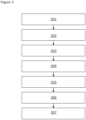
- Figure 3 illustrates an example method for processing a network frame in a system comprising a plurality of network switches each comprising a plurality of ports for coupling to one or more devices, such as shown in Figure 1 .
- the method comprises:
- the set of instructions/method steps described above are implemented as functional and software instructions embodied as a set of executable instructions which are effected on a computer or machine which is programmed with and controlled by said executable instructions. Such instructions are loaded for execution on a processor (such as one or more CPUs).
- processor includes microprocessors, microcontrollers, processor modules or subsystems (including one or more microprocessors or microcontrollers), or other control or computing devices.
- a processor can refer to a single component or to plural components.
- the set of instructions/methods illustrated herein and data and instructions associated therewith are stored in respective storage devices, which are implemented as one or more non-transient machine or computer-readable or computer-usable storage media or mediums.
- Such computer-readable or computer usable storage medium or media is (are) considered to be part of an article (or article of manufacture).
- An article or article of manufacture can refer to any manufactured single component or multiple components.
- the non-transient machine or computer usable media or mediums as defined herein excludes signals, but such media or mediums may be capable of receiving and processing information from signals and/or other transient mediums.
- Example embodiments of the material discussed in this specification can be implemented in whole or in part through network, computer, or data based devices and/or services. These may include cloud, internet, intranet, mobile, desktop, processor, look-up table, microcontroller, consumer equipment, infrastructure, or other enabling devices and services. As may be used herein and in the claims, the following non-exclusive definitions are provided.
- one or more instructions or steps discussed herein are automated.
- the terms automated or automatically mean controlled operation of an apparatus, system, and/or process using computers and/or mechanical/electrical devices without the necessity of human intervention, observation, effort and/or decision.
Landscapes
- Engineering & Computer Science (AREA)
- Computer Networks & Wireless Communication (AREA)
- Signal Processing (AREA)
- Computer Security & Cryptography (AREA)
- Computing Systems (AREA)
- Theoretical Computer Science (AREA)
- Data Exchanges In Wide-Area Networks (AREA)
Priority Applications (3)
| Application Number | Priority Date | Filing Date | Title |
|---|---|---|---|
| EP23209810.3A EP4557686A1 (de) | 2023-11-14 | 2023-11-14 | System von netzwerkschaltern |
| US18/823,261 US12609903B2 (en) | 2023-11-14 | 2024-09-03 | System of network switches |
| CN202411453917.7A CN120017610A (zh) | 2023-11-14 | 2024-10-17 | 网络交换机的系统 |
Applications Claiming Priority (1)
| Application Number | Priority Date | Filing Date | Title |
|---|---|---|---|
| EP23209810.3A EP4557686A1 (de) | 2023-11-14 | 2023-11-14 | System von netzwerkschaltern |
Publications (1)
| Publication Number | Publication Date |
|---|---|
| EP4557686A1 true EP4557686A1 (de) | 2025-05-21 |
Family
ID=88833617
Family Applications (1)
| Application Number | Title | Priority Date | Filing Date |
|---|---|---|---|
| EP23209810.3A Pending EP4557686A1 (de) | 2023-11-14 | 2023-11-14 | System von netzwerkschaltern |
Country Status (3)
| Country | Link |
|---|---|
| US (1) | US12609903B2 (de) |
| EP (1) | EP4557686A1 (de) |
| CN (1) | CN120017610A (de) |
Citations (4)
| Publication number | Priority date | Publication date | Assignee | Title |
|---|---|---|---|---|
| US20190273717A1 (en) * | 2018-03-01 | 2019-09-05 | Schweitzer Engineering Laboratories, Inc. | Selective port mirroring and in-band transport of network communications for inspection |
| WO2021229658A1 (ja) * | 2020-05-11 | 2021-11-18 | 日本電信電話株式会社 | パケット転送システム及びパケット転送方法 |
| US20220174004A1 (en) * | 2020-12-01 | 2022-06-02 | Cisco Technology, Inc. | Methods and apparatus for encoding local processing metadata in network headers |
| EP4027609A1 (de) * | 2017-10-04 | 2022-07-13 | Cisco Technology, Inc. | Segmentrouting-netzwerksignalisierung und paketverarbeitung |
Family Cites Families (5)
| Publication number | Priority date | Publication date | Assignee | Title |
|---|---|---|---|---|
| US6907469B1 (en) * | 2000-04-11 | 2005-06-14 | International Business Machines Corporation | Method for bridging and routing data frames via a network switch comprising a special guided tree handler processor |
| US9692712B2 (en) * | 2014-12-23 | 2017-06-27 | Accedian Networks Inc. | Service OAM virtualization |
| CN110741610B (zh) | 2017-01-09 | 2021-11-12 | 马维尔亚洲私人有限公司 | 具有本地交换的端口扩展器 |
| WO2018178906A1 (en) | 2017-03-28 | 2018-10-04 | Marvell World Trade Ltd. | Flexible processor of a port extender device |
| JP7735240B2 (ja) * | 2022-09-21 | 2025-09-09 | 株式会社東芝 | リングネットワーク |
-
2023
- 2023-11-14 EP EP23209810.3A patent/EP4557686A1/de active Pending
-
2024
- 2024-09-03 US US18/823,261 patent/US12609903B2/en active Active
- 2024-10-17 CN CN202411453917.7A patent/CN120017610A/zh active Pending
Patent Citations (4)
| Publication number | Priority date | Publication date | Assignee | Title |
|---|---|---|---|---|
| EP4027609A1 (de) * | 2017-10-04 | 2022-07-13 | Cisco Technology, Inc. | Segmentrouting-netzwerksignalisierung und paketverarbeitung |
| US20190273717A1 (en) * | 2018-03-01 | 2019-09-05 | Schweitzer Engineering Laboratories, Inc. | Selective port mirroring and in-band transport of network communications for inspection |
| WO2021229658A1 (ja) * | 2020-05-11 | 2021-11-18 | 日本電信電話株式会社 | パケット転送システム及びパケット転送方法 |
| US20220174004A1 (en) * | 2020-12-01 | 2022-06-02 | Cisco Technology, Inc. | Methods and apparatus for encoding local processing metadata in network headers |
Also Published As
| Publication number | Publication date |
|---|---|
| US12609903B2 (en) | 2026-04-21 |
| US20250158938A1 (en) | 2025-05-15 |
| CN120017610A (zh) | 2025-05-16 |
Similar Documents
| Publication | Publication Date | Title |
|---|---|---|
| CN113454598B (zh) | 提供具有访客vm移动性的服务 | |
| US9755959B2 (en) | Dynamic service path creation | |
| US8964600B2 (en) | Methods of forming virtual network overlays | |
| US10237177B2 (en) | Transfer device and transfer system | |
| US12468657B2 (en) | Message forwarding method and apparatus based on remote direct data storage, and network card and device | |
| US9544248B2 (en) | Overlay network capable of supporting storage area network (SAN) traffic | |
| US9379975B2 (en) | Communication control system, control server, forwarding node, communication control method, and communication control program | |
| EP3278513B1 (de) | Umwandlung eines dienstpakets von einer ersten domäne in eine zweite domäne | |
| KR101758207B1 (ko) | 서비스 기능 체이닝을 이용하는 네트워크 패킷 처리 장치 및 이의 제어 방법 | |
| US11729085B2 (en) | Cluster wide packet tracing | |
| CN112751769A (zh) | 发送报文的方法、装置及系统 | |
| CN108471383A (zh) | 报文转发方法、装置和系统 | |
| CN114172854A (zh) | 报文镜像、镜像配置方法、虚拟交换机及镜像配置装置 | |
| CN115766560A (zh) | 数据转发方法、装置、路由器及存储介质 | |
| EP4398542A1 (de) | Nachrichtensendeverfahren, netzwerkvorrichtung und kommunikationssystem | |
| CN118282940A (zh) | 寻路方法、报文传输方法、设备及介质 | |
| EP4557686A1 (de) | System von netzwerkschaltern | |
| US7471642B2 (en) | Communication terminal, load distribution method and load distribution processing program | |
| US20150381775A1 (en) | Communication system, communication method, control apparatus, control apparatus control method, and program | |
| CN112351050A (zh) | 镜像数据流的方法、装置、通信设备及存储介质 | |
| US10257087B2 (en) | Communication device and communication method | |
| CN112994928B (zh) | 一种虚拟机的管理方法、装置及系统 | |
| CN118802563A (zh) | 动态网络拓扑发现方法、装置、电子设备及存储介质 | |
| EP3288224B1 (de) | Datenpaketweiterleitungsverfahren und netzwerkvorrichtung | |
| CN112671646B (zh) | 一种信息处理方法、装置、设备及计算机可读存储介质 |
Legal Events
| Date | Code | Title | Description |
|---|---|---|---|
| PUAI | Public reference made under article 153(3) epc to a published international application that has entered the european phase |
Free format text: ORIGINAL CODE: 0009012 |
|
| STAA | Information on the status of an ep patent application or granted ep patent |
Free format text: STATUS: THE APPLICATION HAS BEEN PUBLISHED |
|
| AK | Designated contracting states |
Kind code of ref document: A1 Designated state(s): AL AT BE BG CH CY CZ DE DK EE ES FI FR GB GR HR HU IE IS IT LI LT LU LV MC ME MK MT NL NO PL PT RO RS SE SI SK SM TR |
|
| STAA | Information on the status of an ep patent application or granted ep patent |
Free format text: STATUS: REQUEST FOR EXAMINATION WAS MADE |
|
| 17P | Request for examination filed |
Effective date: 20251121 |