EP4557723A1 - Verfahren und vorrichtung zur erzeugung einer szenenbeschreibungsdatei - Google Patents
Verfahren und vorrichtung zur erzeugung einer szenenbeschreibungsdatei Download PDFInfo
- Publication number
- EP4557723A1 EP4557723A1 EP23915515.3A EP23915515A EP4557723A1 EP 4557723 A1 EP4557723 A1 EP 4557723A1 EP 23915515 A EP23915515 A EP 23915515A EP 4557723 A1 EP4557723 A1 EP 4557723A1
- Authority
- EP
- European Patent Office
- Prior art keywords
- description
- target
- scene
- buffer
- accessor
- Prior art date
- Legal status (The legal status is an assumption and is not a legal conclusion. Google has not performed a legal analysis and makes no representation as to the accuracy of the status listed.)
- Pending
Links
Images




Classifications
-
- H—ELECTRICITY
- H04—ELECTRIC COMMUNICATION TECHNIQUE
- H04N—PICTORIAL COMMUNICATION, e.g. TELEVISION
- H04N21/00—Selective content distribution, e.g. interactive television or video on demand [VOD]
- H04N21/80—Generation or processing of content or additional data by content creator independently of the distribution process; Content per se
- H04N21/81—Monomedia components thereof
- H04N21/816—Monomedia components thereof involving special video data, e.g 3D video
-
- G—PHYSICS
- G06—COMPUTING OR CALCULATING; COUNTING
- G06T—IMAGE DATA PROCESSING OR GENERATION, IN GENERAL
- G06T9/00—Image coding
- G06T9/001—Model-based coding, e.g. wire frame
-
- G—PHYSICS
- G06—COMPUTING OR CALCULATING; COUNTING
- G06F—ELECTRIC DIGITAL DATA PROCESSING
- G06F40/00—Handling natural language data
- G06F40/20—Natural language analysis
- G06F40/205—Parsing
- G06F40/211—Syntactic parsing, e.g. based on context-free grammar [CFG] or unification grammars
-
- G—PHYSICS
- G06—COMPUTING OR CALCULATING; COUNTING
- G06T—IMAGE DATA PROCESSING OR GENERATION, IN GENERAL
- G06T13/00—Animation
- G06T13/20—Three-dimensional [3D] animation
-
- G—PHYSICS
- G06—COMPUTING OR CALCULATING; COUNTING
- G06T—IMAGE DATA PROCESSING OR GENERATION, IN GENERAL
- G06T13/00—Animation
- G06T13/20—Three-dimensional [3D] animation
- G06T13/40—Three-dimensional [3D] animation of characters, e.g. humans, animals or virtual beings
-
- G—PHYSICS
- G06—COMPUTING OR CALCULATING; COUNTING
- G06T—IMAGE DATA PROCESSING OR GENERATION, IN GENERAL
- G06T15/00—Three-dimensional [3D] image rendering
-
- G—PHYSICS
- G06—COMPUTING OR CALCULATING; COUNTING
- G06T—IMAGE DATA PROCESSING OR GENERATION, IN GENERAL
- G06T15/00—Three-dimensional [3D] image rendering
- G06T15/005—General purpose rendering architectures
-
- G—PHYSICS
- G06—COMPUTING OR CALCULATING; COUNTING
- G06T—IMAGE DATA PROCESSING OR GENERATION, IN GENERAL
- G06T15/00—Three-dimensional [3D] image rendering
- G06T15/04—Texture mapping
-
- G—PHYSICS
- G06—COMPUTING OR CALCULATING; COUNTING
- G06T—IMAGE DATA PROCESSING OR GENERATION, IN GENERAL
- G06T17/00—Three-dimensional [3D] modelling for computer graphics
- G06T17/20—Finite element generation, e.g. wire-frame surface description, tesselation
-
- G—PHYSICS
- G06—COMPUTING OR CALCULATING; COUNTING
- G06T—IMAGE DATA PROCESSING OR GENERATION, IN GENERAL
- G06T9/00—Image coding
-
- G—PHYSICS
- G06—COMPUTING OR CALCULATING; COUNTING
- G06T—IMAGE DATA PROCESSING OR GENERATION, IN GENERAL
- G06T9/00—Image coding
- G06T9/40—Tree coding, e.g. quadtree, octree
-
- H—ELECTRICITY
- H04—ELECTRIC COMMUNICATION TECHNIQUE
- H04N—PICTORIAL COMMUNICATION, e.g. TELEVISION
- H04N19/00—Methods or arrangements for coding, decoding, compressing or decompressing digital video signals
- H04N19/70—Methods or arrangements for coding, decoding, compressing or decompressing digital video signals characterised by syntax aspects related to video coding, e.g. related to compression standards
-
- H—ELECTRICITY
- H04—ELECTRIC COMMUNICATION TECHNIQUE
- H04N—PICTORIAL COMMUNICATION, e.g. TELEVISION
- H04N21/00—Selective content distribution, e.g. interactive television or video on demand [VOD]
- H04N21/20—Servers specifically adapted for the distribution of content, e.g. VOD servers; Operations thereof
- H04N21/23—Processing of content or additional data; Elementary server operations; Server middleware
- H04N21/234—Processing of video elementary streams, e.g. splicing of video streams or manipulating encoded video stream scene graphs
- H04N21/23412—Processing of video elementary streams, e.g. splicing of video streams or manipulating encoded video stream scene graphs for generating or manipulating the scene composition of objects, e.g. MPEG-4 objects
-
- H—ELECTRICITY
- H04—ELECTRIC COMMUNICATION TECHNIQUE
- H04N—PICTORIAL COMMUNICATION, e.g. TELEVISION
- H04N21/00—Selective content distribution, e.g. interactive television or video on demand [VOD]
- H04N21/20—Servers specifically adapted for the distribution of content, e.g. VOD servers; Operations thereof
- H04N21/23—Processing of content or additional data; Elementary server operations; Server middleware
- H04N21/234—Processing of video elementary streams, e.g. splicing of video streams or manipulating encoded video stream scene graphs
- H04N21/2343—Processing of video elementary streams, e.g. splicing of video streams or manipulating encoded video stream scene graphs involving reformatting operations of video signals for distribution or compliance with end-user requests or end-user device requirements
-
- H—ELECTRICITY
- H04—ELECTRIC COMMUNICATION TECHNIQUE
- H04N—PICTORIAL COMMUNICATION, e.g. TELEVISION
- H04N21/00—Selective content distribution, e.g. interactive television or video on demand [VOD]
- H04N21/80—Generation or processing of content or additional data by content creator independently of the distribution process; Content per se
- H04N21/85—Assembly of content; Generation of multimedia applications
- H04N21/854—Content authoring
- H04N21/85406—Content authoring involving a specific file format, e.g. MP4 format
-
- H—ELECTRICITY
- H04—ELECTRIC COMMUNICATION TECHNIQUE
- H04N—PICTORIAL COMMUNICATION, e.g. TELEVISION
- H04N19/00—Methods or arrangements for coding, decoding, compressing or decompressing digital video signals
- H04N19/50—Methods or arrangements for coding, decoding, compressing or decompressing digital video signals using predictive coding
- H04N19/597—Methods or arrangements for coding, decoding, compressing or decompressing digital video signals using predictive coding specially adapted for multi-view video sequence encoding
Definitions
- Some embodiments of the present disclosure relates to the technical field of video processing, in particular to a method and apparatus for generating a scene description document.
- a point cloud is a set of massive three-dimensional points.
- the compression standards for the point cloud mainly include Geometry-based Point Cloud Compression (G-PCC) and video-based point cloud compression (V-PCC).
- the mainstream immersive media primarily includes a point cloud, a three-dimensional Mesh, 6 DoF panoramic video, MPEG Immersive Video (MIV) and so on.
- MIV MPEG Immersive Video
- a render engine supports encoding and decoding of the various types of immersive media, and different types of render engines are generated according to different types and numbers of codecs supported.
- the render engines designed by different vendors support different types of media.
- Moving Picture Experts Group MPEG has initiated the development of an MPEG scene description standard with the standard number ISO/IEC 23090.14.
- the standard mainly addresses the cross-platform description of the MPEG media (including a codec developed by the MPEG, MPEG file formats, and MPEG transport mechanisms) in the three-dimensional scene.
- the extension made by the first version of ISO/IEC 23090-14 MPEG-I scene description standard has satisfied the critical requirements of the solution of the immersive scene description.
- the current scene description standard does not support the media file with a type of G-PCC encoded point cloud.
- the point cloud is an important form of three-dimensional media, and the G-PCC is one of the current mainstream point cloud compression algorithms. So there is great significance and value to support the media file with the type of G-PCC encoded point cloud in a scene description framework.
- some embodiments of the present disclosure provide a method for generating a scene description document, comprising: determining a type of a media file in a three-dimensional scene to be rendered; when a type of a target media file in the three-dimensional scene to be rendered is a Geometry-based Point Cloud Compression (G-PCC) encoded point cloud, generating a target media description module corresponding to the target media file based on description information of the target media file; and adding the target media description module into a media list of MPEG media of the scene description document in the three-dimensional scene to be rendered.
- G-PCC Geometry-based Point Cloud Compression
- some embodiments of the present disclosure provide an apparatus for generating a scene description document, comprising: a memory, configured to store a computer program; and a processor, configured to enable the apparatus for generating the scene description document to achieve the method for generating the scene description document as described in the first aspect when the computer program is called.
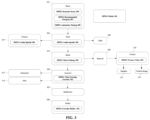
- Some embodiments of the present disclosure relate to scene description of immersive media. Refferring to a scene description framework of the immersive media illustrated in FIG.1 , in order to enable a display engine 11 to focus on media rendering, the scene description framework of the immersive media decouples the access and processing of a media file and rendering of the media file, and designs a media access function (MAF) 12 to be responsible for the access and processing function of the media file.
- a media access function (MAF) 12
- an Application Programming Interface for the media access function is designed, and command interaction is performed between the display engine 11 and the media access function 12 through the media access function API.
- the display engine 11 may give commands to the media access function 12 through the media access function API, and the media access function may also request commands from the display engine 11 through the media access function API.
- the general workflow of the scene description framework of the immersive media includes: 1). the display engine 11 obtains a scene description document provided by a service provider of the immersive media. 2). The display engine 11 parses the scene description document, obtains an access address of the media file, attribute information of the media file (a media type, codec parameters, etc.) and parameters or information such as a format requirement of the processed media file, and transmits all or part of information obtained by parsing the scene description document to the media access function 12 by calling the media access function API. 3).
- the media access function 12 requests to download a specified media file from a media resource server or obtains the specified media file locally based on the information transmitted by the display engine 11, establishes a corresponding pipeline for the media file, and then converts the media file from an encapsulated format to a format specified by the display engine 11 by processing the media file in the pipeline, such as decapsulating, decrypting, decoding, post-processing, etc. 4).
- the pipeline stores output data obtained by completing all the processing into a specified buffer. 5).
- the display engine 11 reads the fully processed data from the specified buffer., and renders the media file based on the data read from the buffer.
- the scene description document is used to describe a structure (whose characteristics can be described by a three-dimensional Mesh), textures (for example, texture maps, etc.), animations (rotation and translation), the position of a camera's viewpoint (a rendering perspective), etc. of the three-dimensional scene.
- GL transport format 2.0 (glTF2.0) has been determined as a candidate format for the scene description document, which can satisfy the requirements of the MPEG-Immersive (MPEG-I) and 6Degrees of Freedom (6DoF) applications.
- MPEG-I MPEG-Immersive
- 6DoF 6Degrees of Freedom
- glTF 2.0 is described in the GL transport format (glTF) version 2.0 of Khronos Group available at github.com/KhronosGroup/glTF/tree/master/specification/2.0#specifying-extensions.
- FIG. 2 is a schematic structural diagram of the scene description document in the glTF2.0 scene description standard (ISO/IEC 12113). As shown in FIG.
- the scene description document in the glTF2.0 scene description standard includes, but is not limited to, a scene description module (scene) 201, a node description module (node) 202, a mesh description module (mesh) 203, an accessor description module (accessor) 204, a bufferview description module (bufferView) 205, a buffer description module (buffer) 206, a camera description module (camera) 207, a light description module (light) 208, a material description module (material) 209, a texture description module (texture) 210, a sampler description module (sampler) 211, and a texture image description module (image) 212, an animation description module (animation) 213, a skin description module (skin) 214.
- the scene description module (scene) 201 in the scene description document shown in FIG. 2 is used to describe a three-dimensional scene contained in the scene description document.
- One scene description document may contain any number of three-dimensional scenes, and each three-dimensional scene is represented by one scene description module 201 respectively.
- the relationship between the scene description module 201 and the scene description module 201 is a parallel relationship, that is, the relationship between the three-dimensional scene and the three-dimensional scene is a parallel relationship.
- the node description module 202 in the scene description document shown in FIG. 2 is a next level of description module of the scene description module 201, and is used to describe objects contained in the three-dimensional scene described by the scene description module 201. There may be many specific objects in each three-dimensional scene, such as virtual digital people, nearby three-dimensional objects, distant background pictures, etc. The scene description document may describe these specific objects through the node description module 202. Each node description module 202 may represent an object or a set of objects consisting of several objects. The relationship between the node description modules 202 reflects the relationship between various components in the three-dimensional scene described by the scene description module 201.
- the scene described by one scene description module 201 may include one or more nodes.
- the plurality of nodes may be in a parallel relationship or a hierarchical relationship, that is, there is a containing and contained relationship between the node description modules 202, which enables the plurality of specific objects to be described together, or enables the plurality of specific objects to be described separately. If a node is contained by another node, the contained node is called a children node (children), and for the children node, "children" is used instead of "node” for representation. By flexibly combining nodes with children nodes, it can form a hierarchical node structure to express rich scene content.
- the mesh description module (mesh) 203 in scene description document shown in FIG. 2 is the next level of description module of the node description module 202, and is used to describe the characteristics of the objects represented by the node description module 202.
- the mesh description module 203 is a set consisting of one or more primitives, each of which may include an attribute, and the attributes of the primitives define the attributes that a graphics processing unit (GPU) needs to use during rendering.
- GPU graphics processing unit
- the attributes may include: position (three-dimensional coordinates), normal (normal vector), tangent (tangent vector), texcoord_n (texture coordinates), color_n (color: RGB or RGBA), joints_n (attributes associated with the skin description module 214), weights_n (attributes associated with the skin description module 214), and so on. Since the number of vertices contained in the mesh description module 203 is very large, and each vertex contains a variety of attribute information, it is not convenient to store a large amount of media data contained in the media file in the mesh description module 203 of the scene description document directly. Instead, the access address (Uniform Resource Identifier, URI) of the media file is indicated in the scene description document.
- URI Uniform Resource Identifier
- the mesh description module 203 does not store the media data, but stores an index value of the accessor description module 204 corresponding to each attribute, and points to the corresponding data in a bufferView of the buffer through the accessor description module 204.
- the scene description document may also be fused with the media file to form a binary file, thus reducing the types and number of files.
- the following is a JSON example of the mesh description module 203:
- the value of "position” is 1, which points to the accessor description module 204 with index 1, and finally points to the vertex coordinate data stored in the buffer;
- the value of "color_0" is 2, which points to the accessor description module 204 with index 2, and finally points to the color data stored in the buffer.
- Table 1 Name of Syntax Element Accessor Type Data Type Description Position VEC3 5126 Unitless XYZ vertex position coordinates Normal Vector (normal) VEC3 5126 Normalized XYZ vertex normal vector Tangent Vector (tangent) VEC4 5126 XYZW: the tangent vector of the vertex, wherein XYZ is the normalized vertex coordinate, and the value of W is +1 or -1, indicating the direction of the tangent line.
- Texture Coordinate VEC2 5126, 5121, 5123 ST texture coordinates Color Value (color_n) VEC3 5126, 5121, 5123 Vertex color in RGB or RGBA form.
- VEC4 Joint Joints_n
- VEC4 5121, 5123 Attributes related with Skin Weights weights_n
- Table 2 The definition of types of accessors indexed in the attributes (mash.primitives.attributes) of the primitives of the mesh description module 203 is as shown in Table 2 below: Table 2 Type of Accessor Number of Component Channel Connotation SCALAR 1 Scalar VEC2 2 Two-dimensional vector VEC3 3 Three-dimensional vector VEC4 4 Four-dimensional vector MAT2 4 Two-dimensional matrix MAT3 9 Three-dimensional matrix MAT4 16 Four-dimensional matrix
- Table 3 The definition of the data types in the attributes (mash.primitives.attributes) of the primitives of the mesh description module 203 is as shown in Table 3 below: Table 3 Type Code Data Type Signed or Unsigned Bit Number 5120 signed byte signed 8 5121 unsigned byte unsigned 8 5122 signed short signed 16 5123 unsigned short unsigned 16 5125 unsigned int unsigned 32 5126 float signed 32
- the accessor description module (accessor) 204, the bufferview description module (bufferView) 205 and the buffer description module (buffer) 206 in the scene description document shown in FIG. 2 jointly implement a layer-by-layer refined index of the data of the media file by the mesh description module 203.
- the mesh description module 203 does not store specific media data, but stores the index value of the corresponding accessor description module 204, and accesses the specific media data by the accessor described by the accessor description module 204 indexed by the index value.
- the indexing process of the media data by the mesh description module 203 includes: firstly, the index value declared by the syntax element in the mesh description module 203 points to the corresponding accessor description module 204; then, the accessor description module 204 points to the corresponding bufferview description module 205; and finally, the bufferview description module 205 points to the corresponding buffer description module 206.
- the buffer description module 206 in the scene description document shown in FIG. 2 is mainly responsible for pointing to the corresponding media file, includes the URI of the media file, the byte length of the media file, and other information, and is used to describe the buffer that caches the media data of the media file.
- One buffer can be divided into one or more bufferviews.
- the bufferview description module 205 is mainly responsible for partially accessing the media data in the buffer, includes the start byte offset of the access data, the byte length of the access data, etc. Through the bufferview description module 205 and the buffer description module 206, the partial access to the data of the media file may be achieved.
- the accessor description module 204 is mainly responsible for adding additional information to the partial data delimited in the bufferview description module 205, such as the data type, the number of data of the type, the numerical range of the data of the type, and so on. Such a three-layer structure can realize the function of extracting partial data from a media file, which may be conducive to the accurate access of the data and the reduction of the number of media files.
- the camera description module (camera) 207 in the scene description document shown in FIG. 2 is the next level of description module of the node description module 202 and is used to describe a viewpoint, a viewing angle, and other infromation related to visual viewing when a user views an object described by the node description module 202.
- the node description module 202 may also point to the camera description module 207 and describe, through the camera description module 207, the viewpoint, the viewing angle, and other information related to visual viewing when the user views the object described by the node description module 202.
- the light description module (light) 208 in the scene description document shown in FIG. 2 is the next level of description module of the node description module 202 and is used to describe the light intensity, ambient light color, light direction, light source position, and other information related to light of the object described by the node description module 202.
- the material description module 209 in the scene description document shown in FIG. 2 is a next level of description module of the mesh description module 203, and is used to describe the material information of the three-dimensional object described by the mesh description module 203.
- it cannot improve the realism of the three-dimensional object by describing the geometric information of the three-dimensional object only by the mesh description module 203 or monotonously defining the color and/or position of the three-dimensional object. It requires attaching more information to the surface of the three-dimensional object.
- texture mapping or texture adding etc.
- the scene description document in the glTF2.0 scene description standard also follows the description module.
- the material description module 209 defines the material using a set of common parameters to describe material information of geometric objects that appear in the three-dimensional scene.
- the material description module 209 generally uses a metallic-roughness model (metallic-roughness) to describe the material of a virtual object, and the material characteristic parameters based on the metallic-roughness model are represented by Physically Based-Rendering (PBR) materials used widely.
- PBR Physically Based-Rendering
- the metallic-roughness material attributes of the object are described in detail by the material description module 209, and the definition of the syntax elements in the material description module 209 is as shown in Table 4:
- Table 4 Name of Syntax Element Data Type Description Name String Define the name of the material Metallic-Roughness (PbrMetarial Roughness) Array A set containing many sub-syntax elements, and used to describe the metallic-roughness of a virtual object
- the definition of the syntax elements in the metallic-roughness (material.PbrMetarialRoughness) of the material description module 209 is as shown in Table 5 below: Table 5 Name of Syntax Element Data Type Description Basecolor String Define the basecolor of the material Metalness Array/Integer Define the metalness of the material; and the range of the value is from 0.0 (non-metallic) to 1.0 (metallic) Roughness Array/Integer Define the roughness of the material; the range of the value is from 0.0 (smooth) to 1.0 (rough)
- the values of each attribute in the metallic-roughness of the material description module 209 can be defined using factors and/or textures (such as baseColorTexture and baseColorFactor). If no texture is given, it can be determined that the values of all corresponding texture components in the material model are 1.0. If there are both factors and textures, the factor value acts as a linear multiplier for the corresponding texture value. Texture bindings are defined by the index of the texture object and the optional texture coordinate index.
- the following is a JSON example of the material description module 209:
- the texture description module 210 in the scene description document shown in FIG. 2 is a next level of description module of the material description module 209 and is used to describe the colors of the three-dimensional objects described by the material description module 209 and other characteristics used in the material definition. Textures are an important aspect for giving an object a real appearance. The main color of the object and other characteristics used in the material definition may be defined through the textures so as to accurately describe the appearance of the rendered object.
- the material itself may define a plurality of texture objects, which can be used as textures of virtual objects during rendering and be used to encode different material attributes.
- the texture description module 210 references one sampler description module (sampler) 211 and one texture image description module (image) 212 by using the sampler syntax element and the texture image syntax element index.
- the texture image description module 212 contains a Uniform Resource Identifier (URI), which links to the texture image or binary package actually used by the texture description module 210.
- URI Uniform Resource Identifier
- the sampler description module 211 is used to describe the filtering and packaging modes of the texture.
- the respective responsibilities and collaborations of the material description module 209, the texture description module 210, the sampler description module 211 and the texture image description module 212 include: the material description module 209 and the texture description module 210 jointly define the color and physical information of the surface of the object.
- the sampler description module 211 defines how to paste the texture image to the surface of the object.
- the texture description module 210 specifies the sampler description module 211 and the texture image description module 212.
- Textures are added through the texture image description module 212, while the texture image description module 212 identifies and indexes using URIs and accesses data using the accessor description module 204.
- the sampler description module 211 implements specific adjustments and packaging of the texture.
- the definition of the syntax elements in the texture description module 210 is as shown in Table 6 below: Table 6 Name of Syntax Element Data Type Description Sampler (sample) Integer Index a certain sampler in a sampler array with defined attributes Source (source) Integer Specify the source of image information of the material texture Texture Coordinate (Texcoord) Integer The index of the set of texture coordinate attributes of the texture used for texture coordinate mapping, defaulting to 0 when Texcoord is undefined
- the definition of the syntax elements in the sample (texture.sample) of the texture description module 210 is as shown in Table 7 below:
- Table 7 Name of Element Data Type Description Magfilter Integer Define the filtering mode of a texture when a texture unit (texel) covers a plurality of pixel points.
- the filtering mode includes: 1. Linear filtering (Linear): for each requested texture unit, the weighted sum of a plurality of neighboring texture units is calculated; and 2. Nearest point filtering (Nearset): the texture unit with the smallest Manhattan distance is used.
- Minfilter Integer Define the filtering mode of a texture when a texture unit is not enough to cover a single pixel point.
- the filtering mode includes: 1.
- Linear filtering Linear
- Nearest point filtering Nearest point filtering
- Nearest-mipmap-nearest the nearest multilevel asymptotic texture (Mipmap) is selected, and the nearest-point filtering is performed
- 4, Linear-mipmap-nearest the nearest Mipmap is selected, and the linear filtering is performed
- 5, Nearest-mipmap-linear linear interpolation is performed between Mipmap layers, and nearest-point filtering is performed
- Linear-mipmap-linear linear interpolation is performed between Mipmap, and linear filtering is performed.
- Wrap Integer Define how texture coordinates beyond the range [0,1] will be wrapped.
- a texture coordinate value of (0.0,0.0) points to the beginning of the first (upper left) image pixel, while a texture coordinate value of (1.0,1.0) points to the end of the last (lower right) image pixel.
- Modes include: 1. repeat mode (repeat): only the fractional part of the texture coordinates is used, 2.2 maps to 0.2, and -0.4 maps to 0.6; 2. mirror repeat mode (mirrorrepeat): the same as the repeat mode, but when the integer part is an odd number, the direction is flipped, 2.2 maps to 0.2, and -0.4 is considered as 0.4; and 3. clamp-to-edge mode (clamptoedge): if the texture coordinate is greater than 1, it will be intercepted to 1, and if the texture coordinate is less than 0, it will be intercepted to 0.
- the following is a JSON example of the material description module 209, the texture description module 210, the sampler description module 211 and the texture image description module 212:
- the animation description module 213 in the scene description document shown in FIG. 2 is a next level of description module of the node description module 202, and is used to describe animation information added to objects described by the node description module 202.
- an animation may be added to the object described by the node description module 202.
- the description level of the animation description module 213 in the scene description document is specified by the node description module 202. That is, the animation description module 213 is the next level of description module of the node description module 202, and the animation description module 213 also has a corresponding relationship with the mesh description module 203.
- the animation description module 213 can describe the animation in three ways: position movement, angle rotation, and size scaling, while may specify a start and end time of the animation and the implementation way of the animation. For example, when an animation is added to the mesh description module 203 representing a three-dimensional object, the three-dimensional object represented by the mesh description module 203 may complete the specified animation process through the fusion of position movement, angle rotation, and size scaling within a specified time window.
- the skin description module 214 in the scene description document shown in FIG. 2 is a next level of description module of the node description module 202, and is used to describe a movement cooperation relationship between bones added to the nodes described by the node description module 202 and a mesh representing surface information of the objects.
- the nodes described by the node description module 202 represent objects with large degrees of freedom of movement, such as people, animals, and machinery, in order to optimize the movement performance of these objects, the interiors of the objects may be filled with bones, and the three-dimensional mesh representing the surface information of the objects become a skin conceptually at this time.
- the description level of the skin description module 214 is specified by the node description module 202.
- the skin description module 214 is the next level of description module of the node description module 202, and the skin description module 214 has a corresponding relationship with the mesh description module 203.
- a more realistic movement effect may be achieved by driving the mesh on the surfaces of the objects through the movement of the bones and combining the simulation and bionic design. For example, when a human hand makes a fist clenching action, the skin on the surface will change with the internal bones, such as stretching and covering. At this time, a realistic simulation of the action may be achieved by pre-filling a hand model with bones and then defining the collaborative relationship between the bones and the skin.
- the various description modules of the scene description document in the above glTF2.0 scene description standard only have the most basic ability to describe three-dimensional objects. There are problems that it cannot support dynamic three-dimensional immersive media, audio files and scene updates.
- glTF also declares an optional extended object attribute (extensions) under each of the object attributes, and allows extensions to be used in any part for better functionality.
- the scene description module (scene), node description module (node), mesh description module (mesh), accessor description module (accessor), buffer description module (buffer), animation description module (animation), etc., and the internally defined syntax elements all have optional extended object attributes for supporting certain functional extensions on the basis of glTF2.0.
- the rendering engines designed by different vendors support different media types.
- the Moving Picture Experts Group MPEG
- the standard number is ISO/IEC 23090-14.
- the standard mainly solves the cross-platform description problem of MPEG media (including codecs developed by the MPEG, MPEG file formats, and MPEG transport mechanisms) in three-dimensional scenes.
- the MPEG #128 meeting resolution develops the MPEG-I scene description standard based on glTF2.0 (ISO/IEC 12113).
- the first version of the MPEG scene description standard has been developed and is in the FDIS voting stage.
- the MPEG scene description standard adds corresponding extensions to address the unfulfilled requirements in the cross-platform description of three-dimensional scenes, including interactivity, AR anchoring, user and avatar representation, haptic support, and extended support for immersive media codecs.
- the first version of the MPEG scene description standard has been developed, which mainly formulates the following contents:
- the scene description document is extended in the MPEG scene description standard based on the scene description document shown in FIG. 2 .
- the extensions of the scene description document in the MPEG scene description standard can be divided into two sets:
- the first set of extensions includes: MPEG media (MPEG_media) 301, an MPEG time-varying accessor (MPEG_accessor_timed) 302 and an MPEG circular buffer (MPEG_buffer_circular) 303.
- the MPEG media 301 is a stand-alone extension for referring to an external media source; the MPEG time-varying accessor 302 is an extension of the accessor level and is used to access time-varying media; and the MPEG circular buffer is an extension of the buffer level and is used to support a circular buffer.
- the first set of extensions provides a basic description and format of the media in the scene, and satisfies the basic requirements for describing time-varying immersive media in the scene description framework.
- the MPEG time-varying accessor (MPEG_accessor_timed) 302 is used to access the time-varying media.
- the time-varying media is not supported in the scene description standard of glTF2.0, it is necessary to update the scene description document under the scene description standard of glTF2.0 when the media data is required to change over time.
- the texture image of the object surface needs to be updated so that the texture image of the object surface can change over time. Therefore, the scene description document under the scene description standard of glTF2.0 must be updated. Updating the scene description document frequently requires parsing, processing and transport of the scene description document frequently, which increases the performance overhead in the three-dimensional scene rendering process.
- MPEG designs the MPEG time-varysing accessor (MPEG_accessor_timed) 302 and the parameters in the MPEG time-varying accessor can change with time to change the access mode of the media data, which achieves the accessed data changing with time, thus avoiding frequent parsing, processing, and transport of the scene description document.
- MPEG_accessor_timed MPEG time-varysing accessor
- the second set of extensions includes: MPEG_scene_dynamic 304, MPEG_texture_video 305, MPEG_audio_spatial 306, MPEG_viewport_recommended 307, MPEG_mesh_linking 308 and MPEG_animation_timing 309.
- MPEG_scene_dynamic 304 is a scene-level extension for supporting dynamic scene updates
- MPEG_texture_video 305 is a texture-level extension for supporting textures with a video form
- MPEG_audio_spatial 306 is a node-level and camera-level extension for supporting spatial 3D audio
- MPEG_viewport_recommended 307 is a scene-level extension for supporting description of a recommended viewport in two-dimensional display
- MPEG_mesh_linking 308 is a mesh-level extension for supporting linking two meshes and providing mapping information
- MPEG_animation_timing 309 is a scene-level extension for supporting control of the animation timeline.
- MPEG media in the MPEG Scene Description document is used to describe the types of media files and to provide the necessary instructions for media files with the MPEG type, which is convenient to access these media files with the MPEG type subsequently.
- the definition of the first-level syntax elements of the MPEG media is shown in Table 8 below: Table 8 Name of Syntax Element Data Type Def ault Usag e Description Media Array N/A Mand atory A set including many sub-syntax elements, and used to describe the external media referenced in the scene
- a value of 0 indicates that the start time is the start time of the media source.
- Offset of End Time Num ber N/ A Optio nal End Offset Time; indicating the offset of the end time of the media source, in seconds. If the parameter is not present, the end time is the end time of the media source.
- Autoplay Bool ean Tr ue Optio nal Whether or not to autoplay; used to indicate whether or not to start playback as soon as the media are ready. There should be at least one of startTime and autoplay in the scene description document. Setting the value of Autoplay to true, all media should be rendered at the same time.
- AutoplayGroup Integ er N/ A Optio nal Autoplay Group; all media with the same autoplayGroup should start playing synchronously when all autoplayGroup media are ready.
- the autoplayGroup identifier is allowed only when the value of autoplay is set to true.
- Play In a Loop (loop) Bool ean Fa lse Optio nal Whether or not to play in a loop; used to indicate whether or not to start playback again each time after the media finishes playing.
- the value of the timestamp in the buffer should increase continuously, i.e., the playback duration of the media is accumulating continuously as the media is played in a loop.
- Control Bool ean Fa lse Optio nal Whether or not to display the media controls; used to indicate whether or not to display the media controls, such as play and stop buttons.
- Alternatives alternatives
- Arra y N/ A Mand atory Alternatives used to specify the set of sub-syntax elements of the alternatives of the media, the client can choose the syntax elements included in the alternatives according to ownrequirements.
- the definition of the syntax elements in alternative of the Media List of the MPEG Media is shown in Table 10 below: Table 10 Name of Syntax Element Data Type De fault Usag e Description Media Type (mimeType) Strin g N/ A Mand atory Media type; used to specify the media file resource type. Configuration parameters defined in IETFRFC6381 may be part of the media resource type and are used to specify the configuration of a media container. Uniform Resource Identifier (uri) Strin g N/ A Mand atory Uniform Resource Identifier; used to specify the uri of the media. A relative path is associated with the gltf file.
- uri Uniform Resource Identifier
- Tracks Array (tracks) Arra y 0 Optio nal Tracks array; listing the set of components to be used that refer to the the media source. It can contain a track index of an ISOBMFF file, Dynamic Adaptive Streaming Over HTTP (DASH), a Common Media Application Format (CMAF) switch identifier, or a media identifier of a Real-time Transport Protocol (RTP) stream.
- Extra Parameters (extraParams) Obje ct N/ A Optio nal An object that can contain any extra media-specific parameters
- ISO/IEC 23090-14 also defines a transport format for delivery of scenario description documents and data delivery related to glTF 2.0 extensions. To facilitate delivery of the scene description document to the client, ISO/IEC 23090-14 defines how to encapsulate the glTF file and associated data into the ISOBMFF file as non-time-varying and time-varying data (e.g., as track samples).
- MPEG_scene_dynamic, MPEG_mesh_linking, and MPEG_animation_timing provide time-varying data with a specific form to the display engine, and the display engine 11 should operate accordingly based on the varying information.
- ISO/IEC 23090-14 also defines the format of each piece of extended time-varying data and how it is encapsulated in the ISOBMFF file.
- the MPEF media (MPEG_media) allows referring to external media streams delivered through the protocols such as RTP/SRTP, MPEG-DASH, etc.
- ISO/IEC 23090-14 defines a new Uniform Resource Locator (URL) scheme.
- the scheme requires the presence of a stream identifier in a query section, but does not specify an identifier of a specific type, and allows the use of a Media Stream Identification scheme (RFC5888), a labeling scheme (RFC4575), or a 0-based indexing scheme.
- the main role of the display engine 11 includes obtaining a scene description document and parsing the obtained scene description document to obtain a composition structure of the three-dimensional scene to be rendered and detailed information in the three-dimensional scene to be rendered, and rendering and displaying the three-dimensional scene to be rendered based on the information obtained by parsing the scene description document.
- the specific workflow and principle of the display engine 11 are not limited, so that the display engine 11 can parse the scene description document, give instructions to the media access function 12 through the media access function API, give instructions to the buffer management module 13 through the buffer API, access the processed data from the buffer and complete the rendering and presentation of the three-dimensional scene and the objects therein.
- the media access function 12 can receive instructions from the display engine 11 and complete the access and processing functions of the media files according to the instructions sent by the display engine 11. Specifically, after obtaining the media file, the media file is processed. There are large differences in the processing process of different types of media files. In order to achieve a wide range of media type support, taking into account the work efficiency of the media access function, a variety of pipelines are designed in the media access function, and the pipeline matching the media type can be enabled during the processing.
- the input of the pipeline is the media files downloaded from the server or the media files read from the local storage control. These media files may often have a relatively complex structure and cannot be directly used by the display engine 11. Therefore, the main function of the pipeline is to process the data of the media file so that the data of the media file satisfies the requirements of the display engine 11.
- the media data processed by the pipeline needs to be delivered to the display engine 11 to be used in a standard arrangement structure, which requires the participation of the buffer API and the buffer management module 13.
- the buffer API and buffer management module realize the creation of the corresponding buffer according to the format of the processed media data, and are responsible for the subsequent management of the buffer, such as updating, releasing and other operations.
- the buffer management module 13 can communicate with the media access function 12 through the buffer API or communicate with the display engine 11, and the goal of communication with the display engine 11 and/or the media access function 12 is to achieve buffer management.
- the display engine 11 needs to send the instructions related to buffer management to the media access function 12 through the media access function API firstly, and the media access function 12 then sends the instructions related to buffer management to the buffer management module 13 through the buffer API.
- the buffer management module 13 communicates with the display engine 11, it just needs that the display engine 11 sends the buffer management description information parsed from the scene description document directly to the buffer management module 13 through the buffer API.
- the above embodiments describe the basic process of rendering a three-dimensional scene including immersive media by the scene description framework, and the content and role of each functional module or file in the scene description framework.
- the immersive media in the three-dimensional scene can be point cloud based media files, three-dimensional mesh based media files, 6 DoF based media files, MIV media files, etc.
- Some embodiments of the present disclosure relate to rendering a three-dimensional scene including a point cloud based on the scene description framework, so the following will firstly explain the content related to the point cloud.
- the point cloud refers to a set of massive three-dimensional points. After obtaining the spatial coordinates of each sampling point of the surface of the object, a set of points is obtained, which is called a point cloud. In addition to the geometric coordinates, the points in the point cloud can also include some other attribute information, such as color, normal vector, reflectivity, transparency, material type, etc.
- the point clouds can be obtained in a number of ways. In some embodiments, an implementation of obtaining the point cloud includes: observing an object using a camera array at a known fixed location in space, and obtaining a three-dimensional representation of the object using some relevant algorithm and a two-dimensional image captured in the camera array, thereby obtaining the point cloud corresponding to the object.
- an implementation of obtaining the point cloud includes: obtaining the point cloud corresponding to an object using a lidar scanning device.
- a sensor of the lidar scanning device may record electromagnetic waves obtained by reflecting, by the surface of the object, electromagnetic waves emitted from the radar, thus obtaining volume information of the object, and obtaining the point cloud corresponding to the object according to the volume information of the object.
- the implementation of obtaining the point cloud may further include: creating three-dimensional volume information based on a two-dimensional image by using artificial intelligence or a computer vision algorithm, thereby obtaining the point cloud corresponding to the object.
- the point cloud provides a high-precision three-dimensional expression for the fine digitization of the physical world, and is widely used in three-dimensional modeling, smart cities, autonomous navigation systems, augmented reality, and other fields.
- the compression standards for the point cloud mainly include geometry-based point cloud compression (G-PCC) and video-based point cloud compression (V-PCC). The following further explains the principle of G-PCC and related algorithms.
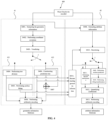
- the G-PCC encoder 400 can be divided into two parts, a geometric encoding module 41 and an attribute encoding module 42.
- the geometric encoding module 41 can be further divided into a octree-based geometric encoding unit 411 and a prediction tree-based geometric encoding unit 412.
- main encoding steps of the geometric encoding module 41 of the G-PCC encoder encoding the geometric information of the point cloud to be encoded include: S401, extracting the geometric information (positions) in the point cloud to be encoded; S402, performing coordinate conversion of the geometric information to enable the point cloud to be encoded being all contained in a bounding box; and S403, voxelizing the geometric information after the coordinate conversion. That is, the geometric information after the coordinate conversion is firstly quantified for scaling the point cloud to be encoded.
- a geometric information bitstream of the point cloud to be encoded is obtained by performing encoding by the octree-based geometric encoding unit 411 and the prediction tree-based geometric encoding unit 412 respectively.
- the coding process of the octree-based geometric encoding unit 411 includes: S404, performing tree division; including: continuously performing tree division on the bounding box (octree/quadtree/binary tree) in the order of Breath First Search, and encoding a placeholder code of each node. That is, the bounding box is divided into subcubes sequentially, and subcubes that are not empty (including points in the point cloud) continue to be divided until a leaf node obtained through division is a unit cube of 1 ⁇ 1 ⁇ 1. Secondly, the number of points contained in the leaf node is encoded, and finally the encoding of the geometric octree is completed to generate a binary bitstream.
- the coding process of the geometric coding unit 412 based on the prediction tree includes: S406, constructing a prediction tree structure. It includes: sorting the points of the point cloud to be encoded, wherein the sorting order includes: disorder, Morton order, azimuth order radial distance order, etc., and constructing the prediction tree structure in two different ways (high delay slow way and low delay fast way).
- S407 Based on the prediction tree structure, traversing each node in the prediction tree, and obtaining prediction residuals by selecting different prediction modes to predict the geometric position information of the nodes, and quantizing the geometric prediction residuals by using quantification parameters.
- performing arithmetic encoding which includes: through continuous iteration, generating a binary geometric information bitstream by performing arithmetic encoding on prediction residuals, prediction tree structure, quantification parameters, etc. of the prediction tree node position information.
- the process of encoding the attribute information of the point cloud by the G-PCC encoder attribute encoding module 42 mainly includes: S408, extracting the attribute information (attributes) of the point cloud to be encoded; S409, performing attribute prediction on the attribute information; S410, performing a lifting transformation on the attribute information; S411, performing a Region Adaptive Hierarchical Transform (RAHT) transformation on the attribute information; S412, quantizing the coefficients of the RAHT transformation and the coefficients of the lifting transformation; and S413, obtaining the attribute information bitstream by performing arithmetic encoding on the quantified coefficients of the RAHT transformation and the quantified coefficients of the lifting transformation.
- RAHT Region Adaptive Hierarchical Transform
- step S414 reconstructing the geometric information according to the geometric bitstream, and matching the original attribute information and the reconstructed geometric information.
- step S45. recoloring the geometric information.
- the recoloring part in step S415 is to assign attribute information to the reconstructed point cloud by using the original point cloud. The goal is to make the attribute value of the reconstructed point cloud as similar as possible to the attribute value of the point cloud to be encoded and to minimize the error.
- the attribute prediction algorithm is an algorithm that obtains the predicted attribute values of the current point to be predicted by using the weighted sum of the reconstructed attribute values of the reconstructed points in three-dimensional space.
- the attribute prediction algorithm can effectively remove attribute space redundancy, so as to achieve the purpose of compressing attribute information.
- the implementation of attribute prediction may include: firstly, hierarchically dividing the point cloud to be encoded through a level of detail (LOD) algorithm, and establishing a hierarchical structure of the point cloud to be encoded. Secondly, encoding and decoding low-level points firstly, and predicting the high-level points by using low-level points and reconstructed points of the same level to achieve progressive encoding.
- LOD level of detail
- the implementation of hierarchical partitioning of the point cloud to be encoded by the LOD algorithm may include: firstly, marking all points in the point cloud to be encoded as unvisited, and expressing the set of accessed points as V. In the initial state, the set V of accessed points is empty. Cycle tranversing all unvisited points in the point cloud to be encoded, and calculating the minimum distance D from the current point to the set of accessed points V, the current point is ignored if D is less than a threshold distance, and otherwise the current point is marked as visited, and added to the set V of accessed points and the current subspace. Finally, the hierarchy structure of the point cloud to be encoded is obtained by combining points in each subspace and all subspaces before each subspace.
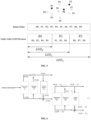
- FIG. 5 is illustrated with an example of a point cloud to be encoded including points P1 ⁇ P9.
- points P0, P2, P4 and P5 are added to the set V of accessed points and level R0 sequentially.
- points P1, P3 and P8 are added to the set V of accessed points and level R1 sequentially.
- points P6, P7 and P9 are added to the set V of accessed points and level R2 sequentially.
- points in each level and all levels before each level are merged to obtain the hierarchical structure of the point cloud to be encoded, which includes three levels.
- the first level is LOD 0 , which includes points P0, P2, P4 and P5;
- the second level is LOD 1 , which includes points P0, P2, P4, P5, P1, P3 and P8;
- the third level is LOD 2 , which includes points P0, P2, P4, P5, P1, P3, P8, P6, P7 and P9.
- the lifting transformation is established based on the predictive transformation and includes three parts: segmentation, prediction and update.
- the segmentation module 61 spatially segments the point cloud to be encoded into two parts, the high-level point cloud H(N) and the low-level point cloud L(N), and there is a certain correlation between the high-level point cloud H(N) and the low-level point cloud L(N).
- the update module 63 defines and recursively updates the influence weights for each point based on the prediction residual D(N), the distance between the prediction point and its neighboring points.
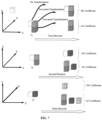
- RAHT transformation is a hierarchical region adaptive transformation algorithm based on Hal wavelet transformation. Based on the hierarchical tree structure, occupying child nodes are recursively transformed along each dimension in a bottom-up manner in the same parent node, the low-frequency coefficients obtained by the transformation are passed to the next level of the transformation process, and the high-frequency coefficients are subjected to quantification and entropy encoding.
- the RAHT transformation described above may be implemented by a RAHT transformation based on the upsampling prediction.
- the overall tree structure of the RHAT transformation is changed from bottom-up to top-down, and the transformation is still carried out in a 2 ⁇ 2 ⁇ 2 block.
- the transformation process includes: firstly, performing an RAHT transformation on a voxel block 71 in a first direction.
- the weighted average (DC coefficient) and residual (AC coefficient) of the adjacent two-point attribute values can be obtained by performing RAHT on the adjacent voxel blocks.
- the obtained DC coefficient exists as the attribute information of the voxel block 122 of the parent node, and is used to perform the next layer of RAHT transformation; while the AC coefficient is retained for final encoding.
- the attribute value of the voxel block 71 is passed directly to the second level of parent node. In the second layer of RAHT transformation, it is carried out in the second direction.
- the weighted average (DC coefficient) and residual (AC coefficient) of the attribute values of the adjacent two points can be obtained by performing the RAHT transformation on the adjacent voxel blocks.
- the third layer of RAHT transformation is carried out in the third direction, the parent node voxel block 73 with three alternating color depths is obtained as a child node of the next layer in the octree, and then the RAHT transformation is looped along the first direction, the second direction, and the third direction until there is only one parent node in the entire point cloud to be encoded.
- the G-PCC decoder 800 can be divided into a geometric decoding module 81 and an attribute decoding module 82.
- the geometric decoding module 81 can be further divided into an octree-based geometric decoding unit 811 and a prediction tree-based geometric decoding unit 812.
- the main steps of the G-PCC decoder decoding the geometric information bitstream through the octree-based geometric decoding unit 811 of the geometric decoding module 81 include: S801, arithmetic decoding; S802, octree synthetizing; S803, surface fitting; S804, reconstructing geometry; and S805, inverse coordinate transferring, and obtaining the geometric information of the point cloud.
- the geometric decoding of the octree-based geometric decoding unit 811 includes: in accordance with the order of breadth-first traversal, parsing continuously for obtaining the placeholder code of each node, dividing the nodes sequentially until the unit cube of 1 ⁇ 1 ⁇ 1 is obtained, stopping the division, parsing to obtain the point number contained in each leaf node, and finally restoring and obtaining the geometric reconstruction point cloud information.
- the main steps of the G-PCC decoder decoding the geometric information bitstream through the prediction tree-based geometric decoding unit 812 of the geometric decoding module 81 include: S801, arithmetic decoding; S806, reconstructing the prediction tree; S807, residual calculating; S804, reconstructing geometry; and S805, inverse coordinate transferring, and obtaining the geometric information of the point cloud.
- the main steps of the attribute decoding module 82 based on the G-PCC decoder 800 for attribute decoding include: S808, arithmetic decoding; S809, inverse quantizing; performing steps S810 and S811 or performing step S812; S810, performing attribute prediction; S811, lifting transformation; S812, inverse transferring based on RAHT; and S813, obtaining attribute information of the point cloud by inverse color transformation. Finally, the three-dimensional image model of the point cloud data to be encoded is restored based on the geometric information and the attribute information.
- the main steps of decoding the attribute information bitstream by the G-PCC decoder based on the attribute decoding module 82 and the main steps of encoding the attribute information by the G-PCC encoder based on the attribute encoding module 82 are reversed processes, which will not be repeated here.
- the extension of the first version of the ISO/IEC 23090-14 MPEG-I scene description standard has satisfied the key needs of immersive scene description solutions, and it currently commits to addressing the needs such as interaction with virtual scenes, AR anchoring, user virtual human representation, tactile support, and support for immersive codecs.
- the point cloud is an important immersive three-dimensional media form in the 3D environment. Therefore, supporting the representation of point cloud media in the scene description standard is an important content of the scene description.
- the geometry-based point cloud compression algorithm (G-PCC) is one of the mainstream point cloud compression algorithms at present. Supporting media files of the type G-PCC encoded point cloud in the scene description has great significance and value.
- Some embodiments of the present disclosure provide a scene description framework that supports point cloud bitstreams obtained by the G-PCC compression standard, including: support of the scene description document for media files with a type of G-PCC encoded point clouds, support of the media access function API for media files with the type of G-PCC encoded point clouds, support of the media access function for media files with the type of G-PCC encoded point clouds, support of the buffer API for media files with the type of G-PCC encoded point clouds, support of the buffer managemen for media files with the type of G-PCC encoded point clouds, and the like.
- the process of rendering a media file with the type of G-PCC encoded point cloud in a three-dimensional scene based on the scene description framework includes: firstly, the display engine obtains the scene description document by downloading or local reading and other ways.
- the scene description document contains the description information of the entire three-dimensional scene and the media file with the type of G-PCC encoded point cloud contained in the scene.
- the description information of the media file with the type of G-PCC encoded point cloud may include the access address of the media file with the type of G-PCC encoded point cloud, the storage format of the decoded data of the processed media file with the type of G-PCC encoded point cloud, the playback time of the media file with the type of G-PCC encoded point cloud, the playback frame rate, etc.
- the display engine allocates the buffer through the buffer management module called by the buffer API, and may also pass the buffer information to the media access function, which allocates the buffer through the buffer API calling the buffer management module.
- the media access function After receiving the description information delivered by the display engine, the media access function firstly requests to download the media file with the type of G-PCC encoded point cloud from the server, or reads the media file with the type of G-PCC encoded point cloud from the local file. After obtaining the media file with the type of G-PCC encoded point cloud, the media access function processes the media file with the type of G-PCC encoded point cloud by establishing and starting the corresponding pipeline. The input of the pipeline is the encapsulation file of the media file with the type of the G-PCC encoded point cloud.
- the pipeline stores the processed data in the specified buffer after decapsulating, G-PCC decoding, post-processing and other processes sequentially.
- the display engine obtains the decoded data of the media file with type of G-PCC encoded point cloud from the specified buffer, and renders and displays the three-dimensional scene according to the data obtained in the buffer.
- the following respectively describes the scene description document, the media access function API, the media access function, the buffer API, and the buffer management that support the media file with the type of G-PCC encoded point cloud.
- some embodiments of the present disclosure extend the values of the syntax elements in the MPEG_media of the scene description document, and the specific extension includes at least one of the following:
- some implementations of the present disclosure extend the values of syntax elements within MPEG media (MPEG _media) in the scene description document, and the specific extension includes one or more items shown in Table 12 below: Table 12 Name of Syntax Element D ata Type Def ault Usage Extended Value Media Type (mimeType ) St ring N/ A Mand atory When the media resource is a media resource associated with GPCC data, the value of mimeType is 'application' and/or subtype 'mp4'.
- Content-Type application/mp4 Track Index (track) St ring N/ A Mand atory
- the GPCC data is referenced by the scene description document as an item of MPEG_media.alternative.tracks and the referenced item conforms to the provisions in ISOBMFF for track:
- the track referenced in MPEG_media shall be a GPCC bitstream track;
- the track referenced in MPEG_media shall be the GPCC geometric bitstream track.
- Codec Parameter (codecs) St ring N/ A Mand atory When the media data is GPCC data, the value of 'codecs' should be set as specified in the ISO/IEC 23090-18 GPCC data transfer standard.
- At least one of the above extensions 1 to 3 is performed on the syntax elements in MPEG media (MPEG _media) in the scene description document, so that the MPEG media (MPEG_media) in the scene description document supports the media files with the type of G-PCC encoded point cloud.
- a method for describing scenes and nodes in a scene description document including a media file with the type of G-PCC encoded point cloud includes: when the three-dimensional scene includesa media file with the type of G-PCC encoded point cloud, describing the overall structure of the three-dimensional scene and the structural hierarchy and position of the media file with the type of G-PCC encoded point cloud in the three-dimensional scene using the method for describing the scenes and nodes.
- the describing the overall structure of the three-dimensional scene and the structural hierarchy and position of the media file with the type of G-PCC encoded point cloud in the three-dimensional scene using the method for describing the scenes and nodes includes: describing one three-dimensional scene using one scene description module.
- Each scene description document can describe one or more three-dimensional scenes, and the three-dimensional scenes may only be a parallel relationship, and not be a hierarchical relationship. Nodes can be a parallel relationship or a hierarchical relationship.
- a method for describing a three-dimensional mesh in a scene description document supporting a media file with the type of G-PCC encoded point cloud includes: describing various types of data of the media file with the type of G-PCC encoded point cloud by multiplexing syntax elements in attributes of primitives of a mesh description module (mesh.primitives.attributes).
- a mesh description module (mesh.primitives.attributes).
- the point cloud is a scatter data structure
- a plurality of scatter points collect to form the point cloud, so describing a media file with the type of G-PCC encoded point cloud is equivalent to describing the data of each point in the point cloud.
- each point in the media file with the type of G-PCC encoded point cloud has two types of information: geometric information and attribute information.
- the geometric information represents the three-dimensional coordinates of the point in space
- the attribute information represents the color, reflectivity, normal direction and other information attached on the point. Since the data at a point of the media file with the type of G-PCC-encoded point cloud is similar to the attributes that the syntax elements contained in the attributes of primitives of a mesh description module can declare, when data at a point of the media file with the type of G-PCC encoded point cloud is described in the mesh description module (mesh), the syntax elements in the attributes (mesh.primitives.attribute) of the primitives of the mesh description module (mesh) can be multiplexed for describing data at a point in the media file with the type of G-PCC encoded point cloud.
- the value of the position syntax element (position, the first item in Table 1 above) in the attribute of the primitive of the mesh description module is a three-dimensional vector including floating point numbers.
- Such a data structure can also represent the geometric information of the G-PCC encoded point cloud, so the geometric information on the point in the media file with the type of G-PCC encoded point cloud is represented by multiplexing the position syntax element (position) in the attribute of the primitive of the mesh description module.
- the color value of a point in the media file with the type of G-PCC encoded point cloud can also be represented by multiplexing the color syntax element (color_n, the fifth item in Table 1 above) in the attributes (mesh.primitives.attribute) of the primitives of the mesh description module.
- a normal vector of a point in the media file with the type of G-PCC encoded point cloud can also be represented by multiplexing the normal vector syntax element (normal, the third itm in Table 1 above) in the attributes (mesh.primitives.attribute) of the primitives of the mesh description module.
- a set including syntax elements supported in the attributes of the primitives of the mesh description module of the scene description document specified in the ISO/IEC 23090-14 MPEG-I scene description standard is defined as a first syntax element set.
- the method for describing the three-dimensional mesh supporting the media file with the type of the G-PCC encoded point cloud includes: adding the syntax elements corresponding to various types of data of the three-dimensional mesh into the attributes of the primitives of the mesh description module corresponding to the three-dimensional mesh based on the syntax elements in the first syntax element set.
- Table 13 lists the method for describing partial data on the points in the media file with the type of G-PCC encoded point cloud by multiplexing the syntax elements in the attributes of the primitives of the mesh description module (mesh.primitives.attribute): Table 13 G-PCC Encoded Point Cloud Data Multiplexed Syntax Element Accessor Type Data Type Geometric Information mesh.primitives.attribute.pos ition VEC3 Float Color Data mesh.primitives.attribute.col or_n VEC3/V EC4 Float Unsigned byte Unsigned short Normal Vector mesh.primitives.attribute.nor mal VEC3 Float
- the G-PCC encoded point cloud data may also include other data.
- the other data of the G-PCC encoded point cloud may also be described by multiplexing the syntax elements in the attributes of the primitives of the mesh description module, for example: texture coordinates (texcoord_n), joints (joints_n), weights (weights _n), etc.
- a method for describing a three-dimensional mesh supporting a media file with the type of G-PCC encoded point cloud includes: adding a target extension array into the extension list of primitives of a mesh description module (mesh.primitives.extensions), adding syntax elements corresponding to various types of data contained in the three-dimensional mesh in the media file with the type of G-PCC encoded point cloud into the target extension array, and describing the data, such as geometric information, color data, and normal vectors, associated with each vertex of the three-dimensional mesh in the media file with the type of G-PCC encoded point cloud through syntax elements corresponding to various types of data respectively.
- a mesh description module mesh.primitives.extensions
- the adding the syntax elements corresponding to various types of data contained in the corresponding three-dimensional mesh to the target extension array includes: adding the syntax elements corresponding to various types of data contained in the corresponding three-dimensional mesh into the target extension array based on the syntax elements in the first syntax element set.
- the first syntax element set is a set including syntax elements supported in the attributes of the primitives of the mesh description module of the scene description document specified in the ISO/IEC 23090-14 MPEG-I scene description standard.
- the adding the syntax elements corresponding to the various types of data contained in the corresponding three-dimensional mesh into the target extension array comprises: adding the syntax elements corresponding to the various types of data contained in the corresponding three-dimensional mesh into the target extension array based on a second syntax element set including preset syntax elements corresponding to G-PCC encoded point cloud.
- the syntax element used to represent the geometric information associated with each vertex is defined as the first syntax element
- the syntax element used to represent the color data associated with each vertex is defined as the second syntax element
- the syntax element used to represent the normal vector associated with each vertex is defined as the third syntax element.
- the syntax elements added into the target extension array of an extension list of primitives (mesh.primitives.extensions) of some mesh description modules include: Table 14 Added Syntax Element Described G-PCC Encoded Cloud Data Accessor Type Data Type First Syntax Element Geometric Information VEC3 Float Second Syntax Element Color Data VEC3/ VEC4 Float Unsigned byte Unsigned short Third Syntax Element Normal Vector VEC3 Float
- FIG. 9 is a schematic structural diagram of the scene description document after adding a target extension array into an extension list of primitives of the mesh description module (mesh.primitives.extensions) and extending the first syntax element, the second syntax element, and the third syntax element in the target extension array accroding to above embodiments.
- the scene description document includes but is not limited to the following modules: MPEG media (MPEG _media) 901, a scene description module (scene) 902, a node description module (node) 903, a mesh description module (mesh) 904, an accessor description module (accessor) 905, a bufferView description module (bufferView) 906, a buffer description module (buffer) 907, a skin description module (skin) 908, an animation description module (animation) 909, a camera description module (camera) 910, a material description module (material) 911, a texture description module (texture) 912, a sampler description module (sampler) 913 and a texture image description module (image) 914.
- the extension list of attributes of primitives of the mesh description module 904 includes a target extension array 9000, and the extended syntax elements within the target extension array 9000 include a first syntax element 9001 for representing geometric information associated with each vertex, a second syntax element 9002 for representing color data associated with each vertex, and a third syntax element 9003 for representing a normal vector associated with each vertex.
- first syntax element 9001 for representing geometric information associated with each vertex
- second syntax element 9002 for representing color data associated with each vertex
- a third syntax element 9003 for representing a normal vector associated with each vertex.
- a method for describing a mesh supporting the media file with the type of G-PCC encoded point cloud includes: preconfiguring the syntax elements corresponding to various types of data of the G-PCC encoded point cloud, and adding the syntax elements corresponding to the various types of data into the attributes of the primitives of the mesh description module corresponding to the three-dimensional mesh in the G-PCC encoded point cloud based on the preconfigured syntax elements corresponding to the various types of data of the G-PCC encoded point cloud.
- the syntax elements corresponding to the various types of data of the preconfigured G-PCC encoded point cloud include: a fourth syntax element for representing geometric information associated with each vertex, a fifth syntax element for representing color data associated with each vertex, and a sixth syntax element for representing a normal vector associated with each vertex.
- the adding the syntax elements corresponding to the various types of data into the attributes of the primitives of the mesh description module corresponding to the three-dimensional mesh in the G-PCC encoded point cloud includes: adding at least one of the fourth syntax element, the fifth syntax element and the sixth syntax element into the attributes of the primitives of the mesh description module corresponding to the three-dimensional mesh in the G-PCC encoded point cloud.
- the syntax elements corresponding to the G-PCC encoded point cloud and for representing the geometric information associated with each vertex are defined as the fourth syntax element
- the syntax elements corresponding to the G-PCC encoded point cloud and for representing the color data associated with each vertex are defined as the fifth syntax element
- the syntax elements corresponding to the G-PCC encoded point cloud and for representing the normal vector associated with each vertex are defined as the sixth syntax element.
- the method for describing the syntax elements in the attributes of the primitives of some mesh description modules includes: Table 15 Name of Syntax Element Described G-PCC Encoded Point Cloud Data Accesso r Type Data Type Fourth Syntax Element Geometric Information VEC3 Float Fifth Syntax Element Color Data VEC3/V EC4 float unsigned byte unsigned short Sixth Syntax Element Normal Vector VEC3 Float
- FIG. 10 is a schematic structural diagram of the scene description document after extending the syntax elements in the attributes of the primitive of the mesh description module (mesh.primitives.attribute) according to the above-described embodiment.
- the scene description document includes but is not limited to the following modules: MPEG media (MPEG_media) 101, a scene description module (scene) 102, a node description module (node) 103, a mesh description module (mesh) 104, an accessor description module (accessor) 105, a bufferView description module (bufferView) 106, a buffer description module (buffer) 107, a skin description module (skin) 108, an animation description module (animation) 109, a camera description module (camera) 110, a material description module (material) 111, a texture description module (texture) 112, a sampler description module (sampler) 113 and a texture image description module (image) 114.
- MPEG media MPEG_media
- scene scene
- the attributes of the primitives of the mesh description module 104 include: a fourth syntax element 1041 extended for representing geometric information associated with each vertex, a fifth syntax element 1042 for representing color data associated with each vertex, and a sixth syntax element 1043 for representing a normal vector associated with each vertex.
- a fourth syntax element 1041 extended for representing geometric information associated with each vertex
- a fifth syntax element 1042 for representing color data associated with each vertex
- a sixth syntax element 1043 for representing a normal vector associated with each vertex.
- the functions of other elements, accessor type, data type, and other information in the scene description document shown in FIG. 10 are similar to those in the scene description document shown in FIG. 3 and will not be described further here.
- the scene description document describes a three-dimensional scene containing a media file with the type of G-PCC encoded point cloud
- the mesh description module (mesh) will contain a large number of points in the G-PCC encoded point cloud, and each point at least contains geometric information and attribute information. Therefore, it is not convenient to store the data of the media file with the type of G-PCC encoded point cloud directly in the scene description framework. Instead, the link of the media file with the type of G-PCC encoded point cloud is pointed out in the scene description framework.
- the media file is downloaded when the data of the G-PCC encoded point cloud needs to be used.
- the scene description document may also be fused with a media file with the type of G-PCC encoded point cloud to form a binary file so as to reduce the type and number of files.
- a method for describing an accessor description module (accessor), a bufferView description module (bufferView), and a buffer description module (buffer) supporting the media file with the type of the G-PCC encoded point cloud includes: pointing to the media description module corresponding to the media file with the type of the G-PCC encoded point cloud in the MPEG media (MPEG _media) through an index value declared by a media index syntax element (media) of an MPEG circular buffer (MPEG_buffer_circular) of the buffer description module (buffer).
- the media file with the type of the G-PCC encoded point cloud needs to be specified in the buffer description module, but instead of directly adding the Uniform Resource Locator (URL) of the media file with the type of the G-PCC encoded point cloud in the buffer description module, the value of the media index syntax element (media) in the MPEG circular buffer (MPEG_buffer_circular) in the buffer description module (buffer) points to the media description module corresponding to the media file with the type of the G-PCC encoded point cloud in the MPEG media (MPEG_media).
- URL Uniform Resource Locator
- the value of the uniform resource identifier syntax element (uri) in the alternatives of the media description module corresponding to the media file with the type of the G-PCC encoded point cloud in the media list (media) of MPEG media (MPEG_media) is "http://www.example.com/G-PCCexample.mp4" and the media description module is the first media description module in MPEG media
- the value of the media index syntax element (media) of the MPEG circular buffer may be set as "0" to index the link of the first media file in the MPEG media in the MPEG circular buffer of the buffer description module so as to index the media description module corresponding to the media file with the type of G-PCC encoded point cloud in the MPEG media (MPEG_media) through the media index syntax element (media) in the MPEG circular buffer (MPEG_buffer_circular.media) of the buffer description module (buffer).
- a method for describing the accessor (accessor), the bufferView (buffer), the buffer (buffer) supporting the media file with the type of the G-PCC encoded point cloud includes: buffering the track information of the buffered data by the value of a second track index syntax element (track) of the track array (tracks) of the MPEG circular buffer (MPEG_buffer_circular) of a buffer description module (buffer).
- MPEG_buffer_circular On the basis of glTF2.0, an extension named MPEG_buffer_circular (MPEG_buffer_circular) is proposed in the scene description technology proposed by MPEG.
- the MPEG circular buffer is used to reduce the number of required buffers while ensuring data buffering.
- the MPEG circular buffer can be seen as connecting the head and tail of the ordinary buffer and forming a circular, while writing the buffer to the circular buffer and reading the data in the circular buffer rely on the write pointer and the read pointer, which may achieve the work process of writing and reading at the same time.
- the syntax elements contained in the MPEG_buffer_circular are shown in Table 16: Table 16 Name Data Type D efault Usage Description Link Count (count) Integ er 2 Optio nal Link count; indicating the number of storage links contained in the MPEG circular buffer.
- Media access functions may use the information and establish the corresponding circular buffer structure for the display engine.
- Media Index (media) Integ er N/ A Mand atory Media index; indicating the index of media files in MPEG_media, these media files may be used as input media sources in the buffer.
- Track Index (tracks) Array N/ A Optio nal Track index; indicating the index of the track of the media file in MPEG_media extension, these indexes can be used as the input media source of the buffer.
- the pipeline should perform the necessary processing on all tracks in MPEG_media, which in turn generates the data format requested by the buffer, i.e., instructs the buffer on how to correctly store the data in MPEG media.
- the tracks array contains a plurality of tracks
- the pipeline should perform the necessary processing on all the referenced tracks to generate the data format requested by the buffer. If the media source referenced in a track has a plurality of alternatives, then each alternative should record the selection of the track.
- the value of the media index syntax element (media) in Table 16 is the index value of the media description module corresponding to the media file with the type G-PCC encoded point cloud declared in MPEG media (MPEG_media). That is, the media file with the type G-PCC encoded point cloud can be indexed in the buffer description module (buffer).
- the value of the track index syntax elements (tracks) in Table 16 is the index value of one or more bitstream tracks of the media file with the type G-PCC encoded point cloud. That means that the decoded data of the one or more bitstream tracks can be buffered in the corresponding buffer.
- a method for describing the material (material), the texture (texture), the sampler (sampler) and the texture image (image) supporting the media file with the type G-PCC encoded point cloud includes: when a scene description document is used to describe a three-dimensional scene of the G-PCC encoded point cloud, the three-dimensional scene is described without using the material (material), the texture (texture), the sampler (sampler) and the texture image (image).
- the G-PCC encoded point cloud is a scattering topology, it does not actually have the concept of a surface.
- Various kinds of additional information is also directly expressed on the point, and material, texture, sampler, and image are all attachment information for the surface. Therefore,only the definitions of material, texture, sampler, and image are retained, but material, texture, sampler, and image are not used to describe the three-dimensional scene.
- a method for describing the camera description module (camera) that supports a media file with the type of the G-PCC encoded point cloud includes: defining visual information associated with viewing, such as viewpoint, a viewing angle, etc., of a node in a three-dimensional scene through the camera description module.
- a method for describing the animation description module (animation) that supports the media file with type G-PCC encoded point cloud includes adding an animation to the node description module (node) in the three-dimensional scene through the animation description module (animation).
- the animation description module may describe animations added to the node description module (node) by one or more of position movement, angle rotation, and size scaling.
- the animation description module may also indicate at least one of a start time, an end time, and an implementation of the animation added to the node description module (node).
- animation describes the animation added to the node in three ways: position movement, angle rotation, and size scaling. At the same time, it can also specify the start time, the end time and the implementation of the animation.
- a method for describing the skin description module (skin) supporting the media file with the type G-PCC encoded point cloud includes: defining a motion and deformation relationship between the mesh in the node description module (node) and a corresponding bone by the skin description module (skin).
- the scene description document has been able to correctly describe the media file with the type G-PCC encoded point cloud.
- the following describes a scene description document supporting a media file with the type G-PCC encoded point cloud provided by an embodiment of the present disclosure by combining a specific scene description document.
- the pair of braces in line 1 and line 118 in the above example contains the main content of the scene description document supporting the media files with the type G-PCC encoded point cloud.
- the scene description document supporting the media files with the type G-PCC encoded point cloud includes: digital asset description module (asset), extensionUsed description module (extensionUsed), MPEG media (MPEG_media), scene statement (scene), scene list (scenes), node list (nodes), mesh list (meshes), accessor list (accessors), bufferview list (bufferViews), and buffer list (buffers).
- digital asset description module asset
- extensionUsed description module extensionUsed
- MPEG media MPEG media
- scene statement scene
- scene list scenes
- node list node list
- mesh list meshes
- accessor list accessors
- bufferview list bufferview list
- bufferlist buffer list
- the main functions of the display engine of supporting the media file with the type G-PCC encoded point cloud which are similar to the main functions of the display engine in the workflow of the scene description framework of the immersive media described above, include: 1. being capable of parsing the scene description document of the media file with the type G-PCC encoded point cloud, and obtaining a method for rendering the corresponding three-dimensional scene; 2. being capable of passing media access instructions or media data processing instructions with the media access function through the media access function API, wherein, the media access instructions or the media data processing instructions are from the parsing results of the scene description document of the media file with the type G-PCC encoded point cloud; 3.
- the display engine can obtain the method for rendering the three-dimensional scene including the media file with the type G-PCC by parsing the scene description document, it is necessary to pass the method for rendering the three-dimensional scene to the media access function or send instructions to the media access function based on the method for rendering the three-dimensional scene, and the process of passing the method for rendering the three-dimensional scene to the media access function or sending instructions to the media access function based on the method for rendering the three-dimensional scene is implemented through the media access function API.
- the display engine may send media access instructions or media data processing instructions to the media access function through the media access function API.
- the media access instruction or media data processing instruction sent by the display engine to the media access function through the media access function API is from the parsing results of the scene description document of the media file with the type G-PCC encoded point cloud.
- the media access instruction or media data processing instruction may include: the index of the media file with the type G-PCC encoded point cloud, the URL of the media file with the type G-PCC encoded point cloud, the attribute information of the media file with the type G-PCC encoded point cloud, the display time window of the media file with the type G-PCC encoded point cloud, the format requirements for the processed media file with the type G-PCC encoded point cloud, etc.
- the media access function may also request media access instructions or media data processing instructions from the display engine through the media access function API.
- the media access function may execute the media access instruction or media data processing instruction sent by the display engine through the media access function API, for example, obtaining media files with the type G-PCC encoded point cloud, establishing appropriate pipelines for media files with the type G-PCC encoded point cloud, allocating an appropriate buffer for processed media files with the type G-PCC encoded point cloud, etc.
- the media access function obtains the media file with the type G-PCC encoded point cloud, which includes downloading the media file with the type G-PCC encoded point cloud from a server using a network transport service.
- the media access function obtains the media file with the type G-PCC encoded point cloud, which includes reading the media file with the type G-PCC encoded point cloud from the local storage space.
- the media access function After the media access function obtains the media file with the type G-PCC encoded point cloud, it needs to process the media file with the type G-PCC encoded point cloud. There are large differences in the processing of media files with different types. In order to achieve a wide range of media type supporting, also taking into account the work efficiency of the media access function, a variety of pipelines are designed in the media access function, and only pipelines matching the media type can be enabled in the process of processing media files. When the media file is a media file with the type G-PCC encoded point cloud, the media access function needs to establish a corresponding pipeline for the media file with the type G-PCC encoded point cloud, decapsulate, G-PCC decode, post-process, etc.
- the media file with the type G-PCC encoded point cloud through the established pipeline to complete the processing of the media file with the type G-PCC encoded point cloud, and process the media file data with the type G-PCC encoded point cloud into a data format that can be renderred directly by the display engine.
- FIG. 11 is a schematic structural diagram of a pipeline corresponding to the G-PCC encoded point cloud in some embodiments of the present disclosure.
- the pipeline 1100 supporting the media file with the type G-PCC encoded point cloud includes an input module 111, a decapsulation module 112, a geometric decoder 113, an attribute decoder 114, a first post-processing module 115 and a second post-processing module 116.
- the input module 111 is used to receive the G-PCC encapsulation file, and input the G-PCC encapsulation file into the decapsulation module 112.
- the G-PCC encapsulation file is a file obtained by encapsulating the G-PCC bitstream obtained by G-PCC encoding of point cloud data. Since the G-PCC encapsulation file is presented in a track form, the input module 111 receives a track bitstream of the G-PCC encapsulation file.
- the G-PCC encapsulation file may be a single track or a multi-track. Therefore, the G-PCC encapsulation file received by the input module 111 in the embodiment of the present disclosure may be a single track or a multi-track. The embodiment of the present disclosure does not limit this.
- the decapsulation module 112 is used to decapsulate the G-PCC encapsulation file input by the input module 111 to obtain the G-PCC bitstream (including the geometric information bitstream and the attribute information bitstream), input the geometric information bitstream to the geometric decoder 113 and input the attribute information bitstream to the attribute decoder 114. It should be noted that with the development of related technologies, the G-PCC bitstream may also increase the bitstream of other information. When the G-PCC bitstream also includes the bitstream of other information, the decapsulation module 112 may decapsulate the G-PCC encapsulation file to obtain the bitstream of other information, and input the bitstream of other information into the corresponding decoder.
- the geometric decoder 113 is used to decode the geometric information bitstream output by the decapsulation module 112 to obtain geometric information of the point cloud.
- the main steps of decoding the geometric information bitstream by the geometric decoder 113 include: obtaining the geometric information of the point cloud through arithmetic decoding, octree synthesis, surface fitting, reconstructing geometry, inverse coordinate conversion, etc.
- the specific implementation of decoding the geometric information bitstream by the geometric decoder 113 can refer to the workflow of the geometric decoding module 81 in FIG. 8 , which is not be described in detail here.
- the attribute decoder 114 is used to decode the attribute information bitstream input by the decapsulation module 112 to obtain the attribute information of the point cloud.
- the main steps of decoding the geometric information bitstream by the attribute decoder 114 include: obtaining the attribute information bitstream through attribute prediction, promotion, inverse operation of the RAHT transformation, etc.
- the specific implementation of decoding the attribute information bitstream by the attribute decoder 114 may refer to the workflow of the attribute decoding module 82 in FIG. 8 , which will not be described in detail here.
- the first post-processing module 115 is used to process the geometric information output by the geometric decoder 113. After completing the decoding of the geometric information bitstream, the geometric information of the points in the G-PCC encoded point cloud can be obtained, and in some cases, the obtained geometric information can be used directly by the display engine. However, since the scene description framework does not limit the display engine too much or define it specifically, a wide variety of display engines may appear. These different display engines may have different requirements for the input data, so the first post-processing module 115 is added after completing the decoding of the geometric information bitstream, thus ensuring that the geometric information of the output of the pipeline is available to any display engine. In some embodiments, processing the geometric information by the first post-processing module 115 includes: coverting the format of the geometric information.
- the second post-processing module 116 is used to process the attribute information output by the attribute decoder 114. After completing the decoding of the attribute information bitstream, the attribute information of the points in the G-PCC encoded point cloud can be obtained, and in some cases, the attribute information can be used directly by the display engine. However, since the scene description framework does not limit the display engine too much or define it specifically, a wide variety of display engines may appear. These different display engines may have different requirements for the input data, so the second post-processing module 116 is added after completing the decoding of the attribute information bitstream, thus ensuring that the attribute information of the output of the pipeline is available to any display engine. In some embodiments, processing the attribute information by the second post-processing module 116 includes: coverting the format of the attribute information.
- the processed geometry information output by the first post-processing module 115 and the processed attribute information output by the second post-processing module 116 are written to the buffer 117 so that the display engine 118 reads the geometry information and the attribute information from the buffer as needed, and renders and displays the G-PCC encoded point cloud in the three-dimensional scene based on the read geometry information and the attribute information.
- the media access function After the media access function completes the processing of the G-PCC encoded point cloud data through the pipeline, the media access function also needs to deliver the processed data to the display engine in a standardized arrangement structure, which requires the processed G-PCC encoded point cloud data to be correctly stored in the buffer, and the work is completed by the buffer management module.
- the buffer management module needs to obtain buffer management instructions from the media access function or the display engine through the buffer API.
- the media access function may send a buffer management instruction to the buffer management module via a buffer API.
- the buffer management instruction is a buffer management instruction sent by the display engine to the media access function through the media access function API.
- the display engine may send buffer management instructions to the buffer management module through the buffer API.
- the buffer management module can communicate with the media access function through the buffer API, or communicate with the display engine through the buffer API, and the purpose of communicating with the media access function or the display engine is to achieve buffer management.
- the buffer management module communicates with the media access function through the buffer API
- the display engine needs to firstly send the buffer management instructions to the media access function through the media access function API, and then the media access function sends the buffer management instructions to the buffer management module through the buffer API.
- the buffer management module communicates with the display engine through the buffer API, it is only needed that the display engine generates the buffer management instructions based on the buffer management information parsed from the scene description document, and sends the buffer management instructions to the buffer management module through the buffer API.
- the buffer management instructions may include one or more of an instruction to create a buffer, an instruction to update the buffer, an instruction to release the buffer.
- the processed G-PCC encoded point cloud data needs to be delivered to the display engine in a standardized arrangement structure, which requires the processed G-PCC encoded point cloud data to be stored correctly in the buffer, and the work is the reponsibility of the buffer management module.
- the buffer management module achieves the management operations, such as buffer creating, updating, releasing, etc., and the instructions of the operations are received through the buffer API.
- the rules of buffer management are recorded in the scene description document, are parsed by the display engine, and finally are transmitted to the buffer management module by the display engine or the media access function. After being processed by the media access function, the media file needs to be stored in a suitable buffer and is then accessed by the display engine.
- the role of the buffer management is to manage these buffers to match these buffers with the format of the processed media data without disturbing the processed media data.
- the specific method for designing the media management module should refer to the design of the display engine and the media access function.
- some embodiments of the present disclosure provide a method for generating a scene description document.
- the method for generating the scene description document includes the following steps S121 ⁇ S123: S121. Determining the type of a media file in the three-dimensional scene to be rendered.
- the type of the media file in the embodiment of the present disclosure may include one or more of a G-PCC encoded point cloud, a V-PCC encoded point cloud, a haptic media file, a 6DoF video, an MIV video, etc., and there may be any number of media files with the same type.
- the three-dimensional scene to be rendered may include only one media file with the type G-PCC encoded point cloud.
- the three-dimensional scene to be rendered may include a media file with the type G-PCC encoded point cloud and a media file with the type V-PCC encoded point cloud.
- the three-dimensional scene to be rendered may include two media files with the type G-PCC encoded point cloud and a haptic media file.
- step S121 if the type of the target media file in the three-dimensional scene to be rendered is a G-PCC encoded point cloud, the following step S122 is performed: S122. generating a target media description module corresponding to the target media file according to the description information of the target media file.
- the description information of the target media file includes one or more of a name of the target media file, whether the target media file needs to be autoplayed, whether the target media file needs to be played on a loop, an encapsulation format of the target media file, a type of a bitstream of the target media file, encoding parameters of the target media file, and the like.
- the above step S122 (generating the target media description module corresponding to the target media file based on the description information of the target media file) includes at least one of the following steps 1221 ⁇ 1229: Step 1221, adding a media name syntax element (name) in the target media description module, and setting a value of the media name syntax element according to the name of the target media file.
- the media name syntax element in the target media description module is "name"
- the target media file is named “G-PCCexample”
- the syntax element "name” is added in the target media description module, and the value of the syntax element "name” is set to "G-PCCexample”.
- Step 1222 adding an autoplay syntax element (autoplay) to the target media description module, and setting a value of the autoplay syntax element according to whether the target media file needs to be autoplayed.
- autoplay an autoplay syntax element
- the autoplay syntax element in the target media description module is "autoplay"
- the target media file needs to be autoplayed, so the syntax element "autoplay” is added in the target media description module, and the value of the syntax element "autoplay” is set as "ture”.
- the autoplay syntax element in the target media description module is "autoplay"
- the target media file does not need to be autoplayed, so the syntax element "autoplay” is added in the target media description module, and the value of the syntax element "autoplay” is set as "false”.
- Step 1223 adding a looping syntax element (loop) in the target media description module, and setting a value of the looping syntax element based on whether the target media file needs to be played on a loop.
- the loop syntax element in the target media description module is "loop"
- the target media file needs to be palyed on a loop, so the syntax element "loop” is added in the target media description module, and the value of the syntax element "loop” is set as "ture”.
- the loop syntax element in the target media description module is "loop"
- the target media file does not need to be palyed on a loop
- the syntax element "loop” is added in the target media description module, and the value of the syntax element "loop” is set as "false”.
- Step 1224 adding alternatives (alternatives) to the target media description module.
- Step 1225 adding a media type syntax element (mimeType) in the alternatives, and setting the value of the media type syntax element to the encapsulation format value corresponding to the G-PCC encoded point cloud.
- miType media type syntax element
- the encapsulation format corresponding to the G-PCC encoded point cloud is MP4, and the encapsulation format value corresponding to the G-PCC encoded point cloud is application/mp4.
- the media type syntax element is "mimeType” and the encapsulation format value corresponding to the G-PCC encoded point cloud is "application/mp4"
- the syntax element "mimeType” is added in the alternatives of the target media description module, and the value of the syntax element "mimeType” is set as "application/mp4".
- Step 1226 adding a uniform resource identifier syntax element (uri) to the alternatives (alternatives), and setting the value of the uniform resource identifier syntax element as the access address of the target media file.
- uri uniform resource identifier syntax element
- the uniform resource identifier syntax element is "uri”
- the access address of the target media file is "http://www.exp.com/G-PCCexp.mp4"
- the syntax element "uri” is added to the alternatives of the target media description module
- the value of the syntax element "uri” is set as http://www.exp.com/G-PCCexp.mp4.
- Step 1227 adding a tracks array (tracks) in the alternatives (alternatives).
- Step 1228 adding a first track index syntax element (track) to the tracks array of alternatives of the target media description module, and setting a value of the first track index syntax element (track) according to the encapsulation of the target media file.
- the setting the value of the first track index syntax element according to the encapsulation mode of the target media file includes:
- the encoded G-PCC encoded point cloud is referenced as an item in MPEG_media.alternative.tracks by the scene description document and the referenced item meets the provisions of track in ISOBMFF: for G-PCC data encapsulated in a single track, the track referenced in MPEG_media is the G-PCC bitstream track.
- the track referenced in MPEG_media is this bitstream track.
- the track referenced in MPEG_media is the G-PCC geometric bitstream track.
- the encapsulation mode of the G-PCC encoded point cloud includes a single-track encapsulation and a multi-track encapsulation.
- the single-track encapsulation refers to the encapsulation mode of encapsulating the geometric bitstream and attribute bitstream of the G-PCC encoded point cloud in the same bitstream track
- the multiple-track encapsulation refers to the encapsulation mode of encapsulating the geometric bitstream and attribute bitstream of the G-PCC encoded point cloud in a plurality of bitstream tracks respectively.
- Step 1229 adding a codec parameters syntax element (codecs) to the tracks array of alternatives of the target media description module, and setting a value of the codec parameter syntax element (codecs) according to encoding parameters of the target target media file, the types of the bitstream of the target media file and the ISO/IEC 23090-18 G-PCC data transport standard.
- codecs codec parameters syntax element
- the ISO/IEC 23090-18 G-PCC data transport standard specifies that when G-PCC encoded point clouds are encapsulated in DASH, and when G-PCC preselected signaling is used in MPD files, the "codecs" attribute of the preselected signaling should be set to 'gpc1', which indicates that the preselected media is a geometry-based point cloud; and when there are a plurality of G-PCC Tile tracks in the G-PCC container, the "codecs" attribute of the Main G-PCC Adaptation Set should be set to 'gpcb' or 'gpeb', which indicates that the adaptation set contains G-PCC Tile basic track data.
- the "codecs" attribute of the Main G-PCC adaptivesset should be set to 'gpcb' when the Tile Component Adaptation Sets only send signals to the single piece of G-PCC component data.
- the "codecs" attribute of the Main G-PCC Adaptation set should be set to 'gpeb' when the Tile Component Adaptation Sets send signals to all G-PCC component data.
- the "codecs" attribute of the preselected signaling should be set to 'gpt1', which indicates that the preselected media is geometry-based point cloud fragments.
- the value of "codecs" in the "tracks” of the “alternatives” of the target media description module can be set to 'gpc1' when the G-PCC encoded point cloud is encapsulated in DASH and the MPD file uses the G-PCC preselected signaling.
- the target media file in the three-dimensional scene to be rendered only includes a target media file with the type G-PCC encoded point cloud
- the encapsulation format value corresponding to the G-PCC encoded point cloud is "application/mp4"
- the name of the target media file is "G-PCCexample”
- the target media file is automatically played and played in a loop
- the access address of the target media file is: http://www.exp.com/G-PCCexp.mp4
- the target media file is a single track encapsulation file
- the index value of the bitstream track of the target media file is 1
- the target media file is encapsulated in DASH
- the G-PCC preselected signaling is used in the MPD file
- the target media description module corresponding to the target media file can be as follows:
- the target media description module is a media description module generated based on the description information of the target media file.
- the encapsulation format value corresponding to the G-PCC encoded point cloud is application/mp4
- the name of the target media file is "G-PCCexample1”
- the target media file is automatically played and played in a loop
- the access address of the target media file is "uri”: http://www.exp.com/G-PCCexp.mp4
- the target media file is a single track encapsulation file
- the index value of the bitstream track of the target media file is 1
- the target media file is encapsulated in DASH
- the G-PCC preselected signaling is used in the MPD file
- the MPEG media of the scene description document can be as follows:
- the three-dimensional scene to be rendered may also include a plurality of media files, and the types of one or more media files in the plurality of media files are the G-PCC encoded point cloud.
- a media description module corresponding to the media file with the type of G-PCC encoded point cloud needs to be added according to the above embodiments, and a media description module corresponding to other types of media files are added according to the method for generating other types of media file scene description document.
- the media file in the three-dimensional scene to be rendered includes a target media file with the type G-PCC encoded point cloud and a haptic media file
- the encapsulation format value corresponding to the G-PCC encoded point cloud is "application/mp4"
- the name of the target media file is "G-PCCexample”
- the target media file is automatically played and played in a loop
- the access address of the target media file is "uri”: http://www.exp.com/G-PCCexp.mp4
- the target media file is a single track encapsulation file
- the index value of the bitstream track of the target media file is 1
- the target media file is encapsulated in DASH
- the G-PCC preselected signaling is used in the MPD file
- the MPEG media of the scene description document can be as follows:
- the media list (media) of MPEG media includes two braces, the first brace (lines n +2 ⁇ n +18) includes the media description module corresponding to the target media file with the type G-PCC encoded point cloud, and the second brace (lines n +19 ⁇ n +35) includes the media description module corresponding to the haptic media file.
- the method for generating the scene description document firstly determines the type of the media file in the three-dimensional scene to be rendered when generating the scene description document of the three-dimensional scene to be rendered, and when the type of the target media file in the three-dimensional scene to be rendered is a G-PCC encoded point cloud, generates a target media description module corresponding to the target media file according to the description information of the target media file, and adds the target media description module to the media list of MPEG media of the scene description document of the three-dimensional scene to be rendered.
- the embodiment of the present disclosure can generate a target media description module corresponding to the target media file according to the description information of the target media file when the media file in the three-dimensional scene to be rendered includes a target media file with the type G-PCC encoded point cloud, add the target media description module to the media list of MPEG media of the scene description document of the three-dimensional scene to be rendered, and add the media description module corresponding to the target media file to the media description module list of MPEG media of the scene description document, the embodiment of the present disclosure can generate a scene description document including the three-dimensional scene with the type G-PCC encoded point cloud, and realizes the support of the scene description document to the media file with the type G-PCC encoded point cloud.
- the method for generating the scene description document further includes: adding the target scene description module (scene) corresponding to the three-dimensional scene to be rendered in a scene list (scenes) of the scene description document, and adding an index value of the node description module corresponding to a node in the scene to be rendered to the node list (nodes) of the target scene description module.
- the target scene description module corresponding to the three-dimensional scene to be rendered added to the scene description document can be as follows:
- the three-dimensional scene to be rendered includes two nodes, and the index values of the node description module corresponding to the two nodes are 0 and 1 respectively, so two index values of 0 and 1 are added to the node list (nodes) of the scene description module corresponding to the three-dimensional scene to be rendered.
- the method for generating the scene description document further includes: adding the node description module corresponding to a node in the scene to be rendered to a node list (nodes) of the scene description document, and adding an index value of a mesh description module corresponding to a three-dimensional mesh mounted by the node to the mesh index list (mesh) of the node description module.
- the method for generating the scene description document further includes: adding a node name syntax element (name) to the node description module, and setting the value of the node name syntax element (name) in the corresponding node description module according to the node name.
- the three-dimensional scene to be rendered includes two nodes, and the names of the two node are G-PCCexp_node1 and G-PCCexp_node2 respectively.
- the index values of the mesh description module corresponding to the three-dimensional mesh contained in the node G-PCCexp_node1 are 0 and 1 respectively, and the index value of the mesh description module corresponding to the three-dimensional mesh contained in the node G-PCCexp_node2 is 2.
- the node list (nodes) of the scene description document can be as follows:
- the node list (nodes) of the scene description document corresponding to the three-dimensional scene to be rendered includes two node description modules, the first node description module is the content included in the braces of lines n +2 ⁇ n +5, and the second node description module is the content included in the braces of lines n +6 ⁇ n +9.
- the value of the node name syntax element (name) in the first node description module is set to the name "G-PCCexp_node1" of the corresponding node
- the value of the mesh index syntax element (mesh) in the first node description module is set to the index values 0 and 1 of the mesh description module corresponding to the three-dimensional mesh mounted by the corresponding node
- the value of the node name syntax element (name) in the second node description module is set to the name "G-PCCexp_node2" of the corresponding node
- the value of the mesh index syntax element (mesh) in the second node description module is set to the index value 2 of the mesh description module corresponding to the three-dimensional mesh mounted by the corresponding node.
- the method for generating the scene description document further includes: adding a mesh description module (mesh) corresponding to the three-dimensional mesh in the scene to be rendered to a mesh list (meshes) of the scene description document, adding a syntax element corresponding to various types of data contained in the three-dimensional mesh corresponding to the mesh description module to the mesh description module, and setting the value of the syntax element corresponding to various types of data to an index value of the accessor description module corresponding to the accessor for accessing various types of data.
- a mesh description module mesh
- the method for generating the scene description document further includes: adding a mesh description module (mesh) corresponding to the three-dimensional mesh in the scene to be rendered to a mesh list (meshes) of the scene description document, adding a syntax element corresponding to various types of data contained in the three-dimensional mesh corresponding to the mesh description module to the mesh description module, and setting the value of the syntax element corresponding to various types of data to an index value of the accessor description module corresponding to the accessor for accessing various types
- the data contained in the three-dimensional mesh may include one or more of: geometric coordinates (position), color values (color), normal vectors (normal), tangent vectors (tangent), texture coordinates (texcoord), joints (joints), and weights (weights).
- the adding syntax elements corresponding to various types of data contained in the three-dimensional mesh corresponding to the mesh description module to the mesh description module includes: adding an extension list (extensions) to primitives (primitives) of the mesh description module corresponding to the three-dimensional mesh in the target media file, adding a target extension array to the extension list (extensions), and adding the syntax elements corresponding to various types of data contained in the corresponding three-dimensional mesh to the target extension array.
- the target extension array may be MPEG_primitve_GPCC.
- the adding the syntax elements corresponding to various types of data contained in the corresponding three-dimensional mesh to the target extension array includes: adding the syntax elements corresponding to various types of data contained in the corresponding three-dimensional mesh to the target extension array based on the syntax elements in the first syntax element set.
- the first syntax element set is a set including syntax elements supported in the attributes of the primitives of the mesh description module of the scene description document specified in the ISO/IEC 23090-14 MPEG-I scene description standard.
- the syntax elements supported by the attributes of the primitives of the mesh description module of the scene description document specified in the ISO/IEC 23090-14 MPEG-I scene description standard include: position, color_n, normal, tangent, texcoord, joints and weights, so the first syntax element set is: ⁇ position, color_n, normal, tangent, texcoord, joints, weights ⁇ .
- a certain three-dimensional mesh includes geometric coordinates and color data.
- the index value of the accessor description module corresponding to the accessor used to access the geometric coordinates is 0, and the index value of the accessor description module corresponding to the accessor used to access the color data is 1.
- the mesh description module corresponding to the three-dimensional mesh can be shown as follows:
- the adding the syntax elements corresponding to the various types of data contained in the corresponding three-dimensional mesh to the target extension array includes: adding the syntax elements corresponding to the various types of data contained in the corresponding three-dimensional mesh to the target extension array based on a second syntax element set including syntax elements corresponding to a preset G-PCC encoded point cloud.
- the syntax elements corresponding to the G-PCC encoded point cloud may include: G-PCC_position, G-PCC_color_n, G-PCC_normal, G-PCC_tangent, G-PCC_texcoord, G-PCC_joints and G-PCC_weights.
- the second syntax element set is: ⁇ G-PCC_position, G-PCC_color_n, G-PCC_normal, G-PCC_tangent, G-PCC_texcoord, G-PCC_joints, G-PCC_weights ⁇ .
- a certain three-dimensional mesh includes geometric coordinates and color data.
- the index value of the accessor description module corresponding to the accessor used to access the geometric coordinates is 0, and the index value of the accessor description module corresponding to the accessor used to access the color data is 1.
- the mesh description module corresponding to the three-dimensional mesh can be shown as follows:
- the adding the syntax elements corresponding to various types of data contained in the three-dimensional mesh corresponding to the mesh description module to the mesh description module includes; adding the syntax elements corresponding to various types of data contained in the three-dimensional mesh corresponding to the mesh description module to attributes (attributes) of primitives (primitives) of the mesh description module.
- the adding the syntax elements corresponding to various types of data contained in the three-dimensional mesh corresponding to the mesh description module to attributes (attributes) of primitives (primitives) of the mesh description module includes: adding the syntax elements corresponding to various types of data contained in the three-dimensional mesh corresponding to the mesh description module to attributes (attributes) of primitives (primitives) of the mesh description module based on the first syntax element set.
- the first syntax element set is a set including syntax elements supported in the attributes of the primitives of the mesh description module of the scene description document specified in the ISO/IEC 23090-14 MPEG-I scene description standard.
- the syntax elements are added to the attributes (attributes) of the primitives (primitives) of the corresponding mesh description module based on the syntax elements in the same syntax element set.
- a certain three-dimensional mesh includes geometric coordinates and color data.
- the index value of the accessor description module corresponding to the accessor used to access the geometric coordinates is 1, and the index value of the accessor description module corresponding to the accessor used to access the color data is 2.
- the mesh description module corresponding to the three-dimensional mesh can be shown as follows:
- the adding the syntax elements corresponding to various types of data contained in the three-dimensional mesh corresponding to the mesh description module to the attributes (attributes) of primitives (primitives) of the mesh description module includes: adding the syntax elements corresponding to various types of data contained in the corresponding three-dimensional mesh to the attributes of primitives of the first mesh description module based on the syntax elements of the first syntax element set, and adding the syntax elements corresponding to various types of data contained in the corresponding three-dimensional mesh to the attributes of primitives of the second mesh description module based on the syntax elements of the second syntax element set.
- the first mesh description module is a mesh description module corresponding to the three-dimensional mesh in the media file with the type G-PCC encoded point cloud
- the second mesh description module is a mesh description module corresponding to the three-dimensional mesh in a media file without the type G-PCC encoded point cloud.
- the first syntax element set is a set including syntax elements supported in the attributes of the primitives of the mesh description module of the scene description document specified in the ISO/IEC 23090-14 MPEG-I scene description standard; and the second syntax element set is a preset set including syntax elements corresponding to the G-PCC encoded point cloud.
- the three-dimensional mesh in the scene description document needs to be divided into two categories based on whether the three-dimensional mesh belongs to the three-dimensional mesh in the media file with the type G-PCC.
- the syntax elements corresponding to various types of data are added to the attributes of the primitives of the corresponding mesh description module based on the syntax elements in the first syntax element set; and for a three-dimensional mesh in a media file whose type is G-PCC encoded point cloud, the syntax elements corresponding to various types of data are added to the attributes of the primitives of the corresponding mesh description module based on the syntax elements in the second syntax element set.
- the scene description document includes two three-dimensional meshes, whose names are example_mesh1 and GPCCexample_mesh2 respectively.
- example_mesh1 does not belong to the three-dimensional mesh in the media file with the type G-PCC, including geometric coordinates and color data.
- the index value of the accessor description module corresponding to the accessor used to access the geometric coordinates of example_mesh1 is 0.
- the index value of the accessor description module corresponding to the accessor used to access the color data of example_mesh1 is 1.
- GPCCexample _mesh2 belongs to the three-dimensional mesh in the media file with the type G-PCC, including geometric coordinates and color data.
- the index value of the accessor description module corresponding to the accessor for accessing the geometric coordinates of GPCCexample_mesh2 is 2, and the index value of the accessor description module corresponding to the accessor for accessing the color data of GPCCexample _mesh2 is 3.
- the method for generating the scene description document further comprises: setting the value of the mesh name syntax element (name) in the mesh description module corresponding to the three-dimensional mesh based on the name of the three-dimensional mesh.
- the method for generating the scene description document further includes: setting the syntax elements contained in the attributes of the primitives of the mesh description module corresponding to the three-dimensional mesh based on the kind of data contained in the three-dimensional mesh.
- the method for generating the scene description document further includes: setting the value of the syntax element, which is used to describe the topology type of the three-dimensional mesh, in the mesh description module corresponding to the three-dimensional mesh based on the type of topology of the three-dimensional mesh.
- the syntax element used to describe the topology type of the three-dimensional mesh in the mesh description module corresponding to the three-dimensional mesh is "mode”.
- the method for generating the scene description document further includes: adding the accessor description module corresponding to the target accessor to the accessor list of the scene description document.
- the target accessor is an accessor for accessing the decoded data of the target media file.
- the method for generating the scene description documents further includes: adding the buffer description module (buffer) corresponding to the target buffer to the buffer list (buffers) of the scene description document.
- the target buffer is a buffer for storing the decoded data of the target media file.
- the adding the buffer description module (buffer) corresponding to the target buffer to the buffer list (buffers) of the scene description document includes at least one of the following steps a1 to a5: Step a1, adding a byte length syntax element (byteLength) to the buffer description module corresponding to the target buffer, and setting a value of the byte length syntax element as the byte length of the target media file.
- the value of "byteLenth" in the buffer description module is set as "15000".
- Step a2. adding an MPEG circular buffer (MPEG_buffer_circular) to the buffer description module corresponding to the target buffer.
- MPEG_buffer_circular MPEG circular buffer
- Step a3. adding a link count syntax elements (count) to the MPEG circular buffer, and setting the value of the corresponding link count syntax elements (count) based on the number of storage links of the target buffer.
- Step a4 adding a media index syntax element (media) to the MPEG circular buffer, and setting a value of the media index syntax element (media) based on the index value of the target media description module.
- Step a5 adding a second track index syntax element (tracks) to the MPEG circular buffer, and setting a value of the second track index syntax element (tracks) based on the track index value of the source data of the data stored in the target buffer.
- the buffer description module corresponding to the target buffer is added to the buffer list of the scene description document.
- the byte length of the target media file is 9000
- the number of storage links of a certain target buffer is 8
- the index value of the media description module corresponding to the target media file is 1
- the track index value of the source data of the data stored in the MPEG circular buffer is 1
- the method for generating the scene description document further includes: adding a bufferview description module corresponding to a bufferview of the target buffer to a bufferview list (bufferViews) of the scene description document.
- adding the bufferview description module corresponding to the bufferview of the target buffer to the bufferview list of the scene description document includes at least one of the following steps b1 ⁇ b3: Step b1, adding a buffer index syntax element (buffer) to a bufferview description module corresponding to the bufferview of the target buffer, and setting a value of the buffer index syntax element (buffer) based on the index value of the buffer description module corresponding to the target buffer to which the bufferview belongs.
- buffer For example, if the index value of the buffer description module corresponding to a certain buffer is 2, "buffer” and its value in the bufferview description module are set as "buffer”:2.
- Step b2 adding a second byte length syntax element (byteLength) to a bufferview description module corresponding to the bufferview of the target buffer, and setting a value of the second byte length syntax element (byteLength) based on a capacity of the bufferview.
- Step b3 adding an offset syntax element (byte Offset) to a bufferview description module corresponding to the bufferview of the target buffer, and setting a value of the offset syntax element based on the offset of the stored data of the corresponding bufferview.
- byte Offset an offset syntax element
- the "byteLenth” and its value in the bufferview description module corresponding to the bufferview are set as “byteLenth”:12000 and the "byteOffset” and its value in the bufferview description module corresponding to the bufferview are set as: “byteOffset”:0 based on the steps b2 and b3 described above.
- the index value of the bufferview description module corresponding to a certain target buffer is 1, the capacity of the target buffer is 8000, and the target buffer includes two bufferviews, the capacity of the first bufferview is 6000 and the offset is 0, the capacity of the second bufferview is 2000 and the offset is 6001, and the bufferview description module corresponding to the bufferview of the target buffer added to the bufferview list of the scene description document is shown as follows:
- the method for generating the scene description document further includes: adding an accessor description module corresponding to a target accessor to the accessor list (accessors) of the scene description document.
- the target accessor is an accessor for accessing the decoded data of the target media file.
- adding the accessor description module corresponding to the target accessor to the accessor list (accessors) of the scene description document includes at least one of the following steps c1 ⁇ c6:
- the time-varying syntax element and its value in the MPEG time-varying accessor of the accessor description module corresponding to the target accessor are set as "immutable”:ture.
- the time-varying syntax element and its value in the MPEG time-varying accessor of the accessor description module corresponding to the target accessor are set as "immutable”:false.
- the accessor description module corresponding to the target accessor for accessing data in a bufferview of the target accessor to the accessor list (accessors) of the scene description document includes all steps c1 to c6 described above, the type of data accessed by a certain target accessor is 5121, the accessor type of the target accessor is VEC2, the data count accessed by the target accessor is 4000, the index value of the bufferview description module corresponding to the bufferview storing the data that the target accessor needs to access is 1, and the value of the syntax element in the corresponding accessor does not change over time
- the accessor description module corresponding to the target accessor added to the accessor list (accessors) of the scene description document can be shown as follows:
- the method for generating the scene description document further includes: adding a digital asset description module (asset) to the scene description document, adding a version syntax element (version) to the digital asset description module, and setting the value of the version syntax element as 2.0 when the scene description document is written for scene description based on the glTF 2.0 version.
- asset digital asset description module
- version version syntax element
- the digital asset description module added to the scene description document can be shown as follows:
- the method for generating the scene description document further includes: adding an extension usage description module (extensionsUsed) to the scene description document, and adding an extension of the scene description document to the extenson usage description document, wherein the extension of the scene description document is an extension of the MPEG used by the scene description document to the glTF2.0 version.
- extension usage description module extensionsUsed
- the MPEG extensions used in the scene description document include MPEG media (MPEG_media), MPEG circular buffers (MPEG_buffer_circular), and MPEG time-varying accessors (MPEG_accessor_timed).
- MPEG media MPEG_media
- MPEG_buffer_circular MPEG circular buffers
- MPEG_accessor_timed MPEG time-varying accessors
- the method for generating the scene description document further includes: adding a scene statement (scene) to the scene description document, and setting the value of the scene statement as the index value of the scene description module corresponding to the scene to be rendered.
- the adding the scene statement to the scene description document can be shown as follows:
- Some embodiments of the present disclosure also provide a method for parsing the scene description document.
- the method for parsing the scene description document includes the following steps: S131 ⁇ S133: S131, Obtaining the scene description document of the 3D scene to be rendered.
- the three-dimensional scene to be rendered includes a target media file with the type G-PCC encoded point cloud.
- the three-dimensional scene to be rendered includes one or more media files
- the type of the one or more media files of the plurality of media files may be a G-PCC encoded point cloud.
- the parsing method provided in the embodiment of the present disclosure can be performed on the target media files with the type G-PCC encoded point cloud respectively.
- the target media description module corresponding to the target media file can be shown as follows:
- step S133 descrived above includes at least one of the following steps 1331 to 1337:
- the above step 1337 (determining the type and decoding parameters of the bitstream of the target media file according to the values of the codecs syntax element (codecs) in the tracks array (tracks) of the alternatives (alternatives) of the target media description module and the ISO/IEC 23090-18 G-PCC data transport standard) includes the following steps 13371 and 13372:
- the decoding parameters of the target media file can be determined according to the encoding parameters of the target media file.
- target media description module corresponding to the target media file can be shown as follows:
- the description information of the target media file obtained according to the target media description module includes: the name of the target media file: AAAA, the target media file does not need to be automatically played, but needs to be played in a loop; the encapsulation format of the target media file is MP4, the access address of the target media file is: http://www.bbbb.com/AAAA.mp4; the reference track of the target media file is the bitstream track with an index value of 0; the encapsulation/decapsulation method of the target media file is MP4; and the codec parameter of the target media file is gpc1.
- the method for parsing the scene description document can obtain the target media description module corresponding to the target media file from the media list of MPEG media of the scene description document after obtaining the scene description document of the three-dimensional scene to be rendered including a target media file with the type G-PCC encoded point cloud, and obtain description information of the target media file according to the target media description module.
- the embodiments of the present disclosure can obtain the description information of the target media file according to the target media description module, and then render and display the three-dimensional scene to be rendered including the target media file with the type G-PCC encoded point cloud based on the description information of the target media file, the embodiments of the present disclosure provides a method that can parse the scene description document of the three-dimensional scene including the media file with the type G-PCC encoded point cloud, and realizes the parsing of the scene description document of the three-dimensional scene including the G-PCC encoded point cloud.
- the method for parsing the scene description document provided by the above embodiments further includes: obtaining the target scene description module corresponding to the three-dimensional scene to be rendered from the scene list (scenes) of the scene description document, and obtaining description information of the three-dimensional scene to be rendered according to the target scene description module.
- a scene statement (scene) and an index value of the scene statement can be obtained from the scene description document, and a target scene description module corresponding to the three-dimensional scene to be rendered is obtained from the scene list of the scene description document according to the scene statement and the index value thereof.
- the first scene description module can be obtained from the scene list of the scene description document as the target scene description module corresponding to the three-dimensional scene to be rendered according to the scene statement and the index value of the statement.
- obtaining description information of the three-dimensional scene to be rendered according to the target scene description module includes: determining the index value of the node description module corresponding to a node in the three-dimensional scene to be rendered according to the index value stated by a node index list (nodes) of the target scene description module.
- the target scene description module is shown as follows:
- the index value stated by the node index list (nodes) of the target scene description module it can be determined that the three-dimensional scene to be rendered includes two nodes, the index value of the node description module corresponding to one node is 0 (the first node description module in the node list), and the index value of the node description module corresponding to the other node is 1 (the second node description module in the node list).
- the method for parsing the scene description document further includes: according to the index value of the node description module corresponding to the node in the three-dimensional scene to be rendered, the node description module corresponding to the node in the three-dimensional scene to be rendered is obtained from the node list (nodes) of the scene description document, and according to the node description module corresponding to the node in the three-dimensional scene to be rendered, the description information of the node in the three-dimensional scene to be rendered is obtained.
- the first node description module is obtained from the node list of the scene description document as the node description module corresponding to the node in the three-dimensional scene to be rendered.
- the index value stated by the node index list of the target scene description module includes 0 and 1
- the first node description module and the second node description module are obtained from the node list of the scene description document as node description modules corresponding to nodes in the three-dimensional scene to be rendered.
- obtaining the description information of the node in the three-dimensional scene to be rendered includes at least one of the following steps a1 and a2:
- step a1 it can be determined that the name of the node is: GPCCexample_node. Based on the above step a2, it can be determined that the index values of the mesh description module corresponding to the three-dimensional mesh mounted on the node are 0 and 1 respectively.
- the method for parsing the scene description document further includes: obtaining the mesh description module corresponding to the three-dimensional mesh mounted on the node in the three-dimensional scene to be rendered from the mesh list (meshes) of the scene description document according to the index value of the mesh description module corresponding to the three-dimensional mesh mounted on the node in the three-dimensional scene to be rendered; and obtaining description information of the three-dimensional mesh mounted on the node in the three-dimensional scene to be rendered according to the mesh description module corresponding to the three-dimensional mesh mounted on the node in the three-dimensional scene to be rendered.
- the first mesh description module is obtained from the mesh list of the scene description document as the mesh description module corresponding to the three-dimensional mesh mounted on the node corresponding to the node description module.
- a second mesh description module and a third mesh description module are obtained from the mesh list of the scene description document as the mesh description module corresponding to the three-dimensional mesh mounted on the node corresponding to the node description module.
- obtaining the description information of the three-dimensional mesh mounted on the node in the three-dimensional scene to be rendered according to the mesh description module corresponding to the three-dimensional mesh mounted on the node in the three-dimensional scene to be rendered includes at least one of steps b1 to b4 as follows:
- the above step b2 (obtaining the data type included in the three-dimensional mesh according to the data type syntax element in the mesh description module corresponding to the three-dimensional mesh) includes: obtaining the data type included in the three-dimensional mesh according to the data type syntax element in the target extension array of the extension list (extensions) of the primitives (primitives) of the mesh description module corresponding to the three-dimensional mesh.
- the target extension array may be MPEG_primitve_GPCC.
- extension list extensions of primitives (primitives) of the mesh description module corresponding to a certain three-dimensional mesh is shown as follows:
- the three-dimensional mesh includes position coordinates according to the position coordinates syntax elements (position) in the target extension array (MPEG_primitve_GPCC) of the extension list (extensions) of the primitives (primitives) of the mesh description module corresponding to the three-dimensional mesh. It can be determined that the three-dimensional mesh includes the color values according to the color value syntax elements (color_0) in the target extension array (MPEG_primitve_GPCC) of the extension list (extensions) of the primitives (primitives) of the mesh description module corresponding to the three-dimensional mesh.
- the three-dimensional mesh includes normal vectors according to the normal vector syntax element (normal) in the target extension array (MPEG_primitve_GPCC) of the extension list (extensions) of the primitives (primitives) of the mesh description module corresponding to the three-dimensional mesh.
- normal vector syntax element normal
- MPEG_primitve_GPCC target extension array
- extension list extensions of the primitives (primitives) of the mesh description module corresponding to a certain three-dimensional mesh is shown as follows:
- the three-dimensional mesh includes position coordinates according to the position coordinate syntax element (G-PCC_position) in the target extension array (MPEG_primitve_GPCC) of the extension list (extensions) of the primitives (primitives) of the mesh description module corresponding to the three-dimensional mesh. It can be determined that the three-dimensional mesh includes the color values according to the color value syntax element (G-PCC_color_0) in the target extension array (MPEG_primitve_GPCC) of the extension list (extensions) of the primitives (primitives) of the mesh description module corresponding to the three-dimensional mesh.
- the three-dimensional mesh includes the normal vector according to the normal vector syntax element (G-PCC_normal) in the target extension array (MPEG_primitve_GPCC) of the extension list (extensions) of the primitives (primitives) of the mesh description module corresponding to the three-dimensional mesh.
- G-PCC_normal normal vector syntax element
- MPEG_primitve_GPCC target extension array
- the above step b2 (obtaining the data type included in the three-dimensional mesh according to the data type syntax element in the mesh description module corresponding to the three-dimensional mesh) includes: obtaining the data type included in the three-dimensional mesh according to the data type syntax element in the attributes (attributes) of the primitives (primitives) of the mesh description module corresponding to the three-dimensional mesh.
- the attributes (attributes) of the primitives (primitives) of the mesh description module corresponding to a certain three-dimensional mesh are shown as follows:
- the three-dimensional mesh includes position coordinates according to the position coordinate syntax element (position) in the attributes (attributes) of the primitives (primitives) of the mesh description module corresponding to the three-dimensional mesh. It can be determined that the three-dimensional mesh includes color values according to the color value syntax element (color_0) in the attributes (attributes) of the primitives (primitives) of the mesh description module corresponding to the three-dimensional mesh. And it can be determined that the three-dimensional mesh includes normal vectors according to the normal vector syntax element (normal) in the attributes (attributes) of the primitives (primitives) of the mesh description module corresponding to the three-dimensional mesh.
- the attributes (attributes) of the primitives (primitives) of the mesh description module corresponding to a certain three-dimensional mesh are shown as follows:
- the three-dimensional mesh include the position coordinate according to the position coordinate syntax element (G-PCC_position) in the attributes (attributes) of the primitives (primitives) of the mesh description module corresponding to the three-dimensional mesh. It can be determined that the three-dimensional mesh includes color values according to the color value syntax element (G-PCC color_0) in the attributes (attributes) of the primitives (primitives) of the mesh description module corresponding to the three-dimensional mesh. It can be determined that the three-dimensional mesh includes the normal vector according to the normal vector syntax element (G-PCC normal) in the attributes (attributes) of the primitives (primitives) of the mesh description module corresponding to the three-dimensional mesh.
- Step b3 obtaining the index value of the accessor description module corresponding to the accessor for accessing the data type of the three-dimensional mesh according to the value of the data type syntax element.
- the value of the position coordinate syntax element (G-PCC_position) is 0, so it can be determined that the index value of the accessor description module corresponding to the accessor for accessing the position coordinates of the three-dimensional mesh is 0 (the first accessor in the accessor list).
- the value of the color value syntax element (G-PCC_color_0) is 1, so it can be determined that the index value of the accessor description module corresponding to the accessor for accessing the color value of the three-dimensional mesh is 1 (the second accessor in the accessor list).
- the value of the normal vector syntax element (G-PCC normal) is 2, so it can be determined that the index value of the accessor description module corresponding to the accessor for accessing the normal vector of the three-dimensional mesh is 2 (the third accessor in the accessor list).
- Step b4 obtaining the type of the topology of the three-dimensional mesh according to the value of the mode syntax element (mode) in the mesh description module corresponding to the three-dimensional mesh.
- the value of the mode syntax element when the value of the mode syntax element is 0, it can be determined that the type of the topology of the three-dimensional mesh is a scatter point, and when the value of the mode syntax element is 1, it can be determined that the type of the topology of the three-dimensional mesh is a line. When the value of the mode syntax element is 4, it can be determined that the type of the topology of the three-dimensional mesh is a triangle.
- the mesh description module corresponding to a certain three-dimensional mesh is shown as follows:
- the description information of the three-dimensional mesh obtained according to the mesh description module corresponding to the three-dimensional mesh includes: the name of the three-dimensional mesh is: G-PCCexample_mesh; the type of the topology of the three-dimensional mesh is a scatter point; the three-dimensional mesh includes data with three types, named as position coordinates, color values, and normal vectors respectively; the index value of the accessor description module corresponding to the accessor for accessing the position coordinates of the three-dimensional mesh is 0; the index value of the accessor description module corresponding to the accessor for accessing the color value of the three-dimensional mesh is 1; and the index value of the accessor description module corresponding to the accessor for accessing the normal vector of the three-dimensional mesh is 2.
- the method further includes: obtaining, from the accessor list of the scene description document, the accessor description module corresponding to the accessor for accessing the various types of data of the three-dimensional mesh according to the index of the accessor description module corresponding to the accessor for accessing the data type of the three-dimensional mesh, and obtaining, according to the accessor description module corresponding to the accessor for accessing the various types of data of the three-dimensional mesh, description information of the accessor for accessing the various types of data of the three-dimensional mesh.
- the second accessor description module is obtained from the accessor list of the scene description document as the accessor description module corresponding to the accessor for accessing the color value of the three-dimensional mesh.
- obtaining the description information of the accessor for accessing the various types of data of the three-dimensional mesh includes at least one of the following steps c1 to c6: Step c1, determining the type of data accessed by the accessor based on the value of the data type syntax element (componentType) in the accessor description module.
- the data type syntax element and its value in the accessor description module corresponding to the accessor for accessing the normal vector of a certain three-dimensional mesh are: "componentType":5126, it can be determined that the data (the normal vector of the three-dimensional mesh) accessed by the accessor corresponding to the accessor description module is a 32-bit float (float).
- Step c2 determining the type of the accessor according to the value of the accessor type syntax element (type) in the accessor description module.
- the accessor type syntax element in the accessor description module corresponding to the accessor used to access the position coordinates of a certain three-dimensional mesh and its value are: "type":VEC3, it can be determined that the type of the accessor corresponding to the accessor description module is a three-dimensional vector.
- Step c3 determining the count of data accessed by the accessor according to the value of the data count syntax element (count) in the accessor description module.
- the data count syntax element in the accessor description module corresponding to the accessor used to access the color value of a certain three-dimensional mesh and its value are "count": 1000, it can be determined that the count of data (the color value of the three-dimensional mesh) accessed by the accessor corresponding to the accessor description module is 1000.
- Step c4 according to whether the accessor description module inlcudes the MPEG time-varying accessor (MPEG_accessor_timed), determining whether the accessor is the time-varying accessor extended and modified based on the MPEG extension.
- MPEG_accessor_timed MPEG time-varying accessor
- determining whether the accessor is the time-varying accessor modified based on the MPEG extension according to whether the accessor description module inlcudes the MPEG time-varying accessor includes: determining that the accessor is a time-varying accessor modified based on the MPEG extension when the accessor description module inlcudes the MPEG time-varying accessor, and determining that the accessor is not a time-varying accessor modified based on an MPEG extension if the accessor description module does not inlcude the MPEG time-varying accessor.
- Step c5 determining the index value of the bufferview description module corresponding to the bufferview storing the data accessed by the storage accessor according to the value of the bufferview index syntax element (bufferView) in the MPEG time-varying accessor (MPEG_accessor_timed) of the accessor description module.
- bufferView the bufferview index syntax element
- MPEG_accessor_timed the MPEG time-varying accessor
- the bufferview index syntax element in the MPEG time-varying accessor of the accessor description module corresponding to the accessor for accessing the normal vector of a certain three-dimensional mesh and its value are "bufferView":0, it can be determined that the data (the normal vector of the three-dimensional mesh) accessed by the accessor corresponding to the accessor description module is stored in the bufferview corresponding to the first bufferview description module in the bufferview list.
- Step c6 according to the value of the time-varying syntax element (immutable) in the MPEG time-varying accessor of the accessor description module, determine whether the value of the syntax element in the accessor changes over time.
- determining whether the value of the syntax element in the accessor changes over time according to the value of the time-varying syntax element (immutable) in the MPEG time-varying accessor of the accessor description module includes: if the time-varying syntax element in the MPEG time-varying accessor of the accessor description module and its value are: "immutable”: true, determining that the value of the syntax element in the accessor does not change over time; and if the time-varying syntax element in the MPEG time-varying accessor of the accessor description module and its value are: "immutable”: false, determining that the value of the syntax element in the accessor changes over time.
- the accessor description module corresponding to a certain accessor is shown as follows:
- the description information of the accessor obtained according to the accessor description module corresponding to the accessor includes: the type of data accessed by the accessor is 5123; the accessor type is scalar (SCALAR); the count of the data accessed by the accessor is 1000; the accessor is a time-varying accessor modified based on the MPEG extension; the data accessed by the accessor is buffered in the bufferview corresponding to the second bufferview description module in the bufferview list; and the value of the syntax element within the accessor does not change over time.
- SCALAR scalar
- the method for parsing the scene description document provided by the above embodiments further includes the following steps d to g:
- the buffer description module with a value of the media index syntax element being 0 is determined as the target buffer description module corresponding to the target buffer for buffering decoded data of the target media file.
- the number of target buffers used to buffer the decoded data of the target media file can be one or more, which is not limited by the embodiments of the present disclosure.
- Step g obtaining the description information of the target buffer according to the target buffer description module.
- obtaining description information of the target buffer according to the target buffer description module includes at least one of steps g1 to g4: Step g1 obtaining a capacity of the target buffer according to the value of the first byte length syntax element (byteLength) in the target buffer description module.
- the capacity of the target buffer is 15000 bytes.
- Step g2 according to whether the target buffer description module includes an MPEG circular buffer (MPEG_buffer_circular), determining whether the target buffer is a circular buffer extended and modified based on MPEG extension.
- MPEG_buffer_circular MPEG circular buffer
- determining whether the target buffer is a circular buffer modified based on the MPEG extension according to whether the target buffer description module includes the MPEG circular buffer includes determining that the target buffer is a circular buffer modified based on the MPEG extension if the target buffer description module includes an MPEG circular buffer, and determining that the target buffer is not a circular buffer modified based on the MPEG extension if the target buffer description module does not include an MPEG circular buffer.
- Step g3 obtaining the count of storage links of the MPEG circular buffer according to the value of the link count syntax elements (count) in the MPEG circular buffer of the target buffer description module.
- the link count syntax element in the MPEG circular buffer of the target buffer description module and its value are: "count”: 8, it can be determined that the MPEG circular buffer includes 5 storage links.
- Step g4 obtaining the track index value of the source data of the data buffered by the MPEG circular buffer according to the values of the second track index syntax elements (tracks) in the MPEG circular buffer of the target buffer description module.
- the buffer description module corresponding to a certain buffer is shown as follows:
- the description information of the buffer obtained according to the buffer description module corresponding to the buffer includes: the capacity of the buffer is 8000 bytes; the buffer is a circular buffer modified based on an MPEG extension; the count of storage links of the circular buffer is 5; the media file stored in the circular buffer is the second media file stated in the MPEG media; and the track index value of the source data of the data buffered by the circular buffer is 1.
- the above-described embodiments provide a method for parsing a scene description document, which further includes the following steps h to k:
- the bufferview description module with a value of the buffer index syntax element of 1 is determined as the bufferview description module corresponding to the bufferview of the target buffer.
- the number of bufferviews of the target buffer may be one or more, which is not limited by embodiments of the present disclosure.
- Step k obtaining the description information of the bufferview of the target buffer according to the bufferview description module corresponding to the bufferview of the target buffer.
- obtaining the description information of the bufferview of the target buffer according to the bufferview description module corresponding to the bufferview of the target buffer includes at least one of the following steps k1 and k2: Step k1, obtaining the capacity of the bufferview of the target buffer according to a value of the second byte length syntax element (byteLength) in the bufferview description module corresponding to the bufferview of the target buffer.
- the second byte length syntax element in the bufferview description module corresponding to a certain bufferview of the target buffer and its value are: "byteLength": 12000, it can be determined that the capacity of the bufferview of the target buffer is 12000 bytes.
- Step k2 obtaining an offset of the bufferview of the target buffer according to a value of the offset syntax element (byte Offset) in the bufferview description module corresponding to the bufferview of the target buffer.
- the offset syntax element in the bufferview description module corresponding to a certain bufferview of the target buffer and its value are: "byteOffset": 0, it can be determined that the offset of the bufferview of the target buffer is 0 byte.
- a bufferview description module corresponding to a certain bufferview is shown as follows:
- description information of the bufferview obtained according to the bufferview description module corresponding to the bufferview includes that the bufferview is the bufferview of the buffer corresponding to the second buffer description module in the buffer list, the capacity of the bufferview is 8000 bytes, and the offset of the bufferview is 0, that is, the range of data buffered by the bufferview is the first 8000 bytes.
- the above-described embodiments provide the method for parsing a scene description document, which further includes the following steps i to o:
- an index value of a bufferview description module corresponding to a certain bufferview of the target buffer is 2
- the accessor description module with the value of the bufferview index syntax element being 2 is determined as the accessor description module corresponding to the accessor for accessing the data in the bufferview of the target buffer.
- Step o obtaining description information of the accessor for accessing data in the bufferview of the target buffer according to the accessor description module corresponding to the accessor for accessing data in the bufferview of the target buffer.
- obtaining the description information of the accessor for accessing data in the bufferview of the target buffer according to the accessor description module corresponding to the accessor for accessing data in the bufferview of the target buffer includes at least one of steps o1 to o6:
- steps o1 ⁇ o6 described above can refer to the implementation of steps c1 ⁇ c6 described above. In order to avoid repetition, it will not be explained in detail here.
- Some embodiments of the present disclosure also provide a method for rendering a three-dimensional scene.
- the execution body of the method for rendering the three-dimensional scene is the display engine in the immersive media description framework.
- the method for rendering the three-dimensional scene includes the following steps: S141, Obtaining the scene description document of the three-dimensional scene to be rendered.
- the three-dimensional scene to be rendered includes a target media file with the type G-PCC encoded point cloud.
- an implementation of obtaining the scene description document of the three-dimensional scene to be rendered includes sending request information for requesting the scene description document of the three-dimensional scene to be rendered to a media resource server, and receiving a request response carrying the scene description document of the three-dimensional scene to be rendered sent by the media resource server.
- the description information of the target media file includes one or more of a name of the target media file, whether the target media file needs to be autoplayed, whether the target media file needs to be played on a loop, an encapsulation format of the target media file, a type of a bitstream of the target media file, encoding parameters of the target media file, and the like.
- the implementation method of obtaining the description information of the target media file according to the media description module corresponding to the target media file can refer to the implementation method of parsing the media description module of the target media file in the method for parsing the scene description document described above. In order to avoid repetition, it will not be described in detail here.
- the media access function can obtain the target media file according to the description information of the target media file, obtain decoded data of the target media file by processing the target media file, and write the decoded data of the target media file into the target buffer.
- sending the description information of the target media file to the media access function by the display engine includes that the display engine may send description information of the target media file to the media access function via a media access function API.
- sending the description information of the target media file to the media access function by the display engine includes sending the media file processing instructions carrying description information of the target media file to the media access function by the display engine.
- the data that is fully processed by the media access function and can be directly used for rendering the three-dimensional scene to be rendered is read from the target buffer.
- the description information of the target media file is obtained according to the media description module corresponding to the target media file in the media list of the MPEG media of the scene description document
- the description information of the target media file is sent to the media access function so that the media access function obtains the target media file according to the description information of the target media file
- the decoded data of the target media file is obtained by processing the target media file
- the decoded data of the target media file is written to the target buffer
- the decoded data of the target media file is read from the target buffer
- the three-dimensional scene to be rendered is rendered based on the decoded data of the target media file.
- the display engine can obtain the description information of the target media file according to the target media description module, send the description information of the target media file to the media access function, read the decoded data of the target media file with the type G-PCC encoded point cloud, and render the three-dimensional scene to be rendered based on the decoded data of the target media file, the embodiment of the present disclosureprovides the method for rendering the three-dimensional scene to be rendered including the media file with the type G-PCC encoded point cloud, which implements rendering the media file with the type G-PCC encoded point cloud based on the scene description document.
- Some embodiments of the present disclosure also provide a method for processing a media file.
- the execution body of the method for processing the media file is the media access function in the immersive media description framework.
- the method for processing the media file includes the following steps: S151, receiving the description information of the target media file, the description information of the target buffer, and the description information of the bufferview of the target buffer sent by the display engine.
- the target media file is a media file with the type G-PCC encoded point cloud
- the target buffer is a buffer for buffering decoded data of the target media file.
- the description information of the target media file may include at least one of the following: The name of the target media file, whether the target media file needs to be played automatically, whether the target media file needs to be played in a loop, the encapsulation format of the target media file, the type of the bitstream of the target media file, and the encoding parameters of the target media file.
- the description information of the target buffer may include at least one of the following: The capacity of the buffer, whether the target buffer is an MPEG circular buffer, the storage link count of the circular buffer, the index value of the media description module corresponding to the target media file, and the track index value of the source data of the data buffered by the circular buffer.
- the description information of the bufferview of the target buffer may include at least one of the following: The buffer to which the bufferview belongs, the capacity of the bufferview, and the offset of the bufferview.
- receiving the description information of the target media file, the description information of the target buffer and the description information of the bufferview of the target buffer sent by the display engine includes: receiving, via the media access function API, the description information of the target media file, the description information of the target buffer and the description information of the bufferview of the target buffer sent by the display engine.
- obtaining the decoded data of the target media file accroding to the description information of the target media file by the media access function includes: establishing a target pipeline for processing the target media file according to description information of the target media file, obtaining the target media file via the target pipeline, and decapsulating and decoding the target media file to obtain decoded data of the target media file.
- the obtaining the target media file via the target pipeline, and decapsulating and decoding the target media file to obtain decoded data of the target media file includes: obtaining the target media file via an input module of the target pipeline, and inputting the target media file into a decapsulation module of the target pipeline; decoding the target media file via the decapsulation module to obtain a geometric bitstream and an attribute bitstream of the target media file; decoding the geometric bitstream via a geometric decoder of the target pipeline to obtain geometric decoded data of the target media file; and decoding the attribute bitstream via an attribute decoder of the target pipeline to obtain attribute decoded data of the target media file.
- the obtaining the target media file via the target pipeline, and decapsulating and decoding the target media file to obtain decoded data of the target media file further includes: after obtaining the geometric decoded data of the target media file, processing the geometric decoded data via a first post-processing module of the target pipeline; and after obtaining the attribute decoded data of the target media file, processing the attribute decoded data via a second post-processing module of the target pipeline.
- processing the geometric decoded data via the first post-processing module of the target pipeline may include performing format conversion on the geometric decoded data by a first post-processing module of the target pipeline
- processing the attribute decoded data by the second post-processing module of the target pipeline may include performing format conversion on the attribute decoded data by a second post-processing module of the target pipeline.
- the display engine may read the decoded data of the target media file from the target buffer according to the description information of the target buffer and the description information of the bufferview of the target buffer, and render the three-dimensional scene to be rendered including the target media file based on the decoded data of the target media file.
- the decoded data corresponding to the target media file is obtained based on the description information of the target media file, and the decoded data of the target media file is written into the target buffer based on the description information of the target buffer and the description information of the bufferview of the target buffer.
- the display engine can read the decoded data of the target media file from the target buffer based on the description information of the target buffer and the description information of the bufferview of the target buffer, and render the three-dimensional scene to be rendered including the target media file based on the decoded data of the target media file. So the embodiments of the present disclosure can support rendering the media file with the type G-PCC encoded point cloud in the scene description framework.
- Some embodiments of the present disclosure also provide a buffer management method.
- the execution body of the buffer management method is the buffer management module in the immersive media description framework. Referring to FIG. 16 , the buffer management method includes the following steps: S161, receiving the description information of the target buffer and description information of the bufferview of the target buffer.
- the target buffer is a buffer for buffering the target media file
- the target media file is a media file with the type G-PCC encoded point cloud.
- the description information of the target buffer may include at least one of the following: the capacity of the buffer, whether it is an MPEG circular buffer, the storage link count of the circular buffer, the index value of the media description module corresponding to the media file (the target media file) buffered by the circular buffer, and the track index value of the source data of the data buffered by the circular buffer.
- the description information of the bufferview of the target buffer may include at least one of the following: the buffer to which the bufferview belongs, the capacity of the bufferview, and the offset of the bufferview.
- the description information of the target buffer includes: the capacity of the target buffer is 8000 bytes; the target buffer is a circular buffer modified based on an MPEG extension; the storage link count of the circular buffer is 3; the media file stored in the circular buffer is the first media file stated in MPEG media, the track index value of the source data of the data buffered by the circular buffer is 1, and thus the buffer management module establishes a circular buffer with a capacity of 8000 bytes and containing 3 storage links as the target buffer.
- the description information of the first bufferview includes: the capacity is 6000 bytes, and the offset is 0; and the description information of the second bufferview includes: the capacity is 2000 bytes, and the offset is 6001; the target buffer is divided into 2 bufferviews, the capacity of the first bufferview is 6000 bytes for buffering the first 6000 bytes of the decoded data of the target media file, and the capacity of the second bufferview is 2000 bytes for buffering the 6001 to 8000 bytes of the decoded data of the target media file.
- the media access function may write the decoded data of the target media file into the target buffer
- the display engine may read the decoded data of the target media file from the target buffer, and render the three-dimensional scene to be rendered including the target media file based on the decoded data of the target media file.
- the target buffer after receiving the description information of the target buffer and the description information of the bufferview of the target buffer, the target buffer can be established according to the description information of the target buffer, and the target buffer is divided into bufferviews according to the description information of the bufferviews of the target buffer.
- the media access function can write the decoded data of the media file with the type G-PCC encoded point cloud to the target buffer
- the display engine can read the decoded data of the target media file from the target buffer, and render the three-dimensional scene to be rendered including the target media file based on the decoded data of the target media file.
- the embodiment of the present disclosure can support the rendering of media file with the type of the G-PCC encoded point in the scene description framework.
- Some embodiments of the present disclosure also provide a method for rendering the three-dimensional scene, the method for rendering the three-dimensional scene includes a method for parsing the scene description document and a method for rendering the three-dimensional scene executed by the display engine, a method for processing the media file executed by the media access function and a buffer management method executed by the buffer management module. As shown in FIG. 17 , the method includes the following steps: S1701, obtaining the scene description document of the three-dimensional scene to be rendered by the display engine.
- the three-dimensional scene to be rendered includes a target media file with the type G-PCC encoded point cloud.
- obtaining the scene description document of the scene to be rendered by the display engine includes downloading the scene description document from the server using a network transfer service by the display engine.
- obtaining the scene description document of the scene to be rendered by the display engine includes reading the scene description document from a local storage space.
- the description information of the media file includes at least one of the following: the name of the media file, whether the media file is played automatically, whether the media file is played in a loop, the encapsulation format of the media file, the access address of the media file, the track information of the encapsulation file of the media file, and the codec parameters of the media file.
- the implementation method of obtaining the description information of the target media file according to the media description module corresponding to the target media file by the display engine can refer to the implementation method for parsing the of media description module of the target media file in the method for pasring the scene description document described above. In order to avoid repetition, it will not be described in detail here.
- the media access function receives the description information of each media file sent by the display engine (including: receiving description information of the target media file sent by the display engine).
- sending the description information of each media file to the media access function by the display engine includes sending the description information of each media file to the media access function via the media access function API by the display engine.
- receiving the description information of each media file sent by the display engine by the media access function includes receiving the description information of each media file sent by the display engine via the media access function API by the media access function.
- the decoding module decodes the G-PCC bitstream through the decoder to obtain the decoded data of the target media file.
- the geometric decoder and the attribute decoder decode he G-PCC geometry bitstream and the G-PCC attribute bitstream respectively and obtain the geometry data and attribute data of the target media file to obtain the decoded data of the target media file.
- the target pipeline further includes: a first post-processing module and a second post-processing module; the first post-processing module is used for format conversion and other post-processing of the geometric data obtained by decoding the G-PCC geometric bitstream, and the second post-processing module is used for format conversion and other post-processing of the attribute data obtained by decoding the G-PCC attribute bitstream.
- the description information of the target media file includes an access address of the target media file
- obtaining the decoded data of the target media file based on the description information of the target media file by the media access function includes: obtaining the target media file according to the access address of the target media file by the media access function .
- obtaining the target media file according to the access address of the target media file by the media access function includes: sending a media resource request to the media resource server based on the access address of the target media file and receiving the media resource response carrying the target media file sent by the media resource server by the media access function.
- obtaining the target media file according to the access address of the target media file by the media access function includes reading the target media file from a preset storage space according to the access address of the target media file by the media access function.
- the description information of the buffer may include at least one of the following: the capacity of the buffer (bytelength), the access address of the data buffered by the buffer, whether it is an MPEG circular buffer, the storage link count of the circular buffer, the index value of the media description module corresponding to the media file buffered by the circular buffer, and the track index value of the source data of the data buffered by the circular buffer.
- the description information of the buffer may include at least one of the following: the buffer to which the bufferview belongs, the capacity of the bufferview, and the offset of the bufferview.
- the description information of the accessor may include at least one of the following: the bufferview accessed by the accessor, the data type of data accessed by the accessor, the type of the accessor, the count of data accessed by the accessor, whether it is an MPEG time-varying accessor, the bufferview accessed by the time-varying accessor, and whether the accessor parameters change over time.
- the embodiments of the present disclosure may send the description information of each buffer, the description information of the bufferview of each buffer, and the description information of each accessor to the media access function and the buffer management module through the following scheme 1.
- the implementation of the scheme 1 (sending the description information of each buffer, the description information of the bufferviews of each buffer and the description information of each accessor to the media access function and the buffer management module) includes the following steps a and b: Step a, sending the description information of each buffer, the description information of the bufferviews of each buffer and the description information of each accessor to the media access function by the display engine (including: sending the description information of the target buffer, the description information of the bufferviews of the target buffer and the description information of the target accessor to the media access function by the display engine).
- the media access function receives the description information of each buffer, and the description information of the bufferviews of each buffer sent by the display engine (including: the media access function receives the description information of the target buffer, the description information of the bufferview of the target buffer, and the description information of the target accessor sent by the display engine).
- the implementation of the step a described above may be as follows: sending the description information of each buffer, the description information of the bufferviews of each buffer, and the description information of each accessor to the media access function through the media access function API by the display engine.
- the implementation of receiving, by the media access function, the description information of each buffer sent by the display engine can be receiving the description information of each buffer sent by the display engine, the description information of the bufferviews of each buffer, and the description information of each accessor through the media access function API by the media access function.
- Step b sending the description information of each buffer, the description information of the bufferviews of each buffer, and the description information of each accessor to the buffer management module by the media access function (including: sending the description information of the target buffer, the description information of the bufferviews of the target buffer, and the description information of the target accessor to the buffer management module by the media access function).
- the buffer management module receives the description information of each buffer, the description information of the bufferviews of each buffer, and description information of each accessor sent by the media access function (including: the buffer management module receives the description information of the target buffer, the description information of the bufferviews of the target buffer, and description information of the target accessor sent by the media access function).
- the implementation of the step b descrived above may include: sending the description information of each buffer, the description information of the bufferviews of each buffer, and the description information of each accessor to the buffer management module via the buffer API by the media access function.
- the implementation of receiving, by the buffer management module, the description information of each buffer, the description information of the bufferviews of each buffer and the description information of each accessor sent by the media access function may include: receiving, by the buffer management module, the description information of each buffer, the description information of the bufferviews of each buffer, and the description information of each accessor sent by the media access function through the buffer API.
- the implementation of the scheme 1 (sending the description information of each buffer, the description information of the bufferviews of each buffer, and the description information of each accessor to the media access function and the buffer management module) includes the following steps c and d: Step c, sending the description information of each buffer, the description information of the bufferviews of each buffer, and the description information of each accessor to the media access function by the display engine (including: sending the description information of the target buffer, the description information of the bufferviews of the target buffer, and the description information of the target accessor to the media access function by the display engine).
- the media access function receives the description information of each buffer, the description information of the bufferviews of each buffer and the description information of each accessor sent by the display engine (including: the media access function receives the description information of the target buffer, the description information of the bufferviews of the target buffer and the description information of the accessor sent by the display engine).
- Step d sending the description information of each buffer, the description information of the bufferviews of each buffer and the description information of each accessor to the buffer management module by the display engine (including: sending the description information of the target buffer, the description information of the bufferviews of the target buffer and the description information of the target accessor to the bufferview management module by the display engine).
- the buffer management module receives the description information of each buffer, the description information of the bufferviews of each buffer, and the description information of each accessor sent by the display engine.
- step d described above sending the description information of each buffer, the description information of the bufferviews of each buffer and the description information of each accessor to the buffer management module by the display engine
- the implementation of the buffer management module receiving the description information of each buffer, the description information of the bufferviews of each buffer and the description information of each accessor sent by the display engine may include: the buffer management module receiving the description information of each buffer, the description information of the bufferviews of each buffer and the description information of each accessor sent by the display engine via the buffer API.
- the embodiments of the present disclosure may send the description information of each buffer, the description information of the bufferviews of each buffer and the description information of each accessor to the media access function through the following scheme 2, and send the description information of each buffer and the description information of the bufferviews of each buffer to the buffer management module.
- the implementation of the scheme 2 (sending the description information of each buffer, the description information of the bufferviews of each buffer, and the description information of each accessor to the media access function, and sending the description information of each buffer and the description information of the bufferviews of each buffer to the buffer management module) includes the following steps e and f: Step e, sending the description information of each buffer, the description information of the bufferviews of each buffer and the description information of each accessor to the media access function by the display engine (including: sending the description information of the target buffer, the description information of the bufferviews of the target buffer and the description information of the target accessor to the media access function by the display engine).
- the media access function receives the description information of each buffer, and the description information of the bufferviews of each buffer sent by the display engine (including: receiving, by the media access function, the description information of the target buffer, the description information of the bufferview of the target buffer, and the description information of the target accessor sent by the display engine).
- Step f sending the description information of each buffer and the description information of the bufferviews of each buffer to the buffer management module by the display engine (including: sending the description information of the target buffer and the description information of the bufferviews of the target buffer to the media access function by the display engine).
- the buffer management module receives description information of each buffer and the description information of the bufferviews of each buffer sent by the display engine (including: receiveing, by the buffer management module, the description information of the target buffer and the description information of the bufferviews of the target buffer sent by the display engine).
- the implementation of the scheme 2 (sending the description information of each buffer, the description information of bufferviews of each buffer and the description information of each accessor to the media access function, and sending the description information of each buffer and the description information of bufferviews of each buffer to the buffer management module) includes the following steps g and h: Step g, sending description information of each buffer, description information of bufferviews of each buffer and description information of each accessor to the media access function by the display engine (including: sending the description information of the target buffer, the description information of the bufferviews of the target buffer, and the description information of the target accessor to the media access function by the display engine).
- the media access function receives the description information of each buffer, and the description information of the bufferviews of each buffer sent by the display engine (including: receiving, by the media access function, the description information of the target buffer, the description information of the bufferview of the target buffer, and the description information of the target accessor sent by the display engine).
- Step f sending the description information of each buffer and the description information of the bufferviews of each buffer to the buffer management module by the media access function (including: sending the description information of the target buffer and the description information of the bufferviews of the target buffer to the buffer management module by the media access function).
- the buffer management module receives the description information of each buffer and the description information of the bufferviews of each buffer sent by the media access function (including: receiving, by the buffer management module, the description information of the target buffer and description information of the bufferviews of the target buffer sent by the display engine).
- the media access function can write the decoded data corresponding to the media file into the buffer in the correct arrangement according to the buffer capacity in the description information of the buffer, the bufferview capacity in the description information of the bufferviews of the buffer, the accessor type in the description information of the accessor, the data type in the description information of the accessor, and other information.
- the description information of the three-dimensional scene to be rendered includes an index value of the node description module corresponding to each node in the three-dimensional scene to be rendered.
- the description information of any node includes the index value of the mesh description module corresponding to the three-dimensional mesh mounted on the node.
- the description information of any node further includes the name of the node.
- S1721 obtaining data kinds contained in the three-dimensional mesh in the three-dimensional scene to be rendered and an accessor used to access various types of data of each three-dimensional mesh in the three-dimensional scene to be rendered according to the mesh description module corresponding to the three-dimensional mesh in the three-dimensional scene to be rendered by the display engine.
- the method further includes obtaining a name of the three-dimensional mesh and the topology type in the three-dimensional scene to be rendered according to the mesh description module corresponding to the three-dimensional mesh in the three-dimensional scene to be rendered.
- some embodiments of the present disclosure provide an apparatusfor generating a scene description document, including:
- some embodiments of the present disclosure provide a non-volatile computer-readable storage medium storing a, when executed by a computing device, the computer program causes the computing device to implement the method for generating the scene description document according to any one of the above embodiments.
- some embodiments of the present disclosure provide a computer program product.
- the computer program product When running on a computer, the computer program product causes the computer to implement the method for generating the scene description document according to any one of the above embodiments.
Landscapes
- Engineering & Computer Science (AREA)
- Physics & Mathematics (AREA)
- Theoretical Computer Science (AREA)
- General Physics & Mathematics (AREA)
- Multimedia (AREA)
- Signal Processing (AREA)
- Computer Graphics (AREA)
- Software Systems (AREA)
- Geometry (AREA)
- Artificial Intelligence (AREA)
- General Engineering & Computer Science (AREA)
- General Health & Medical Sciences (AREA)
- Computational Linguistics (AREA)
- Audiology, Speech & Language Pathology (AREA)
- Health & Medical Sciences (AREA)
- Computer Security & Cryptography (AREA)
- Processing Or Creating Images (AREA)
- Information Retrieval, Db Structures And Fs Structures Therefor (AREA)
- Television Signal Processing For Recording (AREA)
- Image Generation (AREA)
Applications Claiming Priority (3)
| Application Number | Priority Date | Filing Date | Title |
|---|---|---|---|
| CN202310036790 | 2023-01-10 | ||
| CN202310474240.4A CN118334199A (zh) | 2023-01-10 | 2023-04-27 | 一种场景描述文件的生成方法及装置 |
| PCT/CN2023/097873 WO2024148751A1 (zh) | 2023-01-10 | 2023-06-01 | 场景描述文件的生成方法及装置 |
Publications (2)
| Publication Number | Publication Date |
|---|---|
| EP4557723A1 true EP4557723A1 (de) | 2025-05-21 |
| EP4557723A4 EP4557723A4 (de) | 2025-12-31 |
Family
ID=91763118
Family Applications (1)
| Application Number | Title | Priority Date | Filing Date |
|---|---|---|---|
| EP23915515.3A Pending EP4557723A4 (de) | 2023-01-10 | 2023-06-01 | Verfahren und vorrichtung zur erzeugung einer szenenbeschreibungsdatei |
Country Status (6)
| Country | Link |
|---|---|
| US (1) | US20250166234A1 (de) |
| EP (1) | EP4557723A4 (de) |
| JP (1) | JP2025529756A (de) |
| KR (1) | KR20250034972A (de) |
| CN (17) | CN118334198A (de) |
| WO (2) | WO2024148751A1 (de) |
Families Citing this family (2)
| Publication number | Priority date | Publication date | Assignee | Title |
|---|---|---|---|---|
| US12530845B2 (en) * | 2023-03-01 | 2026-01-20 | Toyota Research Institute, Inc. | Hybrid geometric primitive representation for point clouds |
| CN120599137B (zh) * | 2025-05-28 | 2025-12-09 | 慧航(江西)数字科技有限公司 | 基于3d高斯溅射的三维场景实时渲染优化系统及方法 |
Family Cites Families (13)
| Publication number | Priority date | Publication date | Assignee | Title |
|---|---|---|---|---|
| US10311630B2 (en) * | 2017-05-31 | 2019-06-04 | Verizon Patent And Licensing Inc. | Methods and systems for rendering frames of a virtual scene from different vantage points based on a virtual entity description frame of the virtual scene |
| US10911787B2 (en) * | 2018-07-10 | 2021-02-02 | Apple Inc. | Hierarchical point cloud compression |
| US11010931B2 (en) * | 2018-10-02 | 2021-05-18 | Tencent America LLC | Method and apparatus for video coding |
| WO2020072665A1 (en) * | 2018-10-02 | 2020-04-09 | Futurewei Technologies, Inc. | Hierarchical tree attribute coding in point cloud coding |
| WO2021064293A1 (en) * | 2019-10-02 | 2021-04-08 | Nokia Technologies Oy | Method and apparatus for storage and signaling of sub-sample entry descriptions |
| WO2021258325A1 (en) * | 2020-06-24 | 2021-12-30 | Zte Corporation | Three-dimensional content processing methods and apparatus |
| EP4193602A1 (de) * | 2020-08-07 | 2023-06-14 | Vid Scale, Inc. | Kachelspuren für geometriebasierte punktwolkendaten |
| CN112492385B (zh) * | 2020-09-30 | 2025-02-21 | 中兴通讯股份有限公司 | 点云数据处理方法、装置、存储介质及电子装置 |
| CN112700550A (zh) * | 2021-01-06 | 2021-04-23 | 中兴通讯股份有限公司 | 三维点云数据处理方法、装置、存储介质及电子装置 |
| US11800184B2 (en) * | 2021-01-06 | 2023-10-24 | Tencent America LLC | Method and apparatus for media scene description |
| WO2022220278A1 (ja) * | 2021-04-14 | 2022-10-20 | ソニーグループ株式会社 | 情報処理装置および方法 |
| CN114898043A (zh) * | 2022-05-19 | 2022-08-12 | 中国南方电网有限责任公司超高压输电公司检修试验中心 | 一种激光点云数据瓦片构建方法 |
| CN115396646B (zh) * | 2022-08-22 | 2024-04-26 | 腾讯科技(深圳)有限公司 | 一种点云媒体的数据处理方法及相关设备 |
-
2023
- 2023-04-11 CN CN202310383435.8A patent/CN118334198A/zh active Pending
- 2023-04-11 CN CN202310383168.4A patent/CN118338024A/zh active Pending
- 2023-04-11 CN CN202310383368.XA patent/CN118334196A/zh active Pending
- 2023-04-11 CN CN202310383151.9A patent/CN118334195A/zh active Pending
- 2023-04-11 CN CN202310383395.7A patent/CN118334197A/zh active Pending
- 2023-04-27 CN CN202310479017.9A patent/CN118334137A/zh active Pending
- 2023-04-27 CN CN202310474368.0A patent/CN118334200A/zh active Pending
- 2023-04-27 CN CN202310474240.4A patent/CN118334199A/zh active Pending
- 2023-04-27 CN CN202310479071.3A patent/CN118334139A/zh active Pending
- 2023-04-27 CN CN202310479050.1A patent/CN118334138A/zh active Pending
- 2023-06-01 KR KR1020257003775A patent/KR20250034972A/ko active Pending
- 2023-06-01 JP JP2025507589A patent/JP2025529756A/ja active Pending
- 2023-06-01 EP EP23915515.3A patent/EP4557723A4/de active Pending
- 2023-06-01 CN CN202380034331.4A patent/CN119013965A/zh active Pending
- 2023-06-01 WO PCT/CN2023/097873 patent/WO2024148751A1/zh not_active Ceased
- 2023-06-20 CN CN202310738680.6A patent/CN118338025A/zh active Pending
- 2023-06-20 CN CN202310738668.5A patent/CN118334140A/zh active Pending
- 2023-06-20 CN CN202310735430.7A patent/CN118338095A/zh active Pending
- 2023-06-20 CN CN202310735434.5A patent/CN118334201A/zh active Pending
- 2023-06-20 CN CN202310735525.9A patent/CN118334202A/zh active Pending
- 2023-09-20 WO PCT/CN2023/120131 patent/WO2024148849A1/zh not_active Ceased
- 2023-09-20 CN CN202380091041.3A patent/CN120500859A/zh active Pending
-
2025
- 2025-01-22 US US19/033,804 patent/US20250166234A1/en active Pending
Also Published As
| Publication number | Publication date |
|---|---|
| CN118334195A (zh) | 2024-07-12 |
| CN120500859A (zh) | 2025-08-15 |
| CN118334201A (zh) | 2024-07-12 |
| CN118334198A (zh) | 2024-07-12 |
| KR20250034972A (ko) | 2025-03-11 |
| WO2024148849A1 (zh) | 2024-07-18 |
| US20250166234A1 (en) | 2025-05-22 |
| JP2025529756A (ja) | 2025-09-09 |
| WO2024148751A1 (zh) | 2024-07-18 |
| CN118338025A (zh) | 2024-07-12 |
| CN118334202A (zh) | 2024-07-12 |
| CN118334140A (zh) | 2024-07-12 |
| CN118338095A (zh) | 2024-07-12 |
| CN118334137A (zh) | 2024-07-12 |
| CN118334197A (zh) | 2024-07-12 |
| CN118334199A (zh) | 2024-07-12 |
| CN118334196A (zh) | 2024-07-12 |
| CN118334139A (zh) | 2024-07-12 |
| CN118338024A (zh) | 2024-07-12 |
| EP4557723A4 (de) | 2025-12-31 |
| CN119013965A (zh) | 2024-11-22 |
| CN118334138A (zh) | 2024-07-12 |
| CN118334200A (zh) | 2024-07-12 |
Similar Documents
| Publication | Publication Date | Title |
|---|---|---|
| US20250166234A1 (en) | Method and apparatus for generating scene description document | |
| US12475643B2 (en) | Information processing device and method | |
| WO2024037247A1 (zh) | 一种点云媒体的数据处理方法及相关设备 | |
| CN118334205A (zh) | 场景描述文件的解析方法及装置 | |
| EP4470209A1 (de) | Verfahren und anordnung zur bestimmung des rindengehalts in holzspänen | |
| CN115061984A (zh) | 点云媒体的数据处理方法、装置、设备、存储介质 | |
| WO2024149117A1 (zh) | 场景描述文件的生成方法及装置 | |
| EP4443880A1 (de) | Verfahren, vorrichtung und computerprogrammprodukt zur codierung und decodierung von volumetrischem medieninhalt | |
| WO2025012275A1 (en) | Decoder, encoder, system, data stream, method and computer program for nn rendering in scenes based on an anchoring information | |
| JP2025069932A (ja) | ボリュメトリックデータビットストリームの処理を改善するための方法、装置、およびコンピュータプログラム | |
| HK40086888B (zh) | 一种沉浸媒体的数据处理方法及相关设备 | |
| HK40086888A (zh) | 一种沉浸媒体的数据处理方法及相关设备 | |
| CN118334210A (zh) | 一种场景描述文件的解析方法及装置 | |
| HK40074438A (en) | Data processing method and apparatus for point cloud media, device, and storage medium | |
| Burgos et al. | 11 MPEG 3D Graphics Representation |
Legal Events
| Date | Code | Title | Description |
|---|---|---|---|
| STAA | Information on the status of an ep patent application or granted ep patent |
Free format text: STATUS: THE INTERNATIONAL PUBLICATION HAS BEEN MADE |
|
| PUAI | Public reference made under article 153(3) epc to a published international application that has entered the european phase |
Free format text: ORIGINAL CODE: 0009012 |
|
| STAA | Information on the status of an ep patent application or granted ep patent |
Free format text: STATUS: REQUEST FOR EXAMINATION WAS MADE |
|
| 17P | Request for examination filed |
Effective date: 20250214 |
|
| AK | Designated contracting states |
Kind code of ref document: A1 Designated state(s): AL AT BE BG CH CY CZ DE DK EE ES FI FR GB GR HR HU IE IS IT LI LT LU LV MC ME MK MT NL NO PL PT RO RS SE SI SK SM TR |
|
| REG | Reference to a national code |
Ref country code: DE Ref legal event code: R079 Free format text: PREVIOUS MAIN CLASS: H04N0013161000 Ipc: H04N0021234000 |
|
| A4 | Supplementary search report drawn up and despatched |
Effective date: 20251128 |
|
| RIC1 | Information provided on ipc code assigned before grant |
Ipc: H04N 21/234 20110101AFI20251124BHEP Ipc: H04N 21/81 20110101ALI20251124BHEP Ipc: H04N 21/854 20110101ALI20251124BHEP Ipc: H04N 13/161 20180101ALI20251124BHEP Ipc: G06T 15/00 20110101ALI20251124BHEP |
|
| DAV | Request for validation of the european patent (deleted) | ||
| DAX | Request for extension of the european patent (deleted) |