EP4557777A1 - Procédé de communication fondé sur des informations d'aide au positionnement sl, terminal, et dispositif côté réseau - Google Patents
Procédé de communication fondé sur des informations d'aide au positionnement sl, terminal, et dispositif côté réseau Download PDFInfo
- Publication number
- EP4557777A1 EP4557777A1 EP23838967.0A EP23838967A EP4557777A1 EP 4557777 A1 EP4557777 A1 EP 4557777A1 EP 23838967 A EP23838967 A EP 23838967A EP 4557777 A1 EP4557777 A1 EP 4557777A1
- Authority
- EP
- European Patent Office
- Prior art keywords
- information
- positioning
- terminal
- reference signal
- positioning reference
- Prior art date
- Legal status (The legal status is an assumption and is not a legal conclusion. Google has not performed a legal analysis and makes no representation as to the accuracy of the status listed.)
- Pending
Links
Images





Classifications
-
- H—ELECTRICITY
- H04—ELECTRIC COMMUNICATION TECHNIQUE
- H04W—WIRELESS COMMUNICATION NETWORKS
- H04W92/00—Interfaces specially adapted for wireless communication networks
- H04W92/16—Interfaces between hierarchically similar devices
- H04W92/18—Interfaces between hierarchically similar devices between terminal devices
-
- G—PHYSICS
- G01—MEASURING; TESTING
- G01S—RADIO DIRECTION-FINDING; RADIO NAVIGATION; DETERMINING DISTANCE OR VELOCITY BY USE OF RADIO WAVES; LOCATING OR PRESENCE-DETECTING BY USE OF THE REFLECTION OR RERADIATION OF RADIO WAVES; ANALOGOUS ARRANGEMENTS USING OTHER WAVES
- G01S5/00—Position-fixing by co-ordinating two or more direction or position line determinations; Position-fixing by co-ordinating two or more distance determinations
- G01S5/02—Position-fixing by co-ordinating two or more direction or position line determinations; Position-fixing by co-ordinating two or more distance determinations using radio waves
- G01S5/0205—Details
- G01S5/0236—Assistance data, e.g. base station almanac
-
- G—PHYSICS
- G01—MEASURING; TESTING
- G01S—RADIO DIRECTION-FINDING; RADIO NAVIGATION; DETERMINING DISTANCE OR VELOCITY BY USE OF RADIO WAVES; LOCATING OR PRESENCE-DETECTING BY USE OF THE REFLECTION OR RERADIATION OF RADIO WAVES; ANALOGOUS ARRANGEMENTS USING OTHER WAVES
- G01S5/00—Position-fixing by co-ordinating two or more direction or position line determinations; Position-fixing by co-ordinating two or more distance determinations
- G01S5/02—Position-fixing by co-ordinating two or more direction or position line determinations; Position-fixing by co-ordinating two or more distance determinations using radio waves
- G01S5/14—Determining absolute distances from a plurality of spaced points of known location
-
- H—ELECTRICITY
- H04—ELECTRIC COMMUNICATION TECHNIQUE
- H04L—TRANSMISSION OF DIGITAL INFORMATION, e.g. TELEGRAPHIC COMMUNICATION
- H04L5/00—Arrangements affording multiple use of the transmission path
-
- H—ELECTRICITY
- H04—ELECTRIC COMMUNICATION TECHNIQUE
- H04L—TRANSMISSION OF DIGITAL INFORMATION, e.g. TELEGRAPHIC COMMUNICATION
- H04L5/00—Arrangements affording multiple use of the transmission path
- H04L5/003—Arrangements for allocating sub-channels of the transmission path
- H04L5/0048—Allocation of pilot signals, i.e. of signals known to the receiver
-
- H—ELECTRICITY
- H04—ELECTRIC COMMUNICATION TECHNIQUE
- H04L—TRANSMISSION OF DIGITAL INFORMATION, e.g. TELEGRAPHIC COMMUNICATION
- H04L5/00—Arrangements affording multiple use of the transmission path
- H04L5/003—Arrangements for allocating sub-channels of the transmission path
- H04L5/0048—Allocation of pilot signals, i.e. of signals known to the receiver
- H04L5/0051—Allocation of pilot signals, i.e. of signals known to the receiver of dedicated pilots, i.e. pilots destined for a single user or terminal
-
- H—ELECTRICITY
- H04—ELECTRIC COMMUNICATION TECHNIQUE
- H04L—TRANSMISSION OF DIGITAL INFORMATION, e.g. TELEGRAPHIC COMMUNICATION
- H04L5/00—Arrangements affording multiple use of the transmission path
- H04L5/0091—Signalling for the administration of the divided path, e.g. signalling of configuration information
- H04L5/0094—Indication of how sub-channels of the path are allocated
-
- H—ELECTRICITY
- H04—ELECTRIC COMMUNICATION TECHNIQUE
- H04W—WIRELESS COMMUNICATION NETWORKS
- H04W24/00—Supervisory, monitoring or testing arrangements
- H04W24/08—Testing, supervising or monitoring using real traffic
-
- H—ELECTRICITY
- H04—ELECTRIC COMMUNICATION TECHNIQUE
- H04W—WIRELESS COMMUNICATION NETWORKS
- H04W4/00—Services specially adapted for wireless communication networks; Facilities therefor
- H04W4/02—Services making use of location information
-
- H—ELECTRICITY
- H04—ELECTRIC COMMUNICATION TECHNIQUE
- H04W—WIRELESS COMMUNICATION NETWORKS
- H04W4/00—Services specially adapted for wireless communication networks; Facilities therefor
- H04W4/02—Services making use of location information
- H04W4/029—Location-based management or tracking services
-
- H—ELECTRICITY
- H04—ELECTRIC COMMUNICATION TECHNIQUE
- H04W—WIRELESS COMMUNICATION NETWORKS
- H04W56/00—Synchronisation arrangements
- H04W56/001—Synchronization between nodes
-
- H—ELECTRICITY
- H04—ELECTRIC COMMUNICATION TECHNIQUE
- H04W—WIRELESS COMMUNICATION NETWORKS
- H04W64/00—Locating users or terminals or network equipment for network management purposes, e.g. mobility management
-
- H—ELECTRICITY
- H04—ELECTRIC COMMUNICATION TECHNIQUE
- H04W—WIRELESS COMMUNICATION NETWORKS
- H04W64/00—Locating users or terminals or network equipment for network management purposes, e.g. mobility management
- H04W64/003—Locating users or terminals or network equipment for network management purposes, e.g. mobility management locating network equipment
-
- H—ELECTRICITY
- H04—ELECTRIC COMMUNICATION TECHNIQUE
- H04W—WIRELESS COMMUNICATION NETWORKS
- H04W72/00—Local resource management
- H04W72/04—Wireless resource allocation
- H04W72/044—Wireless resource allocation based on the type of the allocated resource
- H04W72/0446—Resources in time domain, e.g. slots or frames
-
- H—ELECTRICITY
- H04—ELECTRIC COMMUNICATION TECHNIQUE
- H04W—WIRELESS COMMUNICATION NETWORKS
- H04W72/00—Local resource management
- H04W72/04—Wireless resource allocation
- H04W72/044—Wireless resource allocation based on the type of the allocated resource
- H04W72/0453—Resources in frequency domain, e.g. a carrier in FDMA
-
- H—ELECTRICITY
- H04—ELECTRIC COMMUNICATION TECHNIQUE
- H04W—WIRELESS COMMUNICATION NETWORKS
- H04W72/00—Local resource management
- H04W72/04—Wireless resource allocation
- H04W72/044—Wireless resource allocation based on the type of the allocated resource
- H04W72/0457—Variable allocation of band or rate
-
- H—ELECTRICITY
- H04—ELECTRIC COMMUNICATION TECHNIQUE
- H04W—WIRELESS COMMUNICATION NETWORKS
- H04W72/00—Local resource management
- H04W72/20—Control channels or signalling for resource management
- H04W72/25—Control channels or signalling for resource management between terminals via a wireless link, e.g. sidelink
-
- H—ELECTRICITY
- H04—ELECTRIC COMMUNICATION TECHNIQUE
- H04W—WIRELESS COMMUNICATION NETWORKS
- H04W76/00—Connection management
- H04W76/10—Connection setup
- H04W76/18—Management of setup rejection or failure
-
- H—ELECTRICITY
- H04—ELECTRIC COMMUNICATION TECHNIQUE
- H04W—WIRELESS COMMUNICATION NETWORKS
- H04W76/00—Connection management
- H04W76/20—Manipulation of established connections
- H04W76/28—Discontinuous transmission [DTX]; Discontinuous reception [DRX]
-
- H—ELECTRICITY
- H04—ELECTRIC COMMUNICATION TECHNIQUE
- H04L—TRANSMISSION OF DIGITAL INFORMATION, e.g. TELEGRAPHIC COMMUNICATION
- H04L5/00—Arrangements affording multiple use of the transmission path
- H04L5/0001—Arrangements for dividing the transmission path
- H04L5/0003—Two-dimensional division
- H04L5/0005—Time-frequency
- H04L5/0007—Time-frequency the frequencies being orthogonal, e.g. OFDM(A) or DMT
- H04L5/001—Time-frequency the frequencies being orthogonal, e.g. OFDM(A) or DMT the frequencies being arranged in component carriers
-
- H—ELECTRICITY
- H04—ELECTRIC COMMUNICATION TECHNIQUE
- H04L—TRANSMISSION OF DIGITAL INFORMATION, e.g. TELEGRAPHIC COMMUNICATION
- H04L5/00—Arrangements affording multiple use of the transmission path
- H04L5/003—Arrangements for allocating sub-channels of the transmission path
- H04L5/0053—Allocation of signalling, i.e. of overhead other than pilot signals
-
- H—ELECTRICITY
- H04—ELECTRIC COMMUNICATION TECHNIQUE
- H04W—WIRELESS COMMUNICATION NETWORKS
- H04W24/00—Supervisory, monitoring or testing arrangements
- H04W24/10—Scheduling measurement reports ; Arrangements for measurement reports
-
- H—ELECTRICITY
- H04—ELECTRIC COMMUNICATION TECHNIQUE
- H04W—WIRELESS COMMUNICATION NETWORKS
- H04W76/00—Connection management
- H04W76/10—Connection setup
- H04W76/14—Direct-mode setup
Definitions
- This application pertains to the field of communication technologies, and specifically relates to a communication method based on SL positioning assistance information, a terminal, and a network-side device.
- Sidelink also known as side link or side-link
- SL is used for direct communication between user equipments (User Equipment, UE) without passing through a network-side device.
- a long term evolution (Long Term Evolution, LTE) system supports sidelink transmission from the 12th release.
- LTE sidelink communication is based on broadcast, although supporting basic safety communication in vehicle to everything (vehicle to everything, V2X), not suitable for other more advanced V2X services.
- a 5th generation new radio (5 th Generation New Radio, 5G NR) system supports more advanced sidelink (sidelink) transmission designs, such as unicast and multicast or groupcast, so as to support more comprehensive service types (for example, more advanced V2X services).
- SL configuration information may require UE to report some assistance information (UE assistance Info) to the network-side device; otherwise, assistance-based SL positioning cannot be implemented.
- UE assistance Info some assistance information
- Embodiments of this application provide a communication method based on SL positioning assistance information, a terminal, and a network-side device.
- UE reports SL positioning assistance information to a network-side device, and the network-side device can configure SL positioning required information to a first terminal based on first SL positioning assistance information, and can assist SL positioning and/or configure appropriate resources for SL positioning.
- a communication method based on SL positioning assistance information includes:
- a communication apparatus based on SL positioning assistance information includes:
- a communication method based on SL positioning assistance information includes:
- a communication apparatus based on SL positioning assistance information includes:
- a terminal includes a processor and a memory, where a program or instructions capable of running on the processor are stored in the memory.
- the program or the instructions are executed by the processor, the steps of the method according to the first aspect are implemented.
- a terminal including a processor and a communication interface, where the processor is configured to determine first SL positioning assistance information, and the communication interface is configured to report the first SL positioning assistance information to a network-side device, where the network-side device includes at least one of a base station and a location management function LMF, the first SL positioning assistance information is used for configuring SL positioning required information for the first terminal by the network-side device, and the SL positioning required information includes at least one of SL positioning assistance data and SL positioning configuration information.
- a network-side device includes a processor and a memory, where a program or instructions capable of running on the processor are stored in the memory.
- the program or the instructions are executed by the processor, the steps of the method according to the third aspect are implemented.
- a network-side device including a processor and a communication interface, where the communication interface is configured to receive first SL positioning assistance information reported by a first terminal, and the processor is configured to configure SL positioning required information to the first terminal based on the first SL positioning assistance information, where the network-side device includes at least one of a base station and a location management function LMF, and the SL positioning required information includes at least one of SL positioning assistance data and SL positioning configuration information.
- a communication system including a terminal and a network-side device, where the terminal can be configured to execute the steps of the communication method based on SL positioning assistance information according to the first aspect, and the network-side device can be configured to execute the steps of the communication method based on SL positioning assistance information according to the third aspect.
- a readable storage medium where a program or instructions are stored in the readable storage medium, and in a case that the program or the instructions are executed by a processor, the steps of the method according to the first aspect are implemented, or the steps of the method according to the third aspect are implemented.
- a chip includes a processor and a communication interface, the communication interface is coupled to the processor, and the processor is configured to run a program or instructions to implement the method according to the first aspect or the method according to the third aspect.
- a computer program/program product is provided, where the computer program/program product is stored in a storage medium, and the computer program/program product is executed by at least one processor to implement the steps of the method according to the first aspect.
- the network-side device can configure the SL positioning required information to the first terminal based on the first SL positioning assistance information, and the SL positioning required information includes at least one of SL positioning assistance data and SL positioning configuration information, so that the network-side device can implement at least one of purposes of assisting SL positioning and configuring appropriate resources for SL positioning.
- first, second, and the like in this specification and claims of this application are used to distinguish between similar objects rather than to describe a specific order or sequence. It should be understood that terms used in this way are interchangeable in appropriate circumstances so that the embodiments of this application can be implemented in other orders than the order illustrated or described herein.
- first and second are usually used to distinguish objects of a same type, and do not restrict a quantity of objects. For example, there may be one or a plurality of first objects.
- “and/or” in the specification and claims represents at least one of connected objects, and the character “/" generally indicates that the associated objects have an "or” relationship.
- technologies described in the embodiments of this application are not limited to a long term evolution (Long Term Evolution, LTE) or LTE-Advanced (LTE-Advanced, LTE-A) system, and may also be applied to other wireless communication systems, for example, code division multiple access (Code Division Multiple Access, CDMA), time division multiple access (Time Division Multiple Access, TDMA), frequency division multiple access (Frequency Division Multiple Access, FDMA), orthogonal frequency division multiple access (Orthogonal Frequency Division Multiple Access, OFDMA), single-carrier frequency-division multiple access (Single-carrier Frequency-Division Multiple Access, SC-FDMA), and other systems.
- code division multiple access Code Division Multiple Access
- TDMA time division multiple access
- FDMA frequency division multiple access
- OFDMA Orthogonal frequency division multiple access
- SC-FDMA single-carrier Frequency-Division Multiple Access
- system and “network” in the embodiments of this application are often used interchangeably, and the technology described herein may be used in the foregoing-mentioned systems and radio technologies as well as other systems and radio technologies.
- NR New Radio
- NR terms are used in most of the following descriptions, although these technologies may also be applied to other applications than an NR system application, for example, the 6th generation (6 th Generation, 6G) communication system.
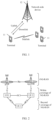
- FIG. 1 is a block diagram of a wireless communication system to which the embodiments of this application are applicable.
- the wireless communication system includes a terminal 11 and a network-side device 12.
- the terminal 11 may be a terminal-side device such as a mobile phone, a tablet computer (Tablet Personal Computer), a laptop computer (Laptop Computer), a personal digital assistant (personal digital assistant, PDA), a palmtop computer, a netbook, an ultra-mobile personal computer (ultra-mobile personal computer, UMPC), a mobile Internet device (Mobile Internet Device, MID), an augmented reality (augmented reality, AR)/virtual reality (virtual reality, VR) device, a robot, a wearable device (Wearable Device), vehicle user equipment (Vehicle User Equipment, VUE), pedestrian user equipment (Pedestrian User Equipment, PUE), a smart home device (a home device with wireless communication function, such as a refrigerator, a television, a washing machine, or a furniture), a game console, a personal computer (personal computer,
- the wearable device includes: a smart watch, a wrist band, smart earphones, smart glasses, smart jewelry (smart bracelet, smart wristband, smart ring, smart necklace, smart anklet, smart ankle bracelet, or the like), smart wristband, smart clothing, and the like. It should be noted that a specific type of the terminal 11 is not limited in the embodiments of this application.
- the network-side device 12 may include an access network device or a core network device, where the access network device may also be referred to as a radio access network device, a radio access network (Radio Access Network, RAN), a radio access network function, or a radio access network unit.
- RAN Radio Access Network
- the access network device may include a base station, a wireless local area network (Wireless Local Area Network, WLAN) access point, a Wi-Fi node, or the like.
- the base station may be referred to as a NodeB, an evolved NodeB (evolved Node B, eNB), an access point, a base transceiver station (Base Transceiver Station, BTS), a radio base station, a radio transceiver, a basic service set (Basic Service Set, BSS), an extended service set (Extended Service Set, ESS), a home NodeB, a home evolved NodeB, a transmission and reception point (Transmitting Receiving Point, TRP), or another appropriate term in the art.
- the base station is not limited to a specific technical term. It should be noted that in the embodiments of this application, the base station in the NR system is merely used as an example, and a specific type of the base station is not limited.
- the core network device may include but is not limited to at least one of the following: a core network node, a core network function, a mobility management entity (Mobility Management Entity, MME), an access mobility management function (Access and Mobility Management Function, AMF), a session management function (Session Management Function, SMF), a user plane function (User Plane Function, UPF), a policy control function (Policy Control Function, PCF), a policy and charging rules function (Policy and Charging Rules Function, PCRF), an edge application server discovery function (Edge Application Server Discovery Function, EASDF), a unified data management (Unified Data Management, UDM), a unified data repository (Unified Data Repository, UDR), a home subscriber server (Home Subscriber Server, HSS), a centralized network configuration (Centralized network configuration, CNC), a network repository function (Network Repository Function, NRF), a network exposure function (Network Exposure Function, NEF), a local NEF (Local NEF, or L-NEF
- Sidelink (Sidelink, SL) is also referred to as side link, side-link, or side link. As shown in FIG. 1 , the sidelink is used for direct data transmission between terminal devices 11 without passing through the network-side device 12, and the sidelink transmission is relative to the main link transmission, where the main link transmission includes uplink transmission initiated by the terminal device 11 to the network-side device 12 and downlink transmission initiated by the network-side device 12 to the terminal device 11.
- LTE sidelink communication is based on broadcast. Although LTE sidelink can be used to support basic safety communication of vehicle to everything (vehicle to everything, V2X), LTE sidelink is not applicable to other more advanced V2X services.
- a 5G NR (New Radio) system may support a more advanced sidelink transmission design, such as unicast and multicast or groupcast, so as to support more comprehensive service types.
- NR sidelink includes but is not limited to at least one of the following channels:
- the NR sidelink includes but is not limited to at least one of the following signals:
- NR V2X defines two resource allocation modes (mode): in mode 1, resources are scheduled by a base station; in mode 2, UE determines itself what resources to be used for transmission.
- resource information may be obtained from a broadcast message of the base station or pre-configured information. If the UE operates within coverage of the base station and has a radio resource control (Radio Resource Control, RRC) connection to the base station, the UE can operate in mode 1 and/or mode 2; if the UE operates within coverage of the base station but has no RRC connection to the base station, the UE can operate only in mode 2; and if the UE is outside coverage of the base station, the UE can merely operate in mode 2 and performs V2X transmission based on pre-configured information.
- RRC Radio Resource Control
- a transmit terminal (TX UE) first determines a resource selection window, with a lower boundary of the resource selection window being at a time of T1 after triggering of resource selection and an upper boundary for resource selection being a time of T2 after triggering, where T2 is a value selected by the UE from a packet delay budget (packet delay budget, PDB) of its transport block (transport block, TB) transmission, and T2 is not earlier than T1.
- PDB packet delay budget
- the UE Before resource selection, the UE needs to determine a candidate resource set (candidate resource set) for resource selection by comparing a reference signal received power (reference signal received power, RSRP) measured on resources in a resource selection window with a corresponding RSRP threshold and then adding the resources into the candidate resource set if the RSRP is lower than the RSRP threshold (threshold).
- RSRP reference signal received power
- the UE randomly selects a transmission resource from the candidate resource set.
- the UE may reserve transmission resources for a next transmission during a current transmission.
- NR V2X supports chained resource reservation, that is, one piece of sidelink control information (Sidelink Control Information, SCI) may be used for reserving a current resource and also for reserving a maximum of two additional resources, and two more reserved resources can be indicated on a next resource.
- SCI Sidelink Control Information
- resources may be continuously reserved in a dynamic reservation manner.
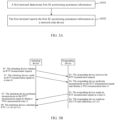
- FIG. 2 is a schematic diagram of a transmission interface of a wireless communication system to which the embodiments of this application are applicable.
- a new generation radio access network may include an NR node (gNB) and a new generation evolved node B (New Generation evolved Node B, ng-eNB), and the gNB and ng-eNB communicate with each other through an Xn interface.
- terminals such as UE1 and UE2 communicate through a PC5 interface
- the terminals such as UE1 or UE2 communicate with a network node (such as gNB or ng-eNB) through a Uu interface.
- the terminals such as UE1 or UE2 communicate with other terminals (such as UE3) through a PC5 interface.
- the SL positioning reference signal is a reference signal used for SL positioning, not necessarily just an SL PRS, and the SL positioning reference signal may include but is not limited to at least one of the following:
- an embodiment of this application provides a communication method based on SL positioning assistance information, where the method may include:
- the first SL positioning assistance information is used for configuring SL positioning required information for the first terminal by the network-side device, and the SL positioning required information includes at least one of SL positioning assistance data and SL positioning configuration information.
- the network-side device includes at least one of a base station and a location management function (Location Management Function, LMF).
- LMF Location Management Function
- the first SL positioning assistance information includes SL positioning assistance information of one or more related terminals.
- the related terminal is a terminal related to SL positioning.
- the related terminal may include at least one of the first terminal and a second terminal, and the second terminal includes at least one of a terminal establishing an SL connection to the first terminal and a terminal performing SL positioning related information transmission with the first terminal, where the SL positioning related information includes but is not limited to at least one of an SL positioning reference signal and an SL positioning reference signal measurement result.
- the second terminal may be one or more of a target terminal, assistance UE (an assistance terminal, that is, a terminal for assisting SL positioning), a location serving terminal (a terminal for performing a location service), reference UE (a reference terminal), and a positioning reference unit (positioning reference unit, PRU).
- assistance UE an assistance terminal, that is, a terminal for assisting SL positioning
- location serving terminal a terminal for performing a location service
- reference UE a reference terminal
- PRU positioning reference unit
- the second terminal may be a terminal that is determined based on a discovery procedure and can be used for SL positioning.
- the SL positioning assistance information is generally related information used for assisting the terminal in SL positioning by the network-side device.
- the following uses the first SL positioning assistance information as an example to describe what information the SL positioning assistance information can specifically include, and details are not described herein.
- the network-side device can configure the SL positioning required information for the first terminal based on the first SL positioning assistance information, and the SL positioning required information includes at least one of SL positioning assistance data and SL positioning configuration information, so that the network-side device can implement at least one of purposes of assisting SL positioning and configuring appropriate resources for SL positioning.
- the method shown in FIG. 3A may further include: the first terminal receives second SL positioning assistance information sent by the second terminal, where the second SL positioning assistance information is used for determining the first SL positioning assistance information by the first terminal. More specifically, the second SL positioning assistance information is used for determining by the first terminal that the first SL positioning assistance information contains the SL positioning assistance information of the second terminal.
- the first SL positioning assistance information reported by the first terminal includes related information (such as SL positioning assistance information) of the second terminal, which may be because the second terminal has an SL connection to the first terminal or the first terminal detects through the discovery procedure that the second terminal can be used to assist SL positioning, and then the first SL positioning assistance information includes information of the second terminal.
- related information such as SL positioning assistance information
- the first terminal may be either a transmit terminal (TX UE) or a receive terminal (RX UE), and in a case that the related terminal includes both the first terminal and the second terminal, if the first terminal is a TX UE, the number of second terminals can be more than one (one or more).
- the first terminal can be either a target terminal (a terminal that needs to be located) or an assistance terminal.
- the related terminal includes both the first terminal and the second terminal, if the first terminal is an assistance terminal UE, the second terminal may include a target terminal and may also include other assistance terminals.
- the following uses the first SL positioning assistance information as an example to describe what information the SL positioning assistance information can specifically include.
- the first SL positioning assistance information may include at least one of the following:
- the network-side device can configure the related information of the SL positioning reference signal for the first terminal based on the foregoing 14 pieces of information.
- the foregoing information may be related to one or more second terminals; therefore, the first SL positioning assistance information includes identification information of one or more second terminals, and the network-side device can select an appropriate second terminal to help the first terminal or the target terminal perform SL positioning.
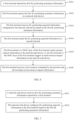
- FIG. 3B a schematic diagram of reception-to-transmission (RECEPTION-TO-TRANSMISSION, RTT) positioning shown in FIG. 3B
- FIG. 3C a schematic diagram of SL double-sided RTT or multi-RTT (RTT Double side RTT/multi-RTT) positioning principles shown in FIG. 3D
- RTT reception-to-transmission
- FIG. 3D a schematic diagram of SL double-sided RTT or multi-RTT (RTT Double side RTT/multi-RTT) positioning principles shown in FIG. 3D .
- the RTT positioning process includes: Step 1: An initiating device (Initiating Device) initiates an RTT measurement request to a responding device (Responding Device).
- Step 1 An initiating device (Initiating Device) initiates an RTT measurement request to a responding device (Responding Device).
- the initiating device is a positioning request initiating device
- the responding device is a positioning request responding device. It can be understood that in SL positioning, the initiating device may be a terminal and the responding device may be another terminal. Specifically, in a case that the initiating device is the first terminal in this embodiment of this application, the responding device may be the second terminal in this embodiment of this application.
- Step 2 The responding device receives the RTT measurement request.
- the responding device may prepare to receive an RTT measurement signal.
- Step 3 The initiating device sends an RTT measurement signal to the responding device at a time t0.
- Step 4 The responding device performs measurement on the RTT measurement signal sent by the initiating device, and obtains a time of arrival (Time of Arrival, TOA) t1 of the RTT measurement signal.
- TOA Time of Arrival
- Step 5 The responding device sends an RTT measurement signal to the initiating device at a time t2.
- Step 6 The responding device sends an RX-TX time difference t2-t1 to the initiating device.
- the responding device may alternatively send the RX-TX time difference in a payload (payload) of the RTT measurement signal sent at the time t2.
- Step 7 The initiating device performs measurement on the RTT measurement signal sent by the responding device to obtain TOA t3.
- RTT positioning does not require absolute synchronization between the initiating device and the responding device, because t2 and t1 merely need to refer to a synchronization source of the responding device, and t3 and t0 merely need to refer to a synchronization source of the initiating device.
- FIG. 3C is a schematic diagram of principles of SL positioning by using RTT.
- the initiating device may be a first terminal and the receiving device may be a second terminal.
- An RTT measurement signal sent by the first terminal to the second terminal at a time t0 is SL-PRS 1
- an RTT measurement signal sent by the second terminal to the first terminal at a time t2 is SL-PRS2.
- the first time interval information is transmission time interval information (first transmission time interval information) of the first SL positioning reference signal and the second SL positioning reference signal
- the first time interval may be specifically a transmission time interval between SL-PRS1 and SL-PRS2: T+T reply (as shown in FIG. 3C );
- the first time interval is maximum transmission interval information (second transmission interval information) of measurement result reporting information of the first SL positioning reference signal and first information
- the first time interval may be a maximum transmission interval between SL-PRS1 and the first information, where the first information may be the RTT measurement request in step 2 or the RTT measurement information in step 4 shown in FIG. 3B .
- FIG. 3D is a schematic diagram of SL double-sided RTT or multi-RTT positioning principles.
- the initiating device is the first terminal and the receiving device is the second terminal.
- the first time interval information is transmission time interval information (first transmission time interval information) of the first SL positioning reference signal and the second SL positioning reference signal
- the first time interval may be specifically a transmission time interval between SL-PRS1 and SL-PRS2: T+Treply1 (as shown in FIG.
- the first time interval information when the first time interval information is maximum transmission interval information (second transmission time interval information) of measurement result reporting information of the first SL positioning reference signal and first information, the first time interval may be a maximum transmission interval between SL-PRS 1 measurement result reporting information and the first information, where the first information may be the RTT measurement request in step 2 or the RTT measurement information in step 4 shown in FIG. 3B .
- the first SL positioning assistance information may further include at least one of the following:
- the first frequency indication information is used for indicating at least one of a first frequency and a first frequency list, where the first frequency is a frequency that is preferred for SL positioning reference signal transmission for the related terminal, the first frequency list is a frequency list that is preferred for SL positioning reference signal transmission for the related terminal, and in a case that the first frequency is different from a second frequency, the first SL positioning assistance information includes the first frequency indication information and the second frequency is a frequency used for transmitting a sidelink shared channel (sidelink shared channel, SL-SCH). That is, in a case that a channel for transmitting SL data and a frequency for SL positioning reference signal transmission are different, it may include first frequency indication information and second frequency indication information respectively.
- the first frequency indication information may include, but is not limited to, at least one of the following information:
- the first BWP indication information is used to indicate a first BWP, where the first BWP is a BWP that is preferred for SL positioning reference signal transmission for the related terminal, and in a case that the first BWP is different from a second BWP, the first SL positioning assistance information includes the first BWP indication information, and the second BWP is a BWP used by the related terminal for transmitting an SL-SCH. That is, in a case that a channel for transmitting SL data and a frequency for SL positioning reference signal transmission are different, it may include first BWP indication information and second BWP indication information respectively.
- the first BWP indication information may include but is not limited to at least one of the following information:
- the network-side device may configure, for the first terminal based on the items 15 and 16 of information, the frequency information and BWP for transmitting at least one of the SL positioning reference signal and the SL positioning information.
- the first SL positioning assistance information may further include at least one of the following:
- the SL DRX configuration information may include but is not limited to at least one of the following:
- SL DRX has two states: off and on, the off state is an inactive state and the on state is an active state.
- the network-side device can configure the SL DRX configuration information for the first terminal based on the items 17 and 18 of information.
- the network-side device can avoid scheduled or configured resources for transmitting the SL positioning reference signal from being located at a DRX off time.
- the network-side device can determine the SL DRX configuration information based on the items 17 and 18 of information and DRX configuration information of the Uu interface, that is, aligning SL DRX with Uu DRX.
- the network-side device may configure, based on the items 17 and 18 of information for the first terminal, the SL positioning required information determined for the second terminal based on the SL DRX configuration information, so as to assist the first terminal and the second terminal in completing SL positioning.
- the first SL positioning assistance information may further include at least one of the following:
- the configuration information of the measurement gap includes but is not limited to at least one of the following:
- the network-side device may configure for the first terminal the measurement gap of the related terminal based on the items 19 and 20 of information, so as to assist the related terminal in completing measurement on an SL positioning reference signal within the measurement gap.
- the network-side device can avoid scheduled or configured resources for transmitting the SL positioning reference signal from being located at the measurement gap, based on the items 19 and 20 of information.
- the network-side device may configure, based on the items 19 and 20 of information for the first terminal, the SL positioning required information determined for the second terminal based on the measurement gap, so as to assist the first terminal and the second terminal in completing SL positioning.
- the first SL positioning assistance information may further include at least one of the following:
- the network-side device may configure related synchronization information of the second terminal for the first terminal based on the items 21 to 23 of information, so as to assist the second terminal in completing measurement of the SL positioning reference signal.
- the network-side device may determine, based on the items 21 to 23 of information, scheduled or configured resources for transmitting the SL positioning reference signal or measuring the SL positioning reference signal, that is, the synchronization information is considered so as to determine resources for transmitting the SL positioning reference signal or measuring the SL positioning reference signal. Further, in a case that the first SL positioning assistance information includes the items 21 to 23 of information, the network-side device may configure, based on the items 21 to 23 of information for the first terminal, the SL positioning required information determined for the second terminal based on the synchronization information, so as to assist the first terminal and the second terminal in completing SL positioning.
- the first SL positioning assistance information may further include: (24)
- the first SL positioning assistance information further includes preset capability information of the second terminal.
- the preset capability information of the second terminal includes at least one of the following:
- the foregoing 8 capability may specifically include, but is not limited to, at least one of the following capabilities:
- the item 24 of information is related to the preset capability of the second terminal.
- the network-side device may configure, for the first terminal based on the item 24 of information, SL positioning required information matching the preset capability of the second terminal, so as to assist the first terminal and the second terminal in completing SL positioning.
- the first SL positioning assistance information may further include: (25) Positioning mode information used by the related terminal.
- the positioning mode information used by the related terminal is used but not limited to indicate at least one of the following information:
- the network-side device may configure, for the first terminal based on the item 25 of information, positioning required information matching a positioning mode used by the related terminal, so as to assist the related terminal in completing related positioning.
- the network-side device may determine a positioning mode used by the first terminal and the related terminal based on the item 25 of information, so as to request the related terminal to complete the related positioning by using the positioning mode.
- the first SL positioning assistance information may further include: (26) assistance information related to a road side unit (Road side unit, RSU), where the RSU is for establishing SL communication with the related terminal, and/or the RSU is an RSU selected by the related terminal for assisting SL positioning.
- RSU road side unit
- the assistance information related to the RSU includes but is not limited to at least one of the following:
- the network-side device may determine, based on the item 26 of information, related configuration information of the RSU for assisting the first terminal or the target terminal, so as to assist the related terminal in completing SL positioning.
- the first SL positioning assistance information may further include at least one of the following two items:
- the second information may include, but is not limited to, at least one of the following:
- the network-side device can learn about a case of a configuration failure or configuration refusal of the second information in a timely manner, so as to adjust configuration of the second information in a timely manner.
- the first SL positioning assistance information may further include: (29) timing error group (timing error group, TEG) related information.
- the TEG related information includes at least one of the following:
- the network-side device may adjust the related timing accordingly and then perform configuration after adjustment.
- the network-side device may request a related terminal or SL positioning reference signal accordingly, so as to reduce influence of the TEG.
- the SL positioning assistance information As an example, content contained in the SL positioning assistance information is listed above. It should be noted that in addition to the content listed in the item (29) above, the SL positioning assistance information may also contain other content not listed, and the content not listed also falls within a scope included by the SL positioning assistance information.
- the foregoing step 302 may include: in a case that a first default trigger condition is met, the first terminal reports the first SL positioning assistance information to the network-side device;
- the first default trigger condition may include, but is not limited to, at least one of the following:
- the first SL positioning assistance information is reported to the network-side device, so that the network-side device can configure the SL positioning required information for the first terminal when necessary, instead of blindly configuring, thereby improving the communication effectiveness.
- an embodiment of this application provides a communication method based on SL positioning assistance information, which, in addition to the foregoing step 301 and step 302, may further include the following steps: Step 303: The first terminal receives the SL positioning required information configured by the network-side device based on the first SL positioning assistance information.
- the network-side device includes a base station, and the SL positioning required information includes SL positioning configuration information.
- the SL positioning configuration information configured by the base station for the first terminal may include but is not limited to at least one of the following:
- the SL positioning configuration information configured by the base station for the first terminal may further include but is not limited to at least one of the following:
- the network-side device further includes an LMF, and before the base station configures the SL positioning configuration information for the first terminal, the LMF may further configure at least one of the following SL positioning configuration information for the base station:
- the network-side device includes an LMF
- the SL positioning required information includes SL positioning assistance data
- the SL positioning assistance data configured for the first terminal by the LMF may include but is not limited to at least one of the following:
- the SL positioning required information may further include the configuration information of the measurement gap of the related terminal, where the configuration information matches the first SL positioning assistance information in the item 19 above.
- the measurement gap of the related terminal is determined based on SL DRX configuration information of the related terminal, and the measurement gap of the related terminal is located in an SL DRX inactive time of the related terminal.
- an embodiment of this application provides a communication method based on SL positioning assistance information, which, in addition to the foregoing step 301, step 302, and step 303, may further include the following steps:
- Step 304 The first terminal sends the SL positioning required information to a second terminal.
- the first terminal sends SL positioning assistance data and/or SL positioning configuration information in the SL positioning required information to the second terminal, where the number of the second terminals may be more than one.
- the first terminal may send SL DRX configuration information of the UE to the second terminal through UEAssistanceinformationsSideLink, so that the second terminal can learn about SL DRX information to send data.
- an embodiment of this application provides a communication method based on SL positioning assistance information, which may further include: in a case that the second terminal rejects configuration in the SL positioning required information, the first terminal updates the first SL positioning assistance information and reports it to the network-side device. For example, the second terminal rejects resource pool configuration information used for transmission and positioning, and a measurement gap or measurement window used for SL-PRS measurement. In this case, to implement SL positioning, the first terminal needs to report the first SL positioning assistance information again.
- an embodiment of this application provides a communication method based on SL positioning assistance information, which, in addition to the foregoing step 301, step 302, step 303, and step 304, may further include the following: Step 305: The first terminal or a medium access control (Medium Access Control, MAC) layer of the first terminal sends resource request information to the network-side device; or, the first terminal or the MAC layer of the first terminal triggers to send resource request information to the network-side device.
- MAC Medium Access Control
- the resource request information is used to request the network-side device for a resource for transmitting SL positioning related information
- the SL positioning related information includes at least one of an SL positioning reference signal and an SL positioning reference signal measurement result.
- the resource request information is used to request the network-side device for a resource for SL positioning reference signal transmission.
- the resource request information includes at least one of the following:
- the first terminal may send the resource request information through a MAC control element (Control Element, CE), more specifically, the MAC CE may be a buffer status report (Buffer Status Report, BSR), and the MAC CE is used for indicating, but not limited to, bandwidth information required for SL positioning reference signal transmission.
- a MAC control element Control Element, CE
- BSR Buffer Status Report
- the network-side device configures for the first terminal a plurality of selectable bandwidths and a plurality of selectable subchannels (subchannel), the resource request information is sent through a MAC CE, and the MAC CE is used to indicate at least one of the following:
- the network-side device may be a serving cell (Pcell) of the first terminal.
- Pcell serving cell
- the first terminal or the MAC layer of the first terminal sends the resource request information to the network-side device in a case that a second default trigger condition is met.
- the second default trigger condition includes at least one of the following:
- the resource request information is sent to the network-side device, so that the network-side device can schedule resources as needed, thereby improving the communication effectiveness.
- the first resource includes at least one of a first SL resource and a second SL resource, where the first SL resource includes an SL resource for SL positioning related information transmission, and the second SL resource includes an SL resource for sidelink shared channel SL-SCH transmission.
- the SL positioning related information may include at least one of an SL positioning reference signal and an SL positioning reference signal measurement result.
- the first terminal may perform at least one of the following steps, but not limited to:
- SL positioning can be implemented by performing the foregoing steps, and the purpose of assisting SL positioning by the network device is also implemented.
- the first terminal can report the first SL positioning assistance information to the network-side device through third information; or, the first terminal may report the first SL positioning assistance information to the network-side device through fourth information; where the third information is SidelinkUEInformationNR or UEAssistanceInformationNR, and the fourth information is different from the third information.
- SidelinkUEInformationNR is used to send terminal assistance data (SidelinkUEInformationNR) to the network-side device, so as to achieve one of the following purposes: reporting an SL status of each target terminal (per destination), requesting or releasing an SL resource, and reporting QoS information.
- the foregoing describes a communication method based on SL assistance information applied to the first terminal provided in the embodiment of this application, and the following describes a communication method based on SL assistance information applied to the network-side device.
- an embodiment of this application provides a communication method based on SL positioning assistance information, where the method may include the steps.
- Step 701 A network-side device receives first SL positioning assistance information reported by a first terminal.
- Step 702 The network-side device configures SL positioning required information to the first terminal based on the first SL positioning assistance information.
- the network-side device includes at least one of a base station and a LMF, the SL positioning required information includes at least one of SL positioning assistance data and SL positioning configuration information.
- the first SL positioning assistance information includes SL positioning assistance information of one or more related terminals.
- the related terminal is a terminal related to SL positioning.
- the related terminal may include at least one of the first terminal and a second terminal, and the second terminal includes at least one of a terminal establishing an SL connection to the first terminal and a terminal performing SL positioning related information transmission with the first terminal, where the SL positioning related information includes but is not limited to at least one of an SL positioning reference signal and an SL positioning reference signal measurement result.
- the second terminal may be one or more of a target terminal, assistance UE (an assistance terminal, that is, a terminal for assisting SL positioning), a location serving terminal (a terminal for performing a location service), reference UE (a reference terminal), and a PRU.
- assistance UE an assistance terminal, that is, a terminal for assisting SL positioning
- location serving terminal a terminal for performing a location service
- reference UE a reference terminal
- PRU a PRU
- the second terminal may be a terminal that is determined based on a discovery procedure and can be used for SL positioning.
- the first SL positioning assistance information reported by the first terminal includes related information (such as SL positioning assistance information) of the second terminal, which may be because the second terminal has an SL connection to the first terminal or the first terminal detects through the discovery procedure that the second terminal can be used to assist SL positioning, and then the first SL positioning assistance information includes information of the second terminal.
- related information such as SL positioning assistance information
- the first terminal can be either a target terminal (a terminal that needs to be located) or an assistance terminal.
- the related terminal includes both the first terminal and the second terminal, if the first terminal is an assistance terminal UE, the second terminal may include a target terminal and may also include other assistance terminals.
- the SL positioning assistance information is generally related information used for assisting the terminal in SL positioning by the network-side device.
- the following uses the first SL positioning assistance information as an example to describe what information the SL positioning assistance information can specifically include, and details are not described herein.
- the network-side device can configure the SL positioning required information for the first terminal based on the first SL positioning assistance information, and the SL positioning required information includes at least one of SL positioning assistance data and SL positioning configuration information, so that the network-side device can implement at least one of purposes of assisting SL positioning and configuring appropriate resources for SL positioning.
- the following uses the first SL positioning assistance information as an example to describe what information the SL positioning assistance information can specifically include.
- the first SL positioning assistance information may include at least one of the following:
- the network-side device can configure the related information of the SL positioning reference signal for the first terminal based on the foregoing 14 pieces of information.
- the first SL positioning assistance information may further include at least one of the following:
- the first frequency indication information is used for indicating at least one of a first frequency and a first frequency list, where the first frequency is a frequency that is preferred for SL positioning reference signal transmission for the related terminal, the first frequency list is a frequency list that is preferred for SL positioning reference signal transmission for the related terminal, and in a case that the first frequency is different from a second frequency, the first SL positioning assistance information includes the first frequency indication information and the second frequency is a frequency used for sidelink shared channel (sidelink shared channel, SL-SCH) transmission. That is, in a case that a channel for transmitting SL data and a frequency for SL positioning reference signal transmission are different, it may include first frequency indication information and second frequency indication information respectively.
- the first frequency indication information may include, but is not limited to, at least one of the following information:
- the first BWP indication information is used to indicate a first BWP, where the first BWP is a BWP that is preferred for SL positioning reference signal transmission for the related terminal, and in a case that the first BWP is different from a second BWP, the first SL positioning assistance information includes the first BWP indication information, and the second BWP is a BWP used by the related terminal for transmitting an SL-SCH. That is, in a case that a channel for transmitting SL data and a frequency for SL positioning reference signal transmission are different, it may include first BWP indication information and second BWP indication information respectively.
- the network-side device may configure, for the first terminal based on the items 15 and 16 of information, the frequency information and BWP for transmitting at least one of the SL positioning reference signal and the SL positioning information.
- the first SL positioning assistance information may further include at least one of the following:
- the SL DRX configuration information may include but is not limited to at least one of the following:
- SL DRX has two states: off and on, the off state is an inactive state and the on state is an active state.
- the network-side device can configure the SL DRX configuration information for the first terminal based on the items 17 and 18 of information.
- the network-side device can avoid scheduled or configured resources for transmitting the SL positioning reference signal from being located at a DRX off time.
- the network-side device can determine the SL DRX configuration information based on the items 17 and 18 of information and DRX configuration information of the Uu interface, that is, aligning SL DRX with Uu DRX.
- the network-side device may configure, based on the items 17 and 18 of information for the first terminal, the SL positioning required information determined for the second terminal based on the SL DRX configuration information, so as to assist the first terminal and the second terminal in completing SL positioning.
- the first SL positioning assistance information may further include at least one of the following:
- the configuration information of the measurement gap includes but is not limited to at least one of the following:
- the network-side device may configure for the first terminal the measurement gap of the related terminal based on the items 19 and 20 of information, so as to assist the related terminal in completing measurement on an SL positioning reference signal within the measurement gap.
- the network-side device can avoid scheduled or configured resources for transmitting the SL positioning reference signal from being located at the measurement gap, based on the items 19 and 20 of information.
- the network-side device may configure, based on the items 19 and 20 of information for the first terminal, the SL positioning required information determined for the second terminal based on the measurement gap, so as to assist the first terminal and the second terminal in completing SL positioning.
- the first SL positioning assistance information may further include at least one of the following:
- the network-side device may configure related synchronization information of the second terminal for the first terminal based on the items 21 to 23 of information, so as to assist the second terminal in completing measurement of the SL positioning reference signal.
- the network-side device may determine, based on the items 21 to 23 of information, scheduled or configured resources for transmitting the SL positioning reference signal or measuring the SL positioning reference signal, that is, the synchronization information is considered so as to determine resources for transmitting the SL positioning reference signal or measuring the SL positioning reference signal. Further, in a case that the first SL positioning assistance information includes the 21st and 23rd items of information, the network-side device may configure, based on the 21st and 23rd items of information for the first terminal, the SL positioning required information determined for the second terminal based on the synchronization information, so as to assist the first terminal and the second terminal in completing SL positioning.
- the first SL positioning assistance information may further include: (24)
- the first SL positioning assistance information further includes preset capability information of the second terminal.
- the preset capability information of the second terminal includes at least one of the following:
- the foregoing 8 capability may specifically include, but is not limited to, at least one of the following capabilities:
- the item 24 of information is related to the preset capability of the second terminal.
- the network-side device may configure, for the first terminal based on the item 24 of information, SL positioning required information matching the preset capability of the second terminal, so as to assist the first terminal and the second terminal in completing SL positioning.
- the first SL positioning assistance information may further include: (25) Positioning mode information used by the related terminal.
- the network-side device may configure, for the first terminal based on the item 25 of information, positioning required information matching a positioning mode used by the related terminal, so as to assist the related terminal in completing related positioning.
- the network-side device may determine a positioning mode used by the first terminal and the related terminal based on the item 25 of information, so as to request the related terminal to complete the related positioning by using the positioning mode.
- the first SL positioning assistance information may further include: (26) assistance information related to a road side unit (Road side unit, RSU), where the RSU is for establishing SL communication with the related terminal, and/or the RSU is an RSU selected by the related terminal for assisting SL positioning.
- RSU road side unit
- the assistance information related to the RSU includes but is not limited to at least one of the following:
- the network-side device may determine, based on the item 26 of information, related configuration information of the RSU for assisting the first terminal or the target terminal, so as to assist the related terminal in completing SL positioning.
- the first SL positioning assistance information may further include at least one of the following two items:
- the second information may include, but is not limited to, at least one of the following:
- the network-side device can learn about a case of a configuration failure or configuration refusal of the second information in a timely manner, so as to adjust configuration of the second information in a timely manner.
- the first SL positioning assistance information may further include: (29) timing error group (timing error group, TEG) related information.
- the TEG related information includes at least one of the following:
- the network-side device can adjust the related timing accordingly and then configure it after adjustment.
- the network-side device may request a related terminal or SL positioning reference signal accordingly, so as to reduce influence of the TEG.
- the SL positioning assistance information As an example, content contained in the SL positioning assistance information is listed above. It should be noted that in addition to the content listed in the item (29) above, the SL positioning assistance information may also contain other content not listed, and the content not listed also falls within a scope included by the SL positioning assistance information.
- the foregoing step 701 may specifically include: the network-side device receives the first SL positioning assistance information reported by the first terminal in a case that a first default trigger condition is met.
- the first SL positioning assistance information is reported to the network-side device, so that the network-side device can configure the SL positioning required information for the first terminal when necessary, instead of blindly configuring, thereby improving the communication effectiveness.
- the SL positioning required information configured by the network-side device matches the first SL positioning assistance information reported by the first terminal, for example, the frequency information configured by the network side for transmitting SL-PRS should meet a request in the first SL assistance information (for example, the first terminal reports one first frequency list, and the network side selects one or more frequencies for transmitting an SL-PRS), and the resource pool configuration information configured by the network side for transmitting an SL-PRS should meet the request in the first SL assistance information (for example, a starting time or an ending time, such as the number of subchannels).
- the network-side device includes a base station, and the SL positioning required information includes SL positioning configuration information.
- the SL positioning configuration information configured by the base station for the first terminal may include but is not limited to at least one of the following:
- the SL positioning configuration information configured by the base station for the first terminal may further include but is not limited to at least one of the following:
- the network-side device further includes an LMF, and before the base station configures the SL positioning configuration information for the first terminal, the LMF may further configure at least one of the following SL positioning configuration information for the base station:
- the network-side device includes an LMF
- the SL positioning required information includes SL positioning assistance data
- the SL positioning assistance data configured for the first terminal by the LMF may include but is not limited to at least one of the following:
- the SL positioning required information may further include the configuration information of the measurement gap of the related terminal, where the configuration information matches the first SL positioning assistance information in the item 19 above.
- the measurement gap of the related terminal is determined based on SL DRX configuration information of the related terminal, and the measurement gap of the related terminal is located in an SL DRX inactive time of the related terminal.
- an embodiment of this application provides a communication method based on SL positioning assistance information, further including: receiving, by the network-side device, updated first SL positioning assistance information reported by the first terminal, where the first SL positioning assistance information is updated by the first terminal in a case that the second terminal rejects configuration in the SL positioning required information.
- an embodiment of this application provides a communication method based on SL positioning assistance information, which, in addition to the foregoing step 701 and step 702, may further include the following steps: Step 703: The network-side device receives resource request information sent by the first terminal or a MAC layer of the first terminal.
- the resource request information is used to request the network-side device for a resource for transmitting SL positioning related information
- the SL positioning related information includes at least one of an SL positioning reference signal and an SL positioning reference signal measurement result.
- the resource request information is used to request the network-side device for a resource for SL positioning reference signal transmission.
- the resource request information includes at least one of the following:
- the first terminal may send the resource request information through a MAC CE
- the MAC CE may be a buffer status report (Buffer Status Report, BSR), and the MAC CE is used for indicating, but not limited to, bandwidth information required for SL positioning reference signal transmission.
- BSR Buffer Status Report
- the network-side device configures for the first terminal a plurality of selectable bandwidths and a plurality of selectable subchannels (subchannel), the resource request information is sent through a MAC CE, and the MAC CE is used to indicate at least one of the following:
- the network-side device may be a serving cell (Pcell) of the first terminal.
- Pcell serving cell
- the resource request information is sent by the first terminal or the MAC layer of the first terminal in a case that a second default trigger condition is met.
- the second default trigger condition includes at least one of the following:
- the resource request information is sent to the network-side device, so that the network-side device can schedule resources as needed, thereby improving the communication effectiveness.
- an embodiment of this application provides a communication method based on SL positioning assistance information, which, in addition to the foregoing step 701, step 702, and step 703, may further include the following steps: Step 704: The network-side device sends a first resource to the first terminal based on the resource request information.
- the first resource includes at least one of a first SL resource and a second SL resource, where the first SL resource includes an SL resource for SL positioning related information transmission, and the second SL resource includes an SL resource for sidelink shared channel SL-SCH transmission.
- the SL positioning related information may include at least one of an SL positioning reference signal and an SL positioning reference signal measurement result.
- the first terminal may perform at least one of the following steps, but not limited to:
- SL positioning can be implemented by performing the foregoing steps, and the purpose of assisting SL positioning by the network device is also implemented.
- the step 701 may specifically include: the network-side device receives the first SL positioning assistance information reported by the first terminal through third information; or, the network-side device receives the first SL positioning assistance information reported by the first terminal through fourth information.
- the third information is SidelinkUEInformationNR or UEAssistanceInformationNR, and the fourth information is different from the third information.
- the foregoing describes a communication method based on SL assistance information applied to the network-side device provided in the embodiments of this application.
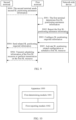
- the following describes an application example of a communication method based on SL assistance information provided in an embodiment of this application with reference to FIG. 9 .
- the interaction process of a communication method based on SL assistance information provided in this embodiment of this application may include: Step 900: The second terminal sends the second SL positioning assistance information to the first terminal.
- the second SL positioning assistance information is used to determine the first SL positioning assistance information.
- Step 901 A first terminal determines first SL positioning assistance information.
- Step 902 The first terminal reports the first SL positioning assistance information to the network-side device.
- Step 903 The network-side device configures SL positioning required information for the first terminal based on the first SL positioning assistance information.
- Step 904 The first terminal sends related SL positioning required information to the second terminal.
- the first terminal may send SL DRX configuration information of the UE to the second terminal through UEAssistanceinformationsSideLink, so that the second terminal can learn about SL DRX information to send data.
- Step 905 The network-side device activates SL positioning related configuration information configured for the first terminal and/or schedules a first SL resource.
- Step 906 The first terminal transmits scheduling information of the first SL resource to the second terminal, or the first terminal performs transmission on the first SL resource.
- That the first terminal performs transmission on the first SL resource may include that: the first terminal transmits at least one of the SL positioning reference signal and the SL positioning reference signal to the second terminal on the first SL resource.
- the network-side device can configure the SL positioning required information for the first terminal based on the first SL positioning assistance information, and the SL positioning required information includes at least one of SL positioning assistance data and SL positioning configuration information, so that the network-side device can implement the purpose of assisting SL positioning.
- the execution subject of the communication method based on SL positioning assistance information provided in the embodiments of this application may be a communication apparatus based on SL positioning assistance information.
- the communication apparatus based on SL positioning assistance information provided in the embodiments of this application is described by using the communication method based on SL positioning assistance information being executed by the communication apparatus based on SL positioning assistance information as an example.
- the following describes the communication apparatus based on SL positioning assistance information provided in the embodiments of this application with reference to the accompanying drawings.
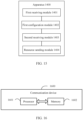
- the communication apparatus based on SL positioning assistance information provided in the embodiments of this application corresponds to the communication method based on SL positioning assistance information provided in the embodiments of this application, the communication apparatus based on SL positioning assistance information provided in the embodiments of this application is described briefly. For details, refer to the description of the foregoing method embodiments.
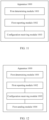
- an embodiment of this application provides a communication apparatus 1000 based on SL positioning assistance information, and the apparatus 1000 may include a first determining module 1001 and a first reporting module 1002.
- the first determining module 1001 is configured to determine first SL positioning assistance information.
- the first reporting module 1002 is configured to report the first SL positioning assistance information to a network-side device; where the network-side device includes at least one of a base station and a location management function LMF, the first SL positioning assistance information is used for configuring SL positioning required information for the first terminal by the network-side device, and the SL positioning required information includes at least one of SL positioning assistance data and SL positioning configuration information.
- the first SL positioning assistance information includes SL positioning assistance information of one or more related terminals.
- the related terminal is a terminal related to SL positioning.
- the related terminal may include at least one of the first terminal and a second terminal, and the second terminal includes at least one of a terminal establishing an SL connection to the first terminal and a terminal performing SL positioning related information transmission with the first terminal, where the SL positioning related information includes but is not limited to at least one of an SL positioning reference signal and an SL positioning reference signal measurement result.
- the SL positioning assistance information is generally related information used for assisting the terminal in SL positioning by the network-side device.
- the following uses the first SL positioning assistance information as an example to describe what information the SL positioning assistance information can specifically include, and details are not described herein.
- the apparatus 1000 shown in FIG. 10 may further include an information receiving module configured to receive second SL positioning assistance information sent by the second terminal, where the second SL positioning assistance information is used for determining the first SL positioning assistance information by the first terminal. More specifically, the second SL positioning assistance information is used for determining by the first terminal that the first SL positioning assistance information contains the SL positioning assistance information of the second terminal.
- the first reporting module 1002 can be configured to report the first SL positioning assistance information to the network-side device in a case that a first default trigger condition is met.
- FIG. 10 is capable of implementing the method shown in FIG. 3A , with the same technical effects achieved, so the description is relatively simple.
- the description is relatively simple.
- an embodiment of this application provides a communication apparatus 1000 based on SL positioning assistance information, which includes a configuration receiving module 1003 in addition to the first determining module 1001 and the first reporting module 1002.
- the configuration receiving module 1003 is configured to receive the SL positioning required information configured by the network-side device based on the first SL positioning assistance information.
- the SL positioning required information configured by the network-side device matches the first SL positioning assistance information reported by the first terminal.
- FIG. 11 is capable of implementing the method shown in FIG. 4 , with the same technical effects achieved, so the description is relatively simple.
- the description is relatively simple.
- an embodiment of this application provides a communication apparatus 1000 based on SL positioning assistance information, including not only the first determining module 1001, the first reporting module 1002, and the configuration receiving module 1003, but also a first sending module 1004 configured to send the SL positioning required information to the second terminal.
- the first terminal updates the first SL positioning assistance information and reports it to the network-side device.
- FIG. 12 is capable of implementing the method shown in FIG. 5 , with the same technical effects achieved, so the description is relatively simple.
- the description is relatively simple.
- an embodiment of this application provides a communication apparatus 1000 based on SL positioning assistance information, including not only the first determining module 1001, the first reporting module 1002, the configuration receiving module 1003, and the first sending module 1004, but also a resource requesting module 1005 configured to send resource request information to the network-side device; or, a first terminal or a MAC layer of the first terminal triggers to send resource request information to the network-side device.
- the resource request information is used to request the network-side device for a resource for transmitting SL positioning related information
- the SL positioning related information includes at least one of an SL positioning reference signal and an SL positioning reference signal measurement result.
- the first terminal or the MAC layer of the first terminal sends the resource request information to the network-side device in a case that a second default trigger condition is met.
- a second default trigger condition For specific content of the second default trigger condition, refer to the foregoing, which is not repeated herein.
- an embodiment of this application provides a communication apparatus 1000 based on SL positioning assistance information, which may further include a resource receiving module 1006 for receiving a first resource scheduled by a network-side device based on resource request information.
- the first resource includes at least one of a first SL resource and a second SL resource, where the first SL resource includes an SL resource for SL positioning related information transmission, and the second SL resource includes an SL resource for sidelink shared channel SL-SCH transmission.
- the SL positioning related information may include at least one of an SL positioning reference signal and an SL positioning reference signal measurement result.
- the first reporting module 1002 can report the first SL positioning assistance information to the network-side device through third information; or, the first reporting module 1002 may report the first SL positioning assistance information to the network-side device through fourth information; where the third information is SidelinkUEInformationNR or UEAssistanceInformationNR, and the fourth information is different from the third information.
- an embodiment of this application provides a communication apparatus 1400 based on SL positioning assistance information, and the apparatus 1400 may include a first receiving module 1401 and a first configuration module 1402.
- the first receiving module 1401 is configured for the network-side device to receive first SL positioning assistance information reported by a first terminal.
- the network-side device includes at least one of a base station and a location management function LMF.
- the first configuration module 1402 is configured for the network-side device to configure SL positioning required information based on the first SL positioning assistance information for the first terminal, where the SL positioning required information includes at least one of SL positioning assistance data and SL positioning configuration information.
- the first SL positioning assistance information includes SL positioning assistance information of one or more related terminals.
- the related terminal is a terminal related to SL positioning.
- the related terminal may include at least one of the first terminal and a second terminal, and the second terminal includes at least one of a terminal establishing an SL connection to the first terminal and a terminal performing SL positioning related information transmission with the first terminal, where the SL positioning related information includes but is not limited to at least one of an SL positioning reference signal and an SL positioning reference signal measurement result.
- FIG. 14 is capable of implementing the method shown in FIG. 7 , with the same technical effects achieved, so the description is relatively simple.
- the description is relatively simple.
- the first receiving module 1401 may be specifically configured to receive the first SL positioning assistance information reported by the first terminal in a case that a first default trigger condition is met.
- an embodiment of this application provides a communication apparatus 1400 based on SL positioning assistance information, which may further include a second receiving module 1403 configured to receive resource request information sent by a first terminal or a MAC layer of the first terminal.
- the resource request information is used to request the network-side device for a resource for transmitting SL positioning related information
- the SL positioning related information includes at least one of an SL positioning reference signal and an SL positioning reference signal measurement result.
- the resource request information is sent by the first terminal or the MAC layer of the first terminal in a case that a second default trigger condition is met.
- an embodiment of this application provides a communication apparatus 1400 based on SL positioning assistance information, which may further include a resource sending module 1404 configured to send a first resource to the first terminal based on the resource request information.
- the first resource includes at least one of a first SL resource and a second SL resource, where the first SL resource includes an SL resource for SL positioning related information transmission, and the second SL resource includes an SL resource for sidelink shared channel SL-SCH transmission.
- the SL positioning related information may include at least one of an SL positioning reference signal and an SL positioning reference signal measurement result.
- the first receiving module 1401 may be specifically configured to receive the first SL positioning assistance information reported by the first terminal through third information; or, receive the first SL positioning assistance information reported by the first terminal through fourth information.
- the third information is SidelinkUEInformationNR or UEAssistanceInformationNR, and the fourth information is different from the third information.
- FIG. 15 is capable of implementing the method shown in FIG. 8 , with the same technical effects achieved, so the description is relatively simple.
- the description is relatively simple.
- the communication apparatus based on SL positioning assistance information in this embodiment of this application may be an electronic device, such as an electronic device with an operating system, or a component in the electronic device, such as an integrated circuit or a chip.
- the electronic device may be a terminal or other devices than the terminal.
- the terminal may include, but is not limited to, the types of the terminal 11 listed above, and other devices may be a server, a network attached storage (Network Attached Storage, NAS), and the like. This is not limited in the embodiments of this application.
- an embodiment of this application further provides a communication device 1600, including a processor 1601 and a memory 1602.
- a program or instructions capable of running on the processor 1601 are stored in the memory 1602.
- the steps of the foregoing embodiments of the communication method based on SL positioning assistance information are implemented, with the same technical effects achieved
- the steps of the foregoing embodiments of the communication method based on SL positioning assistance information are implemented, with the same technical effects achieved.
- the steps of the foregoing embodiments of the communication method based on SL positioning assistance information are implemented, with the same technical effects achieved. To avoid repetition, details are not described herein again.
- An embodiment of this application further provides a terminal, including a processor and a communication interface, where the communication interface is configured to determine first SL positioning assistance information, and the processor is configured to report the first SL positioning assistance information to a network-side device.
- the terminal embodiment corresponds to the foregoing terminal side method embodiment, and the implementation processes and implementations of the foregoing method embodiments can be applied to the terminal embodiments, with the same technical effects achieved.
- FIG. 17 is a schematic diagram of a hardware structure of a terminal implementing an embodiment of this application.
- the terminal 1700 includes but is not limited to at least part of components such as a radio frequency unit 1701, a network module 1702, an audio output unit 1703, an input unit 1704, a sensor 1705, a display unit 1706, a user input unit 1707, an interface unit 1708, a memory 1709, and a processor 1710.
- a radio frequency unit 1701 such as a radio frequency unit 1701, a network module 1702, an audio output unit 1703, an input unit 1704, a sensor 1705, a display unit 1706, a user input unit 1707, an interface unit 1708, a memory 1709, and a processor 1710.
- the terminal 1700 may further include a power supply (such as a battery) for supplying power to the components.
- the power supply may be logically connected to the processor 1710 through a power management system. In this way, functions such as charge management, discharge management, and power consumption management are implemented by using the power management system.
- the terminal structure shown in FIG. 17 does not constitute a limitation to the terminal.
- the terminal may include more or fewer components than those shown in the figure, or some components may be combined, or there may be a different component arrangement, which is not repeated herein.
- the input unit 1704 may include a graphics processing unit (Graphics Processing Unit, GPU) 17041 and a microphone 17042.
- the GPU 17041 processes image data of a static picture or a video that is obtained by an image capture apparatus (for example, a camera) in a video capture mode or an image capture mode.
- the display unit 1706 may include the display panel 17061.
- the display panel 17061 may be configured in a form of a liquid crystal display, an organic light-emitting diode, or the like.
- the user input unit 1707 includes at least one of a touch panel 17071 and other input devices 17072.
- the touch panel 17071 is also referred to as a touchscreen.
- the touch panel 17071 may include two parts: a touch detection apparatus and a touch controller.
- the other input devices 17072 may include but are not limited to at least one of a physical keyboard, a functional button (such as a volume control button or a power on/off button), a trackball, a mouse, and a joystick. Details are not described herein.
- the radio frequency unit 1701 after receiving downlink data from a network-side device, the radio frequency unit 1701 sends the downlink data to the processor 1710 for processing; and the radio frequency unit 1701 also sends uplink data to the network-side device.
- the radio frequency unit 1701 includes, but is not limited to, an antenna, an amplifier, a transceiver, a coupler, a low noise amplifier, a duplexer, and the like.
- the memory 1709 may be configured to store software programs or instructions and various data.
- the memory 1709 may mainly include a first storage area for storing programs or instructions and a second storage area for storing data, where the first storage area may store an operating system, an application program or instructions required by at least one function (for example, an audio playing function and an image playing function), and the like.
- the memory 1709 may be a volatile memory or a non-volatile memory, or the memory 1709 may include a volatile memory and a non-volatile memory.
- the non-volatile memory may be a read-only memory (Read-Only Memory, ROM), a programmable read-only memory (Programmable ROM, PROM), an erasable programmable read-only memory (Erasable PROM, EPROM), an electrically erasable programmable read-only memory (Electrically EPROM, EEPROM), or a flash memory.
- ROM Read-Only Memory
- PROM programmable read-only memory
- Erasable PROM Erasable PROM
- EPROM electrically erasable programmable read-only memory
- EEPROM electrically erasable programmable read-only memory
- the volatile memory may be a random access memory (Random Access Memory, RAM), a static random access memory (Static RAM, SRAM), a dynamic random access memory (Dynamic RAM, DRAM), synchronous dynamic random access memory (Synchronous DRAM, SDRAM), a double data rate synchronous dynamic random access memory (Double Data Rate SDRAM, DDRSDRAM), an enhanced synchronous dynamic random access memory (Enhanced SDRAM, ESDRAM), a synchronous link dynamic random access memory (Synch link DRAM, SLDRAM), and a direct memory bus random access memory (Direct Rambus RAM, DRRAM).
- RAM Random Access Memory
- SRAM static random access memory
- DRAM dynamic random access memory
- DRAM synchronous dynamic random access memory
- SDRAM double data rate synchronous dynamic random access memory
- Enhanced SDRAM, ESDRAM enhanced synchronous dynamic random access memory
- Synch link DRAM, SLDRAM synchronous link dynamic random access memory
- Direct Rambus RAM Direct Rambus RAM
- the processor 1710 may include one or more processing units.
- the processor 1710 integrates an application processor and a modem processor.
- the application processor mainly processes operations related to an operating system, a user interface, an application program, and the like.
- the modem processor mainly processes wireless communication signals, for example, a baseband processor. It should be understood that alternatively, the modem processor may not be integrated into the processor 1710.
- the processor 1710 is configured to determine first SL positioning assistance information; and the radio frequency unit 1701 is configured to report the first SL positioning assistance information to a network-side device.
- the first SL positioning assistance information is used for configuring SL positioning required information for the first terminal by the network-side device, and the SL positioning required information includes at least one of SL positioning assistance data and SL positioning configuration information.
- the radio frequency unit 1701 is further configured to receive the SL positioning required information configured by the network-side device based on the first SL positioning assistance information.
- the processor 1710 is further configured to update the first SL positioning assistance information in a case that the second terminal rejects configuration in the SL positioning required information; and the radio frequency unit 1701 is further configured to report the first SL positioning assistance information again.
- the radio frequency unit 1701 is further configured to send resource request information to the network-side device, where the resource request information is used to request the network-side device for a resource for transmitting SL positioning related information, and the SL positioning related information includes at least one of an SL positioning reference signal and an SL positioning reference signal measurement result.
- the radio frequency unit 1701 is further configured to receive a first resource scheduled by the network-side device based on the resource request information.
- the first resource includes at least one of a first SL resource and a second SL resource, where the first SL resource includes an SL resource for SL positioning related information transmission, and the second SL resource includes an SL resource for sidelink shared channel SL-SCH transmission.
- An embodiment of this application further provides a network-side device, including a processor and a communication interface, where the communication interface is configured to receive first SL positioning assistance information reported by a first terminal, and the processor is configured to configure SL positioning required information for the first terminal based on the first SL positioning assistance information, where the SL positioning required information includes at least one of SL positioning assistance data and SL positioning configuration information.
- the network-side device embodiment corresponds to the foregoing network-side device method embodiment, and the implementation processes and implementations of the foregoing method embodiments can be applied to the network-side device embodiments, with the same technical effects achieved.
- the network-side device 1800 includes an antenna 1801, a radio frequency apparatus 1802, a baseband apparatus 1803, a processor 1804, and a memory 1805.
- the antenna 1801 is connected to the radio frequency apparatus 1802.
- the radio frequency apparatus 1802 receives information by using the antenna 1801, and transmits the received information to the baseband apparatus 1803 for processing.
- the baseband apparatus 1803 processes to-be-transmitted information, and transmits the information to the radio frequency apparatus 1802; and the radio frequency apparatus 1802 processes the received information and then transmits the information by using the antenna 1801.
- the method performed by the network-side device in the foregoing embodiment may be implemented in the baseband apparatus 1803, and the baseband apparatus 1803 includes a baseband processor.
- the baseband apparatus 1803 may include, for example, at least one baseband processing unit, where a plurality of chips are disposed on the baseband processing unit. As shown in FIG. 18 , one of the chips is, for example, the baseband processor, and connected to the memory 1805 through a bus interface, to invoke the program in the memory 1805 to perform the operations of the network device shown in the foregoing method embodiment.
- the network-side device may further include a network interface 1806, where the interface is, for example, a common public radio interface (common public radio interface, CPRI).
- a common public radio interface common public radio interface, CPRI.
- the network-side device 1800 further includes instructions or programs stored in the memory 1805 and capable of running on the processor 1804, and the processor 1804 calls the instructions or programs in the memory 1805 to execute the methods performed by the modules shown in FIG. 17 , with the same technical effects achieved. To avoid repetition, details are not described herein again.
- An embodiment of this application further provides a readable storage medium, where the readable storage medium stores a program or instructions, and when the program or instructions are executed by a processor, the processes of the foregoing embodiments of the communication method based on SL positioning assistance information are implemented, with the same technical effects achieved. To avoid repetition, details are not described herein again.
- the processor is a processor in the terminal described in the foregoing embodiments.
- the readable storage medium includes a computer-readable storage medium, for example, a computer read only memory ROM, a random access memory RAM, a magnetic disk, or an optical disc.
- An embodiment of this application further provides a chip, where the chip includes a processor and a communication interface.
- the communication interface is coupled to the processor, and the processor is configured to run a program or instructions to implement the processes of the foregoing embodiments of the communication method based on SL positioning assistance information, with the same technical effects achieved. To avoid repetition, details are not described herein again.
- the chip mentioned in the embodiments of this application may also be referred to as a system-level chip, a system chip, a chip system, a system-on-chip, or the like.
- An embodiment of this application further provides a computer program/program product, where the computer program/program product is stored in a non-volatile storage medium, and when being executed by at least one processor, the computer program/program product is configured to implement the processes of the foregoing embodiments of the communication method based on SL positioning assistance information, with the same technical effects achieved. To avoid repetition, details are not repeated herein.
- An embodiment of this application further provides a communication system, including a terminal and a network-side device, where the terminal can be configured to execute the steps of the communication method based on SL positioning assistance information shown in FIG. 3A , and the network-side device can be configured to execute the steps of the communication method based on SL positioning assistance information shown in FIG. 7 .
- the computer software product is stored in a storage medium (such as a ROM/RAM, a magnetic disk, or an optical disc), and includes several instructions for indicating a terminal (which may be a mobile phone, a computer, a server, an air conditioner, a network device, or the like) to perform the methods described in the embodiments of this application.
- a storage medium such as a ROM/RAM, a magnetic disk, or an optical disc
Landscapes
- Engineering & Computer Science (AREA)
- Signal Processing (AREA)
- Computer Networks & Wireless Communication (AREA)
- Physics & Mathematics (AREA)
- General Physics & Mathematics (AREA)
- Radar, Positioning & Navigation (AREA)
- Remote Sensing (AREA)
- Mobile Radio Communication Systems (AREA)
Applications Claiming Priority (2)
| Application Number | Priority Date | Filing Date | Title |
|---|---|---|---|
| CN202210826252.4A CN117440310A (zh) | 2022-07-14 | 2022-07-14 | 基于sl定位辅助信息的通信方法、终端及网络侧设备 |
| PCT/CN2023/106908 WO2024012477A1 (fr) | 2022-07-14 | 2023-07-12 | Procédé de communication fondé sur des informations d'aide au positionnement sl, terminal, et dispositif côté réseau |
Publications (2)
| Publication Number | Publication Date |
|---|---|
| EP4557777A1 true EP4557777A1 (fr) | 2025-05-21 |
| EP4557777A4 EP4557777A4 (fr) | 2025-11-05 |
Family
ID=89535615
Family Applications (1)
| Application Number | Title | Priority Date | Filing Date |
|---|---|---|---|
| EP23838967.0A Pending EP4557777A4 (fr) | 2022-07-14 | 2023-07-12 | Procédé de communication fondé sur des informations d'aide au positionnement sl, terminal, et dispositif côté réseau |
Country Status (5)
| Country | Link |
|---|---|
| US (1) | US20250164599A1 (fr) |
| EP (1) | EP4557777A4 (fr) |
| KR (1) | KR20250036904A (fr) |
| CN (1) | CN117440310A (fr) |
| WO (1) | WO2024012477A1 (fr) |
Families Citing this family (1)
| Publication number | Priority date | Publication date | Assignee | Title |
|---|---|---|---|---|
| KR20240100094A (ko) * | 2022-12-22 | 2024-07-01 | 삼성전자주식회사 | 무선 통신 시스템에서 사이드링크 포지셔닝 방법 및 장치 |
Family Cites Families (6)
| Publication number | Priority date | Publication date | Assignee | Title |
|---|---|---|---|---|
| CN112351383B (zh) * | 2019-08-09 | 2022-07-22 | 大唐移动通信设备有限公司 | 一种定位辅助信息的请求方法、设备、装置及存储介质 |
| CN111093154B (zh) * | 2019-09-20 | 2024-02-02 | 中兴通讯股份有限公司 | 定位方法、装置、终端设备及存储介质 |
| US11617152B2 (en) * | 2020-06-29 | 2023-03-28 | Qualcomm Incorporated | Passive positioning with sidelink assistance |
| WO2022045798A1 (fr) * | 2020-08-26 | 2022-03-03 | 엘지전자 주식회사 | Procédé et appareil de positionnement de liaison latérale basés sur une configuration de réseau |
| US11974335B2 (en) * | 2020-12-17 | 2024-04-30 | Qualcomm Incorporated | Sidelink positioning reference signal configuration |
| KR20240105438A (ko) * | 2021-11-16 | 2024-07-05 | 베이징 시아오미 모바일 소프트웨어 컴퍼니 리미티드 | 위치 결정 방법 및 장치, 저장 매체 |
-
2022
- 2022-07-14 CN CN202210826252.4A patent/CN117440310A/zh active Pending
-
2023
- 2023-07-12 KR KR1020257004823A patent/KR20250036904A/ko active Pending
- 2023-07-12 EP EP23838967.0A patent/EP4557777A4/fr active Pending
- 2023-07-12 WO PCT/CN2023/106908 patent/WO2024012477A1/fr not_active Ceased
-
2025
- 2025-01-14 US US19/019,550 patent/US20250164599A1/en active Pending
Also Published As
| Publication number | Publication date |
|---|---|
| CN117440310A (zh) | 2024-01-23 |
| EP4557777A4 (fr) | 2025-11-05 |
| KR20250036904A (ko) | 2025-03-14 |
| US20250164599A1 (en) | 2025-05-22 |
| WO2024012477A1 (fr) | 2024-01-18 |
Similar Documents
| Publication | Publication Date | Title |
|---|---|---|
| US20240172167A1 (en) | Positioning Method, Communication Device and Medium | |
| CN114071699B (zh) | 定位方法、装置及相关设备 | |
| EP4380262A1 (fr) | Procédé et appareil de positionnement, et terminal et support | |
| CN113890695A (zh) | 传输处理方法、装置及终端 | |
| CN116347325B (zh) | 定位方法、设备及可读存储介质 | |
| US20250164599A1 (en) | Communication method based on sl positioning assistance information, terminal, and network-side device | |
| CN116366216A (zh) | 定位参考信号的处理方法、设备及可读存储介质 | |
| CN110913378B (zh) | 基于触发的即时通信的操作优化 | |
| US20250168816A1 (en) | Positioning method, positioning apparatus, and device | |
| US20250071522A1 (en) | Sidelink positioning method and apparatus, terminal, server, and radio access network device | |
| WO2023143532A1 (fr) | Procédé et appareil de sélection de ressources, et terminal | |
| CN118476256A (zh) | 唤醒信号接收发送方法和装置 | |
| WO2023051552A1 (fr) | Appareil et procédé de traitement de signal de référence de positionnement (prs), dispositif et support | |
| CN117377136A (zh) | 旁链路定位参考信号的传输方法及装置 | |
| US20250039835A1 (en) | Positioning Method and Apparatus, Terminal, and Readable Storage Medium | |
| EP4550734A1 (fr) | Procédé et appareil de transmission d'informations auxiliaires, et support d'enregistrement lisible | |
| CN117858264A (zh) | 随机接入配置方法、装置、终端及网络侧设备 | |
| EP4568155A1 (fr) | Procédé de transmission d'informations, procédé de transmission de signal de référence de positionnement, appareil et dispositif | |
| EP4557782A1 (fr) | Procédé et appareil de reprise de connexion, terminal et dispositif côté réseau | |
| WO2023072208A1 (fr) | Procédé et appareil de traitement de transmission, terminal et support de stockage lisible | |
| KR20260048344A (ko) | 갭 처리 방법, 장치, 사용자 기기 및 네트워크측 기기 | |
| WO2023217025A1 (fr) | Procédé de positionnement de liaison latérale, procédé d'envoi d'informations, terminal, serveur et dispositif | |
| CN120434819A (zh) | 传输方法、装置、终端及网络侧设备 | |
| CN119545512A (zh) | 定位方法、终端及网络侧设备 | |
| CN120456355A (zh) | 非连续接收方法及设备 |
Legal Events
| Date | Code | Title | Description |
|---|---|---|---|
| STAA | Information on the status of an ep patent application or granted ep patent |
Free format text: STATUS: THE INTERNATIONAL PUBLICATION HAS BEEN MADE |
|
| PUAI | Public reference made under article 153(3) epc to a published international application that has entered the european phase |
Free format text: ORIGINAL CODE: 0009012 |
|
| STAA | Information on the status of an ep patent application or granted ep patent |
Free format text: STATUS: REQUEST FOR EXAMINATION WAS MADE |
|
| 17P | Request for examination filed |
Effective date: 20250214 |
|
| AK | Designated contracting states |
Kind code of ref document: A1 Designated state(s): AL AT BE BG CH CY CZ DE DK EE ES FI FR GB GR HR HU IE IS IT LI LT LU LV MC ME MK MT NL NO PL PT RO RS SE SI SK SM TR |
|
| DAV | Request for validation of the european patent (deleted) | ||
| DAX | Request for extension of the european patent (deleted) | ||
| A4 | Supplementary search report drawn up and despatched |
Effective date: 20251006 |
|
| RIC1 | Information provided on ipc code assigned before grant |
Ipc: H04W 4/02 20180101AFI20250929BHEP Ipc: H04L 5/00 20060101ALI20250929BHEP Ipc: G01S 5/02 20100101ALI20250929BHEP Ipc: G01S 5/14 20060101ALI20250929BHEP Ipc: H04W 24/10 20090101ALI20250929BHEP Ipc: H04W 56/00 20090101ALI20250929BHEP Ipc: H04W 64/00 20090101ALI20250929BHEP Ipc: H04W 92/18 20090101ALI20250929BHEP |