EP4559459A1 - Composition de solution d'inhalation de nébulisation de fudostéine, ensemble de médicament et son utilisation - Google Patents
Composition de solution d'inhalation de nébulisation de fudostéine, ensemble de médicament et son utilisation Download PDFInfo
- Publication number
- EP4559459A1 EP4559459A1 EP23842224.0A EP23842224A EP4559459A1 EP 4559459 A1 EP4559459 A1 EP 4559459A1 EP 23842224 A EP23842224 A EP 23842224A EP 4559459 A1 EP4559459 A1 EP 4559459A1
- Authority
- EP
- European Patent Office
- Prior art keywords
- fudosteine
- inhalation solution
- inhalation
- particle size
- solution
- Prior art date
- Legal status (The legal status is an assumption and is not a legal conclusion. Google has not performed a legal analysis and makes no representation as to the accuracy of the status listed.)
- Pending
Links
Images
Classifications
-
- A—HUMAN NECESSITIES
- A61—MEDICAL OR VETERINARY SCIENCE; HYGIENE
- A61K—PREPARATIONS FOR MEDICAL, DENTAL OR TOILETRY PURPOSES
- A61K9/00—Medicinal preparations characterised by special physical form
- A61K9/0012—Galenical forms characterised by the site of application
- A61K9/007—Pulmonary tract; Aromatherapy
- A61K9/0073—Sprays or powders for inhalation; Aerolised or nebulised preparations generated by other means than thermal energy
- A61K9/0078—Sprays or powders for inhalation; Aerolised or nebulised preparations generated by other means than thermal energy for inhalation via a nebulizer such as a jet nebulizer, ultrasonic nebulizer, e.g. in the form of aqueous drug solutions or dispersions
-
- A—HUMAN NECESSITIES
- A61—MEDICAL OR VETERINARY SCIENCE; HYGIENE
- A61M—DEVICES FOR INTRODUCING MEDIA INTO, OR ONTO, THE BODY; DEVICES FOR TRANSDUCING BODY MEDIA OR FOR TAKING MEDIA FROM THE BODY; DEVICES FOR PRODUCING OR ENDING SLEEP OR STUPOR
- A61M11/00—Sprayers or atomisers specially adapted for therapeutic purposes
- A61M11/06—Sprayers or atomisers specially adapted for therapeutic purposes of the injector type
-
- A—HUMAN NECESSITIES
- A61—MEDICAL OR VETERINARY SCIENCE; HYGIENE
- A61K—PREPARATIONS FOR MEDICAL, DENTAL OR TOILETRY PURPOSES
- A61K31/00—Medicinal preparations containing organic active ingredients
- A61K31/185—Acids; Anhydrides, halides or salts thereof, e.g. sulfur acids, imidic, hydrazonic or hydroximic acids
- A61K31/19—Carboxylic acids, e.g. valproic acid
- A61K31/195—Carboxylic acids, e.g. valproic acid having an amino group
- A61K31/197—Carboxylic acids, e.g. valproic acid having an amino group the amino and the carboxyl groups being attached to the same acyclic carbon chain, e.g. gamma-aminobutyric acid [GABA], beta-alanine, epsilon-aminocaproic acid or pantothenic acid
- A61K31/198—Alpha-amino acids, e.g. alanine or edetic acid [EDTA]
-
- A—HUMAN NECESSITIES
- A61—MEDICAL OR VETERINARY SCIENCE; HYGIENE
- A61K—PREPARATIONS FOR MEDICAL, DENTAL OR TOILETRY PURPOSES
- A61K47/00—Medicinal preparations characterised by the non-active ingredients used, e.g. carriers or inert additives; Targeting or modifying agents chemically bound to the active ingredient
- A61K47/02—Inorganic compounds
-
- A—HUMAN NECESSITIES
- A61—MEDICAL OR VETERINARY SCIENCE; HYGIENE
- A61K—PREPARATIONS FOR MEDICAL, DENTAL OR TOILETRY PURPOSES
- A61K47/00—Medicinal preparations characterised by the non-active ingredients used, e.g. carriers or inert additives; Targeting or modifying agents chemically bound to the active ingredient
- A61K47/06—Organic compounds, e.g. natural or synthetic hydrocarbons, polyolefins, mineral oil, petrolatum or ozokerite
- A61K47/08—Organic compounds, e.g. natural or synthetic hydrocarbons, polyolefins, mineral oil, petrolatum or ozokerite containing oxygen, e.g. ethers, acetals, ketones, quinones, aldehydes, peroxides
- A61K47/12—Carboxylic acids; Salts or anhydrides thereof
-
- A—HUMAN NECESSITIES
- A61—MEDICAL OR VETERINARY SCIENCE; HYGIENE
- A61K—PREPARATIONS FOR MEDICAL, DENTAL OR TOILETRY PURPOSES
- A61K47/00—Medicinal preparations characterised by the non-active ingredients used, e.g. carriers or inert additives; Targeting or modifying agents chemically bound to the active ingredient
- A61K47/06—Organic compounds, e.g. natural or synthetic hydrocarbons, polyolefins, mineral oil, petrolatum or ozokerite
- A61K47/16—Organic compounds, e.g. natural or synthetic hydrocarbons, polyolefins, mineral oil, petrolatum or ozokerite containing nitrogen, e.g. nitro-, nitroso-, azo-compounds, nitriles, cyanates
- A61K47/18—Amines; Amides; Ureas; Quaternary ammonium compounds; Amino acids; Oligopeptides having up to five amino acids
- A61K47/183—Amino acids, e.g. glycine, EDTA or aspartame
-
- A—HUMAN NECESSITIES
- A61—MEDICAL OR VETERINARY SCIENCE; HYGIENE
- A61K—PREPARATIONS FOR MEDICAL, DENTAL OR TOILETRY PURPOSES
- A61K9/00—Medicinal preparations characterised by special physical form
- A61K9/08—Solutions
-
- A—HUMAN NECESSITIES
- A61—MEDICAL OR VETERINARY SCIENCE; HYGIENE
- A61M—DEVICES FOR INTRODUCING MEDIA INTO, OR ONTO, THE BODY; DEVICES FOR TRANSDUCING BODY MEDIA OR FOR TAKING MEDIA FROM THE BODY; DEVICES FOR PRODUCING OR ENDING SLEEP OR STUPOR
- A61M11/00—Sprayers or atomisers specially adapted for therapeutic purposes
-
- A—HUMAN NECESSITIES
- A61—MEDICAL OR VETERINARY SCIENCE; HYGIENE
- A61M—DEVICES FOR INTRODUCING MEDIA INTO, OR ONTO, THE BODY; DEVICES FOR TRANSDUCING BODY MEDIA OR FOR TAKING MEDIA FROM THE BODY; DEVICES FOR PRODUCING OR ENDING SLEEP OR STUPOR
- A61M11/00—Sprayers or atomisers specially adapted for therapeutic purposes
- A61M11/02—Sprayers or atomisers specially adapted for therapeutic purposes operated by air or other gas pressure applied to the liquid or other product to be sprayed or atomised
-
- A—HUMAN NECESSITIES
- A61—MEDICAL OR VETERINARY SCIENCE; HYGIENE
- A61M—DEVICES FOR INTRODUCING MEDIA INTO, OR ONTO, THE BODY; DEVICES FOR TRANSDUCING BODY MEDIA OR FOR TAKING MEDIA FROM THE BODY; DEVICES FOR PRODUCING OR ENDING SLEEP OR STUPOR
- A61M15/00—Inhalators
-
- A—HUMAN NECESSITIES
- A61—MEDICAL OR VETERINARY SCIENCE; HYGIENE
- A61P—SPECIFIC THERAPEUTIC ACTIVITY OF CHEMICAL COMPOUNDS OR MEDICINAL PREPARATIONS
- A61P11/00—Drugs for disorders of the respiratory system
-
- A—HUMAN NECESSITIES
- A61—MEDICAL OR VETERINARY SCIENCE; HYGIENE
- A61P—SPECIFIC THERAPEUTIC ACTIVITY OF CHEMICAL COMPOUNDS OR MEDICINAL PREPARATIONS
- A61P11/00—Drugs for disorders of the respiratory system
- A61P11/06—Antiasthmatics
-
- A—HUMAN NECESSITIES
- A61—MEDICAL OR VETERINARY SCIENCE; HYGIENE
- A61P—SPECIFIC THERAPEUTIC ACTIVITY OF CHEMICAL COMPOUNDS OR MEDICINAL PREPARATIONS
- A61P11/00—Drugs for disorders of the respiratory system
- A61P11/10—Expectorants
-
- A—HUMAN NECESSITIES
- A61—MEDICAL OR VETERINARY SCIENCE; HYGIENE
- A61P—SPECIFIC THERAPEUTIC ACTIVITY OF CHEMICAL COMPOUNDS OR MEDICINAL PREPARATIONS
- A61P31/00—Antiinfectives, i.e. antibiotics, antiseptics, chemotherapeutics
- A61P31/04—Antibacterial agents
- A61P31/06—Antibacterial agents for tuberculosis
-
- Y—GENERAL TAGGING OF NEW TECHNOLOGICAL DEVELOPMENTS; GENERAL TAGGING OF CROSS-SECTIONAL TECHNOLOGIES SPANNING OVER SEVERAL SECTIONS OF THE IPC; TECHNICAL SUBJECTS COVERED BY FORMER USPC CROSS-REFERENCE ART COLLECTIONS [XRACs] AND DIGESTS
- Y02—TECHNOLOGIES OR APPLICATIONS FOR MITIGATION OR ADAPTATION AGAINST CLIMATE CHANGE
- Y02A—TECHNOLOGIES FOR ADAPTATION TO CLIMATE CHANGE
- Y02A50/00—TECHNOLOGIES FOR ADAPTATION TO CLIMATE CHANGE in human health protection, e.g. against extreme weather
- Y02A50/30—Against vector-borne diseases, e.g. mosquito-borne, fly-borne, tick-borne or waterborne diseases whose impact is exacerbated by climate change
Definitions
- the present disclosure relates to the technical field of nebulization inhalation, and specifically relates to a fudosteine nebulised inhalation solution composition, a drug assembly and use thereof.
- Nebulised inhalation solution composition means a preparation in which drugs are administered by a special device and exert systemic or local effects through deep respiratory tract, cavity and mucosa, etc.
- nebulization administration has the advantages of rapidity, high efficiency and good patient compliance, which avoids the first-pass effect of the liver and reduces the possible adverse reactions caused by systemic administration.
- It is currently recognized as the best way to treat respiratory diseases such as asthma and chronic pulmonary obstructive disease (COPD) in the world.
- COPD chronic pulmonary obstructive disease
- nebulised inhalation solution is converted into aerosol by a specific device, so that the inhaled dose is deposited in the respiratory system at a certain rate and with a suitable particle size, and especially the particle size, which is widely studied by researchers as a preparation factor that mainly affects the nebulization administration.
- Fudosteine was first marketed in Japan in 2001 and produced by SSP and Mitsubishi Welfide. It is a cysteine derivative drug, which can change the composition and rheological properties of secretions, reduce sputum viscosity and improve suppressed respiratory function. In addition, fudosteine can also improve the secretion of serous trachea, thus inhibiting tracheal inflammation.
- CN113975262A discloses a pharmaceutical composition containing fudosteine and a preparation method thereof.
- the pharmaceutical composition comprises fudosteine, a thickener, a flavoring agent, a pH-adjusting agent, a colorant, a fragrance and a solvent.
- the pharmaceutical composition comprises a thickener and a pH-adjusting agent at the same time, and the thickener and the pH-adjusting agent cooperate with each other to jointly maintain the excellent stability of the drug composition.
- the pharmaceutical composition is an oral preparation, and for the purpose of improving the taste, adjuvants such as colorant, fragrance are added.
- CN112057418A discloses a fudosteine oral solution and a preparation method thereof.
- the fudosteine oral solution comprises fudosteine, a metal ion compound, an acid-base regulator and a solvent, wherein fudosteine and the metal ion form a chelate through chelation, which solves the problem that the impurity content of isomers in the fudosteine oral solution increases rapidly with time.
- the oral dosage form is difficult to be applied for patients suffering from gastrointestinal diseases and unable to swallow and coma; on the other hand, fudosteine can damage the gastric mucosal barrier, which easily leads to adverse reactions such as rash, nausea, indigestion and itching, hypoesthesia, abdominal discomfort and diarrhea.
- China patent CN108078964A discloses a fudosteine inhalation composition, and relates to a fudosteine dry powder inhalation preparation and a preparation method thereof.
- the purpose is to provide a fudosteine dry powder inhalation agent with low dosage, fast effect and direct drug attack on target lesions and preparation method thereof, aiming at the defects of the commercially available fudosteine dosage forms, which has large dosage and insufficient systemic action.
- the dry powder inhalation device is relatively expensive, which increases the cost of medication and increases the burden on patients.
- the internal flow resistance of the device affects the delivery and distribution of drugs, thus affecting the efficacy.
- US20200316003A1 first discloses a solution preparation for fudosteine nebulization inhalation, which prepares a single dose solution preparation for fudosteine nebulization inhalation, comprising fudosteine or salt and/or hydrate thereof, a metal complexing agent EDTA, a pH-adjusting agent and water for injection. It has the characteristics of high efficiency, low toxicity, good stability and high safety. However, there are still problems to be solved when using nebulizer for administration, such as wide droplet size distribution, large geometric standard deviation range, large residual liquid volume, prolonged treatment time and reduced compliance.
- the drug action site of the existing drugs after being administered by an air compression nebulizer is generally the lung, while fudosteine is mainly used as a mucolytic agent and can act well on goblet cells, and goblet cells are mainly distributed in trachea and main bronchus. Therefore, in order to achieve better therapeutic effect of fudosteine, it is necessary to solve the problem of fudosteine administration site, specifically, to enable fudosteine to be mainly deposited in trachea and main bronchus.
- the present disclosure provides a fudosteine nebulised inhalation solution composition with uniform particle size distribution, high utilization rate of drug solution, short treatment time and remarkable efficacy.
- the present disclosure also provides a drug assembly of the fudosteine inhalation solution.
- a fudosteine nebulised inhalation solution composition is provided according to the first object of the present disclosure, which comprises fudosteine or a pharmaceutically acceptable salt thereof as an active ingredient, a pH-adjusting agent and water for injection.
- the composition has a pH of 2.5-5.0.
- the composition has a pH of 3.5-4.0.
- the composition has a pH of 3.7-3.9.
- the physical properties of the nebulised inhalation solution preparation determine the distribution of aerodynamic diameter of nebulization particles, and the aerodynamic diameter of nebulization particles and the various parameters of nebulizing device have important influence on the administration site.
- the inventor studied the main proliferation sites of goblet cells in the respiratory tract in the efficacy research test, and found that goblet cells were scattered in the trachea and main bronchus of the respiratory tract, indicating that goblet cells were mainly located in trachea and main bronchus.
- fudosteine can reduce the viscosity of sputum by inhibiting the excessive formation of goblet cells secreting sticky sputum in trachea, which is easy to cough up, thus playing an expectorant role. Therefore, fudosteine has a good expectorant effect on goblet cells. Based on this, the expectorant effect is better when the administration site of fudosteine is trachea and main bronchus.
- the fudosteine inhalation solution is used in conjunction with a compression nebulizer, so that nebulization particles can directly act on trachea and main bronchus, thereby achieving the most ideal treatment effect.
- the inhalation solution has following droplet particle size during nebulization inhalation: D90 particle size of 7.0-10.0 ⁇ m, D50 particle size of 2.8-4.5 ⁇ m, and D10 particle size of 0.5-1.5 ⁇ m; the percent deposition of the particles with aerodynamic particle size of 1.4-5.4 ⁇ m in the fudosteine inhalation solution is not less than 50%.
- the percent mass of the particles with aerodynamic particle size of 1.4-5.4 ⁇ m in the fudosteine inhalation solution is not less than 53.2%, such as 54.9%, 55.1%, 63.5% and 67.9%.
- the percent mass of the particles with aerodynamic particle size of 2.1-5.4 ⁇ m in the fudosteine inhalation solution is not less than 41.5%, such as 44.6%, 46.7%, 49.4% and 50.3%.
- the inhalation solution has following droplet particle sizes during nebulization inhalation: D90 particle size of 7.0-9.5 ⁇ m, D50 particle size of 2.8-4.4 ⁇ m, and D10 particle size of 0.5-1.0 ⁇ m.
- the inhalation solution has droplet particle sizes during nebulization inhalation: D90 particle size of 7.13-9.42 ⁇ m, D50 particle size of 2.81-4.38 ⁇ m, and D10 particle size of 0.54-0.95 ⁇ m.
- the concentration of the active ingredient in the composition is 20-140 mg/ml.
- the concentration of the active ingredient in the composition is 80 mg/mL.
- the pH-adjusting agent is selected from the group consisting of hydrochloric acid, sulfuric acid, tartaric acid, lactic acid, citric acid, glacial acetic acid, malic acid, sodium citrate, sodium hydroxide, and a combination thereof.
- the driving gas flow rate of the nebulization inhalation composition during use is 4-10 L/min.
- the driving gas flow rate is 4-8 L/min.
- the assembly comprises the aforementioned fudosteine nebulised inhalation solution composition and a nebulizing device for use in conjunction with the composition.
- the nebulizing device comprises a nebulizer and a nebulizing cup
- the nebulizer has a compressor pressure parameter of 1.1-1.6 bar and a spraying rate of 0.4-0.6 ml/min, and the average particle diameter of the particles of the 0.9 wt% standard sodium chloride solution excited by the nebulizing cup is 2.5-3.5 ⁇ m.
- the nebulizer has a compressor pressure parameter of 1.2-1.6 bar and a spraying rate of 0.5-0.6 ml/min.
- the nebulizing device comprises an nebulizer and an nebulizing cup;
- the administration site of the medicament product includes one or more of nose, throat, trachea, esophagus and main bronchus; and more preferably, the administration site of the medicament products is trachea and main bronchus.
- the fudosteine medicament product is used for expectorant treatment of one or more of bronchial asthma, chronic asthmatic bronchitis, bronchiectasis, pulmonary tuberculosis, pneumoconiosis, chronic obstructive emphysema, atypical mycobacteriosis, pneumonia and diffuse bronchitis.
- bronchial asthma chronic asthmatic bronchitis, bronchiectasis, pulmonary tuberculosis, pneumoconiosis, chronic obstructive emphysema, atypical mycobacteriosis, pneumonia and diffuse bronchitis.
- the fudosteine nebulization administration has a higher peak concentration in respiratory tissues and organs and a lower peak concentration in metabolic and excretory organs.
- the half-life of the fudosteine nebulised inhalation solution in plasma, lung, main bronchus, liver and brain is shorter than that of oral fudosteine tablets, and the half-life in esophagus is longer than that of oral fudosteine tablets.
- the dosage of the fudosteine nebulised inhalation solution composition is 2-5 mL.
- the results of animal experiments showed that the minimum effective dose of that fudosteine nebulised inhalation solution composition is obviously smaller than that of commercial fudosteine oral solution.
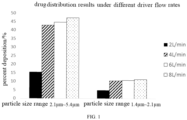
- FIG. 1 shows the results of drug distribution under different driver flow rates.
- FPD is the abbreviation of fine particle dose
- MMAD is the abbreviation of mass median aerodynamic diameter
- GSD is the abbreviation of geometric standard deviation
- NGI is the abbreviation of Next Generation Impactor.
- particle size may refer to a measurements made on a single particle or particle distribution. These parameters can be measured by various techniques, including dynamic light scattering, static light scattering, laser diffraction, deposition, time of flight, or other methods known to those skilled in the art.
- the particle size distribution can also be quantified by the size corresponding to a certain percentage distribution (Dx), where a certain percentage (X) of the population is smaller than the defined size. For example, a distribution with a D90 value of 500 nm means that 90% of the distribution (based on volume) has a size less than 500 nm.
- Standard curve an appropriate amount of stock solution was accurately pipetted and quantitatively diluted with water step by step to prepare standard curve solutions with concentrations of about 16 ⁇ g/ml, 40 ⁇ g/ml, 80 ⁇ g/ml, 96 ⁇ g/ml and 160 ⁇ g/ml.
- Method basis the aerodynamic characteristics determination method of fine particles of inhalation solution composition (China Pharmacopoeia, 2020 edition, Part IV general rules 0951) and NGI(ApparatusE) collected by EP.
- m refers to the mass of fudosteine in the sample to be tested, mg
- A refers to the peak area of fudosteine in the sample to be tested
- c refers to the concentration of fudosteine in the sample to be tested
- f refers to the dilution multiple of the sample to be tested
- the parameters of the respiratory simulator were set according to the adult respiratory characteristics. 2.5 mL of the sample was accurately measured, placed in an nebulizing cup, and the respiratory simulator was connected with filter paper, nebulizer and nebulizing cup device. At the same time, the nebulizer and respiratory simulator were turned on, nebulized for 1 min, the nebulizer was stopped, filter paper 1 was collected, and placed in a 250 mL beaker. New filter paper was replaced, nebulized for another 10 min, filter paper 2 was collected, and placed in a second 250 mL beaker. 40 ml of water was accurately measured, put in the first beaker, the filter paper was fully soaked and kept below the liquid level.
- the filter paper was squeezed using a glass rod and stirred evenly, and then filtered; 2 ml of the continuous filtrate was accurately measured, placed in a 10 ml volumetric flask, diluted to scale with water, shaken evenly, filtered, and the continuous filtrate was take. 50 ml of water was accurately measured, placed in the first beaker, the filter paper was fully soaked and kept below the liquid level, after ultrasonic for 10 min. The filter paper was squeezed using a glass rod and stirred evenly, and then filtered. 1 ml of the continuous filtrate was accurately measured, placed in a 10 ml volumetric flask, diluted to scale with water, shaken evenly, filtered and the continuous filtrate was taken.
- each standard curve solution, filter paper 1 test solution and filter paper 2 test solution were accurately measured, injected into the liquid chromatographer respectively, and the chromatogram was recorded.
- the amount of fudosteine collected by each filter paper was calculated by peak area according to the standard curve method.
- the ratio of the amount of fudosteine collected by the first filter paper to the nebulization time is the delivery rate, and the total amount of fudosteine collected by each filter paper is the total delivery amount.
- the formula of the fudosteine nebulised inhalation solution composition used in the examples is selected from the following formulas 1-3;
- the formula of the fudosteine nebulised inhalation solution composition was selected as formula 1;
- the fudosteine nebulised inhalation solution composition was nebulized under the nebulization parameters of: nebulizer model of PARI BOY; nebulizer pressure of 1.2 bar; nebulizing cup model of PARI LC SPRINT; spraying rate of 0.6 ml/min.
- the fudosteine nebulised inhalation solution compositions of the Formula 1 and the Formula 2 comprises were prepared by steps of:
- the fudosteine nebulised inhalation solution composition of formula 3 was prepared by the same steps as in formulas 1 and 2, except that in formula 3, the step S5 was as follows: filtering was performed with a membrane, and the solution was filled into an ampoule bottle.
- the fudosteine nebulised inhalation solution composition was prepared, the pH was adjusted to 3.7, and its impurities and formula stability were determined. The results are shown in Tables 1-3.
- the experimental conditions of different driving gas flow rates were selected to test their influence on the nebulization effect when applied to the fudosteine inhalation solution composition.
- the inventors found through a large number of parallel experiments that when the pH of the fudosteine inhalation solution composition was in the range of 2.5-5.0, there was no significant difference in the nebulization effect at the same driving flow rate.
- the specific pH of the fudosteine inhalation solution composition in this Application Example was selected as 4.0.
- the drug distribution was shown in FIG.
- Table 4 Effect of different driving gas flow rates on drug nebulization results by spray nebulization Serial number 1 Serial number 2 Serial number 3 Serial number 4 Driving gas flow rate 2L/min 4L/min 6L/min 8L/min Delivery rate (mg/min) 3.42 12.26 13.11 13.62 Total delivery amount (mg) 13.57 45.91 48.54 51.29 Percent deposition (%) (particle size range1.4 ⁇ m-5.4 ⁇ m) 20.3 53.2 55.3 58.4 MMAD ( ⁇ m) 9.286 4.852 4.263 3.951 Percent deposition (%) (particle size range2.1 ⁇ m-5.4 ⁇ m) 15.5 42.9 44.6 47.2 Percent deposition (%) (particle size range1.4 ⁇ m-2.1 ⁇ m) 4.8 10.3 10.7 11.2
- the median particle size MMAD of more than 5 ⁇ m could not meet the general requirements of nebulization inhalation.
- the delivery rate, total delivery, percent aerosol deposition particle size range of 1.4 ⁇ m-5.4 ⁇ m
- the percent deposition of particles with a size range of 2.1 ⁇ m-5.4 ⁇ m and the percent deposition of particles with a size range of 1.4 ⁇ m-2.1 ⁇ m increased continuously.
- serial number 3 and serial number 4 increased in the range of 6-8 L/min, the increase was not significant, which could meet the general requirements of drug delivery for nebulization inhalation.
- nebulizers and nebulizing cups were selected to investigate the effective deposition dose of fudosteine nebulised inhalation solution composition.
- the inventors found through a large number of parallel experiments that when the pH of the fudosteine inhalation solution composition was in the range of 2.5-5.0, there was no significant difference in the effective deposition dose when using the same nebulizer and nebulizing cup.
- the specific pH of the fudosteine inhalation solution composition in this Application Example was selected as 5.0, and the sample prescriptions used were formula 1 and formula 2.
- the nebulization tests were carried out on the samples, and the nebulizer and nebulizing cup used in the experiment can both be purchased in the market.
- the purchased nebulizer models include PARI BOY SX, Yuyue 403E, Yuyue 403C, Yuyue 403M, Yinghua Rongtai FA and Yinghua Rongtai HA03;
- Nebulizing cup models include PARI LC SPRINT series blue core, PARI LC PLUS and Yinghua Rongtai hand-held blue respiratory valve.
- Example 1 The parameter conditions of Examples 1-5 are shown in Table 5, and the parameter conditions of Comparative Examples 1-5 are shown in Table 6: Table 5 Formulas and nebulizing Device Assemblys of Examples 1-5 of the present disclosure
- Example 1 Example 2
- Example 3 Example 4
- Example 5 Prescriptions of inhalable solution composition
- Formula 1 Formula 2 Formula 1 Formula 2 Formula 2
- Nebulizers Manufacturer and model PARI BOY Yinghua Rongtai HA03 Yuyue 403C PARI BOY Pressure (bar) 1.1 1.2 1.4 1.4 1.6
- Nebulizing cups Manufacturer and model PARI LC SPRINT PARI LC PLUS Yinghua Rongtai B06 Narrow bite type Yuyue 403
- PARI SPRINT Spraying rate (ml/min) 0.4 0.4 0.5 0.6 0.6
- Comparative Example 1 Comparative Example 2 and Comparative Example 5 were more than 5 ⁇ m, and it was difficult to form effective deposition in trachea and lung.
- Comparative Example 3 and Comparative Example 4 the MMAD was smaller, and the particles were mainly deposited in alveoli, so it was difficult to exert the pharmacological effect on trachea.
- the spraying rate and the average particle diameter of the particles excited by the 0.9 wt% standard sodium chloride solution in the nebulizing cup were controlled, so that the droplet particle size parameters of the fudosteine nebulised inhalation solution composition were controlled within a certain range, that is, the droplet particle size was as follows: the D90 particle size was 7.0-10.0 ⁇ m, and the D50 particle size was 2.8-4.5 ⁇ m, and the D10 particle size was 0.5-1.5 ⁇ m, and the percent deposition of the particles with the aerodynamic particle size of 2.1-5.4 ⁇ m in the fudosteine inhalation solution was not less than 41.5%, which improved the drug delivery rate and total delivery amount, and enabled nebulization particles to directly act on trachea and main bronchu
- the pharmacokinetic characteristics and distribution of the fudosteine inhalation solution (Formula 1) in plasma and tissues were investigated by single and continuous nebulization administration of fudosteine inhalation solution in the rats.
- the tissue distribution characteristics of fudosteine inhalation solutionare were illustrated.
- Table 8 Table 8 Comparison of exposure of fudosteine in plasma and tissues after single or continuous administration of low-dose fudosteine inhalation solution and fudosteine tablets (original dosage form) to SD rats.
- the data in Table 8 showed that, for oral administration, the exposure of fudosteine in plasma was higher; for nebulization administration, the exposures of fudosteine in various tissues were all higher than that in plasma, and the exposure of nebulization administration in respiratory systems such as throat and trachea was higher than that of oral administration.
- the exposure of single nebulization administration in throat, trachea and esophagus was 1.34-3.19 times that of oral administration, and that in other tissues was lower than that of oral administration.
- the exposure (AUC0-t (hr*ng/g)) of multiple nebulization administration in the nose, throat, trachea, esophagus and main bronchus was 1.00-4.87 times that of oral administration, especially the exposure in trachea and main bronchus was 3.43 times and 4.87 times that of oral administration, and that in other tissues was lower than that of oral administration, thus further explaining that the present disclosure can enable fudosteine to act better on trachea and main bronchus.
- nebulization administration has a higher peak concentration in respiratory system tissues and organs and a lower peak concentration in metabolism and excretion organs.
- the half-life of fudosteine nebulised inhalation solution in plasma, lung, main bronchus, liver and brain was shorter than that of oral fudosteine tablets, and the half-life in esophagus was longer than that of oral fudosteine tablets, and the half-life in other tissues (trachea, throat, tongue, nose, heart, spleen and kidney) was similar.
- the pharmacokinetic characteristics of the fudosteine inhalation solution (Formula 1) in rats were investigated by single nebulization administration of fudosteine inhalation solution in the SD rats.
- the absolute bioavailability of the fudosteine inhalation solution (Formula 1) in rats was investigated by comparing with intravenous injection of the fudosteine inhalation solution in SD rats.
- Table 9 Summary of average pharmacokinetic parameters of fudosteine in different administration forms Parameters Injection Oral Nebulised inhalation T 1/2 (h) 0.824 0.840 0.928 T max (h) 0.083 0.438 2.08 C max (ng/mL) 48475 59275 7616 AUC 0-t (h ⁇ ng/mL) 102008 113191 18313 AUC 0- ⁇ (h ⁇ ng/mL) 102484 113459 18593 ReLative BA (%) - - 16.2 AbsoLute BA (%) - 111 18.0
- Bioavailability comparing nebulization administration of fudosteine inhalation solution with oral administration of the same dose of fudosteine tablets, the relative bioavailability of fudosteine inhalation solution in rats was 16.2% ⁇ 6.43%, the absolute bioavailability of fudosteine inhalation solution in rats was 18.0% ⁇ 7.13%, and the absolute bioavailability of fudosteine tablets in rats was 111% ⁇ 22.6%. The bioavailability of fudosteine inhalation solution was lower than that of fudosteine tablets.
- Peak time and peak concentration the fudosteine inhalation solution was absorbed into blood quickly, achieving a faster peak time in the blood than fudosteine tablets, and the peak concentration was lower.
- Elimination half-life there was no significant difference in the elimination half-life between the single nebulization administration of the fudosteine inhalation solution and the single oral administration of mid-dose fudosteine tablets.
- Fudosteine inhalation solution 80 mg/ml, colorless and clear liquid, self-made.
- Fudosteine tablets 0.2 g/tablet, white tablets, purchased from Jiangsu Zhengdafenghai Pharmaceutical Co., Ltd., with batch numbers of 2002151 and 2105141 respectively, and expiration dates of July 2021 and April 2023 respectively.
- Ambroxol hydrochloride oral solution 100mL: 0.6 g, colorless to yellowish clear liquid, purchased from China Resources Sanjiu (Nanchang) Pharmaceutical Co., Ltd., with the batch number of 2003004J and an expiration date of February 2022.
- Prednisolone acetate tablets 5mg/tablet, white tablets, purchased from Shanghai Shangyao Xinyi Pharmaceutical Co., Ltd., with a batch number of 017200501 and an expiration date of May 2023.
- Preparation a certain amount of prednisolone acetate tablets was taken into a glass container and ground into fine powder, appropriate amount of purified water was added, ground while water was added, transferred to a graduated test tube, ultra-pure water was added, mixed evenly, the volume was fixed, and a solution with a concentration of 1.25 mg/mL was prepared, immediately before it was used.
- Acetylcysteine tablets 0.2g/tablet, white tablets, purchased from ZAMBONS.p.A, with a batch number of 1002217 and an expiration date of February 2023.
- Acetylcysteine solution for inhalation colorless and clear liquid, purchased from ZAMBONS.p.A, with a batch number of 28005283 and an expiration date of May 2025.
- Lipopolysaccharide white crystal, 100 mg/bottle, purity ⁇ 99.5%, produced by SIGMA Company, with a batch number of 028M4094V and an expiration date of December 2023.
- Preparation 100 mg of lipopolysaccharide was weighed, physiological saline was added, mixed evenly, the volume was fixed to 100 mL, and a lipopolysaccharide solution with a concentration of 1mg/mL was prepared, immediately before it was used.
- Sodium hydroxide sodium hydroxide: analytically pure, with a content of ⁇ 96%, 500g/ bottle, purchased from BeiJing chemical works, with a batch number of 20160912 and the expiration date of November, 2022.
- Preparation 20 g of sodium hydroxide was weighed, ultrapure water was added, mixed evenly, the volume to 500 mL was fixed, and a solution (1 mol/L) with a concentration of 0.04 g/mLwas prepared, immediately before it was used.
- Preparation 1.8 mL of sodium hydroxide solution was measured and physiological saline was added to a constant volume of 100 mL, and the pH value was measured to 11.9 after mixing evenly, thus the alkaline sodium chloride solution was obtained.
- Phenol red analytically pure, with a content of ⁇ 99%, 25 g/bottle, produced by Shandong Xiya Chemical Co., Ltd., with a batch number of B4301 and an expiration date of April, 2022.
- phenol red standard curve solution 50 mg of phenol red was accurately weighed, alkaline sodium chloride solution was added to constant volume to 50 mL, filtered with a 0.22 ⁇ m membrane, and the concentration was 1000 ⁇ g/mL, and diluted with alkaline sodium chloride solution to 7 concentration solutions of 10 ⁇ g/mL, 5 ⁇ g/mL, 2.5 ⁇ g/mL, 1.25 ⁇ g/mL, 0.63 ⁇ g/mL, 0.31 ⁇ g and 0.16 ⁇ g/mL.
- Sodium chloride (NaCl) white tetragonal crystal or crystalline powder, analytically pure, with a content of ⁇ 99.5%, purchased from Tianjin Zhiyuan Chemical Reagent Co., Ltd. with an expiration date of April 2023.
- D-glucuronic acid lactone (C6H8O6): white crystal or crystalline powder, analytically pure, with a content of ⁇ 99%, purchased from Shanghai Yi'en Chemical Technology Co., Ltd., with a batch number of RH297877 and an expiration date of September 2024.
- HRH-MNE3026 Type Small animal mouth and nose exposure system: HRH-MNE3026 Type, produced by Beijing Huironghe Technology Co., Ltd.
- Microplate reader Synergy HTX Type, produced by American Boten Instrument Co., Ltd.
- PH meter PB-10 Type, manufactured by Sartorius Company.
- mice ICR species SPF grade; Rats: SD species SPF grade.
- the nebulizing device of small animal mouth and nose exposure system was used for administration. After the aerosol concentration of the test sample reached steady state, the particle size was monitored and analyzed. Two exposure ports were randomly selected, and each exposure port was measured twice, and the average value was taken. The mass median diameter (MMAD) and geometric standard deviation (GSD) values of aerosol particles were read by a particle size detector. The glass fiber filter membrane was placed in the randomly selected exposure port, and tests were performed under two nebulization conditions. Three samples were taken under each condition. After the filter membrane was collected, the aerosol concentration was detected by LC-MS/MS method.
- MMAD mass median diameter
- GSD geometric standard deviation
- Nebulization condition 1 Nebulization condition 2 Aerosol concentration (mg/l) 0.812 0.624 Average particle size of aerosol particles ( ⁇ m) 1.68 3.86 D90 ( ⁇ m) 8.76 9.82 D50 ( ⁇ m) 3.49 5.31 D10 ( ⁇ m) 0.68 1.15
- the average aerosol concentration was 0.812 mg/L
- the average particle size of the generated aerosol particles was 1.68 ⁇ m (equivalent to average particle size of about 4.0 ⁇ m when it was measured by a new generation impactor NGI for humans)
- the D50 was 3.49 ⁇ m, which met the particle size requirements of nebulized drugs deposited in the airway and lungs and was beneficial to exert their efficacy.
- the average particle size under nebulization condition 2 was larger (equivalent to average particle size of about 7.0 ⁇ m when it was measured by a new generation impactor NGI for humans).
- mice were randomly divided into 8 groups according to their body weight, that is, model control group, positive ambroxol hydrochloride group, fudosteine tablet group (70.8 mg/kg), high dose of fudosteine inhalation solution group (14.6 mg/kg), medium dose of fudosteine inhalation solution group (7.3 mg/kg), low dose of fudosteine inhalation solution group (3.65 mg/kg), and control group - high dose of fudosteine inhalation solution, with 14 animals in each group, half male and half female. Animals in each group were administered according to the dosage, nebulizer and route in Table 11, once a day for 3 consecutive days. Animals in each group were fasted for 16 h before the last administration.
- mice in each group were intraperitoneally injected with 2.5% phenol red solution, and 30 min later the mice were killed by cervical dislocation.
- the trachea was cut open and put into 1.0 mL alkaline sodium chloride solution, and the ultrasonic vibration was carried out for 5 min.
- the excretion amount of phenol red in the airway was measured by microplate reader at the wavelength of 546 nm.
- the nebulization conditions also affect the efficacy results. Although the efficacy of the administered dose of 15.3 mg/kg was achieved under nebulization condition 2, it was significantly inferior to that of 14.6 mg/kg under nebulization condition 1. There was no significant difference in efficacy between the middle and low dosage groups and the model control group. It showed that the nebulization conditions should be strictly met in accordance with the requirements when the animals were administered by nebulization.
- SD species rats were randomly divided into 11 groups according to their body weight, that is, - nebulization blank control group for normal animal, - positive acetylcysteine solution for inhalation group for normal animal, - high dose of fudosteine inhalation solution group (8.75 mg/kg) for normal animal, - medium dose of fudosteine inhalation solution group (4.5 mg/kg) for normal animal, - low dose of fudosteine inhalation solution group (2.25 mg/kg) for normal animal, - nebulization blank control group for model animal, - fudosteine tablet group (42.5 mg/kg) for model animal, - positive acetylcysteine solution for inhalation group for model animal, - high dose of fudosteine inhalation solution group (8.75 mg/kg) for model animal, - medium dose of fudosteine inhalation solution group (4.5mg/kg) for model animal, - low dose of fudosteine inhalation solution group (2
- Rats in each group were administered according to the dosage and route in Table 12, once a day for 3 consecutive days. Rats were anesthetized by intraperitoneal injection of chloral hydrate immediately after the last administration, and fixed in supine position.
- the neck skin was cut, the trachea was separated out, a glass capillary with a known weight was inserted between the two cartilages at the lower edge of the thyroid gland to absorb sputum, and the glass capillary was replaced with another one immediately after the sputum filled the capillary.
- the trachea from the throat to the bifurcation of the trachea was taken, weighed and cut open longitudinally, and airway mucus were removed by dipping with a cotton swab, washed with 3 mL distilled water and centrifuged at 3000 r/15min, and 2.5 mL supernatant was taken for later use.
- the content of mucopolysaccharide per unit weight of tracheal in rats in each group was determined by sulfuric acid-carbazole colorimetry at the wavelength of 530 nm.
- Mucin is a main component of mucus, which determines the adhesion, viscosity and elasticity of airway mucus. Glycosyls at the end of mucin are collectively called mucopolysaccharide, and its main components are sialic acid and fucose. Therefore, in the test, the mucopolysaccharide content was used as an index to evaluate the mucorepairing effect of the fudosteine inhalation solution. In addition, the amount of airway mucus secretion was measured simultaneously with the mucopolysaccharide content in the test.
- test sample in this study was an inhalation preparation
- a certain amount of inhaled solution will accumulate in the respiratory tract of animals after the animals are given with the test sample through the oral and nasal administration system, which will lead to the increase of secretion in the respiratory tract of animals, even if the blank control group and the model control group are given with saline control, the secretion fluid will still increase.
- Classical detection of airway secretion was carried out on normal animals, so it was difficult to objectively evaluate the effectiveness of inhalation preparations on airway secretion.
- the normal control group under physiological condition and the mucus hypersecretion model control under pathological condition were designed to observe and compare the effects of the test samples on the secretion amount of animal mucus, and more importantly, to evaluate the effects of that on the content of mucopolysaccharide in airway mucus.
- test results showed that the mucus secretion amount in airway and mucopolysaccharide content of the test sample increased significantly after inhalation administration to normal rats. However, in the contrast test between normal model rats and mucus hypersecretion model rats, it could be observed the results that the test sample significantly reduced the mucopolysaccharide content. It showed that the test samples achieved the effect of inhibiting mucus hypersecretion by inhibiting the secretion of mucopolysaccharide in airway.
- SD species rats were randomly divided into 9 groups according to their body weight, that is, blank control group, model control group, positive prednisolone acetate group, high dose of fudosteine tablet group (42.5 mg/kg), medium dose of fudosteine tablet group (21 mg/kg), low dose of fudosteine tablet group (10 mg/kg), high dose of fudosteine inhalation solution group (8.75mg/kg), medium dose of fudosteine inhalation solution group (4.5 mg/kg) and low dose of fudosteine inhalation solution group (2.25 mg/kg), with 8 rats in each group, half male and half female.
- mice in other groups were inhaled with nebulized LPS solution (1 mg/mL, generated gas volume 8 L/min, diluted gas volume 4 L/min, 40 min for each time and once a day), and the models were established once a day for 3 consecutive days.
- Animals in each group were administered according to the dosage and route in Table 13 one hour after modeling every day.
- Trachea and lung were taken out 4 hours after the last modeling, fixed in 10% formalin, dehydrated, embedded, sliced, and stained with HE, and the tissues were examined for pathology, the number of neutrophils in the tissues was counted, and the differences between groups were compared.
- Fudosteine oral solution and fudosteine inhalation solution were given to the LPS-induced phlegm model rats respectively, and their expectorant effects were compared.
- Fudosteine inhalation solution (formula 1): colorless and clear liquid, 80 mg/mL, self-made.
- Fudosteine tablet 0.2 g/tablet, a white tablet, purchased from Jiangsu Zhengdafenghai Pharmaceutical Co., Ltd., with batch numbers of 2002151 and 2105141 respectively, and expiration dates of July, 2021 and April, 2023 respectively.
- Lipopolysaccharide white crystal, 100 mg/bottle, purity ⁇ 99.5%, with a batch number of 028M4094V, May, 2021, purchased from SIGMA Company.
- Preparation method a certain amount of LPS was accurately weighed and mixed with physiological saline to prepare an LPS solution with a concentration of 2 mg/mL.
- Physiological saline colorless and transparent liquid with a batch number of 1903111602.
- Rats were given with LPS solution by nebulizing inhalation to induce the proliferation of goblet cells in trachea and main bronchus, and phlegm models in rats were established, and the number of goblet cells in trachea and main bronchus of animals was measured, so as to evaluate the expectorant effect of the test samples.
- Rats passing quarantine inspection were randomly divided into blank group, model group, high dose of nebulization group, medium dose of nebulization group, low dose of nebulization group, high dose of oral group, medium dose of oral group and low dose of oral group, with 8 rats in each group (half male and half female). Except for the blank control group, the animals in other groups were administrated with LPS solution with a concentration of 2 mg/mL by nebulizing inhalation under the nebulization conditions of gas generation of 10 L/min and dilution of 1 L/min, 40 min for one time and once a day, twice, to establish a phlegm model of rat.
- the blank group and the model group were given pure water by gavage the next day after the second modeling, and the other groups were given corresponding doses of test samples and control samples by nebulization inhalation or oral administration according to the dosage in Table 12, once a day for 5 consecutive days.
- the right lung was taken four hours after the last administration, and stained with AB-PAS.
- Three sections of lung bronchus were taken from each animal, and three random views were selected from each section for microscopic examination. The length of basement membrane and the number of goblet cells in each view were measured respectively, and the number of goblet cells contained on basement membrane per unit length (mm) was calculated. The average result in nine views was taken as the measurement result of goblet cells in the animal.
- the number of goblet cells in the lung bronchus of animals in the model group was increased significantly ( P ⁇ 0.01).
- the number of goblet cells in the trachea and main bronchus of animals in the high dose of nebulization group, the middle dose of nebulization group and the low dose of nebulization group was decreased significantly ( P ⁇ 0.01), but there was no significant change in the high dose of oral administration group, the middle dose of oral administration group and the low dose of oral administration group ( P > 0.05), as shown in Table 14.
- the experimental results showed that compared with the blank control group, the number of goblet cells in the main bronchial epithelial tissue of rats on the model control group was increased significantly; compared with the model control group, the number of goblet cells in the main bronchial epithelial tissue of rats in the high dose of oral group, the high dose of nebulization group and the middle dose of nebulization group was significantly reduced, which had obvious expectorant effect (anti-goblet cell proliferation ability).
- the number of goblet cells in the epithelial tissue of the main bronchus of rats in the middle dose of oral group, the low dose of oral group and the low dose of nebulization group had a reduction trend, but there was no statistical difference.
- the minimum effective dose of the fudosteine inhalation solution in the phlegm model was 4.25 mg/kg, which was much lower than the 42.5 mg/kg of the control product (fudosteine tablets on the market).
- the nebulised inhalation solution composition and the assembly thereof in the present disclosure show good therapeutic effect.
Landscapes
- Health & Medical Sciences (AREA)
- Chemical & Material Sciences (AREA)
- Life Sciences & Earth Sciences (AREA)
- Veterinary Medicine (AREA)
- Animal Behavior & Ethology (AREA)
- General Health & Medical Sciences (AREA)
- Public Health (AREA)
- Engineering & Computer Science (AREA)
- Pharmacology & Pharmacy (AREA)
- Medicinal Chemistry (AREA)
- Bioinformatics & Cheminformatics (AREA)
- Epidemiology (AREA)
- Pulmonology (AREA)
- General Chemical & Material Sciences (AREA)
- Chemical Kinetics & Catalysis (AREA)
- Nuclear Medicine, Radiotherapy & Molecular Imaging (AREA)
- Heart & Thoracic Surgery (AREA)
- Hematology (AREA)
- Organic Chemistry (AREA)
- Anesthesiology (AREA)
- Biomedical Technology (AREA)
- Dispersion Chemistry (AREA)
- Otolaryngology (AREA)
- Oil, Petroleum & Natural Gas (AREA)
- Inorganic Chemistry (AREA)
- Proteomics, Peptides & Aminoacids (AREA)
- Communicable Diseases (AREA)
- Oncology (AREA)
- Medicinal Preparation (AREA)
- Acyclic And Carbocyclic Compounds In Medicinal Compositions (AREA)
Applications Claiming Priority (2)
| Application Number | Priority Date | Filing Date | Title |
|---|---|---|---|
| CN202210842971.5A CN115068450B (zh) | 2022-07-18 | 2022-07-18 | 一种福多司坦雾化吸入溶液组合物、药物组件及其应用 |
| PCT/CN2023/107448 WO2024017161A1 (fr) | 2022-07-18 | 2023-07-14 | Composition de solution d'inhalation de nébulisation de fudostéine, ensemble de médicament et son utilisation |
Publications (1)
| Publication Number | Publication Date |
|---|---|
| EP4559459A1 true EP4559459A1 (fr) | 2025-05-28 |
Family
ID=83258928
Family Applications (1)
| Application Number | Title | Priority Date | Filing Date |
|---|---|---|---|
| EP23842224.0A Pending EP4559459A1 (fr) | 2022-07-18 | 2023-07-14 | Composition de solution d'inhalation de nébulisation de fudostéine, ensemble de médicament et son utilisation |
Country Status (5)
| Country | Link |
|---|---|
| US (1) | US20260027046A1 (fr) |
| EP (1) | EP4559459A1 (fr) |
| JP (1) | JP2025523909A (fr) |
| CN (1) | CN115068450B (fr) |
| WO (1) | WO2024017161A1 (fr) |
Families Citing this family (3)
| Publication number | Priority date | Publication date | Assignee | Title |
|---|---|---|---|---|
| CN115068450B (zh) * | 2022-07-18 | 2023-04-28 | 北京盈科瑞创新药物研究有限公司 | 一种福多司坦雾化吸入溶液组合物、药物组件及其应用 |
| CN115598311A (zh) * | 2022-11-21 | 2023-01-13 | 美迪西普亚医药科技(上海)有限公司(Cn) | 一种吸入制剂药代动力学评价平台及其方法 |
| CN116251174B (zh) * | 2022-12-23 | 2023-09-29 | 北京三元基因药业股份有限公司 | 一种包含人干扰素α1b吸入溶液的药物组件 |
Family Cites Families (7)
| Publication number | Priority date | Publication date | Assignee | Title |
|---|---|---|---|---|
| CN109745301A (zh) * | 2017-11-08 | 2019-05-14 | 北京盈科瑞创新药物研究有限公司 | 一种羧甲司坦雾化吸入用溶液制剂及其制备方法 |
| CN109925300A (zh) * | 2017-12-19 | 2019-06-25 | 北京盈科瑞创新药物研究有限公司 | 一种福多司坦雾化吸入用溶液制剂及其制备方法 |
| CN108078964A (zh) | 2018-02-05 | 2018-05-29 | 迪沙药业集团有限公司 | 一种福多司坦吸入剂组合物 |
| CN112057418B (zh) | 2020-09-24 | 2023-05-12 | 广州帝奇医药技术有限公司 | 一种福多司坦口服液及其制备方法 |
| CN113975262B (zh) | 2021-09-07 | 2024-08-30 | 安徽四环科宝制药有限公司 | 含有福多司坦的药物组合物及其制备方法 |
| CN113768910B (zh) * | 2021-09-28 | 2022-10-25 | 健康元药业集团股份有限公司 | 包含富马酸福莫特罗吸入溶液的药物组件及其用途 |
| CN115068450B (zh) * | 2022-07-18 | 2023-04-28 | 北京盈科瑞创新药物研究有限公司 | 一种福多司坦雾化吸入溶液组合物、药物组件及其应用 |
-
2022
- 2022-07-18 CN CN202210842971.5A patent/CN115068450B/zh active Active
-
2023
- 2023-07-14 US US18/995,122 patent/US20260027046A1/en active Pending
- 2023-07-14 JP JP2025502529A patent/JP2025523909A/ja active Pending
- 2023-07-14 WO PCT/CN2023/107448 patent/WO2024017161A1/fr not_active Ceased
- 2023-07-14 EP EP23842224.0A patent/EP4559459A1/fr active Pending
Also Published As
| Publication number | Publication date |
|---|---|
| CN115068450B (zh) | 2023-04-28 |
| CN115068450A (zh) | 2022-09-20 |
| WO2024017161A1 (fr) | 2024-01-25 |
| US20260027046A1 (en) | 2026-01-29 |
| JP2025523909A (ja) | 2025-07-25 |
Similar Documents
| Publication | Publication Date | Title |
|---|---|---|
| EP4559459A1 (fr) | Composition de solution d'inhalation de nébulisation de fudostéine, ensemble de médicament et son utilisation | |
| CN101606903A (zh) | 一种氨溴索的雾化吸入用溶液剂及其制备方法 | |
| US20200316003A1 (en) | Fudosteine Solution Preparation for Aerosol Inhalation, and Preparation Method Therefor | |
| CN112402400B (zh) | 硫酸沙丁胺醇雾化吸入溶液及其制备工艺和应用 | |
| CN108159026B (zh) | 一种稳定的吸入用盐酸氨溴索溶液及其制备方法 | |
| CN104098491B (zh) | 一种乙酰半胱氨酸化合物及含有该化合物的吸入用乙酰半胱氨酸溶液 | |
| CN102657778B (zh) | 银花清咽片剂及其制备方法 | |
| JP5908884B2 (ja) | 気道炎症及び粘液線毛輸送機能異常治療用のエアロゾル化したダプソン | |
| WO2023213019A1 (fr) | Inhalateur de poudre sèche pour le traitement de la fibrose pulmonaire idiopathique et son procédé de préparation | |
| CN119385931B (zh) | 盐酸氨溴索溶液及其制备方法和应用 | |
| JP2024500166A (ja) | クジノシド系化合物を含有する安定な液状医薬組成物 | |
| CN118634190B (zh) | 一种三唑类药物混悬液及其制备方法和用途 | |
| CN111110634A (zh) | 一种磷酸氯喹吸入气雾剂及其制备方法 | |
| CN114948914B (zh) | 一种盐酸莫西沙星雾化吸入用溶液剂及其制备方法 | |
| EP3443954B1 (fr) | Préparation à inhaler d'isoglycyrrhizinate de magnesium et son utilisation pour le traitement des maladies du système respiratoire et de l'hépatite virale chronique | |
| CN113491676B (zh) | 一种利巴韦林的雾化吸入用溶液及制备方法 | |
| CN118526497A (zh) | 一种治疗和缓解呼吸道疾病药物组合物及其应用 | |
| CN111053761B (zh) | 一种吸入用双膦酸类药物及其制备方法及其在慢性阻塞性肺疾病的用途 | |
| CN120899676A (zh) | 马来酸茚达特罗雷芬那辛吸入用药物组合物及其制备方法和用途 | |
| CN118948811A (zh) | 一种妥布霉素和氨溴索雾化吸入溶液及其制备方法 | |
| CN120227329A (zh) | 用于治疗肺动脉高压的药物制剂及其制备方法 | |
| CN117982417A (zh) | 一种新鱼腥草素钠纳米乳及其制备方法与应用 | |
| CN120899675A (zh) | 一种用于治疗或预防支气管哮喘急性发作的组合物及其制备方法和用途 | |
| TW202241401A (zh) | 一種福多司坦吸入用溶液製劑及其製備方法和用途 | |
| CN118542855A (zh) | 一种吸入制剂、吸入装置及其应用 |
Legal Events
| Date | Code | Title | Description |
|---|---|---|---|
| STAA | Information on the status of an ep patent application or granted ep patent |
Free format text: STATUS: THE INTERNATIONAL PUBLICATION HAS BEEN MADE |
|
| PUAI | Public reference made under article 153(3) epc to a published international application that has entered the european phase |
Free format text: ORIGINAL CODE: 0009012 |
|
| STAA | Information on the status of an ep patent application or granted ep patent |
Free format text: STATUS: REQUEST FOR EXAMINATION WAS MADE |
|
| 17P | Request for examination filed |
Effective date: 20250117 |
|
| AK | Designated contracting states |
Kind code of ref document: A1 Designated state(s): AL AT BE BG CH CY CZ DE DK EE ES FI FR GB GR HR HU IE IS IT LI LT LU LV MC ME MK MT NL NO PL PT RO RS SE SI SK SM TR |
|
| DAV | Request for validation of the european patent (deleted) | ||
| DAX | Request for extension of the european patent (deleted) |