EP4559528A2 - Erhöhte ladung von intakten, aus bakterien abgeleiteten vesikeln mit kleinmoleküligen verbindungen - Google Patents
Erhöhte ladung von intakten, aus bakterien abgeleiteten vesikeln mit kleinmoleküligen verbindungen Download PDFInfo
- Publication number
- EP4559528A2 EP4559528A2 EP25170372.4A EP25170372A EP4559528A2 EP 4559528 A2 EP4559528 A2 EP 4559528A2 EP 25170372 A EP25170372 A EP 25170372A EP 4559528 A2 EP4559528 A2 EP 4559528A2
- Authority
- EP
- European Patent Office
- Prior art keywords
- minicells
- alkyl
- compound
- fluorescent
- linker
- Prior art date
- Legal status (The legal status is an assumption and is not a legal conclusion. Google has not performed a legal analysis and makes no representation as to the accuracy of the status listed.)
- Pending
Links
Images









Classifications
-
- A—HUMAN NECESSITIES
- A61—MEDICAL OR VETERINARY SCIENCE; HYGIENE
- A61K—PREPARATIONS FOR MEDICAL, DENTAL OR TOILETRY PURPOSES
- A61K47/00—Medicinal preparations characterised by the non-active ingredients used, e.g. carriers or inert additives; Targeting or modifying agents chemically bound to the active ingredient
- A61K47/50—Medicinal preparations characterised by the non-active ingredients used, e.g. carriers or inert additives; Targeting or modifying agents chemically bound to the active ingredient the non-active ingredient being chemically bound to the active ingredient, e.g. polymer-drug conjugates
- A61K47/69—Medicinal preparations characterised by the non-active ingredients used, e.g. carriers or inert additives; Targeting or modifying agents chemically bound to the active ingredient the non-active ingredient being chemically bound to the active ingredient, e.g. polymer-drug conjugates the conjugate being characterised by physical or galenical forms, e.g. emulsion, particle, inclusion complex, stent or kit
- A61K47/6901—Conjugates being cells, cell fragments, viruses, ghosts, red blood cells or viral vectors
-
- A—HUMAN NECESSITIES
- A61—MEDICAL OR VETERINARY SCIENCE; HYGIENE
- A61K—PREPARATIONS FOR MEDICAL, DENTAL OR TOILETRY PURPOSES
- A61K31/00—Medicinal preparations containing organic active ingredients
- A61K31/65—Tetracyclines
-
- A—HUMAN NECESSITIES
- A61—MEDICAL OR VETERINARY SCIENCE; HYGIENE
- A61K—PREPARATIONS FOR MEDICAL, DENTAL OR TOILETRY PURPOSES
- A61K31/00—Medicinal preparations containing organic active ingredients
- A61K31/70—Carbohydrates; Sugars; Derivatives thereof
- A61K31/7042—Compounds having saccharide radicals and heterocyclic rings
- A61K31/7052—Compounds having saccharide radicals and heterocyclic rings having nitrogen as a ring hetero atom, e.g. nucleosides, nucleotides
- A61K31/706—Compounds having saccharide radicals and heterocyclic rings having nitrogen as a ring hetero atom, e.g. nucleosides, nucleotides containing six-membered rings with nitrogen as a ring hetero atom
-
- A—HUMAN NECESSITIES
- A61—MEDICAL OR VETERINARY SCIENCE; HYGIENE
- A61K—PREPARATIONS FOR MEDICAL, DENTAL OR TOILETRY PURPOSES
- A61K9/00—Medicinal preparations characterised by special physical form
- A61K9/48—Preparations in capsules, e.g. of gelatin, of chocolate
- A61K9/50—Microcapsules having a gas, liquid or semi-solid filling; Solid microparticles or pellets surrounded by a distinct coating layer, e.g. coated microspheres, coated drug crystals
- A61K9/5005—Wall or coating material
- A61K9/5063—Compounds of unknown constitution, e.g. material from plants or animals
- A61K9/5068—Cell membranes or bacterial membranes enclosing drugs
-
- A—HUMAN NECESSITIES
- A61—MEDICAL OR VETERINARY SCIENCE; HYGIENE
- A61P—SPECIFIC THERAPEUTIC ACTIVITY OF CHEMICAL COMPOUNDS OR MEDICINAL PREPARATIONS
- A61P35/00—Antineoplastic agents
-
- A—HUMAN NECESSITIES
- A61—MEDICAL OR VETERINARY SCIENCE; HYGIENE
- A61P—SPECIFIC THERAPEUTIC ACTIVITY OF CHEMICAL COMPOUNDS OR MEDICINAL PREPARATIONS
- A61P35/00—Antineoplastic agents
- A61P35/02—Antineoplastic agents specific for leukemia
Definitions
- Non-living but intact bacterial vesicles that enclose biologically active agents have been used for therapeutic purposes.
- the present inventors described the preparation and use of bacterially derived intact minicells that contain therapeutic nucleic acid molecules.
- WO2005/079854 the present inventors also showed that small molecular drugs, whether hydrophilic or hydrophobic, can be packaged into minicells which, when taken up by a target mammalian cell, can release the drugs into the cytoplasm of the target cell.
- U.S. patent No. 8,591,862 lists the present inventors and demonstrates the preparation and use of intact killed bacterial cells packaged with therapeutic agents.
- Killed bacterial cells by definition are nonliving, as are minicells. Neither type of intact bacterial vesicle can replicate or actively invade host cells.
- the present inventors have reported that killed bacterial cells and minicells, despite their relatively large size, can be taken up by a target mammalian cell, when brought into contact with the cell, and then degraded in late-endosomes/lysosomes, releasing their drug payload into the target cell. Uptake is improved when the killed bacterial cells or minicells are attached to a ligand that targets the mammalian cell.
- a ligand described in WO2005/056749 , is a bispecific antibody that has (i) a first arm with specificity for a minicell surface structure and (ii) a second arm with specificity for a non-phagocytic mammalian cell surface receptor.
- minicells upon intravenous administration to a tumor-bearing mammalian host, minicells rapidly extravasated via the leaky vasculature associated with many solid tumors, including certain brain tumors ( WO2013/088250 ), and the minicells accumulated in the tumor microenvironment. That the minicells were confined to the tumor microenvironment and did not penetrate into normal tissues is believed to be due to an inability of the minicells, with a diameter of ⁇ 400 nm ⁇ 50 nm, to escape from the normal vasculature surrounding normal (non-tumor) tissues.
- nucleic acids can be packaged into an intact nonliving bacterial vesicle when incubated with the vesicle under a concentration gradient, during which the nucleic acids move down the gradient into the vesicle. See, e.g., U.S. patent No. 8,669,101 .
- a plasmid that encodes a nucleic acid can be transduced into a live bacterium and replicate or transcribe to produce the nucleic acid.
- the nucleic acid-packaged live bacterium then can be killed, yielding a killed bacterial cell as described above, or it can generate an intact minicell, itself loaded with the nucleic acid. See, e.g., WO2003/033519 .
- small molecule drugs typically cannot be produced from a plasmid. As noted, however, the present inventors discovered that such drugs can be loaded into a vesicle directly. Their approach to loading small molecule drugs was illustrated in experiments reported by MacDiarmid et al., Cancer Cell 11: 431-45 (2007 ).
- PBS buffer phosphate-buffered saline
- small scale On this 1 ml-to-2-ml scale (hereafter, "small scale"), co-incubation of the minicells with a given drug was followed by an effort to remove excess drug from the minicells. This effort entailed centrifugation, thereby to pellet the drug-packaged minicells, and a subsequent discarding of the supernatant, where any excess drug was thought to reside. The minicells then were resuspended in fresh PBS, again 1 to 2 ml, and the steps of centrifugation and supernatant discarding were repeated five to six times for a given preparation.
- the small-scale protocol which entails the co-incubation (loading) step and multiple steps of washing by resuspension, centrifugation and supernatant discarding, all performed in a 1-to-2-ml scale.
- MacDiarmid et al. extracted drug that was associated with the minicells, see the last full sentence on page 433 ff., whereupon the drug concentration was determined using HPLC analysis.
- MacDiarmid et al. reported an estimated loading efficiency for the small-scale process in terms, for instance, of " ⁇ 10 million ... molecules ... per minicell" of doxorubicin. Id., first full sentence of page 435.
- the present inventors have discovered that, when incubated with a nonliving, intact bacterial vesicle that intially does not contain a given fluorescent compound, the latter can move down the resultant concentration gradient (high outside to low inside) into the cytoplasm of the vesicle unexpectedly more quickly than an otherwise similar but non-fluorescent compound, and also that the fluorescent compound can achieve a surprisingly higher intra-vesicular concentration.
- the inventors observed, for example, that linking a non-fluorescent compound with a fluorescent moiety greatly improves loading into nonliving, intact bacterial vesicles, relative results obtained with the non-fluorescent compound itself, notwithstanding that such modification typically effects an increase in molecular weight, which would have been thought to hamper drug loading.
- the inventors also have determined that an even greater enhancement of efficiency occurs when the loading of a fluorescent compound is effected in a medium to which has been added a binary ionic compound such as an alkali metal halide salt, e.g., potassium chloride, sodium chloride, and potassium bromide.
- a binary ionic compound such as an alkali metal halide salt, e.g., potassium chloride, sodium chloride, and potassium bromide.
- the presence in the loading medium of such a compound in a concentration as low as on the order of about 200 mM, improves loading efficiency for a fluorescent compound by two-fold or more, with loading effectively complete after only about fifteen minutes.
- CROSS FLOW FILTRATION METHOD HANDBOOK 29-0850-76 AB
- GE Healthcare accessed at www.gelifesciences.com / gehcls_images / GELS / Related%20Content / Files / 1392028292867 / litdoc29085076_201403130459 08.pdf.
- the cross-flow filitration is conducted with pharmaceutical grade filters, which are available commercially from Sartorius Stedim Systems, GE Healthcare and Pall Corporation, among other suppliers. It is within the purview of those knowledgeable in filtration field to select a suitable filter based on the description in the user's manual provided by the supplier, depending on the size of the filter, the production scale, etc. Additionally, the pore size of the filter is standard, e.g., 0.45 ⁇ m or 0.2 ⁇ m, depending on the purpose of the filtration. The pressure applied during filtration varies at every step and is adjusted according to the need.
- an unexpected advantage was found to pertain when the scale of washing drug-packaged vesicles in buffer was increased, in terms of the volume of buffer employed, by between about four and five orders of magnitude, i.e., on the liter scale (hereafter, "large scale”) as compared to the millilitre scale of the smale-scale protocol, e.g., by a three-to-five-times repeated washing of drug-loaded vesicles in about 20 liters of fresh buffer per repetition.
- the large-scale process therefore, on the order of about 100 liters of buffer can be employed, for example, in washing steps for a given batch of drug-loaded vesicles.
- the inventive method yields not only a reduction in free endotoxin levels but also a reduction in a hitherto unrecognized fraction of payload compound that the conventional small-scale protocol leaves trapped on the outer surface of the vesicle.
- the small-scale protocol resulted in a number of doxorubicin molecules loaded per intact minicell that MacDiarmid et al. (2007), supra, estimated at about 10 million. With the large-scale process of the present invention, this number is under about 1 million molecules per minicell (see Example 6 below).
- the small-scale protocol was associated with the trapping of some 9 million molecules of doxorubicin to the outer layer of the packaged minicells, contrasting markedly with the inventive methodology (see Example 14 ).
- the process of the invention therefore, trapping of a payload compound to the outside of a packaging vesicle is minimized, and loaded compound stays inside the vesicles when the concentration gradient is removed.
- the invention thus provides a highly effective approach to preparing intact, nonliving bacterial vesicles that enclose loaded compound in amounts on the order of hundreds of nanograms of compound per 10 9 minicells.
- the present disclosure provides a composition comprising an intact and nonliving bacterial vesicle that encloses a fluorescent small molecule drug, which is not doxorubicin, irinotecan, bisantrene, topotecan, epirubicin, daunorubicin, mitoxantrone, Oregon Green ® 488-conjugated paclitaxel, or BODIPY ® FL-conjugated vinblastine.
- the vesicle is either an intact, bacterially derived minicell or a killed bacterial cell.
- the minicell encloses at least 500,000 molecules of the small molecule drug.
- the small molecule drug is biologically active.
- the small molecule drug has a molecular weight of about 900 Dalton or less. In other embodiments, the small molecule drug is cytotoxic. Exemplary small molecule drugs include but are not limited to morpholinyl anthracycline derivatives, such as PNU-159682. In certain embodiments the small molecule drug is activiated in vivo.
- the disclosure provides a composition comprising an intact and nonliving bacterial vesicle that encloses a compound of formula D-L-F or a salt thereof, wherein: D is the residue of a small molecule drug, L is a linker, and F is a fluorescent moiety.
- the linker suitable for this invention either has a half-life of between 6 hours and 24 hours or is degraded under an acidic pH condition, such as in the endosome of a mammalian cell.
- Illustrative small molecule drugs, fluorescent moieties, and linkers and the structures thereof are detailed below.
- a composition comprising an intact, bacterially derived bacterial vesicle enclosing a compound that comprises an active agent bound through a linker to an energy transfer moiety, wherein the active agent is other than Oregon Green ® 488-conjugated paclitaxel and BODIPY ® FL-conjugated vinblastine.
- the energy transfer moiety is a light emitting moiety, comprises a conjugated pi system, or comprises an acridinyl moiety, a xanthenyl moiety, or a benzimidazolyl moiety.
- the invention is directed to a method of loading a plurality of minicells with a desired compound without resort to centrifugation.
- the method includes the steps of (A) incubating the plurality in a volume of an incubation solution of the desired compound in a buffered liquid, wherein the volume is on the order of about 100 mls or more, and then (B) subjecting the plurality to multiple washing steps, each comprising cross-flow filtration of the minicells with a volume of buffered liquid that is on the order of liters, wherein none of the washing steps employs centrifugation of the minicells.
- a binary ionic compound which is different from the desired compound to be loaded within the minicell, is dissolved in the incubation solution to a concentration that is on the order of about 200 mM or more.
- step (B) comprises three to five washing steps.
- the desired compound is fluorescent.
- the incubating of step (A) is for a period of about 4 hours.
- the desired compound is biologically active.
- the desired compound can be a small molecule drug having a molecular weight of about 900 Dalton or less.
- the small molecule drug is cytotoxic.
- the small molecule drug can be activated in vivo.
- the desired compound is of a formula D-L-F or a salt thereof, where D is the residue of a small molecule drug, L is a linker, and F is a fluorescent moiety.
- the linker has a half-life of between 6 hours and 24 hours or is degraded in the endosome of a mammaline cell.
- the describption relates treating cancer in a patient in need thereof.
- the treatment comprises administering to the patient an effective amount of a composition encompassed by this invention.
- the composition comprises a cytotoxic compound.
- the present disclosure provides both methodology for loading a compound into intact, bacterially derived, nonliving vesicles, a category inclusive of minicells and killed bacterial cells, and compositions, preferably pharmaceutical grade, that contain such compound-loaded vesicles.
- biologically active and “biological activity” are used to qualify or to denote, as the case may be, the effect(s) of a compound or composition on living matter.
- a material is biologically active or has biological activity if it has interaction with or effect on any cell tissue in a human or animal body, e.g., by reacting with protein, nucleic acid, or other molecules in a cell.
- Cancer refers to cells or tissues that exhibit an aberrant growth phenotype characterized by a significant loss of control of cell proliferation.
- the methods and compositions of this disclosure particularly apply to malignant, pre-metastatic, metastatic, and non-metastatic cells.
- Drug refers to any physiologically or pharmacologically active substance that produces a local or systemic effect in animals, particularly mammals and humans.
- “Individual,” “subject,” “host,” and “patient,” terms used interchangeably in this description, refer to any mammalian subject for whom diagnosis, treatment, or therapy is desired.
- the individual, subject, host, or patient can be a human or a non-human animal.
- suitable subjects can include but are not limited to non-human primates, cattle, horses, dogs, cats, guinea pigs, rabbits, rats, and mice.
- treatment refers to obtaining a desired pharmacological and/or physiologic effect in a tumor patient.
- the effect can be prophylactic in terms of completely or partially preventing tumor growth or a symptom thereof and/or the effect can be therapeutic in terms of a partial or complete stabilization or cure for a tumor and/or for an adverse effect attributable to the tumor.
- Treatment covers any treatment of a tumor in a mammal, particularly a human.
- a desired treatment effect can be a tumor response, which can be measured as reduction of tumor mass or inhibition of tumor mass increase.
- a desired treatment effect can be an increase of overall patient survival, progress-free survival, time to tumor recurrence, or a reduction of adverse effect.
- Alkyl refers to a monovalent saturated straight or branched chain linear hydrocarbon group having from 1 to 20, or from 1 to 10, or from 1 to 6, or from 1 to 4 carbon atoms.
- alkyl groups include methyl, ethyl, n -propyl, iso -propyl, n -butyl, sec -butyl, tert- butyl, pentyl, hexyl, pentyl or octyl.
- a C 1 -C 4 straight chained or branched alkyl group is also referred to as a "lower alkyl" group.
- Alkylene refers to a divalent saturated straight or branched chain linear hydrocarbon group having from 1 to 20, or from 1 to 10, or from 1 to 6, or from 1 to 4 carbon atoms, or 1, or 2 carbon atoms. Examples of alkylene include -(CH 2 ) y -, wherein y is 1, 2, 3, 4, 5, 6, 7, 8, 9 or 10.
- Cycloalkyl refers to cyclic hydrocarbon group having from 3 to 10, or from 3 to 8 carbon atoms.
- Examples of cycloalkyl groups include, for instance, adamantyl, cyclopropyl, cyclobutyl, cyclopentyl, cyclooctyl, and cyclohexenyl.
- C u-v cycloalkyl refers to cycloalkyl groups having u to v carbon atoms as ring members.
- Heterocycle or “heterocyclic” or “heterocyclo” or “heterocycloalkyl” or “heterocyclyl” refers to a saturated or partially saturated cyclic group having from 3 to 18 total ring atoms, from 1 to 14 carbon atoms and from 1 to 6 heteroatoms selected from the group consisting of nitrogen, sulfur, or oxygen and includes single ring and multiple ring systems including fused, bridged, and spiro ring systems.
- heterocyclic For multiple ring systems having aromatic and/or non-aromatic rings, the term “heterocyclic”, “heterocycle”, “heterocyclo”, “heterocycloalkyl” or “heterocyclyl” applies when there is at least one ring heteroatom and the point of attachment is at an atom of a non-aromatic ring (e.g., 1,2,3,4-tetrahydroquinoline-3-yl, 5,6,7,8-tetrahydroquinoline-6-yl, and decahydroquinolin-6-yl).
- a non-aromatic ring e.g., 1,2,3,4-tetrahydroquinoline-3-yl, 5,6,7,8-tetrahydroquinoline-6-yl, and decahydroquinolin-6-yl.
- the nitrogen and/or sulfur atom(s) of the heterocyclic group are optionally oxidized to provide for the N-oxide, sulfinyl, sulfonyl moieties.
- the heterocyclyl includes, but is not limited to, tetrahydropyranyl, piperidinyl, N-methylpiperidin-3-yl, piperazinyl, N-methylpyrrolidin-3-yl, 3-pyrrolidinyl, 2-pyrrolidon-1-yl, morpholinyl, and pyrrolidinyl.
- a prefix indicating the number of carbon atoms e.g., C 3 -C 10 ) refers to the total number of carbon atoms in the portion of the heterocyclyl group exclusive of the number of heteroatoms.
- Substituted alkyl, alkylene, cycloalkyl or heterocycle refers to alkyl, alkylene, cycloalkyl or heterocycle, respectively, having 1 to 5 or 1 to 3 substitutes that do not substantially interfere with the anti-cancer activity of the compounds.
- the substituent(s) are selected from -OH, halo, phenyl, benzyl, pyridyl, and C 1 -C 8 alkoxy. In some embodiments, the substituent(s) are selected from -OH, halo, and C 1 -C 4 alkoxy.
- the substituent(s) are selected from -OH, halo, C 1 -C 4 alkyl, phenyl, benzyl, pyridyl, and C 1 -C 8 alkoxy. In some embodiments, the substituent(s) are selected from -OH, C 1 -C 4 alkyl, halogen, and C 1 -C 4 alkoxy.
- Aryl refers to an aromatic group of from 6 to 14 carbon atoms and no ring heteroatoms and having a single ring ( e.g., phenyl) or multiple condensed (fused) rings (e.g., naphthyl or anthryl).
- aryl or “Ar” applies when the point of attachment is at an aromatic carbon atom.
- 5,6,7,8 tetrahydronaphthalene-2-yl is an aryl group, with its point of attachment at the 2-position of the aromatic phenyl ring.
- the substituent(s) are selected from -OH, halo, C 1 -C 4 alkyl, phenyl, benzyl, pyridyl, and C 1 -C 8 alkoxy. In some embodiments, the substituent(s) are selected from -OH, C 1 -C 4 alkyl, halogen, and C 1 -C 4 alkoxy.
- Haloalkyl refers to an alkyl group substituted with 1 to 5 or 1 to 3 halo.
- Alkoxy refers to the group -O-alkyl wherein alkyl is as defined herein.
- Substituted alkoxy refers to -O-(substituted alkyl).
- Haloalkoxy refers to the group -O-haloalkyl wherein haloalkyl is as defined herein.
- Halo refers to -F, -Cl, -Br or -I.
- Heteroaryl denotes an aromatic group of from 1 to 14 carbon atoms and 1 to 6 heteroatoms selected from the group consisting of oxygen, nitrogen, and sulfur and includes a 5-to-18-member ring or ring system that includes a single ring ( e.g., imidazolyl) or multiple rings ( e.g., benzimidazol-2-yl and benzimidazol-6-yl).
- heteroaryl For multiple ring systems, including fused, bridged, and spiro ring systems having aromatic and non-aromatic rings, the term "heteroaryl” applies if there is at least one ring heteroatom and the point of attachment is at an atom of an aromatic ring (e.g., 1,2,3,4-tetrahydroquinolin-6-yl and 5,6,7,8-tetrahydroquinolin-3-yl).
- the nitrogen and/or the sulfur ring atom(s) of the heteroaryl group are optionally oxidized to provide for the N-oxide (N ⁇ O), sulfinyl, or sulfonyl moieties.
- the heteroaryl comprises a total of 5, 6 or 7 ring atoms, and is referred to as 5-membered, 6-membered or 7-membered heteroaryl, respectively.
- heteroaryl include but is not limited to pyridyl, furanyl, thienyl, thiazolyl, isothiazolyl, triazolyl, imidazolyl, isoxazolyl, pyrrolyl, pyrazolyl, pyridazinyl, pyrimidinyl, benzofuranyl, tetrahydrobenzofuranyl, isobenzofuranyl, benzothiazolyl, benzoisothiazolyl, benzotriazolyl, indolyl, isoindolyl, benzoxazolyl, quinolyl, tetrahydroquinolinyl, isoquinolyl, quinazolinonyl, benzimidazolyl, benzisoxazolyl, benz
- Standard-scale protocol denotes a procedure, exemplified in MacDiarmid et al. (2007), in which bacterially derived vesicles such as minicells are loaded with a therapeutic payload in a buffered liquid, typically PBS buffer, which is on the order of milliliters in volume, e.g., 1 to 2 ml, after which the loaded minicells are subjected to multiple washing steps, involving centrifugation, supernatant discarding and minicell resuspension, again in milliliter volumes of buffered liquid.
- a buffered liquid typically PBS buffer
- large-scale process refers to methodology of the present invention where loaded minicells are subjected to multiple ( e.g., 3 to 5) washing steps in which cross-flow filtration is employed (without centrifugation) with volumes on the order of tens of liters ( e.g., about 20 liters) per step of PBS buffer or other buffered liquid suitable for cell biology research, such as HEPES-buffered saline, borate-buffered saline and Tris-buffered saline.
- the step of loading minicells with a therapeutic payload is carried out in a volume of buffered liquid that is preferably on the order of about 100 milliliters or more, where the buffered liquid, such as PBS buffer, optionally has a concentration of a binary ionic compound, such as KCl, that is on the order of about 200 mM or more.
- phrases "pharmaceutical grade” denotes a lacking of parental cell contamination, cell debris, free endotoxin and other pyrogens that is sufficient to meet regulatory requirements for human intravenous administration. See, e.g., " Guidance for Industry - Pyrogen and Endotoxins Testing," U.S. Food and Drug Administration (June 2012 ).
- Residue of a compound denotes the moiety obtained by removal from a compound of an atom or moiety, such as a hydrogen atom, a -OH, or a -CO-CH 3 group. In some embodiments, therefore, a residue of a compound is the moiety obtained by removing a hydrogen atom from a compound.
- Stereoisomer and “stereoisomers” denote compound(s) differing in the chirality of one or more stereocenters.
- Stereoisomers include enantiomers and diastereomers.
- the compounds of this invention may exist in stereoisomeric form if they possess one or more asymmetric centers or a double bond with asymmetric substitution and, therefore, can be produced as individual stereoisomers or as mixtures. Unless otherwise indicated, the description is intended to include individual stereoisomers as well as mixtures.
- the methods for the determination of stereochemistry and the separation of stereoisomers are well-known, as evidenced by the discussion in Chapter 4 of MARCH'S ADVANCED ORGANIC CHEMISTRY, 7th ed. (Wiley, 2013 ).
- “Pharmaceutically acceptable salt” refers to pharmaceutically acceptable salts derived from a variety of organic and inorganic counter ions well known in the art and includes, by way of example only, sodium, potassium, calcium, magnesium, ammonium, and tetraalkylammonium.
- acid addition salts of organic or inorganic acids such as hydrochloric acid, hydrobromic acid, sulfuric acid, nitric acid, phosphoric acid, and the like; or formed with organic acids such as acetic acid, propionic acid, hexanoic acid, cyclopentanepropionic acid, glycolic acid, pyruvic acid, lactic acid, malonic acid, succinic acid, malic acid, maleic acid, fumaric acid, tartaric acid, citric acid, benzoic acid, 3-(4-hydroxybenzoyl)benzoic acid, cinnamic acid, mandelic acid, methanesulfonic acid, ethanesulfonic acid, 1,2-ethane-disulfonic acid, 2-hydroxyethanesulfonic acid, benzenesulfonic acid, 4-chlorobenzenesulfonic acid, 2-naphthalenesulfonic acid, oxalic acid, 4-to
- Salts also can be formed when an acidic proton present in the parent compound is either replaced by a metal ion, e.g., an alkali metal ion, an alkaline earth ion, or an aluminum ion; or coordinates with an organic base such as ethanolamine, diethanolamine, triethanolamine, trimethylamine, N-methylglucamine, and the like.
- a metal ion e.g., an alkali metal ion, an alkaline earth ion, or an aluminum ion
- an organic base such as ethanolamine, diethanolamine, triethanolamine, trimethylamine, N-methylglucamine, and the like.
- Pharmaceutically acceptable salts are suitable for administration in a patient and possess desirable pharmacological properties. Suitable salts further include those described in HANDBOOK OF PHARMACEUTICAL SALTS: PROPERTIES, SELECTION, AND USE, 2nd ed. (Wiley, 2011 ).
- Payment in this description identifies or qualifies biologically active material that is to be loaded or that has been loaded into a minicell for delivery to a targeted host cell.
- the inventors discovered that fluorescence per se greatly increases the loading efficiency of a small molecule compound into an intact, nonliving bacterial vesicle.
- the examples below show that unmodified paclitaxel can be packaged into a minicell to reach a concentration of 2,115 copies (molecules) per minicell ( Example 9 ), and while a water soluble derivative of paclitaxel, TF.Pac, can reach 50,000 copies per minicell ( Example 10 ), both by co-incubation with the minicells.
- both of two fluorescent derivatives of paclitaxel FLUTAX-1 and an FITC-conjugated paclitaxel (FCP) can be loaded into minicells to arrive at high concentrations of 270,000 copies ( Example 2 ) and 230,000 copies per minicell ( Example 4 ). These concentrations are higher by 127-fold and 109-fold, respectively, relative to that reached by the unmodified (underivatized), non-fluorescent compound.
- doxorubicin and mitoxantrone reach about 800,000 copies ( Example 6 ) and 759,000 copies per minicell ( Examples 12 ), respectively.
- Fluorescent compounds BacLight TM Green dye ( Example 5 ), SYTO 9 ( Example 7 ), and 9-AAHH ( Example 8 ) also exhibit high loading efficiency.
- Example 3 Yet another fluorescent conjugate of paclitaxel, Paclitaxel Oregon Green ® -488, reaches such high concentrations as well ( Example 3 ).
- a fluorescent derivative of vinblastine, BODIPY ® FL likewise is loaded into minicells with high efficiency, as Example 1 demonstrates.
- Such loading is not possible with unmodified vinblastine, a fact that was not apparent from the disclosure by MacDiarmid et al. (2007), supra, of using BODIPY ® FL-conjugated vinblastine as well as Oregon Green ® 488-conjugated paclitaxel to document, by fluorescent microscopy, the loading of minicells with a drug. See Figure 1(E) and (F) of MacDiarmid et al. (2007), at page 432 (legend).
- Another surprising aspect of the invention is that the high loading efficiency of fluorescent compounds seems unrelated to the hydrophilicity or the hydrophobicity of a given compound.
- paclitaxel is hydrophobic while both TF.Pac and FCP are water-soluble, and yet the loading efficiency of FCP is 5-fold greater than that of TF.Pac.
- FCP and FLUTAX-1 have the same fluorescein fluorophore, but its attachment is at the C2' position for FCP rather than at the C7 position, as in FLUTAX-1. Yet both derivatives achieve similar loading efficiency, in terms of final intra-minicell compound concentration.
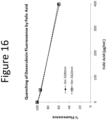
- Example 11 illustrates, moreover, that quenching by folic acid of the doxorubicin fluorescence dose-dependently decreases the loading efficiency of doxorubicin into minicells. This phenomenon further highlights the role of fluorescence per se in enhanced compound loading into minicells, pursuant to the invention.
- Loading methodology according to the invention requires a concentration gradient, i.e., a concentration of compound that is higher extracellularly than intracellularly.
- a concentration gradient i.e., a concentration of compound that is higher extracellularly than intracellularly.
- the involvement of a fluorescent compound results in loading rates and intra-vesicle concentrations that are greater than what may be explained conventionally in terms of the concentration gradient alone.
- the intracellular concentration of the compound increases and then surpasses the extracellular concentration, and movement of compound into minicells continues until a de facto saturation is reached. That the presence of ions in the medium potentiates the fluorescence-mediated enhancement of loading intact, bacterially derived vesicles, as Example 13 illustrates, likewise is not an obvious function of the concentration gradient.
- compositions therefore are provided that include an intact, nonliving bacterial vesicle enclosing a compound that displays fluorescence.
- the fluorescence is either (A) intrinsic (autofluorescence) or (B) extrinsic, i.e., fluorescence by virtue of an energy transfer moiety, as defined below, that was introduced chemically beforehand.
- the subcategory (A) of autofluorescent compounds in principle encompasses any small molecule compound, as defined below, that intrinsically displays fluorescence upon exposure to a certain wavelength of electromagnetic radiation, typically but not necessarily in the visual spectrum.
- the present invention in relation to subcategory (A) contemplates the loading of any autofluorescent compound into an intact, bacterially derived vesicle, including a minicell or a killed bacterial cell, by means of the large-scale process defined above.
- subcategory (A) encompasses compositions comprising intact, bacterially derived vesicles that contain an autofluorescent compound selected from subcategory (A) exclusive of any one or more or all of the following compounds, which were disclosed previously without reference to or implication of the presently described fluorescence effect on vesicle loading: doxorubicin (excitation 480 nm, emission 580 nm); irinotecan, a semisynthetic analogue of camptothecin, with an excitation maximum around 360 nm and an emission maximum at about 440 nm; bisantrene (excitation, 410 nm; emission, 517 nm); topotecan (excitation, 382 nm; emission, 523 nm); epirubicin (excitation, 474 nm; emission, 551 nm); daunorubicin (excitation, 488 nm; emission, 575 nm);
- dynemicin A a natural cyclic enediyne, as well as fluorescent analogues of dynemicin A (see U.S. patent No. 5,281,710 , the contents of which are incorporated here by reference); acridine orange, with an excitation maximum at 502 nm and an emission maximum at 525 nm (green); and camptothecin, a natural alkaloid with an excitation maximum at 360 nm and an emission maximum at 440 nm.
- nemorubicin (3'-deamino-3'-[2(S)-methoxy-4-morpholinyl]doxorubicin), a / k / a MMDX, and its major metabolite PNU-159682 (3'-deamino-3"-4'-anhydro-[2"(S)-methoxy-3"(R)-hydroxy-4"-morpholinyl] doxorubicin), the structural formula of which is shown below, as well as these four other such derivatives described in U.S. patent No.
- the subcategory (B) of extrinsically fluorescent compounds encompasses any compound that comprises, inter alia, (i) an active constituent or portion and (ii) an energy transfer moiety, defined below.
- the active constituent can be a drug or an active part of a drug, to which the energy transfer moiety is added by a derivatization reaction.
- the result can be a conjugate, where the product of the derivatization reaction incorporates the drug or active part thereof joined, as such, to the energy transfer moiety, with or without a linker; or it can be a structural analog, where the reaction product evinces a structural similarity to the drug or the active part thereof but differs in that one or more atoms, functional groups, or substructures are replaced in the drug or active part with other atoms, groups, or substructures in the structural analog.
- the present invention in relation to subcategory (B) contemplates the loading of any extrinsically fluorescent compound into an intact, bacterially derived vesicle, including a minicell or a killed bacterial cell, by means of the large-scale process.
- the invention in relation to subcategory (B) encompasses compositions comprising intact, bacterially derived vesicles that contain contain contain an extrinsically fluorescent compound selected from subcategory (B), exclusive of minicell-containing compositions in which the constituent minicells consist of those containing Oregon Green ® 488-conjugated paclitaxel or BODIPY ® FL-conjugated vinblastine.
- Such excluded minicell-containing compositions were disclosed by MacDiarmid et al. (2007), supra, without reference to or implication of the presently described effect of fluorescence on transmembrane movement of compounds into such vesicles.
- Illustrative of the above-mentioned structural analogs are fluorescent seco-analogs of duocarmycin, a cytotoxic antibiotic, as described by Tietze et al., Chemistry & Diversity 9: 2559-70 (2012 ). Via a reaction scheme involving certain coumarin-carboxylic acids, a trimethoxyindole moiety and (dimethylamino)ethoxyindole moieties of the drug are replaced by a fluorescent molecule, which, like the replaced moieties, interact with DNA.
- fluorescent analogs of the drug edelfosine (1-O-octadecyl-2- O -methyl- rac -glycero-3-phosphocholine) that, as described in Mollinedo et al., Cell Death & Dis. 2: e158 (2011 ), preserve the pro-apoptotic activity of the drug. See also Gajate et al., Oncogene 31: 2627-39 (2012 ).
- the linker can have a half-life such that the linker degrades, when the compound is loaded into the vesicle or when a period of time has elapsed or within a range of time thereafter (see below), to release the active constituent of the extrinsically fluorescent conjugate.
- the linker group can be labile within the target cell. That is, the linker can be subject to thermal, pH-dependent, chemical ( e.g., hydrolytic), or enzymatic cleavage, whereupon the active constituent is released into the cell, post-uptake.
- labile linkers have been developed, for instance, in the context of antibody-drug conjugates, and are readily adapted for use in the present invention. See Ducry and Stump, Bioconjugate Chem. 21: 5-13 (2010 ), plus further discussion below.
- the above-mentioned "energy transfer moiety” is a group that, upon excitation by electromagnetic radiation of an appropriate wavelength, transfers energy to a nearby energy receptor.
- the "appropriate” wavelength is any wavelength of electromagnetic radiation that excites electrons in the energy transfer moiety so that they enter an energy level whereby, upon relaxation, the electron either is released from the energy transfer moiety or causes release of electromagnetic radiation from the energy transfer moiety.
- Illustrative energy transfer moieties are groups that have a conjugated pi-electron system. Conjugated pi-systems include, for instance, coordination of multiple double bonds, coordination of multiple aromatic groups, coordination of double bonds with aromatic groups, coordination of heterocyclic aromatic groups, and the like. Illustrative energy transfer moieties are acridinyl groups, xanthenyl groups, anthracenyl groups, benzimidazolyl groups, phenanthrenyl groups, pyridinyl groups, quinolinyl groups, and porphorinyl groups.
- the energy receptor to which energy is transferred in keeping with the invention, is believed to be associated with one or more transmembrane structures of the nonliving bacterial vesicle. According to this perspective, when energy transfer is effected from the energy transfer moiety then the transmembrane structure(s) receive(s) the energy transferred, whether via an electron or an emission of light.
- the present disclosure relates an approach for providing a modified (derivatized) form of the given compound, which is fluorescent, for loading such compounds into intact, nonliving bacterial vesicles and, through such vesicles, then for introducing them into a target mammalian cell. While most molecules will be less than about 900 daltons in size, attaching a fluorescent molecule or altering the drug's structure to enhance loading of the drug into minicells, may increase its molecular weight up to about 1500 daltons.
- the invention contemplates conjugating a biologically active but non-fluorescent compound with a fluorescent moiety to form a "modified compound" of the formula: D-L-F, or a salt thereof, where:
- Such a fluorescent modified compound can be incubated with an intact, nonliving bacterial vesicle under conditions allowing the modified compound to enter the vesicle, pursuant to the invention.
- the linker L can be such that the compound or active constituent D is released from the fluorescent moiety F after a period of time or under certain conditions.
- the linker can have a half-life in the vesicle such that the linker degrades, sometime after the modified compound is loaded, to release D within the vesicle.
- the linker L can be stable inside the vesicle but labile in the endosome or lysosome of a mammalian cell.
- the linker upon uptake by a target mammalian cell and exposure to the environment within the endosomal or lysosomal compartment, the linker degrades under the impact of an environmental factor, such as pH or enzyme action, to release the active constituent in the endosome or lysosome.
- an environmental factor such as pH or enzyme action
- the modified compound does not have the biological activity of the unmodified compound and remains in that "inactive" state inside the vesicle.
- Degradation of the linker in the endosome or lysosome results in release of an active form or species, namely, of active constituent D.
- the fluorescent moiety can be linked to the biologically active compound at a position that partially or completely inhibits the activity of the latter.
- a biologically active compound typically has one or more external reactive groups that are important for biological activity. Chemical modification or derivatization of these reactive groups can reduce or even eliminate the biological activity of the compound. Such is illustrated by certain modified compounds, discussed in the examples below, that do not possess the biological activity associated with the corresponding unmodified compounds.
- the modified compound can have a molecular weight of at least about 1000 Daltons, or alternatively at least about 1100, 1200, 1300, 1400, or 1500 Daltons.
- the compound or the modified compound can be hydrophobic, while in another aspect, hydrophilic. In yet another aspect the compound or the modified compound is water-soluble.
- the invention provides in one aspect a composition
- a composition comprising intact, bacterially derived vesicles, in the form of minicells and/or killed bacterial cells, and a compound of the formula D-L-F or a salt thereof, where D is the residue of a non-fluorescent small molecule compound such as a drug, L is a linker, and F is a fluorescent moiety.
- D is the residue of a non-fluorescent small molecule compound such as a drug
- L is a linker
- F is a fluorescent moiety.
- the composition is useful particularly for the fact that loading the compound into the vesicles is facilitated over the instance of the unmodified small molecular compound.
- the bacterial vesicle of this description is an intact, bacterially derived minicell.
- each such vesicle i.e., minicell
- the minicells enclose at least about 200 ng, or at least 300 ng, 400 ng, 500 ng, 600 ng, 700 ng, 800 ng, 900 ng, or 1,000 ng of a given fluorescent compound or combination of fluorescent compounds per 10 9 minicells.
- the amount loaded per 10 9 minicells of a comparable non-fluorescent compound typically is an order of magnitude smaller, i.e., on the order of tens of nanograms.
- the intact, nonliving vesicle is a killed bacterial cell.
- a given killed bacterial cell has a capacity that is about 3-4 times greater than that of a minicell.
- the killed bacterial cell can be packaged at least about 400,000 copies of the modified compound. More particularly, each killed bacterial cell can be packaged with at least about 800,000 copies or, alternatively, with at least about 1,200,000, about 1,600,000, about 2,000,000, about 2,400,000, about 2,800,000, about 3,200,000, about 3,600,000 or about 4 million copies of the compound.
- Such killed bacterial cells can enclose at least about 800 ng, or at least 1,200 ng, 1,600 ng, 2,000 ng, 2,400 ng, 2,800 ng, 3,200 ng, 3,600 ng, or 4,000 ng of the compound per 10 9 killed cells.
- intact, bacterially derived vesicle and “intact, nonliving bacterial vesicle” synonymously refer to a vesicular derivative of a bacterial cell, including a killed bacterial cell and a bacterial minicell, which cannot reproduce and which is unable actively to initiate an entry into a mammalian cell.
- intact connotes regular continuity and structural integrity in the cell envelope, i.e., in the plasma membrane and the surrounding cell wall, which includes multiple layers (for vesicles derived from Gram-positive bacterial cells) or a bilayer outer membrane around a single-layer cell wall (for vesicles derived from Gram-negative bacterial cells). See BERGEY'S MANUAL OF SYSTEMATIC BIOLOGY, 2nd ed. (Springer, 2012 ).
- the phrase "intact killed bacterial cells” denotes intact, non-living prokaryotic cells of bacteria, cyanobateria, eubacteria or archaebacteria, possessing an intact cell envelope and containing genetic material (nucleic acid) that is endogenous to the bacterial species.
- a composition of killed bacterial cells are isolated as thoroughly as possible from immunogenic components and other toxic contaminants. Methodology for purifying intact killed bacterial cells is described in U.S. patent No. 8,591,862 , the relevant contents of which are incorporated by reference here. Briefly, live bacterial cells can be killed by antibiotics, followed by removal of cell debris and free endotoxins.
- Minicell refers to a derivative of a bacterial cell that is lacking in chromosomes (“chromosome-free”) and that is engendered by a disturbance in the coordination, during binary fission, of cell division with DNA segregation.
- Minicells are distinct from other small vesicles, such as so-called “membrane blebs” ( ⁇ 0.2 ⁇ m or less in size), which are generated and released spontaneously in certain situations but which are not due to specific genetic rearrangements or episomal gene expression.
- intact minicells are distinct from bacterial ghosts, which are not generated due to specific genetic rearrangements or episomal gene expression.
- Bacterially derived minicells employed in this disclosure are fully intact, as discussed above, and thus are distinguished from other chromosome-free forms of bacterial cellular derivatives characterized by an outer or defining membrane that is disrupted or degraded, even removed. See U.S. patent No. 7,183,105 at column 111, lines 54 et seq.
- the intact membrane that characterizes the minicells of the present disclosure allows retention of the therapeutic payload within the minicell until the payload is released, post-uptake, within a tumor cell.
- the minicell employed in accordance with this disclosure can be prepared from bacterial cells, such as E. coli and S. typhymurium. Prokaryotic chromosomal replication is linked to normal binary fission, which involves mid-cell septum formation. In E. coli, for example, mutation of min genes, such as min CD, can remove the inhibition of septum formation at the cell poles during cell division, resulting in production of a normal daughter cell and a chromosome-less minicell. See de Boer et al., J. Bacteriol. 174: 63-70 (1992 ); Raskin and de Boer, J. Bacteriol. 181: 6419-24 (1999 ); Hu and Lutkenhaus, Mol. Microbiol. 34: 82-90 (1999 ); and Harry, Mol. Microbiol. 40: 795-803 (2001 ).
- chromosome-less minicells are generated following a range of other genetic rearrangements or mutations that affect septum formation, for example, in the div IVB1 in B. subtilis. See Reeve and Cornett, J. Virol. 15: 1308-16 (1975 ). Minicells also can be formed following a perturbation in the levels of gene expression of proteins involved in cell division/chromosome segregation. For instance, over-expression of min E leads to polar division and production of minicells. Similarly, chromosome-less minicells can result from defects in chromosome segregation, e.g., the smc mutation in Bacillus subtilis ( Britton et al., Genes Dev.
- CafA can enhance the rate of cell division and/or inhibit chromosome partitioning after replication ( Okada et al., J. Bacteriol. 176: 917-22 (1994 )), resulting in formation of chained cells and chromosome-less minicells.
- minicells can be prepared for the present disclosure from any bacterial cell, be it of Gram-positive or Gram-negative origin.
- the minicells used in the disclosure should possess intact cell walls (i.e., are "intact minicells"), as noted above, and should be distinguished over and separated from other small vesicles, such as membrane blebs, which are not attributable to specific genetic rearrangements or episomal gene expression.
- the parental (source) bacteria for the minicells can be Gram-positive or they can be Gram-negative, as mentioned.
- Parental bacteria thus can be selected, for example, from any one or more of the taxons Terrabacteria (BV1), which includes the Gram-positive phyla (Actinobacteria and Firmicutes), among others; Proteobacteria (BV2), a phylum of which all members are Gram-negative; and category BV4, which includes Spirochaetes, Sphingobacteria, and Planctobacteria as well as other Gram-negative bacteria, such as Acidobacteria.
- BV1 taxons Terrabacteria
- Actinobacteria and Firmicutes Proteobacteria
- category BV4 which includes Spirochaetes, Sphingobacteria, and Planctobacteria as well as other Gram-negative bacteria, such as Acidobacteria.
- the bacteria from which killed bacterial cells or minicells are prepared are selected from one or more of the taxons Firmicutes (BV3), such as Bacilli, Clostridia and Tenericutes/Mollicutes, and Actinobacteria (BV5), such as Actinomycetales and Bifidobacteriales.
- BV3 Firmicutes
- BV5 Actinobacteria
- the parental bacteria are selected from any one or more of Eobacteria (Chloroflexi, Deinococcus-Thermus), Cyanobacteria, Thermodesulfobacteria, thermophiles (Aquificae, Thermotogae), Alpha, Beta, Gamma (Enterobacteriaceae), Delta or Epsilon Proteobacteria, Spirochaetes, Fibrobacteres, Chlorobi/Bacteroidetes, Chlamydiae/Verrucomicrobia, Planctomycetes, Acidobacteria, Chrysiogenetes, Deferribacteres, Fusobacteria, Gemmatimonadetes, Nitrospirae, Synergistetes, Dictyoglomi, Lentisphaerae Bacillales, Bacillaceae, Listeriaceae, Staphylococcaceae, Lactobacillales, Enterococcaceae, Lactobacillacea
- compositions of the present disclosure should comprise killed bacterial cells or minicells that are isolated as thoroughly as possible from immunogenic components and other toxic contaminants.
- Methodology for purifying bacterially derived minicells to remove free endotoxin and parent bacterial cells are described in WO2004/113507 , which is incorporated by reference here in its entirety. Briefly, the purification process achieves removal of (a) smaller vesicles, such as membrane blebs, which are generally smaller than 0.2 ⁇ m in size, (b) free endotoxins released from cell membranes, and (c) parental bacteria, whether live or dead, and their debris, which are sources of free endotoxins, too.
- Such removal can be implemented with, inter alia, a 0.2 ⁇ m filter to remove smaller vesicles and cell debris, a 0.45 ⁇ m filter to remove parental cells following induction of the parental cells to form filaments, antibiotics to kill live bacterial cells, and antibodies against free endotoxins.
- minicells Underlying the purification procedure is a discovery by the present inventors that, despite the difference of their bacterial sources, all intact minicells are approximately 400 nm in size, i.e., larger than membrane blebs and other smaller vesicles and yet smaller than parental bacteria. Size determination for minicells can be accomplished by using solid-state, such as electron microscopy, or by liquid-based techniques, e.g., dynamic light scattering. The size value yielded by each such technique can have an error range, and the values can differ somewhat between techniques. Thus, the size of minicells in a dried state can be measured via electron microscopy as approximately 400 nm ⁇ 50 nm.
- dynamic light scattering can measure the same minicells to be approximately 500 nm ⁇ 50 nm in size. Also, drug-packaged, ligand-targeted minicells can be measured, again using dynamic light scattering, to be approximately 600 nm ⁇ 50 nm.
- This scatter of size values is readily accommodated in practice, e.g., for purposes of isolating minicells from immunogenic components and other toxic contaminants, as described above. That is, an intact, bacterially derived minicell is characterized by cytoplasm surrounded by a rigid membrane, which gives the minicell a rigid, spherical structure. This structure is evident in transmission-electron micrographs, in which minicell diameter is measured, across the minicell, between the outer limits of the rigid membrane. This measurement provides the above-mentioned size value of 400 nm ⁇ 50 nm.
- LPS lipopolysaccharide
- the component is a chain of repeat carbohydrate-residue units, with as many as 70 to 100 repeat units of four to five sugars per chain. Because these chains are not rigid, in a liquid environment, as in vivo, they can adopt a waving, flexible structure that gives the general appearance of seaweed in a coral sea environment; i.e., the chains move with the liquid while remaining anchored to the minicell membrane.
- a composition of the disclosure can contain less than about 350 EU free endotoxin.
- levels of free endotoxin of about 250 EU, about 200 EU, about 150 EU, about 100 EU, about 90 EU, about 80 EU, about 70 EU, about 60 EU, about 50 EU, about 40 EU, about 30 EU, about 20 EU, about 15 EU, about 10 EU, about 9 EU, about 8 EU, about 7 EU, about 6 EU, about 5 EU, about 4 EU, about 3 EU, about 2 EU, about 1 EU, about 0.9 EU, about 0.8 EU, about 0.7 EU, about 0.6 EU, about 0.5 EU, about 0.4 EU, about 0.3 EU, about 0.2 EU, about 0.1 EU, about 0.05 EU, and about 0.01 EU, respectively.
- a composition of the disclosure also can contain at least about 10 8 vesicles, e.g., at least about 5 x 10 8 .
- the composition can contain on the order of 10 9 or 10 10 vesicles, e.g., 5 x 10 9 , 1 x 10 10 or 5 x 10 10 vesicles.
- a composition of the disclosure can contain fewer than about 10 contaminating live/parent bacterial cells, e.g., fewer than about 9, 8, 7, 6, 5, 4, 3, 2, or 1 live/parent bacterial cells.
- this disclosure provides methodology for loading into an intact, nonliving bacterial vesicle a small molecule compound that is fluorescent.
- the small molecule compound can be intrinsically fluorescent (autofluorescent) or it can be extrinsically fluorescent, i.e., fluorescent by virtue of the addition of a fluorescent moiety to a non-fluorescent compound, whereupon the modified compound is loaded into an intact, nonliving bacterial vesicle.
- the small molecule compound can be a "small molecule drug,” which means that it is biologically active at the point of administration of the inventive composition or that it converts to a biologically active form (is “activated”) in vivo, post-administration.
- biologically active refers to the ability of a small molecule drug to react with protein, nucleic acid or other molecules in a cell, leading to a functional change in the cell. In one aspect the change is therapeutically desirable.
- the biological activity can be a cytotoxicity, for example, whereby the small molecule compound is a chemotherapeutic agent, i.e., it is a small molecule "chemotherapeutic drug.”
- chemotherapeutic drug chemotherapeutic agent
- chemotherapy are employed interchangeably to connote a small molecule drug that has the ability to kill or disrupt a neoplastic cell.
- the "small molecule drug” subcategory encompasses compounds characterized by having (i) an effect on a biological process and (ii) a relatively low molecular weight as compared to a protein or polymeric macromolecule.
- Small molecule drugs typically are about 900 Daltons or less, with a lower limit of about 150 Daltons, as illustrated by Temodar ® (temozolomide), at about 194 Daltons, which is used to treat gliaoblastoma multiforme and other types of brain cancer.
- Temodar ® temozolomide
- attaching a fluorescent molecule or altering the drug's structure to enhance loading of the drug into minicells may increase its molecular weight up to about 1500 daltons.
- a small molecule drug can have a molecular weight of about 1500 Daltons or less, about 1400 Daltons or less, about 1300 Daltons or less, about 1200 Daltons or less, about 1100 Daltons or less, about 1000 Daltons or less, about 900 Daltons or less, about 800 Daltons or less, about 700 Daltons or less, about 600 Daltons or less, about 500 Daltons or less, or about 400 Daltons or less, e.g., in the range of about 150 to about 400 Daltons.
- a small molecule drug (unmodified, modified, or attached to a fluorescent molecule) can have a molecular weight of about 400 Daltons or more, about 450 Daltons or more, about 500 Daltons or more, about 550 Daltons or more, about 600 Daltons or more, about 650 Daltons or more, about 700 Daltons or more, about 750 Daltons or more, about 800 Daltons or more, about 850 Daltons or more, about 900 Daltons or more, about 950 Daltons or more, about 1000 Daltons or more, about 1050 Daltons or more, about 1100 Daltons or more, about 1150 Daltons or more, about 1200 Daltons or more, about 1250 Daltons or more, about 1300 Daltons or more, about 1350 Daltons or more, about 1400 Daltons or more, about 1450 Daltons or more, or about 1500 Daltons or more.
- the small molecule drug (unmodified, modified, or attached to a fluorescent molecule) packaged into the minicells has a molecular weight between about 400 and about 1300 Daltons, between about 400 and about 1100 Daltons, between about 400 and about 1000 Daltons, between about 450 and about 900 Daltons, between about 450 and about 850 Daltons, between about 450 and about 800 Daltons, between about 500 and about 800 Daltons, or between about 550 and about 750 Daltons.
- suitable small molecule chemotherapeutic drugs include but are not limited to nitrogen mustards, nitrosorueas, ethyleneimine, alkane sulfonates, tetrazine, platinum compounds, pyrimidine analogs, purine analogs, anti-metabolites, folate analogs, anthracyclines, taxanes, vinca alkaloids, and topoisomerase inhibitors, inter alia.
- a small molecule chemotherapeutic drug for use in the present invention can be selected from among any of the following, inter alia: enediynes, such as dynemicin A, unicalamycin, calicheamicin ⁇ 1 and calicheamicin ⁇ 1; meayamicin, a synthetic analog of FR901464; benzosuberene derivatives as described, for example, by Tanpure et al., Bioorg. Med. Chem.
- auristatins such as auristatin E, mono-methyl auristatin E (MMAE), and auristatin F, which are synthetic analogs of dolastatin; duocarmysins such as duocarmycin SA and CC-1065; maytansine and its derivatives (maytansinoids), such as DM1 and DM4; irinotecan (Camptosar ® ) and other topoisomerase inhibitors, such as topotecan, etoposide, mitoxantrone and teniposide; and yatakemycin, the synthesis of which is detailed by Okano et al., J. Am. Chem. Soc. 128: 7136-37 (2006 ).
- any one or more or all of the specific small molecule chemotherapeutic drugs detailed in this paragraph are illustrative of those suitable for use in accordance with the qualifications set out in section (C) above: actinomycin-D, alkeran, ara-C, anastrozole, BiCNU, bicalutamide, bleomycin, busulfan, capecitabine (Xeloda ® ), carboplatin, carboplatinum, carmustine, CCNU, chlorambucil, cisplatin, cladribine, CPT-11, cyclophosphamide, cytarabine, cytosine arabinoside, cytoxan, dacarbazine, dactinomycin, dexrazoxane, docetaxel, DTIC, ethyleneimine, etoposide, floxuridine, fludarabine, fluorouracil, flutamide, fotemustine, gemcitabine, hexamethylamine,
- compositions within the invention are subject to exclusions in relation to intrinsically fluorescent drugs (subcategory (A)) and to extrinsically florescent active agents (subcategory (B)), respectively.
- the exclusions consist of doxorubicin, irinotecan, bisantrene, epirubicin, topotecan, epirubicin, daunorubicin, and mitoxantrone.
- the exclusions consist of Oregon Green ® 488-conjugated paclitaxel and BODIPY ® FL-conjugated vinblastine.
- D in the formula D-L-F is of formula D-I or D-II or a stereoisomer thereof or a pharmaceutically acceptable salt of the compound or the stereoisomer, where:
- D in the formula D-L-F is of formula or a stereoisomer thereof, or a pharmaceutically acceptable salt of the compound or the stereoisomer, where represents the point of connection with L.
- D in the formula D-L-F is a residue of a compound selected from: or a stereoisomer thereof, or a pharmaceutically acceptable salt of the compound or the stereoisomer.
- D in the formula D-L-F is a residue of paclitaxel.
- D in the formula D-L-F is a residue of docetaxel.
- D in the formula D-L-F is a residue of vinblastine or an analog thereof.
- Fluorescent moieties are well known in the art.
- the fluorescent moiety has a maximum wavelength of excitation of 760 nm, and/or a maximum wavelength of emission of 770 nm.
- the fluorescent moiety has a maximum wavelength of excitation of 600 nm, and/or a maximum wavelength of emission of 600 nm.
- the fluorescent moiety has a maximum wavelength of excitation of 500 nm, and/or a maximum wavelength of emission of 550 nm.
- the fluorescent moiety has an excitation wavelength selected from 380-450 nm, 450-495 nm, 495-570 nm, 570-590 nm, 590-620 nm, 620-650 nm, 650-700 nm or 700-760 nm. In some embodiments the fluorescent moiety has an emission wavelength selected from 380-450 nm, 450-495 nm, 495-570 nm, 570-590 nm, 590-620 nm 620-650 nm, 650-700 nm or 700-770 nm.
- the fluorescent moiety has a molecular weight of about 100 Daltons to about 1000 Daltons, or any amount inbetween these two values, or about 100 Daltons to about 650 Daltons, or any amount inbetween these two values. In other embodiments, the fluorescent moiety has a molecular weight of about 200, about 300, about 400, about 500, about 600, about 700, about 800, about 900 Daltons, or any amount inbetween these values. In yet other embodiments, the the fluorescent moiety has a molecular weight of about 150, about 200, about 250, about 300, about 350, about 400, about 450, about 500, about 550, about 600, about 650 Daltons, or any amount inbetween these values.
- the fluorescent moiety (F) is a residue of a compound selected from a xanthene derivative, such as fluorescein, rhodamine, Oregon Green, eosin, and Texas Red; a cyanine derivative such as cyanine, indocarbocyanine, oxacarbocyanine, thiacarbocyanine, and merocyanine; a naphthalene derivative such as dansyl and prodan derivatives; a coumarin derivative; a oxadiazole derivative such as pyridyloxazole, nitrobenzoxadiazole and benzoxadiazole; a anthracene derivatives such as anthraquinones, e.g., DRAQ5, DRAQ7 and CyTRAK Orange; a pyrene derivative such as cascade blue; a oxazine derivative such as Nile Red, Nile Blue, cresyl violet, and oxazine 170; a a x
- the fluorescent moiety (F) is where
- the fluorescent moiety (F) is where R 21 is the point of connection to L.
- the fluorescent moiety (F) is a residue of a compound selected from: where each R 30 is independently hydrogen, C 1-4 alkyl or substituted C 1-4 alkyl, A 1 and A 2 are independently optionally substituted nitrogen containing heteroaryl, n is an integer selected from 1-10.
- the heteroaryl is pyrrole, imidazole, thiazole, pyridine, quinoline, indole, benzoxazole or benzothiazole.
- the fluorescent moiety (F) is where one of R 40 is R 30 and the other is R f , L 40 -R f , L 40 -OR f , L 40 -NHR f , L 40 is (CH 2 ) m , wherein one or two CH 2 groups are optionally replaced with O, S, SO, SO 2 , C(O)O, OC(O), C(O)NH, NHC(O), NH or optionally substituted phenyl, and R f is a point of connection to L.
- the fluorescent moiety (F) is where
- the fluorescent moiety (F) is where R 32 is the point of connection to L.
- the linker (L) of the present disclosure connects a fluorescent moiety or fluorophore to a small molecule compound.
- the linker is a bond, i.e., the fluorescent moiety is linked to the small molecule compound directly.
- the attachment of the fluorescent moiety does not significantly reduce the activity of the drug (D), thereby the modified compound is biologically active and/or pharmaceutically effective. In some embodiments, the attachment of the fluorescent moiety reduces or eliminates the activity of the drug (D), thereby the modified compound has a reduced biological and/or pharmaceutical activity or alternatively is biologically inactive and/or pharmaceutically ineffective.
- linkers suitable for this purpose include linkers well known for purposes of conjugating two molecules.
- the linker (L) is stable and does not degrade upon administration, and the conjugate of the fluorescent moiety and the drug is biologically and/or pharmaceutically active.
- exemplary stable linkers include but are not limited to acetylalanine (see Example 2) and beta-alanine (see Example 3).
- the linker has a half-life under physiological conditions (e.g., in a non-lyophilized state) that is longer than the minicell loading time such that the fluorescent moiety/fluorophore and the small molecule compound become separate upon break-down of the linker after the modified compound is loaded into the minicell. Generally speaking, it takes about 4 hours to load the minicells.
- the half-life of the linker can be at least 4 hours, 6 hours, 8 hours, 10 hours, 12 hours, 14 hours, 16 hours, 18 hours, 20 hours, 22 hours, or 24 hours.
- the half-life of the linker is within 6-24 hour or 8-24 hours.
- the 2'-(3-aminopropanoyl) moiety has a half-life of about 8 hours.
- the linker is stable within the bacterial vesicle but can be pH-sensitive and, hence, is less stable at a pH lower than neutral. Since the pH in the endosome/lysosome is significantly lower than in the normal cellular environment, such a pH-sensitive linker is only degradable in the endosome/lysosome of a target mammalian cell. Under such acidic conditions the linker may be hydrolyzed. For example, esters may be hydrolyzed to an alcohol residue and a carboxylic acid, or amides may be hydrolyzed to an amine and a carboxylic acid.
- pH-sensitive linkers are known is illustrated, for instance, by Nie et al. in POLYMERIC BIOMATERIALS: MEDICINAL AND PHARMACEUTICAL APPLICATIONS, Chapter 16, pages 413-32 (Dumitriu ed., 2013 ), which describes acid-labile linkers used in drug delivery.
- International patent application WO2006/108052 also describes acid-labile linkers, which are degradable under conditions found in lysosomes.
- U.S. patent No. 6,521,431 describes the use as linkers of glycolic or lactic acid, hydroxy esters, such as 3-hydroxy butyric acid, 2-hydroxy propanoic acid, and 5-hydroxy caproic acid, amino acids, ortho-esters, anhydrides, phosphazines, phosphoesters.
- pH-sensitive linkers such as citraconyl or hydrazide linkers, or enzymatically-sensitive linkers.
- linkers which the application details, include: where x, y, z are independently 0, 1, 2, 3, 4 or 5, with the proviso that at least one of x, y, and z is not 0. In some embodiments, x, y, and z are independently 1, 2, 3, 4, or 5.
- any given compound presents a divalent radical when acting as a linker, such that it can link a drug and a fluorescent moiety to provide a modified (fluorescent) compound in accordance with the invention.
- the linker (L) is selected from the group consisting of a bond, -C(O)-O-, - C(O)NH-, -OC(O)-(CHR 50 ) q NR 51 C(O)-, and -OC(O)-(CHR 50 ) q C(O)NR 51 -(CHR 52 ) u -NH-C(S)-NH-, where R 50 , R 51 and R 52 are independently H or C 1-4 alkyl, and q and u are independently 1, 2, 3, 4, 5, 6 or 7.
- L is selected from the group consisting of: -O-C(O)-CH(CH 3 )-NHC(O)-, -O-C(O)-(CH 2 ) 2 -NH-CO-, and -O-C(O)-(CH 2 ) 3 C(O)NH-(CH 2 ) 6 -NH-C(S)-NH-.
- the compound-loaded, intact and nonliving bacterial vesicles of a composition as described above are directed to a target mammalian tumor cell via a ligand.
- the ligand is "bispecific.” That is, the ligand displays a specificity for both minicell and mammalian (tumor) cell components, such that it causes a given vesicle to bind to the target cell, whereby the latter engulfs the former.
- bispecific ligands to target a minicell to a tumor cell is further described in WO 05/056749 and WO 05/079854 , and use of bispecific ligands to target a killed bacterial cell to a tumor cell is further described in U.S. patent No. 8,591,862 , the respective contents of which are incorporated here by reference in its entirety.
- the ligand can be attached to the cell membrane of the vesiclesby virtue of the interaction between the ligand and a component on the cell membrane, such as a polysaccharide, a glycoprotein, or a polypeptide.
- the expressed ligand is anchored on the surface of a vesicle such that the surface component-binding portion of the ligand is exposed so that the portion can bind the target mammalian cell surface component when the vesicle and the mammalian cell come into contact.
- the ligand can be expressed and displayed by a living counterpart of a bacterially derived vesicle, e.g., by the parent cell of a minicell or by a bacterial cell before it becomes a killed cell.
- the ligand does not require a specificity to the vesicle and only displays a specificity to a component that is characteristic of mammalian cells. That is, such component need not be unique to tumor cells, per se, or even to the particular kind of tumor cells under treatment, so long as the tumor cells present the component on their surface.
- vesicles Upon intravenous administration, vesicles accumulate rapidly in the tumor microenvironment. This accumulation, occurring as a function of the above-described leaky tumor vasculature, effects delivery of vesicle-packaged therapeutic payload to cells of the tumor, which then internalize packaged vesicles.
- ligands that comprise an antibody or antibody derivative (see below) directed at an anti-HER2 receptor or anti-EGF receptor can bind minicells to the respective receptors on a range of targeted non-phagocytic cells, such as lung, ovarian, brain, breast, prostate, and skin cancer cells.
- a suitable target cell presents a cell surface component the binding of which, by a ligand on a vesicle, elicits endocytosis of that vesicle.
- the present inventors discovered that the interaction between (a) the ligand on a minicell or a killed bacterial cell and (b) a mammalian cell surface receptor can activate an uptake pathway, called here a "receptor-mediated endocytosis” (rME) pathway, into the late-endosomal/lysosomal compartment of the target host cell, such as a tumor cell.
- rME receptor-mediated endocytosis pathway
- the inventors found, bacterially derived vesicles are processed through the early endosome, the late endosome and the lysosome, resulting in release of their payload into the cytoplasm of the mammalian host cell.
- a payload that is a nucleic acid not only escapes complete degradation in the late-endosomal/lysosomal compartment but also is expressed by the host cell.
- a ligand for this delivery approach can be "bispecific," as described above, because it binds to surface components on a payload-carrying vesicle and on a target cell, respectively, and its interaction with the latter component leads to uptake of the vesicle into the rME pathway.
- a given target cell-surface component can be a candidate for binding by the ligand, pursuant to the invention, if interaction with the component in effect accesses an endocytic pathway that entails a cytosolic internalization from the target cell surface.
- Such candidates are readily assessed for suitability in the invention via an assay in which a cell type that presents on its surface a candidate component is co-incubated in vitro with minicells carrying a ligand that binds the candidate and that also is joined to a fluorescent dye or other marker amenable to detection, e.g., visually via confocal microscopy.
- an in vitro assay of this sort is described by MacDiarmid et al. (2007), in the legend to Figure 3 at page 436.
- an observed internalization of the marker constitutes a positive indication by such an assay that the tested target cell-surface component is suitable for the present invention.
- candidate target cell-surface components are members of (A) the receptor tyrosine kinases or "RKTs," a family of transmembrane proteins that undergo constitutive internalization (endocytosis) at a rate similar to that of other integral membrane proteins.
- RKTs receptor tyrosine kinases
- the family of RKTs is described, for instance, by Lemmon and Schlessinger, Cell 141: 1117-134 (2010 ).
- the table below lists, in twenty subfamilies, all fifty-eight RTKs in the human proteome, any one or more of which may be tested for suitability in the invention, as described above (see also FIG. 24 ).
- RTK Subfamilies Exemplary RTKs ErbB EGFR, ErbB2, ErbB3, ErbB4 Ins InsR, IGF1R, InsRR PDGF PDGFR ⁇ , PDGFR ⁇ , CSF1R/Fms, Kit/SCFR, Fit3/Flk2 VEGF VEGFR1/Fit1, VEGFR2/KDR, VEGFR3/Fit4 FGF FGFR1, FGFR2, FGFR3, FGFR4 PTK7 PTK7/CCK4 Trk TrkA, TrkB, TrkC Ror Ror1, Ror2 MuSK MuSK Met Met, Ron Axl Axl, Mer, Tyro3 Tie Tie1, Tie2 Eph EphA1-8, EphA10, EphB1-4, EphB6 Ret Ret Ryk Ryk DDR DDR1, DDR2 Ros Ros LMR LMR1, LMR2, LMR3 ALK ALK, LTK STYK1 SuRTK106/STYK1
- cytokine receptor membrane-associated, high-affinity folate binding proteins
- C the subgroup of membrane-bound cytokine receptors that play a role in the internalization of a cognate cytokine, such as IL13
- D the surface antigens, such as CD20, CD33, mesothelin and HM1.24, that are expressed on certain cancer cells and that mediate the internalization of cognate monoclonal antibodies, e.g., rituximab in the instance of CD20
- E the family of adhesion receptors (integrins), transmembrane glyproteins that are trafficked through the endosomal pathway and are major mediators of cancer cell adhesion to extracellular matrix.
- the ligand can be any polypeptide or polysaccharide that exhibits the desired specificity or specificities, as the case may be.
- Preferred ligands are antibodies.
- the term "antibody” encompasses an immunoglobulin molecule obtained by in vitro or in vivo generation of an immunogenic response. Accordingly, the "antibody” category includes monoclonal antibodies and humanized antibodies, as well as antibody derivatives, such as single-chain antibody fragments (scFv), bispecific antibodies, etc.
- scFv single-chain antibody fragments
- a large number of different bispecific protein and antibody-based ligands are known, as evidenced by the review article of Caravella and Lugovskoy, Curr. Opin. Chem. Biol. 14: 520-28 (2010 ), which is incorporated here by reference in its entirety.
- Antibodies useful in accordance with the present disclosure can be obtained as well by known recombinant DNA techniques.
- an antibody that carries specificity for a surface component can be used to target minicells to cells in a tumor to be treated, pursuant to the invention.
- Illustrative cell surface receptors in this regard include any of the RTKs epidermal growth factor receptor (EGFR), vascular endothelial growth factor receptor (VEGFR), platelet-derived growth factor receptor (PDGFR) and insulin-like growth factor receptor (IGFR), each of which is highly expressed in several solid tumors, including brain tumors, and folate receptor, which is overexpressed in some pituitary adenomas.
- EGFR epidermal growth factor receptor
- VEGFR vascular endothelial growth factor receptor
- PDGFR platelet-derived growth factor receptor
- IGFR insulin-like growth factor receptor
- Such a bispecific ligand can be targeted as well to mutant or variant receptors, e.g., the IL-13R ⁇ 2 receptor, which is expressed in 50% to 80% of human glioblastoma multiforme tumors, see Wykosky et al., Clin Cancer Res. 14: 199-208 (2008 ), Jarboe et al., Cancer Res. 67: 7983-86 (2007 ), Debinski et al., J. Neurooncol. 48: 103-11 (2000 ), and Okada et al., J. Bacteriol. 176: 917-22 (1994 ), but which differs from its physiological counterpart IL4R/IL13R, expressed in normal tissues. See Hershey, J.
- IL13R ⁇ 2 is virtually absent from normal brain cells. See Debinski and Gibo, Mol. Med. 6: 440-49 (2000 ). Additionally, tumors that metastasize to the brain may overexpress certain receptors, which also can be suitable targets. For instance, Da Silva et al., Breast Cancer Res. 12: R46 (1-13) (2010 ), showed that brain metastases of breast cancer expressed all members of the HER family of RTKs.
- HER2 was amplified and overexpressed in 20% of brain metastases, EGFR was overexpressed in 21% of brain metastases, HER3 was overexpressed in 60% of brain metastases and HER4 was overexpressed in 22% of brain metastases. Interestingly, HER3 expression was increased in breast cancer cells residing in the brain.
- Formulations of a composition of the disclosure can be presented in unit dosage form, e.g., in ampules or vials, or in multi-dose containers, with or without an added preservative.
- the formulation can be a solution, a suspension, or an emulsion in oily or aqueous vehicles, and can contain formulatory agents, such as suspending, stabilizing and/or dispersing agents.
- a suitable solution is isotonic with the blood of the recipient and is illustrated by saline, Ringer's solution, and dextrose solution.
- formulations can be in lyophilized powder form, for reconstitution with a suitable vehicle, e.g., sterile, pyrogen-free water or physiological saline.
- the formulations also can be in the form of a depot preparation.
- Such long-acting formulations can be administered by implantation (for instance, subcutaneously or intramuscularly) or by intramuscular injection.
- a vesicle-containing composition that includes a therapeutically effective amount of a small molecule compound.
- a “therapeutically effective” amount of an anti-neoplastic agent is a dosage of the agent in question, in accordance with the present disclosure. If the small molecule compound is in an inactive form in the vesicle, then the “therapeutically effective” amount refers to the amount of the inactive compound that releases an effective amount of activated compound in the endosome/lysosome of a target cell.
- a therapeutically effective amount can be gauged by reference to the prevention or amelioration of the tumor or a symptom of the tumor, either in an animal model or in a human subject, when minicells carrying a therapeutic payload are administered, as further described below.
- An amount that proves "therapeutically effective amount" in a given instance, for a particular subject, may not be effective for 100% of subjects similarly treated for the tumor in question, even though such dosage is deemed a "therapeutically effective amount" by knowledgeable clinician.
- the appropriate dosage in this regard also will vary as a function, for example, of the type, stage, and severity of the tumor.
- in vitro testing (Examples 3 and 4) and in vivo testing (Examples 5, 7 and 8 ) according to the present disclosure, as well as of methodology for quantifying the distribution of drug in vivo (Example 9), when considered in light of the entire description, empower a person knowledgeable in pre-clinical and clinical testing of drug candidates to determine, through routine experimentation, the therapeutically effective amount of active agent for a particular indication.
- therapeutically effective is used to refer to the number of minicells in a pharmaceutical composition, the number can be ascertained based on what anti-neoplastic agent is packaged into the minicells and the efficacy of that agent in treating a tumor.
- the therapeutic effect in this regard can be measured with a clinical or pathological parameter such as tumor mass. Accordingly, reduction or reduced increase of tumor mass can be used to measure therapeutic effects.
- Formulations within the disclosure can be administered via various routes and to various sites in a mammalian body, to achieve the therapeutic effect(s) desired, either locally or systemically.
- the route of administration is intravenous injection.
- formulations of the disclosure can be used at appropriate dosages defined by routine testing, to obtain optimal physiological effect, while minimizing any potential toxicity.
- the dosage regimen can be selected in accordance with a variety of factors including age, weight, sex, medical condition of the patient; the severity or stage of the tumor, the route of administration, and the renal and hepatic function of the patient.
- Optimal precision in achieving concentrations of vesicle and therapeutic agent within the range that yields maximum efficacy with minimal side effects can, and typically will, require a regimen based on the kinetics of agent availability to target sites and target cells. Distribution, equilibrium, and elimination of vesicles or agent can be considered when determining the optimal concentration for a treatment regimen.
- the dosage of vesicles and therapeutic agent, respectively, can be adjusted to achieve desired effects.
- the dosage administration of the formulations can be optimized using a pharmacokinetic/pharmacodynamic modeling system.
- one or more dosage regimens can be chosen and a pharmacokinetic/pharmacodynamic model can be used to determine the pharmacokinetic/pharmacodynamic profile of one or more dosage regimens. Based on a particular such profile, one of the dosage regimens for administration then can be selected that achieves the desired pharmacokinetic/pharmacodynamic response. For example, see WO 00/67776 .
- a formulation of the disclosure can be administered at least once a week to a tumor patient, over the course of several weeks.
- the formulation can be administered at least once a week, over a period of several weeks to several months.
- inventive formulations can be administered at least once a day for about 2, about 3, about 4, about 5, about 6, about 7, about 8, about 9, about 10, about 11, about 12, about 13, about 14, about 15, about 16, about 17, about 18, about 19, about 20, about 21, about 22, about 23, about 24, about 25, about 26, about 27, about 28, about 29, about 30 or about 31 days.
- the formulations can be administered about once every day or about once every about 2, about 3, about 4, about 5, about 6, about 7, about 8, about 9, about 10, about 11, about 12, about 13, about 14, about 15, about 16, about 17, about 18, about 19, about 20, about 21, about 22, about 23, about 24, about 25, about 26, about 27, about 28, about 29, about 30 or about 31 days or more.
- formulations can be administered about once every week or about once every about 2, about 3, about 4, about 5, about 6, about 7, about 8, about 9, about 10, about 11, about 12, about 13, about 14, about 15, about 16, about 17, about 18, about 19 or about 20 weeks or more.
- the formulations can be administered at least once a week for about about 2, about 3, about 4, about 5, about 6, about 7, about 8, about 9, about 10, about 11, about 12, about 13, about 14, about 15, about 16, about 17, about 18, about 19 or about 20 weeks or more.
- the formulations can be administered about once every month or about once every about 2, about 3, about 4, about 5, about 6, about 7, about 8, about 9, about 10, about 11 or about 12 months or more.
- the formulations can be administered in a single daily dose.
- the total daily dosage can be administered in divided doses of two, three, or four times daily.
- the inventors observed the effect of a fluorescence-related loading enhancement across a broad range of loaded compounds differing in fluorescence type (intrinsic versus extrinsic) and in compound structure. For extrinsically fluorescent compounds, differences concerned the nature, respectively, of the fluorophore and of the linker, if any.
- the examples relate the loading of a variety of fluorescent compounds into bacterially derived, intact vesicles.
- the starting material was a buffered composition of empty, intact minicells, derived from a min CDE- chromosomal deletion mutant of Salmonella enterica serovar Typhimurium ( S. typhimurium ) , with a free endotoxin level of no more than about 5 EU per 10 9 minicells. See U.S. patent No. 8,449,877 (production of minicell compositions that are substantially lacking in free endotoxin).
- minicells For loading vesicles (here, minicells), the methodology in Examples 1 - 5, 7 -10, 12, and 13 essentially conform with the small-scale protocol, described above and illustrated in MacDiarmid et al. (2007). For instance, in a given experiment empty minicells in PBS buffer could be added to a microfuge tube and centrifuged (16,000 g, 10 minutes). After the resulting supernatant was discarded, the minicell pellet would be resuspended in PBS buffer, optionally with 0.01 (w/v) gelatin added (so-called "BSG buffer”), and incubated with the payload compound, generally at about 200 ⁇ g to about 1 mg per ml of minicell suspension.
- BSG buffer 0.01 gelatin added
- the loaded minicells thus obtained would be centrifuged (16,000 g, 10 minutes), and the loading supernatant discarded. Loaded minicells then would be washed by resuspending the pellet in 1 ml of buffer, centrifuging the minicells (16,000 g, 10 minutes), and discarding the supernatant wash. Such a wash step usually was repeated three times. Finally, the minicells would be resuspended in PBS or BSG buffer.
- the fluorescent compound to be loaded is water-soluble, as was the case for many of the aforementioned examples, trapping of compound to vesicle outer surfaces is reduced in significance. As a consequence washing in small scale suffices, permitting use of the small-scale protocol.
- the loaded compound was doxorubicin, which is amphipathic rather than hydrophilic, and so trapping is a significant factor. Accordingly, while the loading step for these examples was in small scale, i.e., loading took place in about milliliter-scale volumes of buffered liquid, the washing steps involved cross-filtration (no centrifugation) with liter-scale volumes of buffered liquid, thus constituting a large-scale process.
- Example 14 compares the small-scale protocol with the large-scale process, highlighting improved consistency and purity achieved with the latter.
- the payload-packaged minicells were mounted onto glass slides for visualization by fluorescence microscopy, using a Leica model DM LB light microscope, 100x magnification (Leica Microsystems, Germany). The results were captured using a Leica DC camera and Leica IM image management software, with appropriate filter employed to permit visualization of payload fluorescence.
- Vinblastine is an antimicrotubule drug conventionally used to treat certain kinds of cancer, including Hodgkin's lymphoma, non-small cell lung cancer, breast cancer, head and neck cancer, and testicular cancer.
- the employed compound, Vinblastine BODIPY ® FL is available commercially and was obtained from Life Technologies (Thermo Fisher Scientific), Molecular Probes ® brand.
- the compound is a conjugate vinblastine, via a methylene linker, with the fluorescent dye BODIPY ® FL.
- Other BODIPY fluorophores such as BODIPY R6G, BODIPY TMR, BODIPY 581/591, BODIPY TR, BODIPY 630/650 and BODIPY 650/665, could be substituted for BODIPY ® FL in this context.
- Vinblastine BODIPY ® FL has well-defined fluorescent characteristics (excitation 505 nm, emission 513 nm; red fluorescence). Its structure is depicted below.
- Vinblastine BODIPY ® FL was loaded (incubation in 1 mg conjugate per ml solution) and was washed in accordance with the small-scale protocol, with the washing step repeated three times.
- the results of fluorescent imaging revealed that all of the loaded minicells fluoresced bright red, indicating that Vinblastine BODIPY ® FL had been transferred into the minicell cytoplasm.
- Vinblastine BODIPY ® FL molecules remained within the minicells despite the reversal of the concentration gradient throughout the washing steps.
- Paclitaxel is a taxane that stabilizes microtubules and, as a result, interferes with the normal breakdown of microtubules during cell division.
- paclitaxel is used in chemotherapy to treat lung, ovarian, and breast cancers, head and neck cancer, and advanced forms of Kaposi's sarcoma.
- the employed fluorescent taxane derivative FLUTAX-1 is a commercially available conjugate of paclitaxel with fluorescein via an acetylalanine linker.
- FLUTAX-1 is deemed therapeutically ineffective; hence, it is marketed as a research reagent only.
- the conjugate was obtained from a commercial source, Tocris Biosciences (Bristol, UK).
- FLUTAX-1 (molecular weight: 1283.2 has well-defined fluorescent characteristics (excitation ⁇ 495 nm, emission ⁇ 520 nm; green fluorescence).
- the formal name of the derivative is 2a R ,4 S ,4a S ,6 R ,9 S ,11 S ,12 S , 12a R ,12b S )-6,12b- Bis (acetyloxy)-9-[(2R,3S)-3-(benzoylamino)-2-hydroxy-1-oxo-3-phenylpropoxy]-12-(benzoyloxy)-2a,3,4,4a,5,6,9,10,11,12,12a,12b-dodecahydro-11-hydroxy-4a,8,13,13-tetramethyl-5-oxo-7,11-methano-1 H- cyclodeca[3,4]benz[1,2- b ]oxet-4-yl ester N -[(3',6'-dihydroxy-3-
- Minicells in PBS prepared as described above, were incubated with 200 ⁇ g/ml FLUTAX-1 solution in 1 ml and then were washed repeatedly, pursuant to the small-scale protocol.
- Fluorescent imaging revealed that all of the minicells fluoresced bright green suggesting that FLUTAX-1 had been transferred into the minicell cytoplasm and that a large number of FLUTAX-1 molecules remained encapsulated despite the reversal of the concentration gradient throughout the washing steps.
- the background appeared black in comparison to the FLUTAX-1 packaged minicells, evidencing little to no exterior FLUTAX-1.
- the quantity of FLUTAX-1 packaged within the minicells was determined by extracting the drug from the minicells, followed by HPLC analysis and comparison to a standard curve of FLUTAX-1 samples of known concentration. Minicell extraction was performed as described by MacDiarmid et al. (2007), supra, for minicells packaged with doxorubicin. An HPLC method was developed for the quantification of FLUTAX-1. The HPLC method characteristics included (i) Mobile phase: acetonitrile: MilliQ dH 2 O, 50:50, isocratic elution for 12 minutes at flow rate 2 ml/minute. (ii) Stationary phase: Metalchem 3u Taxsil, 100 mm x 4.6 mm plus C18 cartridge.
- FLUTAX-1 content obtained with these drug loading conditions was determined by HPLC to be 570 ng per 1 x 10 9 minicells ( FIG. 3 ).
- Avogadro's number this equates to ⁇ 270,000 molecules of FLUTAX-1 packaged per minicell, a significant improvement upon paclitaxel packaging, with 127-fold more FLUTAX-1 molecules than paclitaxel molecules per minicell (see Example 9, infra ).
- TF.Pac the water-soluble derivative of paclitaxel, provided only 25-fold more molecules per minicell (see Example 10 ).
- the results indicate that the fluorescein fluorophore enhances FLUTAX-1 entry and retention in the minicell.
- This example demonstrates that another fluorescent paclitaxel conjugate, Paclitaxel Oregon Green ® -488 a / k / a "FLUTAX-2,” can be packaged into the cytoplasm of intact, bacterially derived vesicles.
- a fluorinated fluorescein moiety Oregon Green ® -488, is conjugated to C7 of paclitaxel via a beta-alanine linker.
- the fluorinated fluorescein moiety confers fluorescence (excitation ⁇ 495 nm, emission ⁇ 525 nm; green fluorescence) as well as improved water solubility to the derivative molecule.
- Paclitaxel Oregon Green ® -488 is commercially available, therefore, and for this example it was obtained from the Life Technologies (Thermo Fisher Scientific).
- the formal name of the derivative is L-alanine, N-[(2',7'-difluoro-3',6'-dihydroxy-3-oxospiro[isobenzofuran-1(3H),9'-[9H]xanthen]-5-yl)carbonyl]-(2aR,4S,4aS,6R,9S,11S,12S,12aR,12bS)-6,12b-bis(acetyloxy)-12-(benzoyloxy)-9-[(2R,3S)-3-(benzoylamino)-2-hydroxy-1-oxo-3-phenylpropoxy]-2a,3,4,4a,5,6,9,10,11,12,12a,12b-dodecahydro-11-hydroxy. Its chemical structure is represented below.
- Minicells in PBS were prepared, loaded (100 ⁇ g/ml external loading concentration of conjugate solution), and washed in accordance with the small-scale protocol. Fluorescent imaging ( FIG. 4 ) revealed that all of the minicells fluoresced bright green indicating that Paclitaxel Oregon Green ® -488 had been transferred into the minicell cytoplasm and that a large number of conjugate molecules had remained in the minicells even upon reversal of the concentration gradient throughout the washing steps. That the background appeared black in comparison to the loaded minicells evidenced little to no exterior Paclitaxel Oregon Green ® -488.
- the quantity of Paclitaxel Oregon Green ® -488 packaged within the minicells has to be determined indirectly, since disruption of loaded minicells resulted in this instance in a breaking down of the loaded compound as well, thwarting quantitation by HPLC analysis. Accordingly, the intensity of (green) fluorescence in minicells loaded with Paclitaxel Oregon ® Green-488, was compared, via fluorescence microscopy, with the (red) autofluorescence visualized for minicells loaded with doxorubicin, which is stable under conditions of extraction and quantitation. See Example 6, infra, showing ⁇ 800 ng doxorubicin packaged per 10 9 minicells.
- This example demonstrates efficient packaging into the cytoplasm of intact, bacterially derived vesicles of fluorescein isothiocyanate (FITC) derivative of paclitaxel, acronym "FCP.”
- the fluorescein group identical to the one found in FLUTAX-1, is conjugated via a 5-oxo-5-((6-thioureidohexyl)amino)pentanoic acid linker, i.e., a relatively long linker domain, to the C2' position rather than the C7 position on the paclitaxel molecule, as in FLUTAX-1 and Paclitaxel Oregon Green ® -488.
- the fluorescein group confers fluorescence to the derivative molecule (excitation: 495 nm; emission: 519 nm) and, with the linker, increases its aqueous solubility.
- FCP is not biologically active and has been used to date for research purposes only.
- FCP was obtained from IDT Australia Ltd. (Boronia, Victoria). Its chemical structure appears below.
- minicells in PBS were prepared, were loaded via incubation with FCP solution (300 ⁇ g/ml), and were washed in accordance with the small-scale protocol. Fluorescent imaging ( FIG. 5 ) revealed that all of the minicells fluoresced bright green, indicating that FCP had been transferred into the minicell cytoplasm and that reversal of the concentration gradient throughout the washing steps left a large number of FCP molecules encapsulated in the minicells. There was little to no exterior FCP, as reflected in the black appearance of the background relative to the FCP-packaged vesicles.
- the quantity of FCP packaged within the minicells was determined by extracting the drug from the minicells, followed by HPLC analysis. Minicell extraction was performed and HPLC methodology was employed was as described for the quantification of FLUTAX-1, supra.
- the FCP content obtained with these drug loading conditions was quantified as 550 ng per 1 x 10 9 minicells ( FIG. 6 ). This equates to ⁇ 230,000 molecules of FLCP packaged per minicell. This is a significant improvement upon paclitaxel packaging, with 109-fold more molecules per minicell, despite the fact that FCP is a larger molecule (formula weight 1455.6 versus 853.9).
- the number of packaged FCP molecules is similar to that of FLUTAX-1 ( ⁇ 270,000). FCP and FLUTAX-1 have the same fluorophore. Yet conjugation differs, C2' (FCP) versus C7 (FLUTAX-1), while Paclitaxel Oregon Green ® -488 shares the same C7 conjugation position as FLUTAX-1.
- the structure of the fluorescein fluorophore and not the point of conjugation to the molecule is shown to be critical for facilitating loading of the drug molecule into the minicell.
- the point of conjugation is shown to be non-critical to florescence-mediated enhancement of compound loading into intact, bacterially derived vesicles, according to the invention.
- Bac Light TM Green can be readily packaged in intact, bacterially derived vesicles.
- a green-fluorescent dye (absorption/emission ⁇ 480/516 and ⁇ 581/644 nm, respectively), Bac Light TM Green is commercially available and was obtained for this example from Life Technologies (Thermo Fisher Scientific), Molecular Probes ® brand. Its chemical structure is depicted below.
- Bac Light TM Green solution was added to minicells in PBS buffer to a final concentration of 200 nM. Pursuant to the smale-scale protocol the minicells were incubated at room temperature for 30 minutes and were subjected to a thrice-repeated washing step, as described above.
- Fluorescent imaging revealed that all of the minicells fluoresced bright green, indicating that Bac Light TM Green had been loaded into the minicell. The appearance of a black background, relative to the Bac Light TM Green-stained minicells, evidenced little to no exterior stain.
- Minicells packaged with Bac Light TM Green were analyzed by flow cytometry (Beckman Coulter FC500). Empty minicells and Bac Light TM Green-packaged minicells were labeled with an anti-LPS alexa fluor 647 (AF647) antibody. Firstly, the minicells were analyzed using the FL4 channel to detect anti-LPS AF647-stained minicells. The minicell population was visualized in a dot plot using FL4 fluorescence versus forward scatter, and the population was gated to select anti-LPS AF647 stained minicells only, disregarding any debris.
- the gated population was analyzed on the FL1 channel, to detect Bac Light TM Green fluorescence.
- the histogram ( FIG. 8 ) represents the Bac Light TM Green-packaged minicells as a completely distinct population with a large shift in FL1 fluorescence when compared to empty minicells (log scale). This indicates that greater than 95% of the minicells are fluorescent due to efficient Bac Light TM Green incorporation, and that they represent a single fluorescent population with a much greater FL1 fluorescence than that displayed by empty minicells.
- doxorubicin an amphipathic, autofluorescent cytotoxin can be packaged efficiently into the cytoplasm of bacterially derived vesicles. Shown below is the anthracycline structure of the cytotoxin, doxorubicin. Used in cancer chemotherapy, doxorubicin is derived by chemical semisynthesis from Streptomyces bacteria and is available commercially.
- minicells in PBS buffer were loaded with doxorubicin, and the loaded minicells were visualized via fluorescence microscopy (excitation 480 nm, emission 580 nm; red fluorescence).
- fluorescence microscopy excitation 480 nm, emission 580 nm; red fluorescence.
- FIG. 9 revealed that all of the minicells fluoresced bright red, with background that appeared black in comparison to the doxorubicin-packaged minicells.
- the quantity of doxorubicin packaged within the minicells was determined by extracting the drug from the minicells, as described, followed by HPLC analysis.
- the HPLC method characteristics included (i) Mobile phase: 0.1 M ammonium formate pH 3.0: MilliQ H 2 O: acetonitrile. Gradient 0.2 minutes 28:72:0 to 28:42:30, isocratic 5 minutes, step to 28:72:0, isocratic 15 minutes at flow rate 1.25 ml/minute.
- Stationary phase Waters XBridge Phenyl, 3.5 ⁇ m x 4.6 mm x 150 mm plus C18 cartridge.
- the content of doxorubicin obtained with these drug-loading conditions was determined with HPLC to be approximately 770 ng per 1 x 10 9 minicells, by comparison to a linear standard curve of doxorubicin samples of known quantity ( FIG. 10 ). This equates to about 800,000 molecules of doxorubicin loaded into each minicell.
- SYTO ® 9 is a nucleic acid-binding bacterial stain that is green-fluorescent (excitation ⁇ 485/6 nm, emission ⁇ 498/501 nm). For this example it was obtained from Life Technologies (Thermo Fisher Scientific), Molecular Probes ® brand.
- SYTO ® 9 solution was added to minicells in PBS buffer to a final concentration of 20 ⁇ M. Pursuant to the small-scale protocol, the minicells were incubated for 30 minutes and were subject to a thrice-repeated washing step, as described previously.
- SYTO ® 9 Green-packaged minicells were visualized using a fluorescence microscope, as described above, with the appropriate filter employed to permit visualization of SYTO ® 9 fluorescence. Fluorescent imaging ( FIG. 11 ) revealed that the SYTO ® 9 had been incorporated into the minicells, with little to no exterior stain.
- Minicells loaded with SYTO 9 ® were analyzed by flow cytometry (Beckman Coulter FC500). Empty minicells and SYTO ® 9-stained minicells were labeled with an anti-LPS alexa fluor 647 (AF647) antibody. Firstly, the minicells were analyzed using the FL4 channel to detect anti-LPS AF647-stained minicells. The minicell population was visualized in a dot plot, using FL4 fluorescence versus forward scatter, and the population was gated to select anti-LPS AF647-stained minicells only, disregarding any debris. The gated population then was analyzed on the FL1 channel, to detect SYTO 9 fluorescence.
- the histogram thus obtained represents the SYTO 9-stained minicells as a distinct population, with a shift in FL1 fluorescence when compared to empty minicells (log scale). This indicates that the minicells are fluorescent due to SYTO 9 incorporation and that they represent a fluorescent population with a greater FL1 fluorescence than is shown by empty minicells.
- This example demonstrates that the fluorescent dye 9-aminoacridine, as a hydrochloride hydrate compound, can be packaged into the cytoplasm of intact, bacterially derived vesicles.
- the compound, 9-aminoacridine hydrochloride hydrate (9-AAHH) is available from Sigma-Aldrich (St. Louis, MO) and has the structure shown below.
- Minicells in PBS (2.5 x 10 10 ) loaded with 9-AAHH (incubation solution: 500 ⁇ g/ml) were prepated via the small-scale protocol and were subjected to fluorescence-microscopic visualization (excitation 400 nm, emission 420 nm; blue fluorescence). Fluorescent imaging results ( FIG. 13 ) indicated that 9-aminoacridine had been transferred into the minicell cytoplasm and had remained there, despite reversal of the concentration gradient throughout the washing steps.
- This example demonstrates that the hydrophobic, non-fluorescent cytotoxic drug paclitaxel (see structure below) is loaded into the cytoplasm of intact, bacterially derived vesicles less efficiently than are fluorescent derivatives of paclitaxel.
- Minicells in PBS buffer were prepared according to the small-scale protocol. Thus, empty minicells (free endotoxin level ⁇ 2 EU per 10 9 minicells) were added to a microfuge tube and centrifuged (16,000 g, 10 minutes). The supernatant was discarded and the minicell pellet was thoroughly resuspended in 0.9 ml of PBS buffer adjusted to pH 3 (the lower pH was necessary to keep the highly hydrophobic paclitaxel in solution for at least 30 minutes). Then to the minicell suspension were added 100 ⁇ l of 6 mg/ml paclitaxel (in 1:1 cremophor EL:EtOH), yielding an external paclitaxel concentration of 600 ⁇ g/ml.
- the minicells were incubated at 37° C overnight with rotation. Excess paclitaxel solution and molecules attached non-specifically to minicell surfaces were washed by centrifugal washes. That is, post-incubation minicells were centrifuged (16,000 g, 10 minutes) and the paclitaxel loading supernatant was discarded. The paclitaxel-loaded minicells were washed by thoroughly, resuspending the pellet in 1 ml of PBS (pH 7.4), centrifuging the minicells (16,000 g, 10 minutes), and discarding the supernatant wash. The wash step was repeated three times. Finally, the paclitaxel-loaded minicells were resuspended in PBS (pH 7.4).
- the quantity of paclitaxel packaged within the minicells was determined as above, using HPLC analysis.
- a HPLC method developed for paclitaxel quantification had characteristics that included (i) Mobile phase: acetonitrile and MilliQ dH 2 O, isocratic 0.24 minutes 37:63, gradient elution for 5 minutes from 37:63 to 60:40 then mobile phase returned to original solvent composition 37:63 over 1 minute and maintained at this level to the end at a flow rate of 2ml/minute (running time 8 minutes); (ii) Stationary phase: Metalchem 3u Taxsil, 100 mm x 4.6 mm plus C18 cartridge; (iii) Column temperature: 40°C; (iv) Detection: SPD-M10Avp diode array detector-228 nm; (v) Injection volume: 50 ⁇ l; and (vi) HPLC system: a Shimadzu SCL-10AVP system comprising SIL-10AVP auto-injector, LC-10Advp pump, DGU-14
- the paclitaxel content obtained with these drug loading conditions was quantified by HPLC as 3 ng per 1 x 10 9 minicells, by comparison to a linear standard curve of paclitaxel samples of known quantity ( FIG. 14 ). This equates to 2115 molecules of Paclitaxel encapsulated per minicell, or approximately 110-130-fold fewer than for FCP and FLUTAX-1, respectively. Additional approaches were employed in an attempt to load the minicells with greater quantities of paclitaxel.
- TF.Pac has improved solubility due to a beta-alanyl formate salt conjugated to the C2' of paclitaxel.
- TF.Pac was synthesized in order to illuminate whether it is simply poor aqueous solubility that inhibits efficient loading of paclitaxel into intact, bacterially derived vesicles.
- Paclitaxel is soluble in water to 0.3 ⁇ g/ml while the solubility of TF.Pac is at least 2 mg/ml.
- Minicells in PBS buffer were loaded with TF.Pac (loading solution: 1 mg of compound per ml of distilled water 0.1% acetic acid) pursuant to the small-scale protocol.
- the quantity of TF.Pac thus packaged within the minicells was determined by extracting the drug from the minicells followed by HPLC analysis. Minicell extraction was performed as described above for minicells packaged with doxorubicin. The HPLC method used was identical to that developed for paclitaxel quantification.
- the average TF.Pac content obtained with these drug loading conditions was quantified by HPLC as 78 ng per 1 x 10 9 minicells ( FIG. 15 ), which equates to ⁇ 50,000 molecules of TF.Pac packaged per minicell.
- the loading efficiency thus was somewhat greater than for paclitaxel but was ⁇ 5.4-fold less than for FLUTAX-1.
- Numerous buffers were employed in an attempt to load minicells with greater quantities of TF.Pac; however, the efficiency obtained with the method described above was not exceeded. Accordingly, merely increasing aqueous solubility of a chemical compound is not a driver of enhanced loading into intact, bacterially derived vesicles.
- Doxorubicin in PBS 100 ⁇ g/ml was mixed with various concentrations of FA, namely, 0 ⁇ g/ml, 50 ⁇ g/ml, and 400 ⁇ g/ml.
- the solutions were incubated at room temperature overnight and then were filtered through a 0.1 ⁇ m filter, to sterilize the solutions and to remove any particulates.
- minicells were washed with PBS buffer and then were loaded with one or another of each of the Dox + FA solutions, previously prepared at a density of 2.5 x 10 10 minicells/ml, in a volume between about 1 ml to 2 mls. Samples (500 ⁇ l) were taken from each of the treatment groups at the time points of 30 minutes, 1 hour, 2 hours, 4 hours, 6 hours, and overnight.
- a standard curve of free doxorubicin was generated. Absorbance of doxorubicin in PBS, at various concentrations in duplicate, was measured via biophotometer at 490 nm.
- Minicells from each minicell Dox sample were made up to 200 ⁇ l with PBS buffer (pH7.4) in cuvettes, per the table above.
- a 'blank' sample containing empty minicells also was made up in 200 ⁇ l of PBS (pH7.4) in a cuvette.
- the absorbance of the blank minicell sample and all of the minicell Dox samples was measured at 490 nm. Table 3.
- minicell pellets were processed for analysis by HPLC as described by MacDiarmid et al. (2007), supra. Dox in each sample was quantitated using both UV 250nm detection and relative fluorescence (RF) detection.
- HPLC quantification from UV 250nm readings are presented in FIG. 19
- HPLC quantification from relative fluorescence (RF) readings are shown in FIG. 20 .
- the increasing amounts of folic acid present in the loading solution were observed to affect adversely the loading of doxorubicin into minicells.
- MTX mitoxantrone dihydrochloride
- Mitozantrone an intrinsically fluorescent cytotoxic drug also known as "Mitozantrone.”
- An anthracenedione anti-neoplastic agent, MTX acts as a type II topoisomerase inhibitor and has been used to treat cancers such as metastatic breast cancer, acute myeloid leukemia, and non-Hodgkin's lymphoma.
- Mitoxantrone was purchased from Sigma-Aldrich (St. Louis, MO). Empty, intact minicells were prepared (3.2 x 10 10 /ml) as described above. Centricon ® columns (0.65 ⁇ m) were obtained from Millipore (Billerica, MA), sterile PBS (pH 7.4) from Sigma-Aldrich, and injectable saline from Livingstone Int'l (Rosebery, NSW).
- a 2 mg/ml stock solution of MTX was prepared in saline and was filtered through a 0.1 ⁇ m filter. (Mitoxantrone is soluble in water to approximately 5-7.5 mg/ml.) The resultant solution was stored at 4° C and protected from light.
- the small-scale protocol was adapted for use in this example.
- minicells were provided in 781 ⁇ l aliquots (2.5 x 10 10 final).
- the tubes were spun at 13,200 rpm for 8 minutes on a benchtop Eppendorf centrifuge. The supernatant was removed; pellets were resuspended in 1 ml of PBS buffer (pH 7.4) and then were spun again. The pellets thus obtained were resuspended in 850 ⁇ l of PBS buffer.
- the pellets were resuspended in 0.5 ml of PBS (pH 7.4) and were incubated for 15 minutes at room temperature with rotation. After incubation each sample was applied to a 0.65 ⁇ m Centricon ® column and was spun at 200 g for 1 minute or until the entire sample flowed through. The flow-through was collected into a fresh tube. A fresh lot of 0.5 ml PBS (pH 7.4) was applied to the same filter and was spun, and the flow-through was added to the original 0.5 ml sample.
- Minicell sample counts were performed, with 10 ⁇ l minicells in 990 ⁇ l PBS (pH 7.4), using the LM20 nanoparticle analysis system, a product of NanoSight Ltd (Amesbury, Wiltshire, UK). The results were as follows: 2 hour: 6.24 x 10 10 /ml 4 hour: 5.77 x 10 10 /ml Overnight: 5.93 x 10 10 /ml
- each minicell contained about 759,000 MTX molecules, based on a molecular weight of about 444 for the drug, per The Merck Index Online (2014).
- MTX concentrations of MTX inside minicells were surprisingly high, comparable to those of doxorubicin, which like MTX is intrinsically fluorescent.
- Consoli et al. Leukemia 11: 2066-74 (1997 ), and Bell, Biochim Biophys Acta 949: 132-37 (1988 ) (maximum excitation and emission for MTX at around 610 nm and 685 nm, respectively).
- the high loading efficiency of MTX which is slightly smaller than doxorubicin, is believed to be a function of its fluorescence.
- minicells (2.5 x 10 10 per tube) were washed once with 1 ml of PBS (pH7.4) and were centrifuged (16,000 g, 7 minutes), and the supernatant was discarded. In 15% ethanol, 85% PBS (pH 7.4), washed minicells were loaded with 100 ⁇ g/ml FLUTAX-1 (Tocris Biosciences), either with or without 200 mM KCl (Sigma-Aldrich).
- the tubes were rotated at 37° C. One tube from each treatment was removed for washing at each of 15 minutes, 45 minutes, 2 hours and 5 hours. Each treatment was washed three times to remove the reagents and retain the minicells.
- FLUTAX-1 levels were measured via HPLC in the manner described above. Thus, measurements (UV 228 nm) were compared to a standard curve of known FLUTAX-1 amounts and were extrapolated to yield the FLUTAX-1 quantity within 1 x 10 9 minicells.
- FIG. 21 depicts, the results show that inclusion of 200 mM KCl in the loading solution dramatically enhanced the loading of FLUTAX-1 into intact minicells. That is, the higher salt concentration was associated with more than a doubling of the quantity of fluorescent drug loaded into the minicells. Indeed, the effect was evident after as little as 15 minutes of minicell/drug co-incubation.
- minicells (2.5 x 10 10 per tube) were washed once with 1 ml of PBS (pH7.4) and were centrifuged (16,000g, 7 minutes), and the supernatant was discarded. Washed minicells were loaded with 100 ⁇ g/ml of FLUTAX-1 in 15% ethanol, 85% PBS (pH 7.4), either with or without 200 mM of KCl, NaCl, or KBr. The tubes were rotated at 37 °C. One tube from each condition was removed for washing at each of 15 minutes and 1 hour. Each treatment was washed three times as described above.
- Minicells were lysed and extracted, as described above, and lysates were run under HPLC conditions for measuring FLUTAX-1 levels. Measurements (UV 228 nm) were compared to a curve of known FLUTAX-1 amounts and were extrapolated to obtain the quantity of FLUTAX-1 in 1 x 10 9 minicells.
- Each of the salts KCl, NaCl, and KBr increased the efficiency of loading a fluorescent drug into intact, bacterially derived vesicles, here by approximately 2-fold at 15 minutes. Loading was in effect completed within about 4 hours of incubation.
- FIG. 23 A graphical representation of these data ( FIG. 23 ) shows that the amount of fluorescent compound loaded into the minicells was over 100% greater when co-incubation occurred at about 37° C than at room temperature. (Membrane degradation renders infeasible any co-incubation temperature much higher than about 37° C.)
- Intact minicells were prepared and loaded with doxorubicin essentially in accordance with the methodology of MacDiarmid et al. (2007), except that the minicells did not carry any targeting bispecific ligands and, hence, would not be taken up by a targeted host cell.
- the loaded minicells were subjected five times to a washing step that entailed centrifugation (13,200 rpm, 10 minutes) and resuspension of the resultant pellet in 1 ml BSG buffer (pH 7.4).
- the cells were monitored subsequently every 24 hours via confocal microscopy. Within two days the cancer cells displayed red fluorescence in their nuclei, indicative of doxorubicin entry, even though the loaded minicells had not been targeted for uptake by the cells. Thus, the small-scale protocol resulted in the trapping on the minicell surfaces of extraneous doxorubicin, which leached into the tissue culture medium and entered the cancer cells.
- the large-scale process provided an average doxorubicin concentration for loaded minicells of about 672 ng ⁇ 58 ng per 1 x 10 9 minicells.
- a substantially improved purity achieved with the large-scale process is evidenced by an average free endotoxin level of 2.99 EU ⁇ 1.45 EU per 1 x 10 9 minicells.
Landscapes
- Health & Medical Sciences (AREA)
- Life Sciences & Earth Sciences (AREA)
- Chemical & Material Sciences (AREA)
- Pharmacology & Pharmacy (AREA)
- Veterinary Medicine (AREA)
- Public Health (AREA)
- Medicinal Chemistry (AREA)
- General Health & Medical Sciences (AREA)
- Animal Behavior & Ethology (AREA)
- Epidemiology (AREA)
- Bioinformatics & Cheminformatics (AREA)
- Engineering & Computer Science (AREA)
- Molecular Biology (AREA)
- Virology (AREA)
- Cell Biology (AREA)
- Zoology (AREA)
- Botany (AREA)
- Biophysics (AREA)
- Hematology (AREA)
- General Chemical & Material Sciences (AREA)
- Chemical Kinetics & Catalysis (AREA)
- Nuclear Medicine, Radiotherapy & Molecular Imaging (AREA)
- Organic Chemistry (AREA)
- Oncology (AREA)
- Pharmaceuticals Containing Other Organic And Inorganic Compounds (AREA)
- Medicinal Preparation (AREA)
- Medicines Containing Material From Animals Or Micro-Organisms (AREA)
- Measuring Or Testing Involving Enzymes Or Micro-Organisms (AREA)
- Peptides Or Proteins (AREA)
Applications Claiming Priority (3)
| Application Number | Priority Date | Filing Date | Title |
|---|---|---|---|
| US201462059466P | 2014-10-03 | 2014-10-03 | |
| PCT/IB2015/057558 WO2016051389A1 (en) | 2014-10-03 | 2015-10-02 | Enhanced loading of intact, bacterially derived vesicles with small molecule compounds |
| EP15846818.1A EP3200765A4 (de) | 2014-10-03 | 2015-10-02 | Verbessertes laden von intakten, bakteriell abgeleiteten vesikeln mit kleinen molekülverbindungen |
Related Parent Applications (1)
| Application Number | Title | Priority Date | Filing Date |
|---|---|---|---|
| EP15846818.1A Division EP3200765A4 (de) | 2014-10-03 | 2015-10-02 | Verbessertes laden von intakten, bakteriell abgeleiteten vesikeln mit kleinen molekülverbindungen |
Publications (2)
| Publication Number | Publication Date |
|---|---|
| EP4559528A2 true EP4559528A2 (de) | 2025-05-28 |
| EP4559528A3 EP4559528A3 (de) | 2025-08-27 |
Family
ID=55629513
Family Applications (2)
| Application Number | Title | Priority Date | Filing Date |
|---|---|---|---|
| EP25170372.4A Pending EP4559528A3 (de) | 2014-10-03 | 2015-10-02 | Erhöhte ladung von intakten, aus bakterien abgeleiteten vesikeln mit kleinmoleküligen verbindungen |
| EP15846818.1A Withdrawn EP3200765A4 (de) | 2014-10-03 | 2015-10-02 | Verbessertes laden von intakten, bakteriell abgeleiteten vesikeln mit kleinen molekülverbindungen |
Family Applications After (1)
| Application Number | Title | Priority Date | Filing Date |
|---|---|---|---|
| EP15846818.1A Withdrawn EP3200765A4 (de) | 2014-10-03 | 2015-10-02 | Verbessertes laden von intakten, bakteriell abgeleiteten vesikeln mit kleinen molekülverbindungen |
Country Status (9)
| Country | Link |
|---|---|
| US (2) | US10328159B2 (de) |
| EP (2) | EP4559528A3 (de) |
| JP (1) | JP7029957B2 (de) |
| CN (1) | CN106999444B (de) |
| AU (1) | AU2015326407C1 (de) |
| CA (2) | CA3211718A1 (de) |
| SG (1) | SG11201702627UA (de) |
| TW (1) | TWI781904B (de) |
| WO (1) | WO2016051389A1 (de) |
Families Citing this family (4)
| Publication number | Priority date | Publication date | Assignee | Title |
|---|---|---|---|---|
| US10328159B2 (en) * | 2014-10-03 | 2019-06-25 | Engenic Molecular Delivery Pty Ltd. | Enhanced loading of intact, bacterially derived vesicles with small molecule compounds |
| KR101708424B1 (ko) * | 2015-03-04 | 2017-02-20 | 전남대학교산학협력단 | 코리네박테리움 속 박테리아 및 이로부터 유래된 미니셀 그리고 이의 용도 |
| US10399964B2 (en) | 2017-03-30 | 2019-09-03 | The University Of Kansas | Coumarin-linked taxanes for detection and circumvention of cellular efflux |
| CN111148531A (zh) | 2017-09-08 | 2020-05-12 | 伊夫罗生物科学公司 | 细菌胞外囊泡 |
Citations (20)
| Publication number | Priority date | Publication date | Assignee | Title |
|---|---|---|---|---|
| FR901464A (fr) | 1943-01-23 | 1945-07-27 | Boehringer & Soehne Gmbh | Procédé d'obtention de vanilline |
| US5281710A (en) | 1990-08-01 | 1994-01-25 | The Scripps Research Institute | Dynemicin analogs: synthesis, methods of preparation and use |
| US5306809A (en) | 1990-12-31 | 1994-04-26 | Akzo N.V. | Acid-labile linker molecules |
| WO1998002446A1 (en) | 1996-07-11 | 1998-01-22 | Pharmacia & Upjohn S.P.A. | Morpholinyl anthracycline derivatives |
| WO2000067776A1 (en) | 1999-05-11 | 2000-11-16 | Ortho-Mcneil Pharmaceuticals, Inc. | Pharmacokinetic and pharmacodynamic modeling of erythropoietin administration |
| US6521431B1 (en) | 1999-06-22 | 2003-02-18 | Access Pharmaceuticals, Inc. | Biodegradable cross-linkers having a polyacid connected to reactive groups for cross-linking polymer filaments |
| WO2003033519A2 (en) | 2001-10-15 | 2003-04-24 | Engeneic Gene Therapy Pty Limited | Intact minicells as vectors for dna transfer and gene therapy in vitro and in vivo |
| WO2004113507A1 (en) | 2003-06-24 | 2004-12-29 | Engeneic Molecular Delivery Pty Ltd. | Pharmaceutically compatible method for purifying intact bacterial minicells |
| US20050112065A1 (en) | 2003-07-09 | 2005-05-26 | Drummond Daryl C. | Remote detection of substance delivery to cells |
| WO2005056749A2 (en) | 2003-12-09 | 2005-06-23 | Engeneic Molecular Delivery Pty Ltd. | Targeted gene delivery to non-phagocytic mammalian cells via bacterially derived intact minicells |
| WO2005079854A1 (en) | 2004-02-02 | 2005-09-01 | Engeneic Molecular Delivery Pty Ltd. | Compositions and methods for targeted in vitro and in vivo drug delivery to mammalian cells via bacterially derived intact minicells |
| WO2006108052A2 (en) | 2005-04-06 | 2006-10-12 | Genzyme Corporation | Peg and polysialic lysosomal enzyme conjugates via acid labile linkers for therapeutic targeting |
| US7183105B2 (en) | 2001-05-24 | 2007-02-27 | Vaxiion Therapeutics, Inc. | Eubacterial minicells and their use as vectors for nucleic acid delivery and expression |
| US20120121615A1 (en) | 2010-11-17 | 2012-05-17 | Flygare John A | Alaninyl maytansinol antibody conjugates |
| US20130071482A1 (en) | 2011-09-20 | 2013-03-21 | The University Of Kentucky Research Foundation | Block copolymer cross-linked nanoassemblies as modular delivery vehicles |
| WO2013088250A1 (en) | 2011-12-13 | 2013-06-20 | Engeneic Molecular Delivery Pty Ltd | Bacterially derived, intact minicells for delivery of therapeutic agents to brain tumors |
| US8470984B2 (en) | 2010-12-02 | 2013-06-25 | Nerviano Medical Sciences S.R.L. | Process for the preparation of morpholinyl anthracycline derivatives |
| US20130261094A1 (en) | 2010-09-21 | 2013-10-03 | Cristal Delivery B.V. | Tunable, biodegradable linker molecules for transient conjugation of components in drug delivery systems, and drug delivery systems prepared therewith |
| US8591862B2 (en) | 2006-06-23 | 2013-11-26 | Engeneic Molecular Delivery Pty Ltd | Targeted delivery of drugs, therapeutic nucleic acids and functional nucleic acids to mammalian cells via intact killed bacterial cells |
| US8669101B2 (en) | 2004-08-26 | 2014-03-11 | Engeneic Molecular Delivery Pty. Ltd. | Bacterially derived intact minicells that encompass plasmid free functional nucleic acid for in vivo delivery to mammalian cells |
Family Cites Families (22)
| Publication number | Priority date | Publication date | Assignee | Title |
|---|---|---|---|---|
| US9107949B2 (en) | 1996-11-12 | 2015-08-18 | The University Of Akron | Method for using naturally occurring gas vesicles as ultrasound contrast agent |
| US20040138168A1 (en) * | 1999-04-21 | 2004-07-15 | Wyeth | Methods and compositions for inhibiting the function of polynucleotide sequences |
| AU2005203401A1 (en) * | 2000-03-08 | 2006-02-16 | Gerhart Graupner | Targeting bioactive materials via somatostatin receptors |
| CN1313622C (zh) * | 2002-08-02 | 2007-05-02 | 赵翀 | 高通量细胞生物芯片检测技术及试剂盒 |
| EP1605951A1 (de) * | 2003-03-18 | 2005-12-21 | Pharmacia Italia S.p.A. | Kombinationstherapie mit nemorubicin und einem cyclooxygenase-2-inhibitor |
| GB0316560D0 (en) * | 2003-07-15 | 2003-08-20 | Chiron Srl | Vesicle filtration |
| US20050239217A1 (en) * | 2003-11-26 | 2005-10-27 | Applera Corporation | Fluorogenic homogeneous binding assay methods and compositions |
| CN101010106A (zh) * | 2004-06-30 | 2007-08-01 | 诺瓦提斯公司 | 抗体和Duocarmycin衍生物的缀合物作为抗肿瘤剂 |
| IE20060565A1 (en) * | 2006-07-28 | 2008-02-06 | Eurand Pharmaceuticals Ltd | Drug delivery system based on regioselectively amidated hyaluronic acid |
| WO2008047948A1 (en) * | 2006-10-19 | 2008-04-24 | Nanocarrier Co., Ltd. | Block copolymer for drug complex and pharmaceutical composition |
| PT2145002E (pt) * | 2007-03-30 | 2015-04-29 | Engeneic Molecular Delivery Pty Ltd | Mínicélulas derivadas de bactérias, intactas, que compreendem ácidos nucleicos funcionais livres de plasmídeos, para administração in vivo em células de mamíferos |
| CA2730737A1 (en) | 2008-07-15 | 2010-01-21 | Novartis Ag | Immunogenic amphipathic peptide compositions |
| AU2010290896B2 (en) | 2009-09-02 | 2014-07-03 | Glaxosmithkline Biologicals S.A. | Immunogenic compositions including TLR activity modulators |
| WO2013048734A1 (en) * | 2011-09-28 | 2013-04-04 | Tufts Medical Center, Inc. | Treatment and prevention of cardiovascular disease with cell derived lipid vesicles, microvesicles and exosomes |
| EP2708243A1 (de) * | 2012-09-17 | 2014-03-19 | OntoChem GmbH | Rezeptor-Ligand-verbundene zytotoxische Moleküle |
| US20160120818A1 (en) * | 2013-02-07 | 2016-05-05 | Glaxosmithline Biological Sa | Pharmaceutical compositions comprising vesicles |
| CA2926161C (en) * | 2013-10-04 | 2023-03-14 | Engeneic Molecular Delivery Pty Ltd | Combination tumor treatment with drug-loaded, bispecific ligand-targeted minicells and interferon-gamma |
| JP5704222B1 (ja) | 2013-11-27 | 2015-04-22 | 株式会社豊田自動織機 | 繊維強化複合材料 |
| US10328159B2 (en) * | 2014-10-03 | 2019-06-25 | Engenic Molecular Delivery Pty Ltd. | Enhanced loading of intact, bacterially derived vesicles with small molecule compounds |
| NZ752371A (en) * | 2016-10-06 | 2026-03-27 | Engeneic Molecular Delivery Pty Ltd | Bacterial minicells for delivering nucleic acid adjuvants and methods of using the same |
| US11504402B2 (en) * | 2018-07-23 | 2022-11-22 | Engenelc Molecular Delivery Pty Ltd | Compositions comprising bacterially derived minicells and methods of using the same |
| EP3906053A4 (de) * | 2019-01-04 | 2023-01-11 | EnGeneIC Molecular Delivery Pty Ltd. | Eingekapselte glykolipidantigene zur behandlung von neoplastischen krankheiten |
-
2015
- 2015-10-02 US US14/873,776 patent/US10328159B2/en active Active
- 2015-10-02 CN CN201580065821.6A patent/CN106999444B/zh active Active
- 2015-10-02 WO PCT/IB2015/057558 patent/WO2016051389A1/en not_active Ceased
- 2015-10-02 CA CA3211718A patent/CA3211718A1/en active Pending
- 2015-10-02 EP EP25170372.4A patent/EP4559528A3/de active Pending
- 2015-10-02 JP JP2017517692A patent/JP7029957B2/ja active Active
- 2015-10-02 SG SG11201702627UA patent/SG11201702627UA/en unknown
- 2015-10-02 CA CA2963218A patent/CA2963218C/en active Active
- 2015-10-02 TW TW104132594A patent/TWI781904B/zh active
- 2015-10-02 EP EP15846818.1A patent/EP3200765A4/de not_active Withdrawn
- 2015-10-02 AU AU2015326407A patent/AU2015326407C1/en active Active
-
2019
- 2019-03-22 US US16/362,562 patent/US11052157B2/en active Active
Patent Citations (21)
| Publication number | Priority date | Publication date | Assignee | Title |
|---|---|---|---|---|
| FR901464A (fr) | 1943-01-23 | 1945-07-27 | Boehringer & Soehne Gmbh | Procédé d'obtention de vanilline |
| US5281710A (en) | 1990-08-01 | 1994-01-25 | The Scripps Research Institute | Dynemicin analogs: synthesis, methods of preparation and use |
| US5306809A (en) | 1990-12-31 | 1994-04-26 | Akzo N.V. | Acid-labile linker molecules |
| WO1998002446A1 (en) | 1996-07-11 | 1998-01-22 | Pharmacia & Upjohn S.P.A. | Morpholinyl anthracycline derivatives |
| WO2000067776A1 (en) | 1999-05-11 | 2000-11-16 | Ortho-Mcneil Pharmaceuticals, Inc. | Pharmacokinetic and pharmacodynamic modeling of erythropoietin administration |
| US6521431B1 (en) | 1999-06-22 | 2003-02-18 | Access Pharmaceuticals, Inc. | Biodegradable cross-linkers having a polyacid connected to reactive groups for cross-linking polymer filaments |
| US7183105B2 (en) | 2001-05-24 | 2007-02-27 | Vaxiion Therapeutics, Inc. | Eubacterial minicells and their use as vectors for nucleic acid delivery and expression |
| WO2003033519A2 (en) | 2001-10-15 | 2003-04-24 | Engeneic Gene Therapy Pty Limited | Intact minicells as vectors for dna transfer and gene therapy in vitro and in vivo |
| US8449877B2 (en) | 2003-06-24 | 2013-05-28 | Engeneic Molecular Delivery Pty. Ltd. | Pharmaceutically purified intact bacterial minicells |
| WO2004113507A1 (en) | 2003-06-24 | 2004-12-29 | Engeneic Molecular Delivery Pty Ltd. | Pharmaceutically compatible method for purifying intact bacterial minicells |
| US20050112065A1 (en) | 2003-07-09 | 2005-05-26 | Drummond Daryl C. | Remote detection of substance delivery to cells |
| WO2005056749A2 (en) | 2003-12-09 | 2005-06-23 | Engeneic Molecular Delivery Pty Ltd. | Targeted gene delivery to non-phagocytic mammalian cells via bacterially derived intact minicells |
| WO2005079854A1 (en) | 2004-02-02 | 2005-09-01 | Engeneic Molecular Delivery Pty Ltd. | Compositions and methods for targeted in vitro and in vivo drug delivery to mammalian cells via bacterially derived intact minicells |
| US8669101B2 (en) | 2004-08-26 | 2014-03-11 | Engeneic Molecular Delivery Pty. Ltd. | Bacterially derived intact minicells that encompass plasmid free functional nucleic acid for in vivo delivery to mammalian cells |
| WO2006108052A2 (en) | 2005-04-06 | 2006-10-12 | Genzyme Corporation | Peg and polysialic lysosomal enzyme conjugates via acid labile linkers for therapeutic targeting |
| US8591862B2 (en) | 2006-06-23 | 2013-11-26 | Engeneic Molecular Delivery Pty Ltd | Targeted delivery of drugs, therapeutic nucleic acids and functional nucleic acids to mammalian cells via intact killed bacterial cells |
| US20130261094A1 (en) | 2010-09-21 | 2013-10-03 | Cristal Delivery B.V. | Tunable, biodegradable linker molecules for transient conjugation of components in drug delivery systems, and drug delivery systems prepared therewith |
| US20120121615A1 (en) | 2010-11-17 | 2012-05-17 | Flygare John A | Alaninyl maytansinol antibody conjugates |
| US8470984B2 (en) | 2010-12-02 | 2013-06-25 | Nerviano Medical Sciences S.R.L. | Process for the preparation of morpholinyl anthracycline derivatives |
| US20130071482A1 (en) | 2011-09-20 | 2013-03-21 | The University Of Kentucky Research Foundation | Block copolymer cross-linked nanoassemblies as modular delivery vehicles |
| WO2013088250A1 (en) | 2011-12-13 | 2013-06-20 | Engeneic Molecular Delivery Pty Ltd | Bacterially derived, intact minicells for delivery of therapeutic agents to brain tumors |
Non-Patent Citations (37)
| Title |
|---|
| "Guidance for Industry - Pyrogen and Endotoxins Testing", U.S. FOOD AND DRUG ADMINISTRATION, 2012 |
| "THE MOLECULAR PROBES® HANDBOOK - A GUIDE To FLUORESCENT PROBES AND LABELING TECHNOLOGIES", article "BODIPY Dye Series" |
| BELL, BIOCHIM BIOPHYS ACTA, vol. 949, 1988, pages 132 - 37 |
| BOER ET AL., J. BACTERIOL, vol. 174, 1992, pages 63 - 70 |
| BRITTON ET AL., GENES DEV, vol. 12, 1998, pages 1254 - 59 |
| CARAVELLALUGOVSKOY, CURR. OPIN. CHEM. BIOL., vol. 14, 2010, pages 520 - 28 |
| CONSOLI ET AL., LEUKEMIA, vol. 11, 1997, pages 2066 - 74 |
| DAWSON, LAL UPDATE, vol. 22, no. 3, October 2005 (2005-10-01) |
| DEBINSKI ET AL., J. NEUROONCOL, vol. 48, 2000, pages 103 - 11 |
| DEBINSKIGIBO, MOL. MED, vol. 6, 2000, pages 440 - 49 |
| DUCRYSTUMP, BIOCONJUGATE CHEM, vol. 21, 2010, pages 5 - 13 |
| DUNCAN, NATURE REVIEWS CANCER, vol. 6, 2006, pages 688 - 701 |
| GAJATE ET AL., ONCOGENE, vol. 31, 2012, pages 2627 - 39 |
| GOHSORKIN, COLD SPRING HARB. PERSPECT. BIOL, vol. 5, 2013, pages 017459 |
| HARRY, MOL. MICROBIOL, vol. 40, 2001, pages 795 - 803 |
| HERSHEY, J. ALLERGY CLIN. IMMUNOL, vol. 111, 2003, pages 677 - 90 |
| HIRAGA ET AL., J. BACTERIOL, vol. 171, 1989, pages 1496 - 1505 |
| HULUTKENHAUS, MOL. MICROBIOL, vol. 34, 1999, pages 82 - 90 |
| HUSSEINI, ADV. SCI. LETT, vol. 7, 2012, pages 726 |
| IRETON ET AL., J. BACTERIA, vol. 176, 1994, pages 5320 - 29 |
| JARBOE ET AL., CANCER RES., vol. 67, 2007, pages 7983 - 86 |
| LEMMONSCHLESSINGER, CELL, vol. 141, 2010, pages 1117 - 134 |
| MACDIARMID ET AL., CANCER CELL, vol. 11, 2007, pages 431 - 45 |
| MOLLINEDO ET AL., CELL DEATH & DIS, vol. 2, 2011, pages 158 |
| NICOLETTI ET AL., INT'L J. ANTIMICROB. AGENTS, vol. 33, 2009, pages 441 - 48 |
| OKADA ET AL., J. BACTERIA!, vol. 176, 1994, pages 917 - 22 |
| OKADA ET AL., J. BACTERIOL, vol. 176, 1994, pages 917 - 22 |
| OKANO ET AL., J. AM. CHEM. SOC., vol. 128, 2006, pages 7136 - 37 |
| P. GERHARDT ET AL.: "MANUAL OF METHODS FOR GENERAL BACTERIOLOGY", 1981, AMERICAN SOCIETY FOR MICROBIOLOGY |
| RASKINDE BOER, J. BACTERIOL., vol. 181, 1999, pages 6419 - 24 |
| REEVECORNETT, J. VIROL, vol. 15, 1975, pages 1308 - 16 |
| SILVA ET AL., BREAST CANCER RES., vol. 12, no. 1-13, 2010, pages 46 |
| SMITH ET AL., CANCER RES., vol. 52, 1992, pages 4000 - 08 |
| STEWARTD'ARI, J. BACTERIA, vol. 174, 1992, pages 4513 - 51 |
| TANPURE ET AL., BIOORG. MED. CHEM, vol. 21, 2013, pages 8019 - 32 |
| TIETZE ET AL., CHEMISTRY & DIVERSITY, vol. 9, 2012, pages 2559 - 70 |
| WYKOSKY ET AL., CLIN CANCER RES., vol. 14, 2008, pages 199 - 208 |
Also Published As
| Publication number | Publication date |
|---|---|
| EP3200765A1 (de) | 2017-08-09 |
| AU2015326407B2 (en) | 2021-03-18 |
| JP2017530152A (ja) | 2017-10-12 |
| CN106999444A (zh) | 2017-08-01 |
| TWI781904B (zh) | 2022-11-01 |
| SG11201702627UA (en) | 2017-04-27 |
| US20160095941A1 (en) | 2016-04-07 |
| CA2963218C (en) | 2023-10-24 |
| WO2016051389A1 (en) | 2016-04-07 |
| EP4559528A3 (de) | 2025-08-27 |
| US10328159B2 (en) | 2019-06-25 |
| CN106999444B (zh) | 2023-12-12 |
| TW201628606A (zh) | 2016-08-16 |
| CA3211718A1 (en) | 2016-04-07 |
| JP7029957B2 (ja) | 2022-03-04 |
| US20190216946A1 (en) | 2019-07-18 |
| CA2963218A1 (en) | 2016-04-07 |
| AU2015326407C1 (en) | 2021-06-24 |
| US11052157B2 (en) | 2021-07-06 |
| AU2015326407A1 (en) | 2017-04-20 |
| EP3200765A4 (de) | 2018-05-30 |
Similar Documents
| Publication | Publication Date | Title |
|---|---|---|
| Weng et al. | Antibody–exatecan conjugates with a novel self-immolative moiety overcome resistance in colon and lung cancer | |
| US11052157B2 (en) | Enhanced loading of intact, bacterially derived vesicles with small molecule compounds | |
| Roncato et al. | Improvement and extension of anti-EGFR targeting in breast cancer therapy by integration with the Avidin-Nucleic-Acid-Nano-Assemblies | |
| Srinivasarao et al. | Ligand-targeted drug delivery | |
| McWilliam et al. | The intracellular pathway for the presentation of vitamin B–related antigens by the antigen-presenting molecule MR1 | |
| Mei et al. | Increased tumor targeted delivery using a multistage liposome system functionalized with RGD, TAT and cleavable PEG | |
| Ellipilli et al. | Ligand-displaying-exosomes using RNA nanotechnology for targeted delivery of multi-specific drugs for liver cancer regression | |
| Spillmann et al. | Multifunctional liquid crystal nanoparticles for intracellular fluorescent imaging and drug delivery | |
| Patel et al. | Use of the proton pump inhibitor pantoprazole to modify the distribution and activity of doxorubicin: a potential strategy to improve the therapy of solid tumors | |
| Arumov et al. | Optimized doxorubicin chemotherapy for diffuse large B-cell lymphoma exploits nanocarrier delivery to transferrin receptors | |
| Lee et al. | Targeting CCL21–folic acid–upconversion nanoparticles conjugates to folate receptor-α expressing tumor cells in an endothelial-tumor cell bilayer model | |
| Liu et al. | Overcoming the blood–brain barrier by using a multistage exosome delivery system to inhibit central nervous system lymphoma | |
| Vartak et al. | Cetuximab-based PROteolysis targeting chimera for effectual downregulation of NSCLC with varied EGFR mutations | |
| Gupta et al. | Vitamin B 12-mediated transport: a potential tool for tumor targeting of antineoplastic drugs and imaging agents | |
| George et al. | Treatment of acute myeloid leukemia models by targeting a cell surface RNA-binding protein | |
| Colby et al. | Two-step delivery: exploiting the partition coefficient concept to increase intratumoral paclitaxel concentrations in vivo using responsive nanoparticles | |
| Zheng et al. | Immune modulating nanoparticles depleting tumor-associated macrophages to enhance immune checkpoint blockade therapy | |
| Yun et al. | Glucose transporter-targeting chimeras enabling tumor-selective degradation of secreted and membrane proteins | |
| Gheata et al. | Photoresponsive nanocarriers based on lithium niobate nanoparticles for harmonic imaging and on-demand release of anticancer chemotherapeutics | |
| Victoria et al. | Formulating a TMEM176B blocker in chitosan nanoparticles uncouples its paradoxical roles in innate and adaptive antitumoral immunity | |
| Ma et al. | An acid-activatable fluorouracil prodrug for colorectal cancer synergistic therapy | |
| Chen et al. | Nanoalbumin–prodrug conjugates prepared via a thiolation‐and‐conjugation method improve cancer chemotherapy and immune checkpoint blockade therapy by promoting CD8+ T‐cell infiltration | |
| HK40128170A (en) | Enhanced loading of intact, bacterially derived vesicles with small molecule compounds | |
| Henise et al. | A platform technology for ultra-long acting intratumoral therapy | |
| Li et al. | Leveraging chemotherapy-induced PD-L1 upregulation to potentiate targeted PD-L1 degradation using nanoparticle-based targeting chimeras |
Legal Events
| Date | Code | Title | Description |
|---|---|---|---|
| PUAI | Public reference made under article 153(3) epc to a published international application that has entered the european phase |
Free format text: ORIGINAL CODE: 0009012 |
|
| STAA | Information on the status of an ep patent application or granted ep patent |
Free format text: STATUS: REQUEST FOR EXAMINATION WAS MADE |
|
| 17P | Request for examination filed |
Effective date: 20250414 |
|
| AC | Divisional application: reference to earlier application |
Ref document number: 3200765 Country of ref document: EP Kind code of ref document: P |
|
| AK | Designated contracting states |
Kind code of ref document: A2 Designated state(s): AL AT BE BG CH CY CZ DE DK EE ES FI FR GB GR HR HU IE IS IT LI LT LU LV MC MK MT NL NO PL PT RO RS SE SI SK SM TR |
|
| REG | Reference to a national code |
Ref country code: DE Ref legal event code: R079 Free format text: PREVIOUS MAIN CLASS: A61P0035000000 Ipc: A61K0009000000 |
|
| PUAL | Search report despatched |
Free format text: ORIGINAL CODE: 0009013 |
|
| AK | Designated contracting states |
Kind code of ref document: A3 Designated state(s): AL AT BE BG CH CY CZ DE DK EE ES FI FR GB GR HR HU IE IS IT LI LT LU LV MC MK MT NL NO PL PT RO RS SE SI SK SM TR |
|
| RIC1 | Information provided on ipc code assigned before grant |
Ipc: A61K 9/00 20060101AFI20250721BHEP Ipc: A61K 9/50 20060101ALI20250721BHEP Ipc: A61K 31/65 20060101ALI20250721BHEP Ipc: A61K 31/706 20060101ALI20250721BHEP Ipc: A61K 35/74 20150101ALI20250721BHEP Ipc: A61K 45/06 20060101ALI20250721BHEP Ipc: A61K 47/69 20170101ALI20250721BHEP Ipc: A61K 49/00 20060101ALI20250721BHEP Ipc: A61P 35/02 20060101ALI20250721BHEP Ipc: A61P 35/00 20060101ALI20250721BHEP |
|
| REG | Reference to a national code |
Ref country code: HK Ref legal event code: DE Ref document number: 40128170 Country of ref document: HK |