EP4559833A1 - Verpackung für einen artikel und verpackter artikel - Google Patents
Verpackung für einen artikel und verpackter artikel Download PDFInfo
- Publication number
- EP4559833A1 EP4559833A1 EP23212373.7A EP23212373A EP4559833A1 EP 4559833 A1 EP4559833 A1 EP 4559833A1 EP 23212373 A EP23212373 A EP 23212373A EP 4559833 A1 EP4559833 A1 EP 4559833A1
- Authority
- EP
- European Patent Office
- Prior art keywords
- packaging
- lid
- base
- article
- packaging lid
- Prior art date
- Legal status (The legal status is an assumption and is not a legal conclusion. Google has not performed a legal analysis and makes no representation as to the accuracy of the status listed.)
- Pending
Links
Images





Classifications
-
- B—PERFORMING OPERATIONS; TRANSPORTING
- B65—CONVEYING; PACKING; STORING; HANDLING THIN OR FILAMENTARY MATERIAL
- B65D—CONTAINERS FOR STORAGE OR TRANSPORT OF ARTICLES OR MATERIALS, e.g. BAGS, BARRELS, BOTTLES, BOXES, CANS, CARTONS, CRATES, DRUMS, JARS, TANKS, HOPPERS, FORWARDING CONTAINERS; ACCESSORIES, CLOSURES, OR FITTINGS THEREFOR; PACKAGING ELEMENTS; PACKAGES
- B65D43/00—Lids or covers for rigid or semi-rigid containers
- B65D43/02—Removable lids or covers
- B65D43/0202—Removable lids or covers without integral tamper element
- B65D43/0204—Removable lids or covers without integral tamper element secured by snapping over beads or projections
- B65D43/0212—Removable lids or covers without integral tamper element secured by snapping over beads or projections only on the outside, or a part turned to the outside, of the mouth
-
- B—PERFORMING OPERATIONS; TRANSPORTING
- B65—CONVEYING; PACKING; STORING; HANDLING THIN OR FILAMENTARY MATERIAL
- B65D—CONTAINERS FOR STORAGE OR TRANSPORT OF ARTICLES OR MATERIALS, e.g. BAGS, BARRELS, BOTTLES, BOXES, CANS, CARTONS, CRATES, DRUMS, JARS, TANKS, HOPPERS, FORWARDING CONTAINERS; ACCESSORIES, CLOSURES, OR FITTINGS THEREFOR; PACKAGING ELEMENTS; PACKAGES
- B65D43/00—Lids or covers for rigid or semi-rigid containers
- B65D43/02—Removable lids or covers
- B65D43/0202—Removable lids or covers without integral tamper element
- B65D43/0204—Removable lids or covers without integral tamper element secured by snapping over beads or projections
- B65D43/021—Removable lids or covers without integral tamper element secured by snapping over beads or projections only on the inside, or a part turned to the inside, of the mouth
-
- B—PERFORMING OPERATIONS; TRANSPORTING
- B65—CONVEYING; PACKING; STORING; HANDLING THIN OR FILAMENTARY MATERIAL
- B65D—CONTAINERS FOR STORAGE OR TRANSPORT OF ARTICLES OR MATERIALS, e.g. BAGS, BARRELS, BOTTLES, BOXES, CANS, CARTONS, CRATES, DRUMS, JARS, TANKS, HOPPERS, FORWARDING CONTAINERS; ACCESSORIES, CLOSURES, OR FITTINGS THEREFOR; PACKAGING ELEMENTS; PACKAGES
- B65D1/00—Rigid or semi-rigid containers having bodies formed in one piece, e.g. by casting metallic material, by moulding plastics, by blowing vitreous material, by throwing ceramic material, by moulding pulped fibrous material or by deep-drawing operations performed on sheet material
- B65D1/34—Trays or like shallow containers
-
- B—PERFORMING OPERATIONS; TRANSPORTING
- B65—CONVEYING; PACKING; STORING; HANDLING THIN OR FILAMENTARY MATERIAL
- B65D—CONTAINERS FOR STORAGE OR TRANSPORT OF ARTICLES OR MATERIALS, e.g. BAGS, BARRELS, BOTTLES, BOXES, CANS, CARTONS, CRATES, DRUMS, JARS, TANKS, HOPPERS, FORWARDING CONTAINERS; ACCESSORIES, CLOSURES, OR FITTINGS THEREFOR; PACKAGING ELEMENTS; PACKAGES
- B65D65/00—Wrappers or flexible covers; Packaging materials of special type or form
- B65D65/38—Packaging materials of special type or form
- B65D65/46—Applications of disintegrable, dissolvable or edible materials
- B65D65/466—Bio- or photodegradable packaging materials
-
- B—PERFORMING OPERATIONS; TRANSPORTING
- B65—CONVEYING; PACKING; STORING; HANDLING THIN OR FILAMENTARY MATERIAL
- B65D—CONTAINERS FOR STORAGE OR TRANSPORT OF ARTICLES OR MATERIALS, e.g. BAGS, BARRELS, BOTTLES, BOXES, CANS, CARTONS, CRATES, DRUMS, JARS, TANKS, HOPPERS, FORWARDING CONTAINERS; ACCESSORIES, CLOSURES, OR FITTINGS THEREFOR; PACKAGING ELEMENTS; PACKAGES
- B65D2543/00—Lids or covers essentially for box-like containers
- B65D2543/00009—Details of lids or covers for rigid or semi-rigid containers
- B65D2543/00018—Overall construction of the lid
- B65D2543/00064—Shape of the outer periphery
- B65D2543/00074—Shape of the outer periphery curved
- B65D2543/00092—Shape of the outer periphery curved circular
-
- B—PERFORMING OPERATIONS; TRANSPORTING
- B65—CONVEYING; PACKING; STORING; HANDLING THIN OR FILAMENTARY MATERIAL
- B65D—CONTAINERS FOR STORAGE OR TRANSPORT OF ARTICLES OR MATERIALS, e.g. BAGS, BARRELS, BOTTLES, BOXES, CANS, CARTONS, CRATES, DRUMS, JARS, TANKS, HOPPERS, FORWARDING CONTAINERS; ACCESSORIES, CLOSURES, OR FITTINGS THEREFOR; PACKAGING ELEMENTS; PACKAGES
- B65D2543/00—Lids or covers essentially for box-like containers
- B65D2543/00009—Details of lids or covers for rigid or semi-rigid containers
- B65D2543/00018—Overall construction of the lid
- B65D2543/00064—Shape of the outer periphery
- B65D2543/00074—Shape of the outer periphery curved
- B65D2543/00101—Shape of the outer periphery curved square-like or rectangular-like
-
- B—PERFORMING OPERATIONS; TRANSPORTING
- B65—CONVEYING; PACKING; STORING; HANDLING THIN OR FILAMENTARY MATERIAL
- B65D—CONTAINERS FOR STORAGE OR TRANSPORT OF ARTICLES OR MATERIALS, e.g. BAGS, BARRELS, BOTTLES, BOXES, CANS, CARTONS, CRATES, DRUMS, JARS, TANKS, HOPPERS, FORWARDING CONTAINERS; ACCESSORIES, CLOSURES, OR FITTINGS THEREFOR; PACKAGING ELEMENTS; PACKAGES
- B65D2543/00—Lids or covers essentially for box-like containers
- B65D2543/00009—Details of lids or covers for rigid or semi-rigid containers
- B65D2543/00018—Overall construction of the lid
- B65D2543/00064—Shape of the outer periphery
- B65D2543/0012—Shape of the outer periphery having straight sides, e.g. with curved corners
- B65D2543/00175—Shape of the outer periphery having straight sides, e.g. with curved corners four straight sides, e.g. trapezium or diamond
- B65D2543/00194—Shape of the outer periphery having straight sides, e.g. with curved corners four straight sides, e.g. trapezium or diamond square or rectangular
-
- B—PERFORMING OPERATIONS; TRANSPORTING
- B65—CONVEYING; PACKING; STORING; HANDLING THIN OR FILAMENTARY MATERIAL
- B65D—CONTAINERS FOR STORAGE OR TRANSPORT OF ARTICLES OR MATERIALS, e.g. BAGS, BARRELS, BOTTLES, BOXES, CANS, CARTONS, CRATES, DRUMS, JARS, TANKS, HOPPERS, FORWARDING CONTAINERS; ACCESSORIES, CLOSURES, OR FITTINGS THEREFOR; PACKAGING ELEMENTS; PACKAGES
- B65D2543/00—Lids or covers essentially for box-like containers
- B65D2543/00009—Details of lids or covers for rigid or semi-rigid containers
- B65D2543/00018—Overall construction of the lid
- B65D2543/00259—Materials used
- B65D2543/00268—Paper
-
- B—PERFORMING OPERATIONS; TRANSPORTING
- B65—CONVEYING; PACKING; STORING; HANDLING THIN OR FILAMENTARY MATERIAL
- B65D—CONTAINERS FOR STORAGE OR TRANSPORT OF ARTICLES OR MATERIALS, e.g. BAGS, BARRELS, BOTTLES, BOXES, CANS, CARTONS, CRATES, DRUMS, JARS, TANKS, HOPPERS, FORWARDING CONTAINERS; ACCESSORIES, CLOSURES, OR FITTINGS THEREFOR; PACKAGING ELEMENTS; PACKAGES
- B65D2543/00—Lids or covers essentially for box-like containers
- B65D2543/00009—Details of lids or covers for rigid or semi-rigid containers
- B65D2543/00018—Overall construction of the lid
- B65D2543/00259—Materials used
- B65D2543/00314—Combination, e.g. laminates, several different materials
-
- B—PERFORMING OPERATIONS; TRANSPORTING
- B65—CONVEYING; PACKING; STORING; HANDLING THIN OR FILAMENTARY MATERIAL
- B65D—CONTAINERS FOR STORAGE OR TRANSPORT OF ARTICLES OR MATERIALS, e.g. BAGS, BARRELS, BOTTLES, BOXES, CANS, CARTONS, CRATES, DRUMS, JARS, TANKS, HOPPERS, FORWARDING CONTAINERS; ACCESSORIES, CLOSURES, OR FITTINGS THEREFOR; PACKAGING ELEMENTS; PACKAGES
- B65D2543/00—Lids or covers essentially for box-like containers
- B65D2543/00009—Details of lids or covers for rigid or semi-rigid containers
- B65D2543/00342—Central part of the lid
- B65D2543/00351—Dome-like
- B65D2543/00361—Dome-like placed on a tray like container
-
- B—PERFORMING OPERATIONS; TRANSPORTING
- B65—CONVEYING; PACKING; STORING; HANDLING THIN OR FILAMENTARY MATERIAL
- B65D—CONTAINERS FOR STORAGE OR TRANSPORT OF ARTICLES OR MATERIALS, e.g. BAGS, BARRELS, BOTTLES, BOXES, CANS, CARTONS, CRATES, DRUMS, JARS, TANKS, HOPPERS, FORWARDING CONTAINERS; ACCESSORIES, CLOSURES, OR FITTINGS THEREFOR; PACKAGING ELEMENTS; PACKAGES
- B65D2543/00—Lids or covers essentially for box-like containers
- B65D2543/00009—Details of lids or covers for rigid or semi-rigid containers
- B65D2543/00444—Contact between the container and the lid
- B65D2543/00481—Contact between the container and the lid on the inside or the outside of the container
- B65D2543/0049—Contact between the container and the lid on the inside or the outside of the container on the inside, or a part turned to the inside of the mouth of the container
-
- B—PERFORMING OPERATIONS; TRANSPORTING
- B65—CONVEYING; PACKING; STORING; HANDLING THIN OR FILAMENTARY MATERIAL
- B65D—CONTAINERS FOR STORAGE OR TRANSPORT OF ARTICLES OR MATERIALS, e.g. BAGS, BARRELS, BOTTLES, BOXES, CANS, CARTONS, CRATES, DRUMS, JARS, TANKS, HOPPERS, FORWARDING CONTAINERS; ACCESSORIES, CLOSURES, OR FITTINGS THEREFOR; PACKAGING ELEMENTS; PACKAGES
- B65D2543/00—Lids or covers essentially for box-like containers
- B65D2543/00009—Details of lids or covers for rigid or semi-rigid containers
- B65D2543/00444—Contact between the container and the lid
- B65D2543/00481—Contact between the container and the lid on the inside or the outside of the container
- B65D2543/00537—Contact between the container and the lid on the inside or the outside of the container on the outside, or a part turned to the outside of the mouth of the container
-
- B—PERFORMING OPERATIONS; TRANSPORTING
- B65—CONVEYING; PACKING; STORING; HANDLING THIN OR FILAMENTARY MATERIAL
- B65D—CONTAINERS FOR STORAGE OR TRANSPORT OF ARTICLES OR MATERIALS, e.g. BAGS, BARRELS, BOTTLES, BOXES, CANS, CARTONS, CRATES, DRUMS, JARS, TANKS, HOPPERS, FORWARDING CONTAINERS; ACCESSORIES, CLOSURES, OR FITTINGS THEREFOR; PACKAGING ELEMENTS; PACKAGES
- B65D2543/00—Lids or covers essentially for box-like containers
- B65D2543/00009—Details of lids or covers for rigid or semi-rigid containers
- B65D2543/00444—Contact between the container and the lid
- B65D2543/00592—Snapping means
- B65D2543/00601—Snapping means on the container
- B65D2543/00611—Profiles
- B65D2543/00648—Flange or lip
-
- B—PERFORMING OPERATIONS; TRANSPORTING
- B65—CONVEYING; PACKING; STORING; HANDLING THIN OR FILAMENTARY MATERIAL
- B65D—CONTAINERS FOR STORAGE OR TRANSPORT OF ARTICLES OR MATERIALS, e.g. BAGS, BARRELS, BOTTLES, BOXES, CANS, CARTONS, CRATES, DRUMS, JARS, TANKS, HOPPERS, FORWARDING CONTAINERS; ACCESSORIES, CLOSURES, OR FITTINGS THEREFOR; PACKAGING ELEMENTS; PACKAGES
- B65D2543/00—Lids or covers essentially for box-like containers
- B65D2543/00009—Details of lids or covers for rigid or semi-rigid containers
- B65D2543/00444—Contact between the container and the lid
- B65D2543/00592—Snapping means
- B65D2543/00601—Snapping means on the container
- B65D2543/00611—Profiles
- B65D2543/00666—Hole
-
- B—PERFORMING OPERATIONS; TRANSPORTING
- B65—CONVEYING; PACKING; STORING; HANDLING THIN OR FILAMENTARY MATERIAL
- B65D—CONTAINERS FOR STORAGE OR TRANSPORT OF ARTICLES OR MATERIALS, e.g. BAGS, BARRELS, BOTTLES, BOXES, CANS, CARTONS, CRATES, DRUMS, JARS, TANKS, HOPPERS, FORWARDING CONTAINERS; ACCESSORIES, CLOSURES, OR FITTINGS THEREFOR; PACKAGING ELEMENTS; PACKAGES
- B65D2543/00—Lids or covers essentially for box-like containers
- B65D2543/00009—Details of lids or covers for rigid or semi-rigid containers
- B65D2543/00444—Contact between the container and the lid
- B65D2543/00592—Snapping means
- B65D2543/00601—Snapping means on the container
- B65D2543/00675—Periphery concerned
- B65D2543/00685—Totality
-
- B—PERFORMING OPERATIONS; TRANSPORTING
- B65—CONVEYING; PACKING; STORING; HANDLING THIN OR FILAMENTARY MATERIAL
- B65D—CONTAINERS FOR STORAGE OR TRANSPORT OF ARTICLES OR MATERIALS, e.g. BAGS, BARRELS, BOTTLES, BOXES, CANS, CARTONS, CRATES, DRUMS, JARS, TANKS, HOPPERS, FORWARDING CONTAINERS; ACCESSORIES, CLOSURES, OR FITTINGS THEREFOR; PACKAGING ELEMENTS; PACKAGES
- B65D2543/00—Lids or covers essentially for box-like containers
- B65D2543/00009—Details of lids or covers for rigid or semi-rigid containers
- B65D2543/00444—Contact between the container and the lid
- B65D2543/00592—Snapping means
- B65D2543/00601—Snapping means on the container
- B65D2543/00675—Periphery concerned
- B65D2543/00694—Segments
-
- B—PERFORMING OPERATIONS; TRANSPORTING
- B65—CONVEYING; PACKING; STORING; HANDLING THIN OR FILAMENTARY MATERIAL
- B65D—CONTAINERS FOR STORAGE OR TRANSPORT OF ARTICLES OR MATERIALS, e.g. BAGS, BARRELS, BOTTLES, BOXES, CANS, CARTONS, CRATES, DRUMS, JARS, TANKS, HOPPERS, FORWARDING CONTAINERS; ACCESSORIES, CLOSURES, OR FITTINGS THEREFOR; PACKAGING ELEMENTS; PACKAGES
- B65D2543/00—Lids or covers essentially for box-like containers
- B65D2543/00009—Details of lids or covers for rigid or semi-rigid containers
- B65D2543/00444—Contact between the container and the lid
- B65D2543/00592—Snapping means
- B65D2543/00712—Snapping means on the lid
- B65D2543/00722—Profiles
- B65D2543/00759—Flange or lip
-
- B—PERFORMING OPERATIONS; TRANSPORTING
- B65—CONVEYING; PACKING; STORING; HANDLING THIN OR FILAMENTARY MATERIAL
- B65D—CONTAINERS FOR STORAGE OR TRANSPORT OF ARTICLES OR MATERIALS, e.g. BAGS, BARRELS, BOTTLES, BOXES, CANS, CARTONS, CRATES, DRUMS, JARS, TANKS, HOPPERS, FORWARDING CONTAINERS; ACCESSORIES, CLOSURES, OR FITTINGS THEREFOR; PACKAGING ELEMENTS; PACKAGES
- B65D2543/00—Lids or covers essentially for box-like containers
- B65D2543/00009—Details of lids or covers for rigid or semi-rigid containers
- B65D2543/00444—Contact between the container and the lid
- B65D2543/00592—Snapping means
- B65D2543/00712—Snapping means on the lid
- B65D2543/00787—Periphery concerned
- B65D2543/00796—Totality
-
- B—PERFORMING OPERATIONS; TRANSPORTING
- B65—CONVEYING; PACKING; STORING; HANDLING THIN OR FILAMENTARY MATERIAL
- B65D—CONTAINERS FOR STORAGE OR TRANSPORT OF ARTICLES OR MATERIALS, e.g. BAGS, BARRELS, BOTTLES, BOXES, CANS, CARTONS, CRATES, DRUMS, JARS, TANKS, HOPPERS, FORWARDING CONTAINERS; ACCESSORIES, CLOSURES, OR FITTINGS THEREFOR; PACKAGING ELEMENTS; PACKAGES
- B65D2543/00—Lids or covers essentially for box-like containers
- B65D2543/00009—Details of lids or covers for rigid or semi-rigid containers
- B65D2543/00444—Contact between the container and the lid
- B65D2543/00592—Snapping means
- B65D2543/00712—Snapping means on the lid
- B65D2543/00787—Periphery concerned
- B65D2543/00805—Segments
-
- B—PERFORMING OPERATIONS; TRANSPORTING
- B65—CONVEYING; PACKING; STORING; HANDLING THIN OR FILAMENTARY MATERIAL
- B65D—CONTAINERS FOR STORAGE OR TRANSPORT OF ARTICLES OR MATERIALS, e.g. BAGS, BARRELS, BOTTLES, BOXES, CANS, CARTONS, CRATES, DRUMS, JARS, TANKS, HOPPERS, FORWARDING CONTAINERS; ACCESSORIES, CLOSURES, OR FITTINGS THEREFOR; PACKAGING ELEMENTS; PACKAGES
- B65D2565/00—Wrappers or flexible covers; Packaging materials of special type or form
- B65D2565/38—Packaging materials of special type or form
- B65D2565/381—Details of packaging materials of special type or form
- B65D2565/384—Details of packaging materials of special type or form made of recycled material
-
- B—PERFORMING OPERATIONS; TRANSPORTING
- B65—CONVEYING; PACKING; STORING; HANDLING THIN OR FILAMENTARY MATERIAL
- B65D—CONTAINERS FOR STORAGE OR TRANSPORT OF ARTICLES OR MATERIALS, e.g. BAGS, BARRELS, BOTTLES, BOXES, CANS, CARTONS, CRATES, DRUMS, JARS, TANKS, HOPPERS, FORWARDING CONTAINERS; ACCESSORIES, CLOSURES, OR FITTINGS THEREFOR; PACKAGING ELEMENTS; PACKAGES
- B65D2565/00—Wrappers or flexible covers; Packaging materials of special type or form
- B65D2565/38—Packaging materials of special type or form
- B65D2565/381—Details of packaging materials of special type or form
- B65D2565/385—Details of packaging materials of special type or form especially suited for or with means facilitating recycling
Definitions
- the invention relates to a packaging for an article and a packaged article.
- a container such as a tray, a folding box, or a carton
- the container being closed with a lid after the item has been inserted.
- the lid in the context of folding cartons, it is known for the lid to be formed with lid elements that are pivoted from the outside to the inside to close the carton opening, so that the lid elements partially overlap one another in the position closing the carton opening.
- the object of the invention is to provide a packaging for an article and a packaged article which enables an improved fixability of the packaging lid on the packaging base and thus supports a safe transport of the packaged article.
- the packaging lid is arranged on the packaging base in such a way that the tabs and an inner side of the packaging lid (or a further section of the inner side of the packaging lid) encompass the bottom edge at least in sections, so that the packaging lid is fixed in its relative position with respect to the packaging base.
- a packaged article comprising an article and a package according to at least one of the preceding claims, wherein the article is packaged by means of the package such that the article is arranged on a bottom support surface of the package and is covered by means of the package lid.
- the rough surface of the sheet material of the packaging base in conjunction with the gripping of the base edge by the tabs projecting inward (into the center of the packaging lid, particularly toward the packaging base) and the inside of the packaging lid (the side of the packaging lid facing the packaging base and/or the article), can improve the fixation of the packaging lid to the packaging base, so that the article remains protected, especially when the packaging is moved.
- gripping forces generated by the gripping which are transmitted to the packaging base via contact surfaces of the tabs and the inside of the packaging lid, can be supported by the increased roughness of the contact surfaces.
- the bottom edge can, in particular, be arranged and/or fixed at least in sections between the flap and the inside of the packaging lid.
- the packaging lid can be dimensioned with respect to the packaging bottom such that the flaps, together with the inside of the packaging lid, encompass the bottom edge (at least in sections).
- the bottom edge can be formed from the sheet material (with a rough surface).
- the packaging lid may, for example, have two, three, four, or more than four tabs.
- the tabs may be arranged in pairs on the packaging lid, opposite each other relative to the packaging base.
- Fixing the packaging lid in its relative position with respect to the packaging base can in particular limit the relative mobility of the packaging lid with respect to the packaging base, whereby a slight play may be allowed.
- At least one (first) of the tabs can be formed as a foldable projection which is integrally formed on the edge of the packaging lid.
- the projection can be formed along a folded edge of the packaging lid.
- the projection can be formed integrally on the packaging lid.
- the projection can be partially glued to the inside of the packaging lid (7).
- the projection can each have a central and lateral sections, wherein the lateral sections can be glued to the inside of the packaging lid and the central section can be free of glue, such that the central section protrudes further from the inside of the packaging lid (than the lateral sections).
- the central section can be glued to the inside of the packaging lid and the lateral sections can be free of glue, such that the lateral sections protrude further from the inside of the packaging lid (than the central section).
- the side sections can be glued in such a way that the side sections have an additional offset towards the middle section compared to the inside of the packaging lid.
- the projection (and/or at least one other projection) may be completely free of bonding.
- At least one (second) of the tabs may be formed as a lip formed by means of an incision in the packaging lid, which lip is preferably displaceable and/or foldable with respect to the packaging lid.
- the incision may, for example, be (essentially) arcuate, so that a (essentially) circular segment-shaped lip is preferably obtained.
- a recess can be formed within which the bottom edge can preferably be gripped.
- the recess can be bordered by the folded edge and the notch.
- the inner side of the packaging lid can completely cover the top of the base edge when the packaging lid is placed on the packaging base. This increases the contact area between the packaging base (especially the base edge) and the packaging lid.
- At least one of the flaps may be formed (essentially) with a circular segment shape (a partial area of a circle bounded by a circular arc and a chord). The chord may lie on the folded edge (between the flap and the rest of the packaging lid).
- At least one of the tabs may also be formed with a (substantially) rectangular shape. Additionally, at least one of the tabs (at least one projection) may be formed with a (substantially) rectangular base area and a circular segment-shaped portion in the central portion of the projection.
- the packaging lid can be three-dimensionally shaped or flat.
- the packaging lid can be folded and/or inserted and/or glued.
- the packaging lid can be a folding lid.
- the packaging lid can be flat, cube-shaped, cuboid-shaped, prism-shaped, pyramid-shaped, truncated pyramid-shaped, conical, truncated cone-shaped or cylindrical.
- the leaf material may be a palm leaf material, for example, a cut palm leaf.
- the palm leaf material may be an Areca palm leaf material.
- the sheet material can be a pressed and/or bonded sheet material. This allows the surface roughness to be further increased.
- the packaging base can be manufactured by molding in a mold using pressure and temperature.
- the leaf material can be made from a single leaf or a plurality of leaves, in particular palm leaves.
- the packaging base (including the base support surface, base side wall, and base edge) can be formed in one piece.
- a surface coating can be provided on the bottom of the packaging.
- the coating can be made of a natural, synthetic, or plastic material that is optionally biodegradable and/or compostable.
- the bottom of the packaging can also be uncoated.
- the packaging base can be a container from the following group: bowl, plate, cup, tray, platter and bowl.
- the bottom edge may have straight and/or curved sections (for example at corners of the bottom edge).
- the base edge can completely enclose and/or surround the base side wall.
- the base edge can, for example, be ring-shaped or form a quadrilateral (in particular a square or a non-square rectangle).
- the packaging lid may be uncoated.
- a material coating may be provided, particularly on the inside of the packaging lid.
- the packaging lid can be made of recycled and/or recyclable material. Additionally, the packaging lid can be made of compostable material.
- the packaging lid can also be made of paper or cardboard material, with a material coating optionally being provided.
- the inside of the packaging lid can rest on the bottom edge in such a way that a contact line between the packaging lid and the packaging base, in particular between the packaging lid and the bottom edge, forms a closed curve.
- the contact line can be interrupted in sections, for example, at corner sections of the packaging.
- the inside of the packaging lid can come into contact with the bottom edge in such a way that a contact surface between the packaging lid and the packaging bottom, in particular between the packaging lid and the bottom edge, forms a perforated surface (surface gender 1).
- the packaging lid can be formed to be at least partially (or completely) transparent.
- the packaging lid can have a transparent window (made of translucent material) (and otherwise be formed to be non-transparent/opaque).
- the window can be arranged on an upper side of the packaging lid.
- the window can have a square, rectangular, circular, oval, or polygonal shape.
- the item can be a food item, for example.
- the item can be a non-food item, such as a piece of clothing.
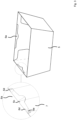
- FIG. 1 A schematic representation of the production of packaging for an article (not shown) is shown.
- the packaging base 1 and the packaging lid 5 are shown separately, and in partial view (b) the placement of the packaging lid 5 is shown. onto the packaging base 1, and partial view (c) shows the finished packaging.
- the packaging base 1 forms a receptacle for the article in the region of a base receiving or support surface 2, for example, for holding a food item.
- the support surface 2 is surrounded by a base side wall 3, which, in the illustrated embodiment, extends obliquely upwards from the support surface 2.
- a base edge 4 is arranged, which projects outward.
- the base edge 4 completely surrounds/encircles the base side wall 3.
- the packaging lid 5 is assigned to the packaging base 1, which according to Fig. 1 is folded into a three-dimensional (non-flat) folding lid by means of folding flaps 8.
- the folding flaps 8 can be glued to (folding flap) sections of the inside 7 of the packaging lid.
- tabs 6 are formed on the packaging lid 5 as projections 6a formed on the edge, which can be folded along a folding edge with respect to the packaging lid 5 and project inwards (are folded inwards) to produce the packaging.
- FIG. 2 A schematic detailed view of a section of the packaging is shown.
- the packaging lid 5 is arranged on the packaging base 1 in such a way that the tabs 6 or projections 6a and the remaining packaging lid inner side 7 partially encompass the base edge 4, so that the packaging lid 5 is fixed in its relative position with respect to the packaging base 1.
- the rough surface of the sheet material of the packaging base 1 is used, so that, together with the engagement of the base edge 4 by the tabs 6 and the packaging lid inner side 7, an improved fixation of the packaging lid 5 on the packaging base 1 is achieved.
- the projection 6a is partially glued to the inside of the packaging lid 7.
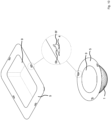
- Fig. 3 shows a schematic representation of the packaging lid 5 with a detailed view of the projection 6a.
- the projection 6a has a central section 6c and two lateral sections 6d.
- the lateral sections 6d are glued to the inside 7 of the packaging lid (for example, at adhesive surfaces 6e) and the central section 6c is free of adhesive, so that the central section 6c is further protrudes (than the lateral sections 6d).
- the adhesive bonds counteract forces (for example, those exerted by the packaging base 1 and/or along the folding edge with the remaining packaging lid 5) on the projection 6a, so that only the central section 6c protrudes and can encompass the base edge 4.
- the lateral sections 6d can be glued in such a way that the lateral sections 6d have a laterally inward offset and the central section additionally protrudes.
- Fig. 4 A corresponding embodiment is shown from below in the top left.
- the middle section 6c is glued to the inside 7 of the packaging lid and the lateral sections 6c are free of glue, such that the lateral sections 6d protrude further from the inside 7 of the packaging lid than the middle section 6c.
- Further projections can also be completely free of glue (see, for example, the lower projection 6a in Fig. 4 top right.
- the packaging base 1 and the packaging lid 5 have a circular base are shown in Fig. 4 shown below.
- the packaging lid 5 can be conical (bottom left) or truncated conical (bottom right).
- the projections 6a are formed with a circular segment shape.
- Fig. 5 are the ones in Fig. 4
- the embodiments shown below are shown in a further perspective view.
- FIG. 6 further embodiments of the packaging are shown, in which a transparent window 9 is provided in the packaging lid 5.
- Fig. 7 shows a schematic representation for producing a packaging for an article in a further embodiment.
- the tabs 6 are formed as lips 6b formed by means of incisions in the packaging lid 5, which are foldable with respect to the packaging lid 5.
- partial view (a) the packaging base 1 and the packaging lid 5 are shown separately, in partial view (b) the placement of the packaging lid 5 onto the packaging base 1 is illustrated, and in partial view (c) the produced packaging is shown.
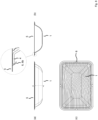
- FIG. 8 shows schematic representations of the packaging in different views (a), (b) and (c).
- the tab 6 or the (downwardly folded) lip 6b and the inside of the packaging lid 7 encompass the bottom edge 4.
- the top side of the bottom edge 4 is covered by the inside of the packaging lid 7.
- Fig. 9 shows a schematic representation of the tabs 6 of the packaging lid 5.
- the lip 6b is folded downwards and in a plan view is thus essentially covered by the bottom edge 4, which is visible in the plan view within the recess 6f.
- Fig. 10 Finally, further embodiments are shown in which additional transparent windows 9 are provided.
- combinations of projections 6a and lips 6b may be provided in the same packaging lid 5 (not shown).
Landscapes
- Engineering & Computer Science (AREA)
- Mechanical Engineering (AREA)
- Life Sciences & Earth Sciences (AREA)
- Biodiversity & Conservation Biology (AREA)
- Ceramic Engineering (AREA)
- Cartons (AREA)
Abstract
Die Offenbarung betrifft eine Verpackung für einen Artikel, aufweisend: einen dreidimensional geformten Verpackungsboden (1) aus einem Blattmaterial einer Pflanze, wobei der Verpackungsboden (1) eingerichtet ist, einen zu verpackenden Artikel aufzunehmen, und Folgendes aufweist: eine Bodenauflagefläche (2), eine Bodenseitenwand (3), welche die Bodenauflagefläche (2) umgibt, und einen Bodenrand (4), der an einem in Bezug auf die Bodenauflagefläche (2) distalen Ende der Bodenseitenwand (3) angeordnet ist und von dieser nach außen absteht; und einen Verpackungsdeckel (5) mit nach innen ragenden Laschen (6). Der Verpackungsdeckel (5) ist auf dem Verpackungsboden (1) derart angeordnet, dass die Laschen (6) und eine Verpackungsdeckelinnenseite (7) den Bodenrand (4) zumindest abschnittsweise umgreifen, sodass der Verpackungsdeckel (5) in seiner Relativlage bezüglich des Verpackungsbodens (1) fixiert ist. Ferner ist ein verpackter Artikel vorgesehen. (Fig. 2)
Description
- Die Erfindung betrifft eine Verpackung für einen Artikel sowie einen verpackten Artikel.
- Zum Verpacken können Artikel wie beispielsweise Lebensmittel in einem Behälter aufgenommen werden, beispielsweise einer Schale, einer Faltschachtel oder einem Karton, wobei der Behälter nach Einbringen des Artikels mit einem Deckel verschlossen wird. Beispielsweise ist es im Zusammenhang mit Faltkartons bekannt, dass der Deckel mit Deckelelementen ausgebildet wird, die zum Verschließen der Kartonöffnung von außen nach innen geschwenkt werden, so dass die Deckelelemente in der die Kartonöffnung verschließenden Stellung teilweise miteinander überlappen.
- Verschiedene Verpackungsmaterialien für Lebensmittel sind bekannt, etwa aus Papier oder Pappe (vgl. etwa
DE 10 2011 015 331 A1 ). - Aufgabe der Erfindung ist es, eine Verpackung für einen Artikel sowie einen verpackten Artikel anzugeben, mit denen eine verbesserte Fixierbarkeit des Verpackungsdeckels auf dem Verpackungsboden ermöglicht und auf diese Weise ein sicherer Transport des verpackten Artikels unterstützt wird.
- Die Aufgabe wird mittels einer Verpackung für einen Artikel und eines verpackten Artikels gemäß den unabhängigen Ansprüchen gelöst. Ausgestaltungen sind Gegenstand abhängiger Unteransprüche.
- Nach einem Aspekt ist eine Verpackung für einen Artikel vorgesehen, welche aufweist:
- einen dreidimensional geformten Verpackungsboden aus einem Blattmaterial einer Pflanze, wobei der Verpackungsboden eingerichtet ist, einen zu verpackenden Artikel aufzunehmen, und Folgendes aufweist: eine Bodenauflagefläche, eine Bodenseitenwand, welche die Bodenauflagefläche umgibt, und einen Bodenrand, der an einem in Bezug auf die Bodenauflagefläche distalen Ende der Bodenseitenwand angeordnet ist und von dieser nach außen absteht, und
- einen Verpackungsdeckel mit nach innen ragenden Laschen.
- Der Verpackungsdeckel ist auf dem Verpackungsboden derart angeordnet, dass die Laschen und eine Verpackungsdeckelinnenseite (bzw. ein weiterer Abschnitt der Verpackungsdeckelinnenseite) den Bodenrand zumindest abschnittsweise umgreifen, sodass der Verpackungsdeckel in seiner Relativlage bezüglich des Verpackungsbodens fixiert ist.
- Nach einem weiteren Aspekt ist ein verpackter Artikel vorgesehen mit einem Artikel und einer Verpackung nach mindestens einem der vorstehenden Ansprüche, wobei der Artikel mittels der Verpackung verpackt ist, derart, dass der Artikel auf einer Bodenauflagefläche der Verpackung angeordnet und mittels des Verpackungsdeckels bedeckt ist.
- Mittels der rauen Oberfläche des Blattmaterials des Verpackungsbodens kann im Zusammenspiel mit dem Umgreifen des Bodenrands durch die nach innen (in die Mitte des Verpackungsdeckels, insbesondere in Richtung des Verpackungsbodens) ragenden Laschen und die Verpackungsdeckelinnenseite (der dem Verpackungsboden und/oder dem Artikel zugewandten Seite des Verpackungsdeckels) eine verbesserte Fixierung des Verpackungsdeckels auf dem Verpackungsboden erzielt werden, sodass der Artikel insbesondere bei Bewegung der Verpackung geschützt bleibt. Speziell können durch das Umgreifen gebildete Greifkräfte, welche über Kontaktflächen der Laschen und der Verpackungsdeckelinnenseite am Verpackungsboden vermittelt werden, mittels der erhöhten Rauigkeit an den Kontaktflächen unterstützt werden.
- Der Bodenrand kann insbesondere zumindest abschnittsweise zwischen Lasche und Verpackungsdeckelinnenseite angeordnet und/oder fixiert sein. Speziell kann der Verpackungsdeckel kann in Bezug auf den Verpackungsboden derart dimensioniert sein, dass die Laschen zusammen mit der Verpackungsdeckelinnenseite den Bodenrand (zumindest abschnittsweise) umgreifen. Insbesondere der Bodenrand kann aus dem Blattmaterial (mit rauer Oberfläche) gebildet sein.
- Der Verpackungsdeckel kann beispielsweise zwei, drei, vier oder mehr als vier Laschen aufweisen. Die Laschen können paarweise an bezüglich des Verpackungsbodens gegenüberliegend am Verpackungsdeckel angeordnet sein.
- Eine Fixierung des Verpackungsdeckels in seiner Relativlage bezüglich des Verpackungsbodens kann insbesondere eine Beschränkung der relativen Bewegbarkeit des Verpackungsdeckels bezüglich des Verpackungsbodens umfassen, wobei ein geringes Spiel ermöglicht sein kann.
- Mindestens eine (erste) der Laschen kann als ein an den Verpackungsdeckel randseitig angeformter und faltbarer Vorsprung gebildet sein.
- Der Vorsprung kann entlang einer Faltkante an Verpackungsdeckel angeformt sein. Insbesondere kann der Vorsprung kann am Verpackungsdeckel einstückig angeformt.
- Der Vorsprung kann abschnittsweise mit der Verpackungsdeckelinnenseite (7) verklebt sein.
- Insbesondere kann der Vorsprung (und/oder mindestens ein weiterer Vorsprung) jeweils einen mittleren sowie seitliche Abschnitte aufweisen, wobei die seitlichen Abschnitte mit der Verpackungsdeckelinnenseite verklebt sein können und der mittlere Abschnitt frei von Verklebung sein kann, derart, dass der mittlere Abschnitt bezüglich der Verpackungsdeckelinnenseite weiter absteht (als die seitlichen Abschnitte). Ergänzend oder alternativ können für den Vorsprung (und/oder den mindestens einen weiteren Vorsprung) der mittlere Abschnitt mit der Verpackungsdeckelinnenseite verklebt und die seitlichen Abschnitte frei von Verklebung sein, derart, dass die seitlichen Abschnitte bezüglich der Verpackungsdeckelinnenseite weiter abstehen (als der mittlere Abschnitt).
- Ergänzend können die seitlichen Abschnitte derart verklebt werden, dass die seitlichen Abschnitte gegenüber der Verpackungsdeckelinnenseite einen in Richtung des mittleren Abschnitts gerichteten zusätzlichen Versatz aufweisen.
- Außerdem kann der Vorsprung (und/oder mindestens ein weiterer Vorsprung) insgesamt frei von Verklebung sein.
- Mindestens eine (zweite) der Laschen kann als eine mittels eines Einschnitts in den Verpackungsdeckel geformte Lippe gebildet sein, welche vorzugsweise in Bezug auf den Verpackungsdeckel verlagerbar und/oder faltbar ist.
- Der Einschnitt kann beispielsweise (im Wesentlichen) bogenförmig sein, sodass sich vorzugsweise eine (im Wesentlichen) kreissegmentförmige Lippe ergibt.
- Mittels Verlagerns und/oder Faltens der Lippe kann eine Ausnehmung gebildet sein, innerhalb welcher vorzugsweise der Bodenrand umgriffen werden kann. Die Ausnehmung kann von der Faltkante und dem Einschnitt umgrenzt sein.
- Die Verpackungsdeckelinnenseite kann eine Oberseite des Bodenrands beim Anordnen des Verpackungsdeckels auf dem Verpackungsboden vollständig überdecken. Auf diese Weise kann die Kontaktfläche zwischen Verpackungsboden (insbesondere Bodenrand) und Verpackungsdeckel erhöht.
- Mindestens eine der Laschen kann (im Wesentlichen) mit einer Kreissegment-Form (einer Kreisteilfläche, die von einem Kreisbogen und einer Kreissehne begrenzt ist) gebildet sein. Die Kreissehne kann auf der Faltkante (zwischen Lasche und übrigem Verpackungsdeckel) liegen.
- Mindestens eine der Laschen kann außerdem mit einer (im Wesentlichen) rechteckigen Form gebildet sein. Ergänzend kann mindestens eine der Laschen (mindestens ein Vorsprung) mit einer (im Wesentlichen) rechteckigen Grundfläche und einem kreissegmentförmigen Abschnitt im mittleren Abschnitt des Vorsprungs gebildet sein.
- Der Verpackungsdeckel kann dreidimensional geformt oder flachgebildet sein.
- Zur dreidimensionalen Formung kann der Verpackungsdeckel etwa gefaltet und/oder gesteckt und/oder verklebt sein. Insbesondere kann der Verpackungsdeckel ein Faltdeckel sein.
- Der Verpackungsdeckel kann eben, würfelförmig, quaderförmig, prismenförmig, pyramidenförmig, pyramidenstumpfförmig, kegelförmig, kegelstumpfförmig oder zylindrisch gebildet sein.
- Das Blattmaterial kann ein Palmblattmaterial sein, beispielsweise ein Zuschnitt eines Palmblatts. Das Palmblattmaterial kann ein Areca-Palmblattmaterial sein.
- Das Blattmaterial kann ein gepresstes und/oder verklebtes Blattmaterial sein. Auf diese Weise kann die Oberflächenrauigkeit weiter erhöht werden. Beispielsweise kann der Verpackungsboden mittels Formen in einem Formwerkzeug unter Anwendung von Druck und Temperatur hergestellt werden.
- Das Blattmaterial kann aus einem einzelnen Blatt oder einer Mehrzahl von Blättern, insbesondere Palmenblatt bzw. Palmblättern hergestellt sein. Der Verpackungsboden (samt Bodenauflagefläche, Bodenseitenwand und Bodenrand) kann einstückig geformt sein.
- In einer Ausgestaltung kann eine oberflächenseitige Beschichtung am Verpackungsboden vorgesehen sein. Die Beschichtung kann aus einem Natur-, Kunststoff- oder Plastikmaterial sein, welches wahlweise biologisch abbaubar und/oder kompostierbar ist. Alternativ kann der Verpackungsboden auch unbeschichtet sein.
- Der Verpackungsboden kann ein Behälter aus der folgenden Gruppe sein: Schale, Teller, Becher, Tablett, Platte und Schüssel.
- Der Bodenrand kann geradlinige und/oder gekrümmte Abschnitte (beispielsweise an Ecken des Bodenrands) aufweisen.
- Der Bodenrand kann die Bodenseitenwand vollständig umgrenzen und/oder umlaufen. Der Bodenrand kann beispielsweise ringförmig oder ein Viereck (insbesondere ein Quadrat oder ein nichtquadratisches Rechteck) umgrenzend gebildet sein.
- Der Verpackungsdeckel kann unbeschichtet sein. Alternativ kann eine Materialbeschichtung, insbesondere an der Verpackungsdeckelinnenseite, vorgesehen sein.
- Der Verpackungsdeckel kann aus recyceltem und/oder recycelbarem Material bestehen. Ergänzend kann der Verpackungsdeckel aus kompostierbarem Material bestehen.
- Der Verpackungsdeckel kann außerdem aus Papier oder einem Pappmaterial hergestellt sein, wobei wahlweise eine Materialbeschichtung vorgesehen sein kann.
- Die Verpackungsdeckelinnenseite kann auf dem Bodenrand zu Anlage kommen, derart, dass eine Kontaktlinie zwischen Verpackungsdeckel und Verpackungsboden, insbesondere zwischen Verpackungsdeckel und Bodenrand, eine geschlossene Kurve bildet. Alternativ kann die Kontaktlinie abschnittsweise unterbrochen sein, beispielsweise an Eckabschnitten der Verpackung.
- Des Weiteren kann die Verpackungsdeckelinnenseite auf dem Bodenrand zu Anlage kommen, derart, dass eine Kontaktfläche zwischen Verpackungsdeckel und Verpackungsboden, insbesondere zwischen Verpackungsdeckel und Bodenrand, eine gelochte Fläche (Flächengeschlecht 1) bildet.
- Der Verpackungsdeckel kann zumindest abschnittsweise (oder vollständig) transparent gebildet sein. Beispielsweise kann der Verpackungsdeckel ein transparentes Fenster (aus lichtdurchlässigem Material) aufweisen (und im übrigen nichttransparent/opak gebildet sein). Das Fenster kann an einer Oberseite des Verpackungsdeckels angeordnet sein. Das Fenster kann eine quadratische, rechteckige, kreisförmige, ovale oder polygonale Form aufweisen.
- Der Artikel kann beispielsweise ein Lebensmittel sein. Alternativ kann der Artikel auch ein Non-Food-Artikel, beispielsweise ein Kleidungsstück sein.
- Im Folgenden werden weitere Ausführungsbeispiele unter Bezugnahme auf Zeichnungen näher erläutert. Hierbei zeigen:
- Fig. 1
- eine schematische Darstellung zum Herstellen einer Verpackung für einen Artikel;
- Fig. 2
- eine schematische Detailansicht eines Abschnitts der Verpackung;
- Fig. 3
- eine schematische Darstellung eines Verpackungsdeckels;
- Fig. 4
- schematische Darstellungen weiterer Ausführungsformen der Verpackung;
- Fig. 5
- schematische Darstellungen weiterer Ausführungsformen der Verpackung;
- Fig. 6
- schematische Darstellungen weiterer Ausführungsformen der Verpackung;
- Fig. 7
- eine schematische Darstellung zum Herstellen einer Verpackung für einen Artikel in einer weiteren Ausführungsform;
- Fig. 8
- schematische Darstellungen der Verpackung in verschiedenen Ansichten;
- Fig. 9
- eine schematische Darstellung zu Laschen des Verpackungsdeckels und
- Fig. 10
- eine schematische Darstellung zu Laschen des Verpackungsdeckels in einer weiteren Ausführungsform.
- In
Fig. 1 ist eine schematische Darstellung zum Herstellen einer Verpackung für einen Artikel (nicht dargestellt) gezeigt. In Teilansicht (a) sind Verpackungsboden 1 und Verpackungsdeckel 5 getrennt dargestellt, in Teilansicht (b) wird das Aufsetzen des Verpackungsdeckels 5 auf den Verpackungsboden 1 illustriert und in Teilansicht (c) ist die hergestellte Verpackung dargestellt. Der Verpackungsboden 1 bildet eine Aufnahme für den Artikel im Bereich einer Bodenaufnahme- oder Bodenauflagefläche 2, beispielsweise zum Aufnehmen eines Lebensmittels. Die Bodenauflagefläche 2 ist von einer Bodenseitenwand 3 umgeben, welche sich bei der dargestellten Ausführungsform ausgehend von der Bodenauflagefläche 2 schräg nach oben erstreckt. - An einem in Bezug auf die Bodenauflagefläche 2 distalen Ende der Bodenseitenwand 3 ist ein Bodenrand 4 angeordnet, welcher nach außen absteht. Der Bodenrand 4 umgrenzt/umläuft die Bodenseitenwand 3 vollständig.
- Dem Verpackungsboden 1 ist zum Ausbilden der Verpackung der Verpackungsdeckel 5 zugeordnet, welcher gemäß
Fig. 1 mittels Faltlaschen 8 zu einem dreidimensionalen (nichtebenen) Faltdeckel gefaltet ist. Die Faltlaschen 8 können mit (Faltlaschen-)Abschnitten der Verpackungsdeckelinnenseite 7 verklebt sein. - Am Verpackungsdeckel 5 sind außerdem Laschen 6 als randseitig angeformte Vorsprünge 6a gebildet, welche bezüglich des Verpackungsdeckels 5 entlang einer Faltungskante faltbar sind und zur Herstellung der Verpackung nach innen ragen (nach innen gefaltet sind).
- In
Fig. 2 ist hierzu eine schematische Detailansicht eines Abschnitts der Verpackung gezeigt. Der Verpackungsdeckel 5 ist derart auf dem Verpackungsboden 1 angeordnet ist, dass die Laschen 6 bzw. Vorsprünge 6a und die übrige Verpackungsdeckelinnenseite 7 den Bodenrand 4 abschnittsweise umgreifen, sodass der Verpackungsdeckel 5 in seiner Relativlage bezüglich des Verpackungsbodens 1 fixiert ist. Hierbei wird insbesondere die raue Oberfläche des Blattmaterials des Verpackungsbodens 1 genutzt, sodass zusammen mit dem Umgreifen des Bodenrands 4 durch die Laschen 6 und die Verpackungsdeckelinnenseite 7 eine verbesserte Fixierung des Verpackungsdeckels 5 auf dem Verpackungsboden 1 erzielt wird. - Der Vorsprung 6a ist abschnittsweise mit der Verpackungsdeckelinnenseite 7 verklebt.
Fig. 3 zeigt hierzu eine schematische Darstellung des Verpackungsdeckels 5 mit einer Detailansicht des Vorsprungs 6a. Der Vorsprung 6a weist einen mittleren Abschnitt 6c sowie zwei seitliche Abschnitte 6d auf. Die seitlichen Abschnitte 6d sind mit der Verpackungsdeckelinnenseite 7 verklebt (beispielsweise an Klebeflächen 6e) und der mittlere Abschnitt 6c ist frei von Verklebung, sodass der mittlere Abschnitt 6c bezüglich der Verpackungsdeckelinnenseite 7 weiter absteht (als die seitlichen Abschnitte 6d). Die Verklebungen wirken Kräften (etwa durch den Verpackungsboden 1 und/oder entlang der Faltungskante mit dem übrigen Verpackungsdeckel 5 vermittelt) am Vorsprung 6a entgegen, sodass lediglich der mittlere Abschnitt 6c hervorsteht und den Bodenrand 4 umgreifen kann. Ergänzend können die seitlichen Abschnitte 6d derart verklebt werden, dass die seitlichen Abschnitte 6d einen seitlich nach innen gerichteten Versatz aufweisen und der mittlere Abschnitt zusätzlich absteht. - In
Fig. 4 ist oben links eine entsprechende Ausführungsform von unten gezeigt. In einer weiteren Ausführungsform, welche oben rechts gezeigt ist, wird der mittlere Abschnitt 6c mit der Verpackungsdeckelinnenseite 7 verklebt und die seitlichen Abschnitte 6c sind frei von Verklebung, derart, dass die seitlichen Abschnitte 6d bezüglich der Verpackungsdeckelinnenseite 7 weiter abstehen als der mittlere Abschnitt 6c. Weitere Vorsprünge können auch gänzlich frei von Verklebungen sein (siehe etwa der untere Vorsprung 6a inFig. 4 oben rechts. - Weitere Ausführungsformen, in denen Verpackungsboden 1 und der Verpackungsdeckel 5 eine kreisförmige Grundfläche aufweisen, sind in
Fig. 4 unten gezeigt. Insbesondere kann der Verpackungsdeckel 5 kegelförmig (unten links) oder kegelstumpfförmig (unten rechts) gebildet sein. InFig. 4 unten links sind die Vorsprünge 6a mit einer Kreissegment-Form gebildet. InFig. 5 sind die inFig. 4 unten dargestellten Ausführungsformen in weiteren einer perspektivischen Ansicht gezeigt. - In
Fig. 6 sind weitere Ausführungsformen der Verpackung dargestellt, bei welchen im Verpackungsdeckel 5 jeweils ein transparentes Fenster 9 vorgesehen ist. -
Fig. 7 zeigt eine schematische Darstellung zum Herstellen einer Verpackung für einen Artikel in einer weiteren Ausführungsform. Hierbei sind die Laschen 6 als mittels Einschnitte in den Verpackungsdeckel 5 geformte Lippen 6b gebildet sein, welche in Bezug auf den Verpackungsdeckel 5 faltbar sind. In Teilansicht (a) sind Verpackungsboden 1 und Verpackungsdeckel 5 getrennt dargestellt, in Teilansicht (b) wird das Aufsetzen des Verpackungsdeckels 5 auf den Verpackungsboden 1 illustriert und in Teilansicht (c) ist die hergestellte Verpackung dargestellt. - Durch das Abfalten der Lippen 6b entstehen jeweils Ausnehmungen 6f im Verpackungsdeckel 5, innerhalb welcher der Bodenrand 4 umgriffen werden kann.
Fig. 8 zeigt hierzu schematische Darstellungen der Verpackung in verschiedenen Ansichten (a), (b) und (c). Wie in der Detailansicht oben rechts gezeigt, umgreifen die Lasche 6 bzw. die (nach unten gefaltete) Lippe 6b und die Verpackungsdeckelinnenseite 7 den Bodenrand 4. Die Oberseite des Bodenrands 4 ist von der Verpackungsdeckelinnenseite 7 bedeckt. -
Fig. 9 zeigt eine schematische Darstellung zu den Laschen 6 des Verpackungsdeckels 5. Die Lippe 6b ist nach unten gefaltet und in einer Draufsicht somit im Wesentlichen vom Bodenrand 4 verdeckt, welcher in der Draufsicht innerhalb der Ausnehmung 6f sichtbar ist. InFig. 10 schließlich sind weiteren Ausführungsformen gezeigt, in welchen zusätzlich transparente Fenster 9 vorgesehen sind. - Es können des Weiteren Kombinationen von Vorsprüngen 6a und Lippen 6b im selben Verpackungsdeckel 5 vorgesehen sein (nicht dargestellt).
- Die in der vorstehenden Beschreibung, den Ansprüchen sowie der Zeichnung offenbarten Merkmale können sowohl einzeln als auch in beliebiger Kombination für die Verwirklichung der verschiedenen Ausführungen von Bedeutung sein.
Claims (15)
- Verpackung für einen Artikel, aufweisend:- einen dreidimensional geformten Verpackungsboden (1) aus einem Blattmaterial einer Pflanze, wobei der Verpackungsboden (1) eingerichtet ist, einen zu verpackenden Artikel aufzunehmen, und Folgendes aufweist:- eine Bodenauflagefläche (2),- eine Bodenseitenwand (3), welche die Bodenauflagefläche (2) umgibt, und- einen Bodenrand (4), der an einem in Bezug auf die Bodenauflagefläche (2) distalen Ende der Bodenseitenwand (3) angeordnet ist und von dieser nach außen absteht, und- einen Verpackungsdeckel (5) mit nach innen ragenden Laschen (6),wobei der Verpackungsdeckel (5) auf dem Verpackungsboden (1) derart angeordnet ist, dass die Laschen (6) und eine Verpackungsdeckelinnenseite (7) den Bodenrand (4) zumindest abschnittsweise umgreifen, sodass der Verpackungsdeckel (5) in seiner Relativlage bezüglich des Verpackungsbodens (1) fixiert ist.
- Verpackung nach Anspruch 1, wobei mindestens eine der Laschen (6) als ein an den Verpackungsdeckel (5) randseitig angeformter und faltbarer Vorsprung (6a) gebildet ist.
- Verpackung nach Anspruch 2, wobei der Vorsprung (6a) abschnittsweise mit der Verpackungsdeckelinnenseite (7) verklebt ist.
- Verpackung nach Anspruch 3, wobei der Vorsprung (6a) und/oder ein weiterer Vorsprung (6a) jeweils einen mittleren Abschnitt (6b) sowie seitliche Abschnitte (6c) aufweist, wobei- die seitlichen Abschnitte (6c) mit der Verpackungsdeckelinnenseite (7) verklebt sind und der mittlere Abschnitt (6b) frei von Verklebung ist, derart, dass der mittlere Abschnitt (6b) bezüglich der Verpackungsdeckelinnenseite (7) weiter absteht und/oder- der mittlere Abschnitt (6b) mit der Verpackungsdeckelinnenseite (7) verklebt ist und die seitlichen Abschnitte (6c) frei von Verklebung sind, derart, dass die seitlichen Abschnitte (6c) bezüglich der Verpackungsdeckelinnenseite (7) weiter abstehen.
- Verpackung nach mindestens einem der vorstehenden Ansprüche, wobei mindestens eine der Laschen (6) als eine mittels eines Einschnitts in den Verpackungsdeckel (5) geformte Lippe (6b) gebildet ist, welche in Bezug auf den Verpackungsdeckel (5) verlagerbar ist.
- Verpackung nach mindestens einem der vorstehenden Ansprüche, wobei mindestens eine der Laschen (6) mit einer Kreissegment-Form gebildet ist.
- Verpackung nach mindestens einem der vorstehenden Ansprüche, wobei der Verpackungsdeckel (5) dreidimensional geformt oder flachgebildet ist.
- Verpackung nach mindestens einem der vorstehenden Ansprüche, wobei das Blattmaterial ein Palmblattmaterial ist.
- Verpackung nach mindestens einem der vorstehenden Ansprüche, wobei der Verpackungsboden (1) ein Behälter aus der folgenden Gruppe ist: Schale, Teller, Becher und Schüssel.
- Verpackung nach mindestens einem der vorstehenden Ansprüche, wobei der Bodenrand (4) geradlinige und/oder gekrümmte Abschnitte aufweist.
- Verpackung nach mindestens einem der vorstehenden Ansprüche, wobei der Verpackungsdeckel (5) unbeschichtet ist.
- Verpackung nach mindestens einem der vorstehenden Ansprüche, wobei der Verpackungsdeckel (5) aus recyceltem und/oder recycelbarem Material besteht.
- Verpackung nach mindestens einem der vorstehenden Ansprüche, wobei die Verpackungsdeckelinnenseite (7) auf dem Bodenrand (4) zu Anlage kommt, derart, dass eine Kontaktlinie zwischen Verpackungsdeckel (5) und Verpackungsboden (1) eine geschlossene Kurve bildet.
- Verpackung nach mindestens einem der vorangehenden Ansprüche, wobei der Verpackungsdeckel (5) zumindest abschnittsweise transparent gebildet ist.
- Verpackter Artikel mit- einem Artikel und- einer Verpackung nach mindestens einem der vorstehenden Ansprüche,wobei der Artikel mittels der Verpackung verpackt ist, derart, dass der Artikel auf einer Bodenauflagefläche (2) der Verpackung angeordnet und mittels des Verpackungsdeckels (5) bedeckt ist.
Priority Applications (2)
| Application Number | Priority Date | Filing Date | Title |
|---|---|---|---|
| EP23212373.7A EP4559833A1 (de) | 2023-11-27 | 2023-11-27 | Verpackung für einen artikel und verpackter artikel |
| US18/826,286 US20250171208A1 (en) | 2023-11-27 | 2024-09-06 | Packaging For An Article And A Packaged Article |
Applications Claiming Priority (1)
| Application Number | Priority Date | Filing Date | Title |
|---|---|---|---|
| EP23212373.7A EP4559833A1 (de) | 2023-11-27 | 2023-11-27 | Verpackung für einen artikel und verpackter artikel |
Publications (1)
| Publication Number | Publication Date |
|---|---|
| EP4559833A1 true EP4559833A1 (de) | 2025-05-28 |
Family
ID=88975543
Family Applications (1)
| Application Number | Title | Priority Date | Filing Date |
|---|---|---|---|
| EP23212373.7A Pending EP4559833A1 (de) | 2023-11-27 | 2023-11-27 | Verpackung für einen artikel und verpackter artikel |
Country Status (2)
| Country | Link |
|---|---|
| US (1) | US20250171208A1 (de) |
| EP (1) | EP4559833A1 (de) |
Citations (6)
| Publication number | Priority date | Publication date | Assignee | Title |
|---|---|---|---|---|
| DE1952532A1 (de) * | 1969-10-18 | 1971-05-06 | Luedenscheid Spritzguss Werk | An einem Haken oder Nagel aufhaengbare Verkaufspackung,insbesondere fuer Kleineisenwaren |
| US4197940A (en) * | 1979-04-16 | 1980-04-15 | Sunrich Mercantile Corp. | Circular cake tray and cover |
| DE102011015331A1 (de) | 2010-03-27 | 2011-12-15 | Bernhard Satzger | Verpackung für Lebensmittel |
| US20150210442A1 (en) * | 2014-01-24 | 2015-07-30 | Vegware Limited | Food container |
| CA3070825A1 (en) * | 2020-02-04 | 2021-08-04 | Pliteq, Inc. | Removable lid for an open-top container and open-top container and removable lid combination |
| US20230278769A1 (en) * | 2021-12-29 | 2023-09-07 | Leef Blattwerk Gmbh | Packaging For An Item And Packaged Item |
Family Cites Families (2)
| Publication number | Priority date | Publication date | Assignee | Title |
|---|---|---|---|---|
| US20180303260A1 (en) * | 2015-05-07 | 2018-10-25 | Suresh Vukkisila | Culinary dish formed of palm leaf and removable cover |
| AT521477B1 (de) * | 2019-03-05 | 2020-02-15 | Messerle Gmbh | Verpackung, insbesondere für Lebensmittel |
-
2023
- 2023-11-27 EP EP23212373.7A patent/EP4559833A1/de active Pending
-
2024
- 2024-09-06 US US18/826,286 patent/US20250171208A1/en active Pending
Patent Citations (6)
| Publication number | Priority date | Publication date | Assignee | Title |
|---|---|---|---|---|
| DE1952532A1 (de) * | 1969-10-18 | 1971-05-06 | Luedenscheid Spritzguss Werk | An einem Haken oder Nagel aufhaengbare Verkaufspackung,insbesondere fuer Kleineisenwaren |
| US4197940A (en) * | 1979-04-16 | 1980-04-15 | Sunrich Mercantile Corp. | Circular cake tray and cover |
| DE102011015331A1 (de) | 2010-03-27 | 2011-12-15 | Bernhard Satzger | Verpackung für Lebensmittel |
| US20150210442A1 (en) * | 2014-01-24 | 2015-07-30 | Vegware Limited | Food container |
| CA3070825A1 (en) * | 2020-02-04 | 2021-08-04 | Pliteq, Inc. | Removable lid for an open-top container and open-top container and removable lid combination |
| US20230278769A1 (en) * | 2021-12-29 | 2023-09-07 | Leef Blattwerk Gmbh | Packaging For An Item And Packaged Item |
Also Published As
| Publication number | Publication date |
|---|---|
| US20250171208A1 (en) | 2025-05-29 |
Similar Documents
| Publication | Publication Date | Title |
|---|---|---|
| EP2029446B1 (de) | Klappschachtel für zigaretten | |
| DE3032683A1 (de) | Behaelter | |
| EP1340691A1 (de) | Verpackungskörper für Dosen für formschlüssiges Einklippen und Verfahren zu dessen Herstellung | |
| EP2038191B1 (de) | Packung für zigaretten | |
| EP2704956B2 (de) | Packung für zigaretten | |
| EP0547424B1 (de) | Verpackung für Papier-Taschentücher | |
| DE2732431A1 (de) | Fluessigkeitsdichter, mit ueberzug versehener kartonbehaelter sowie zuschnitt hierfuer | |
| DE202004010230U1 (de) | Faltschachtel | |
| EP4559833A1 (de) | Verpackung für einen artikel und verpackter artikel | |
| EP4197930A1 (de) | Faltdeckel zum abdecken einer behälteröffnung aus einem recyclebaren material sowie anordnung und verfahren zum verpacken eines artikels | |
| EP3310673B1 (de) | Verpackungselement | |
| DE202008002483U1 (de) | Faltschachtel mit Schmucklasche | |
| DE69413681T2 (de) | Vorrichtung zum erleichtern des öffnens für behälter | |
| EP3615439B1 (de) | Verpackung und zuschnitt hierfür | |
| EP4559834A1 (de) | Verpackung für einen artikel und verpackter artikel | |
| EP3954629B1 (de) | Produktkombination aus einem packungseinsatz und einer beilage | |
| DE202014001601U1 (de) | Flaschenträger aus Kartonmaterial als "Über Krone"-Verpackungseinheit ohne Verwendung von Bindungsmittel mit hoher Tragestabilitätseigenschaft | |
| DE102016003208A1 (de) | Faltschalenverpackung für Obst oder Früchte | |
| DE202020100019U1 (de) | Verpackung insbesondere für Bettwaren | |
| EP4255820B1 (de) | Faltschachtel zum verschliessen mit einem deckel | |
| EP4467476B1 (de) | Verpackungsbehälter, zuschnitt zur herstellung eines verpackungsbehälters und verfahren zur herstellung eines zuschnitts | |
| DE4124452A1 (de) | Faltschachtel | |
| AT8756U1 (de) | Verpackung aus karton | |
| EP1484252B1 (de) | Schalenartiges Behältnis und Faltschachtel | |
| DE202010006548U1 (de) | Faltschachtel für Tiefkühlkost |
Legal Events
| Date | Code | Title | Description |
|---|---|---|---|
| PUAI | Public reference made under article 153(3) epc to a published international application that has entered the european phase |
Free format text: ORIGINAL CODE: 0009012 |
|
| STAA | Information on the status of an ep patent application or granted ep patent |
Free format text: STATUS: THE APPLICATION HAS BEEN PUBLISHED |
|
| AK | Designated contracting states |
Kind code of ref document: A1 Designated state(s): AL AT BE BG CH CY CZ DE DK EE ES FI FR GB GR HR HU IE IS IT LI LT LU LV MC ME MK MT NL NO PL PT RO RS SE SI SK SM TR |
|
| STAA | Information on the status of an ep patent application or granted ep patent |
Free format text: STATUS: REQUEST FOR EXAMINATION WAS MADE |
|
| 17P | Request for examination filed |
Effective date: 20250827 |