EP4559904A1 - Forme saline et forme cristalline de dérivé de thiénopyrimidinone - Google Patents
Forme saline et forme cristalline de dérivé de thiénopyrimidinone Download PDFInfo
- Publication number
- EP4559904A1 EP4559904A1 EP23854433.2A EP23854433A EP4559904A1 EP 4559904 A1 EP4559904 A1 EP 4559904A1 EP 23854433 A EP23854433 A EP 23854433A EP 4559904 A1 EP4559904 A1 EP 4559904A1
- Authority
- EP
- European Patent Office
- Prior art keywords
- crystal form
- compound
- formula
- present disclosure
- salt
- Prior art date
- Legal status (The legal status is an assumption and is not a legal conclusion. Google has not performed a legal analysis and makes no representation as to the accuracy of the status listed.)
- Pending
Links
Images



Classifications
-
- A—HUMAN NECESSITIES
- A61—MEDICAL OR VETERINARY SCIENCE; HYGIENE
- A61P—SPECIFIC THERAPEUTIC ACTIVITY OF CHEMICAL COMPOUNDS OR MEDICINAL PREPARATIONS
- A61P5/00—Drugs for disorders of the endocrine system
- A61P5/02—Drugs for disorders of the endocrine system of the hypothalamic hormones, e.g. TRH, GnRH, CRH, GRH, somatostatin
-
- A—HUMAN NECESSITIES
- A61—MEDICAL OR VETERINARY SCIENCE; HYGIENE
- A61K—PREPARATIONS FOR MEDICAL, DENTAL OR TOILETRY PURPOSES
- A61K31/00—Medicinal preparations containing organic active ingredients
- A61K31/33—Heterocyclic compounds
- A61K31/395—Heterocyclic compounds having nitrogen as a ring hetero atom, e.g. guanethidine or rifamycins
- A61K31/495—Heterocyclic compounds having nitrogen as a ring hetero atom, e.g. guanethidine or rifamycins having six-membered rings with two or more nitrogen atoms as the only ring heteroatoms, e.g. piperazine or tetrazines
- A61K31/505—Pyrimidines; Hydrogenated pyrimidines, e.g. trimethoprim
- A61K31/519—Pyrimidines; Hydrogenated pyrimidines, e.g. trimethoprim ortho- or peri-condensed with heterocyclic rings
-
- C—CHEMISTRY; METALLURGY
- C07—ORGANIC CHEMISTRY
- C07C—ACYCLIC OR CARBOCYCLIC COMPOUNDS
- C07C211/00—Compounds containing amino groups bound to a carbon skeleton
- C07C211/01—Compounds containing amino groups bound to a carbon skeleton having amino groups bound to acyclic carbon atoms
- C07C211/26—Compounds containing amino groups bound to a carbon skeleton having amino groups bound to acyclic carbon atoms of an unsaturated carbon skeleton containing at least one six-membered aromatic ring
- C07C211/27—Compounds containing amino groups bound to a carbon skeleton having amino groups bound to acyclic carbon atoms of an unsaturated carbon skeleton containing at least one six-membered aromatic ring having amino groups linked to the six-membered aromatic ring by saturated carbon chains
-
- C—CHEMISTRY; METALLURGY
- C07—ORGANIC CHEMISTRY
- C07C—ACYCLIC OR CARBOCYCLIC COMPOUNDS
- C07C215/00—Compounds containing amino and hydroxy groups bound to the same carbon skeleton
- C07C215/74—Compounds containing amino and hydroxy groups bound to the same carbon skeleton having hydroxy groups and amino groups bound to carbon atoms of six-membered aromatic rings of the same carbon skeleton
- C07C215/90—Compounds containing amino and hydroxy groups bound to the same carbon skeleton having hydroxy groups and amino groups bound to carbon atoms of six-membered aromatic rings of the same carbon skeleton with quaternised amino groups bound to the carbon skeleton
-
- C—CHEMISTRY; METALLURGY
- C07—ORGANIC CHEMISTRY
- C07D—HETEROCYCLIC COMPOUNDS
- C07D495/00—Heterocyclic compounds containing in the condensed system at least one hetero ring having sulfur atoms as the only ring hetero atoms
- C07D495/02—Heterocyclic compounds containing in the condensed system at least one hetero ring having sulfur atoms as the only ring hetero atoms in which the condensed system contains two hetero rings
- C07D495/04—Ortho-condensed systems
-
- C—CHEMISTRY; METALLURGY
- C07—ORGANIC CHEMISTRY
- C07B—GENERAL METHODS OF ORGANIC CHEMISTRY; APPARATUS THEREFOR
- C07B2200/00—Indexing scheme relating to specific properties of organic compounds
- C07B2200/13—Crystalline forms, e.g. polymorphs
Definitions
- the present disclosure relates to salt types and crystal forms of a thienopyrimidone derivative, and preparation methods therefor. Specifically, the present disclosure discloses salt types and crystal forms of the compound of formula (I), and preparation methods therefor.
- Endometriosis is the appearance of endometrial glands or stroma outside the uterus. Symptoms resulted from endometriosis include chronic pelvic pain, dysmenorrhea, infertility, etc. It is extremely difficult to cure and prone to recurrence. It is considered one of the gynecological diseases difficult to cure. The clinical medication for this disease has disadvantages such as long medication time, many side effects, and inconvenient administration. It is reported that in 2021, approximately 176 million women worldwide suffered from endometriosis.
- GnRH receptor antagonists competitively bind to GnRH receptors, blocking the binding of GnRH to the receptors, directly inhibiting the hypothalamus-pituitary-ovarian axis, and then inhibiting the secretion of follicle-stimulating hormone and luteinizing hormone, thereby reducing the level of estrogen, with rapid onset of action and few side effects.
- the small molecule GnRH receptor antagonists that are at the forefront of research and development include the second small molecule oral antagonist, Relugofix, which was approved by FDA in December 2020 for the treatment of its first indication of advanced prostate cancer, while treatment of the indication of uterine fibroids has been approved in Japan, and treatment of endometriosis has entered Phase III clinical trials.
- the third antagonist, Linzagolix is already in the Phase III clinical trials for the treatment of both indications of endometriosis and uterine fibroids.
- the crystal structure of an active ingredient for medicinal use often affects the stability of the compound.
- amorphous drug products do not have a regular crystal structure and often have defects, such as poor stability, easy agglomeration, small particles, and difficulty in filtration.
- the solubility of drug molecules is closely related to the degree of oral absorption.
- the solubility of drugs can be increased by forming salts with suitable acids or bases.
- the stability of easily oxidized drug molecules can also be helped to increase through salt formation, which is beneficial for storage and transportation. Therefore, we need to conduct in-depth research and find suitable salt types and crystal forms of the drug molecules, particularly new crystal forms with good stability.
- the present disclosure provides a crystal form B of the compound of formula (I), wherein the crystal form B has an X-ray powder diffraction pattern obtained using Cu K ⁇ radiation with characteristic diffraction peaks at 20 angles of 4.62 ⁇ 0.20°, 7.35 ⁇ 0.20°, and 18.34 ⁇ 0.20°.
- the above crystal form B has an X-ray powder diffraction pattern obtained using Cu K ⁇ radiation with characteristic diffraction peaks at 2 ⁇ angles of 4.62 ⁇ 0.20°, 7.35 ⁇ 0.20°, 11.45 ⁇ 0.20°, 12.33 ⁇ 0.20°, and 18.34 ⁇ 0.20°.
- the above crystal form B has an X-ray powder diffraction pattern obtained using Cu K ⁇ radiation with characteristic diffraction peaks at 2 ⁇ angles of 4.62 ⁇ 0.20°, 7.35 ⁇ 0.20°, 11.45 ⁇ 0.20°, 12.334+0.20°, 18.34 ⁇ 0.20°, 22.41 ⁇ 0.20°, 26.54 ⁇ 0.20°, and 27.08 ⁇ 0.20°.
- the above crystal form B has an X-ray powder diffraction pattern obtained using Cu K ⁇ radiation with characteristic diffraction peaks at 2 ⁇ angles of 4.62 ⁇ 0.20°, 7.35 ⁇ 0.20°, 11.45 ⁇ 0.20°, 12.33 ⁇ 0.20°, 13.75 ⁇ 0.20°, 17.89 ⁇ 0.20°, 18.34 ⁇ 0.20°, 20.92 ⁇ 0.20°, 22.41 ⁇ 0.20°, 25.43 ⁇ 0.20°, 26.54 ⁇ 0.20°, and 27.08 ⁇ 0.20°.
- the above crystal form B has an X-ray powder diffraction pattern obtained using Cu K ⁇ radiation with characteristic diffraction peaks at 2 ⁇ angles of 4.62 ⁇ 0.20°, 7.35 ⁇ 0.20°, 9.17 ⁇ 0.20°, 11.45 ⁇ 0.20°, 12.33 ⁇ 0.20°, 13.75 ⁇ 0.20°, 17.89 ⁇ 0.20°, 18.34 ⁇ 0.20°, 20.92 ⁇ 0.20°, 22.41 ⁇ 0.20°, 23.57 ⁇ 0.20°, 24.46 ⁇ 0.20°, 25.43 ⁇ 0.20°, 26.54 ⁇ 0.20°, 27.08 ⁇ 0.20°, and 28.81 ⁇ 0.20°.
- the above crystal form B has an X-ray powder diffraction pattern obtained using Cu K ⁇ radiation with characteristic diffraction peaks at 2 ⁇ angles of 4.62 ⁇ 0.20°, 7.35 ⁇ 0.20°, 18.34 ⁇ 0.20°, and/or 9.17 ⁇ 0.20°, and/or 11.45 ⁇ 0.20°, and/or 12.33 ⁇ 0.20°, and/or 13.17 ⁇ 0.20°, and/or 13.75 ⁇ 0.20°, and/or 14.34 ⁇ 0.20°, and/or 14.67 ⁇ 0.20°, and/or 16.50 ⁇ 0.20°, and/or 17.43 ⁇ 0.20°, and/or 17.89 ⁇ 0.20°, and/or 19.45 ⁇ 0.20°, and/or 20.92 ⁇ 0.20°, and/or 22.41 ⁇ 0.20°, and/or 23.57 ⁇ 0.20°, and/or 24.46 ⁇ 0.20°, and/or 25.43 ⁇ 0.20°, and/or 25.89 ⁇ 0.20°, and/or 26.54 ⁇ 0.20°, and/
- the above crystal form B has an X-ray powder diffraction pattern obtained using Cu K ⁇ radiation with characteristic diffraction peaks at 2 ⁇ angles of 4.62°, 7.35°, 9.17°, 11.45°, 12.33°, 13.17°, 13.75°, 14.34°, 14.67°, 16.50°, 17.43°, 17.89°, 18.34°, 19.45°, 20.92°, 21.68°, 22.41°, 23.57°, 24.46°, 25.43°, 25.89°, 26.54°, 27.08°, and 28.81°.
- the above crystal form B has an X-ray powder diffraction pattern obtained using Cu K ⁇ radiation with characteristic diffraction peaks at 2 ⁇ angles of 4.62°, 7.35°, 9.17°, 11.45°, 12.33°, 13.17°, 13.75°, 14.34°, 14.67°, 16.50°, 17.43°, 17.89°, 18.34°, 19.45°, 20.92°, 21.68°, 22.41°, 23.57°, 24.46°, 25.43°, 25.89°, 26.54°, 27.08°, 28.81°, 30.27°, 31.69°, 33.32°, 33.71°, 33.99°, 35.25°, 36.92°, and 37.69°.
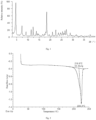
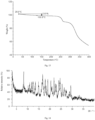
- the XRPD pattern of the above crystal form B obtained using Cu K ⁇ radiation is substantially as shown in Fig. 1 .
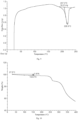
- the differential scanning calorimetry (DSC) curve of the above crystal form B shows a peak value of an exothermic peak at 224.4 °C ⁇ 3 °C.
- the DSC curve of the above crystal form B is substantially as shown in Fig. 2 .
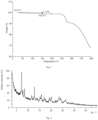
- thermogravimetric analysis (TGA) curve of the above crystal form B has a weight loss of 1.12% at 150 °C ⁇ 3 °C.
- the TGA curve of the above crystal form B is substantially as shown in Fig. 3 .
- the present disclosure also provides a method of preparing the crystal form B of the compound of formula (I), comprising the following steps:
- the present disclosure also provides a crystal form C of the compound of formula (I), wherein the crystal form C has an X-ray powder diffraction pattern obtained using Cu K ⁇ radiation with characteristic diffraction peaks at 20 angles of 7.18 ⁇ 0.20°, 8.47 ⁇ 0.20°, and 12.8 ⁇ 0.20°.
- the above crystal form C has an X-ray powder diffraction pattern obtained using Cu K ⁇ radiation with characteristic diffraction peaks at 2 ⁇ angles of 7.18 ⁇ 0.20°, 8.47 ⁇ 0.20°, 12.80 ⁇ 0.20°, 15.80 ⁇ 0.20°, and 23.30 ⁇ 0.20°.
- the above crystal form C has an X-ray powder diffraction pattern obtained using Cu K ⁇ radiation with characteristic diffraction peaks at 2 ⁇ angles of 7.18 ⁇ 0.20°, 8.47 ⁇ 0.20°, 11.55 ⁇ 0.20°, 12.80 ⁇ 0.20°, 15.80 ⁇ 0.20°, 16.96 ⁇ 0.20°, 19.23 ⁇ 0.20°, and 20.12 ⁇ 0.20°.
- the above crystal form C has an X-ray powder diffraction pattern obtained using Cu K ⁇ radiation with characteristic diffraction peaks at 2 ⁇ angles of 7.18 ⁇ 0.20°, 8.47 ⁇ 0.20°, 11.55 ⁇ 0.20°, 12.804+0.20°, 15.80 ⁇ 0.20°, 16.96 ⁇ 0.20°, 19.23 ⁇ 0.20°, 20.12 ⁇ 0.20°, 23.30 ⁇ 0.20°, and 26.31 ⁇ 0.20°.
- the above crystal form C has an X-ray powder diffraction pattern obtained using Cu K ⁇ radiation with characteristic diffraction peaks at 2 ⁇ angles of 7.18 ⁇ 0.20°, 8.47 ⁇ 0.20°, 12.80 ⁇ 0.20°, and/or 11.55 ⁇ 0.20°, and/or 15.80 ⁇ 0.20°, and/or 16.96 ⁇ 0.20°, and/or 19.23 ⁇ 0.20°, and/or 20.12 ⁇ 0.20°, and/or 23.30 ⁇ 0.20°, and/or 26.31 ⁇ 0.20°.
- the above crystal form C has an X-ray powder diffraction pattern obtained using Cu K ⁇ radiation with characteristic diffraction peaks at 2 ⁇ angles of 7.18°, 8.47°, 11.55°, 12.80°, 15.80°, 16.96°, 19.23°, 20.12°, 23.30°, and 26.31°.
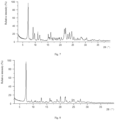
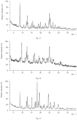
- the XRPD pattern of the above crystal form C obtained using Cu K ⁇ radiation is substantially as shown in Fig. 4 .
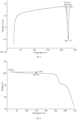
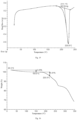
- the differential scanning calorimetry (DSC) curve of the above crystal form C shows a peak value of an exothermic peak at 225.1 °C ⁇ 3 °C.
- the DSC curve of the above crystal form C is substantially as shown in Fig. 5 .
- thermogravimetric analysis (TGA) curve of the above crystal form C has a weight loss of 1.13% at 150 °C ⁇ 3 °C.
- the TGA curve of the above crystal form C is substantially as shown in Fig. 6 .
- the present disclosure also provides a crystal form A1 of the compound of formula (I), wherein the crystal form A1 has an X-ray powder diffraction pattern obtained using Cu K ⁇ radiation with characteristic diffraction peaks at 20 angles of 7.15 ⁇ 0.20°, 9.13 ⁇ 0.20°, 11.01 ⁇ 0.20°, 21.60 ⁇ 0.20°, and 22.10 ⁇ 0.20°.
- the above crystal form A1 has an X-ray powder diffraction pattern obtained using Cu K ⁇ radiation with characteristic diffraction peaks at 2 ⁇ angles of 7.15 ⁇ 0.20°, 9.13 ⁇ 0.20°, 11.01 ⁇ 0.20°, 16.15 ⁇ 0.20°, 21.60 ⁇ 0.20°, 22.10 ⁇ 0.20°, 23.66 ⁇ 0.20°, and 24.60 ⁇ 0.20°.
- the above crystal form A1 has an X-ray powder diffraction pattern obtained using Cu K ⁇ radiation with characteristic diffraction peaks at 2 ⁇ angles of 7.15 ⁇ 0.20°, 9.13 ⁇ 0.20°, 9.71 ⁇ 0.20°, 11.01 ⁇ 0.20°, 11.81 ⁇ 0.20°, 15.17 ⁇ 0.20°, 16.15 ⁇ 0.20°, 21.60 ⁇ 0.20°, 22.10 ⁇ 0.20°, 23.01 ⁇ 0.20°, 23.66 ⁇ 0.20°, and 24.60 ⁇ 0.20°.
- the above crystal form A1 has an X-ray powder diffraction pattern obtained using Cu K ⁇ radiation with characteristic diffraction peaks at 20 angles of 7.15°, 7.85°, 9.13°, 9.71°, 11.01°, 11.81°, 12.63°, 13.12°, 15.17°, 15.72°, 16.15°, 16.90°, 17.43°, 18.30°, 18.81°, 19.32°, 19.67°, 20.39°, 21.60°, 22.10°, 23.01°, 23.66°, 24.60°, 25.40°, 26.17°, 26.94°, 27.42°, 28.16°, 29.94°, 30.54°, 32.96°, 33.50°, 35.54°, 37.22°, and 38.58°.
- the XRPD pattern of the above crystal form A1 obtained using Cu K ⁇ radiation is substantially as shown in Fig. 7 .
- the present disclosure also provides a crystal form D of the compound of formula (I), wherein the crystal form D has an X-ray powder diffraction pattern obtained using Cu K ⁇ radiation with characteristic diffraction peaks at 20 angles of 7.35 ⁇ 0.20°, 13.02 ⁇ 0.20°, 16.18 ⁇ 0.20°, 20.10 ⁇ 0.20°, and 21.91 ⁇ 0.20°.
- the above crystal form D has an X-ray powder diffraction pattern obtained using Cu K ⁇ radiation with characteristic diffraction peaks at 20 angles of 7.35 ⁇ 0.20°, 13.02 ⁇ 0.20°, 16.18 ⁇ 0.20°, 20.10 ⁇ 0.20°, 21.91 ⁇ 0.20°, 24.41 ⁇ 0.20°, 25.03 ⁇ 0.20°, and 27.49 ⁇ 0.20°.
- the above crystal form D has an X-ray powder diffraction pattern obtained using Cu K ⁇ radiation with characteristic diffraction peaks at 2 ⁇ angles of 7.35 ⁇ 0.20°, 9.36 ⁇ 0.20°, 10.90 ⁇ 0.20°, 13.02 ⁇ 0.20°, 16.18 ⁇ 0.20°, 18.80 ⁇ 0.20°, 20.10 ⁇ 0.20°, 21.91 ⁇ 0.20°, 22.40 ⁇ 0.20°, 24.41 ⁇ 0.20°, 25.03 ⁇ 0.20°, and 27.49 ⁇ 0.20°.
- the above crystal form D has an X-ray powder diffraction pattern obtained using Cu K ⁇ radiation with characteristic diffraction peaks at 2 ⁇ angles of 7.35°, 8.41°, 9.36°, 10.49°, 10.90°, 11.55°, 12.11°, 13.02°, 13.79°, 14.68°, 15.07°, 16.18°, 16.53°, 16.77°, 17.83°, 18.80°, 20.10°, 20.75°, 21.75°, 21.91°, 22.40°, 23.45°, 24.41°, 25.03°, 26.48°, 26.86°, 27.49°, 28.45°, and 29.04°.
- the above crystal form D has an X-ray powder diffraction pattern obtained using Cu K ⁇ radiation with characteristic diffraction peaks at 2 ⁇ angles of 7.35°, 8.41°, 9.36°, 10.49°, 10.90°, 11.55°, 12.11°, 13.02°, 13.79°, 14.68°, 15.07°, 16.18°, 16.53°, 16.77°, 17.83°, 18.80°, 20.10°, 20.75°, 21.75°, 21.91°, 22.40°, 23.45°, 24.41°, 25.03°, 26.48°, 26.86°, 27.49°, 28.45°, 29.04°, 30.16°, 30.67°, 31.56°, and 34.26°.
- the XRPD pattern of the above crystal form D obtained using Cu K ⁇ radiation is substantially as shown in Fig. 8 .
- the differential scanning calorimetry (DSC) curve of the above crystal form D shows a peak value of an exothermic peak at 220.0 °C ⁇ 3 °C.
- the DSC curve of the above crystal form D is substantially as shown in Fig. 9 .
- thermogravimetric analysis (TGA) curve of the above crystal form D has a weight loss of 2.05% at 150.0 °C ⁇ 3 °C.
- the TGA curve of the above crystal form D is substantially as shown in Fig. 10 .
- the present disclosure also provides a crystal form E of the compound of formula (I), wherein the crystal form E has an X-ray powder diffraction pattern obtained using Cu K ⁇ radiation with characteristic diffraction peaks at 20 angles of 4.49 ⁇ 0.20°, 6.15 ⁇ 0.20°, 13.40 ⁇ 0.20°, 17.26 ⁇ 0.20°, and 26.04 ⁇ 0.20°.
- the above crystal form E has an X-ray powder diffraction pattern obtained using Cu K ⁇ radiation with characteristic diffraction peaks at 2 ⁇ angles of 4.49 ⁇ 0.20°, 6.15 ⁇ 0.20°, 8.92 ⁇ 0.20°, 11.47 ⁇ 0.20°, 12.30 ⁇ 0.20°, 13.40 ⁇ 0.20°, 17.26 ⁇ 0.20°, and 26.04 ⁇ 0.20°.
- the above crystal form E has an X-ray powder diffraction pattern obtained using Cu K ⁇ radiation with characteristic diffraction peaks at 2 ⁇ angles of 4.49 ⁇ 0.20°, 6.15 ⁇ 0.20°, 8.92 ⁇ 0.20°, 11.47 ⁇ 0.20°, 12.30 ⁇ 0.20°, 13.40 ⁇ 0.20°, 16.56 ⁇ 0.20°, 17.26 ⁇ 0.20°, 19.03 ⁇ 0.20°, 21.01 ⁇ 0.20°, 26.04 ⁇ 0.20°, and 26.60 ⁇ 0.20°.
- the above crystal form E has an X-ray powder diffraction pattern obtained using Cu K ⁇ radiation with characteristic diffraction peaks at 2 ⁇ angles of 4.49°, 6.15°, 8.92°, 11.47°, 12.30°, 13.40°, 14.59°, 16.56°, 17.26°, 19.03°, 21.01°, 22.16°, 23.88°, 24.54°, 26.04°, 26.60°, 27.47°, and 27.96°.
- the above crystal form E has an X-ray powder diffraction pattern obtained using Cu K ⁇ radiation with characteristic diffraction peaks at 2 ⁇ angles of 4.49°, 6.15°, 8.92°, 11.47°, 12.30°, 13.40°, 14.59°, 16.56°, 17.26°, 19.03°, 21.01°, 22.16°, 23.88°, 24.54°, 26.04°, 26.60°, 27.47°, 27.96°, 30.60°, 31.71°, 33.61°, and 37.65°.
- the XRPD pattern of the above crystal form E obtained using Cu K ⁇ radiation is substantially as shown in Fig. 11 .
- the differential scanning calorimetry (DSC) curve of the above crystal form E shows a peak value of an exothermic peak at 211.8 °C ⁇ 3 °C.
- the DSC curve of the above crystal form E is substantially as shown in Fig. 12 .
- thermogravimetric analysis (TGA) curve of the above crystal form E has a weight loss of 2.61% at 150.0 °C ⁇ 3 °C.
- the TGA curve of the above crystal form E is substantially as shown in Fig. 13 .
- the present disclosure also provides a crystal form F of the compound of formula (I), wherein the crystal form F has an X-ray powder diffraction pattern obtained using Cu K ⁇ radiation with characteristic diffraction peaks at 20 angles of 8.20 ⁇ 0.20°, 16.73 ⁇ 0.20°, 21.84 ⁇ 0.20°, 23.99 ⁇ 0.20°, and 24.56 ⁇ 0.20°.
- the above crystal form F has an X-ray powder diffraction pattern obtained using Cu K ⁇ radiation with characteristic diffraction peaks at 20 angles of 8.20 ⁇ 0.20°, 16.73 ⁇ 0.20°, 17.90 ⁇ 0.20°, 19.03 ⁇ 0.20°, 20.38 ⁇ 0.20°, 21.84 ⁇ 0.20°, 23.99 ⁇ 0.20°, and 24.56 ⁇ 0.20°.
- the above crystal form F has an X-ray powder diffraction pattern obtained using Cu K ⁇ radiation with characteristic diffraction peaks at 20 angles of 8.20 ⁇ 0.20°, 13.49 ⁇ 0.20°, 16.73 ⁇ 0.20°, 17.90 ⁇ 0.20°, 19.03 ⁇ 0.20°, 20.38 ⁇ 0.20°, 21.84 ⁇ 0.20°, 22.38 ⁇ 0.20°, 23.99 ⁇ 0.20°, 24.56 ⁇ 0.20°, 25.45 ⁇ 0.20°, and 29.34 ⁇ 0.20°.
- the above crystal form F has an X-ray powder diffraction pattern obtained using Cu K ⁇ radiation with characteristic diffraction peaks at 2 ⁇ angles of 8.20°, 10.86°, 11.79°, 12.41°, 13.49°, 14.79°, 16.73°, 17.90°, 19.03°, 20.38°, 21.84°, 22.38°, 22.91°, 23.99°, 24.56°, 25.45°, 26.43°, 27.33°, 28.76°, and 29.34°.
- the XRPD pattern of the above crystal form F obtained using Cu K ⁇ radiation is substantially as shown in Fig. 14 .
- the differential scanning calorimetry (DSC) curve of the above crystal form F shows a peak value of an exothermic peak at 225.8 °C ⁇ 3 °C.
- the DSC curve of the above crystal form F is substantially as shown in Fig. 15 .
- thermogravimetric analysis (TGA) curve of the above crystal form F has a weight loss of 2.20% at 150.0 °C ⁇ 3 °C.
- thermogravimetric analysis (TGA) curve of the above crystal form F has a weight loss of 2.20% at 150.0 °C ⁇ 3 °C, and continues to have a weight loss of 4.01% at 220.0 °C ⁇ 3 °C.
- the TGA curve of the above crystal form F is substantially as shown in Fig. 16 .
- the present disclosure also provides a crystal form G of the compound of formula (I), wherein the crystal form G has an X-ray powder diffraction pattern obtained using Cu K ⁇ radiation with characteristic diffraction peaks at 20 angles of 8.55 ⁇ 0.20°, 12.62 ⁇ 0.20°, 24.96 ⁇ 0.20°, and 25.39 ⁇ 0.20°.
- the above crystal form G has an X-ray powder diffraction pattern obtained using Cu K ⁇ radiation with characteristic diffraction peaks at 20 angles of 8.55 ⁇ 0.20°, 12.62 ⁇ 0.20°, 14.95 ⁇ 0.20°, 15.64 ⁇ 0.20°, 19.90 ⁇ 0.20°, 24.96 ⁇ 0.20°, 25.39 ⁇ 0.20°, and 26.90 ⁇ 0.20°.
- the above crystal form G has an X-ray powder diffraction pattern obtained using Cu K ⁇ radiation with characteristic diffraction peaks at 20 angles of 8.55 ⁇ 0.20°, 12.62 ⁇ 0.20°, 14.95 ⁇ 0.20°, 15.64 ⁇ 0.20°, 18.87 ⁇ 0.20°, 19.90 ⁇ 0.20°, 22.54 ⁇ 0.20°, 24.96 ⁇ 0.20°, 25.39 ⁇ 0.20°, 25.85 ⁇ 0.20°, 26.90 ⁇ 0.20°, and 28.15 ⁇ 0.20°.
- the above crystal form G has an X-ray powder diffraction pattern obtained using Cu K ⁇ radiation with characteristic diffraction peaks at 20 angles of 6.34°, 8.31°, 8.55°, 9.05°, 10.71°, 11.67°, 12.22°, 12.62°, 12.86°, 14.18°, 14.95°, 15.64°, 16.02°, 16.49°, 17.15°, 17.66°, 18.16°, 18.87°, 19.34°, 19.90°, 21.16°, 21.49°, 22.54°, 22.77°, 23.34°, 24.20°, 24.61°, 24.96°, 25.39°, 25.85°, 26.90°, 28.15°, 29.12°, and 29.80°.
- the above crystal form G has an X-ray powder diffraction pattern obtained using Cu K ⁇ radiation with characteristic diffraction peaks at 20 angles of 6.34°, 8.31°, 8.55°, 9.05°, 10.71°, 11.67°, 12.22°, 12.62°, 12.86°, 14.18°, 14.95°, 15.64°, 16.02°, 16.49°, 17.15°, 17.66°, 18.16°, 18.87°, 19.34°, 19.90°, 21.16°, 21.49°, 22.54°, 22.77°, 23.34°, 24.20°, 24.61°, 24.96°, 25.39°, 25.85°, 26.90°, 28.15°, 29.12°, 29.80°, 30.59°, 31.76°, 32.57 °, 33.72°, 35.90°, and 37.86°.
- the XRPD pattern of the above crystal form G obtained using Cu K ⁇ radiation is substantially as shown in Fig. 17 .
- the present disclosure also provides a crystal form H of the compound of formula (I), wherein the crystal form H has an X-ray powder diffraction pattern obtained using Cu K ⁇ radiation with characteristic diffraction peaks at 20 angles of 9.57 ⁇ 0.20°, 12.16 ⁇ 0.20°, 12.58 ⁇ 0.20°, 16.74 ⁇ 0.20°, and 25.02 ⁇ 0.20°.
- the above crystal form H has an X-ray powder diffraction pattern obtained using Cu K ⁇ radiation with characteristic diffraction peaks at 2 ⁇ angles of 9.57 ⁇ 0.20°, 12.16 ⁇ 0.20°, 12.58 ⁇ 0.20°, 16.14 ⁇ 0.20°, 16.74 ⁇ 0.20°, 19.10 ⁇ 0.20°, 25.02 ⁇ 0.20°, and 25.79 ⁇ 0.20°.
- the above crystal form H has an X-ray powder diffraction pattern obtained using Cu K ⁇ radiation with characteristic diffraction peaks at 20 angles of 9.57 ⁇ 0.20°, 11.52 ⁇ 0.20°, 12.16 ⁇ 0.20°, 12.58 ⁇ 0.20°, 16.14 ⁇ 0.20°, 16.74 ⁇ 0.20°, 19.10 ⁇ 0.20°, 21.39 ⁇ 0.20°, 23.69 ⁇ 0.20°, 25.02 ⁇ 0.20°, 25.79 ⁇ 0.20°, and 26.86 ⁇ 0.20°.
- the above crystal form H has an X-ray powder diffraction pattern obtained using Cu K ⁇ radiation with characteristic diffraction peaks at 2 ⁇ angles of 6.42°, 8.37°, 9.57°, 11.52°, 12.16°, 12.58°, 12.97°, 13.99°, 16.14°, 16.74°, 17.94°, 19.10°, 19.46°, 21.07°, 21.39°, 21.96°, 23.69°, 25.02°, 25.79°, and 26.86°.
- the XRPD pattern of the above crystal form H obtained using Cu K ⁇ radiation is substantially as shown in Fig. 18 .
- the present disclosure also provides a pharmaceutically acceptable salt of the compound of formula (I), wherein the pharmaceutically acceptable salt of the compound is a lysine salt, a dibenzylethylenediamine salt, a choline salt, a meglumine salt, a triethylamine salt, an aluminum salt, a zinc salt, a lithium salt, a sodium salt, a potassium salt, a calcium salt or a magnesium salt.
- the pharmaceutically acceptable salt of the compound is a lysine salt, a dibenzylethylenediamine salt, a choline salt, a meglumine salt, a triethylamine salt, an aluminum salt, a zinc salt, a lithium salt, a sodium salt, a potassium salt, a calcium salt or a magnesium salt.
- the structure of the above choline salt of the compound of formula (I) is shown in formula (II)
- the structure of the above sodium salt of the compound of formula (I) is shown in formula (III)
- the structure of the above dibenzylethylenediamine salt of the compound of formula (I) is shown in formula (IV), wherein, m is selected from 0.5 to 1.5; n is selected from 0.5 to 1.5; and p is selected from 0.4 to 1.5.
- the above m is selected from 0.5, 0.6, 0.7, 0.8, 0.9, 1.0, 1.1, 1.2, 1.3, 1.4, and 1.5.
- the above m is selected from 0.8, 0.9, 1.0, 1.1, and 1.2.
- the above m is 1.0.
- n is selected from 0.5, 0.6, 0.7, 0.8, 0.9, 1.0, 1.1, 1.2, 1.3, 1.4, and 1.5.
- n is selected from 0.8, 0.9, 1.0, 1.1, and 1.2.
- n 1.0.
- the above p is selected from 0.4, 0.5, 0.6, 0.7, 0.8, 0.9, 1.0, 1.1, 1.2, 1.3, 1.4, and 1.5.
- the above p is selected from 0.4, 0.5, 0.6, 0.9, 1.0, and 1.1.
- the above p is selected from 0.5 and 1.0.
- the above compound of formula (II) is a compound of formula (II-1),
- the present disclosure also provides a crystal form S1 of the compound of formula (II-1), wherein the crystal form S1 has an X-ray powder diffraction pattern obtained using Cu K ⁇ radiation with characteristic diffraction peaks at 20 angles of 8.68 ⁇ 0.20°, 12.70 ⁇ 0.20°, 18.12 ⁇ 0.20°, 19.43 ⁇ 0.20°, and 24.41 ⁇ 0.20°.
- the above crystal form S1 has an X-ray powder diffraction pattern obtained using Cu K ⁇ radiation with characteristic diffraction peaks at 20 angles of 8.68 ⁇ 0.20°, 12.27 ⁇ 0.20°, 12.70 ⁇ 0.20°, 15.20 ⁇ 0.20°, 18.12 ⁇ 0.20°, 18.95 ⁇ 0.20°, 19.43 ⁇ 0.20°, and 24.41 ⁇ 0.20°.
- the above crystal form S1 has an X-ray powder diffraction pattern obtained using Cu K ⁇ radiation with characteristic diffraction peaks at 20 angles of 8.68 ⁇ 0.20°, 12.27 ⁇ 0.20°, 12.70 ⁇ 0.20°, 15.20 ⁇ 0.20°, 16.94 ⁇ 0.20°, 17.37 ⁇ 0.20°, 18.12 ⁇ 0.20°, 18.95 ⁇ 0.20°, 19.43 ⁇ 0.20°, 24.41 ⁇ 0.20°, 25.51 ⁇ 0.20°, and 27.62 ⁇ 0.20°.
- the above crystal form S1 has an X-ray powder diffraction pattern obtained using Cu K ⁇ radiation with characteristic diffraction peaks at 2 ⁇ angles of 5.98°, 8.68°, 9.67°, 11.39°, 12.27°, 12.70°, 13.61°, 15.20°, 16.09°, 16.94°, 17.37°, 18.12°, 18.95°, 19.43°, 19.93°, 20.35°, 20.91°, 21.44°, 21.69°, 22.05°, 23.32°, 23.85°, 24.41°, 25.51°, 27.11°, 27.62°, 29.05°, and 29.85°.
- the above crystal form S1 has an X-ray powder diffraction pattern obtained using Cu K ⁇ radiation with characteristic diffraction peaks at 2 ⁇ angles of 5.98°, 8.68°, 9.67°, 11.39°, 12.27°, 12.70°, 13.61°, 15.20°, 16.09°, 16.94°, 17.37°, 18.12°, 18.95°, 19.43°, 19.93°, 20.35°, 20.91°, 21.44°, 21.69°, 22.05°, 23.32°, 23.85°, 24.41°, 25.51°, 27.11°, 27.62°, 29.05°, 29.85°, 30.91°, 32.34°, 32.68°, 34.67°, 36.58°, 37.86°, and 39.38°.
- the XRPD pattern of the above crystal form S1 obtained using Cu K ⁇ radiation is substantially as shown in Fig. 19 .
- the above compound of formula (III) is a compound of formula (III-1),
- the present disclosure also provides a crystal form S2 of the compound of formula (III-1), wherein the crystal form S2 has an X-ray powder diffraction pattern obtained using Cu K ⁇ radiation with characteristic diffraction peaks at 20 angles of 5.20 ⁇ 0.20°, 7.63 ⁇ 0.20°, 16.00 ⁇ 0.20°, 19.53 ⁇ 0.20°, and 20.97 ⁇ 0.20°.
- the above crystal form S2 has an X-ray powder diffraction pattern obtained using Cu K ⁇ radiation with characteristic diffraction peaks at 2 ⁇ angles of 5.20°, 16.00°, 20.97°, 19.53°, 7.63°, and 12.65°.
- the XRPD pattern of the above crystal form S2 obtained using Cu K ⁇ radiation is substantially as shown in Fig. 21 .
- Table 10 XRPD data of the crystal form S2 of the compound of formula (III-1) No . 2 ⁇ [°] Peak height [cts] D-spacing [ ⁇ ] Relative intensity [%] 1 5.2025 847.30 16.99 100.00 2 7.6322 59.65 11.58 7.04 3 12.6484 55.54 7.00 6.56 4 16.0019 115.54 5.54 13.64 5 19.5290 88.58 4.55 10.45 6 20.9731 100.61 4.24 11.87
- the present disclosure also provides a crystal form S3 of the compound of formula (III-1), wherein the crystal form S3 has an X-ray powder diffraction pattern obtained using Cu K ⁇ radiation with characteristic diffraction peaks at 20 angles of 4.36 ⁇ 0.20°, 8.45 ⁇ 0.20°, 11.94 ⁇ 0.20°, 21.94 ⁇ 0.20°, and 23.41 ⁇ 0.20°.
- the above crystal form S3 has an X-ray powder diffraction pattern obtained using Cu K ⁇ radiation with characteristic diffraction peaks at 2 ⁇ angles of 4.36°, 8.45°, 11.94°, 21.94°, and 23.41°.
- the XRPD pattern of the above crystal form S3 obtained using Cu K ⁇ radiation is substantially as shown in Fig. 22 .
- Table 11 XRPD data of the crystal form S3 of the compound of formula (III-1) No. 2 ⁇ [°] Peak height [cts] D-spacing [ ⁇ ] Relative intensity [%] 1 4.3611 1210.06 20.26 100.00 2 8.4469 763.56 10.47 63.10 3 11.9416 116.55 7.41 9.63 4 21.9435 84.37 4.05 6.97 5 23.4155 147.92 3.80 12.22
- the above compound of formula (IV) is a compound of formula (IV-1),
- the present disclosure also provides a crystal form S4 of the compound of formula (IV-1), wherein the crystal form S4 has an X-ray powder diffraction pattern obtained using Cu K ⁇ radiation with characteristic diffraction peaks at 2 ⁇ angles of 4.48 ⁇ 0.20°, 7.81 ⁇ 0.20°, 11.07 ⁇ 0.20°, 12.32 ⁇ 0.20°, 17.23 ⁇ 0.20°, 18.30 ⁇ 0.20°, 19.02 ⁇ 0.20°, and 21.46 ⁇ 0.20°.
- the above crystal form S4 has an X-ray powder diffraction pattern obtained using Cu K ⁇ radiation with characteristic diffraction peaks at 2 ⁇ angles of 4.48 ⁇ 0.20°, 7.81 ⁇ 0.20°, 9.30 ⁇ 0.20°, 11.07 ⁇ 0.20°, 12.32 ⁇ 0.20°, 16.62 ⁇ 0.20°, 17.23 ⁇ 0.20°, 18.30 ⁇ 0.20°, 19.02 ⁇ 0.20°, 21.46 ⁇ 0.20°, 24.10 ⁇ 0.20°, and 25.19 ⁇ 0.20°.
- the above crystal form S4 has an X-ray powder diffraction pattern obtained using Cu K ⁇ radiation with characteristic diffraction peaks at 2 ⁇ angles of 4.48°, 7.81°, 9.30°, 11.07°, 11.44°, 12.32°, 13.40°, 14.63°, 15.92°, 16.62°, 17.23°, 18.30°, 19.02°, 20.10°, 21.46°, 24.10°, 25.19°, 26.24°, and 29.80°.
- the XRPD pattern of the above crystal form S4 obtained using Cu K ⁇ radiation is substantially as shown in Fig. 23 .
- the above compound of formula (IV) is a compound of formula (IV-2),
- the present disclosure also provides a crystal form S5 of the compound of formula (IV-2), wherein the crystal form S5 has an X-ray powder diffraction pattern obtained using Cu K ⁇ radiation with characteristic diffraction peaks at 20 angles of 4.76 ⁇ 0.20°, 8.21 ⁇ 0.20°, 9.60 ⁇ 0.20°, 15.81 ⁇ 0.20°, 16.90 ⁇ 0.20°, 22.18 ⁇ 0.20°, 22.98 ⁇ 0.20°, and 25.74 ⁇ 0.20°.
- the above crystal form S5 has an X-ray powder diffraction pattern obtained using Cu K ⁇ radiation with characteristic diffraction peaks at 2 ⁇ angles of 4.76 ⁇ 0.20°, 8.21 ⁇ 0.20°, 9.60 ⁇ 0.20°, 15.81 ⁇ 0.20°, 16.90 ⁇ 0.20°, 20.28 ⁇ 0.20°, 21.15 ⁇ 0.20°, 22.18 ⁇ 0.20°, 22.98 ⁇ 0.20°, 23.92 ⁇ 0.20°, 24.93 ⁇ 0.20°, and 25.74 ⁇ 0.20°.
- the above crystal form S5 has an X-ray powder diffraction pattern obtained using Cu K ⁇ radiation with characteristic diffraction peaks at 2 ⁇ angles of 4.76°, 8.21°, 9.60°, 11.60°, 13.44°, 14.38°, 15.81°, 16.90°, 19.79°, 20.28°, 21.15°, 22.18°, 22.98°, 23.92°, 24.93°, 25.74°, 28.46°, and 30.72°.
- the XRPD pattern of the above crystal form S5 obtained using Cu K ⁇ radiation is substantially as shown in Fig. 25 .
- the present disclosure also provides a crystal form A2 of the compound of formula (I), wherein the crystal form A2 has an X-ray powder diffraction pattern obtained using Cu K ⁇ radiation with characteristic diffraction peaks at 2 ⁇ angles of 6.94 ⁇ 0.20°, 13.39 ⁇ 0.20°, 13.93 ⁇ 0.20°, 17.88 ⁇ 0.20°, 20.41 ⁇ 0.20°, 22.09 ⁇ 0.20°, 24.08 ⁇ 0.20°, and 25.04 ⁇ 0.20°.
- the above crystal form A2 has an X-ray powder diffraction pattern obtained using Cu K ⁇ radiation with characteristic diffraction peaks at 2 ⁇ angles of 6.94°, 13.39°, 13.93°, 17.88°, 20.41°, 22.09°, 24.08°, and 25.04°.
- the XRPD pattern of the above crystal form A2 obtained using Cu K ⁇ radiation is substantially as shown in Fig. 27 .
- the present disclosure also provides a crystal form A3 of the compound of formula (I), wherein the crystal form A3 has an X-ray powder diffraction pattern obtained using Cu K ⁇ radiation with characteristic diffraction peaks at 20 angles of 4.47 ⁇ 0.20°, 5.75 ⁇ 0.20°, 8.16 ⁇ 0.20°, 10.04 ⁇ 0.20°, 14.71 ⁇ 0.20°, 15.81 ⁇ 0.20°, 21.67 ⁇ 0.20°, and 23.30 ⁇ 0.20°.
- the above crystal form A3 has an X-ray powder diffraction pattern obtained using Cu K ⁇ radiation with characteristic diffraction peaks at 2 ⁇ angles of 4.47°, 5.75°, 8.16°, 10.04°, 14.71°, 15.81°, 21.67°, and 23.30°.
- the XRPD pattern of the above crystal form A3 obtained using Cu K ⁇ radiation is substantially as shown in Fig. 28 .
- the present disclosure also provides a crystal form A4 of the compound of formula (I), wherein the crystal form A4 has an X-ray powder diffraction pattern obtained using Cu K ⁇ radiation with characteristic diffraction peaks at 20 angles of 8.07 ⁇ 0.20°, 16.82 ⁇ 0.20°, 13.30 ⁇ 0.20°, 19.08 ⁇ 0.20°, 17.66 ⁇ 0.20°, 20.54 ⁇ 0.20°, 21.99 ⁇ 0.20°, and 25.61 ⁇ 0.20°.
- the above crystal form A4 has an X-ray powder diffraction pattern obtained using Cu K ⁇ radiation with characteristic diffraction peaks at 2 ⁇ angles of 8.07°, 10.87°, 12.40°, 13.30°, 16.82°, 17.66°, 19.08°, 20.54°, 21.99°, and 25.61°.
- the XRPD pattern of the above crystal form A4 obtained using Cu K ⁇ radiation is substantially as shown in Fig. 29 .
- the present disclosure also provides a crystal form A5 of the compound of formula (I), wherein the crystal form A5 has an X-ray powder diffraction pattern obtained using Cu K ⁇ radiation with characteristic diffraction peaks at 20 angles of 4.71 ⁇ 0.20°, 9.86 ⁇ 0.20°, 13.43 ⁇ 0.20°, 14.61 ⁇ 0.20°, 17.32 ⁇ 0.20°, 18.66 ⁇ 0.20°, 24.52 ⁇ 0.20°, and 26.82 ⁇ 0.20°.
- the present disclosure also provides a crystal form A5 of the compound of formula (I), wherein the crystal form A5 has an X-ray powder diffraction pattern obtained using Cu K ⁇ radiation with characteristic diffraction peaks at 2 ⁇ angles of 4.71 ⁇ 0.20°, 9.34 ⁇ 0.20°, 9.86 ⁇ 0.20°, 10.45 ⁇ 0.20°, 11.34 ⁇ 0.20°, 13.43 ⁇ 0.20°, 14.61 ⁇ 0.20°, 17.32 ⁇ 0.20°, 26.82 ⁇ 0.20°, 18.66 ⁇ 0.20°, 24.52 ⁇ 0.20°, and 25.85 ⁇ 0.20°.
- the above crystal form A5 has an X-ray powder diffraction pattern obtained using Cu K ⁇ radiation with characteristic diffraction peaks at 2 ⁇ angles of 4.71°, 9.34°, 9.86°, 10.45°, 11.34°, 11.48°, 12.50°, 13.43°, 13.99°, 14.61°, 16.36°, 16.98°, 17.32°, 18.66°, 19.06°, 19.50°, 20.01°, 20.45°, 20.76 °, 21.34°, 22.04°, 23.32°, 23.68°, 24.52°, 25.09°, 25.85°, 26.28°, 26.82°, 28.10°, 28.43°, 29.47°, 30.21°, 30.75°, 31.96°, 32.44°, 32.86°, and 33.49°.
- the XRPD pattern of the above crystal form A5 obtained using Cu K ⁇ radiation is substantially as shown in Fig. 30 .
- the present disclosure also provides a crystal form A6 of the compound of formula (I), wherein the crystal form A6 has an X-ray powder diffraction pattern obtained using Cu K ⁇ radiation with characteristic diffraction peaks at 20 angles of 6.16 ⁇ 0.20°, 7.28 ⁇ 0.20°, 10.66 ⁇ 0.20°, 14.02 ⁇ 0.20°, 17.37 ⁇ 0.20°, 24.56 ⁇ 0.20°, and 25.76 ⁇ 0.20°.
- the above crystal form A6 has an X-ray powder diffraction pattern obtained using Cu K ⁇ radiation with characteristic diffraction peaks at 2 ⁇ angles of 6.16°, 7.28°, 10.66°, 14.02°, 17.37°, 24.56°, and 25.76°.
- the XRPD pattern of the above crystal form A6 obtained using Cu K ⁇ radiation is substantially as shown in Fig. 31 .
- Table 18 XRPD data of the crystal form A6 of the compound of formula (I) No . 2 ⁇ [°] Peak height [cts] D-spacing [ ⁇ ] Relative intensity [%] 1 6.1565 1097.30 14.36 100.00 2 7.2826 541.81 12.14 49.38 3 10.6601 137.68 8.30 12.55 4 14.0199 265.72 6.32 24.22 5 17.3703 283.14 5.11 25.80 6 24.5631 256.02 3.62 23.33 7 25.7559 213.62 3.46 19.47
- the present disclosure also provides a crystal form A7 of the compound of formula (I), wherein the crystal form A7 has an X-ray powder diffraction pattern obtained using Cu K ⁇ radiation with characteristic diffraction peaks at 2 ⁇ angles of 8.03 ⁇ 0.20°, 12.00 ⁇ 0.20°, 16.10 ⁇ 0.20°, 17.58 ⁇ 0.20°, 18.35 ⁇ 0.20°, 20.76 ⁇ 0.20°, 23.98 ⁇ 0.20°, and 25.42 ⁇ 0.20°.
- the above crystal form A7 has an X-ray powder diffraction pattern obtained using Cu K ⁇ radiation with characteristic diffraction peaks at 20 angles of 8.03 ⁇ 0.20°, 10.41 ⁇ 0.20°, 12.00 ⁇ 0.20°, 16.10 ⁇ 0.20°, 17.58 ⁇ 0.20°, 18.35 ⁇ 0.20°, 20.76 ⁇ 0.20°, 21.23 ⁇ 0.20°, 22.87 ⁇ 0.20°, 23.98 ⁇ 0.20°, 24.98 ⁇ 0.20°, and 25.42 ⁇ 0.20°.
- the above crystal form A7 has an X-ray powder diffraction pattern obtained using Cu K ⁇ radiation with characteristic diffraction peaks at 2 ⁇ angles of 8.03°, 10.41°, 12.00°, 13.44°, 14.74°, 16.10°, 16.60°, 17.23°, 17.58°, 18.35°, 20.76°, 21.23°, 22.25°, 22.87°, 23.98°, 24.98°, 25.42°, 27.16°, 29.39°, 29.81°, 31.93°, and 33.38°.
- the XRPD pattern of the above crystal form A7 obtained using Cu K ⁇ radiation is substantially as shown in Fig. 32 .
- the above crystal form G, crystal form H, crystal form A1, crystal form A2, crystal form A3, crystal form A4, crystal form A5, crystal form A6, crystal form A7, crystal form S1, crystal form S2, crystal form S3, crystal form S4 or crystal form S5 can be in the form of a non-solvate or in the form of a solvate, such as in the form of a hydrate, an organic solvate, or a combination of an organic solvate and a hydrate.
- the organic solvent of the above organic solvate is selected from ethyl acetate, n-hexane, cyclohexane, n-heptane, dimethyl sulfoxide, methyl tert-butyl ether, tetrahydrofuran, methanol, ethanol, isopropyl alcohol, acetonitrile, acetone and N-methylpyrrolidone.
- the above crystal form G is a hydrate, and the hydration coefficient thereof is 0 to 5.0.
- the above crystal form H is a hydrate, and the hydration coefficient thereof is 0 to 5.0.
- the above crystal form A1 is an organic solvate, and the organic solvent is selected from ethyl acetate, n-heptane and a mixture of ethyl acetate and n-heptane.
- the above crystal form A2 is a dimethyl sulfoxide solvate.
- the above crystal form A3 is a methyl tert-butyl ether solvate.
- the above crystal form A4 is an acetone solvate.
- the above crystal form A5 is an N-methylpyrrolidone solvate.
- the above crystal form A6 is a methyl tert-butyl ether solvate.
- the above crystal form A7 is a dimethyl sulfoxide solvate.
- the present disclosure also provides use of the above crystal form B, crystal form C or crystal form S1 in the manufacture of a GnRH receptor antagonist-related medicament.
- the above GnRH receptor antagonist-related medicament is a medicament used in the prevention and/or treatment of an endometriosis and/or uterine fibroid-related disease.
- the compounds of the present disclosure have a significant inhibitory effect on human gonadotropin-releasing hormone receptors with high exposure in plasma, low clearance rate, long half-life, and high oral bioavailability, and exhibit excellent pharmacokinetic properties.
- the preparation processes of the salt types and crystal forms of the present disclosure are simple, and the salt types and crystal forms are stable, less affected by heat, humidity and light, and are easy to make into formulation.
- the intermediate compounds of the present disclosure can be prepared by a variety of synthetic methods well known to those skilled in the art, including the specific embodiments listed below, the embodiments formed by combining the specific embodiments listed below with other chemical synthetic methods, and the equivalent alternative methods well known to those skilled in the art.
- the alternative embodiments include, but are not limited to, the examples of the present disclosure.
- the absolute configuration can be confirmed by conventional techniques in the art, such as single-crystal X-Ray diffraction (SXRD).
- SXRD single-crystal X-Ray diffraction
- the diffraction intensity data of the cultivated single crystal is collected using a Bruker D8 venture diffractometer with a light source of CuK ⁇ radiation in a scanning mode of ⁇ / ⁇ scan; after collecting the relevant data, the crystal structure is further analyzed by the direct method (Shelxs97) to confirm the absolute configuration.
- ACN stands for acetonitrile
- DMSO dimethyl sulfoxide
- N 2 nitrogen
- RH relative humidity
- mL milliliter
- L liter
- min minute
- °C degree Celsius
- ⁇ m micrometer
- mm millimeter
- ⁇ L microliter
- moL/L mole per liter
- mg milligram
- s second
- nm nanometer
- MPa megapascal
- lux lx
- ⁇ w/cm 2 microwatt per square centimeter
- h hour
- Kg kilogram
- nM nanomole
- rpm revolutions per minute
- XRPD stands for X-ray powder diffraction
- DSC differential scanning calorimetry
- TGA thermogravimetric analysis
- 1 H NMR stands for proton nuclear magnetic resonance.
- XRPD test parameters Model X'Pert 3 Type of X-ray Cu, K ⁇ , K ⁇ 1 ( ⁇ ): 1.540598; K ⁇ 2 ( ⁇ ): 1.544426 K ⁇ 2/K ⁇ 1 intensity ratio: 0.50 Settings of X-ray tube 45 kV, 40 mA Divergence slit 1/8° Scan mode Continuous Scan range From 3.0° to 40.0° Scan time per step 46.7 seconds Step size 0.0263° Testing time Approximately 5 minutes
- thermogravimetric analysis (TGA) instrument Thermalgravimetric Analyzer
- DSC differential scanning calorimetry
- TGA and DSC instruments and test parameters are shown in Table 21.
- Table 21 TGA and DSC test parameters Parameter TGA DSC Model of instrument TA Q5000/5500 Thermogravimetric Analyzer TA 2500 Differential Scanning Calorimeter Method Linear temperature increase Linear temperature increase Sample pan Aluminum pan, uncovered Aluminum pan, covered/uncovered Temperature range Room temperature-a set end-point temperature 25 °C-a set end-point temperature Scan rate (°C/min) 10 10 Protective gas Nitrogen Nitrogen
- hygroscopicity evaluation is as follows: Absorbing enough water and forming a liquid: deliquescence; ⁇ W% ⁇ 15%: very hygroscopic; 15% > ⁇ W% ⁇ 2%: hygroscopic; 2% > ⁇ W% ⁇ 0.2%: slightly hygroscopic; ⁇ W% ⁇ 0.2%: Not or almost not hygroscopic.
- ⁇ W% represents the weight increase of a test sample by moisture absorption at 25 ⁇ 1 °C and 80 ⁇ 2% RH.
- Lithium diisopropylamide (166.53 ml, concentration: 2 mol/L) was added dropwise to a solution of compound 1-1 (3,4-difluoroanisole, 40 g, 277.5 mmol) in tetrahydrofuran (400 mL) at -70 °C, and the reaction system was stirred at -70 °C for 0.5 hours.
- Tri-n-butylphosphine (3.71 g, 18.33 mmol) was added to a solution of compound 1-5 (2.65 g, 10.18 mmol) and 5-fluoro-2-hydroxybenzaldehyde (1.57 g, 11.2 mmol) in tetrahydrofuran (20 mL), and the mixture was stirred for 0.1 hours. Then, a solution of 1,1-(azodicarbonyl)dipiperidine (4.62 g, 18.33 mmol) in tetrahydrofuran (5 mL) was added dropwise at 0 °C. The mixture was warmed to 25 °C and stirred at 25 °C for 12 hours.
- meta-Chloroperoxybenzoic acid (1.66 g, 85% purity, 8.16 mmol) was added to a solution of compound 1-6 (1.04 g, 2.72 mmol) in dichloromethane (10 mL) at 0 °C, and the mixture was warmed to 25 °C and stirred at 25 °C for 12 hours. 2 mL of saturated aqueous solution of sodium sulfite was added to the reaction solution, and then 10 mL of water was added. The mixture was extracted with ethyl acetate (30 mL ⁇ 3).
- Nitric acid (1.46 ml, 60% purity, 19.51 mmol) was added dropwise to a solution of compound 1-9 (53 mg, 170.82 ⁇ mol) in acetic acid (1 mL) at 80 °C, and the mixture was stirred at 80 °C for 2 hours.
- the reaction solution was poured into 40 mL of iced water, and the mixture was adjusted to pH of 7 with saturated aqueous sodium bicarbonate.
- the aqueous phase was extracted with ethyl acetate (30 mL ⁇ 5).
- the organic phases were combined, washed with water (30 mL ⁇ 3), washed with saturated brine (20 mL ⁇ 1), dried over anhydrous sodium sulfate and filtered.
- the compound of formula (I) (25 g) was suspended in ethyl acetate (80 mL) at 45 °C to 50 °C, and n-heptane (40 mL) was added under stirring. Then, the mixture was naturally cooled to 15 °C to 20 °C, and stirred for 0.5 hours. The mixture was filtered. The filter cake was washed with a mixed solvent of ethyl acetate (20 mL) and n-heptane (10 mL), and then washed with n-heptane (20 mL). The filter cake was collected, and dried under vacuum to give a solid. The solid was determined by XRPD to be the crystal form A1 of the compound of formula (I).
- Method 1 The crystal form A1 of the compound of formula (I) (1 g) was weighed, and suspended with stirring in water (10 mL) at 90 °C for 14 hours. Then, the mixture was filtered. The filter cake was dried at 50 °C under reduced pressure to give a solid. The solid was determined by XRPD to be the crystal form B of the compound of formula (I). The XRPD pattern is shown in Fig. 1 . The DSC curve is shown in Fig. 2 . The TGA curve is shown in Fig. 3 .
- Method 2 The crystal form A1 of the compound of formula (I) (0.3 g) was weighed, and suspended with stirring in a mixed solvent of acetonitrile (1 mL) and water (5 mL) at 70 °C for 12 hours. Then, the mixture was filtered. The filter cake was dried at 50 °C under reduced pressure to give a solid. The solid was determined by XRPD to be the crystal form B of the compound of formula (I).
- the crystal form A1 of the compound of formula (I) (24.8 mg) was weighed, and suspended with stirring in acetonitrile (0.5 mL) at room temperature (25 ⁇ 3 °C) for 3 days. Then, the mixture was centrifugated to give a wet sample. The wet sample was air-dried at room temperature to give a solid. The solid was determined by XRPD to be the crystal form C of the compound of formula (I). The XRPD pattern is shown in Fig. 4 . The DSC curve is shown in Fig. 5 . The TGA curve is shown in Fig. 6 .
- the crystal form A1 of the compound of formula (I) (24.5 mg) was weighed, and dichloromethane (0.5 mL) was added. The mixture was suspended with stirring at room temperature (25 ⁇ 3 °C) for 3 days. Then, the mixture was centrifugated to give a wet sample. The wet sample was air-dried at room temperature to give a solid. The solid was determined by XRPD to be the crystal form D of the compound of formula (I). The XRPD pattern is shown in Fig. 8 . The DSC curve is shown in Fig. 9 . The TGA curve is shown in Fig. 10 .
- the crystal form A1 of the compound of formula (I) (25.1 mg) was weighed, and suspended with stirring in 0.5 mL of tetrahydrofuran/n-heptane (volume ratio of 1:4) at room temperature (25 ⁇ 3 °C) for 3 days. Then, the mixture was centrifugated to give a wet sample. The wet sample was air-dried at room temperature to give a solid. The solid was determined by XRPD to be the crystal form E of the compound of formula (I). The XRPD pattern is shown in Fig. 11 . The DSC curve is shown in Fig. 12 . The TGA curve is shown in Fig. 13 .
- the crystal form A1 of the compound of formula (I) (52.3 mg) was weighed, and suspended with stirring in 0.75 mL of dimethyl sulfoxide/water (volume ratio of 1:4) at room temperature (25 ⁇ 3 °C) for 5 days. Then, the mixture was centrifugated to give a wet sample. The wet sample was air-dried at room temperature to give a solid. Then, the solid was heated to 180 °C, and cooled to room temperature to give a solid. The solid was determined by XRPD to be the crystal form F of the compound of formula (I). The XRPD pattern is shown in Fig. 14 . The DSC curve is shown in Fig. 15 . The TGA curve is shown in Fig. 16 .
- the crystal form A1 of the compound of formula (I) (24.4 mg) was weighed, and suspended with stirring in 0.5 mL of methanol/water (volume ratio of 69:31) at room temperature (25 ⁇ 3 °C) for 3 days. Then, the mixture was centrifugated to give a wet sample. The wet sample was air-dried at room temperature to give a solid. The solid was determined by XRPD to be the crystal form G of the compound of formula (I). The XRPD pattern is shown in Fig. 17 .
- the crystal form G of the compound of formula (I) was heated to 180 °C, and then cooled to room temperature to give a solid.
- the solid was determined by XRPD to be the crystal form H of the compound of formula (I).
- the XRPD pattern is shown in Fig. 18 .
- the crystal form A1 of the compound of formula (I) (25.0 mg) and 11.7 mg of choline were suspended with stirring in 2-methyltetrahydrofuran (0.5 mL) at room temperature (25 ⁇ 3 °C) for 3 days. The mixture was transferred to 5 °C and stirred for 1 day. The mixture was then transferred to -20 °C and stirred for 2 days. The mixture was centrifugated, and then dried under vacuum at room temperature to give a solid. The solid was determined by XRPD to be the crystal form S1 of the compound of formula (II).
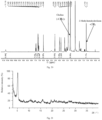
- 1 H NMR showed that the molar ratio of choline to the compound of formula (I) was 1.0.
- the XRPD pattern is shown in Fig. 19 .
- the 1 H NMR spectrum is shown in Fig. 20 .
- the crystal form A1 of the compound of formula (I) (25.0 mg) and 2.0 mg of sodium hydroxide were suspended with stirring in acetonitrile (0.5 mL) at room temperature (25 ⁇ 3 °C) for 4 days. The mixture was centrifugated, and then dried under vacuum at room temperature to give a solid. The solid was determined by XRPD to be the crystal form S2 of the compound of formula (III). HPLC/IC showed that the molar ratio of base to acid was 1.0. The XRPD pattern is shown in Fig. 21 .
- the crystal form A1 of the compound of formula (I) (25.1 mg) and 2.0 mg of sodium hydroxide were suspended with stirring in tetrahydrofuran (0.5 mL) at room temperature (25 ⁇ 3 °C) for 4 days. The mixture was centrifugated, and then dried under vacuum at room temperature to give a solid. The solid was determined by XRPD to be the crystal form S3 of the compound of formula (III). HPLC/IC showed that the molar ratio of base to acid was 1.2. The XRPD pattern is shown in Fig. 22 .
- the crystal form A1 of the compound of formula (I) (25.1 mg) and 11.5 mg of dibenzylethylenediamine were suspended with stirring in isopropyl alcohol (0.5 mL) at room temperature (25 ⁇ 3 °C) for 3 days. The mixture was centrifugated, and then dried under vacuum at room temperature to give a solid. The solid was determined by XRPD to be the crystal form S4 of the compound of formula (IV-1).
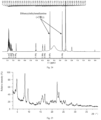
- 1 H NMR showed that the molar ratio of dibenzylethylenediamine to the compound of formula (I) was 0.9.
- the XRPD pattern is shown in Fig. 23 .
- the 1 H NMR spectrum is shown in Fig. 24 .
- the crystal form A1 of the compound of formula (I) (25.0 mg) and 11.5 mg of dibenzylethylenediamine were suspended with stirring in acetonitrile (0.5 mL) at room temperature (25 ⁇ 3 °C) for 3 days. The mixture was centrifugated, and then dried under vacuum at room temperature to give a solid. The solid was determined by XRPD to be the crystal form S5 of the compound of formula (IV-2).
- 1 H NMR showed that the molar ratio of dibenzylethylenediamine to the compound of formula (I) was 0.6.
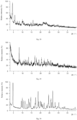
- the XRPD pattern is shown in Fig. 25 .
- the 1 H NMR spectrum is shown in Fig. 26 .
- the crystal form A1 of the compound of formula (I) (24.7 g) was weighed, and suspended with stirring in 0.5 mL of dimethyl sulfoxide/water (volume ratio of 1:4) at room temperature (25 ⁇ 3 °C) for 3 days. Then, the mixture was centrifugated to give a wet sample. The wet sample was air-dried at room temperature to give a solid. The solid was determined by XRPD to be the crystal form A2 of the compound of formula (I). The XRPD pattern is shown in Fig. 27 .
- the crystal form A1 of the compound of formula (I) (25.1 mg) was weighed, and dissolved in 0.2 mL of tetrahydrofuran. 1.5 mL of methyl tert-butyl ether was added. Then, the mixture was centrifugated to give a wet sample. The wet sample was air-dried at room temperature to give a solid. The solid was determined by XRPD to be the crystal form A3 of the compound of formula (I). The XRPD pattern is shown in Fig. 28 .
- the crystal form A1 of the compound of formula (I) (24.6 mg) was weighed, and dissolved in 0.2 mL of acetone. 1.5 mL of n-heptane was added, and the mixture was stirred at 5 °C for 1 day. The mixture was transferred to -20°C and stirred for 2 days. Then, the mixture was centrifugated to give a wet sample. The wet sample was air-dried at room temperature to give a solid. The solid was determined by XRPD to be the crystal form A4 of the compound of formula (I). The XRPD pattern is shown in Fig. 29 .
- the crystal form A1 of the compound of formula (I) (25.2 mg) was weighed and dissolved in 0.2 mL of N-methylpyrrolidone. 1.0 mL of water was added. Then, the mixture was centrifugated to give a wet sample. The wet sample was air-dried at room temperature to give a solid. The solid was determined by XRPD to be the crystal form A5 of the compound of formula (I). The XRPD pattern is shown in Fig. 30 .
- the crystal form A1 of the compound of formula (I) (25.6 mg) was weighed, and suspended with stirring in 0.5 mL of methanol/methyl tert-butyl ether (volume ratio of 1:4) at room temperature (25 ⁇ 3 °C) for 3 days. Then, the mixture was centrifugated to give a wet sample. The wet sample was air-dried at room temperature to give a solid. The solid was determined by XRPD to be the crystal form A6 of the compound of formula (I). The XRPD pattern is shown in Fig. 31 .
- the crystal form A1 of the compound of formula (I) was weighed (52.3 mg), suspended with stirring in 0.75 mL of dimethyl sulfoxide/water (volume ratio of 1:4) at room temperature (25 ⁇ 3 °C) for 5 days. Then, the mixture was centrifugated to give a wet sample. The wet sample was air-dried at room temperature to give a solid. The solid was determined by XRPD to be the crystal form A7 of the compound of formula (I). The XRPD pattern is shown in Fig. 32 .
- the photostability testing complied with the requirements of ICH Q1B: the illuminated sample was exposed to visible light and ultraviolet light; storage conditions: the sample was illuminated at 5000 ⁇ 500 lux (visible light) and 90 ⁇ w/cm 2 (UV) for 5 days and 10 days. The total illumination received by the sample after 10 days was not less than 1.2 ⁇ 10 6 Lux ⁇ h, and the near-ultraviolet energy was not less than 200 w ⁇ h/m 2 .
- the illuminated sample was placed in a clean weighing bottle, and spread out into a single layer without being covered by anything. The weighing bottle was uncovered and placed in an illumination box for illumination.
- the control sample was packaged in the same way as the illuminated sample, but the weighing bottle was covered with aluminum film.
- each sample was placed in a double-layer LDPE bag, respectively, and each layer of the LDPE bag was sealed with a buckle. Then, the sample was placed in an aluminum foil bag, which was heat-sealed. The sample was placed for 1, 2 and 3 months in the accelerated testing, and placed for 3 months under the long-term condition. XRPD analysis was performed on all the stability samples to test the changes in the crystal forms.
- Table 24 Results of solid stability testing of the crystal form B of the compound of formula (I) Test conditions Conditions of point selection Purity(%) Crystal form - 0 day 99.4 Crystal form B High temperature (60 °C, uncovered) 10 days 99.4 Crystal form B High humidity (25 °C, 92.5% relative humidity, uncovered) 10 days 99.4 Crystal form B Visible light + UV (ICH conditions) The total illumination of visible light reaching 1200000 Lux ⁇ h 99.4 Crystal form B The total illumination of UV reaching 200 w ⁇ h/m 2 Light-shielding control group Placed with visible light + UV light, and wrapped with tin foil 99.4 Crystal form B Accelerated (40 °C, 75% relative humidity, uncovered) 1 month 99.4 Crystal form B 2 months 99.4 Crystal form B 3 months 99.4 Crystal form B Long term (25 °C, 60% relative humidity, uncovered) 3 months 99.4 Crystal form B Table 25 HPLC instrument information and analysis method Parameter Settings Chromatography column Agilent ZORBAX SB C18, 4.6mm ⁇
- the test was performed using SMS DVS intrinsic plus dynamic vapor sorption instrument.
- the crystal form B of the compound of formula (I) (10 to 20 mg) was taken and placed in a DVS sample pan for testing.
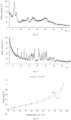
- Test results The DVS curve of the crystal form B of the compound of formula (I) is shown in Fig. 33 , and ⁇ W% was 0.535%.
- FLIPR assay technology was used to assay the inhibitory activity of a test compound on gonadotropin-releasing hormone receptor at cellular level
- GnRH/HEK293 human embryonic kidney cell 293 cultured cells in the logarithmic growth phase were washed with DPBS (Dulbecco's phosphate buffered saline) buffer, and an appropriate amount of 0.05% EDTA (ethylenediaminetetraacetic acid)-trypsin was added.
- the cells were placed in a carbon dioxide incubator at 37 °C for digestion for 1-2 minutes, and then removed from the incubator. A medium was added to the cells to terminate the digestion. Cells were dispersed by repeated pipetting and harvested by centrifugation. The cells were seeded into a 384-well Poly-Lysine-Coated Cell Plate at a density of 20,000 cells per well, 20 ⁇ L, and incubated overnight in a 5% CO 2 , 37°C incubator.
- 2 mM assay compounds and an appropriate concentration of reference compound were serially diluted 4-fold to 10 concentrations in ECHO, and 900 nL of that was transferred to a compound plate.
- 30 ⁇ L of FLIPR buffered saline was added to the compound plate, and the plate was centrifuged at 1000 rpm for 1 min.
- the software of the FLIPR instrument was run, and 10 ⁇ L of assay and reference compounds were added to the cell plate according to the set program.
- the fluorescent signal was read.
- 10 ⁇ L of agonist with a concentration of 6 ⁇ EC 80 was added to the cell plate and the fluorescent signal was read.
- IC 50 of the compound to inhibit the calcium flow of gonadotropin-releasing hormone receptor i.e., the drug concentration when the Ca 2+ flow was inhibited by half in the cells stably expressing the GnRH receptor, was calculated.
- the IC 50 of the drug was calculated by GraphPad Prism 5.0 software.
- the inhibitory activity of the compound of the present disclosure on human gonadotropin-releasing hormone receptor was determined by the above assay method, and the measured IC 50 is shown in Table 26: Table 26 IC 50 of the compound of the present disclosure for inhibiting the activity of human gonadotropin-releasing hormone receptor Compound No. IC 50 (nM) Compound of formula (I) 3.2
- the compound of the present disclosure has a significant inhibitory effect on human gonadotropin-releasing hormone receptor.
- Each assay compound was mixed with DMAC respectively, and vortexed for 2 minutes.
- the solution of the assay compound in DMAC was mixed and vortexed for 2 minutes to prepare a clear solution of 10 mg/mL.
- 0.0600 mL of 10 mg/mL solution was added to 0.300 mL of Solutol, and the mixture was vortexed for 2 minutes.
- 2.400 mL of normal saline was added, and the mixture was vortexed for 2 minutes to obtain a clear solution of 0.2 mg/mL, which was used for administration in PO group.
- 0.500 mL of the solution for administration in PO group was vortexed for 2 minutes, and 0.0500 mL of DMAC was added.
- mice Four male CD-1 mice were divided into two groups. The animals in the first group were administered intravenously once at a dose of 0.5 mg/kg, wherein the vehicle was 10% DMAC/10% Solutol/80% normal saline, and the administration volume was 5 mL/kg. The animals in the second group were administered orally 2 mg/kg of the assay compound by oral gavage, wherein the oral vehicle was 10% DMAC/10% Solutol/80% normal saline, and the oral volume was 10 mL/kg.
- Whole blood was collected at 0.033 (IV injection only), 0.083, 0.25, 0.5, 1, 2, 4 and 12 hours post-dose. The whole blood was centrifuged at 3200g at 2-8°C for 10 min to obtain plasma. The concentration of the assay compound in plasma was determined by LC/MS/MS method, and the pharmacokinetic parameters were calculated by Phoenix WinNonlin software.
- the assay results are shown in Table 27.
- the parameters have the following meanings: IV: intravenous injection; PO: oral administration; C 0 : initial plasma concentration; C max : maximum drug concentration in the systemic circulation; T max : time required to reach C max ; T 1/2 : half-life; V dss : apparent volume of distribution; Cl: clearance rate; AUC 0-last : area under the plasma drug concentration-time curve.
- the compound of the present disclosure has high exposure in plasma, low clearance rate, long half-life, and high oral bioavailability, and exhibits excellent pharmacokinetic properties.
Landscapes
- Chemical & Material Sciences (AREA)
- Organic Chemistry (AREA)
- Health & Medical Sciences (AREA)
- Pharmacology & Pharmacy (AREA)
- Veterinary Medicine (AREA)
- Public Health (AREA)
- General Health & Medical Sciences (AREA)
- Animal Behavior & Ethology (AREA)
- Life Sciences & Earth Sciences (AREA)
- Medicinal Chemistry (AREA)
- Diabetes (AREA)
- Nuclear Medicine, Radiotherapy & Molecular Imaging (AREA)
- General Chemical & Material Sciences (AREA)
- Chemical Kinetics & Catalysis (AREA)
- Endocrinology (AREA)
- Bioinformatics & Cheminformatics (AREA)
- Engineering & Computer Science (AREA)
- Epidemiology (AREA)
- Pharmaceuticals Containing Other Organic And Inorganic Compounds (AREA)
- Heterocyclic Carbon Compounds Containing A Hetero Ring Having Oxygen Or Sulfur (AREA)
Priority Applications (1)
| Application Number | Priority Date | Filing Date | Title |
|---|---|---|---|
| MA71568A MA71568A (fr) | 2022-08-16 | 2023-08-15 | Forme saline et forme cristalline de dérivé de thiénopyrimidinone |
Applications Claiming Priority (2)
| Application Number | Priority Date | Filing Date | Title |
|---|---|---|---|
| CN202210984344 | 2022-08-16 | ||
| PCT/CN2023/113085 WO2024037532A1 (fr) | 2022-08-16 | 2023-08-15 | Forme saline et forme cristalline de dérivé de thiénopyrimidinone |
Publications (2)
| Publication Number | Publication Date |
|---|---|
| EP4559904A1 true EP4559904A1 (fr) | 2025-05-28 |
| EP4559904A4 EP4559904A4 (fr) | 2025-10-15 |
Family
ID=89940743
Family Applications (1)
| Application Number | Title | Priority Date | Filing Date |
|---|---|---|---|
| EP23854433.2A Pending EP4559904A4 (fr) | 2022-08-16 | 2023-08-15 | Forme saline et forme cristalline de dérivé de thiénopyrimidinone |
Country Status (7)
| Country | Link |
|---|---|
| EP (1) | EP4559904A4 (fr) |
| JP (1) | JP7801535B2 (fr) |
| KR (1) | KR20250048100A (fr) |
| CN (1) | CN119698409A (fr) |
| AU (1) | AU2023325806A1 (fr) |
| MA (1) | MA71568A (fr) |
| WO (1) | WO2024037532A1 (fr) |
Family Cites Families (7)
| Publication number | Priority date | Publication date | Assignee | Title |
|---|---|---|---|---|
| RU2418803C2 (ru) * | 2005-10-19 | 2011-05-20 | Киссеи Фармасьютикал Ко., Лтд. | Конденсированное гетероциклическое производное, содержащая его лечебная композиция и ее применение в медицине |
| AP2016009128A0 (en) | 2013-10-07 | 2016-04-30 | Bayer Pharma AG | Cyclic thienouracil-carboxamides and use thereof |
| BR112019002513A2 (pt) * | 2016-08-08 | 2019-05-14 | Kissei Pharmaceutical Co., Ltd. | uso e dosagem de agentes terapêuticos para endometriose |
| US20230067378A1 (en) * | 2018-11-07 | 2023-03-02 | ObsEva S.A. | Compositions and methods for the treatment of estrogen-dependent disorders |
| JP2022543757A (ja) | 2019-08-08 | 2022-10-14 | オブセヴァ エス.エー. | エストロゲン依存性障害の治療のためのgnrhアンタゴニスト |
| EP4009977A2 (fr) * | 2019-08-08 | 2022-06-15 | ObsEva S.A. | Compositions et méthodes de traitement de troubles dépendant des oestrogènes |
| RS67499B1 (sr) * | 2021-02-23 | 2025-12-31 | Cms Res & Development Pte Ltd | Fuziono policiklično jedinjenje supstituisane 5-karboksilne kiseline tienopirimidindiona i njegova primena |
-
2023
- 2023-08-15 MA MA71568A patent/MA71568A/fr unknown
- 2023-08-15 JP JP2025509128A patent/JP7801535B2/ja active Active
- 2023-08-15 WO PCT/CN2023/113085 patent/WO2024037532A1/fr not_active Ceased
- 2023-08-15 CN CN202380060028.1A patent/CN119698409A/zh active Pending
- 2023-08-15 AU AU2023325806A patent/AU2023325806A1/en active Pending
- 2023-08-15 KR KR1020257008062A patent/KR20250048100A/ko active Pending
- 2023-08-15 EP EP23854433.2A patent/EP4559904A4/fr active Pending
Also Published As
| Publication number | Publication date |
|---|---|
| JP7801535B2 (ja) | 2026-01-16 |
| AU2023325806A1 (en) | 2025-03-06 |
| WO2024037532A1 (fr) | 2024-02-22 |
| KR20250048100A (ko) | 2025-04-07 |
| CN119698409A (zh) | 2025-03-25 |
| MA71568A (fr) | 2025-05-30 |
| EP4559904A4 (fr) | 2025-10-15 |
| JP2025526941A (ja) | 2025-08-15 |
Similar Documents
| Publication | Publication Date | Title |
|---|---|---|
| US12128033B2 (en) | Synthetic methods for preparation of 4-(2-chloro-4-methoxy-5-methylphenyl)-n-[(1S)-2-cyclopropyl-1-(3-fluoro-4-methylphenyl)ethyl]-5-methyl-n-prop-2-ynyl-1,3-thiazol-2-amine | |
| EP3912976A1 (fr) | Sel d'un inhibiteur d'egfr, forme cristalline et procédé de préparation associé | |
| US12319657B1 (en) | Solid state crystalline forms of a selective potassium channel modulator | |
| EP3495352A1 (fr) | Forme cristalline du médicament antagoniste du récepteur des androgènes, son procédé de préparation et son utilisation | |
| US9527803B2 (en) | Crystal form VII of agomelatine, preparation method and use thereof and pharmaceutical composition containing same | |
| KR101833578B1 (ko) | 아프레피탄트 l-프롤린 조성물 및 공결정 | |
| JP2000516258A (ja) | 薬剤の結晶変形 | |
| EP4342899A1 (fr) | Forme saline et forme cristalline d'un dérivé de purinone substitué hétérocyclique | |
| EP4299569B1 (fr) | Composé de thiénopyrimidinedione d'acide 5-carboxylique substitué polycyclique fusionné et son utilisation | |
| HK40122879A (en) | Salt type and crystal form of thienopyrimidinone derivative | |
| CN106831594B (zh) | 可乐定双羟萘酸盐及其制备方法 | |
| CN111606890A (zh) | 含丙烯酰基的核转运调节剂及其用途 | |
| Yu et al. | Salt or/and cocrystal? The case of the antidepressant drug venlafaxine | |
| AU2023325806A1 (en) | Salt type and crystal form of thienopyrimidinone derivative | |
| US8138221B2 (en) | Pharmaceutically acceptable salts of thymodepressin and processes for their manufacture | |
| KR102660247B1 (ko) | 4-(나프탈렌-1-일)-4h-1, 2, 4-트리아졸계 화합물의 결정 형태, 염 형태 및 이의 제조방법 | |
| EP3919493A1 (fr) | Cristal d'un composé diarylthiohydantoïne | |
| TW202446373A (zh) | 二氧代哌啶化合物或其可藥用鹽的無定形物、結晶、製備方法和用途 | |
| WO2022237682A1 (fr) | Forme sel de composé de pyrrolotriazine, forme cristalline de celui-ci et son procédé de préparation | |
| CN111032635B (zh) | N-甲酰基沃替西汀及其制备方法和沃替西汀的固体制剂 | |
| EP2547681B1 (fr) | Sel de tosylate de 4-(6-chloro-3-méthyl-4,10-dihydro-3h-2,3,4,9- tétrabenzo[f]azulène-9-carbonyl)-2-fluorobenzylamide d'acide cyclopropanecarboxylique | |
| CN111574441A (zh) | 一种尼可地尔与水杨酸的共晶及其制备方法和应用 | |
| EP3950694B1 (fr) | Forme de sel et forme cristalline d'a2a un antagoniste du récepteur aet son procédé de préparation | |
| CN114644615B (zh) | 一种吲唑类衍生物的结晶形式及其制备方法 | |
| EP4501927A1 (fr) | Cristal de dérivé tricyclique fusionné ou de sel pharmaceutiquement acceptable de celui-ci |
Legal Events
| Date | Code | Title | Description |
|---|---|---|---|
| STAA | Information on the status of an ep patent application or granted ep patent |
Free format text: STATUS: THE INTERNATIONAL PUBLICATION HAS BEEN MADE |
|
| PUAI | Public reference made under article 153(3) epc to a published international application that has entered the european phase |
Free format text: ORIGINAL CODE: 0009012 |
|
| STAA | Information on the status of an ep patent application or granted ep patent |
Free format text: STATUS: REQUEST FOR EXAMINATION WAS MADE |
|
| 17P | Request for examination filed |
Effective date: 20250220 |
|
| AK | Designated contracting states |
Kind code of ref document: A1 Designated state(s): AL AT BE BG CH CY CZ DE DK EE ES FI FR GB GR HR HU IE IS IT LI LT LU LV MC ME MK MT NL NO PL PT RO RS SE SI SK SM TR |
|
| REG | Reference to a national code |
Ref country code: HK Ref legal event code: DE Ref document number: 40122879 Country of ref document: HK |
|
| A4 | Supplementary search report drawn up and despatched |
Effective date: 20250917 |
|
| RIC1 | Information provided on ipc code assigned before grant |
Ipc: C07D 313/00 20060101AFI20250911BHEP Ipc: C07D 495/04 20060101ALI20250911BHEP Ipc: A61P 5/02 20060101ALI20250911BHEP |
|
| DAX | Request for extension of the european patent (deleted) | ||
| RAV | Requested validation state of the european patent: fee paid |
Extension state: MA Effective date: 20250220 Extension state: TN Effective date: 20250220 |