EP4559910A1 - Forme polymorphe d'agoniste de glp-1r, son procédé de préparation et son utilisation - Google Patents
Forme polymorphe d'agoniste de glp-1r, son procédé de préparation et son utilisation Download PDFInfo
- Publication number
- EP4559910A1 EP4559910A1 EP23842329.7A EP23842329A EP4559910A1 EP 4559910 A1 EP4559910 A1 EP 4559910A1 EP 23842329 A EP23842329 A EP 23842329A EP 4559910 A1 EP4559910 A1 EP 4559910A1
- Authority
- EP
- European Patent Office
- Prior art keywords
- crystal form
- ray powder
- powder diffraction
- peaks
- angles
- Prior art date
- Legal status (The legal status is an assumption and is not a legal conclusion. Google has not performed a legal analysis and makes no representation as to the accuracy of the status listed.)
- Pending
Links
Images












































Classifications
-
- A—HUMAN NECESSITIES
- A61—MEDICAL OR VETERINARY SCIENCE; HYGIENE
- A61P—SPECIFIC THERAPEUTIC ACTIVITY OF CHEMICAL COMPOUNDS OR MEDICINAL PREPARATIONS
- A61P3/00—Drugs for disorders of the metabolism
-
- C—CHEMISTRY; METALLURGY
- C07—ORGANIC CHEMISTRY
- C07D—HETEROCYCLIC COMPOUNDS
- C07D405/00—Heterocyclic compounds containing both one or more hetero rings having oxygen atoms as the only ring hetero atoms, and one or more rings having nitrogen as the only ring hetero atom
- C07D405/14—Heterocyclic compounds containing both one or more hetero rings having oxygen atoms as the only ring hetero atoms, and one or more rings having nitrogen as the only ring hetero atom containing three or more hetero rings
-
- A—HUMAN NECESSITIES
- A61—MEDICAL OR VETERINARY SCIENCE; HYGIENE
- A61K—PREPARATIONS FOR MEDICAL, DENTAL OR TOILETRY PURPOSES
- A61K31/00—Medicinal preparations containing organic active ingredients
- A61K31/33—Heterocyclic compounds
- A61K31/395—Heterocyclic compounds having nitrogen as a ring hetero atom, e.g. guanethidine or rifamycins
- A61K31/435—Heterocyclic compounds having nitrogen as a ring hetero atom, e.g. guanethidine or rifamycins having six-membered rings with one nitrogen as the only ring hetero atom
- A61K31/44—Non condensed pyridines; Hydrogenated derivatives thereof
- A61K31/445—Non condensed piperidines, e.g. piperocaine
- A61K31/4523—Non condensed piperidines, e.g. piperocaine containing further heterocyclic ring systems
- A61K31/4545—Non condensed piperidines, e.g. piperocaine containing further heterocyclic ring systems containing a six-membered ring with nitrogen as a ring hetero atom, e.g. pipamperone, anabasine
-
- A—HUMAN NECESSITIES
- A61—MEDICAL OR VETERINARY SCIENCE; HYGIENE
- A61P—SPECIFIC THERAPEUTIC ACTIVITY OF CHEMICAL COMPOUNDS OR MEDICINAL PREPARATIONS
- A61P3/00—Drugs for disorders of the metabolism
- A61P3/08—Drugs for disorders of the metabolism for glucose homeostasis
- A61P3/10—Drugs for disorders of the metabolism for glucose homeostasis for hyperglycaemia, e.g. antidiabetics
-
- A—HUMAN NECESSITIES
- A61—MEDICAL OR VETERINARY SCIENCE; HYGIENE
- A61P—SPECIFIC THERAPEUTIC ACTIVITY OF CHEMICAL COMPOUNDS OR MEDICINAL PREPARATIONS
- A61P35/00—Antineoplastic agents
-
- A—HUMAN NECESSITIES
- A61—MEDICAL OR VETERINARY SCIENCE; HYGIENE
- A61P—SPECIFIC THERAPEUTIC ACTIVITY OF CHEMICAL COMPOUNDS OR MEDICINAL PREPARATIONS
- A61P35/00—Antineoplastic agents
- A61P35/04—Antineoplastic agents specific for metastasis
-
- A—HUMAN NECESSITIES
- A61—MEDICAL OR VETERINARY SCIENCE; HYGIENE
- A61P—SPECIFIC THERAPEUTIC ACTIVITY OF CHEMICAL COMPOUNDS OR MEDICINAL PREPARATIONS
- A61P37/00—Drugs for immunological or allergic disorders
-
- C—CHEMISTRY; METALLURGY
- C07—ORGANIC CHEMISTRY
- C07B—GENERAL METHODS OF ORGANIC CHEMISTRY; APPARATUS THEREFOR
- C07B2200/00—Indexing scheme relating to specific properties of organic compounds
- C07B2200/13—Crystalline forms, e.g. polymorphs
Definitions
- the present disclosure relates to the field of pharmaceutical chemistry, and particularly, to a polymorph of a GLP-1R agonist, a method for preparing same, and use thereof.
- Diabetes is a chronic disease characterized by high blood glucose levels and is caused by (relatively or absolutely) insufficient insulin secretion or insulin action disorders.
- IDF International Diabetes Federation
- Insulin secretagogues include sulfonylureas, dipeptidyl peptidase IV (PP-IV) inhibitors, and glucagon-like peptide-1 receptor (GLP-1R) agonists, which enhance insulin secretion by acting on pancreatic ⁇ cells.
- Sulfonylureas have limited efficacy and tolerability, cause weight gain, and often induce hypoglycemia.
- DP-IV inhibitors have limited efficacy.
- GLP-1R agonists are peptides that are administered by subcutaneous injection, and liraglutide is approved for the treatment of obesity.
- Biguanides such as metformin, are believed to act mainly by reducing hepatic glucose production. Biguanides often cause gastrointestinal discomfort and lactic acidosis, which further limit their use.
- ⁇ -Glucosidase inhibitors such as acarbose
- acarbose can reduce intestinal glucose absorption. These medicaments often cause gastrointestinal discomfort.
- Thiazolidinediones act on specific receptors in the liver, muscle, and adipose tissue. They regulate lipid metabolism and subsequently enhance the responses of these tissues to insulin action. Frequent use of these drugs may cause weight gain and may induce edema and anemia.
- Insulin either alone or in combination with the medicaments described above, is used for more severe cases, and frequent use of insulin may also cause weight gain and involve a risk of hypoglycemia.
- Sodium-glucose cotransporter 2 (SGLT2) inhibitors (such as dapagliflozin, empagliflozin, canagliflozin, and ertugliflozin) inhibit glucose reabsorption in the kidneys, thereby lowering blood glucose levels.
- This emerging drug category may be associated with ketoacidosis and urinary tract infections.
- GLP-1 is a 30-amino-acid-long incretin hormone secreted by intestinal L cells in response to food intake. GLP-1 has been shown to stimulate insulin secretion in a physiological and glucose-dependent manner, reduce glucagon secretion, inhibit gastric emptying, reduce appetite, and stimulate ⁇ cell proliferation. In non-clinical trials, GLP-1 promotes continued ⁇ cell competence by stimulating the transcription of genes important for glucose-dependent insulin secretion and by promoting ⁇ cell neogenesis ( Meier, et al., Biodrugs, 17(2):93-102, 2013 ).
- GLP-1 plays an important role in regulating postprandial blood glucose levels by stimulating glucose-dependent insulin secretion by the pancreas to increase peripheral glucose absorption. GLP-1 also inhibits glucagon secretion, resulting in reduced hepatic glucose output. In addition, GLP-1 delays gastric emptying and slows small bowel movements to delay food absorption. In people with T2DM, the normal postprandial rise in GLP-1 is absent or reduced ( Vilsb ⁇ ll et al., Diabetes, 50: 609-613, 2001 ).
- GLP-1 has been correspondingly engineered and modified in scientific research to increase its half-life and thus prolong its in vivo biological effect.
- clinically used long-acting GLP-1 analogs such as liraglutide, exenatide, etc.
- GLP-1R agonists will focus on improving patient compliance, simplifying administration, and reducing side effects of drugs; these agonists have a wide clinical market prospect.
- solid forms of a drug often requires such properties as a solid form desirable for separation and purification after synthesis and a dosage form suitable for industrial production, for long-term preservation with minimized water absorption, decomposition or conversion to other solid forms and for rapid absorption in the human body after administration (e.g., soluble in water and gastric juice).
- a solid drug form that is easy to separate and purify, suitable for industrial production, and physicochemically stable.
- a polymorph of compound III shown as follows, wherein, X is Cl or CN.
- the polymorph may be a crystal form of a non-solvate, a hydrate, or a solvate of compound III.
- compound III has a structure of compound I or compound II:
- the crystal form of a non-solvate of compound I may be the following crystal form A, B, C, D, E, or F; the crystal form of a hydrate of compound I may be the following crystal form G; the crystal form of a solvate of compound I may be the following crystal form H, I-1, I-2, J, K, L, M, N, O, P, Q, R, S, or T.
- the crystal form of a non-solvate of compound II may be the following crystal form 2A, 2B, 2C, 2D, or 2E; the crystal form of a hydrate of compound II may be the following crystal form 2F or 2G; the crystal form of a solvate of compound II may be the following crystal form 2H, 2I, 2J-1, 2J-2, 2K, 2L-1, 2L-2, 2M-1, 2M-2, 2N, 2O, 2P, 2Q-1, 2Q-2, 2R, 2S, 2T, or 2U.
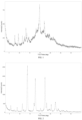
- Crystal form A of compound I provided by the present disclosure has an X-ray powder diffraction pattern comprising peaks at diffraction angles (2 ⁇ ) of 19.79 ⁇ 0.2°, 13.13 ⁇ 0.2°, 22.07 ⁇ 0.2°, and 9.48 ⁇ 0.2°;
- crystal form A has an X-ray powder diffraction pattern comprising diffraction angles (2 ⁇ ) shown in Table 1, wherein the 2 ⁇ angles have a margin of error of ⁇ 0.20°: Table 1 2 ⁇ (°) Intensity% 2 ⁇ (°) Intensity% 4.85 13.1 18.07 20.8 7.80 37.6 19.79 100.0 9.48 42.2 22.07 44.2 11.43 29.1 23.70 12.5 12.45 18.6 24.66 14.7 13.13 51.3 25.79 8.3 13.59 31.1 26.51 12.5 14.24 13.3 31.12 8.3 14.58 17.8
- crystal form A has X-ray powder diffraction intensities shown in Table 1.
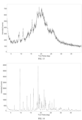
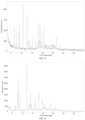
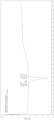
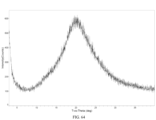
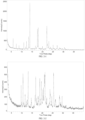
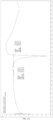
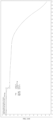
- crystal form A has an X-ray powder diffraction pattern substantially shown in FIG. 1 .
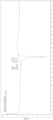
- crystal form A exhibits an endothermic peak in a DSC analysis when heated to a peak temperature of about 99.81 °C.
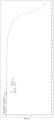
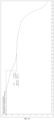
- crystal form A has a DSC profile substantially shown in FIG. 22 .
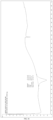
- crystal form A has a TGA profile substantially shown in FIG. 43 .
- Crystal form B of compound I provided by the present disclosure has an X-ray powder diffraction pattern comprising peaks at diffraction angles (2 ⁇ ) of 13.79 ⁇ 0.2°, 22.36 ⁇ 0.2°, 17.66 ⁇ 0.2°, and 27.41 ⁇ 0.2°;
- crystal form B has an X-ray powder diffraction pattern comprising diffraction angles (2 ⁇ ) shown in Table 2, wherein the 2 ⁇ angles have a margin of error of ⁇ 0.20°: Table 2 2 ⁇ (°) Intensity% 2 ⁇ (°) Intensity% 5.59 11.3 23.16 17.0 7.28 2.9 24.19 3.3 8.74 8.8 24.39 3.0 11.31 17.0 25.40 14.7 11.96 3.7 27.41 19.7 13.79 100.0 28.85 5.3 16.98 17.4 29.42 2.2 17.66 70.5 30.66 2.7 20.20 6.7 31.42 2.0 22.36 71.9 32.93 2.9
- crystal form B has X-ray powder diffraction intensities shown in Table 2.
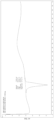
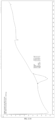
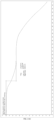
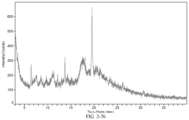
- crystal form B has an X-ray powder diffraction pattern substantially shown in FIG. 2 .
- crystal form B exhibits an endothermic peak in a DSC analysis when heated to a peak temperature of about 177.71 °C.
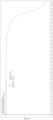
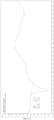
- crystal form B has a DSC profile substantially shown in FIG. 23 .
- crystal form B has a TGA profile substantially shown in FIG. 44 .
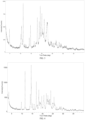
- Crystal form C of compound I provided by the present disclosure has an X-ray powder diffraction pattern comprising peaks at diffraction angles (2 ⁇ ) of 11.27 ⁇ 0.2°, 19.30 ⁇ 0.2°, 17.92 ⁇ 0.2°, and 20.04 ⁇ 0.2°;
- crystal form C has an X-ray powder diffraction pattern comprising diffraction angles (2 ⁇ ) shown in Table 3, wherein the 2 ⁇ angles have a margin of error of ⁇ 0.20°: Table 3 2 ⁇ (°) Intensity% 2 ⁇ (°) Intensity% 4.84 36.3 20.41 18.0 9.74 5.0 20.65 15.0 10.20 27.6 21.21 46.9 10.48 46.1 22.15 23.2 10.98 16.3 22.75 48.7 11.27 100.0 24.41 12.2 12.03 6.7 25.33 8.5 12.54 7.8 26.26 8.9 14.16 23.4 26.88 14.3 14.70 53.2 28.22 12.5 16.45 12.6 29.01 8.5 17.27 6.1 30.74 6.5 17.92 63.1 31.40 7.6 18.83 42.1 34.65 4.0 19.30 74.2 36.35 4.8 20.04 56.3
- crystal form C has X-ray powder diffraction intensities shown in Table 3.
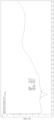
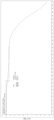
- crystal form C has an X-ray powder diffraction pattern substantially shown in FIG. 3 .
- crystal form C exhibits an endothermic peak in a DSC analysis when heated to a peak temperature of about 104.51 °C.
- crystal form C has a DSC profile substantially shown in FIG. 24 .
- crystal form C has a TGA profile substantially shown in FIG. 45 .
- Crystal form D of compound I provided by the present disclosure has an X-ray powder diffraction pattern comprising peaks at diffraction angles (2 ⁇ ) of 14.49 ⁇ 0.2°, 16.98 ⁇ 0.2°, 11.51 ⁇ 0.2°, and 18.17 ⁇ 0.2°;
- crystal form D has an X-ray powder diffraction pattern comprising diffraction angles (2 ⁇ ) shown in Table 4, wherein the 2 ⁇ angles have a margin of error of ⁇ 0.20°: Table 4 2 ⁇ (°) Intensity% 2 ⁇ (°) Intensity% 3.58 33.8 22.30 20.8 6.69 2.5 22.61 20.5 7.24 4.3 23.16 8.2 9.70 17.4 23.53 20.4 11.51 86.8 24.02 34.8 14.04 32.8 25.11 10.2 14.49 100.0 25.60 27.5 15.00 10.5 26.00 8.2 15.91 12.1 26.92 6.4 16.98 61.5 28.17 3.1 17.47 8.3 28.47 7.5 18.17 41.4 29.12 7.2 18.62 15.6 30.15 6.4 19.01 13.0 30.50 4.6 19.59 27.7 31.36 3.4 20.45 16.0 33.81 2.4 20.68 29.9 34.69 3.5 21.87 34.4
- crystal form D has X-ray powder diffraction intensities shown in Table 4.
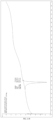
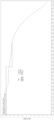
- crystal form D has an X-ray powder diffraction pattern substantially shown in FIG. 4 .
- crystal form D exhibits an endothermic peak in a DSC analysis when heated to a peak temperature of about 167.48 °C.
- crystal form D has a DSC profile substantially shown in FIG. 25 .
- crystal form D has a TGA profile substantially shown in FIG. 46 .
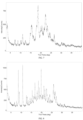
- Crystal form E of compound I provided by the present disclosure has an X-ray powder diffraction pattern comprising peaks at diffraction angles (2 ⁇ ) of 11.49 ⁇ 0.2°, 12.17 ⁇ 0.2°, 21.15 ⁇ 0.2°, and 20.16 ⁇ 0.2°;
- crystal form E has an X-ray powder diffraction pattern comprising diffraction angles (2 ⁇ ) shown in Table 5, wherein the 2 ⁇ angles have a margin of error of ⁇ 0.20°: Table 5 2 ⁇ (°) Intensity% 2 ⁇ (°) Intensity% 4.32 32.3 21.87 7.1 10.87 26.9 22.95 4.7 11.49 100.0 23.28 7.9 12.17 92.0 23.92 7.6 13.14 15.6 24.24 5.8 13.61 6.2 24.68 20.8 14.35 46.1 25.13 25.5 15.19 16.2 26.08 11.3 15.48 6.2 26.49 44.1 16.83 17.2 28.30 3.1 17.51 30.3 28.79 4.8 18.01 18.4 29.96 3.6 18.85 10.4 30.21 6.1 19.40 43.1 31.69 4.5 20.16 66.7 34.99 3.0 21.15 98.3 36.05 2.8
- crystal form E has X-ray powder diffraction intensities shown in Table 5.
- crystal form E has an X-ray powder diffraction pattern substantially shown in FIG. 5 .
- crystal form E exhibits an endothermic peak in a DSC analysis when heated to a peak temperature of about 112.00 °C.
- crystal form E has a DSC profile substantially shown in FIG. 26 .
- crystal form E has a TGA profile substantially shown in FIG. 47 .
- Crystal form F of compound I provided by the present disclosure has an X-ray powder diffraction pattern comprising peaks at diffraction angles (2 ⁇ ) of 18.77 ⁇ 0.2°, 25.50 ⁇ 0.2°, 20.98 ⁇ 0.2°, and 23.45 ⁇ 0.2°;
- crystal form F has an X-ray powder diffraction pattern comprising diffraction angles (2 ⁇ ) shown in Table 6, wherein the 2 ⁇ angles have a margin of error of ⁇ 0.20°: Table 6 2 ⁇ (°) Intensity% 2 ⁇ (°) Intensity% 9.68 27.1 21.33 30.0 10.16 14.0 22.03 4.4 10.77 33.5 22.28 7.5 11.45 23.0 22.94 14.5 11.76 26.0 23.45 50.9 12.27 7.4 24.50 29.5 12.70 31.0 25.50 65.5 13.26 23.7 26.68 23.7 13.59 18.9 27.62 2.7 14.72 28.2 28.15 22.2 15.40 1.4 28.90 5.6 16.89 29.7 29.49 20.1 17.91 5.9 30.14 7.5 18.77 100.0 31.21 3.3 19.24 27.3 31.94 2.7 19.54 21.3 33.50 2.3 20.27 12.8 34.08 2.1 20.49 26.0 34.57 2.3 20.98 59.3
- crystal form F has X-ray powder diffraction intensities shown in Table 6.
- crystal form F has an X-ray powder diffraction pattern substantially shown in FIG. 6 .
- crystal form F exhibits an endothermic peak in a DSC analysis when heated to a peak temperature of about 169.00 °C.
- crystal form F has a DSC profile substantially shown in FIG. 27 .
- crystal form F has a TGA profile substantially shown in FIG. 48 .
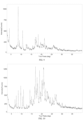
- Crystal form G of a hydrate of compound I provided by the present disclosure has an X-ray powder diffraction pattern comprising peaks at diffraction angles (2 ⁇ ) of 18.66 ⁇ 0.2°, 18.81 ⁇ 0.2°, 3.62 ⁇ 0.2°, and 22.24 ⁇ 0.2°;
- crystal form G has an X-ray powder diffraction pattern comprising diffraction angles (2 ⁇ ) shown in Table 7, wherein the 2 ⁇ angles have a margin of error of ⁇ 0.20°: Table 7 2 ⁇ (°) Intensity% 2 ⁇ (°) Intensity% 3.62 62.0 18.81 63.5 7.32 21.0 19.94 33.4 7.70 7.2 20.51 35.4 8.72 16.8 22.24 59.6 10.22 12.5 23.22 25.6 11.08 34.1 23.44 16.4 12.48 14.6 24.37 18.8 14.76 40.4 26.57 27.9 15.33 52.0 28.08 5.7 16.45 11.6 30.21 11.1 17.88 50.6 31.30 7.2 18.66 100.0 33.39 4.8
- crystal form G has X-ray powder diffraction intensities shown in Table 7.
- crystal form G has an X-ray powder diffraction pattern substantially shown in FIG. 7 .
- crystal form G exhibits endothermic peaks in a DSC analysis when heated to peak temperatures of about 89.95 °C and about 104.07 °C.
- crystal form G has a DSC profile substantially shown in FIG. 28 .
- crystal form G has a TGA profile substantially shown in FIG. 49 .
- crystal form G is a dihydrate of compound I.
- Crystal form H of a methyl isobutyl ketone solvate of compound I provided by the present disclosure has an X-ray powder diffraction pattern comprising peaks at diffraction angles (2 ⁇ ) of 10.75 ⁇ 0.2°, 8.61 ⁇ 0.2°, 19.84 ⁇ 0.2°, and 18.48 ⁇ 0.2°;
- crystal form H has an X-ray powder diffraction pattern comprising diffraction angles (2 ⁇ ) shown in Table 8, wherein the 2 ⁇ angles have a margin of error of ⁇ 0.20°: Table 8 2 ⁇ (°) Intensity% 2 ⁇ (°) Intensity% 3.16 28.1 18.95 27.4 4.28 12.0 19.33 9.7 6.78 10.4 19.84 71.5 7.69 12.5 20.51 8.3 8.61 86.7 21.15 32.8 9.11 34.6 21.70 26.5 10.75 100.0 22.55 30.4 12.54 24.1 23.39 12.4 12.97 20.2 24.01 20.0 13.53 10.7 24.52 7.0 14.35 16.1 25.92 43.1 14.96 11.6 26.68 20.8 15.43 31.2 27.29 17.2 16.16 9.9 29.23 6.8 16.45 13.1 29.96 4.6 16.79 45.1 30.06 5.6 17.28 10.7 31.17 7.7 17.86 22.5 35.30 4.3 18.48 45.3
- crystal form H has X-ray powder diffraction intensities shown in Table 8.
- crystal form H has an X-ray powder diffraction pattern substantially shown in FIG. 8 .
- crystal form H exhibits an endothermic peak in a DSC analysis when heated to a peak temperature of about 87.76 °C.
- crystal form H has a DSC profile substantially shown in FIG. 29 .
- crystal form H has a TGA profile substantially shown in FIG. 50 .
- crystal form H is a methyl isobutyl ketone 0.5-solvate of compound I.
- Crystal form I-1 of a methyl tert-butyl ether solvate of compound I provided by the present disclosure has an X-ray powder diffraction pattern comprising peaks at diffraction angles (2 ⁇ ) of 8.53 ⁇ 0.2°, 10.75 ⁇ 0.2°, 4.22 ⁇ 0.2°, and 18.39 ⁇ 0.2°;
- crystal form I-1 has an X-ray powder diffraction pattern comprising diffraction angles (2 ⁇ ) shown in Table 9, wherein the 2 ⁇ angles have a margin of error of ⁇ 0.20°: Table 9 2 ⁇ (°) Intensity% 2 ⁇ (°) Intensity% 4.22 37.6 19.61 13.2 6.84 4.8 20.57 7.0 8.53 100.0 21.48 23.3 9.11 15.2 22.40 7.3 10.75 46.0 23.41 4.4 12.49 13.5 23.86 3.7 12.87 11.8 24.70 4.0 13.69 5.1 26.02 9.1 14.59 3.6 26.66 2.1 15.66 9.2 27.24 4.1 16.40 5.1 27.69 4.0 16.85 21.7 28.98 4.6 17.22 24.8 30.81 3.6 17.53 16.1 31.13 5.1 18.39 30.5 13.2
- crystal form I-1 has X-ray powder diffraction intensities shown in Table 9.
- crystal form I-1 has an X-ray powder diffraction pattern substantially shown in FIG. 9 .
- crystal form I-1 exhibits an endothermic peak in a DSC analysis when heated to a peak temperature of about 103.27 °C.
- crystal form I-1 has a DSC profile substantially shown in FIG. 30 .
- crystal form I-1 has a TGA profile substantially shown in FIG. 51 .
- crystal form I-1 is a methyl tert-butyl ether monosolvate of compound I.
- Crystal form I-2 of a methyl tert-butyl ether solvate of compound I provided by the present disclosure has an X-ray powder diffraction pattern comprising peaks at diffraction angles (2 ⁇ ) of 16.88 ⁇ 0.2°, 18.87 ⁇ 0.2°, 20.90 ⁇ 0.2°, and 9.60 ⁇ 0.2°;
- crystal form I-2 has an X-ray powder diffraction pattern comprising diffraction angles (2 ⁇ ) shown in Table 10, wherein the 2 ⁇ angles have a margin of error of ⁇ 0.20°: Table 10 2 ⁇ (°) Intensity% 2 ⁇ (°) Intensity% 6.74 26.1 18.87 90.9 7.04 12.7 19.32 28.4 7.40 36.9 19.97 49.1 8.39 53.3 20.51 61.9 9.60 67.1 20.90 86.5 10.56 35.4 21.25 47.1 10.98 56.4 21.93 35.7 11.55 4.8 22.64 24.6 12.44 11.5 23.15 24.6 13.24 7.7 23.56 8.7 13.62 3.4 24.03 9.0 14.10 47.7 24.37 19.1 14.39 18.1 25.36 21.4 14.92 27.1 25.75 12.9 15.31 4.2 26.53 29.5 15.74 16.2 27.17 29.6 16.00 8.5 27.83 6.1 16.42 38.6 28.59 10.0 16.88 100.0 30.09 13.5 17.20 31.0 31.
- crystal form I-2 has X-ray powder diffraction intensities shown in Table 10.
- crystal form I-2 has an X-ray powder diffraction pattern substantially shown in FIG. 10 .
- crystal form I-2 exhibits an endothermic peak in a DSC analysis when heated to a peak temperature of about 97.11 °C.
- crystal form I-2 has a DSC profile substantially shown in FIG. 31 .
- crystal form I-2 has a TGA profile substantially shown in FIG. 52 .
- crystal form I-2 is a methyl tert-butyl ether 1.5-solvate of compound I.
- Crystal form J of an acetone solvate of compound I provided by the present disclosure has an X-ray powder diffraction pattern comprising peaks at diffraction angles (2 ⁇ ) of 12.02 ⁇ 0.2°, 18.03 ⁇ 0.2°, 8.04 ⁇ 0.2°, and 7.67 ⁇ 0.2°;
- crystal form J has an X-ray powder diffraction pattern comprising diffraction angles (2 ⁇ ) shown in Table 11, wherein the 2 ⁇ angles have a margin of error of ⁇ 0.20°: Table 11 2 ⁇ (°) Intensity% 2 ⁇ (°) Intensity% 6.83 20.4 16.54 28.5 7.67 44.9 17.43 29.8 8.04 56.1 18.03 61.4 8.54 21.1 19.54 43.6 8.92 26.1 21.21 38.6 10.69 7.6 22.59 24.3 11.10 31.9 23.50 41.8 12.02 100.0 25.83 18.5 13.83 34.5 27.39 21.4 14.48 16.4 29.32 9.9 16.05 39.4 30.93 17.0
- crystal form J has X-ray powder diffraction intensities shown in Table 11.
- crystal form J has an X-ray powder diffraction pattern substantially shown in FIG. 11 .
- crystal form J exhibits an endothermic peak in a DSC analysis when heated to a peak temperature of about 93.18 °C.
- crystal form J has a DSC profile substantially shown in FIG. 32 .
- crystal form J has a TGA profile substantially shown in FIG. 53 .
- crystal form J is an acetone 0.5-solvate of compound I.
- Crystal form K of a n-heptane solvate of compound I provided by the present disclosure has an X-ray powder diffraction pattern comprising peaks at diffraction angles (2 ⁇ ) of 12.19 ⁇ 0.2°, 18.02 ⁇ 0.2°, 7.69 ⁇ 0.2°, and 19.69 ⁇ 0.2°;
- crystal form K has X-ray powder diffraction intensities shown in Table 12.
- crystal form K has an X-ray powder diffraction pattern substantially shown in FIG. 12 .
- crystal form K exhibits an endothermic peak in a DSC analysis when heated to a peak temperature of about 91.51 °C.
- crystal form K has a DSC profile substantially shown in FIG. 33 .
- crystal form K has a TGA profile substantially shown in FIG. 54 .
- crystal form K is a n-heptane 0.12-solvate of compound I.
- Crystal form L of a methylcyclohexane solvate of compound I provided by the present disclosure has an X-ray powder diffraction pattern comprising peaks at diffraction angles (2 ⁇ ) of 10.98 ⁇ 0.2°, 15.54 ⁇ 0.2°, 9.09 ⁇ 0.2°, and 19.01 ⁇ 0.2°;
- crystal form L has an X-ray powder diffraction pattern comprising diffraction angles (2 ⁇ ) shown in Table 13, wherein the 2 ⁇ angles have a margin of error of ⁇ 0.20°: Table 13 2 ⁇ (°) Intensity% 2 ⁇ (°) Intensity% 5.35 23.5 16.90 35.5 6.25 18.5 17.94 71.0 6.73 17.5 18.25 44.0 7.83 24.5 19.01 78.0 8.74 59.5 20.39 72.5 9.09 84.0 21.03 57.0 10.98 100.0 22.86 48.5 13.46 55.0 24.74 35.0 15.54 100.0 25.63 41.5 16.58 26.5 25.95 33.5
- crystal form L has X-ray powder diffraction intensities shown in Table 13.
- crystal form L has an X-ray powder diffraction pattern substantially shown in FIG. 13 .
- crystal form L exhibits an endothermic peak in a DSC analysis when heated to a peak temperature of about 88.68 °C.
- crystal form L has a DSC profile substantially shown in FIG. 34 .
- crystal form L has a TGA profile substantially shown in FIG. 55 .
- crystal form L is a methylcyclohexane 0.15-solvate of compound I.
- Crystal form M of a toluene solvate of compound I provided by the present disclosure has an X-ray powder diffraction pattern comprising peaks at diffraction angles (2 ⁇ ) of 18.62 ⁇ 0.2°, 9.60 ⁇ 0.2°, 16.34 ⁇ 0.2°, and 21.62 ⁇ 0.2°;
- crystal form M has an X-ray powder diffraction pattern comprising diffraction angles (2 ⁇ ) shown in Table 14, wherein the 2 ⁇ angles have a margin of error of ⁇ 0.20°: Table 14 2 ⁇ (°) Intensity% 2 ⁇ (°) Intensity% 6.79 12.5 25.34 2.4 7.79 1.8 25.58 17.3 9.60 96.6 26.06 4.0 10.46 2.6 26.41 5.7 11.19 20.0 26.65 25.7 11.87 6.3 27.08 4.0 13.08 33.9 27.28 2.6 13.67 8.3 27.63 6.9 14.31 1.1 28.62 1.5 14.84 38.6 29.21 4.0 15.78 6.4 29.43 3.1 16.34 51.2 29.76 7.6 17.33 4.0 30.00 5.1 18.19 18.0 30.23 5.4 18.62 100.0 30.83 1.3 19.05 35.4 31.24 2.9 19.36 34.8 31.77 3.3 20.26 17.2 32.61 4.1 20.47 19.8 33.34 1.3 20.67 12.9 33.84 6.
- crystal form M has X-ray powder diffraction intensities shown in Table 14.
- crystal form M has an X-ray powder diffraction pattern substantially shown in FIG. 14 .
- crystal form M exhibits an endothermic peak in a DSC analysis when heated to a peak temperature of about 102.43 °C.
- crystal form M has a DSC profile substantially shown in FIG. 35 .
- crystal form M has a TGA profile substantially shown in FIG. 56 .
- crystal form M is a toluene monosolvate of compound I.
- Crystal form N of a dioxane solvate of compound I provided by the present disclosure has an X-ray powder diffraction pattern comprising peaks at diffraction angles (2 ⁇ ) of 17.10 ⁇ 0.2°, 20.66 ⁇ 0.2°, 22.71 ⁇ 0.2°, and 18.21 ⁇ 0.2°;
- crystal form N has an X-ray powder diffraction pattern comprising diffraction angles (2 ⁇ ) shown in Table 15, wherein the 2 ⁇ angles have a margin of error of ⁇ 0.20°: Table 15 2 ⁇ (°) Intensity% 2 ⁇ (°) Intensity% 6.85 7.6 21.70 40.1 7.17 5.1 21.97 35.1 7.52 28.2 22.71 48.0 8.53 36.8 23.57 26.5 8.87 2.2 23.84 14.5 9.77 25.7 24.44 16.9 10.75 19.5 25.12 8.2 11.14 29.4 26.08 13.7 12.63 4.2 26.98 8.4 13.38 7.1 27.27 14.0 13.71 11.6 27.58 13.2 14.34 25.9 27.94 5.5 15.05 38.1 28.50 4.9 15.34 6.7 28.81 6.3 16.12 9.4 29.16 6.3 16.83 28.4 29.57 4.7 17.10 100.0 30.37 3.7 17.47 28.2 30.86 4.5 17.67 15.4 31.61 3.2 18.21 44.1
- crystal form N has X-ray powder diffraction intensities shown in Table 15.
- crystal form N has an X-ray powder diffraction pattern substantially shown in FIG. 15 .
- crystal form N exhibits an endothermic peak in a DSC analysis when heated to a peak temperature of about 116.48 °C.
- crystal form N has a DSC profile substantially shown in FIG. 36 .
- crystal form N has a TGA profile substantially shown in FIG. 57 .
- crystal form N is a dioxane 1.5-solvate of compound I.
- Crystal form O of a DMF solvate of compound I provided by the present disclosure has an X-ray powder diffraction pattern comprising peaks at diffraction angles (2 ⁇ ) of 17.72 ⁇ 0.2°, 13.14 ⁇ 0.2°, 15.08 ⁇ 0.2°, and 24.77 ⁇ 0.2°;
- crystal form O has an X-ray powder diffraction pattern comprising diffraction angles (2 ⁇ ) shown in Table 16, wherein the 2 ⁇ angles have a margin of error of ⁇ 0.20°: Table 16 2 ⁇ (°) Intensity% 2 ⁇ (°) Intensity% 6.66 3.7 22.09 5.4 7.08 3.7 22.48 4.0 7.52 2.3 23.06 5.4 8.72 32.4 23.66 15.5 9.70 23.4 23.93 2.0 11.01 2.2 24.77 94.4 12.195 16.8 25.46 21.0 13.14 87.4 25.90 14.4 14.26 21.4 26.53 7.5 15.08 92.5 27.35 1.9 16.13 2.8 28.46 6.2 16.59 2.8 28.75 11.3 16.79 3.0 29.70 5.7 17.72 100.0 30.15 1.5 18.51 3.1 30.81 2.7 18.86 1.0 31.03 3.8 19.26 4.0 32.46 1.7 19.56 6.5 34.16 1.2 20.15 14.4 34.67 1.1 20.96 1.1 35.95
- crystal form O has X-ray powder diffraction intensities shown in Table 16.
- crystal form O has an X-ray powder diffraction pattern substantially shown in FIG. 16 .
- crystal form O exhibits an endothermic peak in a DSC analysis when heated to a peak temperature of about 123.26 °C.
- crystal form O has a DSC profile substantially shown in FIG. 37 .
- crystal form O has a TGA profile substantially shown in FIG. 58 .
- crystal form O is a DMF monosolvate of compound I.
- Crystal form P of a N-methylpyrrolidone solvate of compound I provided by the present disclosure has an X-ray powder diffraction pattern comprising peaks at diffraction angles (2 ⁇ ) of 14.63 ⁇ 0.2°, 13.16 ⁇ 0.2°, 16.98 ⁇ 0.2°, and 14.36 ⁇ 0.2°;
- crystal form P has an X-ray powder diffraction pattern comprising diffraction angles (2 ⁇ ) shown in Table 17, wherein the 2 ⁇ angles have a margin of error of ⁇ 0.20°: Table 17 2 ⁇ (°) Intensity% 2 ⁇ (°) Intensity% 6.60 18.6 25.14 11.6 8.41 14.9 25.69 9.7 9.70 3.6 26.20 3.8 11.63 13.6 26.53 10.0 13.16 80.7 27.27 3.8 14.36 26.8 27.48 5.1 14.63 100.0 28.76 3.8 15.15 2.1 29.29 5.9 16.63 11.0 29.51 4.2 16.98 47.9 29.86 2.2 17.90 10.1 30.33 3.3 19.54 5.1 31.16 2.3 20.02 14.6 31.77 3.1 20.22 25.9 33.08 2.9 20.86 16.6 33.66 1.3 21.15 11.3 34.22 1.0 21.66 24.6 34.73 2.9 22.32 6.9 36.49 1.4 22.77 2.7 38.25 0.8
- crystal form P has X-ray powder diffraction intensities shown in Table 17.
- crystal form P has an X-ray powder diffraction pattern substantially shown in FIG. 17 .
- crystal form P exhibits an endothermic peak in a DSC analysis when heated to a peak temperature of about 117.63 °C.
- crystal form P has a DSC profile substantially shown in FIG. 38 .
- crystal form P has a TGA profile substantially shown in FIG. 59 .
- crystal form P is a N-methylpyrrolidone monosolvate of compound I.
- Crystal form Q of a n-butanol solvate of compound I provided by the present disclosure has an X-ray powder diffraction pattern comprising peaks at diffraction angles (2 ⁇ ) of 18.05 ⁇ 0.2°, 10.71 ⁇ 0.2°, 12.54 ⁇ 0.2°, and 18.78 ⁇ 0.2°;
- crystal form Q has an X-ray powder diffraction pattern comprising diffraction angles (2 ⁇ ) shown in Table 18, wherein the 2 ⁇ angles have a margin of error of ⁇ 0.20°: Table 18 2 ⁇ (°) Intensity% 2 ⁇ (°) Intensity% 4.35 5.1 21.99 19.9 6.25 4.2 22.24 44.3 6.54 20.3 22.81 27.0 7.57 24.8 23.25 19.5 8.70 40.6 23.84 41.0 9.00 42.5 24.31 35.9 10.71 99.7 24.89 46.4 12.54 92.2 25.25 21.1 13.13 32.2 25.96 20.7 14.02 26.7 26.45 46.6 14.50 9.3 26.99 7.5 15.21 42.6 27.29 17.7 15.81 12.8 27.70 8.2 16.07 8.7 28.30 13.3 16.55 38.2 28.67 7.4 16.87 14.7 29.43 9.8 17.45 34.1 30.13 4.7 18.05 100.0 30.62 10.5 18.58 33.3 31.44 7.4 18.78 64.5 32.08 3.2
- crystal form Q has X-ray powder diffraction intensities shown in Table 18.
- crystal form Q has an X-ray powder diffraction pattern substantially shown in FIG. 18 .
- crystal form Q exhibits an endothermic peak in a DSC analysis when heated to a peak temperature of about 100.61 °C.
- crystal form Q has a DSC profile substantially shown in FIG. 39 .
- crystal form Q has a TGA profile substantially shown in FIG. 60 .
- crystal form Q is a n-butanol 0.5-solvate of compound I.
- Crystal form R of a n-propanol solvate of compound I provided by the present disclosure has an X-ray powder diffraction pattern comprising peaks at diffraction angles (2 ⁇ ) of 10.67 ⁇ 0.2°, 12.52 ⁇ 0.2°, 18.08 ⁇ 0.2°, and 8.98 ⁇ 0.2°;
- crystal form R has an X-ray powder diffraction pattern comprising diffraction angles (2 ⁇ ) shown in Table 19, wherein the 2 ⁇ angles have a margin of error of ⁇ 0.20°: Table 19 2 ⁇ (°) Intensity% 2 ⁇ (°) Intensity% 6.17 7.0 21.35 8.7 6.54 46.7 21.70 11.4 7.55 34.4 22.13 7.9 8.67 35.2 22.89 8.6 8.98 53.5 23.19 3.8 10.67 100.0 23.72 5.3 12.52 75.8 24.27 10.5 13.05 20.8 24.91 11.0 14.06 20.6 25.49 9.4 14.45 8.0 25.96 6.5 15.19 23.9 26.59 26.2 16.55 20.0 27.12 3.2 16.94 4.1 28.38 9.5 17.45 16.9 29.51 3.4 18.08 57.5 30.79 2.4 18.53 17.8 31.57 3.5 18.84 52.1 33.45 3.1 19.24 14.9 35.46 2.8 19.85 34.7 38.18 2.7 20.68 43.4
- crystal form R has X-ray powder diffraction intensities shown in Table 19.
- crystal form R has an X-ray powder diffraction pattern substantially shown in FIG. 19 .
- crystal form R exhibits an endothermic peak in a DSC analysis when heated to a peak temperature of about 110.90 °C.
- crystal form R has a DSC profile substantially shown in FIG. 40 .
- crystal form R has a TGA profile substantially shown in FIG. 61 .
- crystal form R is a n-propanol monosolvate of compound I.
- Crystal form S of a tetrahydrofuran solvate of compound I provided by the present disclosure has an X-ray powder diffraction pattern comprising peaks at diffraction angles (2 ⁇ ) of 12.17 ⁇ 0.2°, 8.19 ⁇ 0.2°, 7.67 ⁇ 0.2°, and 13.96 ⁇ 0.2°;
- crystal form S has an X-ray powder diffraction pattern comprising diffraction angles (2 ⁇ ) shown in Table 20, wherein the 2 ⁇ angles have a margin of error of ⁇ 0.20°: Table 20 2 ⁇ (°) Intensity% 2 ⁇ (°) Intensity% 4.07 8.4 20.12 4.4 6.48 10.0 20.64 12.7 6.81 9.6 21.11 7.1 7.67 42.3 21.35 6.9 8.19 69.0 21.74 1.4 8.95 33.3 22.26 3.1 10.46 6.0 22.79 5.6 12.17 100.0 23.00 2.2 13.22 13.4 23.70 18.4 13.69 15.3 24.37 5.3 13.96 38.4 25.27 1.1 14.45 14.2 25.82 6.2 15.43 3.3 26.37 4.4 15.83 14.5 27.70 4.6 16.50 22.3 29.10 3.1 17.76 7.6 30.81 1.1 18.01 37.6 31.30 1.9 19.71 21.4 31.94 0.8
- crystal form S has X-ray powder diffraction intensities shown in Table 20.
- crystal form S has an X-ray powder diffraction pattern substantially shown in FIG. 20 .
- crystal form S exhibits an endothermic peak in a DSC analysis when heated to a peak temperature of about 96.26 °C.
- crystal form S has a DSC profile substantially shown in FIG. 41 .
- crystal form S has a TGA profile substantially shown in FIG. 62 .
- crystal form S is a tetrahydrofuran 0.5-solvate of compound I.
- Crystal form T of a 2-methyltetrahydrofuran solvate of compound I provided by the present disclosure has an X-ray powder diffraction pattern comprising peaks at diffraction angles (2 ⁇ ) of 10.79 ⁇ 0.2°, 8.66 ⁇ 0.2°, 9.12 ⁇ 0.2°, and 16.87 ⁇ 0.2°;
- crystal form T has an X-ray powder diffraction pattern comprising diffraction angles (2 ⁇ ) shown in Table 21, wherein the 2 ⁇ angles have a margin of error of ⁇ 0.20°: Table 21 2 ⁇ (°) Intensity% 2 ⁇ (°) Intensity% 4.29 15.2 19.42 10.6 6.72 16.5 19.99 14.9 7.32 1.7 20.47 8.1 7.71 12.7 20.71 5.8 8.66 71.9 21.27 18.7 9.12 52.0 21.87 7.7 9.62 1.9 22.30 5.0 10.79 100.0 22.85 3.5 12.62 16.1 23.62 3.4 13.05 9.5 24.14 1.4 13.57 19.5 25.03 2.4 14.41 15.3 25.95 8.9 15.54 24.9 26.22 5.7 16.57 10.8 26.70 2.8 16.87 48.4 27.44 9.1 17.45 8.1 28.17 1.9 17.82 4.1 29.37 1.8 18.64 26.4 31.50 2.9
- crystal form T has X-ray powder diffraction intensities shown in Table 21.
- crystal form T has an X-ray powder diffraction pattern substantially shown in FIG. 21 .
- crystal form T exhibits an endothermic peak in a DSC analysis when heated to a peak temperature of about 112.95 °C.
- crystal form T has a DSC profile substantially shown in FIG. 42 .
- crystal form T has a TGA profile substantially shown in FIG. 63 .
- crystal form T is a 2-methyltetrahydrofuran monosolvate of compound I.
- the crystal form of a non-solvate of compound II may be the following crystal form 2A, 2B, 2C, 2D, or 2E; the crystal form of a hydrate of compound II may be the following crystal form 2F or 2G; the crystal form of a solvate of compound II may be the following crystal form 2H, 2I, 2J-1, 2J-2, 2K, 2L-1, 2L-2, 2M-1, 2M-2, 2N, 2O, 2P, 2Q-1, 2Q-2, 2R, 2S, 2T, or 2U.
- Crystal form 2A of compound II provided by the present disclosure has an X-ray powder diffraction pattern comprising peaks at diffraction angles (2 ⁇ ) of 13.94 ⁇ 0.2°, 22.07 ⁇ 0.2°, 17.96 ⁇ 0.2°, and 17.57 ⁇ 0.2°;
- crystal form 2A has an X-ray powder diffraction pattern comprising diffraction angles (2 ⁇ ) shown in Table 2-1, wherein the 2 ⁇ angles have a margin of error of ⁇ 0.20°: Table 2-1 2 ⁇ (°) Intensity% 2 ⁇ (°) Intensity% 5.92 21.5 19.96 6.4 7.42 11.0 22.07 48.6 8.71 7.8 22.41 11.1 11.02 14.6 23.04 15.7 11.92 5.2 23.78 4.8 12.33 17.3 25.07 9.7 13.36 26.8 27.00 9.1 13.94 100.0 28.22 3.8 16.60 6.8 29.49 2.2 17.57 42.2 30.50 4.1 17.96 46.1 30.99 2.2
- crystal form 2A has X-ray powder diffraction intensities shown in Table 2-1.
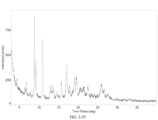
- crystal form 2A has an X-ray powder diffraction pattern substantially shown in FIG. 2-1 .
- crystal form 2A exhibits an endothermic peak in a DSC analysis when heated to a peak temperature of about 189.90 °C.
- crystal form 2A has a DSC profile substantially shown in FIG. 2-26 .
- crystal form 2A has a TGA profile substantially shown in FIG. 2-51 .
- Crystal form 2B of compound II provided by the present disclosure has an X-ray powder diffraction pattern comprising peaks at diffraction angles (2 ⁇ ) of 13.16 ⁇ 0.2°, 21.31 ⁇ 0.2°, 25.46 ⁇ 0.2°, and 10.61 ⁇ 0.2°;
- crystal form 2B has an X-ray powder diffraction pattern comprising diffraction angles (2 ⁇ ) shown in Table 2-2, wherein the 2 ⁇ angles have a margin of error of ⁇ 0.20°: Table 2-2 2 ⁇ (°) Intensity% 2 ⁇ (°) Intensity% 9.71 59.9 19.59 62.8 10.01 13.3 20.23 31.0 10.61 92.7 20.57 32.2 11.68 35.6 20.99 81.9 12.31 14.3 21.31 96.0 12.71 21.4 22.16 21.4 13.16 100.0 23.72 47.6 14.64 27.4 23.92 33.5 15.87 7.1 24.56 26.4 16.48 31.2 25.46 95.2 16.79 82.7 26.45 20.4 17.15 19.1 28.30 27.7 17.96 25.4 29.00 10.8 18.76 74.8 29.64 29.5 19.02 13.9 31.51 8.7
- crystal form 2B has X-ray powder diffraction intensities shown in Table 2-2.
- crystal form 2B has an X-ray powder diffraction pattern substantially shown in FIG. 2-2 .
- crystal form 2B exhibits an endothermic peak in a DSC analysis when heated to a peak temperature of about 181.06 °C.
- crystal form 2B has a DSC profile substantially shown in FIG. 2-27 .
- crystal form 2B has a TGA profile substantially shown in FIG. 2-52 .
- Crystal form 2C of compound II provided by the present disclosure has an X-ray powder diffraction pattern comprising peaks at diffraction angles (2 ⁇ ) of 13.63 ⁇ 0.2°, 5.62 ⁇ 0.2°, 17.12 ⁇ 0.2°, and 17.68 ⁇ 0.2°;
- crystal form 2C has an X-ray powder diffraction pattern comprising diffraction angles (2 ⁇ ) shown in Table 2-3, wherein the 2 ⁇ angles have a margin of error of ⁇ 0.20°: Table 2-3 2 ⁇ (°) Intensity% 2 ⁇ (°) Intensity% 5.62 60.9 17.97 12.8 5.88 5.5 19.36 6.6 7.46 12.4 20.47 2.7 8.80 7.2 21.17 3.0 11.94 33.9 22.10 3.2 12.32 5.3 22.65 19.9 13.63 100.0 23.63 15.9 13.89 33.5 25.15 7.0 17.12 59.5 27.52 8.6 17.68 42.9 28.13 4.7
- crystal form 2C has X-ray powder diffraction intensities shown in Table 2-3.
- crystal form 2C has an X-ray powder diffraction pattern substantially shown in FIG. 2-3 .
- crystal form 2C exhibits an endothermic peak in a DSC analysis when heated to a peak temperature of about 171.63 °C.
- crystal form 2C has a DSC profile substantially shown in FIG. 2-28 .
- crystal form 2C has a TGA profile substantially shown in FIG. 2-53 .
- Crystal form 2D of compound II provided by the present disclosure has an X-ray powder diffraction pattern comprising peaks at diffraction angles (2 ⁇ ) of 5.62 ⁇ 0.2°, 12.01 ⁇ 0.2°, 5.24 ⁇ 0.2°, and 17.72 ⁇ 0.2°;
- crystal form 2D has an X-ray powder diffraction pattern comprising diffraction angles (2 ⁇ ) shown in Table 2-4, wherein the 2 ⁇ angles have a margin of error of ⁇ 0.20°: Table 2-4 2 ⁇ (°) Intensity% 2 ⁇ (°) Intensity% 5.24 88.2 17.72 87.0 5.62 100.0 18.98 32.3 5.90 42.9 19.30 61.5 7.50 43.5 20.12 21.1 11.04 48.4 20.49 23.0 12.01 90.1 21.63 12.4 13.06 24.8 22.18 41.0 13.65 83.9 22.43 33.5 14.32 32.3 22.65 34.2 15.85 53.4 22.65 34.2 16.43 54.7 23.63 75.2 17.16 77.6 27.59 21.7
- crystal form 2D has X-ray powder diffraction intensities shown in Table 2-4.
- crystal form 2D has an X-ray powder diffraction pattern substantially shown in FIG. 2-4 .
- crystal form 2D exhibits an endothermic peak in a DSC analysis when heated to a peak temperature of about 168.79 °C.
- crystal form 2D has a DSC profile substantially shown in FIG. 2-29 .
- crystal form 2D has a TGA profile substantially shown in FIG. 2-54 .
- Crystal form 2E of compound II provided by the present disclosure has an X-ray powder diffraction pattern comprising peaks at diffraction angles (2 ⁇ ) of 17.96 ⁇ 0.2°, 3.34 ⁇ 0.2°, 5.63 ⁇ 0.2°, and 13.63 ⁇ 0.2°;
- crystal form 2E has an X-ray powder diffraction pattern comprising diffraction angles (2 ⁇ ) shown in Table 2-5, wherein the 2 ⁇ angles have a margin of error of ⁇ 0.20°: Table 2-5 2 ⁇ (°) Intensity% 2 ⁇ (°) Intensity% 3.34 71.0 15.86 10.5 5.63 51.8 17.14 47.4 5.90 11.0 17.96 100.0 7.46 28.7 19.32 15.6 8.24 12.6 19.53 18.2 8.87 16.9 19.83 13.6 11.07 9.2 21.09 9.2 11.96 46.2 22.14 18.2 12.19 42.1 23.90 15.6 13.63 47.9 25.87 12.1 13.98 41.5 27.48 7.9
- crystal form 2E has X-ray powder diffraction intensities shown in Table 2-5.
- crystal form 2E has an X-ray powder diffraction pattern substantially shown in FIG. 2-5 .
- crystal form 2E exhibits endothermic peaks in a DSC analysis when heated to peak temperatures of about 110.30 °C and about 169.27 °C.
- crystal form 2E has a DSC profile substantially shown in FIG. 2-30 .
- crystal form 2E has a TGA profile substantially shown in FIG. 2-55 .
- Crystal form 2F of a hydrate of compound II provided by the present disclosure has an X-ray powder diffraction pattern comprising peaks at diffraction angles (2 ⁇ ) of 19.51 ⁇ 0.2°, 13.71 ⁇ 0.2°, 14.29 ⁇ 0.2°, and 18.09 ⁇ 0.2°;
- crystal form 2F has X-ray powder diffraction intensities shown in Table 2-6.
- crystal form 2F has an X-ray powder diffraction pattern substantially shown in FIG. 2-6 .
- crystal form 2F exhibits an endothermic peak in a DSC analysis when heated to a peak temperature of about 114.41 °C.
- crystal form 2F has a DSC profile substantially shown in FIG. 2-31 .
- crystal form 2F has a TGA profile substantially shown in FIG. 2-56 .
- crystal form 2F is a trihydrate of compound II.
- Crystal form 2G of a hydrate of compound II provided by the present disclosure has an X-ray powder diffraction pattern comprising peaks at diffraction angles (2 ⁇ ) of 17.45 ⁇ 0.2°, 13.63 ⁇ 0.2°, 5.61 ⁇ 0.2°, and 5.24 ⁇ 0.2°;
- crystal form 2G has an X-ray powder diffraction pattern comprising diffraction angles (2 ⁇ ) shown in Table 2-7, wherein the 2 ⁇ angles have a margin of error of ⁇ 0.20°: Table 2-7 2 ⁇ (°) Intensity% 2 ⁇ (°) Intensity% 5.24 70.0 17.45 100.0 5.61 74.8 20.98 25.2 6.89 14.8 22.08 14.8 10.69 45.7 22.52 20.5 11.78 33.3 23.53 31.4 13.63 88.6 23.86 31.4 13.89 69.5 27.54 18.6 15.46 21.4
- crystal form 2G has X-ray powder diffraction intensities shown in Table 2-7.
- crystal form 2G has an X-ray powder diffraction pattern substantially shown in FIG. 2-7 .
- crystal form 2G exhibits an endothermic peak in a DSC analysis when heated to a peak temperature of about 169.22 °C.
- crystal form 2G has a DSC profile substantially shown in FIG. 2-32 .
- crystal form 2G has a TGA profile substantially shown in FIG. 2-57 .
- crystal form 2G is a dihydrate of compound II.
- Crystal form 2H of a dimethylsulfoxide solvate of compound II provided by the present disclosure has an X-ray powder diffraction pattern comprising peaks at diffraction angles (2 ⁇ ) of 14.84 ⁇ 0.2°, 13.42 ⁇ 0.2°, 24.68 ⁇ 0.2°, and 21.70 ⁇ 0.2°;
- crystal form 2H has an X-ray powder diffraction pattern comprising diffraction angles (2 ⁇ ) shown in Table 2-8, wherein the 2 ⁇ angles have a margin of error of ⁇ 0.20°: Table 2-8 2 ⁇ (°) Intensity% 2 ⁇ (°) Intensity% 3.23 23.8 19.59 7.1 6.64 9.9 19.84 5.6 7.36 4.9 20.22 26.8 8.45 29.6 20.78 7.4 10.03 3.7 21.21 13.2 11.51 6.5 21.70 29.9 13.42 51.0 22.01 15.5 14.61 19.5 22.41 6.8 14.84 100.0 22.61 3.7 15.56 16.7 23.00 8.2 16.63 5.9 24.46 28.3 17.22 25.6 24.68 30.4 17.71 8.5 25.32 19.5 18.52 14.5 28.24 6.2 18.72 8.7 28.90 6.2 19.15 8.2 31.43 4.5
- crystal form 2H has X-ray powder diffraction intensities shown in Table 2-8.
- crystal form 2H has an X-ray powder diffraction pattern substantially shown in FIG. 2-8 .
- crystal form 2H exhibits an endothermic peak in a DSC analysis when heated to a peak temperature of about 118.06 °C.
- crystal form 2H has a DSC profile substantially shown in FIG. 2-33 .
- crystal form 2H has a TGA profile substantially shown in FIG. 2-58 .
- crystal form 2H is a dimethylsulfoxide monosolvate of compound II.
- Crystal form 2I of a methyl tert-butyl ether solvate of compound II provided by the present disclosure has an X-ray powder diffraction pattern comprising peaks at diffraction angles (2 ⁇ ) of 8.74 ⁇ 0.2°, 10.94 ⁇ 0.2°, 4.32 ⁇ 0.2°, and 17.66 ⁇ 0.2°;
- crystal form 2I has an X-ray powder diffraction pattern comprising diffraction angles (2 ⁇ ) shown in Table 2-9, wherein the 2 ⁇ angles have a margin of error of ⁇ 0.20°: Table 2-9 2 ⁇ (°) Intensity% 2 ⁇ (°) Intensity% 4.32 22.4 17.12 10.7 6.91 4.0 17.66 20.1 8.74 100.0 18.79 11.8 9.25 15.7 19.38 6.5 10.94 33.9 20.90 5.8 12.79 8.3 22.13 7.8 13.18 16.3 23.90 3.9 15.91 5.0 25.90 6.7
- crystal form 2I has X-ray powder diffraction intensities shown in Table 2-9.
- crystal form 2I has an X-ray powder diffraction pattern substantially shown in FIG. 2-9 .
- crystal form 2I exhibits an endothermic peak in a DSC analysis when heated to a peak temperature of about 115.84 °C.
- crystal form 2I has a DSC profile substantially shown in FIG. 2-34 .
- crystal form 2I has a TGA profile substantially shown in FIG. 2-59 .
- crystal form 2I is a methyl tert-butyl ether 0.5-solvate of compound II.
- Crystal form 2J-1 of a n-heptane solvate of compound II provided by the present disclosure has an X-ray powder diffraction pattern comprising peaks at diffraction angles (2 ⁇ ) of 12.15 ⁇ 0.2°, 8.91 ⁇ 0.2°, 8.18 ⁇ 0.2°, and 7.63 ⁇ 0.2°;
- crystal form 2J-1 has an X-ray powder diffraction pattern comprising diffraction angles (2 ⁇ ) shown in Table 2-10, wherein the 2 ⁇ angles have a margin of error of ⁇ 0.20°: Table 2-10 2 ⁇ (°) Intensity% 2 ⁇ (°) Intensity% 6.75 18.1 17.10 10.6 7.63 50.6 17.94 45.7 8.18 53.7 19.48 41.6 8.91 81.7 20.43 20.0 12.15 100.0 21.09 8.6 13.07 9.9 21.39 13.8 13.60 16.2 22.68 17.0 13.93 46.1 23.72 28.9 14.37 22.8 25.68 13.6 15.81 24.4 27.41 14.0 16.48 13.1
- crystal form 2J-1 has X-ray powder diffraction intensities shown in Table 2-10.
- crystal form 2J-1 has an X-ray powder diffraction pattern substantially shown in FIG. 2-10 .
- crystal form 2J-1 exhibits an endothermic peak in a DSC analysis when heated to a peak temperature of about 103.13 °C.
- crystal form 2J-1 has a DSC profile substantially shown in FIG. 2-35 .
- crystal form 2J-1 has a TGA profile substantially shown in FIG. 2-60 .
- crystal form 2J-1 is a n-heptane 0.2-solvate of compound II.
- Crystal form 2J-2 of a n-heptane solvate of compound II provided by the present disclosure has an X-ray powder diffraction pattern comprising peaks at diffraction angles (2 ⁇ ) of 3.52 ⁇ 0.2°, 17.76 ⁇ 0.2°, 14.19 ⁇ 0.2°, and 10.61 ⁇ 0.2°; preferably, further comprising peaks at diffraction angles (2 ⁇ ) of 7.05 ⁇ 0.2°, 21.35 ⁇ 0.2°, 16.24 ⁇ 0.2°, and 19.49 ⁇ 0.2°;
- crystal form 2J-2 has an X-ray powder diffraction pattern comprising diffraction angles (2 ⁇ ) shown in Table 2-11, wherein the 2 ⁇ angles have a margin of error of ⁇ 0.20°: Table 2-11 2 ⁇ (°) Intensity% 2 ⁇ (°) Intensity% 3.52 100 16.24 6.1 7.05 22.5 17.76 76.6 10.61 30.2 19.49 4.8 14.19 41.8 21.35 12.7
- crystal form 2J-2 has X-ray powder diffraction intensities shown in Table 2-11.
- crystal form 2J-2 has an X-ray powder diffraction pattern substantially shown in FIG. 2-11 .
- crystal form 2J-2 exhibits an endothermic peak in a DSC analysis when heated to a peak temperature of about 76.82 °C.
- crystal form 2J-2 has a DSC profile substantially shown in FIG. 2-36 .
- crystal form 2J-2 has a TGA profile substantially shown in FIG. 2-61 .
- crystal form 2J-2 is a n-heptane 0.5-solvate of compound II.
- Crystal form 2K of a toluene solvate of compound II provided by the present disclosure has an X-ray powder diffraction pattern comprising peaks at diffraction angles (2 ⁇ ) of 9.52 ⁇ 0.2°, 18.45 ⁇ 0.2°, 19.09 ⁇ 0.2°, and 21.48 ⁇ 0.2°;
- crystal form 2K has an X-ray powder diffraction pattern comprising diffraction angles (2 ⁇ ) shown in Table 2-12, wherein the 2 ⁇ angles have a margin of error of ⁇ 0.20°: Table 2-12 2 ⁇ (°) Intensity% 2 ⁇ (°) Intensity% 3.50 23.4 19.36 17.2 5.62 11.7 20.31 20.5 7.73 8.2 20.51 16.6 9.52 100.0 21.05 4.3 10.46 4.9 21.48 47.9 11.15 16.8 22.11 31.7 11.75 6.0 22.48 11.3 11.94 7.3 23.76 17.3 13.04 31.7 24.15 15.1 13.63 19.5 24.44 17.1 13.85 5.5 25.36 15.6 14.76 35.1 25.78 3.4 15.71 3.5 26.31 6.0 16.24 45.5 26.57 20.8 17.12 11.5 27.19 7.8 17.69 13.7 27.77 4.1 17.96 22.0 28.96 4.1 18.23 23.2 29.51 6.4 18.45 70.8 29.88 4.8 18.80 17.0 31.
- crystal form 2K has X-ray powder diffraction intensities shown in Table 2-12.
- crystal form 2K has an X-ray powder diffraction pattern substantially shown in FIG. 2-12 .
- crystal form 2K exhibits endothermic peaks in a DSC analysis when heated to peak temperatures of about 107.92 °C, about 172.19 °C, and about 184.68 °C.
- crystal form 2K has a DSC profile substantially shown in FIG. 2-37 .
- crystal form 2K has a TGA profile substantially shown in FIG. 2-62 .
- crystal form 2K is a toluene 0.75-solvate of compound II.
- Crystal form 2L-1 of a methyl isobutyl ketone solvate of compound II provided by the present disclosure has an X-ray powder diffraction pattern comprising peaks at diffraction angles (2 ⁇ ) of 8.66 ⁇ 0.2°, 10.79 ⁇ 0.2°, 26.00 ⁇ 0.2°, and 19.62 ⁇ 0.2°;
- crystal form 2L-1 has an X-ray powder diffraction pattern comprising diffraction angles (2 ⁇ ) shown in Table 2-13, wherein the 2 ⁇ angles have a margin of error of ⁇ 0.20°: Table 2-13 2 ⁇ (°) Intensity% 2 ⁇ (°) Intensity% 4.28 9.0 18.60 32.9 6.40 13.3 19.43 24.2 6.74 21.4 19.62 40.4 7.71 7.4 20.04 9.6 8.66 100.0 20.71 10.6 9.13 39.7 20.94 11.7 10.79 77.4 21.32 12.5 12.64 16.5 21.62 10.6 13.03 23.1 21.91 11.7 13.60 12.5 22.40 19.1 14.04 9.2 22.88 8.1 14.51 12.1 23.59 14.1 14.91 8.2 24.03 9.2 15.58 24.7 26.00 41.4 16.54 8.9 26.27 19.5 16.90 31.7 26.72 20.3 17.43 21.7 27.44 16.6 17.84 6.2
- crystal form 2L-1 has X-ray powder diffraction intensities shown in Table 2-13.
- crystal form 2L-1 has an X-ray powder diffraction pattern substantially shown in FIG. 2-13 .
- crystal form 2L-1 exhibits an endothermic peak in a DSC analysis when heated to a peak temperature of about 106.45 °C.
- crystal form 2L-1 has a DSC profile substantially shown in FIG. 2-38 .
- crystal form 2L-1 has a TGA profile substantially shown in FIG. 2-63 .
- crystal form 2L-1 is a methyl isobutyl ketone 0.75-solvate of compound II.
- Crystal form 2L-2 of a methyl isobutyl ketone solvate of compound II provided by the present disclosure has an X-ray powder diffraction pattern comprising peaks at diffraction angles (2 ⁇ ) of 8.68 ⁇ 0.2°, 10.83 ⁇ 0.2°, 13.10 ⁇ 0.2°, and 11.06 ⁇ 0.2°;
- crystal form 2L-2 has an X-ray powder diffraction pattern comprising diffraction angles (2 ⁇ ) shown in Table 2-14, wherein the 2 ⁇ angles have a margin of error of ⁇ 0.20°: Table 2-14 2 ⁇ (°) Intensity% 2 ⁇ (°) Intensity% 6.74 12.1 17.49 23.3 8.68 100.0 18.69 13.8 9.15 17.9 19.37 8.9 10.83 41.7 19.63 9.4 11.06 28.2 20.90 6.2 12.62 11.6 21.33 8.0 13.10 29.5 22.01 8.7 15.65 8.5 22.41 7.2 16.96 14.8 27.52 5.4
- crystal form 2L-2 has X-ray powder diffraction intensities shown in Table 2-14.
- crystal form 2L-2 has an X-ray powder diffraction pattern substantially shown in FIG. 2-14 .
- crystal form 2L-2 exhibits an endothermic peak in a DSC analysis when heated to a peak temperature of about 102.87 °C.
- crystal form 2L-2 has a DSC profile substantially shown in FIG. 2-39 .
- crystal form 2L-2 has a TGA profile substantially shown in FIG. 2-64 .
- crystal form 2L-2 is a methyl isobutyl ketone 0.3-solvate of compound II.
- Crystal form 2M-1 of a cyclopentyl methyl ether solvate of compound II provided by the present disclosure has an X-ray powder diffraction pattern comprising peaks at diffraction angles (2 ⁇ ) of 8.78 ⁇ 0.2°, 10.98 ⁇ 0.2°, 17.67 ⁇ 0.2°, and 17.20 ⁇ 0.2°;
- crystal form 2M-1 has an X-ray powder diffraction pattern comprising diffraction angles (2 ⁇ ) shown in Table 2-15, wherein the 2 ⁇ angles have a margin of error of ⁇ 0.20°: Table 2-15 2 ⁇ (°) Intensity% 2 ⁇ (°) Intensity% 5.18 6.5 17.67 28.0 6.48 4.0 18.93 20.2 6.85 8.9 19.32 27.7 8.78 100.0 20.36 4.3 9.29 22.4 20.65 8.9 10.98 43.6 21.25 10.9 12.85 9.8 22.24 22.8 13.23 23.4 23.20 5.3 13.63 7.1 23.84 9.1 13.88 7.2 25.69 27.4 14.70 3.8 26.04 15.9 15.42 6.6 26.53 17.2 15.87 12.0 27.21 9.0 16.48 3.6 28.00 3.6 17.20 27.7
- crystal form 2M-1 has X-ray powder diffraction intensities shown in Table 2-15.
- crystal form 2M-1 has an X-ray powder diffraction pattern substantially shown in FIG. 2-15 .
- crystal form 2M-1 exhibits an endothermic peak in a DSC analysis when heated to a peak temperature of about 113.56 °C.
- crystal form 2M-1 has a DSC profile substantially shown in FIG. 2-40 .
- crystal form 2M-1 has a TGA profile substantially shown in FIG. 2-65 .
- crystal form 2M-1 is a cyclopentyl methyl ether monosolvate of compound II.
- Crystal form 2M-2 of a cyclopentyl methyl ether solvate of compound II provided by the present disclosure has an X-ray powder diffraction pattern comprising peaks at diffraction angles (2 ⁇ ) of 5.16 ⁇ 0.2°, 10.83 ⁇ 0.2°, 15.66 ⁇ 0.2°, and 21.29 ⁇ 0.2°;
- crystal form 2M-2 has an X-ray powder diffraction pattern comprising diffraction angles (2 ⁇ ) shown in Table 2-16, wherein the 2 ⁇ angles have a margin of error of ⁇ 0.20°: Table 2-16 2 ⁇ (°) Intensity% 2 ⁇ (°) Intensity% 5.16 100.0 19.28 39.3 7.01 23.1 19.77 13.6 8.80 65.2 20.20 35.4 10.83 95.3 21.29 74.1 11.99 42.3 21.68 16.4 13.03 62.4 22.207 33.4 13.26 21.4 22.50 24.0 14.10 27.3 23.57 34.5 15.66 83.0 23.88 49.9 17.23 26.2 25.73 48.5 17.63 73.8 26.53 15.3 17.90 68.2 27.39 17.5 18.95 32.6 29.93 21.7
- crystal form 2M-2 has X-ray powder diffraction intensities shown in Table 2-16.
- crystal form 2M-2 has an X-ray powder diffraction pattern substantially shown in FIG. 2-16 .
- crystal form 2M-2 exhibits endothermic peaks in a DSC analysis when heated to peak temperatures of about 110.50 °C and about 165.01 °C.
- crystal form 2M-2 has a DSC profile substantially shown in FIG. 2-41 .
- crystal form 2M-2 has a TGA profile substantially shown in FIG. 2-66 .
- crystal form 2M-2 is a cyclopentyl methyl ether monosolvate of compound II.
- Crystal form 2N of a methyl ethyl ketone solvate of compound II provided by the present disclosure has an X-ray powder diffraction pattern comprising peaks at diffraction angles (2 ⁇ ) of 3.34 ⁇ 0.2°, 10.88 ⁇ 0.2°, 9.13 ⁇ 0.2°, and 6.64 ⁇ 0.2°;
- crystal form 2N has an X-ray powder diffraction pattern comprising diffraction angles (2 ⁇ ) shown in Table 2-17, wherein the 2 ⁇ angles have a margin of error of ⁇ 0.20°: Table 2-17 2 ⁇ (°) Intensity% 2 ⁇ (°) Intensity% 3.34 100.0 12.78 27.7 6.25 25.7 17.01 19.0 6.64 57.7 18.29 25.3 7.73 45.1 19.08 24.1 8.78 33.2 19.49 19.8 9.13 87.7 19.87 35.2 10.88 97.2 21.19 21.7 11.69 20.2
- crystal form 2N has X-ray powder diffraction intensities shown in Table 2-17.
- crystal form 2N has an X-ray powder diffraction pattern substantially shown in FIG. 2-17 .
- crystal form 2N exhibits endothermic peaks in a DSC analysis when heated to peak temperatures of about 102.66 °C and about 113.16 °C.
- crystal form 2N has a DSC profile substantially shown in FIG. 2-42 .
- crystal form 2N has a TGA profile substantially shown in FIG. 2-67 .
- crystal form 2N is a methyl ethyl ketone 0.3-solvate of compound II.
- Crystal form 2O of a methylcyclohexane solvate of compound II provided by the present disclosure has an X-ray powder diffraction pattern comprising peaks at diffraction angles (2 ⁇ ) of 8.72 ⁇ 0.2°, 10.92 ⁇ 0.2°, 13.14 ⁇ 0.2°, and 9.23 ⁇ 0.2°;
- crystal form 2O has an X-ray powder diffraction pattern comprising diffraction angles (2 ⁇ ) shown in Table 2-18, wherein the 2 ⁇ angles have a margin of error of ⁇ 0.20°: Table 2-18 2 ⁇ (°) Intensity% 2 ⁇ (°) Intensity% 6.49 5.1 16.70 3.5 6.89 10.9 17.10 14.8 7.92 4.3 17.55 12.4 8.72 100.0 18.78 14.2 9.23 18.1 19.30 7.8 10.92 36.2 20.25 3.3 12.77 9.6 20.84 6.9 13.14 24.8 21.65 3.1 13.80 4.7 22.05 10.6 14.70 3.8 23.74 6.8 15.79 11.4 26.45 5.5
- crystal form 2O has X-ray powder diffraction intensities shown in Table 2-18.
- crystal form 2O has an X-ray powder diffraction pattern substantially shown in FIG. 2-18 .
- crystal form 2O exhibits an endothermic peak in a DSC analysis when heated to a peak temperature of about 111.80 °C.
- crystal form 2O has a DSC profile substantially shown in FIG. 2-43 .
- crystal form 2O has a TGA profile substantially shown in FIG. 2-68 .
- crystal form 2O is a methylcyclohexane monosolvate of compound II.
- Crystal form 2P of a DMF solvate of compound II provided by the present disclosure has an X-ray powder diffraction pattern comprising peaks at diffraction angles (2 ⁇ ) of 10.98 ⁇ 0.2°, 9.31 ⁇ 0.2°, 17.68 ⁇ 0.2°, and 25.67 ⁇ 0.2°;
- crystal form 2P has an X-ray powder diffraction pattern comprising diffraction angles (2 ⁇ ) shown in Table 2-19, wherein the 2 ⁇ angles have a margin of error of ⁇ 0.20°: Table 2-19 2 ⁇ (°) Intensity% 2 ⁇ (°) Intensity% 5.78 21 18.56 9.1 6.24 20.3 18.84 13.1 9.31 69.8 19.65 29.4 10.98 100.0 20.67 13.5 11.63 11.0 21.19 16.9 11.88 9.4 22.19 11.1 12.56 8.8 24.09 16.9 14.93 8.9 24.48 8.6 16.54 20.2 25.26 14.6 17.68 49.9 25.67 31.3 18.25 15.8 27.95 6.7
- crystal form 2P has X-ray powder diffraction intensities shown in Table 2-19.
- crystal form 2P has an X-ray powder diffraction pattern substantially shown in FIG. 2-19 .
- crystal form 2P exhibits an endothermic peak in a DSC analysis when heated to a peak temperature of about 105.14 °C.
- crystal form 2P has a DSC profile substantially shown in FIG. 2-44 .
- crystal form 2P has a TGA profile substantially shown in FIG. 2-69 .
- crystal form 2P is a DMF monosolvate of compound II.
- Crystal form 2Q-1 of a 2-methyltetrahydrofuran solvate of compound II provided by the present disclosure has an X-ray powder diffraction pattern comprising peaks at diffraction angles (2 ⁇ ) of 8.74 ⁇ 0.2°, 10.89 ⁇ 0.2°, 3.53 ⁇ 0.2°, and 17.90 ⁇ 0.2°;
- crystal form 2Q-1 has an X-ray powder diffraction pattern comprising diffraction angles (2 ⁇ ) shown in Table 2-20, wherein the 2 ⁇ angles have a margin of error of ⁇ 0.20°: Table 2-20 2 ⁇ (°) Intensity% 2 ⁇ (°) Intensity% 3.53 40.6 13.18 16.7 6.76 10.9 14.28 8.6 7.11 7.9 15.69 7.9 7.54 17.6 16.24 9.2 8.45 15.7 16.93 20.9 8.74 100.0 17.65 21.3 9.19 17.6 17.90 28.5 9.63 12.6 18.77 21.8 10.89 61.5 20.83 9.2 12.81 10.9 22.07 12.3
- crystal form 2Q-1 has X-ray powder diffraction intensities shown in Table 2-20.
- crystal form 2Q-1 has an X-ray powder diffraction pattern substantially shown in FIG. 2-20 .
- crystal form 2Q-1 exhibits an endothermic peak in a DSC analysis when heated to a peak temperature of about 111.13 °C.
- crystal form 2Q-1 has a DSC profile substantially shown in FIG. 2-45 .
- crystal form 2Q-1 has a TGA profile substantially shown in FIG. 2-70 .
- crystal form 2Q-1 is a 2-methyltetrahydrofuran monosolvate of compound II.
- Crystal form 2Q-2 of a 2-methyltetrahydrofuran solvate of compound II provided by the present disclosure has an X-ray powder diffraction pattern comprising peaks at diffraction angles (2 ⁇ ) of 8.76 ⁇ 0.2°, 10.89 ⁇ 0.2°, 9.21 ⁇ 0.2°, and 17.02 ⁇ 0.2°;
- crystal form 2Q-2 has an X-ray powder diffraction pattern comprising diffraction angles (2 ⁇ ) shown in Table 2-21, wherein the 2 ⁇ angles have a margin of error of ⁇ 0.20°: Table 2-21 2 ⁇ (°) Intensity% 2 ⁇ (°) Intensity% 4.34 18.6 18.58 9.0 6.44 11.4 18.80 30.6 6.79 26.3 19.65 23.4 7.79 5.7 20.21 6.6 8.76 100.0 20.64 5.9 9.21 42.7 20.97 7.0 10.89 85.3 21.46 11.7 12.74 12.7 22.08 11.7 13.18 19.8 22.48 10.0 13.70 13.6 23.066 5.4 14.53 8.7 24.17 4.0 15.68 19.3 26.08 20.2 16.75 11.3 26.81 8.0 17.02 36.1 27.62 9.2 17.63 22.9 18.58 9.0
- crystal form 2Q-2 has X-ray powder diffraction intensities shown in Table 2-21.
- crystal form 2Q-2 has an X-ray powder diffraction pattern substantially shown in FIG. 2-21 .
- crystal form 2Q-2 exhibits an endothermic peak in a DSC analysis when heated to a peak temperature of about 114.18 °C.
- crystal form 2Q-2 has a DSC profile substantially shown in FIG. 2-46 .
- crystal form 2Q-2 has a TGA profile substantially shown in FIG. 2-71 .
- crystal form 2Q-2 is a 2-methyltetrahydrofuran monosolvate of compound II.
- Crystal form 2R of a N-methylpyrrolidone solvate of compound II provided by the present disclosure has an X-ray powder diffraction pattern comprising peaks at diffraction angles (2 ⁇ ) of 10.79 ⁇ 0.2°, 9.15 ⁇ 0.2°, 3.44 ⁇ 0.2°, and 17.63 ⁇ 0.2°;
- crystal form 2R has an X-ray powder diffraction pattern comprising diffraction angles (2 ⁇ ) shown in Table 2-22, wherein the 2 ⁇ angles have a margin of error of ⁇ 0.20°: Table 2-22 2 ⁇ (°) Intensity% 2 ⁇ (°) Intensity% 3.44 62.9 16.76 33.3 6.11 13.9 17.18 22.9 6.68 12.9 17.63 59.4 7.01 13.9 17.97 14.3 7.34 21.4 18.41 20.4 8.33 13.7 19.26 41.6 9.15 77.6 19.54 22.0 9.55 24.3 20.47 10.2 10.79 100.0 20.86 37.1 11.43 14.7 21.49 13.1 11.66 14.7 22.21 16.1 12.31 11.8 23.23 18.4 13.78 16.7 23.80 18.8 14.08 21.6 24.09 14.5 14.67 17.6 25.48 28.4 15.36 8.4 25.83 49.0 16.51 26.1 27.19 16.9
- crystal form 2R has X-ray powder diffraction intensities shown in Table 2-22.
- crystal form 2R has an X-ray powder diffraction pattern substantially shown in FIG. 2-22 .
- crystal form 2R exhibits an endothermic peak in a DSC analysis when heated to a peak temperature of about 128.45 °C.
- crystal form 2R has a DSC profile substantially shown in FIG. 2-47 .
- crystal form 2R has a TGA profile substantially shown in FIG. 2-72 .
- crystal form 2R is a N-methylpyrrolidone monosolvate of compound II.
- Crystal form 2S of a trifluoroethanol solvate of compound II provided by the present disclosure has an X-ray powder diffraction pattern comprising peaks at diffraction angles (2 ⁇ ) of 17.64 ⁇ 0.2°, 4.01 ⁇ 0.2°, 8.72 ⁇ 0.2°, and 8.28 ⁇ 0.2°;
- crystal form 2S has an X-ray powder diffraction pattern comprising diffraction angles (2 ⁇ ) shown in Table 2-23, wherein the 2 ⁇ angles have a margin of error of ⁇ 0.20°: Table 2-23 2 ⁇ (°) Intensity% 2 ⁇ (°) Intensity% 4.01 60.0 15.81 26.3 5.61 16.9 17.64 100.0 7.61 21.9 19.65 34.4 8.28 54.7 21.35 24.4 8.72 57.2 22.49 17.5 10.89 41.6 23.65 34.1 12.17 39.4 26.08 29.4 13.63 42.5
- crystal form 2S has X-ray powder diffraction intensities shown in Table 2-23.
- crystal form 2S has an X-ray powder diffraction pattern substantially shown in FIG. 2-23 .
- crystal form 2S exhibits endothermic peaks in a DSC analysis when heated to peak temperatures of about 123.79 °C and about 169.39 °C.
- crystal form 2S has a DSC profile substantially shown in FIG. 2-48 .
- crystal form 2S has a TGA profile substantially shown in FIG. 2-73 .
- crystal form 2S is a trifluoroethanol monosolvate of compound II.
- Crystal form 2T of a tetrahydrofuran solvate of compound II provided by the present disclosure has an X-ray powder diffraction pattern comprising peaks at diffraction angles (2 ⁇ ) of 12.17 ⁇ 0.2°, 8.92 ⁇ 0.2°, 7.63 ⁇ 0.2°, and 8.22 ⁇ 0.2°;
- crystal form 2T has an X-ray powder diffraction pattern comprising diffraction angles (2 ⁇ ) shown in Table 2-24, wherein the 2 ⁇ angles have a margin of error of ⁇ 0.20°: Table 2-24 2 ⁇ (°) Intensity% 2 ⁇ (°) Intensity% 4.51 14.5 15.38 13.2 6.37 10.5 15.89 25.4 6.70 16.3 16.61 19.9 7.63 57.2 17.96 35.8 8.22 39.2 19.51 28.9 8.92 75.5 19.77 22.2 9.27 28.9 20.39 21.8 10.51 8.6 21.15 12.2 11.10 26.2 21.55 10.9 12.17 100.0 22.80 12.8 13.05 16.3 23.78 18.5 13.57 28.5 25.98 10.3 13.99 38.8 27.38 7.3 14.33 22.4
- crystal form 2T has X-ray powder diffraction intensities shown in Table 2-24.
- crystal form 2T has an X-ray powder diffraction pattern substantially shown in FIG. 2-24 .
- crystal form 2T exhibits an endothermic peak in a DSC analysis when heated to a peak temperature of about 110.50 °C.
- crystal form 2T has a DSC profile substantially shown in FIG. 2-49 .
- crystal form 2T has a TGA profile substantially shown in FIG. 2-74 .
- crystal form 2T is a tetrahydrofuran 0.3-solvate of compound II.
- Crystal form 2U of a dioxane solvate of compound II provided by the present disclosure has an X-ray powder diffraction pattern comprising peaks at diffraction angles (2 ⁇ ) of 8.86 ⁇ 0.2°, 10.98 ⁇ 0.2°, 9.27 ⁇ 0.2°, and 17.12 ⁇ 0.2°;
- crystal form 2U has an X-ray powder diffraction pattern comprising diffraction angles (2 ⁇ ) shown in Table 2-25, wherein the 2 ⁇ angles have a margin of error of ⁇ 0.20°: Table 2-25 2 ⁇ (°) Intensity% 2 ⁇ (°) Intensity% 4.39 9.6 15.70 19.5 6.35 8.3 17.12 39.0 6.79 16 17.86 9.1 7.77 6.3 19.05 21.8 8.86 100.0 19.55 21.1 9.27 44.9 20.36 6.8 10.98 71.6 20.70 8.5 12.87 13.2 21.07 7.3 13.36 17.0 21.48 8.0 13.69 12.3 22.48 12.6 14.59 8.6 25.85 15.5
- crystal form 2U has X-ray powder diffraction intensities shown in Table 2-25.
- crystal form 2U has an X-ray powder diffraction pattern substantially shown in FIG. 2-25 .
- crystal form 2U exhibits an endothermic peak in a DSC analysis when heated to a peak temperature of about 109.16 °C.
- crystal form 2U has a DSC profile substantially shown in FIG. 2-50 .
- crystal form 2U has a TGA profile substantially shown in FIG. 2-75 .
- crystal form 2U is a dioxane 0.5-solvate of compound II.
- the solvent is water, an organic solvent, or a mixed solvent thereof, and the organic solvent is selected from alcohols, chloroalkanes, ketones, ethers, cyclic ethers, esters, alkanes, cycloalkanes, benzenoids, amides, sulfoxides, and a mixture thereof; preferably, the organic solvent is selected from methanol, ethanol, n -propanol, isopropanol, n -butanol, trifluoroethanol, acetonitrile, acetone, methyl ethyl ketone, methyl isobutyl ketone, 1,4-dioxane, tetrahydrofuran, 2-methyltetrahydrofuran, N,N-dimethylformamide, N,N-dimethylacetamide, N -methylpyrrolidone, dimethylsulfoxide, ethyl acetate, isopropyl acetate
- a pharmaceutical composition comprising at least one of the polymorphs of compound III described above and a pharmaceutically acceptable carrier.
- a fourth aspect of the present disclosure provided is use of the polymorph of compound III described above for manufacturing a medicament for the treatment of a metabolic disease, tumor, autoimmune disease, or metastatic disease.
- a fifth aspect of the present disclosure provided is the polymorph of compound III described above for use as a medicament for the treatment of a metabolic disease, tumor, autoimmune disease, or metastatic disease.
- the polymorph of compound III described above is for use as a medicament for the treatment of T1D, T2DM, prediabetes, idiopathic T1D, LADA, EOD, YOAD, MODY, malnutrition-related diabetes, gestational diabetes, hyperglycemia, insulin resistance, hepatic insulin resistance, glucose intolerance, diabetic neuropathy, diabetic nephropathy, obesity, eating disorders, weight gain caused by use of other medicaments, excessive sugar craving, dyslipidemia, or hyperinsulinemia.
- the present disclosure further provides a method for the treatment of a disease, comprising: administering to an individual in need a therapeutically effective amount of at least one of the polymorph of compound III or the pharmaceutical composition described above.
- the disease is selected from a metabolic disease, a tumor, an autoimmune disease, and a metastatic disease.
- the disease is selected from T1D, T2DM, prediabetes, idiopathic T1D, LADA, EOD, YOAD, MODY, malnutrition-related diabetes, gestational diabetes, hyperglycemia, insulin resistance, hepatic insulin resistance, glucose intolerance, diabetic neuropathy, diabetic nephropathy, kidney disease, diabetic retinopathy, adipocyte dysfunction, visceral adipocyte accumulation, sleep apnea, obesity, eating disorders, weight gain caused by use of other medicaments, excessive sugar craving, dyslipidemia, hyperinsulinemia, NAFLD, NAS, fibrosis, cirrhosis, hepatocellular carcinoma, cardiovascular disease, atherosclerosis, coronary artery disease, peripheral vascular disease, hypertension, endothelial dysfunction, impaired vascular compliance, congestive heart failure, myocardial infarction, stroke, hemorrhagic stroke, ischemic stroke, traumatic brain injury, pulmonary hypertension
- the present disclosure provides a polymorph of compound III and a method for preparing same. Compared with amorphous forms, the obtained polymorph has the advantages of good stability, good flowability, and easy pulverization, making it more suitable for the development of clinical formulations.
- the method provided by the present disclosure features simplified processes, ease of implementation, mild conditions for reaction, and high product yields. Moreover, the present disclosure does not require excessive purification procedures and features safe and environment-friendly operations, thus favoring the industrial production of polymorphs.
- the present disclosure also meets the requirements of the development of clinical pharmaceutical formulations, has very important clinical application value, and is expected to accelerate the development of a new-generation GLP-1R small-molecular agonist.
- the "pharmaceutical composition” refers to a mixture containing one or more of the compounds described herein or a physiologically/pharmaceutically acceptable salt or prodrug thereof and other chemical components, as well as other components such as physiological/pharmaceutically acceptable carriers and excipients.
- the purpose of the pharmaceutical composition is to facilitate the administration to an organism, promote the absorption of the active ingredient, and thereby exert biological activity.
- polymorph refers to crystal forms having the same chemical composition but different spatial arrangements of molecules, atoms, and/or ions composing the crystal. Although polymorphs have the same chemical composition, they differ in packing and geometric arrangement and may exhibit different physical properties such as melting point, shape, color, density, hardness, deformability, stability, solubility, dissolution rate, and the like. Two polymorphs may be monotropic or enantiotropic, depending on their temperature-stability relationship. For a monotropic system, the relative stability between the two solid phases remains unchanged upon temperature change.
- the various crystal structures of the present disclosure can be distinguished from one another using various analytical techniques known to those of ordinary skill in the art. Such techniques include, but are not limited to, X-ray powder diffraction (XRPD), differential scanning calorimetry (DSC), and/or thermogravimetric analysis (TGA).
- XRPD X-ray powder diffraction
- DSC differential scanning calorimetry
- TGA thermogravimetric analysis
- room temperature or "RT” as used herein refers to an ambient temperature of 20 to 25 °C (68-77 °F).
- substantially identical as used herein with respect to X-ray diffraction peak positions is meant to account for typical peak positions and intensity variability.
- peak position (2 ⁇ ) may vary due to different XRPD systems, sometimes by up to 0.2°.
- factors such as XRPD sample preparation, XRPD system, sample crystallinity, sample amount, and preferred crystal orientation will result in variations in the relative peak intensities in the XRPD diffraction patterns of the samples.
- the intermediate compounds of the present disclosure can be prepared by a variety of synthetic methods well known to those skilled in the art, including the specific embodiments listed below, embodiments formed by combinations thereof with other chemical synthetic methods, and equivalent substitutions thereof known to those skilled in the art. Preferred embodiments include but are not limited to the examples of the present disclosure.
- the structures of the compounds were determined by nuclear magnetic resonance (NMR).
- NMR nuclear magnetic resonance
- the NMR shifts ( ⁇ ) are given in parts per million (ppm).
- the NMR analyses were performed using the Bruker assemble-400MHz NMR spectrometer with deuterated dimethylsulfoxide (DMSO- d 6 ) or deuterated methanol (MeOD- d 4 ) as the solvent and tetramethylsilane (TMS) as the internal standard, and the chemical shifts are expressed in 10 -6 ppm.
- DMSO- d 6 deuterated dimethylsulfoxide
- MeOD- d 4 deuterated methanol
- TMS tetramethylsilane
- HPLC procedures were performed using the Agilent 1260 high performance liquid chromatograph or an equivalent high performance liquid chromatograph (with a Sunfire C18 150 ⁇ 4.6 m chromatography column or an equivalent chromatography column).
- the polymorphs of compound III were characterized by X-ray powder diffraction patterns.
- the X-ray powder diffraction patterns of the salts were collected on the Bruker D8 Advance powder diffractometer operating in reflection mode using Cu K ⁇ radiation.
- the instrument used Cu K ⁇ radiation (40 kV, 40 mA) and operated at room temperature using the SSD160-2 detector.
- the 2 ⁇ scan range was from 3° to 40°, and the scan speed was 0.1 s/step.
- the diffraction patterns were analyzed using the DIFFRAC.MEA.CENTER software.
- XRPD samples were prepared by placing a sample on a monocrystal silicon wafer and pressing the sample powder with a glass slide or an equivalent to ensure that the sample had a flat surface and an appropriate height. The sample holder was then placed into the Bruker D8 Advance system, and the X-ray powder diffraction pattern was collected using the instrumental parameters described above. Measurement differences associated with such X-ray powder diffraction analysis results may result from a variety of factors including: (a) errors in sample preparation (e.g., sample height), (b) instrument errors, (c) calibration errors, (d) operator errors (including those errors present when determining the peak positions), and (e) the nature of the material (e.g., preferred orientation errors). Calibration errors and sample height errors often result in a shift of all the peaks in the same direction. In general, this correction factor will bring the measured peak positions into agreement with the expected peak positions and may be in the range of the expected 2 ⁇ value ⁇ 0.2°.
- the experimental method for characterizing a crystal form of an acid salt or a base salt of compound III by differential scanning calorimetry was as follows: A small amount of a polymorph of compound III in the crystal form was taken and placed into an aluminum crucible that matches the instrument and can be sealed with a lid. After the sample was loaded, the crucible was sealed with an aluminum plate and then sent into the instrument for analysis.
- the instrument model used in the differential scanning calorimetry analysis was METTLER TOLEDO DSC 3, and scan parameters were set as follows: a nitrogen atmosphere was used, and the temperature ramp rate was 10.0 k/min.
- thermogravimetric analysis was as follows: A small amount of a powder of a polymorph of compound III was taken and placed into an aluminum oxide crucible that matches the instrument. After the sample was loaded, the crucible was sent into the instrument for analysis.
- the instrument model used in the differential scanning calorimetry analysis was METTLER TOLEDO TGA 2, and scan parameters were set as follows: a nitrogen atmosphere was used, and the temperature ramp rate was 10.0 k/min.
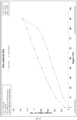
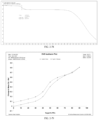
- the experimental method for characterizing an acid salt or a base salt of compound III by dynamic vapor sorption (DVS) was as follows: A small amount of a powder of a polymorph of compound III was taken and placed into a precise sample tray that matches the instrument. After the sample was loaded, the sample tray was sent into the instrument for analysis.
- Step 1 Synthesis of methyl ( S )-2-((4-((6-((4-chloro-2-fluorophenoxy)methyl)pyridin-2-yl)oxy)piperidin-1-yl)methyl)-1-(oxetan-2-ylmethyl)-1 H -benzo[ d ]imidazole-6-carboxylate
- Step 2 Synthesis of ( S )-2-((4-((6-((4-chloro-2-fluorophenoxy)methyl)pyridin-2-yl)oxy)piperidin-1-yl)methyl)-1-(oxetan-2-ylmethyl)-1 H -benzo[ d ]imidazole-6-carboxylate
- Lithium hydroxide (0.13 g, 5.4 mmol) was added to a mixed solution of methyl ( S )-2-((4-((6-((4-chloro-2-fluorophenoxy)methyl)pyridin-2-yl)oxy)piperidin-1-yl)methyl)-1-(oxetan-2-ylmethyl)-1 H -benzo[ d ]imidazole-6-carboxylate (1.0 g, 1.7 mmol) in tetrahydrofuran/water (20 mL/20 mL), and the mixture was stirred at room temperature for 16 h. The pH of the resulting mixture was adjusted to 5-6 with formic acid, and the solvent was removed in vacuo.
- Example 2-1 Preparation of ( S )-2-((4-((6-((4-cyano-2-fluorophenoxy)methyl)pyridin-2-yl)oxy)piperidin-1-yl)methyl)-1-(oxetan-2-ylmethyl )-1 H- benzo[ d ]imidazole-6-carboxylic acid
- Step 1 Synthesis of methyl ( S )-2-((4-((6-((4-cyano-2-fluorophenoxy)methyl)pyridin-2-yl)oxy)piperidin-1-yl)methyl)-1-(oxetan-2-ylmethyl)-1 H -benzo[ d ]imidazole-6-carboxylate
- Step 2 Synthesis of ( S )-2-((4-((6-((4-cyano-2-fluorophenoxy)methyl)pyridin-2-yl)oxy)piperidin-1-yl)methyl)-1-(oxetan-2-ylmethyl)-1 H -benzo[ d ]imidazole-6-carboxylate
- Lithium hydroxide (0.13 g, 5.4 mmol) was added to a mixed solution of methyl ( S )-2-((4-((6-((4-cyano-2-fluorophenoxy)methyl)pyridin-2-yl)oxy)piperidin-1-yl)methyl)-1-(oxetan-2-ylmethyl)-1 H -benzo[ d ]imidazole-6-carboxylate (1.1 g, 1.9 mmol) in tetrahydrofuran/water (20 mL/20 mL), and the mixture was stirred at room temperature for 16 h. The pH of the resulting mixture was adjusted to 5-6 with formic acid, and the solvent was removed in vacuo.
- Test Example 1 Equilibrium solubility study of polymorph of compound I in biological media
- the amorphous solid of compound I and crystal form D of compound I were tested for their equilibrium solubilities in water (H 2 O), fasted state simulated gastric fluid (FaSSGF), fasted state simulated intestinal fluid (FaSSIF), and fed state simulated intestinal fluid (FeSSIF).
- the solids were suspended in corresponding buffers to formulate suspensions ( ⁇ 10 mg/mL), and the suspensions were mixed at 37 ⁇ 2 °C. After 24 h, samples of the suspensions were taken. The supernatant was filtered, and the concentration was determined. The solid was tested by XRPD.
- the form also exhibited significantly improved solubility in the FaSSIF system, and thus meets the requirement of development of clinical pharmaceutical formulations. Therefore, after salification of the free form of compound I, the solubility and the drug release behavior can be significantly improved.
- the amorphous solid of compound I and crystal form D of compound I were preserved in long-term storage (25 °C/60% RH), accelerated (40 °C/75% RH), and high-temperature (60 °C, RH ⁇ 30%) conditions for 7 days, and tested for purity and crystal form change by HPLC, so as to examine the stability of the solids.
- Crystal form D of compound I exhibited no significant purity changes after standing for 7 days in the long-term storage condition and slightly reduced purities after standing for 7 days in the accelerated condition and the high-temperature condition, but no significant crystal form changes.
- the stability of crystal form D is significantly superior to that of the amorphous solid.
- Crystal form DSC endothermic peak temperature TGA analysis Solvent residue/solvate Crystal form A 99.81 °C 0.9286% weight loss at 30-120 °C N/A Crystal form B 177.71 °C 0.0576% weight loss at 30-120 °C N/A Crystal form C 104.51 °C 0.2388% weight loss at 30-120 °C N/A Crystal form D 167.48 °C 0.2692% weight loss at 30-120 °C N/A Crystal form E 112.00 °C 0.2854% weight loss at 30-120 °C N/A Crystal form F 169.00 °C 0.1495% weight loss at 30-120 °C N/A Crystal form G 89.95 °C and 104.07 °C 5.5541% weight loss at 30-120 °C Dihydrate Crystal form H 87.76 °C 7.1770% weight loss at 30-100 °C Methyl isobutyl ketone 0.5-solvate
- Crystal form 2A of compound II was tested for its equilibrium solubility in water (H 2 O), fasted state simulated gastric fluid (FaSSGF), fasted state simulated intestinal fluid (FaSSIF), and fed state simulated intestinal fluid (FeSSIF).
- the solids were suspended in corresponding buffers to formulate suspensions ( ⁇ 10 mg/mL), and the suspensions were mixed at 37 ⁇ 2 °C. After 24 h, samples of the suspensions were taken. The supernatant was filtered, and the concentration was determined. The solid was tested by XRPD.
- Crystal form 2A of compound II was preserved in long-term storage (25 °C/60% RH), accelerated (40 °C/75% RH), and high-temperature (60 °C, RH ⁇ 30%) conditions for 7 days, and tested for purity and crystal form change by HPLC, so as to examine the stability of the solids.
- the results are shown in the following table: Solid form Initial purity (%) 25 °C/60% RH, 7 days 40 °C/75% RH, 7 days 60 °C, 7 days Crystal form change Purity (%) Crystal form change Purity (%) Crystal form change Purity (%) Crystal form change Purity (%) Crystal form change Purity (%) Crystal form change Purity (%) Crystal form change Purity (%) Crystal form 2A of compound II 97.71 No 97.65 No 97.38 No 97.63
- the DVS plot of crystal form 2A of compound II is shown in FIG. 2-79 .
- the results are shown in the table below: Solid form Sample weight change at 80% RH (%) Whether the crystal form is changed Hygroscopicity Crystal form 2A of compound II 0.71 No Slightly hygroscopic
- Crystal form DSC endothermic peak temperature TGA analysis Solvent residue/solvate Crystal form 2A 189.90 °C 0.7069% weight gain at 30-220 °C N/A Crystal form 2B 181.06 °C 0.4739% weight gain at 30-220 °C N/A Crystal form 2C 171.63 °C 0.2373% weight loss at 30-220 °C N/A Crystal form 2D 168.79 °C 1.9365% weight loss at 30-220 °C N/A Crystal form 2E 110.30 °C, 169.27 °C 0.8772% weight loss at 30-220 °C N/A Crystal form 2F 114.41 °C 9.0819% weight loss at 30-210 °C Trihydrate Crystal form 2G 169.22 °C 6.9565% weight loss at 30-220 °C Dihydrate Crystal form 2H 118.06 °C 5.6617% weight loss at 30-140 °C Dimethyl
Landscapes
- Health & Medical Sciences (AREA)
- Chemical & Material Sciences (AREA)
- Organic Chemistry (AREA)
- Animal Behavior & Ethology (AREA)
- Life Sciences & Earth Sciences (AREA)
- General Health & Medical Sciences (AREA)
- Public Health (AREA)
- Veterinary Medicine (AREA)
- Pharmacology & Pharmacy (AREA)
- Medicinal Chemistry (AREA)
- Nuclear Medicine, Radiotherapy & Molecular Imaging (AREA)
- Chemical Kinetics & Catalysis (AREA)
- General Chemical & Material Sciences (AREA)
- Bioinformatics & Cheminformatics (AREA)
- Engineering & Computer Science (AREA)
- Diabetes (AREA)
- Epidemiology (AREA)
- Hematology (AREA)
- Obesity (AREA)
- Immunology (AREA)
- Oncology (AREA)
- Emergency Medicine (AREA)
- Endocrinology (AREA)
- Pharmaceuticals Containing Other Organic And Inorganic Compounds (AREA)
- Acyclic And Carbocyclic Compounds In Medicinal Compositions (AREA)
- Medicines That Contain Protein Lipid Enzymes And Other Medicines (AREA)
Applications Claiming Priority (3)
| Application Number | Priority Date | Filing Date | Title |
|---|---|---|---|
| CN202210845410.0A CN117417330A (zh) | 2022-07-18 | 2022-07-18 | 一种glp-1r激动剂化合物的多晶型物及其制备方法与用途 |
| CN202210843897.9A CN117417329A (zh) | 2022-07-18 | 2022-07-18 | 一种glp-1r激动剂的多晶型物及其制备方法与用途 |
| PCT/CN2023/107997 WO2024017266A1 (fr) | 2022-07-18 | 2023-07-18 | Forme polymorphe d'agoniste de glp-1r, son procédé de préparation et son utilisation |
Publications (1)
| Publication Number | Publication Date |
|---|---|
| EP4559910A1 true EP4559910A1 (fr) | 2025-05-28 |
Family
ID=89617109
Family Applications (1)
| Application Number | Title | Priority Date | Filing Date |
|---|---|---|---|
| EP23842329.7A Pending EP4559910A1 (fr) | 2022-07-18 | 2023-07-18 | Forme polymorphe d'agoniste de glp-1r, son procédé de préparation et son utilisation |
Country Status (9)
| Country | Link |
|---|---|
| US (1) | US20260028332A1 (fr) |
| EP (1) | EP4559910A1 (fr) |
| JP (1) | JP2025523988A (fr) |
| KR (1) | KR20250029972A (fr) |
| CN (1) | CN119585262A (fr) |
| AU (1) | AU2023310481A1 (fr) |
| IL (1) | IL318410A (fr) |
| WO (1) | WO2024017266A1 (fr) |
| ZA (1) | ZA202501323B (fr) |
Families Citing this family (1)
| Publication number | Priority date | Publication date | Assignee | Title |
|---|---|---|---|---|
| WO2025189141A1 (fr) | 2024-03-08 | 2025-09-12 | Annapurna Bio, Inc. | Méthodes de traitement de l'obésité et d'augmentation de la perte de poids |
Family Cites Families (8)
| Publication number | Priority date | Publication date | Assignee | Title |
|---|---|---|---|---|
| JP7386997B2 (ja) * | 2019-11-15 | 2023-11-27 | イルドン ファーマシューティカル カンパニー リミテッド | Glp-1受容体アゴニストおよびその使用 |
| KR20210069000A (ko) * | 2019-12-02 | 2021-06-10 | 현대약품 주식회사 | Glp-1 수용체 작용제 |
| FI4157832T3 (fi) * | 2020-05-27 | 2024-08-29 | Qilu Regor Therapeutics Inc | Glp-1r-agonistien suola- ja kidemuotoja ja niiden käyttötarkoituksia |
| WO2022042691A1 (fr) * | 2020-08-28 | 2022-03-03 | Gasherbrum Bio, Inc. | Agonistes hétérocycliques de glp-1 |
| TWI912388B (zh) * | 2020-10-14 | 2026-01-21 | 大陸商上海齊魯銳格醫藥研發有限公司 | Glp-1r促效劑的晶型及其用途 |
| CA3209593A1 (fr) * | 2021-01-28 | 2022-08-04 | Carmot Therapeutics, Inc. | Agonistes du recepteur gpcr, compositions pharmaceutiques les comprenant, et leurs procedes d'utilisation |
| IL310377A (en) * | 2021-08-30 | 2024-03-01 | Mindrank Ai Ltd | Novel aryl ether substituted heterocyclic compound as glp1r agonist |
| CN117362282B (zh) * | 2022-07-07 | 2026-04-21 | 杭州德睿智药科技有限公司 | Glp-1r激动剂的盐及其制备方法和应用 |
-
2023
- 2023-07-18 AU AU2023310481A patent/AU2023310481A1/en active Pending
- 2023-07-18 IL IL318410A patent/IL318410A/en unknown
- 2023-07-18 WO PCT/CN2023/107997 patent/WO2024017266A1/fr not_active Ceased
- 2023-07-18 CN CN202380054321.7A patent/CN119585262A/zh active Pending
- 2023-07-18 KR KR1020257003975A patent/KR20250029972A/ko active Pending
- 2023-07-18 US US18/996,003 patent/US20260028332A1/en active Pending
- 2023-07-18 JP JP2025502977A patent/JP2025523988A/ja active Pending
- 2023-07-18 EP EP23842329.7A patent/EP4559910A1/fr active Pending
-
2025
- 2025-02-12 ZA ZA2025/01323A patent/ZA202501323B/en unknown
Also Published As
| Publication number | Publication date |
|---|---|
| CN119585262A (zh) | 2025-03-07 |
| US20260028332A1 (en) | 2026-01-29 |
| IL318410A (en) | 2025-03-01 |
| AU2023310481A1 (en) | 2025-03-06 |
| KR20250029972A (ko) | 2025-03-05 |
| WO2024017266A1 (fr) | 2024-01-25 |
| ZA202501323B (en) | 2025-10-29 |
| JP2025523988A (ja) | 2025-07-25 |
Similar Documents
| Publication | Publication Date | Title |
|---|---|---|
| EP4553073A1 (fr) | Sel d'agoniste de glp-1r, son procédé de préparation et son utilisation | |
| TWI874490B (zh) | 三苯化合物之新穎鹽類 | |
| CA3060121C (fr) | Polymorphe de compose, procede de preparation s'y rapportant et utilisation de celui-ci | |
| EP4406951A1 (fr) | Composé utilisé en tant qu'agoniste du récepteur glp-1 et son utilisation | |
| TWI316937B (en) | Spirocyclic thrombin receptor antagonists | |
| CN117417330A (zh) | 一种glp-1r激动剂化合物的多晶型物及其制备方法与用途 | |
| JP2025507804A (ja) | ベンズイミダゾールまたはアザベンズイミダゾール化合物、その調製方法およびその使用 | |
| CZ297927B6 (cs) | Farmaceutický prostredek obsahující hydrochlorid 5-[4-(6-methoxy-1-methyl-1H-benzimidazol-2-ylmethoxy)benzyl]-thiazolidin-2,4-dionu | |
| EP4585593A1 (fr) | Polymorphe de composé agoniste de glp-1r, son procédé de préparation et son utilisation | |
| US20250214968A1 (en) | Novel Salt of GLP-1 Receptor Agonist Compound, Preparation Method Thereof and Pharmaceutical Composition Comprising Thereof | |
| WO2023106310A1 (fr) | Dérivé hétérocyclique aromatique ayant une activité agoniste du récepteur glp-1 | |
| CN117417329A (zh) | 一种glp-1r激动剂的多晶型物及其制备方法与用途 | |
| EP4559910A1 (fr) | Forme polymorphe d'agoniste de glp-1r, son procédé de préparation et son utilisation | |
| EA007253B1 (ru) | Аналоги аденозина для лечения синдрома резистентности к инсулину и диабета | |
| CA3266527A1 (fr) | Forme polymorphe d'agoniste de glp-1r, son procédé de préparation et son utilisation | |
| HK40098886A (zh) | 一种glp-1r激动剂的多晶型物及其制备方法与用途 | |
| HK40118695B (zh) | 一种glp-1r激动剂化合物的多晶型物及其制备方法与用途 | |
| HK40118695A (zh) | 一种glp-1r激动剂化合物的多晶型物及其制备方法与用途 | |
| US20070135446A1 (en) | Benzoylguanidlne salt and hydrates thereof | |
| WO2017219689A1 (fr) | Sel chlorure destiné à inhiber la pim kinase, et procédé de fabrication et application associés |
Legal Events
| Date | Code | Title | Description |
|---|---|---|---|
| STAA | Information on the status of an ep patent application or granted ep patent |
Free format text: STATUS: THE INTERNATIONAL PUBLICATION HAS BEEN MADE |
|
| PUAI | Public reference made under article 153(3) epc to a published international application that has entered the european phase |
Free format text: ORIGINAL CODE: 0009012 |
|
| STAA | Information on the status of an ep patent application or granted ep patent |
Free format text: STATUS: REQUEST FOR EXAMINATION WAS MADE |
|
| 17P | Request for examination filed |
Effective date: 20250213 |
|
| AK | Designated contracting states |
Kind code of ref document: A1 Designated state(s): AL AT BE BG CH CY CZ DE DK EE ES FI FR GB GR HR HU IE IS IT LI LT LU LV MC ME MK MT NL NO PL PT RO RS SE SI SK SM TR |
|
| DAV | Request for validation of the european patent (deleted) | ||
| DAX | Request for extension of the european patent (deleted) |