EP4559932A1 - Anticorps multispécifique et son utilisation - Google Patents
Anticorps multispécifique et son utilisation Download PDFInfo
- Publication number
- EP4559932A1 EP4559932A1 EP23842343.8A EP23842343A EP4559932A1 EP 4559932 A1 EP4559932 A1 EP 4559932A1 EP 23842343 A EP23842343 A EP 23842343A EP 4559932 A1 EP4559932 A1 EP 4559932A1
- Authority
- EP
- European Patent Office
- Prior art keywords
- seq
- cdr
- sequence
- antigen
- multispecific antibody
- Prior art date
- Legal status (The legal status is an assumption and is not a legal conclusion. Google has not performed a legal analysis and makes no representation as to the accuracy of the status listed.)
- Pending
Links
Images

Classifications
-
- C—CHEMISTRY; METALLURGY
- C07—ORGANIC CHEMISTRY
- C07K—PEPTIDES
- C07K16/00—Immunoglobulins [IG], e.g. monoclonal or polyclonal antibodies
- C07K16/18—Immunoglobulins [IG], e.g. monoclonal or polyclonal antibodies against material from animals or humans
- C07K16/28—Immunoglobulins [IG], e.g. monoclonal or polyclonal antibodies against material from animals or humans against receptors, cell surface antigens or cell surface determinants
- C07K16/2803—Immunoglobulins [IG], e.g. monoclonal or polyclonal antibodies against material from animals or humans against receptors, cell surface antigens or cell surface determinants against the immunoglobulin superfamily
- C07K16/2818—Immunoglobulins [IG], e.g. monoclonal or polyclonal antibodies against material from animals or humans against receptors, cell surface antigens or cell surface determinants against the immunoglobulin superfamily against CD28 or CD152
-
- A—HUMAN NECESSITIES
- A61—MEDICAL OR VETERINARY SCIENCE; HYGIENE
- A61K—PREPARATIONS FOR MEDICAL, DENTAL OR TOILETRY PURPOSES
- A61K45/00—Medicinal preparations containing active ingredients not provided for in groups A61K31/00 - A61K41/00
- A61K45/06—Mixtures of active ingredients without chemical characterisation, e.g. antiphlogistics and cardiaca
-
- A—HUMAN NECESSITIES
- A61—MEDICAL OR VETERINARY SCIENCE; HYGIENE
- A61P—SPECIFIC THERAPEUTIC ACTIVITY OF CHEMICAL COMPOUNDS OR MEDICINAL PREPARATIONS
- A61P35/00—Antineoplastic agents
-
- A—HUMAN NECESSITIES
- A61—MEDICAL OR VETERINARY SCIENCE; HYGIENE
- A61K—PREPARATIONS FOR MEDICAL, DENTAL OR TOILETRY PURPOSES
- A61K39/00—Medicinal preparations containing antigens or antibodies
- A61K2039/505—Medicinal preparations containing antigens or antibodies comprising antibodies
-
- A—HUMAN NECESSITIES
- A61—MEDICAL OR VETERINARY SCIENCE; HYGIENE
- A61P—SPECIFIC THERAPEUTIC ACTIVITY OF CHEMICAL COMPOUNDS OR MEDICINAL PREPARATIONS
- A61P31/00—Antiinfectives, i.e. antibiotics, antiseptics, chemotherapeutics
-
- C—CHEMISTRY; METALLURGY
- C07—ORGANIC CHEMISTRY
- C07K—PEPTIDES
- C07K16/00—Immunoglobulins [IG], e.g. monoclonal or polyclonal antibodies
- C07K16/18—Immunoglobulins [IG], e.g. monoclonal or polyclonal antibodies against material from animals or humans
- C07K16/22—Immunoglobulins [IG], e.g. monoclonal or polyclonal antibodies against material from animals or humans against growth factors ; against growth regulators
-
- C—CHEMISTRY; METALLURGY
- C07—ORGANIC CHEMISTRY
- C07K—PEPTIDES
- C07K2317/00—Immunoglobulins specific features
- C07K2317/20—Immunoglobulins specific features characterized by taxonomic origin
- C07K2317/22—Immunoglobulins specific features characterized by taxonomic origin from camelids, e.g. camel, llama or dromedary
-
- C—CHEMISTRY; METALLURGY
- C07—ORGANIC CHEMISTRY
- C07K—PEPTIDES
- C07K2317/00—Immunoglobulins specific features
- C07K2317/30—Immunoglobulins specific features characterized by aspects of specificity or valency
- C07K2317/31—Immunoglobulins specific features characterized by aspects of specificity or valency multispecific
-
- C—CHEMISTRY; METALLURGY
- C07—ORGANIC CHEMISTRY
- C07K—PEPTIDES
- C07K2317/00—Immunoglobulins specific features
- C07K2317/50—Immunoglobulins specific features characterized by immunoglobulin fragments
- C07K2317/56—Immunoglobulins specific features characterized by immunoglobulin fragments variable (Fv) region, i.e. VH and/or VL
- C07K2317/565—Complementarity determining region [CDR]
-
- C—CHEMISTRY; METALLURGY
- C07—ORGANIC CHEMISTRY
- C07K—PEPTIDES
- C07K2317/00—Immunoglobulins specific features
- C07K2317/50—Immunoglobulins specific features characterized by immunoglobulin fragments
- C07K2317/56—Immunoglobulins specific features characterized by immunoglobulin fragments variable (Fv) region, i.e. VH and/or VL
- C07K2317/569—Single domain, e.g. dAb, sdAb, VHH, VNAR or nanobody®
-
- C—CHEMISTRY; METALLURGY
- C07—ORGANIC CHEMISTRY
- C07K—PEPTIDES
- C07K2317/00—Immunoglobulins specific features
- C07K2317/60—Immunoglobulins specific features characterized by non-natural combinations of immunoglobulin fragments
- C07K2317/64—Immunoglobulins specific features characterized by non-natural combinations of immunoglobulin fragments comprising a combination of variable region and constant region components
-
- C—CHEMISTRY; METALLURGY
- C07—ORGANIC CHEMISTRY
- C07K—PEPTIDES
- C07K2317/00—Immunoglobulins specific features
- C07K2317/70—Immunoglobulins specific features characterized by effect upon binding to a cell or to an antigen
- C07K2317/76—Antagonist effect on antigen, e.g. neutralization or inhibition of binding
-
- C—CHEMISTRY; METALLURGY
- C07—ORGANIC CHEMISTRY
- C07K—PEPTIDES
- C07K2317/00—Immunoglobulins specific features
- C07K2317/90—Immunoglobulins specific features characterized by (pharmaco)kinetic aspects or by stability of the immunoglobulin
- C07K2317/92—Affinity (KD), association rate (Ka), dissociation rate (Kd) or EC50 value
Definitions
- the present invention relates to the field of immunology. Specifically, the present invention relates to multispecific antibodies targeting programmed cell death receptor-1 (PD-1) and vascular endothelial growth factor (VEGF), pharmaceutical compositions comprising the multispecific antibodies, nucleic acid molecules encoding the multispecific antibodies, vectors and host cells, and their use in the treatment of tumors.
- PD-1 programmed cell death receptor-1
- VEGF vascular endothelial growth factor
- PD-1 Programmed cell death receptor-1
- PD-1 has two natural ligands, PD-L1 and PD-L2, both of which belong to the B7 superfamily and are constitutively or inducibly expressed on various cell surfaces, including non-hematopoietic cells, immune cells and tumor cells.
- the interaction between PD-1 and its ligands inhibits activation and proliferation of lymphocytes (such as T cells and NK cells), the secretion of cytokines (e.g., IL-2, IFN- ⁇ ) and the killing of tumor cells.
- lymphocytes such as T cells and NK cells
- cytokines e.g., IL-2, IFN- ⁇
- neovascularization provides necessary nutrients and oxygen for the growth, deterioration, and metastasis of tumors, and is an important target for inhibiting tumor growth.
- Bevacizumab a humanized monoclonal antibody targeting VEGF-A
- Bevacizumab has been approved for the treatment of various cancers, including non-small cell lung cancer, renal cell carcinoma, cervical cancer and metastatic colorectal cancer.
- Ranibizumab an affinity-enhanced monoclonal antibody Fab fragment specific for VEGF-A, has been approved for the treatment of the "wet" type of age-related macular degeneration, diabetic retinopathy, and macular edema due to branch retinal vein occlusion or central retinal vein occlusion.
- Anti-PD-1/PD-L1 monoclonal antibodies combined with VEGF pathway inhibitors have shown breakthrough efficacy in various tumors, including liver cancer, lung cancer, gastric cancer, kidney cancer and several gynecological cancers. However, the adverse reactions of combination therapy are significantly higher than those observed with monotherapy.
- the present invention provides a multispecific antibody targeting both PD-1 and VEGF, capable of specifically blocking the PD-1 and VEGF signaling pathways, thereby exerting a synergistic anti-tumor effect.
- the application provides the following aspects.
- the invention provides a multispecific antibody, which comprises a first antigen-binding domain targeting programmed cell death receptor 1 (PD-1) and a second antigen-binding domain targeting vascular endothelial growth factor (VEGF), wherein, the first antigen-binding domain comprises a VHH domain, the VHH domain includes CDR1 as shown in SEQ ID NO: 2 or a variant thereof, CDR2 as shown in SEQ ID NO: 3 or a variant thereof, and CDR3 as shown in SEQ ID NO: 4 or a variant thereof; wherein the variant has a substitution, deletion or addition of one or several amino acids (e.g., substitution, deletion or addition of 1, 2, or 3 amino acids) as compared to the sequence from which it is derived.
- PD-1 programmed cell death receptor 1
- VEGF vascular endothelial growth factor
- the VHH domain comprises: CDR1 as shown in SEQ ID NO: 2, CDR2 as shown in SEQ ID NO: 3, and CDR3 as shown in SEQ ID NO: 4.
- the VHH domain comprises: CDR1, CDR2 and CDR3 as included in the VHH domain as shown in SEQ ID NO: 1; preferably, the CDRs are determined according to the Kabat, IMGT, or Chothia numbering systems.
- the VHH domain typically consists of four framework regions (FRs) and three complementarity-determining regions (CDRs), referred to as FR1, CDR1, FR2, CDR2, FR3, CDR3, and FR4.
- the VHH domain may be truncated at the N- terminus or C-terminus to include only portions of FR1 and/or FR4, or lack one or two of these framework regions, provided it substantially retains antigen-binding specificity.
- the VHH domain may comprise framework region sequences derived from camelid heavy chain antibodies.
- the VHH domain may be humanized, wherein one or more of the framework regions have been replaced with human framework regions.
- the VHH domain comprises heavy chain framework regions (e.g., heavy chain framework regions comprised in amino acid sequences encoded by human germline antibody genes) derived from human immunoglobulins, the heavy chain framework regions optionally comprise one or more (e.g., 1, 2, 3, 4, 5, 6, 7, 8, 9 or 10) back mutations from human residues to camelid residues.
- the first antigen-binding domain comprises: a VHH sequence as shown in SEQ ID NO: 1 or a variant thereof, where the variant has a sequence identity of at least 80%, at least 85%, at least 90%, at least 91%, at least 92%, at least 93%, at least 94%, at least 95%, at least 96%, at least 97%, at least 98%, at least 99%, or 100%, or has a substitution, deletion or addition of one or several amino acids (e.g., substitution, deletion, or addition of 1, 2, 3, 4, 5, 6, 7, 8, 9 or 10 amino acids) as compared to the sequence from which it is derived; preferably, the substitutions are conservative substitutions.
- the first antigen-binding domain comprises a VHH as shown in SEQ ID NO: 1.
- the second antigen-binding domain comprises the antibody or antigen-binding fragment thereof (e.g., heavy chain variable region and/or light chain variable region thereof) that specifically binds to VEGF.
- the antibody that specifically binds to VEGF is selected from Bevacizumab or its variants, and Ranibizumab or its variants.
- the second antigen-binding domain comprises the heavy chain variable region (VH) and light chain variable region (VL) derived from Bevacizumab or its variants, wherein:
- the VH and/or VL further comprise framework regions derived from mammalian (e.g., human or murine) immunoglobulins. In certain embodiments, the VH and/or VL further comprise framework regions derived from human immunoglobulins.
- the VH comprises the sequence as shown in SEQ ID NO: 5 or a variant thereof
- the VL comprises the sequence as shown in SEQ ID NO: 6 or a variant thereof
- the variant has a sequence identity of at least 80%, at least 85%, at least 90%, at least 91%, at least 92%, at least 93%, at least 94%, at least 95%, at least 96%, at least 97%, at least 98%, at least 99%, or 100%, or has a substitution, deletion or addition of one or several amino acids (e.g., substitution, deletion, or addition of 1, 2, 3, 4 or 5 amino acids) as compared to the sequence from which it is derived; preferably, the substitutions are conservative substitutions.
- the second antigen-binding domain comprises a VH as shown in SEQ ID NO: 5 and a VL as shown in SEQ ID NO: 6.
- the second antigen-binding domain comprises a heavy chain variable region (VH) and a light chain variable region (VL) derived from Ranibizumab or a variant thereof, wherein:
- the VH and/or VL further comprise framework regions derived from a mammalian (e.g., human or mouse) immunoglobulin.
- the VH comprises the sequence as shown in SEQ ID NO: 13 or a variant thereof
- the VL comprises the sequence as shown in SEQ ID NO: 14 or a variant thereof
- the variant has a sequence identity of at least 80%, at least 85%, at least 90%, at least 91%, at least 92%, at least 93%, at least 94%, at least 95%, at least 96%, at least 97%, at least 98%, at least 99%, or 100%, or has a substitution, deletion or addition of one or more amino acids (e.g., substitution, deletions or additions of 1, 2, 3, 4 or 5 amino acids) as compared to the sequence from which it is derived; preferably, the substitutions are conservative substitutions.
- the second antigen-binding domain comprises the VH as shown in SEQ ID NO: 13 and the VL as shown in SEQ ID NO: 14.
- the CDRs contained in the first antigen-binding domain and second antigen-binding domain are determined by the Kabat numbering system.
- the first antigen-binding domain and the second antigen-binding domain are linked optionally via a linker.
- the linker is a peptide linker comprising one or more glycines and/or one or more serines.
- the linker is a flexible peptide linker comprising (G4S) n, where n is 1, 2, 3, or 4, for example, the linker comprises a sequence as shown in SEQ ID NO: 35.
- the second antigen-binding domain is a full-length antibody (e.g., IgG antibody), an Fv fragment, an Fab fragment, an F(ab') 2 fragment, or an scFv.
- the second antigen-binding domain comprises a heavy chain and a light chain
- the heavy chain comprises a heavy chain variable region (VH) and a heavy chain constant region (CH)
- the light chain comprises a light chain variable region (VL) and a light chain constant region (CL).
- the first antigen-binding domain is linked to the N-terminus and/or C-terminus of the heavy chain and/or to the N-terminus and/or C-terminus of the light chain optionally via a linker.
- the heavy chain variable region (VH) and light chain variable region (VL) are defined as described in any of the aforementioned embodiments.
- the heavy chain constant region (CH) is of IgG, for example, IgG1, IgG2, IgG3, or IgG4.
- the heavy chain constant region (CH) comprises a sequence as shown in SEQ ID NO: 21.
- the Fc domain comprised in the heavy chain constant region is a natural Fc region, containing an amino acid sequence identical to the amino acid sequence of Fc regions that found in natural.
- the natural Fc region may exhibit effector functions, such as binding to Fc receptors; C1q binding and complement-dependent cytotoxicity (CDC); antibody-dependent cellular cytotoxicity (ADCC); antibody-dependent cellular phagocytosis (ADCP); downregulation of cell surface receptors (e.g., B cell receptors); and B cell activation.
- the Fc domain comprised in the heavy chain constant region (CH) may be a modified Fc region, containing amino acid mutations or chemical modifications as compared to the natural Fc region to alter its effector functions.
- the modified Fc region may include a modification that promotes dimerization.
- the light chain constant region (CL) is ⁇ or ⁇ light chain constant region.
- the light chain constant region (CL) comprises a sequence as shown in SEQ ID NO: 22.
- the second antigen-binding domain comprises at least one heavy chain and at least one light chain
- the first antigen-binding domain is linked to the N-terminus or C-terminus of the heavy chain or to the N-terminus of the light chain optionally via a linker.
- the second antigen-binding domain comprises two identical heavy chains and two identical light chains
- the first antigen-binding domain is linked to the N-terminus or C-terminus of the two heavy chains, or to the N-terminus of the two light chains optionally via a linker.
- the multispecific antibody comprises a first peptide chain and a second peptide chain, wherein:
- the multispecific antibody comprises:
- the multispecific antibody is a bispecific antibody.
- the multispecific antibody further includes at least one additional antigen-binding domain targeting an antigen different from those bounded by the first and second antigen-binding domains, enabling binding to at least three or more distinct binding sites and/or target molecules.
- the multispecific antibody is a trispecific or tetraspecific antibody.
- the multispecific antibody of the present invention can be prepared by various methods known in the art, such as genetic engineering and recombinant technology.
- the multispecific antibody of the present invention can be produced by co-expressing multiple polynucleotides encoding the various polypeptide chains of the multispecific antibody.
- the polypeptide chains produced by co-expression can be combined, for example, via disulfide bonds or other means to form a functional multispecific antibody.
- the present invention provides an isolated nucleic acid molecule, which comprise a nucleotide sequence encoding the multispecific antibody of the present invention or at least one polypeptide chain thereof.
- the isolated nucleic acid molecule comprises nucleotide sequences each encoding a polypeptide chain of the multispecific antibody of the present invention, and the nucleotide sequences are present on the same isolated nucleic acid molecule or different isolated nucleic acid molecules.
- the present invention provides a vector (e.g., cloning vector or expression vector) comprising the above-described isolated nucleic acid molecule.
- a vector e.g., cloning vector or expression vector
- the vector comprises nucleotide sequences each encoding a polypeptide chain of the multispecific antibody of the present invention, and the nucleotide sequences are present on the same vector or different vectors.
- the vectors of the present invention may comprise a first vector comprising the nucleotide sequence encoding the first polypeptide chain, and a second vector comprising the nucleotide sequence encoding the second polypeptide chain.
- the present invention provides a host cell comprising the nucleic acid molecule or vector as described above.
- host cells include, but are not limited to, prokaryotic cells such as bacterial cells (e.g., E. coli cells), and eukaryotic cells such as fungal cells (e.g., yeast cells), insect cells, plant cells, and animal cells (e.g., mammalian cells, such as mouse cells, human cells, etc.).
- the present invention provides methods for preparing the multispecific antibody of the present invention, comprising culturing the above-described host cells under conditions that allow for protein expression, and recovering the multispecific antibody from the culture of the cultured host cells.
- the present invention provides a pharmaceutical composition
- a pharmaceutical composition comprising the multispecific antibody of the present invention, the isolated nucleic acid molecule of the present invention, the vector of the present invention or the host cell of the present invention, and a pharmaceutically acceptable carrier and/or excipient.
- the pharmaceutical composition comprises the multispecific antibody of the present invention.
- the pharmaceutical composition may further comprise an additional pharmaceutically active agent.
- the additional pharmaceutically active agent is an anti-tumor agent.
- the multispecific antibody, isolated nucleic acid molecule, vector or host cell of the present invention, and the additional pharmaceutically active agent may be provided as separate or mixed components.
- the multispecific antibody, isolated nucleic acid molecule, vector or host cell of the present invention, and the additional pharmaceutically active agent may be administered simultaneously, separately or sequentially.
- the multispecific antibody, isolated nucleic acid molecule, vector or host cell of the present invention, or the pharmaceutical composition of the present invention can be formulated into any dosage form known in the medical field, such as tablets, pills, suspensions, emulsions, solutions, gels, capsules, powders, granules, elixirs, lozenges, suppositories, injections (including injectable solutions, sterile powders for injection, and injectable concentrated solutions), inhalers, sprays and the like.
- the preferred dosage form depends on the intended route of administration and therapeutic use.
- a preferred dosage form is an injectable formulation.
- injectable formulations can be sterile injectable solutions.
- sterile injectable solutions may be prepared by incorporating the required dose of the multispecific antibody of the present invention into an appropriate solvent, and optionally incorporating other desired components (including, but not limited to, pH adjusters, surfactants, adjuvants, ionic strength enhancers, isotonic agents, preservatives, diluents or any combination thereof), followed by sterile filtration.
- sterile injectable solutions can be prepared as sterile lyophilized powders (e.g., by vacuum drying or freeze-drying) for storage and use.
- Such sterile lyophilized powders may be reconstituted before use in a suitable carrier, such as water for injection (WFI), bacteriostatic water for injection (BWFI), saline solution (e.g., 0.9% (w/v) NaCl), glucose solution (e.g., 5% glucose), surfactant-containing solution (e.g., 0.01% polysorbate 20), pH buffered solution (e.g., phosphate-buffered solution), Ringer's solution or any combination thereof.
- WFI water for injection
- BWFI bacteriostatic water for injection
- saline solution e.g. 0.9% (w/v) NaCl
- glucose solution e.g., 5% glucose
- surfactant-containing solution e.g., 0.01% polysorbate 20
- pH buffered solution e.g., phosphate-buffered solution
- Ringer's solution e.g., Ringer's solution or any combination thereof.
- the pharmaceutical composition of the present invention comprises a sterile injectable liquid (such as an aqueous or non-aqueous suspension or solution).
- a sterile injectable liquid such as an aqueous or non-aqueous suspension or solution.
- the sterile injectable liquid is selected from water for injection (WFI), bacteriostatic water for injection (BWFI), saline solution (e.g., 0.9% (w/v) NaCl), glucose solution (e.g., 5% glucose), surfactant-containing solution (e.g., 0.01% polysorbate 20), pH buffered solution (e.g., phosphate-buffered solution), Ringer's solution or any combination thereof.
- WFI water for injection
- BWFI bacteriostatic water for injection
- saline solution e.g. 0.9% (w/v) NaCl
- glucose solution e.g., 5% glucose
- surfactant-containing solution e.g., 0.01% polysorbate 20
- the multispecific antibody, isolated nucleic acid molecule, vector or host cell of the present invention, or the pharmaceutical composition of the present invention may be administered by any suitable method known in the art, including, but not limited to, oral, buccal, sublingual, ocular, topical, parenteral, rectal, intrathecal, intracytoplasmic, inguinal, intravesical, topical (e.g., powders, ointments, or drops), or nasal routes.
- the preferred route of administration is parenteral (e.g., intravenous injection or bolus, subcutaneous injection, intraperitoneal injection, intramuscular injection). Persons skilled in the art will understand that the route and/or method of administration will vary depending on the intended purpose.
- the multispecific antibody, isolated nucleic acid molecule, vector or host cell of the present invention, or the pharmaceutical composition of the present invention are administered by intravenous injection or bolus.
- the pharmaceutical composition of the present invention may include a "therapeutically effective amount” or a “prophylactically effective amount” of the multispecific antibody, isolated nucleic acid molecule, vector or host cell of the present invention.
- a “prophylactically effective amount” refers to an amount sufficient to prevent, inhibit, or delay the onset of a disease.
- a “therapeutically effective amount” refers to an amount sufficient to cure or at least partially inhibit the disease in a patient already suffering from the disease, along with its complications.
- the therapeutically effective amount may vary depending on factors such as the severity of the disease being treated, the general state of the patient's immune system, the patient's general condition, such as age, weight, and gender, the method of administration and other concomitant treatments.
- the present invention provides a method for preventing and/or treating a tumor, comprising administering the multispecific antibody, isolated nucleic acid molecule, vector, host cell or pharmaceutical composition of the present invention to a subject in need.
- the invention also provides the use of the multispecific antibody, the isolated nucleic acid molecule, the vector, the host cell or the pharmaceutical composition of the present invention for preventing and/or treating a tumor, or for manufacturing of a medicament for preventing and/or treating a tumor.
- the tumor is selected from solid tumors.
- the tumor is selected from lung cancer (e.g., non-small cell lung cancer or small cell lung cancer), liver cancer (e.g., hepatocellular carcinoma), kidney cancer (e.g., renal cell carcinoma), stomach cancer, ovarian cancer, cervical cancer, endometrial cancer, breast cancer (e.g., triple-negative breast cancer), colorectal cancer and brain tumors (e.g., glioblastoma).
- lung cancer e.g., non-small cell lung cancer or small cell lung cancer
- liver cancer e.g., hepatocellular carcinoma
- kidney cancer e.g., renal cell carcinoma
- stomach cancer e.g., ovarian cancer, cervical cancer, endometrial cancer
- breast cancer e.g., triple-negative breast cancer
- colorectal cancer e.g., glioblastoma
- an agent provided by the present invention is administered in combination with a second therapeutic agent (e.g., an antitumor agent) or treatment (e.g., surgery, chemotherapy, radiotherapy, targeted therapy, immunotherapy, hormone therapy, gene therapy or palliative care), and selected from the multispecific antibody, isolated nucleic acid molecule, vector, host cell or pharmaceutical composition of the present invention.
- a second therapeutic agent e.g., an antitumor agent
- treatment e.g., surgery, chemotherapy, radiotherapy, targeted therapy, immunotherapy, hormone therapy, gene therapy or palliative care
- the second therapeutic agent or treatment may be administered before, simultaneously or after the administration of the aforementioned agent of the invention.
- variable and constant regions are connected by a "J" region of approximately 12 or more amino acids, and the heavy chain also contains a "D" region of approximately 3 or more amino acids.
- Each heavy chain consists of a heavy chain variable region (VH) and a heavy chain constant region (CH).
- the heavy chain constant region consists of three domains (CH1, CH2 and CH3).
- Each light chain consists of a light chain variable region (VL) and a light chain constant region (CL).
- the light chain constant region consists of one domain, CL.
- the constant domain is not directly involved in the binding of antibody to antigen, but exhibits a variety of effector functions, such as mediating the interaction of immunoglobulin with host tissue or factor, including the binding of various cells of the immune system (e.g., effector cells) to the first component of the classical complement system (C1q).
- the VH and VL regions can further be subdivided into hypervariable regions known as complementarity-determining regions (CDRs), interspersed with more conserved framework regions (FRs).
- CDRs complementarity-determining regions
- FRs conserved framework regions
- Each VH and VL consists of three CDRs and four FRs, arranged in the following order from the N-terminus to the C-terminus: FR1, CDR1, FR2, CDR2, FR3, CDR3 and FR4.
- the variable regions (VH and VL) of each heavy chain/light chain pair form the antigen-binding site.
- CDR complementarity-determining region
- the variable regions of the heavy chain and light chain each contain three CDRs, named CDR1, CDR2 and CDR3.
- CDR1, CDR2 and CDR3 The precise boundaries of these CDRs can be defined according to various numbering systems known in the art, such as the Kabat numbering system ( Kabat et al., Sequences of Proteins of Immunological Interest, 5th Ed., Public Health Service, National Institutes of Health, Bethesda, Md., 1991 ), the Chothia numbering system ( Chothia & Lesk, J. Mol. Biol.
- the CDRs contained in the antibody or antigen-binding fragments thereof can be determined according to various numbering systems known in the art.
- the CDRs contained in the antibody or antigen-binding fragment thereof of the present invention are preferably determined by the IMGT, Kabat or Chothia numbering systems.
- the CDRs contained in the antibody or antigen-binding fragment thereof of the present invention are preferably determined by the Kabat numbering system.
- framework region or "FR” refers to those amino acid residues in the variable region of an antibody other than the CDR residues defined above.
- antibody is not limited by any specific method of antibody production. For example, it includes recombinant antibodies, monoclonal antibodies and polyclonal antibodies. Antibodies may be an antibody of different isotypes, such as IgG (e.g., IgG1, IgG2, IgG3, or IgG4 subtype), IgA1, IgA2, IgD, IgE or IgM antibody.
- IgG e.g., IgG1, IgG2, IgG3, or IgG4 subtype
- IgA1, IgA2, IgD, IgE or IgM antibody e.g., IgA1, IgA2, IgD, IgE or IgM antibody.
- multispecific antibody refers to an antibody capable of specific binding to at least two (e.g., two, three or four) different antigens (or epitopes).
- Multispecific antibodies comprise multiple antigen-binding domains that specific bind to different antigens (or epitopes), enabling them to interact with at least two distinct binding sites and/or target molecules.
- Each antigen-binding domain of a multispecific antibody may be independently selected from full-length antibodies (e.g., IgG antibodies) or antigen-binding fragments thereof (e.g., Fv fragments, Fab fragments, (Fab') 2 fragments or scFv).
- the antigen-binding domains are connected by a peptide linker.
- the multispecific antibody of the present invention may be a bispecific antibody.
- the multispecific antibody may be a trispecific or tetraspecific antibody.
- single-domain antibody has the meaning commonly understood by those skilled in the art, which refers to an antibody fragment composed of a single monomeric variable antibody domain (e.g., a single heavy chain variable region). These antibodies are typically derived from the variable region of heavy chain antibodies (e.g., camelids or sharks).
- a typical sdAb consists of four framework regions and three CDRs, arranged in an FR1-CDR1-FR2-CDR2-FR3-CDR3-FR4 structure.
- the sdAb may be truncated at the N- or C-terminus to comprise only part of FR1 and/or FR4, or one or two of those framework regions may be absent, provided the antigen-binding activity and specificity are substantially maintained.
- a single-domain antibody is also referred to as a nanobody, and the terms can be used interchangeably.
- the variable region of a single-domain antibody or nanobody is referred to as a VHH domain.
- antigen-binding fragment of an antibody refers to a polypeptide comprising a fragment of a full-length antibody that retains the ability to specifically bind to the same antigen to which the full-length antibody binds, and/or competes with the full-length antibody for specifically binding to the antigen, which is also called an "antigen-binding moiety"
- Antigen-binding fragments of an antibody can be obtained by recombinant DNA technology or enzymatic or chemical cleavage of the full-length antibody.
- Non-limiting examples of antigen-binding fragments include Fab, Fab', (Fab') 2 , Fv, disulfide-linked Fv, scFv, di-scFv, (scFv) 2 and such polypeptides, which contain at least a portion of an antibody that is sufficient to confer specificity to the polypeptides with antigen-binding capability.
- Fab refers to an antibody fragment consisting of a light chain comprising VL and CL and a heavy chain fragment comprising VH and CH1;
- (Fab') 2 refers to an antibody fragment comprising two Fab fragments connected by a disulfide bridge at the hinge region;
- Fab' refers to a fragment obtained by reducing the disulfide bond linking the two heavy chain fragments in the F(ab') 2 fragment, which consists of a complete light chain and an Fd fragment of heavy chain (consisting of VH and CH1 domains).
- Fv refers to an antibody fragment consisting of the variable regions of the light chain (VL) and heavy chain (VH) of a single arm of an antibody. Fv fragments are generally considered to be the smallest antibody fragments capable of forming a complete antigen binding site.
- scFv refers to a single polypeptide chain comprising the VL and VH regions, wherein the VL and VH regions are connected by a linker.
- Such scFv molecules may have a general structure: NH 2 -VL-linker-VH-COOH or NH 2 -VH-linker-VL-COOH.
- Suitable linkers from prior art typically consist of repeated GGGGS amino acid sequences or variants thereof.
- GGGGS amino acid sequence
- a disulfide bond may be present between the VH and VL of the scFv.
- scFvs may form a di-scFv, which refers to antibodies formed by connecting two or more single scFvs in series.
- scFvs may form (scFv) 2 , which refers to antibodies formed by linking two or more individual scFvs in parallel.
- variant in the context of polypeptides (including a polypeptide) refers to a polypeptide or peptide comprising an amino acid sequence that has been altered by the introduction of substitution, deletion, or addition of amino acid residues. In some cases, the term “variant” also refers to a polypeptide or peptide that has been modified (i.e., by covalently attaching any type of molecule to the polypeptide or peptide).
- a polypeptide can be modified, for example, by glycosylation, acetylation, PEGylation, phosphorylation, amidation, derivatization by known protecting /blocking groups, proteolytic cleavage, attachment to cell ligands, or other proteins.
- Derivatized polypeptides or peptides can be produced by chemical modification using techniques known to those skilled in the art, including, but not limited to, specific chemical cleavage, acetylation, formylation, and metabolic synthesis of tunicamycin, etc.
- the variant has similar, identical or improved functions to the polypeptide or peptide from which it is derived.
- the term "specific binding” refers to a non-random interaction between two molecules, such as the interaction between an antibody and its target antigen.
- the strength or affinity of a specific binding interaction can be expressed by the equilibrium dissociation constant (KD) of the interaction.
- KD equilibrium dissociation constant
- the specific binding properties between two molecules can be measured using methods well known in the art, such as surface plasmon resonance (SPR) using Biacore or bio-layer interferometry (BLI) or Kinexa to measure dissociation constants.
- vector refers to a nucleic acid delivery tool into which a polynucleotide can be inserted.
- a vector can express the protein encoded by the inserted polynucleotide, the vector is called an expression vector.
- Vectors can be introduced into host cells by transformation, transduction or transfection, allowing the genetic material elements carried by the vector to be expressed in the host cell.
- Vectors are well known to those skilled in the art, and include but are not limited to: plasmids, phagemids, cosmid vectors, artificial chromosomes (e.g., yeast artificial chromosomes (YACs), bacterial artificial chromosomes (BACs), or P1-derived artificial chromosomes (PACs)), bacteriophages such as ⁇ phage or M13 phage, and animal viruses.
- artificial chromosomes e.g., yeast artificial chromosomes (YACs), bacterial artificial chromosomes (BACs), or P1-derived artificial chromosomes (PACs)
- Animal viruses that may be used as vectors include but are not limited to, retroviruses (including lentiviruses), adenoviruses, adeno-associated viruses, herpes viruses (such as herpes simplex virus), poxviruses, baculoviruses, papillomaviruses, and polyomaviruses (such as SV40).
- retroviruses including lentiviruses
- adenoviruses such as lentiviruses
- adeno-associated viruses such as herpes viruses (such as herpes simplex virus), poxviruses, baculoviruses, papillomaviruses, and polyomaviruses (such as SV40).
- a vector can contain a variety of elements that control expression, including but not limited to promoter sequences, transcription initiation sequences, enhancer sequences, selectable elements, and reporter genes. Additionally, vectors may contain replication origins.
- the term "host cell” refers to cells that can be used to introduce a vector, including but not limited to, prokaryotic cells such as Escherichia coli or Bacillus subtilis, eukaryotic cells such as fungal cells (e.g., yeast or Aspergillus ) , insect cells such as S2 cells or Sf9 cells, or animal cells such as fibroblasts, CHO cells, COS cells, NSO cells, HeLa cells, BHK cells, HEK 293 cells, or human cells, and immune cells (e.g., T lymphocytes, NK cells, monocytes, macrophages, or dendritic cells). Host cells may include individual cells or cell populations.
- prokaryotic cells such as Escherichia coli or Bacillus subtilis
- eukaryotic cells such as fungal cells (e.g., yeast or Aspergillus )
- insect cells such as S2 cells or Sf9 cells
- animal cells such as fibroblasts
- CHO cells
- identity refers to the degree of sequence matching between two polypeptides or two nucleic acids.
- a position in the compared sequence is occupied by the same base or amino acid monomer subunit (for example, a position in each of two DNA molecules is occupied by adenine, or a position in each of two peptides is occupied by lysine)
- each molecule is the same at that position.
- the "percentage identity” between two sequences is the ratio of matching positions to the total number of positions compared, expressed as a percentage. For example, if six out of ten positions match, the sequences have 60% identity. DNA sequences CTGACT and CAGGTT share 50% identity (three matching positions out of six).
- sequences are compared by alignment to maximize identity.
- alignments can be achieved using methods such as Needleman-Wunsch algorithms implemented in computer programs like ALIGN (DNAstar, Inc.) ( J Mol Biol. 1970 Mar;48(3):443-53 .).
- the percentage identity between amino acid sequences can also be calculated using algorithms such as those of E. Meyers and W. Miller, available in the ALIGN program (version 2.0), using a PAM120 weight residue table, gap length penalties of 12, and gap penalties of 4 ( Comput. Appl Biosci., 4:11-17 (1988 )).
- the Needleman and Wunsch (J Mol Biol. 48:44-543 (1970 )) algorithms integrated into the GAP program of the GCG software package (available on www.gcg. com) can be used to determine the percentage identity between two amino acid sequences using Blossum 62 matrix or PAM250 matrix, as well as gap weights of 16, 14, 12, 10, 8, 6, or 4 and length weights of 1, 2, 3, 4, 5, or 6.
- conservative substitution refers to an amino acid substitution that does not adversely affect or alter the expected properties of the protein/polypeptide comprising the amino acid sequence.
- conservative substitutions can be introduced by standard techniques known in the art, such as site-directed mutagenesis and PCR-mediated mutagenesis.
- Conservative amino acid substitutions include those in which an amino acid residue is replaced with an amino acid residue having a similar side chain, for example, one that is physically or functionally similar to the corresponding amino acid residue (e.g., having similar size, shape, charge, chemical properties, including ability to form covalent bonds or hydrogen bonds, etc.). Families of amino acid residues with similar side chains have been defined in the art.
- amino acids are written in accordance with conventional usage. See, for example, Immunology-A Synthesis (2nd Edition, E. S. Golub and D. R. Gren, Eds., Sinauer Associates, Sunderland, Mass. (1991 )), which is incorporated herein by reference.
- polypeptide and “protein” have the same meaning and are used interchangeably.
- amino acids are generally represented by single-letter and three-letter abbreviations known in the art. For example, alanine can be represented by A or Ala.
- the term "pharmaceutically acceptable carrier and/or excipient” refers to carriers and/or excipients that are pharmacologically and/or physiologically compatible with a subject and an active ingredient (see, for example, Remington's Pharmaceutical Sciences. Edited by Gennaro AR, 19th ed. Pennsylvania: Mack Publishing Company, 1995 ), including, but not limited to: pH regulators, surfactants, adjuvants, ionic strength enhancers, diluents, agents for maintaining osmotic pressure, delayed absorption agents and preservatives.
- pH regulators includes, but is not limited to, phosphate buffer.
- the surfactant includes, but is not limited to, cationic, anionic or nonionic surfactant, such as Tween-80.
- the ionic strength enhancer includes, but is not limited to, sodium chloride.
- the agent for maintaining osmotic pressure includes, but is not limited to, sugar, NaCl, and the like.
- the agent for delaying absorption includes, but is not limited to, monostearate and gelatin.
- the diluent includes, but is not limited to, water, aqueous buffer (e.g., buffered saline), alcohol and polyol (e.g., glycerol), and the like.
- the pharmaceutically acceptable carrier or excipient includes a sterile injectable liquid (e.g., an aqueous or non-aqueous suspension or solution).
- a sterile injectable liquid e.g., an aqueous or non-aqueous suspension or solution.
- such sterile injectable liquid is selected from the group consisting of water for injection (WFI), bacteriostatic water for injection (BWFI), sodium chloride solution (e.g., 0.9% (w/v) NaCl), glucose solution (e.g., 5% glucose), a solution containing a surfactant (e.g., 0.01% polysorbate 20), a pH buffer solution (e.g., a phosphate buffer solution), Ringer's solution, and any combination thereof
- WFI water for injection
- BWFI bacteriostatic water for injection
- sodium chloride solution e.g., 0.9% (w/v) NaCl
- glucose solution e.g., 5% glucose
- a surfactant
- prevention refers to a method implemented to prevent or delay the occurrence of a disease, disorder, or symptom in a subject.
- treatment refers to a method implemented to obtain a beneficial or desired clinical result.
- beneficial or desired clinical results include (but are not limited to) alleviation of symptoms, reduction of the extent of the disease, stabilization (i.e., no longer worsening) of the state of the disease, delay or slowing the progression of the disease, improvement or alleviation of the state of the disease, and relief of symptoms (whether partial or complete), whether detectable or undetectable.
- treatment can also refer to prolonging survival compared to the expected survival (if not receiving treatment).
- the term "subject” refers to a mammal, such as a primate, including a human.
- the subject e.g., a human
- cancer and tumor are used interchangeably and refer to a broad class of diseases characterized by uncontrolled growth of abnormal cells in the body. Unregulated cell division can lead to the formation of malignant tumors or invasive cells in surrounding tissues and may metastasize to distant parts of the body via the lymphatic system or bloodstream. Cancer includes both benign and malignant cancers, as well as dormant tumors or micrometastases. Cancer includes solid tumors as well as hematologic malignancies.
- the present invention provides a multispecific antibody targeting PD-1 and VEGF, which is capable of specifically blocking PD-1 and VEGF signaling pathways, thereby producing a synergistic anti-tumor effect, while reducing the incidence of adverse reactions and making clinical medication more convenient.
- the multispecific antibody of the present invention has important clinical value.
- Sequence information SEQ ID NO: Description Sequence 1 Anti-PD-1 sdAb VHH 2 Anti-PD-1 sdAb CDR1 IYAMG 3 Anti-PD-1 sdAb CDR2 GIGWAYATTYYADSVKG 4 Anti-PD-1 sdAb CDR3 DLDHSGFDY 5 Bevacizumab (mutant) VH 6 Bevacizumab (mutant) VL 7 Bevacizumab (mutant) CDR-H1 NYGMN 8 Bevacizumab (mutant) CDR-H2 WINTYTGEPTYAADFKR 9 Bevacizumab (mutant) CDR-H3 YPHYYGSSHWYFDV 10 Bevacizumab (mutant) CDR-L1 SASQDISNYLN 11 Bevacizumab (mutant) CDR-L2 FTSSLHS 12 Bevacizumab (mutant) CDR-L3 QQYST
- a healthy adult female alpaca (Alpaca) was immunized with recombinant human PD-1 protein. After the immunization, peripheral blood of the alpaca was collected, lymphocytes were isolated, and total RNA was extracted and reversely transcribed to obtain cDNA to establish an anti-PD-1 single-domain antibody phage display library.
- VHH single-domain antibodies that had strong binding activity to human PD-1 and were capable of blocking the binding of human PD-L1 to human recombinant PD-1 and competing with pembrolizumab for binding to the same or overlapping PD-1 epitopes were screened. The detailed screening process can be found in the international patent application PCT/CN2022/074550 .
- VHH single-domain antibody was screened and obtained, whose VHH sequence was set forth in SEQ ID NO: 1, and according to the definition of the Kabat numbering system, its CDR1 to CDR3 were set forth in SEQ ID NOs: 2-4, respectively.
- Bispecific antibodies were constructed based on the above anti-PD-1 VHH antibody antibody and anti-VEGF antibodies.
- the anti-VEGF antibodies used were Bevacizumab (mutant sequence from U.S. Patent 7575893 ) and Ranibizumab sequences.
- the VH and VL of Bevacizumab (mutant) were set forth in SEQ ID NOs: 5-6, respectively, and according to the definition of the Kabat numbering system, its CDR-H1 to CDR-H3 were set forth in SEQ ID NOs: 7-9, respectively, and its CDR-L1 to CDR-L3 were set forth in SEQ ID NOs: 10-12, respectively.
- the VH and VL of Ranibizumab were set forth in SEQ ID NOs: 13-14, respectively, and according to the definition of the Kabat numbering system, its CDR-H1 to CDR-H3 were set forth in SEQ ID NOs: 15-17, respectively, and its CDR-L1 to CDR-L3 were set forth in SEQ ID NOs: 18-20, respectively.
- nucleic acid molecules encoding each polypeptide chain of the abovementioned bispecific antibodies were constructed into expression vectors and transiently expressed via HEK cells. After expression, the antibodies were purified by Protein A. The expression yield and purity after purification were shown in Table 3. Table 3.
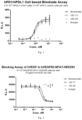
- PDL1-CHO cells (GenScript, Cat# RD00703) were seeded at 3.5 ⁇ 10 4 cells/well in 96-well white plates (Thermo Cat# 136101), in which the cells were inoculated in the middle 6 ⁇ 10 wells of the 96-well plate, and 200ul of culture medium was added to the surrounding wells.
- PD1-Jurkat cell fluids (GenScript, Cat#RD00702) with 4 ⁇ 10 5 cells/ml and the antibody to be tested (initial concentration was 300nM, 4-fold dilution), respectively, and the two were added to the 96-well plate from which the culture medium was discarded, and incubated at 37°C, 5% CO2 for 6 hours, and Fire-LumiTM luciferase detection reagent (GenScript, Cat#L00877C) was added to detect chemical signals. Four-parameter curves were drawn using Graphpad.
- HEK293 cells overexpressing VEGFR2(GenScript, Cat#RD00704) were seeded into 96-well plates, 5,000 cells per well, and cultured overnight for 16-20 hr. Complete medium (DMEM+10% FBS) was used to prepare 2 ⁇ VEGF165 (Sino Biological, Cat#11066-HNAH) and the antibody to be tested.
- the recommended concentration of 2 ⁇ VEGF165 was 30ng/ml; and the concentration of 2 ⁇ antibody to be tested was 20ug/ml, and subjected to 3-fold dilution to provide 5 points, and 10-fold dilution to provide 5 points.
- the medium was discarded from VEGFR2-HEK293, and then 50ul of VEGF165 and 50ul of the antibody to be tested were immediately added and mixed; incubated at 37°C, 5% CO 2 , and 100ul of complete medium was added to the cell-free wells to take the background absorption value. After 6 hours, Fire-Lumi TM reagent at 100ul/well was added, and incubated for 5-60 min, and chemical signals were detected.
- Human breast cancer cells MDA-MB-231 purchased from Chinese Academy of Sciences were cultured and expanded in vitro. 5 ⁇ 10 6 cells were resuspended in PBS and subcutaneously implanted in 6-8 week old female NSG mice (obtained from Shanghai Southern Model Organism Technology Co., Ltd.) to construct a tumor-bearing model.
- PBMC obtained from Miaoshun (Shanghai) Biotechnology Co., Ltd.
- mice were divided into groups according to the tumor volume of about 100 mm 3 and intraperitoneally injected (twice a week). The body weight and tumor volume were recorded twice a week.
Landscapes
- Health & Medical Sciences (AREA)
- Chemical & Material Sciences (AREA)
- Organic Chemistry (AREA)
- Immunology (AREA)
- Life Sciences & Earth Sciences (AREA)
- General Health & Medical Sciences (AREA)
- Medicinal Chemistry (AREA)
- Biochemistry (AREA)
- Biophysics (AREA)
- Genetics & Genomics (AREA)
- Molecular Biology (AREA)
- Proteomics, Peptides & Aminoacids (AREA)
- Veterinary Medicine (AREA)
- Pharmacology & Pharmacy (AREA)
- Animal Behavior & Ethology (AREA)
- Public Health (AREA)
- General Chemical & Material Sciences (AREA)
- Nuclear Medicine, Radiotherapy & Molecular Imaging (AREA)
- Chemical Kinetics & Catalysis (AREA)
- Epidemiology (AREA)
- Peptides Or Proteins (AREA)
- Medicines Containing Antibodies Or Antigens For Use As Internal Diagnostic Agents (AREA)
- Medicines That Contain Protein Lipid Enzymes And Other Medicines (AREA)
- Pharmaceuticals Containing Other Organic And Inorganic Compounds (AREA)
- Micro-Organisms Or Cultivation Processes Thereof (AREA)
Applications Claiming Priority (2)
| Application Number | Priority Date | Filing Date | Title |
|---|---|---|---|
| CN202210852642 | 2022-07-20 | ||
| PCT/CN2023/108073 WO2024017281A1 (fr) | 2022-07-20 | 2023-07-19 | Anticorps multispécifique et son utilisation |
Publications (1)
| Publication Number | Publication Date |
|---|---|
| EP4559932A1 true EP4559932A1 (fr) | 2025-05-28 |
Family
ID=89617132
Family Applications (1)
| Application Number | Title | Priority Date | Filing Date |
|---|---|---|---|
| EP23842343.8A Pending EP4559932A1 (fr) | 2022-07-20 | 2023-07-19 | Anticorps multispécifique et son utilisation |
Country Status (7)
| Country | Link |
|---|---|
| US (1) | US20260035463A1 (fr) |
| EP (1) | EP4559932A1 (fr) |
| JP (1) | JP2025527160A (fr) |
| KR (1) | KR20250048552A (fr) |
| CN (1) | CN119546633A (fr) |
| AU (1) | AU2023310484A1 (fr) |
| WO (1) | WO2024017281A1 (fr) |
Families Citing this family (1)
| Publication number | Priority date | Publication date | Assignee | Title |
|---|---|---|---|---|
| PE20252392A1 (es) | 2022-12-12 | 2025-10-10 | Lanova Medicines Ltd | Anticuerpos biespecificos que se dirigen a pd1 y vegf |
Family Cites Families (11)
| Publication number | Priority date | Publication date | Assignee | Title |
|---|---|---|---|---|
| EP1585768A2 (fr) | 2003-01-23 | 2005-10-19 | Genentech, Inc. | Procedes de production d'anticoprs humanises et d'amelioration du rendement d'anticorps ou de fragments de liaison d'antigenes en culture cellulaire |
| CA3003777A1 (fr) * | 2015-11-18 | 2017-05-26 | Merck Sharp & Dohme Corp. | Liants pd1/ctla4 |
| IL300122A (en) * | 2015-11-18 | 2023-03-01 | Merck Sharp ַ& Dohme Llc | Substances that bind to PD1 and/or LAG3 |
| CA3090878A1 (fr) * | 2018-02-11 | 2019-08-15 | Beijing Hanmi Pharmaceutical Co., Ltd. | Anticorps bispecifique a forme heterodimere de type similaire a une structure d'anticorps naturel anti-pd-1/anti-vegf et preparation associee |
| US10597453B2 (en) * | 2018-06-29 | 2020-03-24 | Gensun Biopharma, Inc. | Antitumor immune checkpoint regulator antagonists |
| CN109053895B (zh) * | 2018-08-30 | 2020-06-09 | 中山康方生物医药有限公司 | 抗pd-1-抗vegfa的双功能抗体、其药物组合物及其用途 |
| CN120623346A (zh) * | 2018-10-11 | 2025-09-12 | 因荷布瑞克斯生物科学公司 | Pd-1单结构域抗体及其治疗组合物 |
| CN110563849B (zh) * | 2019-08-09 | 2022-09-09 | 安徽瀚海博兴生物技术有限公司 | 一种抗vegf-抗pd1双特异性抗体 |
| CN112409483B (zh) * | 2019-08-22 | 2024-08-27 | 浙江道尔生物科技有限公司 | 抗pd-l1纳米抗体 |
| CN112442122B (zh) * | 2019-09-04 | 2021-09-21 | 上海洛启生物医药技术有限公司 | 阻断型pd-1纳米抗体及其编码序列和用途 |
| JP7694922B2 (ja) * | 2021-01-29 | 2025-06-18 | ミンフィ ファーマシューティカル (ハンチョウ) リミテッド | 抗原結合タンパク質およびその使用 |
-
2023
- 2023-07-19 EP EP23842343.8A patent/EP4559932A1/fr active Pending
- 2023-07-19 AU AU2023310484A patent/AU2023310484A1/en active Pending
- 2023-07-19 WO PCT/CN2023/108073 patent/WO2024017281A1/fr not_active Ceased
- 2023-07-19 CN CN202380052639.1A patent/CN119546633A/zh active Pending
- 2023-07-19 JP JP2025503185A patent/JP2025527160A/ja active Pending
- 2023-07-19 US US18/996,343 patent/US20260035463A1/en active Pending
- 2023-07-19 KR KR1020257005263A patent/KR20250048552A/ko active Pending
Also Published As
| Publication number | Publication date |
|---|---|
| US20260035463A1 (en) | 2026-02-05 |
| JP2025527160A (ja) | 2025-08-20 |
| CN119546633A (zh) | 2025-02-28 |
| AU2023310484A1 (en) | 2025-02-06 |
| WO2024017281A1 (fr) | 2024-01-25 |
| KR20250048552A (ko) | 2025-04-09 |
Similar Documents
| Publication | Publication Date | Title |
|---|---|---|
| US12195527B2 (en) | Anti-PD-1/VEGFA bifunctional antibody, pharmaceutical composition thereof | |
| CN106103488B (zh) | 靶向TGFβ抑制 | |
| EP4406965A1 (fr) | Mutant de l'interleukine-2 et sa protéine de fusion | |
| EP3087097B1 (fr) | Anticorps multifonctionnels se liant à l'egfr et au met | |
| AU2021324738B2 (en) | Fusion protein comprising IL-12 and anti-fap antibody, and use thereof | |
| US20230192887A1 (en) | Engineered anti-her2 bispecific proteins | |
| US20230257465A1 (en) | ANTI-PDL1 x EGFR BISPECIFIC ANTIBODY | |
| US20230312682A1 (en) | SIRPalpha-FC FUSION PROTEIN | |
| KR20220112208A (ko) | 항 ctla-4 항체 및 이의 용도 | |
| JP7495489B2 (ja) | PD-1およびTGFβを標的化する組換えタンパク質 | |
| EP4559932A1 (fr) | Anticorps multispécifique et son utilisation | |
| KR20250028265A (ko) | 항체 및 이의 용도 | |
| CN120112558A (zh) | 治疗慢性病毒感染的含cd8抗原结合分子的融合物 | |
| WO2023186112A1 (fr) | Anticorps multispécifique ciblant ceacam et cd3 et son utilisation | |
| WO2023045859A1 (fr) | Anticorps monoclonal anti-cd38 et son application | |
| EP4265644A1 (fr) | Anticorps bispécifique pour neutraliser de manière spécifique un signal tgf-? de lymphocytes t auxiliaires, combinaison pharmaceutique et utilisation associées | |
| CN119798438B (zh) | 一种抗ccr8单克隆抗体及其应用 | |
| EP4524248A1 (fr) | Anticorps multispécifique anti-taa et anti-cd3 | |
| KR20260056194A (ko) | 항-c-MET 나노바디 및 이의 용도 | |
| WO2024131849A1 (fr) | Anticorps monoclonal cd38 et son utilisation | |
| HK40118237A (en) | Anti-pd-1/vegfa bifunctional antibody, pharmaceutical composition thereof and use thereof | |
| WO2024054418A1 (fr) | Optimisation de séquence d'un anticorps de blocage de pd1 | |
| JP2024534824A (ja) | 操作された抗her2二重特異性タンパク質 | |
| CN121873202A (zh) | Il-2突变体、pd1抗体×il-2突变体融合蛋白及其应用 | |
| CN120530135A (zh) | 抗b7h3抗体和使用方法 |
Legal Events
| Date | Code | Title | Description |
|---|---|---|---|
| STAA | Information on the status of an ep patent application or granted ep patent |
Free format text: STATUS: THE INTERNATIONAL PUBLICATION HAS BEEN MADE |
|
| PUAI | Public reference made under article 153(3) epc to a published international application that has entered the european phase |
Free format text: ORIGINAL CODE: 0009012 |
|
| STAA | Information on the status of an ep patent application or granted ep patent |
Free format text: STATUS: REQUEST FOR EXAMINATION WAS MADE |
|
| 17P | Request for examination filed |
Effective date: 20250220 |
|
| AK | Designated contracting states |
Kind code of ref document: A1 Designated state(s): AL AT BE BG CH CY CZ DE DK EE ES FI FR GB GR HR HU IE IS IT LI LT LU LV MC ME MK MT NL NO PL PT RO RS SE SI SK SM TR |
|
| DAV | Request for validation of the european patent (deleted) | ||
| DAX | Request for extension of the european patent (deleted) |