EP4559955A1 - Membrane échangeuse d'anions et son procédé de fabrication - Google Patents
Membrane échangeuse d'anions et son procédé de fabrication Download PDFInfo
- Publication number
- EP4559955A1 EP4559955A1 EP23843164.7A EP23843164A EP4559955A1 EP 4559955 A1 EP4559955 A1 EP 4559955A1 EP 23843164 A EP23843164 A EP 23843164A EP 4559955 A1 EP4559955 A1 EP 4559955A1
- Authority
- EP
- European Patent Office
- Prior art keywords
- anion
- exchange
- porous polymer
- membrane
- exchange membrane
- Prior art date
- Legal status (The legal status is an assumption and is not a legal conclusion. Google has not performed a legal analysis and makes no representation as to the accuracy of the status listed.)
- Pending
Links
Images


Classifications
-
- B—PERFORMING OPERATIONS; TRANSPORTING
- B01—PHYSICAL OR CHEMICAL PROCESSES OR APPARATUS IN GENERAL
- B01D—SEPARATION
- B01D69/00—Semi-permeable membranes for separation processes or apparatus characterised by their form, structure or properties; Manufacturing processes specially adapted therefor
- B01D69/10—Supported membranes; Membrane supports
- B01D69/106—Membranes in the pores of a support, e.g. polymerized in the pores or voids
-
- C—CHEMISTRY; METALLURGY
- C08—ORGANIC MACROMOLECULAR COMPOUNDS; THEIR PREPARATION OR CHEMICAL WORKING-UP; COMPOSITIONS BASED THEREON
- C08J—WORKING-UP; GENERAL PROCESSES OF COMPOUNDING; AFTER-TREATMENT NOT COVERED BY SUBCLASSES C08B, C08C, C08F, C08G or C08H
- C08J5/00—Manufacture of articles or shaped materials containing macromolecular substances
- C08J5/20—Manufacture of shaped structures of ion-exchange resins
- C08J5/22—Films, membranes or diaphragms
- C08J5/2206—Films, membranes or diaphragms based on organic and/or inorganic macromolecular compounds
- C08J5/2218—Synthetic macromolecular compounds
- C08J5/2231—Synthetic macromolecular compounds based on macromolecular compounds obtained by reactions involving unsaturated carbon-to-carbon bonds
- C08J5/2243—Synthetic macromolecular compounds based on macromolecular compounds obtained by reactions involving unsaturated carbon-to-carbon bonds obtained by introduction of active groups capable of ion-exchange into compounds of the type C08J5/2231
-
- B—PERFORMING OPERATIONS; TRANSPORTING
- B01—PHYSICAL OR CHEMICAL PROCESSES OR APPARATUS IN GENERAL
- B01D—SEPARATION
- B01D61/00—Processes of separation using semi-permeable membranes, e.g. dialysis, osmosis or ultrafiltration; Apparatus, accessories or auxiliary operations specially adapted therefor
- B01D61/42—Electrodialysis; Electro-osmosis ; Electro-ultrafiltration; Membrane capacitive deionization
- B01D61/422—Electrodialysis
-
- B—PERFORMING OPERATIONS; TRANSPORTING
- B01—PHYSICAL OR CHEMICAL PROCESSES OR APPARATUS IN GENERAL
- B01D—SEPARATION
- B01D61/00—Processes of separation using semi-permeable membranes, e.g. dialysis, osmosis or ultrafiltration; Apparatus, accessories or auxiliary operations specially adapted therefor
- B01D61/42—Electrodialysis; Electro-osmosis ; Electro-ultrafiltration; Membrane capacitive deionization
- B01D61/428—Membrane capacitive deionization
-
- B—PERFORMING OPERATIONS; TRANSPORTING
- B01—PHYSICAL OR CHEMICAL PROCESSES OR APPARATUS IN GENERAL
- B01D—SEPARATION
- B01D61/00—Processes of separation using semi-permeable membranes, e.g. dialysis, osmosis or ultrafiltration; Apparatus, accessories or auxiliary operations specially adapted therefor
- B01D61/42—Electrodialysis; Electro-osmosis ; Electro-ultrafiltration; Membrane capacitive deionization
- B01D61/44—Ion-selective electrodialysis
- B01D61/445—Ion-selective electrodialysis with bipolar membranes; Water splitting
-
- B—PERFORMING OPERATIONS; TRANSPORTING
- B01—PHYSICAL OR CHEMICAL PROCESSES OR APPARATUS IN GENERAL
- B01D—SEPARATION
- B01D61/00—Processes of separation using semi-permeable membranes, e.g. dialysis, osmosis or ultrafiltration; Apparatus, accessories or auxiliary operations specially adapted therefor
- B01D61/42—Electrodialysis; Electro-osmosis ; Electro-ultrafiltration; Membrane capacitive deionization
- B01D61/44—Ion-selective electrodialysis
- B01D61/46—Apparatus therefor
- B01D61/48—Apparatus therefor having one or more compartments filled with ion-exchange material, e.g. electrodeionisation
-
- B—PERFORMING OPERATIONS; TRANSPORTING
- B01—PHYSICAL OR CHEMICAL PROCESSES OR APPARATUS IN GENERAL
- B01D—SEPARATION
- B01D67/00—Processes specially adapted for manufacturing semi-permeable membranes for separation processes or apparatus
- B01D67/0002—Organic membrane manufacture
- B01D67/0006—Organic membrane manufacture by chemical reactions
-
- B—PERFORMING OPERATIONS; TRANSPORTING
- B01—PHYSICAL OR CHEMICAL PROCESSES OR APPARATUS IN GENERAL
- B01D—SEPARATION
- B01D69/00—Semi-permeable membranes for separation processes or apparatus characterised by their form, structure or properties; Manufacturing processes specially adapted therefor
- B01D69/02—Semi-permeable membranes for separation processes or apparatus characterised by their form, structure or properties; Manufacturing processes specially adapted therefor characterised by their properties
-
- B—PERFORMING OPERATIONS; TRANSPORTING
- B01—PHYSICAL OR CHEMICAL PROCESSES OR APPARATUS IN GENERAL
- B01D—SEPARATION
- B01D69/00—Semi-permeable membranes for separation processes or apparatus characterised by their form, structure or properties; Manufacturing processes specially adapted therefor
- B01D69/10—Supported membranes; Membrane supports
- B01D69/107—Organic support material
-
- B—PERFORMING OPERATIONS; TRANSPORTING
- B01—PHYSICAL OR CHEMICAL PROCESSES OR APPARATUS IN GENERAL
- B01D—SEPARATION
- B01D69/00—Semi-permeable membranes for separation processes or apparatus characterised by their form, structure or properties; Manufacturing processes specially adapted therefor
- B01D69/12—Composite membranes; Ultra-thin membranes
- B01D69/1213—Laminated layers
-
- B—PERFORMING OPERATIONS; TRANSPORTING
- B01—PHYSICAL OR CHEMICAL PROCESSES OR APPARATUS IN GENERAL
- B01D—SEPARATION
- B01D71/00—Semi-permeable membranes for separation processes or apparatus characterised by the material; Manufacturing processes specially adapted therefor
- B01D71/06—Organic material
- B01D71/58—Other polymers having nitrogen in the main chain, with or without oxygen or carbon only
- B01D71/62—Polycondensates having nitrogen-containing heterocyclic rings in the main chain
-
- B—PERFORMING OPERATIONS; TRANSPORTING
- B01—PHYSICAL OR CHEMICAL PROCESSES OR APPARATUS IN GENERAL
- B01D—SEPARATION
- B01D71/00—Semi-permeable membranes for separation processes or apparatus characterised by the material; Manufacturing processes specially adapted therefor
- B01D71/06—Organic material
- B01D71/76—Macromolecular material not specifically provided for in a single one of groups B01D71/08 - B01D71/74
- B01D71/82—Macromolecular material not specifically provided for in a single one of groups B01D71/08 - B01D71/74 characterised by the presence of specified groups, e.g. introduced by chemical after-treatment
-
- C—CHEMISTRY; METALLURGY
- C08—ORGANIC MACROMOLECULAR COMPOUNDS; THEIR PREPARATION OR CHEMICAL WORKING-UP; COMPOSITIONS BASED THEREON
- C08F—MACROMOLECULAR COMPOUNDS OBTAINED BY REACTIONS ONLY INVOLVING CARBON-TO-CARBON UNSATURATED BONDS
- C08F12/00—Homopolymers and copolymers of compounds having one or more unsaturated aliphatic radicals, each having only one carbon-to-carbon double bond, and at least one being terminated by an aromatic carbocyclic ring
- C08F12/02—Monomers containing only one unsaturated aliphatic radical
- C08F12/04—Monomers containing only one unsaturated aliphatic radical containing one ring
- C08F12/14—Monomers containing only one unsaturated aliphatic radical containing one ring substituted by hetero atoms or groups containing heteroatoms
- C08F12/26—Nitrogen
-
- C—CHEMISTRY; METALLURGY
- C08—ORGANIC MACROMOLECULAR COMPOUNDS; THEIR PREPARATION OR CHEMICAL WORKING-UP; COMPOSITIONS BASED THEREON
- C08F—MACROMOLECULAR COMPOUNDS OBTAINED BY REACTIONS ONLY INVOLVING CARBON-TO-CARBON UNSATURATED BONDS
- C08F12/00—Homopolymers and copolymers of compounds having one or more unsaturated aliphatic radicals, each having only one carbon-to-carbon double bond, and at least one being terminated by an aromatic carbocyclic ring
- C08F12/34—Monomers containing two or more unsaturated aliphatic radicals
-
- C—CHEMISTRY; METALLURGY
- C08—ORGANIC MACROMOLECULAR COMPOUNDS; THEIR PREPARATION OR CHEMICAL WORKING-UP; COMPOSITIONS BASED THEREON
- C08F—MACROMOLECULAR COMPOUNDS OBTAINED BY REACTIONS ONLY INVOLVING CARBON-TO-CARBON UNSATURATED BONDS
- C08F212/00—Copolymers of compounds having one or more unsaturated aliphatic radicals, each having only one carbon-to-carbon double bond, and at least one being terminated by an aromatic carbocyclic ring
- C08F212/34—Monomers containing two or more unsaturated aliphatic radicals
- C08F212/36—Divinylbenzene
-
- C—CHEMISTRY; METALLURGY
- C08—ORGANIC MACROMOLECULAR COMPOUNDS; THEIR PREPARATION OR CHEMICAL WORKING-UP; COMPOSITIONS BASED THEREON
- C08F—MACROMOLECULAR COMPOUNDS OBTAINED BY REACTIONS ONLY INVOLVING CARBON-TO-CARBON UNSATURATED BONDS
- C08F8/00—Chemical modification by after-treatment
- C08F8/30—Introducing nitrogen atoms or nitrogen-containing groups
-
- C—CHEMISTRY; METALLURGY
- C08—ORGANIC MACROMOLECULAR COMPOUNDS; THEIR PREPARATION OR CHEMICAL WORKING-UP; COMPOSITIONS BASED THEREON
- C08J—WORKING-UP; GENERAL PROCESSES OF COMPOUNDING; AFTER-TREATMENT NOT COVERED BY SUBCLASSES C08B, C08C, C08F, C08G or C08H
- C08J5/00—Manufacture of articles or shaped materials containing macromolecular substances
- C08J5/20—Manufacture of shaped structures of ion-exchange resins
- C08J5/22—Films, membranes or diaphragms
-
- C—CHEMISTRY; METALLURGY
- C08—ORGANIC MACROMOLECULAR COMPOUNDS; THEIR PREPARATION OR CHEMICAL WORKING-UP; COMPOSITIONS BASED THEREON
- C08J—WORKING-UP; GENERAL PROCESSES OF COMPOUNDING; AFTER-TREATMENT NOT COVERED BY SUBCLASSES C08B, C08C, C08F, C08G or C08H
- C08J5/00—Manufacture of articles or shaped materials containing macromolecular substances
- C08J5/20—Manufacture of shaped structures of ion-exchange resins
- C08J5/22—Films, membranes or diaphragms
- C08J5/2206—Films, membranes or diaphragms based on organic and/or inorganic macromolecular compounds
- C08J5/2218—Synthetic macromolecular compounds
- C08J5/2231—Synthetic macromolecular compounds based on macromolecular compounds obtained by reactions involving unsaturated carbon-to-carbon bonds
-
- H—ELECTRICITY
- H01—ELECTRIC ELEMENTS
- H01M—PROCESSES OR MEANS, e.g. BATTERIES, FOR THE DIRECT CONVERSION OF CHEMICAL ENERGY INTO ELECTRICAL ENERGY
- H01M8/00—Fuel cells; Manufacture thereof
- H01M8/10—Fuel cells with solid electrolytes
- H01M8/1004—Fuel cells with solid electrolytes characterised by membrane-electrode assemblies [MEA]
-
- H—ELECTRICITY
- H01—ELECTRIC ELEMENTS
- H01M—PROCESSES OR MEANS, e.g. BATTERIES, FOR THE DIRECT CONVERSION OF CHEMICAL ENERGY INTO ELECTRICAL ENERGY
- H01M8/00—Fuel cells; Manufacture thereof
- H01M8/10—Fuel cells with solid electrolytes
- H01M8/1016—Fuel cells with solid electrolytes characterised by the electrolyte material
- H01M8/1018—Polymeric electrolyte materials
-
- H—ELECTRICITY
- H01—ELECTRIC ELEMENTS
- H01M—PROCESSES OR MEANS, e.g. BATTERIES, FOR THE DIRECT CONVERSION OF CHEMICAL ENERGY INTO ELECTRICAL ENERGY
- H01M8/00—Fuel cells; Manufacture thereof
- H01M8/10—Fuel cells with solid electrolytes
- H01M8/1016—Fuel cells with solid electrolytes characterised by the electrolyte material
- H01M8/1018—Polymeric electrolyte materials
- H01M8/102—Polymeric electrolyte materials characterised by the chemical structure of the main chain of the ion-conducting polymer
- H01M8/103—Polymeric electrolyte materials characterised by the chemical structure of the main chain of the ion-conducting polymer having nitrogen, e.g. sulfonated polybenzimidazoles [S-PBI], polybenzimidazoles with phosphoric acid, sulfonated polyamides [S-PA] or sulfonated polyphosphazenes [S-PPh]
-
- H—ELECTRICITY
- H01—ELECTRIC ELEMENTS
- H01M—PROCESSES OR MEANS, e.g. BATTERIES, FOR THE DIRECT CONVERSION OF CHEMICAL ENERGY INTO ELECTRICAL ENERGY
- H01M8/00—Fuel cells; Manufacture thereof
- H01M8/10—Fuel cells with solid electrolytes
- H01M8/1016—Fuel cells with solid electrolytes characterised by the electrolyte material
- H01M8/1018—Polymeric electrolyte materials
- H01M8/1039—Polymeric electrolyte materials halogenated, e.g. sulfonated polyvinylidene fluorides
-
- H—ELECTRICITY
- H01—ELECTRIC ELEMENTS
- H01M—PROCESSES OR MEANS, e.g. BATTERIES, FOR THE DIRECT CONVERSION OF CHEMICAL ENERGY INTO ELECTRICAL ENERGY
- H01M8/00—Fuel cells; Manufacture thereof
- H01M8/10—Fuel cells with solid electrolytes
- H01M8/1016—Fuel cells with solid electrolytes characterised by the electrolyte material
- H01M8/1018—Polymeric electrolyte materials
- H01M8/1058—Polymeric electrolyte materials characterised by a porous support having no ion-conducting properties
-
- H—ELECTRICITY
- H01—ELECTRIC ELEMENTS
- H01M—PROCESSES OR MEANS, e.g. BATTERIES, FOR THE DIRECT CONVERSION OF CHEMICAL ENERGY INTO ELECTRICAL ENERGY
- H01M8/00—Fuel cells; Manufacture thereof
- H01M8/10—Fuel cells with solid electrolytes
- H01M8/1016—Fuel cells with solid electrolytes characterised by the electrolyte material
- H01M8/1018—Polymeric electrolyte materials
- H01M8/1058—Polymeric electrolyte materials characterised by a porous support having no ion-conducting properties
- H01M8/1062—Polymeric electrolyte materials characterised by a porous support having no ion-conducting properties characterised by the physical properties of the porous support, e.g. its porosity or thickness
-
- H—ELECTRICITY
- H01—ELECTRIC ELEMENTS
- H01M—PROCESSES OR MEANS, e.g. BATTERIES, FOR THE DIRECT CONVERSION OF CHEMICAL ENERGY INTO ELECTRICAL ENERGY
- H01M8/00—Fuel cells; Manufacture thereof
- H01M8/10—Fuel cells with solid electrolytes
- H01M8/1016—Fuel cells with solid electrolytes characterised by the electrolyte material
- H01M8/1018—Polymeric electrolyte materials
- H01M8/1067—Polymeric electrolyte materials characterised by their physical properties, e.g. porosity, ionic conductivity or thickness
-
- H—ELECTRICITY
- H01—ELECTRIC ELEMENTS
- H01M—PROCESSES OR MEANS, e.g. BATTERIES, FOR THE DIRECT CONVERSION OF CHEMICAL ENERGY INTO ELECTRICAL ENERGY
- H01M8/00—Fuel cells; Manufacture thereof
- H01M8/10—Fuel cells with solid electrolytes
- H01M8/1016—Fuel cells with solid electrolytes characterised by the electrolyte material
- H01M8/1018—Polymeric electrolyte materials
- H01M8/1069—Polymeric electrolyte materials characterised by the manufacturing processes
- H01M8/1072—Polymeric electrolyte materials characterised by the manufacturing processes by chemical reactions, e.g. in situ polymerisation or in situ crosslinking
-
- B—PERFORMING OPERATIONS; TRANSPORTING
- B01—PHYSICAL OR CHEMICAL PROCESSES OR APPARATUS IN GENERAL
- B01D—SEPARATION
- B01D2323/00—Details relating to membrane preparation
- B01D2323/02—Hydrophilization
-
- B—PERFORMING OPERATIONS; TRANSPORTING
- B01—PHYSICAL OR CHEMICAL PROCESSES OR APPARATUS IN GENERAL
- B01D—SEPARATION
- B01D2323/00—Details relating to membrane preparation
- B01D2323/30—Cross-linking
-
- B—PERFORMING OPERATIONS; TRANSPORTING
- B01—PHYSICAL OR CHEMICAL PROCESSES OR APPARATUS IN GENERAL
- B01D—SEPARATION
- B01D2323/00—Details relating to membrane preparation
- B01D2323/34—Use of radiation
- B01D2323/345—UV-treatment
-
- B—PERFORMING OPERATIONS; TRANSPORTING
- B01—PHYSICAL OR CHEMICAL PROCESSES OR APPARATUS IN GENERAL
- B01D—SEPARATION
- B01D2323/00—Details relating to membrane preparation
- B01D2323/64—Use of a temporary support
-
- B—PERFORMING OPERATIONS; TRANSPORTING
- B01—PHYSICAL OR CHEMICAL PROCESSES OR APPARATUS IN GENERAL
- B01D—SEPARATION
- B01D2325/00—Details relating to properties of membranes
- B01D2325/02—Details relating to pores or porosity of the membranes
- B01D2325/0281—Fibril, or microfibril structures
-
- B—PERFORMING OPERATIONS; TRANSPORTING
- B01—PHYSICAL OR CHEMICAL PROCESSES OR APPARATUS IN GENERAL
- B01D—SEPARATION
- B01D2325/00—Details relating to properties of membranes
- B01D2325/04—Characteristic thickness
-
- B—PERFORMING OPERATIONS; TRANSPORTING
- B01—PHYSICAL OR CHEMICAL PROCESSES OR APPARATUS IN GENERAL
- B01D—SEPARATION
- B01D2325/00—Details relating to properties of membranes
- B01D2325/16—Membrane materials having positively charged functional groups
-
- B—PERFORMING OPERATIONS; TRANSPORTING
- B01—PHYSICAL OR CHEMICAL PROCESSES OR APPARATUS IN GENERAL
- B01D—SEPARATION
- B01D2325/00—Details relating to properties of membranes
- B01D2325/30—Chemical resistance
-
- B—PERFORMING OPERATIONS; TRANSPORTING
- B01—PHYSICAL OR CHEMICAL PROCESSES OR APPARATUS IN GENERAL
- B01D—SEPARATION
- B01D2325/00—Details relating to properties of membranes
- B01D2325/42—Ion-exchange membranes
-
- H—ELECTRICITY
- H01—ELECTRIC ELEMENTS
- H01M—PROCESSES OR MEANS, e.g. BATTERIES, FOR THE DIRECT CONVERSION OF CHEMICAL ENERGY INTO ELECTRICAL ENERGY
- H01M8/00—Fuel cells; Manufacture thereof
- H01M8/10—Fuel cells with solid electrolytes
- H01M2008/1095—Fuel cells with polymeric electrolytes
Definitions
- the present disclosure relates to an anion-exchange membrane and a manufacturing method therefor.
- An ion-exchange membrane refers to a synthetic resin membrane that selectively permits the passage of either cations or anions.
- an anion-exchange membrane is a synthetic resin membrane that selectively transmits anions by virtue of positively charged functional groups.
- Such anion-exchange membranes can be utilized in water treatment systems, including electrodialysis, bipolar membrane electrodialysis, capacitive deionization, and electrodeionization, or in systems such as fuel cells, water electrolysis, reverse electrodialysis, and redox flow batteries.
- acid or alkaline raw water can be used in the process, and acid or alkali may be generated during the operation of the raw water process.
- anion-exchange membranes While perfluorinated anion-exchange membranes can be used in such systems, their high cost often leads to the use of hydrocarbon-based anion-exchange membranes in actual systems.
- hydrocarbon-based anion-exchange membranes have limitations in terms of chemical resistance, restricting their applicability under certain processes and conditions. Additionally, since anion-exchange membranes inherently contain a certain proportion of support fraction, there is a limit to how much the ion exchange capacity can be increased to enhance membrane properties.
- One aspect is to provide an anion-exchange membrane with low sheet resistance, high ion exchange capacity, and excellent chemical resistance in the presence of highly concentrated acids and alkalines.
- Another aspect is to provide a manufacturing method for the anion-exchange membrane.
- an anion-exchange membrane including:
- the membrane structure may have a structure in which pores are regularly arranged, or may have a three-dimensional network structure.
- the membrane structure may have a porosity of 30 % to 80 %.
- the membrane structure may include at least one polymer selected from polyethylene, polypropylene, polyethylene terephthalate, polyvinyl alcohol, polybenzimidazole, polyarylene sulfide, polyether ether ketone, polyether sulfone, polysulfone, polystyrene, polyarylene ether sulfone, and polyether ketone.
- the porous polymer support may have a thickness of 10 ⁇ m to 110 ⁇ m.
- the anion-exchange membrane may have an average thickness of 10 ⁇ m to 200 ⁇ m.
- the anion-exchange membrane may have an ion exchange capacity of 1.5 meq/g or more.
- the anion-exchange membrane may have a sheet resistance of 10 ⁇ cm 2 or less.
- the anion-exchange membrane may be used in electrodialysis, bipolar membrane electrodialysis, electrodeionization, capacitive deionization, or water electrolysis systems.
- a manufacturing method for an anion-exchange membrane including:
- the content of the crosslinkable monomer represented by Formula 1 may be 30 wt% to 70 wt% relative to 100 wt% of the composition for forming an anion-exchange polymer.
- the method may further include immersing the porous polymer support in a surfactant solution and drying the porous polymer support to thereby manufacture a porous polymer support having a hydrophilic surface.
- the irradiating of the light may be performed using UVC as ultraviolet rays at a light intensity of 2,000 mJ/cm 2 to 10,000 mJ/cm 2 .
- An anion-exchange membrane is a membrane in which an anion-exchange polymer that is a crosslinked product of a composition including a crosslinkable monomer represented by Formula 1 is present on a surface and inside pores of a porous polymer support having a membrane structure, wherein anion-exchange groups of the anion-exchange polymer are uniformly distributed on the surface and in the pores of the porous polymer support.
- the anion-exchange membrane can achieve high ion exchange capacity and low sheet resistance by increasing the content of the anion-exchange polymer within the membrane. Furthermore, the anion-exchange membrane due to having excellent chemical resistance can be used under highly concentrated acid and alkaline conditions.
- the term “and/or” includes any and all combinations of one or more of the associated listed items.
- the term “or” as used herein means “and/or”. Expressions such as “at least one of,” as used herein, when preceding a list of elements, modify the entire list of elements and do not modify the individual elements of the list.
- the component when one component is described as being “on” or “above” another component, the component may be directly on the other component or intervening components may be present between the component and the other component.
- FIG. 1 is a conceptual diagram of a general anion-exchange membrane.
- an anion-exchange membrane 10 may have an anion-exchange polymer backbone 2 with cationic functional groups 1 arranged on a support 5.
- the counter anions 3 and co-cations 4 permeate from left to right through the anion-exchange membrane 10, the counter anions 3 are selectively transmitted.
- the anion-exchange membrane 10 is required to have high permeation selectivity, low electrical resistance, excellent mechanical strength, and high chemical stability.
- the materials for anion-exchange membranes 10 include perfluorinated anion-exchange membranes and hydrocarbon-based anion-exchange membranes.
- hydrocarbon-based anion-exchange membranes have superior price competitiveness but have limitations in applicable processes and conditions due to their poor chemical resistance.
- hydrocarbon-based anion-exchange membranes contain a certain portion of support fraction, limiting the increase in ion exchange capacity for enhancing membrane performance.
- the inventors of the present invention propose the following anion-exchange membrane and manufacturing method therefor.
- An anion-exchange membrane may include: a porous polymer support composed of a membrane structure; and an anion-exchange polymer, wherein the anion-exchange polymer may be present on a surface and in pores of the porous polymer support, anion-exchange groups of the anion-exchange polymer may be uniformly distributed on the surface and in the pores of the porous polymer support, and the anion-exchange polymer may be a crosslinked product of a composition including a crosslinkable monomer represented by Formula 1:
- the anion-exchange membrane according to an embodiment may achieve high ion exchange capacity and low sheet resistance by increasing the content of the anion-exchange polymer within the membrane. Furthermore, the anion-exchange membrane due to having excellent chemical resistance may be used in highly concentrated acid and alkaline conditions.
- FIG. 2 is a schematic diagram of an anion-exchange membrane according to an embodiment.
- an anion-exchange membrane 40 may have an anion-exchange polymer 31, having cationic functional groups, present on a surface and in pores 21 of a porous polymer support 20. Since the anion-exchange polymer 31 with cationic functional groups are uniformly distributed on the surface and in the pores 21 of the porous polymer support 20, a homogeneous anion-exchange membrane 40 may be obtained. Such a structure of the anion-exchange membrane 40 may achieve low sheet resistance and high ionic conductivity. In addition, the porous polymer support 20 may enhance mechanical durability and have high dimensional stability.
- the anion-exchange polymer may be a crosslinked product of a composition including a crosslinkable monomer represented by Formula 1.
- the crosslinkable monomer represented by Formula 1 is a monomer in which two vinylbenzyl chlorides are crosslinked to a bi-functional cyclic diamine containing pendant chains having quaternary ammonium cationic groups attached thereto.
- the crosslinkable monomer represented by Formula 1 may form a rigid cage structure and thus maintain chemical stability while providing enhanced ion exchange capacity even under conditions of highly concentrated acids or bases. Consequently, the anion-exchange membrane containing such an anion-exchange polymer may exhibit excellent concentration and desalination performance.
- the term "crosslinked product” refers to cured products of compositions containing the crosslinkable monomer represented by Formula 1, as well as initial reaction products, reaction intermediates, final products, and the like.
- the membrane structure may be a structure in which pores are regularly arranged, or may be a three-dimensional network structure. Such structures of the membrane structure may be identified through FIG. 3 described below.
- the membrane structure may be formed by mixing polymeric materials with low-molecular-weight wax, extruding the mixture into a film at high temperature, and extracting the wax with a solvent to form a microporous structure, or may be formed without using wax, by creating pore structures through uniaxial or biaxial stretching and heat treatment processes.
- the membrane structure may be formed using any forming method available in the art.
- the membrane structure may have a porosity of 30 % to 80 %.
- the membrane structure may have a porosity of 35 % to 70 %, or 40 % to 65 %, or 45 % to 60 %, or 45 % to 55 %. If the pore size and/or porosity of the membrane structure is less than 30 %, it may become difficult to achieve improvement in physical durability and mechanical strength of the anion-exchange membrane intended to be obtained using the porous polymer support. If the pore size and/or porosity of the membrane structure exceeds 80 %, the fraction occupied by the porous polymer support within the anion-exchange membrane becomes excessive, potentially leading to increased sheet resistance and decreased ion exchange capacity.
- the membrane structure may include at least one polymer selected from polyethylene, polypropylene, polyethylene terephthalate, polyvinyl alcohol, polybenzimidazole, polyarylene sulfide, polyether ether ketone, polyether sulfone, polysulfone, polystyrene, polyarylene ether sulfone, and polyether ketone.
- the membrane structure may be of polyethylene or polypropylene.
- the membrane structure may be of polypropylene.
- the porous polymer support may have a thickness of 10 ⁇ m to 110 ⁇ m.
- the porous polymer support may have a thickness of 20 ⁇ m to 110 ⁇ m, 40 ⁇ m to 110 ⁇ m, or 60 ⁇ m to 110 ⁇ m. With the porous polymer support having a thickness within the aforementioned ranges, sheet resistance may decrease, and ion exchange capacity may increase.
- the anion-exchange membrane may have an average thickness of 10 ⁇ m to 200 ⁇ m.
- the anion-exchange membrane may have an average thickness of 12 ⁇ m to 150 ⁇ m. If the average thickness of the anion-exchange membrane is less than 10 ⁇ m, the physical durability and handling properties of the anion-exchange membrane may deteriorate, risking membrane damage during module assembly or during operation after system application, and system operating performance may deteriorate due to unnecessary ion permeation. If the average thickness of the anion-exchange membrane exceeds 200 ⁇ m, the sheet resistance increases, leading to higher power consumption required for operation when implemented in systems and other applications, and the system operating performance may deteriorate.
- the anion-exchange membrane may have an ion exchange capacity of 1.5 meq/g or more.
- the anion-exchange membrane may have an ion exchange capacity of 1.6 meq/g or more, 1.7 meq/g or more, 1.8 meq/g or more, 1.9 meq/g or more, 2.0 meq/g or more, 2.1 meq/g or more, 2.2 meq/g or more, 2.3 meq/g or more, or 2.4 meq/g or more.
- the anion-exchange membrane may have a sheet resistance of 10 ⁇ cm 2 or less.
- the anion-exchange membrane may have a sheet resistance of 9.9 ⁇ cm 2 or less, 9.8 ⁇ cm 2 or less, 9.7 ⁇ cm 2 or less, 9.6 ⁇ cm 2 or less, 9.0 ⁇ cm 2 or less, 8.5 ⁇ cm 2 or less, 8.0 ⁇ cm 2 or less, 7.8 ⁇ cm 2 or less, 7.6 ⁇ cm 2 or less, 7.2 ⁇ cm 2 or less, 6.5 ⁇ cm 2 or less, 6.0 ⁇ cm 2 or less, 5.0 ⁇ cm 2 or less, 4.0 ⁇ cm 2 or less, or 3.0 ⁇ cm 2 or less.
- the anion-exchange membrane may be used in electrodialysis, bipolar membrane electrodialysis, electrodeionization, capacitive deionization, or water electrolysis systems.
- the anion-exchange membrane may exhibit excellent concentration and desalination performance.
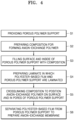
- a manufacturing method for an anion-exchange membrane may include: providing a porous polymer support composed of a membrane structure; preparing a composition for forming an anion-exchange polymer including a crosslinkable monomer represented by Formula 1, a photoinitiator, and a solvent; impregnating the porous polymer support with the composition for forming an anion-exchange polymer, thereby filling a surface and pores of the porous polymer support with the composition; pressing a polyester film onto at least one side of the porous polymer support filled with the composition to thereby manufacture a laminate in which the polyester film and the porous polymer support are laminated; irradiating light onto the laminate and subjecting the composition to a crosslinking reaction to form, on the surface and in the pores of the porous polymer support, an anion-exchange polymer that is a crosslinked product of the composition; and separating the polyester film from the porous polymer support having the anion-exchange polymer formed on the surface and in the pores, to thereby
- the manufacturing method for an anion-exchange membrane may provide an anion-exchange membrane with low sheet resistance, high ion exchange capacity, and excellent chemical resistance under highly concentrated acid and alkaline conditions.
- FIG. 4 is a schematic flowchart of a manufacturing method for an anion-exchange membrane according to an embodiment.
- a porous polymer support composed of a membrane structure may be provided (S1).
- the membrane structure may have a porosity of 30 % to 80 %.
- the membrane structure may have a porosity of 35 % to 70 %, or 40 % to 65 %, or 45 % to 60 %, or 45 % to 55 %. If the pore size and/or porosity of the membrane structure is less than 30 %, it may become difficult to achieve improvement in physical durability and mechanical strength of the anion-exchange membrane intended to be obtained using the porous polymer support. If the pore size and/or porosity of the membrane structure exceeds 80 %, the fraction occupied by the porous polymer support within the anion-exchange membrane becomes excessive, leading to increased sheet resistance and decreased ion exchange capacity.
- the membrane structure may include at least one polymer selected from polyethylene, polypropylene, polyethylene terephthalate, polyvinyl alcohol, polybenzimidazole, polyarylene sulfide, polyether ether ketone, polyether sulfone, polysulfone, polystyrene, polyarylene ether sulfone, and polyether ketone.
- the membrane structure may be materials of polyethylene or polypropylene.
- the membrane structure may be materials of polypropylene.
- the porous polymer support may have a thickness of 10 ⁇ m to 110 ⁇ m.
- the porous polymer support may have a thickness of 20 ⁇ m to 110 ⁇ m, 40 ⁇ m to 110 ⁇ m, or 60 ⁇ m to 110 ⁇ m. With the porous polymer support having a thickness within the aforementioned ranges, sheet resistance may decrease, and ion exchange capacity may increase.
- the membrane structure due to having hydrophobic characteristics, may not achieve sufficient wettability with the anion-exchange polymer, potentially failing to achieve intended membrane performance.
- an additional process may be included wherein the porous polymer support is immersed in a surfactant solution and then dried to manufacture a porous polymer support having a hydrophilic surface.
- any surfactant capable of hydrophilization in the art may be used without limitation, for example, one or more materials selected from dodecyl benzenesulfonic acid (DBSA), alkyl benzenesulfonic acid (ABS), linear alkylbenzenesulfonic acid (LAS), alphasulfonic acid (AS), alpha-olefin sulfonic acid (AOS), alcohol polyoxyethylene ether (AE), and alcohol polyoxyethylene ether sulfonic acid (AES) may be utilized.
- DBSA dodecyl benzenesulfonic acid
- ABS alkyl benzenesulfonic acid
- LAS linear alkylbenzenesulfonic acid
- AS alphasulfonic acid
- AOS alpha-olefin sulfonic acid
- AE alcohol polyoxyethylene ether
- AES alcohol polyoxyethylene ether sulfonic acid
- dodecyl benzenesulfonic acid may be
- the hydrophobic moiety of the surfactant binds to the hydrophobic surface of the porous polymer support through hydrophobic-hydrophobic interaction
- the hydrophilic moiety of the surfactant becomes exposed on the surface of the porous polymer support, replacing its hydrophobic properties and enabling hydrophilization.
- the surfactant may hydrophilize not only the outer surface but also the internal pore surfaces of the porous polymer support. However, this process may be omitted if the degree of hydrophilization of the porous polymer support is sufficient, or if the pores of the porous polymer support are large enough to allow filling of the composition for forming an anion-exchange polymer.
- the surfactant solution may contain 0.001 wt% to 6 wt% of a surfactant and the balance of solvent.
- the surfactant solution may include 0.01 wt% to 4 wt% of a surfactant and the balance of solvent, or may include 0.05 wt% to 3 wt% of a surfactant and the balance of solvent. If the surfactant included in the surfactant solution is less than 0.001 wt% of concentration, the surface of the porous polymer support may not be hydrophilized, potentially preventing the composition for forming an anion-exchange polymer from filling the pores of the porous polymer support. If the surfactant included in the surfactant solution exceeds 6 wt% of concentration, the surfactant may elute or the filling amount of composition for forming an anion-exchange polymer may decrease.
- the immersion may be performed for 0.1 minutes to 10 minutes, for example, 0.5 minutes to 5 minutes. If the immersion time is less than 0.1 minutes, the surface of the porous polymer support may not be sufficiently hydrophilized, preventing the composition for forming an anion-exchange polymer from filling the pores of the porous polymer support. If the immersion time exceeds 10 minutes, production rate may decrease and production costs may increase.
- the drying may be performed at a temperature of 40 °C to 90 °C for 1 minute to 20 minutes. For example, the drying may be performed at a temperature of 40 °C to 80 °C for 1 minute to 10 minutes.
- composition for forming an anion-exchange polymer including the crosslinkable monomer represented by Formula 1, a photoinitiator, and a solvent may be prepared (S2).
- the crosslinkable monomer represented by Formula 1 is a monomer in which two vinylbenzyl chlorides are crosslinked to a bi-functional cyclic diamine containing pendant chains having quaternary ammonium cationic groups attached thereto.
- the crosslinkable monomer represented by Formula 1 may form a rigid cage structure and thus maintain chemical stability while providing enhanced ion exchange capacity even under conditions of highly concentrated acids or bases. Consequently, the anion-exchange membrane containing such an anion-exchange polymer may exhibit excellent concentration and desalination performance.
- the term "crosslinked product” refers to cured products of compositions containing the crosslinkable monomer represented by Formula 1, as well as initial reaction products, reaction intermediates, final products, and the like thereof.
- the content of the crosslinkable monomer represented by Formula 1 may be 30 wt% to 70 wt% relative to 100 wt% of the composition for forming an anion-exchange polymer.
- the content of the photoinitiator may be from 0.01 wt% to 2 wt%, or from 0.1 wt% to 1 wt%, relative to 100 wt% of the anion-exchange polymer-forming composition.
- the photoinitiator may be, for example, 2-hydroxy-2-methylpropiophenone.
- the solvent may be, for example, a water-soluble solvent such as water, methanol or ethanol, and may be distilled water.
- the solvent may be included as the balance of the composition for forming an anion-exchange polymer, excluding the crosslinkable monomer represented by Formula 1 and the photoinitiator.
- the porous polymer support may be impregnated with the composition for forming an anion-exchange polymer to fill the surface and pores of the porous polymer support with the composition (S3).
- the impregnation may be performed for 0.1 minutes to 10 minutes, and for example, may be performed for 0.5 minutes to 5 minutes. If the impregnation is performed for less than 0.1 minutes, the composition for forming an anion-exchange polymer may not sufficiently fill the pores of the porous polymer support, leading to decreased membrane performance or leakage. If the impregnation is performed for more than 10 minutes, the production rate may decrease and the production cost may increase.
- the composition for forming an anion-exchange polymer may fill the pores of the porous polymer support, and the composition for forming an anion-exchange polymer may envelop the outer surface of the porous polymer support.
- a polyester film may be pressed onto at least one side of the porous polymer support filled with the composition to manufacture a laminate in which the polyester film and the porous polymer support are laminated (S4).
- the polyester film may be pressed onto the upper and/or lower surfaces of the porous polymer support through roll calendering.
- the polyester film may be, for example, a polyethylene terephthalate film.
- the polyester film may have a thickness of 10 ⁇ m to 150 ⁇ m, for example, 20 ⁇ m to 120 ⁇ m, or 30 ⁇ m to 100 ⁇ m. If the thickness of the polyester film is less than 10 ⁇ m, lamination defects such as film wrinkles may occur during lamination with the support filled with anion-exchange polymer. If the thickness of the polyester film exceeds 150 ⁇ m, during the crosslinking reaction described below, the film may be too thick for the light to be sufficiently irradiated on the porous polymer support, resulting in an insufficient crosslinking reaction.
- the polyester film may be untreated or release-treated on one surface that is in contact with the porous polymer support. By using such a film, it may be possible to interfere with bonding to the porous polymer support having a hydrophilic surface, thereby preventing the anion-exchange polymer from being removed from the support surface.
- the pressing may be performed at a temperature of 10 °C to 35 °C, for example, 15 °C to 30 °C, under a pressure of about 0 bar to 5 bar. The pressure may be appropriately adjusted in consideration of the thickness of the porous polymer support and the thickness of the polyester film.
- composition may be crosslinked to form, on the surface and inside the pores of the porous polymer support, an anion-exchange polymer that is a crosslinked product of the composition (S5).
- the light may be ultraviolet light and may be, for example, UVA, UVB, UVC or/and UVV.
- the light irradiation may be performed using UVC as ultraviolet light at a dose of 2,000 mJ/cm 2 to 10,000 mJ/cm 2 , for example, at a dose of 2,000 mJ/cm 2 to 8,000 mJ/cm 2 .
- the crosslinking reaction of the composition for forming an anion-exchange polymer may not proceed efficiently, and if the irradiated ultraviolet light has light intensity and irradiation time above the aforementioned range, the energy may become too strong, causing melting or carbonization of the porous polymer support and polyester film.
- the polyester film may be separated from the porous polymer support having the anion-exchange polymer formed on the surface and in the pores to thereby manufacture an anion-exchange membrane (S6).
- the separation may be performed by pulling the polyester film attached to the porous polymer support in opposite directions using separation rolls.
- a 60 ⁇ m-thick polypropylene porous polymer support (porosity: 55 %) was prepared.
- the polypropylene porous polymer support was impregnated with the composition for forming an anion-exchange polymer, thereby filling the surface and pores of the porous polymer support.
- the porous polymer support filled with the composition was fed into press rolls, and a 50 ⁇ m-thick polyester film was pressed onto the upper and lower surfaces of the porous polymer support at room temperature to manufacture a laminate in which the polyester film and the porous polymer support are laminated.
- the laminate was irradiated with UVC as ultraviolet light at a light intensity of 3,000 mJ/cm 2 to form an anion-exchange polymer, which is a crosslinked product of the composition, on the surface and in the pores of the porous polymer support.
- the polyester film was then separated from the porous polymer support having the anion-exchange polymer formed on the surface and in the pores to thereby manufacture an anion-exchange membrane.
- X - is Cl - .
- An anion-exchange membrane was manufactured using the same method as Example 1, except that an 80 ⁇ m-thick polypropylene porous polymer support (porosity: 45 %) was used.
- An anion-exchange membrane was manufactured using the same method as Example 1, except that a 110 ⁇ m-thick polypropylene porous polymer support (porosity: 48 %) was used.
- An anion-exchange membrane was manufactured using the same method as Example 1, except that a 120 ⁇ m-thick polypropylene porous polymer support (porosity: 28 %) was used.
- An anion-exchange membrane was manufactured using the same method as Example 1, except that a 60 ⁇ m-thick cellulose acetate nonwoven-type support (porosity: 75 %) was used.
- An anion-exchange membrane was manufactured using the same method as Example 1, except that a 20 ⁇ m-thick polyethylene/polypropylene mesh-type support (porosity: 84 %) was used.
- An anion-exchange membrane was manufactured using the same method as Example 1, except that an 8 ⁇ m-thick polyethylene porous polymer support (porosity: 44 %) was used.
- An anion-exchange membrane was manufactured using the same method as Example 1, except that a composition for forming an anion-exchange polymer totaling 100 wt%, which was prepared by mixing 42 wt% of (3-acrylamidopropyl)trimethylammonium chloride (manufactured by TCI), 14 wt% of N,N'-methylenebisacrylamide (manufactured by Merck), 0.6 wt% of 2-hydroxy-2-methylpropiophenone (manufactured by Ciba) as photoinitiator, and the balance of distilled water.
- a composition for forming an anion-exchange polymer totaling 100 wt% which was prepared by mixing 42 wt% of (3-acrylamidopropyl)trimethylammonium chloride (manufactured by TCI), 14 wt% of N,N'-methylenebisacrylamide (manufactured by Merck), 0.6 wt% of 2-hydroxy-2-methylpropiophenone (manu
- the structure of the porous polymer support in the anion-exchange membrane manufactured in Example 1 was observed at x30K magnification using scanning electron microscopy (SEM). A Hitachi S-5500 scanning electron microscope was used. The results are shown in FIG. 3 .
- the porous polymer support of the anion-exchange membrane manufactured in Example 1 was confirmed to have a three-dimensional network structure.
- Each anion-exchange membrane was cut to a size of 5 cm x 5 cm to prepare samples.
- the samples were immersed in 0.5 M NaCl aqueous solution for 24 hours.
- the samples were positioned between electrodes for sheet resistance measurement.
- LCR meter E4908A, manufactured by Agilent
- the wire resistance (R 1 ) of the anion-exchange membrane and the resistance (R 2 ) of 0.5 M NaCl aqueous solution were measured.
- the sheet resistance (Rm) was calculated by applying the measured resistance values (R 1 , R 2 ) to Equation 1 below.
- the results are shown in Table 1.
- Rm ⁇ ⁇ cm 2 R 1 ⁇ R 2 ⁇ S
- Each anion-exchange membrane was cut to a size of 5 cm x 5 cm to prepare samples.
- the samples were washed with distilled water and excess moisture was removed with tissue.
- 70 ml of 1 M NaCl solution was added to a vial, and the moisture-removed sample was immersed in the 1 M NaCl solution for 12 hours or more for primary pretreatment.
- the samples after a first pretreatment were washed several times with distilled water and excess moisture was removed with tissue.
- 70 ml of 0.5 M Na 2 CO 3 solution was added to a vial, and the moisture-removed sample was immersed in the 0.5 M Na 2 CO 3 solution for 12 hours or more for a second pretreatment.
- Example 1 and Comparative Example 5 The anion-exchange membranes manufactured in Example 1 and Comparative Example 5 were cut to a size of 5 cm x 5 cm to prepare samples. The samples were immersed in 1 M NaOH aqueous solution and 0.5 M H 2 SO 4 aqueous solution, respectively, and their sheet resistance was measured for each immersion time (days) using the same method as (1) Sheet Resistance ( ⁇ cm 2 ). The results are shown in Tables 2 and 3.
- Example 1 Support material Support porosity (%) Support thickness ( ⁇ m) Sheet resistance ( ⁇ cm 2 ) IEC (meq/g)
- Example 1 Polypropylene 55 60 3.0 2.4
- Example 2 Polypropylene 45 80 7.6 1.8
- Example 3 Polypropylene 48 110 9.6 1.8 Comparative Example 1 Polypropylene 28 120 19.8 1.0 Comparative Example 2 Cellulose acetate 75 60 2.4 1.9 Comparative Example 3 Polyethylene/Polypropylene 84 20 0.6 2.7 Comparative Example 4 Polyethylene 44 8 0.3 2.8 Comparative Example 5 Polypropylene 55 60 4.5 1.0
- the porous polymer supports of the anion-exchange membranes manufactured in Examples 1 to 3 are polypropylene membranes with a porosity of 48 % to 55 % and a thickness of 60 ⁇ m to 110 ⁇ m.
- the porous polymer support of the anion-exchange membrane manufactured in Comparative Example 1 is a polypropylene membrane with a porosity of 28 % and a thickness of 120 ⁇ m.
- the anion-exchange membranes manufactured in Examples 1 to 3 showed a decreased sheet resistance of 9.6 ⁇ cm 2 or less and an improved IEC of 1.8 meq/g or higher, compared to the anion-exchange membrane manufactured in Comparative Example 1.
- the porous polymer support of the anion-exchange membrane manufactured in Comparative Example 2 is a cellulose acetate nonwoven-type support with a thickness of 60 ⁇ m and a porosity of 75 %.
- the anion-exchange membrane manufactured in Comparative Example 2 was subjected to concentration in an electrodialysis system using 15 wt% NaCl aqueous solution as raw water, but failed to achieve concentration.
- the porous polymer support of the anion-exchange membrane manufactured in Comparative Example 3 is a polyethylene/polypropylene porous polymer support with a thickness of 20 ⁇ m and a porosity of 84 %.
- the anion-exchange membrane manufactured in Comparative Example 3 was subjected to concentration in an electrodialysis system using 15 wt% NaCl aqueous solution as raw water, but failed to achieve concentration.
- the porous polymer support of the anion-exchange membrane manufactured in Comparative Example 4 is a polyethylene porous polymer support with a thickness of 8 ⁇ m and a porosity of 44 %.
- the anion-exchange membrane manufactured in Comparative Example 4 could not be assembled into modules due to its excessive thinness.
- Tables 2 and 3 show the sheet resistance measurements over immersion time for the anion-exchange membrane manufactured in Example 1 and the anion-exchange membrane manufactured in Comparative Example 5, respectively, when immersed in 1 M NaOH aqueous solution and 0.5 M H 2 SO 4 aqueous solution.
- the anion-exchange membrane manufactured in Example 1 showed sheet resistance changes of about 6.7 % and 3 % after 40 days of immersion in 1 M NaOH aqueous solution and 0.5 M H 2 SO 4 aqueous solution, respectively.
- the anion-exchange membrane manufactured in Comparative Example 5 showed sheet resistance changes of about 41 % and 11 % after 40 days of immersion in 1 M NaOH aqueous solution and 0.5 M H 2 SO 4 aqueous solution, respectively.
- Example 1 the anion-exchange membrane manufactured in Example 1 was confirmed to exhibit excellent chemical resistance compared to the anion-exchange membrane manufactured in Comparative Example 5, as demonstrated by smaller changes in sheet resistance after 40 days of immersion in 1 M NaOH aqueous solution and 0.5 M H 2 SO 4 aqueous solution.
- anion-exchange membranes prepared in Examples 1 to 3 are suitable for use in electrodialysis, bipolar membrane electrodialysis, electrodeionization, capacitive deionization, or water electrolysis systems.
Landscapes
- Chemical & Material Sciences (AREA)
- Chemical Kinetics & Catalysis (AREA)
- Engineering & Computer Science (AREA)
- Manufacturing & Machinery (AREA)
- Health & Medical Sciences (AREA)
- Water Supply & Treatment (AREA)
- General Chemical & Material Sciences (AREA)
- Sustainable Development (AREA)
- Electrochemistry (AREA)
- Sustainable Energy (AREA)
- Life Sciences & Earth Sciences (AREA)
- Medicinal Chemistry (AREA)
- Polymers & Plastics (AREA)
- Organic Chemistry (AREA)
- Urology & Nephrology (AREA)
- Materials Engineering (AREA)
- Inorganic Chemistry (AREA)
- Crystallography & Structural Chemistry (AREA)
- Manufacture Of Macromolecular Shaped Articles (AREA)
- Separation Using Semi-Permeable Membranes (AREA)
Applications Claiming Priority (2)
| Application Number | Priority Date | Filing Date | Title |
|---|---|---|---|
| KR1020220088463A KR20240011301A (ko) | 2022-07-18 | 2022-07-18 | 음이온 교환막 및 이의 제조방법 |
| PCT/KR2023/007175 WO2024019307A1 (fr) | 2022-07-18 | 2023-05-25 | Membrane échangeuse d'anions et son procédé de fabrication |
Publications (1)
| Publication Number | Publication Date |
|---|---|
| EP4559955A1 true EP4559955A1 (fr) | 2025-05-28 |
Family
ID=89618102
Family Applications (1)
| Application Number | Title | Priority Date | Filing Date |
|---|---|---|---|
| EP23843164.7A Pending EP4559955A1 (fr) | 2022-07-18 | 2023-05-25 | Membrane échangeuse d'anions et son procédé de fabrication |
Country Status (6)
| Country | Link |
|---|---|
| US (1) | US20260021451A1 (fr) |
| EP (1) | EP4559955A1 (fr) |
| JP (1) | JP2025523983A (fr) |
| KR (1) | KR20240011301A (fr) |
| CN (1) | CN119816548A (fr) |
| WO (1) | WO2024019307A1 (fr) |
Family Cites Families (10)
| Publication number | Priority date | Publication date | Assignee | Title |
|---|---|---|---|---|
| WO2007069714A1 (fr) * | 2005-12-15 | 2007-06-21 | Tonen Chemical Corporation | Membrane microporeuse composite hydrophile et méthode de production de ladite membrane |
| JP5566021B2 (ja) * | 2007-12-25 | 2014-08-06 | 株式会社トクヤマ | アニオン型燃料電池用隔膜およびその製造方法 |
| JP5164149B2 (ja) * | 2008-01-18 | 2013-03-13 | 株式会社トクヤマ | 陽イオン交換膜およびその製造方法 |
| ES2748340T3 (es) * | 2009-08-26 | 2020-03-16 | Evoqua Water Tech Pte Ltd | Membranas de intercambio iónico |
| WO2015058137A2 (fr) * | 2013-10-18 | 2015-04-23 | Virginia Tech Intellectual Properties, Inc. | Copolymères contenant dabco |
| JP6093728B2 (ja) * | 2014-03-25 | 2017-03-08 | 富士フイルム株式会社 | スチレン系高分子機能性膜およびその製造方法 |
| EP3181619A4 (fr) * | 2014-08-14 | 2017-08-16 | Fujifilm Corporation | Film fonctionnel polymère, procédé de production associé, et empilement ou dispositif pourvu d'un film fonctionnel polymère |
| JP6227791B2 (ja) * | 2014-08-14 | 2017-11-08 | 富士フイルム株式会社 | イオン交換膜及びその製造方法、並びに、モジュール及び装置 |
| WO2016027595A1 (fr) * | 2014-08-19 | 2016-02-25 | 富士フイルム株式会社 | Composition pour la formation d'une membrane polymère, son procédé de production, membrane polymère, module de membrane de séparation et dispositif d'échange d'ions |
| KR102133787B1 (ko) * | 2018-05-02 | 2020-07-15 | 도레이첨단소재 주식회사 | 표면 이온 교환 고분자 전해질이 제거된 세공충진 이온 교환 고분자 전해질 복합막 및 이의 제조방법 |
-
2022
- 2022-07-18 KR KR1020220088463A patent/KR20240011301A/ko not_active Ceased
-
2023
- 2023-05-25 US US18/995,673 patent/US20260021451A1/en active Pending
- 2023-05-25 EP EP23843164.7A patent/EP4559955A1/fr active Pending
- 2023-05-25 CN CN202380054710.XA patent/CN119816548A/zh active Pending
- 2023-05-25 WO PCT/KR2023/007175 patent/WO2024019307A1/fr not_active Ceased
- 2023-05-25 JP JP2025502947A patent/JP2025523983A/ja active Pending
Also Published As
| Publication number | Publication date |
|---|---|
| KR20240011301A (ko) | 2024-01-26 |
| JP2025523983A (ja) | 2025-07-25 |
| WO2024019307A1 (fr) | 2024-01-25 |
| US20260021451A1 (en) | 2026-01-22 |
| CN119816548A (zh) | 2025-04-11 |
Similar Documents
| Publication | Publication Date | Title |
|---|---|---|
| EP2470290B1 (fr) | Membranes échangeuses d'ions | |
| EP3789440A1 (fr) | Membrane composite à polyélectrolyte échangeur d'ions, à pores remplis, à suppression du polyélectrolyte échangeur d'ions de la surface et son procédé de fabrication | |
| KR102757927B1 (ko) | 음이온 교환막 및 그 제조방법 | |
| EP4516843A1 (fr) | Membrane échangeuse d'anions | |
| EP4559955A1 (fr) | Membrane échangeuse d'anions et son procédé de fabrication | |
| KR20260056999A (ko) | 음이온 교환막 및 이의 제조방법 | |
| KR102757926B1 (ko) | 음이온 교환막 및 그 제조방법 | |
| KR102832872B1 (ko) | 음이온 교환막 및 그 제조방법 | |
| KR100460454B1 (ko) | 친수성 고분자를 이용한 수팽윤성 양이온교환막 및 그의제조방법 | |
| CN112159988A (zh) | 一种聚四氟乙烯夹层保护离子交换膜及其制备方法和在电解领域的应用 |
Legal Events
| Date | Code | Title | Description |
|---|---|---|---|
| STAA | Information on the status of an ep patent application or granted ep patent |
Free format text: STATUS: THE INTERNATIONAL PUBLICATION HAS BEEN MADE |
|
| PUAI | Public reference made under article 153(3) epc to a published international application that has entered the european phase |
Free format text: ORIGINAL CODE: 0009012 |
|
| STAA | Information on the status of an ep patent application or granted ep patent |
Free format text: STATUS: REQUEST FOR EXAMINATION WAS MADE |
|
| 17P | Request for examination filed |
Effective date: 20250120 |
|
| AK | Designated contracting states |
Kind code of ref document: A1 Designated state(s): AL AT BE BG CH CY CZ DE DK EE ES FI FR GB GR HR HU IE IS IT LI LT LU LV MC ME MK MT NL NO PL PT RO RS SE SI SK SM TR |
|
| DAV | Request for validation of the european patent (deleted) | ||
| DAX | Request for extension of the european patent (deleted) |