EP4560116A1 - Installation pour délivrer de l'électricité et de la chaleur fortement décarbonisée - Google Patents
Installation pour délivrer de l'électricité et de la chaleur fortement décarbonisée Download PDFInfo
- Publication number
- EP4560116A1 EP4560116A1 EP23307016.8A EP23307016A EP4560116A1 EP 4560116 A1 EP4560116 A1 EP 4560116A1 EP 23307016 A EP23307016 A EP 23307016A EP 4560116 A1 EP4560116 A1 EP 4560116A1
- Authority
- EP
- European Patent Office
- Prior art keywords
- unit
- electricity
- thermal
- installation
- steam
- Prior art date
- Legal status (The legal status is an assumption and is not a legal conclusion. Google has not performed a legal analysis and makes no representation as to the accuracy of the status listed.)
- Pending
Links
Images

Classifications
-
- F—MECHANICAL ENGINEERING; LIGHTING; HEATING; WEAPONS; BLASTING
- F01—MACHINES OR ENGINES IN GENERAL; ENGINE PLANTS IN GENERAL; STEAM ENGINES
- F01K—STEAM ENGINE PLANTS; STEAM ACCUMULATORS; ENGINE PLANTS NOT OTHERWISE PROVIDED FOR; ENGINES USING SPECIAL WORKING FLUIDS OR CYCLES
- F01K3/00—Plants characterised by the use of steam or heat accumulators, or intermediate steam heaters, therein
- F01K3/18—Plants characterised by the use of steam or heat accumulators, or intermediate steam heaters, therein having heaters
- F01K3/186—Plants characterised by the use of steam or heat accumulators, or intermediate steam heaters, therein having heaters using electric heat
Definitions
- the present disclosure deals with an installation for delivering electricity and heat.
- the disclosure also deals with a corresponding process for delivering electricity and heat.
- One known type of installation includes a CCGT (Combined Cycle Gas Turbine), able to produce said electricity and heat.
- CCGT Combined Cycle Gas Turbine
- Such an installation performs well in terms of electricity and heat production, particularly for internal or local users, but also for external users, such as district heating and local, regional or national electricity grids.
- renewable energy units such as a photovoltaic and/or solar thermal units in an industrial installation
- integration of renewable energy units such as a photovoltaic and/or solar thermal units in an industrial installation
- Using a photovoltaic unit may allow a significant reduction of the gas turbine average load, or even a reduction of the number of gas turbines installed.
- the CCGT needs to operate in a continuous mode, above a minimum load rate mainly imposed by the gas turbine. Even when a lot of renewable energy is available, the CCGT will still consume a certain amount a fuel, so that, on average, the level of decarbonization of the delivered electricity and heat remains modest.
- a 100% decarbonization level is an ideal situation where no hydrocarbon fuel at all is consumed. On the contrary, a 0% decarbonization level correspond to a fully fuel based installation. In practice, the decarbonization level achieved by the existing installations with renewable energy units remains below 40%.
- An aim of the invention is to solve or improve the above issues, in particular to provide an installation for delivering electricity and heat that increases the level of decarbonization.
- the invention proposes an installation for delivering electricity and heat, comprising:
- the installation comprises one or several of the following features, taken in isolation or any technically feasible combination:
- the invention also deals with a process for delivering electricity and heat, the process comprising:
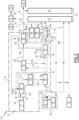
- the installation 10 is adapted for delivering electricity 12 and heat 14.
- the installation 10 comprises a production facility 16 adapted for delivering said electricity 12 and heat 14, and local users 18 of said electricity and heat.
- the installation 10 is advantageously adapted for exporting at least part of the electricity 12 to a local, regional or national grid 20.
- the installation 10 is also advantageously adapted for delivering at least part of the heat 14 to one or several external users 22, such as a district heating system.
- the installation 10 is for example also adapted to receive electricity from said local, regional or national grid 20.
- the split between the production facility 16 and the users 18 in the installation 10 is somewhat "artificial" here, as some of the users 18 could be considered as part of the production facility 16 itself. In other words, at least some of the local users 18 are internal users of the production facility.
- the users 18 advantageously comprise one or several electricity user(s) 24 and one or several heat user(s) 26.
- One electricity user may also be a heat user.
- said one or several heat user(s) 26 comprise(s) one or several users among:
- said one or several electricity user(s) 24 comprise(s) one or several users among:
- the production facility 16 comprises an electricity production unit 28 adapted for producing renewable electricity 30, and a renewable energy thermal assembly 32 comprising a hot fluid(s) generation system 33 adapted for producing one or several renewable hot fluid(s) 34 and renewable energy based steam 36.
- renewable it is meant that the considered energy is based on a natural renewable source, such as sun and wind. Such a source is rapidly renewable, and does not produce direct wastes, nor direct CO2 emissions.
- the production facility 16 comprises a boiler unit 38 adapted for burning fuel 40 and producing at least fuel based steam 42, and a steam turbine unit 44 adapted for using the renewable energy based steam 36 and/or the fuel based steam 42 in order to produce steam based electricity 48.
- the installation 10 further comprises a source of green fuel 50 adapted for supplying green fuel 52 to the boiler unit 38, and a carbon capture unit 54 adapted for receiving exhausts 56 from the boiler unit and for producing a CO2 rich fluid 58 intended to be transported, for example by pipelines or tanker ships, to a long term storage 59, such as an aquifer.
- a source of green fuel 50 adapted for supplying green fuel 52 to the boiler unit 38
- a carbon capture unit 54 adapted for receiving exhausts 56 from the boiler unit and for producing a CO2 rich fluid 58 intended to be transported, for example by pipelines or tanker ships, to a long term storage 59, such as an aquifer.
- the CO2 rich fluid 58 for example contains more than 80mol.%, preferably more than 90mol.%, of CO2.
- the installation 10 is configured for switching at least between three operation modes.
- the delivered electricity 12 is produced by the electricity production unit 28 alone, or by the electricity production unit 28 and the steam turbine unit 44, or by the steam turbine unit 44 alone, the steam turbine unit 44 exclusively using the renewable energy based steam 36 and not the fuel based steam 42.
- the hot fluid(s) generation system 33 produces the delivered heat 14.
- the delivered electricity 12 and the delivered heat 14 are fully renewable.
- the delivered electricity 12 is produced by the electricity production unit 28 alone, or by the electricity production unit 28 and the steam turbine unit 44, or by the steam turbine unit 44 alone, the steam turbine unit 44 using the renewable energy based steam 36 exclusively, the fuel based steam 42 exclusively, or the renewable energy based steam 36 and the fuel based steam 42.
- the hot fluid(s) generation system 33 and the boiler unit 38 altogether produce the delivered heat 14.
- the delivered heat 14 is partially renewable, and the delivered electricity 12 is either renewable, or partially renewable, or non-renewable.
- the boiler unit 38 burns the fuel 40 and produces the delivered heat 14 and the fuel based steam 42, and the steam turbine unit 44 uses the fuel based steam 42 to produce the delivered electricity.
- the delivered electricity 12 and the delivered heat 14 are non-renewable, or just less renewable in case the green fuel 52 and/or carbon capture unit 54 are advantageously used.
- the first operation mode and the second operation mode are preferred compared with the third operation mode, and the first operation mode is preferred compared with the second operation mode.
- the installation 10 is further configured to switch from these three operation modes to one or several other operation modes, which may be "intermediate” between the three operation modes, or different.
- the electricity production unit 28 for example comprises photovoltaic cells 60 and/or at least one wind turbine 62.
- the electricity production unit 28 advantageously comprises a battery electricity storage 64 adapted for storing electricity from the photovoltaic cells 60 and/or the at least one wind turbine 62, and advantageously from the steam turbine unit 44 or from the grid 20.
- the battery electricity storage 64 for example comprises lithium-ion batteries.
- the renewable energy thermal assembly 32 comprises a first thermal storage 66 unit adapted for storing thermal energy 67, and an electrical heater unit 68 electrically connected to the electricity production unit 28 and adapted for producing electricity based thermal energy 70 using at least one part 72 of the electricity 30 produced by the electricity production unit 28.
- the renewable energy thermal assembly 32 further comprises a solar thermal unit 74 adapted for producing solar based thermal energy 76.
- the solar thermal unit 74 is configured for delivering the solar based thermal energy 76 to the first thermal storage 66
- the electrical heater unit 68 is configured for delivering the electricity based thermal energy 70 to the first thermal storage unit 66.
- the solar thermal unit 74 and the electrical heater unit 68 are mounted in parallel to each other.
- the solar thermal unit 74, the electrical heater unit 68 and the first thermal storage unit 66 are configured for producing hot flows 78, 80, 82, 84, each of said hot flows having a temperature comprised between 350°C and 420°C.
- the electrical unit 68 for example comprises at least one electrical heater (not represented).
- the solar thermal unit 74 is known in itself and will not be described in detail.
- the solar thermal unit 74 for example comprises parabolic trough collectors (PTC technology) or a solar power tower (SPT technology), which are not shown.
- PTC technology parabolic trough collectors
- SPT technology solar power tower
- the first thermal storage unit 66 for example comprises molten salts 86, for example a binary salt with 40wt.% KNO 3 and 60wt.% NaNOs .
- molten salts 86 for example a binary salt with 40wt.% KNO 3 and 60wt.% NaNOs .
- Such a thermal storage unit is known in itself and will not be described in detail.
- the first thermal storage unit 66 for example comprises a first heat exchanger 88 adapted for recovering the solar based thermal energy 76, and a first thermal storage 90 adapted for storing thermal energy.
- the thermal storage unit 66 may further comprise one or several of the following elements (not represented):
- the hot fluid(s) generation system 33 is adapted for using internal renewable energy generated or present within the renewable energy thermal assembly 32 in order to produce said one or several hot fluid(s) 34 and the renewable energy based steam 36.
- the internal renewable energy includes the electricity based thermal energy 70, the stored thermal energy 67, and, in the example, the solar based thermal energy 76 coming from the solar thermal unit 74.
- the hot fluid(s) generation system 33 is configured for exclusively using the stored thermal energy 67, the electricity based thermal energy 70, and the solar thermal energy 76 being received in the first thermal storage unit 66 before being used by the hot fluid(s) generation system 33. This provides stability in the supply of heat (thermal energy) to the hot fluid(s) generation system 33.
- the hot fluid(s) generation system 33 for example comprises a second heat exchanger 92 adapted for producing said one or several hot fluid(s) 34 using the hot fluid 82 from the first thermal storage unit 66.
- the hot fluid(s) generation system 33 for example comprises a third heat exchanger 94 adapted for producing the renewable energy based steam 36 using the flow 84 from the first thermal storage unit 66.
- the boiler unit 38 for example comprises a first boiler 96 and a second boiler 98.
- the boiler unit 38 comprises one boiler, or more than two boilers.
- the boiler unit 38 is adapted to burn the fuel 40, which is a hydrocarbon one, and/or the green fuel 52.
- the boiler unit 38, and the installation 10 are deprived of any gas turbine.
- the first boiler 96 is for example adapted for producing one or several hot fluids 100 intended to constitute at least part of the delivered heat 14.
- the second boiler 98 is for example adapted for producing the fuel based steam 42.
- the steam turbine unit 44 comprises at least one steam turbine 102 and at least one electricity generator 104.
- the steam turbine unit 44 may comprise more than one steam turbine and/or more than one electricity generator.
- the steam turbine unit 44 is designed for expanding a nominal amount of steam.
- the hot fluid(s) generation system 33 is configured for continuously producing the renewable energy based steam 36, at a flowrate equal to or larger than a minimal turn down of the steam turbine unit 44, for example 10% of said nominal amount of steam, and the steam turbine unit 44 uses the renewable energy based steam 36 in order to produce the part 48 of the delivered electricity 12. This allows quick ramp-up of the steam turbine unit 44, if more electricity is needed from the steam turbine unit 44.
- the installation 10 delivers said electricity 12 for the users 18 and advantageously the grid 20, or may sometimes receive electricity from the grid 20.
- the installation 10 also delivers the heat 14 to the users 18, and advantageously to the external users 22.
- the installation 10 is switched between at least the first operation mode, the second operation mode and the third operational mode.
- the hot fluid(s) generation system 33 produces the delivered heat 14.
- the delivered electricity 12 may be entirely produced by the electricity production unit 28, for example when the latter can produce enough and the steam turbine unit 44 is idle.
- the delivered electricity 12 may be produced by the electricity production unit 28 and the steam turbine unit 44, for example in order to be ready for a quick ramp-up of the steam turbine unit 44, or because the electricity production unit 28 cannot produce enough electricity.
- the electricity production unit 28 produces a part 106 of the delivered electricity 12 and the steam turbine unit 44 produces the part 48, using the renewable energy based steam 36 produced by hot fluid(s) generation system 33.
- At least one part of it may be stored in the battery electricity storage 64. Possibly, the part 72 of the produced electricity 30 is sent to the electrical heater unit 68.
- the delivered electricity 12 may be produced by the steam turbine unit 44 using the renewable energy based steam 36.
- the boiler unit 38 is idle.
- the solar thermal unit 74 when it works, produces the solar based thermal energy 76.
- the first heat exchanger 88 recovers the solar based thermal energy 76.
- the first heat exchanger 88 performs a heat exchange between the flow 78 coming from the solar thermal unit 74, for example at 390°C, and a flow 108 for example at 300°C, in order to obtain a flow 110, for example at 310°C, which is returned to the solar thermal unit 74, and a flow 112, for example at 380°C.
- the flow 78 and the flow 110 are for example hot oil.
- the flow 108 and the flow 112 are for example molten salts. This allows storing the solar thermal energy 76 in the first thermal storage unit 66 or, as a variant, passing it or some of it directly to the hot fluid(s) generation system 33.
- the first thermal storage 90 stores part of the internal renewable energy.
- the first thermal storage 90 may receive a flow 114, for example at 380°C, in order to store heat.
- the first thermal storage 90 may produce a flow 116, for example at 380°C.
- the flows 114, 116 are for example molten salts.
- the hot fluid(s) generation system 33 uses the internal renewable energy and produce said one or several hot fluid(s) 34.
- the second heat exchanger 92 uses the flow 82 coming from the first thermal storage unit 66, for example at 380°C, in order to produce said one or several hot fluid(s) 34, and a flow 120 returned to the first thermal storage unit 66, for example at 300°C.
- the flows 82, 120 are for example molten salts.
- the hot fluid(s) generation system 33 also produces a flow of fluid 122, the steam turbine unit 44 being heated (kept at a certain temperature) by the flow of fluid 122 without expanding the flow of fluid 122. This allows keeping the steam turbine unit 44 in warm stand-by.
- the steam turbine unit 44 runs at its minimum load, using the renewable energy based steam 36 and produces the part 48 of the delivered electricity 12. This allows a quick ramp-up of the steam turbine unit 44.
- the electricity stored in the battery electricity storage 64 is used to supply the users 18.
- the steam turbine unit 44 is run at a higher load, using the renewable energy based steam 36.
- the battery electricity storage 64 may also store electricity in order to allow a ramp-up or a ramp-down of the steam turbine unit 44.
- the renewable energy based steam 36 is produced by the third heat exchanger 94.
- the third heat exchanger 94 receives the flow 84, for example at 380°C coming from the first thermal storage unit 66, in order to produce the renewable energy based steam 36, and a flow 124 returned to the first thermal storage unit 66, for example at 300°C.
- the flows 84, 124 are for example molten salts.
- the excess electricity is advantageously used to charge the battery electricity storage 64 as a first priority, and the part 72 is sent to the electrical heater unit 68 as a second priority in order to provide the electricity based thermal energy 70 to the first thermal storage unit 66.
- the renewable energy thermal assembly 32 uses the stored thermal energy 67 or the electricity based thermal energy 70.
- the thermal storage unit 66 and the battery electricity storage unit 64 are advantageously used to manage intermittency or for peak shifting supply, or for optimizing the efficiency of the electricity and heat delivery.
- the battery electricity storage unit 64 is advantageously used for short term intermittency. For example when there are clouds, the battery electricity storage unit 64 can compensate for the missing electricity production.
- the thermal storage unit 66 is advantageously used for long term intermittency, such as the night/day one.
- the other part 72 of the electricity 30 When the other part 72 of the electricity 30 is sent to the electrical heater unit 68, the latter uses said other part 72 and heats a flow 126 coming from the first thermal storage unit 66, for example at 300°C, in order to obtain the flow 80 which is returned to the first thermal storage unit 66, for example at 380°C.
- the flows 80, 126 are for example molten salts. This allows storing the electricity based thermal energy 70 in the first thermal storage unit 66 or, as a variant, passing it or some of it directly to the hot fluid(s) generation system 33.
- the hot fluid(s) generation system 33 and the boiler unit 38 produce the delivered heat 14.
- the hot fluid(s) generation system 33 produces said one or several hot fluid(s), forming a first part of the delivered heat 14, in the same manner as in the first operation mode.
- the boiler unit 38 produces said one or several hot fluids 100, forming a second part of the delivered heat 14.
- the first boiler 96 burns the fuel 40, or advantageously the green fuel 52, in order to produce said second part.
- the delivered electricity 12 is produced in the same manner as in the first operation mode, except that the steam turbine unit 44, if it runs, uses the renewable energy based steam 36 and/or the fuel based steam 42, the latter being less preferred. In some cases where there is not enough internal renewable energy, the steam turbine unit 44 may use steam that is for example partially or totally produced by the second boiler 98 using the fuel 40, or preferably the green fuel 52.
- the exhausts 56 from the boiler unit 38 are preferably received and treated by the carbon capture unit 54.
- the boiler unit 38 is used at least for producing the second part of the delivered heat 14, and possibly for producing the fuel based steam 42 processed by the steam turbine unit 44.
- the boiler unit 38 burns the fuel 40, or preferably the green fuel 52, and produces the delivered heat 14 and the fuel based steam 42.
- the steam turbine unit 44 uses the fuel based steam 42 to produce the part 48 which forms all of the delivered electricity 12.
- the exhausts 56 from the boiler unit 38 are preferably received and treated by the carbon capture unit 54.
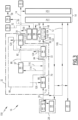
- the installation 130 is analogous to the installation 10 represented in Figure 1 . Similar elements bear the same numeral references and will not be described again. Only the differences will be described in detail hereafter.
- the renewable energy thermal assembly 32 further comprises a second thermal storage unit 132 adapted for storing the solar based thermal energy 76.
- the second thermal storage unit 132 comprises the first heat exchanger 88 (which is not any more in the first thermal storage unit 66) and a second storage 134.
- the second thermal storage unit 132 is configured for delivering the stored solar based thermal energy 76 to the electrical heater unit
- electrical heater unit 68 is configured for delivering the electricity based thermal energy 70 to the first thermal storage unit 66.
- the solar thermal unit 74 and the electrical heater unit 68 are mounted in series.
- the second thermal storage unit 132 is adapted to work as a buffer between the solar thermal unit 74 and the electrical heater unit 68 in order to help managing the production of the solar thermal energy 76 and of the electricity based thermal energy 70.
- the second thermal storage unit 132 is configured for producing a flow 136 having a temperature for example comprised between 350 and 420°C
- the electrical heater unit 68 and the first thermal storage unit 66 are configured for producing the flows 80, 82, 84 each of said flows having a temperature for example comprised between 500°C and 750°C.
- the installation 130 operates in a manner analogous to that of the installation 10 with the following differences.
- the first heat exchanger 88 recovers the solar based thermal energy 76.
- the first heat exchanger 88 performs a heat exchange between the first flow 78 coming from the solar thermal unit 74, for example at 390°C, and the flow 108, for example still at 300°C, in order to obtain the flow 110, for example at 310°C, which is returned to the solar thermal unit 74, and the flow 112, for example at 380°C.
- the flow 112 is not returned to the first thermal storage unit 66, but received by the second thermal storage 134, where thermal energy can be stored, or, as a variant, directly passed to the electrical heater unit 68.
- the part 72 of the produced electricity 30 is sent to the electrical heater unit 68, the latter uses said part 72 in order to heat the flow 136 coming from the second thermal storage unit 132, for example at 380°C, in order to obtain the flow 80 sent to the first thermal storage unit, for example at 565°C.
- the flow 136 is for example molten salts.
- the flows 80, 82, 84, 114, 116, are for example at 565°C instead of 380°C.
- the installation 150 is analogous to the installation 10 represented in Figure 1 . Similar elements bear the same numeral references and will not be described again. Only the differences will be described in detail hereafter.
- the installation 150 does not comprise the solar thermal unit 74 and the first heat exchanger 88 shown in Figure 1 .
- the internal renewable energy (generated or present with the renewable energy thermal assembly 32) includes the electricity based thermal energy, the stored thermal energy, and no solar thermal energy.
- the installation 150 operates in a manner analogous to that of the installation 10 with the following differences.
- the installation 150 is switched between at least the first operation mode, the second operation mode and the third operational mode.
- the flows 80, 82, 84, 114, 116, are for example at 565°C instead of 380°C.
- Table 1 defines a Reference case (not according to the invention) and four examples (according to the invention) and provides installed capacities of the units: Table 1 - Definition of reference and examples Case Definition Non renewable Units Electricity Production Unit 28 Renewable Energy Thermal Assembly 32 Boiler Unit 38 Gas Turbine WHRU Photovoltaic Cells 60 Battery Electricity Storage 64 Solar Thermal Unit 74 Thermal Storage Unit 66 Electrical Heater Unit 68 MW th MWe MWth GW p MWh MW th GWh th MW Reference Gas turbine, waste heat recovery unit (WHRU), and gas boiler 65 285 140 N/A N/A N/A N/A N/A Example 1 Installation 130 630 N/A N/A 1.0 170 737 6.2 600 Example 2 Installation 150 630 N/A N/A 1.4 170 0 5.3 889 Example 3 Installation 130 630 N/A N/A 1.0 188 2 319 8.3 531 Example 4 Installation 150 630 N/A N/A 2.0 170 0 7.5 1 183
- Examples 1 and 3 are based on the installation 130 described above with thermal energy storage with temperature at 380°C.
- Examples 2 and 4 are based on the installation 150 described above with thermal energy storage with temperature at 565°C.
- Table 2 shows how long the examples could run in the first, second and third operation modes in time percentages: Table 2 - time percentages in the first, second and third operation modes Case Operation modes First Second Third % time % time % time Reference 0% 0% 100% Example 1 58% 21% 21% Example 2 51% 30% 19% Example 3 79% 11% 11% Example 4 71% 22% 7%
- Table 3 shows the footprints and performances of the examples: Table 3 - Footprints and performance Case Footprints CO2 Photovoltaic Cells 60 Solar Thermal Unit 74 Total emissions reduction abatement efficiency ha ha ha ktCO2 / yr % ktCO2 / yr / ha Reference N/A N/A N/A 990 N/A N/A Example 1 1 680 1 123 2 821 396 60% 0.21 Example 2 2 407 0 2 423 396 60% 0.25 Example 3 1 680 3 536 5 239 198 80% 0.15 Example 4 3 362 0 3 382 198 80% 0.23
- Examples 1 and 2 allow a 60% reduction in CO2 emissions, with moderate footprints.
- Examples 3 and 4 allow a 80% reduction in CO2 emissions, with comparatively larger footprints.
- the installations 10, 130, 150 may run preferably in the first operation mode when renewable energy is produced in sufficient quantity for delivering the electricity 12 and the heat 14 without burning fuel, and in the second operation mode when there is not enough renewable energy.
- the first thermal storage unit 66 allows storing thermal energy when renewable energy is produced in excess, and provides a smooth supply of heat even when the renewable energy production decreases or stops, or is simply irregular.
- the electrical heater unit 68 allows converting some of the produced electricity 30 into the electricity based thermal energy 70, when the produced electricity is in relative excess compared to the optional production of solar thermal energy 76.
- the steam turbine unit 44 allows converting the internal renewable energy into the electricity part 48 when there is a lack of produced electricity 30. This provides the installations 10, 130, 150 with an increased intra-day flexibility, as well as a flexibility in the installed production capacities throughout their lifetime.
- the installations 10, 130, 150 are thus able to deliver the electricity 12 and the heat 14 with an increased level of decarbonization compared to the prior art.
- the achieved level of decarbonization is above 50% and may go up to 80%.
- the boiler unit 38 can run at a very minimal load or being idle.
- the boiler unit 38 may advantageously be kept in warm stand-by or at a minimum load allowing a quick ramp-up.
- Any excess in the produced electricity 30 is advantageously stored first in the optional battery electricity storage 64, and secondly converted in thermal energy when the battery electricity storage 64 is full.
- the optional use of the green fuel 52 and the carbon capture unit 54 may further improve the level of decarbonization.
- the availability of the installations 10, 130, 150 is increased, particularly in case of an isolated site or a dispatchable installation connected to the grid, thanks to the flexible back-up brought by the boiler unit 38.
Landscapes
- Engineering & Computer Science (AREA)
- Chemical & Material Sciences (AREA)
- Combustion & Propulsion (AREA)
- Mechanical Engineering (AREA)
- General Engineering & Computer Science (AREA)
- Engine Equipment That Uses Special Cycles (AREA)
Priority Applications (2)
| Application Number | Priority Date | Filing Date | Title |
|---|---|---|---|
| EP23307016.8A EP4560116A1 (fr) | 2023-11-21 | 2023-11-21 | Installation pour délivrer de l'électricité et de la chaleur fortement décarbonisée |
| PCT/EP2024/082994 WO2025109004A1 (fr) | 2023-11-21 | 2024-11-20 | Installation de fourniture d'électricité et de chaleur hautement décarbonées |
Applications Claiming Priority (1)
| Application Number | Priority Date | Filing Date | Title |
|---|---|---|---|
| EP23307016.8A EP4560116A1 (fr) | 2023-11-21 | 2023-11-21 | Installation pour délivrer de l'électricité et de la chaleur fortement décarbonisée |
Publications (1)
| Publication Number | Publication Date |
|---|---|
| EP4560116A1 true EP4560116A1 (fr) | 2025-05-28 |
Family
ID=89119549
Family Applications (1)
| Application Number | Title | Priority Date | Filing Date |
|---|---|---|---|
| EP23307016.8A Pending EP4560116A1 (fr) | 2023-11-21 | 2023-11-21 | Installation pour délivrer de l'électricité et de la chaleur fortement décarbonisée |
Country Status (2)
| Country | Link |
|---|---|
| EP (1) | EP4560116A1 (fr) |
| WO (1) | WO2025109004A1 (fr) |
Citations (8)
| Publication number | Priority date | Publication date | Assignee | Title |
|---|---|---|---|---|
| EP3081770A1 (fr) * | 2015-04-17 | 2016-10-19 | Siemens Aktiengesellschaft | Système et procédé de stockage d'énergie |
| CN113669039A (zh) * | 2021-09-13 | 2021-11-19 | 中国石油大学(华东) | 蒸汽辅助稠油热采系统 |
| US20220149697A1 (en) * | 2018-12-18 | 2022-05-12 | Nicholas Pan. Pittas | Automatic wins and photovoltaic energy storage system for uninterrupted electricity generation and energy autonomy |
| US11359521B2 (en) * | 2015-11-05 | 2022-06-14 | William M. Conlon | Dispatchable storage combined cycle power plants |
| US20220275755A1 (en) * | 2019-07-19 | 2022-09-01 | Siemens Energy Global GmbH & Co. KG | Gas turbine comprising thermal energy store, method for operating same, and method for modifying same |
| US20230052951A1 (en) * | 2020-01-29 | 2023-02-16 | Siemens Energy Global GmbH & Co. KG | System comprising thermal accumulator, method for operating same, and method for modifying same |
| US20230243338A1 (en) * | 2020-06-16 | 2023-08-03 | Siemens Gamesa Renewable Energy Innovation & Technology S.L. | Wind power plant with power conversion system |
| US20230296034A1 (en) * | 2020-11-30 | 2023-09-21 | Rondo Energy, Inc. | Thermal energy storage system coupled with thermal power cycle systems |
-
2023
- 2023-11-21 EP EP23307016.8A patent/EP4560116A1/fr active Pending
-
2024
- 2024-11-20 WO PCT/EP2024/082994 patent/WO2025109004A1/fr active Pending
Patent Citations (8)
| Publication number | Priority date | Publication date | Assignee | Title |
|---|---|---|---|---|
| EP3081770A1 (fr) * | 2015-04-17 | 2016-10-19 | Siemens Aktiengesellschaft | Système et procédé de stockage d'énergie |
| US11359521B2 (en) * | 2015-11-05 | 2022-06-14 | William M. Conlon | Dispatchable storage combined cycle power plants |
| US20220149697A1 (en) * | 2018-12-18 | 2022-05-12 | Nicholas Pan. Pittas | Automatic wins and photovoltaic energy storage system for uninterrupted electricity generation and energy autonomy |
| US20220275755A1 (en) * | 2019-07-19 | 2022-09-01 | Siemens Energy Global GmbH & Co. KG | Gas turbine comprising thermal energy store, method for operating same, and method for modifying same |
| US20230052951A1 (en) * | 2020-01-29 | 2023-02-16 | Siemens Energy Global GmbH & Co. KG | System comprising thermal accumulator, method for operating same, and method for modifying same |
| US20230243338A1 (en) * | 2020-06-16 | 2023-08-03 | Siemens Gamesa Renewable Energy Innovation & Technology S.L. | Wind power plant with power conversion system |
| US20230296034A1 (en) * | 2020-11-30 | 2023-09-21 | Rondo Energy, Inc. | Thermal energy storage system coupled with thermal power cycle systems |
| CN113669039A (zh) * | 2021-09-13 | 2021-11-19 | 中国石油大学(华东) | 蒸汽辅助稠油热采系统 |
Also Published As
| Publication number | Publication date |
|---|---|
| WO2025109004A1 (fr) | 2025-05-30 |
Similar Documents
| Publication | Publication Date | Title |
|---|---|---|
| US10340693B2 (en) | Systems and methods for generating energy using a hydrogen cycle | |
| CN102200103B (zh) | 集成式太阳能联合循环发电站及其运作方法 | |
| KR100849578B1 (ko) | 복합 열원을 연계한 고효율 에너지 절약형 난방 시스템 | |
| US6536215B1 (en) | Method for optimally operating co-generation of electricity and heat and optimally operating district heating power plant | |
| CN114386263B (zh) | 考虑碳减排约束和氢能的综合能源系统中长期规划方法 | |
| CN102926955A (zh) | 一种独立分布式可再生能源综合利用系统 | |
| CN112963212B (zh) | 油田汽电联产的低碳能源利用系统 | |
| CN115234965B (zh) | 源网荷储协调的区域供热系统及方法 | |
| CN114844102A (zh) | 适用于火力发电厂的综合能源系统、运行方法及存储介质 | |
| CN117588790A (zh) | 光火互补的宽负荷调节高背压供热机组 | |
| EP4560116A1 (fr) | Installation pour délivrer de l'électricité et de la chaleur fortement décarbonisée | |
| EP4377558B1 (fr) | Installation de production d'électricité et de chaleur, comprenant une unité de turbine à gaz | |
| CN114719322B (zh) | 一种矿区多能互补清洁供热系统及使用方法 | |
| CN217903155U (zh) | 一种集成燃料电池与太阳能的联合循环冷热电联供系统 | |
| RU157771U1 (ru) | Газотурбинная установка | |
| CN210624681U (zh) | 一种冷、热、电三联供新能源储能供能及调峰系统 | |
| CN209639302U (zh) | 一种风光气相结合的家用冷热电三联供系统 | |
| CN114498693B (zh) | 一种基于钢铁工业多能存储的装置系统和方法 | |
| Zhao et al. | Capacity optimization allocation of electrothermal hydrogen integrated energy system considering start-stop characteristics of multiple electrolyzers | |
| CN119353814B (zh) | 一种计及低碳运行的地源热泵分布式能源系统运行策略 | |
| CN224191645U (zh) | 一种新能源与气电耦合的低碳基荷电源 | |
| CN215370046U (zh) | 一种燃气轮机热电联供装置 | |
| Iyanova et al. | Innovative Technologies for Utility Power System | |
| CN118274377A (zh) | 一种燃机与煤机组合的负荷调峰系统及其工作方法 | |
| CN108302548A (zh) | 一种富氧燃烧节能减排系统及方法 |
Legal Events
| Date | Code | Title | Description |
|---|---|---|---|
| PUAI | Public reference made under article 153(3) epc to a published international application that has entered the european phase |
Free format text: ORIGINAL CODE: 0009012 |
|
| STAA | Information on the status of an ep patent application or granted ep patent |
Free format text: STATUS: THE APPLICATION HAS BEEN PUBLISHED |
|
| AK | Designated contracting states |
Kind code of ref document: A1 Designated state(s): AL AT BE BG CH CY CZ DE DK EE ES FI FR GB GR HR HU IE IS IT LI LT LU LV MC ME MK MT NL NO PL PT RO RS SE SI SK SM TR |
|
| STAA | Information on the status of an ep patent application or granted ep patent |
Free format text: STATUS: REQUEST FOR EXAMINATION WAS MADE |
|
| 17P | Request for examination filed |
Effective date: 20251113 |