EP4561184A1 - Informationsübertragungsverfahren und -vorrichtung, kommunikationsvorrichtung und speichermedium - Google Patents
Informationsübertragungsverfahren und -vorrichtung, kommunikationsvorrichtung und speichermedium Download PDFInfo
- Publication number
- EP4561184A1 EP4561184A1 EP22951472.4A EP22951472A EP4561184A1 EP 4561184 A1 EP4561184 A1 EP 4561184A1 EP 22951472 A EP22951472 A EP 22951472A EP 4561184 A1 EP4561184 A1 EP 4561184A1
- Authority
- EP
- European Patent Office
- Prior art keywords
- type
- initial bwp
- initial
- channel bandwidth
- bwp
- Prior art date
- Legal status (The legal status is an assumption and is not a legal conclusion. Google has not performed a legal analysis and makes no representation as to the accuracy of the status listed.)
- Pending
Links
Images


Classifications
-
- H—ELECTRICITY
- H04—ELECTRIC COMMUNICATION TECHNIQUE
- H04L—TRANSMISSION OF DIGITAL INFORMATION, e.g. TELEGRAPHIC COMMUNICATION
- H04L5/00—Arrangements affording multiple use of the transmission path
- H04L5/0001—Arrangements for dividing the transmission path
- H04L5/0003—Two-dimensional division
- H04L5/0005—Time-frequency
- H04L5/0007—Time-frequency the frequencies being orthogonal, e.g. OFDM(A) or DMT
- H04L5/001—Time-frequency the frequencies being orthogonal, e.g. OFDM(A) or DMT the frequencies being arranged in component carriers
-
- H—ELECTRICITY
- H04—ELECTRIC COMMUNICATION TECHNIQUE
- H04W—WIRELESS COMMUNICATION NETWORKS
- H04W72/00—Local resource management
- H04W72/50—Allocation or scheduling criteria for wireless resources
- H04W72/51—Allocation or scheduling criteria for wireless resources based on terminal or device properties
- H04W72/512—Allocation or scheduling criteria for wireless resources based on terminal or device properties for low-latency requirements, e.g. URLLC
-
- H—ELECTRICITY
- H04—ELECTRIC COMMUNICATION TECHNIQUE
- H04L—TRANSMISSION OF DIGITAL INFORMATION, e.g. TELEGRAPHIC COMMUNICATION
- H04L5/00—Arrangements affording multiple use of the transmission path
- H04L5/003—Arrangements for allocating sub-channels of the transmission path
- H04L5/0053—Allocation of signalling, i.e. of overhead other than pilot signals
-
- H—ELECTRICITY
- H04—ELECTRIC COMMUNICATION TECHNIQUE
- H04L—TRANSMISSION OF DIGITAL INFORMATION, e.g. TELEGRAPHIC COMMUNICATION
- H04L5/00—Arrangements affording multiple use of the transmission path
- H04L5/003—Arrangements for allocating sub-channels of the transmission path
- H04L5/0058—Allocation criteria
-
- H—ELECTRICITY
- H04—ELECTRIC COMMUNICATION TECHNIQUE
- H04L—TRANSMISSION OF DIGITAL INFORMATION, e.g. TELEGRAPHIC COMMUNICATION
- H04L5/00—Arrangements affording multiple use of the transmission path
- H04L5/0091—Signalling for the administration of the divided path, e.g. signalling of configuration information
- H04L5/0094—Indication of how sub-channels of the path are allocated
-
- H—ELECTRICITY
- H04—ELECTRIC COMMUNICATION TECHNIQUE
- H04W—WIRELESS COMMUNICATION NETWORKS
- H04W36/00—Hand-off or reselection arrangements
- H04W36/06—Reselecting a communication resource in the serving access point
-
- H—ELECTRICITY
- H04—ELECTRIC COMMUNICATION TECHNIQUE
- H04W—WIRELESS COMMUNICATION NETWORKS
- H04W48/00—Access restriction; Network selection; Access point selection
- H04W48/08—Access restriction or access information delivery, e.g. discovery data delivery
- H04W48/12—Access restriction or access information delivery, e.g. discovery data delivery using downlink control channel
-
- H—ELECTRICITY
- H04—ELECTRIC COMMUNICATION TECHNIQUE
- H04W—WIRELESS COMMUNICATION NETWORKS
- H04W48/00—Access restriction; Network selection; Access point selection
- H04W48/16—Discovering, processing access restriction or access information
-
- H—ELECTRICITY
- H04—ELECTRIC COMMUNICATION TECHNIQUE
- H04W—WIRELESS COMMUNICATION NETWORKS
- H04W48/00—Access restriction; Network selection; Access point selection
- H04W48/20—Selecting an access point
Definitions
- the present disclosure relates to, but is not limited to, the field of communication technologies, and in particular relates to an information transmission method and apparatus, a communication device, and a storage medium.
- a reduced capability user equipment abbreviated as NR-lite or Redcap UE, is designed in the new radio (NR) to cover requirements of mid-range internet of things (IoT) devices.
- This type of equipment is similar to the IoT devices in the long term evolution (LTE) technology.
- LTE long term evolution
- the 5G based NR lite typically needs to meet the following requirements.
- Embodiments of the present disclosure disclose an information transmission method and apparatus, a communication device, and a storage medium.
- an information transmission method performed by a base station, including: sending initial bandwidth part (BWP) configuration information indicative of an initial BWP of a target cell, where the initial BWP is used for a first-type UE to compare the initial BWP with a maximum channel bandwidth supported by the first-type UE, and determine, at least based on a comparison result, whether the target cell allows access of the first-type UE, and the maximum channel bandwidth supported by the first-type UE is less than a maximum channel bandwidth supported by a second-type UE.
- BWP initial bandwidth part
- the target cell when the maximum channel bandwidth supported by the first-type UE is less than the initial BWP, the target cell does not allow the access of the first-type UE.
- the initial BWP includes at least one of:
- the sending the initial BWP configuration information indicative of the initial BWP of the target cell includes at least one of:
- the first-type system information block includes cell intra-frequency reselection identification information indicative of a cell reselection operation associated with the first-type UE;
- the initial BWP includes an uplink initial BWP, where the uplink initial BWP is used at least for the first-type UE to compare the uplink initial BWP with a maximum uplink channel bandwidth supported by the first-type UE, and determine, based on a comparison result, whether the target cell allows the access of the first-type UE; and/or the initial BWP includes a downlink initial BWP, where the downlink initial BWP is used at least for the first-type UE to compare the downlink initial BWP with a maximum downlink channel bandwidth supported by the first-type UE, and determine, based on a comparison result, whether the target cell allows the access of the first-type UE.
- the first-type UE includes an enhanced reduced capability UE.
- an information transmission method performed by a first-type UE, including: receiving initial BWP configuration information indicative of an initial BWP of a target cell, where the initial BWP is used for the first-type UE to compare the initial BWP with a maximum channel bandwidth supported by the first-type UE, and determine, at least based on a comparison result, whether the target cell allows access of the first-type UE, and the maximum channel bandwidth supported by the first-type UE is less than a maximum channel bandwidth supported by a second-type UE.
- the method further includes: determining, in response to the maximum channel bandwidth supported by the first-type UE being less than the initial BWP, that the target cell does not allow the access of the first-type UE.
- the initial BWP includes at least one of:
- the receiving the initial BWP configuration information indicative of the initial BWP of the target cell includes at least one of:
- the initial BWP includes an uplink initial BWP, where the uplink initial BWP is used at least for the first-type UE to compare the uplink initial BWP with a maximum uplink channel bandwidth supported by the first-type UE, and determine, based on a comparison result, whether the target cell allows the access of the first-type UE; and/or the initial BWP includes a downlink initial BWP, where the downlink initial BWP is used at least for the first-type UE to compare the downlink initial BWP with a maximum downlink channel bandwidth supported by the first-type UE, and determine, based on a comparison result, whether the target cell allows the access of the first-type UE.
- the method further includes one of:
- the cell intra-frequency reselection identification information is carried in one of: a first-type system information block; and/or a second system information block.
- the preset rule is specified by a communication protocol, and/or pre-programmed.
- the first-type UE includes an enhanced reduced capability UE.
- an information transmission apparatus arranged in a base station, including: a transceiver module, configured to send initial BWP configuration information indicative of an initial BWP of a target cell, where the initial BWP is used for a first-type UE to compare the initial BWP with a maximum channel bandwidth supported by the first-type UE, and determine, at least based on a comparison result, whether the target cell allows access of the first-type UE, and the maximum channel bandwidth supported by the first-type UE is less than a maximum channel bandwidth supported by a second-type UE.
- the target cell when the maximum channel bandwidth supported by the first-type UE is less than the initial BWP, the target cell does not allow the access of the first-type UE.
- the initial BWP includes at least one of:
- the transceiver module is specifically configured to perform at least one of:
- the first-type system information block includes cell intra-frequency reselection identification information indicative of a cell reselection operation associated with the first-type UE;
- the initial BWP includes an uplink initial BWP, where the uplink initial BWP is used at least for the first-type UE to compare the uplink initial BWP with a maximum uplink channel bandwidth supported by the first-type UE, and determine, based on a comparison result, whether the target cell allows the access of the first-type UE; and/or the initial BWP includes a downlink initial BWP, where the downlink initial BWP is used at least for the first-type UE to compare the downlink initial BWP with a maximum downlink channel bandwidth supported by the first-type UE, and determine, based on a comparison result, whether the target cell allows the access of the first-type UE.
- the first-type UE includes an enhanced reduced capability UE.
- an information transmission apparatus arranged in a first-type UE, including: a transceiver module, configured to receive initial BWP configuration information indicative of an initial BWP of a target cell, where the initial BWP is used for the first-type UE to compare the initial BWP with a maximum channel bandwidth supported by the first-type UE, and determine, at least based on a comparison result, whether the target cell allows access of the first-type UE, and the maximum channel bandwidth supported by the first-type UE is less than a maximum channel bandwidth supported by a second-type UE.
- the apparatus further includes a processing module configured to: determine, in response to the maximum channel bandwidth supported by the first-type UE being less than the initial BWP, that the target cell does not allow the access of the first-type UE.
- the initial BWP includes at least one of:
- the transceiver module is configured to perform at least one of:
- the initial BWP includes an uplink initial BWP, where the uplink initial BWP is used at least for the first-type UE to compare the uplink initial BWP with a maximum uplink channel bandwidth supported by the first-type UE, and determine, based on a comparison result, whether the target cell allows the access of the first-type UE; and/or the initial BWP includes a downlink initial BWP, where the downlink initial BWP is used at least for the first-type UE to compare the downlink initial BWP with a maximum downlink channel bandwidth supported by the first-type UE, and determine, based on a comparison result, whether the target cell allows the access of the first-type UE.
- the transceiver module is further configured to perform at least one of:
- the cell intra-frequency reselection identification information is carried in one of: a first-type system information block; and/or a second system information block.
- the preset rule is specified by a communication protocol, and/or pre-programmed.
- the first-type UE includes an enhanced reduced capability UE.
- the communication device includes:
- a computer storage medium stores an executable program of a computer.
- the executable program when executed by a processor, implements the information transmission method according to the first aspect or the second aspect.
- the base station sends the initial BWP configuration information indicative of the initial BWP of the target cell, where the initial BWP is used at least for the first-type UE to compare the initial BWP with the maximum channel bandwidth supported by the first-type UE, and determine, based on the comparison result, whether the target cell allows the access of the first-type UE.
- the maximum channel bandwidth supported by the first-type UE is less than the maximum channel bandwidth supported by the second-type UE.
- the base station indicates the initial BWP to the first-type UE
- the first-type UE determines, based on the maximum channel bandwidth supported by the first-type UE and the initial BWP, whether the target cell allows the access.
- the target cell achieves the control of cell access for the first-type UE, which meets the communication requirement, and improves the communication reliability.
- first, second, third, etc. may be used in the embodiments of the present disclosure to describe various types of information, such information should not be limited to these terms. These terms are only used to distinguish the same type of information from one another.
- the first information may also be referred to as the second information, and similarly, the second information may also be referred to as the first information.
- the phrase "if” as used herein may be interpreted as "at the time of whilking", “when «", or "in response to determining”.
- the wireless communication system is a communication system based on the cellular mobile communication technology, and the wireless communication system may include one or more UEs 110, and one or more base stations 120.
- the UE 110 may refer to a device that provides voice and/or data connectivity to a user.
- the UE 110 may communicate with one or more core networks via a radio access network (RAN).
- RAN radio access network
- the UE 110 may be an IoT user device, such as a sensor device, a mobile phone (or referred to as a "cellular" phone), or a computer with an IoT user device.
- the UE 110 may be a fixed, portable, pocket, handheld, computer built-in, or vehicle-mounted device.
- the UE 110 may be a station (STA), a subscriber unit, a subscriber station, a mobile station, a mobile, a remote station, an access point, a remote user device (remote terminal), an access user device (access terminal), a user terminal, a user agent, a user device, or a user equipment.
- the UE 110 may be a device of an unmanned aerial vehicle.
- the UE 110 may be a vehicle-mounted device, such as a trip computer with wireless communication functions, or a wireless user device externally connected to a trip computer.
- the UE 110 may be a road side device, such as a street light, a signal light, or other road side devices with wireless communication functions.
- the base station 120 may be a network side device in the wireless communication system.
- the wireless communication system may be the 4th generation mobile communication (4G) system, also referred to as the long term evolution (LTE) system.
- the wireless communication system may be a 5G system, also referred to as a new radio (NR) system or a 5G NR system.
- the wireless communication system may be a next generation system of the 5G system.
- the access network in the 5G system may be referred to as a new generation-radio access network (NG-RAN).
- NG-RAN new generation-radio access network
- the base station 120 may be an evolved base station (eNB) used in a 4G system.
- the base station 120 may be a base station (gNB) with a centralized distributed architecture in a 5G system.
- the base station 120 typically includes a central unit (CU) and at least two distributed units (DUs).
- the central unit is provided with a protocol stack of a packet data convergence protocol (PDCP) layer, a radio link control (RLC) layer, and a medium access control (MAC) layer.
- the distributed unit is provided with a protocol stack of a physical (PHY) layer.
- the embodiments of the present disclosure do not limit the specific implementations of the base station 120.
- a wireless connection may be established between the base station 120 and the UE 110 via a wireless air interface.
- the wireless air interface is a wireless air interface based on a 4G standard.
- the wireless air interface is a wireless air interface based on a 5G standard, for example, the wireless air interface is a new air interface.
- the wireless air interface may also be a wireless air interface based on a next generation mobile communication network technology standard of the 5G.
- an end to end (E2E) connection may also be established between UEs 110, for example, scenarios such as vehicle to vehicle (V2V) communications, vehicle to infrastructure (V2I) communications, and vehicle to pedestrian (V2P) communications in the vehicle to everything (V2X) communications.
- V2V vehicle to vehicle
- V2I vehicle to infrastructure
- V2P vehicle to pedestrian
- the above-described UE may be considered as the terminal device in the following embodiments.
- the above-described wireless communication system may further include a network management device 130.
- the network management device 130 may be a core network device in the wireless communication system, for example, the network management device 130 may be a mobility management entity (MME) in the evolved packet core (EPC).
- MME mobility management entity
- EPC evolved packet core
- the network management device may also be other core network devices, such as a service gateway (SGW), a public data network gateway (PGW), a policy and charging rules function (PCRF), or a home subscriber server (HSS).
- SGW service gateway
- PGW public data network gateway
- PCRF policy and charging rules function
- HSS home subscriber server
- the embodiments of the present disclosure enumerate a plurality of embodiments to provide a clear description of the technical solutions of the embodiments of the present disclosure.
- the plurality of embodiments provided by the embodiments of the present disclosure may be performed individually or in combination with the methods of other embodiments in the embodiments of the present disclosure, or may be performed individually or in combination with some methods of other related arts.
- the embodiments of the present disclosure do not limit this.
- the 3GPP Release 18 (R18) standard introduces an enhanced RedCap UE, abbreviated as eRedCap UE.
- the performance of the eRedCap UE is further reduced on the basis of the RedCap UE.
- the channel bandwidth capability of the eRedCap UE is shown in FIG. 2 .
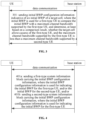
- the embodiments of the present disclosure provide an information transmission method, performed by a base station, including step 301.
- initial BWP configuration information indicative of an initial BWP of a target cell is sent, where the initial BWP is used at least for a first-type UE to compare the initial BWP with a maximum channel bandwidth supported by the first-type UE, and determine, based on a comparison result, whether the target cell allows access of the first-type UE, and the maximum channel bandwidth supported by the first-type UE is less than a maximum channel bandwidth supported by a second-type UE.
- the first-type UE and the second-type UE may be divided based on the supported maximum channel bandwidth.
- the maximum channel bandwidth supported by the first-type UE is less than or equal to 5 MHz, and the maximum channel bandwidth supported by the second-type UE is greater than 5 MHz.
- the supported maximum channel bandwidth may include, but is not limited to, the bandwidth processing capability that the radio frequency (RF) transceiver and the baseband processing module have.
- RF radio frequency
- the first-type UE includes an enhanced reduced capability user equipment (eRedCap UE).
- eRedCap UE enhanced reduced capability user equipment
- the first-type UE may be an eRedCap UE.
- the second-type UE may be a capability simplified UE, such as a RedCap UE in the 3GPP Release 17 (R17), or a UE with unreduced capability, such as an enhanced mobile broadband UE (eMMB UE).
- R17 3GPP Release 17
- eMMB UE enhanced mobile broadband UE
- the maximum channel bandwidth supported by the eRedCap UE is less than or equal to 5 MHz.
- a maximum uplink channel bandwidth supported by the eRedCap UE is less than or equal to 5 MHz, and/or, a maximum downlink channel bandwidth supported by the eRedCap UE is less than or equal to 5 MHz.
- the base station of the target cell may send the initial BWP configuration information to the first-type UE.
- the first-type UE may determine the initial BWP based on the initial BWP configuration information, and thus determine, based on the maximum channel bandwidth supported by the first-type UE itself, whether the first-type UE is capable of accessing the target cell.
- the first-type UE may compare the maximum channel bandwidth supported by the first-type UE itself with the initial BWP, then determine, based on the comparison result, whether the first-type UE is capable of supporting the initial BWP, and thus determine whether the first-type UE is capable of accessing the target cell.
- the base station uses the initial BWP to control the access of different types of UEs.
- the different types of UEs include, but are not limited to, the first-type UE and the second-type UE.
- the UE cannot access.
- the UE can access.
- the base station may send the initial BWP configuration information to the first-type UE, e.g., through broadcasting.
- the initial BWP indicated by the initial BWP configuration information may be only for the first-type UE, i.e., the initial BWP indicated by the initial BWP configuration information may be only for the first-type UE to determine whether the first-type UE can access.
- the initial BWP indicated by the initial BWP configuration information may also be applicable to different types of UEs, e.g., the initial BWP indicated by the initial BWP configuration information may be for the first-type UE and the second-type UE to determine whether they can access.
- the initial BWP configuration information may indicate a plurality of initial BWPs; at least one of the plurality of initial BWPs is for the first-type UE, and/or, at least one of the plurality of initial BWPs may be used for both the first-type UE and the second-type UE, and/or, at least one of the plurality of initial BWPs may be used for the second-type UE.
- the base station indicates the initial BWP to the first-type UE
- the first-type UE determines, based on the maximum channel bandwidth supported by the first-type UE and the initial BWP, whether the target cell allows the access.
- the target cell achieves the control of cell access for the first-type UE, which meets the communication requirement, and improves the communication reliability.
- the target cell when the maximum channel bandwidth supported by the first-type UE is less than the initial BWP, the target cell does not allow the access of the first-type UE.
- the target cell allows the access of the first-type UE.
- the bandwidth capability of the first-type UE is capable of meeting the requirement of the initial BWP.
- the condition for the base station to allow the access of the first-type UE includes, but is not limited to, the maximum channel bandwidth supported by the first-type UE being greater than or equal to the initial BWP.
- the comparison result of the maximum channel bandwidth supported by the first-type UE with the initial BWP may be used for the first-type UE to determine whether its capability supports the bandwidth (including the uplink bandwidth and/or the downlink bandwidth) configured by the network.
- the target cell allows the access of the first-type UE.
- the bandwidth capability of the first-type UE is not capable of meeting the requirement of the initial BWP, i.e., the base station does not allow the access of the first-type UE.
- the base station does not allow the access of the first-type UE, i.e., the target cell is in a cell bar state for the first-type UE.
- the initial BWP includes an uplink initial BWP, where the uplink initial BWP is used at least for the first-type UE to compare the uplink initial BWP with a maximum uplink channel bandwidth supported by the first-type UE, and determine, based on a comparison result, whether the target cell allows the access of the first-type UE; and/or
- the initial BWP includes a downlink initial BWP, where the downlink initial BWP is used at least for the first-type UE to compare the downlink initial BWP with a maximum downlink channel bandwidth supported by the first-type UE, and determine, based on a comparison result, whether the target cell allows the access of the first-type UE.
- the base station may indicate the uplink initial BWP and the downlink initial BWP respectively.
- the maximum uplink channel bandwidth and the maximum downlink channel bandwidth of the first-type UE may be the same or different.
- the uplink bandwidth capability of the first-type UE is capable of meeting the requirement of the uplink initial BWP, i.e., from an uplink perspective, the target cell allows the access of the first-type UE.
- the target cell allows the access of the first-type UE.
- the maximum uplink channel bandwidth supported by the first-type UE being greater than or equal to the uplink initial BWP, and/or, the maximum downlink channel bandwidth supported by the first-type UE being greater than or equal to the downlink initial BWP is a necessary condition for the target cell to allow the access of the first-type UE.
- the first-type UE still needs to meet other conditions, such as the maximum uplink channel bandwidth supported by the first-type UE being less than or equal to the carrier bandwidth, and the maximum downlink channel bandwidth supported by the first-type UE being less than or equal to the carrier bandwidth, in order for the target cell to allow the access of the first-type UE.
- the maximum channel bandwidth supported by the first-type UE being greater than or equal to the initial BWP is only a necessary condition for the target cell to allow the access of the first-type UE. To determine whether the target cell allows the access of the first-type UE, it is also required to determine whether the maximum channel bandwidth supported by the first-type UE is less than or equal to the carrier bandwidth, etc.
- condition for the target cell to allow the access of the first-type UE includes at least one of the following:
- the condition that the target cell does not allow the access of the first-type UE, i.e., the target cell is in a cell bar state for the first-type UE includes at least one of the following:
- the initial BWP includes at least one of the following:
- the initial BWP may be an initial BWP for the first-type UE, i.e., the initial BWP is only used for the first-type UE to determine whether the target cell allows the access.
- the initial BWP for the first-type UE may include at least one of the following: an uplink initial BWP for the first-type UE; a downlink initial BWP for the first-type UE.
- the initial BWP for the second-type UE may be an initial BWP configured by the network side for the second-type UE.
- the initial BWP for the second-type UE may also be used for the first-type UE to determine whether the target cell allows the access of the first-type UE.
- the first-type UE determines, based on the initial BWP for the second-type UE, whether the target cell allows the access of the first-type UE.
- the initial BWP configuration information does not configure the initial BWP (the uplink initial BWP and/or the downlink initial BWP) for the first-type UE (e.g., the eRedcap UE), and only configures the initial BWP (the uplink initial BWP and/or the downlink initial BWP) for the second-type UE (e.g., the eMMB UE and/or the Redcap UE of the R17 standard), if the maximum channel bandwidth supported by the first-type UE is less than the initial BWP configured for the second-type UE, then for the first-type UE, the target cell is in a cellbar state.
- the first-type UE e.g., the eRedcap UE
- the second-type UE e.g., the eMMB UE and/or the Redcap UE of the R17 standard
- step 301 includes at least one of the following steps 401a and 401b.
- a first-type system information block carrying the initial BWP configuration information is sent, where the initial BWP configuration information is used for indicating the initial BWP for the first-type UE, and/or the initial BWP for the second-type UE.
- a second-type system information block carrying the initial BWP configuration information is sent, where the initial BWP configuration information is used for indicating the initial BWP for the first-type UE.
- Step 401a and/or step 401b may be implemented individually or in combination with step 301.
- the first-type system information block (SIB) and the second-type system information block (SIB) may be different SIB1.
- the initial BWP configuration information carried by the first-type system information block may indicate an initial BWP only for the first-type UE, or may indicate an initial BWP for the second-type UE.
- the second-type system information block may only carry the initial BWP configuration information indicative of an initial BWP for the first-type UE.
- the initial BWP configuration information carried by the first-type system information block indicates the initial BWP for the first-type UE, and if the maximum channel bandwidth supported by the first-type UE is greater than or equal to the initial BWP for the first-type UE, the determination of whether the first-type UE can access may be proceeded (e.g., determining whether the maximum channel bandwidth supported by the first-type UE is less than or equal to the carrier bandwidth, etc.). Otherwise, it is determined that for the first-type UE, the target cell is in a cellbar state.
- the determination of whether the first-type UE can access may be proceeded (e.g., determining whether the maximum channel bandwidth supported by the first-type UE is less than or equal to the carrier bandwidth, etc.). Otherwise, it is determined that for the first-type UE, the target cell is in a cellbar state.
- the initial BWP configuration information carried by the second-type system information block indicates the initial BWP for the first-type UE, and if the maximum channel bandwidth supported by the first-type UE is greater than or equal to the initial BWP for the first-type UE, the determination of whether the first-type UE can access may be proceeded (e.g., determining whether the maximum channel bandwidth supported by the first-type UE is less than or equal to the carrier bandwidth, etc.). Otherwise, it is determined that for the first-type UE, the target cell is in a cell bar state.
- the first-type system information block may carry initial BWP configuration information indicative of a plurality of initial BWPs for the first-type UE, and/or indicative of a plurality of initial BWPs for the second UE.
- the second-type system information block may carry initial BWP configuration information indicative of a plurality of initial BWPs for the first-type UE.
- the determination of whether the first-type UE can access the target cell may be proceeded (e.g., determining whether the maximum channel bandwidth supported by the first-type UE is less than or equal to the carrier bandwidth, etc.).
- the target cell does not allow the access of the first-type UE.
- the determination of whether the first-type UE can access may be proceeded.
- the first-type UE determines that the target cell does not allow the access of the first-type UE.
- the comparison of the maximum channel bandwidth supported by the first-type UE with the N initial BWPs may include: a comparison of a maximum uplink channel bandwidth supported by the first-type UE with N uplink initial BWPs, and/or a comparison of a maximum downlink channel bandwidth supported by the first-type UE with N downlink initial BWPs.
- the determination of whether the first-type UE can access the target cell may be proceeded (e.g., determining whether the maximum channel bandwidth supported by the first-type UE is less than or equal to the carrier bandwidth, etc.).
- the target cell does not allow the access of the first-type UE.
- the second-type system information block at least carries initial BWP configuration information indicative of one initial BWP for the first-type UE. That is, the second-type system information block at least carrying the initial BWP configuration information indicative of one initial BWP for the first-type UE is a mandatory configuration of the second-type system information block.
- the initial BWP includes the uplink initial BWP and/or the downlink initial BWP.
- the first-type system information block includes cell intra-frequency reselection identification information indicative of a cell reselection operation associated with the first-type UE;
- the first-type UE may perform cell reselection.
- the cell reselection operation may include whether intra-frequency cell reselection is allowed.
- the first-type UE may determine the cell reselection operation based on the cell intra-frequency reselection switch, i.e., intraFreqReselection, in the MIB.
- the first-type UE may also perform the cell reselection operation based on the cell intra-frequency reselection identification information.
- the cell intra-frequency reselection identification information may be carried in the first-type system information block or the second-type system information block.
- the first-type UE determines the cell reselection operation based on the cell intra-frequency reselection identification information carried in the first-type system information block.
- the first-type UE determines the cell reselection operation based on the cell intra-frequency reselection identification information carried in the second-type system information block.
- the cell intra-frequency reselection identification information may include an intra-frequency cell reselection indication (IFRI) in the SIB1.
- IFRI intra-frequency cell reselection indication
- the IFRI for the first-type UE may be set in the SIB 1.
- the cell reselection operation may also be configured based on a preset rule.
- the preset rule may be determined through negotiation between the first-type UE and the network side.
- the preset rule is specified by a communication protocol, and/or pre-programmed.
- the preset rule may be specified by the communication protocol.
- the pre-configured preset rule may be pre-defined by using hardcode.
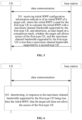
- the embodiments of the present disclosure provide an information transmission method, performed by a UE, including step 501.
- initial BWP configuration information indicative of an initial BWP of a target cell is received, where the initial BWP is used for a first-type UE to compare the initial BWP with a maximum channel bandwidth supported by the first-type UE, and determine, at least based on a comparison result, whether the target cell allows access of the first-type UE, and the maximum channel bandwidth supported by the first-type UE is less than a maximum channel bandwidth supported by a second-type UE.
- the first-type UE and the second-type UE may be divided based on the supported maximum channel bandwidth.
- the maximum channel bandwidth supported by the first-type UE is less than or equal to 5 MHz, and the maximum channel bandwidth supported by the second-type UE is greater than 5 MHz.
- the supported maximum channel bandwidth may include, but is not limited to, the bandwidth processing capability that the RF transceiver and the baseband processing module have.
- the first-type UE includes an eRedCap UE.
- the first-type UE may be an eRedCap UE.
- the second-type capability simplified UE may be a RedCap UE in the 3GPP Release 17 (R17), or a UE with unreduced capability, such as an eMMB UE.
- the maximum channel bandwidth supported by the eRedCap UE is less than or equal to 5 MHz.
- a maximum uplink channel bandwidth supported by the eRedCap UE is less than or equal to 5 MHz, and/or, a maximum downlink channel bandwidth supported by the eRedCap UE is less than or equal to 5 MHz.
- the base station of the target cell may send the initial BWP configuration information to the first-type UE.
- the first-type UE may determine the initial BWP based on the initial BWP configuration information, and thus determine, based on the maximum channel bandwidth supported by the first-type UE itself, whether the first-type UE is capable of accessing the target cell.
- the first-type UE may compare the maximum channel bandwidth supported by the first-type UE itself with the initial BWP, then determine, based on the comparison result, whether the first-type UE is capable of supporting the initial BWP, and thus determine whether the first-type UE is capable of accessing the target cell.
- the base station uses the initial BWP to control the access of different types of UEs.
- the different types of UEs include, but are not limited to, the first-type UE and the second-type UE.
- the UE cannot access.
- the UE can access.
- the base station may send the initial BWP configuration information to the first-type UE, e.g., through broadcasting.
- the initial BWP indicated by the initial BWP configuration information may be only for the first-type UE, i.e., the initial BWP indicated by the initial BWP configuration information may be only for the first-type UE to determine whether the first-type UE can access.
- the initial BWP indicated by the initial BWP configuration information may also be applicable to different types of UEs, e.g., the initial BWP indicated by the initial BWP configuration information may be for the first-type UE and the second-type UE to determine whether they can access.
- the initial BWP configuration information may indicate a plurality of initial BWPs; at least one of the plurality of initial BWPs is for the first-type UE, and/or, at least one of the plurality of initial BWPs may be used for both the first-type UE and the second-type UE, and/or, at least one of the plurality of initial BWPs may be used for the second-type UE.
- the base station indicates the initial BWP to the first-type UE
- the first-type UE determines, based on the maximum channel bandwidth supported by the first-type UE and the initial BWP, whether the target cell allows the access.
- the target cell achieves the control of cell access for the first-type UE, which meets the communication requirement, and improves the communication reliability.
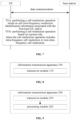
- the embodiments of the present disclosure provide an information transmission method, performed by a UE, including step 601.
- step 601 in response to the maximum channel bandwidth supported by the first-type UE being less than the initial BWP, it is determined that the target cell does not allow the access of the first-type UE.
- Step 601 may be implemented individually or in combination with step 501.
- the bandwidth capability of the first-type UE is capable of meeting the requirement of the initial BWP.
- the condition for the base station to allow the access of the first-type UE includes, but is not limited to, the maximum channel bandwidth supported by the first-type UE being greater than or equal to the initial BWP.
- the comparison result of the maximum channel bandwidth supported by the first-type UE with the initial BWP may be used for the first-type UE to determine whether its capability is capable of supporting the bandwidth (including the uplink bandwidth and/or the downlink bandwidth) configured by the network.
- the target cell allows the access of the first-type UE.
- the target cell allows the access of the first-type UE.
- the bandwidth capability of the first-type UE is not capable of meeting the requirement of the initial BWP, i.e., the base station does not allow the access of the first-type UE.
- the base station does not allow the access of the first-type UE, i.e., the target cell is in a cellbar state for the first-type UE.
- the initial BWP includes an uplink initial BWP, where the uplink initial BWP is used at least for the first-type UE to compare the uplink initial BWP with a maximum uplink channel bandwidth supported by the first-type UE, and determine, based on a comparison result, whether the target cell allows the access of the first-type UE; and/or the initial BWP includes a downlink initial BWP, where the downlink initial BWP is used at least for the first-type UE to compare the downlink initial BWP with a maximum downlink channel bandwidth supported by the first-type UE, and determine, based on a comparison result, whether the target cell allows the access of the first-type UE.
- the base station may indicate the uplink initial BWP and the downlink initial BWP respectively.
- the maximum uplink channel bandwidth and the maximum downlink channel bandwidth of the first-type UE may be the same or different.
- the uplink bandwidth capability of the first-type UE is capable of meeting the requirement of the uplink initial BWP, i.e., from an uplink perspective, the target cell allows the access of the first-type UE.
- the target cell allows the access of the first-type UE.
- the maximum uplink channel bandwidth supported by the first-type UE being greater than or equal to the uplink initial BWP, and/or, the maximum downlink channel bandwidth supported by the first-type UE being greater than or equal to the downlink initial BWP is a necessary condition for the target cell to allow the access of the first-type UE.
- the first-type UE still needs to meet other conditions, such as the maximum uplink channel bandwidth supported by the first-type UE being less than or equal to the carrier bandwidth, and the maximum downlink channel bandwidth supported by the first-type UE being less than or equal to the carrier bandwidth, in order for the target cell to allow the access of the first-type UE.
- the maximum channel bandwidth supported by the first-type UE being greater than or equal to the initial BWP is only a necessary condition for the target cell to allow the access of the first-type UE. To determine whether the target cell allows the access of the first-type UE, it is also required to determine whether the maximum channel bandwidth supported by the first-type UE is less than or equal to the carrier bandwidth, etc.
- condition for the target cell to allow the access of the first-type UE includes at least one of the following:
- the condition that the target cell does not allow the access of the first-type UE, i.e., the target cell is in a cell bar state for the first-type UE includes at least one of the following:
- the initial BWP includes at least one of the following:
- the initial BWP may be an initial BWP for the first-type UE, i.e., the initial BWP is only used for the first-type UE to determine whether the target cell allows the access of the first-type UE.
- the initial BWP for the first-type UE may include at least one of the following: an uplink initial BWP for the first-type UE; a downlink initial BWP for the first-type UE.
- the initial BWP for the second-type UE may be an initial BWP configured by the network side for the second-type UE.
- the initial BWP for the second-type UE may also be used for the first-type UE to determine whether the target cell allows the access of the first-type UE.
- the first-type UE determines, based on the initial BWP for the second-type UE, whether the target cell allows the access of the first-type UE.
- the initial BWP configuration information does not configure the initial BWP (the uplink initial BWP and/or the downlink initial BWP) for the first-type UE (e.g., the eRedcap UE), and only configures the initial BWP (the uplink initial BWP and/or the downlink initial BWP) for the second-type UE (e.g., the eMMB UE and/or the Redcap UE of the R17 standard), if the maximum channel bandwidth supported by the first-type UE is less than the initial BWP configured for the second-type UE, then for the first-type UE, the target cell is in a cellbar state.
- the first-type UE e.g., the eRedcap UE
- the second-type UE e.g., the eMMB UE and/or the Redcap UE of the R17 standard
- receiving the initial BWP configuration information indicative of the initial BWP of the target cell includes at least one of the following:
- the first-type system information block (SIB) and the second-type system information block (SIB) may be different SIB1.
- the initial BWP configuration information carried by the first-type system information block may indicate an initial BWP only for the first-type UE, or may indicate an initial BWP for the second-type UE.
- the second-type system information block may only carry the initial BWP configuration information indicative of an initial BWP for the first-type UE.
- the initial BWP configuration information carried by the first-type system information block indicates the initial BWP for the first-type UE, and if the maximum channel bandwidth supported by the first-type UE is greater than or equal to the initial BWP for the first-type UE, the determination of whether the first-type UE can access may be proceeded (e.g., determining whether the maximum channel bandwidth supported by the first-type UE is less than or equal to the carrier bandwidth, etc.). Otherwise, it is determined that for the first-type UE, the target cell is in a cell bar state.
- the determination of whether the first-type UE can access may be proceeded (e.g., determining whether the maximum channel bandwidth supported by the first-type UE is less than or equal to the carrier bandwidth, etc.). Otherwise, it is determined that for the first-type UE, the target cell is in a cellbar state.
- the initial BWP configuration information carried by the second-type system information block indicates the initial BWP for the first-type UE, and if the maximum channel bandwidth supported by the first-type UE is greater than or equal to the initial BWP for the first-type UE, the determination of whether the first-type UE can access may be proceeded (e.g., determining whether the maximum channel bandwidth supported by the first-type UE is less than or equal to the carrier bandwidth, etc.). Otherwise, it is determined that for the first-type UE, the target cell is in a cellbar state.
- the first-type system information block may carry initial BWP configuration information indicative of a plurality of initial BWPs for the first-type UE, and/or indicative of a plurality of initial BWPs for the second UE.
- the second-type system information block may carry initial BWP configuration information indicative of a plurality of initial BWPs for the first-type UE.
- the determination of whether the first-type UE can access the target cell may be proceeded (e.g., determining whether the maximum channel bandwidth supported by the first-type UE is less than or equal to the carrier bandwidth, etc.).
- the target cell does not allow the access of the first-type UE.
- the determination of whether the first-type UE can access may be proceeded.
- the first-type UE determines that the target cell does not allow the access of the first-type UE.
- the comparison of the maximum channel bandwidth supported by the first-type UE with the N initial BWPs may include: a comparison of a maximum uplink channel bandwidth supported by the first-type UE with N uplink initial BWPs, and/or a comparison of a maximum downlink channel bandwidth supported by the first-type UE with N downlink initial BWPs.
- the determination of whether the first-type UE can access the target cell may be proceeded (e.g., determining whether the maximum channel bandwidth supported by the first-type UE is less than or equal to the carrier bandwidth, etc.).
- the target cell does not allow the access of the first-type UE.
- the second-type system information block at least carries initial BWP configuration information indicative of one initial BWP for the first-type UE. That is, the second-type system information block at least carrying the initial BWP configuration information indicative of one initial BWP for the first-type UE is a mandatory configuration of the second-type system information block.
- the initial BWP includes the uplink initial BWP and/or the downlink initial BWP.
- the embodiments of the present disclosure provide an information transmission method, performed by a UE, including at least one of the following steps 701a and 701b.
- a cell reselection operation is performed based on cell intra-frequency reselection identification information associated with the first-type UE.
- a cell reselection operation is performed based on a preset rule; where the cell reselection operation includes intra-frequency cell reselection or non-intra-frequency cell reselection.
- Step 701a and/or step 701b may be performed individually or in combination with step 501 and/or step 601.
- the first-type UE may perform cell reselection.
- the cell reselection operation may include whether intra-frequency cell reselection is allowed.
- the first-type UE may determine the cell reselection operation based on the cell intra-frequency reselection switch, i.e., intraFreqReselection, in the MIB.
- the first-type UE may also perform the cell reselection operation based on the cell intra-frequency reselection identification information.
- the cell intra-frequency reselection identification information is carried in one of the following: a first-type system information block; and/or a second system information block.
- the first-type UE determines the cell reselection operation based on the cell intra-frequency reselection identification information carried in the first-type system information block.
- the first-type UE determines the cell reselection operation based on the cell intra-frequency reselection identification information carried in the second-type system information block.
- the cell intra-frequency reselection identification information may include an intra-frequency cell reselection indication (IFRI) in the SIB1.
- IFRI intra-frequency cell reselection indication
- the IFRI for the first-type UE may be set in the SIB1.
- the cell reselection operation may also be configured based on a preset rule.
- the preset rule may be determined through negotiation between the first-type UE and the network side.
- the preset rule is specified by a communication protocol, and/or pre-programmed.
- the preset rule may be specified by the communication protocol.
- the pre-configured preset rule may be pre-defined by using hardcode.
- the uplink initial BWP is configured by the SIB1 (the first-type system information block).
- the specific-type terminal determines that the maximum uplink channel bandwidth supported by the specific-type terminal is greater than or equal to the uplink initial BWP configured for the specific-type user (e.g., the eRedcap UE), and if it is not met, it is the cellbar.
- the specific-type terminal determines that the maximum uplink channel bandwidth supported by the specific-type terminal is greater than or equal to the uplink initial BWP configured for the second-type user (e.g., the uplink initial BWP configured for the eMBB or the uplink initial BWP configured for the Redcap UE of the R17 standard), and if it is not met, it is the cellbar.
- the uplink initial BWP configured for the second-type user e.g., the uplink initial BWP configured for the eMBB or the uplink initial BWP configured for the Redcap UE of the R17 standard
- the uplink initial BWP is configured by the SIB1-bis (the second-type system information block).
- the specific-type terminal determines that the maximum uplink channel bandwidth supported by the specific-type terminal is greater than or equal to the uplink initial BWP configured for the specific-type user (e.g., the eRedcap UE), and if it is not met, it is the cellbar (the SIB1-bis may include a plurality of uplink initial BWPs).
- one uplink initial BWP configured for the eRedcap UE in the SIB1-bis is a mandatory configuration.
- the specific-type user determines its downlink initial BWP, and determines whether the maximum downlink channel bandwidth supported by the specific-type user is greater than or equal to the downlink initial BWP, and if it is not met, it is the cellbar.
- the downlink initial BWP is configured by the SIB1 (the first-type system information block).
- the specific-type terminal determines that the maximum downlink channel bandwidth supported by the specific-type terminal is greater than or equal to the downlink initial BWP configured for the specific-type user (e.g., the eRedcap UE), and if it is not met, it is the cellbar.
- the specific-type terminal determines that the maximum downlink channel bandwidth supported by the specific-type terminal is greater than or equal to the downlink initial BWP configured for the second-type user (e.g., the downlink initial BWP configured for the eMBB or the downlink initial BWP configured for the R17 Redcap user), and if it is not met, it is the cellbar.
- the downlink initial BWP configured for the second-type user e.g., the downlink initial BWP configured for the eMBB or the downlink initial BWP configured for the R17 Redcap user
- the downlink initial BWP is configured by the SIB1-bis (the second-type system information block).
- N downlink initial BWPs (N is greater than or equal to 1) are configured for the eRedcap UE in the SIB1-bis, then the specific-type terminal determines that the maximum downlink channel bandwidth supported by the specific-type terminal is greater than or equal to all or any of the N downlink initial BWPs (N is greater than or equal to 1) configured for the specific-type user, and if it is not met, it is the cellbar.
- the subsequent operation can be proceeded; otherwise, if at least one of the downlink initial BWPs configured by the network is not within the capability range of the terminal, the cellbar is considered.
- the subsequent operation can be proceeded; otherwise, if all of the downlink initial BWPs configured by the network are not within the capability range of the terminal, the cellbar is considered.
- one uplink initial BWP configured for the eRedcap UE in the SIB1-bis is a mandatory configuration.
- the terminal is required to simultaneously determine whether the maximum uplink channel bandwidth supported by the user is greater than or equal to the uplink initial BWP, and whether the maximum downlink channel bandwidth supported by the user is greater than or equal to the downlink initial BWP. If any of the directions is not met, i.e., the maximum uplink channel bandwidth supported by the user is less than the uplink initial BWP, or the maximum downlink channel bandwidth supported by the user is less than the downlink initial BWP, the cellbar is considered.
- the user can proceed with making a combined determination with other determinations on whether to perform the cell bar. Because the bandwidth determination is only one step in determining whether access is allowed, there may be other subsequent steps involved. For example, whether the frequency band supported by the terminal is within the frequency band range indicated by the network. The bandwidth determination is one of the steps for determining whether access is allowed. As long as the determination result in the uplink bandwidth direction or the downlink bandwidth direction is not passed, the cell must be the cellbar.
- the cell reselection behaviour at this time is as follows.
- the specific-type terminal e.g., the eRedcap UE
- its cell reselection behaviour is the same as that for a non-specific-type terminal (e.g., the eMMB UE) (that is, according to the existing cell reselection switch, i.e., intraFreqReselection, in the MIB).
- its cell reselection behaviour is in accordance with a pre-agreed manner (protocol or hardcode manner) for cell reselection, i.e., pre-defined. That is, intra-frequency cell reselection is allowed, or intra-frequency cell reselection is not allowed.
- a pre-agreed manner for cell reselection, i.e., pre-defined. That is, intra-frequency cell reselection is allowed, or intra-frequency cell reselection is not allowed.
- the specific-type terminal e.g., the eRedcap UE
- its cell reselection behaviour is in accordance with the cell reselection identification configured in the SIB1 or SIB 1-bis for the specific-type terminal (e.g., for the eRedcap UE, there is an eRedcap specific IFRI) for cell reselection.
- the determination is performed according to the SIB1; otherwise, the above process is performed according to the SIB1-bis for determination.
- the RedCap UE e.g., the eRedCap UE
- the maximum uplink channel bandwidth supported by the specific-type user e.g., the eRedCap UE
- the maximum downlink channel bandwidth supported by the specific-type user e.g., the eRedCap UE
- the maximum downlink channel bandwidth supported by the specific-type user e.g., the eRedCap UE
- any one of the configured downlink initial BWPs if more than one is configured
- the UE supports the uplink channel bandwidth configured by the maximum transmission bandwidth configuration, and the uplink channel bandwidth is less than or equal to the carrier bandwidth (the carrier bandwidth may be indicated in the uplinkConfigCommon field, the uplinkConfigCommon field is associated with the carrier interval of the initial uplink BWP, and the initial uplink BWP may be associated with the RedCap UE), and the uplink channel bandwidth is greater than or equal to the initial uplink BWP, the initial uplink BWP may be configured for the RedCap UE (optional if configured), or for the eRedCap UE (for the eRedCap UE, the initial uplink BWP with which the support capability of the terminal is compared is one eRedCap initial uplink BWP configured for the eRedCap UE).
- the carrier bandwidth may be indicated in the uplinkConfigCommon field, the uplinkConfigCommon field is associated with the carrier interval of the initial uplink BWP, and the initial uplink BWP may be associated with the RedCap UE
- the UE supports the downlink channel bandwidth configured by the maximum transmission bandwidth configuration, and the downlink channel bandwidth is less than or equal to the carrier bandwidth (the carrier bandwidth may be indicated in the downlinkConfigCommon field, the downlinkConfigCommon field is associated with the carrier interval of the initial uplink BWP, and the initial uplink BWP may be associated with the RedCap UE), and the downlink channel bandwidth is greater than or equal to the initial downlink BWP, the initial downlink BWP may be configured for the RedCap UE (optional if configured), or for the eRedCap UE (for the eRedCap UE, the initial downlink BWP with which the support capability of the terminal is compared is any one of eRedCap initial downlink BWPs configured for the eRedCap UE).
- the carrier bandwidth may be indicated in the downlinkConfigCommon field, the downlinkConfigCommon field is associated with the carrier interval of the initial uplink BWP, and the initial uplink BWP may be associated with the Red
- 5.2.2.4.2 Actions upon reception of the SIB1 is modified as follows. (That is, for the Redcap user of the R18, it is required to determine whether the maximum uplink channel bandwidth supported by the specific-type user is greater than or equal to the uplink initial BWP, and it is required to determine whether the maximum downlink channel bandwidth supported by the specific-type user is greater than or equal to any one of the configured downlink initial BWPs (if more than one is configured) before proceeding with the subsequent operations, otherwise, the else part will be processed, i.e., the cellbar is considered.)
- the omitted part is the same as the existing protocol description.
- the embodiments of the present disclosure provide an information transmission apparatus 100, arranged in a base station, including: a transceiver module 110, configured to send initial BWP configuration information indicative of an initial BWP of a target cell, where the initial BWP is used for a first-type UE to compare the initial BWP with a maximum channel bandwidth supported by the first-type UE, and determine, at least based on a comparison result, whether the target cell allows access of the first-type UE, and the maximum channel bandwidth supported by the first-type UE is less than a maximum channel bandwidth supported by a second-type UE.
- a transceiver module 110 configured to send initial BWP configuration information indicative of an initial BWP of a target cell, where the initial BWP is used for a first-type UE to compare the initial BWP with a maximum channel bandwidth supported by the first-type UE, and determine, at least based on a comparison result, whether the target cell allows access of the first-type UE, and the maximum channel bandwidth supported
- the target cell when the maximum channel bandwidth supported by the first-type UE is less than the initial BWP, the target cell does not allow the access of the first-type UE.
- the initial BWP includes at least one of the following:
- the transceiver module 110 is specifically configured to perform at least one of the following:
- the first-type system information block includes cell intra-frequency reselection identification information indicative of a cell reselection operation associated with the first-type UE;
- the initial BWP includes an uplink initial BWP, where the uplink initial BWP is used at least for the first-type UE to compare the uplink initial BWP with a maximum uplink channel bandwidth supported by the first-type UE, and determine, based on a comparison result, whether the target cell allows the access of the first-type UE; and/or the initial BWP includes a downlink initial BWP, where the downlink initial BWP is used at least for the first-type UE to compare the downlink initial BWP with a maximum downlink channel bandwidth supported by the first-type UE, and determine, based on a comparison result, whether the target cell allows the access of the first-type UE.
- the first-type UE includes an enhanced reduced capability UE.
- the embodiments of the present disclosure provide an information transmission apparatus 200, arranged in a first-type UE, including: a transceiver module 210, configured to receive initial BWP configuration information indicative of an initial BWP of a target cell, where the initial BWP is used for the first-type UE to compare the initial BWP with a maximum channel bandwidth supported by the first-type UE, and determine, at least based on a comparison result, whether the target cell allows access of the first-type UE, and the maximum channel bandwidth supported by the first-type UE is less than a maximum channel bandwidth supported by a second-type UE.
- a transceiver module 210 configured to receive initial BWP configuration information indicative of an initial BWP of a target cell, where the initial BWP is used for the first-type UE to compare the initial BWP with a maximum channel bandwidth supported by the first-type UE, and determine, at least based on a comparison result, whether the target cell allows access of the first-type UE, and the maximum
- the apparatus further includes a processing module 220 configured to: determine, in response to the maximum channel bandwidth supported by the first-type UE being less than the initial BWP, that the target cell does not allow the access of the first-type UE.
- the initial BWP includes at least one of the following:
- the transceiver module 210 is configured to perform at least one of the following:
- the initial BWP includes an uplink initial BWP, where the uplink initial BWP is used at least for the first-type UE to compare the uplink initial BWP with a maximum uplink channel bandwidth supported by the first-type UE, and determine, based on a comparison result, whether the target cell allows the access of the first-type UE; and/or the initial BWP includes a downlink initial BWP, where the downlink initial BWP is used at least for the first-type UE to compare the downlink initial BWP with a maximum downlink channel bandwidth supported by the first-type UE, and determine, based on a comparison result, whether the target cell allows the access of the first-type UE.
- the transceiver module 210 is further configured to perform at least one of the following:
- the cell intra-frequency reselection identification information is carried in one of the following: a first-type system information block; and/or a second system information block.
- the preset rule is specified by a communication protocol, and/or pre-programmed.
- the first-type UE includes an enhanced reduced capability UE.
- the embodiments of the present disclosure provide a communication device, including:
- the communication device may include, but is not limited to, at least one of the following: a UE and a network device.
- the network device here may include a core network or an access network function, etc.
- the access network function may include a base station.
- the core network may include an AMF and an SMF.
- the processor may include various types of storage media, where the storage media are non-transitory computer storage media capable of continuing to memorize information stored thereon after the UE is powered down.
- the processor may be connected to the memory via a bus or the like for reading an executable program stored in the memory, for example, at least one of the methods shown in FIGS. 3 to 7 .
- the embodiments of the present disclosure also provide a computer storage medium.
- the computer storage medium stores an executable program of a computer.
- the executable program when executed by a processor, implements the information transmission method of any embodiment of the present disclosure, for example, at least one of the methods shown in FIGS. 3 to 7 .
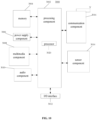
- FIG. 10 is a block diagram of a UE 3000 illustrated according to an exemplary embodiment.
- the UE 3000 may be a mobile phone, a computer, a digital broadcast user equipment, a message transceiver device, a game console, a tablet device, a medical device, a fitness device, or a personal digital assistant.
- the UE 3000 may include one or more of the following components: a processing component 3002, a memory 3004, a power supply component 3006, a multimedia component 3008, an audio component 3010, an input/output (I/O) interface 3012, a sensor component 3014, and a communication component 3016.
- the processing component 3002 generally controls the overall operation of the UE 3000, such as operations associated with display, telephone calls, data communication, camera operations, and recording operations.
- the processing component 3002 may include one or more processors 3020 to execute an instruction to complete all or part of the steps of the method described above.
- the processing component 3002 may include one or more modules that facilitate interaction between the processing component 3002 and other components.
- the processing component 3002 may include a multimedia module to facilitate interaction between the multimedia component 3008 and the processing component 3002.
- the memory 3004 is configured to store various types of data to support the operations on the UE 3000. Examples of such data include the following: an instruction of any application program or method operated on the UE 3000, contact data, phonebook data, messages, pictures, videos, etc.
- the memory 3004 may be implemented by any type of volatile or non-volatile storage device or a combination thereof, such as a static random access memory (SRAM), an electrically erasable programmable read-only memory (EEPROM), an erasable programmable read-only memory (EPROM), a programmable read-only memory (PROM), a read-only memory (ROM), a magnetic memory, a flash memory, a disk, or a CD-ROM.
- SRAM static random access memory
- EEPROM electrically erasable programmable read-only memory
- EPROM erasable programmable read-only memory
- PROM programmable read-only memory
- ROM read-only memory
- magnetic memory a magnetic memory
- flash memory a flash
- the power supply component 3006 supplies power to various components of the UE 3000.
- the power supply component 3006 may include a power supply management system, one or more power supplies, and other components associated with generating, managing and distributing power for the UE 3000.
- the multimedia component 3008 includes a screen that provides an output interface between the UE 3000 and a user.
- the screen may include a liquid crystal display (LCD) and a touch panel (TP). If the screen includes a touch panel, the screen may be implemented as a touch screen to receive input signals from the user.
- the touch panel includes one or more touch sensors to sense touches, swipes, and gestures on the touch panel. The touch sensor may not only sense the boundaries of the touch or swipe action, but also detect the duration and pressure associated with the touch or swipe operation.
- the multimedia component 3008 includes a front-facing camera and/or a rear-facing camera.
- the front-facing camera and/or the rear-facing camera may receive external multimedia data when the UE 3000 is in an operating mode, such as a shooting mode or a video mode.
- an operating mode such as a shooting mode or a video mode.
- Each of the front-facing camera and the rear-facing camera may be a fixed optical lens system or have a focal length and optical zoom capability.
- the audio component 3010 is configured to output and/or input audio signals.
- the audio component 3010 includes a microphone (MIC), configured to receive external audio signals when the UE 3000 is in an operating mode, such as a calling mode, a recording mode and a voice recognition mode.
- the received audio signals may be further stored in the memory 3004 or sent via the communication component 3016.
- the audio component 3010 further includes a speaker for outputting the audio signals.
- the I/O interface 812 provides an interface between the processing component 3002 and a peripheral interface module, and the peripheral interface module may be a keypad, a click wheel, a button, etc. These buttons may include, but are not limited to, a home button, a volume button, a start button, and a lock button.
- the sensor component 3014 includes one or more sensors configured to provide status assessment of various aspects of the UE 3000.
- the sensor component 3014 may detect an open/closed state of the device 3000, relative positioning of the components, for example, the components are the display and small keypad of the UE 3000.
- the sensor component 3014 may also detect a change in the position of the UE 3000 or a change in the position of one component of the UE 3000, the presence or absence of contact between the user and the UE 3000, the orientation or acceleration/deceleration of UE 3000, and temperature changes of the UE 3000.
- the sensor component 3014 may include a proximity sensor that is configured to detect the presence of nearby objects in the absence of any physical contact.
- the sensor component 3014 may also include a light sensor, such as a CMOS or CCD image sensor, for use in imaging applications.
- the sensor component 3014 may also include an accelerometer sensor, a gyroscope sensor, a magnetic sensor, a pressure sensor, or a temperature sensor.
- the communication component 3016 is configured to facilitate the communication between the UE 3000 and other devices in wired or wireless manners.
- the UE 3000 may access a wireless network based on a communication standard, such as WiFi, 4G, 5G, or a combination thereof.
- the communication component 3016 receives broadcast signals or broadcast related information from an external broadcast management system via a broadcast channel.
- the communication component 816 further includes a near-field communication (NFC) module to facilitate short-range communication.
- the NFC module may be implemented based on the radio frequency identification (RFID) technology, the infrared data association (IrDA) technology, the ultra-wideband (UWB) technology, the Bluetooth (BT) technology, or other technologies.
- RFID radio frequency identification
- IrDA infrared data association
- UWB ultra-wideband
- BT Bluetooth
- the UE 3000 may be implemented by one or more of the following: an application-specific integrated circuit (ASIC), a digital signal processor (DSP), a digital signal processing device (DSPD), a programmable logic device (PLD), a field-programmable gate array (FPGA), a controller, a microcontroller, a microprocessor, or other electronic elements, to perform the method described above.
- ASIC application-specific integrated circuit
- DSP digital signal processor
- DSPD digital signal processing device
- PLD programmable logic device
- FPGA field-programmable gate array
- controller a microcontroller, a microprocessor, or other electronic elements, to perform the method described above.
- a non-transitory computer-readable storage medium including an instruction is provided, such as the memory 3004 including an instruction.
- the instruction described above is capable of being executed by the processor 3020 of the UE 3000 to complete the method described above.
- the non-transitory computer-readable storage medium may be an ROM, a random access memory (RAM), a CD-ROM, a magnetic tape, a floppy disk, or an optical data storage device.
- an embodiment of the present disclosure illustrates a structure of a base station.
- the base station 900 may be provided as a network side device.
- the base station 900 includes a processing component 922, where the processing component 922 further includes one or more processors, and a memory resource represented by a memory 932 for storing an instruction, such as an application program, that is executable by the processing component 922.
- the application program stored in the memory 932 may include one or more modules each corresponding to a set of instructions.
- the processing component 922 is configured to execute the instruction to perform any method described above applied to the base station.
- the base station 900 may further include a power supply component 926 configured to perform power management of the base station 900, a wired or wireless network interface 950 configured to connect the base station 900 to the network, and an I/O interface 958.
- the base station 900 may operate an operating system stored in the memory 932, such as Windows Server TM, Mac OS XTM, UnixTM, LinuxTM, FreeBSDTM, or the like.
Landscapes
- Engineering & Computer Science (AREA)
- Signal Processing (AREA)
- Computer Networks & Wireless Communication (AREA)
- Computer Security & Cryptography (AREA)
- Mobile Radio Communication Systems (AREA)
Applications Claiming Priority (1)
| Application Number | Priority Date | Filing Date | Title |
|---|---|---|---|
| PCT/CN2022/106592 WO2024016194A1 (zh) | 2022-07-19 | 2022-07-19 | 一种信息传输方法、装置、通信设备及存储介质 |
Publications (2)
| Publication Number | Publication Date |
|---|---|
| EP4561184A1 true EP4561184A1 (de) | 2025-05-28 |
| EP4561184A4 EP4561184A4 (de) | 2025-09-10 |
Family
ID=89616732
Family Applications (1)
| Application Number | Title | Priority Date | Filing Date |
|---|---|---|---|
| EP22951472.4A Pending EP4561184A4 (de) | 2022-07-19 | 2022-07-19 | Informationsübertragungsverfahren und -vorrichtung, kommunikationsvorrichtung und speichermedium |
Country Status (4)
| Country | Link |
|---|---|
| US (1) | US20260032715A1 (de) |
| EP (1) | EP4561184A4 (de) |
| CN (1) | CN117769858A (de) |
| WO (1) | WO2024016194A1 (de) |
Family Cites Families (8)
| Publication number | Priority date | Publication date | Assignee | Title |
|---|---|---|---|---|
| KR20160146501A (ko) * | 2015-06-11 | 2016-12-21 | 엘지전자 주식회사 | 무선 통신 시스템에서 비직교다중접속을 위한 다중 사용자 선택 및 자원 할당 방법 및 장치 |
| KR20210020397A (ko) * | 2019-08-14 | 2021-02-24 | 삼성전자주식회사 | 무선 통신 시스템에서 네트워크에 액세스하기 위한 장치 및 방법 |
| US12395302B2 (en) * | 2020-03-31 | 2025-08-19 | Telefonaktiebolaget Lm Ericsson (Publ) | Coreset enhancement for reduced bandwidth UEs initial access |
| CN114071750B (zh) * | 2020-08-07 | 2024-09-06 | 华为技术有限公司 | 频域资源的确定方法、设备及存储介质 |
| CN112640530A (zh) * | 2020-11-11 | 2021-04-09 | 北京小米移动软件有限公司 | 接入控制信息处理方法及装置、通信设备及存储介质 |
| CN118804206A (zh) * | 2020-12-07 | 2024-10-18 | 北京小米移动软件有限公司 | 通信方法及装置、无线接入网、终端及存储介质 |
| WO2023130471A1 (zh) * | 2022-01-10 | 2023-07-13 | 北京小米移动软件有限公司 | 小区接入方法、装置、设备及可读存储介质 |
| WO2023151059A1 (zh) * | 2022-02-12 | 2023-08-17 | 北京小米移动软件有限公司 | 下行初始bwp的应用方法及装置、网络设备、终端及存储介质 |
-
2022
- 2022-07-19 WO PCT/CN2022/106592 patent/WO2024016194A1/zh not_active Ceased
- 2022-07-19 EP EP22951472.4A patent/EP4561184A4/de active Pending
- 2022-07-19 CN CN202280002711.5A patent/CN117769858A/zh active Pending
- 2022-07-19 US US18/996,615 patent/US20260032715A1/en active Pending
Also Published As
| Publication number | Publication date |
|---|---|
| WO2024016194A1 (zh) | 2024-01-25 |
| CN117769858A (zh) | 2024-03-26 |
| US20260032715A1 (en) | 2026-01-29 |
| EP4561184A4 (de) | 2025-09-10 |
Similar Documents
| Publication | Publication Date | Title |
|---|---|---|
| US12309629B2 (en) | Information processing methods, user equipment, and base station | |
| EP4117375B1 (de) | Verfahren und vorrichtung für drahtlosnetzwerkzugang, kommunikationsvorrichtung und speichermedium | |
| CN116349367B (zh) | 确定随机接入的资源的方法、装置、通信设备及存储介质 | |
| US20240389153A1 (en) | Method for reporting terminal capability information, and communication device | |
| CN112673705B (zh) | 信息传输方法、装置、通信设备和存储介质 | |
| EP4503790A1 (de) | Informationsübertragungsverfahren und -vorrichtung, kommunikationsvorrichtung und speichermedium | |
| CN111149388B (zh) | 通信处理方法、装置及计算机存储介质 | |
| KR20220124743A (ko) | 통신 처리 방법, 장치 및 컴퓨터 저장 매체 | |
| US12096516B2 (en) | Method and apparatus for obtaining system message, communication device, and storage medium | |
| US20220287014A1 (en) | Resource allocation methods and apparatuses, message frame processing methods, apparatuses and storage mediums | |
| WO2021159247A1 (zh) | 信道测量方法、装置及通信设备 | |
| CN117242806B (zh) | 无线传输的方法、装置、通信设备及存储介质 | |
| US20250343720A1 (en) | Guard gap configuration method and apparatus, and communication device and storage medium | |
| CN114586450B (zh) | 切换bwp的方法、装置、通信设备及存储介质 | |
| EP4513974A1 (de) | Verfahren und vorrichtung zur bestimmung eines rsrp-schwellenwertparameters, kommunikationsvorrichtung und speichermedium | |
| CN112640559B (zh) | 无线传输的方法、装置、通信设备及存储介质 | |
| EP4561184A1 (de) | Informationsübertragungsverfahren und -vorrichtung, kommunikationsvorrichtung und speichermedium | |
| US20250063517A1 (en) | Power configuration method for terminal, apparatus, communication device, and storage medium | |
| EP4057551B1 (de) | Verfahren und vorrichtung zur konfiguration von downlink-steuerungsinformationen, kommunikationsvorrichtung und speichermedium | |
| CN117242834B (zh) | 无线传输的方法、装置、通信设备及存储介质 | |
| US20260052509A1 (en) | Information transmitting method and device | |
| EP4432737A1 (de) | Verfahren und vorrichtung zur umschaltung des zugangsmodus, kommunikationsvorrichtung und speichermedium | |
| US20240357550A1 (en) | Method and device of processing information | |
| CN118056387A (zh) | 邻近服务ProSe的无线通信方法、装置、通信设备及存储介质 | |
| WO2022077475A1 (zh) | 语音通信的方法、装置、通信设备及存储介质 |
Legal Events
| Date | Code | Title | Description |
|---|---|---|---|
| STAA | Information on the status of an ep patent application or granted ep patent |
Free format text: STATUS: THE INTERNATIONAL PUBLICATION HAS BEEN MADE |
|
| PUAI | Public reference made under article 153(3) epc to a published international application that has entered the european phase |
Free format text: ORIGINAL CODE: 0009012 |
|
| STAA | Information on the status of an ep patent application or granted ep patent |
Free format text: STATUS: REQUEST FOR EXAMINATION WAS MADE |
|
| 17P | Request for examination filed |
Effective date: 20250130 |
|
| AK | Designated contracting states |
Kind code of ref document: A1 Designated state(s): AL AT BE BG CH CY CZ DE DK EE ES FI FR GB GR HR HU IE IS IT LI LT LU LV MC MK MT NL NO PL PT RO RS SE SI SK SM TR |
|
| A4 | Supplementary search report drawn up and despatched |
Effective date: 20250811 |
|
| RIC1 | Information provided on ipc code assigned before grant |
Ipc: H04W 48/08 20090101AFI20250805BHEP Ipc: H04W 48/16 20090101ALI20250805BHEP Ipc: H04W 28/20 20090101ALI20250805BHEP |
|
| DAV | Request for validation of the european patent (deleted) | ||
| DAX | Request for extension of the european patent (deleted) |