EP4563594A1 - Inhibiteurs de cxcl8 destinés à être utilisés dans le traitement de tumeurs à faibles taux de cav1 stromale - Google Patents
Inhibiteurs de cxcl8 destinés à être utilisés dans le traitement de tumeurs à faibles taux de cav1 stromale Download PDFInfo
- Publication number
- EP4563594A1 EP4563594A1 EP23383220.3A EP23383220A EP4563594A1 EP 4563594 A1 EP4563594 A1 EP 4563594A1 EP 23383220 A EP23383220 A EP 23383220A EP 4563594 A1 EP4563594 A1 EP 4563594A1
- Authority
- EP
- European Patent Office
- Prior art keywords
- cav1
- levels
- cxcl8
- tumor
- inhibitor
- Prior art date
- Legal status (The legal status is an assumption and is not a legal conclusion. Google has not performed a legal analysis and makes no representation as to the accuracy of the status listed.)
- Withdrawn
Links
Images




Classifications
-
- C—CHEMISTRY; METALLURGY
- C07—ORGANIC CHEMISTRY
- C07K—PEPTIDES
- C07K16/00—Immunoglobulins [IG], e.g. monoclonal or polyclonal antibodies
- C07K16/18—Immunoglobulins [IG], e.g. monoclonal or polyclonal antibodies against material from animals or humans
- C07K16/24—Immunoglobulins [IG], e.g. monoclonal or polyclonal antibodies against material from animals or humans against cytokines, lymphokines or interferons
- C07K16/244—Interleukins [IL]
-
- A—HUMAN NECESSITIES
- A61—MEDICAL OR VETERINARY SCIENCE; HYGIENE
- A61K—PREPARATIONS FOR MEDICAL, DENTAL OR TOILETRY PURPOSES
- A61K31/00—Medicinal preparations containing organic active ingredients
- A61K31/33—Heterocyclic compounds
- A61K31/395—Heterocyclic compounds having nitrogen as a ring hetero atom, e.g. guanethidine or rifamycins
- A61K31/41—Heterocyclic compounds having nitrogen as a ring hetero atom, e.g. guanethidine or rifamycins having five-membered rings with two or more ring hetero atoms, at least one of which being nitrogen, e.g. tetrazole
- A61K31/4164—1,3-Diazoles
- A61K31/4168—1,3-Diazoles having a nitrogen attached in position 2, e.g. clonidine
-
- A—HUMAN NECESSITIES
- A61—MEDICAL OR VETERINARY SCIENCE; HYGIENE
- A61K—PREPARATIONS FOR MEDICAL, DENTAL OR TOILETRY PURPOSES
- A61K45/00—Medicinal preparations containing active ingredients not provided for in groups A61K31/00 - A61K41/00
- A61K45/06—Mixtures of active ingredients without chemical characterisation, e.g. antiphlogistics and cardiaca
-
- A—HUMAN NECESSITIES
- A61—MEDICAL OR VETERINARY SCIENCE; HYGIENE
- A61P—SPECIFIC THERAPEUTIC ACTIVITY OF CHEMICAL COMPOUNDS OR MEDICINAL PREPARATIONS
- A61P35/00—Antineoplastic agents
-
- A—HUMAN NECESSITIES
- A61—MEDICAL OR VETERINARY SCIENCE; HYGIENE
- A61K—PREPARATIONS FOR MEDICAL, DENTAL OR TOILETRY PURPOSES
- A61K39/00—Medicinal preparations containing antigens or antibodies
- A61K2039/505—Medicinal preparations containing antigens or antibodies comprising antibodies
Definitions
- the invention relates to CXCL8 inhibitors for use in the treatment of tumors with low stromal CAV1 levels.
- TME tumor microenvironment
- Tumor stroma which mainly consists of fibroblasts, immune cells, extracellular matrix, and the vasculature that surround cancer cells, has been described to be able to influence disease progression ( Quail, D. F. et al., Nat Med 19, 1423-1437 (2013 )).
- Tumor stroma has resulted to be a key driver of tumor progression and metastasis, as it defines the microenvironment with which tumor cells interact and adapt to, in order to survive, thrive and metastasize.
- CAFs Cancer Associated Fibroblasts found in the tumor microenvironment (TME) are key regulators of tumor growth, aggressiveness and therapeutic resistance, but how their functional state determines their impact on disease progression is poorly understood.
- Caveolin-1 is a biomarker of lipid microdomains (including lipid rafts and caveolae) on the cell membrane, and is involved in the generation and function of caveolae ( Sotgia F., et al., Annu Rev Pathol: Mechanisms of Disease, 2012; 7: 423-467 ), such as caveolae-mediated endocytosis and transcytosis ( Cheng J.P., et al., Trends Cell Biol. 2016; 26: 177-189 ), cholesterol transport between cytoplasm and membrane to maintain lipid homeostasis ( Li X.A., et al., Trends Cardiovasc Med. 2005; 15: 92-96 ).
- caveolin-1 mediated signal transduction is also reported to affect many bio-effects, such as cell cycle regulation ( Galbiati F., et al., Mol Biol Cell. 2001; 12: 2229-2244 ), proliferation, invasion and cell death ( Engelman J.A., et al., J Biol Chem. 1997; 272: 16374-16381 ; Torres V.A., et al., J Cell Sci. 2006; 119: 1812-1823 ; Xu L., et al., Oncol Rep. 2014; 32: 318-324 ; Meyer C., et al., Cell Death Dis. 2013; 4 e466-e66 ).
- Tumors bearing low CAV1-CAFs display an aberrant network of poorly perfused, leaky capillaries, display hypoxia and fibrosis, and show increased invasiveness and poor survival upon resection.
- CAFs Kalluri, R. et al., Fibroblasts in cancer. Nat. Rev. Cancer 6, (2006 ); Petrova, V., et al., Oncogenesis 7, 10 (2018 )
- ECM extracellular matrix
- CAFs have been shown to sustain proliferative signalling, induce angiogenesis, activate invasion and metastasis, reprogram energy metabolism, and help evading tumor immune destruction ( Hanahan, D. et al., Cancer Cell 21, 309-322 (2012 ); Petrova, V., et al., Oncogenesis 7, 10 (2018 ); Tao, L., Huang, et al., Oncol. Lett. 14, 2611-2620 (2017 )).
- CAFs have also been associated with the increased interstitial fluid pressure and the faulty vascular network present in solid tumors, thus indirectly decreasing the efficiency of drug delivery to cancer cells. Through this and the above-mentioned hallmarks, CAFs have emerged as key players in promoting cancer therapy resistance ( Kalluri, R., Nat. Rev. Cancer 16, 582-598 (2016 )).
- chemo-drug resistance is related to the overexpression of CAV1.
- CAV1 is associated with drug resistance to colon, ovarian, gastric, lung and breast cancer.
- TNBC Triple Negative Breast Cancer
- CAV1 is a scaffolding protein with multiple binding partners that is associated with cell surface caveolae, the regulation of lipid raft domains and lipid trafficking ( Parton, R. G. et al., Nat. Rev. Mol. Cell Biol. 14, 98-112 (2013 )).
- CAV1 regulates multiple cancer-associated processes including cellular transformation, tumor growth, cell migration and metastasis, cell death and survival, multidrug resistance, and angiogenesis ( Goetz, J. G., et al., Cancer Metastasis Rev. 27, 715-735 (2008 )).
- WO2000/024710 discloses N-(2-aryl-propionyl)-sulfonamides, having inhibitory activity of neutrophils chemotaxis and degranulation induced by interleukin-8, and their use in the prevention and treatment of tissue damage due to the exacerbate recruitment of polymorphonuclear neutrophils (leukocytes PMN) at the inflammatory sites, in particular in the treatment of psoriasis, rheumatoid arthritis, ulcerative colitis, acute respiratory insufficiency, idiopathic fibrosis, glomerulonephritis.
- leukocytes PMN polymorphonuclear neutrophils
- WO2005/090295 discloses (R)-2-[4-(trifluoromethanesulfonyloxy)phenyl]propionic acid derivatives, which are used as inhibitors of the chemotaxis of polymorphonucleate and mononucleate cells, particularly in the treatment of neutrophils-dependent pathologies.
- the use of said compounds in the treatment of psoriasis, ulcerative colitis, melanoma, angiogenesis, chronic obstructive pulmonary disease (COPD), bullous pemphigo, rheumatoid arthritis, idiopathic fibrosis, glomerulonephritis and in the prevention and treatment of damages caused by ischemia and reperfusion is also disclosed.
- WO2010/031835 discloses 2-aryl-propionic acids and derivatives, substituted in position 4 with 2-amino-heterocycles, as CXCL8-induced chemotaxis inhibitors, useful in the prevention and treatment of tissue damage due to the exacerbated recruitment of polymorphonucleated neutrophils (PMN leukocytes) at inflammation sites.
- PMN leukocytes polymorphonucleated neutrophils
- the present invention is aimed at providing an effective treatment of tumors with low stromal CAV1 levels.
- the invention is directed to a CXCL8 inhibitor for use in the treatment of a tumor with low stromal CAV1 levels.
- the invention is also directed to a pharmaceutical composition comprising at least one CXCL8 inhibitor and at least one pharmaceutically acceptable excipient or carrier for use in the treatment of a tumor with low stromal CAV1 levels.
- the invention is also directed to a method of treating a tumor with low stromal CAV1 levels, which comprises administering an effective amount of one or more CXCL8 inhibitors to a subject in need thereof.
- the invention is also directed to the use of a CXCL8 inhibitor in the manufacture of a medicament for the treatment of a tumor with low stromal CAV1 levels.
- CXCL8 inhibitors are effective in the treatment of tumors with low stromal CAV1 levels and in the prevention and/or treatment of metastases of tumors with low stromal CAV1 levels.
- the invention is directed to a CXCL8 inhibitor for use in the treatment of a tumor with low stromal CAV1 levels.
- the invention is directed to a CXCL8 inhibitor for use in the prevention and/or treatment of a metastasis of a tumor with low stromal CAV1 levels.
- said metastasis of a tumor with low stromal CAV1 levels is a metastasis of breast cancer with low stromal CAV1 levels, preferably triple negative breast cancer with low stromal CAV1 levels.
- said metastasis of a tumor with low stromal CAV1 levels is a lung metastasis, preferably a lung metastasis of breast cancer with low stromal CAV1 levels, preferably a lung metastasis of triple negative breast cancer with low stromal CAV1 levels.
- said metastasis of a tumor with low stromal CAV1 levels is an axillary metastasis, preferably an axillary metastasis of breast cancer with low stromal CAV1 levels, preferably an axillary metastasis of triple negative breast cancer with low stromal CAV1 levels.
- CXCL8 inhibitor in accordance with the present invention means any compound able to inhibit the biological activity of CXCL8.
- CXCL8 inhibitor Methods for determining the inhibition of the biological activity of CXCL8 and for classifying a compound as "CXCL8 inhibitor" are known in the art and are described, for example, in Moriconi et al., J. Med. Chem. 2007, 50, 3984-4002 , and in Brandolini et al., Scientific Reports (2019) 9:11729 .
- a CXCL8 inhibitor according to the present invention is a CXCL8 receptor(s) inhibitor.
- said CXCL8 receptor(s) inhibitor is a CXCR1- or a CXCR1/2-inhibitor, which inhibits the activity of CXCL8 mediated by the CXCR1 receptor or mediated by both the CXCR1 and CXCR2 receptors.
- Said CXCL8 receptor(s) inhibitor preferably inhibits the binding of CXCL8 to the CXCR1 receptor (CXCR1 receptor inhibitor) or to both the CXCR1 and CXCR2 receptors (dual CXCR1 and CXCR2 receptor inhibitor), or prevents or blocks the intracellular signaling activated by the binding of CXCL8 to the CXCR1 receptor (CXCR1 receptor inhibitor) or to both the CXCR1 and CXCR2 receptors (dual CXCR1 and CXCR2 receptor inhibitor).
- the CXCL8 receptor(s) inhibitor is an antagonist of the CXCR1 receptor or an antagonist of both the CXCR1 and CXCR2 receptors.
- the CXCL8 receptor(s) inhibitor is an allosteric inhibitor or an orthosteric antagonist of the CXCR1 receptor or of both the CXCR1 and CXCR2 receptors.
- the CXCL8 inhibitor preferably binds to CXCL8, thus preventing its binding to its receptors.
- Said CXCL8 receptor(s) inhibitor is preferably able to inhibit in an in-vitro assay at least 60%, preferably at least 70%, more preferably at least 80%, even more preferably at least 90% of PMNs chemotaxis induced by 1 nM CXCL8 at a concentration equal or below 500 nM, preferably below 100 nM.
- the CXCL8 receptor(s) inhibitor according to the invention has an IC 50 value towards the CXCR1 receptor in the low nanomolar range, preferably lower than 10 nanomolar, more preferably in the range 0.02-5 nanomolar.
- said CXCL8 inhibitor is selected from small molecules, peptides and antibodies, more preferably it is a small molecule.
- small molecule refers to an organic compound having a molecular weight of 900 Daltons or lower.
- CXCL8 inhibitors in particular CXCL8 receptor(s) inhibitors, as defined above, are well known in the art.
- CXCL8 inhibitors such as small molecules, peptides and antibodies
- CXCL8 inhibitors have been disclosed, many of which are currently undergoing clinical trials or are used in therapy
- Jie Jack, Expert Opinion Ther. Patents, 2001, 11(12 ) Chao J. et al., Bioorganic & Medicinal Chemistry Letters 17, 2007, p. 3778-3783 , Busch-Petersen J. Current Topics in Medicinal Chemistry, 2006, 6, p. 1345-135 , Allegretti et al, Immunology Letters 2012, Vol. 145, p. 68-78 , Sitaru et al., Internal and Emergency Medicine (2023) 18: 1647-1664 ).
- the CXCL8 inhibitor according to the invention is selected from the group or consisting of:
- said CXCL8 inhibitor has general formula (I): wherein
- C 1 -C 6 -alkyl represents a linear or branched alkyl chain containing 1 to 6 carbon atoms.
- R 1 is preferably selected from benzoyl, isobutyl, and trifluoromethanesulfonyloxy.
- R 1 is preferably linked to the phenyl ring in 3- or 4-position. According to the most preferred embodiment, R 1 is 3-benzoyl, 4-isobutyl or 4-trifluoromethanesulfonyloxy.
- R 2 is preferably selected from hydrogen or methyl.
- R 3 is preferably selected from linear or branched C 1 -C 6 alkyl, more preferably from linear of branched C 1 -C 3 alkyl. According to the most preferred embodiment, R 3 is methyl.
- the chiral carbon of the compounds of formula (I) is in the RS or R configuration, more preferably it is in the R configuration.
- Particularly preferred CXCL8 inhibitors compounds of formula (I) according to the invention are selected from:
- said CXCL8 inhibitor has general formula (II): wherein:
- the chiral carbon of the compounds of formula (II) is in the R or S configuration, more preferably in the S configuration.
- Particularly preferred compounds of formula (II) according to the invention are 2-(4- ⁇ [4-(trifluoromethyl)-1,3-thiazol-2-yl]amino ⁇ phenyl)propanoic acid, preferably (2S)-2-(4- ⁇ [4-(trifluoromethyl)-1,3-thiazol-2-yl] amino ⁇ phenyl) propanoic acid or the sodium salt thereof, and 2-methyl-2-(4- ⁇ [4-(trifluoromethyl)-1,3-thiazol-2-yl]amino ⁇ phenyl)propanoic acid (DF2726Y) and pharmaceutically acceptable salts thereof, preferably the sodium salt (DF2726A).
- Preferred CXCL8 inhibitors according to the invention are DF2726Y and DF2726A, more preferably the CXCL8 inhibitor is DF2726A.
- the CXCL8 inhibitor for use according to the present invention may form stable pharmaceutically acceptable salts with a pharmaceutically acceptable organic or inorganic acid or base, and in such cases administration of a compound as a salt may be appropriate.
- acid addition salts include acetate, adipate, ascorbate, benzoate, benzenesulfonate, bicarbonate, bisulfate, butyrate, camphorate, camphorsulfonate, choline, citrate, cyclohexyl sulfamate, diethylenediamine, ethanesulfonate, fumarate, glutamate, glycolate, hemisulfate, 2-hydroxyethylsulfonate, heptanoate, hexanoate, hydrochloride, hydrobromide, hydroiodide, hydroxymaleate, lactate, malate, maleate, methanesulfonate, meglumine, 2-naphthalenesulfonate, nitrate, oxalate, pamoate, persulfate, phenylacetate, phosphate, diphosphate, picrate, pivalate, propionate, quinate, salicylate, stearate,
- base addition salts include ammonium salts; alkali metal salts such as sodium, lithium and potassium salts; alkaline earth metal salts such as aluminum, calcium and magnesium salts; salts with organic bases such as dicyclohexylamine salts and N-methyl-D-glucamine; and salts with amino acids such as arginine, lysine, ornithine, and so forth.
- basic nitrogen-containing groups may be quaternized with such agents as: lower alkyl halides, such as methyl, ethyl, propyl, and butyl halides; dialkyl sulfates such as dimethyl, diethyl, dibutyl; diamyl sulfates; long chain halides such as decyl, lauryl, myristyl and stearyl halides; arylalkyl halides such as benzyl bromide and others.
- Non-toxic physiologically-acceptable salts are preferred, although other salts may be useful, such as in isolating or purifying the product.
- the salts may be formed by conventional means, such as by reacting the free form of the product with one or more equivalents of the appropriate acid or base in a solvent or medium in which the salt is insoluble, such as for example water or ethanol, which is removed under vacuum or by freeze drying.
- the present invention also includes the prodrugs, stereoisomers, isotope-labelled, for example deuterated, derivatives and enantiomers of the CXCL8 inhibitor compounds described above.
- prodrug refers to an agent, which is converted into the parent drug in vivo by some physiological process (e.g., a prodrug on being brought to the physiological pH is converted to the desired drug form).
- Prodrugs are often useful because, in some situations, they may be easier to administer than the parent drug. They may, for instance, be bioavailable by oral administration whereas the parent drug is not.
- the prodrug may also have improved solubility in pharmacological compositions over the parent drug.
- prodrug a compound of the present invention wherein it is administered as an ester (the "prodrug") to facilitate the transfer across a cell membrane, where water solubility is detrimental, but then it is metabolically hydrolysed once inside the cell where water solubility is beneficial.
- Prodrugs have many useful properties. For example, a prodrug may be more water-soluble than the ultimate drug, thereby facilitating intravenous administration of the drug. A prodrug may also have a higher level of oral bioavailability than the ultimate drug. After administration, the prodrug is enzymatically or chemically cleaved to deliver the ultimate drug in the blood or tissue.
- Ester prodrugs of the CXCL8 inhibitor compounds disclosed herein are specifically contemplated. While not intending to be limiting, an ester may be an alkyl ester, an aryl ester, or a heteroaryl ester.
- alkyl has the meaning generally understood by those skilled in the art and refers to linear, branched, or cyclic alkyl moieties.
- C1-6 alkyl esters are particularly useful, where alkyl part of the ester has from 1 to 6 carbon atoms and includes, but is not limited to, methyl, ethyl, propyl, isopropyl, n-butyl, sec-butyl, iso-butyl, t-butyl, pentyl isomers, hexyl isomers, cyclopropyl, cyclobutyl, cyclopentyl, cyclohexyl, and combinations thereof.
- CXCL8 inhibitors may exist in tautomeric forms, and this invention includes all such tautomeric forms of those compounds unless otherwise specified.
- structures depicted herein are also meant to include all stereochemical forms of the structure; i.e., the R and S configurations for each asymmetric centre.
- single stereochemical isomers as well as enantiomeric and diastereomeric mixtures of the present compounds are within the scope of the invention.
- this invention encompasses each diastereomer or enantiomer substantially free of other isomers (>90%, and preferably >95%, free from other stereoisomers on a molar basis) as well as a mixture of such isomers in any ratio.
- optical isomers can be obtained by resolution of the racemic mixtures according to conventional processes, e.g., by formation of diastereomeric salts, by treatment with an optically active acid or base or enzymatically.
- appropriate acids are tartaric, diacetyltartaric, dibenzoyltartaric, ditoluoyltartaric, and camphorsulfonic acid and then separation of the mixture of diastereomers by crystallization followed by liberation of the optically active bases from these salts.
- a different process for separation of optical isomers involves the use of a chiral chromatography column optimally chosen to maximize the separation of the enantiomers.
- Still another method involves synthesis of covalent diastereomers by reacting compounds of the invention with an optically pure acid in an activated form or an optically pure isocyanate.
- the synthesized diastereomers can be separated by conventional means such as chromatography, distillation, crystallization or sublimation, and then hydrolysed to deliver the enantiomerically pure compound.
- Optically active compounds of the invention can be obtained by using active starting materials. These isomers may be in the form of a free acid, a free base, an ester or a salt.
- the CXCL8 inhibitors for use according to the present invention may be in amorphous or crystalline form, including any polymorphic form.
- the CXCL8 inhibitor for use according to the present invention is administered orally.
- the CXCL8 inhibitor for use according to the present invention is administered by parenteral route, e.g. by intravenous, intraperitoneal, intracerebral, intrathecal, intracranial, intramuscular, intraarticular, intrasynovial, intrasternal, intraocular, intraarterial, subcutaneous, intracutaneous or intralesional injection or infusion techniques.
- parenteral route e.g. by intravenous, intraperitoneal, intracerebral, intrathecal, intracranial, intramuscular, intraarticular, intrasynovial, intrasternal, intraocular, intraarterial, subcutaneous, intracutaneous or intralesional injection or infusion techniques.
- the CXCL8 inhibitor for use according to the present invention is administered by a route of administration selected from topical, buccal and suppository.
- the CXCL8 inhibitor for use according to the present invention is administered by sustained release systems.
- the invention is also directed to a pharmaceutical composition comprising at least one CXCL8 inhibitor and at least one pharmaceutically acceptable excipient or carrier for use in the treatment of a tumor with low stromal CAV1 levels.
- the invention is directed to a pharmaceutical composition comprising at least one CXCL8 inhibitor and at least one pharmaceutically acceptable excipient or carrier for use in the prevention and/or treatment of a metastasis of a tumor with low stromal CAV1 levels.
- said at least one CXCL8 inhibitor is selected from the CXCL8 inhibitors disclosed above.
- said pharmaceutically acceptable excipient or carrier as used herein includes any and all solvents, diluents, or other vehicle, dispersion or suspension aids, surface active agents, isotonic agents, thickening or emulsifying agents, preservatives, solid binders, lubricants and the like, as suited to the particular dosage form desired.
- materials which can serve as pharmaceutically acceptable excipient include, but are not limited to, sugars such as lactose, glucose and sucrose; starches such as corn starch and potato starch; cellulose and its derivatives such as sodium carboxymethyl cellulose, ethyl cellulose and cellulose acetate; powdered tragacanth; malt; gelatine; talc; excipients such as cocoa butter and suppository waxes; oils such as peanut oil, cottonseed oil; safflower oil; sesame oil; olive oil; corn oil and soybean oil; glycols; such a propylene glycol; esters such as ethyl oleate and ethyl laurate; agar; buffering agents such as magnesium hydroxide and aluminum hydroxide; alginic acid; pyrogen-free water; isotonic saline; sterilized water; Ringer's solution; buffered saline; dextrose solution; maltodextrin
- composition of the present invention may be formulated into inhalable or injectable dosage forms such as solutions, suspensions, and emulsions by further adding diluents, dispersants, and surfactants.
- composition of the present invention may be suitably formulated using appropriate methods known in the art or by the method disclosed in Remington's Pharmaceutical Science (recent edition), Mack Publishing Company, Easton Pa .
- pharmaceutically acceptable and “physiologically acceptable” are intended to define, without any particular limitation, any material suitable for preparing a pharmaceutical composition to be administered to a living being.
- the dosage forms can also contain other traditional ingredients such as: preservatives, stabilizers, surfactants, buffers, osmotic regulators, emulsifiers, sweeteners, colorants, flavourings and the like.
- the pharmaceutical composition of the present invention is prepared in suitable dosage forms comprising an effective amount of a CXCL8 inhibitor, a pharmaceutically acceptable salt thereof, or a prodrug thereof, and at least one inert pharmaceutically acceptable excipient.
- the administration of the pharmaceutical composition of the present invention to a patient is in accordance with known methods and may comprise from one to several oral administrations per day (for example, two times a day (BID) or four times a day (QID)), parenteral administration (including intravenous, intraperitoneal, intracerebral, intrathecal, intracranial, intramuscular, intraarticular, intrasynovial, intrasternal, intraocular, intraarterial, subcutaneous, intracutaneous or intralesional injection or infusion techniques), topical, buccal and suppository administration, or by sustained release systems among other routes of administration.
- parenteral administration including intravenous, intraperitoneal, intracerebral, intrathecal, intracranial, intramuscular, intraarticular, intrasynovial, intrasternal, intraocular, intraarterial, subcutaneous, intracutaneous or intralesional injection or infusion techniques
- topical buccal and suppository administration, or by sustained release systems among other routes of administration.
- the amount of a CXCL8 inhibitor or the pharmaceutically acceptable salt thereof in the pharmaceutical composition of the present invention can vary over a wide range depending on known factors, for example, the molecule used, the severity of the disease, the patient's body weight, the dosage form, the chosen route of administration, and the number of administrations per day. However, a person skilled in the art can determine the optimum amount in easily and routinely manner.
- the dosage forms of the pharmaceutical composition of the present invention can be prepared by techniques that are familiar to a pharmaceutical chemist, and comprise mixing, granulation, compression, dissolution, sterilization and the like.
- the invention is directed to a method of treating a tumor with low stromal CAV1 levels, which comprises administering an effective amount of one or more CXCL8 inhibitors to a subject in need thereof.
- the invention is directed to a method of preventing and/or treating a metastasis of a tumor with low stromal CAV1 levels, which comprises administering an effective amount of one or more CXCL8 inhibitors to a subject in need thereof.
- said one or more CXCL8 inhibitors are selected from the CXCL8 inhibitors disclosed above.
- an "effective amount” means an amount sufficient to achieve treatment or prevention of the disease. Determination of the effective amounts is well within the capability of those skilled in the art based upon the achievement of a desired effect. An effective amount will depend on factors including, but not limited to, the weight of a subject and/or the degree of the disease or unwanted condition from which a subject suffers.
- the invention relates also to the use of at least one CXCL8 inhibitor in the manufacture of a medicament for the treatment of a tumor with low stromal CAV1 levels.
- the invention relates to the use of at least one CXCL8 inhibitor in the manufacture of a medicament for the prevention and/or treatment of a metastasis of a tumor with low stromal CAV1 levels.
- said at least one CXCL8 inhibitor is selected from the CXCL8 inhibitors disclosed above.
- treatment refers to the eradication/amelioration or prevention/delay in onset, respectively, of the disorder being treated or of one or more of the symptoms associated thereof, notwithstanding the fact that the patient may still be afflicted with the underlying disorder.
- tumor with low stromal CAV1 levels is commonly used in the art to identify a tumor with low levels of CAV1 expression in the stroma. This term has a clear meaning for the skilled person, who is able to unambiguously identify which CAV1 expression levels are classified as “low” and which tumors are encompassed within the definition "tumor with low stromal CAV1 levels”.
- the methods for determining the stromal CAV1 expression levels in tumors and for classifying these levels as "low” are known in the art.
- Exemplary methods for determining stromal CAV1 expression levels in tumors and for scoring them are described in Zhao, et al., PLoS ONE 8(3): e59102, 2013 , and in Ye, et al., Cancer Management and Research 2020:12 8887-8892 .
- a preferred method for identifying a tumor with low stromal CAV1 levels comprises the following steps:
- said detecting CAV1 levels in the tumor stroma of step a) is carried out by immunostaining the tumor stroma with antibodies directed against CAV1.
- Suitable immunostaining techniques are known in the art and are described, for instance, in Goetz et al., Cell 146,148-163, July 8, 2011 , and in Pellinen et al., Sci Rep 8, 2338, 2018 .
- the immunostaining is carried out as reported in Witkiewicz, et al., Cancer Biology & Therapy 10:2, 135-143; July 15, 2010 .
- CAV1 expression in the tumor stroma is assessed using a standard immunoperoxidase method (Biocare Medical Mach 3 Rabbit HRP-polymer, Concord, CA), using a rabbit polyclonal anti-CAV1 antibody (BD Biosciences, diluted 1:4,000). Briefly, paraffin-embedded blocks containing cancer specimens are fixed in 10% neutral-buffered formalin and processed for immunohistochemical analysis.
- Tissue sections are de-paraffinized in xylene, re-hydrated in ethanol, re-hydrated with water, and washed in 1% phosphate-buffered saline. Prior to primary antibody application, slides undergo antigen retrieval. Slides are steamed for 30 min in DAKO Target Retrieval Solution pH 6.0 (cat#S1699). Cooled at room temperature for 20 min and washed with TBS buffer 5 times. Sections are then blocked with 3% (v/v) H 2 O 2 for 10 min. Primary antibody anti-Cav-1 (BD Biosciences) is applied to slides and incubated for 60 min using a 1/4,000 dilution.
- the IHC process is finalized with application of suitable immune complexes such as Mach3 Rabbit HRP-Polymer (Biocare Medical cat# M3R531L) and visualized with Dako Liquid DAB + Substrate-Chromogen Solution (DAKO cat# K3468) (diaminobenzidine tetrahydrochloride) for 5 min.
- suitable immune complexes such as Mach3 Rabbit HRP-Polymer (Biocare Medical cat# M3R531L) and visualized with Dako Liquid DAB + Substrate-Chromogen Solution (DAKO cat# K3468) (diaminobenzidine tetrahydrochloride) for 5 min.
- said scoring of step b) is carried out as reported in Witkiewicz, et al., Cancer Biology & Therapy 10:2, 135-143; July 15, 2010 .
- the staining is scored semiquantitatively as negative (0; no staining), weak (1; either diffuse weak staining or strong staining in less than 30% of stromal cells per core), or strong (2; defined as strong staining in 30% or more of the stromal cells).
- a tumor with low stromal CAV1 levels is a tumor with a score of 0 or 1, preferably 0, as determined by a method comprising the following steps:
- said tumor with low stromal CAV1 levels is a tumor with low stromal CAV1 levels as defined above, selected from the group consisting of breast cancer with low stromal CAV1 levels, preferably triple negative breast cancer with low stromal CAV1 levels, lung cancer with low stromal CAV1 levels, colon cancer with low stromal CAV1 levels, gastric cancer with low stromal CAV1 levels, sarcoma with low stromal CAV1 levels and ovarian cancer with low stromal CAV1 levels.
- said tumor with low stromal CAV1 levels is breast cancer with low stromal CAV1 levels, even more preferably triple negative breast cancer with low stromal CAV1 levels.
- the CXCL8 inhibitor for use according to the invention leads to vascular normalization of the tumor to be treated.
- This "vascular normalization” is characterized by attenuation of hyperpermeability, increased vascular pericyte coverage, a more normal basement membrane, and a resulting reduction in tumor hypoxia and interstitial fluid pressure. These in turn can lead to an improvement in the delivery and efficacy of exogenously administered therapeutics and in the efficacy of radiotherapy.
- the CXCL8 inhibitor for use according to the invention is administered in combination with at least one chemotherapeutic agent.
- the CXCL8 inhibitor for use according to the invention is administered in combination with radiotherapy.
- the CXCL8 inhibitor for use according to the invention is administered in combination with at least one chemotherapeutic agent and radiotherapy.
- said at least one chemotherapeutic agent is selected from paclitaxel, anthracyclines such as doxorubicin and epirubicin, 5-fluorouracyl, cyclophosphamide and carboplatin.
- said at least one chemotherapeutic agent is selected from carboplatin, cisplatin, paclitaxel, docetaxel and etoposide.
- said at least one chemotherapeutic agent is selected from bevacizumab, irinotechan hydrochloride, capecitabine, oxaliplatin and cetuximab.
- said at least one chemotherapeutic agent is selected from docetaxel, doxorubicin and capecitabine.
- said at least one chemotherapeutic agent is selected from ifosfamide and doxorubicin.
- said at least one chemotherapeutic agent is selected from paclitaxel, altretamine, cyclophosphamide, capecitabine, etoposide and gemcitabine.
- the CXCL8 inhibitors according to the invention led to improved vessel perfusion and decreased metastasis in mice bearing tumors with low stromal CAV1 levels by the inhibition of CXCL8 signalling.
- NOD.Cg- Prkdc scid Il2rg tm1wjl /SzJ NOD-SCID IL2r ⁇ null 4; NSG immunodeficient mice purchased from Jackson Laboratory (Bar Harbor, ME, USA) and housed under specific pathogen-free conditions in accordance with CNIC institutional guidelines were used. Experiments were performed in accordance with Spanish legislation on animal protection and were approved by the local governmental animal care committee. Specifically, young female mice ranging from 8 to 10 weeks old were injected in the fat mammary pad with breast cancer cells.
- mice were subjected to a pharmacological treatment consisting in daily administration throughout 3 weeks of a non-commercial CXCR1/2 antagonist compound (DF2726A). Untreated primary tumor growth post-orthotopic cell injection was allowed for 8 days prior starting drug treatment in order to facilitate engraftment of TCs + CAFs. Afterward, mice were administered daily via oral gavage with 200 ⁇ l of saline solution containing DF2726A at a dosage of 30 mg/kg/day. Drug solute was resuspended daily prior to administration in order to avoid degradation of the active compound.
- DF2726A non-commercial CXCR1/2 antagonist compound
- mice were mastectomized to assess primary tumor size, vasculature perfusion (isolectin staining) and blood vessel maturation (PDGFRB staining). 60 days post-mastectomy mice were sacrificed and tissues collected for histological assessment of metastatic dissemination.
- mice were subjected to xenografting of MDA-MB-436 human breast tumor cells (ATCC ® HTB-130 TM , obtained from the American Type Culture Collection (ATCC)) stably expressing luciferase, together with either sCAV1high (having high levels of CAV1) or sCAV1low (having low levels of CAV1) human breast cancer-associated fibroblasts (CAFs).
- ATCC ® HTB-130 TM human breast tumor cells
- CAFs human breast cancer-associated fibroblasts
- Fig. 1 support a significant impact of DF2726A exposure on vasculature density and architecture (higher branching/fragmentation as inferred from average distances between contiguous branchpoints, BP-BP) on both genotypes.
- Exposure to DF2726A abrogated the architectural differences observed between scrCAF tumors and shCAV1 CAF tumors in control conditions; however, this effect appears to be composite between opposite effects on each genotype: trends on reduced BP-BP distance on scrCAFs (sCAV1high CAFs), and increased BP-BP distance on shCAV1 CAFs (sCAV1low CAFs), upon DF2726A exposure.
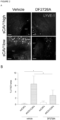
- Fig. 2 The obtained results ( Fig. 2 ) support that DF2726A treatment reduces lymphangiogenesis in the experimental tumor settings in shCAV1 CAF (sCAV1low CAF) tumors, while promoting mild but statistically significant lymphangiogenesis in scrCAF (sCAV1high CAF) tumors.
- Plot in panel 2B of Fig. 2 represents the percentage of LYVE1-+ area (above 1.4x whole image average) across 3 independent fields per primary tumor (n individuals: 10 per genotype and condition).
- DF2726A a dual CXCR1/CXCR2 antagonist, was orally administered to mice during primary tumor growth after xenografting (see Materials and Methods).
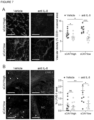
- CXCL8 inhibition the vasculature of both low and high stromal CAV1 tumor xenografts showed increased pericyte coverage, a phenomenon associated with vascular maturation and stabilization ( Fig. 3A ).
- vessel maturation in terms of increased pericyte coverage
- sCAV1low tumors the effect of CXCL8 inhibition over blood vessel perfusion showed opposite results when comparing both tumor sets.
- sCAV1high xenografts showed decreased perfusion upon CXCL8 inhibition
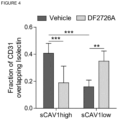
- sCAV1low xenografts displayed an ameliorated blood flow, as assessed by isolectin intravenous injection assays ( Fig. 3B and 4 ). These effects correlated with changes in tumor vascular density ( Fig. 1 ), as well as reduction in lymphatic vessel development ( Fig. 2 ).
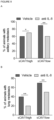
- sCAV1low tumors upon CXCL8 inhibition was associated with decreased incidence of axillary lymph node metastasis (both upon visual inspection and subsequent histological examination of nodes) ( Fig. 5A ).
- the response in sCAV1high tumors had an opposite direction ( Fig. 5A ).
- a similar effect was observed regarding lung metastasis incidence rate and lung metastasis relative extension ( Fig. 5B and 6 ).
- CXCL8 receptor inhibition improved tumor vasculature functionality and decreased aggressiveness in sCAV1 low tumors.
- Metastasis incidence after primary tumor resection was assessed by anatomopathological inspection across indicated genotypes and treatments, and it was expressed as % of animals for which metastatic foci were detected in either location (Axillary metastasis - Pulmonary metastasis).
- vascular normalization indicating improved perfusion and reduced stress, as suggested by significantly lower development of intratumoral lymphatic vessels ( Fig. 2 ). This was associated with reduced hallmarks of malignancy and metastatic behavior: reduced absolute metastasis incidence at both prime breast tumor metastasis locations (axillary lymph nodes and lung ( Fig. 5A, 5B ); and reduced relative metastasis extension in the lung ( Fig. 6 ).
- mice were administered orthotopically with respect to the tumor with a CXCL8 (IL-8) neutralizing monoclonal antibody. Briefly, untreated primary tumor growth post-orthotopic cell inoculation was allowed for 3 days prior starting antibody injections in order to facilitate engraftment of TCs + CAFs. Subsequently, mice were administered every three days (7 injections total) an intratumoral injection of 45 ⁇ l of saline solution containing 22,5 ⁇ g of anti-IL-8 mAb (Biotechne, Cat. No MAB208-500).
- mice were mastectomized to assess primary tumor size, blood vessel maturation (PDGFRB staining) and lymphangiogenesis (LYVE1 staining). 60 days post-mastectomy mice were sacrificed and tissues collected for histological assessment of metastatic dissemination.
- PDGFRB staining blood vessel maturation
- LYVE1 staining lymphangiogenesis
- IL-8-neutralizing antibodies had an analogous effect on tumor blood and lymphatic vascularization ( Fig. 7A and B ) and metastatic incidence ( Fig. 8A and B ) as previously observed with DF2726A, albeit in this case a mild reduction in lung metastasis incidence was observed for sCAV1high tumors.
- the results of the studies support that CXCL8 dysregulation in tumors with low CAV1 expression in CAFs drives an altered, dysfunctional vascularization, which promotes an aggressive tumor cell behaviour. Intervention of this signalling pathway normalizes vascularization and reduces metastasis incidence specifically in low stromal CAV1 tumors.
- the study supports the efficacy of the use of CXCL8 inhibitors for the treatment of tumors with low stromal CAV1 levels and for the prevention/treatment of metastases of tumors with low stromal CAV1 levels.
Landscapes
- Health & Medical Sciences (AREA)
- Chemical & Material Sciences (AREA)
- Medicinal Chemistry (AREA)
- Life Sciences & Earth Sciences (AREA)
- General Health & Medical Sciences (AREA)
- Organic Chemistry (AREA)
- Pharmacology & Pharmacy (AREA)
- Animal Behavior & Ethology (AREA)
- Public Health (AREA)
- Veterinary Medicine (AREA)
- Epidemiology (AREA)
- Chemical Kinetics & Catalysis (AREA)
- Nuclear Medicine, Radiotherapy & Molecular Imaging (AREA)
- General Chemical & Material Sciences (AREA)
- Immunology (AREA)
- Biochemistry (AREA)
- Biophysics (AREA)
- Genetics & Genomics (AREA)
- Molecular Biology (AREA)
- Proteomics, Peptides & Aminoacids (AREA)
- Pharmaceuticals Containing Other Organic And Inorganic Compounds (AREA)
Priority Applications (2)
| Application Number | Priority Date | Filing Date | Title |
|---|---|---|---|
| EP23383220.3A EP4563594A1 (fr) | 2023-11-28 | 2023-11-28 | Inhibiteurs de cxcl8 destinés à être utilisés dans le traitement de tumeurs à faibles taux de cav1 stromale |
| PCT/EP2024/083939 WO2025114450A1 (fr) | 2023-11-28 | 2024-11-28 | Inhibiteurs de cxcl8 destinés à être utilisés dans le traitement de tumeurs à faibles niveaux de cav1 stromale |
Applications Claiming Priority (1)
| Application Number | Priority Date | Filing Date | Title |
|---|---|---|---|
| EP23383220.3A EP4563594A1 (fr) | 2023-11-28 | 2023-11-28 | Inhibiteurs de cxcl8 destinés à être utilisés dans le traitement de tumeurs à faibles taux de cav1 stromale |
Publications (1)
| Publication Number | Publication Date |
|---|---|
| EP4563594A1 true EP4563594A1 (fr) | 2025-06-04 |
Family
ID=89119249
Family Applications (1)
| Application Number | Title | Priority Date | Filing Date |
|---|---|---|---|
| EP23383220.3A Withdrawn EP4563594A1 (fr) | 2023-11-28 | 2023-11-28 | Inhibiteurs de cxcl8 destinés à être utilisés dans le traitement de tumeurs à faibles taux de cav1 stromale |
Country Status (2)
| Country | Link |
|---|---|
| EP (1) | EP4563594A1 (fr) |
| WO (1) | WO2025114450A1 (fr) |
Citations (3)
| Publication number | Priority date | Publication date | Assignee | Title |
|---|---|---|---|---|
| WO2000024710A1 (fr) | 1998-10-23 | 2000-05-04 | Dompe' S.P.A. | N-(2-aryl-propionyl)-sulfamides et preparations pharmaceutiques contenant ces derniers |
| WO2005090295A2 (fr) | 2004-03-23 | 2005-09-29 | Dompe' Pha.R.Ma S.P.A. | Derives de l'acide 2-phenylpropionique et compositions pharmaceutiques contenant lesdits derives |
| WO2010031835A2 (fr) | 2008-09-18 | 2010-03-25 | Dompe' S.P.A. | Acides 2-aryl-propioniques, leurs dérivés et compositions pharmaceutiques en contenant |
-
2023
- 2023-11-28 EP EP23383220.3A patent/EP4563594A1/fr not_active Withdrawn
-
2024
- 2024-11-28 WO PCT/EP2024/083939 patent/WO2025114450A1/fr active Pending
Patent Citations (3)
| Publication number | Priority date | Publication date | Assignee | Title |
|---|---|---|---|---|
| WO2000024710A1 (fr) | 1998-10-23 | 2000-05-04 | Dompe' S.P.A. | N-(2-aryl-propionyl)-sulfamides et preparations pharmaceutiques contenant ces derniers |
| WO2005090295A2 (fr) | 2004-03-23 | 2005-09-29 | Dompe' Pha.R.Ma S.P.A. | Derives de l'acide 2-phenylpropionique et compositions pharmaceutiques contenant lesdits derives |
| WO2010031835A2 (fr) | 2008-09-18 | 2010-03-25 | Dompe' S.P.A. | Acides 2-aryl-propioniques, leurs dérivés et compositions pharmaceutiques en contenant |
Non-Patent Citations (46)
| Title |
|---|
| ALLEGRETTI ET AL., IMMUNOLOGY LETTERS, vol. 145, 2012, pages 68 - 78 |
| BRANDOLINI ET AL., SCIENTIFIC REPORTS, vol. 9, 2019, pages 11729 |
| BUSCH-PETERSEN J., CURRENT TOPICS IN MEDICINAL CHEMISTRY, vol. 6, 2006, pages 1345 - 135 |
| CHAO J. ET AL., BIOORGANIC & MEDICINAL CHEMISTRY LETTERS, vol. 17, 2007, pages 3778 - 3783 |
| CHARLI DOMINGUEZ ET AL: "Neutralization of IL-8 decreases tumor PMN-MDSCs and reduces mesenchymalization of claudin-low triple-negative breast cancer", JCI INSIGHT, vol. 2, no. 21, 2 November 2017 (2017-11-02), XP055658801, ISSN: 2379-3708, DOI: 10.1172/jci.insight.94296 * |
| CHEN, D. ET AL., ONCOL LETT, vol. 8, 2014, pages 1409 - 1421 |
| CHENG J.P ET AL., TRENDS CELL BIOL., vol. 26, 2016, pages 177 - 189 |
| ENGELMAN J.A. ET AL., J BIOL CHEM., vol. 272, 1997, pages 16374 - 16381 |
| FINAK, G. ET AL., NAT. MED., vol. 14, 2008, pages 518 - 527 |
| GADI, V. K. ET AL., J. ONCOL. PRACT., vol. 13, 2017, pages 293 - 300 |
| GALBIATI F. ET AL., MOL BIOL CELL., vol. 12, 2001, pages 2229 - 2244 |
| GOEL, S.WONG ET AL., COLD SPRING HARB. PERSPECT. MED., vol. 2, 2012, pages a006486 |
| GOETZ ET AL., CELL, vol. 146, 8 July 2011 (2011-07-08), pages 148 - 163 |
| GOETZ, J. G. ET AL., CANCER METASTASIS REV., vol. 27, 2008, pages 715 - 735 |
| GOETZ, J. G. ET AL.: "Biomechanical remodeling of the microenvironment by stromal caveolin-1 favors tumor invasion and metastasis", CELL, vol. 146, no. 1, 2011, pages 148 - 674, XP028100091, DOI: 10.1016/j.cell.2011.05.040 |
| HAN ZHI-JIAN ET AL: "Roles of the CXCL8-CXCR1/2 Axis in the Tumor Microenvironment and Immunotherapy", MOLECULES, vol. 27, no. 1, 27 December 2021 (2021-12-27), DE, pages 137, XP093150852, ISSN: 1433-1373, DOI: 10.3390/molecules27010137 * |
| HANAHAN, D. ET AL., CANCER CELL, vol. 21, 2012, pages 309 - 322 |
| HUANG SUYUN ET AL: "Fully Humanized Neutralizing Antibodies to Interleukin-8 (ABX-IL8) Inhibit Angiogenesis, Tumor Growth, and Metastasis of Human Melanoma", THE AMERICAN JOURNAL OF PATHOLOGY, vol. 161, no. 1, 1 July 2002 (2002-07-01), US, pages 125 - 134, XP093151148, ISSN: 0002-9440, Retrieved from the Internet <URL:https://www.ncbi.nlm.nih.gov/pmc/articles/PMC1850702/pdf/3212.pdf> DOI: 10.1016/S0002-9440(10)64164-8 * |
| JIE JACK, EXPERT OPINION THER. PATENTS, vol. 11, 2001, pages 12 |
| KALLURI, R. ET AL., FIBROBLASTS IN CANCER. NAT. REV. CANCER, vol. 6, 2006 |
| KALLURI, R., NAT. REV. CANCER, vol. 16, 2016, pages 582 - 598 |
| KAMPOSIORAS KONSTANTINOS ET AL: "Prognostic significance and therapeutic implications of Caveolin-1 in gastrointestinal tract malignancies", PHARMACOLOGY & THERAPEUTICS, ELSEVIER, GB, vol. 233, 29 October 2021 (2021-10-29), XP087031567, ISSN: 0163-7258, [retrieved on 20211029], DOI: 10.1016/J.PHARMTHERA.2021.108028 * |
| LI X.A. ET AL., TRENDS CARDIOVASC MED., vol. 15, 2005, pages 92 - 96 |
| LOW JIN-YIH ET AL: "Caveolae-Associated Molecules, Tumor Stroma, and Cancer Drug Resistance: Current Findings and Future Perspectives", CANCERS, vol. 14, no. 3, 25 January 2022 (2022-01-25), CH, pages 589, XP093150823, ISSN: 2072-6694, Retrieved from the Internet <URL:https://www.ncbi.nlm.nih.gov/pmc/articles/PMC8833326/pdf/cancers-14-00589.pdf> DOI: 10.3390/cancers14030589 * |
| MAO, Y. ET AL., CANCER METASTASIS REV., vol. 32, pages 303 - 15 |
| MARIJO BILUSIC ET AL: "Phase I trial of HuMax-IL8 (BMS-986253), an anti-IL-8 monoclonal antibody, in patients with metastatic or unresectable solid tumors", JOURNAL FOR IMMUNOTHERAPY OF CANCER, vol. 7, no. 1, 5 September 2019 (2019-09-05), XP055723105, DOI: 10.1186/s40425-019-0706-x * |
| MARTINEZ-OUTSCHOORN, U. E. ET AL., NAT. REV. CANCER, vol. 15, 2015, pages 225 - 237 |
| MEYER C. ET AL., CELL DEATH DIS., vol. 4, 2013, pages e466 - e66 |
| MIGNECO, G. ET AL., CELL CYCLE, vol. 9, 2010, pages 2412 - 2422 |
| MOLLAH FARHANA ET AL: "Overcoming Therapy Resistance and Relapse in TNBC: Emerging Technologies to Target Breast Cancer-Associated Fibroblasts", BIOMEDICINES, vol. 9, no. 12, 15 December 2021 (2021-12-15), Basel, pages 1921, XP093150833, ISSN: 2227-9059, DOI: 10.3390/biomedicines9121921 * |
| MORICONI ET AL., J. MED. CHEM., vol. 50, 2007, pages 3984 - 4002 |
| PARTON, R. G. ET AL., NAT. REV. MOL. CELL BIOL., vol. 14, 2013, pages 98 - 112 |
| PELLINEN ET AL., SCI REP, vol. 8, 2018, pages 2338 |
| PETROVA, V. ET AL., ONCOGENESIS, vol. 7, 2018, pages 10 |
| QUAIL, D. F. ET AL., NAT MED, vol. 19, 2013, pages 1423 - 1437 |
| SITARU ET AL., INTERNAL AND EMERGENCY MEDICINE, vol. 18, 2023, pages 1647 - 1664 |
| SOTGIA F. ET AL., ANNU REV PATHOL: MECHANISMS OF DISEASE, vol. 7, 2012, pages 423 - 467 |
| TAO, L., HUANG ET AL., ONCOL. LETT., vol. 14, 2017, pages 2611 - 2620 |
| TORRES V.A. ET AL., J CELL SCI., vol. 119, 2006, pages 1812 - 1823 |
| WENNMALM, K. ET AL., NAT. MED., vol. 15, 2009, pages 237 - 238 |
| WINSLOW, S. ET AL., BREAST CANCER RES., vol. 17, 2015, pages 23 |
| WITKIEWICZ ET AL., CANCER BIOLOGY & THERAPY, vol. 10, no. 2, 15 July 2010 (2010-07-15), pages 135 - 143 |
| XU L. ET AL., ONCOL REP., vol. 32, 2014, pages 318 - 324 |
| YAMAO TAKANOBU ET AL: "Cellular Senescence, Represented by Expression of Caveolin-1, in Cancer-Associated Fibroblasts Promotes Tumor Invasion in Pancreatic Cancer", ANNALS OF SURGICAL ONCOLOGY, SPRINGER INTERNATIONAL PUBLISHING, CHAM, vol. 26, no. 5, 25 February 2019 (2019-02-25), pages 1552 - 1559, XP036754604, ISSN: 1068-9265, [retrieved on 20190225], DOI: 10.1245/S10434-019-07266-2 * |
| YE ET AL., CANCER MANAGEMENT AND RESEARCH, vol. 12, 2020, pages 8887 - 8892 |
| ZHAO ET AL., PLOS ONE, vol. 8, no. 3, 2013, pages e59102 |
Also Published As
| Publication number | Publication date |
|---|---|
| WO2025114450A1 (fr) | 2025-06-05 |
Similar Documents
| Publication | Publication Date | Title |
|---|---|---|
| US20220339169A1 (en) | Methods of treating or selecting a treatment for a subject resistant to tnf inhibitor using a nlrp3 antagonist | |
| EP2720696B1 (fr) | Combinaison de panobinostat et de ruxolitinib dans le traitement du cancer tel qu'un néoplasme myéloprolifératif | |
| DE69801680T2 (de) | Zusammensetzungen welche aldosereductasehemmer und glycogen phosphorylase hemmer enthalten | |
| CN107205963A (zh) | 含有醛抑制剂和双胍类化合物的抑制癌症干细胞生长的药物组合物 | |
| JP7858508B2 (ja) | 近視の治療、近視の予防および/または近視の進行抑制のための医薬 | |
| US20120196858A1 (en) | Method of promoting apoptosis and inhibiting metastasis | |
| US20230321056A1 (en) | Methods for Treating Metastasis with Cathepsin C Inhibitors | |
| US20210309630A1 (en) | Allosteric inhibitor of wee1 kinase | |
| KR20150096445A (ko) | 뮤신 관련 질환의 치료 | |
| KR20200139721A (ko) | 섬유성 질환을 치료하는 방법 | |
| JP2007525494A (ja) | ヘパラナーゼ阻害剤及びその使用 | |
| JP2007525494A6 (ja) | ヘパラナーゼ阻害剤及びその使用 | |
| US20230365539A1 (en) | Novel chalcone-based chemotherapeutic compound for triple negative breast cancer | |
| JP2019521964A (ja) | アドレナリン受容体調節化合物およびその使用方法 | |
| BR112020016788A2 (pt) | Composto de anel de metil lactama e uso medicinal do mesmo | |
| US10220072B2 (en) | Mesalamine for the treatment of cancer | |
| JP7564619B2 (ja) | ゴシポールおよびフェンホルミンを有効成分として含む膵臓癌予防および治療用薬学的組成物 | |
| EP4029514A1 (fr) | Médicament destiné au traitement curatif du syndrome d'alport rénal héréditaire réfractaire | |
| US20180036420A1 (en) | Methods for enhancing the delivery of molecules across the blood brain barrier | |
| KR20140032916A (ko) | 에틸(2―메틸―3―{(E)―[(나프타[2,1―b]퓨란―2―일카보닐)하이드라조노]메틸}―1H―인돌―1―일)아세테이트, 이의 유사체를 유효성분으로 포함하는 암 예방 및 치료용 조성물 | |
| EP3386988B1 (fr) | Nouveaux dérivés de la dihydropyranopyrimidinone et leur utilisation | |
| WO2025114450A1 (fr) | Inhibiteurs de cxcl8 destinés à être utilisés dans le traitement de tumeurs à faibles niveaux de cav1 stromale | |
| US10857113B2 (en) | Bezafibrate for the treatment of cancer | |
| WO2023038815A1 (fr) | Inhibiteur d'irak pour traiter des états pathologiques liés à la libération de cytokines associés à une infection par un virus respiratoire | |
| JP2021113185A (ja) | βアミノ酸誘導体、これを含むキナーゼ阻害剤および医薬組成物ならびにその使用 |
Legal Events
| Date | Code | Title | Description |
|---|---|---|---|
| PUAI | Public reference made under article 153(3) epc to a published international application that has entered the european phase |
Free format text: ORIGINAL CODE: 0009012 |
|
| STAA | Information on the status of an ep patent application or granted ep patent |
Free format text: STATUS: THE APPLICATION HAS BEEN PUBLISHED |
|
| AK | Designated contracting states |
Kind code of ref document: A1 Designated state(s): AL AT BE BG CH CY CZ DE DK EE ES FI FR GB GR HR HU IE IS IT LI LT LU LV MC ME MK MT NL NO PL PT RO RS SE SI SK SM TR |
|
| STAA | Information on the status of an ep patent application or granted ep patent |
Free format text: STATUS: THE APPLICATION HAS BEEN WITHDRAWN |
|
| 18W | Application withdrawn |
Effective date: 20250603 |