EP4564224A1 - Suchverfahren und -vorrichtung mit neuronaler architektur und speichermedium - Google Patents
Suchverfahren und -vorrichtung mit neuronaler architektur und speichermedium Download PDFInfo
- Publication number
- EP4564224A1 EP4564224A1 EP23856038.7A EP23856038A EP4564224A1 EP 4564224 A1 EP4564224 A1 EP 4564224A1 EP 23856038 A EP23856038 A EP 23856038A EP 4564224 A1 EP4564224 A1 EP 4564224A1
- Authority
- EP
- European Patent Office
- Prior art keywords
- neural network
- model
- network models
- target
- computing device
- Prior art date
- Legal status (The legal status is an assumption and is not a legal conclusion. Google has not performed a legal analysis and makes no representation as to the accuracy of the status listed.)
- Pending
Links
Images


Classifications
-
- G—PHYSICS
- G06—COMPUTING OR CALCULATING; COUNTING
- G06F—ELECTRIC DIGITAL DATA PROCESSING
- G06F16/00—Information retrieval; Database structures therefor; File system structures therefor
- G06F16/50—Information retrieval; Database structures therefor; File system structures therefor of still image data
- G06F16/55—Clustering; Classification
-
- G—PHYSICS
- G06—COMPUTING OR CALCULATING; COUNTING
- G06N—COMPUTING ARRANGEMENTS BASED ON SPECIFIC COMPUTATIONAL MODELS
- G06N3/00—Computing arrangements based on biological models
- G06N3/02—Neural networks
- G06N3/04—Architecture, e.g. interconnection topology
- G06N3/045—Combinations of networks
-
- G—PHYSICS
- G06—COMPUTING OR CALCULATING; COUNTING
- G06F—ELECTRIC DIGITAL DATA PROCESSING
- G06F16/00—Information retrieval; Database structures therefor; File system structures therefor
- G06F16/90—Details of database functions independent of the retrieved data types
- G06F16/903—Querying
-
- G—PHYSICS
- G06—COMPUTING OR CALCULATING; COUNTING
- G06N—COMPUTING ARRANGEMENTS BASED ON SPECIFIC COMPUTATIONAL MODELS
- G06N20/00—Machine learning
- G06N20/20—Ensemble learning
-
- G—PHYSICS
- G06—COMPUTING OR CALCULATING; COUNTING
- G06N—COMPUTING ARRANGEMENTS BASED ON SPECIFIC COMPUTATIONAL MODELS
- G06N3/00—Computing arrangements based on biological models
- G06N3/02—Neural networks
- G06N3/04—Architecture, e.g. interconnection topology
-
- G—PHYSICS
- G06—COMPUTING OR CALCULATING; COUNTING
- G06N—COMPUTING ARRANGEMENTS BASED ON SPECIFIC COMPUTATIONAL MODELS
- G06N3/00—Computing arrangements based on biological models
- G06N3/02—Neural networks
- G06N3/04—Architecture, e.g. interconnection topology
- G06N3/044—Recurrent networks, e.g. Hopfield networks
-
- G—PHYSICS
- G06—COMPUTING OR CALCULATING; COUNTING
- G06N—COMPUTING ARRANGEMENTS BASED ON SPECIFIC COMPUTATIONAL MODELS
- G06N3/00—Computing arrangements based on biological models
- G06N3/02—Neural networks
- G06N3/04—Architecture, e.g. interconnection topology
- G06N3/044—Recurrent networks, e.g. Hopfield networks
- G06N3/0442—Recurrent networks, e.g. Hopfield networks characterised by memory or gating, e.g. long short-term memory [LSTM] or gated recurrent units [GRU]
-
- G—PHYSICS
- G06—COMPUTING OR CALCULATING; COUNTING
- G06N—COMPUTING ARRANGEMENTS BASED ON SPECIFIC COMPUTATIONAL MODELS
- G06N3/00—Computing arrangements based on biological models
- G06N3/02—Neural networks
- G06N3/04—Architecture, e.g. interconnection topology
- G06N3/045—Combinations of networks
- G06N3/0455—Auto-encoder networks; Encoder-decoder networks
-
- G—PHYSICS
- G06—COMPUTING OR CALCULATING; COUNTING
- G06N—COMPUTING ARRANGEMENTS BASED ON SPECIFIC COMPUTATIONAL MODELS
- G06N3/00—Computing arrangements based on biological models
- G06N3/02—Neural networks
- G06N3/04—Architecture, e.g. interconnection topology
- G06N3/0464—Convolutional networks [CNN, ConvNet]
-
- G—PHYSICS
- G06—COMPUTING OR CALCULATING; COUNTING
- G06N—COMPUTING ARRANGEMENTS BASED ON SPECIFIC COMPUTATIONAL MODELS
- G06N3/00—Computing arrangements based on biological models
- G06N3/02—Neural networks
- G06N3/04—Architecture, e.g. interconnection topology
- G06N3/048—Activation functions
-
- G—PHYSICS
- G06—COMPUTING OR CALCULATING; COUNTING
- G06N—COMPUTING ARRANGEMENTS BASED ON SPECIFIC COMPUTATIONAL MODELS
- G06N3/00—Computing arrangements based on biological models
- G06N3/02—Neural networks
- G06N3/04—Architecture, e.g. interconnection topology
- G06N3/0495—Quantised networks; Sparse networks; Compressed networks
-
- G—PHYSICS
- G06—COMPUTING OR CALCULATING; COUNTING
- G06N—COMPUTING ARRANGEMENTS BASED ON SPECIFIC COMPUTATIONAL MODELS
- G06N3/00—Computing arrangements based on biological models
- G06N3/02—Neural networks
- G06N3/06—Physical realisation, i.e. hardware implementation of neural networks, neurons or parts of neurons
- G06N3/063—Physical realisation, i.e. hardware implementation of neural networks, neurons or parts of neurons using electronic means
-
- G—PHYSICS
- G06—COMPUTING OR CALCULATING; COUNTING
- G06N—COMPUTING ARRANGEMENTS BASED ON SPECIFIC COMPUTATIONAL MODELS
- G06N3/00—Computing arrangements based on biological models
- G06N3/02—Neural networks
- G06N3/08—Learning methods
-
- G—PHYSICS
- G06—COMPUTING OR CALCULATING; COUNTING
- G06N—COMPUTING ARRANGEMENTS BASED ON SPECIFIC COMPUTATIONAL MODELS
- G06N3/00—Computing arrangements based on biological models
- G06N3/02—Neural networks
- G06N3/08—Learning methods
- G06N3/082—Learning methods modifying the architecture, e.g. adding, deleting or silencing nodes or connections
-
- G—PHYSICS
- G06—COMPUTING OR CALCULATING; COUNTING
- G06N—COMPUTING ARRANGEMENTS BASED ON SPECIFIC COMPUTATIONAL MODELS
- G06N3/00—Computing arrangements based on biological models
- G06N3/02—Neural networks
- G06N3/08—Learning methods
- G06N3/084—Backpropagation, e.g. using gradient descent
-
- G—PHYSICS
- G06—COMPUTING OR CALCULATING; COUNTING
- G06N—COMPUTING ARRANGEMENTS BASED ON SPECIFIC COMPUTATIONAL MODELS
- G06N3/00—Computing arrangements based on biological models
- G06N3/02—Neural networks
- G06N3/08—Learning methods
- G06N3/086—Learning methods using evolutionary algorithms, e.g. genetic algorithms or genetic programming
-
- G—PHYSICS
- G06—COMPUTING OR CALCULATING; COUNTING
- G06N—COMPUTING ARRANGEMENTS BASED ON SPECIFIC COMPUTATIONAL MODELS
- G06N3/00—Computing arrangements based on biological models
- G06N3/02—Neural networks
- G06N3/08—Learning methods
- G06N3/09—Supervised learning
-
- G—PHYSICS
- G06—COMPUTING OR CALCULATING; COUNTING
- G06N—COMPUTING ARRANGEMENTS BASED ON SPECIFIC COMPUTATIONAL MODELS
- G06N3/00—Computing arrangements based on biological models
- G06N3/02—Neural networks
- G06N3/08—Learning methods
- G06N3/096—Transfer learning
-
- G—PHYSICS
- G06—COMPUTING OR CALCULATING; COUNTING
- G06N—COMPUTING ARRANGEMENTS BASED ON SPECIFIC COMPUTATIONAL MODELS
- G06N3/00—Computing arrangements based on biological models
- G06N3/02—Neural networks
- G06N3/08—Learning methods
- G06N3/0985—Hyperparameter optimisation; Meta-learning; Learning-to-learn
-
- G—PHYSICS
- G06—COMPUTING OR CALCULATING; COUNTING
- G06N—COMPUTING ARRANGEMENTS BASED ON SPECIFIC COMPUTATIONAL MODELS
- G06N5/00—Computing arrangements using knowledge-based models
- G06N5/01—Dynamic search techniques; Heuristics; Dynamic trees; Branch-and-bound
-
- G—PHYSICS
- G06—COMPUTING OR CALCULATING; COUNTING
- G06V—IMAGE OR VIDEO RECOGNITION OR UNDERSTANDING
- G06V10/00—Arrangements for image or video recognition or understanding
- G06V10/70—Arrangements for image or video recognition or understanding using pattern recognition or machine learning
- G06V10/82—Arrangements for image or video recognition or understanding using pattern recognition or machine learning using neural networks
Definitions
- This application relates to the field of artificial intelligence (artificial intelligence, AI), and in particular, to a neural architecture search method and apparatus, and a storage medium.
- AI artificial intelligence
- Performance of a neural network architecture has important impact on a task execution effect of a neural network model. Better performance of the neural network architecture indicates a better task execution effect of the neural network model. Therefore, for constructing a neural network model, how to determine a neural network architecture with good performance is a research hotspot of a person skilled in the art.
- a neural architecture search (neural architecture search, NAS) technology emerges accordingly.
- the NAS technology can automatically find a neural network architecture with optimal performance in predefined search space.
- performance of different neural network architectures is inconsistent.
- a transformer structure has better performance than a convolutional neural network (convolutional neural network, CNN).
- CNN convolutional neural network
- a transformer structure has better performance than a transformer structure. This indicates that, under a specific constraint of a given model scale, it is difficult to determine which neural network architecture should be used to design an ideal neural network architecture that meets the current constraint.
- a reasonable and effective implementation has not been provided in a related technology.
- a neural architecture search method and apparatus and a storage medium are provided.
- Search space is pre-constructed, where the search space indicates correspondences between a plurality of model scales and a plurality of first neural network models, respective model architecture parameters of the plurality of first neural network models are different, and the model architecture parameter indicates a ratio between at least two neural network architectures in the first neural network model.
- a target neural network model that meets the current target constraint can be determined, that is, an ideal hybrid neural network architecture is automatically found, to improve a neural architecture search effect.
- an embodiment of this application provides a neural architecture search method.
- the method includes:
- the search space is pre-constructed, where the search space indicates the correspondences between the plurality of model scales and the plurality of first neural network models, the respective model architecture parameters of the plurality of first neural network models are different, and the model architecture parameter indicates the ratio between the at least two neural network architectures in the first neural network model, so that under the target constraint of the defined model scale, the target neural network model that meets the current target constraint can be automatically found from the plurality of first neural network models, that is, an ideal hybrid neural network architecture and a ratio between at least two hybrid neural network architectures are found, to improve a neural architecture search effect.
- the selecting, from the plurality of first neural network models, a target neural network model that meets the target constraint includes:
- the at least two second neural network models that meet the target constraint are selected from the plurality of first neural network models
- the at least two second neural network models are trained in the target dataset corresponding to the target task, to obtain the evaluation parameters respectively corresponding to the at least two second neural network models
- the target neural network model is determined based on the evaluation parameters respectively corresponding to the at least two second neural network models.
- the search space before the obtaining a plurality of pre-trained first neural network models based on search space, further including: obtaining the search space of a super-network, where the super-network includes a plurality of neural network models that share respective model architecture parameters, and the search space further indicates that some neural network models in the super-network are the plurality of first neural network models.
- the search space of the super-network is constructed, where the super-network includes the plurality of neural network models that share the respective model architecture parameters, and the search space further indicates that some neural network models in the super-network are the plurality of first neural network models, so that neural architecture search is subsequently performed based on the plurality of first neural network models indicated by the search space, to further improve neural architecture search efficiency.
- the at least two neural network architectures include a CNN structure and a transformer structure.
- the first neural network model in this solution includes two branches: a CNN branch and a transformer branch, to implement a search method for a hybrid neural network architecture including the CNN structure and the transformer structure.
- the plurality of preset original neural network models are obtained, where the original neural network model indicates the at least two neural network architectures and the ratio between the at least two neural network architectures.
- the plurality of original neural network models are trained based on the training sample set, to obtain the plurality of trained first neural network models.
- a training policy of a hybrid neural network model, namely, the first neural network model, is constructed, so that model training efficiency can be greatly improved.
- the training the plurality of original neural network models based on a training sample set, to obtain the plurality of trained first neural network models includes:
- the sampled model is determined from the plurality of original neural network models based on the preset sampling periodicity, and for the at least one sample image in the training sample set, the currently determined sampled model is trained based on the at least one sample image, to obtain the corresponding first neural network model, to ensure reliability of the first neural network model obtained through training based on the sampled model.
- the sampled model is a model with a largest model scale in the plurality of original neural network models, a model with a smallest model scale in the plurality of original neural network models, or a model randomly determined from the plurality of original neural network models.
- the sampled model is the model with the largest model scale in the plurality of original neural network models, the model with the smallest model scale in the plurality of original neural network models, or the model randomly determined from the plurality of original neural network models, to further ensure reasonability and validity of model training.
- an embodiment of this application provides a neural architecture search apparatus.
- the apparatus includes:
- the processor is configured to implement the foregoing method.
- an embodiment of this application provides a neural architecture search apparatus.
- the apparatus includes:
- an embodiment of this application provides a non-volatile computer-readable storage medium.
- the non-volatile computer-readable storage medium stores computer program instructions, and when the computer program instructions are executed by a processor, the method provided in any one of the foregoing first aspect or the possible implementations of the first aspect is implemented.
- an embodiment of this application provides a computer program product.
- the computer program product includes computer-readable code or a non-volatile computer-readable storage medium carrying the computer-readable code.
- a processor in the computing device performs the method provided in any one of the foregoing first aspect or the possible implementations of the first aspect.
- an embodiment of this application provides a computing device cluster, including at least one computing device.
- Each computing device includes a processor and a memory.
- the processor of the at least one computing device is configured to execute instructions stored in the memory of the at least one computing device, to enable the computing device cluster to perform the method provided in any one of the foregoing first aspect or the possible implementations of the first aspect.
- an embodiment of this application provides a computer program product including instructions.
- the instructions When the instructions are run by a computing device cluster, the computing device cluster is enabled to perform the method provided in any one of the foregoing first aspect or the possible implementations of the first aspect.
- an embodiment of this application provides a computer-readable storage medium, including computer program instructions.
- the computer program instructions When executed by a computing device cluster, the computing device cluster performs the method provided in any one of the foregoing first aspect or the possible implementations of the first aspect.
- example herein means “used as an example, embodiment or illustration”. Any embodiment described as an “example” is not necessarily explained as being superior or better than other embodiments.
- a neural architecture search method for a hybrid neural network architecture for example, CNN+transformer
- An ideal hybrid neural network architecture can be found at different model scales such as a small model (for example, with a high CNN parameter ratio) and a large model (for example, with a high transformer parameter ratio), and efficiency and reliability can be maintained.
- an optimal neural network model can be determined through fast pre-training, and there is no need to train various networks from scratch before the optimal model is selected.
- Hardware resources consumed during the entire training are far less than hardware resources required for random initialization training of various sub-models in various scenarios.
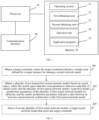
- FIG. 1 is a diagram of a structure of a computing device according to an example embodiment of this application.
- the computing device may be a terminal or a server.
- the terminal includes a mobile terminal or a fixed terminal.
- the terminal may be a mobile phone, a tablet computer, a laptop portable computer, a desktop computer, and the like.
- the server may be one server, a server cluster including several servers, or a cloud computing service center.
- a computing device in a model training phase is the server, for example, a server including eight GPUs.
- hundreds of thousands of neural network models are pre-trained at a time via a fixed large network and a flexible dynamic super-network.
- neural architecture search may be performed on computing devices of various computing power sizes based on a user requirement.
- the computing device is the terminal or the server.
- the computing device includes a processor 10, a memory 20, and a communication interface 30.
- a person skilled in the art may understand that the structure shown in FIG. 1 does not constitute a limitation on the computing device, and the computing device may include more or fewer components than those shown in the figure, or may combine some components, or may have a different component arrangement.
- the processor 10 is a control center of the computing device, and is connected to all parts of the entire computing device through various interfaces and lines.
- the processor 10 performs various functions of the computing device and processes data by running or executing a software program and/or a module stored in the memory 20 and invoking data stored in the memory 20. In this way, overall control is performed on the computing device.
- the processor 10 may be implemented by a CPU, or may be implemented by a graphics processing unit (Graphics Processing Unit, GPU).
- the memory 20 may be configured to store the software program and the module.
- the processor 10 runs the software program and the module stored in the memory 20, to execute various function applications and process data.
- the memory 20 may mainly include a program storage area and a data storage area.
- the program storage area may store an operating system 21, a first obtaining unit 22, a second obtaining unit 23, a selection unit 24, an application program 25 (for example, neural network training) required by at least one function, and the like.
- the data storage area may store data created based on use of the computing device, and the like.
- the memory 20 may be implemented by any type of volatile or non-volatile storage device or a combination thereof, such as a static random access memory (Static Random Access Memory, SRAM), an electrically erasable programmable read-only memory (Electrically Erasable Programmable Read-Only Memory, EEPROM), an erasable programmable read-only memory (Erasable Programmable Read-Only Memory, EPROM), a programmable read-only memory (Programmable Read-Only Memory, PROM), a read-only memory (Read-Only Memory, ROM), a magnetic memory, a flash memory, a magnetic disk, or an optical disc.
- the memory 20 may further include a memory controller, to provide the processor 10 with access to the memory 20.
- the processor 10 performs the following function by running the first obtaining unit 22: obtaining a target constraint, where the target constraint indicates a model scale defined by a target instance for running a neural network model.
- the processor 10 performs the following function by running the second obtaining unit 23: obtaining a plurality of pre-trained first neural network models based on search space, where the search space indicates correspondences between a plurality of model scales and a plurality of first neural network models, respective model architecture parameters of the plurality of first neural network models are different, and the model architecture parameter indicates a ratio between at least two neural network architectures in the first neural network model.
- the processor 10 performs the following function by running the selection unit 24: selecting, from the plurality of first neural network models, a target neural network model that meets the target constraint.
- neural architecture search method provided in embodiments of this application may be applied to a plurality of application scenarios.
- the following describes several example application scenarios of the technical solutions of this application.
- a possible application scenario is an album management system.
- a user stores a large quantity of images in an album of a mobile phone, and expects to classify and manage the images in the album. For example, the user expects that the mobile phone can automatically group all bird images together and group all person photos together.
- the technical solution provided in this application may be used to find, based on a mobile phone computing resource of the user, an image classification model that matches the mobile phone computing resource.
- the image classification model is run on the mobile phone, so that different categories of images in the album of the mobile phone can be classified and managed, thereby facilitating search by the user, reducing management time of the user, and improving album management efficiency.
- a target constraint includes the mobile phone computing resource
- a target neural network model is the image classification model.
- target detection and segmentation In autonomous driving, it is critical to make a safe driving decision about a vehicle by detecting and segmenting a target such as a pedestrian or a vehicle on a street.
- the technical solution provided in this application may be used to find, based on a vehicle computing resource, a target detection and segmentation model that matches the vehicle computing resource.
- the target detection and segmentation model having a model architecture is run on the vehicle, so that accurate detection, positioning, and segmentation can be performed on a target in an image collected by the vehicle.
- a target constraint includes the vehicle computing resource
- a target neural network model is the target detection and segmentation model.
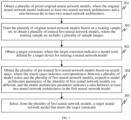
- FIG. 2 is a flowchart of a neural architecture search method according to an example embodiment of this application.
- the method includes the following several steps.
- Step 201 Obtain a target constraint, where the target constraint indicates a model scale defined by a target instance for running a neural network model.
- the computing device obtains the target constraint, where the target constraint indicates the model scale defined by the target instance for running the neural network model.
- the target instance is a physical instance or a virtual instance.
- the physical instance may be a physical machine
- the virtual instance may be a virtual machine, a container, or a bare metal server.
- the virtual machine may also be referred to as a cloud server (Elastic Compute Service, ECS) or an elastic instance. This is not limited in this embodiment of this application.
- ECS Elastic Compute Service
- the target instance and the computing device are a same device or two different devices.
- the computing device is a server
- the target instance is a terminal.
- the computing device and the target instance are a same terminal.
- the target constraint includes a constraint of a resource provided by the target instance for running the neural network model, and the resource includes a computing resource and/or a storage resource of the target instance.
- the target constraint includes defined model scale information, and the model scale information includes model parameter information and model calculation information.
- the target constraint includes floating-point operations per second (Floating-Point Operations per Second, FLOPS), a model parameter quantity, or a maximum memory limit of a model.
- Step 202 Obtain a plurality of pre-trained first neural network models based on search space, where the search space indicates correspondences between a plurality of model scales and a plurality of first neural network models, respective model architecture parameters of the plurality of first neural network models are different, and the model architecture parameter indicates a ratio between at least two neural network architectures in the first neural network model.
- the computing device pre-trains the plurality of first neural network models.
- the terminal obtains the plurality of trained first neural network models stored in the terminal, or obtains the plurality of trained first neural network models from the server.
- the server obtains the plurality of trained first neural network models stored in the server.
- the computing device pre-constructs the search space, where the search space indicates the correspondences between the plurality of model scales and the plurality of first neural network models.
- the search space indicates correspondences between the plurality of model scales and a plurality of model architecture parameters
- the model architecture parameter includes parameters respectively corresponding to the at least two neural network architectures and/or a parameter quantity ratio between the at least two neural network architectures.
- the correspondences that are between the plurality of model scales and the plurality of first neural network models and that are indicated by the search space includes a one-to-many correspondence between the plurality of model scales and the plurality of first neural network models, in other words, each model scale corresponds to one hybrid neural network model set, and the hybrid neural network set includes at least two first neural network models.
- the computing device obtains the search space of a super-network.
- the super-network includes a plurality of neural network models that share respective model architecture parameters, where the search space further indicates that some neural network models in the super-network are the plurality of first neural network models.
- the search space includes the plurality of first neural network models.
- the search space includes a search rule. The search rule indicates that some neural network models in the super-network are the plurality of first neural network models.
- the first neural network model is a model obtained by training a hybrid neural network architecture by using a sample image and correct result information.
- the correct result information is pre-annotated correct result information corresponding to a sample digital image.
- the first neural network model is a recurrent neural network model for recognizing result information in an image.
- the first neural network model is used to convert an input image into the result information.
- the first neural network model represents a correlation between the image and the result information.
- the first neural network model is a preset mathematical model, and a fault detection model includes a model coefficient between the image and the result information.
- the model coefficient may be a fixed value, may be a value dynamically modified with time, or may be a value dynamically modified with an application scenario.
- the result information is any one of classification result information, detection result information, and segmentation result information. This is not limited in this embodiment of this application.
- the first neural network model is a hybrid neural network model including at least two neural network architectures.
- the first neural network model is a hybrid neural network model including two neural network architectures.
- the first neural network model is a hybrid neural network model including a CNN structure and a transformer structure.
- the first neural network model is a hybrid neural network model including a graph convolutional networks (Graph Convolutional Networks, GCN) structure and a transformer structure. This is not limited in this embodiment of this application.
- each of the plurality of first neural network models is a hybrid neural network model including a CNN structure and a transformer structure.
- types of hybrid neural network architectures of at least two of the plurality of first neural network models are different, and/or model architecture parameters respectively corresponding to any two first neural network models are different.
- At least one of the plurality of first neural network models is a hybrid neural network model including a CNN structure and a transformer structure
- at least one of the plurality of first neural network models is a hybrid neural network model including a GCN structure and a transformer structure.
- model architecture parameters respectively corresponding to any two first neural network models are different.
- a model architecture parameter corresponding to a first neural network model is parameters respectively corresponding to at least two neural network architectures included in the first neural network model and/or a parameter quantity ratio between the at least two neural network architectures.
- the plurality of first neural network models are a plurality of hybrid neural network models having different model architecture parameters.
- Step 203 Select, from the plurality of first neural network models, a target neural network model that meets the target constraint.
- the computing device determines, as the target neural network model based on the correspondences that are between the plurality of model scales and the plurality of first neural network models and that are indicated by the search space, a first neural network model corresponding to the model scale indicated by the target constraint.
- the target neural network model is one of the plurality of first neural network models.
- the target neural network model is a to-be-run neural network model that meets the target constraint, the target neural network model is a hybrid neural network model including at least two neural network architectures, and the target neural network model indicates a ratio between the at least two included neural network architectures.
- the target neural network model includes two neural network architectures.
- the two neural network architectures are a CNN structure and a transformer structure.
- the target task is a to-be-processed migration downstream task.
- the target task includes one of a classification task, a detection task, and a segmentation task. It should be noted that the target task may alternatively be another type of task. This is not limited in this embodiment of this application.
- the target dataset is a dataset for deploying the target task.
- a downstream migration dataset is a PASCAL VOC dataset, a COCO dataset, or a Pets dataset.
- the computing device randomly samples K second neural network models from the at least two selected second neural network models, and trains the K second neural network models in the downstream migration dataset, to obtain evaluation parameters respectively corresponding to the K second neural network models.
- the target neural network model is determined based on the evaluation parameters respectively corresponding to the K second neural network models, where K is a positive integer greater than 1.
- the evaluation indicator is a mean AP (Mean Average Precision, mAP) value or Top1. This is not limited in this embodiment of this application.
- FIG. 3 is a flowchart of a neural architecture search method according to another example embodiment of this application.
- a model training process and a model application process related to the method are applied to the computing device shown in FIG. 1 is used for description.
- the method includes the following several steps.
- Step 301 Obtain a plurality of preset original neural network models, where the original neural network model indicates at least two neural network architectures and a ratio between the at least two neural network architectures.
- the computing device obtains the plurality of preset original neural network models.
- the original neural network model is a hybrid neural network model including at least two neural network architectures.
- the original neural network model is a hybrid neural network model including two neural network architectures.
- the original neural network model is a hybrid neural network model including a CNN structure and a transformer structure.
- the original neural network model is a hybrid neural network model including a GCN structure and a transformer structure. This is not limited in this embodiment of this application.
- Step 302 Train the plurality of original neural network models based on a training sample set, to obtain a plurality of trained first neural network models, where the training sample set includes a plurality of sample images.
- the computing device obtains the training sample set, where the training sample set includes the plurality of sample images.
- the computing device preprocesses each sample image in the training sample set to obtain a preprocessed sample image, and trains the plurality of original neural network models based on a plurality of preprocessed sample images, to obtain the plurality of trained first neural network models.
- preprocessing includes at least one of normalization processing, cropping processing (including randomly cropping to a unified size, for example, 224 ⁇ 224), and data enhancement processing.
- the data enhancement processing includes at least one of flipping, random erasing, and random automatic enhancement. This is not limited in this embodiment of this application.
- the computing device determines a sampled model from the plurality of original neural network models based on a preset sampling periodicity; and for at least one sample image in the training sample set, trains, based on the at least one sample image, the currently determined sampled model to obtain a corresponding first neural network model.
- the computing device inputs the plurality of preprocessed sample images into the sampled model in batches for training.
- the sampled model is a model determined from the plurality of original neural network models based on the preset sampling periodicity.
- the sampled model is a model with a largest model scale in the plurality of original neural network models, a model with a smallest model scale in the plurality of original neural network models, or a model randomly determined from the plurality of original neural network models.
- the computing device trains, based on the at least one sample image, the currently determined sampled model to obtain the corresponding first neural network model includes: invoking, based on the at least one sample image, the currently determined sampled model to perform forward propagation, calculating a loss function, performing training based on the loss function by using a back propagation algorithm and a preset optimizer, and obtaining the corresponding first neural network model through a plurality of times of iterative training, to be specific, finally obtaining trained first neural network models respectively corresponding to the plurality of original neural network models.
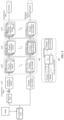
- FIG. 4 a diagram of the hybrid neural network model including the CNN structure and the transformer structure is shown in FIG. 4 .
- the hybrid neural network model includes a dual-branch network structure: the CNN structure and the transformer structure.
- a dynamic convolutional layer module is used in the CNN structure, and the dynamic convolutional layer module includes a dynamic convolution operator with a variable width.
- a dynamic transformer module is used in the transformer structure, and the dynamic transformer module includes at least one parameter of a variable width and a quantity of heads (English: heads).
- d1, d2, d3, and d4 respectively represent quantities of network layers in four phases, and d1, d2, d3, and d4 also dynamically change in a model training process.
- a value of d1 is 4 or 5
- a value of d2 is 4 or 5
- a value of d3 is 3 or 4
- a value of d4 is 1.
- a sum of the quantities of network layers in the four phases d1+d2+d3+d4 is d-model.
- a value of d-model ranges from 12 to 15.
- Step 303 Obtain a target constraint, where the target constraint indicates a model scale defined by a target instance for running a neural network model.
- the computing device obtains the target constraint, where the target constraint indicates the model scale defined by the target instance for running the neural network model.
- Step 304 Obtain the plurality of pre-trained first neural network models based on search space, where the search space indicates correspondences between a plurality of model scales and a plurality of first neural network models, respective model architecture parameters of the plurality of first neural network models are different, and the model architecture parameter indicates a ratio between at least two neural network architectures in the first neural network model.
- the computing device obtains the search space of a super-network, and obtains the plurality of first neural network models indicated by the search space, where the search space indicates the correspondences between the plurality of model scales and the plurality of first neural network models, the respective model architecture parameters of the plurality of first neural network models are different, and the model architecture parameter indicates the ratio between the at least two neural network architectures in the first neural network model.
- a diagram of the search space of the super-network is shown in FIG. 5 .
- Values of each triplet respectively represent a start point, an end point, and a step of sampling in this dimension.
- the network randomly samples an architecture parameter from the table, constructs an architecture, and then trains the architecture.
- model architecture search is also performed based on search space specified according to the table.
- a width stem corresponds to a quantity of output channels of convolution of the convolutional layer in FIG. 4 .
- a width b1 is a quantity of output channels of a network corresponding to d1.
- a width b2 is a quantity of output channels of a network corresponding to d2.
- a width b3 is a quantity of output channels of a network corresponding to d3, or is also referred to as a quantity of output channels of a network corresponding to d4, where the quantity of output channels of the network corresponding to d3 is the same as the quantity of output channels of the network corresponding to d4.
- a dim e is a quantity of feature channels at a self-attention layer.
- n h is a quantity of attention heads at the self-attention layer.
- a ratio mlp is a hidden feature dimension ratio at a multilayer perceptron (Multilayer Perceptron, MLP) layer, that is, a hidden feature dimension at the MLP layer is dim e *ratio mlp .
- d model is a quantity of blocks in the transformer structure.
- a first type of a super-network is also referred to as an ultra-small super-network, and a parameter quantity ranges from 5.5 M to 13.5 M.
- a second type of a super-network is also referred to as a small super-network, and a parameter quantity ranges from 15.1 M to 39.9 M.
- a third type of a super-network is also referred to as a basic super-network, and a parameter quantity ranges from 23.2 M to 66.2 M. This is not limited in this embodiment of this application.
- Step 305 Select, from the plurality of first neural network models, a target neural network model that meets the target constraint.
- the computing device selects, from the plurality of first neural network models, the target neural network model that meets the target constraint. It should be noted that, for related details of step 303 to step 305, refer to the related descriptions in the foregoing embodiment. Details are not described herein again.
- the search space is constructed.
- the search space indicates the correspondences between the plurality of model scales and the plurality of first neural network models.
- the plurality of first neural network models are hybrid neural network models with different ratios.
- An ideal model that is, the target neural network model that meets the target constraint, can be found at different model scales.
- a model training policy is constructed. This can greatly improve model training efficiency and subsequent network search efficiency.
- the neural architecture search method provided in this embodiment of this application may be applied to a public cloud/hybrid cloud/private cloud, providing intelligent and efficient neural architecture search and production capabilities and performing deployment.
- the neural architecture search method provided in this embodiment of this application may relate to various downstream tasks such as various types of classification, detection, and segmentation.
- FIG. 6 is a flowchart of a neural architecture search method according to another example embodiment of this application.
- the method includes the following several steps.
- Step 601 Select an upstream image classification dataset as a training sample set.
- Step 602 Obtain preset search space of a super-network, where the super-network includes a plurality of neural network models that share respective model architecture parameters, and the search space indicates that some neural network models in the super-network are a plurality of first neural network models.
- Step 603 Preprocess each sample image in the training sample set.
- each sample image in the training sample set is normalized and randomly cropped to a unified size, and then undergoes data enhancement processing such as flipping, random erasing, and random automatic enhancement.
- Step 604 Randomly sample a model architecture from the preset search space as a sampled model.
- the model architecture is randomly sampled from the preset search space.
- the following is a sampling method. Structure-type sampling is performed by using T as a periodicity, and a model with a largest model scale, a model with a smallest model scale, and (T-2) randomly sampled models in the search space are separately collected in a preset sampling periodicity.
- Step 605 Divide a plurality of preprocessed sample images into batches and input the preprocessed sample images to the sampled model for training, to obtain the plurality of first neural network models.
- the plurality of preprocessed sample images are divided into batches (for example, 256 images) and input to the sampled model in step S605 for forward propagation, and a cross-entropy loss function is calculated.
- a back propagation algorithm and a preset optimizer (for example, an AdamW optimizer) are used to reduce the loss function for training the model, and a final first neural network model is obtained through a plurality of times of iterative training.
- Step 606 After the training is completed, traverse the plurality of first neural network models indicated by the search space, collect statistics on information, and perform tabulation.
- the statistics on the information includes statistics on at least one of the following information: FLOPS, a parameter quantity, and a maximum memory limit. That the foregoing steps are completed indicates that upstream construction is completed.
- the computing device may subsequently perform architecture search and customization based on a downstream scenario (for example, data or a model size).
- Step 607 Traverse the plurality of first neural network models one by one in the search space based on a target constraint, and select, from the plurality of first neural network models, at least two second neural network models that meet the target constraint.
- Step 608 Select a specific target task.
- a migration downstream task is the foregoing target task.
- Step 609 Select a downstream migration dataset.
- the downstream migration dataset is the foregoing target dataset, and is a dataset for deploying the migration downstream task.
- the evaluation parameter is a precision value of an evaluation indicator.
- the evaluation indicator is a mean AP (Mean Average Precision, mAP) value or Top1. This is not limited in this embodiment of this application.
- Step 611 Determine a target neural network model based on the evaluation parameters respectively corresponding to the at least two second neural network models.
- K second neural network models are randomly sampled from the at least two selected second neural network models, and the K second neural network models are trained in the downstream migration dataset, to obtain precision values of the evaluation indicators respectively corresponding to the K second neural network models.
- a second neural network model with a highest precision value is determined as the target neural network model.
- the plurality of first neural network models in this embodiment of this application are hybrid neural network models each including at least two neural network architectures, and the search space of the super-network is constructed based on the plurality of first neural network models.
- the search space relates to parameter quantity ratios of at least two neural network architectures at different layers, so that a model can have good local feature extraction and global modeling capabilities to a maximum extent.
- a problem of model architecture inconsistency in a related technology is resolved, so that a target neural network model with an optimal accuracy-parameter quantity equalization ratio can be obtained at a plurality of model scales.
- Apparatus embodiments of this application are provided below, and may be configured to perform the method embodiments of this application. For details not disclosed in the apparatus embodiments of this application, refer to the method embodiments of this application.
- FIG. 7 is a block diagram of a neural architecture search apparatus according to an example embodiment of this application.
- the apparatus may be implemented as an entirety or a part of a computing device by using software, hardware, or a combination thereof.
- the apparatus may include a first obtaining unit 710, a second obtaining unit 720, and a selection unit 730.
- the first obtaining unit 710 is configured to obtain a target constraint, where the target constraint indicates a model scale defined by a target instance for running a neural network model.
- the second obtaining unit 720 is configured to obtain a plurality of pre-trained first neural network models based on search space, where the search space indicates correspondences between a plurality of model scales and a plurality of first neural network models, respective model architecture parameters of the plurality of first neural network models are different, and the model architecture parameter indicates a ratio between at least two neural network architectures in the first neural network model.
- the selection unit 730 is configured to select, from the plurality of first neural network models, a target neural network model that meets the target constraint.
- the selection unit 730 is further configured to:
- the apparatus further includes a third obtaining unit.
- the third obtaining unit is configured to obtain the search space of a super-network, where the super-network includes a plurality of neural network models that share respective model architecture parameters, and the search space further indicates that some neural network models in the super-network are the plurality of first neural network models.
- the at least two neural network architectures include a convolutional neural network CNN structure and a transformer structure.
- the apparatus further includes a model training unit.
- the model training unit is configured to:
- model training unit is configured to:
- the sampled model is a model with a largest model scale in the plurality of original neural network models, a model with a smallest model scale in the plurality of original neural network models, or a model randomly determined from the plurality of original neural network models.
- An embodiment of this application provides a neural architecture search apparatus.
- the apparatus includes a processor and a memory configured to store instructions executable by the processor. When executing the instructions, the processor is configured to implement the foregoing method performed by the computing device.
- An embodiment of this application provides a computer program product, including computer-readable code or a non-volatile computer-readable storage medium carrying the computer-readable code.
- the computer-readable code When the computer-readable code is run in a processor of a computing device, the processor in the computing device performs the foregoing method performed by the computing device.
- An embodiment of this application provides a non-volatile computer-readable storage medium.
- the non-volatile computer-readable storage medium stores computer program instructions.
- the computer program instructions are executed by a processor, the foregoing method performed by the computing device is implemented.
- the computing device cluster includes at least one computing device 800.
- the computing device 800 includes a bus 802, a processor 804, a memory 806, and a communication interface 808.
- the processor 804, the memory 806, and the communication interface 808 communicate with each other through the bus 802.
- the computing device 800 may be a server, for example, a central server, an edge server, or a local server in a local data center.
- the computing device 800 may alternatively be a terminal device such as a desktop computer, a notebook computer, or a smartphone.
- the memory 806 in the one or more computing devices 800 in the computing device cluster may store same instructions used to perform a neural architecture search method.
- the memory 806 in the one or more computing devices 800 in the computing device cluster may alternatively separately store some instructions used to perform a neural architecture search method.
- a combination of the one or more computing devices 800 may jointly execute instructions used to perform the neural architecture search method.
- memories 806 in different computing devices 800 in the computing device cluster may store different instructions, and the different instructions are respectively used to perform some functions of a neural architecture search apparatus.
- the instructions stored in the memories 806 in different computing devices 800 may implement functions of one or more of a first obtaining unit, a second obtaining unit, and a selection unit.
- the one or more computing devices in the computing device cluster may be connected via a network.
- the network may be a wide area network, a local area network, or the like.
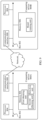
- FIG. 9 shows a possible implementation. As shown in FIG. 9 , two computing devices 800A and 800B are connected via a network. Specifically, each computing device is connected to the network through a communication interface of the computing device.
- a memory 806 in the computing device 800A stores instructions for performing functions of a first obtaining unit, a second obtaining unit, and a selection unit.
- a memory 806 in the computing device 800B stores instructions for performing functions of a model training unit.
- a connection manner of the computing device cluster shown in FIG. 9 may be that in consideration of a requirement of the neural architecture search method provided in this application for training of a large quantity of hybrid neural network models and storage of a plurality of trained first neural network models, it is considered that the functions implemented by the model training unit are performed by the computing device 800B.
- functions of the computing device 800A shown in FIG. 9 may also be completed by a plurality of computing devices 800.
- functions of the computing device 800B may also be completed by a plurality of computing devices 800.
- An embodiment of this application further provides a computing device cluster, including at least one computing device.
- Each computing device includes a processor and a memory.
- the processor of the at least one computing device is configured to execute instructions stored in the memory of the at least one computing device, to enable the computing device cluster to perform the foregoing method performed by the computing device.
- An embodiment of this application further provides a computer program product including instructions.
- the instructions are run by a computing device cluster, the computing device cluster is enabled to perform the foregoing method performed by the computing device.
- An embodiment of this application further provides a computer-readable storage medium, including computer program instructions.
- the computer program instructions When the computer program instructions are executed by a computing device cluster, the computing device cluster performs the foregoing method performed by the computing device.
- the computer-readable storage medium can be a tangible device that can retain and store instructions for use by an instruction execution device.
- the computer-readable storage medium may be, for example, but is not limited to, an electrical storage device, a magnetic storage device, an optical storage device, an electromagnetic storage device, a semiconductor storage device, or any suitable combination of the foregoing.
- the computer-readable storage medium includes: a portable computer disk, a hard disk drive, a random access memory (Random Access Memory, RAM), a read-only memory (Read-Only Memory, ROM), an erasable programmable read-only memory (Electrically Programmable Read-Only Memory, EPROM, or flash memory), a static random access memory (Static Random Access Memory, SRAM), a portable compact disk read-only memory (Compact Disc Read-Only Memory, CD-ROM), a digital video disk (Digital Video Disc, DVD), a memory stick, a floppy disk, a mechanical coding device, for example, a punching card or a groove protrusion structure that stores instructions, and any suitable combination of the foregoing.
- Computer-readable program instructions or code described herein can be downloaded to each computing/processing device from the computer-readable storage medium, or downloaded to an external computer or external storage device via a network, such as the Internet, a local area network, a wide area network and/or a wireless network.
- the network may include a copper transmission cable, optical fiber transmission, wireless transmission, a router, a firewall, a switch, a gateway computer and/or an edge server.
- a network adapter card or a network interface in each computing/processing device receives the computer-readable program instructions from the network, and forwards the computer-readable program instructions for storage in a computer-readable storage medium in each computing/processing device.
- the computer program instructions used to perform the operations in this application may be assembly instructions, instruction set architecture (Instruction Set Architecture, ISA) instructions, machine instructions, machine-related instructions, microcode, firmware instructions, status setting data, or source code or object code written in one or any combination of a plurality of programming languages.
- the programming languages include an object-oriented programming language such as Smalltalk and C++, and a conventional procedural programming language such as a "C" language or a similar programming language.
- the computer-readable program instructions may be executed entirely on a user computer, partly on the user computer, as a stand-alone software package, partly on the user computer and partly on a remote computer, or entirely on the remote computer or a server.
- the remote computer may be connected to the user computer via any kind of network, including the local area network (Local Area Network, LAN) or the wide area network (Wide Area Network, WAN), or may be connected to the external computer (for example, connected via the Internet using an Internet service provider).
- an electronic circuit for example, a programmable logic circuit, a field-programmable gate array (Field-Programmable Gate Array, FPGA), or a programmable logic array (Programmable Logic Array, PLA), is customized by using status information of the computer-readable program instructions.
- the electronic circuit may execute the computer-readable program instructions, to implement various aspects of this application.
- These computer-readable program instructions may be provided to a processor of a general-purpose computer, a dedicated computer, or another programmable data processing apparatus to produce a machine, so that the instructions, when executed by the processor of the computer or the another programmable data processing apparatus, create an apparatus for implementing functions/acts specified in one or more blocks in the flowcharts and/or block diagrams.
- These computer-readable program instructions may alternatively be stored in the computer-readable storage medium. These instructions enable a computer, a programmable data processing apparatus, and/or another device to work in a specific manner. Therefore, the computer-readable medium storing the instructions includes an artifact that includes instructions for implementing the various aspects of the functions/acts specified in the one or more blocks in the flowcharts and/or the block diagrams.
- the computer-readable program instructions may alternatively be loaded onto a computer, another programmable data processing apparatus, or another device, so that a series of operation steps are performed on the computer, the another programmable data processing apparatus, or the another device to produce a computer-implemented process. Therefore, the instructions executed on the computer, the another programmable data processing apparatus, or the another device are used to implement the functions/actions specified in the one or more blocks in the flowcharts and/or block diagrams.
- each block in the flowcharts or block diagrams may represent a module, a program segment, or a part of the instructions, and the module, the program segment, or the part of the instructions includes one or more executable instructions for implementing a specified logical function.
- a function marked in the block may also occur in a sequence different from that marked in the accompanying drawings. For example, two consecutive blocks may actually be executed substantially in parallel, and may sometimes be executed in a reverse sequence, depending on a function involved.
- each block in the block diagrams and/or flowcharts, and a combination of blocks in the block diagrams and/or flowcharts may be implemented by hardware (for example, a circuit or an ASIC (Application-Specific Integrated Circuit, application-specific integrated circuit)) for performing a corresponding function or act, or may be implemented by a combination of hardware and software, for example, firmware.
- hardware for example, a circuit or an ASIC (Application-Specific Integrated Circuit, application-specific integrated circuit)
- firmware for example, firmware.
Landscapes
- Engineering & Computer Science (AREA)
- Theoretical Computer Science (AREA)
- Physics & Mathematics (AREA)
- General Physics & Mathematics (AREA)
- Software Systems (AREA)
- Data Mining & Analysis (AREA)
- Evolutionary Computation (AREA)
- General Engineering & Computer Science (AREA)
- Computing Systems (AREA)
- Health & Medical Sciences (AREA)
- Artificial Intelligence (AREA)
- Computational Linguistics (AREA)
- Mathematical Physics (AREA)
- Life Sciences & Earth Sciences (AREA)
- General Health & Medical Sciences (AREA)
- Biophysics (AREA)
- Biomedical Technology (AREA)
- Molecular Biology (AREA)
- Databases & Information Systems (AREA)
- Computer Vision & Pattern Recognition (AREA)
- Medical Informatics (AREA)
- Neurology (AREA)
- Bioinformatics & Computational Biology (AREA)
- Evolutionary Biology (AREA)
- Physiology (AREA)
- Bioinformatics & Cheminformatics (AREA)
- Multimedia (AREA)
- Image Analysis (AREA)
Applications Claiming Priority (2)
| Application Number | Priority Date | Filing Date | Title |
|---|---|---|---|
| CN202211026784.6A CN117688984A (zh) | 2022-08-25 | 2022-08-25 | 神经网络结构搜索方法、装置及存储介质 |
| PCT/CN2023/081678 WO2024040941A1 (zh) | 2022-08-25 | 2023-03-15 | 神经网络结构搜索方法、装置及存储介质 |
Publications (2)
| Publication Number | Publication Date |
|---|---|
| EP4564224A1 true EP4564224A1 (de) | 2025-06-04 |
| EP4564224A4 EP4564224A4 (de) | 2025-11-26 |
Family
ID=90012289
Family Applications (1)
| Application Number | Title | Priority Date | Filing Date |
|---|---|---|---|
| EP23856038.7A Pending EP4564224A4 (de) | 2022-08-25 | 2023-03-15 | Suchverfahren und -vorrichtung mit neuronaler architektur und speichermedium |
Country Status (4)
| Country | Link |
|---|---|
| US (1) | US20250190760A1 (de) |
| EP (1) | EP4564224A4 (de) |
| CN (1) | CN117688984A (de) |
| WO (1) | WO2024040941A1 (de) |
Families Citing this family (5)
| Publication number | Priority date | Publication date | Assignee | Title |
|---|---|---|---|---|
| CN117829083B (zh) * | 2024-03-01 | 2024-05-28 | 上海励驰半导体有限公司 | 基于神经网络的布线方法、装置、电子设备及存储介质 |
| CN118033732B (zh) * | 2024-04-12 | 2024-06-07 | 中国石油大学(华东) | 一种基于空域频域融合架构的地震数据重建方法 |
| CN119205810B (zh) * | 2024-09-10 | 2025-06-20 | 湖南大学 | 一种基于神经网络架构搜索的工业缺陷分割方法 |
| CN119359659B (zh) * | 2024-10-09 | 2025-04-15 | 广州奢尼瓦供应链管理服务有限公司 | 一种农产品营养成分智能检测方法及系统 |
| CN120726543A (zh) * | 2025-08-28 | 2025-09-30 | 中电信人工智能科技(北京)有限公司 | 自适应进化的视频数据处理方法、装置及系统 |
Family Cites Families (15)
| Publication number | Priority date | Publication date | Assignee | Title |
|---|---|---|---|---|
| WO2019216404A1 (ja) * | 2018-05-10 | 2019-11-14 | パナソニックIpマネジメント株式会社 | ニューラルネットワーク構築装置、情報処理装置、ニューラルネットワーク構築方法及びプログラム |
| CN112445823B (zh) * | 2019-09-04 | 2024-11-26 | 华为技术有限公司 | 神经网络结构的搜索方法、图像处理方法和装置 |
| CN111382868B (zh) * | 2020-02-21 | 2024-06-18 | 华为技术有限公司 | 神经网络结构搜索方法和神经网络结构搜索装置 |
| US20210383223A1 (en) * | 2020-06-03 | 2021-12-09 | Google Llc | Joint Architecture And Hyper-Parameter Search For Machine Learning Models |
| CN111767990A (zh) * | 2020-06-29 | 2020-10-13 | 北京百度网讯科技有限公司 | 神经网络的处理方法和装置 |
| CN111767988B (zh) * | 2020-06-29 | 2024-08-13 | 上海可东网络科技有限公司 | 神经网络的融合方法和装置 |
| CN112116090B (zh) * | 2020-09-28 | 2022-08-30 | 腾讯科技(深圳)有限公司 | 神经网络结构搜索方法、装置、计算机设备及存储介质 |
| CN112434462B (zh) * | 2020-10-21 | 2024-07-09 | 华为技术有限公司 | 一种模型的获取方法及设备 |
| CN112949842B (zh) * | 2021-05-13 | 2021-09-14 | 北京市商汤科技开发有限公司 | 神经网络结构搜索方法、装置、计算机设备以及存储介质 |
| CN113505883B (zh) * | 2021-05-31 | 2025-09-05 | 华为技术有限公司 | 一种神经网络训练方法以及装置 |
| CN113781518B (zh) * | 2021-09-10 | 2024-05-17 | 商汤集团有限公司 | 神经网络结构搜索方法及装置、电子设备和存储介质 |
| CN113869496B (zh) * | 2021-09-30 | 2026-03-13 | 华为技术有限公司 | 一种神经网络的获取方法、数据处理方法以及相关设备 |
| CN114330692A (zh) * | 2021-12-30 | 2022-04-12 | 科大讯飞股份有限公司 | 神经网络模型的部署方法、装置、设备及存储介质 |
| CN114492767B (zh) * | 2022-03-28 | 2022-07-19 | 深圳比特微电子科技有限公司 | 用于搜索神经网络的方法、装置及存储介质 |
| CN115034449B (zh) * | 2022-05-25 | 2025-05-02 | 国网安徽省电力有限公司电力科学研究院 | 架空线停电预测神经网络结构搜索方法及装置 |
-
2022
- 2022-08-25 CN CN202211026784.6A patent/CN117688984A/zh active Pending
-
2023
- 2023-03-15 EP EP23856038.7A patent/EP4564224A4/de active Pending
- 2023-03-15 WO PCT/CN2023/081678 patent/WO2024040941A1/zh not_active Ceased
-
2025
- 2025-02-21 US US19/059,784 patent/US20250190760A1/en active Pending
Also Published As
| Publication number | Publication date |
|---|---|
| CN117688984A (zh) | 2024-03-12 |
| WO2024040941A1 (zh) | 2024-02-29 |
| US20250190760A1 (en) | 2025-06-12 |
| EP4564224A4 (de) | 2025-11-26 |
Similar Documents
| Publication | Publication Date | Title |
|---|---|---|
| EP4564224A1 (de) | Suchverfahren und -vorrichtung mit neuronaler architektur und speichermedium | |
| US20220215227A1 (en) | Neural Architecture Search Method, Image Processing Method And Apparatus, And Storage Medium | |
| US10229499B2 (en) | Skin lesion segmentation using deep convolution networks guided by local unsupervised learning | |
| WO2022116856A1 (zh) | 一种模型结构、模型训练方法、图像增强方法及设备 | |
| EP4220555B1 (de) | Trainingsverfahren und -vorrichtung für bildsegmentierungsmodell, bildsegmentierungsverfahren und -vorrichtung und vorrichtung | |
| WO2022083536A1 (zh) | 一种神经网络构建方法以及装置 | |
| KR20210124111A (ko) | 모델을 훈련하기 위한 방법, 장치, 기기, 매체 및 프로그램 제품 | |
| JP7790815B2 (ja) | 画像検出方法、装置、機器、及びコンピュータプログラム | |
| CN112364933B (zh) | 图像分类方法、装置、电子设备和存储介质 | |
| US20230094415A1 (en) | Generating a target classifier for a target domain via source-free domain adaptation using an adaptive adversarial neural network | |
| US20240232575A1 (en) | Neural network obtaining method, data processing method, and related device | |
| US12554973B2 (en) | Hierarchical data labeling for machine learning using semi-supervised multi-level labeling framework | |
| CN111709415A (zh) | 目标检测方法、装置、计算机设备和存储介质 | |
| CN112805723A (zh) | 一种图像处理系统、方法以及包括该系统的自动驾驶车辆 | |
| CN116452810A (zh) | 一种多层次语义分割方法、装置、电子设备及存储介质 | |
| CN115147814A (zh) | 交通指示对象的识别方法和目标检测模型的训练方法 | |
| US20240265681A1 (en) | System and method for data harvesting from robotic operations for continuous learning of autonomous robotic models | |
| CN116630609A (zh) | 图像的目标检测方法、装置 | |
| WO2021000411A1 (zh) | 基于神经网络的文档分类方法、装置、设备及存储介质 | |
| WO2024175079A1 (zh) | 一种模型的量化方法以及相关设备 | |
| US20250356203A1 (en) | Semantic segmentation model training method and apparatus, and semantic segmentation method and apparatus | |
| CN116030290A (zh) | 在设备上检测数字对象并且生成对象掩膜 | |
| US11676050B2 (en) | Systems and methods for neighbor frequency aggregation of parametric probability distributions with decision trees using leaf nodes | |
| EP4036811A1 (de) | Kombinieren von kompression, partitionierung und quantisierung von dl-modellen für den einbau in hardware-prozessoren | |
| US12165028B2 (en) | Extracting sequences from d-dimensional input data for sequential processing with neural networks |
Legal Events
| Date | Code | Title | Description |
|---|---|---|---|
| STAA | Information on the status of an ep patent application or granted ep patent |
Free format text: STATUS: THE INTERNATIONAL PUBLICATION HAS BEEN MADE |
|
| PUAI | Public reference made under article 153(3) epc to a published international application that has entered the european phase |
Free format text: ORIGINAL CODE: 0009012 |
|
| STAA | Information on the status of an ep patent application or granted ep patent |
Free format text: STATUS: REQUEST FOR EXAMINATION WAS MADE |
|
| 17P | Request for examination filed |
Effective date: 20250227 |
|
| AK | Designated contracting states |
Kind code of ref document: A1 Designated state(s): AL AT BE BG CH CY CZ DE DK EE ES FI FR GB GR HR HU IE IS IT LI LT LU LV MC ME MK MT NL NO PL PT RO RS SE SI SK SM TR |
|
| REG | Reference to a national code |
Ref country code: HK Ref legal event code: DE Ref document number: 40123577 Country of ref document: HK |
|
| A4 | Supplementary search report drawn up and despatched |
Effective date: 20251028 |
|
| RIC1 | Information provided on ipc code assigned before grant |
Ipc: G06N 3/04 20230101AFI20251022BHEP Ipc: G06N 3/0985 20230101ALI20251022BHEP Ipc: G06V 10/82 20220101ALI20251022BHEP |
|
| DAV | Request for validation of the european patent (deleted) | ||
| DAX | Request for extension of the european patent (deleted) |