EP4564227A1 - Procédé de détection d'une anomalie dans un signal de capteur d'un système technique - Google Patents
Procédé de détection d'une anomalie dans un signal de capteur d'un système technique Download PDFInfo
- Publication number
- EP4564227A1 EP4564227A1 EP23212985.8A EP23212985A EP4564227A1 EP 4564227 A1 EP4564227 A1 EP 4564227A1 EP 23212985 A EP23212985 A EP 23212985A EP 4564227 A1 EP4564227 A1 EP 4564227A1
- Authority
- EP
- European Patent Office
- Prior art keywords
- sensor signal
- anomaly
- machine learning
- learning model
- technical system
- Prior art date
- Legal status (The legal status is an assumption and is not a legal conclusion. Google has not performed a legal analysis and makes no representation as to the accuracy of the status listed.)
- Pending
Links
Images
Classifications
-
- G—PHYSICS
- G06—COMPUTING OR CALCULATING; COUNTING
- G06N—COMPUTING ARRANGEMENTS BASED ON SPECIFIC COMPUTATIONAL MODELS
- G06N3/00—Computing arrangements based on biological models
- G06N3/02—Neural networks
- G06N3/04—Architecture, e.g. interconnection topology
- G06N3/045—Combinations of networks
-
- G—PHYSICS
- G06—COMPUTING OR CALCULATING; COUNTING
- G06N—COMPUTING ARRANGEMENTS BASED ON SPECIFIC COMPUTATIONAL MODELS
- G06N3/00—Computing arrangements based on biological models
- G06N3/02—Neural networks
- G06N3/04—Architecture, e.g. interconnection topology
- G06N3/045—Combinations of networks
- G06N3/0455—Auto-encoder networks; Encoder-decoder networks
-
- G—PHYSICS
- G06—COMPUTING OR CALCULATING; COUNTING
- G06N—COMPUTING ARRANGEMENTS BASED ON SPECIFIC COMPUTATIONAL MODELS
- G06N3/00—Computing arrangements based on biological models
- G06N3/02—Neural networks
- G06N3/04—Architecture, e.g. interconnection topology
- G06N3/0464—Convolutional networks [CNN, ConvNet]
-
- G—PHYSICS
- G06—COMPUTING OR CALCULATING; COUNTING
- G06N—COMPUTING ARRANGEMENTS BASED ON SPECIFIC COMPUTATIONAL MODELS
- G06N3/00—Computing arrangements based on biological models
- G06N3/02—Neural networks
- G06N3/08—Learning methods
- G06N3/088—Non-supervised learning, e.g. competitive learning
Definitions
- the invention relates to a method for detecting an anomaly in a sensor signal of a technical system. Furthermore, the invention relates to a computer program, a device, and a storage medium for this purpose.
- Anomaly detection with neural networks refers to the process of training machine learning models to identify unusual patterns or deviations in data that could indicate errors, defects, or unexpected events.
- Neural networks are particularly effective at this because their multi-layered structures and feature extraction capabilities allow them to capture complex and high-dimensional data relationships.
- state-of-the-art methods use so-called autocoders to detect anomalies in time series.
- anomalies can also develop on longer time scales.
- a long short-term memory (LTM) neural network which is commonly used in state-of-the-art methods, has the disadvantage of being unable to detect patterns even on these long time scales.
- the invention relates to a method having the features of claim 1, a computer program having the features of claim 8, a device with the features of claim 9, and a computer-readable storage medium with the features of claim 10. Further features and details of the invention emerge from the respective subclaims, the description, and the drawings. Features and details described in connection with the method according to the invention naturally also apply in connection with the computer program according to the invention, the device according to the invention, and the computer-readable storage medium according to the invention, and vice versa, so that with regard to the disclosure of the individual aspects of the invention, reference is always made to each other.
- the invention particularly relates to a method for detecting an anomaly in a sensor signal of a technical system, comprising the following steps, wherein the steps can be performed repeatedly and/or sequentially.
- the anomaly can be a deviation from a regular course of the sensor signal and can be caused, for example, by an impairment of a function of the technical system.
- the sensor signal is preferably provided, wherein the sensor signal has a defined time period.
- the sensor signal can be represented by sensor data.
- a data type of the sensor data can be, for example, a voltage or a current.
- the sensor signal can result from a detection by at least one sensor, for example, a voltage or current sensor.
- the defined time period can be specified depending on the application and, for example, determined based on known anomalies.
- the sensor signal is preferably transformed into a compressed representation of the sensor signal using an encoder module of a machine learning model.
- the machine learning model is preferably a neural network and more preferably an autoencoder.
- An encoder module within an autoencoder is particularly responsible for transforming input data into a more compact, denser representation, i.e., the compressed representation of the sensor signal.
- the encoding process proceeds, for example, as follows:
- the encoder module Preferably, the input data is taken and compressed into a lower-dimensional space. This is achieved, in particular, by a sequence of layers in the neural network, where each layer may have fewer neurons than the previous one.
- the encoder module preferably learns to extract the most important features or properties from the input data, for example, using training sensor signals. This is done, in particular, by adjusting weights in the machine learning model to minimize the loss between the reconstructed outputs and the actual input data. In particular, the encoder module gradually reduces the dimensionality of the input data, preserving the relevant features wherever possible.
- a reconstructed sensor signal is preferably generated based on the compressed representation of the sensor signal using a decoder module of the machine learning model.
- the decoder module is a component of a machine learning model such as an autoencoder that receives the code generated in the encoder module, i.e., the compressed representation of the sensor signal, and is tasked with generating a reconstruction of the original input data, i.e., the sensor signal, from this.
- the decoding process can be summarized as follows: The decoder module preferably takes the compressed representation from the hidden layer of the encoder module and begins to expand it again into a higher-dimensional space. This occurs in particular opposite to the encoder process.
- the decoder module attempts to reconstruct the input data as accurately as possible.
- the decoder layers preferably progressively increase the dimensionality of the data until the output layer has the same dimension as the original input data, i.e., the sensor signal.
- the weights of the decoder module are preferably adjusted to minimize any loss between the reconstructed data and the original input data. This loss is calculated, for example, using a loss function such as the Mean Squared Error (MSE) or Cross-Entropy in the form of a reconstruction error.
- MSE Mean Squared Error
- One goal of the decoder module is, in particular, to capture the essential information that was acquired during encodings to produce an output that is as close an approximation as possible to the original input.
- the encoder module and the decoder module of the machine learning model are preferably each a temporal convolutional network.
- a temporal convolutional network is a neural network architecture specifically designed for processing sequential data such as time series.
- TCNs combine, for example, the advantages of convolutional neural networks (CNNs) with those of recurrent neural networks (RNNs) to create effective predictive models for data with temporal dependencies. They are characterized by the following features: Instead of recurrent structures, TCNs use convolutional layers that are dimensioned over time. These layers can detect temporal dependencies by performing convolutions over the sequence of input data.
- TCNs can also use causal convolutions, which specifically means that the prediction for a time t depends only on data from the past and the present time, but not on future data. This ensures, for example, that the machine learning model remains causal and makes temporal predictions.
- TCNs can use thinned convolutions. This technique allows a receptive field to be exponentially expanded without increasing the number of parameters or the complexity of the machine learning model. Thinning, in particular, means increasing the distance between the points involved in the convolution.
- ResNets residual networks
- TCNs can use residual blocks to prevent gradient vanishing and enable deeper networks. In particular, these blocks introduce a direct connection between earlier and later layers, which can stabilize the learning process.
- TCNs are particularly advantageous for tasks such as time series analysis, sequence modeling, and prediction applications where long temporal dependencies play a role. In particular, they often offer better performance and are easier to optimize than traditional RNNs or Long Short-Term Memory Networks (LSTMs).
- a TCN comprises Preferably, dilated, causal one-dimensional convolutional layers with equal input and output lengths.
- a one-dimensional convolutional network takes a 3-dimensional tensor as input and also outputs a 3-dimensional tensor.
- a reconstruction error is determined based on a comparison of the sensor signal with the reconstructed sensor signal.
- Various loss functions such as the mean squared error (MSE) or cross-entropy, can be used for this purpose.
- the anomaly in the sensor signal is detected based on the determined reconstruction error. Detection can be performed, for example, by analyzing the determined reconstruction error and comparing it with known values or a defined threshold.
- the known values or the defined threshold can be specific to certain anomalies or generally to the presence of an anomaly.
- the threshold value can advantageously be defined or adjusted depending on the application.
- the external data processing device can be, for example, a cloud server.
- a cloud server By transmitting the sensor signal, a A precise analysis of the sensor signal can be carried out without any computational effort being required by the technical system itself.
- the external data processing device can be used to compare the transmitted sensor signal with a database of various sensor signals with anomalies in order to determine the type of anomaly. It is conceivable that the result of the analysis of the sensor signal by the external data processing device could then be transmitted back to the technical system. Alternatively, necessary measures with regard to the technical system, such as a visit to a workshop in the case of a vehicle as a technical system, could also be transmitted.
- the transmission can preferably be made to the same external data processing device mentioned in the previous section.
- This can be configured, for example, as a cloud server.
- the reconstruction error is determined in the form of a mean square deviation, in particular a normalized root mean squared error. Determining the reconstruction error in the form of the normalized root mean squared error can be particularly advantageous in this case.
- the normalized root mean squared error is, in particular, a standardized version of the root mean squared error (RMSE), a metric for evaluating the predictive accuracy of models.
- the N RMSE is preferably calculated by normalizing the RMSE by the difference between the maximum and minimum observed value (the range of the data) or by the mean of the observed values. This normalization process For example, this gives the metric the advantage of enabling comparability across different data sets with different scales and value ranges.
- the NRMSE is a relative value that is independent of the units. This means, for example, that the NRMSE can be interpreted as a percentage deviation, which enables a direct comparison of model quality between different modeling problems and contexts. Alternatively or additionally, other loss functions known in the state of the art can also be applied.
- the machine learning model is based on training with training sensor signals that each have the same defined time span as the sensor signal. This allows the machine learning model to be advantageously trained specifically for the defined time span and thus more effectively detect anomalies within this time span.
- the technical system is a vehicle, in particular an energy storage device of the vehicle, and the sensor signal results from a measurement of at least one sensor in the vehicle, in particular in the energy storage device of the vehicle.
- the energy storage device can be designed as a battery, for example also a rechargeable battery, or a fuel cell.
- the vehicle can be, for example, a passenger car or a truck and also an electric vehicle.
- the sensor signal can be, for example, a voltage or a current in the vehicle, in particular in the energy storage device of the vehicle.
- the vehicle can be designed, for example, as a motor vehicle and/or passenger vehicle and/or autonomous vehicle.
- the vehicle can have a vehicle device, for example for providing an autonomous driving function and/or a driver assistance system.
- the vehicle device can be designed to control and/or accelerate and/or brake and/or steer the vehicle at least partially automatically.
- the invention also relates to a computer program, in particular a computer program product, comprising instructions that, when executed by a computer, cause the computer to execute the method according to the invention.
- a computer program in particular a computer program product, comprising instructions that, when executed by a computer, cause the computer to execute the method according to the invention.
- the invention also relates to a data processing device configured to carry out the method according to the invention.
- the device can be, for example, a computer that executes the computer program according to the invention.
- the computer can have at least one processor for executing the computer program.
- a non-volatile data memory can also be provided, in which the computer program is stored and from which the computer program can be read by the processor for execution.
- the invention may also provide a computer-readable storage medium that has the computer program according to the invention and/or includes instructions that, when executed by a computer, cause the computer to carry out the method according to the invention.
- the storage medium is designed, for example, as a data storage device such as a hard disk and/or a non-volatile memory and/or a memory card.
- the storage medium can, for example, be integrated into the computer.
- the method according to the invention can also be implemented as a computer-implemented method.
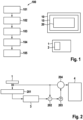
- a method 100 a technical system 1 with a sensor 2, a device 10, a storage medium 15 and a computer program 20 according to embodiments of the invention are schematically shown.
- Fig. 1 shows in particular an embodiment of a method 100 for detecting an anomaly in a sensor signal of a technical system 1.
- the sensor signal is provided, wherein the sensor signal has a defined time span.
- the sensor signal is transformed into a compressed representation of the sensor signal by means of an encoder module of a machine learning model 3.
- a reconstructed sensor signal is generated based on the compressed representation of the sensor signal by means of a decoder module of the machine learning model 3.
- a reconstruction error is determined based on a comparison of the sensor signal with the reconstructed sensor signal.
- the anomaly in the sensor signal is detected based on the determined reconstruction error.
- the encoder module and the decoder module of the machine learning model 3 are each a temporal convolutional network (TCN).
- TCN temporal convolutional networks
- the algorithm can, for example, be applied to fleet data representing sensor signals collected by technical systems 1, in particular vehicles such as trucks.
- the architecture is preferably based on an encoder-decoder network.
- the TCN architecture can be used for both networks.
- the reconstruction error between the input data, in particular sensor signals, and the reconstructed data (the output), in particular the reconstructed sensor signals, is preferably used as a criterion for anomaly detection.
- the resulting machine learning model 3 can be trained more efficiently because the gradients are not determined from the past as in Long Short-Term Memories (LSTMs), but the convolutional layers can be used, so that the problem of vanishing gradients that occurs in LSTMs also disappears.
- LSTMs Long Short-Term Memories
- This concept can be applied, for example, to the detection of multivariate time series anomalies.
- higher-dimensional convolutions can be used, analogous to image convolution.
- a machine learning model 3 can be trained offline from available training sensor signals.
- the machine learning model 3 is preferably trained with training sensor signals of a defined time period.
- the machine learning model 3 can be used on hardware, ie in particular on a technical system 1 such as a vehicle, which receives sensor signals from sensors 2.
- the machine learning model 3 on the hardware, or the technical system 1 can receive as input a series of sensor signals that have the same defined time span as the training sensor signals used in the training phase.
- an approximation error, or reconstruction error between the output of the machine learning model and the input sensor signals is calculated.
- This error can be calculated using, for example, Normalized Root Mean Squared Error (NRMSE). If the NRMSE is below a defined threshold value (e.g., ⁇ 5%) according to a corresponding analysis 203, this means in particular that the machine learning model can accurately reconstruct the sensor signals used as input. Therefore, according to a first alternative in step 204, preferably only the output of the encoder, which comprises a compressed version of the original input, is sent to an external data processing device 4, such as a cloud server, in order to reduce the amount of data to be transmitted. Otherwise, according to a second alternative in step 204, preferably the sensor signals are transmitted to the external data processing device 4. The reconstruction of the original measurements can be done (e.g., if necessary) provided that the decoder part of the model is available.
- NRMSE Normalized Root Mean Squared Error
Landscapes
- Engineering & Computer Science (AREA)
- Theoretical Computer Science (AREA)
- Physics & Mathematics (AREA)
- Data Mining & Analysis (AREA)
- General Health & Medical Sciences (AREA)
- Biomedical Technology (AREA)
- Biophysics (AREA)
- Computational Linguistics (AREA)
- Life Sciences & Earth Sciences (AREA)
- Evolutionary Computation (AREA)
- Artificial Intelligence (AREA)
- Molecular Biology (AREA)
- Computing Systems (AREA)
- General Engineering & Computer Science (AREA)
- General Physics & Mathematics (AREA)
- Mathematical Physics (AREA)
- Software Systems (AREA)
- Health & Medical Sciences (AREA)
- Testing Or Calibration Of Command Recording Devices (AREA)
Priority Applications (1)
| Application Number | Priority Date | Filing Date | Title |
|---|---|---|---|
| EP23212985.8A EP4564227A1 (fr) | 2023-11-29 | 2023-11-29 | Procédé de détection d'une anomalie dans un signal de capteur d'un système technique |
Applications Claiming Priority (1)
| Application Number | Priority Date | Filing Date | Title |
|---|---|---|---|
| EP23212985.8A EP4564227A1 (fr) | 2023-11-29 | 2023-11-29 | Procédé de détection d'une anomalie dans un signal de capteur d'un système technique |
Publications (1)
| Publication Number | Publication Date |
|---|---|
| EP4564227A1 true EP4564227A1 (fr) | 2025-06-04 |
Family
ID=89030010
Family Applications (1)
| Application Number | Title | Priority Date | Filing Date |
|---|---|---|---|
| EP23212985.8A Pending EP4564227A1 (fr) | 2023-11-29 | 2023-11-29 | Procédé de détection d'une anomalie dans un signal de capteur d'un système technique |
Country Status (1)
| Country | Link |
|---|---|
| EP (1) | EP4564227A1 (fr) |
-
2023
- 2023-11-29 EP EP23212985.8A patent/EP4564227A1/fr active Pending
Non-Patent Citations (2)
| Title |
|---|
| SRIDHAR ALLA: "Beginning Anomaly Detection Using Python-Based Deep Learning: With Keras and PyTorch", 11 October 2019 (2019-10-11), Berkeley, CA, pages 1 - 432, XP093161589, ISBN: 978-1-4842-5177-5, Retrieved from the Internet <URL:http://link.springer.com/content/pdf/10.1007/978-1-4842-5177-5.pdf> * |
| XIANG ZHANG: "A novel battery abnormality detection method using interpretable Autoencoder", APPLIED ENERGY, vol. 330, 25 November 2022 (2022-11-25), pages 1 - 12, XP093161586, DOI: 10.1016/j.apenergy.2022.120312 * |
Similar Documents
| Publication | Publication Date | Title |
|---|---|---|
| EP3701433B1 (fr) | Procédé, dispositif et programme informatique pour créer un réseau neuronal profond | |
| DE202017102235U1 (de) | Trainingssystem | |
| DE102019217613A1 (de) | Verfahren zur diagnose eines motorzustands und diagnostisches modellierungsverfahren dafür | |
| WO2019149664A1 (fr) | Procédé de détermination d'une variation temporelle d'une grandeur de mesure, système de pronostic, système de commande d'actionneur, procédé d'apprentissage du système de commande d'actionneur, système d'apprentissage, programme d'ordinateur et support d'informations lisible par machine | |
| DE102021204040A1 (de) | Verfahren, Vorrichtung und Computerprogramm zur Erstellung von Trainingsdaten im Fahrzeug | |
| DE102022200729A1 (de) | Verfahren zum Ermitteln eines aktuellen Steuermodus eines Lenkrades | |
| EP1715352A2 (fr) | Méthode de diagnostic de pannes pour un système mécatronique | |
| WO2018178196A1 (fr) | Procédé de détermination d'une incertitude de mesure d'endommagement d'un véhicule automobile | |
| EP3786853B1 (fr) | Compression d'un réseau de neurones profond | |
| DE102019217300A1 (de) | Verfahren zum Trainieren eines künstlichen neuronalen Netzes, Computerprogramm, Speichermedium, Vorrichtung, künstliches neuronales Netz und Anwendung des künstlichen neuronalen Netzes | |
| DE102020132042A1 (de) | Verfahren, System, Testsystem und Computerprogrammprodukt zur prädiktiven Bestimmung von Testergebnissen für ein technisches Testobjekt | |
| DE102020207449B4 (de) | Verfahren, Computerprogramm und Vorrichtung zum Verarbeiten von Signalen | |
| DE102020205962B3 (de) | Vorrichtung und Verfahren zum Betreiben eines Prüfstands | |
| EP4564227A1 (fr) | Procédé de détection d'une anomalie dans un signal de capteur d'un système technique | |
| DE102018220608A1 (de) | Maschinelles Lernsystem, sowie ein Verfahren, ein Computerprogramm und eine Vorrichtung zum Erstellen des maschinellen Lernsystems | |
| DE102021210532A1 (de) | Verfahren zum Trainieren eines deterministischen Autoencoders | |
| DE102023000357B3 (de) | Verfahren zum Erzeugen von Testdaten für eine Simulation eines Assistenzsystems eines zumindest teilweise assistiert betriebenen Kraftfahrzeugs, Computerprogrammprodukt, computerlesbares Speichermedium sowie elektronische Recheneinrichtung | |
| EP4002217B1 (fr) | Procédé de réduction des données d'apprentissage | |
| DE202019105256U1 (de) | Vorrichtung zum Erstellen eines maschinellen Lernsystems | |
| DE202017105656U1 (de) | Prädiktives Messsystem, Aktorsteuerungssystem und Vorrichtung zum Betreiben des prädiktiven Messsystems und/oder des Aktorsteuerungssystems | |
| DE102023205538B4 (de) | Verfahren für eine Bereitstellung wenigstens eines Alterungsparameters einer Batterie | |
| WO2019201586A1 (fr) | Procédé, système informatique et programme informatique de commande d'un actionneur | |
| DE102019217073A1 (de) | Verfahren zum Ermitteln einer unzulässigen Abweichung des Systemverhaltens einer technischen Einrichtung von einem Normwertebereich | |
| DE102024003829B3 (de) | Verfahren und Vorrichtung zur Überwachung von Fahrzeugkomponenten | |
| DE102023205657B3 (de) | Verfahren zur Korrektur einer alterungsbedingten Abweichung eines Sensorwerts eines Sensorsystems |
Legal Events
| Date | Code | Title | Description |
|---|---|---|---|
| PUAI | Public reference made under article 153(3) epc to a published international application that has entered the european phase |
Free format text: ORIGINAL CODE: 0009012 |
|
| STAA | Information on the status of an ep patent application or granted ep patent |
Free format text: STATUS: THE APPLICATION HAS BEEN PUBLISHED |
|
| AK | Designated contracting states |
Kind code of ref document: A1 Designated state(s): AL AT BE BG CH CY CZ DE DK EE ES FI FR GB GR HR HU IE IS IT LI LT LU LV MC ME MK MT NL NO PL PT RO RS SE SI SK SM TR |
|
| STAA | Information on the status of an ep patent application or granted ep patent |
Free format text: STATUS: REQUEST FOR EXAMINATION WAS MADE |
|
| 17P | Request for examination filed |
Effective date: 20251204 |
|
| STAA | Information on the status of an ep patent application or granted ep patent |
Free format text: STATUS: EXAMINATION IS IN PROGRESS |
|
| 17Q | First examination report despatched |
Effective date: 20260213 |