EP4564975A1 - Slprs-übertragungsverfahren und vorrichtung dafür - Google Patents
Slprs-übertragungsverfahren und vorrichtung dafür Download PDFInfo
- Publication number
- EP4564975A1 EP4564975A1 EP22952424.4A EP22952424A EP4564975A1 EP 4564975 A1 EP4564975 A1 EP 4564975A1 EP 22952424 A EP22952424 A EP 22952424A EP 4564975 A1 EP4564975 A1 EP 4564975A1
- Authority
- EP
- European Patent Office
- Prior art keywords
- transmission
- priority
- prs
- prs transmission
- information
- Prior art date
- Legal status (The legal status is an assumption and is not a legal conclusion. Google has not performed a legal analysis and makes no representation as to the accuracy of the status listed.)
- Pending
Links
Images




Classifications
-
- H—ELECTRICITY
- H04—ELECTRIC COMMUNICATION TECHNIQUE
- H04W—WIRELESS COMMUNICATION NETWORKS
- H04W64/00—Locating users or terminals or network equipment for network management purposes, e.g. mobility management
-
- H—ELECTRICITY
- H04—ELECTRIC COMMUNICATION TECHNIQUE
- H04L—TRANSMISSION OF DIGITAL INFORMATION, e.g. TELEGRAPHIC COMMUNICATION
- H04L5/00—Arrangements affording multiple use of the transmission path
- H04L5/003—Arrangements for allocating sub-channels of the transmission path
- H04L5/0048—Allocation of pilot signals, i.e. of signals known to the receiver
- H04L5/0051—Allocation of pilot signals, i.e. of signals known to the receiver of dedicated pilots, i.e. pilots destined for a single user or terminal
-
- H—ELECTRICITY
- H04—ELECTRIC COMMUNICATION TECHNIQUE
- H04L—TRANSMISSION OF DIGITAL INFORMATION, e.g. TELEGRAPHIC COMMUNICATION
- H04L5/00—Arrangements affording multiple use of the transmission path
- H04L5/003—Arrangements for allocating sub-channels of the transmission path
- H04L5/0053—Allocation of signalling, i.e. of overhead other than pilot signals
-
- H—ELECTRICITY
- H04—ELECTRIC COMMUNICATION TECHNIQUE
- H04L—TRANSMISSION OF DIGITAL INFORMATION, e.g. TELEGRAPHIC COMMUNICATION
- H04L5/00—Arrangements affording multiple use of the transmission path
- H04L5/003—Arrangements for allocating sub-channels of the transmission path
- H04L5/0058—Allocation criteria
- H04L5/0064—Rate requirement of the data, e.g. scalable bandwidth, data priority
-
- H—ELECTRICITY
- H04—ELECTRIC COMMUNICATION TECHNIQUE
- H04W—WIRELESS COMMUNICATION NETWORKS
- H04W72/00—Local resource management
- H04W72/50—Allocation or scheduling criteria for wireless resources
- H04W72/56—Allocation or scheduling criteria for wireless resources based on priority criteria
- H04W72/566—Allocation or scheduling criteria for wireless resources based on priority criteria of the information or information source or recipient
-
- H—ELECTRICITY
- H04—ELECTRIC COMMUNICATION TECHNIQUE
- H04W—WIRELESS COMMUNICATION NETWORKS
- H04W74/00—Wireless channel access
- H04W74/08—Non-scheduled access, e.g. ALOHA
- H04W74/0833—Random access procedures, e.g. with 4-step access
-
- H—ELECTRICITY
- H04—ELECTRIC COMMUNICATION TECHNIQUE
- H04W—WIRELESS COMMUNICATION NETWORKS
- H04W92/00—Interfaces specially adapted for wireless communication networks
- H04W92/16—Interfaces between hierarchically similar devices
- H04W92/18—Interfaces between hierarchically similar devices between terminal devices
Definitions
- the disclosure relates to the field of communication technologies, and in particular to a sidelink (SL) positioning reference signal (PRS) transmission method and device thereof.
- SL sidelink
- PRS positioning reference signal
- UEs User equipments
- SL sidelink
- RSUs road side units
- PRS SL positioning reference signal
- Embodiments of the disclosure provide a sidelink (SL) positioning reference signal (PRS) transmission method and device thereof, which makes SL PRS transmission more adaptable and reduces the risk of conflict between SL PRS transmission and uplink (UL) transmission based on the priority information of the SL PRS transmission in the process of SL PRS transmission.
- SL sidelink
- PRS positioning reference signal
- an SL PRS transmission method includes:
- the priority information is configured for the SL PRS transmission, and the SL PRS transmission is carried out based on the priority information, which makes the SL PRS transmission more accurate and is beneficial to improving the rationality of the SL PRS transmission. Moreover, the transmission based on the priority information can reduce the conflict risk between the SL PRS transmission and the UL transmission.
- a communication device includes:
- a communication device has an ability to implement part or all of the functions of the terminal in the method described in the first aspect.
- the communication device may have functions of some or all of embodiments of the disclosure, or may have a function of independently implementing any embodiment of the disclosure.
- the functions can be implemented by hardware, or can be implemented by executing corresponding software using the hardware.
- the hardware or software includes one or more units or modules corresponding to the above functions.
- the communication device includes: a transceiver module and a processing module.
- the processing module is configured to support the communication device to perform corresponding functions in the above method.
- the transceiver module is configured to support communication between the communication device and other devices.
- the communication device may further include a storage module that is coupled to the transceiver module and the processing module, and is configured to store necessary computer programs and data for the communication device.
- another communication device has an ability to implement part or all of the functions of the network device in the method described in the second aspect.
- the communication device may have functions of some or all of embodiments of the disclosure, or may have a function of independently implementing any embodiment of the disclosure.
- the functions can be implemented by hardware, or can be implemented by executing corresponding software using the hardware.
- the hardware or software includes one or more units or modules corresponding to the above functions.
- the communication device includes: a transceiver module and a processing module.
- the processing module is configured to support the communication device to perform corresponding functions in the above method.
- the transceiver module is configured to support communication between the communication device and other devices.
- the communication device may further include a storage module that is coupled to the transceiver module and the processing module, and is configured to store necessary computer programs and data for the communication device.
- a communication device includes: a processor.
- the processor calls a computer program stored in a memory, the method described in the first aspect above is implemented.
- a communication device includes: a processor.
- the processor calls a computer program stored in a memory, the method described in the second aspect above is implemented.
- a communication device includes: a processor and a memory having a computer program stored therein.
- the processor executes the computer program stored in the memory, the communication device is caused to implement the method described in the first aspect above.
- a communication device includes: a processor and a memory having a computer program stored therein.
- the processor executes the computer program stored in the memory, the communication device is caused to implement the method described in the second aspect above.
- a communication device includes: a processor and an interface circuit.
- the interface circuit is configured to receive code instructions and transmit the code instructions to the processor.
- the processor is configured to run the code instructions to cause the device to perform the method described in the first aspect above.
- a communication device includes: a processor and an interface circuit.
- the interface circuit is configured to receive code instructions and transmit the code instructions to the processor.
- the processor is configured to run the code instructions to cause the device to perform the method described in the second aspect above.
- a communication system includes the communication device of the third aspect and the communication device of the fourth aspect; or the system includes the communication device of the fifth aspect and the communication device of the sixth aspect; or the system includes the communication device of the seventh aspect and the communication device of the eighth aspect; or the system includes the communication device of the ninth aspect and the communication device of the tenth aspect.
- a computer-readable storage medium configured to store instructions used by the above terminal. When the instructions are executed, the terminal is caused to implement the method of the first aspect.
- a readable storage medium configured to store instructions used by the above network device. When the instructions are executed, the network device is caused to implement the method of the second aspect.
- a computer program product including a computer program is provided.
- the computer program is running on a computer, the computer is caused to implement the method of the first aspect.
- a computer program product including a computer program is provided.
- the computer program is running on a computer, the computer is caused to implement the method of the second aspect.
- a chip system includes at least one processor and an interface for supporting the terminal in realizing the functions involved in the first aspect, e.g., determining or processing at least one of data or information involved in the method described above.
- the chip system further includes a memory.
- the memory is configured to store necessary computer programs and data of the terminal.
- the chip system may consist of chips or may include a chip and other discrete components.
- a chip system includes at least one processor and an interface for supporting the network device in realizing the functions involved in the second aspect, e.g., determining or processing at least one of data or information involved in the method described above.
- the chip system further includes a memory.
- the memory is configured to store necessary computer programs and data of the network device.
- the chip system may consist of chips or may include a chip and other discrete components.
- a computer program is provided.
- the computer program is running on a computer, the computer is caused to implement the method of the first aspect.
- a computer program is provided.
- the computer program is running on a computer, the computer is caused to implement the method of the second aspect.
- first, second, and third may be used in the disclosure to describe various information, the information should not be limited to these terms. These terms are only used to distinguish the same type of information from each other.
- first information may also be referred to as the second information, and similarly, the second information may also be referred to as the first information.
- second information may also be referred to as the first information.
- if as used herein may be interpreted as “when”, “while” or “in response to determining”.
- greater than or “less than”, “higher than” or “lower than” are used herein to represent size relationships.
- QoS Quality of Service
- the QoS is a control mechanism, which provides different priorities for different users or data streams, or ensures the performance of a data stream to reach a certain level according to a requirement of an application.
- a positioning reference signal (PRS) is used for positioning measurement, and a positioning device can perform positioning based on a measurement result.
- FIG. 1 is a schematic diagram of a communication system provided by an embodiment of the disclosure.
- the communication system may include, but is not limited to, one network device and one terminal.
- the number and the form of devices illustrated in FIG. 1 are only for examples and do not constitute a limitation on the embodiments of the disclosure, and two or more network devices and two or more terminals may be included in practical applications.
- the communication system illustrated in FIG. 1 includes, for example, a network device 101 and a terminal 102.
- the technical solution of the embodiments of the disclosure can be applied to various communication systems, such as, a long term evolution (LTE) system, a 5th generation (5G) mobile communication system, a 5G new radio (NR) system, or other future new mobile communication systems.
- LTE long term evolution
- 5G 5th generation
- NR 5G new radio
- the SL in the embodiments of the disclosure may also be called a side link or a direct link.
- the network device 101 in the embodiments of the disclosure is an entity on a network side for transmitting or receiving signals.
- the network device 101 may be an evolved NodeB (eNB), a transmission reception point (TRP), a next generation NodeB (gNB) in a NR system, a base station in other future mobile communication systems, or an access node in a wireless fidelity (WiFi) system.
- eNB evolved NodeB
- TRP transmission reception point
- gNB next generation NodeB
- WiFi wireless fidelity
- the specific technology and specific device form adopted by the network device are not limited in the embodiments of the disclosure.
- the network device according to the embodiments of the disclosure may be composed of a central unit (CU) and a distributed unit (DU).
- the CU may also be called control unit.
- CU-DU structure allows to divide a protocol layer of the network device, such as a base station, such that some of the protocol layer functions are placed in the CU for centralized control, and some or all of the remaining protocol layer functions are distributed in the DU, which is centrally controlled by the CU.
- the terminal 102 in the embodiments of the disclosure is an entity on a user side for receiving or transmitting signals, such as a cellular phone.
- the terminal may also be referred to as terminal, user equipment (UE), mobile station (MS), mobile terminal (MT), and the like.
- the terminal may be a car with communication functions, a smart car, a mobile phone, a wearable devices, a Pad, a computer with wireless transceiver functions, a virtual reality (VR) terminal, an augmented reality (AR) terminal, a wireless terminal in industrial control, a wireless terminal in self-driving, a wireless terminal in remote medical surgery, a wireless terminal in smart grid, a wireless terminal in transportation safety, a wireless terminal in smart city, a wireless terminal in smart home, etc.
- the specific technology and specific device form adopted by the terminal are not limited in the embodiments of the disclosure.
- SL transmission mode 1 and SL transmission mode 2 are used for device-to-device (D2D) communication
- SL transmission mode 3 and SL transmission mode 4 are used for Vehicle to Everything (V2X) communication.
- V2X Vehicle to Everything
- the SL transmission mode 3 is adopted, resource allocation is scheduled by the network device 101.
- the network device 101 sends resource allocation information to the terminal 102, and then the terminal 102 allocates resources to another terminal, so that the other terminal can send information to the network device 101 through the allocated resources.
- the terminal device 102 is usually a terminal with better signal or higher reliability.
- the first terminal mentioned in the embodiments of the disclosure may refer to the terminal 102, and the second terminal may refer to the other terminal.
- SL PRS transmission method provided by any embodiment of the disclosure can be performed alone, or performed in combination with possible implementations in other embodiments, or performed in combination with any technical solution in the related art.
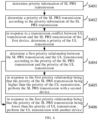
- FIG. 2 is a flowchart of an SL PRS transmission method provided by an embodiment of the disclosure.
- the SL PRS transmission method is performed by a first device. As illustrated in FIG. 2 , the method includes the following steps.
- step S201 priority information of SL PRS transmission is determined.
- the SL PRS transmission may include SL PRS sending and SL PRS receiving.
- the first device may be one of a primary positioning assistance UE, a positioning assistance UE or a UE to be located.
- the positioning assistance UE may be a road side unit (RSU)-type positioning assistance UE, which provides a positioning service by collaborating with other RSUs.
- the positioning assistance UE may be an ordinary UE.
- some positioning assistance UEs have a global positioning system (GPS) for acquiring location information, which may assist other UEs in absolute positioning. There are other positioning assistance UEs that do not have the GPS for acquiring location information.
- GPS global positioning system
- the priority information of the SL PRS transmission may include a priority value and/or a value range of the SL PRS transmission.
- the priority value is a certain value within the value range.
- the value range may be [1,9], so the value of the priority of the SL PRS transmission may be 1, 2, 3, ... 9.
- the value range may be [1,8], so the value of the priority of the SL PRS transmission may be 1, 2, 3, ... 8.
- the priority information of the SL PRS transmission may include an SL PRS identifier (ID) or an SL PRS set ID.
- a SL PRS set may include one or more SL PRSs.
- the priority information may include the SL PRS set ID.
- the SL PRS ID is used to uniquely identify an SL PRS.
- the priority of the SL PRS transmission is determined based on the SL PRS ID or SL PRS set ID. For example, the priorities of different SL PRS IDs or SL PRS set IDs may be pre-configured or agreed by a protocol.
- the priority information of the SL PRS transmission may include QoS information of an SL positioning service corresponding to an SL PRS.
- the priority of the SL PRS transmission may be determined by the QoS of the SL positioning service. For example, when the QoS information indicates that the QoS corresponding to the SL positioning service is good, the SL PRS corresponding to the SL positioning service is sent preferentially, or when the QoS information indicates that the QoS corresponding to the SL positioning service is poor, the SL PRS corresponding to the SL positioning service is sent with delay.
- the priority information of the SL PRS transmission may include priority information of each SL PRS ID or priority information of each SL PRS set ID. That is, the priority information of the SL PRS transmission may include an SL PRS ID and a priority value corresponding to the SL PRS ID, and/or, the priority information of the SL PRS transmission may include an SL PRS set ID and a priority value corresponding to the SL PRS set ID.
- the SL PRS transmission includes the SL PRS sending and the SL PRS receiving.
- the priority information of the SL PRS transmission may be priority information of the SL PRS sending and priority information of the SL PRS receiving.
- the priority information of the SL PRS transmission may include at least one of the above information. That is, the priority information of the SL PRS transmission may include combinations of one or more of the priority value of the SL PRS transmission, the value range of the priority, the SL PRS ID, the SL PRS set ID, the priority information of each SL PRS ID, the priority information of each SL PRS set ID, the priority information of the SL PRS sending or the priority information of SL PRS receiving.
- the first device may receive the priority information of the SL PRS transmission sent by a third device.
- the third device is at least one of a second device, a positioning assistance device or a network device.
- the second device may be a peer-end device directly connected with the first device through SL, which may be a terminal or an RSU.
- the positioning assistance device may be an RSU or a location management function (LMF) network element.
- LMF location management function
- the first device may determine the priority information of the SL PRS transmission by itself according to a protocol. For example, the first device may determine the priority information of the SL PRS transmission based on the QoS information of the SL positioning service corresponding to the SL PRS transmission.
- the SL PRS transmission includes the SL PRS sending and the SL PRS receiving, and the first device may determine priority information of SL PRS sending and priority information of SL PRS receiving respectively.
- the first device may receive the priority information of the SL PRS transmission sent by a third device.
- the first device may also receive the priority information of the SL PRS receiving sent by the third device.
- the first device may receive the priority information of the SL PRS sending and the priority information of the SL PRS receiving sent by the third device.
- the first device may determine the priority information of the SL PRS sending and the priority information of the SL PRS receiving respectively according to the QoS information of the SL positioning service corresponding to SL PRS transmission.
- the SL PRS transmission is performed with a second device according to the priority information of the SL PRS transmission.
- the first device determines the priority of the SL PRS transmission according to the priority information of the SL PRS transmission, and performs the SL PRS transmission with the second device based on the priority of the SL PRS transmission.
- the first device may determine the priority of the SL PRS transmission based on a priority value in the priority information of the SL PRS transmission.
- the first device may determine the priority of the SL PRS transmission based on the SL PRS ID or the SL PRS set ID in the priority information of the SL PRS transmission. For example, a priority list may be queried based on the SL PRS ID or the SL PRS set ID to determine the priority corresponding to the SL PRS ID or the SL PRS set ID.
- the priority is the priority of the SL PRS transmission identified by the SL PRS ID or the SL PRS set ID.
- the priority list may be pre-configured by the network device, or agreed upon by a protocol or preconfigured by the first device.
- the first device may determine the priority of the SL PRS transmission identified by the SL PRS ID based on the SL PRS ID and the priority information of the SL PRS ID in the priority information of the SL PRS transmission.
- the first device may determine the priority of the SL PRS transmission identified by the SL PRS set ID based on the SL PRS set ID and the priority information of the SL PRS set ID in the priority information of the SL PRS transmission.
- the first device determines the priority of the SL PRS transmission based on the QoS information of the SL positioning service corresponding to SL PRS transmission in the priority information of the SL PRS transmission.
- the first device may determine at least one of the priority of the SL PRS sending or the priority of the SL PRS receiving in SL PRS transmission according to the above implementations.
- the first device may act as a transmitter to determine the priority of the SL PRS sending and the priority of the SL PRS receiving.
- the transmitter may determine the priority of the SL PRS sending, and the priority of the SL PRS receiving is determined by the peer-end device for the first device, that is, a receiver determines the priority of the SL PRS receiving.
- the first device may act as a receiver to determine the priority of the SL PRS sending and the priority of the SL PRS receiving.
- the receiver may determine the priority of the SL PRS sending, and the priority of the SL PRS receiving is determined by the peer-end device for the first device, that is, a transmitter determines the priority of the SL PRS receiving.
- the priority of the SL PRS sending and the priority of the SL PRS receiving can both be determined by the transmitter.
- the priority of the SL PRS sending and the priority of the SL PRS receiving are both determined by the receiver.
- the priority of the SL PRS sending is determined by the transmitter, and the priority of the SL PRS receiving is determined by the receiver.
- the priority of the SL PRS sending is determined by the receiver, and the priority of the SL PRS receiving is determined by the transmitter.
- the first device may perform the SL PRS transmission with the second device according to the priority of the SL PRS transmission. For example, when the SL PRS transmission and the UL transmission both need to be performed, the SL PRS transmission and the UL transmission can be performed sequentially based on the priority of the SL PRS transmission and the priority of the UL transmission, or transmission with a higher priority is selected from SL PRS transmission and UL transmission and is performed. For another example, when more than one SL PRS transmission need to be performed, the more than one SL PRS transmission is performed sequentially based on a priority of each SL PRS, or SL PRS transmission with a higher priority is selected from the more than one SL PRS transmission and is performed.
- the second device may be one of a primary positioning assistance UE, a positioning assistance UE or a UE to be located. It should be noted that the second device is a peer-end device for the first device. For example, when the first device is a primary positioning assistance UE, the second device is a UE to be located.
- the first device determines the priority information of the SL PRS transmission, and performs the SL PRS transmission with the second device according to the priority information of the SL PRS transmission.
- the priority information is configured for the SL PRS transmission, and the SL PRS transmission is performed based on the priority information, which makes the SL PRS transmission more accurate and is beneficial to improving the rationality of the SL PRS transmission.
- the transmission based on the priority information can reduce the conflict risk between the SL PRS transmission and the UL transmission.
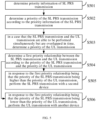
- FIG. 3 is a flowchart of an SL PRS transmission method provided by an embodiment of the disclosure.
- the SL PRS transmission method is performed by a first device. As illustrated in FIG. 3 , the method includes but is not limited to the following steps.
- step S301 priority information of SL PRS transmission is determined.
- a priority of the SL PRS transmission is determined according to the priority information of the SL PRS transmission.
- steps S301-S302 can be referred to the description of related contents in the above embodiments, and will not be repeated here.
- a priority of the UL transmission is determined.
- the first device when the first device performs the SL PRS transmission and the UL transmission, there may be a transmission conflict between the SL PRS transmission and the UL transmission.
- the first device may not be able to perform the SL PRS transmission and the UL transmission simultaneously, that is, only one of the SL PRS transmission and the UL transmission can be performed at one time.
- the first device may be able to perform the SL PRS transmission and the UL transmission simultaneously, there is a transmission conflict between the SL PRS transmission and the UL transmission in time, that is, transmission times corresponding to the SL PRS transmission and the UL transmission are partially overlapped.
- the first device may determine the priority of the UL transmission.
- the first device may determine the priority of the UL transmission based on a protocol agreement or network configuration.
- the network may configure identification information of UL transmission and a priority corresponding to the identification information.
- the first device may determine the priority of the UL transmission based on a channel state of the UL channel.
- UL transmission includes one of following set UL transmissions:
- the UL transmission may also be another UL transmission in addition to the above-mentioned set UL transmission.
- a first priority relationship between the SL PRS transmission and the UL transmission is determined according to the priority of the SL PRS transmission and the priority of the UL transmission.
- the first device After determining the priority of the SL PRS transmission and the priority of the UL transmission, the first device compares the priority of the SL PRS transmission and the priority of the UL transmission to determine the first priority relationship between the SL PRS transmission and the UL transmission.
- the first priority relationship may be that the priority of the SL PRS transmission is higher than that of the UL transmission, or the first priority relationship may be that the priority of the SL PRS transmission is lower than that of the UL transmission.
- the priority of the SL PRS transmission may be lower than that of the PRACH transmission, the RAR UL grant scheduled PUSCH transmission and retransmission, the Type-2 random access PUSCH transmission and retransmission, the transmission of the PUCCH carrying a success RAR or SL HARQ-ACK, or the transmission of the PUCCH indicated by DCI scrambled by a TC-RNTI.
- the priority of the SL PRS transmission may be higher than that of the PRACH transmission, the RAR UL grant scheduled PUSCH transmission and retransmission, the Type-2 random access PUSCH transmission and retransmission, the transmission of the PUCCH carrying a success RAR or SL HARQ-ACK, or the transmission of the PUCCH indicated by DCI scrambled by a TC-RNTI.
- the priority of the SL PRS transmission may be higher than a priority of another UL transmission other than the above set UL transmissions, including the PRACH transmission, the RAR UL grant scheduled PUSCH transmission and retransmission, the Type-2 random access PUSCH transmission and retransmission, the transmission of the PUCCH carrying a success RAR or SL HARQ-ACK, or the transmission of the PUCCH indicated by DCI scrambled by a TC-RNTI.
- the priority of the SL PRS transmission may be lower than the priority of another UL transmission other than the above set UL transmissions, including the PRACH transmission, the RAR UL grant scheduled PUSCH transmission and retransmission, the Type-2 random access PUSCH transmission and retransmission, the transmission of the PUCCH carrying a success RAR or SL HARQ-ACK, or the transmission of the PUCCH indicated by DCI scrambled by a TC-RNTI.
- step S305 transmission is performed according to the first priority relationship.
- the first device After determining the first priority relationship between the SL PRS transmission and the UL transmission, the first device performs the SL PRS transmission with the second device based on the first priority relationship. If the priority of the SL PRS transmission is higher than that of the UL transmission, the first device performs the SL PRS transmission with the second device preferentially. If the priority of the SL PRS transmission is lower than that of the UL transmission, the first device performs the UL transmission with another device preferentially.
- the first device determines the priority information of the SL PRS transmission, and performs the SL PRS transmission with the second device according to the priority information of the SL PRS transmission.
- the priority information is configured for the SL PRS transmission, and the SL PRS transmission is performed based on the priority information, which makes the SL PRS transmission more accurate and is beneficial to improving the rationality of the SL PRS transmission.
- the transmission conflict can be solved based on the priority relationship between the two kinds of transmission, which reduces the conflict risk between the SL PRS transmission and the UL transmission, ensures that the transmission with a higher priority in the SL PRS transmission and the UL transmission is performed, and reduces the packet loss.
- FIG. 4 is a flowchart of an SL PRS transmission method provided by an embodiment of the disclosure.
- the SL PRS transmission method is performed by a first device. As illustrated in FIG. 4 , the method includes but is not limited to the following steps.
- step S401 priority information of SL PRS transmission is determined.
- a priority of the SL PRS transmission is determined according to the priority information of the SL PRS transmission.
- steps S401-S402 can be referred to the description of related contents in the above embodiments, and will not be repeated here.
- a priority of the UL transmission is determined.
- the SL PRS transmission is sent or received via an SL communication interface, and the UL transmission is sent via a Uu interface.
- this transmission conflict can be solved based on the priorities of the SL PRS transmission and the UL transmission, so that the first device may determine the priority of the UL transmission.
- the process of determining the priority of the UL transmission by the first device can be referred to the description of related contents in the above embodiments, and the details are not repeated here.
- a first priority relationship between the SL PRS transmission and the UL transmission is determined according to the priority of the SL PRS transmission and the priority of the UL transmission.
- the first device After determining the priorities of the SL PRS transmission and the UL transmission, the first device compare the priorities of the SL PRS transmission and the UL transmission to determine the first priority relationship between the SL PRS transmission and the UL transmission.
- the first priority relationship may be that the priority of the SL PRS transmission is higher than that of the UL transmission, or the first priority relationship may be that the priority of the SL PRS transmission is lower than that of the UL transmission.
- the SL PRS transmission is performed with a second device;
- the UL transmission is performed with another device.
- the first device may perform the UL transmission with another device, which may be a network device such as a base station. It should be noted that the first device performs the UL transmission with the network device through the Uu interface.
- the priority information of the SL PRS transmission is determined, and the SL PRS transmission is performed with the second device according to the priority information of the SL PRS transmission.
- the priority information is configured for the SL PRS transmission, and the SL PRS transmission is performed based on the priority information, which makes the SL PRS transmission more accurate and is beneficial to improving the rationality of the SL PRS transmission.
- the transmission conflict can be solved based on the priority relationship between the two kinds of transmission, which reduces the conflict risk between the SL PRS transmission and the UL transmission, ensures that the transmission with a higher priority in the SL PRS transmission and the UL transmission is performed, and reduces the packet loss.
- FIG. 5 is a flowchart of an SL PRS transmission method provided by an embodiment of the disclosure.
- the SL PRS transmission method is performed by a first device. As illustrated in FIG. 5 , the method includes but is not limited to the following steps.
- step S501 priority information of SL PRS transmission is determined.
- a priority of the SL PRS transmission is determined according to the priority information of the SL PRS transmission.
- steps S501-S502 can be referred to the description of related contents in the above embodiments, and will not be repeated here.
- a priority of the UL transmission is determined.
- the first device can send/receive the SL PRS and send the UL at a Uu port simultaneously, but the transmission times corresponding to SL PRS transmission and UL transmission are partially overlapped in time.
- the first device needs to solve this transmission conflict based on the priorities of the SL PRS transmission and the UL transmission, so that the first device may determine the priority of the UL transmission.
- the process of determining the priority of the UL transmission by the first device can be referred to the description of related contents in the above embodiments, and details are not repeated here.
- a first priority relationship between the SL PRS transmission and the UL transmission is determined according to the priority of the SL PRS transmission and the priority of the UL transmission.
- step S504 can be referred to the description of related contents in the above embodiments, and will not be repeated here.
- the SL PRS transmission is performed with a second device;
- the UL transmission is performed with another device.
- steps S505-S506 can be referred to the description of related contents in the above embodiments, and will not be repeated here.
- the priority information of the SL PRS transmission is determined, and the SL PRS transmission is performed with the second device according to the priority information of the SL PRS transmission.
- the priority information is configured for the SL PRS transmission, and the SL PRS transmission is performed based on the priority information, which makes the SL PRS transmission more accurate and is beneficial to improving the rationality of the SL PRS transmission.
- the transmission conflict can be solved based on the priority relationship between the two kinds of transmission, which reduces the conflict risk between the SL PRS transmission and the UL transmission, ensures that the transmission with a higher priority in the SL PRS transmission and the UL transmission is performed, and reduces the packet loss.
- FIG. 6 is a flowchart of an SL PRS transmission method provided by an embodiment of the disclosure.
- the SL PRS transmission method is performed by a first device. As illustrated in FIG. 6 , the method includes but is not limited to the following steps.
- step S601 priority information of SL PRS transmission is determined.
- a priority of the SL PRS transmission is determined according to the priority information of the SL PRS transmission.
- steps S601-S602 can be referred to the description of related contents in the above embodiments, and will not be repeated here.
- step S603 in response to determining that there is an overlapped time period when the SL PRS transmission and the UL transmission are performed simultaneously, a total transmit power of the first device required for the SL PRS transmission and the UL transmission during the overlapped time period is determined.
- the first device may determine a transmit power required for the SL PRS transmission during the overlapped time period, and may also determine a transmit power required for the UL transmission during the overlapped time period. For example, the transmit power for the SL PRS transmission and the transmit power for the UL transmission may be determined respectively based on configuration information of the SL PRS transmission and the UL transmission. After determining the respective transmit powers of the SL PRS transmission and the UL transmission, the transmit powers are summed up to obtain the required total transmit power of the first device.
- a priority of the UL transmission is determined.
- the first device In a case that the total transmit power is greater than the power threshold, it indicates that there is a transmission conflict between the SL PRS transmission and the UL transmission that are simultaneously performed, and the first device needs to determine the priority of the UL transmission in order to determine the first priority relationship between the two kinds of transmission.
- the first device may perform the two kinds of transmission directly according to their respective configurations without determining the first priority relationship between the two kinds of transmission.
- the power threshold may be agreed upon by a protocol or configured by a network device.
- the power threshold may be a maximum transmit power PCMAX allowed for the first device.
- a first priority relationship between the SL PRS transmission and the UL transmission is determined according to the priority of the SL PRS transmission and the priority of the UL transmission.
- step S605 can be referred to the description of related contents in the above embodiments, and will not be repeated here.
- step S606 in response to the first priority relationship being that the priority of the SL PRS transmission is higher than the priority of the UL transmission, a transmit power of the SL PRS transmission is maintained and a transmit power of the UL transmission is reduced, to limit the total transmit power to be less than or equal to the power threshold.
- the transmit power of the SL PRS transmission between the first device and the second device is maintained, and the transmit power of the UL transmission between the first device and another device is reduced, so that the sum of the two transmission powers, i.e., the total transmit power, is less than or equal to the power threshold.
- step S607 in response to the first priority relationship being that the priority of the SL PRS transmission being lower than the priority of the UL transmission, a transmit power of the UL transmission is maintained and a transmit power of the SL PRS transmission is reduced, to limit the total transmit power to be less than or equal to the power threshold.
- the transmit power of the SL PRS transmission between the first device and the second device is maintained, and the transmit power of the UL transmission between the first device and another device is reduced, so that the sum of the two transmission powers, i.e., the total transmit power, is less than or equal to the power threshold.
- the priority information of the SL PRS transmission is determined, and the SL PRS transmission is performed with the second device according to the priority information of the SL PRS transmission.
- the priority information is configured for the SL PRS transmission, and the SL PRS transmission is performed based on the priority information, which makes the SL PRS transmission more accurate and is beneficial to improving the rationality of the SL PRS transmission.
- the transmission conflict can be solved based on the priority relationship between the two kinds of transmission, which reduces the conflict risk between the SL PRS transmission and the UL transmission, ensures that the transmission with a higher priority in the SL PRS transmission and the UL transmission is performed, and reduces the packet loss.
- FIG. 7 is a flowchart of an SL PRS transmission method provided by an embodiment of the disclosure.
- the SL PRS transmission method is performed by a first device. As illustrated in FIG. 7 , the method includes but is not limited to the following steps.
- a first transmission is performed in a first network and/or a second transmission is performed in a second network.
- the first network may perform different transmission in two different communication networks
- the first network in the two communication networks may be an evolved universal terrestrial radio access (E-UTRA) network
- the second network may be an NR network
- the first network is an LTE network
- the second network is an NR network.
- the first device may perform the first transmission, i.e., first sending/receiving, on the first network and/or simultaneously perform the second transmission, i.e., second sending/receiving, on the second network.
- step S702 in response to at least one of the first transmission or the second transmission being SL PRS transmission, priority information of the SL PRS transmission is determined, and a priority of the SL PRS transmission is determined according to the priority information of the SL PRS transmission.
- At least one of the first transmission or the second transmission is the SL PRS transmission, or the first transmission and the second transmission both are the SL PRS transmission, or one of the first transmission and the second transmission is the SL PRS transmission and the other is UL transmission.
- the introduction of the UL transmission can be referred to the description of related contents in the above-mentioned embodiments, which will not be repeated here.
- the first device may determine a second priority relationship between the first transmission and the second transmission. At least one of the first transmission and the second transmission is the SL PRS transmission, and the first device determines the priority of the SL PRS transmission according to the priority information of the SL PRS transmission.
- the processes of determining the priority information of the SL PRS transmission and determining the priority of the SL PRS transmission according to the priority information can be referred to the description of related contents in the above embodiments, and will not be repeated here.
- a second priority relationship between the first transmission and the second transmission is determined according to the priority of the SL PRS transmission.
- the second priority relationship between the first transmission and the second transmission is determined directly based on the priorities corresponding to the two SL PRS transmission.
- the priority of the UL transmission is determined.
- the first device determines the second priority relationship between the first transmission and the second transmission based on the priority of the SL PRS transmission and the priority of the UL transmission.
- step S704 transmission with a higher priority is determined from the first transmission and the second transmission according to the second priority relationship, and the transmission with the higher priority is performed.
- the first device After determining the second priority relationship between the first transmission and the second transmission, the first device performs the SL PRS transmission with the second device or performs the UL transmission with another device based on the second priority relationship.
- first transmission and the second transmission both are SL PRS transmission
- SL PRS transmission with a higher priority is determined from the first transmission and the second transmission according to the second priority relationship, and then the SL PRS transmission with the higher priority is performed.
- the first transmission and the second transmission is the SL PRS transmission and the other is the UL transmission
- transmission with a higher priority is determined from the first transmission and the second transmission according to the second priority relationship, and then the transmission with the higher priority is performed.
- the first transmission is the SL PRS transmission and the second transmission is the UL transmission
- the SL PRS transmission corresponding to the first transmission is sent to the second device
- the priority of the first transmission is lower than that of the second transmission
- the UL transmission corresponding to the second transmission is sent to the other device.
- the first device may determine start timings of the first transmission and the second transmission, and then determine an earlier start timing from the start timings. In a case that the priorities of the first transmission and the second transmission are determined before the earlier start timing, transmission with a higher priority is selected from the first transmission and the second transmission based on the determined priorities of the first transmission and the second transmission and then the transmission with the higher priority is performed. That is, when the priorities of the first transmission and the second transmission are determined before the earlier start timing, the first device does not need to determine the priorities of the first transmission and the second transmission according to the priorities of the SL PRSs, and may directly select the one with a higher priority from the two transmission according to the previously determined priorities of the first transmission and the second transmission and then perform the transmission the higher priority.
- the first device may determine the priorities of the first transmission and the second transmission for a time period T before the earlier start timing.
- the time period T may be 4ms, or configured or defined by the first device itself.
- the time period T may be indicated separately for the SL PRS, or configured through a second device, a base station or an LMF network element.
- the second priority relationship between the two kinds of transmission is determined based on the priority information of the SL PRS transmission, and the transmission conflict between the two transmission can be solved based on the second priority relationship, which reduces the risk of conflict between the first transmission and the second transmission, ensures that the transmission with a higher priority in the first transmission and the second transmission is performed, and reduces the packet loss.
- FIG. 8 is a flowchart of an SL PRS transmission method provided by an embodiment of the disclosure.
- the SL PRS transmission method is performed by a first device. As illustrated in FIG. 8 , the method includes but is not limited to the following steps.
- step S801 priority information of SL PRS transmission is determined.
- a priority of the SL PRS transmission is determined according to the priority information of the SL PRS transmission.
- steps S801-S802 can be referred to the description of related contents in the above embodiments, and will not be repeated here.
- a third priority relationship between the SL PRS transmission and the other UL transmission is determined according to a priority threshold.
- the set UL transmissions include transmission of a PRACH, transmission and retransmission of an RAR UL grant scheduled PUSCH, transmission and retransmission of a PUSCH corresponding to a Type-2 random access, transmission of a PUCCH carrying an RAR or SL HARQ-ACK, or transmission of a PUCCH carrying DCI scrambled by a TC-RNTI.
- the UL transmission may be another UL transmission other than the above-mentioned set UL transmissions.
- a priority value is negatively correlated with a priority level
- the priority of the SL PRS transmission is lower than the priority threshold
- it is determined that the third priority relationship is that the priority of the SL PRS transmission is higher than that of the other UL transmission.
- the priority of the SL PRS transmission is higher than the priority threshold
- it is determined that the third priority relationship is that the priority of the SL PRS transmission is lower than that of the other UL transmission.
- a priority value is positively correlated with a priority level
- the priority of the SL PRS transmission is higher than the priority threshold
- it is determined that the third priority relationship is that the priority of the SL PRS transmission is higher than that of the other UL transmission.
- the priority of the SL PRS transmission is lower than the priority threshold
- it is determined that the third priority relationship is that the priority of the SL PRS transmission is lower than that of the other UL transmission.
- the priority threshold may be configured separately for the SL PRS.
- the priority threshold may be agreed upon by a protocol or determined by a network indication.
- the other UL transmission may not be a PUSCH or a PUCCH with a specified priority index.
- the specified priority index may be index 1.
- the priority value is negatively correlated with the priority level, and the priority of the SL PRS transmission is lower than the priority threshold, it is determined that the third priority relationship is that the priority of the SL PRS transmission is higher than that of the other UL transmission; or if the priority of the SL PRS transmission is higher than the priority threshold, it is determined that the third priority relationship is that the priority of the SL PRS transmission is lower than that of the other UL transmission.
- the other UL transmission is not a PUSCH or a PUCCH with the priority index 1, and the priority value of the SL PRS transmission is less than the priority threshold of the SL, it is determined that the SL PRS transmission has a higher priority than the other UL transmission; otherwise, the other UL transmission has a higher priority.
- the other UL transmission may be a PUSCH or a PUCCH with a specified priority index, in which case the priority threshold is an SL priority threshold of an ultra reliable low latency communication (UL-URLLC) service.
- UL-URLLC ultra reliable low latency communication
- the priority threshold of UL-URLLC service may be configured separately for the SL PRS.
- the priority threshold may be determined based on a protocol or network indication.
- the SL PRS transmission is performed with a second device according to the third priority relationship.
- the first device may perform the SL PRS transmission with the second device based on the third priority relationship. If the third priority relationship is that the priority of the SL PRS transmission is higher than that of the UL transmission, the SL PRS transmission is performed with the second device preferentially. If the third priority relationship is that the priority of the SL PRS transmission is lower than that of the UL transmission, the UL transmission may be performed with the other device preferentially.
- the priority information is configured for the SL PRS transmission, and the SL PRS transmission is performed based on the priority information, which makes the SL PRS transmission more accurate and is beneficial to improving the rationality of the SL PRS transmission.
- the third priority relationship between the two kinds of transmission is determined based on the SL transmission threshold, and the transmission conflict can be solved based on the third priority relationship, which reduces the conflict risk between the SL PRS transmission and the UL transmission, ensures that the transmission with a higher priority in the SL PRS transmission and the UL transmission is performed, and reduces the packet loss.
- FIG. 9 is a flowchart of an SL PRS transmission method provided by an embodiment of the disclosure.
- the SL PRS transmission method is performed by a first device. As illustrated in FIG. 9 , the method includes but is not limited to the following steps.
- step S901 priority information of SL PRS transmission sent by a third device is received.
- the third device may be at least one of a second device directly connected to the first device, a positioning assistance device or a network device.
- the priority information of the SL PRS transmission may include a combination of one or more of a priority value of SL PRS transmission, a value range of a priority, an SL PRS ID, an SL PRS set ID, priority information of each SL PRS ID, priority information of each SL PRS set ID, priority information of SL PRS sending and priority information of SL PRS receiving.
- SL PRS transmission includes SL PRS sending and SL PRS receiving.
- the third device may send the priority of the SL PRS sending and the priority of the SL PRS receiving to the first device respectively.
- the first device may receive the priority of the SL PRS sending and the priority of the SL PRS receiving respectively.
- signaling interaction is performed with the second device through one of an SL long term evolution positioning protocol (SL LPP) message, an SL interface (PC5-S) message, a radio resource control (RRC) message or SL control information (SCI).
- SL LPP SL long term evolution positioning protocol
- PC5-S SL interface
- RRC radio resource control
- SCI SL control information
- the third device is a positioning assistance device
- signaling interaction is performed with the positioning assistance device through an LPP message.
- the signaling interaction at least includes sending of the priority information of the SL PRS transmission. It should be noted that if the positioning assistance device is an LMF network element, the signaling interaction between the first device and the LMF needs to be performed through a base station.
- the third device is a network device
- signaling interaction with the network device is performed through one of a system broadcast message, an RRC reconfiguration message, an RRC release message, DCI or a media access control-control element (MAC-CE) message.
- MAC-CE media access control-control element
- the above signaling interaction at least includes sending of the priority information of the SL PRS transmission.
- the signaling interaction may also include sending of information or parameters required in the positioning process, such as positioning information.
- the SL PRS transmission is performed with a second device according to the priority information of the SL PRS transmission.
- the first device performs the SL PRS transmission with the second device according to the priority information of the SL PRS transmission. For example, in a case that the SL PRS transmission and the UL transmission are to be performed, the SL PRS transmission and the UL transmission are performed sequentially based on the priorities of the SL PRS transmission and the UL transmission, or transmission with a higher priority is selected form the SL PRS transmission and the UL transmission and then the transmission with the higher priority is performed.
- the more than one SL PRS transmission is performed sequentially based on the priority of each SL PRS, or SL PRS transmission with a higher priority among the more than one SL PRS transmission is selected and performed.
- the priority information is configured for the SL PRS transmission, and the SL PRS transmission is performed based on the priority information, which makes the SL PRS transmission more accurate and is beneficial to improving the rationality of the SL PRS transmission.
- the transmission conflict can be solved based on the priority relationship, which reduces the conflict risk between the SL PRS transmission and the UL transmission, ensures that the transmission with a higher priority in the SL PRS transmission and the UL transmission is performed, and reduces the packet loss.
- FIG. 10 is a flowchart of an SL PRS transmission method provided by an embodiment of the disclosure.
- the SL PRS transmission method is performed by a first device. As illustrated in FIG. 10 , the method includes but is not limited to the following steps.
- priority information of SL PRS transmission is determined according to QoS information of an SL positioning service corresponding to the SL PRS transmission.
- the first device may receive the QoS information of the SL positioning service indicated by the network device.
- the QoS reflects respective priorities of different data streams.
- the first device may determine the priority information of the SL PRS transmission according to the QoS information.
- the priority information of the SL PRS transmission may include a combination of one or more of a priority value of SL PRS transmission, a value range of a priority, an SL PRS ID, an SL PRS set ID, priority information of each SL PRS ID, priority information of each SL PRS set ID, priority information of SL PRS sending and priority information of SL PRS receiving.
- the SL PRS transmission includes SL PRS sending and SL PRS receiving. The first device may determine the priority of the SL PRS sending and the priority of the SL PRS receiving respectively according to the QoS.
- the SL PRS transmission is performed with a second device according to the priority information of the SL PRS transmission.
- steps S1001-1002 can be referred to the description of related contents in the above embodiments, and will not be repeated here.
- the priority information is configured for the SL PRS transmission, and the SL PRS transmission is performed based on the priority information, which makes the SL PRS transmission more accurate and is beneficial to improving the rationality of the SL PRS transmission.
- the transmission conflict can be solved based on the priority relationship, which reduces the conflict risk between the SL PRS transmission and the UL transmission, ensures that the transmission with a higher priority in the SL PRS transmission and the UL transmission is performed, and reduces the packet loss.
- the methods of the embodiments of the disclosure are introduced from the perspective of the first device.
- the first device may include a hardware structure and a software module, and the above functions are realized in the form of the hardware structure, the software module, or a combination of the hardware structure and the software module.
- a certain function of the above functions may be implemented in a hardware structure, a software module, or a combination of the hardware structure and the software module.
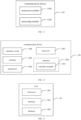
- FIG. 11 is a schematic diagram of a communication device 110 provided by an embodiment of the disclosure.
- the communication device 110 shown in FIG. 11 includes a transceiver module 1101 and a processing module 1102.
- the transceiver module 1101 may include a sending module and/or a receiving module.
- the sending module is used for realizing the sending function
- the receiving module is used for realizing the receiving function.
- the transceiver module 1101 may realize the sending function and/or the receiving function.
- the communication device 110 may be a first device, a device in the first device, or a device that can be used together with the first device.
- the communication device 110 is the first device
- the processing module 1102 is further configured to: determine a priority of the SL PRS transmission according to the priority information of the SL PRS transmission, and perform the SL PRS transmission with the second device according to the priority of the SL PRS transmission.
- the transceiver module 1101 is further configured to: in response to a transmission conflict between UL transmission and the SL PRS transmission of the first device, determine a priority of the UL transmission; determine a first priority relationship between the SL PRS transmission and the UL transmission according to the priority of the SL PRS transmission and the priority of the UL transmission; and perform the SL PRS transmission with the second device according to the first priority relationship.
- the transceiver module 1101 is further configured to: in response to the priority of the SL PRS transmission being higher than the priority of the UL transmission, perform the SL PRS transmission with the second device; and/or, in response to the priority of the SL PRS transmission being lower than the priority of the UL transmission, perform the UL transmission with another device.
- the transceiver module 1101 is further configured to: in response to the priority of the SL PRS transmission being higher than the priority of the UL transmission, perform the SL PRS transmission with the second device; and/or in response to the priority of the SL PRS transmission being lower than the priority of the UL transmission, perform the UL transmission with another device.
- the transceiver module 1101 is further configured to: in response to the priority of the SL PRS transmission being higher than the priority of the UL transmission, maintain a transmit power of the SL PRS transmission and reduce a transmit power of the UL transmission, to limit the total transmit power to be less than or equal to the power threshold; or, in response to the priority of the SL PRS transmission being lower than the priority of the UL transmission, maintain a transmit power of the UL transmission and reduce a transmit power of the SL PRS transmission, to limit the total transmit power to be less than or equal to the power threshold.
- the first device performs first transmission in a first network and/or performs second transmission in a second network, and at least one of the first transmission or the second transmission is the SL PRS transmission
- the transceiver module 1101 is further configured to: determine a second priority relationship between the first transmission and the second transmission according to the priority of the SL PRS transmission; and determine transmission with a higher priority from the first transmission and the second transmission according to the second priority relationship, and perform the transmission with the higher priority.
- the processing module 1102 is further configured to: determine start timings of the first transmission and the second transmission, and determine an earlier start timing from the start timings.
- the transceiver module 1101 is further configured to: in response to priorities of the first transmission and the second transmission being determined before the earlier start timing, select and perform transmission with a higher priority from the first transmission and the second transmission based on the determined priorities of the first transmission and the second transmission.
- the UL transmission includes one of following set UL transmissions: transmission of a PRACH, transmission and retransmission of an RAR UL grant scheduled PUSCH, transmission and retransmission of a PUSCH corresponding to a Type-2 random access, transmission of a PUCCH carrying an RAR or SL HARQ-ACK, or transmission of a PUCCH indicated carrying DCI scrambled by a TC-RNTI.
- the UL transmission further includes another UL transmission in addition to the set UL transmissions
- the processing module 1102 is further configured to: determine a third priority relationship between the SL PRS transmission and the other UL transmission according to a priority threshold.
- the processing module 1102 is further configured to: in a case that a priority value is negatively correlated with a priority level, in response to the priority of the SL PRS transmission being lower than the priority threshold, determine that the priority of the SL PRS transmission is higher than a priority of the other UL transmission; or, in response to the priority of the SL PRS transmission being higher than the priority threshold, determine that the priority of the SL PRS transmission is lower than the priority of the other UL transmission;
- the other UL transmission is not a PUSCH or a PUCCH with a specified priority index; or, the other UL transmission is a PUSCH or a PUCCH with the specified priority index, and the priority threshold is an SL priority threshold of an UL-URLLC service.
- the transceiver module 1101 is further configured to: receive the priority information of the SL PRS transmission sent by a third device, in which the third device is at least one of the second device, a positioning assistance device, or a network device.
- the processing module 1102 is further configured to: determine the priority information of the SL PRS transmission according to QoS information of an SL positioning service corresponding to the SL PRS transmission.
- the transceiver module 1101 is further configured to: receive priority information of SL PRS sending and priority information of SL PRS receiving sent by the third device respectively.
- the processing module 1102 is further configured to: determine the priority information of the SL PRS sending and the priority information of the SL PRS receiving respectively according to the QoS information.
- the priority information of the SL PRS transmission includes at least one of: a priority value and/or a value range of SL PRS transmission; an SL PRS ID or an SL PRS set ID; QoS information of an SL positioning service corresponding to an SL PRS; priority information of each SL PRS ID or priority information of each SL PRS set ID; or priority information of SL PRS sending and priority information of SL PRS receiving.
- the SL PRS transmission includes SL PRS sending and SL PRS receiving
- the processing module 1102 is further configured to: determine at least one of a priority of the SL PRS sending and a priority of the SL PRS receiving.
- the transceiver module 1101 is further configured to: perform signaling interaction with the second device through one of an SL LPP message, an SL interface (PC5-S) message, an RRC message or SCI, in which the signaling interaction at least includes sending of the priority information of the SL PRS transmission.
- the transceiver module 1101 is further configured to: perform signaling interaction with the positioning assistance device through an LPP message, in which the signaling interaction at least includes sending of the priority information of the SL PRS transmission.
- the transceiver module 1101 is further configured to: perform signaling interaction with the network device through one of a system broadcast message, an RRC reconfiguration message, an RRC release message, DCI or a MAC-CE message, in which the signaling interaction at least includes sending of the priority information of the SL PRS transmission.
- the priority information is configured for the SL PRS transmission, and the SL PRS transmission is performed based on the priority information, which makes the SL PRS transmission more accurate and is beneficial to improving the rationality of the SL PRS transmission.
- the transmission conflict can be solved based on the priority relationship, which reduces the conflict risk between the SL PRS transmission and the UL transmission, ensures that the transmission with a higher priority in the SL PRS transmission and the UL transmission is performed, and reduces the packet loss.
- FIG. 12 is a schematic diagram of another communication device 120 provided by an embodiment of the disclosure.
- the communication device 120 may be a network device or a terminal, or may be a chip, a chip system or a processor that supports the network device to realize the above-described method, or may be a chip, a chip system or a processor that supports the terminal to realize the above-described method.
- the device may be used to realize the methods described in the above method embodiments with reference to the description of the above-described method embodiments.
- the communication device 120 may include one or more processors 1201.
- the processor 1201 may be a general purpose processor or a dedicated processor, such as, a baseband processor and a central processor.
- the baseband processor is used for processing communication protocols and communication data.
- the central processor is used for controlling the communication device (e.g., a base station, a baseband chip, a terminal, a terminal chip, a DU, or a CU), executing computer programs, and processing data of the computer programs.
- the communication device 120 may include one or more memories 1202 on which a computer program 1203 may be stored.
- the processor 1201 executes the computer program 1203 to cause the communication device 120 to perform the methods described in the above method embodiments.
- the memory 1202 may also store data.
- the communication device 120 and the memory 1202 may be provided separately or may be integrated together.
- the communication device 120 may also include a transceiver 1204 and an antenna 1205.
- the transceiver 1204 may be referred to as a transceiver unit, a transceiver machine, or a transceiver circuit, for realizing a transceiver function.
- the transceiver 1204 may include a receiver and a transmitter.
- the receiver may be referred to as a receiving machine or a receiving circuit, for realizing the receiving function.
- the transmitter may be referred to as a transmitter machine or a transmitting circuit, for realizing the transmitting function.
- the communication device 120 may also include one or more interface circuits 1206.
- the interface circuits 1206 are used to receive code instructions and transmit the code instructions to the processor 1201.
- the processor 1201 runs the code instructions to cause the communication device 120 to perform the method described in the method embodiments.
- the communication device 120 is a terminal used to implement the functions of the terminal in the above embodiments.
- the communication device 120 is a network device used to implement the functions of the network device in the above embodiments.
- the processor 1201 may include a transceiver for implementing the receiving and sending functions.
- the transceiver may be, for example, a transceiver circuit, an interface, or an interface circuit.
- the transceiver circuit, the interface, or the interface circuit for implementing the receiving and sending functions may be separated or may be integrated together.
- the transceiver circuit, the interface, or the interface circuit described above may be used for reading and writing code/data, or may be used for signal transmission or delivery.
- the processor 1201 may store a computer program 1203.
- the communication device 120 is caused to perform the methods described in the method embodiments above.
- the computer program 1203 may be solidified in the processor 1201, and in such case the processor 1201 may be implemented by hardware.
- the communication device 120 may include circuits.
- the circuits may implement the sending, receiving or communicating function in the preceding method embodiments.
- the processor and the transceiver described in the disclosure may be implemented on integrated circuits (ICs), analog ICs, radio frequency integrated circuits (RFICs), mixed signal ICs, application specific integrated circuits (ASICs), printed circuit boards (PCBs), and electronic devices.
- ICs integrated circuits
- RFICs radio frequency integrated circuits
- ASICs application specific integrated circuits
- PCBs printed circuit boards
- the processor and the transceiver can also be produced using various IC process technologies, such as complementary metal oxide semiconductor (CMOS), nMetal-oxide-semiconductor (NMOS), positive channel metal oxide semiconductor (PMOS), bipolar junction transistor (BJT), bipolar CMOS (BiCMOS), silicon-germanium (SiGe), gallium arsenide (GaAs) and so on.
- CMOS complementary metal oxide semiconductor
- NMOS nMetal-oxide-semiconductor
- PMOS positive channel metal oxide semiconductor
- BJT bipolar junction transistor
- BiCMOS bipolar CMOS
- SiGe silicon-germanium
- GaAs gallium arsenide
- the communication device in the description of the above embodiments may be a network device or a terminal, but the scope of the communication device described in the disclosure is not limited thereto, and the structure of the communication device may not be limited by FIG. 12 .
- the communication device may be a stand-alone device or may be part of a larger device.
- the described communication device may be:
- the case that the communication device may be a chip or a chip system can be referred to the schematic diagram of the chip shown in FIG. 13 .
- the chip shown in FIG. 13 includes a processor 1301 and an interface 1302. There may be one or more processors 1301, and there may be multiple interfaces 1302.
- the processor 1301 is configured to: determine a priority of SL PRS transmission according to the priority information of the SL PRS transmission; and perform the SL PRS transmission with the second device according to the priority of the SL PRS transmission.
- the interface 1302 is configured to: in response to a transmission conflict between UL transmission and the SL PRS transmission of the first device, determine a priority of the UL transmission; determine a first priority relationship between the SL PRS transmission and the UL transmission according to the priority of the SL PRS transmission and the priority of the UL transmission; and perform the SL PRS transmission with the second device according to the first priority relationship.
- the interface 1302 is configured to: in response to the priority of the SL PRS transmission being higher than the priority of the UL transmission, perform the SL PRS transmission with the second device; or in response to the priority of the SL PRS transmission being lower than the priority of the UL transmission, perform UL transmission with another device.
- the interface 1302 is configured to: in response to the priority of the SL PRS transmission being higher than the priority of the UL transmission, perform the SL PRS transmission with the second device; and/or in response to the priority of the SL PRS transmission being lower than the priority of the UL transmission, perform the UL transmission with another device.
- the interface 1302 is configured to: in response to the priority of the SL PRS transmission being higher than the priority of the UL transmission, maintain a transmit power of the SL PRS transmission and reduce a transmit power of the UL transmission, to limit the total transmit power to be less than or equal to the power threshold; or, in response to the priority of the SL PRS transmission being lower than the priority of the UL transmission, maintain a transmit power of the UL transmission and reduce a transmit power of the SL PRS transmission, to limit the total transmit power to be less than or equal to the power threshold.
- the first device performs first transmission in a first network and/or performs second transmission in a second network, and at least one of the first transmission or the second transmission is the SL PRS transmission
- the interface 1302 is configured to: determine a second priority relationship between the first transmission and the second transmission according to the priority of the SL PRS transmission; and determine transmission with a higher priority from the first transmission and the second transmission according to the second priority relationship, and perform the transmission with the higher priority.
- the processor 1301 is configured to: determine start timings of the first transmission and the second transmission, and determine an earlier start timing from the start timings.
- the interface 1302 is configured to: in response to priorities of the first transmission and the second transmission being determined before the earlier start timing, select and perform the transmission with the higher priority from the first transmission and the second transmission based on the determined priorities of the first transmission and the second transmission.
- the UL transmission includes one of following set UL transmissions: transmission of a PRACH, transmission and retransmission of an RAR UL grant scheduled PUSCH, transmission and retransmission of a PUSCH corresponding to a Type-2 random access, transmission of a PUCCH carrying an RAR or SL HARQ-ACK, or transmission of a PUCCH indicated carrying DCI scrambled by a TC-RNTI.
- the UL transmission further includes another UL transmission in addition to the set UL transmissions
- the processor 1301 is further configured to: determine a third priority relationship between the SL PRS transmission and the other UL transmission according to a priority threshold.
- the processor 1301 is further configured to: in a case that a priority value is negatively correlated with a priority level, in response to the priority of the SL PRS transmission being lower than the priority threshold, determine that the priority of the SL PRS transmission is higher than a priority of the other UL transmission; or, in response to the priority of the SL PRS transmission being higher than the priority threshold, determine that the priority of the SL PRS transmission is lower than the priority of the other UL transmission; in a case that the priority value is positively correlated with the priority level, in response to the priority of the SL PRS transmission being higher than the priority threshold, determine that the priority of the SL PRS transmission is higher than the priority of the other UL transmission; or, in response to the priority of the SL PRS transmission being lower than the priority threshold, determine that the priority of the SL PRS transmission is lower than the priority of the other UL transmission.
- the other UL transmission is not a PUSCH or a PUCCH with a specified priority index; or, the other UL transmission is a PUSCH or a PUCCH with the specified priority index, and the priority threshold is an SL priority threshold of an UL-URLLC service.
- the interface 1302 is configured to: receive the priority information of the SL PRS transmission sent by a third device, in which the third device is at least one of the second device, a positioning assistance device, or a network device.
- the third device is at least one of the second device, a positioning assistance device, or a network device.
- the processor 1301 is configured to: determine the priority information of the SL PRS transmission according to QoS information of an SL positioning service corresponding to the SL PRS transmission.
- the interface 1302 is configured to: receive priority information of SL PRS sending and priority information of SL PRS receiving sent by the third device respectively.
- the processor 1301 is configured to: determine the priority information of the SL PRS sending and the priority information of the SL PRS receiving respectively according to the QoS information.
- the priority information of the SL PRS transmission includes at least one of: a priority value and/or a value range of SL PRS transmission; an SL PRS ID or an SL PRS set ID; QoS information of an SL positioning service corresponding to the SL PRS transmission; priority information of each SL PRS ID or priority information of each SL PRS set ID; or priority information of SL PRS sending and priority information of SL PRS receiving.
- the SL PRS transmission includes SL PRS sending and SL PRS receiving
- the processor 1301 is further configured to: determine at least one of a priority of SL PRS sending and a priority of SL PRS receiving.
- the interface 1302 is configured to: perform signaling interaction with the second device through one of an SL LPP message, an SL interface (PC5-S) message, an RRC message and SCI, in which the signaling interaction at least includes sending of the priority information of the SL PRS transmission.
- the transceiver module 1101 is further configured to: perform signaling interaction with the positioning assistance device through an LPP message, in which the signaling interaction at least includes sending of the priority information of the SL PRS transmission.
- the interface 1302 is further configured to: perform signaling interaction with the network device through one of a system broadcast message, an RRC reconfiguration message, an RRC release message, DCI or a MAC-CE message, in which the signaling interaction at least includes sending of the priority information of the SL PRS transmission.
- the chip also includes a memory 1303 for storing necessary computer programs and data.
- the priority information is configured for the SL PRS transmission, and the SL PRS transmission is performed based on the priority information, which makes the SL PRS transmission more accurate and is beneficial to improving the rationality of the SL PRS transmission.
- the transmission conflict can be solved based on the priority relationship, which reduces the conflict risk between the SL PRS transmission and the UL transmission, ensures that the transmission with a higher priority in the SL PRS transmission and the UL transmission is performed, and reduces the packet loss.
- the embodiments of the disclosure also provide a communication system.
- the system includes a communication device acting as a terminal in the aforementioned embodiment of FIG. 8 and a communication device acting as a network device.
- the system includes a communication device acting as a terminal in the aforementioned embodiment of FIG. 9 and a communication device acting as a network device.
- the disclosure also provides a computer program product.
- the computer program product is executed by a computer, the function of any of the method embodiments described above is implemented.
- the above embodiments may be implemented in whole or in part by software, hardware, firmware, or any combination thereof.
- the above embodiments may be implemented, in whole or in part, in the form of a computer program product.
- the computer program product includes one or more computer programs. When loading and executing the computer program on the computer, all or part of processes or functions described in the embodiments of the disclosure is implemented.
- the computer may be a general-purpose computer, a dedicated computer, a computer network, or other programmable devices.
- the computer program may be stored in a computer-readable storage medium or transmitted from one computer-readable storage medium to another computer-readable storage medium.
- the computer program may be transmitted from one web site, computer, server, or data center to another web site, computer, server, or data center, in a wired manner (e.g., using coaxial cables, fiber optics, or digital subscriber lines (DSLs) or wireless manner (e.g., using infrared wave, wireless wave, or microwave).
- the computer-readable storage medium may be any usable medium to which the computer is capable to access or a data storage device such as a server integrated by one or more usable mediums and a data center.
- the usable medium may be a magnetic medium (e.g., a floppy disk, a hard disk, and a tape), an optical medium (e.g., a high-density digital video disc (DVD)), or a semiconductor medium (e.g., a solid state disk (SSD)).
- a magnetic medium e.g., a floppy disk, a hard disk, and a tape
- an optical medium e.g., a high-density digital video disc (DVD)
- DVD high-density digital video disc
- SSD solid state disk
- the term “at least one” in the disclosure may also be described as one or more, and the term “multiple” may be two, three, four, or more, which is not limited in the disclosure.
- “first”, “second”, and “third”, and “A”, “B”, “C” and “D” are used to distinguish different technical features of the type, the technical features described using the “first”, “second”, and “third”, and “A”, “B”, “C” and “D” do not indicate any order of precedence or magnitude.
- the correspondences shown in the tables in this disclosure may be configured or may be predefined.
- the values of information in the tables are merely examples and may be configured to other values, which are not limited by the disclosure.
- the correspondences illustrated in certain rows in the tables in this disclosure may not be configured.
- the above tables may be adjusted appropriately, such as splitting, combining, and the like.
- the names of the parameters shown in the titles of the above tables may be other names that can be understood by the communication device, and the values or representations of the parameters may be other values or representations that can be understood by the communication device.
- Each of the above tables may also be implemented with other data structures, such as, arrays, queues, containers, stacks, linear tables, pointers, chained lists, trees, graphs, structures, classes, heaps, and Hash tables.
- predefine in this disclosure may be understood as define, pre-define, store, pre-store, pre-negotiate, pre-configure, solidify, or pre-fire.
Landscapes
- Engineering & Computer Science (AREA)
- Signal Processing (AREA)
- Computer Networks & Wireless Communication (AREA)
- Mobile Radio Communication Systems (AREA)
Applications Claiming Priority (1)
| Application Number | Priority Date | Filing Date | Title |
|---|---|---|---|
| PCT/CN2022/108752 WO2024020967A1 (zh) | 2022-07-28 | 2022-07-28 | 一种sl prs的传输方法及其装置 |
Publications (2)
| Publication Number | Publication Date |
|---|---|
| EP4564975A1 true EP4564975A1 (de) | 2025-06-04 |
| EP4564975A4 EP4564975A4 (de) | 2025-08-13 |
Family
ID=84114990
Family Applications (1)
| Application Number | Title | Priority Date | Filing Date |
|---|---|---|---|
| EP22952424.4A Pending EP4564975A4 (de) | 2022-07-28 | 2022-07-28 | Slprs-übertragungsverfahren und vorrichtung dafür |
Country Status (4)
| Country | Link |
|---|---|
| US (1) | US20260032623A1 (de) |
| EP (1) | EP4564975A4 (de) |
| CN (1) | CN115399046A (de) |
| WO (1) | WO2024020967A1 (de) |
Families Citing this family (3)
| Publication number | Priority date | Publication date | Assignee | Title |
|---|---|---|---|---|
| CN118474889A (zh) * | 2023-02-07 | 2024-08-09 | 华为技术有限公司 | 通信方法和通信装置 |
| CN118843203A (zh) * | 2023-04-24 | 2024-10-25 | 大唐移动通信设备有限公司 | 信号处理方法、装置、终端、基站及核心网网元 |
| KR20240163424A (ko) * | 2023-05-10 | 2024-11-19 | 삼성전자주식회사 | 무선 통신 시스템에서 사이드링크 포지셔닝 레퍼런스 시그널의 우선순위를 설정하기 위한 방법과 장치 |
Family Cites Families (17)
| Publication number | Priority date | Publication date | Assignee | Title |
|---|---|---|---|---|
| CN110944390B (zh) * | 2018-09-21 | 2022-04-22 | 展讯通信(上海)有限公司 | 资源冲突处理方法及装置、存储介质、用户设备 |
| US11297654B2 (en) * | 2019-03-28 | 2022-04-05 | Mediatek Inc. | Methods and apparatus to transmit with resources overlapped |
| US11324017B2 (en) * | 2019-06-17 | 2022-05-03 | Electronics And Telecommunications Research Institute | Method and apparatus for transmitting sidelink feedback information in wireless communication system |
| US11871454B2 (en) * | 2019-07-19 | 2024-01-09 | Qualcomm Incorporated | Handling collisions between access link and sidelink |
| WO2021034076A1 (ko) * | 2019-08-16 | 2021-02-25 | 엘지전자 주식회사 | Nr v2x에서 sl prs를 전송하는 방법 및 장치 |
| WO2021062866A1 (zh) * | 2019-10-02 | 2021-04-08 | Oppo广东移动通信有限公司 | 无线通信方法和终端设备 |
| EP4055765B1 (de) * | 2019-11-07 | 2024-08-28 | QUALCOMM Incorporated | Low-layer (dci oder mac ce)-dl-punktierungsindikator zum positionieren von referenzsignalen (prs) |
| US12445814B2 (en) * | 2019-12-26 | 2025-10-14 | Lg Electronics Inc. | Pre-configured PRS transmission method for sidelink positioning, and apparatus therefor |
| US12245164B2 (en) * | 2020-01-09 | 2025-03-04 | Lg Electronics Inc. | Method for sharing power and resources for sidelink positioning, and apparatus therefor |
| CN113271189A (zh) * | 2020-02-14 | 2021-08-17 | 维沃移动通信有限公司 | 传输方法及设备 |
| US20230101862A1 (en) * | 2020-02-19 | 2023-03-30 | Alexandros Manolakos | Partial positioning state information (psi) omission for lower layer transmission |
| WO2021191823A1 (en) * | 2020-03-24 | 2021-09-30 | Lenovo (Singapore) Pte. Ltd. | Prioritization of overlapping sl and ul transmissions |
| BR112022018353A2 (pt) * | 2020-03-24 | 2022-11-08 | Qualcomm Inc | Priorização do sinal de posicionamento |
| CN112039645B (zh) * | 2020-08-07 | 2023-12-22 | 中国信息通信研究院 | 一种定位导频优先级指示方法和设备 |
| CN114586424B (zh) * | 2020-09-30 | 2024-11-05 | 上海诺基亚贝尔股份有限公司 | 定位参考信号的优先级适配 |
| US11974335B2 (en) * | 2020-12-17 | 2024-04-30 | Qualcomm Incorporated | Sidelink positioning reference signal configuration |
| CN115643636B (zh) * | 2021-07-19 | 2026-03-17 | 维沃移动通信有限公司 | 定位方法及装置 |
-
2022
- 2022-07-28 US US18/996,408 patent/US20260032623A1/en active Pending
- 2022-07-28 WO PCT/CN2022/108752 patent/WO2024020967A1/zh not_active Ceased
- 2022-07-28 EP EP22952424.4A patent/EP4564975A4/de active Pending
- 2022-07-28 CN CN202280002836.8A patent/CN115399046A/zh active Pending
Also Published As
| Publication number | Publication date |
|---|---|
| CN115399046A (zh) | 2022-11-25 |
| WO2024020967A1 (zh) | 2024-02-01 |
| US20260032623A1 (en) | 2026-01-29 |
| EP4564975A4 (de) | 2025-08-13 |
Similar Documents
| Publication | Publication Date | Title |
|---|---|---|
| EP4518201A1 (de) | Verfahren und vorrichtung zur bestimmung des konfigurationsanzeigezustands | |
| EP4668639A1 (de) | Neuübertragungsverfahren für sidelink (sl)-positionierungsreferenzsignal (prs) und vorrichtung dafür | |
| EP4518202A1 (de) | Verfahren zur bestimmung des anzeigestatus einer übertragungskonfiguration und vorrichtung | |
| EP4564975A1 (de) | Slprs-übertragungsverfahren und vorrichtung dafür | |
| EP4668915A1 (de) | Verfahren und vorrichtung zum senden eines sidelink-positionierungsreferenzsignals (prs) | |
| US20250274915A1 (en) | Methods and apparatuses for data transmission | |
| EP4325756A1 (de) | Verfahren und vorrichtung zum multiplexing von uplink-steuerungsinformationen | |
| US20260058783A1 (en) | Method and apparatus for determining channel busy ratio (cbr) | |
| US20240163017A1 (en) | Methods for processing data reception, related communication apparatus and storage medium | |
| EP4580275A1 (de) | Verfahren, vorrichtung und vorrichtung zur trägerauswahl oder -neuauswahl auf harq-attributbasis | |
| EP4518211A1 (de) | Verarbeitungsverfahren für rückkopplung von hybriden automatischen wiederholungsanfragen (harq) und vorrichtung dafür | |
| EP4618460A1 (de) | Verfahren zur bestimmung der verarbeitungsverzögerung sowie vorrichtung, vorrichtung und speichermedium | |
| EP4557857A1 (de) | Verfahren und vorrichtungen zur bestimmung eines steuerressourcensatzes (coreset).0 | |
| US20250317827A1 (en) | Method and apparatus for transmitting data forwarding information | |
| WO2024130731A1 (zh) | 物理随机接入信道传输方法、装置、设备及存储介质 | |
| US20240276281A1 (en) | Measurement gap scheduling method and apparatus therefor | |
| US20240179754A1 (en) | Method and apparatus for configuring physical random access channel (prach) | |
| WO2023070585A1 (zh) | 一种动态选择传输接收点trp的方法及其装置 | |
| EP4694456A1 (de) | Kommunikationssteuerungsverfahren und -vorrichtung | |
| EP4614899A1 (de) | Bestimmungsverfahren und vorrichtung für kanalzugriffsprioritätsklasse (capc) sowie konfigurationsverfahren und vorrichtung | |
| EP4683417A1 (de) | Sidelink-übertragungsverfahren und vorrichtung dafür | |
| EP4583594A1 (de) | Verfahren und vorrichtung zur messung von zeitvorlauf (ta) | |
| EP4668843A1 (de) | Verfahren für mehrfache physikalische direktzugriffskanal (prach)-übertragungen und vorrichtung dafür | |
| EP4712549A1 (de) | Verfahren und vorrichtung zur erkennung von sidelink-funkverbindungsfehlern | |
| US20250294419A1 (en) | Methods for cross-base station cell configuration |
Legal Events
| Date | Code | Title | Description |
|---|---|---|---|
| STAA | Information on the status of an ep patent application or granted ep patent |
Free format text: STATUS: THE INTERNATIONAL PUBLICATION HAS BEEN MADE |
|
| PUAI | Public reference made under article 153(3) epc to a published international application that has entered the european phase |
Free format text: ORIGINAL CODE: 0009012 |
|
| STAA | Information on the status of an ep patent application or granted ep patent |
Free format text: STATUS: REQUEST FOR EXAMINATION WAS MADE |
|
| 17P | Request for examination filed |
Effective date: 20250217 |
|
| AK | Designated contracting states |
Kind code of ref document: A1 Designated state(s): AL AT BE BG CH CY CZ DE DK EE ES FI FR GB GR HR HU IE IS IT LI LT LU LV MC MK MT NL NO PL PT RO RS SE SI SK SM TR |
|
| A4 | Supplementary search report drawn up and despatched |
Effective date: 20250714 |
|
| RIC1 | Information provided on ipc code assigned before grant |
Ipc: H04W 72/12 20230101AFI20250708BHEP Ipc: H04L 5/00 20060101ALI20250708BHEP |
|
| DAV | Request for validation of the european patent (deleted) | ||
| DAX | Request for extension of the european patent (deleted) |