EP4564982A1 - Zugriffsverfahren und -vorrichtung, speichermedium und chip - Google Patents
Zugriffsverfahren und -vorrichtung, speichermedium und chip Download PDFInfo
- Publication number
- EP4564982A1 EP4564982A1 EP22952565.4A EP22952565A EP4564982A1 EP 4564982 A1 EP4564982 A1 EP 4564982A1 EP 22952565 A EP22952565 A EP 22952565A EP 4564982 A1 EP4564982 A1 EP 4564982A1
- Authority
- EP
- European Patent Office
- Prior art keywords
- access point
- parameter
- target
- terminal
- condition information
- Prior art date
- Legal status (The legal status is an assumption and is not a legal conclusion. Google has not performed a legal analysis and makes no representation as to the accuracy of the status listed.)
- Pending
Links
Images


Classifications
-
- H—ELECTRICITY
- H04—ELECTRIC COMMUNICATION TECHNIQUE
- H04W—WIRELESS COMMUNICATION NETWORKS
- H04W74/00—Wireless channel access
- H04W74/08—Non-scheduled access, e.g. ALOHA
- H04W74/0833—Random access procedures, e.g. with 4-step access
-
- H—ELECTRICITY
- H04—ELECTRIC COMMUNICATION TECHNIQUE
- H04W—WIRELESS COMMUNICATION NETWORKS
- H04W74/00—Wireless channel access
- H04W74/002—Transmission of channel access control information
- H04W74/006—Transmission of channel access control information in the downlink, i.e. towards the terminal
-
- H—ELECTRICITY
- H04—ELECTRIC COMMUNICATION TECHNIQUE
- H04W—WIRELESS COMMUNICATION NETWORKS
- H04W36/00—Hand-off or reselection arrangements
- H04W36/0005—Control or signalling for completing the hand-off
- H04W36/0055—Transmission or use of information for re-establishing the radio link
-
- H—ELECTRICITY
- H04—ELECTRIC COMMUNICATION TECHNIQUE
- H04W—WIRELESS COMMUNICATION NETWORKS
- H04W36/00—Hand-off or reselection arrangements
- H04W36/08—Reselecting an access point
-
- H—ELECTRICITY
- H04—ELECTRIC COMMUNICATION TECHNIQUE
- H04W—WIRELESS COMMUNICATION NETWORKS
- H04W74/00—Wireless channel access
- H04W74/08—Non-scheduled access, e.g. ALOHA
- H04W74/0866—Non-scheduled access, e.g. ALOHA using a dedicated channel for access
- H04W74/0891—Non-scheduled access, e.g. ALOHA using a dedicated channel for access for synchronized access
Definitions
- the present invention relates to the field of communication technology, and more particularly to an access method and apparatus, a storage medium and a chip.
- a network device may send a handover command to a terminal in response to a measurement report result sent by the terminal, and the handover command may carry configuration information of a target cell.
- the terminal can synchronize with the target cell, and then initiate a random access process (via a random access channel, RACH) to access the target cell.
- RACH random access channel
- the terminal can acquire a timing advance (TA) of the target cell, and send a reconfiguration completion message to the target cell according to the TA to complete the handover.
- TA timing advance
- the handover process of the terminal has a large delay, which will reduce the data transmission efficiency during the handover process.
- the present invention provides an access method and apparatus, a storage medium and a chip.
- an access method which includes:
- an access method which includes:
- an access apparatus which is applied to a terminal and includes:
- an access apparatus which is applied to a network device and includes:
- an access apparatus which includes:
- an access apparatus which includes:
- a computer-readable storage medium having stored therein computer program instructions that, when executed by a processor, cause the steps of the access method as provided in the first aspect of the present invention to be performed.
- a computer-readable storage medium having stored therein computer program instructions that, when executed by a processor, cause the steps of the access method as provided in the second aspect of the present invention to be performed.
- a chip which includes a processor and an interface; and the processor is configured to read instructions to perform the steps of the access method as provided in the first aspect of the present invention.
- a chip which includes a processor and an interface; and the processor is configured to read instructions to perform the steps of the access method as provided in the second aspect of the present invention.
- the terminal is able to determine the first parameter corresponding to at least one candidate access point, determine the target timing advance (TA) for accessing the target access point according to the first parameter, and access the target access point according to the target TA.
- the at least one candidate access point may include the target access point, and the access point may include a cell and/or a beam.
- the terminal is able to determine the target TA according to the first parameter, and access the target access point according to the target TA, thereby saving the time for determining the target TA through the random access process, reducing the handover delay, and improving the data transmission efficiency during the handover process.
- At least one a can represent any number of a ; for another example, one or more of a, b or c may represent: a, b, c, a-b, a-c, b-c, or a-b-c, where a, b, c may be singular or plural in number; "and/or" describes an association relationship of associated objects, indicating that there may exist three relationships, for example, A and/or B can mean: A alone, both A and B, and B alone, where A and B may be singular or plural.
- the technical solutions according to embodiments of the present invention may be applied to various communication systems.
- the communication systems may include one or more of: a 4th generation (4G) communication system, a 5th generation (5G) communication system, or other future wireless communication systems (such as 6G).
- the communication systems may also include one or more of: a public land mobile network (PLMN) network, a Device-to-Device (D2D) communication system, a Machine to Machine (M2M) communication system, an Internet of Things (IoT) communication system, a Vehicle-to-Everything (V2X) communication system or other communication systems.
- PLMN public land mobile network
- D2D Device-to-Device
- M2M Machine to Machine
- IoT Internet of Things
- V2X Vehicle-to-Everything
- FIG. 1 shows a schematic diagram of a communication system according to an example embodiment.
- the communication system may include a terminal 150 and a network device 160.
- the communication system may be used to support a 4G network access technology, such as a long term evolution (LTE) access technology, a 5G network access technology, such as a new radio access technology (new RAT), or other future wireless communication technologies.
- LTE long term evolution
- 5G network access technology such as a new radio access technology (new RAT)
- new RAT new radio access technology
- the number of the network devices may be one or more, and the number of the terminals may also be one or more.
- the number of network devices and the number of terminals in the communication system shown in FIG. 1 are only an example for illustration, which are not limited in the present invention.
- the network device in FIG. 1 may be used to support access of the terminal.
- the network device may be an evolutional Node B (eNB or eNodeB) in LTE; the network device may also be a next-generation Node B (gNB or gNodeB) in the 5G network; the network device may also be an NG radio access network (NG-RAN) device in the 5G network; the network device may also be a base station in a future evolved public land mobile network (PLMN), a broadband network gateway (BNG), an aggregation switch, a non-3rd generation partnership project (non-3GPP) access device or the like.
- PLMN public land mobile network
- BNG broadband network gateway
- aggregation switch a non-3rd generation partnership project (non-3GPP) access device or the like.
- non-3GPP non-3rd generation partnership project
- the network device in embodiments of the present invention may include various forms of base stations, such as: a macro base station, a micro base station (also called a small station), a relay station, an access point, a 5G base station or a future base station, a satellite, a transmitting and receiving point (TRP), a transmitting point (TP), a mobile switching center, or a device that plays the function of the base station in communications like Device-to-Device (D2D), Machine-to-Machine (M2M), Internet of Things (IoT), Vehicle-to-Everything (V2X), or other communications, which is not specifically limited in embodiments of the present invention.
- D2D Device-to-Device
- M2M Machine-to-Machine
- IoT Internet of Things
- V2X Vehicle-to-Everything
- devices that provide a wireless communication function for the terminal are collectively referred to as the network device or base station.
- the terminal in FIG. 1 may be an electronic device that provides voice or data connectivity.
- the terminal may also be called a user equipment (UE), a subscriber unit, a mobile station, a station, a terminal device, etc.
- the terminal may include a smartphone, a smart wearable device, a smart speaker, a smart tablet, a wireless modem, a wireless local loop (WLL) station, a personal digital assistant (PDA), or a customer premise equipment (CPE, also called a customer terminal), etc.
- UE user equipment
- PDA personal digital assistant
- CPE customer premise equipment
- devices that can access a communication system can communicate with a network device in a communication system or can communicate with other objects through a communication system, or devices that can communicate directly with each other, all may be regarded as the terminals in embodiments of the present invention, such as terminals and cars in smart transportation, household appliances in smart home, electrical meter reading instruments, voltage monitoring instruments or environmental monitoring instruments in smart grid, video monitoring instruments in intelligent safety networks, or cash registers, etc.
- the terminal can communicate with the network device.
- the terminal may be static and fixed, or may be movable, which is not limited in the present invention.
- the above communication system supports movability handover of the terminal.
- the terminal can carry out handover between two beams, between two cells, or between two base stations.
- the network device may send a handover command to the terminal in response to a measurement report result sent by the terminal, and the handover command may carry configuration information of a target cell.
- the terminal can synchronize with the target cell, and then initiate a random access process (via a random access channel, RACH) to access the target cell.
- RACH random access channel
- the terminal can obtain a timing advance (TA) of the target cell and send a reconfiguration completion message to the target cell according to the TA to complete the handover.
- TA timing advance
- the network device may indicate the TA for the terminal to access the target cell in the handover command. In this way, the terminal can directly send the reconfiguration completion message to the target cell, without performing the random access process, i.e., skipping the RACH, so that the handover delay is reduced, and the data transmission efficiency is improved.
- the terminal in order to improve the robustness of the handover, can perform conditional handover (CHO).
- the network device can configure a CHO handover command for the terminal in advance, including handover target cell configuration and a handover trigger condition, where the handover target cell configuration may be a configuration parameter provided by the target cell.
- the terminal can store the CHO handover command received from the network device, perform a radio resource management (RRM) measurement, and determine whether the handover trigger condition indicated in the CHO handover command is met.
- RRM radio resource management
- the terminal can perform the handover on its own, which can avoid the wireless link failure caused by the base station sending the handover command too late.
- the network device does not know when to perform the handover, and because the TA may be different for the handover of the terminal at different positions or times, it is impossible to indicate the TA of the target cell in the CHO command. As a result, the terminal cannot skip the RACH stage in the conditional handover process, so the handover delay is still large.
- the present invention provides an access method and apparatus, a storage medium and a chip.
- FIG. 2 shows a schematic flowchart of an access method according to an example embodiment.
- the method may be performed by the terminal in the above communication system. As shown in FIG. 2 , the method may include the following actions.
- the terminal determines a first parameter corresponding to at least one candidate access point.
- the at least one candidate access point may include a target access point, and an access point may be one or more of a cell and/or a beam.
- the terminal may determine a first parameter corresponding to at least one candidate cell, and the at least one candidate cell may include a target cell; in another possible embodiment, the terminal may determine a first parameter corresponding to at least one candidate beam, and the at least one candidate beam may include a target beam; in another possible embodiment, the terminal may determine a first parameter corresponding to at least one candidate cell and candidate beam.
- the first parameter corresponding to the target access point may indicate a timing advance (TA) for the terminal to access the target access point.
- TA timing advance
- the first parameter may be a parameter preset by the terminal.
- the first parameter may be a parameter configured by a network device.
- the network device sends configuration to the terminal to configure a corresponding parameter to the terminal.
- the terminal may, in response to receiving a first message sent by the network device, acquire the first parameter according to the first message. That is, the network device may send the first message to the terminal, and the first message includes the first parameter.
- the terminal determines a target timing advance (TA) for accessing the target access point according to the first parameter.
- TA target timing advance
- the terminal may determine whether to access the target access point according to a preset condition.
- the preset condition may include a handover condition, a radio resource control (RRC) reconstruction condition or other conditions; and the ways for the terminal to access the target access point may include handover-based access, RRC reconstruction-based access or direct access, which are not limited in the present invention.
- RRC radio resource control
- the terminal may prepare to access the target access point according to the instruction of the handover command. That is, the terminal initiates the handover to access the target access point based on the instruction of the handover command.
- the terminal may prepare to access the target access point on its own when the handover condition is met. That is, the terminal initiates the handover to access the target access point based on the CHO process.
- the terminal may acquire the first parameter corresponding to the target access point when the terminal determines to access the target access point, and determine the target TA for accessing the target access point according to the first parameter.
- the terminal accesses the target access point according to the target TA.
- the terminal may access the target access point according to the target TA in a random access channel less (RACH-less) manner.
- RACH-less random access channel less
- the terminal can skip the random access process and directly send an RRC configuration completion message to the target access point according to the target TA, so as to access the target access point.
- the target access point may include one or more of: the target cell or the target beam; the candidate access point may also include one or more of: the candidate cell or the candidate beam.
- the target access point may include a target cell.
- the target cell may be different from a serving cell of the terminal, or may be the same as the serving cell.
- the serving cell represents a cell currently used by the terminal.
- the terminal can acquire target TAs of different cells.
- the target access point may be a target beam.
- the target beam may be different from a serving beam of the terminal, or may be the same as the serving beam.
- the serving beam represents a beam currently used by the terminal. Further, the target beam and the serving beam may be in the same cell or in different cells.
- the target access point may include a target cell and a target beam.
- the terminal may switch from the serving beam of the serving cell to the target beam of the target cell to access.
- the terminal can acquire target TAs of different beams.
- the terminal can determine the first parameter corresponding to at least one candidate access point, determine the target timing advance (TA) for accessing the target access point according to the first parameter, and access the target access point according to the target TA.
- the at least one candidate access point may include the target access point, and the access point may include a cell and/or a beam.
- the terminal is able to determine the target TA according to the first parameter, and access the target access point according to the target TA, thereby saving the time for determining the target TA through the random access process, reducing the handover delay, and improving the data transmission efficiency during the handover process.
- FIG. 3 shows a schematic flowchart of an access method according to an example embodiment. As shown in FIG. 3 , the method may include the following actions.
- the terminal receives a first message sent by a network device.
- the first message may include a first parameter corresponding to at least one candidate access point.
- the terminal when receiving the first message, the terminal can obtain the first parameter corresponding to the at least one candidate access point from the first message.
- the first message may be any message or data packet sent by the network device to the terminal.
- the first message may be any RRC message sent by the network device to the terminal, such as an RRC reconfiguration message, an RRC access success message, or other RRC messages.
- the first message may be other RRC messages except the handover command message.
- the first message may be a message for instructing the terminal to perform the CHO handover, such as a CHO handover command message.
- the first message may be a system message
- the network device may broadcast the first parameter corresponding to the at least one candidate access point through the system message.
- the at least one candidate access point may include a target access point, and the access point may be a cell and/or a beam.
- the candidate access point may include one or more of: a serving cell or a neighboring cell.
- the serving cell may be a cell that the terminal currently accesses or resides in.
- the serving cell may provide a wireless communication service for the terminal.
- the neighboring cell may include a cell between which and the serving cell a cell neighbor relationship is configured. In some other embodiments, the neighboring cell may include a cell to which a distance from the serving cell is less than or equal to a preset neighboring cell distance threshold. In some other embodiments, the neighboring cell may include a cell between which and the serving cell a cell neighbor relationship is configured and to which a distance from the serving cell is less than or equal to a preset neighboring cell distance threshold. In some other embodiments, the neighboring cell may include a cell between which and the serving cell a cell neighbor relationship is configured, or a cell to which a distance from the serving cell is less than or equal to a preset neighboring cell distance threshold.
- the preset neighboring cell distance threshold may be any preset distance threshold.
- the candidate access point may include one or more of: a serving beam or a neighboring beam.
- the serving beam may be a beam that the terminal currently accesses or resides in.
- the serving beam may provide a wireless communication service for the terminal.
- the neighboring beam may include a beam between which and the serving beam a beam neighbor relationship is configured. In some other embodiments, the neighboring beam may include a beam to which a distance from the serving beam is less than or equal to a preset neighboring beam distance threshold. In some other embodiments, the neighboring beam may include a beam between which and the serving beam a beam neighbor relationship is configured and to which a distance from the serving beam is less than or equal to a preset neighboring beam distance threshold. In some other embodiments, the neighboring beam may include a beam between which and the serving beam a beam neighbor relationship is configured, or a beam to which a distance from the serving beam is less than or equal to a preset neighboring beam distance threshold.
- the preset neighboring beam distance threshold may be any preset distance threshold.
- the terminal determines a target timing advance (TA) for accessing the target access point according to the first parameter.
- TA target timing advance
- the terminal accesses the target access point according to the target TA.
- the terminal may receive the first parameter from the network device, determine the target TA according to the first parameter, and access the target access point according to the target TA, thereby saving the time for determining the target TA through the random access process, reducing the handover delay, and improving the data transmission efficiency during the handover process.
- the above first parameter may include at least one access point identifier of the at least one candidate access point and an access point TA parameter corresponding to each access point identifier.
- the terminal is able to determine a target access point TA parameter corresponding to a target access point identifier according to the first parameter.
- the target access point identifier may be the access point identifier corresponding to the target access point to access; and the target TA is determined according to the target access point TA parameter.
- the access point identifier may include one or more of: a cell identifier or a beam identifier.
- the cell identifier may include a cell global identifier (CGI), and the beam identifier may be determined according to a transmission configuration indicator (TCI).
- CGI cell global identifier
- TCI transmission configuration indicator
- the access point identifier may include the cell identifier, and the access point TA parameter may include a cell TA parameter. In some other embodiments, the access point identifier may include the beam identifier, and the access point TA parameter may include a beam TA parameter. In some other embodiments, the access point identifier may include the cell identifier and the beam identifier, and the access point TA parameter may include the cell TA parameter and the beam TA parameter.
- the above access point TA parameter may include a candidate TA.
- the candidate TA may be configured to instruct the terminal to acquire a TA length corresponding to the access point identifier.
- the candidate TA may include an access point TA length (the access point TA length may be any value greater than or equal to 0) or an access point timing advance group (TAG) identifier. That is, the above access point TA parameter may include the access point TA length or the access point TAG identifier.
- the terminal is able to determine a length of the target TA corresponding to the target access point identifier according to the candidate TA (or the access point TA parameter).
- the access point TA length corresponding to the target access point identifier may be used as the TA length of the target TA; or the TA length of the target TA may be determined according to the access point TAG identifier corresponding to the target access point identifier.
- the terminal may store N timing advance groups (TAGs), where N may be a positive integer greater than or equal to 1, for example, N is 4.
- TAG timing advance groups
- Each TAG may include at least one cell, and the at least one cell in the same TAG uses the same TA length.
- Individual TAGs may be distinguished by respective TAG identifiers, that is, different TAGs have different TAG identifiers.
- each cell may belong to a TAG. In this way, the corresponding TA length may be determined through the TAG identifier.
- the above candidate TA may also include a TA offset (N TA offset).
- the above target access point TA parameter may include at least one candidate TA and first condition information corresponding to each candidate TA.
- the terminal is able to determine whether the terminal meets a TA validation condition according to the first condition information; and determine the target TA according to the candidate TA corresponding to the first condition information when it is determined that the terminal meets the TA validation condition.
- the candidate TA may also include the access point TA length or the access point TAG identifier.
- the terminal in a case where the access point TA parameter includes the candidate TA but does not include the first condition information, the terminal can directly obtain the target TA corresponding to the target access point without performing condition judgment.
- the above first condition information includes one or more of: preset signal condition information, preset position condition information or preset time condition information.
- the preset signal condition information may be configured to instruct the terminal to determine whether the terminal meets the TA validation condition according to a wireless signal strength of the target access point detected.
- the TA validation condition may include that the wireless signal strength of the target access point detected by the terminal is within a target signal strength range, and the target signal strength range may be a signal strength range determined according to the preset signal condition information.
- the wireless signal strength may include a reference signal receiving power (RSRP) or received signal strength indicator (RSSI) detected by the terminal.
- RSRP reference signal receiving power
- RSSI received signal strength indicator
- the preset signal condition information may include a correspondence between at least one RSRP and at least one TA.
- the preset signal condition information may include a correspondence between multiple RSRP ranges and TAs.
- a TA corresponding to a signal condition where the RSRP is less than a first RSRP value may be a first candidate TA; a TA corresponding to a signal condition where the RSRP is between the first RSRP value and a second RSRP value (for example, the RSRP is greater than or equal to the first RSRP value and less than the second RSRP value) may be a second candidate TA; a TA corresponding to a signal condition where the RSRP is between the second RSRP value and a third RSRP value (for example, the RSRP is greater than or equal to the second RSRP value and less than the third RSRP value) may be a third candidate TA; and a TA corresponding to a signal condition where the RSRP is greater than or equal to the third RSRP value may be a fourth candidate TA.
- the first to fourth RSRP values described above may be set based on experiences.
- the relationship of the above RSRP values may be: the first RSRP value ⁇ the second RSRP value ⁇ the third RSRP value ⁇ the fourth RSRP value.
- more or less interval ranges may be set.
- M+1 RSRP interval ranges may be obtained through division using M RSRPs arranged from small to large, and each RSRP range corresponds to a candidate TA.
- the target TA can be determined according to the candidate TA corresponding to the target signal strength range. For example, when the RSRP of the target access point detected by the terminal is greater than or equal to the first RSRP value and less than the second RSRP value, the above second candidate TA may be used as the target TA.
- the preset signal condition information may include signal condition information corresponding to the candidate access point of the terminal.
- One or more candidate access points may exist.
- the candidate access point may include one or more of: a serving cell, a handover target cell, or a neighboring cell.
- the candidate access point may include one or more of: a serving beam, a handover target beam, or a neighboring beam.
- the terminal can determine whether the terminal meets the TA validation condition according to the preset signal condition information, and determine the target TA according to the candidate TA corresponding to the preset signal condition information when it is determined that the terminal meets the TA validation condition.
- the preset position condition information may be configured to instruct the terminal to determine whether the terminal meets the TA validation condition according to position information of the terminal.
- the preset position condition information may include at least one first candidate cell; and the TA validation condition may include that a serving cell of the terminal is included in the at least one first candidate cell.
- the terminal may determine at least one first candidate cell according to the preset position condition information.
- the serving cell is included in the at least one first candidate cell, it may be determined that the terminal meets the TA validation condition. Therefore, the target TA can be determined according to the candidate TA corresponding to the preset position condition information.
- the preset position condition information may include at least one second candidate cell and a first distance parameter corresponding to each second candidate cell.
- the TA validation condition may include that a first distance between the terminal and an antenna corresponding to the second candidate cell is less than or equal to a first distance threshold, and the first distance threshold is determined according to the first distance parameter.
- the terminal may determine the first distance threshold according to the first distance parameter, and in the case where a distance between the terminal and the second candidate cell is less than or equal to the first distance threshold, the terminal may determine that the terminal meets the TA validation condition, and determine the target TA according to the candidate TA corresponding to the preset position condition information.
- the terminal may determine the first distance threshold according to the first distance parameter in several ways. For example, the terminal may regard the first distance parameter as the first distance threshold. For another example, the terminal may determine the first distance threshold corresponding to the first distance parameter according to a preset correspondence between distance parameters and distance thresholds. The same preset correspondence between distance parameters and distance thresholds may be set for both the terminal and the network device. For example, a first distance parameter of 1 may correspond to a first distance threshold of 30, a first distance parameter of 2 may correspond to a first distance threshold of 50, a first distance parameter of 3 may correspond to a first distance threshold of 100, and so on.
- the preset position condition information includes a preset position parameter and a second distance parameter; and the TA validation condition includes that a second distance between the terminal and a preset position is less than or equal to a second distance threshold, the preset position is a geographical position determined according to the preset position parameter, and the second distance threshold is determined according to the second distance parameter.
- the terminal may determine the second distance threshold according to the second distance parameter, and in the case where the distance between the terminal and the preset position is less than or equal to the second distance threshold, the terminal may determine that the terminal meets the TA validation condition, and determine the target TA according to the candidate TA corresponding to the preset position condition information.
- the preset position may be a geographical position determined according to the preset position parameter.
- the preset position parameter may be latitude and longitude parameters, and the preset position may be determined according to the latitude and longitude parameters.
- the terminal may regard the second distance parameter as the second distance threshold.
- the terminal may determine the second distance threshold corresponding to the second distance parameter according to a preset correspondence between distance parameters and distance thresholds.
- the terminal can determine whether the terminal meets the TA validation condition according to the preset position condition information, and when it is determined that the terminal meets the TA validation condition, the terminal determines the target TA according to the candidate TA corresponding to the preset position condition information.
- the preset time condition information may be configured to instruct the terminal to determine whether the terminal meets the TA validation condition according to a time when access is initiated.
- the preset time condition information includes a preset time parameter
- the TA validation condition includes that a current time of the terminal is within a first time range
- the first time range is determined according to the preset time parameter.
- the preset time parameter includes a first absolute time and a first duration.
- the above first time range may be determined according to the first absolute time and the first duration.
- the first absolute time and the first duration may be determined by the network device according to a preconfigured parameter.
- a time range obtained by a combination of the first absolute time and the first duration may be used as the first time range.
- the first absolute time may be a preset absolute time (for example, 19 o'clock)
- the first duration may be a preset time length (for example, 30 minutes)
- the time range from 19:00 to 19:30 may be used as the first time range.
- the preset time parameter includes a second duration and a first preset condition; the above first time range may be determined in such a manner that the second duration from when the terminal meets a first preset condition is taken as the first time range.
- the first time range may be determined through a first timer.
- the first timer When the terminal meets the first preset condition, the first timer may be started or restarted.
- a duration of the first timer may be the second duration.
- Within a running time range of the first timer it may be determined that the current time of the terminal is within the first time range, that is, it may be determined that the terminal meets the TA effective condition.
- the first preset condition may include one or more of the following conditions.
- Condition 1 the terminal receives the first message sent by the network device.
- the above first timer may be started or restarted according to the second duration when the first message sent by the network device is received.
- Condition 2 the current time of the terminal is equal to a second absolute time.
- the second absolute time may be determined by the terminal according to the time parameter received from the network device.
- the above first timer may be started or restarted according to the second duration when the current time of the terminal is equal to the second absolute time
- the above first timer may be started or restarted according to the second duration.
- the target event may include an event corresponding to the above Condition 3 or Condition 4.
- the terminal can determine whether the terminal meets the TA validation condition according to the preset time condition information, and determine the target TA according to the candidate TA corresponding to the preset time condition information when it is determined that the terminal meets the TA validation condition.
- the terminal can determine whether the terminal meets the TA validation condition according to any one or more conditions included in the above first condition information; and determine the target TA according to the candidate TA corresponding to the first condition information when it is determined that the terminal meets the TA validation condition.
- the terminal in the case where the terminal meets any condition included in the above first condition information, the terminal can determine the target TA according to the candidate TA corresponding to the first condition information.
- the candidate TA may be regarded as the target TA.
- the terminal in the case where the terminal meets multiple conditions included in the above first condition information, the terminal can determine the target TA according to the candidate TAs corresponding to the multiple conditions included in the first condition information. For example, an average, maximum or minimum value of the candidate TAs corresponding to the multiple conditions included in the first condition information may be regarded as the target TA.
- the terminal can determine the target TA according to various condition information, so as to access the target access point (e.g., the target cell or the target beam) according to the target TA.
- the target access point e.g., the target cell or the target beam
- the terminal may also determine an uplink channel resource parameter, and perform uplink transmission according to the uplink channel resource parameter in a case where the target TA for accessing the target access point is determined according to the first parameter.
- the terminal may perform the uplink transmission through the target access point (e.g., the target cell or the target beam) according to the uplink channel resource parameter.
- the target access point e.g., the target cell or the target beam
- the uplink channel resource parameter may include a parameter for indicating an uplink physical uplink shared channel (PUSCH) resource.
- the uplink PUSCH resource may be an available PUSCH resource provided by the network device, such as a reserved PUSCH resource.
- the terminal may receive a second message sent by the network device, and the second message may include the uplink channel resource parameter.
- the terminal when receiving the second message sent by the network device, the terminal can obtain the uplink channel resource parameter in the second message, and determine the uplink PUSCH resource according to the uplink resource parameter.
- the second message may be the same as or different from the first message.
- the terminal may send an uplink RRC message according to the uplink channel resource parameter.
- the uplink RRC message may include an RRC reconfiguration completion message, an RRC reconfiguration failure message, or other RRC messages.
- the terminal may send uplink data according to the uplink channel resource parameter.
- the terminal may send the uplink RRC message and the uplink data according to the uplink channel resource parameter.
- the terminal can perform the uplink transmission according to the uplink channel resource parameter in the case where the target TA is determined, thereby reducing the service interruption delay caused by the handover, and improving the data transmission efficiency.
- FIG. 4 shows a schematic flowchart of an access method according to an example embodiment. As shown in FIG. 4 , the method may include the following actions.
- the terminal receives a first message sent by a network device.
- the first message may be any message or data packet sent by the network device to the terminal.
- the first message may be a message configured to instruct the terminal to perform CHO handover, such as a CHO handover command message.
- the first message may also include a first parameter corresponding to at least one candidate access point.
- the first message may also include an uplink channel resource parameter corresponding to the at least one candidate access point.
- the first message may also include the first parameter and the uplink channel resource parameter corresponding to the at least one candidate access point.
- the terminal determines the first parameter corresponding to the at least one candidate access point according to the first message.
- the first parameter may be configured to instruct the terminal to determine a timing advance (TA) for accessing the candidate access point.
- TA timing advance
- the first parameter may include at least one access point identifier of the at least one candidate access point and an access point TA parameter corresponding to each access point identifier.
- the access point TA parameter may include at least one candidate TA and first condition information corresponding to each candidate TA.
- the terminal determines the uplink channel resource parameter corresponding to the at least one candidate access point according to the first message.
- the terminal determines a target access point to access.
- steps S402, S403 and S404 may be executed in any order or in parallel, which is not limited in the present invention.
- the terminal determines a target timing advance (TA) for accessing the target access point according to the first parameter, and determines a target uplink channel resource for accessing the target access point according to the uplink channel resource parameter.
- TA target timing advance
- the terminal accesses the target access point according to the target TA and the target uplink channel resource.
- the terminal may use the target uplink channel resource (such as a PUSCH resource) to send an RRC reconfiguration completion message or uplink data to the target access point according to the target TA, so as to access the target access point for communication.
- the target uplink channel resource such as a PUSCH resource
- the terminal can access the target access point according to the target TA and the target uplink channel resource, which further reduces the service interruption delay caused by the handover and improves the data transmission efficiency.
- FIG. 5 shows a schematic flowchart of an access method according to an example embodiment.
- the method may be performed by the network device in the above communication system. As shown in FIG. 5 , the method may include the following actions.
- the network device determines a first parameter corresponding to at least one candidate access point.
- the at least one candidate access point may include a target access point, and an access point may be a cell and/or a beam.
- the network device may determine a first parameter corresponding to at least one candidate cell, and the at least one candidate cell may include a target cell; in another possible embodiment, the network device may determine a first parameter corresponding to at least one candidate beam, and the at least one candidate beam may include a target beam; in another possible embodiment, the network device may determine a first parameter corresponding to at least one candidate cell and candidate beam.
- the first parameter corresponding to the target access point may be configured to instruct the terminal to determine a timing advance (TA) for accessing the target access point.
- TA timing advance
- the candidate access point may include one or more of: a serving cell or a neighboring cell determined by the network device.
- the serving cell may be a cell that the terminal currently accesses or resides in.
- the serving cell may provide a wireless communication service for the terminal.
- the neighboring cell may include a cell between which and the serving cell a cell neighbor relationship is configured. In some other embodiments, the neighboring cell may include a cell to which a distance from the serving cell is less than or equal to a preset neighboring cell distance threshold. In some other embodiments, the neighboring cell may include a cell between which and the serving cell a cell neighbor relationship is configured and to which a distance from the serving cell is less than or equal to a preset neighboring cell distance threshold. In some other embodiments, the neighboring cell may include a cell between which and the serving cell a cell neighbor relationship is configured, or a cell to which a distance from the serving cell is less than or equal to a preset neighboring cell distance threshold.
- the preset neighboring cell distance threshold may be any preset distance threshold.
- the candidate access point may include one or more of: a serving beam or a neighboring beam.
- the serving beam may be a beam that the terminal currently accesses or resides in.
- the serving beam may provide a wireless communication service for the terminal.
- the neighboring beam may include a beam between which and the serving beam a beam neighbor relationship is configured. In some other embodiments, the neighboring beam may include a beam to which a distance from the serving beam is less than or equal to a preset neighboring beam distance threshold. In some other embodiments, the neighboring beam may include a beam between which and the serving beam a beam neighbor relationship is configured and to which a distance from the serving beam is less than or equal to a preset neighboring beam distance threshold. In some other embodiments, the neighboring beam may include a beam between which and the serving beam a beam neighbor relationship is configured, or a beam to which a distance from the serving beam is less than or equal to a preset neighboring beam distance threshold.
- the preset neighboring beam distance threshold may be any preset distance threshold.
- the network device sends a first message to the terminal according to the first parameter.
- the first message may include the first parameter; and the first parameter may be configured to instruct the terminal to determine a target timing advance (TA) for accessing the target access point in a case where the terminal is to access the target access point, and access the target access point according to the target TA.
- TA target timing advance
- the terminal may determine whether to access the target access point according to a preset condition.
- the preset condition may include a handover condition, a radio resource control (RRC) reconstruction condition or other conditions; and the ways for the terminal to access the target access point may include handover-based access, RRC reconstruction-based access or direct access, which are not limited in the present invention.
- RRC radio resource control
- the terminal may prepare to access the target access point according to the instruction of the handover command. That is, the terminal initiates the handover to access the target access point based on the instruction of the handover command.
- the terminal may prepare to access the target access point on its own when the handover condition is met. That is, the terminal initiates the handover to access the target access point based on the CHO process.
- the network device can determine the first parameter corresponding to at least one candidate access point, and send the first message to the terminal according to the first parameter.
- the at least one candidate access point may include the target access point, and the access point may include a cell and/or a beam; the first message may include the first parameter; and the first parameter may be configured to instruct the terminal to determine the target timing advance (TA) for accessing the target access point in the case where the terminal is to access the target access point, and access the target access point according to the target TA.
- TA target timing advance
- the network device can instruct the terminal to determine the target TA according to the first parameter, and access the target access point according to the target TA, thereby saving the time for determining the target TA through the random access process, reducing the handover delay, and improving the data transmission efficiency during the handover process.
- FIG. 6 shows a schematic flowchart of a method for determining a first parameter by a network device according to an example embodiment. As shown in FIG. 6 , the method may include the following actions.
- the network device determines at least one access point identifier of at least one candidate access point.
- the access point identifier may include one or more of: a cell identifier or a beam identifier.
- the cell identifier may include a cell global identifier (CGI), and the beam identifier may be determined according to a transmission configuration indicator (TCI).
- CGI cell global identifier
- TCI transmission configuration indicator
- the network device determines an access point TA parameter corresponding to each access point identifier.
- the access point TA parameter may be a parameter preconfigured by the network device.
- the network device may preconfigure at least one access point identifier and the access point TA parameter corresponding to each access point identifier.
- the access point identifier may include the cell identifier, and the access point TA parameter may include a cell TA parameter. In some other embodiments, the access point identifier may include the beam identifier, and the access point TA parameter may include a beam TA parameter. In some other embodiments, the access point identifier may include the cell identifier and the beam identifier, and the access point TA parameter may include the cell TA parameter and the beam TA parameter.
- the network device acquires the first parameter according to the access point identifier and the access point TA parameter.
- the network device can determine the first parameter corresponding to the at least one candidate access point.
- the above access point TA parameter may include a candidate TA.
- the candidate TA may be configured to instruct the terminal to acquire a TA length corresponding to the access point identifier.
- the candidate TA may include an access point TA length (the access point TA length may be any value greater than or equal to 0) or an access point TAG identifier. That is, the above access point TA parameter may include the access point TA length or the access point TAG identifier.
- the terminal can determine a length of the target TA corresponding to the target access point identifier according to the candidate TA (or the access point TA parameter).
- the access point TA length corresponding to the target access point identifier may be used as the TA length of the target TA; or the TA length of the target TA may be determined according to the access point TAG identifier corresponding to the target access point identifier.
- the above candidate TA may also include a TA offset (N TA offset).
- the above access point TA parameter may include at least one candidate TA and first condition information corresponding to each candidate TA.
- the network device can obtain the access point TA parameter in the following manner.
- At least one candidate TA corresponding to the access point identifier is acquired.
- first condition information corresponding to each candidate TA is determined.
- the access point TA parameter is determined according to the candidate TA and the first condition information.
- the above first condition information includes one or more of: preset signal condition information, preset position condition information or preset time condition information.
- the preset signal condition information may be configured to instruct the terminal to determine whether the terminal meets a TA validation condition according to a wireless signal strength of the target access point detected.
- the TA validation condition includes that the wireless signal strength of the target access point detected by the terminal is within a target signal strength range, and the target signal strength range is a signal strength range determined according to the preset signal condition information.
- the TA validation condition may include that the wireless signal strength of the target access point detected by the terminal is within the target signal strength range, and the target signal strength range may be a signal strength range determined according to the preset signal condition information.
- the wireless signal strength may include an RSRP or RSSI detected by the terminal.
- the preset position condition information may be configured to instruct the terminal to determine whether the terminal meets the TA validation condition according to position information of the terminal.
- the preset position condition information may include at least one first candidate cell; and the TA validation condition may include that a serving cell of the terminal is included in the at least one first candidate cell.
- the preset position condition information may be configured to instruct the terminal to determine at least one first candidate cell according to the preset position condition information.
- the serving cell is included in the first candidate cell, it may be determined that the terminal meets the TA validation condition. Therefore, the target TA can be determined according to the candidate TA corresponding to the preset position condition information.
- the preset position condition information may include at least one second candidate cell and a first distance parameter corresponding to each second candidate cell.
- the TA validation condition may include that a first distance between the terminal and an antenna corresponding to the second candidate cell is less than or equal to a first distance threshold, and the first distance threshold is determined according to the first distance parameter.
- the preset position condition information may be configured to instruct the terminal to determine the first distance threshold according to the first distance parameter, and in the case where a distance between the terminal and the second candidate cell is less than or equal to the first distance threshold, the terminal determines that the terminal meets the TA validation condition, and determines the target TA according to the candidate TA corresponding to the preset position condition information.
- the preset position condition information includes a preset position parameter and a second distance parameter; and the TA validation condition includes that a second distance between the terminal and a preset position is less than or equal to a second distance threshold, the preset position is a geographical position determined according to the preset position parameter, and the second distance threshold is determined according to the second distance parameter.
- the preset position condition information may be configured to instruct the terminal to determine the second distance threshold according to the second distance parameter, and in the case where the distance between the terminal and the preset position is less than or equal to the second distance threshold, the terminal determines that the terminal meets the TA validation condition, and determines the target TA according to the candidate TA corresponding to the preset position condition information.
- the preset position may be a geographical position determined according to the preset position parameter.
- the preset time condition information may be configured to instruct the terminal to determine whether the terminal meets the TA validation condition according to a time when access is initiated.
- the preset time condition information includes a preset time parameter
- the TA validation condition includes that a current time of the terminal is within a first time range
- the first time range is a time range determined according to the preset time parameter.
- the preset time parameter includes a first absolute time and a first duration.
- the above first time range may be determined according to the first absolute time and the first duration.
- the preset time parameter includes a second duration and a first preset condition; the above first time range may be determined in such a manner that the second duration from when the terminal meets a first preset condition is taken as the first time range.
- the first preset condition may include one or more of the following conditions.
- Condition 1 the terminal receives the first message sent by the network device.
- Condition 2 the current time of the terminal is equal to a second absolute time.
- the second absolute time may be a time determined according to the time parameter sent by the network device to the terminal.
- Condition 3 the terminal determines according to the preset signal condition information that the terminal meets the TA validation condition.
- Condition 4 the terminal determines according to the preset position condition information that the terminal meets the TA validation condition.
- the network device can instruct the terminal to determine whether the terminal meets the TA validation condition according to any one or more conditions included in the above first condition information; and determine the target TA according to the candidate TA corresponding to the first condition information when it is determined that the terminal meets the TA validation condition.
- the network device may also determine an uplink channel resource parameter, and send a second message to the terminal according to the uplink channel resource parameter.
- the second message may include the uplink channel resource parameter.
- the uplink channel resource parameter may be configured to instruct the terminal to perform uplink transmission according to the uplink channel resource parameter after the target TA for accessing the target access point is determined according to the first parameter.
- the second message may be the same as or different from the first message.
- the uplink channel resource parameter may include a parameter for indicating an uplink PUSCH resource.
- the uplink PUSCH resource may be an available PUSCH resource provided by the network device, such as a reserved PUSCH resource.
- the network device may instruct the terminal to send an uplink RRC message according to the uplink channel resource parameter, so that the network device can receive the uplink RRC message sent by the terminal according to the uplink channel resource parameter.
- the uplink RRC message may include an RRC reconfiguration completion message, an RRC reconfiguration failure message, or other RRC messages.
- the network device may instruct the terminal to send uplink data according to the uplink channel resource parameter, so that the network device can receive the uplink data sent by the terminal according to the uplink channel resource parameter.
- the network device may instruct the terminal to send an uplink RRC message and uplink data according to the uplink channel resource parameter, so that the network device can receive the uplink RRC messages and the uplink data sent by the terminal according to the uplink channel resource parameter.
- the network device can instruct the terminal to perform uplink transmission according to the uplink channel resource parameter when the target TA is determined, thereby reducing the service interruption delay caused by the handover and improving the data transmission efficiency.
- FIG. 7 shows a schematic flowchart of an access method according to an example embodiment. As shown in FIG. 7 , the method may include the following actions.
- the network device determines a first parameter and an uplink channel resource parameter corresponding to at least one candidate access point.
- the network device sends a first message to the terminal according to the first parameter and the uplink channel resource parameter.
- the first message may include the first parameter and the uplink channel resource parameter as described above; the at least one candidate access point may include a target access point, and the access point may include a cell and/or a beam.
- the first parameter corresponding to the target access point may be configured to instruct the terminal to determine a timing advance (TA) for accessing the target access point.
- the uplink channel resource parameter corresponding to the target access point may be configured to instruct the terminal to perform uplink transmission according to the uplink channel resource parameter after the target TA for accessing the target access point is determined according to the first parameter.
- the uplink channel resource parameter may include a parameter for indicating an uplink PUSCH resource.
- the network device can instruct the terminal to access the target access point according to the target TA and target uplink channel resource, thereby further reducing the service interruption delay caused by the handover and improving the data transmission efficiency.
- FIG. 8 shows a schematic flowchart of an access method according to an example embodiment. As shown in FIG. 8 , the method may include the following actions.
- the network device determines a first parameter corresponding to at least one candidate access point.
- the at least one candidate access point may include a target access point, and the access point includes a cell and/or a beam.
- the first parameter corresponding to the target access point may be configured to instruct the terminal to determine a timing advance (TA) for accessing the target access point.
- TA timing advance
- the network device sends a first message to the terminal according to the first parameter.
- the terminal determines the first parameter corresponding to the at least one candidate access point.
- the terminal determines the target timing advance (TA) for accessing the target access point according to the first parameter, in a case where the terminal determines the target access point to access.
- TA target timing advance
- the terminal accesses the target access point according to the target TA.
- the terminal can determine the target TA according to the first parameter sent by the network device, and access the target access point according to the target TA, thereby saving the time for determining the target TA through the random access process, reducing the handover delay, and improving the data transmission efficiency during the handover process.
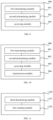
- FIG. 9 shows a schematic block diagram of an access apparatus 900 according to an example embodiment.
- the apparatus 900 may include: a first determining module 901, a second determining module 902, and an accessing module 903.
- the first determining module 901 is configured to determine a first parameter corresponding to at least one candidate access point; where the at least one candidate access point includes a target access point, and an access point is a cell and/or a beam.
- the second determining module 902 is configured to determine a target timing advance (TA) for accessing the target access point according to the first parameter.
- TA target timing advance
- the accessing module 903 is configured to access the target access point according to the target TA.
- the first determining module 901 is configured to: receive a first message sent by a network device.
- the first message includes the first parameter corresponding to the at least one candidate access point.
- the first parameter includes at least one access point identifier of the at least one candidate access point and an access point TA parameter corresponding to each access point identifier.
- the second determining module 902 is configured to: determine a target access point TA parameter corresponding to a target access point identifier according to the first parameter; where the target access point identifier is an access point identifier corresponding to the target access point to access; and determine the target TA according to the target access point TA parameter.
- the target access point TA parameter includes at least one candidate TA and first condition information corresponding to each candidate TA.
- the second determining module 902 is configured to: determine the target TA according to the target access point TA parameter includes: determine whether the terminal meets a TA validation condition according to the first condition information; and determine the target TA according to the candidate TA corresponding to the first condition information when it is determined that the terminal meets the TA validation condition.
- the first condition information includes at least one of:
- the TA validation condition includes that the wireless signal strength is within a target signal strength range, and the target signal strength range is determined according to the preset signal condition information.
- the preset position condition information includes at least one first candidate cell; and the TA validation condition includes that a serving cell of the terminal is included in the at least one first candidate cell.
- the preset position condition information includes at least one second candidate cell and a first distance parameter corresponding to each second candidate cell; and the TA validation condition includes that a first distance between the terminal and an antenna corresponding to the second candidate cell is less than or equal to a first distance threshold, and the first distance threshold is determined according to the first distance parameter.
- the preset position condition information includes a preset position parameter and a second distance parameter; and the TA validation condition includes that a second distance between the terminal and a preset position is less than or equal to a second distance threshold, the preset position is a geographical position determined according to the preset position parameter, and the second distance threshold is determined according to the second distance parameter.
- the preset time condition information includes a preset time parameter
- the TA validation condition includes that a current time of the terminal is within a first time range
- the first time range is determined according to the preset time parameter.
- the preset time parameter includes a first absolute time and a first duration; and the first time range is determined according to the first absolute time and the first duration.
- the preset time parameter includes a second duration; and the first time range is determined in such a manner that the second duration from when the terminal meets a first preset condition is taken as the first time range; and the first preset condition includes one or more of:
- the access point TA parameter includes an access point TA length or an access point timing advance group (TAG) identifier
- determining the target access point TA parameter corresponding to the target access point identifier according to the first parameter includes: determining a target TA length corresponding to the target access point identifier according to the access point TA parameter.
- TAG access point timing advance group
- FIG. 10 shows a schematic block diagram of an access apparatus according to an example embodiment.
- the apparatus 900 may further include: the first determining module 901 and a transmission module 904.
- the first determining module 901 is configured to determine an uplink channel resource parameter.
- the transmission module 904 is configured to perform uplink transmission according to the uplink channel resource parameter in a case where the target TA for accessing the target access point is determined according to the first parameter.
- the first determining module 901 is configured to receive a second message sent by the network device, and the second message includes the uplink channel resource parameter.
- the transmission module 904 is configured to send an uplink radio resource control (RRC) message according to the uplink channel resource parameter; and/or send uplink data according to the uplink channel resource parameter.
- RRC radio resource control
- the accessing module 903 is configured to access the target access point according to the target TA in a random access channel less (RACH-less) manner.
- RACH-less random access channel less
- FIG. 11 shows a schematic block diagram of an access apparatus 1100 according to an example embodiment.
- the access apparatus may be applied to a terminal.
- the access apparatus 1100 may further include: a third determining module 1101 and a first sending module 1102.
- the third determining module 1101 is configured to determine a first parameter corresponding to at least one candidate access point.
- the at least one candidate access point includes a target access point.
- the first sending module 1102 is configured to send a first message to a terminal according to the first parameter.
- the first message includes the first parameter; the first parameter is configured to instruct the terminal to determine a target timing advance (TA) for accessing the target access point in a case where the terminal is to access the target access point, and access the target access point according to the target TA; and an access point includes a cell and/or a beam.
- TA target timing advance
- the third determining module 1101 is configured to: determine at least one access point identifier of the at least one candidate access point; determine an access point TA parameter corresponding to each access point identifier; and acquire the first parameter according to the access point identifier and the access point TA parameter.
- the third determining module 1101 is configured to: acquire at least one candidate TA corresponding to the access point identifier; determine first condition information corresponding to each candidate TA; and determine the access point TA parameter according to the candidate TA and the first condition information.
- the first condition information includes at least one of:
- the TA validation condition includes that the wireless signal strength of the target access point detected by the terminal is within a target signal strength range, and the target signal strength range is determined according to the preset signal condition information.
- the preset position condition information includes at least one first candidate cell; and the TA validation condition includes that a serving cell of the terminal is included in the at least one first candidate cell.
- the preset position condition information includes at least one second candidate cell and a first distance parameter corresponding to each second candidate cell; and the TA validation condition includes that a first distance between the terminal and an antenna corresponding to the second candidate cell is less than or equal to a first distance threshold, and the first distance threshold is determined according to the first distance parameter.
- the preset position condition information includes a preset position parameter and a second distance parameter; and the TA validation condition includes that a second distance between the terminal and a preset position is less than or equal to a second distance threshold, the preset position is a geographical position determined according to the preset position parameter, and the second distance threshold is determined according to the second distance parameter.
- the preset time condition information includes a preset time parameter
- the TA validation condition includes that a current time of the terminal is within a first time range
- the first time range is determined according to the preset time parameter.
- the access point TA parameter includes an access point TA length or an access point timing advance group (TAG) identifier.
- TAG access point timing advance group
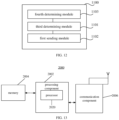
- FIG. 12 shows a schematic block diagram of an access apparatus 1100 according to an example embodiment. As shown in FIG. 12 , the apparatus 1100 may further include: a fourth determining module 1103.
- the fourth determining module 1103 is further configured to determine an uplink channel resource parameter.
- the first sending module 1102 is further configured to send a second message to the terminal according to the uplink channel resource parameter.
- the second message includes the uplink channel resource parameter; the uplink channel resource parameter is configured to instruct the terminal to perform uplink transmission according to the uplink channel resource parameter after the target TA for accessing the target access point is determined according to the first parameter.
- FIG. 13 shows a schematic block diagram of an access apparatus according to an example embodiment.
- the access apparatus 2000 may be a terminal in the communication system shown in FIG. 1 , or may be a network device in the communication system.
- the apparatus 2000 may include one or more of the following components: a processing component 2002, a memory 2004, and a communication component 2006.
- the processing component 2002 may be configured to control overall operations of the apparatus 2000, such as the operations associated with display, phone calls, data communications, camera operations, and recording operations.
- the processing component 2002 may include one or more processors 2020 to execute instructions to perform all or some of the steps in the above-described access methods.
- the processing component 2002 may include one or more modules which facilitate the interaction between the processing component 2002 and other components.
- the processing component 2002 may include a multimedia module to facilitate the interaction between the multimedia component and the processing component 2002.
- the memory 2004 is configured to store various types of data to support the operation of the apparatus 2000. Examples of such data include instructions for any applications or methods operated on the apparatus 2000, contact data, phonebook data, messages, pictures, videos, etc.
- the memory 2004 may be implemented using any type of volatile or non-volatile memory devices, or a combination thereof, such as a static random access memory (SRAM), an electrically erasable programmable read-only memory (EEPROM), an erasable programmable read-only memory (EPROM), a programmable read-only memory (PROM), a read-only memory (ROM), a magnetic memory, a flash memory, a magnetic or optical disk.
- SRAM static random access memory
- EEPROM electrically erasable programmable read-only memory
- EPROM erasable programmable read-only memory
- PROM programmable read-only memory
- ROM read-only memory
- magnetic memory a magnetic memory
- flash memory a flash memory
- magnetic or optical disk a magnetic or optical disk.
- the communication component 2006 is configured to facilitate communication, wired or wireless, between the apparatus 2000 and other devices.
- the apparatus 2000 can access a wireless network based on a communication standard, such as Wi-Fi, 2G, 3G, 4G, 5G, 6G, NB-IoT, eMTC, or a combination thereof.
- the communication component 2006 receives a broadcast signal or broadcast associated information from an external broadcast management system via a broadcast channel.
- the communication component 2006 further includes a near field communication (NFC) module to facilitate short-range communications.
- the NFC module may be implemented based on a radio frequency identification (RFID) technology, an infrared data association (IrDA) technology, an ultra-wideband (UWB) technology, a Bluetooth (BT) technology, and other technologies.
- RFID radio frequency identification
- IrDA infrared data association
- UWB ultra-wideband
- BT Bluetooth
- the apparatus 2000 may be implemented with one or more application specific integrated circuits (ASICs), digital signal processors (DSPs), digital signal processing devices (DSPDs), programmable logic devices (PLDs), field programmable gate arrays (FPGAs), controllers, micro-controllers, microprocessors, or other electronic elements, for performing the above-mentioned access method.
- ASICs application specific integrated circuits
- DSPs digital signal processors
- DSPDs digital signal processing devices
- PLDs programmable logic devices
- FPGAs field programmable gate arrays
- controllers micro-controllers, microprocessors, or other electronic elements, for performing the above-mentioned access method.
- the above apparatus 2000 may be an independent electronic device, or may be a part of an independent electronic device.
- the electronic device may be an integrated circuit (IC) or a chip, where the integrated circuit may be an IC or a set of ICs; the chip may include but is not limited to: a graphics processing unit (GPU), a central processing unit (CPU), a field programmable gate array (FPGA), a digital signal processor (DSP), an application specific integrated circuit (ASIC), a system on chip (SoC, also called a system-level chip), etc.
- the above integrated circuit or chip may be used to execute executable instructions (or codes) to implement the above access method.
- the executable instructions may be stored in the integrated circuit or chip, or may be obtained from other apparatuses or devices.
- the integrated circuit or chip includes a processor, a memory, and an interface for communicating with other devices.
- the executable instructions may be stored in the processor, and when the executable instructions are executed by the processor, the above access method is implemented; or the integrated circuit or chip can receive the executable instructions through the interface and transmit the executable instructions to the processor for execution, to implement the above access method.
- the present invention also provides a computer readable storage medium having stored therein computer program instructions that, when executed by a processor, cause the steps of the access method provided in the present invention to be performed.
- the computer-readable storage medium may be a non-transitory computer-readable storage medium including instructions, for example, may be the above memory 2004 including instructions, and the above instructions may be executed by the processor 2020 of the apparatus 2000 to complete the above access method.
- the non-transitory computer-readable storage medium may be a ROM, a random access memory (RAM), a CD-ROM, a magnetic tape, a floppy disk, an optical data storage device, and the like.
- a computer program product including computer programs executable by a programmable device, and the computer programs have code portions that, when executed by the programmable device, cause the above access method to be performed.
Landscapes
- Engineering & Computer Science (AREA)
- Computer Networks & Wireless Communication (AREA)
- Signal Processing (AREA)
- Mobile Radio Communication Systems (AREA)
Applications Claiming Priority (1)
| Application Number | Priority Date | Filing Date | Title |
|---|---|---|---|
| PCT/CN2022/109243 WO2024021119A1 (zh) | 2022-07-29 | 2022-07-29 | 接入方法、装置、存储介质及芯片 |
Publications (2)
| Publication Number | Publication Date |
|---|---|
| EP4564982A1 true EP4564982A1 (de) | 2025-06-04 |
| EP4564982A4 EP4564982A4 (de) | 2025-10-01 |
Family
ID=84115067
Family Applications (1)
| Application Number | Title | Priority Date | Filing Date |
|---|---|---|---|
| EP22952565.4A Pending EP4564982A4 (de) | 2022-07-29 | 2022-07-29 | Zugriffsverfahren und -vorrichtung, speichermedium und chip |
Country Status (5)
| Country | Link |
|---|---|
| EP (1) | EP4564982A4 (de) |
| JP (1) | JP2025527171A (de) |
| KR (1) | KR20250038801A (de) |
| CN (1) | CN115399058A (de) |
| WO (1) | WO2024021119A1 (de) |
Families Citing this family (3)
| Publication number | Priority date | Publication date | Assignee | Title |
|---|---|---|---|---|
| WO2024192598A1 (zh) * | 2023-03-17 | 2024-09-26 | 北京小米移动软件有限公司 | 一种定时提前量确定方法、装置及存储介质 |
| CN118785271A (zh) * | 2023-04-06 | 2024-10-15 | 华为技术有限公司 | 通信方法与通信装置 |
| CN118509978B (zh) * | 2024-07-18 | 2024-10-18 | 中国电信股份有限公司 | Ta确定方法、装置、目标传输接入点和目标终端 |
Family Cites Families (17)
| Publication number | Priority date | Publication date | Assignee | Title |
|---|---|---|---|---|
| CN103945471B (zh) * | 2013-01-21 | 2019-01-22 | 电信科学技术研究院 | 一种小区切换方法及装置 |
| WO2018032508A1 (zh) * | 2016-08-19 | 2018-02-22 | 广东欧珀移动通信有限公司 | 传输数据的方法、终端设备和网络侧设备 |
| US10624015B2 (en) * | 2018-03-27 | 2020-04-14 | Qualcomm Incorporated | Timing advance assisted measurement report for improved handover performance |
| WO2020090440A1 (ja) * | 2018-10-30 | 2020-05-07 | 京セラ株式会社 | ハンドオーバ制御方法、及びユーザ装置 |
| CN111372293B (zh) * | 2018-12-26 | 2021-12-21 | 华为技术有限公司 | 通信方法和通信装置 |
| WO2020188663A1 (ja) * | 2019-03-15 | 2020-09-24 | 株式会社Nttドコモ | ユーザ端末及び無線通信方法 |
| JP7192095B2 (ja) * | 2019-03-25 | 2022-12-19 | 京セラ株式会社 | ハンドオーバ制御方法 |
| CN120343698A (zh) * | 2019-12-16 | 2025-07-18 | 中兴通讯股份有限公司 | 定时提前量的确定方法、装置、设备及介质 |
| EP4072196B1 (de) * | 2019-12-31 | 2025-05-21 | Huawei Technologies Co., Ltd. | Verfahren und vorrichtung für übergabe |
| CN113259999B (zh) * | 2020-02-10 | 2022-08-26 | 华为技术有限公司 | 一种网络资源配置的方法和装置 |
| FI20205398A1 (en) * | 2020-04-20 | 2021-10-21 | Nokia Technologies Oy | Determination of acceleration |
| CN114390611B (zh) * | 2020-10-22 | 2024-02-02 | 大唐移动通信设备有限公司 | 小区切换方法、终端、基站、装置和存储介质 |
| CN114449594A (zh) * | 2020-10-31 | 2022-05-06 | 华为技术有限公司 | 用于小区切换的方法和装置 |
| CN114698039A (zh) * | 2020-12-30 | 2022-07-01 | 华为技术有限公司 | 一种小区选择方法及装置 |
| EP4278693A1 (de) * | 2021-01-14 | 2023-11-22 | Telefonaktiebolaget LM Ericsson (publ) | Verfahrensoptionen für cho in nichtterrestrischen netzwerken |
| EP4360364A1 (de) * | 2021-06-23 | 2024-05-01 | Nokia Technologies Oy | Benutzergerätebasierte pdcch-überwachungsanpassung während einer sdt |
| EP4409981A4 (de) * | 2021-09-29 | 2025-05-21 | Lenovo (Beijing) Limited | Zeitvorlauf in einem multipanel-tx-szenario |
-
2022
- 2022-07-29 JP JP2025504187A patent/JP2025527171A/ja active Pending
- 2022-07-29 WO PCT/CN2022/109243 patent/WO2024021119A1/zh not_active Ceased
- 2022-07-29 CN CN202280002766.6A patent/CN115399058A/zh active Pending
- 2022-07-29 KR KR1020257006001A patent/KR20250038801A/ko active Pending
- 2022-07-29 EP EP22952565.4A patent/EP4564982A4/de active Pending
Also Published As
| Publication number | Publication date |
|---|---|
| WO2024021119A1 (zh) | 2024-02-01 |
| CN115399058A (zh) | 2022-11-25 |
| JP2025527171A (ja) | 2025-08-20 |
| EP4564982A4 (de) | 2025-10-01 |
| KR20250038801A (ko) | 2025-03-19 |
Similar Documents
| Publication | Publication Date | Title |
|---|---|---|
| JP6465238B2 (ja) | eNodeB、モビリティ管理装置、及びこれらの方法 | |
| EP3609224B1 (de) | Verfahren und vorrichtungen für zellen-handover und zur bestimmung der übertragenen uplink-leistung | |
| KR102026293B1 (ko) | ProSe 기반 UE-투-네트워크 중계에서의 UE 중계 선택을 위한 측정 제어 | |
| US11290924B2 (en) | Communication method and communications device for improved handover with changed common system information | |
| US20180160338A1 (en) | Relay Node Switching Method and System | |
| US20260020054A1 (en) | Method and device for determining persistent listen-before-talk failure, and storage medium | |
| US12425934B2 (en) | Cell selection or reselection method, information transmission method and apparatuses | |
| KR20200111207A (ko) | 2차 셀의 구성 방법, 기기 및 컴퓨터 저장 매체 | |
| US12225416B2 (en) | Communication method and apparatus | |
| WO2021065748A1 (en) | Method and apparatus for performing handover of a multi-usim radio-capable ue over same or different systems | |
| US11974178B2 (en) | Cell handover method, device and readable storage medium | |
| JP2025527171A (ja) | アクセス方法、装置、記憶媒体、及びチップ | |
| US20170367008A1 (en) | User equipment and base station | |
| KR20190103383A (ko) | 통신 방법 및 통신 디바이스 | |
| US20230015705A1 (en) | Communication method, apparatus, and system | |
| CN112020899B (zh) | 网络接入方法及相关设备 | |
| US12532204B2 (en) | Measurement method, measurement apparatus, terminal, and network device | |
| US9854514B2 (en) | User equipment, small cell and operation method thereof | |
| CN120075875A (zh) | 测量上报方法和设备 | |
| US20160057680A1 (en) | Apparatus and method for interworking optimization in connection with cellular handover | |
| CN108464056A (zh) | 用户设备信息的配置方法、装置、基站及核心网设备 | |
| CN102348215A (zh) | 邻区关系测量的方法、系统和网络侧设备 | |
| CN121312196A (zh) | 中继重选 | |
| RU2851224C2 (ru) | Способ и устройство доступа, носитель данных и микросхема | |
| CN117356138A (zh) | 信息获取方法、信息提供方法、装置、设备及存储介质 |
Legal Events
| Date | Code | Title | Description |
|---|---|---|---|
| STAA | Information on the status of an ep patent application or granted ep patent |
Free format text: STATUS: THE INTERNATIONAL PUBLICATION HAS BEEN MADE |
|
| PUAI | Public reference made under article 153(3) epc to a published international application that has entered the european phase |
Free format text: ORIGINAL CODE: 0009012 |
|
| STAA | Information on the status of an ep patent application or granted ep patent |
Free format text: STATUS: REQUEST FOR EXAMINATION WAS MADE |
|
| 17P | Request for examination filed |
Effective date: 20250226 |
|
| AK | Designated contracting states |
Kind code of ref document: A1 Designated state(s): AL AT BE BG CH CY CZ DE DK EE ES FI FR GB GR HR HU IE IS IT LI LT LU LV MC MK MT NL NO PL PT RO RS SE SI SK SM TR |
|
| A4 | Supplementary search report drawn up and despatched |
Effective date: 20250903 |
|
| RIC1 | Information provided on ipc code assigned before grant |
Ipc: H04W 74/08 20240101AFI20250828BHEP Ipc: H04W 36/00 20090101ALI20250828BHEP Ipc: H04W 74/00 20090101ALI20250828BHEP Ipc: H04W 36/08 20090101ALI20250828BHEP |
|
| DAV | Request for validation of the european patent (deleted) | ||
| DAX | Request for extension of the european patent (deleted) |