EP4564986A1 - Verfahren und vorrichtung zur registrierung einer pin-vorrichtung und kommunikationsvorrichtung - Google Patents
Verfahren und vorrichtung zur registrierung einer pin-vorrichtung und kommunikationsvorrichtung Download PDFInfo
- Publication number
- EP4564986A1 EP4564986A1 EP23845373.2A EP23845373A EP4564986A1 EP 4564986 A1 EP4564986 A1 EP 4564986A1 EP 23845373 A EP23845373 A EP 23845373A EP 4564986 A1 EP4564986 A1 EP 4564986A1
- Authority
- EP
- European Patent Office
- Prior art keywords
- communication device
- information
- pin
- identifier
- request message
- Prior art date
- Legal status (The legal status is an assumption and is not a legal conclusion. Google has not performed a legal analysis and makes no representation as to the accuracy of the status listed.)
- Pending
Links
Images



Classifications
-
- H—ELECTRICITY
- H04—ELECTRIC COMMUNICATION TECHNIQUE
- H04W—WIRELESS COMMUNICATION NETWORKS
- H04W12/00—Security arrangements; Authentication; Protecting privacy or anonymity
- H04W12/60—Context-dependent security
- H04W12/69—Identity-dependent
-
- H—ELECTRICITY
- H04—ELECTRIC COMMUNICATION TECHNIQUE
- H04W—WIRELESS COMMUNICATION NETWORKS
- H04W4/00—Services specially adapted for wireless communication networks; Facilities therefor
- H04W4/70—Services for machine-to-machine communication [M2M] or machine type communication [MTC]
-
- H—ELECTRICITY
- H04—ELECTRIC COMMUNICATION TECHNIQUE
- H04W—WIRELESS COMMUNICATION NETWORKS
- H04W48/00—Access restriction; Network selection; Access point selection
- H04W48/18—Selecting a network or a communication service
-
- H—ELECTRICITY
- H04—ELECTRIC COMMUNICATION TECHNIQUE
- H04W—WIRELESS COMMUNICATION NETWORKS
- H04W60/00—Affiliation to network, e.g. registration; Terminating affiliation with the network, e.g. de-registration
- H04W60/04—Affiliation to network, e.g. registration; Terminating affiliation with the network, e.g. de-registration using triggered events
-
- H—ELECTRICITY
- H04—ELECTRIC COMMUNICATION TECHNIQUE
- H04W—WIRELESS COMMUNICATION NETWORKS
- H04W76/00—Connection management
- H04W76/10—Connection setup
-
- H—ELECTRICITY
- H04—ELECTRIC COMMUNICATION TECHNIQUE
- H04W—WIRELESS COMMUNICATION NETWORKS
- H04W76/00—Connection management
- H04W76/10—Connection setup
- H04W76/14—Direct-mode setup
-
- H—ELECTRICITY
- H04—ELECTRIC COMMUNICATION TECHNIQUE
- H04W—WIRELESS COMMUNICATION NETWORKS
- H04W8/00—Network data management
- H04W8/02—Processing of mobility data, e.g. registration information at HLR [Home Location Register] or VLR [Visitor Location Register]; Transfer of mobility data, e.g. between HLR, VLR or external networks
- H04W8/04—Registration at HLR or HSS [Home Subscriber Server]
-
- H—ELECTRICITY
- H04—ELECTRIC COMMUNICATION TECHNIQUE
- H04W—WIRELESS COMMUNICATION NETWORKS
- H04W8/00—Network data management
- H04W8/18—Processing of user or subscriber data, e.g. subscribed services, user preferences or user profiles; Transfer of user or subscriber data
-
- H—ELECTRICITY
- H04—ELECTRIC COMMUNICATION TECHNIQUE
- H04W—WIRELESS COMMUNICATION NETWORKS
- H04W84/00—Network topologies
- H04W84/02—Hierarchically pre-organised networks, e.g. paging networks, cellular networks, WLAN [Wireless Local Area Network] or WLL [Wireless Local Loop]
- H04W84/10—Small scale networks; Flat hierarchical networks
- H04W84/12—WLAN [Wireless Local Area Networks]
-
- H—ELECTRICITY
- H04—ELECTRIC COMMUNICATION TECHNIQUE
- H04W—WIRELESS COMMUNICATION NETWORKS
- H04W88/00—Devices specially adapted for wireless communication networks, e.g. terminals, base stations or access point devices
- H04W88/16—Gateway arrangements
-
- H—ELECTRICITY
- H04—ELECTRIC COMMUNICATION TECHNIQUE
- H04W—WIRELESS COMMUNICATION NETWORKS
- H04W76/00—Connection management
- H04W76/10—Connection setup
- H04W76/11—Allocation or use of connection identifiers
-
- H—ELECTRICITY
- H04—ELECTRIC COMMUNICATION TECHNIQUE
- H04W—WIRELESS COMMUNICATION NETWORKS
- H04W84/00—Network topologies
- H04W84/18—Self-organising networks, e.g. ad-hoc networks or sensor networks
Definitions
- This application pertains to the field of wireless communication technologies, specifically, relates to a method and an apparatus for registering a PIN device, and a communication device.
- a personal IoT network is a network composed of a large number of internet of things devices. These internet of things devices can either be wearable devices (that is, devices worn by people, such as cameras, headsets, watches, and health monitors) or internet of things devices (that is, smart lights, cameras, thermostats, door sensors, voice assistants, speakers, refrigerators, and washing machines) at home.
- PINs are used in scenarios such as homes and offices.
- internet of things devices deployed in these scenarios can interconnect and communicate with each other, and obtain services, hence the name personal IoT network.
- internet of things devices in a PIN can access a 5th generation mobile communication technology (5th Generation Mobile Communication Technology, 5G) network and other network servers in the network through a mechanism or an implementation via a device with gateway function within the PIN.
- 5G 5th Generation Mobile Communication Technology
- Embodiments of this application provide a method and an apparatus for registering a PIN device, and a communication device, which can solve the problem of how communication devices are registered in a PIN.
- a method for registering a PIN device includes:
- a method for registering a PIN device includes:
- a method for registering a PIN device includes:
- an apparatus for registering a PIN device includes:
- an apparatus for registering a PIN device includes:
- an apparatus for registering a PIN device includes:
- a communication device includes a processor and a memory.
- the memory stores a program or an instruction capable of running on the processor.
- the program or instruction is executed by the processor, the steps of the method for registering a PIN device according to the first aspect, the second aspect, or the third aspect are implemented.
- a communication device includes a processor and a communication interface.
- the communication interface is configured to send device information of a first communication device to a second communication device; and receive first information sent by the second communication device, where the first information includes at least one of the following: a first identifier of the first communication device in a PIN; first indication information for indicating an association with the first communication device; second indication information for indicating the first communication device to register with a third communication device; identifier information of the PIN; and address information of the third communication device.
- a communication device includes a processor and a communication interface.
- the communication interface is configured to obtain device information of a first communication device; send a fourth request message to a third communication device, where the fourth request message includes: the device information of the first communication device; receive a fourth response message sent by the third communication device, where the fourth response message includes first information, and the first information includes at least one of the following: a first identifier of the first communication device in a PIN; first indication information for indicating an association with the first communication device; second indication information for indicating the first communication device to register with the third communication device; identifier information of the PIN; and address information of the third communication device; and send the first information to the first communication device.
- a communication device includes a processor and a communication interface.
- the communication interface is configured to receive a fourth request message sent by a second communication device, where the fourth request message includes: device information of a first communication device; send a fourth response message to the second communication device based on the device information of the first communication device, where the fourth response message includes first information, and the first information includes at least one of the following: a first identifier of the first communication device in a PIN; first indication information for indicating an association with the first communication device; second indication information for indicating the first communication device to register with a third communication device; identifier information of the PIN; and address information of the third communication device.
- a communication system includes a first communication device, a second communication device, and a third communication device, where the first communication device can be configured to execute the steps of the method for registering a PIN device according to the first aspect, the second communication device can be configured to execute the steps of the method for registering a PIN device according to the second aspect, and the third communication device can be configured to execute the steps of the method for registering a PIN device according to the second aspect.
- a readable storage medium stores a program or an instruction, and when the program or instruction is executed by a processor, the steps of the method for registering a PIN device according to the first aspect, the second aspect, or the third aspect are implemented.
- a chip includes a processor and a communication interface.
- the communication interface is coupled to the processor, and the processor is configured to run a program or an instruction to implement the steps of the method for registering a PIN device according to the first aspect, the second aspect, or the third aspect.
- a computer program/program product is provided.
- the computer program/program product is stored in a storage medium, and the computer program/program product is executed by at least one processor to implement the steps of the method for registering a PIN device according to the first aspect, the second aspect, or the third aspect.
- the specific process for registering the first communication device to the PIN is provided: that is, sending the device information of the first communication device to the second communication device, so that the second communication device acts as an agent to register the first communication device with the PIN.
- the agent-based registration by the second communication device makes the affiliation of the first communication device clearer, that is, if a second communication device performs agent-based registration, the first communication device belongs to a PIN created by that second communication device, thereby enabling efficient and accurate registration of the first communication device with the PIN.
- first, second, and the like in this specification and claims of this application are used to distinguish between similar objects rather than to describe a specific order or sequence. It should be understood that terms used in this way are interchangeable in appropriate circumstances so that the embodiments of this application can be implemented in other orders than the order illustrated or described herein.
- first and second are usually used to distinguish objects of a same type, and do not restrict a quantity of objects. For example, there may be one or a plurality of first objects.
- “and/or” in the specification and claims represents at least one of connected objects, and the character “/" generally indicates that the associated objects have an "or” relationship.
- technologies described in the embodiments of this application are not limited to a long term evolution (Long Term Evolution, LTE) or LTE-Advanced (LTE-Advanced, LTE-A) system, and may also be applied to other wireless communication systems, for example, code division multiple access (Code Division Multiple Access, CDMA), time division multiple access (Time Division Multiple Access, TDMA), frequency division multiple access (Frequency Division Multiple Access, FDMA), orthogonal frequency division multiple access (Orthogonal Frequency Division Multiple Access, OFDMA), single-carrier frequency-division multiple access (Single-carrier Frequency-Division Multiple Access, SC-FDMA), and other systems.
- code division multiple access Code Division Multiple Access
- TDMA time division multiple access
- FDMA frequency division multiple access
- OFDMA Orthogonal frequency division multiple access
- SC-FDMA single-carrier Frequency-Division Multiple Access
- system and “network” in the embodiments of this application are often used interchangeably, and the technology described herein may be used in the above-mentioned systems and radio technologies as well as other systems and radio technologies.
- NR New Radio
- NR terms are used in most of the following descriptions.
- these technologies may also be applied to other applications than an NR system application, for example, the 6 th generation (6 th Generation, 6G) communication system.
- a PIN includes several important communication devices:
- an embodiment of this application provides a method for registering a PIN device including: Step 11.
- a first communication device sends device information of the first communication device to a second communication device.
- the first communication device can be a communication device that needs to be registered as a PINE.
- the first communication device can alternatively be a communication device that needs to be registered as a PEGC.
- the second communication device can be a PEMC, that is, a device with management capability in a PIN.
- Step 12 The first communication device receives first information sent by the second communication device, where the first information includes at least one of the following: a first identifier of the first communication device in a PIN; first indication information for indicating an association with the first communication device; second indication information for indicating the first communication device to register with a third communication device; identifier information of the PIN; and address information of the third communication device.
- the third communication device can be a PINMF, that is, a PIN management function.
- the PINMF can be a PIN server outside a 5GC, an NF inside a 5GC, a trusted AF, or a third-party application server.
- the third communication device can also be a core network device such as a unified data management (Unified Data Management, UDM) entity or a policy control function (Policy Control Function, PCF).
- UDM Unified Data Management
- PCF Policy Control Function
- the first identifier is allocated by the third communication device and used to identify at least one of the following: a communication device with gateway capability (PEGC) in the PIN; and a communication device (PINE) in the PIN.
- PEGC communication device with gateway capability
- PINE communication device
- the process of registering the first communication device to the PIN is clarified, that is, sending the device information of the first communication device to the second communication device, so that the second communication device acts as an agent to register the first communication device with the PIN.
- This can reduce the implementation complexity of the first communication device. For example, in a case that the first communication device has no 3GPP communication capability, the first communication device cannot register with the network side by itself, and can be registered through agent-based registration by the second communication device. Additionally, the first communication device may not be clear about which PIN it needs to register with.
- the agent-based registration by the second communication device makes the affiliation of the first communication device clearer, that is, if a second communication device performs agent-based registration, the first communication device belongs to a PIN created by that second communication device.
- the device information includes at least one of the following:
- the sending, by the first communication device, the device information of the first communication device to the second communication device includes:
- the first response message is a response to the first request message.
- the first request message can be a device information query (Device information Query) message, or a message of another type.
- the second communication device actively requests the device information of the first communication device to act as an agent to register the first communication device with the PIN.
- the sending, by the first communication device, the device information of the first communication device to the second communication device includes: Step 11a.
- the first communication device sends a second request message to the second communication device, where the second request message includes the device information of the first communication device.
- the second request message is further used to indicate the second communication device to act as an agent to register the first communication device with the PIN.
- the first communication device actively reports its device information and indicates the second communication device to act as an agent for its registration with the PIN.
- the method further includes: Step 11b.
- the first communication device receives a second response message sent by the second communication device, where the second response message is a response to the second request message.
- the first information can alternatively be carried in the second response message.
- the first communication device sends the device information of the first communication device to the second communication device through a direct connection to the second communication device.
- the method further includes: establishing, by the first communication device, the direct connection with the second communication device.
- the direct connection can be a PC5 (communication interface between terminals) direct connection, a sidelink (Sidelink) direct connection, a WiFi connection, a wireless local area network (Wireless Local Area Network, WLAN) connection, a Bluetooth connection, or the like.
- the first information includes the first identifier in the PIN allocated to the first communication device by the third communication device, it indicates that the first communication device has been successfully registered with the PIN.
- the first communication device can be registered as a PINE, or as a PEGC.
- the method further includes: sending, by the first communication device, a third request message to the third communication device based on the first information, where the third request message is used to request at least one of the following: registering the first communication device with the PIN; and registering the first communication device with the third communication device. Registering the first communication device with the PIN and registering the first communication device with the third communication device are different descriptions of the same meaning.
- the first indication information and the second indication information can be two pieces of indication information, or one piece of indication information that indicates an association with the first communication device and indicates the first communication device to register with the third communication device.
- the first indication information or second indication information is uniform resource identifier (Uniform Resource Identifier, URI) information. If the first indication information and second indication information are one piece of indication information, the indication information is URI information.
- the URI information is generated by the third communication device and used to provide registration authorization information (token) for the registration of the first communication device.
- the first indication information or second indication information can alternatively be indicated by a bit.
- the first indication information being bit 1 indicates an association with the first communication device.
- the second indication information being bit 1 means that the second communication device has indicated that the first communication device needs to register with the third communication device.
- the second indication information being bit 0 means that the second communication device has indicated that the first communication device does not need to register with the third communication device.
- an embodiment of this application further provides a method for registering a PIN device including.
- Step 21 A second communication device obtains device information of a first communication device.
- the first communication device can be a communication device that needs to be registered as a PINE.
- the first communication device can alternatively be a communication device that needs to be registered as a PEGC.
- the second communication device can be a PEMC, that is, a device with management capability in a PIN.
- Step 22 The second communication device sends a fourth request message to a third communication device, where the fourth request message includes the device information of the first communication device.
- the fourth request message is used to request at least one of the following: registering the first communication device with the PIN; and registering the first communication device with the third communication device.
- the third communication device can be a PINMF, that is, a PIN management function.
- the PINMF can be a PIN server outside a 5GC, an NF inside a 5GC, a trusted AF, or a third-party application server.
- the third communication device can alternatively be a core network device such as a UDM or a PCF.
- Step 23 The second communication device receives a fourth response message sent by the third communication device, where the fourth response message includes first information, and the first information includes at least one of the following: a first identifier of the first communication device in a PIN; first indication information for indicating an association with the first communication device; second indication information for indicating the first communication device to register with the third communication device; identifier information of the PIN; and address information of the third communication device.
- the fourth response message is a response to the fourth request message.
- the first identifier is allocated by the third communication device and used to identify at least one of the following: a communication device with gateway capability (PEGC) in the PIN; and a communication device (PINE) in the PIN.
- PEGC communication device with gateway capability
- PINE communication device
- Step 24 The second communication device sends the first information to the first communication device.
- the process of the second communication device acting as an agent to register the first communication device with the PIN has specified the process of the second communication device acting as an agent to register the first communication device with the PIN. This can reduce the implementation complexity of the first communication device. Additionally, the agent-based registration by the second communication device makes the affiliation of the first communication device clearer, that is, if a second communication device performs agent-based registration, the first communication device belongs to a PIN created by that second communication device.
- the device information includes at least one of the following:
- the fourth request message further includes a third identifier of the second communication device in the PIN.
- the third identifier of the second communication device in the PIN is allocated by the third communication device, and used to identify the second communication device as a communication device with management capability (PEMC) in the PIN.
- PEMC communication device with management capability
- a second communication device obtains device information of a first communication device includes:
- the first response message is a response to the first request message.
- the second communication device actively requests the device information of the first communication device to act as an agent to register the first communication device with the PIN.
- a second communication device obtains device information of a first communication device includes: Step 21a: The second communication device receives a second request message sent by the first communication device, where the second request message includes the device information of the first communication device.
- the first communication device actively reports its device information, and indicates the second communication device to act as an agent for its registration with the PIN.
- the method further includes: Step 21b.
- the second communication device sends a second response message to the first communication device, where the second response message is a response to the second request message.
- the second communication device obtains the device information of the first communication device through a direct connection to the first communication device.
- the method further includes that the second communication device establishes the direct connection with the first communication device.
- the direct connection can be a PC5 (communication interface between terminals) direct connection, a sidelink (Sidelink) direct connection, a WiFi connection, a wireless local area network (Wireless Local Area Network, WLAN) connection, a Bluetooth connection, or the like.
- the second communication device can implement the initial discovery of the first communication device based on manual input by a user or a third-party application.
- the second communication device can obtain the address information of the first communication device based on manual input by a user or a third-party application.
- a PEMC function of the second communication device is part of a third-party application.
- the first information includes the first identifier in the PIN allocated to the first communication device by the third communication device, it indicates that the first communication device has been successfully registered with the PIN.
- the first communication device can be registered as a PINE, or as a PEGC.
- the first information includes the first indication information and/or the second indication information, it indicates that the first communication device has not been successfully registered with the PIN, and that the third communication device allows the first communication device to register as a PEGC in the PIN.
- the first indication information and the second indication information can be two pieces of indication information, or one piece of indication information that indicates an association with the first communication device and indicates the first communication device to register with the third communication device.
- the first indication information or second indication information is URI information. If the first indication information and second indication information are one piece of indication information, the indication information is URI information.
- the URI information is generated by the third communication device and used to provide registration authorization information (token) for the registration of the first communication device.
- an embodiment of this application further provides a method for registering a PIN device including: Step 31: A third communication device receives a fourth request message sent by a second communication device, where the fourth request message includes device information of a first communication device.
- the first communication device can be a communication device that needs to be registered as a PINE.
- the first communication device can alternatively be a communication device that needs to be registered as a PEGC.
- the second communication device can be a PEMC, that is, a device with management capability in a PIN.
- the third communication device can be a PINMF, that is, a PIN management function.
- the PINMF can be a PIN server outside a 5GC, an NF inside a 5GC, a trusted AF, or a third-party application server.
- the third communication device can alternatively be a core network device such as a UDM or a PCF.
- Step 32 The third communication device sends a fourth response message to the second communication device based on the device information of the first communication device, where the fourth response message includes first information, and the first information includes at least one of the following: a first identifier of the first communication device in a PIN; first indication information for indicating an association with the first communication device; second indication information for indicating the first communication device to register with the third communication device; identifier information of the PIN; and address information of the third communication device.
- the fourth response message is a response to the fourth request message.
- the first identifier is allocated by the third communication device and used to identify at least one of the following: a communication device with gateway capability (PEGC) in the PIN; and a communication device (PINE) in the PIN.
- PEGC communication device with gateway capability
- PINE communication device
- the process of registering the first communication device to the PIN is clarified, that is, sending the device information of the first communication device to the second communication device, so that the second communication device acts as an agent to register the first communication device with the PIN.
- the agent-based registration by the second communication device makes the affiliation of the first communication device clearer, that is, if a second communication device performs agent-based registration, the first communication device belongs to a PIN created by that second communication device.
- the device information includes at least one of the following:
- the fourth request message further includes a third identifier of the second communication device in the PIN.
- the third identifier of the second communication device in the PIN is allocated by the third communication device, and used to identify the second communication device as a communication device with management capability in the PIN.
- the sending, by the third communication device, a second response message to the second communication device based on the device information of the first communication device includes:
- Step 321 The third communication device sends a fifth request message to a fourth communication device, where the fifth request message is used to query a trusted member of the second communication device, and the fifth request message includes the third identifier of the second communication device in the PIN.
- the fourth communication device can be a unified data management (Unified Data Management, UDM) entity or a unified data repository (Unified Data Repository, UDR).
- UDM Unified Data Management
- UDR Unified Data Repository
- the third communication device sends the fifth request message to the fourth communication device to authenticate the second communication device and query subscription data information (a trusted member of the second communication device) of the second communication device.
- a trusted member can be determined by user subscription information of a PEMC (the second communication device).
- the trusted member includes itself (that is, the PEMC) and another trusted PEMC or PEGC (the first communication device). Trust between any two PEMCs included in trusted members is mutual. Examples of trusted members are multiple phones of a user for wearable cases, family members for smart home cases, and partner members for smart office cases.
- the fourth communication device stores a list of trusted members of the second communication device, and the third communication device queries the list of trusted members of the second communication device through the third identifier of the second communication device.
- Step 322 The third communication device receives a fifth response message sent by the fourth communication device, where the fifth response message includes: the trusted member of the second communication device, or a verification result of whether the first communication device is a trusted member of the second communication device.
- the fifth response message is a response to the fifth request message.
- the sending, by the third communication device, a fourth response message to the second communication device based on the device information of the first communication device further includes: in a case that the first communication device is a trusted member of the second communication device, allocating, by the third communication device, a first identifier in the PIN to the first communication device, and sending the fourth response message to the second communication device, where the fourth response message includes the first identifier in the PIN allocated to the first communication device.
- the sending, by the third communication device, a fourth response message to the second communication device based on the device information of the first communication device further includes: in a case that the first communication device is not a trusted member of the second communication device, sending, by the third communication device, the fourth response message to the second communication device, where the fourth response message includes the first indication information and/or the second indication information.
- the first information includes the first identifier in the PIN allocated to the first communication device by the third communication device, it indicates that the first communication device has been successfully registered with the PIN.
- the first communication device can be registered as a PINE, or as a PEGC.
- the first information includes the first indication information and/or the second indication information, it indicates that the first communication device has not been successfully registered with the PIN, and that the third communication device allows the first communication device to register as a PEGC in the PIN.
- the first indication information and the second indication information can be two pieces of indication information, or one piece of indication information that indicates an association with the first communication device and indicates the first communication device to register with the third communication device.
- the first indication information or second indication information is URI information. If the first indication information and second indication information are one piece of indication information, the indication information is URI information.
- the URI information is generated by the third communication device and used to provide registration authorization information (token) for the registration of the first communication device.
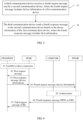
- the PEMC acts as an agent to register the PINE/PEGC with the PINMF.
- the method for registering a PIN device in this embodiment of this application includes:
- Step 41 The PINE/PEGC establishes the direct connection to the PEMC.
- the direct connection can be a PC5 (communication interface between terminals) direct connection, a sidelink (Sidelink) direct connection, a WiFi connection, a wireless local area network (Wireless Local Area Network, WLAN) connection, a Bluetooth connection, or the like.
- the PEMC can implement the initial discovery of the PINE/PEGC based on manual input by a user or a third-party application.
- the PEMC can obtain address information of the PINE/PEGC based on manual input by a user or a third-party application.
- a PEMC function is part of a third-party application.
- Step 42 The PEMC sends a first request message (such as device information query (device information query)) to the PINE/PEGC, where the first request message is used to request device information of the PINE/PEGC.
- a first request message such as device information query (device information query)
- the device information includes at least one of the following:
- Step 43 The PINE/PEGC sends a first response message (Response) to the PEMC.
- the first response message includes the device information of the PINE/PEGC.
- Step 44 The PEMC sends a fourth request message (Registration Request) to the PINMF, where the fourth request message is used to request one of the following: the PINE/PEGC registering with the PINMF, and the PINE/PEGC registering with a PIN.
- the fourth request message includes the device information of the PINE/PEGC. Additionally, the fourth request message can further include: a third identifier of the PEMC in the PIN.
- Step 45 The PINMF sends a fifth request message to a UDM or UDR, where the fifth request message is used to query a trusted member of the PEMC, and the fifth request message includes the third identifier of the PEMC in the PIN.
- the PINMF sends the fifth request message to the UDM or UDR is to authenticate the PEMC and query subscription data information (a trusted member of the PEMC) of the PEMC.
- the PINMF receives a fifth response message sent by the UDM or UDR, where the fifth response message includes: the trusted member of the PEMC, or a verification result of whether the PINE/PEGC is a trusted member of the PEMC.
- a trusted member can be determined by user subscription information of the PEMC and includes itself (that is, the PEMC) and another trusted PEMC or PEGC. Trust between any two PEMCs included in trusted members is mutual. Examples of trusted members are multiple phones of a user for wearable cases, family members for smart home cases, and partner members for smart office cases.
- Step 46 If the PINE/PEGC is a trusted member of the PEMC, the PINMF allocates a first identifier in the PIN to the PINE/PEGC and sends a fourth response message to the PEMC, where the fourth response message includes the first identifier in the PIN allocated to the PINE/PEGC.
- the PINMF sends a fourth response message to the PEMC, where the fourth response message includes a URI.
- the URI is used to indicate an association with the PINE/PEGC and indicate the PINE/PEGC to register with the PINMF. Additionally, the fourth response message can further include address information of the PINMF.
- Step 47 If the fourth response message includes URI, the PEMC sends a third request message to the PINE/PEGC, where the third request message is used for one of the following: requesting the PINE/PEGC to register with the PINMF, and requesting the PINE/PEGC to register with the PIN.
- the third request message includes the URI.
- the first communication device and/or second communication device can be a terminal (User Equipment, UE, also known as user device).
- the terminal can be a terminal side device such as a mobile phone, a tablet personal computer (Tablet Personal Computer), a laptop computer (Laptop Computer) or a notebook computer, a personal digital assistant (Personal Digital Assistant, PDA), a handheld computer, a netbook, an ultra-mobile personal computer (ultra-mobile personal computer, UMPC), a mobile internet device (Mobile Internet Device, MID), an augmented reality (augmented reality, AR)/virtual reality (virtual reality, VR) device, a robot, a wearable device (Wearable Device), vehicle user equipment (Vehicle User Equipment, VUE), pedestrian user equipment (Pedestrian User Equipment, PUE), a smart home device (a home appliance with wireless communication function, such as s refrigerator, a television set, a washing machine, or a furniture), a game console, a personal computer (personal computer, PC),
- the wearable device includes a smartwatch, a smart band, a smart headphone, smart glasses, smart jewelry (a smart bracelet, a smart wristband, a smart ring, a smart necklace, a smart anklet, a smart ankle bracelet, or the like), a smart wristband, smart clothing, or the like. It should be noted that a specific type of the terminal is not limited in the embodiments of this application.
- the method for registering a PIN device provided in this embodiment of this application can be executed by an apparatus for registering a PIN device.
- an apparatus for registering a PIN device executing the method for registering a PIN device is used as an example to describe the apparatus for registering a PIN device provided in the embodiments of the application.
- an apparatus 50 for registering a PIN device including:
- the process of registering the first communication device to the PIN is clarified, that is, sending the device information of the first communication device to the second communication device, so that the second communication device acts as an agent to register the first communication device with the PIN.
- This can reduce the implementation complexity of the first communication device. For example, in a case that the first communication device has no 3GPP communication capability, the first communication device cannot register with the network side by itself, and can be registered through agent-based registration by the second communication device. Additionally, the first communication device may not be clear about which PIN it needs to register with.
- the agent-based registration by the second communication device makes the affiliation of the first communication device clearer, that is, if a second communication device performs agent-based registration, the first communication device belongs to a PIN created by that second communication device.
- the first identifier is allocated by the third communication device, and used to identify at least one of the following: a communication device with gateway capability in the PIN; and a communication device in the PIN.
- the device information includes at least one of the following:
- the apparatus 50 for registering a PIN device further includes: a second receiving module configured to receive a first request message sent by the second communication device, where the first request message is used to request the device information of the first communication device.
- the first sending module 51 is configured to send a first response message to the second communication device, where the first response message includes the device information of the first communication device.
- the first sending module 51 is configured to send a second request message to the second communication device, where the second request message includes the device information of the first communication device.
- the first indication information or the second indication information is URI information.
- the first information includes the first indication information and/or the second indication information
- the apparatus 50 for registering a PIN device further includes: a second sending module configured to send a third request message to the third communication device based on the first information, where the third request message is used to request at least one of the following: registering the first communication device with the PIN; and registering the first communication device with the third communication device.
- the apparatus for registering a PIN device in this embodiment of this application can be an electronic device, such as an electronic device with an operating system, or a component in an electronic device, such as an integrated circuit or chip.
- the electronic device can be a terminal or another device other than the terminal.
- the terminal can include but is not limited to the types of terminals listed above, and may be other devices such as servers or network attached storages (Network Attached Storage, NAS). This is not specifically limited in the embodiments of the application.
- the apparatus for registering a PIN device provided in this embodiment of this application can implement the processes of the method embodiment in FIG. 1 , with the same technical effects achieved. To avoid repetition, details are not described herein again.
- an embodiment of this application further provides an apparatus 60 for registering a PIN device including:
- the process of the second communication device acting as an agent to register the first communication device with the PIN has specified the process of the second communication device acting as an agent to register the first communication device with the PIN. This can reduce the implementation complexity of the first communication device. Additionally, the agent-based registration by the second communication device makes the affiliation of the first communication device clearer, that is, if a second communication device performs agent-based registration, the first communication device belongs to a PIN created by that second communication device.
- the fourth request message further includes a third identifier of the second communication device in the PIN.
- the third identifier of the second communication device in the PIN is allocated by the third communication device and used to identify the second communication device as a communication device with management capability in the PIN.
- the first identifier is allocated by the third communication device and used to identify at least one of the following: a communication device with gateway capability in the PIN; and a communication device in the PIN.
- the device information includes at least one of the following:
- the obtaining module 61 is configured to send a first request message to the first communication device, where the first request message is used to request the device information of the first communication device; and receive a first response message sent by the first communication device, where the first response message includes the device information of the first communication device.
- the obtaining module 61 is configured to receive a second request message sent by the first communication device, where the second request message includes the device information of the first communication device.
- the first indication information or the second indication information is registration URI information.
- the apparatus for registering a PIN device in this embodiment of this application can be an electronic device, such as an electronic device with an operating system, or a component in an electronic device, such as an integrated circuit or chip.
- the electronic device can be a terminal or another device other than the terminal.
- the terminal can include but is not limited to the types of terminals listed above, and may be other devices such as servers or network attached storages (Network Attached Storage, NAS). This is not specifically limited in the embodiments of the application.
- the apparatus for registering a PIN device provided in this embodiment of this application can implement the processes of the method embodiment in FIG. 2 , with the same technical effects achieved. To avoid repetition, details are not described herein again.
- an embodiment of this application provides an apparatus 70 for registering a PIN device including:
- the process of registering the first communication device to the PIN is clarified, that is, sending the device information of the first communication device to the second communication device, so that the second communication device acts as an agent to register the first communication device with the PIN.
- the agent-based registration by the second communication device makes the affiliation of the first communication device clearer, that is, if a second communication device performs agent-based registration, the first communication device belongs to a PIN created by that second communication device.
- the fourth request message further includes a third identifier of the second communication device in the PIN.
- the third identifier of the second communication device in the PIN is allocated by the third communication device, and used to identify the second communication device as a communication device with management capability in the PIN.
- the apparatus 70 for registering a PIN device further includes:
- the first sending module 72 is configured to: in a case that the first communication device is a trusted member of the second communication device, allocate a first identifier in the PIN to the first communication device, and send the fourth response message to the second communication device, where the fourth response message includes the first identifier in the PIN allocated to the first communication device.
- the first sending module 72 is configured to: in a case that the first communication device is not a trusted member of the second communication device, send the fourth response message to the second communication device, where the fourth response message includes the first indication information and/or the second indication information.
- the device information includes at least one of the following:
- the first indication information or the second indication information is registration URI information.
- the apparatus for registering a PIN device in this embodiment of this application can be an electronic device, such as an electronic device with an operating system, or a component in an electronic device, such as an integrated circuit or chip.
- the electronic device can be a terminal or another device other than the terminal.
- the terminal can include but is not limited to the types of terminals listed above, and may be other devices such as servers or network attached storages (Network Attached Storage, NAS). This is not specifically limited in the embodiments of the application.
- the apparatus for registering a PIN device provided in this embodiment of this application can implement the processes of the method embodiment in FIG. 3 , with the same technical effects achieved. To avoid repetition, details are not described herein again.
- an embodiment of this application further provides a communication device 80 including a processor 81 and a memory 82.
- the memory 82 stores a program or an instruction capable of running on the processor 81.
- the program or instruction is executed by the processor 81 to implement the steps of the embodiments of the method for registering a PIN device executed by the first communication device or second communication device, with the same technical effects achieved.
- the communication device 80 is a network-side device
- the program or instruction is executed by the processor 81 to implement the steps of the embodiments of the method for registering a PIN device executed by the third communication device, with the same technical effects achieved. To avoid repetition, details are not described herein again.
- An embodiment of this application further provides a communication device including a processor and a communication interface.
- the communication interface is configured to send device information of a first communication device to a second communication device; and receive first information sent by the second communication device, where the first information includes at least one of the following: a first identifier of the first communication device in a PIN; first indication information for indicating an association with the first communication device; second indication information for indicating the first communication device to register with a third communication device; identifier information of the PIN; and address information of the third communication device.
- This communication device embodiment corresponds to the method embodiment executed by the first communication device described above. The implementation processes and implementation manners of the above method embodiment are applicable to this communication device embodiment, with the same technical effects achieved.
- An embodiment of this application further provides a communication device including a processor and a communication interface.
- the communication interface is configured to obtain device information of a first communication device; send a fourth request message to a third communication device, where the fourth request message includes: the device information of the first communication device; receive a fourth response message sent by the third communication device, where the fourth response message includes first information, and the first information includes at least one of the following: a first identifier of the first communication device in a PIN; first indication information for indicating an association with the first communication device; second indication information for indicating the first communication device to register with the third communication device; identifier information of the PIN; and address information of the third communication device; and send the first information to the first communication device.
- This communication device embodiment corresponds to the method embodiment executed by the second communication device described above. The implementation processes and implementation manners of the above method embodiment are applicable to this communication device embodiment, with the same technical effects achieved.
- FIG. 9 is a schematic diagram of a hardware structure of a terminal implementing an embodiment of this application.
- the terminal 90 includes but is not limited to at least some components such as a radio frequency unit 91, a network module 92, an audio output unit 93, an input unit 94, a sensor 95, a display unit 96, a user input unit 97, an interface unit 98, a memory 99, and a processor 910.
- the terminal 90 may further include a power supply (for example, battery) for supplying power to the components.
- the power supply may be logically connected to the processor 910 through a power management system. In this way, functions such as charge management, discharge management, and power consumption management are implemented by using the power management system.
- the structure of the terminal shown in FIG. 9 does not constitute any limitation on the terminal.
- the terminal may include more or fewer components than shown in the figure, or combine some of the components, or arrange the components differently. Details are not described herein.
- the input unit 94 may include a graphics processing unit (Graphics Processing Unit, GPU) 941 and a microphone 942.
- the graphics processing unit 941 processes image data of a still picture or video obtained by an image capture apparatus (such as a camera) in a video capture mode or an image capture mode.
- the display unit 96 may include a display panel 961, and the display panel 961 may be configured in a form of a liquid crystal display, an organic light-emitting diode, and the like.
- the user input unit 97 includes at least one of a touch panel 971 and other input devices 972.
- the touch panel 971 is also referred to as a touchscreen.
- the touch panel 971 may include two parts: a touch detection apparatus and a touch controller.
- the other input devices 972 may include but are not limited to a physical keyboard, a function button (for example, a volume control button or a power on/off button), a trackball, a mouse, and a joystick. Details are not described herein.
- the radio frequency unit 91 can transmit it to the processor 910 for processing. Additionally, the radio frequency unit 91 can send uplink data to the network-side device.
- the radio frequency unit 91 includes but is not limited to an antenna, an amplifier, a transceiver, a coupler, a low noise amplifier, and a duplexer.
- the memory 99 may be configured to store a software program or an instruction and various data.
- the memory 99 can mainly include a first storage area for storing a program or an instruction and a second storage area for storing data.
- the first storage area can store an operating system, an application program or instruction required by at least one function (for example, a sound play function or an image play function), and the like.
- the memory 99 may include a volatile memory or a non-volatile memory, or the memory 99 may include a volatile memory and a non-volatile memory.
- the non-volatile memory may be a read-only memory (Read-Only Memory, ROM), a programmable read-only memory (Programmable ROM, PROM), an erasable programmable read-only memory (Erasable PROM, EPROM), an electrically erasable programmable read-only memory (Electrically EPROM, EEPROM), or a flash memory.
- ROM Read-Only Memory
- PROM programmable read-only memory
- Erasable PROM Erasable PROM
- EPROM electrically erasable programmable read-only memory
- EEPROM electrically erasable programmable read-only memory
- the volatile memory can be a random access memory (Random Access Memory, RAM), a static random access memory (Static RAM, SRAM), a dynamic random access memory (Dynamic RAM, DRAM), a synchronous dynamic random access memory (Synchronous DRAM, SDRAM), a double data rate synchronous dynamic random access memory (Double Data Rate SDRAM, DDRSDRAM), an enhanced synchronous dynamic random access memory (Enhanced SDRAM, ESDRAM), a synch link dynamic random access memory (Synch link DRAM, SLDRAM), and a direct Rambus random access memory (Direct Rambus RAM, DRRAM).
- RAM Random Access Memory
- SRAM static random access memory
- DRAM dynamic random access memory
- DRAM synchronous dynamic random access memory
- SDRAM double data rate synchronous dynamic random access memory
- Enhanced SDRAM, ESDRAM enhanced synchronous dynamic random access memory
- Synch link DRAM, SLDRAM synch link dynamic random access memory
- Direct Rambus RAM Direct Rambus RAM
- the processor 910 may include one or more processing units.
- the processor 910 may integrate an application processor and a modem processor.
- the application processor mainly processes operations related to an operating system, a user interface, an application program and the like.
- the modem processor mainly processes a wireless communication signal, for example, a baseband processor. It can be understood that the modem processor can alternatively be not integrated in the processor 910.
- the radio frequency unit 91 is configured to send device information of a first communication device to a second communication device; and receive first information sent by the second communication device.
- the first information includes at least one of the following: a first identifier of the first communication device in a PIN; first indication information for indicating an association with the first communication device; second indication information for indicating the first communication device to register with a third communication device; identifier information of the PIN; and address information of the third communication device.
- the first identifier is allocated by the third communication device, and used to identify at least one of the following: a communication device with gateway capability in the PIN; and a communication device in the PIN.
- the device information includes at least one of the following:
- the radio frequency unit 91 is configured to receive a first request message sent by the second communication device, where the first request message is used to request the device information of the first communication device; and send a first response message to the second communication device, where the first response message includes the device information of the first communication device.
- the radio frequency unit 91 is configured to send a second request message to the second communication device, where the second request message includes the device information of the first communication device.
- the first indication information or the second indication information is URI information.
- the first information includes the first indication information and/or the second indication information.
- the radio frequency unit 91 is configured to send a third request message to the third communication device based on the first information, where the third request message is used to request at least one of the following: registering the first communication device with the PIN; and registering the first communication device with the third communication device.
- the radio frequency unit 91 is configured to obtain device information of a first communication device; send a fourth request message to a third communication device, where the fourth request message includes the device information of the first communication device; receive a fourth response message sent by the third communication device, where the fourth response message includes first information, and the first information includes at least one of the following: a first identifier of the first communication device in a PIN; first indication information for indicating an association with the first communication device; second indication information for indicating the first communication device to register with the third communication device; identifier information of the PIN; and address information of the third communication device; and send the first information to the first communication device.
- the process of the second communication device acting as an agent to register the first communication device with the PIN has specified the process of the second communication device acting as an agent to register the first communication device with the PIN. This can reduce the implementation complexity of the first communication device. Additionally, the agent-based registration by the second communication device makes the affiliation of the first communication device clearer, that is, if a second communication device performs agent-based registration, the first communication device belongs to a PIN created by that second communication device.
- the fourth request message further includes a third identifier of the second communication device in the PIN.
- the third identifier of the second communication device in the PIN is allocated by the third communication device, and used to identify the second communication device as a communication device with management capability in the PIN.
- the first identifier is allocated by the third communication device, and used to identify at least one of the following: a communication device with gateway capability in the PIN; and a communication device in the PIN.
- the device information includes at least one of the following:
- the radio frequency unit 91 is configured to send a first request message to the first communication device, where the first request message is used to request the device information of the first communication device; and receive a first response message sent by the first communication device, where the first response message includes the device information of the first communication device.
- the radio frequency unit 91 is configured to receive a second request message sent by the first communication device, where the second request message includes the device information of the first communication device.
- the first indication information or the second indication information is registration URI information.
- An embodiment of this application further provides a communication device including a processor and a communication interface.
- the communication interface is configured to receive a fourth request message sent by a second communication device, where the fourth request message includes device information of a first communication device; and send a fourth response message to the second communication device based on the device information of the first communication device, where the fourth response message includes first information, and the first information includes at least one of the following: a first identifier of the first communication device in a PIN; first indication information for indicating an association with the first communication device; second indication information for indicating the first communication device to register with a third communication device; identifier information of the PIN; and address information of the third communication device.
- This communication device embodiment corresponds to the method embodiment executed by the third communication device described above. The implementation processes and implementation manners of the above method embodiments are applicable to this communication device embodiment, with the same technical effects achieved.
- the communication device 100 includes a processor 101, a network interface 102, and a memory 103.
- the network interface 102 is, for example, a common public radio interface (common public radio interface, CPRI).
- the communication device 100 in this embodiment of this application further includes an instruction or a program stored in the memory 103 and capable of running on the processor 101.
- the processor 101 invokes the instruction or program in the memory 103 to perform the method performed by the modules shown in FIG. 7 , with the same technical effects achieved. To avoid repetition, details are not described herein.
- An embodiment of this application further provides a readable storage medium.
- the readable storage medium stores a program or an instruction.
- the processes of the foregoing embodiment of the method for registering a PIN device are implemented, with the same technical effects achieved. To avoid repetition, details are not described herein again.
- the processor is the processor in the terminal in the foregoing embodiments.
- the readable storage medium can be non-volatile, or can be non-transitory.
- the readable storage medium may include a computer-readable storage medium such as a computer read-only memory (ROM), a random access memory (RAM), a magnetic disk, or an optical disc.
- the chip includes a processor and a communication interface, the communication interface is coupled to the processor, and the processor is configured to run a program or an instruction to implement the processes of the foregoing embodiments of the method for registering a PIN device, with the same technical effects achieved. To avoid repetition, details are not described herein again.
- the chip mentioned in this embodiment of this application may also be referred to as a system-on-chip, a system chip, a system-on-a-chip, or a system on a chip, or the like.
- An embodiment of this application further provides a computer program/program product, where the computer program/program product is stored in a storage medium, and the computer program/program product is executed by at least one processor to implement the processes of the foregoing embodiments of the method for registering a PIN device, with the same technical effects achieved. To avoid repetition, details are not described herein again.
- An embodiment of this application further provides a communication system including a first communication device, a second communication device, and a third communication device.
- the first communication device can be configured to execute the steps of the method for registering a PIN device executed by the first communication device
- the second communication device can be configured to execute the steps of the method for registering a PIN device executed by the second communication device
- the third communication device can be configured to execute the steps of the method for registering a PIN device executed by the third communication device.
- the computer software product may be stored in a storage medium (for example, a ROM/RAM, a magnetic disk, or an optical disc), and includes several instructions for instructing a terminal (which may be a mobile phone, a computer, a server, an air conditioner, a network device, or the like) to perform the method described in each embodiment of this application.
- a storage medium for example, a ROM/RAM, a magnetic disk, or an optical disc
- a terminal which may be a mobile phone, a computer, a server, an air conditioner, a network device, or the like
Landscapes
- Engineering & Computer Science (AREA)
- Computer Networks & Wireless Communication (AREA)
- Signal Processing (AREA)
- Computer Security & Cryptography (AREA)
- Databases & Information Systems (AREA)
- Mobile Radio Communication Systems (AREA)
Applications Claiming Priority (2)
| Application Number | Priority Date | Filing Date | Title |
|---|---|---|---|
| CN202210884608.XA CN117500091A (zh) | 2022-07-25 | 2022-07-25 | Pin设备的注册方法、装置及通信设备 |
| PCT/CN2023/107889 WO2024022161A1 (zh) | 2022-07-25 | 2023-07-18 | Pin设备的注册方法、装置及通信设备 |
Publications (2)
| Publication Number | Publication Date |
|---|---|
| EP4564986A1 true EP4564986A1 (de) | 2025-06-04 |
| EP4564986A4 EP4564986A4 (de) | 2025-11-26 |
Family
ID=89676976
Family Applications (1)
| Application Number | Title | Priority Date | Filing Date |
|---|---|---|---|
| EP23845373.2A Pending EP4564986A4 (de) | 2022-07-25 | 2023-07-18 | Verfahren und vorrichtung zur registrierung einer pin-vorrichtung und kommunikationsvorrichtung |
Country Status (6)
| Country | Link |
|---|---|
| US (1) | US20250175924A1 (de) |
| EP (1) | EP4564986A4 (de) |
| JP (1) | JP2025528739A (de) |
| KR (1) | KR20250033302A (de) |
| CN (1) | CN117500091A (de) |
| WO (1) | WO2024022161A1 (de) |
Family Cites Families (2)
| Publication number | Priority date | Publication date | Assignee | Title |
|---|---|---|---|---|
| WO2020154622A1 (en) * | 2019-01-24 | 2020-07-30 | Apple Inc. | System and method for operation of enhanced machine type communication (emtc) and narrow band internet-of-things (nb-iot) user equipments (ues) when connected to 5g core network (5gcn) |
| KR102299440B1 (ko) * | 2020-01-14 | 2021-09-07 | 주식회사 트로닉스 | 공공조명을 위한 IoT 디바이스 및 게이트웨이의 등록 및 관리방법 |
-
2022
- 2022-07-25 CN CN202210884608.XA patent/CN117500091A/zh active Pending
-
2023
- 2023-07-18 EP EP23845373.2A patent/EP4564986A4/de active Pending
- 2023-07-18 KR KR1020257004414A patent/KR20250033302A/ko active Pending
- 2023-07-18 WO PCT/CN2023/107889 patent/WO2024022161A1/zh not_active Ceased
- 2023-07-18 JP JP2025504368A patent/JP2025528739A/ja active Pending
-
2025
- 2025-01-25 US US19/037,186 patent/US20250175924A1/en active Pending
Also Published As
| Publication number | Publication date |
|---|---|
| JP2025528739A (ja) | 2025-09-02 |
| US20250175924A1 (en) | 2025-05-29 |
| WO2024022161A1 (zh) | 2024-02-01 |
| KR20250033302A (ko) | 2025-03-07 |
| CN117500091A (zh) | 2024-02-02 |
| EP4564986A4 (de) | 2025-11-26 |
Similar Documents
| Publication | Publication Date | Title |
|---|---|---|
| EP4380259A1 (de) | Erfassungsvorrichtungsregistrierungsverfahren und -vorrichtung sowie vorrichtung | |
| CN116367312B (zh) | 传输确定方法、装置、终端、网络侧设备和存储介质 | |
| US20240388912A1 (en) | PIN Creation Method and Device | |
| WO2021147665A1 (zh) | 一种选择网络切片的方法及电子设备 | |
| WO2023165480A1 (zh) | 数据传输方法、装置、终端、设备及存储介质 | |
| WO2023131286A1 (zh) | 资源控制方法、装置、终端、网络侧设备及可读存储介质 | |
| EP4633213A1 (de) | Informationsübertragungsverfahren und -vorrichtung sowie endgerät und netzwerkseitige vorrichtung | |
| EP4564986A1 (de) | Verfahren und vorrichtung zur registrierung einer pin-vorrichtung und kommunikationsvorrichtung | |
| WO2024061091A1 (zh) | 一种网络通信的方法、装置、网络侧设备、终端及介质 | |
| WO2023143423A1 (zh) | 信息获取与存储、上报方法、装置、终端及网络功能 | |
| CN117479113A (zh) | 交互方法、装置、设备及存储介质 | |
| CN116567779A (zh) | Pin的组建方法及设备 | |
| CN116567777B (zh) | 接入参数使用方法、终端及网络侧 | |
| US20250158954A1 (en) | Rule processing method, communication device, and network side device | |
| US20250323832A1 (en) | Policy configuration method and apparatus, terminal, network-side device, and readable storage medium | |
| US20240187372A1 (en) | Data processing method and apparatus, terminal, access network device, and core network device | |
| EP4576718A1 (de) | Nachrichtenübertragungsverfahren, kommunikationsvorrichtung und speichermedium | |
| CN117500038A (zh) | Pegc的注册方法、装置及通信设备 | |
| CN117500094A (zh) | 信息查询方法、装置、终端及网络侧设备 | |
| WO2024061144A1 (zh) | 网络路由的配置方法、装置、网络侧设备及终端 | |
| CN117858083A (zh) | 个人物联网中设备认证方法、装置及通信设备 | |
| CN117692146A (zh) | 系统信息消息接收方法、发送方法、终端及网络侧设备 | |
| WO2023143436A1 (zh) | 数据转发的方法、装置、终端设备和网络设备 | |
| CN117241230A (zh) | Ims服务获取方法、终端及网络侧设备 | |
| WO2023143414A1 (zh) | 数据传输、配置方法、装置、终端及网络侧设备 |
Legal Events
| Date | Code | Title | Description |
|---|---|---|---|
| STAA | Information on the status of an ep patent application or granted ep patent |
Free format text: STATUS: THE INTERNATIONAL PUBLICATION HAS BEEN MADE |
|
| PUAI | Public reference made under article 153(3) epc to a published international application that has entered the european phase |
Free format text: ORIGINAL CODE: 0009012 |
|
| STAA | Information on the status of an ep patent application or granted ep patent |
Free format text: STATUS: REQUEST FOR EXAMINATION WAS MADE |
|
| 17P | Request for examination filed |
Effective date: 20250225 |
|
| AK | Designated contracting states |
Kind code of ref document: A1 Designated state(s): AL AT BE BG CH CY CZ DE DK EE ES FI FR GB GR HR HU IE IS IT LI LT LU LV MC ME MK MT NL NO PL PT RO RS SE SI SK SM TR |
|
| DAV | Request for validation of the european patent (deleted) | ||
| DAX | Request for extension of the european patent (deleted) | ||
| A4 | Supplementary search report drawn up and despatched |
Effective date: 20251023 |
|
| RIC1 | Information provided on ipc code assigned before grant |
Ipc: H04W 76/11 20180101AFI20251017BHEP Ipc: H04W 4/70 20180101ALI20251017BHEP Ipc: H04W 8/04 20090101ALI20251017BHEP Ipc: H04W 8/18 20090101ALI20251017BHEP Ipc: H04W 12/69 20210101ALI20251017BHEP Ipc: H04W 48/18 20090101ALI20251017BHEP Ipc: H04W 88/16 20090101ALI20251017BHEP Ipc: H04W 60/04 20090101ALI20251017BHEP Ipc: H04W 76/10 20180101ALI20251017BHEP Ipc: H04W 76/14 20180101ALI20251017BHEP Ipc: H04W 84/12 20090101ALI20251017BHEP |