EP4566446A1 - Procédé et appareil pour fournir des données indiquant le stress thermique chez un ruminant à l'aide d'une unité de mesure d'activité - Google Patents
Procédé et appareil pour fournir des données indiquant le stress thermique chez un ruminant à l'aide d'une unité de mesure d'activité Download PDFInfo
- Publication number
- EP4566446A1 EP4566446A1 EP24218005.7A EP24218005A EP4566446A1 EP 4566446 A1 EP4566446 A1 EP 4566446A1 EP 24218005 A EP24218005 A EP 24218005A EP 4566446 A1 EP4566446 A1 EP 4566446A1
- Authority
- EP
- European Patent Office
- Prior art keywords
- ruminant
- movement
- panting
- belch
- indicative
- Prior art date
- Legal status (The legal status is an assumption and is not a legal conclusion. Google has not performed a legal analysis and makes no representation as to the accuracy of the status listed.)
- Pending
Links
Images

Classifications
-
- A—HUMAN NECESSITIES
- A01—AGRICULTURE; FORESTRY; ANIMAL HUSBANDRY; HUNTING; TRAPPING; FISHING
- A01K—ANIMAL HUSBANDRY; AVICULTURE; APICULTURE; PISCICULTURE; FISHING; REARING OR BREEDING ANIMALS, NOT OTHERWISE PROVIDED FOR; NEW BREEDS OF ANIMALS
- A01K29/00—Other apparatus for animal husbandry
- A01K29/005—Monitoring or measuring activity
-
- A—HUMAN NECESSITIES
- A01—AGRICULTURE; FORESTRY; ANIMAL HUSBANDRY; HUNTING; TRAPPING; FISHING
- A01K—ANIMAL HUSBANDRY; AVICULTURE; APICULTURE; PISCICULTURE; FISHING; REARING OR BREEDING ANIMALS, NOT OTHERWISE PROVIDED FOR; NEW BREEDS OF ANIMALS
- A01K11/00—Marking of animals
Definitions
- the present invention relates to the field of providing data indicative of the physiological condition of a ruminant.
- the invention relates to the field of providing data indicative of heat stress in a ruminant. More in particular, the invention relates to a method for providing data indicative of heat stress in a ruminant using an activity measurement unit, a ruminant activity measurement unit, and a ruminant management system for managing data indicative of heat stress in a ruminant.
- the health of animals is monitored manually by analyzing for each animal physical appearance, body temperature, respiration rate, and/or a blood, milk and/or urine sample.
- the ruminants can be cows, goats, sheep, bovines, deer or the like.
- a farmer has to obtain such characteristics relating to physical appearance, body temperature, respiration rate and/or a blood, milk and/or urine sample of each animal to be analyzed. It is known to manually observe physical appearance features, measure body temperature, detect respiration rate and/or collect a portion of blood, milk and/or urine by a vet or a farmer.
- Tests for analyzing the ruminant characteristics and/or samples are performed either on site or in a laboratory.
- the results obtained from analyzing the ruminant characteristics and/or samples provide a farmer insight in the medical physiological condition of the animal, and can comprise data indicative of the medical characteristics and/or substance levels of the sample of the ruminant.
- This data relating to the ruminant's physiological condition can comprise indicators for health status, such as data indicative of heat stress.
- a ruminant exhibits signs of heat stress if it fails to control its body temperature.
- Heat stress causes e.g. a decrease in feed intake and milk yield of the heat stressed ruminant.
- Factors that influence the heat exchange ability and/or the heat exchange rate of the ruminant are a.o. air temperature, radiant temperature, air velocity and humidity.
- the heat exchange comprises heat transfer between the ruminant and its surroundings via convection, conduction and/or radiation.
- the farmer can gain insight in the needs of the ruminant for optimizing animal wellbeing, decreasing health risks, and increasing the yield of the ruminant-related products being produced at the farm.
- the adjustments attributing to ruminant-directed farm improvements can be tailored to suit each specific ruminant based on the insights related to the analyzed physiological condition of the ruminant.
- Monitoring the physiological condition of ruminants by manually observing physical appearance features, measuring body temperature, detecting respiration rate and/or collecting blood, milk and/or urine samples and subsequently analyzing the ruminant characteristics and/or samples is time-consuming and expensive for a farmer and/or vet.
- a method for providing data indicative of heat stress in a ruminant using an activity measurement unit can be a cow, goat, sheep, bovine, deer or the like.
- Data indicative of heat stress comprises data associated with the ruminant's ability to control its body temperature.
- the activity measurement unit comprises a motion sensor and a processor.
- the activity measurement unit is attached to the ruminant.
- the activity measurement unit can be attached to the ruminant by means of a collar, earring or chip in, at or around the head or neck of the ruminant.
- the method comprises measuring, using the motion sensor, ruminant movement of the ruminant over time.
- the ruminant movement can comprise movement of at least a part of the ruminant with respect to the solid world.
- the movement of at least a part of the ruminant can comprise the movement of the part of the ruminant where the activity measurement unit is attached to.
- the method comprises determining, using the processor, that the measured ruminant movement is a repetitive movement indicative of either panting or rumination. In the step of determining, it can be determined that at least one of panting or rumination is indicated by the measured ruminant movement, without yet distinguishing therebetween.
- the repetitive movement is indicative of the ruminant being either panting or ruminating, without yet distinguishing between the ruminant doing either panting, ruminating or both.
- a repetitive movement which is indicative of either action panting and/or ruminating
- the reason for this is that a movement pattern indicative of panting and a movement pattern indicative of rumination both comprise one or more similar parameter values.
- the movement patterns indicative of panting and of rumination can at least partially overlap, can comprise at least partially a similar shape and/or are at least partially in close proximity of each other.
- the method for the above reason further comprises a step of establishing, using the processor, at least one of whether the repetitive movement is indicative of panting or whether the repetitive movement is indicative of ruminating or both.
- the movement pattern associated with the ruminant can comprise one or more similar repetitive movements.
- the establishing can be performed separately for predetermined segments of the repetitive movement or for the entire repetitive movement at once.
- the step of establishing comprises the step of detecting, from the measured ruminant movement, using the processor, the occurrence of a belch action.
- the step of establishing further comprises the step of identifying, when for at least a predetermined time period the occurrence of the belch action is absent, that the repetitive movement is indicative of panting, for providing said data indicative of heat stress.
- the ruminant When the repetitive movement is indicative of panting, the ruminant actively increases its heat loss with this behaviour. Panting can be an indication of heat stress in the ruminant.
- Providing data indicative of heat stress in a ruminant according to the method disclosed herein allows a farmer or vet to monitor the physiological condition of ruminants more easily, enabling that immediate action can be taken when heat stress occurs.
- the measurement of ruminant movement by the activity measurement unit reduces or obviates the need to manually observe health characteristics indicating the physical condition and/or to collect blood, milk and/or urine samples.
- the measured ruminant movement includes the belch action when the ruminant movement comprises at least one time instance wherein an intensity of the ruminant movement is below a first predetermined value.
- the intensity of the ruminant movement during a belch action can be lower than the average intensity of the ruminant movement during ruminating.
- the method further comprises identifying, using the processor, when the occurrence of the belch action is detected, that the ruminant is ruminating.
- the fact that the ruminant is identified to be ruminating might not indicate whether the ruminant has heat stress or not.
- the step of measuring ruminant movement comprises detecting a movement frequency of the repetitive ruminant movement over time.
- the movement frequency can be detected from the translational movement of the ruminant and/or from the angular movement of the ruminant.
- the detected movement frequency can also be indicative of whether the ruminant is moving, e.g. walking, bending, standing up, lying down and/or sitting.
- the method further comprises, after the step of establishing at least one of whether the repetitive movement is indicative of panting or whether the repetitive movement is indicative of ruminating, establishing a panting frequency or a rumination frequency.
- the panting frequency or rumination frequency can comprise data indicative of whether or not the ruminant is showing signs of heat stress.
- the step of measuring ruminant movement comprises detecting when the ruminant movement is below a first predetermined frequency. If the measured ruminant movement is detected to be below the first predetermined frequency, this can be indicative of one or more belch actions of the ruminant.
- the frequency of the ruminant movement during a belch action can be lower than the average frequency of the ruminant movement during ruminating.
- the method further comprises determining, using the processor, the time period between subsequent detected belch actions.
- the ruminant can be identified to be panting when the determined time period between belch actions exceeds a threshold time period.
- the ruminant can be identified to be panting when the detected belch actions lie far apart in time.
- the panting can be indicative of heat stress in the ruminant.
- the method further comprises determining, using the processor, the belch frequency of detected belch actions.
- the belch frequency can be indicative of the type of food that the ruminant is eating. Some types of food can cause the belch frequency of the ruminating ruminant to be higher than others.
- the ruminant is identified to be panting when the determined belch frequency of belch actions is below a threshold frequency.
- the panting can be indicative of the ruminant showing signs of heat stress.
- the threshold frequency can be associated with the threshold time period that, when the time period between belch actions exceeds the threshold time period, identifies the ruminant to be panting.
- the method further comprises communicating a warning signal when the ruminant is identified to be panting.
- the warning signal can be an auditive or visual signal or a combination thereof.
- the method further comprises a step of obtaining, using a transponder attached to the ruminant, identification data of a ruminant.
- the transponder in accordance with these embodiments, may be designed for providing identification data associated with the ruminant. This can be identifier data that uniquely identifies the transponder, whereas identifier data of the transponder may in turn be associated with a ruminant identifier of the ruminant. Association data therefore may be stored in the ruminant management system. Alternatively or additionally, it is also possible that a ruminant identifier is stored directly into the transponder, enabling the transponder to transmit this data.
- the identification data that may be transmitted by the transponder may additionally be accompanied by characteristics of the physical condition or general physiological characteristics of the respective ruminant.
- the method further comprises a step of calculating a total time the ruminant is identified to be panting.
- the total time the ruminant is identified to be panting can comprise the sum of multiple time periods wherein the ruminant is identified to be panting.
- the total time the ruminant is identified to be panting can be indicative of the severity or the amount of heat stress that said ruminant experiences.
- the method further comprises a step of determining, based on the measured ruminant movement, panting characteristics when the ruminant is identified to be panting.
- the panting characteristics can be indicative of the severity and/or the amount of heat stress that the ruminant is experiencing.
- the method further comprises communicating panting characteristics when the ruminant is identified to be panting.
- the communication of panting characteristics can ensure the farmer or vet gains insight into the panting characteristics, and therefore that he gains insight in the data indicative of heat stress.
- the method further comprises a step of calculating a total rumination time the ruminant is identified to be ruminating.
- the total rumination time is divided by the number of belch actions detected during that time.
- the total rumination time can be used, e.g. in combination with the number of belch actions, in analyzing the data indicative of heat stress of the ruminant.
- the total rumination time divided by the number of belch actions can be indicative of the severity or the amount of heat stress that the ruminant is experiencing.
- the method further comprises measuring location information of the ruminant.
- the measured location information can comprise information on whether, how frequently and for what time period the ruminant is in a sunny area and in a shaded area. When the ruminant is measured to be moving from a sunny area into a shaded area, this could be an indication of an increased risk on the occurrence or development of heat stress.
- the steps of measuring ruminant movement of the ruminant over time to establish whether the ruminant is panting or ruminating, can be performed after detecting that the ruminant is measured to be moving from a sunny area into a shaded area.
- an ruminant activity measurement unit for providing data indicative of heat stress in a ruminant.
- the activity measurement unit is attached to the ruminant.
- the activity measurement unit comprises a motion sensor configured for measuring ruminant movement of the ruminant over time.
- the motion sensor can comprise a pressure sensor, orientation sensor, translational motion sensor, angular motion sensor, translational velocity sensor and/or angular velocity sensor.
- the activity measurement unit comprises a processor.
- the processor is configured for executing the step of determining, from the measured ruminant movement, that the measured ruminant movement is a repetitive movement indicative of either panting or rumination.
- a movement pattern indicative of panting and a movement pattern indicative of rumination both comprise one or more similar parameter values.
- the processor is configured for executing the step of detecting, from the measured ruminant movement, the occurrence of a belch action.
- the processor is configured for executing the step of identifying, when for at least a predetermined time period the occurrence of the belch action is absent, that the repetitive movement is indicative of panting, for providing said data indicative of heat stress.
- the measured ruminant movement includes a belch action when the ruminant movement comprises at least one time instance wherein an intensity of the ruminant movement is below a first predetermined value.
- the processor is further configured for identifying, when the occurrence of the belch action is detected, that the ruminant is ruminating.
- the processor is further configured for detecting a movement frequency of the repetitive ruminant movement over time.
- the processor is further configured for, after the step of establishing at least one of whether the repetitive movement is indicative of panting or whether the repetitive movement is indicative of ruminating, establishing a panting frequency or a rumination frequency.
- the processor is further configured for detecting, when detecting the occurrence of the belch action, the belch action in the measured ruminant movement when the ruminant movement comprises at least one time instance wherein an intensity of the ruminant movement is below a first predetermined frequency.
- the processor is further configured for determining the time period between subsequent detected belch actions, and wherein the ruminant is identified to be panting when the determined time period between belch actions exceeds a threshold time period.
- the processor is further configured for determining the belch frequency of detected belch actions.
- the ruminant is identified to be panting when the determined belch frequency of belch actions is below a threshold frequency.
- the processor is further configured for communicating a warning signal when the ruminant is identified to be panting.
- the processor is further configured for obtaining, using a transponder attached to the ruminant, identification data of a ruminant.
- the processor is further configured for providing data enabling to establish a location for providing location information of the ruminant.
- a location for providing location information of the ruminant.
- this could be a signal strength or receipt time of a beacon signal, a base station signal or a signal from a different transponder. Any such data may be used in the system for triangulation in order to obtain location information.
- the location information may be calculated anywhere in the system, for example in an animal management server, but the transponder may also be configured for establishing its own location from signal information as mentioned above.
- the processor is further configured for determining, based on the measured ruminant movement, panting characteristics when the ruminant is identified to be panting.
- the processor is further configured for communicating panting characteristics when the ruminant is identified to be panting.
- a ruminant management system for managing data indicative of heat stress in a ruminant.
- the ruminant management system comprises an activity measurement unit as described and a data storage device.
- the data storage device is configured for storing measured ruminant movement data, ruminant location information and/or ruminant identification data for providing said data indicative of heat stress for use in ruminant management.
- any of the aspects, features and options described in view of the method for providing data indicative of heat stress in a ruminant apply equally to the ruminant activity measurement unit and/or the ruminant management system for managing data indicative of heat stress in a ruminant, and vice versa. It will also be clear that any one or more of the above aspects, features and options can be combined.
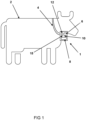
- Figure 1 shows an illustration of a schematic representation of an example of an activity measurement unit 1 for providing data indicative of heat stress in a ruminant 2.
- the activity measurement unit 1 is attached to the ruminant 2.
- the activity measurement unit 1 is attached to a collar 4 such that it is positioned around the neck of the ruminant 2.
- the activity measurement unit 1 comprises in this example a motion sensor 6, a processor 8 and a transponder 12.
- the motion sensor can comprise a pressure sensor, orientation sensor, translational motion sensor, angular motion sensor, translational velocity sensor and/or angular velocity sensor.
- the motion sensor 6 and the processor 8 are in this example connected by a wireline connection 10 enabling communication therebetween.
- the transponder 12 is attached to the ruminant 2 for transmitting data, such as identification data of said ruminant 2 and/or other data.
- the processor 8 is in this example further configured for providing, using the transponder 12, said identification data of the ruminant 2.
- the transponder 12 is integrated with the activity measurement unit 1. It will be appreciated that the transponder 12 can alternatively be attached separately to the ruminant 2 by means of a chip, collar, earring or bracelet. It will be appreciated that alternatively the transponder 12 can be located in an external device away from the ruminant 2 instead.
- the transponder 12 is configured for communicating with the processor 8 via a wireline connection 15 to obtain identification data indicative of the ruminant 2.
- the identification data of the ruminant 2 may be accompanied by data relating to a location and/or a position of the respective ruminant 2. For example, this could be a signal strength or receipt time of a beacon signal, a base station signal or a signal from a different transponder. Any such data may be used in the system for triangulation in order to obtain location information for the unit 1. It will be appreciated that the transponder 12 can be configured for wirelessly communicating with the processor 8 instead.
- the identification data can be obtained, as provided, by wireless communication using e.g. Wireless Fidelity, WiFi, Radio Frequency Identification, RFID, or Real Time Location Systems, RTLS, such as Infrared RTLS or Ultra Wide-Band, UWB, RTLS.
- Figure 2 shows an example of a flow chart of a method 100 for providing data indicative of heat stress in a ruminant 2 using an activity measurement unit 1.
- the method 100 can e.g. be performed using an activity measurement unit 1 as described in view of Figure 1 or 4 .
- the steps are performed in the following order. Optional steps are shown in dashed boxes.
- identification data of the ruminant 2 is obtained, using the transponder 12 attached to the ruminant 2.
- the identification data in this example may be accompanied by further data including characteristics of the physical condition and/or general physiological characteristics of the respective ruminant 2.
- step 104 location information of the ruminant 2 is obtained in this example.
- the location information can be aggregated and used to provide information on whether, how frequently and for what time period the ruminant 2 is in a sunny area and in a shaded area.
- a risk of the development of heat stress can occur when the ruminant 2 is determined to be located in a sunny area for a certain time period, or for a certain amount of times within a predetermined time period.
- the step of measuring ruminant movement of the ruminant 2 over time can be performed after detecting that the ruminant 2 is measured to be moving from a sunny area into a shaded area.
- the ruminant movement of the ruminant 2 is measured over time, using the motion sensor 6, in step 106.
- the step 106 comprises detecting a movement frequency of the repetitive ruminant movement over time.
- the ruminant movement can comprise movement of at least a part of the ruminant with respect to the solid world.
- the measured ruminant movement comprises the movement of the entire ruminant 2, the movement of the head of the ruminant 2 and the movement of the jaw of the ruminant 2 combined.
- the movement frequency is in this example detected from the translational movement of the ruminant 2 and from the angular movement of the ruminant 2.
- the detected movement frequency can also be indicative of whether the ruminant is moving, e.g. walking, bending, standing up, lying down and/or sitting.
- Step 106 in this example further comprises detecting when the ruminant movement is below a first predetermined frequency. If the measured ruminant movement is detected to be below the first predetermined frequency, this can be indicative of one or more belch actions of the ruminant 2.
- the frequency of the ruminant movement during a belch action can be lower than the average frequency of the ruminant movement during ruminating.
- step 108 it is determined, using the processor 8, that the measured ruminant movement is a repetitive movement.
- This repetitive movement is indicative of either panting or rumination, although it is not possible based on the repetitive movement alone to distinguish between rumination or panting. It is thus only clear that the ruminant is doing one or the other or both.
- a movement pattern indicative of panting and a movement pattern indicative of rumination both comprise one or more similar parameter values. At least one of whether the repetitive movement is indicative of panting or whether the repetitive movement is indicative of ruminating or both is established, using the processor 8, in step 110. When the repetitive movement is indicative of panting, the ruminant actively increases its heat loss with this behaviour. Panting is in this example an indication of heat stress in the ruminant.
- the step 110 of establishing at least one of whether the repetitive movement is indicative of panting or whether the repetitive movement is indicative of ruminating or both comprises the steps as described in view of method 200.
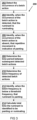
- Figure 3 shows an example of a flow chart of a method 200 for establishing at least one of whether the repetitive movement is indicative of panting or whether the repetitive movement is indicative of ruminating or both comprised in step 110 of method 100.
- the method 200 can e.g. be performed using the processor 8 of an activity measurement unit 1 as described in view of Figures 1 or 4 .
- the steps are performed in the following order. Optional steps are shown in dashed boxes.
- the occurrence of a belch action is detected, from the measured ruminant movement, using the processor 8.
- the measured ruminant movement includes the belch action when the ruminant movement comprises at least one time instance wherein an intensity of the ruminant movement is below a first predetermined value.
- step 204 it is in this example identified, using the processor 8, when the occurrence of the belch action is detected, that the ruminant is ruminating.
- the fact that the ruminant is identified to be ruminating in step 204 does in this example not directly indicate whether the ruminant shows signs of heat stress or not.
- the method 200 comprises identifying that the repetitive movement is indicative of panting, when for at least a predetermined time period the occurrence of the belch action is absent, for providing said data indicative of heat stress in step 206.
- the belch action could be absent completely for long periods of time, in which case the occurrence of heat stress alone is clear, because it is not possible to ruminate without belch action.
- the belch action could be present but only sporadically, for example the belch actions occur with long pauses in between in which only the repetitive movement can be measured. In this case, the occurrence of heat stress is very likely and therefore this movement pattern may be classified as heat stress. Belch actions could be measured frequently, in which case rumination takes place. It is to be noted that the frequency of belch actions during rumination is dependent on for example the type of feed. Therefore the fact that the ruminant is identified to be ruminating in step 206 does not necessarily indicate whether the ruminant has heat stress or not. In this example, the time period between subsequent detected belch actions is determined, using the processor 8, in step 208.
- the ruminant can be identified to be panting when the determined time period between belch actions exceeds a threshold time period.
- the ruminant can be identified to be panting when the detected belch actions lie far apart in time.
- the panting can be indicative of heat stress in the ruminant.
- the belch frequency of detected belch actions is determined, using the processor 8, in step 210 in this example.
- the belch frequency can be indicative of the type of food that the ruminant is eating. Some types of food can cause the belch frequency of the ruminating ruminant to be higher than others.
- the method 200 in this example comprises that the ruminant is identified to be panting when the determined belch frequency of belch actions is below a threshold frequency in step 212.
- the threshold frequency can be associated with the threshold time period of step 208.
- a total time the ruminant 2 is identified to be panting or ruminating is calculated. The total time the ruminant 2 is identified to be panting is the total panting time.
- the total time the ruminant 2 is identified to be ruminating is the total rumination time.
- the total time the ruminant 2 is identified to be panting can comprise the sum of multiple time periods wherein the ruminant 2 is identified to be panting.
- the total time the ruminant 2 is identified to be panting can be indicative of the severity or the amount of heat stress that said ruminant 2 experiences.
- the total rumination time is divided by the number of belch actions detected during that time for providing data indicative of heat stress.
- the total rumination time can be used, e.g. in combination with the number of belch actions, in analyzing the data indicative of heat stress of the ruminant.
- the total rumination time divided by the number of belch actions can be indicative of the severity or the amount of heat stress that the ruminant is experiencing.
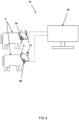
- FIG 4 shows an illustrations of a schematic representation of an example of a system 14 for managing data indicative of heat stress in a ruminant 2.
- the system 14 comprises an activity measurement unit 1 such as the one described in view of Figure 1 , wherein the transport 12 is in this example attached to the ruminant 2 by means of an earring, and a data storage device 16.
- the transponder 12 is in this example configured for wirelessly communicating with the processor 8 to obtain identification data indicative of the ruminant 2.
- the data storage device 16 is configured for storing measured ruminant movement data, ruminant location information and/or ruminant identification data for providing said data indicative of heat stress for use in ruminant management.
- the processor 8 is configured for wirelessly transmitting data indicative of heat stress in the ruminant 2 to a data storage device 16. It will be appreciated that the processor 8 can alternatively or additionally transmit data indicative of heat stress to the a mobile terminal unit.
- any reference signs placed between parentheses shall not be construed as limiting the claim.
- the word 'comprising' does not exclude the presence of other features or steps than those listed in a claim.
- the words 'a' and 'an' shall not be construed as limited to 'only one', but instead are used to mean ⁇ at least one', and do not exclude a plurality.
- the mere fact that certain measures are recited in mutually different claims does not indicate that a combination of these measures cannot be used to an advantage.
Landscapes
- Life Sciences & Earth Sciences (AREA)
- Environmental Sciences (AREA)
- Biophysics (AREA)
- Animal Husbandry (AREA)
- Biodiversity & Conservation Biology (AREA)
- Investigating Or Analyzing Materials Using Thermal Means (AREA)
- Management, Administration, Business Operations System, And Electronic Commerce (AREA)
- Testing Or Calibration Of Command Recording Devices (AREA)
Applications Claiming Priority (1)
| Application Number | Priority Date | Filing Date | Title |
|---|---|---|---|
| NL2036473A NL2036473B1 (en) | 2023-12-08 | 2023-12-08 | A method and apparatus for providing data indicative of heat stress in a ruminant using an activity measurement unit |
Publications (1)
| Publication Number | Publication Date |
|---|---|
| EP4566446A1 true EP4566446A1 (fr) | 2025-06-11 |
Family
ID=89897433
Family Applications (1)
| Application Number | Title | Priority Date | Filing Date |
|---|---|---|---|
| EP24218005.7A Pending EP4566446A1 (fr) | 2023-12-08 | 2024-12-06 | Procédé et appareil pour fournir des données indiquant le stress thermique chez un ruminant à l'aide d'une unité de mesure d'activité |
Country Status (3)
| Country | Link |
|---|---|
| US (1) | US20250185631A1 (fr) |
| EP (1) | EP4566446A1 (fr) |
| NL (1) | NL2036473B1 (fr) |
Citations (2)
| Publication number | Priority date | Publication date | Assignee | Title |
|---|---|---|---|---|
| US20200229391A1 (en) * | 2017-07-31 | 2020-07-23 | Lely Patent N.V. | Dairy animal-monitoring system comprising heat stress-reducing means |
| NL2027103B1 (nl) * | 2020-12-14 | 2022-07-08 | Nedap Nv | Werkwijze voor het bepalen van klimaatstress bij een dier. |
-
2023
- 2023-12-08 NL NL2036473A patent/NL2036473B1/en active
-
2024
- 2024-12-05 US US18/970,389 patent/US20250185631A1/en active Pending
- 2024-12-06 EP EP24218005.7A patent/EP4566446A1/fr active Pending
Patent Citations (2)
| Publication number | Priority date | Publication date | Assignee | Title |
|---|---|---|---|---|
| US20200229391A1 (en) * | 2017-07-31 | 2020-07-23 | Lely Patent N.V. | Dairy animal-monitoring system comprising heat stress-reducing means |
| NL2027103B1 (nl) * | 2020-12-14 | 2022-07-08 | Nedap Nv | Werkwijze voor het bepalen van klimaatstress bij een dier. |
Non-Patent Citations (1)
| Title |
|---|
| MARCONE G ET AL: "Panting scores as a measure of heat stress evaluation in sheep with access and with no access to shade", APPLIED ANIMAL BEHAVIOUR SCIENCE, ELSEVIER, AMSTERDAM, NL, vol. 240, 12 May 2021 (2021-05-12), XP086601692, ISSN: 0168-1591, [retrieved on 20210512], DOI: 10.1016/J.APPLANIM.2021.105350 * |
Also Published As
| Publication number | Publication date |
|---|---|
| NL2036473B1 (en) | 2025-06-19 |
| US20250185631A1 (en) | 2025-06-12 |
Similar Documents
| Publication | Publication Date | Title |
|---|---|---|
| US9370170B2 (en) | Remote monitoring systems | |
| Chaudhry et al. | Internet of Things (IoT) and machine learning (ML) enabled livestock monitoring | |
| US11730141B2 (en) | Method for matching a sensor device to an identity (ID) tag for animals and system for performing such method | |
| Unold et al. | IoT-based cow health monitoring system | |
| Mottram | Animal board invited review: precision livestock farming for dairy cows with a focus on oestrus detection | |
| KR101294868B1 (ko) | 원격 가축 모니터링 시스템 및 방법 | |
| JP7643679B2 (ja) | 家畜の健康状態管理システム、家畜用ウェアラブルデバイス、家畜の健康状態管理方法及びプログラム | |
| US10761107B2 (en) | Apparatus and method for detecting disease in dairy animals | |
| US12295344B2 (en) | Milking arrangement for animal health condition indication | |
| CN115868947A (zh) | 一种奶牛健康预警系统和预警方法 | |
| Yasmine Begum et al. | Development of animal collar for state of health determination of livestock | |
| EP4566446A1 (fr) | Procédé et appareil pour fournir des données indiquant le stress thermique chez un ruminant à l'aide d'une unité de mesure d'activité | |
| KR102245210B1 (ko) | 가축 질병 모니터링 시스템 | |
| KR20230017517A (ko) | IoT 기반의 스마트 축사 설비 및 이를 포함하는 축사 모니터링 시스템 | |
| CN118303337A (zh) | 一种牛羊生长信息监测系统及方法 | |
| CN206979481U (zh) | 一种奶牛生理与行为参数感知装置 | |
| WO2002060244A1 (fr) | Procede et ensemble de surveillance de l'etat de sante d'animaux dans une population | |
| KR20220170731A (ko) | 가축의 출하, 계류 및 도축 과정에서의 가축 선별 관리 방법 및 장치 | |
| Singh | Precision livestock production: climate change perspective | |
| KR20220129712A (ko) | 소의 울음소리 분석을 통한 소 관리 시스템 | |
| NL2018073B1 (nl) | Werkwijze voor het op afstand monitoren van bewegingsgedrag van boerderijdieren | |
| NL2036398B1 (en) | A method and system for determining a fertility status of an animal | |
| Sridhar et al. | Design of Smart Cattle: Real-Time Health Monitoring System with IoT-Enabled Micro Services | |
| CN120576880A (zh) | 一种动物耳廓、耳道内部的非接触式测温装置 | |
| US20240000044A1 (en) | System for monitoring pets |
Legal Events
| Date | Code | Title | Description |
|---|---|---|---|
| PUAI | Public reference made under article 153(3) epc to a published international application that has entered the european phase |
Free format text: ORIGINAL CODE: 0009012 |
|
| STAA | Information on the status of an ep patent application or granted ep patent |
Free format text: STATUS: THE APPLICATION HAS BEEN PUBLISHED |
|
| AK | Designated contracting states |
Kind code of ref document: A1 Designated state(s): AL AT BE BG CH CY CZ DE DK EE ES FI FR GB GR HR HU IE IS IT LI LT LU LV MC ME MK MT NL NO PL PT RO RS SE SI SK SM TR |
|
| STAA | Information on the status of an ep patent application or granted ep patent |
Free format text: STATUS: REQUEST FOR EXAMINATION WAS MADE |
|
| 17P | Request for examination filed |
Effective date: 20250911 |
|
| RIC1 | Information provided on ipc code assigned before grant |
Ipc: A01K 29/00 20060101AFI20251216BHEP Ipc: A01K 11/00 20060101ALI20251216BHEP |
|
| GRAP | Despatch of communication of intention to grant a patent |
Free format text: ORIGINAL CODE: EPIDOSNIGR1 |
|
| STAA | Information on the status of an ep patent application or granted ep patent |
Free format text: STATUS: GRANT OF PATENT IS INTENDED |
|
| INTG | Intention to grant announced |
Effective date: 20260126 |