EP4567341A1 - Steuerungsverfahren für eine klimaanlage, klimaanlage und speichermedium - Google Patents
Steuerungsverfahren für eine klimaanlage, klimaanlage und speichermedium Download PDFInfo
- Publication number
- EP4567341A1 EP4567341A1 EP23869955.7A EP23869955A EP4567341A1 EP 4567341 A1 EP4567341 A1 EP 4567341A1 EP 23869955 A EP23869955 A EP 23869955A EP 4567341 A1 EP4567341 A1 EP 4567341A1
- Authority
- EP
- European Patent Office
- Prior art keywords
- heat exchange
- temperature difference
- temperature
- conditioning device
- determining
- Prior art date
- Legal status (The legal status is an assumption and is not a legal conclusion. Google has not performed a legal analysis and makes no representation as to the accuracy of the status listed.)
- Pending
Links
Images
Classifications
-
- F—MECHANICAL ENGINEERING; LIGHTING; HEATING; WEAPONS; BLASTING
- F24—HEATING; RANGES; VENTILATING
- F24F—AIR-CONDITIONING; AIR-HUMIDIFICATION; VENTILATION; USE OF AIR CURRENTS FOR SCREENING
- F24F11/00—Control or safety arrangements
- F24F11/62—Control or safety arrangements characterised by the type of control or by internal processing, e.g. using fuzzy logic, adaptive control or estimation of values
- F24F11/63—Electronic processing
- F24F11/65—Electronic processing for selecting an operating mode
-
- F—MECHANICAL ENGINEERING; LIGHTING; HEATING; WEAPONS; BLASTING
- F24—HEATING; RANGES; VENTILATING
- F24F—AIR-CONDITIONING; AIR-HUMIDIFICATION; VENTILATION; USE OF AIR CURRENTS FOR SCREENING
- F24F11/00—Control or safety arrangements
- F24F11/30—Control or safety arrangements for purposes related to the operation of the system, e.g. for safety or monitoring
-
- F—MECHANICAL ENGINEERING; LIGHTING; HEATING; WEAPONS; BLASTING
- F24—HEATING; RANGES; VENTILATING
- F24F—AIR-CONDITIONING; AIR-HUMIDIFICATION; VENTILATION; USE OF AIR CURRENTS FOR SCREENING
- F24F11/00—Control or safety arrangements
- F24F11/30—Control or safety arrangements for purposes related to the operation of the system, e.g. for safety or monitoring
- F24F11/46—Improving electric energy efficiency or saving
-
- F—MECHANICAL ENGINEERING; LIGHTING; HEATING; WEAPONS; BLASTING
- F24—HEATING; RANGES; VENTILATING
- F24F—AIR-CONDITIONING; AIR-HUMIDIFICATION; VENTILATION; USE OF AIR CURRENTS FOR SCREENING
- F24F11/00—Control or safety arrangements
- F24F11/50—Control or safety arrangements characterised by user interfaces or communication
- F24F11/61—Control or safety arrangements characterised by user interfaces or communication using timers
-
- F—MECHANICAL ENGINEERING; LIGHTING; HEATING; WEAPONS; BLASTING
- F24—HEATING; RANGES; VENTILATING
- F24F—AIR-CONDITIONING; AIR-HUMIDIFICATION; VENTILATION; USE OF AIR CURRENTS FOR SCREENING
- F24F11/00—Control or safety arrangements
- F24F11/62—Control or safety arrangements characterised by the type of control or by internal processing, e.g. using fuzzy logic, adaptive control or estimation of values
- F24F11/63—Electronic processing
- F24F11/64—Electronic processing using pre-stored data
-
- F—MECHANICAL ENGINEERING; LIGHTING; HEATING; WEAPONS; BLASTING
- F24—HEATING; RANGES; VENTILATING
- F24F—AIR-CONDITIONING; AIR-HUMIDIFICATION; VENTILATION; USE OF AIR CURRENTS FOR SCREENING
- F24F11/00—Control or safety arrangements
- F24F11/70—Control systems characterised by their outputs; Constructional details thereof
- F24F11/80—Control systems characterised by their outputs; Constructional details thereof for controlling the temperature of the supplied air
- F24F11/83—Control systems characterised by their outputs; Constructional details thereof for controlling the temperature of the supplied air by controlling the supply of heat-exchange fluids to heat-exchangers
-
- F—MECHANICAL ENGINEERING; LIGHTING; HEATING; WEAPONS; BLASTING
- F24—HEATING; RANGES; VENTILATING
- F24F—AIR-CONDITIONING; AIR-HUMIDIFICATION; VENTILATION; USE OF AIR CURRENTS FOR SCREENING
- F24F11/00—Control or safety arrangements
- F24F11/89—Arrangement or mounting of control or safety devices
-
- F—MECHANICAL ENGINEERING; LIGHTING; HEATING; WEAPONS; BLASTING
- F25—REFRIGERATION OR COOLING; COMBINED HEATING AND REFRIGERATION SYSTEMS; HEAT PUMP SYSTEMS; MANUFACTURE OR STORAGE OF ICE; LIQUEFACTION SOLIDIFICATION OF GASES
- F25B—REFRIGERATION MACHINES, PLANTS OR SYSTEMS; COMBINED HEATING AND REFRIGERATION SYSTEMS; HEAT PUMP SYSTEMS
- F25B13/00—Compression machines, plants or systems, with reversible cycle
-
- F—MECHANICAL ENGINEERING; LIGHTING; HEATING; WEAPONS; BLASTING
- F25—REFRIGERATION OR COOLING; COMBINED HEATING AND REFRIGERATION SYSTEMS; HEAT PUMP SYSTEMS; MANUFACTURE OR STORAGE OF ICE; LIQUEFACTION SOLIDIFICATION OF GASES
- F25B—REFRIGERATION MACHINES, PLANTS OR SYSTEMS; COMBINED HEATING AND REFRIGERATION SYSTEMS; HEAT PUMP SYSTEMS
- F25B49/00—Arrangement or mounting of control or safety devices
- F25B49/02—Arrangement or mounting of control or safety devices for compression type machines, plants or systems
-
- F—MECHANICAL ENGINEERING; LIGHTING; HEATING; WEAPONS; BLASTING
- F24—HEATING; RANGES; VENTILATING
- F24F—AIR-CONDITIONING; AIR-HUMIDIFICATION; VENTILATION; USE OF AIR CURRENTS FOR SCREENING
- F24F2110/00—Control inputs relating to air properties
- F24F2110/10—Temperature
-
- F—MECHANICAL ENGINEERING; LIGHTING; HEATING; WEAPONS; BLASTING
- F24—HEATING; RANGES; VENTILATING
- F24F—AIR-CONDITIONING; AIR-HUMIDIFICATION; VENTILATION; USE OF AIR CURRENTS FOR SCREENING
- F24F2110/00—Control inputs relating to air properties
- F24F2110/10—Temperature
- F24F2110/12—Temperature of the outside air
-
- F—MECHANICAL ENGINEERING; LIGHTING; HEATING; WEAPONS; BLASTING
- F24—HEATING; RANGES; VENTILATING
- F24F—AIR-CONDITIONING; AIR-HUMIDIFICATION; VENTILATION; USE OF AIR CURRENTS FOR SCREENING
- F24F2110/00—Control inputs relating to air properties
- F24F2110/30—Velocity
-
- F—MECHANICAL ENGINEERING; LIGHTING; HEATING; WEAPONS; BLASTING
- F24—HEATING; RANGES; VENTILATING
- F24F—AIR-CONDITIONING; AIR-HUMIDIFICATION; VENTILATION; USE OF AIR CURRENTS FOR SCREENING
- F24F2110/00—Control inputs relating to air properties
- F24F2110/50—Air quality properties
- F24F2110/64—Airborne particle content
-
- F—MECHANICAL ENGINEERING; LIGHTING; HEATING; WEAPONS; BLASTING
- F24—HEATING; RANGES; VENTILATING
- F24F—AIR-CONDITIONING; AIR-HUMIDIFICATION; VENTILATION; USE OF AIR CURRENTS FOR SCREENING
- F24F2110/00—Control inputs relating to air properties
- F24F2110/50—Air quality properties
- F24F2110/65—Concentration of specific substances or contaminants
-
- F—MECHANICAL ENGINEERING; LIGHTING; HEATING; WEAPONS; BLASTING
- F24—HEATING; RANGES; VENTILATING
- F24F—AIR-CONDITIONING; AIR-HUMIDIFICATION; VENTILATION; USE OF AIR CURRENTS FOR SCREENING
- F24F2130/00—Control inputs relating to environmental factors not covered by group F24F2110/00
- F24F2130/10—Weather information or forecasts
-
- F—MECHANICAL ENGINEERING; LIGHTING; HEATING; WEAPONS; BLASTING
- F24—HEATING; RANGES; VENTILATING
- F24F—AIR-CONDITIONING; AIR-HUMIDIFICATION; VENTILATION; USE OF AIR CURRENTS FOR SCREENING
- F24F2140/00—Control inputs relating to system states
- F24F2140/50—Load
-
- F—MECHANICAL ENGINEERING; LIGHTING; HEATING; WEAPONS; BLASTING
- F25—REFRIGERATION OR COOLING; COMBINED HEATING AND REFRIGERATION SYSTEMS; HEAT PUMP SYSTEMS; MANUFACTURE OR STORAGE OF ICE; LIQUEFACTION SOLIDIFICATION OF GASES
- F25B—REFRIGERATION MACHINES, PLANTS OR SYSTEMS; COMBINED HEATING AND REFRIGERATION SYSTEMS; HEAT PUMP SYSTEMS
- F25B25/00—Machines, plants or systems, using a combination of modes of operation covered by two or more of the groups F25B1/00 - F25B23/00
- F25B25/005—Machines, plants or systems, using a combination of modes of operation covered by two or more of the groups F25B1/00 - F25B23/00 using primary and secondary systems
-
- F—MECHANICAL ENGINEERING; LIGHTING; HEATING; WEAPONS; BLASTING
- F25—REFRIGERATION OR COOLING; COMBINED HEATING AND REFRIGERATION SYSTEMS; HEAT PUMP SYSTEMS; MANUFACTURE OR STORAGE OF ICE; LIQUEFACTION SOLIDIFICATION OF GASES
- F25B—REFRIGERATION MACHINES, PLANTS OR SYSTEMS; COMBINED HEATING AND REFRIGERATION SYSTEMS; HEAT PUMP SYSTEMS
- F25B2700/00—Sensing or detecting of parameters; Sensors therefor
- F25B2700/21—Temperatures
- F25B2700/2104—Temperatures of an indoor room or compartment
-
- F—MECHANICAL ENGINEERING; LIGHTING; HEATING; WEAPONS; BLASTING
- F25—REFRIGERATION OR COOLING; COMBINED HEATING AND REFRIGERATION SYSTEMS; HEAT PUMP SYSTEMS; MANUFACTURE OR STORAGE OF ICE; LIQUEFACTION SOLIDIFICATION OF GASES
- F25B—REFRIGERATION MACHINES, PLANTS OR SYSTEMS; COMBINED HEATING AND REFRIGERATION SYSTEMS; HEAT PUMP SYSTEMS
- F25B2700/00—Sensing or detecting of parameters; Sensors therefor
- F25B2700/21—Temperatures
- F25B2700/2106—Temperatures of fresh outdoor air
Definitions
- the present application relates to the technical field of electrical appliances, and in particular to a method for controlling an environmental conditioning device, an environmental conditioning device, and a storage medium.
- environmental conditioning device provided with heat pump systems and energy delivery systems (such as water circulation systems, etc.) are currently used to provide the required cooling or heat for indoor environmental conditioning.
- the heat pump system can provide cooling for the medium in the energy delivery system in cooling mode, and the heat pump system can provide heat for the medium in the energy delivery system in heating mode.
- the medium in the energy delivery system can deliver energy to the indoor environment for heat exchange to adjust the temperature of the indoor environment.
- the operation mode of the heat pump system is generally set by the user.
- the user needs to manually switch the operation mode frequently, which makes the use of the environmental conditioning device very inconvenient and affects the user experience.
- the main purpose of the present application is to provide a method for controlling an environmental conditioning device, an environmental conditioning device, and a storage medium, aiming to enable the environmental conditioning device to automatically select a suitable operating mode, thereby improving the intelligence of the environmental conditioning device, and improving the user experience.
- the present application provides a method for controlling an environmental conditioning device, the environmental conditioning device includes a heat pump system and an energy delivery system connected to the heat pump system for heat exchange, the energy delivery system is configured to adjust a temperature of an indoor space through energy output by the heat pump system, and the method for controlling the environmental conditioning device includes the following steps:
- the step of determining the target heat exchange mode of the environmental conditioning device according to the indoor ambient temperature, the set temperature corresponding to the indoor space and the outdoor ambient temperature includes:
- the step of determining the target heat exchange mode according to the first temperature difference between the indoor ambient temperature and the set temperature and the outdoor ambient temperature includes:
- the step of determining the target heat exchange mode according to the first temperature difference between the indoor ambient temperature and the set temperature, and the second temperature difference between the outdoor ambient temperature and the set temperature includes:
- the step of determining the target heat exchange mode according to the first temperature difference between the indoor ambient temperature and the set temperature, and the third temperature difference between the outdoor ambient temperature and the indoor ambient temperature includes:
- the energy delivery system includes a plurality of terminal heat exchangers, and the step of determining the target heat exchange mode of the environmental conditioning device according to the indoor ambient temperature, the set temperature corresponding to the indoor space and the outdoor ambient temperature includes:
- the step of determining the target heat exchange mode according to the first temperature difference includes:
- the step of determining the target heat exchange mode according to the first quantity of cooling demands and the second quantity of heating demands in all the plurality of heat exchange demands includes:
- the step of determining the corresponding heat exchange demand according to the first temperature difference of each indoor space to obtain the plurality of heat exchange demands includes:
- the present application also provides an environmental conditioning device, including
- the present application also provides a storage medium, a program for controlling an environmental conditioning device is stored in the storage medium, and the program for controlling the environmental conditioning device, when executed by a processor, implements the steps of the method for controlling the environmental conditioning device as described in the above embodiments.
- the present application provides a method for controlling an environmental conditioning device, based on an environmental conditioning device provided with a heat pump system and an energy delivery system connected to the heat pump system.
- the method determines the target heat exchange mode of the device based on the indoor ambient temperature, the set temperature and outdoor ambient temperature of the indoor space, so that the environmental conditioning device can automatically select the appropriate operation mode, and can operate in a heat exchange mode that meets the user's needs for comfort without the user operating the device, thereby simplifying the user operation, improving the intelligence of the environmental conditioning device, and improving the user experience.
- the embodiment of the present application provides an environmental conditioning device, which is specifically used to adjust the temperature of the indoor environment.
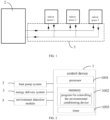
- the environmental conditioning device includes a heat pump system 2, an energy delivery system 3 connected to the heat pump system 2 for heat exchange, and a control device 1. Both the heat pump system 2 and the energy delivery system 3 are connected to the control device 1.
- the energy delivery system is configured to adjust the temperature of the indoor space using the energy output by the heat pump system.
- the heat pump system 2 is used to provide energy (such as cold or heat) for the heat exchange between the energy delivery system 3 and the indoor space.
- the energy delivery system 3 is a water system
- the heat pump system 2 is configured to adjust the water supply temperature of the energy delivery system 3
- the energy delivery system 3 is configured to adjust the indoor temperature.
- the water supply temperature of the energy delivery system 3 can be understood as the outlet water temperature of the heat pump system 2.
- the energy delivery system 3 can also be a system that uses other media to transmit energy, such as ethanol solution, etc.
- the heat pump system 2 is an air source heat pump system 2.
- the heat pump system 2 can also be a water source heat pump system, a ground source heat pump system, or a dual source heat pump system, etc.
- the heat pump system 2 includes a refrigerant circulation loop and a heat exchange module.
- the refrigerant circulation loop includes a compressor, a first heat exchanger, a throttling apparatus, and a second heat exchanger.
- the second heat exchanger is connected to the heat exchange module for heat exchange.
- the heat pump system 2 have two operating modes: a cooling mode and a heating mode. When the heat pump system 2 operates in the cooling mode, the second heat exchanger is in an evaporating state to absorb heat. When the heat pump system 2 operates in the heating mode, the second heat exchanger is in a condensing state to release heat.
- the energy delivery system 3 includes a medium circulation loop and a terminal heat exchanger provided in the medium circulation loop.
- the terminal heat exchanger may include a fan coil, a floor heating coil, a radiation plate, a fan disc, or a heat sink.
- the cold or heat of the refrigerant (such as water, ethylene glycol, etc.) in the medium circulation loop can be released to the indoor space where it is located at the terminal heat exchanger.
- the heat exchange type of the terminal heat exchangers in different indoor spaces may be the same or different.
- the cold or heat carried by the refrigerant (such as water, ethylene glycol, etc.) in the medium circulation loop can be configured to adjust the ambient temperature of a plurality of indoor spaces.
- the second heat exchanger and the heat exchange module can be a pipe-in-pipe heat exchanger heat exchanger or a plate heat exchanger.
- the medium circulation loop has an inlet and an outlet, the inlet of the medium circulation loop is communicated with the outlet of the heat exchange module, and the outlet of the medium circulation loop is communicated with the inlet of the heat exchange module.
- the water in the heat exchange module of the heat pump system 2 can absorb the cold or heat released by the second heat exchanger to form cold water or hot water, and the medium carrying cold or heat flowing out of the heat exchange module can enter the medium circulation loop and flow to the terminal heat exchanger to release the cold or heat to the air in the indoor space to adjust the ambient temperature of the indoor space.
- the medium after releasing the cold or heat can re-enter the heat exchange module to exchange heat with the second heat exchanger, and the medium after heat exchange can re-enter the medium circulation loop for heat exchange, and so on, so as to realize the regulation of the indoor space temperature by the environmental conditioning device.
- the second heat exchanger When the heat pump system 2 is in cooling operation, the second heat exchanger is in an evaporating state, and the medium in the heat exchange module absorbs the cold output by the second heat exchanger and the temperature decreases to form a medium carrying cold.
- the medium carrying cold enters the medium circulation loop and flows to the terminal heat exchanger, releasing cold to the indoor space, and the ambient temperature of the indoor space decreases.
- the second heat exchanger When the heat pump system 2 is in heating operation, the second heat exchanger is in a condensing state, and the medium in the heat exchange module absorbs the heat output by the second heat exchanger and the temperature increases to form a medium carrying heat.
- the medium carrying heat enters the medium circulation loop and flows to the terminal heat exchanger, releasing heat to the indoor space, and the ambient temperature of the indoor space increases.
- control device 1 can also be connected to an environment detection module 5, and the environment detection module 5 can include an indoor temperature sensor and an outdoor temperature sensor.
- the indoor temperature sensor can detect the ambient temperature of the indoor space adjusted by the environmental conditioning device; the outdoor temperature sensor can detect the ambient temperature of the outdoor space where the environmental conditioning device is located.
- the control device 1 of the environmental conditioning device includes: a processor 1001 (such as a CPU), a memory 1002, a timer 1003, etc.
- the components in the control device 1 are connected via a communication bus.
- the memory 1002 may be a high-speed RAM memory or a non-volatile memory, such as a disk memory.
- the memory 1002 may also be a storage device independent of the aforementioned processor 1001.
- FIG. 2 does not constitute a limitation on the device, and may include more or fewer components than shown, or a combination of certain components, or differently arranged components.
- the memory 1002 as a storage medium may include a program for controlling an environmental conditioning device.
- the processor 1001 may be configured to call a program for controlling an environmental conditioning device stored in the memory 1002 and perform the relevant steps of the method for controlling the environmental conditioning device in the following embodiment.
- the present application also provides a method for controlling an environmental conditioning device, which is applied to the above-mentioned environmental conditioning device.
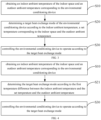
- the method for controlling the environmental conditioning device includes: Step S10, obtaining an indoor ambient temperature of the indoor space and an outdoor ambient temperature corresponding to the environmental conditioning device.
- the indoor ambient temperature may be detected by an indoor temperature sensor in the corresponding indoor space.
- the outdoor ambient temperature can be detected by an outdoor temperature sensor separately set outdoors, or by a temperature sensor configured on the heat pump system when the heat pump system is set outdoors, or by obtaining local meteorological data of the environmental conditioning device based on the network.
- Step S20 determining a target heat exchange mode of the environmental conditioning device according to the indoor ambient temperature, a set temperature corresponding to the indoor space and the outdoor ambient temperature.
- the set temperature is specifically a preset target value that the ambient temperature of the indoor space needs to reach under the regulation of the environmental conditioning device.
- the target heat exchange mode is the heat exchange mode that the environmental conditioning device needs to operate.
- the target heat exchange mode can be determined as cooling mode or heating mode based on the indoor ambient temperature, the set temperature and the outdoor ambient temperature.
- Different indoor ambient temperatures, set temperatures, and outdoor ambient temperatures correspond to different target heat exchange modes.
- the corresponding relationship between the indoor ambient temperature, the set temperature, the outdoor ambient temperature, and the target heat exchange mode can be established in advance. Based on the corresponding relationship, the target heat exchange mode corresponding to the current indoor ambient temperature, the set temperature, and the outdoor ambient temperature can be determined.
- the first temperature difference between the indoor ambient temperature and the set temperature is determined.
- the target heat exchange mode is determined according to the first temperature difference.
- the target heat exchange mode is determined according to the outdoor ambient temperature.
- the target ambient temperature or a characteristic temperature determined by the outdoor ambient temperature and other temperatures is outside a second preset temperature difference interval.
- the target heat exchange mode is determined according to the outdoor ambient temperature or the characteristic temperature.
- the target heat exchange mode is further determined according to the first temperature difference.
- the indoor ambient temperature of the plurality of the indoor spaces can be obtained, and the target heat exchange mode of the environmental conditioning device can be determined according to the indoor ambient temperature of the plurality of the indoor spaces, the corresponding set temperature, and the outdoor ambient temperature.
- step S10 can be performed during the process of the environmental conditioning device operating the heat exchange mode, and the target heat exchange mode can be the same as or different from the heat exchange mode currently operated by the environmental conditioning device.
- Step S30 controlling the environmental conditioning device to operate according to the target heat exchange mode.
- the environmental conditioning device can be controlled to operate the cooling mode.
- the environmental conditioning device can be controlled to operate the heating mode.
- the present application provides a method for controlling an environmental conditioning device, based on an environmental conditioning device provided with a heat pump system and an energy delivery system connected to the heat pump system.
- the method determines the target heat exchange mode of the device based on the indoor ambient temperature, the set temperature and outdoor ambient temperature of the indoor space, so that the environmental conditioning device can automatically select the appropriate operation mode, and can operate in a heat exchange mode that meets the user's needs for comfort without the user operating the device, thereby simplifying the user operation, improving the intelligence of the environmental conditioning device, and improving the user experience.
- the device can return to execute the step S10 at intervals of a set length.
- the heat exchange mode of the environmental conditioning device can be adaptively adjusted to the change of heat exchange demand under the current environmental changes during the startup process, further improving the intelligence of the operation of the environmental conditioning device.
- the step S20 includes: Step S21, determining the target heat exchange mode according to the first temperature difference between the indoor ambient temperature and the set temperature and the outdoor ambient temperature.
- the first temperature difference is the calculation result obtained by subtracting the set temperature from the indoor ambient temperature.
- first temperature differences and different outdoor ambient temperatures correspond to different target heat exchange modes.
- the first interval where the first temperature difference is located and the second interval where the outdoor ambient temperature is located can be determined, and the heat exchange mode matching the first interval and the second interval can be used as the target heat exchange mode.
- the characterization value of the heat exchange mode can be calculated by the first temperature difference and the outdoor ambient temperature, and the heat exchange mode associated with the numerical interval where the characterization value is located can be used as the target heat exchange mode.
- step S21 includes:
- the temperature difference between the indoor ambient temperature and the set temperature can accurately characterize the heat exchange demand of indoor space, and further combined with the outdoor ambient temperature, can accurately reflect the heat exchange demand of the environmental conditioning device in the current environment.
- the target heat exchange mode is determined in combination with the first temperature difference and the outdoor ambient temperature, which can ensure that the heat exchange operation of the environmental conditioning device can accurately meet the heat exchange demand of the user in the current environment.
- the outdoor ambient temperature can accurately reflect the changing trend of the indoor heat exchange demand.
- the target heat exchange mode is first determined based on the outdoor ambient temperature, and then the target heat exchange mode is further determined in combination with the temperature difference between the indoor ambient temperature and the set temperature when the outdoor ambient temperature cannot be determined, which is conducive to ensuring that the environmental conditioning device can meet the heat exchange demand of indoor users in a timely and accurate manner.
- the step S20 includes: Step S22, determining the target heat exchange mode according to a first temperature difference between the indoor ambient temperature and the set temperature, and a second temperature difference between the outdoor ambient temperature and the set temperature.
- the first temperature difference is the calculation result obtained by subtracting the set temperature from the indoor ambient temperature.
- the second temperature difference is the calculation result obtained by subtracting the set temperature from the outdoor ambient temperature.
- the reference set temperature can be determined based on more than one set temperature, and the second temperature difference is the calculation result obtained by subtracting the reference set temperature from the outdoor ambient temperature. Specifically, the average of more than one set temperature can be used as the reference set temperature.
- step S22 includes:
- the temperature difference between the indoor ambient temperature and the set temperature combined with the temperature difference between the outdoor ambient temperature and the set temperature can accurately reflect the heat exchange demand of the environmental conditioning device in the current environment.
- the target heat exchange mode is determined in combination with the first temperature difference and the second temperature difference, which can ensure that the heat exchange operation of the environmental conditioning device can accurately meet the heat exchange demand of the user in the current environment.
- the second temperature difference can accurately reflect the changing trend of indoor heat exchange demand.
- the target heat exchange mode is first determined based on the second temperature difference, and then the target heat exchange mode is further determined in combination with the first temperature difference between the indoor ambient temperature and the set temperature when the second temperature difference cannot be determined, which is conducive to ensuring that the environmental conditioning device can meet the heat exchange needs of indoor users in a timely and accurate manner.
- the step S20 includes: Step S23, determining the target heat exchange mode according to the first temperature difference between the indoor ambient temperature and the set temperature, and a third temperature difference between the outdoor ambient temperature and the indoor ambient temperature.
- the first temperature difference is the calculation result obtained by subtracting the set temperature from the indoor ambient temperature.
- the third temperature difference is the calculation result obtained by subtracting the indoor ambient temperature from the outdoor ambient temperature.
- the reference indoor temperature can be determined according to more than one indoor ambient temperature
- the third temperature difference is the calculation result obtained by subtracting the reference indoor temperature from the outdoor ambient temperature.
- the average of more than one indoor ambient temperature can be used as the reference indoor temperature.
- first temperature differences and different third temperature differences correspond to different target heat exchange modes.
- the first interval where the first temperature difference is located and the fourth interval where the second temperature difference is located can be determined, and the heat exchange mode matching the first interval and the fourth interval is used as the target heat exchange mode.
- the characterization value of the heat exchange mode can be calculated by the first temperature difference and the third temperature difference, and the heat exchange mode associated with the numerical interval where the characterization value is located can be used as the target heat exchange mode.
- step S23 includes:
- the temperature difference between the indoor ambient temperature and the set temperature is combined with the temperature difference between the outdoor ambient temperature and the indoor ambient temperature, which can accurately reflect the heat exchange demand of the environmental conditioning device in the current environment.
- the target heat exchange mode is determined in combination with the first temperature difference and the third temperature difference, which can ensure that the heat exchange operation of the environmental conditioning device can accurately meet the heat exchange demand of the user in the current environment.
- the third temperature difference can accurately reflect the changing trend of the indoor heat exchange demand, so the target heat exchange mode is first determined based on the third temperature difference, and then when the third temperature difference cannot be determined, the target heat exchange mode is further determined in combination with the first temperature difference between the indoor ambient temperature and the set temperature, which is conducive to ensuring that the environmental conditioning device can meet the heat exchange demand of the indoor user in a timely and accurate manner.
- the above three embodiments respectively provide three ways to determine the target heat exchange mode.
- any one of the three methods can be configured to determine the target heat exchange mode, or a combination of any two of the three methods can be configured to determine the target heat exchange mode, or all of the three methods can be configured to determine the target heat exchange mode.
- the target heat exchange mode can be determined according to the first temperature difference, the outdoor ambient temperature, and the second temperature difference.
- the target heat exchange mode can be determined according to the first temperature difference, the second temperature difference, and the third temperature difference.
- the target heat exchange mode can be determined according to the first temperature difference, the outdoor ambient temperature, the second temperature difference, and the third temperature difference, and so on.
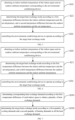
- the step of determining the target heat exchange mode according to the first temperature difference includes: Step S201, determining corresponding heat exchange demand according to the first temperature difference of each indoor space to obtain a plurality of heat exchange demands.
- the temperature difference interval in which the first temperature difference is located can be determined, and the heat exchange demand is determined according to the temperature difference interval.
- the heat exchange demand includes one of a cooling demand and a heating demand.
- the first temperature difference in response to that the first temperature difference is greater than or equal to a fifth preset temperature difference, determining the corresponding heat exchange demand as a cooling demand; in response to that the first temperature difference is less than a sixth preset temperature difference, determining the corresponding heat exchange demand as a heating demand; and in response to that the first temperature difference is less than a fifth preset temperature difference and greater than or equal to the sixth preset temperature difference, determining the corresponding heat exchange demand as no cooling demand and no heating demand; wherein, the fifth preset temperature difference is greater than the sixth preset temperature difference.
- Step S202 determining the target heat exchange mode according to a first quantity of cooling demands and a second quantity of heating demands in all the heat exchange demands.
- the cooling mode is determined to be the target heat exchange mode.
- the heating mode is determined to be the target heat exchange mode.
- the heat exchange mode currently operated by the environmental conditioning device is determined to be the target heat exchange mode.
- the cooling mode is determined to be the target heat exchange mode if the environmental conditioning device is currently operating in the cooling mode, and the heating mode is determined to be the target heat exchange mode if the environmental conditioning device is currently operating in the heating mode.
- a fixed mode preset according to the cooling mode and the heating mode is determined to be the target heat exchange mode.
- the first average of the absolute values of all first temperature differences corresponding to all indoor spaces with cooling demands is determined, and the second average of the absolute values of all first temperature differences corresponding to all indoor spaces with heating demands is determined. If the first average is greater than the second average, the cooling mode is determined to be the target heat exchange mode, and if the first average is less than the second average, the heating mode is determined to be the target heat exchange mode.
- the operation of the environmental conditioning device can accurately match the temperature comfort demands of most indoor users to improve the overall comfort of users in the plurality of the indoor spaces.
- the target heat exchange mode when there is only one indoor space, can also be determined directly according to the temperature difference interval where the first temperature difference is located, and different temperature difference intervals correspond to different target heat exchange modes. Specifically, when the first temperature difference is greater than or equal to the fifth preset temperature difference, the cooling mode is determined to be the target heat exchange mode; when the first temperature difference is less than the sixth preset temperature difference, the heating mode is determined to be the target heat exchange mode.
- the characterization temperature that characterizes the indoor heat exchange demand can also be determined based on more than one indoor ambient temperature, for example, the average, maximum, or minimum value of more than one indoor ambient temperature is used as the characterization temperature, and the operation mode is determined according to the interval in which the characterization temperature is located. For example, when the characterization temperature is less than the seventh preset temperature, the cooling mode is determined as the operation mode; when the characterization temperature is greater than or equal to the eighth preset temperature, the heating mode is determined as the operation mode, and the seventh preset temperature is less than or equal to the eighth preset temperature.
- step S20 includes:
- the first preset proportion and the second preset proportion may be fixed parameters set in advance, or may be parameters determined according to the actual operation of the environmental conditioning device.
- the target heat exchange mode is determined based on the proportion.
- the proportion of the turned-on terminal heat exchangers is large (that is, greater than the first preset proportion), it indicates that most users in the plurality of the indoor spaces currently have heat exchange needs.
- the target heat exchange mode is determined in combination with the first temperature difference and the outdoor ambient temperature, which is conducive to ensuring that the environmental conditioning device can operate according to the changing trend of the heat exchange demand of the plurality of the indoor spaces, thereby ensuring that the actual heat exchange conditions of each indoor space can meet user needs and bring a comfortable experience to users, so as to reduce the frequent switching of heat exchange modes in more than one space while meeting the needs of users in each space.
- the proportion of the turned-on terminal heat exchangers is small (that is, less than or equal to the second preset proportion), it indicates that a small number of users in the plurality of the indoor spaces currently have heat exchange needs, and the outdoor ambient temperature can currently roughly meet the comfort needs of indoor users.
- the target heat exchange mode is determined in combination with the first temperature difference and the second temperature difference, which is conducive to effectively improving the accuracy of the heat exchange mode adjustment of the environmental conditioning device, so as to ensure that the comfort needs of a small number of indoor users are accurately met.
- the proportion of the turned-on terminal heat exchangers is medium (that is, greater than the second preset proportion and it is less than or equal to the first preset proportion), it indicates that the number of spaces with and without heat exchange needs in a plurality of indoor spaces is equal.
- the target heat exchange mode is determined in combination with the first temperature difference and the third temperature difference, which is conducive to accurately characterizing the impact of changes in outdoor ambient temperature on changes in indoor heat exchange demand, and ensuring that even if the outdoor ambient temperature changes rapidly, the environmental conditioning device can respond quickly to meet the comfort needs of indoor users.
- the quantity of indoor spaces is more than one
- the energy delivery system includes a terminal heat exchanger provided in each of the indoor spaces.
- the corresponding weight value can be determined according to the heat exchange type of the terminal heat exchanger of each indoor space, and the weighted sum is calculated based on the weight value of each indoor space and the set temperature corresponding to each indoor space, and then an average value is calculated to obtain a first weighted average result, and the first weighted average result is used as a reference set temperature, and the temperature difference between the outdoor ambient temperature and the reference set temperature is determined to be the above-mentioned second temperature difference.
- the weighted sum is performed according to the weight value of each indoor space and each indoor ambient temperature, and then an average value is calculated to obtain a second weighted average result, and the second weighted average result is used as the reference indoor temperature, and the temperature difference between the outdoor ambient temperature and the reference set temperature is determined to be the above-mentioned third temperature difference.
- the operation mode determination operation is defined to include the above-mentioned steps S10 and S20, based on which, the operation mode determination operation is performed to obtain the first target heat exchange mode; the operation mode determination operation is performed at intervals of the target duration to obtain the second target heat exchange mode; when the first target heat exchange mode and the second target heat exchange mode are the same, step S30 is performed; when the first target heat exchange mode and the second target heat exchange mode are different, the environmental conditioning device is controlled to operate according to the current heat exchange mode.
- the current user setting parameters of the radiant air conditioner is obtained to determine whether to turn on the preset function.
- the operation mode determination operation is performed to obtain the first target heat exchange mode; the operation mode determination operation is performed at intervals of the target duration to obtain the second target heat exchange mode; when the first target heat exchange mode and the second target heat exchange mode are the same, step S30 is performed; when the first target heat exchange mode and the second target heat exchange mode are different, the environmental conditioning device is controlled to operate according to the current heat exchange mode, thereby realizing the automatic switching of the heat exchange mode of the environmental conditioning device.
- the operation mode can also be switched according to instructions input by the user.
- the target duration here can be a preset fixed duration, a duration determined according to the actual operating state of the environmental conditioning device, a duration determined according to the device characteristic parameters of the environmental conditioning device, or a duration determined according to the actual operating state of the environmental conditioning device and the device characteristic parameters of the environmental conditioning device (such as the heat exchange type of the terminal heat exchanger, etc.).
- the target heat exchange mode for the heat pump system function operation is determined not directly according to the first target heat exchange mode but in combination with the second target heat exchange mode determined after the target duration, which is conducive to ensuring that the operation mode of the heat pump system can be set to adapt to the change of ambient temperature before and after the target duration, accurately matching with user needs, ensuring that the heat pump system can automatically operate in the mode required by the user while simplifying user operations, so that the environmental conditioning device can automatically select the appropriate operation mode, thereby improving the intelligence of the environmental conditioning device, and improving user experience.
- the heat pump system operates according to the current heat exchange mode, which is conducive to avoiding frequent switching of heat exchange modes and avoiding inaccurate switching that reduces user comfort, thereby further improving user experience.
- the method for controlling the environmental conditioning device also includes: Step S01, obtaining the heat exchange type of the terminal heat exchanger.
- the heat exchange type specifically represents the form of heat exchange between the terminal heat exchanger and the indoor space where it is located.
- the heat exchange type includes convection heat exchange and/or radiation heat exchange.
- the indoor fan is turned on and drives the air in the indoor space to flow through the terminal heat exchanger and absorbs the cold or heat of the medium flowing through the terminal heat exchanger.
- the heat exchange process of the terminal heat exchanger whose heat exchange type is radiation heat exchange energy is transferred between the terminal heat exchanger and the indoor air through thermal radiation.
- the heat exchange types of all terminal heat exchangers or the heat exchange type of the currently turned on terminal heat exchanger can be obtained.
- the heat exchange type of the terminal heat exchanger can be obtained by reading pre-stored parameters, or can be determined by obtaining the setting parameters input by the user.
- the environmental conditioning device can be controlled to operate according to the preset parameters at a preset ambient temperature and the temperature change parameters of the terminal heat exchanger can be obtained, and the heat exchange type of the corresponding terminal heat exchanger can be determined according to the temperature change parameters.
- Step S02 determining the target duration according to the heat exchange type.
- the correspondence between the heat exchange type and the target duration can be preset, which can be a mapping relationship or a calculation relationship. Based on the correspondence, the target duration corresponding to the current heat exchange type can be determined.
- the correspondence is a calculation relationship
- different heat exchange types can be represented by different characterization values, and the characterization value corresponding to the current heat exchange type can be substituted into the calculation relationship to calculate the target duration.
- the first duration is determined as the target duration; when the heat exchange type is radiation heat exchange, the second duration is determined as the target duration; when the heat exchange type includes the convection heat exchange and the radiation heat exchange, the third duration is determined as the target duration.
- the first duration may be greater than the third duration, and the third duration may be greater than the second duration.
- the heat exchange type of the terminal heat exchanger is determined accordingly. Based on this, after the environmental conditioning device switches the operating mode, it can quickly provide users with a comfortable environment.
- the present application also proposes a storage medium, on which a program for controlling an environmental conditioning device is stored, and when the program for controlling an environmental conditioning device is executed by the processor, the relevant steps of any embodiment of the control method of the above environmental conditioning device are implemented.
- the technical solution of the present application can be embodied in the form of a software product, which is stored in a storage medium (such as ROM/RAM, magnetic disk, optical disk) as described above, and includes a number of instructions for a terminal device (which can be a mobile phone, computer, server, environmental conditioning device, or network equipment, etc.) to execute the methods described in each embodiment of the present application.
- a storage medium such as ROM/RAM, magnetic disk, optical disk
- a terminal device which can be a mobile phone, computer, server, environmental conditioning device, or network equipment, etc.
Landscapes
- Engineering & Computer Science (AREA)
- Mechanical Engineering (AREA)
- General Engineering & Computer Science (AREA)
- Chemical & Material Sciences (AREA)
- Combustion & Propulsion (AREA)
- Signal Processing (AREA)
- Physics & Mathematics (AREA)
- Fuzzy Systems (AREA)
- Mathematical Physics (AREA)
- Thermal Sciences (AREA)
- Human Computer Interaction (AREA)
- Air Conditioning Control Device (AREA)
Applications Claiming Priority (2)
| Application Number | Priority Date | Filing Date | Title |
|---|---|---|---|
| CN202211189762.1A CN117824099A (zh) | 2022-09-28 | 2022-09-28 | 环境调节设备的控制方法、环境调节设备以及存储介质 |
| PCT/CN2023/109583 WO2024066709A1 (zh) | 2022-09-28 | 2023-07-27 | 环境调节设备的控制方法、环境调节设备以及存储介质 |
Publications (2)
| Publication Number | Publication Date |
|---|---|
| EP4567341A1 true EP4567341A1 (de) | 2025-06-11 |
| EP4567341A4 EP4567341A4 (de) | 2025-12-17 |
Family
ID=90475965
Family Applications (1)
| Application Number | Title | Priority Date | Filing Date |
|---|---|---|---|
| EP23869955.7A Pending EP4567341A4 (de) | 2022-09-28 | 2023-07-27 | Steuerungsverfahren für eine klimaanlage, klimaanlage und speichermedium |
Country Status (3)
| Country | Link |
|---|---|
| EP (1) | EP4567341A4 (de) |
| CN (1) | CN117824099A (de) |
| WO (1) | WO2024066709A1 (de) |
Families Citing this family (1)
| Publication number | Priority date | Publication date | Assignee | Title |
|---|---|---|---|---|
| CN120845876A (zh) * | 2024-04-25 | 2025-10-28 | 美的集团股份有限公司 | 环境调节设备的控制方法、环境调节设备以及存储介质 |
Family Cites Families (12)
| Publication number | Priority date | Publication date | Assignee | Title |
|---|---|---|---|---|
| US4289272A (en) * | 1978-03-31 | 1981-09-15 | Matsushita Electric Industrial Co., Ltd. | Temperature control apparatus |
| KR101450545B1 (ko) * | 2007-12-26 | 2014-10-15 | 엘지전자 주식회사 | 공기조화 시스템 |
| CN103256687B (zh) * | 2013-04-28 | 2015-10-21 | 广东美的制冷设备有限公司 | 空调器的自适应控制方法和装置 |
| CN104132489B (zh) * | 2013-05-03 | 2016-12-28 | 广东美的暖通设备有限公司 | 风冷热泵冷热水机组及其控制方法 |
| CN104006498B (zh) * | 2014-05-27 | 2017-06-13 | 广东美的制冷设备有限公司 | 空调器自动运行的控制方法及装置 |
| CN104566836B (zh) * | 2015-01-29 | 2017-06-06 | 广东美的制冷设备有限公司 | 空调器及其自动控制方法、装置 |
| WO2018053728A1 (zh) * | 2016-09-21 | 2018-03-29 | 广东美的暖通设备有限公司 | 多联机空调系统的控制方法 |
| CN109000345A (zh) * | 2018-07-26 | 2018-12-14 | 珠海格力电器股份有限公司 | 温度调节设备的负载调度控制方法、装置、设备和介质 |
| CN110579006B (zh) * | 2019-07-27 | 2021-05-18 | 广州松下空调器有限公司 | 一种空气调节设备的联动控制方法及系统 |
| CN111140984A (zh) * | 2019-12-30 | 2020-05-12 | 珠海格力电器股份有限公司 | 一种水多联中央空调控制方法、计算机可读存储介质及空调 |
| CN112432343A (zh) * | 2020-11-27 | 2021-03-02 | 广东美的制冷设备有限公司 | 空调器及其开机模式的控制方法、存储介质 |
| CN112594894A (zh) * | 2021-01-21 | 2021-04-02 | 广东积微科技有限公司 | 用于新风机的控制方法、系统及新风机 |
-
2022
- 2022-09-28 CN CN202211189762.1A patent/CN117824099A/zh active Pending
-
2023
- 2023-07-27 EP EP23869955.7A patent/EP4567341A4/de active Pending
- 2023-07-27 WO PCT/CN2023/109583 patent/WO2024066709A1/zh not_active Ceased
Also Published As
| Publication number | Publication date |
|---|---|
| WO2024066709A1 (zh) | 2024-04-04 |
| CN117824099A (zh) | 2024-04-05 |
| EP4567341A4 (de) | 2025-12-17 |
Similar Documents
| Publication | Publication Date | Title |
|---|---|---|
| US11821644B2 (en) | Control terminal, control method and device for multi-split air conditioner, and storage medium | |
| EP4354038A1 (de) | Steuerungsverfahren für multisplit-klimaanlage sowie multisplit-klimaanlage und speichermedium | |
| CN111473487B (zh) | 空调器及其空调控制方法、控制装置和可读存储介质 | |
| WO2011104827A1 (ja) | 空気調和システム及び空気調和システムの制御方法 | |
| CN111854209B (zh) | 一种双温控冷却系统及其控制方法、双温控冷却机 | |
| EP4567341A1 (de) | Steuerungsverfahren für eine klimaanlage, klimaanlage und speichermedium | |
| CN109945366B (zh) | 水多联机组控制方法和空调水机系统及其控制方法 | |
| WO2024098472A1 (zh) | 环境调节设备的控制方法、环境调节设备以及存储介质 | |
| CN110285492A (zh) | 空调系统、控制装置和控制系统 | |
| CN108954716A (zh) | 空调器的控制方法、空调器和计算机可读存储介质 | |
| CN114251806B (zh) | 空调器的控制方法、装置、空调器及可读存储介质 | |
| CN117781427B (zh) | 环境调节设备的控制方法、环境调节设备以及存储介质 | |
| CN115682342A (zh) | 空调器及其控制方法、计算机可读存储介质 | |
| CN117366711B (zh) | 环境调节设备的控制方法、环境调节设备以及存储介质 | |
| WO2025138571A1 (zh) | 环境调节设备的控制方法、环境调节设备以及存储介质 | |
| CN117824109A (zh) | 环境调节设备的控制方法、环境调节设备以及存储介质 | |
| CN117366712B (zh) | 环境调节设备的控制方法、环境调节设备以及存储介质 | |
| CN115682364B (zh) | 空调器及其控制方法、计算机可读存储介质 | |
| CN117824027A (zh) | 辐射空调的控制方法、辐射空调以及存储介质 | |
| CN118089277A (zh) | 环境调节设备的控制方法、设备及存储介质 | |
| CN120845876A (zh) | 环境调节设备的控制方法、环境调节设备以及存储介质 | |
| CN117804003A (zh) | 辐射空调的控制方法、装置、辐射空调及存储介质 | |
| CN118031399A (zh) | 环境调节设备的控制方法、环境调节设备以及存储介质 | |
| WO2025107562A1 (zh) | 环境调节设备的控制方法、环境调节设备以及存储介质 | |
| CN120027504A (zh) | 环境调节设备的控制方法、环境调节设备以及存储介质 |
Legal Events
| Date | Code | Title | Description |
|---|---|---|---|
| STAA | Information on the status of an ep patent application or granted ep patent |
Free format text: STATUS: THE INTERNATIONAL PUBLICATION HAS BEEN MADE |
|
| PUAI | Public reference made under article 153(3) epc to a published international application that has entered the european phase |
Free format text: ORIGINAL CODE: 0009012 |
|
| STAA | Information on the status of an ep patent application or granted ep patent |
Free format text: STATUS: REQUEST FOR EXAMINATION WAS MADE |
|
| 17P | Request for examination filed |
Effective date: 20250304 |
|
| AK | Designated contracting states |
Kind code of ref document: A1 Designated state(s): AL AT BE BG CH CY CZ DE DK EE ES FI FR GB GR HR HU IE IS IT LI LT LU LV MC ME MK MT NL NO PL PT RO RS SE SI SK SM TR |
|
| A4 | Supplementary search report drawn up and despatched |
Effective date: 20251117 |
|
| RIC1 | Information provided on ipc code assigned before grant |
Ipc: F24F 11/65 20180101AFI20251111BHEP Ipc: F24F 11/64 20180101ALI20251111BHEP |
|
| DAV | Request for validation of the european patent (deleted) | ||
| DAX | Request for extension of the european patent (deleted) |