EP4567632A1 - Empfehlungsverfahren und zugehörige vorrichtung - Google Patents
Empfehlungsverfahren und zugehörige vorrichtung Download PDFInfo
- Publication number
- EP4567632A1 EP4567632A1 EP23856573.3A EP23856573A EP4567632A1 EP 4567632 A1 EP4567632 A1 EP 4567632A1 EP 23856573 A EP23856573 A EP 23856573A EP 4567632 A1 EP4567632 A1 EP 4567632A1
- Authority
- EP
- European Patent Office
- Prior art keywords
- feature
- representation
- representations
- target
- user
- Prior art date
- Legal status (The legal status is an assumption and is not a legal conclusion. Google has not performed a legal analysis and makes no representation as to the accuracy of the status listed.)
- Pending
Links
Images





Classifications
-
- G—PHYSICS
- G06—COMPUTING OR CALCULATING; COUNTING
- G06F—ELECTRIC DIGITAL DATA PROCESSING
- G06F16/00—Information retrieval; Database structures therefor; File system structures therefor
- G06F16/90—Details of database functions independent of the retrieved data types
- G06F16/95—Retrieval from the web
- G06F16/953—Querying, e.g. by the use of web search engines
- G06F16/9535—Search customisation based on user profiles and personalisation
-
- G—PHYSICS
- G06—COMPUTING OR CALCULATING; COUNTING
- G06Q—INFORMATION AND COMMUNICATION TECHNOLOGY [ICT] SPECIALLY ADAPTED FOR ADMINISTRATIVE, COMMERCIAL, FINANCIAL, MANAGERIAL OR SUPERVISORY PURPOSES; SYSTEMS OR METHODS SPECIALLY ADAPTED FOR ADMINISTRATIVE, COMMERCIAL, FINANCIAL, MANAGERIAL OR SUPERVISORY PURPOSES, NOT OTHERWISE PROVIDED FOR
- G06Q30/00—Commerce
- G06Q30/06—Buying, selling or leasing transactions
- G06Q30/0601—Electronic shopping [e-shopping]
- G06Q30/0631—Recommending goods or services
-
- G—PHYSICS
- G06—COMPUTING OR CALCULATING; COUNTING
- G06F—ELECTRIC DIGITAL DATA PROCESSING
- G06F18/00—Pattern recognition
- G06F18/20—Analysing
- G06F18/21—Design or setup of recognition systems or techniques; Extraction of features in feature space; Blind source separation
- G06F18/213—Feature extraction, e.g. by transforming the feature space; Summarisation; Mappings, e.g. subspace methods
-
- G—PHYSICS
- G06—COMPUTING OR CALCULATING; COUNTING
- G06F—ELECTRIC DIGITAL DATA PROCESSING
- G06F18/00—Pattern recognition
- G06F18/20—Analysing
- G06F18/24—Classification techniques
-
- G—PHYSICS
- G06—COMPUTING OR CALCULATING; COUNTING
- G06F—ELECTRIC DIGITAL DATA PROCESSING
- G06F18/00—Pattern recognition
- G06F18/20—Analysing
- G06F18/25—Fusion techniques
- G06F18/253—Fusion techniques of extracted features
-
- G—PHYSICS
- G06—COMPUTING OR CALCULATING; COUNTING
- G06N—COMPUTING ARRANGEMENTS BASED ON SPECIFIC COMPUTATIONAL MODELS
- G06N3/00—Computing arrangements based on biological models
- G06N3/02—Neural networks
- G06N3/04—Architecture, e.g. interconnection topology
- G06N3/045—Combinations of networks
-
- G—PHYSICS
- G06—COMPUTING OR CALCULATING; COUNTING
- G06N—COMPUTING ARRANGEMENTS BASED ON SPECIFIC COMPUTATIONAL MODELS
- G06N3/00—Computing arrangements based on biological models
- G06N3/02—Neural networks
- G06N3/08—Learning methods
-
- G—PHYSICS
- G06—COMPUTING OR CALCULATING; COUNTING
- G06Q—INFORMATION AND COMMUNICATION TECHNOLOGY [ICT] SPECIALLY ADAPTED FOR ADMINISTRATIVE, COMMERCIAL, FINANCIAL, MANAGERIAL OR SUPERVISORY PURPOSES; SYSTEMS OR METHODS SPECIALLY ADAPTED FOR ADMINISTRATIVE, COMMERCIAL, FINANCIAL, MANAGERIAL OR SUPERVISORY PURPOSES, NOT OTHERWISE PROVIDED FOR
- G06Q10/00—Administration; Management
- G06Q10/04—Forecasting or optimisation specially adapted for administrative or management purposes, e.g. linear programming or "cutting stock problem"
-
- G—PHYSICS
- G06—COMPUTING OR CALCULATING; COUNTING
- G06V—IMAGE OR VIDEO RECOGNITION OR UNDERSTANDING
- G06V10/00—Arrangements for image or video recognition or understanding
- G06V10/70—Arrangements for image or video recognition or understanding using pattern recognition or machine learning
- G06V10/77—Processing image or video features in feature spaces; using data integration or data reduction, e.g. principal component analysis [PCA] or independent component analysis [ICA] or self-organising maps [SOM]; Blind source separation
- G06V10/80—Fusion, i.e. combining data from various sources at the sensor level, preprocessing level, feature extraction level or classification level
- G06V10/806—Fusion, i.e. combining data from various sources at the sensor level, preprocessing level, feature extraction level or classification level of extracted features
Definitions
- This application relates to the field of artificial intelligence, and in particular, to a recommendation method and a related apparatus.
- Artificial intelligence is a theory, a method, a technology, and an application system in which human intelligence is simulated and extended by using a digital computer or a machine controlled by a digital co mputer, to perceive an environment, obtain knowledge, and achieve an optimal result by using the knowledge.
- the artificial intelligence is a branch of computer science and is intended to understand essence of intelligence and produce a new intelligent machine that can react in a manner similar to human intelligence.
- the artificial intelligence is to research design principles and implementation methods of various intelligent machines, so that the machines have perception, inference, and decision-making functions.
- Selectivity prediction means predicting a probability that a user selects an item in a specific environment. For example, in a recommendation system of an application, for example, an app store or online advertising, the selectivity prediction plays a key role. The selectivity prediction can maximize benefits of an enterprise and improve user satisfaction. The recommendation system needs to consider both a selectivity of an item to a user and an item price. The selectivity is predicted by the recommendation system based on historical behavior of the user, and the item price represents benefits of the system that are obtained after the item is selected/downloaded. For example, a function may be constructed, the function may be used to calculate function values based on predicted user selectivities and item prices, and the recommendation system arranges items in descending order of the function values.
- a common two-tower model is a popular model currently used in a pre-ranking stage in the industry, and usually includes two parts: a user tower and an item tower.
- the user tower and the item tower respectively model user information and item information, and then score the information.
- the modeled item information is usually pre-stored on a server. For each user request, only the user information needs to be modeled, the modeled user information and the pre-stored item information are used for calculating scores, and then ranking is performed based on the scores.
- the existing common two-tower model separately models the user and the item, and lacks interaction information between the user and the item.
- the common two-tower model performs interaction scoring on the user information and the item information only when calculating the scores for ranking. This is a delayed interaction strategy. Due to the lack of the interaction information between the user and the item, this strategy reduces accuracy of the model.
- This application provides a recommendation method, to achieve better prediction effect.
- this application provides a recommendation method.
- the method includes: obtaining a first feature representation and a second feature representation, where the first feature representation corresponds to attribute information of a target user, the second feature representation corresponds to attribute information of a target item, the first feature representation includes a plurality of first feature sub-representations, and the second feature representation includes a plurality of second feature sub-representations; determining a plurality of similarities based on the plurality of first feature sub-representations and the plurality of second feature sub-representations, where each similarity is a similarity between one of the first feature sub-representations and one of the second feature sub-representations; fusing the plurality of similarities to obtain recommendation information between the target user and the target; and when the recommendation information meets a preset condition, determining to recommend the target item to the target user.
- interaction information between the user and the item is modeled based on a similarity between slices of the feature representations of the user and the item, that is, the interaction information between the user and the item is explicitly modeled, no additional parameter needs to be added in an interaction stage, and better prediction effect can be achieved.
- the plurality of first feature sub-representations are obtained by segmenting the first feature representation, and the plurality of second feature sub-representations are obtained by segmenting the second feature representation.
- obtained user and item representations are sliced, similarities between all slices are calculated and maximum values are obtained, and then multi-level aggregation is performed on user-item interaction scores at all levels, to obtain a final interaction score.
- the plurality of similarities may include a plurality of groups of similarities, and similarities in each group may be: similarities between one of the first feature sub-representations and the second feature sub-representations; or similarities between one of the second feature sub-representations and the first feature sub-representations.
- similarities in each group may be: similarities between one of the first feature sub-representations and the second feature sub-representations; or similarities between one of the second feature sub-representations and the first feature sub-representations.
- a similarity between the first feature sub-representation and each second feature sub-representation may be calculated to obtain one group of similarities, and a maximum value may be obtained for a plurality of similarities in one group of similarities.
- one group of similarities may be obtained for each first feature sub-representation, a maximum value may be obtained for a plurality of similarities in one group of similarities, to obtain a plurality of maximum values, and maximum values of the plurality of similarities may be fused.
- a fusion manner may be an addition operation (optionally, an addition result may be further normalized to a value between 0 and 1), and the recommendation information indicates a probability that the target user selects the target item.
- the first target embedding representation corresponding to the attribute information of the target user may be processed by a first encoder to obtain the first feature representation, that is, the first feature representation is obtained by processing, by the first encoder, the first target embedding representation corresponding to the attribute information of the target user.
- the first encoder includes a plurality of first fully-connected layers
- the first feature representation is obtained based on outputs of M first fully-connected layers in the plurality of first fully-connected layers
- M is a positive number greater than 1.
- interaction information at different levels may be modeled based on a plurality of layers of user representations output by the first encoder on a user side in the two-tower model.
- modeling is performed based on only a feature representation output by a last layer of the user-side encoder in the two-tower model, which is a coarse-grained modeling manner.
- modeling is performed based on a plurality of layers of user representations, so that subsequent prediction effect can be improved.
- the second feature representation is obtained by a second encoder based on the attribute information of the target item, the second encoder includes a plurality of second fully-connected layers, and the second feature representation is obtained based on an output of a second fully-connected layer that is in the plurality of second fully-connected layers and that is closest to an output layer.
- feature extraction may be performed by an embedding layer on the attribute information of the target user and the attribute information of the target item, to obtain the first target embedding representation corresponding to the attribute information of the target user and a second target embedding representation corresponding to the attribute information of the target item.
- attributes in various dimensions of the target user and the target user may be separately processed by the embedding layer (embedding layer), to obtain an embedding vector corresponding to an attribute in each dimension.
- the attribute information of the target user includes user attributes in a plurality of dimensions
- the user attributes in the plurality of dimensions may be processed by the embedding layer to obtain a first initial embedding representation corresponding to the attribute information of the user.
- the first initial embedding representation includes a plurality of first embedding vectors, and each first embedding vector corresponds to a user attribute in one dimension.
- a concatenation (concat) operation may be performed on the first embedding vectors to obtain the first feature representation.
- the first feature representation may be used as an input of a user-side branch (for example, the user-side encoder in the two-tower model) in a recommendation model.
- the attribute information of the target item includes item attributes in a plurality of dimensions
- the item attributes in the plurality of dimensions may be processed by the embedding layer to obtain a second initial embedding representation corresponding to the attribute information of the item.
- the second initial embedding representation includes a plurality of second embedding vectors, and each second embedding vector corresponds to an item attribute in one dimension.
- a concatenation (concat) operation may be performed on the second embedding vectors to obtain the second feature representation.
- the second feature representation may be used as an input of an item-side branch (for example, an item-side encoder in the two-tower model) in the recommendation model.
- concatenation results may not be used as the inputs of the recommendation model. Instead, a trained network may determine a weight distribution of the attributes in the dimensions based on the concatenation results, and adjust the concatenation results based on the weight distribution.
- the first initial embedding representation corresponding to the attribute information of the user may be obtained.
- the first initial embedding representation includes the plurality of first embedding vectors, and each first embedding vector corresponds to the user attribute in one dimension.
- the first initial embedding representation is processed over a weight determining network, to obtain first weights of all the user attributes.
- the plurality of first embedding vectors are adjusted based on the first weights (for example, adjusted through weighing) to obtain the first target embedding representation.
- the second initial embedding representation corresponding to the attribute information of the item may be obtained.
- the second initial embedding representation includes the plurality of second embedding vectors, and each second embedding vector corresponds to the item attribute in one dimension.
- the second initial embedding representation is processed over a weight determining network, to obtain second weights of all the item attributes.
- the plurality of second embedding vectors are adjusted based on the second weights (for example, adjusted through weighing) to obtain the second target embedding representation.
- weight-based adjustment is performed on different features, so that a better feature expression can be learned.
- the weight determining network includes only one FC layer.
- a ranking model needs to use a multi-layer neural network to adjust weights of different features. This results in an excessively large quantity of parameters of the model.
- This application provides a lightweight model for weight adjustment based on feature importance, to reduce the quantity of parameters of the model while ensuring that the better feature expression can be learned.
- the attribute information of the target user may be an attribute related to a preference feature of the user, and is at least one of a gender, an age, an occupation, an income, a hobby, and an education level.
- the gender may be a male or a female
- the age may be a number ranging from 0 to 100
- the occupation may be a teacher, a programmer, a cook, or the like
- the hobby may be basketball, tennis, running, or the like
- the education level may be a primary school, a middle school, a high school, a university, or the like.
- a specific type of the attribute information of the target user is not limited in this application.
- the item may be a physical item or a virtual item, for example, may be an item like an app, an audio/video, a web page, and news.
- the attribute information of the item may be at least one of an item name, a developer, an installation package size, a category, and a positivity rating.
- the item is an application.
- the category of the item may be a chat category, a running game, an office category, or the like, and the positivity rating may be a score and a comment made on the item, or the like.
- a specific type of the attribute information of the item is not limited in this application.
- this application provides a data processing method.
- the method includes:
- a similarity between the first feature representation and the second feature representation is used to determine a second loss, and the second loss is used to update the first encoder and the second encoder; and when the real operation log indicates that the target user has a positive operation on the target item, the second loss indicates to maximize the similarity between the first feature representation and the second feature representation; or when the real operation log indicates that the target user has no operation on the target item or has a negative operation on the target item, the second loss indicates to minimize the similarity between the first feature representation and the second feature representation.
- an implicit self-supervised two-tower interaction module establishes implicit two-tower feature interaction through comparative learning, that is, shortens a distance between the user and a positive sample item, and extends a distance between the user and a negative sample item.
- the plurality of first feature sub-representations are obtained by segmenting the first feature representation, and the plurality of second feature sub-representations are obtained by segmenting the second feature representation.
- the plurality of similarities include a plurality of groups of similarities, and similarities in each group are:
- the fusing the plurality of similarities includes: fusing maximum values of the plurality of similarities included in all the groups of similarities.
- the attribute information of the target user includes user attributes in a plurality of dimensions
- the first feature representation is obtained by processing, by the first encoder, a first target embedding representation corresponding to the attribute information of the target user; and the method further includes:
- the first loss is further used to update the weight determining network.
- this application provides a recommendation apparatus.
- the apparatus includes:
- the plurality of first feature sub-representations are obtained by segmenting the first feature representation, and the plurality of second feature sub-representations are obtained by segmenting the second feature representation.
- the plurality of similarities include a plurality of groups of similarities, and similarities in each group are:
- the fusing the plurality of similarities includes: fusing maximum values of the plurality of similarities included in all the groups of similarities.
- the first feature representation is obtained by a first encoder based on the attribute information of the target user, the first encoder includes a plurality of first fully-connected layers, the first feature representation is obtained based on outputs of M first fully-connected layers in the plurality of first fully-connected layers, and M is a positive number greater than 1.
- the second feature representation is obtained by a second encoder based on the attribute information of the target item, the second encoder includes a plurality of second fully-connected layers, and the second feature representation is obtained based on an output of a second fully-connected layer that is in the plurality of second fully-connected layers and that is closest to an output layer.
- the attribute information of the target user includes user attributes in a plurality of dimensions.
- the first feature representation is obtained by processing, by the first encoder, a first target embedding representation corresponding to the attribute information of the target user.
- the obtaining module is further configured to obtain a first initial embedding representation corresponding to the attribute information of the user.
- the first initial embedding representation includes a plurality of first embedding vectors, and each first embedding vector corresponds to a user attribute in one dimension.
- the apparatus further includes a weight adjusting module, configured to: process the first initial embedding representation over a weight determining network, to obtain first weights of all the user attributes; and adjust the plurality of first embedding vectors based on the first weights, to obtain the first target embedding representation.
- a weight adjusting module configured to: process the first initial embedding representation over a weight determining network, to obtain first weights of all the user attributes; and adjust the plurality of first embedding vectors based on the first weights, to obtain the first target embedding representation.
- the attribute information of the target item includes item attributes in a plurality of dimensions.
- the second feature representation is obtained by processing, by the second encoder, a second target embedding representation corresponding to the attribute information of the target item.
- the obtaining module is further configured to obtain a second initial embedding representation corresponding to the attribute information of the item.
- the second initial embedding representation includes a plurality of second embedding vectors, and each second embedding vector corresponds to an item attribute in one dimension.
- the apparatus further includes the weight adjusting module, configured to: process the second initial embedding representation over a weight determining network, to obtain second weights of all the item attributes; and adjust the plurality of second embedding vectors based on the second weights, to obtain the second target embedding representation.
- the weight adjusting module configured to: process the second initial embedding representation over a weight determining network, to obtain second weights of all the item attributes; and adjust the plurality of second embedding vectors based on the second weights, to obtain the second target embedding representation.
- the weight determining network includes only one FC layer.
- the attribute information of the target user includes at least one of the following: a gender, an age, an occupation, an income, a hobby, and an education level.
- the attribute information of the target item includes at least one of the following: an item name, a developer, an installation package size, a category, and a positivity rating.
- this application provides a data processing apparatus.
- the apparatus includes:
- a similarity between the first feature representation and the second feature representation is used to determine a second loss, and the second loss is used to update the first encoder and the second encoder; and when the real operation log indicates that the target user has a positive operation on the target item, the second loss indicates to maximize the similarity between the first feature representation and the second feature representation; or when the real operation log indicates that the target user has no operation on the target item or has a negative operation on the target item, the second loss indicates to minimize the similarity between the first feature representation and the second feature representation.
- the plurality of first feature sub-representations are obtained by segmenting the first feature representation, and the plurality of second feature sub-representations are obtained by segmenting the second feature representation.
- the plurality of similarities include a plurality of groups of similarities, and similarities in each group are:
- the fusing the plurality of similarities includes: fusing maximum values of the plurality of similarities included in all the groups of similarities.
- the attribute information of the target user includes user attributes in a plurality of dimensions.
- the first feature representation is obtained by processing, by the first encoder, a first target embedding representation corresponding to the attribute information of the target user.
- the obtaining module is further configured to obtain a first initial embedding representation corresponding to the attribute information of the user.
- the first initial embedding representation includes a plurality of first embedding vectors, and each first embedding vector corresponds to a user attribute in one dimension.
- the apparatus further includes a weight adjusting module, configured to: process the first initial embedding representation over a weight determining network, to obtain first weights of all the user attributes; and adjust the plurality of first embedding vectors based on the first weights, to obtain the first target embedding representation.
- a weight adjusting module configured to: process the first initial embedding representation over a weight determining network, to obtain first weights of all the user attributes; and adjust the plurality of first embedding vectors based on the first weights, to obtain the first target embedding representation.
- the first loss is further used to update the weight determining network.
- an embodiment of this application provides a recommendation apparatus.
- the apparatus may include a memory, a processor, and a bus system.
- the memory is configured to store a program
- the processor is configured to execute the program in the memory, to perform any optional method according to the first aspect.
- an embodiment of this application provides a training apparatus.
- the apparatus may include a memory, a processor, and a bus system.
- the memory is configured to store a program
- the processor is configured to execute the program in the memory, to perform any optional method according to the second aspect.
- an embodiment of this application provides a computer-readable storage medium.
- the computer-readable storage medium stores a computer program.
- the computer program runs on a computer, the computer is enabled to perform the method in any one of the first aspect and the optional implementations of the first aspect and the method in any one of the second aspect and the optional implementations of the second aspect.
- an embodiment of this application provides a computer program product, including code.
- the code When being executed, the code is used to implement the method in any one of the first aspect and the optional implementations of the first aspect and the method in any one of the second aspect and the optional implementations of the second aspect.
- this application provides a chip system.
- the chip system includes a processor, configured to support an execution device or a training device in implementing the functions in the foregoing aspects, for example, sending or processing data or information in the foregoing methods.
- the chip system further includes a memory.
- the memory is configured to store program instructions and data that are necessary for the execution device or the training device.
- the chip system may include a chip, or may include a chip and another discrete component.
- FIG. 1 is a diagram of a structure of an artificial intelligence main framework.
- the following describes the artificial intelligence main framework from two dimensions: an “intelligent information chain” (horizontal axis) and an “IT value chain” (vertical axis).
- the “intelligent information chain” reflects a series of processes from obtaining data to processing the data.
- the process may be a general process of intelligent information perception, intelligent information representation and formation, intelligent inference, intelligent decision-making, and intelligent execution and output.
- the data undergoes a refinement process of "data-information-knowledge-intelligence".
- the "IT value chain” reflects a value brought by artificial intelligence to the information technology industry from an underlying infrastructure and information (technology providing and processing implementation) of artificial intelligence to an industrial ecological process of a system.
- the infrastructure provides computing capability support for the artificial intelligence system, implements communication with the external world, and implements support by using a basic platform.
- a sensor is used to communicate with the outside.
- a computing capability is provided by an intelligent chip (a hardware acceleration chip, for example, a CPU, an NPU, a GPU, an ASIC, or an FPGA).
- the basic platform may include related platforms, for example, a distributed computing framework and a network, for assurance and support, including cloud storage and computing, an interconnection network, and the like.
- the sensor communicates with the outside to obtain data, and the data is provided to an intelligent chip in a distributed computing system provided by the basic platform for computing.
- Data at an upper layer of the infrastructure indicates a data source in the artificial intelligence field.
- the data relates to a graph, an image, a speech, and a text, further relates to internet of things data of a conventional device, and includes service data of an existing system and perception data such as force, displacement, a liquid level, a temperature, and humidity.
- Data processing usually includes data training, machine learning, deep learning, searching, inference, decision-making, and the like.
- Machine learning and deep learning may mean performing symbolic and formal intelligent information modeling, extraction, preprocessing, training, and the like on data.
- Inference is a process in which a human intelligent inference manner is simulated in a computer or an intelligent system, and machine thinking and problem resolving are performed by using formalized information according to an inference control policy.
- Typical functions are searching and matching.
- Decision-making is a process of making a decision after intelligent information is inferred, and usually provides functions such as classification, ranking, and prediction.
- the general-purpose capabilities may be further formed based on a data processing result.
- the general-purpose capabilities may be an algorithm or a general system, for example, translation, text analysis, computer vision processing, speech recognition, and image recognition.
- the smart product and industry application are products and applications of the artificial intelligence system in various fields.
- the smart product and industry application involve packaging overall artificial intelligence solutions, to productize and apply intelligent information decision-making.
- Application fields of the smart products and industry application mainly include intelligent terminals, intelligent transportation, intelligent health care, autonomous driving, smart cities, and the like.
- Embodiments of this application may be applied to the information recommendation field.
- the scenario includes but is not limited to scenarios related to e-commerce product recommendation, search engine result recommendation, application market recommendation, music recommendation, and video recommendation.
- a recommended item in various different application scenarios may also be referred to as an "object" for ease of subsequent description. That is, in different recommendation scenarios, the recommended object may be an app, a video, music, or a commodity (for example, a presentation interface of an online shopping platform displays different commodities according to different users, which may also be presented by using a recommendation result of a recommendation model in essence).
- These recommendation scenarios usually involve collection of a user behavior log, log data preprocessing (for example, quantization and sampling), sample set training to obtain a recommendation model, and analysis and processing, based on the recommendation model, an object (for example, an app or music) in a scenario corresponding to a training sample item. For example, if a sample selected in a training stage of the recommendation model is from an operation performed by a user of an application market in a mobile phone on a recommended app, the recommendation model obtained through training is applicable to the app application market in the mobile phone, or may be used in an app application market in another type of terminal to recommend an app in the terminal. The recommendation model finally calculates a recommendation probability or a score of each to-be-recommended object.
- the recommendation system selects a recommendation result according to a specific selection rule, for example, performs ranking based on the recommendation probability or the score, and presents the recommendation result to the user by using a corresponding application or terminal device, and the user performs an operation on an object in the recommendation result to generate a user behavior log and another stage.
- a specific selection rule for example, performs ranking based on the recommendation probability or the score
- a recommendation request is triggered.
- the recommendation system inputs the request and related feature information into a deployed recommendation model, and then predicts click-through rates of the user for all candidate objects. Then, the candidate objects are ranked in descending order of the predicted click-through rates, and the candidate objects are sequentially displayed at different locations as recommendation results for the user.
- the user browses displayed items and performs user behavior, such as browsing, clicking, and downloading. The user behavior is stored in a log as training data.
- An offline training module updates parameters of the recommendation model irregularly to improve recommendation effect of the model.
- a recommendation module in the application market may be triggered.
- the recommendation module in the application market predicts download possibilities of the user for given candidate applications based on a historical download record of the user, a clicking record of the user, a feature of the application, and environment feature information such as time and a location.
- the application market displays the applications in descending order of the possibilities, to increase a download probability of the application. Specifically, an application that is more likely to be downloaded is ranked at a front location, and an application that is less likely to be downloaded is ranked at a back location.
- User behavior is also stored in a log, and a parameter of a prediction model is trained and updated by using an offline training module.
- a cognitive brain may be constructed based on historical data of a user in domains such as video, music, and news, by using various models and algorithms, and by simulating a human brain mechanism, and a lifelong learning system framework of the user may be established.
- a lifelong partner may record a past event of the user based on system data, application data, and the like, understand a current intention of the user, predict a future action or future behavior of the user, and finally implement an intelligent service.
- user behavior data (including device-side SMS messages, photos, and email events) is obtained based on a music app, a video app, a browser app, and the like to construct a user profile system, and to construct an individual knowledge graph of the user based on a learning and memory module for user information filtering, association analysis, cross-domain recommendation, causal inference, and the like.
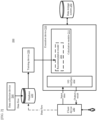
- An embodiment of the present invention provides a recommendation system architecture 200.
- a data collection device 260 is configured to collect a sample.
- One training sample may include a plurality of pieces of feature information (or described as attribute information, for example, a user attribute and an item attribute).
- the feature information may include user feature information, object feature information, and a label feature.
- the user feature information represents a feature of a user, for example, a gender, an age, an occupation, or a hobby.
- the object feature information represents a feature of an object pushed to the user.
- Different recommendation systems correspond to different objects, and types of features that need to be extracted for different objects are also different.
- an object feature extracted from a training sample of an app market may be a name (an identifier), a type, a size, or the like of an app.
- An object feature extracted from a training sample of an e-commerce app may be a name, a category, a price range, or the like of a commodity.
- the label feature indicates whether the sample is a positive sample or a negative sample.
- a label feature of a sample may be obtained based on operation information of the user for a recommended object. A sample in which the user performs an operation on a recommended object is a positive sample, and a sample in which the user does not perform an operation on a recommended object or just browses the recommended object is a negative sample.
- the label feature when the user clicks, downloads, or purchases the recommended object, the label feature is 1, indicating that the sample is a positive sample, or if the user does not perform any operation on the recommended object, the label feature is 0, indicating that the sample is a negative sample.
- the sample may be stored in a database 230 after being collected. Some or all feature information in the sample in the database 230 may be directly obtained from a client device 240, for example, user feature information, information (used to determine a type identifier) about an operation performed by a user on an object, and object feature information (for example, an object identifier).
- a training device 220 obtains a model parameter matrix through training based on a sample in the database 230, to generate a recommendation model 201.
- the recommendation model 201 can be used to evaluate a large quantity of objects to obtain a score of each to-be-recommended object, to further recommend a specified quantity of objects or a preset quantity of objects from an evaluation result of the large quantity of objects.
- a calculation module 211 obtains a recommendation result based on the evaluation result of the recommendation model 201, and recommends the recommendation result to the client device through an I/O interface 212.
- the training device 220 may select positive and negative samples from a sample set in the database 230, add the positive and negative samples to a training set, and then train the samples in the training set by using a recommendation model, to obtain a trained recommendation model.
- the calculation module 211 refer to detailed descriptions of a method embodiment shown in FIG. 5 .
- the recommendation model 201 is sent to an execution device 210, or the model parameter matrix is directly sent to the execution device 210 to construct a recommendation model in the execution device 210 for recommendation of a corresponding system.
- a recommendation model obtained through training based on a video-related sample may be used in a video website or an app to recommend a video to a user
- a recommendation model obtained through training based on an app-related sample may be used in an application market to recommend an app to a user.
- the execution device 210 is provided with the I/O interface 212, to exchange data with an external device.
- the execution device 210 may obtain user feature information, for example, a user identifier, a user identity, a gender, an occupation, and a hobby, from the client device 240 through the I/O interface 212. This part of information may alternatively be obtained from a system database.
- the recommendation model 201 recommends a target to-be-recommended object to the user based on the user feature information and feature information of a to-be-recommended object.
- the execution device 210 may be disposed in a cloud server, or may be disposed in a user client.
- the execution device 210 may invoke data, code, and the like in a data storage system 250, and may store output data in the data storage system 250.
- the data storage system 250 may be disposed in the execution device 210, may be independently disposed, or may be disposed in another network entity, and there may be one or more data storage systems 250.
- the calculation module 211 processes the user feature information and the feature information of the to-be-recommended object by using the recommendation model 201. For example, the calculation module 211 analyzes and processes the user feature information and the feature information of the to-be-recommended object by using the recommendation model 201, to obtain a score of the to-be-recommended object, and ranks the to-be-recommended object based on the score. An object with a high ranking is used as an object recommended to the client device 240.
- the I/O interface 212 returns the recommendation result to the client device 240, and presents the recommendation result to the user.
- the training device 220 may generate corresponding recommendation models 201 for different targets based on different sample feature information, to provide a better result for the user.
- FIG. 2 is merely a diagram of the system architecture according to this embodiment of the present invention.
- a position relationship between devices, components, modules, and the like shown in the figure does not constitute any limitation.
- the data storage system 250 is an external storage device relative to the execution device 210, and in another case, the data storage system 250 may alternatively be disposed in the execution device 210.
- the training device 220, the execution device 210, and the client device 240 may be three different physical devices, or the training device 220 and the execution device 210 may be on a same physical device or one cluster, or the execution device 210 and the client device 240 may be on a same physical device or one cluster.
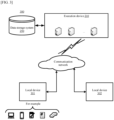
- An embodiment of the present invention provides a system architecture 300.
- an execution device 210 is implemented by one or more servers.
- the execution device 210 cooperates with another computing device, for example, a device like a data storage device, a router, or a load balancer.
- the execution device 210 may be disposed on one physical site, or distributed on a plurality of physical sites.
- the execution device 210 may use data in a data storage system 250 or invoke program code in the data storage system 250 to implement an object recommendation function.
- information about to-be-recommended objects is input into a recommendation model, and the recommendation model generates an estimated score for each to-be-recommended object, then ranks the to-be-recommended objects in descending order of the estimated scores, and recommends the to-be-recommended objects to a user based on a ranking result. For example, top 10 objects in the ranking result are recommended to the user.
- the data storage system 250 is configured to receive and store a parameter of a recommendation model sent by a training device, is configured to store data of a recommendation result obtained by using the recommendation model, and certainly may further include program code (or an instruction) needed for normal running of the storage system 250.
- the data storage system 250 may be one device that is deployed outside the execution device 210 or a distributed storage cluster including a plurality of devices that are deployed outside the execution device 210. In this case, when the execution device 210 needs to use the data in the storage system 250, the storage system 250 may send the data needed by the execution device to the execution device 210. Correspondingly, the execution device 210 receives and stores (or temporarily buffers) the data. Certainly, the data storage system 250 may be alternatively deployed on the execution device 210.
- the distributed storage system may include one or more memories.
- different memories are configured to store different types of data, for example, the model parameter of the recommendation model generated by the training device and the data of the recommendation result obtained by using the recommendation model may be separately stored in two different memories.
- Each local device may represent any computing device, for example, a personal computer, a computer workstation, a smartphone, a tablet computer, an intelligent camera, a smart automobile, another type of cellular phone, a media consumption device, a wearable device, a set-top box, or a game console.
- the local device of each user may interact with the execution device 210 through a communication network compliant with any communication mechanism/communication standard.
- the communication network may be a wide area network, a local area network, a point-to-point connection, or any combination thereof.
- the execution device 210 may be implemented by a local device.
- the local device 301 may implement a recommendation function of the execution device 210 based on a recommendation model, to obtain user feature information and feed back a recommendation result to a user, or provide a service for the user of the local device 302.
- Embodiments of this application relate to massive application of a neural network. Therefore, for ease of understanding, the following first describes terms and concepts related to the neural network in embodiments of this application.
- the click-through rate is a ratio of a quantity of times recommendation information (for example, a recommended item) on a website or an application is clicked to a quantity of times of exposure of the recommendation information.
- the click-through rate is usually an important indicator for measuring a recommendation system in recommendation systems.
- the personalized recommendation system is a system that performs analysis by using a machine learning algorithm based on historical data of a user (for example, operation information in embodiments of this application), predicts a new request on this basis, and provides a personalized recommendation result.
- the offline training is a module, in a personalized recommendation system, that iteratively updates parameters of a recommendation model by using a machine learning algorithm based on historical data of a user (for example, operation information in embodiments of this application) until a specified requirement is met.
- the online inference is to predict, based on a model obtained through offline training, favorability of a user for a recommended item in a current context environment based on features of the user, the item, and a context, and predict a probability that the user selects the recommended item.
- Two-tower model Large quantities of users and items exist in a large-scale industrial retrieval system, and user request response time needs to be strictly controlled within dozens of milliseconds. Therefore, a two-tower model is usually used in the industrial retrieval system to model users and items.
- the two-tower model includes two towers: a user tower and an item tower. The two towers respectively model a user and an item, and pre-store modeled item information to an online server. When a new user request arises, modeling is required for only the user request, and modeled user information and the pre-stored item information are used for calculating scores, to greatly reduce a calculation delay.
- FIG. 3 is a diagram of a recommendation system according to an embodiment of this application.
- the recommendation system inputs the request and related information (for example, operation information in this embodiment of this application) of the request into a recommendation model, and then predicts a selectivity of the user for an item in the system. Further, items are ranked in descending order of predicted selectivities or a function of the selectivities. That is, the recommendation system may sequentially display the items at different locations as a recommendation result for the user.
- the user browses the items at different locations, and performs user behavior such as browsing, selecting, and downloading.
- actual behavior of the user is stored in a log as training data. Parameters of the recommendation model are continuously updated by using an offline training module, to improve prediction effect of the model.
- a recommendation system in the application market may be triggered.
- the recommendation system in the application market predicts, based on a historical behavior log of the user, for example, a historical download record of the user and a user selection record, and a feature of the application market, for example, environment feature information such as time and a location, probabilities that the user downloads candidate recommended apps.
- the recommendation system in the application market may display the candidate apps in descending order of values of the predicted probabilities, to increase a download probability of the candidate app.
- an app with a high predicted user selectivity may be displayed at a front recommendation location, and an app with a low predicted user selectivity may be displayed at a back recommendation location.
- the recommendation model may be a neural network model.
- the following describes related terms and concepts of a neural network that may be used in embodiments of this application.
- the neural network may include a neuron.
- the neuron may be an operation unit that uses xs (namely, input data) and an intercept of 1 as an input.
- the output signal of the activation function may be used as an input of a next convolutional layer, and the activation function may be a sigmoid function.
- the neural network is a network constituted by linking a plurality of single neural units together. To be specific, an output of a neural unit may be an input of another neural unit. An input of each neuron may be connected to a local receptive field of a previous layer to extract a feature of the local receptive field.
- the local receptive field may be a region including several neurons.
- the deep neural network (Deep Neural Network, DNN), also referred to as a multi-layer neural network, may be understood as a neural network having many hidden layers.
- the "many” herein does not have a special measurement standard.
- the DNN is divided based on locations of different layers, and a neural network in the DNN may be divided into three types: an input layer, a hidden layer, and an output layer. Generally, the first layer is the input layer, the last layer is the output layer, and the middle layer is the hidden layer. Layers are fully connected. To be specific, any neuron at an i th layer is necessarily connected to any neuron at an (i+1) th layer.
- the output vector y is obtained by performing such a simple operation on the input vector x .Because there are many layers in the DNN, there are also many coefficients W and bias vectors b . Definitions of these parameters in the DNN are as follows: The coefficient W is used as an example.
- a linear coefficient from the fourth neuron at the second layer to the second neuron at the third layer is defined as w 24 3 .
- the superscript 3 represents a layer at which the coefficient W is located, and the subscript corresponds to an output third-layer index 2 and an input second-layer index 4.
- W jk L a coefficient from a k th neuron at an (L-1) th layer to a j th neuron at an L th layer.
- Training the deep neural network is a process of learning a weight matrix, and a final objective of the training is to obtain a weight matrix of all layers of the trained deep neural network (a weight matrix formed by vectors W at many layers).
- a predicted value of a current network and a target value that is actually expected may be compared, and then a weight vector of each layer of the neural network is updated based on a difference between the predicted value and the target value (certainly, there is usually an initialization process before the first update, to be specific, parameters are preconfigured for all layers of the deep neural network). For example, if the predicted value of the network is large, the weight vector is adjusted to decrease the predicted value, and adjustment is repeatedly performed, until the deep neural network can predict the target value that is actually expected or a value that is very close to the target value that is actually expected.
- a difference between the predicted value and the target value needs to be predefined.
- This is a loss function (loss function) or an objective function (objective function).
- the loss function and the objective function are important equations that measure the difference between the predicted value and the target value.
- the loss function is used as an example. A higher output value (loss) of the loss function indicates a larger difference. Therefore, training of the deep neural network is a process of minimizing the loss.
- An error back propagation (back propagation, BP) algorithm may be used to correct a value of a parameter in an initial model in a training process, so that an error loss of the model becomes smaller. Specifically, an input signal is transferred forward until an error loss occurs at output, and the parameter in the initial model is updated based on back propagation error loss information, to make the error loss converge.
- the back propagation algorithm is an error-loss-centered back propagation motion intended to obtain a parameter, for example, a weight matrix, of an optimal model.
- a large-scale industrial information retrieval system (for example, a recommendation system, a search engine, or a computing advertisement) aims to provide data (for example, an item, information, or an advertisement) that a user is most interested in for the user by retrieving massive data (for example, items, information, or advertisements).
- data for example, an item, information, or an advertisement
- massive data for example, items, information, or advertisements.
- system response time acceptable to a user is very short (dozens of milliseconds)
- retrieving data that the user is most interested in within such short time becomes a primary task of the information retrieval system.
- a complex machine learning model can better simulate a relationship between a user and an item, and therefore has better prediction accuracy.
- efficiency is usually low, deployment becomes more difficult, and only a small quantity of items can be scored.
- a simple model is feasible in terms of efficiency due to its low complexity. Therefore, a large number of items can be scored.
- prediction results are often unsatisfying. Therefore, constructing a multi-stage cascade ranking system is a common solution for information retrieval systems in the industry to balance prediction efficiency and effect.
- the multi-stage cascade ranking system is shown in FIG. 1 , and includes a plurality of stages such as recall, pre-ranking, ranking, and re-ranking. In each stage, different systems face different quantities of item candidate sets.
- a simple machine learning model for example, a tree model or a two-tower model, is usually used to model user information and item information, to reduce an online inference delay and improve user service experience.
- a common two-tower model is a popular model currently used in a pre-ranking stage in the industry, and usually includes two parts: a user tower and an item tower.
- the user tower and the item tower respectively model user information and item information, and then score the information.
- the modeled item information is usually pre-stored on a server. For each user request, only the user information needs to be modeled, the modeled user information and the pre-stored item information are used for calculating scores, and then ranking is performed based on the scores.
- the existing common two-tower model separately models the user and the item, and lacks interaction information between the user and the item.
- the common two-tower model performs interaction scoring on the user information and the item information only when calculating the scores for ranking. This is a delayed interaction strategy. Due to the lack of the interaction information between the user and the item, this strategy reduces accuracy of the model.
- this application provides a recommendation method.
- the following uses a model inference stage as an example to describe an information recommendation method provided in an embodiment of this application.
- FIG. 5 is a diagram of an embodiment of a recommendation method according to an embodiment of this application. As shown in FIG. 5 , the recommendation method provided in this embodiment of this application includes the following steps.
- 501 Obtain a first feature representation and a second feature representation, where the first feature representation corresponds to attribute information of a target user, the second feature representation corresponds to attribute information of a target item, the first feature representation includes a plurality of first feature sub-representations, and the second feature representation includes a plurality of second feature sub-representations.
- step 501 may be executed by a terminal device, and the terminal device may be a portable mobile device, for example, but not limited to a mobile or portable computing device (for example, a smartphone), a personal computer, a server computer, a handheld device (for example, a tablet) or a laptop device, a multiprocessor system, a game console or controller, a microprocessor-based system, a set-top box, a programmable consumer electronic product, a mobile phone, a mobile computing and/or communication device having a wearable or accessory form factor (for example, a watch, glasses, a headset, or an earplug), a network PC, a small computer, a mainframe computer, and a distributed computing environment including any of the foregoing systems or devices.
- a mobile or portable computing device for example, a smartphone
- a personal computer for example, a server computer, a handheld device (for example, a tablet) or a laptop device
- a multiprocessor system for example, a game console or controller,
- step 501 may be executed by a server on a cloud side.
- the execution device may obtain the attribute information of the target user and the attribute information of the target item.
- the attribute information of the target user may be an attribute related to a preference feature of the user, and is at least one of a gender, an age, an occupation, an income, a hobby, and an education level.
- the gender may be a male or a female
- the age may be a number ranging from 0 to 100
- the occupation may be a teacher, a programmer, a cook, or the like
- the hobby may be basketball, tennis, running, or the like
- the education level may be a primary school, a middle school, a high school, a university, or the like.
- a specific type of the attribute information of the target user is not limited in this application.
- the item may be a physical item or a virtual item, for example, may be an item like an app, an audio/video, a web page, and news.
- the attribute information of the item may be at least one of an item name, a developer, an installation package size, a category, and a positivity rating.
- the item is an application.
- the category of the item may be a chat category, a running game, an office category, or the like, and the positivity rating may be a score and a comment made on the item, or the like.
- a specific type of the attribute information of the item is not limited in this application.
- original embedding representations of the user and the item may be first compressed by using, but not limited to, an average pooling method, to obtain global information.
- feature extraction may be performed by an embedding layer on the attribute information of the target user and the attribute information of the target item, to obtain a first target embedding representation corresponding to the attribute information of the target user and a second target embedding representation corresponding to the attribute information of the target item.
- attributes in various dimensions of the target user and the target user may be separately processed by the embedding layer (embedding layer), to obtain an embedding vector corresponding to an attribute in each dimension.
- the attribute information of the target user includes user attributes in a plurality of dimensions
- the user attributes in the plurality of dimensions may be processed by the embedding layer to obtain a first initial embedding representation corresponding to the attribute information of the user.
- the first initial embedding representation includes a plurality of first embedding vectors, and each first embedding vector corresponds to a user attribute in one dimension.
- a concatenation (concat) operation may be performed on the first embedding vectors to obtain the first feature representation.
- the first feature representation may be used as an input of a user-side branch (for example, a user-side encoder in a two-tower model) in a recommendation model.
- the attribute information of the target item includes item attributes in a plurality of dimensions
- the item attributes in the plurality of dimensions may be processed by the embedding layer to obtain a second initial embedding representation corresponding to the attribute information of the item.
- the second initial embedding representation includes a plurality of second embedding vectors, and each second embedding vector corresponds to an item attribute in one dimension.
- a concatenation (concat) operation may be performed on the second embedding vectors to obtain the second feature representation.
- the second feature representation may be used as an input of an item-side branch (for example, an item-side encoder in the two-tower model) in the recommendation model.
- concatenation results may not be used as the inputs of the recommendation model. Instead, a trained network may determine a weight distribution of the attributes in the dimensions based on the concatenation results, and adjust the concatenation results based on the weight distribution.
- the first initial embedding representation corresponding to the attribute information of the user may be obtained.
- the first initial embedding representation includes the plurality of first embedding vectors, and each first embedding vector corresponds to the user attribute in one dimension.
- the first initial embedding representation is processed over a weight determining network, to obtain first weights of all the user attributes.
- the plurality of first embedding vectors are adjusted based on the first weights (for example, adjusted through weighing) to obtain the first target embedding representation.
- the second initial embedding representation corresponding to the attribute information of the item may be obtained.
- the second initial embedding representation includes the plurality of second embedding vectors, and each second embedding vector corresponds to the item attribute in one dimension.
- the second initial embedding representation is processed over a weight determining network, to obtain second weights of all the item attributes.
- the plurality of second embedding vectors are adjusted based on the second weights (for example, adjusted through weighing) to obtain the second target embedding representation.
- weight-based adjustment is performed on different features, so that a better feature expression can be learned.
- the weight determining network includes only one FC layer.
- a ranking model needs to use a multi-layer neural network to adjust weights of different features. This results in an excessively large quantity of parameters of the model.
- This application provides a lightweight model for weight adjustment based on feature importance, to reduce the quantity of parameters of the model while ensuring that the better feature expression can be learned.
- the first target embedding representation corresponding to the attribute information of the target user may be processed by a first encoder to obtain the first feature representation, that is, the first feature representation is obtained by processing, by the first encoder, the first target embedding representation corresponding to the attribute information of the target user.
- the first encoder includes a plurality of first fully-connected layers
- the first feature representation is obtained based on outputs of M first fully-connected layers in the plurality of first fully-connected layers
- M is a positive number greater than 1.
- interaction information at different levels may be modeled based on a plurality of layers of user representations output by the first encoder on a user side in the two-tower model.
- modeling is performed based on only a feature representation output by a last layer of the user-side encoder in the two-tower model, which is a coarse-grained modeling manner.
- modeling is performed based on a plurality of layers of user representations, so that subsequent prediction effect can be improved.
- FIG. 6 is a schematic flowchart of processing of a recommendation model.
- a first encoder may include a plurality of fully-connected FC layers, and outputs of last three fully-connected layers may be used to determine a first feature representation.
- further learning may be performed on an extracted feature representation (for example, the outputs of the M first fully-connected layers) of a user, to obtain a better user feature expression (for example, the first feature representation).
- an extracted feature representation for example, the outputs of the M first fully-connected layers
- a better user feature expression for example, the first feature representation
- a second feature representation is obtained by processing, by a second encoder, a second target embedding representation corresponding to attribute information of a target item.
- the second encoder includes a plurality of second fully-connected layers, and the second feature representation is obtained based on an output of a second fully-connected layer that is in the plurality of second fully-connected layers and that is closest to an output layer.
- FIG. 6 is a schematic flowchart of processing of a recommendation model.
- a second encoder may include a plurality of fully-connected FC layers, and an output of a last fully-connected layer may be used to determine a second feature representation.
- further learning may be performed on an extracted feature representation (for example, the output of the second fully-connected layer closest to the output layer) of an item, to obtain a better item feature expression (for example, the second feature representation).
- an extracted feature representation for example, the output of the second fully-connected layer closest to the output layer
- a better item feature expression for example, the second feature representation
- interaction between a user-side branch and an item-side branch in the two-tower model may be performed based on the first feature representation and the second feature representation.
- 503 Fuse the plurality of similarities to obtain recommendation information between the target user and the target.
- the first feature representation includes the plurality of first feature sub-representations
- the second feature representation includes the plurality of second feature sub-representations.
- the plurality of first feature sub-representations are obtained by segmenting the first feature representation
- the plurality of second feature sub-representations are obtained by segmenting the second feature representation.
- obtained user and item representations are sliced, similarities between all slices are calculated and maximum values are obtained, and then multi-level aggregation is performed on user-item interaction scores at all levels, to obtain a final interaction score.
- the plurality of similarities may include a plurality of groups of similarities, and similarities in each group may be: similarities between one of the first feature sub-representations and the second feature sub-representations; or similarities between one of the second feature sub-representations and the first feature sub-representations.
- similarities in each group may be: similarities between one of the first feature sub-representations and the second feature sub-representations; or similarities between one of the second feature sub-representations and the first feature sub-representations.
- a similarity between the first feature sub-representation and each second feature sub-representation may be calculated to obtain one group of similarities, and a maximum value may be obtained for a plurality of similarities in one group of similarities.
- one group of similarities may be obtained for each first feature sub-representation, a maximum value may be obtained for a plurality of similarities in one group of similarities, to obtain a plurality of maximum values, and maximum values of the plurality of similarities may be fused.
- a fusion manner may be an addition operation (optionally, an addition result may be further normalized to a value between 0 and 1), and the recommendation information indicates a probability that the target user selects the target item.
- the interaction stage provides a specific example of the interaction stage.
- obtained user and item representations may be sliced, similarities between all slices are calculated and maximum values are obtained, and then multi-level aggregation is performed on user-item interaction scores at all levels, to obtain a final interaction score.
- interaction information between the user and the item is modeled based on a similarity between slices of the feature representations of the user and the item, that is, the interaction information between the user and the item is explicitly modeled, no additional parameter needs to be added in an interaction stage, and better prediction effect can be achieved.
- a probability that the target user selects the target item may be obtained, and information recommendation is performed based on the probability. Specifically, when the recommendation information meets the preset condition, it may be determined that the target item is recommended to the target user.
- probabilities that the target user selects a plurality of items (including the target item) may be calculated, and recommendation indexes of the items for the target user are determined based on the probabilities that the user selects the plurality of items (including the target item).
- the recommendation indexes of the items for the target user may be obtained, the recommendation indexes may be ranked, and M items with largest recommendation indexes are recommended to the target user.
- a probability threshold may alternatively be set. When a probability that the target user selects the plurality of items (including the target item) is greater than the probability threshold, a recommendation may be made to the target user.
- recommendation information may be recommended to the user in a form of a list page, to expect the user to perform a behavior action.
- Stage Model AUC Logloss RelaImpr Pre-Ranking Two-Tower 0.7550 0.0536 0% IntTower 0.7603 0.0523 2.08% Ranking DeepFM 0.7591 0.0525 1.61% EDCN 0.7612 0.0518 2.43%
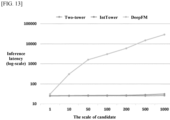
- FIG. 13 are training and inference efficiency of the present invention: MovieLens Amazon Model Params Run Time Params Run Time LR 5.24 ⁇ 10 4 11s 5.10 ⁇ 10 5 27s Two-Tower 5.03 ⁇ 10 5 15s 6.26 ⁇ 10 6 35s COLD 6.83 ⁇ 10 5 18s 8.58 ⁇ 10 6 42s DCN 6.84 ⁇ 10 5 19s 8.58 ⁇ 10 6 43s AutoInt 6.95 ⁇ 10 5 19s 8.59 ⁇ 10 6 42s IntTower 5.67 ⁇ 10 5 16s 6.29 ⁇ 10 6 40s
- This application provides a recommendation method.
- the method includes: obtaining a first feature representation and a second feature representation, where the first feature representation corresponds to attribute information of a target user, the second feature representation corresponds to attribute information of a target item, the first feature representation includes a plurality of first feature sub-representations, and the second feature representation includes a plurality of second feature sub-representations; determining a plurality of similarities based on the plurality of first feature sub-representations and the plurality of second feature sub-representations, where each similarity is a similarity between one of the first feature sub-representations and one of the second feature sub-representations; fusing the plurality of similarities to obtain recommendation information between the target user and the target; and when the recommendation information meets a preset condition, determining to recommend the target item to the target user.
- interaction information between the user and the item is modeled based on a similarity between slices of the feature representations of the user and the item, that is, the interaction information between the user and the item is explicitly modeled, no additional parameter needs to be added in an interaction stage, and better prediction effect can be achieved.
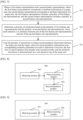
- FIG. 7 is a schematic flowchart of a model training method according to an embodiment of this application. As shown in FIG. 7 , the model training method provided in this embodiment of this application includes the following steps.
- first feature representation and a second feature representation where the first feature representation is obtained through feature extraction by a first encoder on attribute information of a target user, the second feature representation is obtained through feature extraction by a second encoder on attribute information of a target item, the first feature representation includes a plurality of first feature sub-representations, and the second feature representation includes a plurality of second feature sub-representations.
- the recommendation information and a corresponding similarity annotation are used to determine a first loss
- the first loss is used to update the first encoder and the second encoder
- the similarity annotation is obtained based on a real operation log of the target user.
- a similarity between the first feature representation and the second feature representation is used to determine a second loss, and the second loss is used to update the first encoder and the second encoder; and when the real operation log indicates that the target user has a positive operation on the target item, the second loss indicates to maximize the similarity between the first feature representation and the second feature representation; or when the real operation log indicates that the target user has no operation on the target item or has a negative operation on the target item, the second loss indicates to minimize the similarity between the first feature representation and the second feature representation.
- the negative operation may indicate that the user has an operation on the item, but the operation indicates that the user has no intention to select the item, for example, a complaint operation or an order cancellation operation.
- an implicit self-supervised two-tower interaction module establishes implicit two-tower feature interaction through comparative learning, that is, shortens a distance between the user and a positive sample item, and extends a distance between the user and a negative sample item.
- L cir ⁇ 1 Q ⁇ u v ⁇ Q log exp sim M u L M v L / ⁇ ⁇ u ′ , v ′ ⁇ N exp sim M u L M v ′ L / ⁇ .
- L ctr and L cir may be used to jointly train the model.
- L ctr is a loss function for calculating a difference between a predicted value and a real value
- L cir is a loss function for calculating a distance between a user and a positive/negative item pair in implicit space.
- L L ctr + ⁇ 1 L cir + ⁇ 2 ⁇ 2 .
- the plurality of first feature sub-representations are obtained by segmenting the first feature representation, and the plurality of second feature sub-representations are obtained by segmenting the second feature representation.
- the plurality of similarities include a plurality of groups of similarities, and similarities in each group are: similarities between one of the first feature sub-representations and the second feature sub-representations; or similarities between one of the second feature sub-representations and the first feature sub-representations.
- similarities in each group are: similarities between one of the first feature sub-representations and the second feature sub-representations; or similarities between one of the second feature sub-representations and the first feature sub-representations.
- the first encoder includes a plurality of first fully-connected layers
- the first feature representation is obtained based on outputs of M first fully-connected layers in the plurality of first fully-connected layers
- M is a positive number greater than 1.
- the second encoder includes a plurality of second fully-connected layers, and the second feature representation is obtained based on an output of a second fully-connected layer that is in the plurality of second fully-connected layers and that is closest to an output layer.
- the attribute information of the target user includes user attributes in a plurality of dimensions.
- the first feature representation is obtained by processing, by the first encoder, a first target embedding representation corresponding to the attribute information of the target user. Further, a first initial embedding representation corresponding to the attribute information of the user may be obtained.
- the first initial embedding representation includes a plurality of first embedding vectors, and each first embedding vector corresponds to the user attribute in one dimension.
- the first initial embedding representation is processed over a weight determining network, to obtain first weights of all the user attributes.
- the plurality of first embedding vectors are adjusted based on the first weights to obtain the first target embedding representation.
- the first loss is further used to update the weight determining network.
- the attribute information of the target user includes at least one of the following: a gender, an age, an occupation, an income, a hobby, and an education level.
- the attribute information of the target item includes at least one of the following: an item name, a developer, an installation package size, a category, and a positivity rating.
- FIG. 8 is a diagram of a structure of a recommendation apparatus 800 according to an embodiment of this application.
- the apparatus 800 includes:
- the plurality of first feature sub-representations are obtained by segmenting the first feature representation, and the plurality of second feature sub-representations are obtained by segmenting the second feature representation.
- the plurality of similarities include a plurality of groups of similarities, and similarities in each group are:
- the fusing the plurality of similarities includes: fusing maximum values of the plurality of similarities included in all the groups of similarities.
- the second feature representation is obtained by a second encoder based on the attribute information of the target item, the second encoder includes a plurality of second fully-connected layers, and the second feature representation is obtained based on an output of a second fully-connected layer that is in the plurality of second fully-connected layers and that is closest to an output layer.
- the attribute information of the target user includes user attributes in a plurality of dimensions.
- the first feature representation is obtained by processing, by the first encoder, a first target embedding representation corresponding to the attribute information of the target user.
- the obtaining module is further configured to obtain a first initial embedding representation corresponding to the attribute information of the user.
- the first initial embedding representation includes a plurality of first embedding vectors, and each first embedding vector corresponds to a user attribute in one dimension.
- the apparatus further includes a weight adjusting module, configured to: process the first initial embedding representation over a weight determining network, to obtain first weights of all the user attributes; and adjust the plurality of first embedding vectors based on the first weights, to obtain the first target embedding representation.
- a weight adjusting module configured to: process the first initial embedding representation over a weight determining network, to obtain first weights of all the user attributes; and adjust the plurality of first embedding vectors based on the first weights, to obtain the first target embedding representation.
- the attribute information of the target item includes item attributes in a plurality of dimensions.
- the second feature representation is obtained by processing, by the second encoder, a second target embedding representation corresponding to the attribute information of the target item.
- the obtaining module is further configured to obtain a second initial embedding representation corresponding to the attribute information of the item.
- the second initial embedding representation includes a plurality of second embedding vectors, and each second embedding vector corresponds to an item attribute in one dimension.
- the apparatus further includes the weight adjusting module, configured to: process the second initial embedding representation over a weight determining network, to obtain second weights of all the item attributes; and adjust the plurality of second embedding vectors based on the second weights, to obtain the second target embedding representation.
- the weight adjusting module configured to: process the second initial embedding representation over a weight determining network, to obtain second weights of all the item attributes; and adjust the plurality of second embedding vectors based on the second weights, to obtain the second target embedding representation.
- the weight determining network includes only one FC layer.
- the attribute information of the target user includes at least one of the following: a gender, an age, an occupation, an income, a hobby, and an education level.
- the attribute information of the target item includes at least one of the following: an item name, a developer, an installation package size, a category, and a positivity rating.
- FIG. 9 is a diagram of a structure of a data processing apparatus 900 according to an embodiment of this application.
- the apparatus 900 includes:
- an obtaining module 901 configured to obtain a first feature representation and a second feature representation, where the first feature representation is obtained through feature extraction by a first encoder on attribute information of a target user, the second feature representation is obtained through feature extraction by a second encoder on attribute information of a target item, the first feature representation includes a plurality of first feature sub-representations, and the second feature representation includes a plurality of second feature sub-representations; and
- a similarity between the first feature representation and the second feature representation and a corresponding similarity annotation are used to determine a second loss, and the second loss is used to update the first encoder and the second encoder, where the similarity annotation is obtained based on a real operation log of the target user; and when the real operation log indicates that the target user has a positive operation on the target item, the similarity annotation indicates a similarity greater than a threshold; or when the real operation log indicates that the target user has no operation on the target item or has a negative operation on the target item, the similarity annotation indicates a similarity less than the threshold.
- the plurality of first feature sub-representations are obtained by segmenting the first feature representation, and the plurality of second feature sub-representations are obtained by segmenting the second feature representation.
- the plurality of similarities include a plurality of groups of similarities, and similarities in each group are:
- the fusing the plurality of similarities includes: fusing maximum values of the plurality of similarities included in all the groups of similarities.
- the attribute information of the target user includes user attributes in a plurality of dimensions.
- the first feature representation is obtained by processing, by the first encoder, a first target embedding representation corresponding to the attribute information of the target user.
- the obtaining module is further configured to obtain a first initial embedding representation corresponding to the attribute information of the user.
- the first initial embedding representation includes a plurality of first embedding vectors, and each first embedding vector corresponds to a user attribute in one dimension.
- the apparatus further includes a weight adjusting module, configured to: process the first initial embedding representation over a weight determining network, to obtain first weights of all the user attributes; and adjust the plurality of first embedding vectors based on the first weights, to obtain the first target embedding representation.
- a weight adjusting module configured to: process the first initial embedding representation over a weight determining network, to obtain first weights of all the user attributes; and adjust the plurality of first embedding vectors based on the first weights, to obtain the first target embedding representation.
- the first loss is further used to update the weight determining network.
- FIG. 10 is a diagram of a structure of an execution device according to an embodiment of this application.
- the execution device 1000 may be specifically represented as a mobile phone, a tablet, a notebook computer, an intelligent wearable device, a server, or the like. This is not limited herein.
- the recommendation apparatus described in the embodiment corresponding to FIG. 8 may be deployed on the execution device 1000, and is configured to implement a function of the recommendation method in the embodiment corresponding to FIG. 10 .
- the execution device 1000 includes a receiver 1001, a transmitter 1002, a processor 1003 (there may be one or more processors 1003 in the execution device 1000), and a memory 1004.
- the processor 1003 may include an application processor 10031 and a communication processor 10032.
- the receiver 1001, the transmitter 1002, the processor 1003, and the memory 1004 may be connected through a bus or in another manner.
- the memory 1004 may include a read-only memory and a random access memory, and provide instructions and data for the processor 1003. A part of the memory 1004 may further include a non-volatile random access memory (non-volatile random access memory, NVRAM).
- the memory 1004 stores a processor and operation instructions, an executable module or a data structure, a subnet thereof, or an extended set thereof.
- the operation instructions may include various operation instructions for various operations.
- the processor 1003 controls an operation of the execution device.
- components of the execution device are coupled together through a bus system.
- the bus system may further include a power bus, a control bus, a status signal bus, and the like.
- various types of buses in the figure are marked as the bus system.
- the method disclosed in embodiments of this application may be applied to the processor 1003, or may be implemented by the processor 1003.
- the processor 1003 may be an integrated circuit chip, and has a signal processing capability.
- steps in the method can be implemented by using a hardware integrated logical circuit in the processor 1003, or by using instructions in a form of software.
- the processor 1003 may be a general-purpose processor, a digital signal processor (digital signal processor, DSP), a microprocessor or microcontroller, and a vision processing unit (vision processing unit, VPU), a tensor processing unit (tensor processing unit, TPU), and another processor suitable for AI computing, and may further include an application-specific integrated circuit (application-specific integrated circuit, ASIC), a field-programmable gate array (field-programmable gate array, FPGA) or another programmable logic device, a discrete gate or transistor logic device, or a discrete hardware component.
- the processor 1003 may implement or perform the methods, the steps, and logical block diagrams that are disclosed in embodiments of this application.
- the general-purpose processor may be a microprocessor, or the processor may be any conventional processor or the like.
- the steps in the methods disclosed with reference to embodiments of this application may be directly performed and completed by a hardware decoding processor, or may be performed and completed by using a combination of hardware in the decoding processor and a software module.
- a software module may be located in a mature storage medium in the art, for example, a random access memory, a flash memory, a read-only memory, a programmable read-only memory, an electrically erasable programmable memory, or a register.
- the storage medium is located in the memory 1004.
- the processor 1003 reads information in the memory 1004, and completes steps 501 to 504 in the foregoing embodiment in combination with hardware of the processor 1003.
- the receiver 1001 may be configured to receive input digital or character information, and generate a signal input related to setting and function control of the execution device.
- the transmitter 1002 may be configured to output the digital or character information through a first interface.
- the transmitter 1002 may be configured to send instructions to a disk group through the first interface, to modify data in the disk group.
- the transmitter 1002 may further include a display device like a display.
- FIG. 11 is a diagram of a structure of a training device according to an embodiment of this application.
- a training device 1100 is implemented by one or more servers.
- the training device 1100 may vary greatly with configuration or performance, and may include one or more central processing units (central processing units, CPUs) 1111 (for example, one or more processors), a memory 1132, and one or more storage media 1130 (for example, one or more mass storage devices) that store an application program 1142 or data 1144.
- the memory 1132 and the storage medium 1130 may perform transitory storage or persistent storage.
- the program stored in the storage medium 1130 may include one or more modules (not shown in the figure), and each module may include a series of instruction operations for the training device.
- the central processing unit 1111 may be configured to communicate with the storage medium 1130, and perform the series of instruction operations in the storage medium 1130 on the training device 1100.
- the training device 1100 may further include one or more power supplies 1126, one or more wired or wireless network interfaces 1150, one or more input/output interfaces 1158, or one or more operating systems 1141, for example, Windows ServerTM, Mac OS XTM, UnixTM, LinuxTM, and FreeBSDTM.
- the training device may perform steps 701 to 703 in the foregoing embodiment.
- An embodiment of this application further provides a computer program product.
- the computer program product runs on a computer, the computer is enabled to perform steps performed by the foregoing execution device, or the computer is enabled to perform steps performed by the foregoing training device.
- An embodiment of this application further provides a computer-readable storage medium.
- the computer-readable storage medium stores a program used to process a signal, and when the program runs on a computer, the computer is enabled to perform steps performed by the foregoing execution device; or the computer is enabled to perform steps performed by the foregoing training device.
- the execution device, the training device, or the terminal device provided in embodiments of this application may be specifically a chip.
- the chip includes a processing unit and a communication unit.
- the processing unit may be, for example, a processor.
- the communication unit may be, for example, an input/output interface, a pin, or a circuit.
- the processing unit may execute computer-executable instructions stored in a storage unit, so that a chip in an execution device performs the data processing method described in embodiments, or a chip in a training device performs the data processing method described in embodiments.
- the storage unit is a storage unit in the chip, for example, a register or a buffer.
- the storage unit may be a storage unit in a wireless access device but outside the chip, for example, a read-only memory (read-only memory, ROM), another type of static storage device that can store static information and instructions, or a random access memory (random access memory, RAM).
- ROM read-only memory
- RAM random access memory
- FIG. 12 is a diagram of a structure of a chip according to an embodiment of this application.
- the chip may be represented as a neural network processing unit NPU 1200.
- the NPU 1200 is mounted to a host CPU (host CPU) as a coprocessor, and the host CPU allocates a task.
- a core part of the NPU is an operation circuit 1203, and a controller 1204 controls the operation circuit 1203 to extract matrix data in a memory and perform a multiplication operation.
- the NPU 1200 may implement, through mutual cooperation between internal components, the information recommendation method provided in the embodiment described in FIG. 5 and the model training method provided in the embodiment described in FIG. 7 .
- the operation circuit 1203 in the NPU 1200 includes a plurality of process engines (Process Engines, PEs).
- the operation circuit 1203 is a two-dimensional systolic array.
- the operation circuit 1203 may alternatively be a one-dimensional systolic array or another electronic circuit capable of performing mathematical operations such as multiplication and addition.
- the operation circuit 1203 is a general purpose matrix processor.
- the operation circuit fetches, from a weight memory 1202, data corresponding to the matrix B, and caches the data on each PE in the operation circuit.
- the operation circuit fetches data of the matrix A from an input memory 1201, to perform a matrix operation on the matrix B, and stores an obtained partial result or an obtained final result of the matrix in an accumulator (accumulator) 1208.
- a unified memory 1206 is configured to store input data and output data.
- Weight data is directly transferred to the weight memory 1202 by using a direct memory access controller DMAC (Direct Memory Access Controller, DMAC) 1205.
- DMAC Direct Memory Access Controller
- the input data is also transferred to the unified memory 1206 by using the DMAC.
- a BIU is a bus interface unit, namely, a bus interface unit 1210, and is configured to perform interaction between an AXI bus, and the DMAC and an instruction fetch buffer (Instruction Fetch Buffer, IFB) 1209.
- IFB Instruction Fetch Buffer
- the bus interface unit (Bus Interface Unit, BIU for short) 1210 is used by the instruction fetch buffer 1209 to obtain instructions from an external memory, and is further used by the direct memory access controller 1205 to obtain original data of the input matrix A or the weight matrix B from the external memory.
- the DMAC is mainly configured to transfer input data in the external memory DDR to the unified memory 1206, transfer weight data to the weight memory 1202, or transfer input data to the input memory 1201.
- a vector computing unit 1207 includes a plurality of operation processing units. If required, further processing is performed on an output of the operation circuit 1203, for example, vector multiplication, vector addition, an exponential operation, a logarithmic operation, or size comparison.
- the vector computing unit 1207 is mainly used for non-convolutional/fully-connected layer network computation in a neural network, such as batch normalization (batch normalization), pixel-level summation, and upsampling a feature map.
- the vector computing unit 1207 can store a processed output vector in the unified memory 1206.
- the vector computing unit 1207 may apply a linear function or a nonlinear function to the output of the operation circuit 1203, for example, perform linear interpolation on a feature plane extracted at a convolutional layer.
- the linear function or the nonlinear function is applied to a vector of an accumulated value to generate an activation value.
- the vector computing unit 1207 generates a normalized value, a pixel-level summation value, or both.
- the processed output vector can be used as an activated input to the operation circuit 1203, for example, the processed output vector can be used at a subsequent layer of the neural network.
- the instruction fetch buffer (instruction fetch buffer) 1209 connected to the controller 1204 is configured to store instructions used by the controller 1204.
- the unified memory 1206, the input memory 1201, the weight memory 1202, and the instruction fetch buffer 1209 are all on-chip memories.
- the external memory is private to a hardware architecture of the NPU.
- processors mentioned above may be a general-purpose central processing unit, a microprocessor, an ASIC, or one or more integrated circuits for controlling program execution.
- connection relationships between modules indicate that the modules have communication connections with each other, which may be specifically implemented as one or more communication buses or signal cables.
- this application may be implemented by software in addition to necessary universal hardware, or by dedicated hardware, including a dedicated integrated circuit, a dedicated CPU, a dedicated memory, a dedicated component, and the like.
- any functions that can be completed by a computer program can be easily implemented by using corresponding hardware.
- a specific hardware structure used to achieve a same function may be in various forms, for example, in a form of an analog circuit, a digital circuit, or a dedicated circuit.
- software program implementation is a better implementation in most cases. Based on such an understanding, the technical solutions of this application essentially or the part contributing to the conventional technology may be implemented in a form of a software product.
- the computer software product is stored in a readable storage medium, for example, a floppy disk, a USB flash drive, a removable hard disk, a ROM, a RAM, a magnetic disk, or an optical disc of a computer, and includes several instructions for instructing a computer device (which may be a personal computer, a training device, or a network device) to perform the methods described in embodiments of this application.
- a computer device which may be a personal computer, a training device, or a network device
- All or some of the foregoing embodiments may be implemented by using software, hardware, firmware, or any combination thereof.
- software is used to implement the embodiments, all or some of the embodiments may be implemented in a form of a computer program product.
- the computer program product includes one or more computer instructions.
- the computer may be a general-purpose computer, a dedicated computer, a computer network, or other programmable apparatuses.
- the computer instructions may be stored in a computer-readable storage medium, or may be transmitted from a computer-readable storage medium to another computer-readable storage medium.
- the computer instructions may be transmitted from a website, a computer, a training device, or a data center to another website, computer, training device, or data center in a wired (for example, a coaxial cable, an optical fiber, or a digital subscriber line (DSL)) or wireless (for example, infrared, radio, or microwave) manner.
- the computer-readable storage medium may be any usable medium that can be stored by a computer, or a data storage device, for example, a training device or a data center, integrating one or more usable media.
- the usable medium may be a magnetic medium (for example, a floppy disk, a hard disk, or a magnetic tape), an optical medium (for example, a DVD), a semiconductor medium (for example, a solid state disk (Solid State Disk, SSD)), or the like.
- a magnetic medium for example, a floppy disk, a hard disk, or a magnetic tape
- an optical medium for example, a DVD
- a semiconductor medium for example, a solid state disk (Solid State Disk, SSD)
Landscapes
- Engineering & Computer Science (AREA)
- Theoretical Computer Science (AREA)
- Physics & Mathematics (AREA)
- Business, Economics & Management (AREA)
- General Physics & Mathematics (AREA)
- Data Mining & Analysis (AREA)
- General Engineering & Computer Science (AREA)
- Strategic Management (AREA)
- Economics (AREA)
- Evolutionary Computation (AREA)
- Artificial Intelligence (AREA)
- Databases & Information Systems (AREA)
- Finance (AREA)
- Accounting & Taxation (AREA)
- Computer Vision & Pattern Recognition (AREA)
- Life Sciences & Earth Sciences (AREA)
- Development Economics (AREA)
- Marketing (AREA)
- General Business, Economics & Management (AREA)
- Health & Medical Sciences (AREA)
- Computing Systems (AREA)
- Software Systems (AREA)
- Human Resources & Organizations (AREA)
- General Health & Medical Sciences (AREA)
- Biomedical Technology (AREA)
- Mathematical Physics (AREA)
- Evolutionary Biology (AREA)
- Bioinformatics & Cheminformatics (AREA)
- Molecular Biology (AREA)
- Bioinformatics & Computational Biology (AREA)
- Computational Linguistics (AREA)
- Biophysics (AREA)
- Entrepreneurship & Innovation (AREA)
- Tourism & Hospitality (AREA)
- Quality & Reliability (AREA)
- Operations Research (AREA)
- Game Theory and Decision Science (AREA)
- Multimedia (AREA)
- Medical Informatics (AREA)
- Information Retrieval, Db Structures And Fs Structures Therefor (AREA)
Applications Claiming Priority (2)
| Application Number | Priority Date | Filing Date | Title |
|---|---|---|---|
| CN202211032748.0A CN116049536A (zh) | 2022-08-26 | 2022-08-26 | 一种推荐方法及相关装置 |
| PCT/CN2023/114023 WO2024041483A1 (zh) | 2022-08-26 | 2023-08-21 | 一种推荐方法及相关装置 |
Publications (2)
| Publication Number | Publication Date |
|---|---|
| EP4567632A1 true EP4567632A1 (de) | 2025-06-11 |
| EP4567632A4 EP4567632A4 (de) | 2025-11-12 |
Family
ID=86132029
Family Applications (1)
| Application Number | Title | Priority Date | Filing Date |
|---|---|---|---|
| EP23856573.3A Pending EP4567632A4 (de) | 2022-08-26 | 2023-08-21 | Empfehlungsverfahren und zugehörige vorrichtung |
Country Status (4)
| Country | Link |
|---|---|
| US (1) | US20250200640A1 (de) |
| EP (1) | EP4567632A4 (de) |
| CN (1) | CN116049536A (de) |
| WO (1) | WO2024041483A1 (de) |
Families Citing this family (7)
| Publication number | Priority date | Publication date | Assignee | Title |
|---|---|---|---|---|
| CN116049536A (zh) * | 2022-08-26 | 2023-05-02 | 华为技术有限公司 | 一种推荐方法及相关装置 |
| CN117076979A (zh) * | 2023-07-31 | 2023-11-17 | 度小满科技(北京)有限公司 | 获取用户分类模型的方法、用户分类方法及相关装置 |
| CN117876015B (zh) * | 2024-03-11 | 2024-05-07 | 南京数策信息科技有限公司 | 一种用户行为数据分析方法、装置及相关设备 |
| CN121094011A (zh) * | 2024-06-06 | 2025-12-09 | 华为技术有限公司 | 一种数据处理方法及相关装置 |
| CN118410362B (zh) * | 2024-07-02 | 2024-09-03 | 西安银信博锐信息科技有限公司 | 一种用户多维度指标数据的聚合方法 |
| CN118964748B (zh) * | 2024-10-18 | 2025-02-11 | 江西师范大学 | 基于多尺度对比学习双塔模型的在线群组推荐方法及系统 |
| CN119444372B (zh) * | 2025-01-10 | 2025-05-02 | 武汉深智云影科技有限公司 | 一种基于双塔模型的商品推荐方法及系统 |
Family Cites Families (10)
| Publication number | Priority date | Publication date | Assignee | Title |
|---|---|---|---|---|
| US20170344572A1 (en) * | 2009-01-29 | 2017-11-30 | Google Inc. | Personalized content-based recommendation system with behavior-based learning |
| CN102654859B (zh) * | 2011-03-01 | 2014-04-23 | 北京彩云在线技术开发有限公司 | 一种歌曲推荐方法及系统 |
| CN110825902B (zh) * | 2019-09-20 | 2020-11-24 | 深圳云天励飞技术有限公司 | 特征相似性搜索的实现方法、装置、电子设备及存储介质 |
| CN111428091B (zh) * | 2020-03-19 | 2020-12-08 | 腾讯科技(深圳)有限公司 | 一种编码器的训练方法、信息推荐的方法以及相关装置 |
| CN112580824B (zh) * | 2020-12-18 | 2024-12-17 | 北京嘀嘀无限科技发展有限公司 | 信息处理方法、装置、设备和存储介质 |
| CN112765477B (zh) * | 2021-03-05 | 2022-03-25 | 北京百度网讯科技有限公司 | 信息处理、信息推荐的方法和装置、电子设备和存储介质 |
| CN113761356B (zh) * | 2021-05-06 | 2025-08-22 | 腾讯科技(深圳)有限公司 | 内容的推送评估方法、装置、设备及存储介质 |
| CN113269612B (zh) * | 2021-05-27 | 2025-10-03 | 清华大学 | 物品推荐方法、装置、电子设备及存储介质 |
| CN113570154B (zh) * | 2021-08-09 | 2024-07-05 | 齐鲁工业大学 | 融合用户动态兴趣的多粒度交互推荐方法及系统 |
| CN116049536A (zh) * | 2022-08-26 | 2023-05-02 | 华为技术有限公司 | 一种推荐方法及相关装置 |
-
2022
- 2022-08-26 CN CN202211032748.0A patent/CN116049536A/zh active Pending
-
2023
- 2023-08-21 EP EP23856573.3A patent/EP4567632A4/de active Pending
- 2023-08-21 WO PCT/CN2023/114023 patent/WO2024041483A1/zh not_active Ceased
-
2025
- 2025-02-25 US US19/063,146 patent/US20250200640A1/en active Pending
Also Published As
| Publication number | Publication date |
|---|---|
| WO2024041483A1 (zh) | 2024-02-29 |
| EP4567632A4 (de) | 2025-11-12 |
| US20250200640A1 (en) | 2025-06-19 |
| CN116049536A (zh) | 2023-05-02 |
Similar Documents
| Publication | Publication Date | Title |
|---|---|---|
| US12210577B2 (en) | Method and apparatus for training search recommendation model, and method and apparatus for sorting search results | |
| EP4567632A1 (de) | Empfehlungsverfahren und zugehörige vorrichtung | |
| US20220198289A1 (en) | Recommendation model training method, selection probability prediction method, and apparatus | |
| CN118043802B (zh) | 一种推荐模型训练方法及装置 | |
| US20250131269A1 (en) | Operation Prediction Method and Related Apparatus | |
| EP4398128A1 (de) | Empfehlungsverfahren und zugehörige vorrichtung | |
| WO2022016556A1 (zh) | 一种神经网络蒸馏方法以及装置 | |
| US20250225398A1 (en) | Data processing method and related apparatus | |
| CN117217284A (zh) | 一种数据处理方法及其装置 | |
| US20260105080A1 (en) | Data processing method and related apparatus | |
| WO2024012360A1 (zh) | 一种数据处理方法及相关装置 | |
| US20260065053A1 (en) | Data processing method and related apparatus | |
| CN115630297A (zh) | 一种模型训练方法及相关设备 | |
| EP4738225A1 (de) | Datenverarbeitungsverfahren und zugehörige vorrichtung | |
| WO2024255779A1 (zh) | 一种数据处理方法及相关装置 | |
| WO2023185925A1 (zh) | 一种数据处理方法及相关装置 | |
| CN116308640A (zh) | 一种推荐方法及相关装置 | |
| CN117216378A (zh) | 一种数据处理方法及其装置 | |
| CN117556917A (zh) | 一种数据处理方法及其装置 | |
| CN116843022A (zh) | 一种数据处理方法及相关装置 | |
| CN117009649A (zh) | 一种数据处理方法及相关装置 | |
| CN115545738A (zh) | 一种推荐方法及相关装置 | |
| EP4524774A1 (de) | Artikelempfehlungsverfahren und zugehörige vorrichtung dafür | |
| CN119917730A (zh) | 一种数据处理方法及相关装置 | |
| CN121030075A (zh) | 一种数据处理方法及相关装置 |
Legal Events
| Date | Code | Title | Description |
|---|---|---|---|
| STAA | Information on the status of an ep patent application or granted ep patent |
Free format text: STATUS: THE INTERNATIONAL PUBLICATION HAS BEEN MADE |
|
| PUAI | Public reference made under article 153(3) epc to a published international application that has entered the european phase |
Free format text: ORIGINAL CODE: 0009012 |
|
| STAA | Information on the status of an ep patent application or granted ep patent |
Free format text: STATUS: REQUEST FOR EXAMINATION WAS MADE |
|
| 17P | Request for examination filed |
Effective date: 20250305 |
|
| AK | Designated contracting states |
Kind code of ref document: A1 Designated state(s): AL AT BE BG CH CY CZ DE DK EE ES FI FR GB GR HR HU IE IS IT LI LT LU LV MC ME MK MT NL NO PL PT RO RS SE SI SK SM TR |
|
| A4 | Supplementary search report drawn up and despatched |
Effective date: 20251013 |
|
| RIC1 | Information provided on ipc code assigned before grant |
Ipc: G06F 16/9535 20190101AFI20251007BHEP Ipc: G06N 3/045 20230101ALI20251007BHEP Ipc: G06N 3/08 20230101ALI20251007BHEP Ipc: G06Q 10/04 20230101ALI20251007BHEP Ipc: G06Q 30/0601 20230101ALI20251007BHEP Ipc: G06F 18/213 20230101ALI20251007BHEP Ipc: G06F 18/24 20230101ALI20251007BHEP Ipc: G06F 18/25 20230101ALI20251007BHEP Ipc: G06V 10/80 20220101ALI20251007BHEP |
|
| DAV | Request for validation of the european patent (deleted) | ||
| DAX | Request for extension of the european patent (deleted) |