EP4567659A1 - System und verfahren zur automatischen testdatenerzeugung für webanwendungen auf der basis eines grosssprachenmodells - Google Patents
System und verfahren zur automatischen testdatenerzeugung für webanwendungen auf der basis eines grosssprachenmodells Download PDFInfo
- Publication number
- EP4567659A1 EP4567659A1 EP24184511.4A EP24184511A EP4567659A1 EP 4567659 A1 EP4567659 A1 EP 4567659A1 EP 24184511 A EP24184511 A EP 24184511A EP 4567659 A1 EP4567659 A1 EP 4567659A1
- Authority
- EP
- European Patent Office
- Prior art keywords
- test data
- llm
- language model
- context
- prompts
- Prior art date
- Legal status (The legal status is an assumption and is not a legal conclusion. Google has not performed a legal analysis and makes no representation as to the accuracy of the status listed.)
- Pending
Links
Images


Classifications
-
- G—PHYSICS
- G06—COMPUTING OR CALCULATING; COUNTING
- G06F—ELECTRIC DIGITAL DATA PROCESSING
- G06F11/00—Error detection; Error correction; Monitoring
- G06F11/36—Prevention of errors by analysis, debugging or testing of software
- G06F11/3668—Testing of software
- G06F11/3672—Test management
- G06F11/3688—Test management for test execution, e.g. scheduling of test suites
-
- G—PHYSICS
- G06—COMPUTING OR CALCULATING; COUNTING
- G06F—ELECTRIC DIGITAL DATA PROCESSING
- G06F11/00—Error detection; Error correction; Monitoring
- G06F11/36—Prevention of errors by analysis, debugging or testing of software
- G06F11/3668—Testing of software
- G06F11/3672—Test management
- G06F11/3684—Test management for test design, e.g. generating new test cases
-
- G—PHYSICS
- G06—COMPUTING OR CALCULATING; COUNTING
- G06F—ELECTRIC DIGITAL DATA PROCESSING
- G06F11/00—Error detection; Error correction; Monitoring
- G06F11/36—Prevention of errors by analysis, debugging or testing of software
- G06F11/3668—Testing of software
- G06F11/3672—Test management
- G06F11/3692—Test management for test results analysis
-
- G—PHYSICS
- G06—COMPUTING OR CALCULATING; COUNTING
- G06F—ELECTRIC DIGITAL DATA PROCESSING
- G06F40/00—Handling natural language data
- G06F40/10—Text processing
- G06F40/166—Editing, e.g. inserting or deleting
- G06F40/174—Form filling; Merging
-
- G—PHYSICS
- G06—COMPUTING OR CALCULATING; COUNTING
- G06N—COMPUTING ARRANGEMENTS BASED ON SPECIFIC COMPUTATIONAL MODELS
- G06N3/00—Computing arrangements based on biological models
- G06N3/02—Neural networks
- G06N3/04—Architecture, e.g. interconnection topology
- G06N3/0475—Generative networks
-
- G—PHYSICS
- G06—COMPUTING OR CALCULATING; COUNTING
- G06N—COMPUTING ARRANGEMENTS BASED ON SPECIFIC COMPUTATIONAL MODELS
- G06N3/00—Computing arrangements based on biological models
- G06N3/02—Neural networks
- G06N3/08—Learning methods
-
- G—PHYSICS
- G06—COMPUTING OR CALCULATING; COUNTING
- G06F—ELECTRIC DIGITAL DATA PROCESSING
- G06F40/00—Handling natural language data
- G06F40/30—Semantic analysis
Definitions
- the disclosure herein generally relates to the field of automated test data generation, and, more particularly, to a system and method for large language model based automated test input generation for web applications.
- Web applications are prevalent and considered the mainstay of information systems for organizations. At the same time, web applications are getting more complex, costly for development, and testing. Employees, customers, and/or business partners rely on these information systems to accomplish their business processes and tasks. Accordingly, users of these web applications assume that these systems are error-free and reliable. Automation testing is imperative to assure regression testing, off-load repetitive tasks from test engineers, and keep the pace between test engineers and developers.
- Automated test data generation is a technique to create different tests in an automated fashion, apply them and then record and summarize the collected data.
- Current approaches including functional test generation and structural test generation need detailed requirement documents and code respectively, without which these approaches cannot be applied.
- Current Large Language Model (LLM) based approach also produce a lot of vague and incorrect data, which makes it very difficult to ensure coverage.
- test data As mentioned above, many web-testing projects lag specification documents and other related documents required for testing. Even if they are available, they are not detailed and updated. In such cases, it is very difficult to automatically generate test data.
- a method for large language model based automated test input generation for web applications includes receiving, via one or more hardware processors, a plurality of textual documents and extracting context related to each field comprised in the plurality of textual documents; rephrasing, via the one or more hardware processors, the extracted context by: (i) implementing a plurality of rules to obtain a rephrased context having a meaning identical to the extracted context; and (ii) passing each extracted context along with a first set of prompts to a Large Language Model (LLM) to obtain a set of rephrased contexts having a meaning identical to the extracted context; generating, via one or more hardware processors, a program, a validator and a first set of constraints for each extracted context, the rephrased context and the set of rephrased contexts by passing a second set
- LLM Large Language Model
- a system for large language model based automated test input generation for web applications comprises: a memory storing instructions; one or more communication interfaces; and one or more hardware processors coupled to the memory via the one or more communication interfaces, wherein the one or more hardware processors are configured by the instructions to: receive a plurality of textual documents and extracting context related to each field comprised in the plurality of textual documents.
- the system further comprises rephrasing the extracted context by: (i) implementing a plurality of rules to obtain a rephrased context having a meaning identical to the extracted context; and (ii) passing each extracted context along with a first set of prompts to a Large Language Model (LLM) to obtain a set of rephrased contexts having a meaning identical to the extracted context; generating a program, a validator and a first set of constraints for each extracted context, the rephrased context and the set of rephrased contexts by passing a second set of prompts to the Large Language Model (LLM); generating one or more test data by running the generated program; assigning ranking to the one or more test data, wherein the ranking is assigned based on a number of validators which are successfully validated and selecting the one or more test data with highest ranking; statically refining the generated program using a static refinement engine by: (i) calling a mathematical library function on the highest ranked one or more test data to generate structural information pertaining to the highest ranked one
- one or more non-transitory machine-readable information storage mediums comprising one or more instructions which when executed by one or more hardware processors cause receiving, via one or more hardware processors, a plurality of textual documents and extracting context related to each field comprised in the plurality of textual documents, rephrasing the extracted context by: (i) implementing a plurality of rules to obtain a rephrased context having a meaning identical to the extracted context; and (ii) passing each extracted context along with a first set of prompts to a Large Language Model (LLM) to obtain a set of rephrased contexts having a meaning identical to the extracted context; generating a program, a validator and a first set of constraints for each extracted context, the rephrased context and the set of rephrased by passing a second set of prompts to the Large Language Model (LLM); generating one or more test data by running the generated program; assigning ranking to the one or more test data, wherein the ranking is assigned based on
- the present disclosure provides a system and method for large language model based automated test input generation for web applications.
- the present disclosure enables Large Language Model (LLM) based automated generation of strings for testing web applications from natural language documents.
- System and method of the present disclosure generate a program, a validator and a first set of constraints using the Large Language Model (LLM).
- One or more test data are generated by running the generated program and the validator validates the generated one or more test data. Further, the result of the validation by an ensemble of validators is used to rank the generated one or more test data and the highest ranked one or more test data is selected as the valid test data.
- the present disclosure performs static refinement to generate structural properties of the highest ranked one or more test data by calling a mathematical library function and modifying the language of the prompts passed to the Large Language Model (LLM) based on the structural information generated. Further, the present disclosure performs dynamic refinement on the generated program by passing feedback generated by executing the highest ranked one or more test data on a web application and refining the response obtained using a dynamic refinement engine.
- LLM Large Language Model
- FIG. 1 through FIG.4B where similar reference characters denote corresponding features consistently throughout the figures, there are shown preferred embodiments and these embodiments are described in the context of the following exemplary system and/or method.
- FIG. 1 illustrates an exemplary system 100 for large language model based automated test input generation for web applications, according to some embodiments of the present disclosure.
- the system 100 includes one or more processors 104, communication interface device(s) or input/output (I/O) interface(s) 106, one or more data storage devices or memory 102 operatively coupled to the one or more processors 104.
- the one or more processors 104 that are hardware processors can be implemented as one or more microprocessors, microcomputers, microcontrollers, digital signal processors, central processing units, state machines, graphics controllers, logic circuitries, and/or any devices that manipulate signals based on operational instructions.
- the processor(s) are configured to fetch and execute computer-readable instructions stored in the memory.
- the system 100 can be implemented in a variety of computing systems, such as laptop computers, notebooks, hand-held devices, workstations, mainframe computers, servers, a network cloud and the like.
- the I/O interface device(s) 106 can include a variety of software and hardware interfaces, for example, a web interface, a graphical user interface, and the like and can facilitate multiple communications within a wide variety of networks N/W and protocol types, including wired networks, for example, LAN, cable, etc., and wireless networks, such as WLAN, cellular, or satellite.
- the I/O interface device(s) can include one or more ports for connecting a number of devices to one another or to another server.
- the memory 102 may include any computer-readable medium known in the art including, for example, volatile memory, such as static random-access memory (SRAM) and dynamic random access memory (DRAM), and/or non-volatile memory, such as read only memory (ROM), erasable programmable ROM, flash memories, hard disks, optical disks, and magnetic tapes.
- volatile memory such as static random-access memory (SRAM) and dynamic random access memory (DRAM)
- non-volatile memory such as read only memory (ROM), erasable programmable ROM, flash memories, hard disks, optical disks, and magnetic tapes.
- ROM read only memory
- erasable programmable ROM erasable programmable ROM
- FIG. 2 illustrates a functional block diagram of the system for large language model based automated test input generation for web applications, according to some embodiments of the present disclosure.
- the system 200 includes an input module 202, a context extractor 204, a pre-processor 206, a rephraser 208, a Large Language Model (LLM) 210, a prompt synthesizer 212, a test data selector 214, a static refinement engine 216, a graphical user interface 218, a feedback retriever 220 and a dynamic refinement engine 222.
- LLM Large Language Model
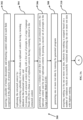
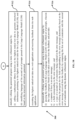
- FIGS. 3A and 3B are flow diagrams illustrating a processor implemented method for large language model based automated test input generation for web applications using the system of FIG. 1 , according to some embodiments of the present disclosure. Steps of the method of FIG. 3 shall be described in conjunction with the components of FIG. 2 .
- the one or more hardware processors 104 receives a plurality of textual documents and extract context related to each field comprised in the plurality of textual documents.
- the plurality of textual documents can be any natural language documents including user manuals, frequently asked questions (FAQ) documents, user stories, user requirement documents and the like, which is represented by the input module 202.
- a context is a block of text relevant to web form elements for which data needs to be generated.
- the one or more hardware processors 104 rephrase the extracted context by:
- the pre-processor 206 implements a plurality of rules to rephrase the context having the meaning identical to the extracted context.
- the purpose of obtaining the rephrased context is to generate multiple programs and validators to be used for refinement.
- the repharser 208 passes each extracted context along with a first set of prompts to the Large Language Model (LLM) 210 to obtain a set of rephrased contexts having a meaning identical to the extracted context.
- LLM Large Language Model
- the difference between the pre-processor 206 and the repharser 208 is that the repharser 208 uses the Large Language Model (LLM) 210 to rephrase the extracted context whereas the pre-processor 206 uses rules to rephrase the extracted context.
- Password should be alphanumeric. Minimum length of 8 characters and maximum of 20 characters.
- the password should contain at least one special character and at least one alphabet in capital.
- Rephrased context C2 by method 1 (implementing a plurality of rules to obtain a rephrased context having a meaning identical to the extracted context):
- the password must be a combination of letters and numbers, with a minimum length of 8 characters and a maximum length of 20 characters.
- the password must include at least one special character and at least one uppercase letter.
- Rephrased contexts by method 2 passing each extracted context along with a first set of prompts to the Large Language Model (LLM) 210 to obtain a set of rephrased contexts having a meaning identical to the extracted context):
- the one or more hardware processors 104 generate a program, a validator and a first set of constraints for each extracted context, the rephrased context and the set of rephrased contexts by passing a second set of prompts to the Large Language Model (LLM) 210.
- the validator is a function generated from each context, wherein the validator implements a plurality of constraints comprised in it. If any constraint comprised in the validator fails, the validator should return false.
- the prompt synthesizer 212 is responsible for creating prompts to be fired.
- the second set of prompts are based on the contexts and wherein the second set of prompts generate constraints, programs, and validators from the Large Language Model (LLM) 210.
- the prompt synthesizer 212 interacts with the static refinement engine 216 or the dynamic refinement engine 222 and receives structural information that can be used to repair an incorrect input leading to repair the generated program. Based on the received structural information about the one or more test data, the prompt synthesizer 212 creates prompts to get information from the Large Language Model (LLM) 210 regarding a possible cause for any error which might occur in the generated program and to fix the generated program.
- LLM Large Language Model
- Table 1 depicts the constraints generated for each context (C1 to C4).
- Table 1 C1 C2 C3 C4 1. Minimum length of 8 characters 1. Combination of letters and numbers 1. Combination of letters and numbers 1. Combination of letters and numbers 2. Maximum length of 20 characters 2. Minimum length of 8 characters 2. Minimum length of 8 characters 2. Minimum length of 8 characters 3. Should bealphanumeric 3. Maximum length of 20 characters 3. Maximum length of 20 characters 3. Maximum length of 20 characters 4. Should containatleast one special character 4. At least one special character 4. At least one special character 4. At least one special character 5. Should contain atleast one alphabet in capital 5. At least one uppercase letter 5. At least one uppercase letter 5. At least one uppercase letter 5. At least one uppercase letter 5. At least one uppercase letter. At least one uppercase letter
- Table 2 to Table 5 depicts the programs generated for each context (C1 to C4).
- Table 6 to Table 9 depicts the validators generated for each context (C1 to C4).
- the one or more hardware processors 104 generate one or more test data by running the generated program.
- test data may be referred as "string” and can be used interchangeably in the present disclosure
- Table 10 depicts one or more test data generated by running the generated program.
- Table 10 Contex t C1 C2 C3 C4 Text data >Q.wo ⁇ f t /y0)Z]a46O-0!48)W -Jc36R @EGKxurf5>E3Vl J 9z!D5Z6Lmmy0 V
- the one or more hardware processors 104 assigns ranking to the one or more test data, wherein the ranking is assigned based on a number of validators which are successfully validated.
- the one or more test data with highest ranking are selected.
- the test data selector 214 takes the first set of constraints, program, validator, and the one or more test data as input for each extracted and rephrased context, wherein the one or more test data is generated by running the generated program and not the Large Language Model (LLM) 210. Further, the test data selector 214 tries to provide ranking to the one or more test data and select the one or more test data with highest ranking.
- LLM Large Language Model
- the ranking for the one or more test data is assigned based on the result of execution of the one or more test data of each generated program on a plurality of validators having the context set.
- the test data selector 214 assigns a corresponding ranking to the one or more test data depending on whether the validator returns, true or false. Further the test data selector 214 assigns a different ranking in case the validator does not return an output or gives an error.
- the highest ranking is assigned to the one or more test data if highest number of validators are successfully validated for the corresponding one or more test data. Based on this, the one or more test data is ranked, and the best one or more test data with highest ranking is selected for each context and executed on available web application.
- Table 11 depicts assigning of ranks to the one or more test data based on the number of validators which are successfully validated.
- Table 11 Contex t C1 C2 C3 C4 Text data >Q.wo ⁇ f t /y0)Z]a46O_0!48)W -Jc36R @EGKxurf5>E3Vl J 9z!D5Z6Lmmy0 V Weight 1 0 2 2
- the one or more hardware processors 104 statically refine the generated program using a static refinement engine by:
- the inputs to the static refinement engine 216 are the first set of constraints, the program, the validator, and the one or more test data with the corresponding ranking.
- the refinement is called static, because it does not use any feedback from the web application and uses the structural data already available and creates prompts along with the prompt synthesizer 212 to refine the programs.
- the static refinement engine 216 initially tries to understand the structural information of the one or more test data through a plurality precise prompts.
- the static refinement engine 216 comprises two types of prompts: precise and generic.
- the plurality of precise prompts is fired using library functions that gives precise answers about the structural information of the one or more test data.
- a plurality of library functions can be used to obtain structural information of the one or more test data.
- the static refinement engine 216 creates a plurality of generic prompts. For e.g., if the one or more test data contains special characters, the static refinement engine 216 creates the generic prompt "Is it allowed in given context?". However, response to this generic prompt to the Large Language Model (LLM) 210 may give vague answers, wherein combination of the plurality of generic prompts and the precise prompts makes the understanding of the structural information of the one or more test data better.
- LLM Large Language Model
- a sample updated prompt for the one or more test data is "The total length of Password as per one of the outputs of the above python program is 24. Is this length as per the allowed range or value according to the above constraints of Password? If so, answer with string "YES" only, and do not give any other explanation. Otherwise, please provide complete python program with the corrected length.”
- a first set of refined programs and test data are generated after the static refinement which are depicted as follows: Table 12 to Table 15 depicts the first set of refined programs and test data generated after static refinement.
- Table 16 depicts assigning corresponding ranks to the one or more test data generated through the first set of refined programs.
- the one or more hardware processors 104 executes the highest ranked one or more test data on a web application and receives feedback from the web application.
- the feedback retriever 220 takes the final test data i.e., the highest ranked one or more test data.
- username X
- the feedback retriever 220 stores the feedback in the form of HyperText Markup Language (HTML), JavaScript, typescript, images, screenshots or combinations thereof. Further, the stored feedback is passed to the dynamic refinement engine 222.
- HTML HyperText Markup Language
- JavaScript JavaScript
- typescript images, screenshots or combinations thereof.
- the inputs to the dynamic refinement engine 222 are the first set of constraints, the program, the validator, the one or more test data with the corresponding ranking and feedback received from the web application after executing the highest ranked one or more test data.
- the feedback can be any form including HTML, JavaScript and the like.
- the feedback is processed and passed to the Large Language Model (LLM) 210 with the third set of prompts.
- the Large Language Model (LLM) 210 takes the content from the feedback and provides a response, wherein the response contains information whether there is any error message or not. Based on the information about the error message, the dynamic refinement engine 222 again interacts with the Large Language Model (LLM) 210 to refine the generated program based on the relevant error message.
- the feedback is then processed and given to the Large Language Model (LLM) 210 using third set of prompts to generate following information:
- the above-mentioned violated constraint (the second set of constraints) is compared with the first set of constraints generated using the second set of prompts.
- One of the ways of comparing the violated constraint with the first set of constraints is by converting both to satisfiability formulas and check for their satisfiability.
- the third set of prompts are provided to the Large Language Model (LLM) 210 to generate a second set of refined programs (the second set of refined programs are nothing but further refined version of the first set of refined programs) and the test data after dynamic refinement.
- LLM Large Language Model
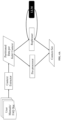
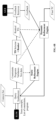
- FIGS. 4A and 4B are block diagrams illustrating the method for large language model based automated test input generation for web applications, according to some embodiments of the present disclosure.
- FIG.4A deals with creating a set of context sets for each context provided in the plurality of textual documents, wherein these contexts are mapped to various fields in the web application.
- the flow chart starts with the preliminary documents from which context are extracted field wise either manually or by using simple pattern matching.
- C i two processes are executed in parallel, wherein in first process, C i is passed to the pre-processor 206 and the plurality of predefined rules are implemented to rephrase the context.
- the plurality of predefined rules has derived manually from analyzing various context and their variants which have the meaning identical to the context.
- the Large Language Model (LLM) 210 is used to rephrase the context which have the meaning identical to the context, wherein this interaction with Large Language Model (LLM) 210 happens via the Large Language Model (LLM) Connector that fires the first set of prompts.
- LLM Large Language Model
- the set of rephrased texts for each context that have same meaning as the extracted context are obtained. Further these context sets (CS) are the input for FIG. 4B .
- Module 1 comprises of the context extractor 204 and the rephraser 208 which takes the documents as an input and rephrases the extracted context to produce the set of same meaning contexts which is depicted in FIG.4A .
- the context sets (CS) are passed to the prompt synthesizer 212 which interacts with the Large Language Model (LLM) connector internally and fires the second set of prompts based on the contexts.
- the second set of prompts generate the first set of constraints (CN) (in natural language), generator program P (which generates the test data that follows the constraints written in the context), test data TD (generated by running the program) and the validator V (that takes a test data as input and returns true/false based on whether the test data satisfies the constraints modelled in the validator). Since the validator V is also generated through Large Language Model (LLM) 210, the validator V may give incorrect results in some cases.
- LLM Large Language Model
- a tuple ⁇ CN, P, TD, V ⁇ is created for each extracted and rephrased context.
- the program generates partially correct test data in most of the cases, which are refined later using the static refinement and the dynamic refinement respectively.
- the tuples are provided as input to the three modules namely the test data selector 214, the static refinement engine 216 and the dynamic refinement engine 222.
- the test data selector 214 is responsible for assigning ranking to the one or more test data and select the one or more test data with highest ranking. The ranking for the one or more test data is assigned based on the result of execution of the one or more test data of each program on all the validators of same context sets (CS).
- Module 2 comprises the test data selector 214 which interacts with the Large Language Model (LLM) 210 to generate multiple programs for all given contexts and rank them using validators.
- LLM Large Language Model
- the output of the test data selector 214 is passed to the static refinement engine 216, the feedback retriever 220 and the dynamic refinement engine 222.
- the static refinement engine 216 and the dynamic refinement engine 222 work independent of each other.
- the static refinement engine 216 is called in a loop and in every iteration, the static refinement engine 216 understands more about the generated one or more test data and expected one or more test data. With every iteration, the static refinement engine 216 tries to obtain refined version of the program so that the input provided to the dynamic refinement engine 222 also improves. Further, only the static refinement may not be enough in certain cases to generate correct test data as the static refinement engine 216 cannot guarantee the correctness. For this reason, the present disclosure also includes the dynamic refinement engine 222 which uses the feedback received from the web application which assures of obtaining correct test data.
- Module 3 uses the data generated by module 2 and updates the second set of prompts along with prompt synthesizer 212 to get more information and refine the programs.
- the highest ranked one or more test data is passed to the feedback retriever 220, after having a few iterations with the static refinement.
- the feedback retriever 220 executes the highest ranked one or more test data on the web application.
- the present disclosure may use any automation scripts like selenium scripts for execution and stores the feedback in form of HTML, JavaScript, typescript, images, or screenshots, based on the type of the web application under test.
- the feedback is then passed to the dynamic Refinement engine 222.
- the dynamic refinement engine 222 comprises information about the first set of constraints, the programs, the validators, ranked one or more test data and the feedback.
- the feedback can be any form like HTML, javascript and the like, and the feedback is generally not in a format that can be readily used for refinement. Hence, the feedback is processed through few simple scripts which extracts important text from entire feedback page. Resulting text is then passed to the Large Language Model (LLM) 210 with the third set of prompts through the prompt synthesizer 212.
- the Large Language Model (LLM) 210 returns the information related to the error messages and successful execution, which comprises whether there is any error message, what is that error message and what constraint is violated. Based on the information about the error message or successful execution, the dynamic refinement engine 222 again interacts with the Large Language Model (LLM) 210 to refine the program.
- the dynamic refinement engine 222 investigates the programs and the one or more test data to fix them or interact with the Large Language Model (LLM) 210 to fix them.
- the dynamic refinement engine 222 also uses the information about the constraint which is violated and compares the violated constraint (the second set of constraints) with the first set of constraints to refine the program. After every iteration of the dynamic refinement, refined version of programs is obtained, and the one or more test data are passed to the feedback retriever 220 for executing. Further, inside every iteration of the dynamic refinement, loop of the static refinement can also be executed as a nested loop.
- the static refinement engine 216 and the dynamic refinement engine 222 produces the final test inputs or test data for all given context with maximum confidence of having the correct test data. Confidence of having the correct test data is determined by a combination of ranking process (ranking process used by the test data selector 214) and successful feedback from the web application.
- the dynamic refinement terminates when either all runs on the graphical user interface (GUI) 218 returns successful execution, or some fixed numbers of iterations have exhausted.
- GUI graphical user interface
- the feedback retriever 220 interacts with given web application and run the test data on the web application.
- the feedback retriever 220 receives the output from the web application and provides the feedback on generated test data, which is passed to the dynamic refinement engine 222.
- Module 4 maps to flow 'Ranked TD -> Feedback retriever -> Feedback'
- Module 5 uses the data generated by module 2 and the feedback retriever 220 and creates prompts along with prompt synthesizer 212 to get more information and refine the programs.
- the present disclosure provides a system and method for large language model based automated test input generation for web applications.
- the embodiment of present disclosure herein addresses unresolved problem of the automated generation of test data from preliminary documents which includes user manuals, frequently asked questions (FAQ) documents, user stories, user requirement documents and the like.
- the embodiment thus provides a system to generate test data which can be used for testing the given web application.
- the embodiments herein include the test data selector for assigning ranking to the one or more test data and select the test data with highest ranking based on the result of execution of test data of each program on all the validators of same context set.
- the present disclosure further includes the static refinement engine which calls the mathematical library function on the highest ranked one or more test data to generate structural information and modify the language of the second set of prompts passed to the Large Language Model (LLM) 210 based on the structural information generated.
- the present disclosure further includes the dynamic refinement engine which refines the generated program by passing feedback generated by executing the highest ranked one or more test data on a web application and refining the response obtained.
- Such computer-readable storage means contain program-code means for implementation of one or more steps of the method, when the program runs on a server or mobile device or any suitable programmable device.
- the hardware device can be any kind of device which can be programmed including e.g., any kind of computer like a server or a personal computer, or the like, or any combination thereof.
- the device may also include means which could be e.g., hardware means like e.g., an application-specific integrated circuit (ASIC), a field-programmable gate array (FPGA), or a combination of hardware and software means, e.g., an ASIC and an FPGA, or at least one microprocessor and at least one memory with software processing components located therein.
- the means can include both hardware means and software means.
- the method embodiments described herein could be implemented in hardware and software.
- the device may also include software means. Alternatively, the embodiments may be implemented on different hardware devices, e.g., using a plurality of CPUs.
- the embodiments herein can comprise hardware and software elements.
- the embodiments that are implemented in software include but are not limited to, firmware, resident software, microcode, etc.
- the functions performed by various components described herein may be implemented in other components or combinations of other components.
- a computer-usable or computer readable medium can be any apparatus that can comprise, store, communicate, propagate, or transport the program for use by or in connection with the instruction execution system, apparatus, or device.
- a computer-readable storage medium refers to any type of physical memory on which information or data readable by a processor may be stored.
- a computer-readable storage medium may store instructions for execution by one or more processors, including instructions for causing the processor(s) to perform steps or stages consistent with the embodiments described herein.
- the term "computer-readable medium” should be understood to include tangible items and exclude carrier waves and transient signals, i.e., be non-transitory. Examples include random access memory (RAM), read-only memory (ROM), volatile memory, nonvolatile memory, hard drives, CD ROMs, DVDs, flash drives, disks, and any other known physical storage media.
Landscapes
- Engineering & Computer Science (AREA)
- Theoretical Computer Science (AREA)
- Physics & Mathematics (AREA)
- General Engineering & Computer Science (AREA)
- General Physics & Mathematics (AREA)
- Quality & Reliability (AREA)
- Health & Medical Sciences (AREA)
- General Health & Medical Sciences (AREA)
- Computational Linguistics (AREA)
- Artificial Intelligence (AREA)
- Computer Hardware Design (AREA)
- Biomedical Technology (AREA)
- Evolutionary Computation (AREA)
- Data Mining & Analysis (AREA)
- Life Sciences & Earth Sciences (AREA)
- Biophysics (AREA)
- Molecular Biology (AREA)
- Computing Systems (AREA)
- Mathematical Physics (AREA)
- Software Systems (AREA)
- Audiology, Speech & Language Pathology (AREA)
- Debugging And Monitoring (AREA)
Applications Claiming Priority (1)
| Application Number | Priority Date | Filing Date | Title |
|---|---|---|---|
| IN202321051754 | 2023-08-01 |
Publications (1)
| Publication Number | Publication Date |
|---|---|
| EP4567659A1 true EP4567659A1 (de) | 2025-06-11 |
Family
ID=91699948
Family Applications (1)
| Application Number | Title | Priority Date | Filing Date |
|---|---|---|---|
| EP24184511.4A Pending EP4567659A1 (de) | 2023-08-01 | 2024-06-26 | System und verfahren zur automatischen testdatenerzeugung für webanwendungen auf der basis eines grosssprachenmodells |
Country Status (2)
| Country | Link |
|---|---|
| US (1) | US20250045150A1 (de) |
| EP (1) | EP4567659A1 (de) |
Families Citing this family (3)
| Publication number | Priority date | Publication date | Assignee | Title |
|---|---|---|---|---|
| CN120086109B (zh) * | 2025-04-30 | 2026-04-17 | 黎明职业大学 | 一种基于多模态感知的APP自动化测试方法及Agent系统 |
| CN120803962B (zh) * | 2025-09-15 | 2025-12-09 | 杭州赛福纳斯科技有限公司 | 操作系统内核导出函数自动化测试生成平台和方法 |
| CN120872845B (zh) * | 2025-09-24 | 2025-12-02 | 华中科技大学 | 一种基于大模型的JavaScript上下文感知测试生成方法及系统 |
Citations (2)
| Publication number | Priority date | Publication date | Assignee | Title |
|---|---|---|---|---|
| US20180018741A1 (en) * | 2016-07-15 | 2018-01-18 | Intuit Inc. | System and method for automatically generating calculations for fields in compliance forms |
| US20220091968A1 (en) * | 2020-09-01 | 2022-03-24 | Rajat Kumar | System and method for automated generation of test cases and test data for validating a software application |
-
2024
- 2024-06-26 EP EP24184511.4A patent/EP4567659A1/de active Pending
- 2024-07-03 US US18/764,020 patent/US20250045150A1/en active Pending
Patent Citations (2)
| Publication number | Priority date | Publication date | Assignee | Title |
|---|---|---|---|---|
| US20180018741A1 (en) * | 2016-07-15 | 2018-01-18 | Intuit Inc. | System and method for automatically generating calculations for fields in compliance forms |
| US20220091968A1 (en) * | 2020-09-01 | 2022-03-24 | Rajat Kumar | System and method for automated generation of test cases and test data for validating a software application |
Also Published As
| Publication number | Publication date |
|---|---|
| US20250045150A1 (en) | 2025-02-06 |
Similar Documents
| Publication | Publication Date | Title |
|---|---|---|
| EP4567659A1 (de) | System und verfahren zur automatischen testdatenerzeugung für webanwendungen auf der basis eines grosssprachenmodells | |
| EP3588279B1 (de) | Automatisierte extraktion von in einem software-anwendungscode eingebetteten regeln durch maschinenlernen | |
| US20230418566A1 (en) | Programmatically generating evaluation data sets for code generation models | |
| US11042467B2 (en) | Automated searching and identification of software patches | |
| US20140372963A1 (en) | Method and apparatus for customized software development kit (sdk) generation | |
| US20230418565A1 (en) | Validating and providing proactively generated code suggestions | |
| CN109145235B (zh) | 用于解析网页的方法、装置及电子设备 | |
| US20230418567A1 (en) | Constrained prefix matching for generating next token predictions | |
| US12142275B2 (en) | Enabling speech interactions on web-based user interfaces | |
| CN106406844A (zh) | 实现通讯交互平台公众号菜单的方法和装置 | |
| US20080059463A1 (en) | System and Method For Launching A Specific Program From A Simple Click On A String Of Characters | |
| US20200320092A1 (en) | Regular expression generation for negative example using context | |
| US12260176B2 (en) | System and method for extracting issues based on trouble ticket mining | |
| US20250053497A1 (en) | Block anchors for online log parsing | |
| US20230419036A1 (en) | Random token segmentation for training next token prediction models | |
| US20240419804A1 (en) | Secure prompt recommendation using reverse engineering security prompts | |
| CN120353711A (zh) | 测试用例生成方法、装置、电子设备及存储介质 | |
| WO2025221362A1 (en) | Automatic system for new event identification using large language models | |
| EP4303719B1 (de) | Automatische erzeugung von webanwendungen auf der basis von aus benutzeranforderungen erzeugten wireframe-metadaten | |
| CN118377558A (zh) | 接口调用方法、装置、设备、介质和程序产品 | |
| CN117573613A (zh) | 数据格式转换方法、装置、存储介质及电子设备 | |
| US20150324333A1 (en) | Systems and methods for automatically generating hyperlinks | |
| CN112182470B (zh) | 网页构建方法、装置和设备 | |
| US20260037274A1 (en) | Method and system for dynamic guardrails framework with plug-in for large language models (llms) | |
| CN117235345B (zh) | 开放版式文档ofd搜索方法、装置及电子设备 |
Legal Events
| Date | Code | Title | Description |
|---|---|---|---|
| PUAI | Public reference made under article 153(3) epc to a published international application that has entered the european phase |
Free format text: ORIGINAL CODE: 0009012 |
|
| STAA | Information on the status of an ep patent application or granted ep patent |
Free format text: STATUS: THE APPLICATION HAS BEEN PUBLISHED |
|
| AK | Designated contracting states |
Kind code of ref document: A1 Designated state(s): AL AT BE BG CH CY CZ DE DK EE ES FI FR GB GR HR HU IE IS IT LI LT LU LV MC ME MK MT NL NO PL PT RO RS SE SI SK SM TR |
|
| STAA | Information on the status of an ep patent application or granted ep patent |
Free format text: STATUS: REQUEST FOR EXAMINATION WAS MADE |
|
| 17P | Request for examination filed |
Effective date: 20251209 |