EP4567760A1 - Systèmes de billets de loterie instantanée dématerialisés et leurs procédés de fonctionnement - Google Patents
Systèmes de billets de loterie instantanée dématerialisés et leurs procédés de fonctionnement Download PDFInfo
- Publication number
- EP4567760A1 EP4567760A1 EP24154919.5A EP24154919A EP4567760A1 EP 4567760 A1 EP4567760 A1 EP 4567760A1 EP 24154919 A EP24154919 A EP 24154919A EP 4567760 A1 EP4567760 A1 EP 4567760A1
- Authority
- EP
- European Patent Office
- Prior art keywords
- virtual
- ticket
- instant lottery
- lottery
- lottery ticket
- Prior art date
- Legal status (The legal status is an assumption and is not a legal conclusion. Google has not performed a legal analysis and makes no representation as to the accuracy of the status listed.)
- Withdrawn
Links
Images










Classifications
-
- G—PHYSICS
- G07—CHECKING-DEVICES
- G07F—COIN-FREED OR LIKE APPARATUS
- G07F17/00—Coin-freed apparatus for hiring articles; Coin-freed facilities or services
- G07F17/32—Coin-freed apparatus for hiring articles; Coin-freed facilities or services for games, toys, sports, or amusements
- G07F17/3286—Type of games
- G07F17/329—Regular and instant lottery, e.g. electronic scratch cards
-
- G—PHYSICS
- G07—CHECKING-DEVICES
- G07F—COIN-FREED OR LIKE APPARATUS
- G07F17/00—Coin-freed apparatus for hiring articles; Coin-freed facilities or services
- G07F17/32—Coin-freed apparatus for hiring articles; Coin-freed facilities or services for games, toys, sports, or amusements
- G07F17/3202—Hardware aspects of a gaming system, e.g. components, construction, architecture thereof
- G07F17/3204—Player-machine interfaces
- G07F17/3211—Display means
- G07F17/3213—Details of moving display elements, e.g. spinning reels, tumbling members
-
- G—PHYSICS
- G07—CHECKING-DEVICES
- G07F—COIN-FREED OR LIKE APPARATUS
- G07F17/00—Coin-freed apparatus for hiring articles; Coin-freed facilities or services
- G07F17/32—Coin-freed apparatus for hiring articles; Coin-freed facilities or services for games, toys, sports, or amusements
- G07F17/3225—Data transfer within a gaming system, e.g. data sent between gaming machines and users
- G07F17/323—Data transfer within a gaming system, e.g. data sent between gaming machines and users wherein the player is informed, e.g. advertisements, odds, instructions
-
- G—PHYSICS
- G07—CHECKING-DEVICES
- G07F—COIN-FREED OR LIKE APPARATUS
- G07F17/00—Coin-freed apparatus for hiring articles; Coin-freed facilities or services
- G07F17/32—Coin-freed apparatus for hiring articles; Coin-freed facilities or services for games, toys, sports, or amusements
- G07F17/3241—Security aspects of a gaming system, e.g. detecting cheating, device integrity, surveillance
-
- G—PHYSICS
- G07—CHECKING-DEVICES
- G07F—COIN-FREED OR LIKE APPARATUS
- G07F17/00—Coin-freed apparatus for hiring articles; Coin-freed facilities or services
- G07F17/32—Coin-freed apparatus for hiring articles; Coin-freed facilities or services for games, toys, sports, or amusements
- G07F17/326—Game play aspects of gaming systems
- G07F17/3267—Game outcomes which determine the course of the subsequent game, e.g. double or quits, free games, higher payouts, different new games
Definitions
- the present disclosure relates to virtual instant lottery tickets, and more particularly to virtual instant lottery ticket creation, selling, transferring, verification, and redemption systems and methods that facilitate virtual instant lottery tickets for instant lottery games that may or may not also include physical instant lottery tickets.
- One type of a physical instant lottery ticket of an instant lottery game may include a substrate with variable indicia on the substrate and a scratch-off-coating ("SOC") covering the variable indicia.
- the variable indicia may be letters, numbers, symbols, images, or other indicia that indicate whether the physical instant lottery ticket is a winning lottery ticket or not.
- the variable indicia of the physical instant lottery ticket may indicate one or more awards according to a predetermined award structure for the instant lottery game.
- the award structure for such instant lottery game may, for example, include one or more instant lottery tickets associated with large value awards, one or more instant lottery tickets associated with lesser value awards, and one or more instant lottery tickets that are not associated with any awards.
- the purpose of the SOC is to ensure that the variable indicia cannot be read or otherwise determined without first removing the SOC, thereby assisting in ensuring that the instant lottery ticket is secure against fraudulent activity such as a person picking out winning instant lottery tickets from packs of unsold instant lottery tickets.
- the holder (such as the player) of the instant lottery ticket may scratch off the SOC to reveal the variable indicia and to determine if the instant lottery ticket is a winning ticket. By removing this SOC, the holder of the instant lottery ticket can instantly determine if the instant lottery ticket is a winning ticket instead of waiting for a future drawing.
- These types of instant lottery tickets are often referred to as scratch-off tickets and these types of lottery games are often referred to as scratch-off lottery games or scratch-off games.
- the present disclosure relates to a lottery ticket system for providing an instant lottery game comprising a virtual instant lottery ticket.
- the lottery ticket system includes: a virtual instant ticket factory system comprising a first processor and first memory device operable to create a digital object representing the virtual instant lottery ticket for the instant lottery game based on a set of inputs for the creation of the virtual instant lottery ticket; a virtual coating key factory system separate and independent from the virtual instant ticket factory system and comprising a second processor and second memory device operable to provide an encryption key for a virtual scratch-off-coating for the digital object, and responsive to an authorized request remove the virtual scratch-off-coating from the digital object, wherein the virtual coating key factory is configured to remove the virtual scratch-off-coating from the digital object only one time to duplicate the effect of a removal of a scratch-off-coating of the physical instant lottery ticket; and a lottery owner system separate and independent from the virtual instant ticket factory system and the virtual coating key factory system, and comprising a third processor and third memory device operable to receive a scratch off
- the present disclosure relates to a lottery ticket system for providing an instant lottery game comprising a virtual instant lottery ticket.
- the lottery ticket system includes: a virtual instant ticket factory system comprising a first processor and first memory device operable to create a digital object representing the virtual instant lottery ticket for the instant lottery game based on a set of inputs for the creation of the virtual instant lottery ticket; a virtual coating key factory system separate and independent from the virtual instant ticket factory system and comprising a second processor and second memory device operable to provide an encryption key for a virtual scratch-off-coating for the digital object, and responsive to an authorized request remove the virtual scratch-off-coating from the digital object, wherein the virtual coating key factory is configured to remove the virtual scratch-off-coating from the digital object only one time to duplicate the effect of a removal of a scratch-off-coating of the physical instant lottery ticket; and a lottery owner system separate and independent from the virtual instant ticket factory system and the virtual coating key factory system, and comprising a third processor and third memory device operable to receive a scratch off
- the user interface is configured to receive user input regarding a digital reveal of a result of the virtual instant lottery ticket.
- the virtual instant ticket factory system and the virtual coating key factory system are configured to communicate with each other, and the virtual instant ticket factory system and the lottery owner system are configured to communicate with each other.
- the present disclosure relates to a lottery ticket system for providing an instant lottery game comprising a physical instant lottery ticket and a virtual instant lottery ticket.
- the lottery ticket system includes: a virtual instant ticket factory system comprising a first processor and first memory device operable to create a digital object representing the virtual instant lottery ticket for the instant lottery game based on a set of inputs for the creation of the virtual instant lottery ticket; a virtual coating key factory system separate and independent from the virtual instant ticket factory system and comprising a second processor and second memory device operable to provide an encryption key for a virtual scratch-off-coating for the digital object, and responsive to an authorized request remove the virtual scratch-off-coating from the digital object, wherein the virtual coating key factory is configured to remove the virtual scratch-off-coating from the digital object only one time to duplicate the effect of a removal of a scratch-off-coating of the physical instant lottery ticket; and a lottery owner system separate and independent from the virtual instant ticket factory system and the virtual coating key factory system, and comprising a third processor and third memory device
- the present disclosure relates to an instant lottery ticket system and method for facilitating an instant lottery game with virtual instant lottery tickets, and more particularly to a system and method for facilitating virtual instant lottery ticket creation, virtual instant lottery ticket selling, virtual instant lottery ticket transferring, virtual instant lottery ticket scratching, and virtual instant lottery ticket redemption.
- the present disclosure relates to an instant lottery ticket system and method for facilitating an instant lottery game with virtual and physical instant lottery tickets, and more particularly to a system and method for facilitating virtual and physical instant lottery ticket creation, virtual and physical instant lottery ticket selling, virtual and physical instant lottery ticket transferring, virtual and physical instant lottery ticket scratching, and virtual and physical instant lottery ticket redemption.
- the instant lottery ticket system and method of the present disclosure enables the virtual instant lottery tickets of an instant lottery game to function like the physical instant lottery tickets of that same instant lottery game, and thus enables the same instant lottery game to be played using both physical and virtual instant lottery tickets.
- the instant lottery ticket system and method of the present disclosure can be employed to provide virtual instant lottery tickets of an instant lottery game that only includes virtual instant lottery tickets (and not physical lottery tickets).
- the instant lottery ticket system and method of the present disclosure can be employed to additionally provide physical instant lottery tickets of an instant lottery game in addition to the virtual instant lottery tickets for that instant lottery game.
- the instant lottery ticket system and method of various embodiments of the present disclosure provides: (1) the seamless integration with existing physical instant lottery game and ticket systems (and processes thereof); (2) substantially the same overall player experience as provided with physical instant lottery tickets; and (3) improved security and protection against fraudulent activity, as further described below.
- Various embodiments of the instant lottery ticket system and method of the present disclosure can be employed to provide virtual instant lottery tickets and that provide a user interface configured to display the outcome of the digital ticket to the player (referred to herein as a "digital reveal") and enabling the player to customize and personalize the digital reveal, such as but not limited to one or more sounds (such as music), haptics, and/or images of the digital reveal.
- a digital reveal configured to display the outcome of the digital ticket to the player
- the player referred to herein as a "digital reveal”
- the player to customize and personalize the digital reveal, such as but not limited to one or more sounds (such as music), haptics, and/or images of the digital reveal.
- Various embodiments of the instant lottery ticket system and method of the present disclosure can be employed to integrate virtual instant lottery tickets into one or more second chance engines or other systems, where the player has the option to enter a virtual non-winning ticket into one or more second chance promotions through an automated registration interface provided by the system.
- Various embodiments of the instant lottery ticket system and method of the present disclosure can be employed to enable a player to purchase a virtual instant lottery ticket at a retail location, where the retail location also provides an access key to the virtual instant lottery ticket.
- the retail location can include a self-serve kiosk, a terminal operatable by a clerk, or other computerized hardware. The player can then access the virtual instant lottery ticket at a time and place of their choosing.
- Various embodiments of the instant lottery ticket system and method of the present disclosure can be employed to enable a lottery to offer the same lottery game in both a physical lottery ticket form and a virtual lottery ticket form such that either the odds of winning a particular award amount are the same in both the physical and virtual forms of the game.
- a portion of the game can be produced as virtual instant lottery tickets after the game has been generated.
- Various embodiments of the instant lottery ticket system and method of the present disclosure can be employed to provide one or more security keys for a lottery ticket itself wherein for each instant lottery ticket, the respective security key is needed to establish if the instant lottery ticket is a winning or non-winning instant lottery ticket.
- various physical instant lottery tickets include a substrate with variable indicia on the substrate and a scratch-off-coating ("SOC") covering the variable indicia.
- This variable indicia indicates any awards associated with the physical instant lottery ticket and is concealed under the SOC.
- the SOC prevents the variable indicia from being read or otherwise determined without the SOC being first removed.
- the SOC is thus one feature that is used to secure the physical instant lottery ticket against an unauthorized person determining the variable indicia and picking out winning instant lottery tickets from instant lottery ticket packs (or extracting other confidential information from unsold instant lottery tickets). By removing the SOC, an authorized player of the physical instant lottery ticket can instantly determine if the physical instant lottery ticket is a winning ticket.
- this removal generally indicates that a player has already played the physical instant lottery ticket or that the physical instant lottery ticket has been tampered with.
- the authorized player is either: (1) a person who purchased the instant lottery ticket, or (2) a person who receives the instant lottery ticket from a person who purchased the instant lottery ticket, and will generally be referred to herein as the player. Billions of scratch-off instant lottery tickets of this type are created and sold every year around the world.
- FIG. 1 One example single game instant lottery ticket is illustrated in FIG. 1 .
- This example single game instant lottery ticket 10 includes: (1) a ticket substrate 11 having a front surface 12; (2) a predefined scratch-off area 13 defined on the front surface 12; and (3) a plurality of SOC areas 14 covering variable indicia (not shown) on the front surface 12 of the substrate 11 in the predefined scratch-off area 13.
- the front surface 12 or the back surface (not shown or labeled) of the ticket substrate 11 may include: (a) various additional static indicia such as game information, and/or (b) variable lottery ticket information indicia, such as but not limited to text, one or more ticket numbers, one or more ticket barcodes, and other instant lottery ticket information that is either or both human readable and/or machine readable. Certain of this information can identify the instant lottery ticket, the set of the instant lottery ticket, the run of the instant lottery ticket, and/or the group of instant lottery tickets that the instant lottery ticket is part of, and may provide other inventory control, verification, validation, and/or redemption information.
- various additional static indicia such as game information
- variable lottery ticket information indicia such as but not limited to text, one or more ticket numbers, one or more ticket barcodes, and other instant lottery ticket information that is either or both human readable and/or machine readable. Certain of this information can identify the instant lottery ticket, the set of the instant lottery ticket, the run of the instant lottery ticket, and/
- Such instant lottery tickets can include multiple predefined scratch-off areas, multiple sets of variable indicia printed on the predefined scratch-off areas, and multiple scratch-off-coatings covering the sets of variable indicia.
- Various known instant lottery tickets are multiple game lottery tickets, and include multiple instant lottery games.
- the instant lottery tickets of the present disclosure are described as single game instant lottery tickets for brevity, but it should appreciated that the present disclosure can also provide multiple game instant lottery tickets.
- Instant lottery ticket manufacturers often create instant lottery games that include multiple pools where each pool has an award structure. Each pool is divided into multiple packs of physical instant lottery tickets where each pack contains a preset quantity of instant lottery tickets. For example, an instant lottery game may include 2,000,000 instant lottery tickets divided into 10 pools where: (a) each pool contains 200,000 of the instant lottery tickets, (b) each pool contains 1000 packs, and (c) each pack contains 200 of the instant lottery tickets. It should be appreciated that instant lottery games can be organized in different ways and can include sets of packs not grouped into pools.
- Each individual pack of instant lottery tickets (which are sometimes called books), is packaged by the manufacturer for delivery to a lottery administration or a lottery sales agent (such as a retail lottery sales agent that receives one or more packaged packs of instant lottery tickets, opens the packaged pack(s), and sells the individual instant lottery tickets of the pack(s) to players).
- a lottery sales agent such as a retail lottery sales agent that receives one or more packaged packs of instant lottery tickets, opens the packaged pack(s), and sells the individual instant lottery tickets of the pack(s) to players).
- image or "ticket image” is sometimes used by lottery ticket manufacturers and herein to collectively indicate some or all of the variable indicia (including the variable indicia that indicates any awards and the variable indicia that indicates validation numbers or other variable information) of a physical instant lottery ticket.
- This image for each instant lottery ticket is placed on that instant lottery ticket during manufacture of that instant lottery ticket.
- the image may or may not include the common graphics on all of the instant lottery tickets of an instant lottery game that indicate information like the name or features of that instant lottery game.
- each instant lottery ticket is formed with an image that also indicates ticket identification data such as: (a) the instant lottery game number, (b) the ticket number, and (c) the pack number.
- the image may also indicate: (i) the ticket validation number, and (ii) the barcode.
- the barcode typically represents both the inventory information (such as the pack number) and the validation number (and is often on the back surface of the substrate of the physical instant lottery ticket).
- the data for each instant lottery ticket including the ticket identification data, the variable indicia data, the validation number data, and the barcode data, is generated by one or more programed computers of the instant lottery game system. During the manufacturing process, for each physical instant lottery ticket of an instant lottery game, all of this variable indicia representing this data is placed on the substrate of that instant lottery ticket and subsequently covered by the SOC.
- the validation number of a physical instant lottery ticket is typically an encrypted number that serves to uniquely identify that instant lottery ticket, and therefore the other data related to that particular instant lottery ticket so that the lottery system can determine if, in fact, that particular instant lottery ticket is a winning ticket when a holder (such as a player) of that instant lottery ticket tries to redeem that instant lottery ticket for an award.
- This instant lottery ticket manufacturing method is sometimes called the single pass security method where there is a defined relationship between the ticket identification data and the validation number data on each instant lottery ticket.
- This relationship may algorithmic or may be in a set of files that associate the ticket identification data with the validation number data for each of the instant lottery tickets of an instant lottery game.
- This single pass security method determines any award associated with each instant lottery ticket submitted for redemption based on either: (1) the ticket identification data, or (2) the validation number.
- the instant lottery tickets Since the award value of each instant lottery ticket is determined prior to the time of manufacture of that instant lottery ticket, there is a continuing need for the instant lottery tickets to be manufactured with extraordinary security precautions to try to prevent fraudulent activity.
- one of the significant security risks is from potential insider fraudulent activity.
- an employee of the manufacturer that has access to the programed computer of the instant lottery game system may improperly determine the relevant ticket identification numbers for the instant lottery tickets associated with very large wins, and then access the instant lottery ticket shipment/logistics database of the instant lottery game system to determine which instant lottery ticket seller(s)) such large award lottery ticket(s) has/have been or will be delivered to, and take steps to acquire those instant lottery ticket(s).
- an employee of the manufacturer may try to obtain the winning instant lottery ticket from the pack that such ticket is in prior to delivery to a lottery ticket seller.
- the dual security method has been used to hide (such as by eliminating) the relationship between the ticket identification data and the validation number data.
- the ticket identification data on each instant lottery ticket (specifically including the pack number) cannot be used to determine if any award (such as a large award) is associated with that instant lottery ticket; however, the validation number data on each instant lottery ticket can still be used to determine any award associated with that instant lottery ticket.
- Lottery tickets made using this method have a pack number on each of the instant lottery tickets that is different than the pack number originally assigned by the programmed computer of the instant lottery ticket system that used in the instant lottery ticket creation process.
- This security process is configured to irreversibly break the relationship between the pack number and the validation number on each instant lottery ticket.
- One dual security method includes employing a shuffling routine using a shuffle key as an input variable to independently shuffle the pack numbers in a pool after they are computer generated by the lottery ticket system.
- the result is a set of pack numbers on the instant lottery tickets that are unknown to those having access to the programmed computer of the instant lottery game system.
- the shuffle keys are not recorded or maintained by the manufacturer's programming staff and as a result, the dual security is essentially irreversible. The possibility of anyone on either the manufacturer's or the lottery administration's staff being able to illicitly identify the winning instant lottery tickets by using the pack and/or ticket numbers on the instant lottery tickets is thus substantially reduced.
- KDS keyed dual security method
- the KDS method decouples the index used to manage each instant lottery ticket as "data” from the index used to manage the same instant lottery ticket as "image" (as image is described above).
- the instant lottery game system 10 employs a KDS method that splits certain operations into two domains that are labeled the P1 Domain 20 and the P2 Domain 60.
- the P1 Domain implements all of the software, processes, and audits to manage, control, and certify the proper generation of the instant lottery game and the relevant award structure.
- the P1 Domain 20 thus manages the instant lottery tickets as "data" information.
- the P2 Domain 60 manages the instant lottery tickets as "image” information, and handles all the manufacturing processes (including any printing and coating processes) as well as the logistics and shipping processes.
- the KDS method decouples these two domains by using two different ticket indexing mechanisms in the two domains, so that the ticket identifiers used while managing the instant lottery tickets as data (and hence while generating the instant lottery ticket awards) are unlinkable to the identifiers used while manufacturing and shipping the physical instant lottery tickets themselves.
- this permutation may have a non-straightforward format-preserving structure, as the ticket numbering/indexing configuration can be organized into a complex hierarchical structure.
- an instant lottery game may, for example, be formed using pools, each with a given award structure, and one or more of the pools may be in turn divided into lots (further including multiple packs) to ease shipment and quality control.
- the specific structure of such a permutation is not pertinent.
- the actual secure pseudo random permutation may have to be managed by an independent trusted third party system.
- the trusted third party system is referred to as KDS translator server 50 that enforces the ticket indices permutation and securely stores the permutation key so as to enable reversion of a subset of ticket indices, if and when needed.
- Various embodiments of the present disclosure provide secure instant lottery game systems and methods that provide instant lottery games that employ virtual instant lottery tickets, and for instant lottery games that employ both physical instant lottery tickets and virtual instant lottery tickets. Despite being configured for seamless integration with a physical ticket manufacturing process, various embodiments of the present disclosure endeavor to provide virtual instant lottery tickets that are even more secure than physical instant lottery tickets for the same instant lottery game.
- An instant lottery game that employs virtual instant lottery tickets of the present disclosure may sometimes be referred to herein as (or may be considered to be) a dematerialized instant lottery game.
- a virtual instant lottery ticket of the present disclosure may sometimes be referred to herein as (or may be considered to be) a dematerialized instant lottery ticket.
- dematerialized or dematerialization are used herein to stress that one issue solved by various embodiments of the present disclosure is broader than just providing an online version of an instant lottery game.
- an instant lottery game that mimics certain physical processes and specifically provides an instant lottery ticket that can be: (1) individually selectable among a pack of available virtual instant lottery tickets (such as on a virtual shop shelf); (2) bought and transferred as a digital object to a player device; (3) transferred from that first player device to another or second player device (such as when the player (e.g., owner) of that first player device gifts the virtual instant lottery ticket to the player (e.g., owner) of that second player device); and (4) scratchable and redeemable at any arbitrary later time, all with strict guarantees on the anonymity of each such player, exactly as in the case of a physical instant lottery ticket.
- Various embodiments of the present disclosure relate to instant lottery game systems and methods that provide manufacturing and tracking processes that are backward compatible with the physical instant lottery ticket manufacturing processes (e.g., the virtual part of the instant lottery game becomes a branch of an already existing physical instant lottery game rather than a brand new lottery game, or that is a branch of a brand new lottery game).
- Various embodiments of the present disclosure relate to instant ticket lottery game systems and methods that employ various secure processes including but not limited to what is referred to herein as a secret envelope method (described below) that enables dematerialization of and distribution of such dematerialized instant lottery tickets.
- the secret envelope method may include creating a multi-layered encrypted version of a virtual instant lottery ticket, and dividing the information necessary to decrypt between different actors in the process to avoid a single actor having all of the information needed.
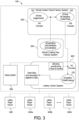
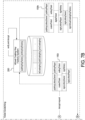
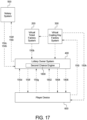
- This example instant lottery game system 100 generally includes: (1) a virtual instant ticket factory system 200; (2) a virtual coating key factory system 300; (3) a lottery owner system 400; and (4) a notary system 500, configured to co-act to enable a plurality of players to play an instant lottery game including a plurality of virtual instant lottery tickets (not shown in FIG. 3 ) via a plurality of lottery player devices such as lottery player devices 600, 600a, 600b, ... 600n. Any suitable quantity of players via respective player devices may play the instant lottery game provided by the present disclosure.
- This example system facilitates an instant lottery game with both physical and virtual instant lottery tickets, and more particularly facilitates instant lottery ticket creation, virtual instant lottery ticket selling, virtual instant lottery ticket transferring, virtual instant lottery ticket scratching, and virtual instant lottery ticket redemption.
- This example system provides virtual instant lottery tickets of an instant lottery game that function like the physical instant lottery tickets of that same instant lottery game.
- This example system can alternatively be employed to provide virtual instant lottery tickets of an instant lottery game that only includes virtual instant lottery tickets (and not physical lottery tickets).
- one virtual instant lottery ticket of one instant lottery game and one lottery player device 600 are generally used herein for explanation purposes and for brevity; however, it should be appreciated that such explanations apply to each of the plurality of virtual instant lottery tickets of each of a plurality of instant lottery games and that such explanations apply to each of the lottery player devices (that are sometimes referred to herein as player devices).
- each of: (1) the virtual instant ticket factory system 200; (2) the virtual coating key factory system 300; (3) the lottery owner system 400; (4) the notary system 500; (5) the lottery player devices 600, 600a, 600b, ... 600n includes one or more processors (not shown) and one or more memory devices (not shown) that store a plurality of instructions (not shown) that are executable by the one or more processors, and that when executed cause the one or more processors to perform the functions described herein for each respective system or device. It should thus be appreciated that these systems and devices are configured to or operable to perform the various respective functions described herein via the execution by the respective processors of the respective instructions. It should also be appreciated that for brevity, various of the functions of each of the systems and devices are described herein as the respective system or device performing such function without referencing the processor, memory devices, or instructions that enable such system or device to perform such functions.
- each of: (1) the virtual instant ticket factory system 200; (2) the virtual coating key factory system 300; (3) the lottery owner system 400; (4) the notary system 500; (5) the lottery player devices 600, 600a, 600b, ... 600n includes one or more display devices (not shown) and one or more input devices (not shown) that are in communication with and/or controlled by the respective processors, and that enable respective users such as operators and players of such systems and devices to make inputs to and see displays or interfaces provided by such devices for operational and other control or uses of such systems and devices. It should also be appreciated that for brevity, various of the functions of each of the systems and devices with respect such display and input devices are described herein as the respective system or device performing such function without referencing such display and/or input devices as performing such functions.
- each of: (1) the virtual instant ticket factory system 200; (2) the virtual coating key factory system 300; (3) the lottery owner system 400; (4) the notary system 500; (5) the lottery player devices 600, 600a, 600b, ... 600n, are in different physical locations and respectively controlled by different independent entities, but it should be appreciated that in certain embodiments of the present disclosure two or more sets of such systems can be situated at a same physical location.
- each virtual instant lottery ticket that is created, available for sale, sold via a purchase (such as a placement of a wager on the ticket), transferred, scratched, and/or redeemed (for any associated award(s)) is in the form of what is referred to herein as a digital object.
- the digital object for each virtual instant lottery ticket includes a set of data that changes with each of the plurality of different steps in the processes performed by the respective systems and devices 200, 300, 400, 500 and 600, as further described herein.
- the digital object representing a virtual instant lottery ticket is generally indicated by numeral 150 for brevity regardless of the set of different data that the digital object includes at each point in the process.
- the digital object for the virtual instant lottery ticket at various points in the process is also indicated by respective numerals 150a, 150b, 150c, 150d, 150e, 150f, 150g, 150h, 150i, 150j, 150k, 1501, and 150m based on the respective set of different data that the digital object includes at each respective point in the process as generally illustrated in FIGS. 3 , 4 , 5 , 6 , 7A , 7B , and 8 . It should also be appreciated that the digital object can be transmitted as discussed herein as part of a data package or bundle.
- the example virtual instant ticket factory system 200 of the example system 100 is operable to: (1) create a virtual instant lottery ticket for an instant lottery game (which includes creating a digital object representing the virtual instant lottery ticket); (2) create a digital signature tag for the digital object; and (3) apply a virtual scratch off coating to the digital object representing the virtual instant lottery ticket using a public coating key (or keys) provided by virtual coating key factory system 300.
- the example virtual coating key factory system 300 of the example system 100 is operable to: (1) create a public coating key (or keys); and (2) upon an authorized request, remove the virtual scratch-off-coating from the virtual instant lottery ticket (and particularly from the digital object).
- the example lottery owner system 400 of the example system 100 is operable to: (1) create and apply an envelope to the virtual instant lottery ticket (and particularly to the digital object) during the creation process.
- the lottery owner system 400 is also operable to orchestrate all of the transactions for the virtual instant lottery ticket (and particularly the digital object) including, but not limited to: (2) interfacing with each of the lottery player devices for each request relating to one of the virtual instant lottery tickets (and particularly the digital object); (3) interfacing with the notary system 500 for each request relating to the virtual instant lottery ticket (and particularly the digital object); (4) responsive to such request, initially issuing the virtual instant lottery ticket (and particularly the digital object) to the requesting player device 600; (5) receiving each transfer request for the virtual instant lottery ticket (and particularly the digital object) and facilitating the transfer (although it should be appreciated that in other embodiments the transfer could be done interacting directly with the notary system 500); (6) receiving a scratch off request for the virtual instant lottery ticket (and particularly the digital object) and facilitating the scratch off request; (7) upon
- the example notary system 500 of the example system 100 is operable to, after creation of the virtual instant lottery ticket (and particularly the digital object): (1) track and record the sale of the virtual instant lottery ticket (and particularly the digital object); (2) track and record each transfer of the virtual instant lottery ticket (and particularly the digital object); (3) track and record any start of the scratching of the SOC of the virtual instant lottery ticket (and particularly the digital object); (4) track and record the redemption of the virtual instant lottery ticket (and particularly the digital object); and (5) for each tracking and recording step, apply a notary system digital signature to the virtual instant lottery ticket (and particularly the digital object).
- the notary system 500 maintains all information regarding the sale, transfer(s), scratching, and redemption of the virtual instant lottery ticket.
- the virtual instant ticket factory system 200 of the system 100 of this example embodiment employs a PA Domain that can include or be different from the P1 and P2 Domains used in the physical instant lottery ticket manufacturing system as described above.
- the PA Domain is used to guarantee that the ticket identifier originally used in the instant lottery game creation (referred to as the idTicketOrig of the digital object 150 in FIG. 3 ) is scrambled to a new identifier (referred to as the idTicket of the digital object 150 in FIG. 3 ) that is used in the instant lottery ticket manufacturing and distribution processes.
- the system 100 further includes two domains referred to herein as the PB Domain and the PC Domain.
- the system 100 employs the PB Domain for the virtual instant lottery tickets to replace the physical SOC coating process with a virtual SOC coating process employing a public key encryption.
- the system 100 includes the use of a physically independent virtual coating key factory system 300 and a physically independent lottery owner system 400 to further create the digital object 150 that is the virtual instant lottery ticket.
- the virtual coating key factory system 300 is and remains independently controlled from both the virtual instant ticket factory system 200 of the virtual instant lottery ticket manufacturer and the lottery owner system 400 of lottery administrator.
- the lottery owner system 400 is and remains independently controlled from both the virtual instant ticket factory system 200 of the virtual coating key factory system 300.
- the lottery owner system 400 is a system of the lottery administration entity that manages the delivery of the instant lottery game to the player devices (i.e., that sells and handles transfers of the virtual instant lottery tickets and that manages the ticket redemptions including providing awards to the players).
- the system 100 employs the PC Domain for virtual instant lottery tickets under the control of the lottery owner system 400 as further described below.
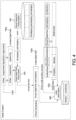
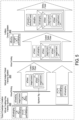
- FIGS. 3 , 4 , and 5 further illustrate the virtual instant lottery ticket creation process of one example embodiment of the present disclosure along with the detailed transformations and modification of the digital object 150 that is the virtual instant lottery ticket (as well as message exchanges as further described below).
- FIGS. 3 , 4 , and 5 show the process from the determination of the original image for the virtual instant lottery ticket to the final envelope creation for digital object 150 that functions as the virtual instant lottery ticket.
- the virtual instant lottery ticket creation process generally includes: (1) the virtual ticket creation and virtual SOC coating carried out by the virtual instant ticket factory system 200 and the virtual coating factory system 300, and (2) the virtual ticket envelope creation process carried out by the lottery owner system 400. After these processes, the created virtual instant lottery ticket in the form of the digital object is ready for the selling process as further described below.
- FIG. 4 illustrates the virtual creation and virtual SOC coating carried out in the virtual instant ticket factory system 200 and the virtual coating factory system 300.
- the PA Domain implements the printing and coating process using as inputs the image for the virtual instant lottery ticket and the shuffled ticket index.
- the system 100 uses the same inputs for backward compatibility as with the above described processes for physical instant lottery tickets. The difference is that for the virtual instant lottery tickets, the system 100 replaces the actual physical ticket printing and coating processes with the encryption of the image of the virtual instant lottery ticket to create the digital object 150 for that virtual instant lottery ticket using a public key encryption scheme.
- the system 100 conceals the image of the virtual instant lottery ticket and therefore also the information about any award associated with the virtual instant lottery ticket by encrypting the virtual instant lottery ticket with the public key of a trusted third party entity system that is the virtual coating key factory system 300 in this example embodiment.
- a trusted third party entity system that is the virtual coating key factory system 300 in this example embodiment.
- the secrecy of this dematerialized coating process is guaranteed by such a new trusted third party system 300 that becomes the only actor capable of decrypting (i.e., scratching the coating off of) the virtual instant lottery ticket, as discussed below.
- the system 100 deploys the virtual coating key factory system 300 via an independent third party entity.
- this virtual coating key factory system 300 can be provided by a controlling lottery authority that already supervises the strictly regulated gaming sector.
- the extraction process for lottery games is already operated and managed by hardware security modules controlled by an independent controlling lottery authority rather than the lottery owner entity, and can thus readily also provide and control this virtual coating key factory system 300.
- the system 100 uses inputs for the creation of the digital object 150 of the virtual instant lottery ticket that are exactly the same as for the creation of a physical instant lottery ticket using the PA Domain of the virtual instant ticket factory system 200.
- these inputs include: (1) the idTicket that is the identification of the ticket in the production phase, which may differ from the original index idTicket used for lottery game creation purposes; and (2) the imageContent that is part of the digital object that represents the image of the virtual instant lottery ticket in exactly the same format that would be provided for the physical printing and coating processes for a physical instant lottery ticket.
- the system 100 then creates a ticket virtual printing integrity tag. Since the virtual instant lottery ticket is not printed as a physical object and thus may be subject to subsequent tampering, the system 100 adds this integrity tag to the image of the virtual instant lottery ticket.
- the virtual instant ticket factory system 200 digitally signs the image of the virtual instant lottery ticket and the idTicket as indicated in FIGS. 4 and 5 , and produces a digital signature tag that is carried along with the ticket id and image content for the virtual instant lottery ticket for later verification purposes. In other words, the digital signature tag becomes part of the data of the digital object 150a representing the virtual instant lottery ticket.
- the digital signature tag is applied to the idTicket and imageContent so as to cryptographically bind the image for the virtual instant lottery ticket to its identifier, hence guaranteeing unicity of the digital object (by construction, the idTicket is unique).
- the output of is therefore a virtual instant lottery ticket represented by the digital object 150a including the idTicket, the imageContent, and the signatureTag, as shown in FIGS. 4 and 5 .
- the system 100 then creates a ticket virtual SOC coating in the form of a public key encryption. More specifically, after the above virtual printing process, the system 100 protects the virtual instant lottery ticket content. As a digital equivalent of SOC coating, the system 100 uses public key encryption.
- the virtual instant ticket factory system 200 uses the public key pubCoatingKey that is provided by the virtual coating key factory system 300 for that virtual instant lottery ticket, as well as the identifier idCoatingKey of the public key specifically used, as shown in FIGS. 4 and 5 . It should be appreciated that the usage of a key identifier along with the actual key is a well understood practice to permit usage of different keys in different contexts/games, as well as permit rekeying in different time periods.
- the system 100 employs an asymmetric encryption scheme that can be applied to arbitrary size messages and further provides integrity guarantees.
- the hybrid encryption scheme includes ordinary symmetric encryption and integrity algorithms for the actual protection of the data object (e.g., asymmetric cryptography is used to derive/transfer the symmetric key).
- asymmetric cryptography is used to derive/transfer the symmetric key.
- the system 100 causes a copy of the ticket index to remain clear along with the identifier of the public key used.
- the output of is therefore a virtual instant lottery ticket represented by the digital object 150b including: the idTicket, the Encrypt(digitalticket, pubCoatingKey), and the identification of pubCoatingKey, as show in FIGS. 4 and 5 .
- the system 100 may employ a further architectural-level solution to address potential ticket frauds threats such as a PA Domain employee being able to parse an image of the virtual instant lottery ticket and hence spoil a winning virtual instant lottery ticket. This threat is the possibility of an attacker capable of breaking a single entity component to retrieve the association between a ticket index used in the logistic/distribution process, and the underlying award associated with the given virtual instant lottery ticket.
- the system 100 addresses this by employing the PC Domain and as early as the virtually coated (e.g., public key encrypted) digital object 150 representing the instant lottery ticket is first delivered to the lottery owner system 400, causing a further shuffling process related to the digital object 150 representing the virtual instant lottery ticket.
- the system 100 may employ an additional envelope but does not cause a further shuffling process related to the digital object 150 representing the virtual instant lottery ticket.
- this further shuffling of the virtual instant lottery ticket is not just of the ticket index because if such shuffling is limited to the ticket index, an insider attacker in the PA Domain could take note of the actual ciphertext pattern and subsequently backtrack it when the virtual instant lottery ticket is processed for sale, or even after the virtual instant lottery ticket is sold.
- an attack can occur where a wholesaler colluding with a PA Domain insider may acquire and download a large amount of virtual instant lottery tickets, check their encryption patterns, and based on this information, keep for itself the large award winning virtual instant lottery tickets and resell the remaining virtual instant lottery tickets.
- the system 100 produces the virtual coating stratum by encryption, and hence each two encrypted virtual instant lottery tickets will be different because they necessarily expose two different ciphertext patterns.
- the system 100 prior to delivery of the virtual instant lottery tickets for the sale process, the system 100 applies a further level of ticket index permutation and content protection, so as to produce the digital object 150c including a ticket envelope that is unlinked from the digital object of the virtual instant lottery ticket managed by the PA and PB Domains.
- the system 100 may use what is referred to herein as a secret envelope that addresses such attack scenarios.
- the system 100 provides this additional envelope protection function that includes a twofold processing task on the virtually coated (public key encrypted) virtual instant lottery ticket.
- This twofold processing task includes: (1) a further secure pseudo-random permutation (shuffling) of the ticket index, and (2) the re-encryption of the already encrypted virtual instant lottery ticket, so as to randomize the ciphertext pattern, as generally shown in FIGS. 4 and 5 .
- this combination of a further secure permutation of the ticket index and the ticket re-encryption which is possible because the virtual instant lottery ticket is digitalized rather than being physically printed, avoids a single central point of trust.
- the level of security for the dematerialized instant lottery ticket for these embodiments of the present disclosure is not just equivalent to the level of security for the physical instant lottery ticket; but rather due to this supplementary envelope protection, in certain embodiments, the system 100 guarantees a significantly improved security above that provided by the physical instant lottery ticket manufacturing process.
- this process is performed locally by the lottery owner system 400 (e.g., the PC Domain).
- That example system 400 in certain embodiments uses symmetric encryption without the assistance of an external translator or key factory.
- the reason for using this encryption method is that an insider attacker in the PC Domain, even if capable of reverting the envelope protection, has no way to track a virtual instant lottery ticket, unless the attacker additionally colludes with a different insider attacker in the PA Domain.
- the system 100 of these embodiments should thus eliminate attack scenarios that involve single attackers. It should also be appreciated that for exactly the same reason, and if the system 100 only produces virtual instant lottery tickets, this can permit a less restrictive implementation requirement in the virtual instant ticket factory system 200.
- the system 100 implements the last ticket creation processing step in the PC Domain as follows.
- the system 100 uses the input the digital object 150b that represents a coated digital ticket produced by the virtual instant ticket factory system 200 (as explained above and including: the idTicket, the idCoatingKey, and the ENCpubCoatingKey(digitalTicket).
- the system 100 outputs a digital object 150c that represents a sellingTicket including the following three fields: (1) a idTicketEnv that is the identification of the virtual instant lottery ticket to be used in the selling phase, that may be computed as a format-preserving pseudo-random-permutation (shuffling) of the idTicket used for virtual instant lottery ticket manufacturing (in turns different from the idTicketOrig used for instant lottery game creation) or may be the same idTicket (depending on implementation); (2) a ticketEnvelope that is the ciphertext corresponding to the symmetric encryption of the entire coatedTicket object; and (3) an idEnvKey that is the index of the symmetric key (used to produce both the ticket index permutation as well as the ticket re-encryption).
- a idTicketEnv that is the identification of the virtual instant lottery ticket to be used in the selling phase, that may be computed as a format-preserving pseudo-random-permutation (shuffling) of the idTicket used for virtual
- the secret envelope is not employed such as where ticket shuffling is not possible for different reasons such as administrative rules or process rules already in place.
- the lottery owner system 400 functions in certain embodiments to partially secure the virtual instant lottery ticket itself via the secure envelope provided to the digital object 150 as described above. This differs from the physical instant lottery tickets where the lottery owner is focused on the management of the ticket distribution and selling processes, and the verification of the wins and relevant award reimbursement.
- the system 100 in addition to the legacy system components used for managing the physical ticket and also used for activation, validation and verification, can then employ: (1) the lottery owner system 400; (2) the notary system 500; and (3) one or more of the lottery player devices 600, 600a, 600b, ... 600n, to collectively facilitate and control: (1) virtual instant lottery ticket selling; (2) virtual instant lottery ticket transferring; (3) virtual instant lottery ticket scratching; and (4) virtual instant lottery ticket redemption, as shown in FIGS. 6 , 7A , 7B , and 8 , and as further described below.
- each lottery player device 600 includes an application loaded on that lottery player device 600 in any suitable manner.
- the lottery player device 600 including this application is uniquely identified by the system 100 using a self-certifying pseudonym cryptographic technique (such as one widely used in current blockchain deployments) that facilitates the management of identities without any identity provider, thus guaranteeing player anonymity (as required by the instant lottery game).
- each lottery player device 600 including this application will be configured to: (1) autonomously generate a public/private key pair; (2) use the public key (such as a hash of the public key) as the player or player device identifier; and (3) authorize transaction requests by digitally signing them using the private key associated to the employed public key.
- This provides a robust approach widely employed in worldwide blockchains. Specifically, as long as the private key associated to a public key identity is never disclosed, this approach prevents any other player from impersonating a target player while preserving the anonymity of the target player.
- the notary system 500 includes an append-only database in charge of tracking the "property" of each virtual instant lottery ticket (such as recording and updating the mapping between the virtual instant lottery ticket and its "owner", which is namely a player or player device identifier and specifically that is the above self-certifying pseudonym, throughout the lifetime of digital object 150 representing the virtual instant lottery ticket).
- the notary system 500 further certifies all transactions involving the digital object 150 representing the virtual instant lottery ticket by explicitly signing the digital object 150 for each of the transactions.
- the notary system 500 is provided with a pair of public/private keys.
- a Transaction Certification Authority (TCA) (such as described in U.S. Patent Application Publication No. 2019//0280875 ) is used as part of the notary system 500.
- TCA Transaction Certification Authority
- the lottery owner system 400 orchestrates all of the involved transactions with the digital object 150 for the virtual instant lottery ticket.
- the lottery owner system 400 directly interfaces with the lottery player device 600 for any operation, and acts as a proxy for all transactions involving the notary system 500.
- the lottery owner system 400 initially issues the digital object 150 for the virtual instant lottery ticket in the register of the notary system 500, and redeems the final winning virtual instant lottery ticket once the virtual instant lottery ticket is scratched.
- the lottery owner system 400 is also provided with a public/private key pair so as to permit lottery ticket transfers via the lottery owner system 400 similar to how physical lottery tickets are transferred to and from players.
- the lottery owner system 400 also guarantees process integrity by signing message bundles including the digital objects, as further discussed below.
- FIG. 6 generally illustrates the selling process for the virtual instant lottery ticket.
- the selling process includes two main steps including: (1) receiving a buy request from a lottery player device 600; and (2) issuing the requested virtual instant lottery ticket to the lottery player device 600.
- the lottery player system 400 chooses a desired virtual instant lottery ticket (that in various example embodiments includes a sellingTicket digital object comprising both the ticket envelope index as well as payload) via a suitable ticket sale interface, and issues a buy request command using the ticket index (i.e., the idTicketEnv of the chosen virtual instant lottery ticket).
- a desired virtual instant lottery ticket that in various example embodiments includes a sellingTicket digital object comprising both the ticket envelope index as well as payload
- the ticket index i.e., the idTicketEnv of the chosen virtual instant lottery ticket.
- the lottery player device signature is performed with the private key uniquely associated to the used player's identity or player device identity (i.e., the public key), and thus does not need to involve user registration procedures that might hinder the player rights to avoid disclosing the player's real identity while buying a virtual instant lottery ticket using the system 100.
- the system 100 mimics the same physical process where players remain unknown.
- the ticket issuing includes the lottery owner system 400 taking the digital object 150d of the virtual instant lottery ticket selected by the player device 600 (using the ticket sale interface) and the player's identifier (e.g., the public key), and sending both to the notary system 500 for transaction registration, as indicated in FIG. 6 .
- the registration is performed inside an append-only ledger (further certified by the trusted third party notary system 500), where the only entity having the permission to issue a virtual instant lottery ticket is the lottery owner system 400.
- the issuing can only be done by the lottery owner 400 while the transferring can be done by the player device 600.
- the pair (sellingTicket, pubKeyPlayer) is digitally signed by the lottery owner system 400, which is registered inside the ledger of the notary system 500 as a "ticket issuing" transaction from the lottery owner system 400 to the lottery player device 600.
- the notary system 500 further certifies the digital object 150 by returning to the lottery owner system 400 the sellingTicket digital object 150f bound to the pseudonym of the lottery player device 600 with a digital signature covering both fields.
- the lottery owner system 400 then transfers the digital object 150f to the lottery player device 600.
- the lottery player device 600 then has an "ownership” proof, certified by the notary system 500, that the selected digital object 150f representing the virtual instant lottery ticket has been registered under the player's pseudonym.
- the above process is configured to enable the digital object 150 representing the virtual instant lottery ticket to be transferred among players (such as a gift of a virtual instant lottery ticket to a friend or a family member).
- This functionality enables the same operations that are possible with physical instant lottery tickets (such as the possibility to buy a physical instant lottery ticket and give it to someone else).
- the transfer procedure may be any suitable transfer procedure between lottery player devices 600 of the two players.
- the lottery player device 600a can send a signed message to the notary system 500 wherein the message includes the digital object 150 representing the virtual instant lottery ticket and the identity of the target lottery player device 600b to whom the virtual instant lottery ticket will be transferred. Responsive to such message, the notary system 500 verifies and registers the relevant transaction, and responds with causing the selling Ticket digital object 150 to be bound to the new lottery player device 600b.
- the lottery owner system 400 also transfers the digital object 150f to the lottery player device 600b.
- FIGS. 7A and 7B generally illustrate the virtual instant lottery ticket scratching process of this example embodiment of the present disclosure.
- This example virtual instant lottery ticket scratching process includes revealing any indicia that indicates any award associated with the virtual instant lottery ticket.
- This scratching process generally includes reverting the two encryption layers introduced during the virtual instant lottery ticket creation process described above. It should be appreciated that this scratching process is not simple because once the outer envelope is removed, and even if the virtual instant lottery ticket is not yet "scratched," the virtual instant lottery ticket ownership (i.e., the identification of the ticket holding player device) must be in any case “frozen” and transferability is not subsequently possible in various embodiments of the present disclosure.
- the system 100 (i) explicitly records via the notary system 500 the changed state of the virtual instant lottery ticket while it is being scratched; and (ii) guarantees that, once started, the scratching process cannot be reverted (e.g., forward atomicity of the transaction: once started it must get to completion). This second process can be done in any suitable manner. It should be appreciated that once the scratching process begins, the ticket cannot be transferred to another player device. It should also be appreciated that the present disclosure contemplates that the notary system 500 may limit or not limit access to its tracking records for the digital objects and thus virtual instant lottery tickets.
- the process is not simple in part because for auditing requirements, the system 100 needs to provide the information necessary for all the involved parties (including the player device 600) to verify if/when necessary that the scratching process has been correctly executed.
- the player via their lottery player device should be given a way to check later on that the virtual instant lottery ticket originally bought is the one that the player has scratched. The mere removal of the outer envelope from the digital object 150 is therefore not sufficient.
- the system 100 addresses these two requirements using two complementary approaches including: (1) registration of a scratching transaction in the register of the notary system 500 that blocks subsequent transferability of that virtual instant lottery ticket; and (2) creation of a secure ticket bundle including the digital object, via subsequent digital signatures incrementally binding the various layers comprising the digital object 150 representing the virtual instant lottery ticket.
- the scratching process is initiated by the player via a graphical user interface (GUI) displayed by the lottery player device 600.
- GUI graphical user interface
- the lottery player device 600 creates and sends a scratching request with the digital object 150g to the lottery owner system 400.
- This request is digitally signed by the lottery player device 600, so as to: (i) certify that only the specific lottery player device 600 that owns the private key associated to that id may scratch the virtual instant lottery ticket owned or held by that lottery player device 600; and (ii) guarantee non repudiation of the start of such scratching process, in the case of further questioning.
- the lottery owner system 400 Responsive to receiving the scratching request, the lottery owner system 400 facilitates the player's scratching request. Since scratching requires that the ticket envelope is first removed, the lottery owner system 400 performs the relevant symmetric decryption and the associated ticket index inverse shuffling so as to restore the "coated" ticket as well as its index used by the legacy systems for validation (e.g., the index analogous to a physical lottery ticket). However, the lottery owner system 400 does not discard the envelope; rather, the lottery owner system 400 creates a first ticket bundle including the digital object 150h, that is referred to as the ticket scratching bundle. This is a message digitally signed by the lottery owner system 400.
- the digital signature (i) permits registration of the scratching transaction in the ledger of the notary system 500 (see below); and (ii) cryptographically binds all the fields included in the message, specifically including: (a) the selling virtual instant lottery ticket; (b) the coated virtual instant lottery ticket; (c) the public key of the lottery player device 600 that is scratching the virtual instant lottery ticket; and (d) the public key of the lottery owner system 400.
- the ticket scratching bundle is then sent to the notary system 500.
- the notary system 500 issues a scratching transaction and records it in the append-only register of the notary system 500.
- This transaction containing both selling ticket identifier as well as player identifier is used to "freeze" the virtual instant lottery ticket forever.
- its presence in the register of the notary system 500 can be checked by the lottery owner system 400 for each ticket transfer attempt, and when present, based on such information provided by the notary system 500, the lottery owner system 400 can stop further transfer of ownership of that virtual instant lottery ticket to any other player (with the only exception being the transferability of ownership to the lottery owner system 400 for ticket redemption as described below).
- the notary system 500 is passive and only checks if issuing, transferring, and/or scratching of the digital object and thus the virtual instant lottery ticket is possible at the requested point in time.
- the notary system 500 also sends back a notarized ticket scratching bundle including the digital object 150i (which includes the ticket scratching bundle further signed by the notary system 400).
- a notarized ticket scratching bundle including the digital object 150i (which includes the ticket scratching bundle further signed by the notary system 400).
- one goal of such bundle is to have a single point (the bundle itself), distributable throughout the system 100 and the lottery player device 600 in which all the executed steps are cryptographically registered. Not only does this have immediate utility in guaranteeing the difficulty in breaking the binding between different versions of the virtual instant lottery ticket (such as the selling version versus the coated version), but this organization of the data as a secure bundle travelling along with the process may significantly simplify the auditing and dispute processes.
- the notarized ticket scratching bundle including the digital object 150i is then forwarded to the lottery player device 600.
- the lottery player device 600 adds its further signature to the bundle including the digital object 150i, and sends to the bundle including the digital object 150j to the virtual coating key factory system 200 for the actual scratching of the virtual instant ticket lottery ticket.
- This actual scratching includes the verification of the integrity of the whole bundle (and hence also verification of the notary system's 500 signature and the authentication of the lottery player device 600).
- the public key of the lottery player device 600 is implicitly certified by the notary system 500, so no PKI is required), followed by the decryption of the coated virtual instant lottery ticket using the private key of the virtual coating key factory 300.
- a suitable graphical user interface may be associated with this process.
- the virtual coating key factory system 300 sends back to the lottery player device 600 a redeemable ticket bundle including the digital object 150k (e.g., the current ticket bundle further extended with the decrypted digital object sealed with the virtual coating key factory system signature).
- a redeemable ticket bundle including the digital object 150k (e.g., the current ticket bundle further extended with the decrypted digital object sealed with the virtual coating key factory system signature).
- FIG. 8 generally illustrates the ticket redemption process of the example system 100.
- the ticket redemption process includes, in the case of a winning virtual instant lottery ticket, the player device 600 transferring the digital object 150k representing the virtual instant lottery ticket to the lottery owner system 400 for redemption in a similar manner to the redemption process for winning physical instant lottery tickets.
- the lottery player device 600 sends the redeemable ticket bundle including the digital object 150k, including all the notary system and other signature proofs including the scratching process, to the lottery owner system 400.
- the lottery owner system 400 sends the digital object 1501 to the notary system 500 for tracking and recording of the redemption request.
- the notary system 500 records and signs the digital ticket 1501 and sends the signed digital ticket 150m back to the lottery owner system 400.
- the lottery owner system 400 verify that the digital ticket 1501 has all of the required signatures and that instant lottery ticket represented by the digital ticket 1501 is a winning virtual instant lottery object.
- the lottery owner system 400 also determines any awards associated with the digital ticket 1501. This verification process may include the lottery owner system 400 interfacing with one or more legacy system(s) (not shown) and processes for physical ticket redemption.
- the lottery owner system 400 causes any award to be paid to the player via the player device, as shown in FIG. 8 . This award may be paid to the player in any one of a plurality of different suitable manners.
- Various embodiments of the instant lottery ticket system and method of the present disclosure can be employed to provide virtual instant lottery tickets that are associated with a user interface configured to display the outcome of the virtual instant lottery ticket to the player (which is referred to herein as a digital reveal) and enabling the player to customize and personalize the digital reveal, such as but not limited to one or more sounds (such as music), one or more haptics, and/or one or more images thereof.
- the digital reveal can enhance the player experience by mimicking one or more of the actions of scratching an SOC of a physical instant lottery ticket.
- the digital reveal can enhance a player experience by providing one or more features beyond the capabilities of physical tickets.
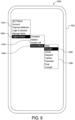
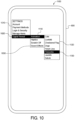
- FIGS. 9 , 10 , 11 , and 12 illustrate various example embodiments of interfaces that can be accessed on a player device 600.
- the interfaces are provided by the lottery owner system 400.
- the displays of the interfaces are also tracked by the notary system 500.
- the interfaces are provided by the lottery owner system 400 as a downloaded update to a lottery application on the player device 600, as a downloaded API for the player device 600, or as graphic interface that is actually hosted on the lottery owner system 400 and accessed on a player device 600 through a web browser or network socket.
- FIGS. 13 , 14 , and 15 illustrate example embodiments of digital reveals that can be provided by a player device 600.
- the digital reveals can be provided by the lottery owner system 400 as a downloaded update to a lottery application on the player device 600, as a downloaded API for the player device 600, or as graphic interface that is actually hosted on the lottery owner system 400 and accessed on a player device 600 through a web browser or network socket.
- FIG. 9 illustrates an example embodiment of an interface 1000 for enabling a player to customize sound effects associated with a digital reveal on a player device 600.
- the interface 1000 includes a setting menu 1010.
- the settings menu 1010 includes various categories of settings, including a selection for a digital reveal 1020. Selecting the digital reveal 1020 opens a first sub-menu 1030 that includes categories of digital reveal effects.
- the first sub-menu 1030 includes a highlighted selection for sound effects 1040, which opens a second sub-menu 1050.
- the second sub-menu 1050 includes various options for sound effects associated with a digital reveal, including a highlighted selection 1060.
- FIG. 10 illustrates another example embodiment of an interface 1100 for enabling a player to customize sound effects associated with a digital reveal on a player device 600.
- the interface 1100 includes a setting menu 1010.
- the settings menu 1010 includes various categories of settings, including a selection for a digital reveal 1020. Selecting the digital reveal 1020 opens a first sub-menu 1030 that includes categories of digital reveal effects.
- the first sub-menu 1030 includes a highlighted selection for animation effects 1110, which opens a second sub-menu 1120.
- the second sub-menu 1120 includes various options for animation effects associated with a digital reveal, including a highlighted selection 1130.
- FIG. 11 illustrates an example embodiment of an interface 1200 for enabling a player to customize sound effects associated with a digital reveal on a player device 600.
- the interface 1200 includes a setting menu 1010.
- the settings menu 1010 includes various categories of settings, including a selection for a digital reveal 1020. Selecting the digital reveal 1020 opens a first sub-menu 1030 that includes categories of digital reveal effects.
- the first sub-menu 1030 includes a highlighted selection for haptic effects 1210, which opens a second sub-menu 1220.
- Haptic effects include using the vibration features of a player device 600 to acknowledge player input and/or to mimic tactile effects of interacting with a physical ticket.
- the haptic effects can include a short vibration, a long vibration, a pulsing vibrations, or a vibration intended to mimic the physical sensation of scratching a physical ticket.
- the second sub-menu 1220 includes various options for haptic effects associated with a digital reveal, including a highlighted selection 1230.
- FIG. 12 illustrates another example embodiment of an interface 1300 for enabling a player to customize sound effects associated with a digital reveal on a player device 600.
- the interface 1300 includes a setting menu 1010.
- the settings menu 1010 includes various categories of settings, including a selection for a digital reveal 1020. Selecting the digital reveal 1020 opens a first sub-menu 1030 that includes categories of digital reveal effects.
- the first sub-menu 1030 includes a highlighted selection for scratch-off effects 1310, which opens a second sub-menu 1320.
- the second sub-menu 1320 includes various options for scratch-off effects associated with a digital reveal, including a highlighted selection 1330.
- the second sub-menu 1320 can include a variety of player scratch-off inputs and/or their associated effects.
- the player scratch-off inputs can include various touchscreen inputs by a player's finger or stylus, including up-down motions, side-to-side motions, a single tap, a double-tap, scrolling vertically or horizontally, or swiping across certain visual elements of the virtual instant lottery ticket.
- interfaces can alternatively be configured to enable an operator or provider of the lottery tickets to select one or more of the digital reveal characteristics.
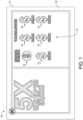
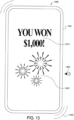
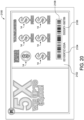
- FIG. 13 is a view of an example embodiment of a digital reveal 1400 for a winning virtual instant lottery ticket on a player device 600.
- the digital reveal 1400 can include a message 1410 indicating the result of the virtual instant lottery ticket (winning in this case).
- the digital reveal 1400 can also include a static or animated visual component 1420, an audio component 1430, or a haptic component 1440.
- FIG. 14 is a front view of an example embodiment of another digital reveal 1500 for a virtual instant lottery ticket.
- FIG. 14 shows a point where the player has partially completed virtually scratching the virtual instant lottery ticket in one example embodiment of a digital reveal.
- the digital reveal 1500 includes an image of an instant lottery ticket 1510.
- This example embodiment illustrates four fully scratched numbers 1520.
- the example embodiment also illustrates a partially scratched number, revealing a portion of the number 1530 to be revealed and a portion of the concealing digital coating 1540.
- a final number 1550 remains fully concealed by the digital coating.
- the player may have selected an up-down input motion 1560 as a scratch-off motion.
- FIG. 15 is a front view of an example embodiment of a digital reveal 1600 for a virtual instant lottery ticket, illustrating another simulated ticket-scratching experience.
- FIG. 15 shows a point where the player has partially completed virtually scratching the Bingo-style virtual instant lottery ticket in one example embodiment of a digital reveal.
- the Bingo ticket has five rows 1602, 1604, 1606, 1608, and 1610 and five columns 1612, 1614, 1616, 1618, and 1620.
- the player has selected a horizontal swiping motion 1630 as a scratch-off motion.
- the lottery numbers for the top row 1620 are fully revealed.
- the numbers for the second row 1604 are revealed as the player swipes 1630 across the row.
- the numbers for the remaining rows will be revealed as the player swipes across them.
- the present disclosure further provides lottery system and method that include one or more second chance engines that enable players to enter non-winning lottery tickets into one or more secondary promotions to enhance player engagement.
- FIG. 16 is a front view of an example interface 1700 for entering a non-winning virtual instant lottery ticket in a second chance lottery on a player's device 600.
- the interface 1700 is provided by the lottery owner system 400.
- the interface 1000 can be provided by the lottery owner system 400 as a downloaded update to a lottery application on the player device 600, as a downloaded API for the player device 600, or as graphic interface that is actually hosted on the lottery owner system 400 and accessed on a player device 600 through a web browser or network socket.
- the example interface 1700 includes a message 1710 that the virtual instant lottery ticket was not a winner.
- the interface 1700 also includes an interactive element 1720.
- the interactive element is a button on a touchscreen interface.
- other interactive elements can be employed, as will be understood by those skilled in the art.
- FIG. 17 illustrates a simplified schematic diagram of a virtual instant lottery game system as described above, with the addition of a second chance engine 1800 that is part of a lottery owner system (such as the lottery owner system 400 described herein).
- a second chance interface 1700 is presented to the player as described above. If the player engages the interactive element 1720, the player's device 600 transmits a second chance request 1802 to the lottery owner system 400.
- the lottery owner system 400 conducts a virtual drawing between all virtual instant lottery tickets enrolled in the second chance engine 1800 during a particular times period.
- the lottery owner system 400 conducts a virtual drawing for all virtual instant lottery tickets enrolled in the second chance engine 1800 after a predetermined number of virtual instant lottery tickets are submitted to the second chance engine 1800. In certain example embodiments, the lottery owner system 400 conducts a drawing between virtual instant lottery tickets and physical lottery tickets that are submitted for the second chance engine 1800. In such example embodiments, the physical tickets can be submitted physically (i.e., by mail) or digitally through an online interface on the player's device 600.
- only certain non-winning virtual instant lottery tickets are available for second chances, and thus, for each non-winning virtual instant lottery ticket, the player must decide whether or not to submit that non-winning virtual instant lottery ticket for the second chance opportunity.
- the winner(s) of the second chance drawing can be randomly selected from all of the digital tickets submitted for a particular lottery game.
- winner(s) of the second chance drawing can be randomly selected from all of the digital tickets submitted from multiple lottery games.
- the winner(s) of the second chance drawing can be determined based on the results of the non-winning lottery tickets.
- the second chance drawing can draw a set of symbols and any lottery tickets with those symbols enrolled in the second chance drawing would be winners.
- the lottery owner system 400 transmits the results 1804 of the drawing with respect to the virtual instant lottery ticket submitted by the player to the player's device. If the player's virtual instant lottery ticket won the second chance drawing, the lottery owner system 400 can also transmit payment 1806 to the player's lottery account, digital wallet, bank account, or other payment method (e.g., PayPal ® , Venmo ® , etc.).
- payment 1806 to the player's lottery account, digital wallet, bank account, or other payment method (e.g., PayPal ® , Venmo ® , etc.).
- completely virtual instant lottery games may be illegal.
- providing the involvement of a physical retailer can avoid a virtual instant lottery game being classified as completely virtual instant lottery game.
- the lottery system and method of the present disclosure is configured to enable a player to purchase a virtual instant lottery ticket at a retail location.
- the retailer also provides an access key for the virtual instant lottery ticket.
- the access key can include, without limitation, an alphanumeric code entered by the player, an alphanumeric code provided on a card (with or without scratch-off-coating), an alphanumeric code provided by bar code or QR code, or a digital key transferred to the player's device, for example by Near-Field Communication (NFC), Bluetooth, WiFi, or by USB dongle.
- NFC Near-Field Communication
- WiFi WiFi
- USB dongle USB dongle
- the retail location can involve interacting with a retail clerk or with a self-service device (that includes at least one ⁇ age control' feature) that will allow a player to purchase a variety of lottery tickets. To collect any winnings, the player has to return to a retail location or a lottery office according to the regulations of the particular lottery.
- a self-service device that includes at least one ⁇ age control' feature
- FIG. 18 illustrates a simplified schematic diagram of an example embodiment of a virtual instant lottery game system as described above, with the additional of a physical retailer in the process for selling and redeeming a virtual instant lottery ticket.
- Virtual access keys 1902 and virtually coated tickets 1904 are transferred from the lottery owner system 400 to the retailer 700.
- the virtually coated tickets 1904 differ from the previously described virtually coated tickets 150b in that they require the use of virtual access keys 1902 before they can be scratched.
- the virtual access keys 1902 and virtually coated tickets 1904 are transferred from retailer 700 to the player's device 600.
- the virtually coated tickets 1904 are transferred from retailer 700 to the player's device 600 and the player is physically provided with the virtual access key 1902, as described above.
- the player can then use the virtual access key 1902 to gain access to the virtually coated ticket 1904 at the time of their choosing.
- the ticket redemption process includes, in the case of a winning virtual instant lottery ticket, the player device 600 transferring the digital object 150k representing the virtual instant lottery ticket to the retailer 700 for redemption in a similar manner to the redemption process for winning physical instant lottery tickets.
- the player presents the winning ticket and the digital object 150k representing the ticket is temporarily transferred from the player's device 600 to the retailer 700.
- the redeemable ticket bundle includes the digital object 150k, including all the notary system and other signature proofs including the scratching process, as described above.
- the retailer 700 then transfers the digital object 150k to the lottery owner system 400 for redemption.
- the lottery owner system 400 sends the digital object 1501 to the notary system 500 for tracking and recording of the redemption request.
- the notary system 500 records and signs the digital ticket 1501 and sends the signed digital ticket 150m back to the lottery owner system 400.
- the lottery owner system 400 verifies that the digital ticket 1501 has all of the required signatures and that instant lottery ticket represented by the digital ticket 1501 is a winning virtual instant lottery object.
- the lottery owner system 400 also determines any awards associated with the digital ticket 1501, as described above.
- the lottery owner system 400 sends a notification 1906 to the retailer 700 indicating the winnings to the be paid to the player.
- the retailer 700 then pays the player in cash or sends the player a digital payment 1908.
- additional signatures by the notary system can be required to enhance security of the lottery.
- the retailer sends the digital ticket 1910 to the notary system 500 for tracking and recording of the redemption request.
- the notary system 500 records and signs the digital ticket 1910 and sends the signed digital ticket 1912 back to the retailer 700.
- the retailer sends the digital ticket 1914 to the notary system 500 for tracking and recording of the redemption request.
- the notary system 500 records and signs the digital ticket 1914 and sends the signed digital ticket 1916 back to the retailer 700.
- the access key 1902 can also require digital signatures by the notary system 500. This can particularly apply when the access key 1902 is a digital object.
- the retailer 700 can communicate with the notary system 500 through the lottery owner system 400.
- one or more access keys can be included in the image of the virtually coated ticket 1904.
- multiple virtual access keys can be associated with the virtually coated ticket 1904.
- alternative or additional secure verification systems can be used in connection with virtual instant lottery game system.
- Various embodiments of the present disclosure provide and instant lottery game system further configured to provide both virtual instant lottery tickets and physical instant lottery tickets for a same lottery game.
- FIG. 19 is a schematic diagram of a method 2000 of operating an instant lottery game system of one example embodiment of the present disclosure, and which includes both virtual instant lottery tickets and physical instant lottery tickets.
- An instant lottery game generation system generates ticket images as described above for physical tickets, as indicated at block 2010. At this stage it is unknown if any particular image will be produced as a physical ticket or as a virtual ticket. Therefore, the ticket images have identical formats, although individual tickets have unique results and identifiers.
- the KDS translator server 50 then implements the secure pseudo random permutation (shuffling) as described above and indicated at block 2020. Shuffling the ticket images ensures that the odds of winning are identical for physical and digital tickets.
- the sequence of the shuffled ticket images can be static before being provided to the lottery so that the randomization established at the factory is not changed. This facilitates auditing the game data before physical lottery tickets are printed and digital lottery tickets are generated, and both are released to a lottery.
- the KDS translator server 50 then distributes the ticket images for physical printing or digital generation, as indicated at block 2030.
- the entirety of the ticket images are distributed according to a predetermined ratio.
- a portion of the ticket images are initially distributed for physical printing and the remainder are held in reserve for digital generation or physical printing according to player demand.
- images for virtual tickets can be distributed on an as-needed basis, including individually if desirable.
- the images for physical tickets are physically printed, as indicated at block 2040.
- the physical tickets are coated with the scratch-off-coating as described above, as indicated at block 2050.
- the images for virtual tickets are used to generate virtual tickets, as indicated at block 2060.
- the virtual tickets are digitally coated, as described above, as indicated at block 2070.
- Both the physical and virtual tickets are delivered to the lottery owner for sale, as described above, as indicated at block 2080.
- any of the verification methods described above can be used to scratch and redeem them.
- alternative or additional secure verification systems can be used in connection with the instant lottery game system.
- the virtual instant lottery ticket 2100 can include a non-play area 2102, as illustrated in FIG. 20 .
- the non-play area 2102 can include a card identifier 2104 that may identify the ticket.
- the identifier can also identify game and type of ticket or another number may be used for such identification.
- the card identifier 2104 can be generated by encrypting a ticket identifier that can be stored by, for example, the virtual coating key factory system 300, the lottery owner system 400, the notary system 500, or the like.
- the card identifier 2104 can be created, in accordance with embodiments of the present disclosure, using an encryption key that may have been generated by the virtual instant ticket factory system 200, the virtual coating key factory system 300, the lottery owner system 400, the notary system 500, or by an independent system.
- the encrypted ticket identifier or card identifier 2104 may be in plain view and/or may be entirely or partially hidden behind the virtual digital coating.
- the lottery ticket can include decryption information 2106 that can be one or more decryption keys and/or can be information related to the decryption key.
- the decryption key 2106 can be used to decrypt the encrypted ticket identifier 2104 to generate a ticket identifier. It is recognized that multiple decryption keys can be applied, for example, one after the other to the encrypted ticket identifier 2104 to generate a ticket identifier.
- the generated ticket identifier can be validated by the virtual coating key factory system 300, the lottery owner system 400, and/or the notary system 500. If a match is found, then the lottery ticket can be authenticated as valid. It is recognized that the decryption key 2106 can be the same as or may be different from the encryption key that was used to create the encrypted ticket identifier.
- a machine-readable version 2108 representing the numeric code of the card identifier 2104 and/or the decryption key 2106 can also be included in the ticket 2100.
- the machine-readable version 2108 can be a bar code, e.g., a stacked linear bar code or two-dimensional bar code. A standard 2 of 5 or other standard bar code can be employed.
- the machine-readable version 2108 can be read via a scanner or the like and the information can be used to verify, for example, whether the ticket 2100 is authentic and/or to determine whether the ticket is a winning ticket. It is recognized that the information can be entered manually via keyboard, touch screen, etc.
- parts of the lottery gaming system and method of various embodiments of the present disclosure are configured to be operated by a lottery agency (such as a state lottery agency).
- parts of the lottery gaming system and method of various embodiments of the present disclosure are configured to be operated by a third party that runs the lottery for a lottery agency (such as a state lottery agency).
- the player device can be any suitable player device such as a cell phone, mobile device, or other suitable device such as described below.
- devices in communication with each other need not be continually transmitting to each other.
- such devices need only transmit to each other as necessary, and may actually refrain from exchanging data most of the time.
- a device in communication with another device via a data network may not transmit data to the other device for hours at a time.
- a system as used herein refers to various configurations of one or more servers, controllers, or other computer systems.
- a player device as used herein refers to one or more personal devices, such as desktop computers, laptop computers, tablet computers or computing devices, personal digital assistants, cell phones, mobile phones, and other mobile computing devices.
- the system includes one or more servers configured to communicate with the player device to enable instant lottery game play using the player device.
- the player must first access a gaming website via an Internet browser of the player device or execute an application (commonly called an "app") installed on the player device before the player can use the player device to participate in instant lottery game play.
- a player may access the game in a retailer location where the retailer buys and sells the virtual instant lottery tickets using a terminal device (that in certain embodiments thus functions as or in place of the player device).
- the player can use the player's mobile phone to take a picture of the virtual instant lottery ticket that retailer exposes using the monitor of the terminal device.
- the player device can be configured to maintain, for each ticket issued or transferred to that player device, a ticket reference enabling retrieval of the complete ticket belonging to that player device. If the player device is lost or stolen, using the private key, the system 100 can be configured to retrieve the complete ticket.
- the systems and the player devices are configured to communicate through a suitable data network.
- the data network is a local area network (LAN).
- the data network is a wide area network (WAN).
- the data network is an internet (such as the Internet) or an intranet.
- the data network is a private secured network.
- the systems are configured to connect to the data network in a suitable manner.
- a connection is accomplished via a conventional phone line or other data transmission line, a digital subscriber line (DSL), a T-1 line, a coaxial cable, a fiber optic cable, a wireless or wired routing device, a mobile communications network connection (such as a cellular network or mobile Internet network), or any other suitable medium.
- DSL digital subscriber line
- T-1 line a coaxial cable
- fiber optic cable such as a cellular network or mobile Internet network
- a mobile communications network connection such as a cellular network or mobile Internet network
- each system has one or more processors.
- Each processor is a suitable processing device or set of processing devices, such as a microprocessor, a microcontroller-based platform, a suitable integrated circuit, or one or more application-specific integrated circuits (ASICs), configured to execute software enabling various configuration and reconfiguration tasks, such as: (1) communicating with a remote source (such as a server that stores authentication information) via a communication interface; (2) converting signals read by an interface to a format corresponding to that used by software or memory; (3) accessing memory to configure or reconfigure parameters in the memory; (4) communicating with interfaces and the peripheral devices (such as input/output devices); and/or (5) controlling the peripheral devices.
- a remote source such as a server that stores authentication information
- ASICs application-specific integrated circuits
- each system includes one or more memory devices that may include: (1) volatile memory (such as non-volatile RAM, magnetic RAM, ferroelectric RAM, and any other suitable forms); (2) non-volatile memory (such as disk memory, FLASH memory, EPROMs, EEPROMs, memristor-based non-volatile solid-state memory, etc.); (3) unalterable memory (such as EPROMs); (4) read-only memory; and/or (5) one or more secondary memory storage devices. Any other suitable magnetic, optical, and/or semiconductor memory may operate in conjunction with or as part of the systems of the present disclosure.
- aspects of the present disclosure may be illustrated and described herein in any of a number of patentable classes or context including any new and useful process, machine, manufacture, or composition of matter, or any new and useful improvement thereof. Accordingly, aspects of the present disclosure may be implemented entirely hardware, entirely software (including firmware, resident software, micro-code, etc.) or combining software and hardware implementation that may all generally be referred to herein as a "circuit,” “module,” “component,” or “system.” Furthermore, aspects of the present disclosure may take the form of a computer program product embodied in one or more computer readable media having computer readable program code embodied thereon.
- Computer program code for carrying out operations for aspects of the present disclosure may be written in any combination of one or more programming languages, including an object oriented programming language such as Java, Scala, Smalltalk, Eiffel, JADE, Emerald, C++, C#, VB.NET, Python or the like, conventional procedural programming languages, such as the "C" programming language, Visual Basic, Fortran 2003, Perl, COBOL 2002, PHP, ABAP, dynamic programming languages such as Python, Ruby and Groovy, or other programming languages.
- object oriented programming language such as Java, Scala, Smalltalk, Eiffel, JADE, Emerald, C++, C#, VB.NET
- Python or the like
- conventional procedural programming languages such as the "C" programming language, Visual Basic, Fortran 2003, Perl, COBOL 2002, PHP, ABAP, dynamic programming languages such as Python, Ruby and Groovy, or other programming languages.
- These computer program instructions may also be stored in a computer readable medium that when executed can direct a computer, other programmable data processing apparatus, or other devices to function in a particular manner, such that the instructions when stored in the computer readable medium produce an article of manufacture including instructions which when executed, cause a computer to implement the function/act specified in the flowchart and/or block diagram block or blocks.
- the computer program instructions may also be loaded onto a computer, other programmable instruction execution apparatus, or other devices to cause a series of operational steps to be performed on the computer, other programmable apparatuses or other devices to produce a computer implemented process such that the instructions which execute on the computer or other programmable apparatus provide processes for implementing the functions/acts specified in the flowchart and/or block diagram block or blocks.
- the respective memory device is configured to store program code and instructions executable by the respective processor.
- part or all of the program code and/or the operating data described above is stored in at least one detachable or removable memory device including, but not limited to, a cartridge, a disk, a CD ROM, a DVD, a USB memory device, or any other suitable non-transitory computer readable medium.
- the respective memory device stores authentication and/or validation components configured for authentication/validation of specified components and/or information, such as hardware components, software components, firmware components, peripheral device components, player input device components, information received from one or more player devices, information stored in the respective memory device.
- authentication and/or validation components configured for authentication/validation of specified components and/or information, such as hardware components, software components, firmware components, peripheral device components, player input device components, information received from one or more player devices, information stored in the respective memory device.
- wagers and any awards are described herein as amounts of monetary currency, such wagers and such awards may be non-monetary in accordance with the present disclosure.
- Example 1 A lottery ticket system for providing an instant lottery game comprising a virtual instant lottery ticket, said lottery ticket system comprising:
- Example 2 The lottery ticket system of example 1, wherein the user interface is configured to receive input from the user to configure the digital reveal.
- Example 3 The lottery ticket system of examples 1 or 2, wherein the digital reveal comprises a result animation, wherein the result animation indicates the result of the virtual instant lottery ticket.
- Example 4 The lottery ticket system of any of examples 1-3, wherein the digital reveal comprises producing result haptic vibrations via the player device, wherein the result haptic vibrations indicate the result of the virtual instant lottery ticket.
- Example 5 The lottery ticket system of any of examples 1-4, wherein the digital reveal comprises playing an audio file, wherein the audio file indicates the result of the virtual instant lottery ticket.
- Example 6 The lottery ticket system of any of examples 1-5, wherein the digital reveal comprises a scratch-off animation, wherein the scratch-off animation simulates scratching off a physical scratch-off-coating by revealing a subset of symbols associated with a lottery game associated with the virtual instant lottery ticket.
- Example 7 The lottery ticket system of any of examples 1-6, wherein the digital reveal comprises a scratch-off haptic vibration, wherein the scratch-off haptic vibration simulates the sensation of scratching off a physical scratch-off-coating.
- Example 8 A lottery ticket system for providing an instant lottery game comprising a virtual instant lottery ticket, said lottery ticket system comprising:
- Example 9 The lottery ticket system of example 8, wherein the digital reveal comprises a result animation, wherein the result animation indicates the result of the virtual instant lottery ticket.
- Example 10 The lottery ticket system of example 8 or 9, wherein the digital reveal comprises producing result haptic vibrations via the player device, wherein the result haptic vibrations indicate the result of the virtual instant lottery ticket.
- Example 11 The lottery ticket system of any of examples 8-10, wherein the digital reveal comprises playing an audio file, wherein the audio file indicates the result of the virtual instant lottery ticket.
- Example 12 The lottery ticket system of any of examples 8-11, wherein the digital reveal comprises a scratch-off animation, wherein the scratch-off animation simulates scratching off a physical scratch-off-coating by revealing a subset of symbols associated with a lottery game associated with the virtual instant lottery ticket.
- Example 13 The lottery ticket system of any of examples 8-12, wherein the digital reveal comprises a scratch-off haptic vibration, wherein the scratch-off haptic vibration simulates the sensation of scratching off a physical scratch-off-coating.
- Example 14 A lottery ticket system for providing an instant lottery game comprising a physical instant lottery ticket and a virtual instant lottery ticket, said lottery ticket system comprising:
- Example 15 The lottery ticket system of example 14, wherein the lottery owner system is configured to transmit data associated with a user interface to the player device, wherein the user interface comprises a prompt for the user to request to enroll the virtual instant lottery ticket into the second chance engine.
- Example 16 The lottery ticket system of example 15 or 16, wherein the prompt is provided automatically.
- Example 17 The lottery ticket system of any of examples 14-16, which comprises a notary system separate and independent from the virtual instant ticket factory system, the virtual coating key factory system, and the lottery owner system, the notary system comprising a fourth processor and fourth memory device operable to track and apply digital signatures to the digital object, wherein the lottery owner system and the notary system are operable to communicate with each other.
- Example 18 The lottery ticket system of example 17, wherein the lottery owner system is operable with the notary system, for at least the request to enroll a non-winning the virtual instant lottery ticket into a second chance engine, to send the digital object to the notary system to enable the notary system to track the request and to apply one of the digital signatures to the digital object.
- Example 19 The lottery ticket system of any of examples 14-18, wherein the lottery owner system is configured to operate the second chance engine, wherein operating the second chance engine comprises determining one or more winners of a second chance drawing among a plurality of non-winning tickets enrolled in the second chance engine.
- Example 20 The lottery ticket system of example 19, wherein the one or more winners of the second chance drawing are determined by at least one of a drawing from all enrolled digital tickets from all lottery games, a drawing from all enrolled digital tickets for a particular game, and a selection of game symbols associated with a particular game.
Landscapes
- Physics & Mathematics (AREA)
- General Physics & Mathematics (AREA)
- Engineering & Computer Science (AREA)
- Computer Security & Cryptography (AREA)
- General Engineering & Computer Science (AREA)
- Management, Administration, Business Operations System, And Electronic Commerce (AREA)
Applications Claiming Priority (1)
| Application Number | Priority Date | Filing Date | Title |
|---|---|---|---|
| US18/532,154 US20250191446A1 (en) | 2023-12-07 | 2023-12-07 | Dematerialized instant lottery ticket systems and methods of operation thereof |
Publications (1)
| Publication Number | Publication Date |
|---|---|
| EP4567760A1 true EP4567760A1 (fr) | 2025-06-11 |
Family
ID=89772218
Family Applications (1)
| Application Number | Title | Priority Date | Filing Date |
|---|---|---|---|
| EP24154919.5A Withdrawn EP4567760A1 (fr) | 2023-12-07 | 2024-01-31 | Systèmes de billets de loterie instantanée dématerialisés et leurs procédés de fonctionnement |
Country Status (2)
| Country | Link |
|---|---|
| US (1) | US20250191446A1 (fr) |
| EP (1) | EP4567760A1 (fr) |
Families Citing this family (5)
| Publication number | Priority date | Publication date | Assignee | Title |
|---|---|---|---|---|
| USD1100938S1 (en) * | 2024-05-09 | 2025-11-04 | Igt | Display screen or a portion thereof with a graphical user interface |
| USD1100940S1 (en) * | 2024-05-09 | 2025-11-04 | Igt | Display screen or a portion thereof with a graphical user interface |
| USD1113976S1 (en) * | 2024-05-09 | 2026-02-17 | Igt | Display screen or a portion thereof with a graphical user interface |
| USD1114822S1 (en) * | 2024-05-09 | 2026-02-24 | Igt | Display screen or a portion thereof with a graphical user interface |
| USD1109171S1 (en) * | 2024-05-14 | 2026-01-13 | Aristocrat Technologies, Inc. | Display screen or portion thereof with an animated graphical user interface |
Citations (6)
| Publication number | Priority date | Publication date | Assignee | Title |
|---|---|---|---|---|
| US20100317423A1 (en) * | 2009-06-11 | 2010-12-16 | John Osborne | System and method for scratch card implementations on mobile devices |
| US20140256397A1 (en) * | 2007-09-20 | 2014-09-11 | Inventor Holdings, Llc | Systems and methods for conducting lottery games |
| US20160225230A1 (en) * | 2015-01-30 | 2016-08-04 | Excalibur One Investment Group | Lottery winnings notification system |
| EP2561424B1 (fr) * | 2010-04-23 | 2019-02-20 | Immersion Corporation | Systèmes et procédés permettant de fournir des effets haptiques |
| US20190280875A1 (en) | 2018-03-09 | 2019-09-12 | Igt Global Solutions Corporation | Systems and methods for blockchain-based digital lottery ticket generation and distribution |
| US20220036690A1 (en) * | 2020-07-31 | 2022-02-03 | Igt Global Solutions Corporation | Dematerialized instant lottery ticket system and method |
Family Cites Families (7)
| Publication number | Priority date | Publication date | Assignee | Title |
|---|---|---|---|---|
| AU2003227325B2 (en) * | 2002-08-02 | 2009-05-28 | Scientific Games, Llc | Lottery ticket security method |
| EP1632091A4 (fr) * | 2003-05-12 | 2006-07-26 | Gtech Corp | Procede et systeme d'authentification |
| US9472047B2 (en) * | 2007-11-02 | 2016-10-18 | Bally Gaming, Inc. | Apparatus, system and method for presenting different wagering games for concurrent play |
| US8408986B2 (en) * | 2009-11-02 | 2013-04-02 | Scientific Games International, Inc. | Internet based lottery redemption system and methods |
| US9390591B2 (en) * | 2013-03-13 | 2016-07-12 | William Granich | Online lottery scratcher system |
| US10529179B2 (en) * | 2017-04-19 | 2020-01-07 | Steven Weiss | Electronic gaming machine providing winning outcomes after losing events |
| US10532273B2 (en) * | 2018-03-08 | 2020-01-14 | Scientific Games International, Inc. | Scratch-off lottery ticket game structure and method with dynamic validation files to support variable prize structures |
-
2023
- 2023-12-07 US US18/532,154 patent/US20250191446A1/en active Pending
-
2024
- 2024-01-31 EP EP24154919.5A patent/EP4567760A1/fr not_active Withdrawn
Patent Citations (6)
| Publication number | Priority date | Publication date | Assignee | Title |
|---|---|---|---|---|
| US20140256397A1 (en) * | 2007-09-20 | 2014-09-11 | Inventor Holdings, Llc | Systems and methods for conducting lottery games |
| US20100317423A1 (en) * | 2009-06-11 | 2010-12-16 | John Osborne | System and method for scratch card implementations on mobile devices |
| EP2561424B1 (fr) * | 2010-04-23 | 2019-02-20 | Immersion Corporation | Systèmes et procédés permettant de fournir des effets haptiques |
| US20160225230A1 (en) * | 2015-01-30 | 2016-08-04 | Excalibur One Investment Group | Lottery winnings notification system |
| US20190280875A1 (en) | 2018-03-09 | 2019-09-12 | Igt Global Solutions Corporation | Systems and methods for blockchain-based digital lottery ticket generation and distribution |
| US20220036690A1 (en) * | 2020-07-31 | 2022-02-03 | Igt Global Solutions Corporation | Dematerialized instant lottery ticket system and method |
Also Published As
| Publication number | Publication date |
|---|---|
| US20250191446A1 (en) | 2025-06-12 |
Similar Documents
| Publication | Publication Date | Title |
|---|---|---|
| US20250191446A1 (en) | Dematerialized instant lottery ticket systems and methods of operation thereof | |
| US20230086191A1 (en) | Systems and Methods for Token Content Unlocking, Biometric Authentication using Privacy-Protecting Tokens, Ownership-Based Limitations of Content Access, Policy-Based Time Capsule Technology, and Content Lock Mechanisms | |
| US11978313B2 (en) | Distributed ledger based gaming system | |
| US11798377B2 (en) | Dematerialized instant lottery ticket system and method | |
| CN103390124B (zh) | 安全输入和处理口令的设备、系统和方法 | |
| US20200193764A1 (en) | Instant games based on distributed ledger | |
| US6203427B1 (en) | Method and apparatus for securing a computer-based game of chance | |
| CN102742211B (zh) | 与多功能认证系统相关的改进 | |
| WO2023279059A2 (fr) | Registres distribués à entrées de registre contenant des charges utiles pouvant être rédigées | |
| US12482330B2 (en) | Blockchain-based smart contract instant lottery ticket | |
| JP2021518592A (ja) | 安全な非集中型ビデオゲーム取引プラットフォーム | |
| US20080108426A1 (en) | Remote wager gaming system using a video game console | |
| US20170161991A1 (en) | System and method for public verification of a gambling website or gaming event | |
| JP2017523743A (ja) | 暗号化された電子賭博チケット | |
| WO2023137502A1 (fr) | Récupération de données de configuration de portefeuille cryptographique | |
| AU2011258191A1 (en) | Systems and methods for using a domain-specific security sandbox to facilitate secure transactions | |
| WO2004058172A2 (fr) | Systeme de jeu ameliore | |
| JP2005523668A (ja) | 暗号化コンピュータ化ゲームシステムにおける認証 | |
| AU2003227325A1 (en) | Lottery ticket security method | |
| US20250166464A1 (en) | Gated non-fungible tokens in a gaming environment | |
| Bond | Understanding Security APIs | |
| JP2002537600A (ja) | カード所有者がカードに関連付けられた義務の履行を要求し、発行者が前記義務を承認するための方法 | |
| EP4567761A1 (fr) | Systèmes de billets de loterie instantanée dématerialisés et leurs procédés de fonctionnement | |
| WO2023144770A2 (fr) | Système et procédé d'identification de marchandises virtuelles | |
| CA2863489A1 (fr) | Creation et surveillance d'un jeu en ligne « juste » |
Legal Events
| Date | Code | Title | Description |
|---|---|---|---|
| PUAI | Public reference made under article 153(3) epc to a published international application that has entered the european phase |
Free format text: ORIGINAL CODE: 0009012 |
|
| STAA | Information on the status of an ep patent application or granted ep patent |
Free format text: STATUS: THE APPLICATION HAS BEEN PUBLISHED |
|
| AK | Designated contracting states |
Kind code of ref document: A1 Designated state(s): AL AT BE BG CH CY CZ DE DK EE ES FI FR GB GR HR HU IE IS IT LI LT LU LV MC ME MK MT NL NO PL PT RO RS SE SI SK SM TR |
|
| RAP3 | Party data changed (applicant data changed or rights of an application transferred) |
Owner name: BRIGHTSTAR GLOBAL SOLUTIONS CORPORATION |
|
| STAA | Information on the status of an ep patent application or granted ep patent |
Free format text: STATUS: THE APPLICATION IS DEEMED TO BE WITHDRAWN |
|
| 18D | Application deemed to be withdrawn |
Effective date: 20251212 |