EP4567821A1 - Système de création d'un jumeau numérique d'un individu, procédé mis en uvre par ordinateur associé et produit programme informatique ainsi que support de stockage lisible par ordinateur correspondant - Google Patents
Système de création d'un jumeau numérique d'un individu, procédé mis en uvre par ordinateur associé et produit programme informatique ainsi que support de stockage lisible par ordinateur correspondant Download PDFInfo
- Publication number
- EP4567821A1 EP4567821A1 EP23215401.3A EP23215401A EP4567821A1 EP 4567821 A1 EP4567821 A1 EP 4567821A1 EP 23215401 A EP23215401 A EP 23215401A EP 4567821 A1 EP4567821 A1 EP 4567821A1
- Authority
- EP
- European Patent Office
- Prior art keywords
- data
- digital twin
- individual
- medical
- defined individual
- Prior art date
- Legal status (The legal status is an assumption and is not a legal conclusion. Google has not performed a legal analysis and makes no representation as to the accuracy of the status listed.)
- Pending
Links
Images

Classifications
-
- G—PHYSICS
- G16—INFORMATION AND COMMUNICATION TECHNOLOGY [ICT] SPECIALLY ADAPTED FOR SPECIFIC APPLICATION FIELDS
- G16H—HEALTHCARE INFORMATICS, i.e. INFORMATION AND COMMUNICATION TECHNOLOGY [ICT] SPECIALLY ADAPTED FOR THE HANDLING OR PROCESSING OF MEDICAL OR HEALTHCARE DATA
- G16H50/00—ICT specially adapted for medical diagnosis, medical simulation or medical data mining; ICT specially adapted for detecting, monitoring or modelling epidemics or pandemics
- G16H50/50—ICT specially adapted for medical diagnosis, medical simulation or medical data mining; ICT specially adapted for detecting, monitoring or modelling epidemics or pandemics for simulation or modelling of medical disorders
-
- G—PHYSICS
- G16—INFORMATION AND COMMUNICATION TECHNOLOGY [ICT] SPECIALLY ADAPTED FOR SPECIFIC APPLICATION FIELDS
- G16H—HEALTHCARE INFORMATICS, i.e. INFORMATION AND COMMUNICATION TECHNOLOGY [ICT] SPECIALLY ADAPTED FOR THE HANDLING OR PROCESSING OF MEDICAL OR HEALTHCARE DATA
- G16H10/00—ICT specially adapted for the handling or processing of patient-related medical or healthcare data
- G16H10/60—ICT specially adapted for the handling or processing of patient-related medical or healthcare data for patient-specific data, e.g. for electronic patient records
-
- G—PHYSICS
- G16—INFORMATION AND COMMUNICATION TECHNOLOGY [ICT] SPECIALLY ADAPTED FOR SPECIFIC APPLICATION FIELDS
- G16H—HEALTHCARE INFORMATICS, i.e. INFORMATION AND COMMUNICATION TECHNOLOGY [ICT] SPECIALLY ADAPTED FOR THE HANDLING OR PROCESSING OF MEDICAL OR HEALTHCARE DATA
- G16H20/00—ICT specially adapted for therapies or health-improving plans, e.g. for handling prescriptions, for steering therapy or for monitoring patient compliance
-
- G—PHYSICS
- G16—INFORMATION AND COMMUNICATION TECHNOLOGY [ICT] SPECIALLY ADAPTED FOR SPECIFIC APPLICATION FIELDS
- G16H—HEALTHCARE INFORMATICS, i.e. INFORMATION AND COMMUNICATION TECHNOLOGY [ICT] SPECIALLY ADAPTED FOR THE HANDLING OR PROCESSING OF MEDICAL OR HEALTHCARE DATA
- G16H50/00—ICT specially adapted for medical diagnosis, medical simulation or medical data mining; ICT specially adapted for detecting, monitoring or modelling epidemics or pandemics
- G16H50/70—ICT specially adapted for medical diagnosis, medical simulation or medical data mining; ICT specially adapted for detecting, monitoring or modelling epidemics or pandemics for mining of medical data, e.g. analysing previous cases of other patients
-
- G—PHYSICS
- G16—INFORMATION AND COMMUNICATION TECHNOLOGY [ICT] SPECIALLY ADAPTED FOR SPECIFIC APPLICATION FIELDS
- G16H—HEALTHCARE INFORMATICS, i.e. INFORMATION AND COMMUNICATION TECHNOLOGY [ICT] SPECIALLY ADAPTED FOR THE HANDLING OR PROCESSING OF MEDICAL OR HEALTHCARE DATA
- G16H50/00—ICT specially adapted for medical diagnosis, medical simulation or medical data mining; ICT specially adapted for detecting, monitoring or modelling epidemics or pandemics
- G16H50/20—ICT specially adapted for medical diagnosis, medical simulation or medical data mining; ICT specially adapted for detecting, monitoring or modelling epidemics or pandemics for computer-aided diagnosis, e.g. based on medical expert systems
Definitions
- the present invention relates to a system for creating a digital twin of an individual according to claim 1, a computer-implemented method according to claim 13, a computer program product according to claim 14 and a computer-readable storage medium according to claim 15.
- the state of the art is the WO 2022/040536 A1
- a method for processing a medical claim, a system and a computer program product therefor are disclosed, the method comprising the steps of: receiving a medical claim associated with a patient is for creating a digital twin of the patient; mathematically analyzing whether the medical claim matches the digital twin; and issuing an indication of possible non-fulfillment if the medical claim does not match the digital twin.
- the mathematical analysis checks whether the medical claim matches the digital twin and includes determining a degree to which the medical service matches the mathematical model and issuing a score indicating that degree.
- the mathematical analysis of whether the medical claim matches the digital twin may include determining whether a medical service associated with the medical claim was medically indicated based on the digital twin and/or whether a medical service associated with the medical claim is consistent with medical norms related to a patient health condition.
- a device comprising a processor and a memory is disclosed.
- the example processor is to configure the memory according to a digital twin of a first patient.
- the digital twin of the example patient is to include a data structure created from a combination of patient medical data, imaging data, genetic information, and historical information, the combination being extracted from one or more information systems and arranged in the data structure to form a digital representation of the first patient.
- the digital twin of the example patient is to be configured for query and simulation by the processor.
- the digital twin of the example patient is to be capable of being combined with one or more rules to generate, with the aid of the processor, a recommendation for a health outcome of the patient based on the modeling of the digital twin of the patient according to the instructions of the one or more rules.
- a device having a digital twin of a patient and having a data structure created from a combination of electronic medical patient data and historical information, the combination extracted from information systems and arranged in the data structure to form a digital representation of the patient.
- the example patient digital twin is configured for querying and simulation.
- the example patient digital twin is configured to receive feedback about the patient after a procedure performed on the patient.
- the example patient digital twin is configured to incorporate the feedback into the patient digital twin when the elements of the procedure are completed.
- the example patient digital twin is configured to process the received feedback to generate and output a recommendation for further treatment of the patient based on the digital representation of the patient, including the received feedback, regarding the procedure performed.
- a computer-implemented method and system for managing digital twins comprising: collecting data corresponding to one or more body tissues; generating one or more digital twin versions of the one or more body tissues; identifying a best-fit digital twin version of the one or more digital twin versions based on a health and compatibility of the one or more digital twin versions; and distributing the best-fit digital twin version.
- the state of the art is the EP 3 809 420 A1
- the system comprises a first processing arrangement configured in at least a first mode, and performs the following steps: retrieving a digital model of at least a portion of a patient's anatomy, simulating a plurality of physical states of the at least one portion of the anatomy based on the adjustment of a set of one or more input parameters of the model, and developing the digital model based on each set of adjusted parameters; deriving, for each simulated physical state, one or more physiological or anatomical parameters associated with the simulated at least one portion of the anatomy, and storing the derived parameters in a data storage device together with the set of adjusted input parameters corresponding to the simulated physical state, thereby constructing a reference data set separate from the digital model.
- a medical treatment selection apparatus comprising a user interface for receiving health information for a patient, the health information including symptoms of a condition.
- the example system additionally includes a data analyzer for accessing historical patient information stored in a database for previous patients and for determining a condition based on comparing historical patient information stored in a database for previous patients with the health information for the patient.
- the example apparatus also includes a machine learning engine for recommending at least one treatment plan to be presented by the user interface, including: a data analysis algorithm server for Determine success rates of the at least one treatment plan for the condition, wherein the success rates are based on the health information for the patient and historical health information; and a model generator to generate a patient model, wherein the patient model predicts effects of the at least one treatment plan and symptoms of the condition for a duration of the treatment plan based on the success rates.
- the device additionally includes a communication interface to facilitate scheduling an appointment with a clinician after the patient selects the treatment plan via the user interface.
- One object of the invention is to avoid at least one of the disadvantages of the prior art.
- the aim is to create a system that creates an improved digital twin of an individual so that this can be used for clinical studies instead of living beings, thereby at least significantly reducing the number of risky clinical studies on living beings.
- a computer-implemented method, a computer program product, and a computer-readable storage medium are to be created, which contribute to a significant reduction in clinical studies on living beings.
- This system massively replaces or reduces the number of clinical trials on living organisms, as the system creates a digital twin with sufficient data for clinical trials.
- These digital twins can be used for clinical trials instead of living organisms, so that risky clinical trials on living organisms can at least be significantly reduced.
- existing data on that person is first used (e.g. from medical records but also other information such as activity, place of residence, etc.).
- additional statistical medical data from multiple individuals is then used. Missing medical data is replaced with existing statistically relevant data from individuals that are as similar as possible.
- Statistical medical data is therefore medical data from multiple individuals that statistically match the defined individual. This enables the testing of new therapies on the digital twin and parallel analysis on many instances of the same digital twin.
- the statistical medical data comes from many different individuals from data stores in different hospitals, countries or continents.
- a digital twin of a human does not necessarily have to be identical to the human being; it can also contain statistically relevant data from other humans.
- this data is verified in the data evaluation module. This ensures that only verified data is used in the digital twin. Some clinical studies require verified data, so these clinical studies can also be conducted with the generated digital twin. For example, one verification criterion could be to exclude the data of an individual with a specific disease.
- a "digital twin” is understood here as a digital representation of an individual, including at least one identifying feature, e.g., date of birth, gender, etc., and at least one information element describing at least one physical characteristic of the individual, such as tumor tissue, blood, imaging data, etc.
- An individual in this case is a living body or a deceased body of a human or an animal with all its medically and physically detectable parameters.
- the user of the system defines a data completion criterion.
- the at least one data completion criterion can be understood as restrictions of the general target definition, e.g., to specific groups of people (age, gender, number, etc.).
- the data completion criterion requires that comparable statistical medical data from a minimum number of individuals must be consistently available, e.g., that the selected data from the statistical medical data include at least 100 individuals who have type A diabetes.
- the missing data entries e.g., certain blood values
- the digital twin of the defined individual are only supplemented with the statistical data of the at least 100 individuals.
- not all data from the The data storage medium is not used to complete the digital twin, but only those that meet the data completion criteria. This means that when creating each digital twin in the system, only a fraction of the data available in the data storage medium is used—namely, the data relevant to the digital twin of the defined individual.
- the individual's medical data is also recorded. This allows the existing medical data of the defined individual to be directly used in the digital twin.
- the order of the aforementioned steps a) to f) is determined so that the selection of the data from the statistical medical data of the plurality of individuals from the at least one data storage medium can be carried out reproducibly.
- the data completion criterion preferably includes at least one medical question.
- This question should be answered based on data.
- the at least one medical question thus has a significant influence on the selection of statistical medical data of the multiple individuals from the at least one data storage medium.
- the medical question can be formulated such that the individuals must not have any pre-existing lung diseases, such as COVID-19 or whooping cough. Such data from individuals is excluded from the system. Excluding data from individuals with certain pre-existing conditions accelerates the data selection, and the digital twin is supplemented only with relevant data.
- an interface is provided through which the data of the digital twin can be made available to a user.
- the user can be a person, an artificial intelligence, or a control device.
- the interface enables individual further processing of the data in the digital twin by the user.
- an input device is provided so that the user can enter additional data or, alternatively or additionally, transmit at least one data completion criterion to the data evaluation module.
- the data from the digital twin can be presented to a user on a display device.
- the display device is connected to the system and comprises a graphics module for graphically displaying the digital twin.
- the user can directly access the data in the digital twin and process it further as desired.
- the user also has the option of verifying the data in the digital twin of the defined individual.
- the user can also perform further actions or make corrections to at least one data completion criterion in order to obtain the desired statistical medical data with the desired relevance.
- the display device comprises a display, preferably a touchscreen, so that the selected statistical medical data is available to the user in a user-friendly manner.
- a touchscreen can be used for data input and output.
- the display can be connected to the system.
- the display device is a portable device, such as a smartphone or a tablet. Multiple display devices can be present so that the data from the digital twin is available to multiple users simultaneously.
- the data of the digital twin can be presented to a user in an animated manner on a display device.
- An animated presentation of the data in the digital twin enables the system user to cognitively capture and process the data in the digital twin.
- a control device is provided, wherein the control device causes the interface to output the selected data.
- the output of the selected data can be carried out automatically by the control device, so that no additional steps are required by the user. This simplifies the further processing of the data in the digital twin for clinical studies.
- control device causes the display device to output at least the selected data.
- the selected data can be displayed directly to the user, allowing the user to verify the selected data for the digital twin. This ensures that the selected data for the digital twin of the defined individual is verified by a user before further processing.
- the statistical medical data includes at least data from deceased individuals.
- Data from deceased individuals includes, on the one hand, autopsy data and, on the other hand, historical patient data or the patient file of a deceased person, or historical data sets that reflect the medical history of a deceased person and all related data of the deceased individual.
- this data can include the cause of death of the individual, which may, for example, be related to years of medication use.
- Being able to use this medical data from deceased individuals as statistical medical data revolutionizes the use of data for clinical studies.
- numerous clinical studies can be conducted on at least one or more digital twins of individuals with results that are at least equivalent to those achieved on living beings.
- the statistical medical data includes at least data from living individuals. These living individuals have medical data that statistically match the digital twin of the defined individual.
- the medical data in the data storage medium matches the digital twin of the defined individual in terms of age, gender, previous illnesses, and blood count, so further verification is not necessary.
- Data sets from living individuals are understood to be historical patient data or the patient file or historical data sets that reflect the medical history and all related data of the living individual. For example, years of medication use may be related to subsequent illnesses.
- the data from deceased individuals were generated using at least one medical data acquisition method.
- the data from living individuals were generated using at least one medical data acquisition method. Recognized medical data acquisition methods have already been tested and therefore do not require additional verification, so that these data from deceased or living individuals can be safely used in the digital twin of the defined individual. This simplifies the selection of statistical medical data for the digital twin.
- the data of the defined individual in the digital twin is stored in a data structure on at least one data storage medium.
- the medical data is grouped into clusters so that they can be easily linked to an expert database.
- the data structure is known to the system, so that the missing data entries in the digital twin can be added without errors.
- an evaluation algorithm is present.
- the evaluation algorithm analyzes the recorded data in step d) based on at least one data completion criterion. This ensures that the statistical medical data is correctly evaluated and that the digital twin has been supplemented according to the data completion criteria.
- the evaluation algorithm is designed to identify at least one biomarker. If the goal is to develop biomarkers for specific clinical pictures in order to detect these diseases at an early stage, these can also be determined by analyzing the medical data of deceased individuals (including data from when the deceased were still alive). This is done primarily by analyzing digital twins of these deceased individuals. Further data (e.g., a tumor biopsy) can then be generated, which can be used for validation.
- the main advantage of this is that clinical pictures can be detected in deceased individuals that were not visible in living individuals. These clinical pictures could possibly have been detected using various invasive examination methods (e.g., CT scans, biopsies), but for ethical reasons, such invasive examinations may not be performed on living individuals without concrete suspicion.
- the evaluation algorithm is preferably designed to optimize the comparison in step e).
- the evaluation algorithm also has framework conditions or limits that improve and thus optimize the comparison.
- the evaluation algorithm can, for example, filter the available data according to additional parameters, such as the location and time of an event, in particular The time of diagnosis of an individual's disease, thus favoring data with earlier diagnosis times in the selection of statistical medical data.
- the framework conditions or constraints enable further selection of the data for the digital twin.
- the evaluation algorithm is designed to provide at least one medical treatment suggestion for the defined individual.
- Any treatment options for a patient are validated in real time using the digital twin, since the large amount of available data allows for statistical significance at least as high as that achieved in a clinical trial ("in silico trial" with equally good results as a real clinical trial). This can save significant costs and time associated with conducting clinical trials.
- an artificial intelligence (AI) module is present, which, based on the data completion criterion, suggests supplementing the digital twin of the defined individual with data, especially automatically.
- the selected data can be processed directly by the AI module, so that no user needs to verify the selected data for the digital twin. This ensures that the selected data for the digital twin of the defined individual can also be verified by an AI module before further processing.
- the selected statistical medical data can, in turn, serve as training data for the AI module, making the system intelligent and self-learning. This creates a system for identifying statistical medical data that features high data quality and favors the selection of high-quality data.
- the AI module assigns medical relevance to the statistical medical data based on at least one data completion criterion and thus links the medical data to the data completion criterion.
- the AI module can, in turn, be designed to assign medical relevance to the medical data, so that it can be more easily selected when a data completion criterion is subsequently modified.
- the AI module can use a deep learning method (using artificial neural networks), in which multiple layers of artificial neurons link the input variables (feature vectors) with the output variables (classification, regression, etc.). Numerous other machine learning methods, such as random forest algorithms (randomized decision trees), or support vector machines (estimation using support vectors in the vector space of feature vectors), can also be used, particularly to limit computational effort.
- the AI module is generally trained using medical data and/or data from an expert database.
- the artificial intelligence module is configured to optimize the selection of data in step f).
- the AI module processes the statistical medical data of the multiple individuals at an optimized speed, thus accelerating the completion of the selected data.
- the artificial intelligence module is designed to optimize the determination of missing data entries in step e).
- the AI module processes the statistical medical data of the multiple individuals at an optimized speed, thus accelerating the comparison of the analyzed data with the specified data completion criterion and the determination of missing data entries for the digital twin based on the data completion criterion.
- At least one medical examination facility is present that is connected to the data exchange interface.
- One such examination facility is, for example, the Pathopsy TM Center. This is a facility for collecting medical or physical data from individuals. Its goal is to obtain data from every deceased individual, at least from every individual who died in a hospital (e.g., approximately 75% of all people in Austria). This enables a very rapid buildup of statistical data that can be used to complete a digital twin.
- At least one medical examination device is available, which is connected to the interface for the exchange of control commands. This allows the system to directly access the control of the medical examination device and, in particular, to retrieve missing medical data. from living or deceased individuals for the dataset of the defined individual.
- the data evaluation module is configured to generate control commands for at least one medical examination device. This allows the data evaluation module to directly access the control system of the medical examination device and, in particular, to obtain missing medical data for the defined individual.
- This computer-implemented procedure massively replaces or reduces clinical studies on living organisms.
- additional statistically relevant medical data from several individuals, as similar as possible, is then used. This enables the testing of new therapies on the digital twin and creates parallel analysis on multiple instances of the same digital twin.
- the statistical medical data comes from many different individuals from different hospitals, countries, or continents.
- a digital twin of a human does not necessarily have to be identical to the human being but can also contain statistically relevant data from other people.
- the computer-implemented process can be executed on a computer, such as a processing unit or a processor.
- a computer program product comprises program instructions that, when executed by a computer, cause a system disclosed herein to execute a method described herein.
- the computer program product can be executed on a computing unit and thus process the program instructions step by step to provide the selected data at an interface. These can then be provided to a user or an AI module, in particular to control an examination device.
- a computer-readable storage medium which comprises at least one computer program product which, when executed by at least one computing unit, causes the latter to carry out at least one method described herein.
- the invention also encompasses individual features in the figures, even if they are shown there in conjunction with other features and/or not mentioned above. Furthermore, the term “comprising” and derivatives thereof do not exclude other elements or steps. Likewise, the indefinite article “a” or “an” and derivatives thereof do not exclude a plurality. The functions of several features listed in the claims can be fulfilled by a single unit. The terms “essentially,””about,””approximately,” and the like in connection with a property or value specifically define the property or value. All reference signs in the claims are not to be understood as limiting the scope of the claims.
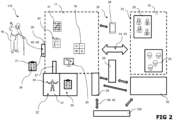
- digital twin 22 In this case a specific person, existing data of this person from the medical record and other information such as activity, place of residence, etc. are first used and fed into the digital twin 22. To fill data gaps, additional data 43 from several individuals 23 are then generated or used from statistical medical data 44.
- the system 15 has an evaluation algorithm 33 that analyzes the recorded data 40 in step d) based on the data completion criterion 21.
- the evaluation algorithm 33 can be executed in the computing unit 18 and is designed, for example, to identify at least one biomarker. Furthermore, the evaluation algorithm 33 is designed to optimize the comparison of the data in step e). For this purpose, the evaluation algorithm 33 has framework conditions and limits that improve and thus optimize the comparison of the data.
- the evaluation algorithm 33 can rank the available recorded data 40 according to additional parameters, such as the location and time of an event, in particular the time of a disease diagnosis in the individual 16, and thus prefer data with earlier diagnosis times in the selection of the statistical medical data 44.
- All relevant selected data 43 are provided at an interface 25, wherein the interface 25 is connected to a touchscreen 31 as the first display device 30.
- the system 15 has a control device 29, wherein the control device 29 causes the interface 25 to output the selected data 43 or, additionally, the analyzed data 41.
- the touchscreen 31 is connected to a graphics module 27 in order to graphically display the digital twin 22, and in particular to display it in an animatable manner. The user can also use the touchscreen 31 to perform further actions or make corrections in at least one data completion criterion 21 in order to to obtain the desired statistical medical data 44 with the desired relevance.
- Additional display devices 32 such as a smartphone 36 or a tablet, are connected to the system 15 in order to make the data 40, 41, 42, 43, 44 available to many users of the system 15.
- the user of the system 15 defines one or more data completion criteria 21.
- restrictions of the general target definition e.g., to certain groups of people (age, gender, number, etc.) are specified and entered into the system 15 via an input device 26.
- the data completion criterion 21 requires that comparable statistical medical data 44 from a minimum number of 100 individuals 23 who exhibit type A diabetes must be available.
- the missing data entries 42 e.g., certain blood values
- the data entries 42 e.g., certain blood values
- other diseases such as hepatitis, can also be defined as exclusion criteria or framework conditions.
- the data completion criterion 21 also includes a medical question 34. This involves text input and is answered based on data. In this example, medical question 34 is formulated such that the individuals must not have any pre-existing lung diseases, such as CoV19. Such data from individuals are excluded from system 15.
- the statistical medical data 44 includes data from deceased individuals 24 and from living individuals 28.
- Data from deceased individuals 24 includes, on the one hand, autopsy data and, on the other hand, historical patient data or the patient file of a deceased person, or historical data sets that reflect the medical history of a deceased person and all related data of the deceased individual.
- the living individuals 28 also contain, among other things, medical data that statistically matches the digital twin 22 of the defined individual 16.
- the Data storage medium 19 also includes medical data that matches the digital twin of the defined individual based on age, gender, previous illnesses and blood count.
- the system 15 has an artificial intelligence (AI) module 35, which, based on the data completion criterion 21, suggests supplementing the digital twin 22 of the defined individual 16 with data.
- the selected statistical medical data 44 are in turn used as training data for the AI module 35, so that the system 15 is intelligent and self-learning.
- the AI module 35 assigns a medical relevance to the statistical medical data 44 based on the data completion criterion 21 and thus links the statistical medical data 44 to the data completion criterion 21.
- the AI module 35 can in turn be configured to assign a medical relevance to the statistical medical data 44, so that they can be selected more effectively when a data completion criterion is subsequently modified.
- the medical relevance of statistical medical data 44 includes a statement about the degree of narrowing of the heart vessels when determining the probability of a heart attack.
- the evaluation algorithm is designed to provide at least one medical treatment suggestion for the defined individual 16.
- the artificial intelligence module 35 is configured to optimize the selection of data 43 in step f). In doing so, the AI module 35 processes the statistical medical data 44 of multiple individuals at an optimized speed.
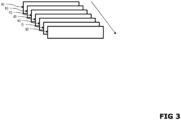
- Figure 2 shows a further embodiment of a system 115 for creating a digital twin 22 of an individual 16, wherein the system 115 according to its functional and structural features is similar to the system 15 according to Figure 1 and additionally a medical examination device 120 is present, which is connected to the interface 25 for the exchange of medical data 45.
- a medical examination device 120 is, for example, the Pathopsy TM Center. Its goal is to obtain medical data 45 from every deceased individual.
- the medical examination device 120 is connected to the interface 25 for exchanging control commands 46. This allows system 115 to directly access the control of medical examination device 120 and, in particular, to obtain missing data or data entries 42 from the defined individual 16.
- Data evaluation module 17 is configured to generate control commands 46 for medical examination device 120.
- the arrows shown exemplify an exchange of the aforementioned data with control device 29, data storage medium 19, AI module 35, medical examination device 120, or display devices 32.
- a computer program product can be stored in the processing unit 18 of a computer in the system 15 and comprises program instructions which, when the computer program is executed by the computer, cause the computer to carry out a method described herein.
Landscapes
- Engineering & Computer Science (AREA)
- Health & Medical Sciences (AREA)
- Medical Informatics (AREA)
- Public Health (AREA)
- Epidemiology (AREA)
- General Health & Medical Sciences (AREA)
- Primary Health Care (AREA)
- Data Mining & Analysis (AREA)
- Biomedical Technology (AREA)
- Databases & Information Systems (AREA)
- Pathology (AREA)
- Medical Treatment And Welfare Office Work (AREA)
Priority Applications (2)
| Application Number | Priority Date | Filing Date | Title |
|---|---|---|---|
| EP23215401.3A EP4567821A1 (fr) | 2023-12-10 | 2023-12-10 | Système de création d'un jumeau numérique d'un individu, procédé mis en uvre par ordinateur associé et produit programme informatique ainsi que support de stockage lisible par ordinateur correspondant |
| PCT/IB2024/062355 WO2025126007A1 (fr) | 2023-12-10 | 2024-12-07 | Système de création d'un jumeau numérique d'un individu, procédé mis en œuvre par ordinateur associé, produit programme d'ordinateur et support de stockage lisible par ordinateur associé |
Applications Claiming Priority (1)
| Application Number | Priority Date | Filing Date | Title |
|---|---|---|---|
| EP23215401.3A EP4567821A1 (fr) | 2023-12-10 | 2023-12-10 | Système de création d'un jumeau numérique d'un individu, procédé mis en uvre par ordinateur associé et produit programme informatique ainsi que support de stockage lisible par ordinateur correspondant |
Publications (1)
| Publication Number | Publication Date |
|---|---|
| EP4567821A1 true EP4567821A1 (fr) | 2025-06-11 |
Family
ID=89168235
Family Applications (1)
| Application Number | Title | Priority Date | Filing Date |
|---|---|---|---|
| EP23215401.3A Pending EP4567821A1 (fr) | 2023-12-10 | 2023-12-10 | Système de création d'un jumeau numérique d'un individu, procédé mis en uvre par ordinateur associé et produit programme informatique ainsi que support de stockage lisible par ordinateur correspondant |
Country Status (2)
| Country | Link |
|---|---|
| EP (1) | EP4567821A1 (fr) |
| WO (1) | WO2025126007A1 (fr) |
Citations (8)
| Publication number | Priority date | Publication date | Assignee | Title |
|---|---|---|---|---|
| WO2019005185A1 (fr) | 2017-06-28 | 2019-01-03 | General Electric Company | Procédés et systèmes pour améliorer les soins par l'intermédiaire d'une analyse de rétroaction post-opération |
| US20190198169A1 (en) | 2017-12-27 | 2019-06-27 | General Electric Company | Patient healthcare interaction device and methods for implementing the same |
| EP3646331A1 (fr) | 2017-06-28 | 2020-05-06 | General Electric Company | Procédés et systèmes de génération d'un jumeau numérique de patient |
| EP3809420A1 (fr) | 2019-10-15 | 2021-04-21 | Koninklijke Philips N.V. | Système et procédé pour des estimations de paramètre physiologique |
| US20220013199A1 (en) | 2020-07-13 | 2022-01-13 | International Business Machines Corporation | Digital twin manager |
| WO2022040536A1 (fr) | 2020-08-20 | 2022-02-24 | Alivia Capital LLC | Systèmes et procédés d'analyse de fraude, gaspillage et abus d'ordre médical |
| WO2022067189A1 (fr) * | 2020-09-25 | 2022-03-31 | Linus Health, Inc. | Systèmes et procédés d'évaluation cognitive assistée par apprentissage automatique et de traitement |
| US20220375621A1 (en) * | 2021-05-23 | 2022-11-24 | Innovision LLC | Digital twin |
-
2023
- 2023-12-10 EP EP23215401.3A patent/EP4567821A1/fr active Pending
-
2024
- 2024-12-07 WO PCT/IB2024/062355 patent/WO2025126007A1/fr active Pending
Patent Citations (8)
| Publication number | Priority date | Publication date | Assignee | Title |
|---|---|---|---|---|
| WO2019005185A1 (fr) | 2017-06-28 | 2019-01-03 | General Electric Company | Procédés et systèmes pour améliorer les soins par l'intermédiaire d'une analyse de rétroaction post-opération |
| EP3646331A1 (fr) | 2017-06-28 | 2020-05-06 | General Electric Company | Procédés et systèmes de génération d'un jumeau numérique de patient |
| US20190198169A1 (en) | 2017-12-27 | 2019-06-27 | General Electric Company | Patient healthcare interaction device and methods for implementing the same |
| EP3809420A1 (fr) | 2019-10-15 | 2021-04-21 | Koninklijke Philips N.V. | Système et procédé pour des estimations de paramètre physiologique |
| US20220013199A1 (en) | 2020-07-13 | 2022-01-13 | International Business Machines Corporation | Digital twin manager |
| WO2022040536A1 (fr) | 2020-08-20 | 2022-02-24 | Alivia Capital LLC | Systèmes et procédés d'analyse de fraude, gaspillage et abus d'ordre médical |
| WO2022067189A1 (fr) * | 2020-09-25 | 2022-03-31 | Linus Health, Inc. | Systèmes et procédés d'évaluation cognitive assistée par apprentissage automatique et de traitement |
| US20220375621A1 (en) * | 2021-05-23 | 2022-11-24 | Innovision LLC | Digital twin |
Also Published As
| Publication number | Publication date |
|---|---|
| WO2025126007A1 (fr) | 2025-06-19 |
Similar Documents
| Publication | Publication Date | Title |
|---|---|---|
| DE69712371T2 (de) | Verfahren und Vorrichtung zur Unterstützung eines Benutzers zum Erzeugen eines medizinischen Protokolls | |
| DE102016209032B3 (de) | Bildbegebendes Verfahren zum Durchführen einer medizinischen Untersuchung nebst zugehörigem Bildgebenden System und zugehörigem Computerprogrammprodukt | |
| DE112012001902T5 (de) | Vorrichtung, System und Verfahren zur Beurteilung der Wirksamkeit von Arzneistoffen anhand holistischer Analyse und Visualisierung von pharmakologischen Daten | |
| DE102008002882A1 (de) | System und Verfahren zu von einer elektronischen Krankenakte beeinflusster Datenerfassung, -verarbeitung und -anzeige | |
| DE102011002928A1 (de) | Verfahren zur rechnergestützten Konfiguration einer medizinischen Bildgebungsvorrichtung | |
| DE112010003251T5 (de) | Medizinische Diagnoseunterstützungsvorrichtung, Verfahren zur Steuerung einer medizinischen Diagnoseunterstützungsvorrichtung und Programm | |
| DE102016213515A1 (de) | Verfahren zur Unterstützung eines Befunders bei der Auswertung eines Bilddatensatzes, Bildaufnahmeeinrichtung, Computerprogramm und elektronisch lesbarer Datenträger | |
| DE202024104425U1 (de) | KI-gestütztes System zur Vorhersage von Arzneimittelwechselwirkungen für personalisiertes Medikamentenmanagement | |
| DE112022006230T5 (de) | Emotionseinschätzvorrichtung und verfahren zum erzeugen eines emotionseinschätzmodells | |
| DE102008037558A1 (de) | System und Verfahren zum Diagnostizieren eines medizinischen Zustands | |
| DE102011056919A1 (de) | Verfahren und Systeme zur Entwicklung medizinischer Signalformen und Trainingsverfahren | |
| DE10240216A1 (de) | Verfahren und Datenbank zum Auffinden von medizinischen Studien | |
| EP4016543B1 (fr) | Procédé et dispositif de fourniture des informations médicales | |
| DE102019202287A1 (de) | Verfahren zum Überprüfen einer Kenngröße eines Anwendungsablaufs einer medizinischen Bildgebungsanwendung basierend auf Röntgenstrahlung | |
| EP4567821A1 (fr) | Système de création d'un jumeau numérique d'un individu, procédé mis en uvre par ordinateur associé et produit programme informatique ainsi que support de stockage lisible par ordinateur correspondant | |
| DE102020212237A1 (de) | Abgleich und Visualisierung klinischer Studien in einer Ansicht klinischer Richtlinien | |
| DE202019005949U1 (de) | Fortschrittliche medizinische Bildgebung in verteilter Konfiguration | |
| EP4345835A1 (fr) | Procédé et unité de commande pour commander un système d'imagerie médicale | |
| DE112023001547T5 (de) | Ultraschallsystem mit anpassungseinheit | |
| EP3349219A1 (fr) | Procédé et système de détermination d'un paramètre d'examen pour un examen d'imagerie médicale | |
| DE102020111584A1 (de) | Verfahren zum Gewinnen von Daten mithilfe von Operationsmikroskopiesystemen | |
| DE102020210709A1 (de) | Computersystem und verfahren zur gleichzeitigen verbesserung und codierung von klinischen dokumenten | |
| WO2017211581A1 (fr) | Procédé et système d'assistance à la prescription d'une médication pour un patient | |
| DE102020212411A1 (de) | System und Verfahren zur Verarbeitung medizinischer Daten | |
| DE102021210899A1 (de) | Automatisiertes datenbasiertes Bereitstellen einer patientenspezifischen medizinischen Handlungsempfehlung |
Legal Events
| Date | Code | Title | Description |
|---|---|---|---|
| PUAI | Public reference made under article 153(3) epc to a published international application that has entered the european phase |
Free format text: ORIGINAL CODE: 0009012 |
|
| STAA | Information on the status of an ep patent application or granted ep patent |
Free format text: STATUS: THE APPLICATION HAS BEEN PUBLISHED |
|
| AK | Designated contracting states |
Kind code of ref document: A1 Designated state(s): AL AT BE BG CH CY CZ DE DK EE ES FI FR GB GR HR HU IE IS IT LI LT LU LV MC ME MK MT NL NO PL PT RO RS SE SI SK SM TR |
|
| STAA | Information on the status of an ep patent application or granted ep patent |
Free format text: STATUS: THE APPLICATION IS DEEMED TO BE WITHDRAWN |