EP4568124A1 - Procédé d'indication de coefficient et appareil associé - Google Patents
Procédé d'indication de coefficient et appareil associé Download PDFInfo
- Publication number
- EP4568124A1 EP4568124A1 EP22953803.8A EP22953803A EP4568124A1 EP 4568124 A1 EP4568124 A1 EP 4568124A1 EP 22953803 A EP22953803 A EP 22953803A EP 4568124 A1 EP4568124 A1 EP 4568124A1
- Authority
- EP
- European Patent Office
- Prior art keywords
- trp
- coefficient
- strongest
- indication information
- combination
- Prior art date
- Legal status (The legal status is an assumption and is not a legal conclusion. Google has not performed a legal analysis and makes no representation as to the accuracy of the status listed.)
- Pending
Links
Images






Classifications
-
- H—ELECTRICITY
- H04—ELECTRIC COMMUNICATION TECHNIQUE
- H04L—TRANSMISSION OF DIGITAL INFORMATION, e.g. TELEGRAPHIC COMMUNICATION
- H04L5/00—Arrangements affording multiple use of the transmission path
- H04L5/0091—Signalling for the administration of the divided path, e.g. signalling of configuration information
-
- H—ELECTRICITY
- H04—ELECTRIC COMMUNICATION TECHNIQUE
- H04B—TRANSMISSION
- H04B7/00—Radio transmission systems, i.e. using radiation field
- H04B7/02—Diversity systems; Multi-antenna system, i.e. transmission or reception using multiple antennas
- H04B7/022—Site diversity; Macro-diversity
- H04B7/024—Co-operative use of antennas of several sites, e.g. in co-ordinated multipoint or co-operative multiple-input multiple-output [MIMO] systems
-
- H—ELECTRICITY
- H04—ELECTRIC COMMUNICATION TECHNIQUE
- H04B—TRANSMISSION
- H04B7/00—Radio transmission systems, i.e. using radiation field
- H04B7/02—Diversity systems; Multi-antenna system, i.e. transmission or reception using multiple antennas
- H04B7/04—Diversity systems; Multi-antenna system, i.e. transmission or reception using multiple antennas using two or more spaced independent antennas
- H04B7/0413—MIMO systems
- H04B7/0456—Selection of precoding matrices or codebooks, e.g. using matrices antenna weighting
- H04B7/0478—Special codebook structures directed to feedback optimisation
-
- H—ELECTRICITY
- H04—ELECTRIC COMMUNICATION TECHNIQUE
- H04B—TRANSMISSION
- H04B7/00—Radio transmission systems, i.e. using radiation field
- H04B7/02—Diversity systems; Multi-antenna system, i.e. transmission or reception using multiple antennas
- H04B7/04—Diversity systems; Multi-antenna system, i.e. transmission or reception using multiple antennas using two or more spaced independent antennas
- H04B7/0413—MIMO systems
- H04B7/0456—Selection of precoding matrices or codebooks, e.g. using matrices antenna weighting
- H04B7/0482—Adaptive codebooks
-
- H—ELECTRICITY
- H04—ELECTRIC COMMUNICATION TECHNIQUE
- H04B—TRANSMISSION
- H04B7/00—Radio transmission systems, i.e. using radiation field
- H04B7/02—Diversity systems; Multi-antenna system, i.e. transmission or reception using multiple antennas
- H04B7/04—Diversity systems; Multi-antenna system, i.e. transmission or reception using multiple antennas using two or more spaced independent antennas
- H04B7/06—Diversity systems; Multi-antenna system, i.e. transmission or reception using multiple antennas using two or more spaced independent antennas at the transmitting station
- H04B7/0613—Diversity systems; Multi-antenna system, i.e. transmission or reception using multiple antennas using two or more spaced independent antennas at the transmitting station using simultaneous transmission
- H04B7/0615—Diversity systems; Multi-antenna system, i.e. transmission or reception using multiple antennas using two or more spaced independent antennas at the transmitting station using simultaneous transmission of weighted versions of same signal
- H04B7/0619—Diversity systems; Multi-antenna system, i.e. transmission or reception using multiple antennas using two or more spaced independent antennas at the transmitting station using simultaneous transmission of weighted versions of same signal using feedback from receiving side
- H04B7/0636—Feedback format
- H04B7/0639—Using selective indices, e.g. of a codebook, e.g. pre-distortion matrix index [PMI] or for beam selection
-
- H—ELECTRICITY
- H04—ELECTRIC COMMUNICATION TECHNIQUE
- H04L—TRANSMISSION OF DIGITAL INFORMATION, e.g. TELEGRAPHIC COMMUNICATION
- H04L5/00—Arrangements affording multiple use of the transmission path
- H04L5/003—Arrangements for allocating sub-channels of the transmission path
- H04L5/0032—Distributed allocation, i.e. involving a plurality of allocating devices, each making partial allocation
- H04L5/0035—Resource allocation in a cooperative multipoint environment
-
- H—ELECTRICITY
- H04—ELECTRIC COMMUNICATION TECHNIQUE
- H04L—TRANSMISSION OF DIGITAL INFORMATION, e.g. TELEGRAPHIC COMMUNICATION
- H04L5/00—Arrangements affording multiple use of the transmission path
- H04L5/003—Arrangements for allocating sub-channels of the transmission path
- H04L5/0053—Allocation of signalling, i.e. of overhead other than pilot signals
Definitions
- the present disclosure generally relates to the field of communication technologies, and more particularly relates to a method and an apparatus for indicating a coefficient.
- Multi-point coordinated transmission refers to multiple transmission reception points (mTRPs)/multi-panels providing data services for one user.
- mTRPs transmission reception points
- multi-panels providing data services for one user.
- mTRPs transmission reception points
- TRP groups currently no method for indicating the position of a coefficient in a combination coefficient matrix exists.
- Embodiments of the present disclosure provide a method and an apparatus for indicating a coefficient, which can enable a terminal device to indicate the position of a coefficient in a combination coefficient matrix in the scenario of multiple TRPs or multiple TRP groups, so that a network device can determine the coefficient based on the position of the coefficient and then perform subsequent processing, thereby reducing the feedback overhead of the terminal device in the scenario of multiple TRPs or multiple TRP groups.
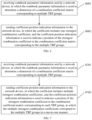
- embodiments of the present disclosure provide a method for indicating a coefficient, performed by a terminal device and including: receiving codebook parameter information sent by a network device, in which the codebook parameter information is used to determine a dimension of a combination coefficient matrix corresponding to multiple transmission reception points (TRPs) or multiple TRP groups; and sending coefficient position indication information to the network device, in which the coefficient position indication information is used to indicate a position of a specific coefficient in the combination coefficient matrix.
- TRPs transmission reception points
- the terminal device may receive codebook parameter information sent by the network device, in which the codebook parameter information is used to determine a dimension of a combination coefficient matrix corresponding to multiple TRPs or multiple TRP groups; and send coefficient position indication information to the network device, in which the coefficient position indication information is used to indicate a position of a coefficient in the combination coefficient matrix.
- the network device can determine the coefficient based on the position of the coefficient and then perform subsequent processing, thereby reducing the feedback overhead of the terminal device in the scenario of multiple TRPs or multiple TRP groups.
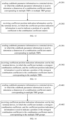
- embodiments of the present disclosure provide a method for indicating a coefficient, performed by a network device and including: sending codebook parameter information to a terminal device, in which the codebook parameter information is used to determine a dimension of a combination coefficient matrix corresponding to multiple TRPs or multiple TRP groups; and receiving coefficient position indication information sent by the terminal device, in which the coefficient position indication information is used to indicate a position of a specific coefficient in the combination coefficient matrix.
- the network device may send codebook parameter information to the terminal device, in which the codebook parameter information is used to determine a dimension of a combination coefficient matrix corresponding to multiple TRPs or multiple TRP groups; and receive coefficient position indication information sent by the terminal device, in which the coefficient position indication information is used to indicate a position of a specific coefficient in the combination coefficient matrix.
- the network device can determine the coefficient based on the position of the coefficient and then perform subsequent processing, thereby reducing the feedback overhead of the terminal device in the scenario of multiple TRPs or multiple TRP groups.
- embodiments of the present disclosure provide a communication device, which has some or all of the functions of the terminal device in the method described above in the first aspect.
- the functions of the communication device may have some or all of the functions in the embodiments of the present disclosure, or may have the functions of implementing any one of the embodiments of the present disclosure alone.
- the functions may be implemented by hardware, or may be implemented by hardware executing corresponding software.
- the hardware or software includes one or more units or modules corresponding to the above functions.
- the communication device may include a transceiver module and a processing module, and the processing module is configured to support the communication device to perform the corresponding functions in the above method.
- the transceiver module is used to support the communication between the communication device and other devices.
- the communication device may further include a storage module, which is used to couple with the transceiver module and the processing module, and store desired computer programs and data for the communication device.
- the processing module may be a processor
- the transceiver module may be a transceiver or a communication interface
- the storage module may be a memory
- embodiments of the present disclosure provide another communication device, which has some or all of the functions of the network device in the method example described above in the second aspect.
- the functions of the communication device may have some or all of the functions in the embodiments of the present disclosure, or may have the functions of implementing any one of the embodiments of the present disclosure alone.
- the functions may be implemented by hardware, or may be implemented by hardware executing corresponding software.
- the hardware or software includes one or more units or modules corresponding to the above functions.
- the communication device may include a transceiver module and a processing module, and the processing module is configured to support the communication device to perform the corresponding functions in the above method.
- the transceiver module is used to support the communication between the communication device and other devices.
- the communication device may further include a storage module, which is used to couple with the transceiver module and the processing module, and store desired computer programs and data for the communication device.
- embodiments of the present disclosure provide a communication device, which includes a processor.
- the processor calls a computer program in a memory, the method described above in the first aspect is performed.
- embodiments of the present disclosure provide a communication device, which includes a processor.
- the processor calls a computer program in a memory, the method described above in the second aspect is performed.
- embodiments of the present disclosure provide a communication device, which includes a processor and a memory having stored therein a computer program.
- the processor executes the computer program stored in the memory, so that the communication device performs the method described above in the first aspect.
- embodiments of the present disclosure provide a communication device, which includes a processor and a memory having stored therein a computer program.
- the processor executes the computer program stored in the memory, so that the communication device performs the method described above in the second aspect.
- embodiments of the present disclosure provide a communication device, which includes a processor and an interface circuit, in which the interface circuit is configured to receive code instructions and transmit the code instructions to the processor, and the processor is configured to run the code instructions to enable the device to execute the method described above in the first aspect.
- embodiments of the present disclosure provide a communication device, which includes a processor and an interface circuit, in which the interface circuit is configured to receive code instructions and transmit the code instructions to the processor, and the processor is configured to run the code instructions to enable the device to execute the method described above in the second aspect.
- embodiments of the present disclosure provide a communication system.
- the system includes the communication device described in the third aspect and the communication device described in the fourth aspect, or the system includes the communication device described in the fifth aspect and the communication device described in the sixth aspect, or the system includes the communication device described in the seventh aspect and the communication device described in the eighth aspect, or the system includes the communication device described in the ninth aspect and the communication device described in the tenth aspect.
- embodiments of the present disclosure provide a computer-readable storage medium for storing instructions used by the above-mentioned terminal device, and when the instructions are executed, the terminal device performs the method described above in the first aspect.
- embodiments of the present disclosure provide a readable storage medium for storing instructions used by the above-mentioned network device, and when the instructions are executed, the network device performs the method described above in the second aspect.
- the present disclosure further provides a computer program product including a computer program, and when the computer program is run on a computer, the computer is enabled to execute the method described above in the first aspect.
- the present disclosure further provides a computer program product comprising a computer program, and when the computer program is run on a computer, the computer is enabled to execute the method described above in the second aspect.
- the present disclosure provides a chip system, which includes at least one processor and an interface, used to support a terminal device to implement the functions involved in the first aspect, for example, determining or processing at least one of the data and information involved in the above method.
- the chip system further includes a memory, which is used to store desired computer programs and data for the terminal device.
- the chip system may be composed of a chip, or may include a chip and other discrete devices.
- the present disclosure provides a chip system, which includes at least one processor and an interface, used to support a network device to implement the functions involved in the second aspect, for example, determining or processing at least one of the data and information involved in the above method.
- the chip system further includes a memory, and the memory is used to store desired computer programs and data for the network device.
- the chip system may be composed of a chip, or may include a chip and other discrete devices.
- the present disclosure provides a computer program, and when the computer program is run on a computer, the computer is enabled to perform the method described above in the first aspect.
- the present disclosure provides a computer program, and when the computer program is run on a computer, the computer is enabled to perform the method described above in the second aspect.
- first, second, and third may be used in embodiments of the present disclosure for describing various information, these information should not be limited by these terms. These terms are only used for distinguishing information of the same type from each other.
- first information may also be referred to as second information, and similarly the second information may also be referred to as the first information, without departing from the scope of embodiments of the present disclosure.
- the term “if” may be construed to mean “when” or “upon” or “in response to determining” depending on the context.
- the terms used in this document to represent size relationships are “greater than” or “less than”, “higher than” or “lower than”.
- greater than also covers the meaning of “greater than or equal to”
- less than also covers the meaning of “less than or equal to”
- higher than covers the meaning of “higher than or equal to”
- lower than also covers the meaning of "lower than or equal to”.
- the spatial domain may include a transmitting side spatial domain and a receiving side spatial domain, and the spatial domain basis vector may be determined based on the transmitting side spatial domain basis vector.
- Each transmitting side spatial domain basis vector may correspond to a transmitting beam of a transmitting device.
- Each receiving side spatial domain basis vector may correspond to a receiving beam of a receiving device.
- the transmitting side spatial basis vector is usually associated with the expression of the transmitting side antenna array.
- many parameters involved in the transmitting side spatial basis vector may be understood as different properties used to represent the transmitting side antenna array. Therefore, in order to facilitate the understanding of the transmitting side spatial basis vector involved in an embodiment of the present disclosure, the transmitting side spatial basis vector will be described below in conjunction with the transmitting side antenna array. Nevertheless, those skilled in the art should understand that the transmitting side spatial basis vector involved in an embodiment of the present disclosure is not limited to a specific antenna array. In the specific implementation process, a suitable antenna array may be selected according to specific needs, and various parameters involved in the transmitting side spatial basis vector involved in an embodiment of the present disclosure are set based on the selected antenna array.
- the frequency domain basis vector is used to represent the variation rule of a channel in the frequency domain.
- the frequency domain basis vector may be used to specifically represent the variation rule of weighted coefficients of each spatial domain basis vector in each frequency domain unit.
- the change rule represented by the frequency domain basis vector is related to factors such as multipath delay. It is understandable that when a signal is transmitted through a wireless channel, there may be different transmission delays on different transmission paths.
- the variation rule of the channel in the frequency domain caused by different transmission delays may be represented by different frequency domain basis vectors.
- the multi-point coordinated transmission technology may be roughly divided into two types: a coherent joint transmission (CJT) and an incoherent joint transmission (NCJT).
- CJT coherent joint transmission
- NCJT incoherent joint transmission
- the so-called CJT means that each data stream will be mapped to the m-TRP/panel participating in the collaboration through a weighted vector.
- the CJT is equivalent to splicing multiple sub-arrays into a higher-dimensional virtual array to obtain a higher shaping or precoding gain.
- FIG. 1 shows a scenario in which three TRPs serve a terminal device (e.g., user equipment UE) through a CJT, and the channels from the terminal device to individual TRPs are represented as H 1 , H 2 , and H 3 , respectively.
- the following optional codebook structure may be used to calculate the downlink data transmission precoding for a user: Alt 1 A : a 1 p 1 ⁇ W 1 , 1 W ⁇ 2 , 1 W f , 1 H ⁇ a N p N ⁇ W 1 , N W ⁇ 2 , N W f , N H
- Alt 1 B a 1 p 1 ⁇ W SF , 1 W ⁇ 2 , 1 ⁇ a N p N ⁇ W SF , N W ⁇ 2 , N Alt 2 : W 1 , 1 0 0 ⁇ 0 0 0 0 0 0 0 0 0 W 1 , N W ⁇ 2 W f H
- a n and p n respectively represent a phase factor and an amplitude factor corresponding to an n th TRP.
- W 1,n represents an SD basis vector corresponding to the n th TRP
- W ⁇ 2,n represents a combination coefficient matrix corresponding to the n th TRP
- W f,n represents a FD basis vector corresponding to the n th TRP
- W SF,n represents the combination of SD and FD basis vectors corresponding to the n th TRP
- W ⁇ 2 represents the combination coefficient matrix corresponding to N TRPs
- W f represents the FD basis vectors corresponding to N TRPs.
- r 0 and r 1 represent a reference amplitude in a first polarization direction and a reference amplitude in a second polarization direction, respectively
- d l , m p represents the coefficient at the first row and the m th column in a p th polarization direction in the combination coefficient matrix W ⁇ 2
- the coefficient may be represented by the corresponding differential amplitude and differential phase.
- the reference amplitude is quantized with 4 bits
- the differential amplitude and differential phase are quantized with 3 bits and 4 bits, respectively.
- the combination coefficients in the combination coefficient matrix need to be first normalized.
- the combination coefficient matrix after normalization of the combination coefficients contains a strongest combination coefficient with an amplitude of 1.
- the reference amplitude r 0 or r 1 corresponding to the polarization direction where the strongest combination coefficient is located is not reported.
- the terminal device does not quantize and report the strongest combination coefficient, but only reports less indication information to indicate the position of the strongest combination coefficient in the combination coefficient matrix corresponding to one TRP.
- L represents the number of SD basis vectors.
- the terminal device For Rel-17 Type II port selection, the terminal device indicates the position of the strongest combination coefficient in the combination coefficient matrix corresponding to one TRP by reporting log 2 K 1 M bits.
- FIG. 2 is a schematic diagram of the architecture of a communication system provided in an embodiment of the present disclosure.
- the communication system may include, but is not limited to, one network device and one terminal device.
- the number and form of devices shown in FIG. 2 are only used as examples and do not constitute a limitation on the embodiments of the present disclosure. In actual applications, two or more network devices and two or more terminals may be included.
- the communication system shown in FIG. 2 includes, for example, a network device 101 and a terminal device 102.
- the technical solution in the embodiments of the present disclosure may be applied to various communication systems, such as a long term evolution (LTE) system, a fifth generation (5G) mobile communication system, a 5G new radio (NR) system, or other future new mobile communication systems.
- LTE long term evolution
- 5G fifth generation
- NR 5G new radio
- the sidelink in an embodiment of the present disclosure may also be called a side link or a direct link.
- the network device 101 in an embodiment of the present disclosure is an entity on the network side for transmitting or receiving signals.
- the network device 101 may be an evolved NodeB (eNB), a transmission reception point (TRP), a next generation NodeB (gNB) in an NR system, a base station in other future mobile communication systems, or an access node in a wireless fidelity (Wi-Fi) system.
- eNB evolved NodeB
- TRP transmission reception point
- gNB next generation NodeB
- Wi-Fi wireless fidelity
- the specific technology and specific device form adopted by the network device are not limited in the embodiments of the present disclosure.
- the network device provided in the embodiments of the present disclosure may include a central unit (CU) and a distributed unit (DU), in which the CU may also be referred to as a control unit.
- CU central unit
- DU distributed unit
- the CU-DU structure may be used to split the protocol layer of the network device, such as the base station, and the functions of some protocol layers are placed in the CU for centralized control, and the functions of the remaining part or all of the protocol layers are distributed in the DU, and the DU is centrally controlled by the CU.
- the terminal device 102 in an embodiment of the present disclosure is an entity on the user side for receiving or transmitting signals, such as a mobile phone.
- the terminal device may also be referred to as a terminal device (terminal), a user equipment (UE), a mobile station (MS), a mobile terminal (MT), etc.
- the terminal device may be a car with a communication function, a smart car, a mobile phone, a wearable device, a tablet computer (Pad), a computer with a wireless transceiver function, a virtual reality (VR) terminal device, an augmented reality (AR) terminal device, a wireless terminal device in industrial control, a wireless terminal device in self-driving, a wireless terminal device in remote medical surgery, a wireless terminal device in smart grid, a wireless terminal device in transportation safety, a wireless terminal device in smart city, a wireless terminal device in smart home, etc.
- the specific technology and specific device form adopted by the terminal device are not limited in the embodiments of the present disclosure.
- sidelink transmission mode 1 and side link transmission mode 2 are used for a device-to-device (D2D) communication of the terminal device.
- Sidelink transmission mode 3 and sidelink transmission mode 4 are used for a V2X communication.
- sidelink transmission mode 3 is adopted, resource allocation is scheduled by the network device 101. Specifically, the network device 101 may send resource allocation information to the terminal device 102, and then the terminal device 102 allocates resources to a different terminal device, so that the different terminal device can send information to the network device 101 through the allocated resources.
- a terminal device with a better signal or higher reliability may be used as the terminal device 102.
- the first terminal device mentioned in the embodiments of the present disclosure may refer to the terminal device 102, and the second terminal device may refer to the different terminal device.
- the communication system described in this embodiment of the present disclosure is for the purpose of more clearly illustrating the technical solution of the embodiments of the present disclosure, and does not constitute a limitation on the technical solution provided in the embodiments of the present disclosure.
- Those of ordinary skill in the art may know that with the evolution of the system architecture and the emergence of new business scenarios, the technical solution provided in the embodiments of the present disclosure is also applicable to similar technical problems.
- the method for indicating the coefficient provided in any embodiment of the present disclosure may be executed alone, or may be executed in combination with possible implementation methods in other embodiments, or may be executed in combination with any technical solution in the related technology.
- FIG. 3 is a schematic flowchart of a method for indicating a coefficient provided in an embodiment of the present disclosure.
- the method for indicating the coefficient is performed by a terminal device. As shown in FIG. 3 , the method may include, but is not limited to, the following steps.
- codebook parameter information sent by a network device is received, in which the codebook parameter information is used to determine a dimension of a combination coefficient matrix corresponding to multiple TRPs or multiple TRP groups.
- the codebook parameter information may be used to determine the dimension of the combination coefficient matrix corresponding to multiple TRPs.
- each TRP corresponds to one combination coefficient matrix.
- the codebook parameter information may be used to determine the dimension of the combination coefficient matrix corresponding to multiple TRP groups.
- each TRP group corresponds to one combination coefficient matrix.
- a TRP group may include one or more TRPs.
- the codebook parameter information includes the number of TRPs/TRP groups, and the number of basis vectors corresponding to one TRP/TRP group or multiple TRPs/TRP groups; and the number of basis vectors includes at least one of: the number of SD basis vectors, the number of FD basis vectors, the number of ports, or the number of SD-FD basis vector pairs.
- the number of ports herein refers to the number of channel state information reference signal (CSI-RS) ports.
- CSI-RS channel state information reference signal
- the codebook parameter information in case that the codebook parameter information is used to determine the dimension of the combination coefficient matrix corresponding to multiple TRPs, the codebook parameter information may include the number of TRPs, and the number of basis vectors corresponding to one TRP or multiple TRPs. In one example, the codebook parameter information may include the number of TRPs, and the number of basis vectors corresponding to one TRP. In another example, the codebook parameter information may include the number of TRPs, and the number of basis vectors corresponding to multiple TRPs. The number of basis vectors corresponding to multiple TRPs refers to the total number of the respective basis vectors in all TRPs.
- the multiple TRPs may be located in the same TRP group or in different TRP groups.
- the TRP groups to which any two TRPs belong may be the same or different, and there is no specific limitation on this here.
- the terminal device can determine the dimension of the combination coefficient matrix corresponding to multiple TRPs based on the codebook parameter information configured by the network device, and thus determine the combination coefficient matrix corresponding to multiple TRPs.
- the codebook parameter information may include the number of TRP groups, and the number of basis vectors corresponding to one TRP group or multiple TRP groups. In one example, the codebook parameter information may include the number of TRP groups, and the number of basis vectors corresponding to one TRP. In another example, the codebook parameter information may include the number of TRP groups, and the number of basis vectors corresponding to multiple TRP groups. The number of basis vectors corresponding to multiple TRP groups refers to the total number of the respective basis vectors in all TRP groups.
- the terminal device can determine the dimension of the combination coefficient matrix corresponding to multiple TRP groups based on the codebook parameter information configured by the network device, and thus determine the combination coefficient matrix corresponding to multiple TRP groups.
- coefficient position indication information is sent to the network device, in which the coefficient position indication information is used to indicate a position of a specific coefficient in the combination coefficient matrix.
- the coefficient includes at least one of: a strongest combination coefficient, a strongest reference amplitude, or a strongest amplitude.
- the number of the strongest combination coefficients may be one or more.
- the terminal device can determine the combination coefficient matrix corresponding to multiple TRPs, in which each TRP can correspond to one combination coefficient matrix.
- the multiple combination coefficient matrices may be combined into one combination coefficient matrix, combination coefficients in the combination coefficient matrix are normalized to obtain a processed combination coefficient matrix, and there is one strongest combination coefficient in the processed combination coefficient matrix.
- coefficient matrices in individual combination coefficient matrices may be normalized separately to obtain multiple processed combination coefficient matrices each having one strongest combination coefficient, that is, multiple strongest combination coefficients. There may be one strongest reference amplitude and/or one strongest amplitude in the multiple combination coefficient matrices.
- the terminal device can determine the combination coefficient matrix corresponding to multiple TRP groups, in which each TRP group can correspond to one combination coefficient matrix.
- the multiple combination coefficient matrices may be combined into one combination coefficient matrix, combination coefficients in the combination coefficient matrix are normalized to obtain a processed combination coefficient matrix, and there is one strongest combination coefficient in the processed combination coefficient matrix.
- coefficient matrices in individual combination coefficient matrices may be normalized separately to obtain multiple processed combination coefficient matrices each having one strongest combination coefficient, that is, multiple strongest combination coefficients. There may be one strongest reference amplitude and/or one strongest amplitude in the multiple combination coefficient matrices.
- the position indication information of the strongest coefficient may be determined according to the codebook parameter information configured by the network device, or according to the number of coefficients in the combination coefficient matrix corresponding to multiple TRPs or multiple TRP groups, or according to the number of non-zero coefficients in the combination coefficient matrix corresponding to multiple TRPs or multiple TRP groups. This is not specifically limited here and may be selected according to actual needs.
- the terminal device can receive the codebook parameter information sent by the network device, in which the codebook parameter information is used to determine the dimension of the combination coefficient matrix corresponding to multiple TRPs or multiple TRP groups; and the terminal device can send the coefficient position indication information to the network device, in which the coefficient position indication information is used to indicate the position of a specific coefficient in the combination coefficient matrix.
- the position of the coefficient in the combination coefficient matrix is indicated in the scenario of multiple TRPs or multiple TRP groups, so that the network device can determine the coefficient based on the position of the coefficient, and then perform subsequent processing, thereby reducing the feedback overhead of the terminal device while maintaining the performance of the system.
- FIG. 4 is a schematic flowchart of another method for indicating a coefficient provided in an embodiment of the present disclosure.
- the method for indicating the coefficient is performed by a terminal device. As shown in FIG. 4 , the method may include, but is not limited to, the following steps.
- codebook parameter information sent by a network device is received, in which the codebook parameter information is used to determine a dimension of a combination coefficient matrix corresponding to multiple TRPs.
- coefficient position indication information is sent to the network device, in which the coefficient includes one strongest combination coefficient, and the coefficient position indication information is used to indicate a position of the strongest combination coefficient in the combination coefficient matrix corresponding to the multiple TRPs.
- each TRP can correspond to one combination coefficient matrix.
- the multiple combination coefficient matrices may be combined into one combination coefficient matrix, combination coefficients in the combination coefficient matrix are normalized to obtain a processed combination coefficient matrix, and there is one strongest combination coefficient in the processed combination coefficient matrix.
- the coefficient position indication information may be directly used to indicate the position of the strongest combination coefficient in the combination coefficient matrix corresponding to multiple TRPs.
- the first TRP is not predefined and is not configured by the network device, and the coefficient position indication information includes first indication information for indicating the first TRP corresponding to the strongest combination coefficient, and second indication information for indicating the position of the strongest combination coefficient in the combination coefficient matrix corresponding to the first TRP.
- the coefficient position indication information includes second indication information for indicating the position of the strongest combination coefficient in the combination coefficient matrix corresponding to the first TRP, and the first TRP is predefined or configured by the network device.
- the number of ports herein refers to the number of CSI-RS ports.
- the method for indicating the coefficient position indication information in this embodiment may be applicable to any one of the following codebook structures: Alt1A, Alt1B and Alt2.
- the coefficient position indication information includes first indication information for indicating a first TRP corresponding to the strongest combination coefficient and second indication information for indicating the position of the strongest combination coefficient in the combination coefficient matrix corresponding to the first TRP
- the first indication information may be indicated by log 2 N bits
- the second indication information may be indicated by log 2 2 L n M n bits , where N represents the number of TRPs, L n represents the number of SD basis vectors or the number of ports of an n th TRP, M n represents the number of FD basis vectors of the n th TRP, and the n th TRP is the first TRP.
- a different number of FD basis vectors may be configured for TRPs, or a different number of SD basis vectors may be configured for TRPs.
- the method for indicating the first indication information and the second indication information in this embodiment may be applicable to any one of the following codebook structures: Alt1A, Alt1B and Alt2.
- log 2 N means rounding up of log 2 N to an integer. For example, in the case where log 2 N is 0.8, log 2 N may be 1.
- the number 2 in front of L n in the formula of the second indication information indicates that there are two polarization directions. If the number of polarization directions is another number, 2 may be replaced by the actual number of polarization directions.
- the coefficient position indication information includes first indication information for indicating a first TRP corresponding to the strongest combination coefficient and second indication information for indicating the position of the strongest combination coefficient in the combination coefficient matrix corresponding to the first TRP
- the first indication information may be indicated by log 2 N bits
- the second indication information may be indicated by any one of log 2 2 L n bits , and log 2 K n NZ bits , where N represents the number of TRPs, L n represents the number of SD basis vectors or the number of ports of an n th TRP, K n NZ represents the number of non-zero coefficients in a combination coefficient matrix of one transmission layer corresponding to the n th TRP, and the n th TRP is the first TRP.
- the method for indicating the first indication information and the second indication information in this embodiment may be applicable to the Alt1A codebook structure.
- the second indication information may be indicated by log 2 2 L n bits . If the processed combination coefficient matrix is not subjected to column permutation to permute the column where the strongest combination coefficient is located to the first column, the second indication information may be indicated by log 2 K n NZ bits .
- the second indication information may be indicated by log 2 2 L n M n bits .
- the method for indicating the second indication information in this example may be applicable to any one of the following codebook structures: Alt1A, Alt1B and Alt2.
- the second indication information may be indicated by any one of: log 2 2 L n bits and log 2 K n NZ bits .
- the method for indicating the second indication information in this example may be applicable to the Alt1A codebook structure.
- W ⁇ 2 ′ r 0 d 1 , 1 0 , 1 r 0 d 1 , 2 0 , 1 r 0 d 1 , 3 0 , 1 r 0 d 1 , 4 0 , 1 r 0 d 2 , 1 0 , 1 1 r 0 d 2 , 3 0 , 1 r 0 d 2 , 4 0 , 1 r 1 d 3 , 1 1 , 1 r 1 d 3 , 2 1 , 1 r 1 d 3 , 3 1 , 1 r 1 d 3 , 4 1 , 1 r 1 d 4 , 1 1 , 1 r 1 d 4 , 2 1 , 1 r 1 d 4 , 3 1 , 1 , 1 r 1 d 4 , 3 1 , 1 , 1 r 1 d 4 , 3 1 , 1 , 1 r 1 d 4 , 3 1 , 1 r 1
- the terminal device can receive the codebook parameter information sent by the network device, in which the codebook parameter information is used to determine the dimension of the combination coefficient matrix corresponding to multiple TRPs; and the terminal device can send the coefficient position indication information to the network device, in which the coefficient includes one strongest combination coefficient, and the coefficient position indication information is used to indicate the position of the strongest combination coefficient in the combination coefficient matrix corresponding to the multiple TRPs.
- the position of the coefficient in the combination coefficient matrix is indicated in the scenario of multiple TRPs, so that the network device can determine the coefficient based on the position of the coefficient, and then perform subsequent processing, thereby reducing the feedback overhead of the terminal device while maintaining the performance of the system.
- FIG. 5 is a schematic flowchart of another method for indicating a coefficient provided in an embodiment of the present disclosure.
- the method for indicating the coefficient is performed by a terminal device. As shown in FIG. 5 , the method may include, but is not limited to, the following steps.
- step S501 codebook parameter information sent by a network device is received, in which the codebook parameter information is used to determine a dimension of a combination coefficient matrix corresponding to multiple TRPs.
- coefficient position indication information is sent to the network device, in which the coefficient includes multiple strongest combination coefficients, and the coefficient position indication information is used to indicate a position of the strongest combination coefficient in the combination coefficient matrix corresponding to each TRP, in which the multiple strongest combination coefficients correspond to the multiple TRPs in a one-to-one manner.
- the coefficient position indication information includes indication information for indicating the position of the strongest combination coefficient in the combination coefficient matrix corresponding to each TRP.
- the indication information for indicating the position of the strongest combination coefficient corresponding to an n th TRP is indicated by any one of: log 2 2 L n M n bits , log 2 2 L n bits , log 2 K n NZ bits , and log 2 K n , 0 bits , where L n represents the number of SD basis vectors or the number of ports of the n th TRP, M n represents the number of FD basis vectors of the n th TRP, K n NZ represents the number of non-zero coefficients in a combination coefficient matrix of one transmission layer corresponding to the n th TRP, and K n ,0 represents a maximum number of non-zero coefficients of each transmission layer corresponding to the n th TRP.
- the number of ports herein refers to the number of CSI-RS ports.
- the method for indicating the coefficient position indication information in this embodiment may be applicable to any one of the following codebook structures: Alt1A, Alt1B and Alt2.
- the indication information for indicating the position of the strongest combination coefficient in the combination coefficient matrix corresponding to the TRP may be indicated by any one of: log 2 2 L n M n bits , log 2 2 L n bits , log 2 K n NZ bits , and log 2 K n , 0 bits .
- the indication information for indicating the position of the strongest combination coefficient in the combination coefficient matrix corresponding to the TRP may be indicated by log 2 2 L n M n bits .
- W ⁇ ⁇ 2 W 2,1 W 2,2
- W 2,1 r 0 d 1 , 1 0 , 1 r 0 d 1 , 2 0 , 1 r 0 d 1 , 3 0 , 1 r 0 d 1 , 4 0 , 1 r 0 d 2 , 1 0 , 1 r 0 d 2 , 2 0 , 1 r 0 d 2 , 3 0 , 1 r 0 d 2 , 4 0 , 1 r 1 d 3 , 1 1 , 1 r 1 d 3 , 2 1 , 1 r 1 d 3 , 3 1 , 1 r 1 d 3 , 4 1 , 1 r 1 d 4 , 1 1 , 1 r 1 d 4 , 2 1 , 1 r 1 d 4 , 3 1 , 1 r 1 d 4 , 3 1 , 1 r 1 d 4 , 1 , 1
- r 0 and r 1 respectively represent the reference amplitudes in the first polarization direction and the second polarization direction corresponding to the first TRP
- r 2 and r 3 respectively represent the reference amplitudes in the first polarization direction and the second polarization direction corresponding to the second TRP.
- the terminal device can receive the codebook parameter information sent by the network device, in which the codebook parameter information is used to determine the dimension of the combination coefficient matrix corresponding to multiple TRPs; and the terminal device can send the coefficient position indication information to the network device, in which the coefficient includes multiple strongest combination coefficients, and the coefficient position indication information is used to indicate the position of the strongest combination coefficient in the combination coefficient matrix corresponding to each TRP, in which the multiple strongest combination coefficients correspond to the multiple TRPs in a one-to-one manner.
- the position of the coefficient in the combination coefficient matrix is indicated in the scenario of multiple TRPs, so that the network device can determine the coefficient based on the position of the coefficient, and then perform subsequent processing, thereby reducing the feedback overhead of the terminal device while maintaining the performance of the system.
- FIG. 5a is a schematic flowchart of another method for indicating a coefficient provided in an embodiment of the present disclosure.
- the method for indicating the coefficient is performed by a terminal device. As shown in FIG. 5a , the method may include, but is not limited to, the following steps.
- step S5 codebook parameter information sent by a network device is received, in which the codebook parameter information is used to determine a dimension of a combination coefficient matrix corresponding to multiple TRPs.
- coefficient position indication information is sent to the network device, in which the coefficient includes multiple strongest combination coefficients, and the coefficient position indication information is used to indicate a position of the strongest combination coefficient in the combination coefficient matrix corresponding to each TRP, in which the multiple strongest combination coefficients correspond to the multiple TRPs in a one-to-one manner.
- the coefficient position indication information includes indication information for indicating the position of the strongest combination coefficient in the combination coefficient matrix corresponding to each TRP.
- the indication information for indicating the position of the strongest combination coefficient corresponding to an n th TRP is indicated by any one of: log 2 2 L n M n bits , log 2 2 L n bits , log 2 K n NZ bits , and log 2 K n , 0 bits , where L n represents the number of SD basis vectors or the number of ports of the n th TRP, M n represents the number of FD basis vectors of the n th TRP, K n NZ represents the number of non-zero coefficients in a combination coefficient matrix of one transmission layer corresponding to the n th TRP, and K n ,0 represents a maximum number of non-zero coefficients of each transmission layer corresponding to the n th TRP.
- the number of ports herein refers to the number of CSI-RS ports.
- the method for indicating the coefficient position indication information in this embodiment may be applicable to any one of the following codebook structures: Alt1A, Alt1B and Alt2.
- the indication information for indicating the position of the strongest combination coefficient corresponding to the TRP may be indicated by any one of: log 2 2 L n M n bits , log 2 2 L n bits , log 2 K n NZ bits , and log 2 K n , 0 bits .
- the indication information for indicating the position of the strongest combination coefficient in the combination coefficient matrix corresponding to the TRP may be indicated by log 2 2 L n M n bits .
- coefficient indication information is sent to the network device, in which the coefficient indication information is used to indicate a reference amplitude and a differential phase of the strongest combination coefficients in the combination coefficient matrix corresponding to other TRPs; the other TRPs are TRPs in the multiple TRPs except a third TRP; the third TRP is indicated by the coefficient position indication information, or the third TRP is predefined or configured by the network device, in which the coefficient indication information is not used to indicate the strongest combination coefficient in the combination coefficient matrix corresponding to the third TRP.
- the third TRP may be indicated by the coefficient position indication information.
- the coefficient position indication information may further include indication information, and the indication information may indicate the third TRP.
- bits in the coefficient position indication information used to indicate the position of other coefficients may be reused to indicate the third TRP. It should be noted that the third TRP may be any one of the multiple TRPs.
- the third TRP may be indicated by log 2 N bits , where N represents the number of TRPs.
- the third TRP may be predefined or configured by the network device.
- the network device may configure a resource identifier of a CSI-RS resource associated with each TRP, or the network device may configure a resource identifier of a CSI-RS resource associated with each TRP group.
- the network device and the terminal device may specify or predefine the content as follows: the third TRP is a TRP corresponding to the smallest resource identifier among multiple resource identifiers, or the third TRP is a TRP corresponding to the largest resource identifier among multiple resource identifiers.
- the coefficient may further include the strongest amplitude and/or the strongest reference amplitude; in which the coefficient position indication information is further used to indicate a position of the strongest amplitude in the combination coefficient matrix corresponding to the multiple TRPs, in which the position of the strongest amplitude represents a TRP including the strongest amplitude; and/or the coefficient position indication information is further used to indicate a position of the strongest reference amplitude in the combination coefficient matrix corresponding to the multiple TRPs, and the position of the strongest reference amplitude represents a TRP including the strongest reference amplitude.
- the amplitude of the strongest combination coefficient in the combination coefficient matrix corresponding to each TRP is the largest, and the strongest amplitude is the maximum value among multiple maximum amplitudes.
- the terminal device can receive the codebook parameter information sent by the network device, in which the codebook parameter information is used to determine the dimension of the combination coefficient matrix corresponding to multiple TRPs; the terminal device can send the coefficient position indication information to the network device, in which the coefficient includes multiple strongest combination coefficients, and the coefficient position indication information is used to indicate the position of the strongest combination coefficient in the combination coefficient matrix corresponding to each TRP, in which the multiple strongest combination coefficients correspond to the multiple TRPs in a one-to-one manner; and the terminal device can send coefficient indication information to the network device, in which the coefficient indication information is used to indicate a reference amplitude and a differential phase of the strongest combination coefficients in the combination coefficient matrix corresponding to other TRPs; the other TRPs are TRPs in the multiple TRPs except a third TRP; the third TRP is indicated by the coefficient position indication information, or the third TRP is predefined or configured by the network device, in which the coefficient indication information is not used to indicate the
- the position of the coefficient in the combination coefficient matrix is indicated in the scenario of multiple TRPs, so that the network device can determine the coefficient based on the position of the coefficient so as to determine the reference amplitude, the differential phase and the like, and then perform subsequent processing, thereby reducing the feedback overhead of the terminal device while maintaining the performance of the system.
- FIG. 5b is a schematic flowchart of another method for indicating a coefficient provided in an embodiment of the present disclosure.
- the method for indicating the coefficient is performed by a terminal device. As shown in FIG. 5b , the method may include, but is not limited to, the following steps.
- step S521 codebook parameter information sent by a network device is received, in which the codebook parameter information is used to determine a dimension of a combination coefficient matrix corresponding to multiple TRPs.
- coefficient position indication information is sent to the network device, in which the coefficient includes multiple strongest combination coefficients, and the coefficient position indication information is used to indicate a position of the strongest combination coefficient in the combination coefficient matrix corresponding to each TRP, in which the multiple strongest combination coefficients correspond to the multiple TRPs in a one-to-one manner.
- the coefficient position indication information includes indication information for indicating the position of the strongest combination coefficient in the combination coefficient matrix corresponding to each TRP.
- the indication information for indicating the position of the strongest combination coefficient corresponding to an n th TRP is indicated by any one of: log 2 2 L n M n bits , log 2 2 L n bits , log 2 K n NZ bits , and log 2 K n , 0 bits , where L n represents the number of SD basis vectors or the number of ports of the n th TRP, M n represents the number of FD basis vectors of the n th TRP, K n NZ represents the number of non-zero coefficients in a combination coefficient matrix of one transmission layer corresponding to the n th TRP, and K n ,0 represents a maximum number of non-zero coefficients of each transmission layer corresponding to the n th TRP.
- the number of ports herein refers to the number of CSI-RS ports.
- the method for indicating the coefficient position indication information in this embodiment may be applicable to any one of the following codebook structures: Alt1A, Alt1B and Alt2.
- the indication information for indicating the position of the strongest combination coefficient corresponding to the TRP may be indicated by any one of: log 2 2 L n M n bits , log 2 2 L n bits , log 2 K n NZ bits , and log 2 K n , 0 bits .
- the indication information for indicating the position of the strongest combination coefficient in the combination coefficient matrix corresponding to the TRP may be indicated by log 2 2 L n M n bits .
- coefficient indication information is sent to the network device, in which the coefficient indication information is used to indicate a reference amplitude and a differential phase of the strongest combination coefficient in the combination coefficient matrix corresponding to a fourth TRP; the fourth TRP is one of other TRPs in the multiple TRPs except a third TRP; the third TRP is indicated by the coefficient position indication information, or the third TRP is predefined or configured by the network device; a position of the strongest combination coefficient corresponding to the fourth TRP in the combination coefficient matrix corresponding to the multiple TRPs is indicated by the coefficient position indication information; in which the coefficient indication information is not used to indicate the strongest combination coefficient in the combination coefficient matrix corresponding to the third TRP.
- the third TRP may be indicated by the coefficient position indication information.
- the coefficient position indication information may further include indication information, and the indication information may indicate the third TRP.
- bits in the coefficient position indication information used to indicate the position of other coefficients may be reused to indicate the third TRP. It should be noted that the third TRP may be any one of the multiple TRPs.
- the third TRP may be indicated by log 2 N bits , where N represents the number of TRPs.
- the third TRP may be predefined or configured by the network device.
- the network device may configure a resource identifier of a CSI-RS resource associated with each TRP, or the network device may configure a resource identifier of a CSI-RS resource associated with each TRP group.
- the network device and the terminal device may specify or predefine the content as follows: the third TRP is a TRP corresponding to the smallest resource identifier among multiple resource identifiers, or the third TRP is a TRP corresponding to the largest resource identifier among multiple resource identifiers.
- the position of the strongest combination coefficient corresponding to the fourth TRP in the combination coefficient matrix corresponding to the multiple TRPs may be indicated by the coefficient position indication information.
- the coefficient position indication information may further include indication information, and the indication information may indicate the position of the strongest combination coefficient corresponding to the fourth TRP in the combination coefficient matrix corresponding to the multiple TRPs.
- bits in the coefficient position indication information used to indicate the position of other coefficients may be reused to indicate the position of the strongest combination coefficient corresponding to the fourth TRP in the combination coefficient matrix corresponding to the multiple TRPs.
- the coefficient may further include the strongest amplitude and/or the strongest reference amplitude; in which the coefficient position indication information is further used to indicate a position of the strongest amplitude in the combination coefficient matrix corresponding to the multiple TRPs, in which the position of the strongest amplitude represents a TRP including the strongest amplitude; and/or the coefficient position indication information is further used to indicate a position of the strongest reference amplitude in the combination coefficient matrix corresponding to the multiple TRPs, and the position of the strongest reference amplitude represents a TRP including the strongest reference amplitude.
- the amplitude of the strongest combination coefficient in the combination coefficient matrix corresponding to each TRP is the largest, and the strongest amplitude is the maximum value among multiple maximum amplitudes.
- W ⁇ ⁇ 2 W 2,1 W 2,2
- W 2,1 r 0 d 1 , 1 0 , 1 r 0 d 1 , 2 0 , 1 r 0 d 1 , 3 0 , 1 r 0 d 1 , 4 0 , 1 r 0 d 2 , 1 0 , 1 r 0 d 2 , 2 0 , 1 r 0 d 2 , 3 0 , 1 r 0 d 2 , 4 0 , 1 r 1 d 3 , 1 1 , 1 r 1 d 3 , 2 1 , 1 r 1 d 3 , 3 1 , 1 r 1 d 3 , 4 1 , 1 r 1 d 4 , 1 1 , 1 r 1 d 4 , 2 1 , 1 r 1 d 4 , 3 1 , 1 r 1 d 4 , 3 1 , 1 r 1 d 4 , 1 , 1
- r 0 and r 1 respectively represent the reference amplitudes in the first polarization direction and the second polarization direction corresponding to the first TRP
- r 2 and r 3 respectively represent the reference amplitudes in the first polarization direction and the second polarization direction corresponding to the second TRP.
- the reference amplitude r 0 ′ , differential amplitude and differential phase of the strongest combination coefficient corresponding to the first TRP are not reported.
- the reference amplitude and differential phase of the strongest combination coefficient corresponding to the second TRP need to be quantized and reported, but the differential amplitude of the strongest combination coefficient corresponding to the second TRP does not need to be reported.
- the terminal device can receive the codebook parameter information sent by the network device, in which the codebook parameter information is used to determine the dimension of the combination coefficient matrix corresponding to multiple TRPs; the terminal device can send the coefficient position indication information to the network device, in which the coefficient includes multiple strongest combination coefficients, and the coefficient position indication information is used to indicate the position of the strongest combination coefficient in the combination coefficient matrix corresponding to each TRP, in which the multiple strongest combination coefficients correspond to the multiple TRPs in a one-to-one manner; and the terminal device can send coefficient indication information to the network device, in which the coefficient indication information is used to indicate a reference amplitude and a differential phase of the strongest combination coefficient in the combination coefficient matrix corresponding to a fourth TRP; the fourth TRP is one of other TRPs in the multiple TRPs except a third TRP; the third TRP is indicated by the coefficient position indication information, or the third TRP is predefined or configured by the network device; a position of the strongest combination coefficient corresponding
- the position of the coefficient in the combination coefficient matrix is indicated in the scenario of multiple TRPs, so that the network device can determine the coefficient based on the position of the coefficient so as to determine the reference amplitude, the differential phase and the like, and then perform subsequent processing, thereby reducing the feedback overhead of the terminal device while maintaining the performance of the system.
- FIG. 6 is a schematic flowchart of another method for indicating a coefficient provided in an embodiment of the present disclosure.
- the method for indicating the coefficient is performed by a terminal device. As shown in FIG. 6 , the method may include, but is not limited to, the following steps.
- step S601 codebook parameter information sent by a network device is received, in which the codebook parameter information is used to determine a dimension of a combination coefficient matrix corresponding to multiple TRP groups.
- coefficient position indication information is sent to the network device, in which the coefficient includes one strongest combination coefficient, and the coefficient position indication information is used to indicate a position of the strongest combination coefficient in the combination coefficient matrix corresponding to the multiple TRP groups.
- each TRP group can correspond to one combination coefficient matrix.
- the multiple combination coefficient matrices may be combined into one combination coefficient matrix, combination coefficients in the combination coefficient matrix are normalized to obtain a processed combination coefficient matrix, and there is one strongest combination coefficient in the processed combination coefficient matrix.
- the first TRP group is not predefined and is not configured by the network device
- the coefficient position indication information includes third indication information for indicating a first TRP group corresponding to the strongest combination coefficient, and fourth indication information for indicating the position of the strongest combination coefficient in the combination coefficient matrix corresponding to the first TRP group.
- the coefficient position indication information includes fourth indication information for indicating the position of the strongest combination coefficient in the combination coefficient matrix corresponding to the first TRP group, and the first TRP group is predefined or configured by the network device.
- the coefficient position indication information includes the third indication information for indicating the first TRP group corresponding to the strongest combination coefficient and the fourth indication information for indicating the position of the strongest combination coefficient in the combination coefficient matrix corresponding to the first TRP group
- the third indication information may be indicated by log 2 G bits
- G represents the number of TRP groups
- I g represents the number of TRPs in a g th TRP group
- L g,i represents the number of SD basis vectors or the number of ports of an i th TRP in the g th TRP group
- M g,i represents the number of FD basis vectors of the i th TRP in the g th TRP group.
- the number of ports herein refers to the number of CSI-RS ports.
- the method for indicating the third indication information and the fourth indication information in this embodiment may be applicable to any one of the following codebook structures: Alt1A, Alt1B and Alt2.
- the number 2 in front of L n in the formula of the fourth indication information indicates that there are two polarization directions. If the number of polarization directions is another number, 2 may be replaced by the actual number of polarization directions.
- the coefficient position indication information includes the third indication information for indicating the first TRP group corresponding to the strongest combination coefficient and the fourth indication information for indicating the position of the strongest combination coefficient in the combination coefficient matrix corresponding to the first TRP group
- the third indication information may be indicated by log 2 G bits
- the method for indicating the third indication information and the fourth indication information in this embodiment may be applicable to the Alt1A codebook structure.
- the coefficient position indication information includes the fourth indication information for indicating the position of the strongest combination coefficient in the combination coefficient matrix corresponding to the first TRP group
- the method for indicating the fourth indication information in this embodiment may be applicable to any one of the following codebook structures: Alt1A, Alt1B and Alt2.
- the method for indicating the fourth indication information in this embodiment may be applicable to the Alt1A codebook structure.
- the terminal device can receive the codebook parameter information sent by the network device, in which the codebook parameter information is used to determine the dimension of the combination coefficient matrix corresponding to multiple TRP groups; and the terminal device can send the coefficient position indication information to the network device, in which the coefficient includes one strongest combination coefficient, and the coefficient position indication information is used to indicate the position of the strongest combination coefficient in the combination coefficient matrix corresponding to the multiple TRP groups.
- the position of the coefficient in the combination coefficient matrix is indicated in the scenario of multiple TRP groups, so that the network device can determine the coefficient based on the position of the coefficient, and then perform subsequent processing, thereby reducing the feedback overhead of the terminal device while maintaining the performance of the system.
- FIG. 7 is a schematic flowchart of another method for indicating a coefficient provided in an embodiment of the present disclosure.
- the method for indicating the coefficient is performed by a terminal device. As shown in FIG. 7 , the method may include, but is not limited to, the following steps.
- step S701 codebook parameter information sent by a network device is received, in which the codebook parameter information is used to determine a dimension of a combination coefficient matrix corresponding to multiple TRP groups.
- coefficient position indication information is sent to the network device, in which the coefficient includes multiple strongest combination coefficients, and the coefficient position indication information is used to indicate a position of the strongest combination coefficient in the combination coefficient matrix corresponding to each TRP group, in which the multiple strongest combination coefficients correspond to the multiple TRP groups in a one-to-one manner.
- the coefficient position indication information includes indication information for indicating the position of the strongest combination coefficient in the combination coefficient matrix corresponding to each TRP group.
- the number of ports herein refers to the number of CSI-RS ports.
- the method for indicating the coefficient position indication information in this embodiment may be applicable to any one of the following codebook structures: Alt1A, Alt1B and Alt2.
- the terminal device can receive the codebook parameter information sent by the network device, in which the codebook parameter information is used to determine the dimension of the combination coefficient matrix corresponding to multiple TRP groups; and the terminal device can send the coefficient position indication information to the network device, in which the coefficient includes multiple strongest combination coefficients, and the coefficient position indication information is used to indicate the position of the strongest combination coefficient in the combination coefficient matrix corresponding to each TRP group, in which the multiple strongest combination coefficients correspond to the multiple TRP groups in a one-to-one manner.
- the position of the coefficient in the combination coefficient matrix is indicated in the scenario of multiple TRP groups, so that the network device can determine the coefficient based on the position of the coefficient, and then perform subsequent processing, thereby reducing the feedback overhead of the terminal device while maintaining the performance of the system.
- FIG. 7a is a schematic flowchart of another method for indicating a coefficient provided in an embodiment of the present disclosure.
- the method for indicating the coefficient is performed by a terminal device. As shown in FIG. 7a , the method may include, but is not limited to, the following steps.
- step S711 codebook parameter information sent by a network device is received, in which the codebook parameter information is used to determine a dimension of a combination coefficient matrix corresponding to multiple TRP groups.
- coefficient position indication information is sent to the network device, in which the coefficient includes multiple strongest combination coefficients, and the coefficient position indication information is used to indicate a position of the strongest combination coefficient in the combination coefficient matrix corresponding to each TRP group, in which the multiple strongest combination coefficients correspond to the multiple TRP groups in a one-to-one manner.
- the coefficient position indication information includes indication information for indicating the position of the strongest combination coefficient in the combination coefficient matrix corresponding to each TRP group.
- the number of ports herein refers to the number of CSI-RS ports.
- the method for indicating the coefficient position indication information in this embodiment may be applicable to any one of the following codebook structures: Alt1A, Alt1B and Alt2.
- coefficient indication information is sent to the network device, in which the coefficient indication information is used to indicate a reference amplitude and a differential phase of the strongest combination coefficients in the combination coefficient matrix corresponding to other TRP groups; the other TRP groups are TRP groups in the multiple TRP groups except a third TRP group; the third TRP group is indicated by the coefficient position indication information, or the third TRP group is predefined or configured by the network device; in which the coefficient indication information is not used to indicate the strongest combination coefficient in the combination coefficient matrix corresponding to the third TRP group.
- the third TRP group may be indicated by the coefficient position indication information.
- the coefficient position indication information may further include indication information, and the indication information may indicate the third TRP group.
- bits in the coefficient position indication information used to indicate the position of other coefficients may be reused to indicate the third TRP group. It should be noted that the third TRP group may be any one of the multiple TRP groups.
- the third TRP group may be indicated by log 2 G bits , where G represents the number of TRP groups.
- the third TRP group may be predefined or configured by the network device.
- the network device may configure a resource identifier of a CSI-RS resource associated with each TRP, or the network device may configure a resource identifier of a CSI-RS resource associated with each TRP group.
- the network device and the terminal device may specify or predefine the content as follows: the third TRP group is a TRP group corresponding to the smallest resource identifier among multiple resource identifiers, or the third TRP group is a TRP group corresponding to the largest resource identifier among multiple resource identifiers.
- the coefficient may further include the strongest amplitude and/or the strongest reference amplitude; in which the coefficient position indication information is further used to indicate a position of the strongest amplitude in the combination coefficient matrix corresponding to the multiple TRP groups, in which the position of the strongest amplitude represents a TRP group including the strongest amplitude; and/or the coefficient position indication information is further used to indicate a position of the strongest reference amplitude in the combination coefficient matrix corresponding to the multiple TRP groups, and the position of the strongest reference amplitude represents a TRP group including the strongest reference amplitude.
- the terminal device can receive the codebook parameter information sent by the network device, in which the codebook parameter information is used to determine the dimension of the combination coefficient matrix corresponding to multiple TRP groups; the terminal device can send the coefficient position indication information to the network device, in which the coefficient includes multiple strongest combination coefficients, and the coefficient position indication information is used to indicate the position of the strongest combination coefficient in the combination coefficient matrix corresponding to each TRP group, in which the multiple strongest combination coefficients correspond to the multiple TRP groups in a one-to-one manner; and the terminal device can send coefficient indication information to the network device, in which the coefficient indication information is used to indicate a reference amplitude and a differential phase of the strongest combination coefficients in the combination coefficient matrix corresponding to other TRP groups; the other TRP groups are TRP groups in the multiple TRP groups except a third TRP group; the third TRP group is indicated by the coefficient position indication information, or the third TRP group is predefined or configured by the network device.
- the position of the coefficient in the combination coefficient matrix is indicated in the scenario of multiple TRP groups, so that the network device can determine the coefficient based on the position of the coefficient, and then perform subsequent processing, thereby reducing the feedback overhead of the terminal device while maintaining the performance of the system.
- FIG. 7b is a schematic flowchart of another method for indicating a coefficient provided in an embodiment of the present disclosure.
- the method for indicating the coefficient is performed by a terminal device. As shown in FIG. 7b , the method may include, but is not limited to, the following steps.
- step S721 codebook parameter information sent by a network device is received, in which the codebook parameter information is used to determine a dimension of a combination coefficient matrix corresponding to multiple TRP groups.
- coefficient position indication information is sent to the network device, in which the coefficient includes multiple strongest combination coefficients, and the coefficient position indication information is used to indicate a position of the strongest combination coefficient in the combination coefficient matrix corresponding to each TRP group, in which the multiple strongest combination coefficients correspond to the multiple TRP groups in a one-to-one manner.
- the coefficient position indication information includes indication information for indicating the position of the strongest combination coefficient in the combination coefficient matrix corresponding to each TRP group.
- the number of ports herein refers to the number of CSI-RS ports.
- the method for indicating the coefficient position indication information in this embodiment may be applicable to any one of the following codebook structures: Alt1A, Alt1B and Alt2.
- coefficient indication information is sent to the network device, in which the coefficient indication information is used to indicate a reference amplitude and a differential phase of the strongest combination coefficient in the combination coefficient matrix corresponding to a fourth TRP group; the fourth TRP group is one of other TRP groups in the multiple TRP groups except a third TRP group; the third TRP group is indicated by the coefficient position indication information, or the third TRP group is predefined or configured by the network device; a position of the strongest combination coefficient corresponding to the fourth TRP group in the combination coefficient matrix corresponding to the multiple TRP groups is indicated by the coefficient position indication information; in which the coefficient indication information is not used to indicate the strongest combination coefficient in the combination coefficient matrix corresponding to the third TRP group.
- the third TRP group may be indicated by the coefficient position indication information.
- the coefficient position indication information may further include indication information, and the indication information may indicate the third TRP group.
- bits in the coefficient position indication information used to indicate the position of other coefficients may be reused to indicate the third TRP group. It should be noted that the third TRP group may be any one of the multiple TRP groups.
- the third TRP group may be indicated by log 2 G bits , where G represents the number of TRP groups.
- the third TRP group may be predefined or configured by the network device.
- the network device may configure a resource identifier of a CSI-RS resource associated with each TRP, or the network device may configure a resource identifier of a CSI-RS resource associated with each TRP group.
- the network device and the terminal device may specify or predefine the content as follows: the third TRP group is a TRP group corresponding to the smallest resource identifier among multiple resource identifiers, or the third TRP group is a TRP group corresponding to the largest resource identifier among multiple resource identifiers.
- the position of the strongest combination coefficient corresponding to the fourth TRP group in the combination coefficient matrix corresponding to the multiple TRP groups may be indicated by the coefficient position indication information.
- the coefficient position indication information may further include indication information, and the indication information may indicate the position of the strongest combination coefficient corresponding to the fourth TRP group in the combination coefficient matrix corresponding to the multiple TRP groups.
- bits in the coefficient position indication information used to indicate the position of other coefficients may be reused to indicate the position of the strongest combination coefficient corresponding to the fourth TRP group in the combination coefficient matrix corresponding to the multiple TRP groups.
- the coefficient may further include the strongest amplitude and/or the strongest reference amplitude; in which the coefficient position indication information is further used to indicate a position of the strongest amplitude in the combination coefficient matrix corresponding to the multiple TRP groups, in which the position of the strongest amplitude represents a TRP group including the strongest amplitude; and/or the coefficient position indication information is further used to indicate a position of the strongest reference amplitude in the combination coefficient matrix corresponding to the multiple TRP groups, and the position of the strongest reference amplitude represents a TRP group including the strongest reference amplitude.
- the terminal device can receive the codebook parameter information sent by the network device, in which the codebook parameter information is used to determine the dimension of the combination coefficient matrix corresponding to multiple TRP groups; the terminal device can send the coefficient position indication information to the network device, in which the coefficient includes multiple strongest combination coefficients, and the coefficient position indication information is used to indicate the position of the strongest combination coefficient in the combination coefficient matrix corresponding to each TRP group, in which the multiple strongest combination coefficients correspond to the multiple TRP groups in a one-to-one manner; and the terminal device can send coefficient indication information to the network device, in which the coefficient indication information is used to indicate a reference amplitude and a differential phase of the strongest combination coefficient in the combination coefficient matrix corresponding to a fourth TRP group; the fourth TRP group is one of other TRP groups in the multiple TRP groups except a third TRP group; the third TRP group is indicated by the coefficient position indication information, or the third TRP group is predefined or configured by the network device; a position of
- the position of the coefficient in the combination coefficient matrix is indicated in the scenario of multiple TRP groups, so that the network device can determine the coefficient based on the position of the coefficient, and then perform subsequent processing, thereby reducing the feedback overhead of the terminal device while maintaining the performance of the system.
- FIG. 8 is a schematic flowchart of another method for indicating a coefficient provided in an embodiment of the present disclosure.
- the method for indicating the coefficient is performed by a terminal device. As shown in FIG. 8 , the method may include, but is not limited to, the following steps.
- step S801 codebook parameter information sent by a network device is received, in which the codebook parameter information is used to determine a dimension of a combination coefficient matrix corresponding to multiple TRPs.
- coefficient position indication information is sent to the network device, in which the coefficient includes a strongest reference amplitude; the coefficient position indication information is used to indicate a position of the strongest reference amplitude in the combination coefficient matrix corresponding to the multiple TRPs, in which the number of the strongest combination coefficients in the combination coefficient matrix corresponding to the multiple TRPs is multiple.
- the coefficient position indication information may be indicated by log 2 N bits , or by a bitmap of N bits, where N represents the number of TRPs.
- the strongest reference amplitude is not configured by the network device and is not predefined.
- the terminal device does not need to send indication information for indicating the position of the strongest reference amplitude to the network device.
- the indication information for indicating the position of the strongest combination coefficient in the combination coefficient matrix corresponding to each TRP reference may be made to the method for indicating the position of the strongest combination coefficient in FIG. 5 , and no detailed description thereof is given here.
- the terminal device can receive the codebook parameter information sent by the network device, in which the codebook parameter information is used to determine the dimension of the combination coefficient matrix corresponding to multiple TRPs; and the terminal device can send the coefficient position indication information to the network device, in which the coefficient includes a strongest reference amplitude; the coefficient position indication information is used to indicate a position of the strongest reference amplitude in the combination coefficient matrix corresponding to the multiple TRPs, in which the number of the strongest combination coefficients in the combination coefficient matrix corresponding to the multiple TRPs is multiple.
- the position of the coefficient in the combination coefficient matrix is indicated in the scenario of multiple TRPs, so that the network device can determine the coefficient based on the position of the coefficient, and then perform subsequent processing, thereby reducing the feedback overhead of the terminal device while maintaining the performance of the system.
- FIG. 9 is a schematic flowchart of another method for indicating a coefficient provided in an embodiment of the present disclosure.
- the method for indicating the coefficient is performed by a terminal device. As shown in FIG. 9 , the method may include, but is not limited to, the following steps.
- step S901 codebook parameter information sent by a network device is received, in which the codebook parameter information is used to determine a dimension of a combination coefficient matrix corresponding to multiple TRP groups.
- coefficient position indication information is sent to the network device, in which the coefficient includes a strongest reference amplitude; the coefficient position indication information is used to indicate a position of the strongest reference amplitude in the combination coefficient matrix corresponding to the multiple TRP groups, in which the number of the strongest combination coefficients in the combination coefficient matrix corresponding to the multiple TRP groups is multiple.
- the coefficient position indication information may be indicated by log 2 G bits , or by a bitmap of G bits, where G represents the number of TRP groups.
- the strongest reference amplitude is not configured by the network device and is not predefined.
- the terminal device does not need to send indication information for indicating the position of the strongest reference amplitude to the network device.
- the indication information for indicating the position of the strongest combination coefficient in the combination coefficient matrix corresponding to each TRP group reference may be made to the method for indicating the position of the strongest combination coefficient in FIG. 7 , and no detailed description thereof is given here.
- the terminal device can receive the codebook parameter information sent by the network device, in which the codebook parameter information is used to determine the dimension of the combination coefficient matrix corresponding to multiple TRP groups; and the terminal device can send the coefficient position indication information to the network device, in which the coefficient includes a strongest reference amplitude; the coefficient position indication information is used to indicate a position of the strongest reference amplitude in the combination coefficient matrix corresponding to the multiple TRP groups, in which the number of the strongest combination coefficients in the combination coefficient matrix corresponding to the multiple TRP groups is multiple.
- the position of the coefficient in the combination coefficient matrix is indicated in the scenario of multiple TRP groups, so that the network device can determine the coefficient based on the position of the coefficient, and then perform subsequent processing, thereby reducing the feedback overhead of the terminal device while maintaining the performance of the system.
- FIG. 10 is a schematic flowchart of another method for indicating a coefficient provided in an embodiment of the present disclosure.
- the method for indicating the coefficient is performed by a terminal device. As shown in FIG. 10 , the method may include, but is not limited to, the following steps.
- step S1001 codebook parameter information sent by a network device is received, in which the codebook parameter information is used to determine a dimension of a combination coefficient matrix corresponding to multiple TRPs.
- coefficient position indication information is sent to the network device, in which the coefficient includes a strongest amplitude, and the number of the strongest amplitudes is one; the coefficient position indication information is used to indicate a position of the strongest amplitude in the combination coefficient matrix corresponding to the multiple TRPs, and the position of the strongest amplitude represents a second TRP including the strongest amplitude; in which the number of the strongest combination coefficients in the combination coefficient matrix corresponding to the multiple TRPs is multiple.
- the coefficient position indication information may be indicated by log 2 N bits , where N represents the number of TRPs.
- the amplitude of the strongest combination coefficient in the combination coefficient matrix corresponding to the TRP is the largest, that is, the position of the maximum amplitude in the TRP may be determined based on the position of the strongest combination coefficient therein.
- the strongest amplitude is the maximum value among multiple maximum amplitudes. Therefore, by indicating the TRP including the strongest amplitude and indicating the position of the strongest combination coefficient in the TRP, the position of the strongest amplitude may be determined. Therefore, the coefficient position indication information may be used to indicate the second TRP including the strongest amplitude among multiple TRPs.
- the indication information for indicating the position of the strongest combination coefficient in the combination coefficient matrix corresponding to each TRP reference may be made to the method for indicating the position of the strongest combination coefficient in FIG. 5 , and no detailed description thereof is given here.
- the terminal device can receive the codebook parameter information sent by the network device, in which the codebook parameter information is used to determine the dimension of the combination coefficient matrix corresponding to multiple TRPs; and the terminal device can send the coefficient position indication information to the network device, in which the coefficient includes the strongest amplitude, and the number of the strongest amplitudes is one; the coefficient position indication information is used to indicate a position of the strongest amplitude in the combination coefficient matrix corresponding to the multiple TRPs, and the position of the strongest amplitude represents a second TRP including the strongest amplitude; in which the number of the strongest combination coefficients in the combination coefficient matrix corresponding to the multiple TRPs is multiple.
- the position of the coefficient in the combination coefficient matrix is indicated in the scenario of multiple TRPs, so that the network device can determine the coefficient based on the position of the coefficient, and then perform subsequent processing, thereby reducing the feedback overhead of the terminal device while maintaining the performance of the system.
- FIG. 11 is a schematic flowchart of another method for indicating a coefficient provided in an embodiment of the present disclosure.
- the method for indicating the coefficient is performed by a terminal device. As shown in FIG. 11 , the method may include, but is not limited to, the following steps.
- step S1101 codebook parameter information sent by a network device is received, in which the codebook parameter information is used to determine a dimension of a combination coefficient matrix corresponding to multiple TRP groups.
- coefficient position indication information is sent to the network device, in which the coefficient includes a strongest amplitude, and the number of the strongest amplitudes is one; the coefficient position indication information is used to indicate a position of the strongest amplitude in the combination coefficient matrix corresponding to the multiple TRP groups, and the position of the strongest amplitude represents a second TRP group including the strongest amplitude; in which the number of the strongest combination coefficients in the combination coefficient matrix corresponding to the multiple TRP groups is multiple.
- the coefficient position indication information may be indicated by log 2 G bits , where G represents the number of TRP groups.
- the amplitude of the strongest combination coefficient in the combination coefficient matrix corresponding to the TRP group is the largest, that is, the position of the maximum amplitude in the TRP group may be determined based on the position of the strongest combination coefficient therein.
- the strongest amplitude is the maximum value among multiple maximum amplitudes. Therefore, by indicating the TRP group including the strongest amplitude and indicating the position of the strongest combination coefficient in the TRP group, the position of the strongest amplitude may be determined. Therefore, the coefficient position indication information may be used to indicate the second TRP group including the strongest amplitude among multiple TRP groups.
- the indication information for indicating the position of the strongest combination coefficient in the combination coefficient matrix corresponding to each TRP group reference may be made to the method for indicating the position of the strongest combination coefficient in FIG. 7 , and no detailed description thereof is given here.
- the terminal device can receive the codebook parameter information sent by the network device, in which the codebook parameter information is used to determine the dimension of the combination coefficient matrix corresponding to multiple TRP groups; and the terminal device can send the coefficient position indication information to the network device, in which the coefficient includes the strongest amplitude, and the number of the strongest amplitudes is one; the coefficient position indication information is used to indicate a position of the strongest amplitude in the combination coefficient matrix corresponding to the multiple TRP groups, and the position of the strongest amplitude represents a second TRP group including the strongest amplitude; in which the number of the strongest combination coefficients in the combination coefficient matrix corresponding to the multiple TRP groups is multiple.
- the position of the coefficient in the combination coefficient matrix is indicated in the scenario of multiple TRP groups, so that the network device can determine the coefficient based on the position of the coefficient, and then perform subsequent processing, thereby reducing the feedback overhead of the terminal device while maintaining the performance of the system.
- terminal device may be implemented independently or combined together in any manner.
- FIG. 12 is a schematic flowchart of a method for indicating a coefficient provided in an embodiment of the present disclosure.
- the method for indicating the coefficient is performed by a network device. As shown in FIG. 12 , the method may include, but is not limited to, the following steps.
- codebook parameter information is sent to a terminal device, in which the codebook parameter information is used to determine a dimension of a combination coefficient matrix corresponding to multiple TRPs or multiple TRP groups.
- the codebook parameter information may be used to determine the dimension of the combination coefficient matrix corresponding to multiple TRPs.
- each TRP corresponds to one combination coefficient matrix.
- the codebook parameter information may be used to determine the dimension of the combination coefficient matrix corresponding to multiple TRP groups.
- each TRP group corresponds to one combination coefficient matrix.
- a TRP group may include one or more TRPs.
- the codebook parameter information includes the number of TRPs/TRP groups, and the number of basis vectors corresponding to one TRP/TRP group or multiple TRPs/TRP groups; and the number of basis vectors includes at least one of: the number of SD basis vectors, the number of FD basis vectors, the number of ports, or the number of SD-FD basis vector pairs.
- the number of ports herein refers to the number of CSI-RS ports.
- the codebook parameter information in case that the codebook parameter information is used to determine the dimension of the combination coefficient matrix corresponding to multiple TRPs, the codebook parameter information may include the number of TRPs, and the number of basis vectors corresponding to one TRP or multiple TRPs. In one example, the codebook parameter information may include the number of TRPs, and the number of basis vectors corresponding to one TRP. In another example, the codebook parameter information may include the number of TRPs, and the number of basis vectors corresponding to multiple TRPs. The number of basis vectors corresponding to multiple TRPs refers to the total number of the respective basis vectors in all TRPs.
- the multiple TRPs may be located in the same TRP group or in different TRP groups.
- the TRP groups to which any two TRPs belong may be the same or different, and there is no specific limitation on this here.
- the terminal device can determine the dimension of the combination coefficient matrix corresponding to multiple TRPs based on the codebook parameter information configured by the network device, and thus determine the combination coefficient matrix corresponding to multiple TRPs.
- the codebook parameter information may include the number of TRP groups, and the number of basis vectors corresponding to one TRP group or multiple TRP groups. In one example, the codebook parameter information may include the number of TRP groups, and the number of basis vectors corresponding to one TRP. In another example, the codebook parameter information may include the number of TRP groups, and the number of basis vectors corresponding to multiple TRP groups. The number of basis vectors corresponding to multiple TRP groups refers to the total number of the respective basis vectors in all TRP groups.
- the terminal device can determine the dimension of the combination coefficient matrix corresponding to multiple TRP groups based on the codebook parameter information configured by the network device, and thus determine the combination coefficient matrix corresponding to multiple TRP groups.
- step S1202 coefficient position indication information sent by the terminal device is received, in which the coefficient position indication information is used to indicate a position of a specific coefficient in the combination coefficient matrix.
- the coefficient includes at least one of: a strongest combination coefficient, a strongest reference amplitude, or a strongest amplitude.
- the number of the strongest combination coefficients may be one or more.
- the terminal device can determine the combination coefficient matrix corresponding to multiple TRPs, in which each TRP can correspond to one combination coefficient matrix. In case that the codebook parameter information is used to determine the dimension of the combination coefficient matrix corresponding to multiple TRP groups, the terminal device can determine the combination coefficient matrix corresponding to multiple TRP groups, in which each TRP group can correspond to one combination coefficient matrix.
- the network device can send the codebook parameter information to the terminal device, in which the codebook parameter information is used to determine the dimension of the combination coefficient matrix corresponding to multiple TRPs or multiple TRP groups; and the network device can receive the coefficient position indication information sent by the terminal device, in which the coefficient position indication information is used to indicate the position of a specific coefficient in the combination coefficient matrix.
- the position of the coefficient in the combination coefficient matrix is indicated in the scenario of multiple TRPs or multiple TRP groups, so that the network device can determine the coefficient based on the position of the coefficient, and then perform subsequent processing, thereby reducing the feedback overhead of the terminal device while maintaining the performance of the system.
- FIG. 13 is a schematic flowchart of a method for indicating a coefficient provided in an embodiment of the present disclosure.
- the method for indicating the coefficient is performed by a network device. As shown in FIG. 13 , the method may include, but is not limited to, the following steps.
- codebook parameter information is sent to a terminal device, in which the codebook parameter information is used to determine a dimension of a combination coefficient matrix corresponding to multiple TRPs.
- step S1302 coefficient position indication information sent by the terminal device is received, in which the coefficient includes a strongest combination coefficient, and the coefficient position indication information is used to indicate a position of the strongest combination coefficient in the combination coefficient matrix corresponding to the multiple TRPs.
- the number of the strongest combination coefficients is one. In another example, the number of the strongest combination coefficients is multiple.
- the coefficient position indication information includes first indication information for indicating the first TRP corresponding to the strongest combination coefficient, and second indication information for indicating the position of the strongest combination coefficient in the combination coefficient matrix corresponding to the first TRP; or the coefficient position indication information includes second indication information for indicating the position of the strongest combination coefficient in the combination coefficient matrix corresponding to the first TRP, and the first TRP is predefined or configured by the network device.
- the first indication information may be indicated by log 2 N bits
- the second indication information may be indicated by log 2 2 L n M n bits
- N represents the number of TRPs
- L n represents the number of SD basis vectors or the number of ports of an n th TRP
- M n represents the number of FD basis vectors of the n th TRP
- the n th TRP is the first TRP.
- the number of ports herein refers to the number of CSI-RS ports.
- the first indication information may be indicated by log 2 N bits
- the second indication information may be indicated by any one of log 2 2 L n bits , and log 2 K n NZ bits , where N represents the number of TRPs, L n represents the number of SD basis vectors or the number of ports of an n th TRP, K n NZ represents the number of non-zero coefficients in a combination coefficient matrix of one transmission layer corresponding to the n th TRP, and the n th TRP is the first TRP.
- the coefficient position indication information is used to indicate a position of the strongest combination coefficient in the combination coefficient matrix corresponding to each TRP, in which the multiple strongest combination coefficients correspond to the multiple TRPs in a one-to-one manner.
- the indication information for indicating the position of the strongest combination coefficient corresponding to an n th TRP may be indicated by any one of: log 2 2 L n M n bits , log 2 2 L n bits , log 2 K n NZ bits , and log 2 K n , 0 bits , where L n represents the number of SD basis vectors or the number of ports of the n th TRP, M n represents the number of FD basis vectors of the n th TRP, K n NZ represents the number of non-zero coefficients in a combination coefficient matrix of one transmission layer corresponding to the n th TRP, and K n ,0 represents a maximum number of non-zero coefficients of each transmission layer corresponding to the n th TRP.
- the network device may further receive coefficient indication information sent by the terminal device, in which the coefficient indication information is used to indicate a reference amplitude and a differential phase of the strongest combination coefficients in the combination coefficient matrix corresponding to other TRPs; the other TRPs are TRPs in the multiple TRPs except a third TRP; the third TRP is indicated by the coefficient position indication information, or the third TRP is predefined or configured by the network device, in which the coefficient indication information is not used to indicate the strongest combination coefficient in the combination coefficient matrix corresponding to the third TRP.
- the network device may further receive coefficient indication information sent by the terminal device, in which the coefficient indication information is used to indicate a reference amplitude and a differential phase of the strongest combination coefficient in the combination coefficient matrix corresponding to a fourth TRP; the fourth TRP is one of other TRPs in the multiple TRPs except a third TRP; the third TRP is indicated by the coefficient position indication information, or the third TRP is predefined or configured by the network device; a position of the strongest combination coefficient corresponding to the fourth TRP in the combination coefficient matrix corresponding to the multiple TRPs is indicated by the coefficient position indication information; in which the coefficient indication information is not used to indicate the strongest combination coefficient in the combination coefficient matrix corresponding to the third TRP.
- the third TRP may be indicated by the coefficient position indication information.
- the coefficient position indication information may further include indication information, and the indication information may indicate the third TRP.
- bits in the coefficient position indication information used to indicate the position of other coefficients may be reused to indicate the third TRP. It should be noted that the third TRP may be any one of the multiple TRPs.
- the third TRP may be indicated by log 2 N bits , where N represents the number of TRPs.
- the third TRP may be predefined or configured by the network device.
- the network device may configure a resource identifier of a CSI-RS resource associated with each TRP, or the network device may configure a resource identifier of a CSI-RS resource associated with each TRP group.
- the network device and the terminal device may specify or predefine the content as follows: the third TRP is a TRP corresponding to the smallest resource identifier among multiple resource identifiers, or the third TRP is a TRP corresponding to the largest resource identifier among multiple resource identifiers.
- the position of the strongest combination coefficient corresponding to the fourth TRP in the combination coefficient matrix corresponding to the multiple TRPs may be indicated by the coefficient position indication information.
- the coefficient position indication information may further include indication information, and the indication information may indicate the position of the strongest combination coefficient corresponding to the fourth TRP in the combination coefficient matrix corresponding to the multiple TRPs.
- bits in the coefficient position indication information used to indicate the position of other coefficients may be reused to indicate the position of the strongest combination coefficient corresponding to the fourth TRP in the combination coefficient matrix corresponding to the multiple TRPs.
- the coefficient may further include a strongest amplitude and/or a strongest reference amplitude; in which the coefficient position indication information is further used to indicate a position of the strongest amplitude in the combination coefficient matrix corresponding to the multiple TRPs, in which the position of the strongest amplitude represents a TRP including the strongest amplitude; and/or the coefficient position indication information is further used to indicate a position of the strongest reference amplitude in the combination coefficient matrix corresponding to the multiple TRPs, and the position of the strongest reference amplitude represents a TRP including the strongest reference amplitude.
- the amplitude of the strongest combination coefficient in the combination coefficient matrix corresponding to each TRP is the largest, and the strongest amplitude is the maximum value among multiple maximum amplitudes.
- the network device can send the codebook parameter information to the terminal device, in which the codebook parameter information is used to determine the dimension of the combination coefficient matrix corresponding to multiple TRPs; and the network device can receive the coefficient position indication information sent by the terminal device, in which the coefficient includes the strongest combination coefficient, and the coefficient position indication information is used to indicate a position of the strongest combination coefficient in the combination coefficient matrix corresponding to the multiple TRPs.
- the position of the coefficient in the combination coefficient matrix is indicated in the scenario of multiple TRPs, so that the network device can determine the coefficient based on the position of the coefficient, and then perform subsequent processing, thereby reducing the feedback overhead of the terminal device while maintaining the performance of the system.
- FIG. 14 is a schematic flowchart of a method for indicating a coefficient provided in an embodiment of the present disclosure.
- the method for indicating the coefficient is performed by a network device. As shown in FIG. 14 , the method may include, but is not limited to, the following steps.
- codebook parameter information is sent to a terminal device, in which the codebook parameter information is used to determine a dimension of a combination coefficient matrix corresponding to multiple TRP groups.
- step S1402 coefficient position indication information sent by the terminal device is received, in which the coefficient includes a strongest combination coefficient, and the coefficient position indication information is used to indicate a position of the strongest combination coefficient in the combination coefficient matrix corresponding to the multiple TRP groups.
- the number of the strongest combination coefficients is one. In another example, the number of the strongest combination coefficients is multiple.
- the coefficient position indication information includes third indication information for indicating a first TRP group corresponding to the strongest combination coefficient, and fourth indication information for indicating the position of the strongest combination coefficient in the combination coefficient matrix corresponding to the first TRP group; or the coefficient position indication information includes fourth indication information for indicating the position of the strongest combination coefficient in the combination coefficient matrix corresponding to the first TRP group, and the first TRP group is predefined or configured by the network device.
- the third indication information may be indicated by log 2 G bits
- G represents the number of TRP groups
- I g represents the number of TRPs in a g th TRP group
- L g,i represents the number of SD basis vectors or the number of ports of an i th TRP in the g th TRP group
- M g,i represents the number of FD basis vectors of the i th TRP in the g th TRP group.
- the number of ports herein refers to the number of CSI-RS ports.
- the third indication information may be indicated by log 2 G bits
- log 2 ⁇ i 1 I g K g , i NZ bits
- G represents the number of TRP groups
- I g represents the number of TRPs in a g th TRP group
- L g,i represents the number of SD basis vectors or the number of ports of an i th TRP in the g th TRP group
- K g , i NZ represents the number of non-zero coefficients in a combination coefficient matrix of one transmission layer corresponding to the i th TRP in the g th TRP group.
- the coefficient includes a strongest combination coefficient
- the coefficient position indication information is used to indicate a position of the strongest combination coefficient in the combination coefficient matrix corresponding to each TRP group, in which the multiple strongest combination coefficients correspond to the multiple TRP groups in a one-to-one manner.
- the network device may further receive coefficient indication information sent by the terminal device, in which the coefficient indication information is used to indicate a reference amplitude and a differential phase of the strongest combination coefficients in the combination coefficient matrix corresponding to other TRP groups; the other TRP groups are TRP groups in the multiple TRP groups except a third TRP group; the third TRP group is indicated by the coefficient position indication information, or the third TRP group is predefined or configured by the network device, in which the coefficient indication information is not used to indicate the strongest combination coefficient in the combination coefficient matrix corresponding to the third TRP group.
- the network device may further receive coefficient indication information sent by the terminal device, in which the coefficient indication information is used to indicate a reference amplitude and a differential phase of the strongest combination coefficient in the combination coefficient matrix corresponding to a fourth TRP group; the fourth TRP group is one of other TRP groups in the multiple TRP groups except a third TRP group; the third TRP group is indicated by the coefficient position indication information, or the third TRP group is predefined or configured by the network device; a position of the strongest combination coefficient corresponding to the fourth TRP group in the combination coefficient matrix corresponding to the multiple TRP groups is indicated by the coefficient position indication information; in which the coefficient indication information is not used to indicate the strongest combination coefficient in the combination coefficient matrix corresponding to the third TRP group.
- the third TRP group may be indicated by the coefficient position indication information.
- the coefficient position indication information may further include indication information, and the indication information may indicate the third TRP group.
- bits in the coefficient position indication information used to indicate the position of other coefficients may be reused to indicate the third TRP group. It should be noted that the third TRP group may be any one of the multiple TRP groups.
- the third TRP group may be indicated by log 2 G bits , where G represents the number of TRP groups.
- the third TRP group may be predefined or configured by the network device.
- the network device may configure a resource identifier of a CSI-RS resource associated with each TRP, or the network device may configure a resource identifier of a CSI-RS resource associated with each TRP group.
- the network device and the terminal device may specify or predefine the content as follows: the third TRP group is a TRP group corresponding to the smallest resource identifier among multiple resource identifiers, or the third TRP group is a TRP group corresponding to the largest resource identifier among multiple resource identifiers.
- the position of the strongest combination coefficient corresponding to the fourth TRP group in the combination coefficient matrix corresponding to the multiple TRP groups may be indicated by the coefficient position indication information.
- the coefficient position indication information may further include indication information, and the indication information may indicate the position of the strongest combination coefficient corresponding to the fourth TRP group in the combination coefficient matrix corresponding to the multiple TRP groups.
- bits in the coefficient position indication information used to indicate the position of other coefficients may be reused to indicate the position of the strongest combination coefficient corresponding to the fourth TRP group in the combination coefficient matrix corresponding to the multiple TRP groups.
- the coefficient may further include a strongest amplitude and/or a strongest reference amplitude; in which the coefficient position indication information is further used to indicate a position of the strongest amplitude in the combination coefficient matrix corresponding to the multiple TRP groups, in which the position of the strongest amplitude represents a TRP group including the strongest amplitude; and/or the coefficient position indication information is further used to indicate a position of the strongest reference amplitude in the combination coefficient matrix corresponding to the multiple TRP groups, and the position of the strongest reference amplitude represents a TRP group including the strongest reference amplitude.
- the network device can send the codebook parameter information to the terminal device, in which the codebook parameter information is used to determine the dimension of the combination coefficient matrix corresponding to multiple TRP groups; and the network device can receive the coefficient position indication information sent by the terminal device, in which the coefficient includes the strongest combination coefficient, and the coefficient position indication information is used to indicate a position of the strongest combination coefficient in the combination coefficient matrix corresponding to the multiple TRP groups.
- the position of the coefficient in the combination coefficient matrix is indicated in the scenario of multiple TRP groups, so that the network device can determine the coefficient based on the position of the coefficient, and then perform subsequent processing, thereby reducing the feedback overhead of the terminal device while maintaining the performance of the system.
- FIG. 15 is a schematic flowchart of a method for indicating a coefficient provided in an embodiment of the present disclosure.
- the method for indicating the coefficient is performed by a network device. As shown in FIG. 15 , the method may include, but is not limited to, the following steps.
- codebook parameter information is sent to a terminal device, in which the codebook parameter information is used to determine a dimension of a combination coefficient matrix corresponding to multiple TRPs or multiple TRP groups.
- the codebook parameter information is used to determine the dimension of the combination coefficient matrix corresponding to multiple TRPs. In another example, the codebook parameter information is used to determine the dimension of the combination coefficient matrix corresponding to multiple TRP groups.
- coefficient position indication information sent by the terminal device is received, in which the coefficient includes a strongest reference amplitude; the coefficient position indication information is used to indicate a position of the strongest reference amplitude in the combination coefficient matrix corresponding to the multiple TRPs or the multiple TRP groups, in which the number of the strongest combination coefficients in the combination coefficient matrix corresponding to the multiple TRPs or the multiple TRP groups is multiple.
- the coefficient position indication information is used to indicate the position of the strongest reference amplitude in the combination coefficient matrix corresponding to the multiple TRPs.
- the coefficient position indication information may be indicated by log 2 N bits , or by a bitmap of N bits, where N represents the number of TRPs.
- the coefficient position indication information is used to indicate the position of the strongest reference amplitude in the combination coefficient matrix corresponding to the multiple TRP groups.
- the coefficient position indication information may be indicated by log 2 G bits , or by a bitmap of G bits, where G represents the number of TRP groups.
- the strongest reference amplitude is not configured by the network device and is not predefined.
- the terminal device does not need to send indication information for indicating the position of the strongest reference amplitude to the network device.
- the network device can send the codebook parameter information to the terminal device, in which the codebook parameter information is used to determine the dimension of the combination coefficient matrix corresponding to multiple TRPs or multiple TRP groups; and the network device can receive the coefficient position indication information sent by the terminal device, in which the coefficient includes the strongest reference amplitude; the coefficient position indication information is used to indicate the position of the strongest reference amplitude in the combination coefficient matrix corresponding to the multiple TRPs or the multiple TRP groups, in which the number of the strongest combination coefficients in the combination coefficient matrix corresponding to the multiple TRPs or the multiple TRP groups is multiple.
- the position of the coefficient in the combination coefficient matrix is indicated in the scenario of multiple TRPs or multiple TRP groups, so that the network device can determine the coefficient based on the position of the coefficient, and then perform subsequent processing, thereby reducing the feedback overhead of the terminal device while maintaining the performance of the system.
- FIG. 16 is a schematic flowchart of a method for indicating a coefficient provided in an embodiment of the present disclosure.
- the method for indicating the coefficient is performed by a network device. As shown in FIG. 16 , the method may include, but is not limited to, the following steps.
- codebook parameter information is sent to a terminal device, in which the codebook parameter information is used to determine a dimension of a combination coefficient matrix corresponding to multiple TRPs or multiple TRP groups.
- the codebook parameter information is used to determine the dimension of the combination coefficient matrix corresponding to multiple TRPs. In another example, the codebook parameter information is used to determine the dimension of the combination coefficient matrix corresponding to multiple TRP groups.
- coefficient position indication information sent by the terminal device is received, in which the coefficient includes a strongest amplitude, and the number of the strongest amplitudes is one; the coefficient position indication information is used to indicate a position of the strongest amplitude in the combination coefficient matrix corresponding to the multiple TRPs, and the position of the strongest amplitude represents a second TRP including the strongest amplitude; or the coefficient position indication information is used to indicate a position of the strongest amplitude in the combination coefficient matrix corresponding to the multiple TRP groups, and the position of the strongest amplitude represents a second TRP group including the strongest amplitude; in which the number of the strongest combination coefficients in the combination coefficient matrix corresponding to the multiple TRPs or the multiple TRP groups is multiple.
- the coefficient position indication information is used to indicate the position of the strongest amplitude in the combination coefficient matrix corresponding to the multiple TRPs, and the position of the strongest amplitude represents the second TRP including the strongest amplitude.
- the coefficient position indication information may be indicated by log 2 N bits , where N represents the number of TRPs.
- the amplitude of the strongest combination coefficient in the combination coefficient matrix corresponding to the TRP is the largest, that is, the position of the maximum amplitude in the TRP may be determined based on the position of the strongest combination coefficient therein.
- the strongest amplitude is the maximum value among multiple maximum amplitudes. Therefore, by indicating the TRP including the strongest amplitude and indicating the position of the strongest combination coefficient in the TRP, the position of the strongest amplitude may be determined. Therefore, the coefficient position indication information may be used to indicate the second TRP including the strongest amplitude among multiple TRPs.
- the coefficient position indication information is used to indicate the position of the strongest amplitude in the combination coefficient matrix corresponding to the multiple TRP groups, and the position of the strongest amplitude represents the second TRP group including the strongest amplitude.
- the coefficient position indication information may be indicated by log 2 G bits , where G represents the number of TRP groups.
- the amplitude of the strongest combination coefficient in the combination coefficient matrix corresponding to the TRP group is the largest, that is, the position of the maximum amplitude in the TRP group may be determined based on the position of the strongest combination coefficient therein.
- the strongest amplitude is the maximum value among multiple maximum amplitudes. Therefore, by indicating the TRP group including the strongest amplitude and indicating the position of the strongest combination coefficient in the TRP group, the position of the strongest amplitude may be determined. Therefore, the coefficient position indication information may be used to indicate the second TRP group including the strongest amplitude among multiple TRP groups.
- the network device can send the codebook parameter information to the terminal device, in which the codebook parameter information is used to determine the dimension of the combination coefficient matrix corresponding to multiple TRPs or multiple TRP groups; and the network device can receive the coefficient position indication information sent by the terminal device, in which the coefficient includes the strongest amplitude, and the number of the strongest amplitudes is one; the coefficient position indication information is used to indicate the position of the strongest amplitude in the combination coefficient matrix corresponding to the multiple TRPs, and the position of the strongest amplitude represents a second TRP including the strongest amplitude; or the coefficient position indication information is used to indicate the position of the strongest amplitude in the combination coefficient matrix corresponding to the multiple TRP groups, and the position of the strongest amplitude represents a second TRP group including the strongest amplitude; in which the number of the strongest combination coefficients in the combination coefficient matrix corresponding to the multiple TRPs or the multiple TRP groups is multiple.
- the position of the coefficient in the combination coefficient matrix is indicated in the scenario of multiple TRPs or multiple TRP groups, so that the network device can determine the coefficient based on the position of the coefficient, and then perform subsequent processing, thereby reducing the feedback overhead of the terminal device while maintaining the performance of the system.
- the methods provided in the embodiments of the present disclosure are introduced from the perspectives of the network device and the terminal device, respectively.
- the network device and the first terminal device may include a hardware structure and a software module to implement the above-mentioned functions in the form of a hardware structure, a software module, or a hardware structure plus a software module. Any one of the above functions may be implemented in the form of a hardware structure, a software module, or a hardware structure plus a software module.
- FIG. 17 is a schematic block diagram of a communication device 170 provided in an embodiment of the present disclosure.
- the communication device 170 shown in FIG. 17 may include a transceiver unit 1701 and a processing unit 1702.
- the transceiver unit 1701 may include a sending module and/or a receiving module.
- the sending module is configured to implement a sending function
- the receiving module is configured to implement a receiving function.
- the transceiver unit 1701 may implement a sending function and/or a receiving function.
- the communication device 170 may be a terminal device, or an apparatus in a terminal device, or an apparatus that may be used in conjunction with a terminal device.
- the communication device 170 may be a network device, or an apparatus in a network device, or an apparatus that may be used in conjunction with a network device.
- the communication device 170 is a terminal device.
- the transceiver unit 1701 is configured to receive codebook parameter information sent by a network device, in which the codebook parameter information is used to determine a dimension of a combination coefficient matrix corresponding to multiple TRPs or multiple TRP groups.
- the transceiver unit 1701 is further configured to send coefficient position indication information to the network device, in which the coefficient position indication information is used to indicate a position of a specific coefficient in the combination coefficient matrix.
- the codebook parameter information includes a numeric count of TRPs/TRP groups, and a numeric count of basis vectors corresponding to one TRP/TRP group or multiple TRPs/TRP groups; the number of basis vectors includes at least one of: a numeric count of SD basis vectors, a numeric count of FD basis vectors, a numeric count of ports, or a numeric count of SD-FD basis vector pairs.
- the coefficient includes at least one of: a strongest combination coefficient, a strongest reference amplitude, or a strongest amplitude.
- the coefficient includes one strongest combination coefficient
- the coefficient position indication information is used to indicate a position of the strongest combination coefficient in the combination coefficient matrix corresponding to the multiple TRPs.
- the coefficient position indication information includes first indication information for indicating a first TRP corresponding to the strongest combination coefficient, and second indication information for indicating the position of the strongest combination coefficient in the combination coefficient matrix corresponding to the first TRP; or the coefficient position indication information includes second indication information for indicating the position of the strongest combination coefficient in the combination coefficient matrix corresponding to the first TRP, and the first TRP is predefined or configured by the network device.
- the first indication information is indicated by log 2 N bits ; the second indication information is indicated by any one of log 2 2 L n bits , and log 2 K n NZ bits , where N represents a numeric count of TRPs, L n represents a numeric count of SD basis vectors or a numeric count of ports of an n th TRP, K n NZ represents a numeric count of non-zero coefficients in a combination coefficient matrix of one transmission layer corresponding to the n th TRP, and the n th TRP is the first TRP.
- the coefficient includes multiple strongest combination coefficients
- the coefficient position indication information is used to indicate a position of the strongest combination coefficient in the combination coefficient matrix corresponding to each TRP, in which the multiple strongest combination coefficients correspond to the multiple TRPs in a one-to-one manner.
- the coefficient position indication information includes indication information for indicating the position of the strongest combination coefficient in the combination coefficient matrix corresponding to each TRP; in which the indication information for indicating the position of the strongest combination coefficient corresponding to an n th TRP is indicated by any one of: log 2 2 L n M n bits , log 2 2 L n bits , log 2 K n NZ bits , and log 2 K n , 0 bits , where L n represents a numeric count of SD basis vectors or a numeric count of ports of the n th TRP, M n represents a numeric count of FD basis vectors of the n th TRP, K n NZ represents a numeric count of non-zero coefficients in a combination coefficient matrix of one transmission layer corresponding to the n th TRP, and K n ,0 represents a maximum number of non-zero coefficients of each transmission layer corresponding to the n th TRP.
- the method further includes sending coefficient indication information to the network device, in which the coefficient indication information is used to indicate a reference amplitude and a differential phase of the strongest combination coefficients in the combination coefficient matrix corresponding to other TRPs; the other TRPs are TRPs in the multiple TRPs except a third TRP; the third TRP is indicated by the coefficient position indication information, or the third TRP is predefined or configured by the network device, in which the coefficient indication information is not used to indicate the strongest combination coefficient in the combination coefficient matrix corresponding to the third TRP.
- the method further includes sending coefficient indication information to the network device, in which the coefficient indication information is used to indicate a reference amplitude and a differential phase of the strongest combination coefficient in the combination coefficient matrix corresponding to a fourth TRP; the fourth TRP is one of other TRPs in the multiple TRPs except a third TRP; the third TRP is indicated by the coefficient position indication information, or the third TRP is predefined or configured by the network device; a position of the strongest combination coefficient corresponding to the fourth TRP in the combination coefficient matrix corresponding to the multiple TRPs is indicated by the coefficient position indication information, in which the coefficient indication information is not used to indicate the strongest combination coefficient in the combination coefficient matrix corresponding to the third TRP.
- the third TRP is indicated by log 2 N bits , where N represents a numeric count of TRPs.
- the coefficient further includes the strongest amplitude and/or the strongest reference amplitude; in which the coefficient position indication information is further used to indicate a position of the strongest amplitude in the combination coefficient matrix corresponding to the multiple TRPs, in which the position of the strongest amplitude represents a TRP including the strongest amplitude; and/or the coefficient position indication information is further used to indicate a position of the strongest reference amplitude in the combination coefficient matrix corresponding to the multiple TRPs, and the position of the strongest reference amplitude represents a TRP including the strongest reference amplitude.
- the coefficient includes one strongest combination coefficient
- the coefficient position indication information is used to indicate a position of the strongest combination coefficient in the combination coefficient matrix corresponding to multiple TRP groups.
- the coefficient position indication information includes third indication information for indicating a first TRP group corresponding to the strongest combination coefficient, and fourth indication information for indicating the position of the strongest combination coefficient in the combination coefficient matrix corresponding to the first TRP group; or the coefficient position indication information includes fourth indication information for indicating the position of the strongest combination coefficient in the combination coefficient matrix corresponding to the first TRP group, and the first TRP group is predefined or configured by the network device.
- the coefficient includes multiple strongest combination coefficients
- the coefficient position indication information is used to indicate a position of the strongest combination coefficient in the combination coefficient matrix corresponding to each TRP group, in which the multiple strongest combination coefficients correspond to the multiple TRP groups in a one-to-one manner.
- the method further includes sending coefficient indication information to the network device, in which the coefficient indication information is used to indicate a reference amplitude and a differential phase of the strongest combination coefficients in the combination coefficient matrix corresponding to other TRP groups; the other TRP groups are TRP groups in the multiple TRP groups except a third TRP group; the third TRP group is indicated by the coefficient position indication information, or the third TRP group is predefined or configured by the network device, in which the coefficient indication information is not used to indicate the strongest combination coefficient in the combination coefficient matrix corresponding to the third TRP group.
- the method further includes sending coefficient indication information to the network device, in which the coefficient indication information is used to indicate a reference amplitude and a differential phase of the strongest combination coefficient in the combination coefficient matrix corresponding to a fourth TRP group; the fourth TRP group is one of other TRP groups in the multiple TRP groups except a third TRP group; the third TRP group is indicated by the coefficient position indication information, or the third TRP group is predefined or configured by the network device; a position of the strongest combination coefficient corresponding to the fourth TRP group in the combination coefficient matrix corresponding to the multiple TRP groups is indicated by the coefficient position indication information, in which the coefficient indication information is not used to indicate the strongest combination coefficient in the combination coefficient matrix corresponding to the third TRP group.
- the third TRP group is indicated by log 2 G bits , where G represents a numeric count of TRP groups.
- the coefficient further includes the strongest amplitude and/or the strongest reference amplitude; in which the coefficient position indication information is further used to indicate a position of the strongest amplitude in the combination coefficient matrix corresponding to the multiple TRP groups, and the position of the strongest amplitude represents a TRP group including the strongest amplitude; and/or the coefficient position indication information is further used to indicate a position of the strongest reference amplitude in the combination coefficient matrix corresponding to the multiple TRP groups, and the position of the strongest reference amplitude represents a TRP group including the strongest reference amplitude.
- the coefficient includes the strongest reference amplitude; the coefficient position indication information is used to indicate a position of the strongest reference amplitude in the combination coefficient matrix corresponding to the multiple TRPs, in which a numeric count of the strongest combination coefficients in the combination coefficient matrix corresponding to the multiple TRPs is multiple.
- the coefficient position indication information is indicated by log 2 N bits , or by a bitmap of N bits, where N represents a numeric count of TRPs.
- the coefficient includes the strongest reference amplitude; and the coefficient position indication information is used to indicate a position of the strongest reference amplitude in the combination coefficient matrix corresponding to the multiple TRP groups, in which a numeric count of the strongest combination coefficients in the combination coefficient matrix corresponding to the multiple TRP groups is multiple.
- the coefficient position indication information is indicated by log 2 G bits , or by a bitmap of G bits, where G represents a numeric count of TRP groups.
- the coefficient includes the strongest amplitude, and a numeric count of the strongest amplitudes is one; the coefficient position indication information is used to indicate a position of the strongest amplitude in the combination coefficient matrix corresponding to the multiple TRPs, and the position of the strongest amplitude represents a second TRP including the strongest amplitude, in which a numeric count of the strongest combination coefficients in the combination coefficient matrix corresponding to the multiple TRPs is multiple.
- the coefficient position indication information is indicated by log 2 N bits , where N represents a numeric count of TRPs.
- the coefficient includes the strongest amplitude, and a numeric count of the strongest amplitude is one; the coefficient position indication information is used to indicate a position of the strongest amplitude in the combination coefficient matrix corresponding to the multiple TRP groups, in which the position of the strongest amplitude represents a second TRP group including the strongest amplitude, in which a numeric count of the strongest combination coefficients in the combination coefficient matrix corresponding to multiple TRP groups is multiple.
- the coefficient position indication information is indicated by log 2 G bits, where G represents a numeric count of TRP groups.
- the communication device 170 is a network device.
- the transceiver unit 1701 is configured to send codebook parameter information to a terminal device, in which the codebook parameter information is used to determine a dimension of a combination coefficient matrix corresponding to multiple TRPs or multiple TRP groups; and receive coefficient position indication information sent by the terminal device, in which the coefficient position indication information is used to indicate a position of a specific coefficient in the combination coefficient matrix.
- the codebook parameter information includes a numeric count of TRPs/TRP groups, and a numeric count of basis vectors corresponding to one TRP/TRP group or multiple TRPs/TRP groups; the number of basis vectors includes at least one of: a numeric count of SD basis vectors, a numeric count of FD basis vectors, a numeric count of ports, or a numeric count of SD-FD basis vector pairs.
- the coefficient includes at least one of: a strongest combination coefficient, a strongest reference amplitude, or a strongest amplitude.
- the coefficient includes one strongest combination coefficient
- the coefficient position indication information is used to indicate a position of the strongest combination coefficient in the combination coefficient matrix corresponding to the multiple TRPs.
- the coefficient position indication information includes first indication information for indicating a first TRP corresponding to the strongest combination coefficient, and second indication information for indicating the position of the strongest combination coefficient in the combination coefficient matrix corresponding to the first TRP; or the coefficient position indication information includes second indication information for indicating the position of the strongest combination coefficient in the combination coefficient matrix corresponding to the first TRP, and the first TRP is predefined or configured by the network device.
- the first indication information is indicated by log 2 N bits ; the second indication information is indicated by log 2 2 L n M n bits , where N represents a numeric count of TRPs, L n represents a numeric count of SD basis vectors or a numeric count of ports of an n th TRP, M n represents a numeric count of FD basis vectors of the n th TRP, and the n th TRP is the first TRP.
- the first indication information is indicated by log 2 N bits ; the second indication information is indicated by any one of log 2 2 L n bits , and log 2 K n NZ bits , where N represents a numeric count of TRPs, L n represents a numeric count of SD basis vectors or a numeric count of ports of an n th TRP, K n NZ represents a numeric count of non-zero coefficients in a combination coefficient matrix of one transmission layer corresponding to the n th TRP, and the n th TRP is the first TRP.
- the coefficient includes multiple strongest combination coefficients
- the coefficient position indication information is used to indicate a position of the strongest combination coefficient in the combination coefficient matrix corresponding to each TRP, in which the multiple strongest combination coefficients correspond to the multiple TRPs in a one-to-one manner.
- the coefficient position indication information includes indication information for indicating the position of the strongest combination coefficient in the combination coefficient matrix corresponding to each TRP; in which the indication information for indicating the position of the strongest combination coefficient corresponding to an n th TRP is indicated by any one of: log 2 2 L n M n bits , log 2 2 L n bits , log 2 K n NZ bits , and log 2 K n , 0 bits , where L n represents a numeric count of SD basis vectors or a numeric count of ports of the n th TRP, M n represents a numeric count of FD basis vectors of the n th TRP, K n NZ represents a numeric count of non-zero coefficients in a combination coefficient matrix of one transmission layer corresponding to the n th TRP, and K n ,0 represents a maximum number of non-zero coefficients of each transmission layer corresponding to the n th TRP.
- the method further includes receiving coefficient indication information sent by the terminal device, in which the coefficient indication information is used to indicate a reference amplitude and a differential phase of the strongest combination coefficients in the combination coefficient matrix corresponding to other TRPs; the other TRPs are TRPs in the multiple TRPs except a third TRP; the third TRP is indicated by the coefficient position indication information, or the third TRP is predefined or configured by the network device, in which the coefficient indication information is not used to indicate the strongest combination coefficient in the combination coefficient matrix corresponding to the third TRP.
- the method further includes receiving coefficient indication information sent by the terminal device, in which the coefficient indication information is used to indicate a reference amplitude and a differential phase of the strongest combination coefficient in the combination coefficient matrix corresponding to a fourth TRP; the fourth TRP is one of other TRPs in the multiple TRPs except a third TRP; the third TRP is indicated by the coefficient position indication information, or the third TRP is predefined or configured by the network device; a position of the strongest combination coefficient corresponding to the fourth TRP in the combination coefficient matrix corresponding to the multiple TRPs is indicated by the coefficient position indication information, in which the coefficient indication information is not used to indicate the strongest combination coefficient in the combination coefficient matrix corresponding to the third TRP.
- the third TRP is indicated by log 2 N bits , where N represents a numeric count of TRPs.
- the coefficient further includes the strongest amplitude and/or the strongest reference amplitude; in which the coefficient position indication information is further used to indicate a position of the strongest amplitude in the combination coefficient matrix corresponding to the multiple TRPs, in which the position of the strongest amplitude represents a TRP including the strongest amplitude; and/or the coefficient position indication information is further used to indicate a position of the strongest reference amplitude in the combination coefficient matrix corresponding to the multiple TRPs, and the position of the strongest reference amplitude represents a TRP including the strongest reference amplitude.
- the coefficient includes one strongest combination coefficient
- the coefficient position indication information is used to indicate a position of the strongest combination coefficient in the combination coefficient matrix corresponding to multiple TRP groups.
- the coefficient position indication information includes third indication information for indicating a first TRP group corresponding to the strongest combination coefficient, and fourth indication information for indicating the position of the strongest combination coefficient in the combination coefficient matrix corresponding to the first TRP group; or the coefficient position indication information includes fourth indication information for indicating the position of the strongest combination coefficient in the combination coefficient matrix corresponding to the first TRP group, and the first TRP group is predefined or configured by the network device.
- the coefficient includes multiple strongest combination coefficients
- the coefficient position indication information is used to indicate a position of the strongest combination coefficient in the combination coefficient matrix corresponding to each TRP group, in which the multiple strongest combination coefficients correspond to the multiple TRP groups in a one-to-one manner.
- the method further includes receiving coefficient indication information sent by the terminal device, in which the coefficient indication information is used to indicate a reference amplitude and a differential phase of the strongest combination coefficients in the combination coefficient matrix corresponding to other TRP groups; the other TRP groups are TRP groups in the multiple TRP groups except a third TRP group; the third TRP group is indicated by the coefficient position indication information, or the third TRP group is predefined or configured by the network device, in which the coefficient indication information is not used to indicate the strongest combination coefficient in the combination coefficient matrix corresponding to the third TRP group.
- the method further includes receiving coefficient indication information sent by the terminal device, in which the coefficient indication information is used to indicate a reference amplitude and a differential phase of the strongest combination coefficient in the combination coefficient matrix corresponding to a fourth TRP group; the fourth TRP group is one of other TRP groups in the multiple TRP groups except a third TRP group; the third TRP group is indicated by the coefficient position indication information, or the third TRP group is predefined or configured by the network device; a position of the strongest combination coefficient corresponding to the fourth TRP group in the combination coefficient matrix corresponding to the multiple TRP groups is indicated by the coefficient position indication information, in which the coefficient indication information is not used to indicate the strongest combination coefficient in the combination coefficient matrix corresponding to the third TRP group.
- the third TRP group is indicated by log 2 G bits , where G represents a numeric count of TRP groups.
- the coefficient further includes the strongest amplitude and/or the strongest reference amplitude; in which the coefficient position indication information is further used to indicate a position of the strongest amplitude in the combination coefficient matrix corresponding to the multiple TRP groups, and the position of the strongest amplitude represents a TRP group including the strongest amplitude; and/or the coefficient position indication information is further used to indicate a position of the strongest reference amplitude in the combination coefficient matrix corresponding to the multiple TRP groups, and the position of the strongest reference amplitude represents a TRP group including the strongest reference amplitude.
- the coefficient includes the strongest reference amplitude; the coefficient position indication information is used to indicate a position of the strongest reference amplitude in the combination coefficient matrix corresponding to the multiple TRPs, in which a numeric count of the strongest combination coefficients in the combination coefficient matrix corresponding to the multiple TRPs is multiple.
- the coefficient position indication information is indicated by log 2 N bits , or by a bitmap of N bits, where N represents a numeric count of TRPs.
- the coefficient includes the strongest reference amplitude; the coefficient position indication information is used to indicate a position of the strongest reference amplitude in the combination coefficient matrix corresponding to the multiple TRP groups, in which a numeric count of the strongest combination coefficients in the combination coefficient matrix corresponding to the multiple TRP groups is multiple.
- the coefficient position indication information is indicated by log 2 G bits , or by a bitmap of G bits, where G represents a numeric count of TRP groups.
- the coefficient includes the strongest amplitude, and a numeric count of the strongest amplitudes is one; the coefficient position indication information is used to indicate a position of the strongest amplitude in the combination coefficient matrix corresponding to the multiple TRPs, and the position of the strongest amplitude represents a second TRP including the strongest amplitude, in which a numeric count of the strongest combination coefficients in the combination coefficient matrix corresponding to the multiple TRPs is multiple.
- the coefficient position indication information is indicated by log 2 N bits , where N represents a numeric count of TRPs.
- the coefficient includes the strongest amplitude, and a numeric count of the strongest amplitude is one; the coefficient position indication information is used to indicate a position of the strongest amplitude in the combination coefficient matrix corresponding to the multiple TRP groups, in which the position of the strongest amplitude represents a second TRP group including the strongest amplitude, in which a numeric count of the strongest combination coefficients in the combination coefficient matrix corresponding to multiple TRP groups is multiple.
- the coefficient position indication information is indicated by log 2 G bits, where G represents a numeric count of TRP groups.
- FIG. 18 is a schematic block diagram of another communication device 180 provided in an embodiment of the present disclosure.
- the communication device 180 may be a network device, or may be a terminal device, or may be a chip, a chip system, or a processor supporting the network device to implement the above-mentioned methods, or may be a chip, a chip system or a processor supporting the terminal device to implement the above-mentioned methods.
- the communication device 180 may be configured to implement the methods as described in the above-mentioned method embodiments. For details, reference may be made to the description in the above-mentioned method embodiments.
- the communication device 180 may include one or more processors 1801.
- the processor 1801 may be a general-purpose processor, a special-purpose processor, or the like.
- the processor 1801 may be, for example, a baseband processor or a central processor.
- the baseband processor may be configured to process a communication protocol and communication data
- the central processor may be configured to control a communication device (such as a base station, a baseband chip, a terminal device, a terminal device chip, a DU, a CU, or the like), execute a computer program, and process data of the computer program.
- the communication device 180 may further include one or more memories 1802 on which a computer program 1803 may be stored, and the processor 1801 is configured to execute the computer program 1803 to cause the communication device 180 to perform the methods as described in the above-mentioned method embodiments.
- the memory 1802 may also have data stored therein.
- the communication device 180 and the memory 1802 may be provided independently or integrated together.
- the communication device 180 may further include a transceiver 1804 and an antenna 1805.
- the transceiver 1804 may be referred to as a transceiving unit, a transceiving device, a transceiving circuit or the like for implementing a transceiving function.
- the transceiver 1804 may include a receiver and a transmitter, the receiver may be referred to as a receiving device, a receiving circuit or the like for implementing a receiving function; and the transmitter may be referred to as a transmitting device, a transmitting circuit or the like for implementing a transmitting function.
- the communication device 180 may further include one or more interface circuits 1806.
- the interface circuit 1806 is configured to receive and transmit code instructions to the processor 1801.
- the processor 1801 is configured to run the code instructions to enable the communication device 80 to perform the methods described in the above-mentioned method embodiments.
- the communication device 180 is a terminal device, and the transceiver 1804 is configured to execute steps S301 and S302 in FIG. 3 , steps S401 and S402 in FIG. 4 , steps S501 and S502 in FIG. 5 , steps S601 and S602 in FIG. 6 , steps S701 and S702 in FIG. 7 , steps S801 and S802 in FIG. 8 , steps S901 and S902 in FIG. 9 , steps S1001 and S1002 in FIG. 10 , or steps S1101 and S1201 in FIG. 11 .
- the communication device 180 is a network device, and the transceiver 1804 is configured to execute steps S1201 and S1202 in FIG. 12 , steps S1301 and S1302 in FIG. 13 , steps S1401 and S1402 in FIG. 14 , steps S1501 and S1502 in FIG. 15 , or steps S1601 and S1602 in FIG. 16 .
- the processor 1801 may include a transceiver for implementing receiving and transmitting functions.
- the transceiver may be a transceiving circuit, an interface, or an interface circuit.
- the transceiving circuit, the interface, or the interface circuit for implementing the receiving and transmitting functions may be separate or integrated together.
- the transceiving circuit, the interface or the interface circuit may be configured to read and write code/data, or may be configured to transmit or transfer signals.
- the processor 1801 may have stored therein the computer program 1803 that, when running on the processor 1801, enables the communication device 180 to perform the methods described in the above-mentioned method embodiments.
- the computer program 1803 may be embedded in the processor 1801, in which case the processor 1801 may be implemented by hardware.
- the communication device 180 may include a circuit that may perform the transmitting, receiving or communicating function in the foregoing method embodiments.
- the processor and the transceiver described in the present disclosure may be implemented on an integrated circuit (IC), an analog IC, a radio frequency integrated circuit (RFIC), a mixed signal IC, an application specific integrated circuit (ASIC), a printed circuit board (PCB), an electronic device, etc.
- IC integrated circuit
- RFIC radio frequency integrated circuit
- ASIC application specific integrated circuit
- PCB printed circuit board
- the processor and the transceiver may also be fabricated with various IC process technologies, such as complementary metal oxide semiconductors (CMOSs), n-metal-oxide-semiconductors (NMOSs), positive channel metal oxide semiconductors (PMOSs), bipolar junction transistors (BJTs), bipolar CMOSs (BiCMOSs), silicon germanium (SiGe), gallium arsenide (GaAs), etc.
- CMOSs complementary metal oxide semiconductors
- NMOSs n-metal-oxide-semiconductors
- PMOSs positive channel metal oxide semiconductors
- BJTs bipolar junction transistors
- BiCMOSs bipolar CMOSs
- SiGe silicon germanium
- GaAs gallium arsenide
- the communication device described in the above embodiments may be a network device or a terminal device, but the scope of the communication device described in the present disclosure is not limited thereto.
- the structure of the communication device may not be limited by FIG. 18 .
- the communication device may be a stand-alone device or may be part of a larger device.
- the communication device may be: (1) a stand-alone IC, or a chip, or a chip system or subsystem; (2) a set of one or more ICs, in which optionally, the set of ICs may further include a storage component for storing data and computer programs; (3) an ASIC, such as a modem; (4) a module that may be embedded in other devices; (5) a receiver, a terminal device, an intelligent terminal device, a cellular phone, a wireless device, a handheld device, a mobile unit, an in-vehicle device, a network device, a cloud device, an artificial intelligence device, etc.; (6) others.
- the communication device may be a chip or a chip system
- the chip shown in FIG. 19 includes a processor 1901 and an interface 1902.
- the number of processors 1901 may be one or more, and the number of interfaces 1902 may be multiple.
- the interface 1902 is configured to receive codebook parameter information sent by a network device, in which the codebook parameter information is used to determine a dimension of a combination coefficient matrix corresponding to multiple TRPs or multiple TRP groups; and send coefficient position indication information to the network device, in which the coefficient position indication information is used to indicate a position of a specific coefficient in the combination coefficient matrix.
- the codebook parameter information includes a numeric count of TRPs/TRP groups, and a numeric count of basis vectors corresponding to one TRP/TRP group or multiple TRPs/TRP groups; the number of basis vectors includes at least one of: a numeric count of SD basis vectors, a numeric count of FD basis vectors, a numeric count of ports, or a numeric count of SD-FD basis vector pairs.
- the coefficient includes at least one of: a strongest combination coefficient, a strongest reference amplitude, or a strongest amplitude.
- the coefficient position indication information includes first indication information for indicating a first TRP corresponding to the strongest combination coefficient, and second indication information for indicating the position of the strongest combination coefficient in the combination coefficient matrix corresponding to the first TRP; or the coefficient position indication information includes second indication information for indicating the position of the strongest combination coefficient in the combination coefficient matrix corresponding to the first TRP, and the first TRP is predefined or configured by the network device.
- the first indication information is indicated by log 2 N bits ; the second indication information is indicated by log 2 2 L n M n bits , where N represents a numeric count of TRPs, L n represents a numeric count of SD basis vectors or a numeric count of ports of an n th TRP, M n represents a numeric count of FD basis vectors of the n th TRP, and the n th TRP is the first TRP.
- the first indication information is indicated by log 2 N bits ; the second indication information is indicated by any one of log 2 2 L n bits , and log 2 K n NZ bits , where N represents a numeric count of TRPs, L n represents a numeric count of SD basis vectors or a numeric count of ports of an n th TRP, K n NZ represents a numeric count of non-zero coefficients in a combination coefficient matrix of one transmission layer corresponding to the n th TRP, and the n th TRP is the first TRP.
- the coefficient includes multiple strongest combination coefficients
- the coefficient position indication information is used to indicate a position of the strongest combination coefficient in the combination coefficient matrix corresponding to each TRP, in which the multiple strongest combination coefficients correspond to the multiple TRPs in a one-to-one manner.
- the coefficient position indication information includes indication information for indicating the position of the strongest combination coefficient in the combination coefficient matrix corresponding to each TRP; in which the indication information for indicating the position of the strongest combination coefficient corresponding to an n th TRP is indicated by any one of: log 2 2 L n M n bits , log 2 2 L n bits , and log 2 K n NZ bits , where L n represents a numeric count of SD basis vectors or a numeric count of ports of the n th TRP, M n represents a numeric count of FD basis vectors of the n th TRP, and K n NZ represents a numeric count of non-zero coefficients in a combination coefficient matrix of one transmission layer corresponding to the n th TRP.
- the interface 1902 is further configured to send coefficient indication information to the network device, in which the coefficient indication information is used to indicate a reference amplitude and a differential phase of the strongest combination coefficients in the combination coefficient matrix corresponding to other TRPs; the other TRPs are TRPs in the multiple TRPs except a third TRP; the third TRP is indicated by the coefficient position indication information, or the third TRP is predefined or configured by the network device, in which the coefficient indication information is not used to indicate the strongest combination coefficient in the combination coefficient matrix corresponding to the third TRP.
- the interface 1902 is further configured to send coefficient indication information to the network device, in which the coefficient indication information is used to indicate a reference amplitude and a differential phase of the strongest combination coefficient in the combination coefficient matrix corresponding to a fourth TRP; the fourth TRP is one of other TRPs in the multiple TRPs except a third TRP; the third TRP is indicated by the coefficient position indication information, or the third TRP is predefined or configured by the network device; a position of the strongest combination coefficient corresponding to the fourth TRP in the combination coefficient matrix corresponding to the multiple TRPs is indicated by the coefficient position indication information, in which the coefficient indication information is not used to indicate the strongest combination coefficient in the combination coefficient matrix corresponding to the third TRP.
- the third TRP is indicated by log 2 N bits , where N represents a numeric count of TRPs.
- the coefficient further includes the strongest amplitude and/or the strongest reference amplitude; in which the coefficient position indication information is further used to indicate a position of the strongest amplitude in the combination coefficient matrix corresponding to the multiple TRPs, in which the position of the strongest amplitude represents a TRP including the strongest amplitude; and/or the coefficient position indication information is further used to indicate a position of the strongest reference amplitude in the combination coefficient matrix corresponding to the multiple TRPs, and the position of the strongest reference amplitude represents a TRP including the strongest reference amplitude.
- the coefficient includes one strongest combination coefficient
- the coefficient position indication information is used to indicate a position of the strongest combination coefficient in the combination coefficient matrix corresponding to multiple TRP groups.
- the coefficient position indication information includes third indication information for indicating a first TRP group corresponding to the strongest combination coefficient, and fourth indication information for indicating the position of the strongest combination coefficient in the combination coefficient matrix corresponding to the first TRP group; or the coefficient position indication information includes fourth indication information for indicating the position of the strongest combination coefficient in the combination coefficient matrix corresponding to the first TRP group, and the first TRP group is predefined or configured by the network device.
- the coefficient includes multiple strongest combination coefficients
- the coefficient position indication information is used to indicate a position of the strongest combination coefficient in the combination coefficient matrix corresponding to each TRP group, in which the multiple strongest combination coefficients correspond to the multiple TRP groups in a one-to-one manner.
- the interface 1902 is further configured to send coefficient indication information to the network device, in which the coefficient indication information is used to indicate a reference amplitude and a differential phase of the strongest combination coefficients in the combination coefficient matrix corresponding to other TRP groups; the other TRP groups are TRP groups in the multiple TRP groups except a third TRP group; the third TRP group is indicated by the coefficient position indication information, or the third TRP group is predefined or configured by the network device, in which the coefficient indication information is not used to indicate the strongest combination coefficient in the combination coefficient matrix corresponding to the third TRP group.
- the interface 1902 is further configured to send coefficient indication information to the network device, in which the coefficient indication information is used to indicate a reference amplitude and a differential phase of the strongest combination coefficient in the combination coefficient matrix corresponding to a fourth TRP group; the fourth TRP group is one of other TRP groups in the multiple TRP groups except a third TRP group; the third TRP group is indicated by the coefficient position indication information, or the third TRP group is predefined or configured by the network device; a position of the strongest combination coefficient corresponding to the fourth TRP group in the combination coefficient matrix corresponding to the multiple TRP groups is indicated by the coefficient position indication information, in which the coefficient indication information is not used to indicate the strongest combination coefficient in the combination coefficient matrix corresponding to the third TRP group.
- the third TRP group is indicated by log 2 G bits , where G represents a numeric count of TRP groups.
- the coefficient further includes the strongest amplitude and/or the strongest reference amplitude; in which the coefficient position indication information is further used to indicate a position of the strongest amplitude in the combination coefficient matrix corresponding to the multiple TRP groups, and the position of the strongest amplitude represents a TRP group including the strongest amplitude; and/or the coefficient position indication information is further used to indicate a position of the strongest reference amplitude in the combination coefficient matrix corresponding to the multiple TRP groups, and the position of the strongest reference amplitude represents a TRP group including the strongest reference amplitude.
- the coefficient includes the strongest reference amplitude; the coefficient position indication information is used to indicate a position of the strongest reference amplitude in the combination coefficient matrix corresponding to the multiple TRPs, in which a numeric count of the strongest combination coefficients in the combination coefficient matrix corresponding to the multiple TRPs is multiple.
- the coefficient position indication information is indicated by log 2 N bits , or by a bitmap of N bits, where N represents a numeric count of TRPs.
- the coefficient includes the strongest reference amplitude; and the coefficient position indication information is used to indicate a position of the strongest reference amplitude in the combination coefficient matrix corresponding to the multiple TRP groups, in which a numeric count of the strongest combination coefficients in the combination coefficient matrix corresponding to the multiple TRP groups is multiple.
- the coefficient position indication information is indicated by log 2 G bits , or by a bitmap of G bits, where G represents a numeric count of TRP groups.
- the coefficient includes the strongest amplitude, and a numeric count of the strongest amplitudes is one; the coefficient position indication information is used to indicate a position of the strongest amplitude in the combination coefficient matrix corresponding to the multiple TRPs, and the position of the strongest amplitude represents a second TRP including the strongest amplitude, in which a numeric count of the strongest combination coefficients in the combination coefficient matrix corresponding to the multiple TRPs is multiple.
- the coefficient position indication information is indicated by log 2 N bits , where N represents a numeric count of TRPs.
- the coefficient includes the strongest amplitude, and a numeric count of the strongest amplitude is one; the coefficient position indication information is used to indicate a position of the strongest amplitude in the combination coefficient matrix corresponding to the multiple TRP groups, in which the position of the strongest amplitude represents a second TRP group including the strongest amplitude, in which a numeric count of the strongest combination coefficients in the combination coefficient matrix corresponding to multiple TRP groups is multiple.
- the coefficient position indication information is indicated by log 2 G bits, where G represents a numeric count of TRP groups.
- the interface 1902 is configured to send codebook parameter information to a terminal device, in which the codebook parameter information is used to determine a dimension of a combination coefficient matrix corresponding to multiple TRPs or multiple TRP groups; and receive coefficient position indication information sent by the terminal device, in which the coefficient position indication information is used to indicate a position of a specific coefficient in the combination coefficient matrix.
- the codebook parameter information includes a numeric count of TRPs/TRP groups, and a numeric count of basis vectors corresponding to one TRP/TRP group or multiple TRPs/TRP groups; the number of basis vectors includes at least one of: a numeric count of SD basis vectors, a numeric count of FD basis vectors, a numeric count of ports, or a numeric count of SD-FD basis vector pairs.
- the coefficient includes at least one of: a strongest combination coefficient, a strongest reference amplitude, or a strongest amplitude.
- the coefficient includes one strongest combination coefficient
- the coefficient position indication information is used to indicate a position of the strongest combination coefficient in the combination coefficient matrix corresponding to the multiple TRPs.
- the coefficient position indication information includes first indication information for indicating a first TRP corresponding to the strongest combination coefficient, and second indication information for indicating the position of the strongest combination coefficient in the combination coefficient matrix corresponding to the first TRP; or the coefficient position indication information includes second indication information for indicating the position of the strongest combination coefficient in the combination coefficient matrix corresponding to the first TRP, and the first TRP is predefined or configured by the network device.
- the first indication information is indicated by log 2 N bits ; the second indication information is indicated by log 2 2 L n M n bits , where N represents a numeric count of TRPs, L n represents a numeric count of SD basis vectors or a numeric count of ports of an n th TRP, M n represents a numeric count of FD basis vectors of the n th TRP, and the n th TRP is the first TRP.
- the first indication information is indicated by log 2 N bits ; the second indication information is indicated by any one of log 2 2 L n bits , and log 2 K n NZ bits , where N represents a numeric count of TRPs, L n represents a numeric count of SD basis vectors or a numeric count of ports of an n th TRP, K n NZ represents a numeric count of non-zero coefficients in a combination coefficient matrix of one transmission layer corresponding to the n th TRP, and the n th TRP is the first TRP.
- the coefficient includes multiple strongest combination coefficients
- the coefficient position indication information is used to indicate a position of the strongest combination coefficient in the combination coefficient matrix corresponding to each TRP, in which the multiple strongest combination coefficients correspond to the multiple TRPs in a one-to-one manner.
- the coefficient position indication information includes indication information for indicating the position of the strongest combination coefficient in the combination coefficient matrix corresponding to each TRP; in which the indication information for indicating the position of the strongest combination coefficient corresponding to an n th TRP is indicated by any one of: log 2 2 L n M n bits , log 2 2 L n bits , and log 2 K n NZ bits , where L n represents a numeric count of SD basis vectors or a numeric count of ports of the n th TRP, M n represents a numeric count of FD basis vectors of the n th TRP, and K n NZ represents a numeric count of non-zero coefficients in a combination coefficient matrix of one transmission layer corresponding to the n th TRP.
- the interface 1902 is further configured to receive coefficient indication information sent by the terminal device, in which the coefficient indication information is used to indicate a reference amplitude and a differential phase of the strongest combination coefficients in the combination coefficient matrix corresponding to other TRPs; the other TRPs are TRPs in the multiple TRPs except a third TRP; the third TRP is indicated by the coefficient position indication information, or the third TRP is predefined or configured by the network device, in which the coefficient indication information is not used to indicate the strongest combination coefficient in the combination coefficient matrix corresponding to the third TRP.
- the interface 1902 is further configured to receive coefficient indication information sent by the terminal device, in which the coefficient indication information is used to indicate a reference amplitude and a differential phase of the strongest combination coefficient in the combination coefficient matrix corresponding to a fourth TRP; the fourth TRP is one of other TRPs in the multiple TRPs except a third TRP; the third TRP is indicated by the coefficient position indication information, or the third TRP is predefined or configured by the network device; a position of the strongest combination coefficient corresponding to the fourth TRP in the combination coefficient matrix corresponding to the multiple TRPs is indicated by the coefficient position indication information, in which the coefficient indication information is not used to indicate the strongest combination coefficient in the combination coefficient matrix corresponding to the third TRP.
- the third TRP is indicated by log 2 N bits , where N represents a numeric count of TRPs.
- the coefficient further includes the strongest amplitude and/or the strongest reference amplitude; in which the coefficient position indication information is further used to indicate a position of the strongest amplitude in the combination coefficient matrix corresponding to the multiple TRPs, in which the position of the strongest amplitude represents a TRP including the strongest amplitude; and/or the coefficient position indication information is further used to indicate a position of the strongest reference amplitude in the combination coefficient matrix corresponding to the multiple TRPs, and the position of the strongest reference amplitude represents a TRP including the strongest reference amplitude.
- the coefficient includes one strongest combination coefficient
- the coefficient position indication information is used to indicate a position of the strongest combination coefficient in the combination coefficient matrix corresponding to multiple TRP groups.
- the coefficient position indication information includes third indication information for indicating a first TRP group corresponding to the strongest combination coefficient, and fourth indication information for indicating the position of the strongest combination coefficient in the combination coefficient matrix corresponding to the first TRP group; or the coefficient position indication information includes fourth indication information for indicating the position of the strongest combination coefficient in the combination coefficient matrix corresponding to the first TRP group, and the first TRP group is predefined or configured by the network device.
- the coefficient includes multiple strongest combination coefficients
- the coefficient position indication information is used to indicate a position of the strongest combination coefficient in the combination coefficient matrix corresponding to each TRP group, in which the multiple strongest combination coefficients correspond to the multiple TRP groups in a one-to-one manner.
- the interface 1902 is further configured to receive coefficient indication information sent by the terminal device, in which the coefficient indication information is used to indicate a reference amplitude and a differential phase of the strongest combination coefficients in the combination coefficient matrix corresponding to other TRP groups; the other TRP groups are TRP groups in the multiple TRP groups except a third TRP group; the third TRP group is indicated by the coefficient position indication information, or the third TRP group is predefined or configured by the network device, in which the coefficient indication information is not used to indicate the strongest combination coefficient in the combination coefficient matrix corresponding to the third TRP group.
- the interface 1902 is further configured to receive coefficient indication information sent by the terminal device, in which the coefficient indication information is used to indicate a reference amplitude and a differential phase of the strongest combination coefficient in the combination coefficient matrix corresponding to a fourth TRP group; the fourth TRP group is one of other TRP groups in the multiple TRP groups except a third TRP group; the third TRP group is indicated by the coefficient position indication information, or the third TRP group is predefined or configured by the network device; a position of the strongest combination coefficient corresponding to the fourth TRP group in the combination coefficient matrix corresponding to the multiple TRP groups is indicated by the coefficient position indication information, in which the coefficient indication information is not used to indicate the strongest combination coefficient in the combination coefficient matrix corresponding to the third TRP group.
- the third TRP group is indicated by log 2 G bits , where G represents a numeric count of TRP groups.
- the coefficient further includes the strongest amplitude and/or the strongest reference amplitude; in which the coefficient position indication information is further used to indicate a position of the strongest amplitude in the combination coefficient matrix corresponding to the multiple TRP groups, and the position of the strongest amplitude represents a TRP group including the strongest amplitude; and/or the coefficient position indication information is further used to indicate a position of the strongest reference amplitude in the combination coefficient matrix corresponding to the multiple TRP groups, and the position of the strongest reference amplitude represents a TRP group including the strongest reference amplitude.
- the coefficient includes the strongest reference amplitude; the coefficient position indication information is used to indicate a position of the strongest reference amplitude in the combination coefficient matrix corresponding to the multiple TRPs, in which a numeric count of the strongest combination coefficients in the combination coefficient matrix corresponding to the multiple TRPs is multiple.
- the coefficient position indication information is indicated by log 2 N bits , or by a bitmap of N bits, where N represents a numeric count of TRPs.
- the coefficient includes the strongest reference amplitude; the coefficient position indication information is used to indicate a position of the strongest reference amplitude in the combination coefficient matrix corresponding to the multiple TRP groups, in which a numeric count of the strongest combination coefficients in the combination coefficient matrix corresponding to the multiple TRP groups is multiple.
- the coefficient position indication information is indicated by log 2 G bits , or by a bitmap of G bits, where G represents a numeric count of TRP groups.
- the coefficient includes the strongest amplitude, and a numeric count of the strongest amplitudes is one; the coefficient position indication information is used to indicate a position of the strongest amplitude in the combination coefficient matrix corresponding to the multiple TRPs, and the position of the strongest amplitude represents a second TRP including the strongest amplitude, in which a numeric count of the strongest combination coefficients in the combination coefficient matrix corresponding to the multiple TRPs is multiple.
- the coefficient position indication information is indicated by log 2 N bits , where N represents a numeric count of TRPs.
- the coefficient includes the strongest amplitude, and a numeric count of the strongest amplitude is one; the coefficient position indication information is used to indicate a position of the strongest amplitude in the combination coefficient matrix corresponding to the multiple TRP groups, in which the position of the strongest amplitude represents a second TRP group including the strongest amplitude, in which a numeric count of the strongest combination coefficients in the combination coefficient matrix corresponding to multiple TRP groups is multiple.
- the coefficient position indication information is indicated by log 2 G bits, where G represents a numeric count of TRP groups.
- the chip further includes a memory 1903 for storing desired computer programs and data.
- An embodiment of the present disclosure further provides a communication system.
- the communication system includes the communication device as the terminal device and the communication device as the network device in the above-mentioned embodiments shown in FIG. 17 .
- the communication system includes the communication device as the terminal device and the communication device as the network device in the above-mentioned embodiments shown in FIG. 18 .
- the present disclosure further provides a readable storage medium having stored therein instructions that, when executed by a computer, cause functions of any one of the above-mentioned method embodiments to be implemented.
- the present disclosure further provides a computer program product that, when executed by a computer, causes functions of any one of the above-mentioned method embodiments to be implemented.
- All or some of the above embodiments may be implemented by software, hardware, firmware or any combination thereof.
- all or some of the above embodiments may be implemented in a form of the computer program product.
- the computer program product includes one or more computer programs. When the computer program is loaded and executed on the computer, all or some of the processes or functions according to embodiments of the present disclosure will be generated.
- the computer may be a general-purpose computer, a special-purpose computer, a computer network, or other programmable devices.
- the computer program may be stored in a computer-readable storage medium, or transmitted from one computer-readable storage medium to another computer-readable storage medium.
- the computer program may be transmitted from one website, computer, server or data center to another website, computer, server or data center in a wired manner (such as via a coaxial cable, an optical fiber, a digital subscriber line DSL) or a wireless manner (for example, in an infrared, wireless, or microwave manner, or the like).
- the computer-readable storage medium may be any available medium that may be accessed by the computer, or a data storage device such as a server or a data center integrated by one or more available media.
- the available medium may be a magnetic medium (for example, a floppy disk, a hard disk, or a magnetic tape), an optical medium (for example, a high-density digital video disc DVD), a semiconductor medium (for example, a solid state disk SSD), or the like.
- a magnetic medium for example, a floppy disk, a hard disk, or a magnetic tape
- an optical medium for example, a high-density digital video disc DVD
- a semiconductor medium for example, a solid state disk SSD
- the term “at least one” used in the present disclosure may also be described as one or more, and the term “a plurality of” may cover two, three, four or more, which are not limited in the present disclosure.
- the technical features in this kind of technical features are distinguished by terms like “first”, “second”, “third”, “A”, “B”, “C”, “D”, etc., and these technical features described with the terms “first”, “second”, “third”, “A”, “B”, “C” and “D” have no order of precedence or size.
- the corresponding relationships shown in the tables in the present disclosure may be configured or predefined.
- the values of the information in each table are only given by way of example and may be configured as other values, which are not limited in the present disclosure.
- the corresponding relationships shown in some rows may not be configured.
- appropriate adjustments may be made based on the above table, such as splitting, merging, etc.
- the names of the parameters shown in the titles of the above tables may also use other names that may be understood by the communication device, and the values or representations of the parameters may also be other values or representations that may be understood by the communication device.
- other data structures may also be used, such as arrays, queues, containers, stacks, linear lists, pointers, linked lists, trees, graphs, structures, classes, heaps, hash tables or hashed lists.
- predefined in the present disclosure may be understood as defined, predefined, stored, pre-stored, pre-negotiated, pre-configured, solidified, or pre-burned.
Landscapes
- Engineering & Computer Science (AREA)
- Signal Processing (AREA)
- Computer Networks & Wireless Communication (AREA)
- Physics & Mathematics (AREA)
- Mathematical Physics (AREA)
- Mobile Radio Communication Systems (AREA)
Applications Claiming Priority (2)
| Application Number | Priority Date | Filing Date | Title |
|---|---|---|---|
| PCT/CN2022/109543 WO2024026647A1 (fr) | 2022-08-01 | 2022-08-01 | Procédé d'indication de coefficient et appareil associé |
| PCT/CN2022/123644 WO2024027011A1 (fr) | 2022-08-01 | 2022-09-30 | Procédé d'indication de coefficient et appareil associé |
Publications (2)
| Publication Number | Publication Date |
|---|---|
| EP4568124A1 true EP4568124A1 (fr) | 2025-06-11 |
| EP4568124A4 EP4568124A4 (fr) | 2026-03-11 |
Family
ID=89848312
Family Applications (1)
| Application Number | Title | Priority Date | Filing Date |
|---|---|---|---|
| EP22953803.8A Pending EP4568124A4 (fr) | 2022-08-01 | 2022-09-30 | Procédé d'indication de coefficient et appareil associé |
Country Status (3)
| Country | Link |
|---|---|
| EP (1) | EP4568124A4 (fr) |
| CN (2) | CN117813790A (fr) |
| WO (2) | WO2024026647A1 (fr) |
Family Cites Families (8)
| Publication number | Priority date | Publication date | Assignee | Title |
|---|---|---|---|---|
| US10250313B2 (en) * | 2017-03-09 | 2019-04-02 | Samsung Electronics Co., Ltd. | Method and apparatus for covariance matrix feedback in advanced wireless communication systems |
| KR102338306B1 (ko) * | 2017-03-23 | 2021-12-10 | 엘지전자 주식회사 | 무선 통신 시스템에서 채널 상태 정보 송수신 방법 및 이를 위한 장치 |
| CN111525947B (zh) * | 2019-02-03 | 2021-11-12 | 大唐移动通信设备有限公司 | 信道状态信息的上报方法、接收方法、终端及网络侧设备 |
| WO2020172768A1 (fr) * | 2019-02-25 | 2020-09-03 | Qualcomm Incorporated | Rapport de coefficients non nuls pour livre de codes de csi de type ii avec compression de fréquence |
| CN111756417B (zh) * | 2019-03-27 | 2021-05-11 | 电信科学技术研究院有限公司 | 一种信道状态信息反馈方法及装置 |
| EP3954056B1 (fr) * | 2019-04-08 | 2024-12-18 | Nokia Technologies Oy | Amélioration d'efficacité de communication |
| US11277247B2 (en) * | 2019-04-10 | 2022-03-15 | Samsung Electronics Co., Ltd. | Method and apparatus to enable CSI reporting in wireless communication systems |
| US12542592B2 (en) * | 2020-09-28 | 2026-02-03 | Lenovo (Singapore) Pte. Ltd. | Channel state information reporting for multiple transmit/receive points |
-
2022
- 2022-08-01 CN CN202280002653.6A patent/CN117813790A/zh active Pending
- 2022-08-01 WO PCT/CN2022/109543 patent/WO2024026647A1/fr not_active Ceased
- 2022-09-30 CN CN202280003488.6A patent/CN117813771B/zh active Active
- 2022-09-30 WO PCT/CN2022/123644 patent/WO2024027011A1/fr not_active Ceased
- 2022-09-30 EP EP22953803.8A patent/EP4568124A4/fr active Pending
Also Published As
| Publication number | Publication date |
|---|---|
| CN117813771B (zh) | 2025-05-13 |
| CN117813790A (zh) | 2024-04-02 |
| EP4568124A4 (fr) | 2026-03-11 |
| WO2024027011A1 (fr) | 2024-02-08 |
| CN117813771A (zh) | 2024-04-02 |
| WO2024026647A1 (fr) | 2024-02-08 |
Similar Documents
| Publication | Publication Date | Title |
|---|---|---|
| CN116195215A (zh) | 一种探测参考信号srs资源的调整方法及其装置 | |
| EP4694450A1 (fr) | Procédés de configuration de ressources de signal d'informations - référence d'état de canal (csi-rs), et appareils associés | |
| US20250220671A1 (en) | Uplink channel sending and receiving method and apparatus | |
| WO2023184450A1 (fr) | Procédé de réception/d'envoi d'informations sur la base d'un pusch sans livre de codes, et appareils associés | |
| US20260045979A1 (en) | Precoding matrix determination method and apparatus for uplink mimo transmission | |
| US20250202550A1 (en) | Method for reporting an antenna switching capability and apparatus | |
| US20250343581A1 (en) | Method for transmitting sounding reference signal (srs) and communication device | |
| CN118575424A (zh) | 基向量类型的指示方法和装置 | |
| CN112054831B (zh) | 信道状态信息的反馈方法及装置 | |
| EP4568124A1 (fr) | Procédé d'indication de coefficient et appareil associé | |
| EP4604465A1 (fr) | Procédé/appareil/dispositif de détermination d'informations et support d'enregistrement | |
| EP4572458A1 (fr) | Procédé et appareil d'indication de précodage prenant en charge une transmission de canal pusch basée sur un registre de codes 8tx | |
| EP4550679A1 (fr) | Procédé de détermination de mot de code de transmission mimo en liaison montante et appareil associé | |
| US20260031864A1 (en) | Method for determining precoding matrix for uplink mimo transmission, and apparatus for same | |
| WO2024000179A1 (fr) | Procédé de détermination d'un mot de code de transmission à cohérence complète d'antenne d'une transmission mimo en liaison montante, et appareil | |
| WO2023184451A1 (fr) | Procédé et appareil basés sur un non-livre de codes pour envoyer et recevoir des informations dans un pusch | |
| US20260113097A1 (en) | Method and apparatus for determining precoding matrix for uplink mimo transmission | |
| EP4604434A1 (fr) | Procédé et appareil de transmission de canal physique partagé descendant (pdsch) | |
| EP4564756A1 (fr) | Procédé et appareil d'indication, dispositif et support de stockage | |
| US20260058766A1 (en) | Method for sending/receiving phase factor and amplitude factor of trp or trp group, and apparatus therefor | |
| WO2024065333A1 (fr) | Procédé de détermination d'un livre de codes de transmission entièrement cohérent de huit ports d'antenne pour une transmission mimo de liaison montante, et appareil associé | |
| WO2024098296A1 (fr) | Procédé de détermination d'un livre de codes de transmission entièrement cohérent de huit ports d'antenne pour une transmission mimo en liaison montante, et appareil | |
| WO2023184449A1 (fr) | Procédé et appareil d'envoi de tri, et procédé et appareil de réception de tri | |
| CN119865215A (zh) | 通信方法和通信装置 | |
| CN117882468A (zh) | 支持8Tx的基于非码本的PUSCH传输的预编码指示方法及装置 |
Legal Events
| Date | Code | Title | Description |
|---|---|---|---|
| STAA | Information on the status of an ep patent application or granted ep patent |
Free format text: STATUS: THE INTERNATIONAL PUBLICATION HAS BEEN MADE |
|
| PUAI | Public reference made under article 153(3) epc to a published international application that has entered the european phase |
Free format text: ORIGINAL CODE: 0009012 |
|
| STAA | Information on the status of an ep patent application or granted ep patent |
Free format text: STATUS: REQUEST FOR EXAMINATION WAS MADE |
|
| 17P | Request for examination filed |
Effective date: 20250224 |
|
| AK | Designated contracting states |
Kind code of ref document: A1 Designated state(s): AL AT BE BG CH CY CZ DE DK EE ES FI FR GB GR HR HU IE IS IT LI LT LU LV MC MK MT NL NO PL PT RO RS SE SI SK SM TR |
|
| DAV | Request for validation of the european patent (deleted) | ||
| DAX | Request for extension of the european patent (deleted) | ||
| A4 | Supplementary search report drawn up and despatched |
Effective date: 20260211 |
|
| RIC1 | Information provided on ipc code assigned before grant |
Ipc: H04B 7/024 20170101AFI20260205BHEP Ipc: H04B 7/06 20060101ALI20260205BHEP Ipc: H04B 7/0456 20170101ALI20260205BHEP Ipc: H04L 5/00 20060101ALI20260205BHEP |