EP4568351A1 - Mehrweg-verwaltungsverfahren - Google Patents
Mehrweg-verwaltungsverfahren Download PDFInfo
- Publication number
- EP4568351A1 EP4568351A1 EP23850423.7A EP23850423A EP4568351A1 EP 4568351 A1 EP4568351 A1 EP 4568351A1 EP 23850423 A EP23850423 A EP 23850423A EP 4568351 A1 EP4568351 A1 EP 4568351A1
- Authority
- EP
- European Patent Office
- Prior art keywords
- base station
- relay
- remote
- information
- length
- Prior art date
- Legal status (The legal status is an assumption and is not a legal conclusion. Google has not performed a legal analysis and makes no representation as to the accuracy of the status listed.)
- Pending
Links
Images





Classifications
-
- H—ELECTRICITY
- H04—ELECTRIC COMMUNICATION TECHNIQUE
- H04W—WIRELESS COMMUNICATION NETWORKS
- H04W8/00—Network data management
- H04W8/005—Discovery of network devices, e.g. terminals
-
- H—ELECTRICITY
- H04—ELECTRIC COMMUNICATION TECHNIQUE
- H04W—WIRELESS COMMUNICATION NETWORKS
- H04W40/00—Communication routing or communication path finding
- H04W40/02—Communication route or path selection, e.g. power-based or shortest path routing
- H04W40/22—Communication route or path selection, e.g. power-based or shortest path routing using selective relaying for reaching a BTS [Base Transceiver Station] or an access point
-
- H—ELECTRICITY
- H04—ELECTRIC COMMUNICATION TECHNIQUE
- H04W—WIRELESS COMMUNICATION NETWORKS
- H04W40/00—Communication routing or communication path finding
- H04W40/24—Connectivity information management, e.g. connectivity discovery or connectivity update
-
- H—ELECTRICITY
- H04—ELECTRIC COMMUNICATION TECHNIQUE
- H04W—WIRELESS COMMUNICATION NETWORKS
- H04W40/00—Communication routing or communication path finding
- H04W40/24—Connectivity information management, e.g. connectivity discovery or connectivity update
- H04W40/246—Connectivity information discovery
-
- H—ELECTRICITY
- H04—ELECTRIC COMMUNICATION TECHNIQUE
- H04W—WIRELESS COMMUNICATION NETWORKS
- H04W76/00—Connection management
- H04W76/10—Connection setup
- H04W76/14—Direct-mode setup
-
- H—ELECTRICITY
- H04—ELECTRIC COMMUNICATION TECHNIQUE
- H04W—WIRELESS COMMUNICATION NETWORKS
- H04W76/00—Connection management
- H04W76/10—Connection setup
- H04W76/15—Setup of multiple wireless link connections
-
- H—ELECTRICITY
- H04—ELECTRIC COMMUNICATION TECHNIQUE
- H04W—WIRELESS COMMUNICATION NETWORKS
- H04W88/00—Devices specially adapted for wireless communication networks, e.g. terminals, base stations or access point devices
- H04W88/02—Terminal devices
- H04W88/04—Terminal devices adapted for relaying to or from another terminal or user
-
- H—ELECTRICITY
- H04—ELECTRIC COMMUNICATION TECHNIQUE
- H04W—WIRELESS COMMUNICATION NETWORKS
- H04W92/00—Interfaces specially adapted for wireless communication networks
- H04W92/16—Interfaces between hierarchically similar devices
- H04W92/18—Interfaces between hierarchically similar devices between terminal devices
Definitions
- the present specification relates to mobile communications.
- 3rd generation partnership project (3GPP) long-term evolution (LTE) is a technology for enabling high-speed packet communications.
- 3GPP 3rd generation partnership project
- LTE long-term evolution
- Many schemes have been proposed for the LTE objective including those that aim to reduce user and provider costs, improve service quality, and expand and improve coverage and system capacity.
- the 3GPP LTE requires reduced cost per bit, increased service availability, flexible use of a frequency band, a simple structure, an open interface, and adequate power consumption of a terminal as an upper-level requirement.
- ITU international telecommunication union
- NR new radio
- 3GPP has to identify and develop the technology components needed for successfully standardizing the new RAT timely satisfying both the urgent market needs, and the more long-term requirements set forth by the ITU radio communication sector (ITU-R) international mobile telecommunications (IMT)-2020 process.
- ITU-R ITU radio communication sector
- IMT international mobile telecommunications
- the NR should be able to use any spectrum band ranging at least up to 100 GHz that may be made available for wireless communications even in a more distant future.
- the NR targets a single technical framework addressing all usage scenarios, requirements and deployment scenarios including enhanced mobile broadband (eMBB), massive machine-type-communications (mMTC), ultra-reliable and low latency communications (URLLC), etc.
- eMBB enhanced mobile broadband
- mMTC massive machine-type-communications
- URLLC ultra-reliable and low latency communications
- the NR shall be inherently forward compatible.
- Multi-path uses both the Indirect Path between the Remote UE and the Base Station through the relay of the relay UE, and the Direct Path between the Remote UE and the Base Station without the relay of the relay UE.
- the Base Station that manages the serving cell of the remote UE and the Base Station that manages the serving cell of the relay UE must be the same.
- the remote UE may select the relay UE by determining whether the base station serving the remote UE and the base station serving the relay UE are the same based on information received from the relay UE.
- CDMA code division multiple access
- FDMA frequency division multiple access
- TDMA time division multiple access
- OFDMA orthogonal frequency division multiple access
- SC-FDMA single carrier frequency division multiple access
- MC-FDMA multicarrier frequency division multiple access
- CDMA may be embodied through radio technology such as universal terrestrial radio access (UTRA) or CDMA2000.
- TDMA may be embodied through radio technology such as global system for mobile communications (GSM), general packet radio service (GPRS), or enhanced data rates for GSM evolution (EDGE).
- GSM global system for mobile communications
- GPRS general packet radio service
- EDGE enhanced data rates for GSM evolution
- OFDMA may be embodied through radio technology such as institute of electrical and electronics engineers (IEEE) 802.11 (Wi-Fi), IEEE 802.16 (WiMAX), IEEE 802.20, or evolved UTRA (E-UTRA).
- IEEE institute of electrical and electronics engineers
- Wi-Fi Wi-Fi
- WiMAX IEEE 802.16
- E-UTRA evolved UTRA
- UTRA is a part of a universal mobile telecommunications system (UMTS).
- 3rd generation partnership project (3GPP) long term evolution (LTE) is a part of evolved UMTS (E-UMTS) using E-UTRA.
- 3GPP LTE employs OFDMA in DL and SC-FDMA in UL.
- Evolution of 3GPP LTE includes LTE-A (advanced), LTE-A Pro, and/or 5G NR (new radio).
- implementations of the present disclosure are mainly described in regards to a 3GPP based wireless communication system.
- the technical features of the present disclosure are not limited thereto.
- the following detailed description is given based on a mobile communication system corresponding to a 3GPP based wireless communication system, aspects of the present disclosure that are not limited to 3GPP based wireless communication system are applicable to other mobile communication systems.
- a or B may mean “only A”, “only B”, or “both A and B”.
- a or B in the present disclosure may be interpreted as “A and/or B”.
- A, B or C in the present disclosure may mean “only A”, “only B”, “only C”, or "any combination of A, B and C”.
- slash (/) or comma (,) may mean “and/or”.
- A/B may mean “A and/or B”.
- A/B may mean "only A”, “only B”, or “both A and B”.
- A, B, C may mean "A, B or C”.
- At least one of A and B may mean “only A”, “only B” or “both A and B”.
- the expression “at least one of A or B” or “at least one of A and/or B” in the present disclosure may be interpreted as same as “at least one of A and B”.
- At least one of A, B and C may mean “only A”, “only B”, “only C”, or “any combination of A, B and C”.
- at least one of A, B or C or “at least one of A, B and/or C” may mean “at least one of A, B and C”.
- parentheses used in the present disclosure may mean “for example”.
- control information PDCCH
- PDCCH control information
- PDCCH control information
- PDCCH control information
- FIG. 1 shows an example of a communication system to which implementations of the present disclosure is applied.
- the 5G usage scenarios shown in FIG. 1 are only exemplary, and the technical features of the present disclosure can be applied to other 5G usage scenarios which are not shown in FIG. 1 .
- Three main requirement categories for 5G include (1) a category of enhanced mobile broadband (eMBB), (2) a category of massive machine type communication (mMTC), and (3) a category of ultra-reliable and low latency communications (URLLC).
- eMBB enhanced mobile broadband
- mMTC massive machine type communication
- URLLC ultra-reliable and low latency communications
- the communication system 1 includes wireless devices 100a to 100f, base stations (BSs) 200, and a network 300.
- FIG. 1 illustrates a 5G network as an example of the network of the communication system 1, the implementations of the present disclosure are not limited to the 5G system, and can be applied to the future communication system beyond the 5G system.
- the BSs 200 and the network 300 may be implemented as wireless devices and a specific wireless device may operate as a BS/network node with respect to other wireless devices.
- the wireless devices 100a to 100f represent devices performing communication using radio access technology (RAT) (e.g., 5G new RAT (NR)) or LTE) and may be referred to as communication/radio/5G devices.
- RAT radio access technology
- the wireless devices 100a to 100f may include, without being limited to, a robot 100a, vehicles 100b-1 and 100b-2, an extended reality (XR) device 100c, a hand-held device 100d, a home appliance 100e, an IoT device 100f, and an artificial intelligence (AI) device/server 400.
- the vehicles may include a vehicle having a wireless communication function, an autonomous driving vehicle, and a vehicle capable of performing communication between vehicles.
- the vehicles may include an unmanned aerial vehicle (UAV) (e.g., a drone).
- UAV unmanned aerial vehicle
- the XR device may include an AR/VR/Mixed Reality (MR) device and may be implemented in the form of a head-mounted device (HMD), a head-up display (HUD) mounted in a vehicle, a television, a smartphone, a computer, a wearable device, a home appliance device, a digital signage, a vehicle, a robot, etc.
- the hand-held device may include a smartphone, a smartpad, a wearable device (e.g., a smartwatch or a smartglasses), and a computer (e.g., a notebook).
- the home appliance may include a TV, a refrigerator, and a washing machine.
- the IoT device may include a sensor and a smartmeter.
- the wireless devices 100a to 100f may be called user equipments (UEs).
- a UE may include, for example, a cellular phone, a smartphone, a laptop computer, a digital broadcast terminal, a personal digital assistant (PDA), a portable multimedia player (PMP), a navigation system, a slate personal computer (PC), a tablet PC, an ultrabook, a vehicle, a vehicle having an autonomous traveling function, a connected car, an UAV, an AI module, a robot, an AR device, a VR device, an MR device, a hologram device, a public safety device, an MTC device, an IoT device, a medical device, a FinTech device (or a financial device), a security device, a weather/environment device, a device related to a 5G service, or a device related to a fourth industrial revolution field.
- PDA personal digital assistant
- PMP portable multimedia player
- PC slate personal computer
- tablet PC a tablet PC
- ultrabook a vehicle, a vehicle having an autonomous
- the UAV may be, for example, an aircraft aviated by a wireless control signal without a human being onboard.
- the VR device may include, for example, a device for implementing an object or a background of the virtual world.
- the AR device may include, for example, a device implemented by connecting an object or a background of the virtual world to an object or a background of the real world.
- the MR device may include, for example, a device implemented by merging an object or a background of the virtual world into an object or a background of the real world.
- the hologram device may include, for example, a device for implementing a stereoscopic image of 360 degrees by recording and reproducing stereoscopic information, using an interference phenomenon of light generated when two laser lights called holography meet.
- the public safety device may include, for example, an image relay device or an image device that is wearable on the body of a user.
- the MTC device and the IoT device may be, for example, devices that do not require direct human intervention or manipulation.
- the MTC device and the IoT device may include smartmeters, vending machines, thermometers, smartbulbs, door locks, or various sensors.
- the medical device may be, for example, a device used for the purpose of diagnosing, treating, relieving, curing, or preventing disease.
- the medical device may be a device used for the purpose of diagnosing, treating, relieving, or correcting injury or impairment.
- the medical device may be a device used for the purpose of inspecting, replacing, or modifying a structure or a function.
- the medical device may be a device used for the purpose of adjusting pregnancy.
- the medical device may include a device for treatment, a device for operation, a device for (in vitro) diagnosis, a hearing aid, or a device for procedure.
- the security device may be, for example, a device installed to prevent a danger that may arise and to maintain safety.
- the security device may be a camera, a closed-circuit TV (CCTV), a recorder, or a black box.
- CCTV closed-circuit TV
- the FinTech device may be, for example, a device capable of providing a financial service such as mobile payment.
- the FinTech device may include a payment device or a point of sales (POS) system.
- POS point of sales
- the weather/environment device may include, for example, a device for monitoring or predicting a weather/environment.
- the wireless devices 100a to 100f may be connected to the network 300 via the BSs 200.
- An AI technology may be applied to the wireless devices 100a to 100f and the wireless devices 100a to 100f may be connected to the AI server 400 via the network 300.
- the network 300 may be configured using a 3G network, a 4G (e.g., LTE) network, a 5G (e.g., NR) network, and a beyond-5G network.
- the wireless devices 100a to 100f may communicate with each other through the BSs 200/network 300, the wireless devices 100a to 100f may perform direct communication (e.g., sidelink communication) with each other without passing through the BSs 200/network 300.
- the vehicles 100b-1 and 100b-2 may perform direct communication (e.g., vehicle-to-vehicle (V2V)/vehicle-to-everything (V2X) communication).
- the IoT device e.g., a sensor
- the IoT device may perform direct communication with other IoT devices (e.g., sensors) or other wireless devices 100a to 100f.
- Wireless communication/connections 150a, 150b and 150c may be established between the wireless devices 100a to 100f and/or between wireless device 100a to 100f and BS 200 and/or between BSs 200.
- the wireless communication/connections may be established through various RATs (e.g., 5G NR) such as uplink/downlink communication 150a, sidelink communication (or device-to-device (D2D) communication) 150b, inter-base station communication 150c (e.g., relay, integrated access and backhaul (IAB)), etc.
- the wireless devices 100a to 100f and the BSs 200/the wireless devices 100a to 100f may transmit/receive radio signals to/from each other through the wireless communication/connections 150a, 150b and 150c.
- the wireless communication/connections 150a, 150b and 150c may transmit/receive signals through various physical channels.
- various configuration information configuring processes e.g., channel encoding/decoding, modulation/demodulation, and resource mapping/de-mapping
- resource allocating processes for transmitting/receiving radio signals, may be performed based on the various proposals of the present disclosure.
- AI refers to the field of studying artificial intelligence or the methodology that can create it
- machine learning refers to the field of defining various problems addressed in the field of AI and the field of methodology to solve them.
- Machine learning is also defined as an algorithm that increases the performance of a task through steady experience on a task.
- Robot means a machine that automatically processes or operates a given task by its own ability.
- robots with the ability to recognize the environment and make self-determination to perform actions can be called intelligent robots.
- Robots can be classified as industrial, medical, home, military, etc., depending on the purpose or area of use.
- the robot can perform a variety of physical operations, such as moving the robot joints with actuators or motors.
- the movable robot also includes wheels, brakes, propellers, etc., on the drive, allowing it to drive on the ground or fly in the air.
- Autonomous driving means a technology that drives on its own, and autonomous vehicles mean vehicles that drive without user's control or with minimal user's control.
- autonomous driving may include maintaining lanes in motion, automatically adjusting speed such as adaptive cruise control, automatic driving along a set route, and automatically setting a route when a destination is set.
- the vehicle covers vehicles equipped with internal combustion engines, hybrid vehicles equipped with internal combustion engines and electric motors, and electric vehicles equipped with electric motors, and may include trains, motorcycles, etc., as well as cars.
- Autonomous vehicles can be seen as robots with autonomous driving functions.
- VR technology provides objects and backgrounds of real world only through computer graphic (CG) images.
- AR technology provides a virtual CG image on top of a real object image.
- MR technology is a CG technology that combines and combines virtual objects into the real world.
- MR technology is similar to AR technology in that they show real and virtual objects together. However, there is a difference in that in AR technology, virtual objects are used as complementary forms to real objects, while in MR technology, virtual objects and real objects are used as equal personalities.
- NR supports multiples numerologies (and/or multiple subcarrier spacings (SCS)) to support various 5G services. For example, if SCS is 15 kHz, wide area can be supported in traditional cellular bands, and if SCS is 30 kHz/60 kHz, dense-urban, lower latency, and wider carrier bandwidth can be supported. If SCS is 60 kHz or higher, bandwidths greater than 24.25 GHz can be supported to overcome phase noise.
- numerologies and/or multiple subcarrier spacings (SCS)
- the NR frequency band may be defined as two types of frequency range, i.e., FR1 and FR2.
- the numerical value of the frequency range may be changed.
- the frequency ranges of the two types may be as shown in Table 1 below.
- FR1 may mean "sub 6 GHz range”
- FR2 may mean "above 6 GHz range”
- mmW millimeter wave
- FR1 may include a frequency band of 410MHz to 7125MHz as shown in Table 2 below. That is, FR1 may include a frequency band of 6GHz (or 5850, 5900, 5925 MHz, etc.) or more. For example, a frequency band of 6 GHz (or 5850, 5900, 5925 MHz, etc.) or more included in FR1 may include an unlicensed band. Unlicensed bands may be used for a variety of purposes, for example for communication for vehicles (e.g., autonomous driving). [Table 2] Frequency Range designation Corresponding frequency range Subcarrier Spacing FR1 410MHz - 7125MHz 15, 30, 60kHz FR2 24250MHz - 52600MHz 60, 120, 240kHz
- the radio communication technologies implemented in the wireless devices in the present disclosure may include narrowband internet-of-things (NB-IoT) technology for low-power communication as well as LTE, NR and 6G.
- NB-IoT technology may be an example of low power wide area network (LPWAN) technology, may be implemented in specifications such as LTE Cat NB1 and/or LTE Cat NB2, and may not be limited to the above-mentioned names.
- LPWAN low power wide area network
- the radio communication technologies implemented in the wireless devices in the present disclosure may communicate based on LTE-M technology.
- LTE-M technology may be an example of LPWAN technology and be called by various names such as enhanced machine type communication (eMTC).
- eMTC enhanced machine type communication
- LTE-M technology may be implemented in at least one of the various specifications, such as 1) LTE Cat 0, 2) LTE Cat M1, 3) LTE Cat M2, 4) LTE non-bandwidth limited (non-BL), 5) LTE-MTC, 6) LTE Machine Type Communication, and/or 7) LTE M, and may not be limited to the above-mentioned names.
- the radio communication technologies implemented in the wireless devices in the present disclosure may include at least one of ZigBee, Bluetooth, and/or LPWAN which take into account low-power communication, and may not be limited to the above-mentioned names.
- ZigBee technology may generate personal area networks (PANs) associated with small/low-power digital communication based on various specifications such as IEEE 802.15.4 and may be called various names.
- PANs personal area networks
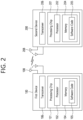
- FIG. 2 shows an example of wireless devices to which implementations of the present disclosure is applied.
- the first wireless device 100 and/or the second wireless device 200 may be implemented in various forms according to use cases/services.
- ⁇ the first wireless device 100 and the second wireless device 200 ⁇ may correspond to at least one of ⁇ the wireless device 100a to 100f and the BS 200 ⁇ , ⁇ the wireless device 100a to 100f and the wireless device 100a to 100f ⁇ and/or ⁇ the BS 200 and the BS 200 ⁇ of FIG. 1 .
- the first wireless device 100 and/or the second wireless device 200 may be configured by various elements, devices/parts, and/or modules.
- the first wireless device 100 may include at least one transceiver, such as a transceiver 106, at least one processing chip, such as a processing chip 101, and/or one or more antennas 108.
- a transceiver such as a transceiver 106
- a processing chip such as a processing chip 101
- antennas 108 one or more antennas 108.
- the processing chip 101 may include at least one processor, such a processor 102, and at least one memory, such as a memory 104. Additional and/or alternatively, the memory 104 may be placed outside of the processing chip 101.
- the processor 102 may control the memory 104 and/or the transceiver 106 and may be adapted to implement the descriptions, functions, procedures, suggestions, methods and/or operational flowcharts described in the present disclosure. For example, the processor 102 may process information within the memory 104 to generate first information/signals and then transmit radio signals including the first information/signals through the transceiver 106. The processor 102 may receive radio signals including second information/signals through the transceiver 106 and then store information obtained by processing the second information/signals in the memory 104.
- the memory 104 may be operably connectable to the processor 102.
- the memory 104 may store various types of information and/or instructions.
- the memory 104 may store a firmware and/or a software code 105 which implements codes, commands, and/or a set of commands that, when executed by the processor 102, perform the descriptions, functions, procedures, suggestions, methods and/or operational flowcharts disclosed in the present disclosure.
- the firmware and/or the software code 105 may implement instructions that, when executed by the processor 102, perform the descriptions, functions, procedures, suggestions, methods and/or operational flowcharts disclosed in the present disclosure.
- the firmware and/or the software code 105 may control the processor 102 to perform one or more protocols.
- the firmware and/or the software code 105 may control the processor 102 to perform one or more layers of the radio interface protocol.
- the processor 102 and the memory 104 may be a part of a communication modem/circuit/chip designed to implement RAT (e.g., LTE or NR).
- the transceiver 106 may be connected to the processor 102 and transmit and/or receive radio signals through one or more antennas 108.
- Each of the transceiver 106 may include a transmitter and/or a receiver.
- the transceiver 106 may be interchangeably used with Radio Frequency (RF) unit(s).
- the first wireless device 100 may represent a communication modem/circuit/chip.
- the second wireless device 200 may include at least one transceiver, such as a transceiver 206, at least one processing chip, such as a processing chip 201, and/or one or more antennas 208.
- the processing chip 201 may include at least one processor, such a processor 202, and at least one memory, such as a memory 204. Additional and/or alternatively, the memory 204 may be placed outside of the processing chip 201.
- the processor 202 may control the memory 204 and/or the transceiver 206 and may be adapted to implement the descriptions, functions, procedures, suggestions, methods and/or operational flowcharts described in the present disclosure. For example, the processor 202 may process information within the memory 204 to generate third information/signals and then transmit radio signals including the third information/signals through the transceiver 206. The processor 202 may receive radio signals including fourth information/signals through the transceiver 106 and then store information obtained by processing the fourth information/signals in the memory 204.
- the memory 204 may be operably connectable to the processor 202.
- the memory 204 may store various types of information and/or instructions.
- the memory 204 may store a firmware and/or a software code 205 which implements codes, commands, and/or a set of commands that, when executed by the processor 202, perform the descriptions, functions, procedures, suggestions, methods and/or operational flowcharts disclosed in the present disclosure.
- the firmware and/or the software code 205 may implement instructions that, when executed by the processor 202, perform the descriptions, functions, procedures, suggestions, methods and/or operational flowcharts disclosed in the present disclosure.
- the firmware and/or the software code 205 may control the processor 202 to perform one or more protocols.
- the firmware and/or the software code 205 may control the processor 202 to perform one or more layers of the radio interface protocol.
- the processor 202 and the memory 204 may be a part of a communication modem/circuit/chip designed to implement RAT (e.g., LTE or NR).
- the transceiver 206 may be connected to the processor 202 and transmit and/or receive radio signals through one or more antennas 208.
- Each of the transceiver 206 may include a transmitter and/or a receiver.
- the transceiver 206 may be interchangeably used with RF unit.
- the second wireless device 200 may represent a communication modem/circuit/chip.
- One or more protocol layers may be implemented by, without being limited to, one or more processors 102 and 202.
- the one or more processors 102 and 202 may implement one or more layers (e.g., functional layers such as Physical (PHY) layer, Media Access Control (MAC) layer, Radio Link Control (RLC) layer, Packet Data Convergence Protocol (PDCP) layer, Radio Resource Control (RRC) layer, and Service Data Adaptation Protocol (SDAP) layer).
- layers e.g., functional layers such as Physical (PHY) layer, Media Access Control (MAC) layer, Radio Link Control (RLC) layer, Packet Data Convergence Protocol (PDCP) layer, Radio Resource Control (RRC) layer, and Service Data Adaptation Protocol (SDAP) layer).
- PHY Physical
- MAC Media Access Control
- RLC Radio Link Control
- PDCP Packet Data Convergence Protocol
- RRC Radio Resource Control
- SDAP Service Data Adaptation Protocol
- the one or more processors 102 and 202 may generate one or more Protocol Data Units (PDUs), one or more Service Data Unit (SDUs), messages, control information, data, or information according to the descriptions, functions, procedures, suggestions, methods and/or operational flowcharts disclosed in the present disclosure.
- the one or more processors 102 and 202 may generate signals (e.g., baseband signals) including PDUs, SDUs, messages, control information, data, or information according to the descriptions, functions, procedures, suggestions, methods and/or operational flowcharts disclosed in the present disclosure and provide the generated signals to the one or more transceivers 106 and 206.
- signals e.g., baseband signals
- the one or more processors 102 and 202 may receive the signals (e.g., baseband signals) from the one or more transceivers 106 and 206 and acquire the PDUs, SDUs, messages, control information, data, or information according to the descriptions, functions, procedures, suggestions, methods and/or operational flowcharts disclosed in the present disclosure.
- signals e.g., baseband signals
- the one or more processors 102 and 202 may be referred to as controllers, microcontrollers, microprocessors, or microcomputers.
- the one or more processors 102 and 202 may be implemented by hardware, firmware, software, or a combination thereof.
- ASICs Application Specific Integrated Circuits
- DSPs Digital Signal Processors
- DSPDs Digital Signal Processing Devices
- PLDs Programmable Logic Devices
- FPGAs Field Programmable Gate Arrays
- the one or more processors 102 and 202 may be configured by a set of a communication control processor, an Application Processor (AP), an Electronic Control Unit (ECU), a Central Processing Unit (CPU), a Graphic Processing Unit (GPU), and a memory control processor.
- AP Application Processor
- ECU Electronic Control Unit
- CPU Central Processing Unit
- GPU Graphic Processing Unit
- memory control processor a memory control processor
- the one or more memories 104, 204 may be associated with the one or more processors 102, 202 and may store various forms of data, signals, messages, information, programs, codes, instructions, and/or commands.
- the one or more memories 104, 204 may comprise random access memory (RAM), dynamic RAM (DRAM), read-only memory (ROM), erasable programmable ROM (EPROM), flash memory, volatile memory, non-volatile memory, hard drives, registers, cache memory, computer-readable storage media, and/or combinations thereof.
- the one or more memories 104, 204 may be located inside and/or outside of the one or more processors 102, 202. Further, the one or more memories 104, 204 may be coupled to the one or more processors 102, 202 via various technologies, such as wired or wireless connections.
- the one or more transceivers 106, 206 may transmit user data, control information, wireless signals/channels, etc. referred to in the descriptions, features, procedures, suggestions, methods, and/or flowcharts of operation disclosed herein to one or more other devices.
- the one or more transceivers 106, 206 may receive user data, control information, wireless signals/channels, etc. referred to in the descriptions, features, procedures, suggestions, methods, and/or flowcharts of operation disclosed herein from one or more other devices.
- the one or more transceivers 106, 206 may be associated with the one or more processors 102, 202 and may transmit and receive wireless signals.
- the one or more processors 102, 202 may control the one or more transceivers 106, 206 to transmit user data, control information, wireless signals, etc. to one or more other devices. Further, the one or more processors 102, 202 may control the one or more transceivers 106, 206 to receive user data, control information, wireless signals, etc. from the one or more other devices.
- the one or more transceivers 106, 206 may be associated with one or more antennas 108, 208. Additionally and/or alternatively, the one or more transceivers 106, 206 may include one or more antennas 108, 208. The one or more transceivers 106, 206 may be configured to transmit and receive, via the one or more antennas 108, 208, user data, control information, wireless signals/channels, etc. referred to in the descriptions, features, procedures, suggestions, methods, and/or flowcharts of operation disclosed herein. As used herein, the one or more antennas 108, 208 may be a plurality of physical antennas, or a plurality of logical antennas (e.g., antenna ports).
- the one or more transceivers 106, 206 may convert the received user data, control information, radio signals/channels, etc. from RF band signals to baseband signals in order to process the received user data, control information, radio signals/channels, etc. using the one or more processors 102, 202.
- the one or more transceivers 106, 206 may convert the processed user data, control information, radio signals/channels, etc. from baseband signals to RF band signals using the one or more processors 102, 202. To do so, the one or more transceivers 106, 206 may include (analog) oscillators and/or filters.
- the one or more transceivers 106, 206 may up-convert an OFDM baseband signal to an OFDM signal via an (analog) oscillator and/or filter under the control of the one or more processors 102, 202, and transmit the up-converted OFDM signal at the carrier frequency.
- the one or more transceivers 106, 206 may receive the OFDM signal at the carrier frequency and, under the control of the one or more processors 102, 202, down-convert the OFDM signal to an OFDM baseband signal via an (analog) oscillator and/or filter.
- the wireless devices 100 and 200 may further include additional components.
- the additional components 140 may be variously configured according to types of the wireless devices 100 and 200.
- the additional components 140 may include at least one of a power unit/battery, an Input/Output (I/O) device (e.g., audio I/O port, video I/O port), a driving device, and a computing device.
- the additional components 140 may be coupled to the one or more processors 102 and 202 via various technologies, such as a wired or wireless connection.
- a UE may operate as a transmitting device in Uplink (UL) and as a receiving device in Downlink (DL).
- a BS may operate as a receiving device in UL and as a transmitting device in DL.
- the first wireless device 100 acts as the UE
- the second wireless device 200 acts as the BS.
- the processor(s) 102 connected to, mounted on or launched in the first wireless device 100 may be adapted to perform the UE behavior according to an implementation of the present disclosure or control the transceiver(s) 106 to perform the UE behavior according to an implementation of the present disclosure.
- the processor(s) 202 connected to, mounted on or launched in the second wireless device 200 may be adapted to perform the BS behavior according to an implementation of the present disclosure or control the transceiver(s) 206 to perform the BS behavior according to an implementation of the present disclosure.
- a BS is also referred to as a node B (NB), an eNode B (eNB), or a gNB.
- NB node B
- eNB eNode B
- gNB gNode B
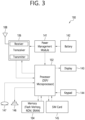
- FIG. 3 shows an example of UE to which implementations of the present disclosure is applied.
- FIG. 3 shows an example of UE to which implementations of the present disclosure is applied.
- a UE 100 may correspond to the first wireless device 100 of FIG. 2 .
- a UE 100 includes a processor 102, a memory 104, a transceiver 106, one or more antennas 108, a power management module 141, a battery 142, a display 143, a keypad 144, a Subscriber Identification Module (SIM) card 145, a speaker 146, and a microphone 147.
- SIM Subscriber Identification Module
- the processor 102 may be adapted to implement the descriptions, functions, procedures, suggestions, methods and/or operational flowcharts disclosed in the present disclosure.
- the processor 102 may be adapted to control one or more other components of the UE 100 to implement the descriptions, functions, procedures, suggestions, methods and/or operational flowcharts disclosed in the present disclosure.
- Layers of the radio interface protocol may be implemented in the processor 102.
- the processor 102 may include ASIC, other chipset, logic circuit and/or data processing device.
- the processor 102 may be an application processor.
- the processor 102 may include at least one of DSP, CPU, GPU, a modem (modulator and demodulator).
- processor 102 may be found in SNAPDRAGON TM series of processors made by Qualcomm ® , EXYNOS TM series of processors made by Samsung ® , A series of processors made by Apple ® , HELIO TM series of processors made by MediaTek ® , ATOM TM series of processors made by Intel ® or a corresponding next generation processor.
- the memory 104 is operatively coupled with the processor 102 and stores a variety of information to operate the processor 102.
- the memory 104 may include ROM, RAM, flash memory, memory card, storage medium and/or other storage device.
- modules e.g., procedures, functions, etc.
- the modules can be stored in the memory 104 and executed by the processor 102.
- the memory 104 can be implemented within the processor 102 or external to the processor 102 in which case those can be communicatively coupled to the processor 102 via various means as is known in the art.
- the transceiver 106 is operatively coupled with the processor 102, and transmits and/or receives a radio signal.
- the transceiver 106 includes a transmitter and a receiver.
- the transceiver 106 may include baseband circuitry to process radio frequency signals.
- the transceiver 106 controls the one or more antennas 108 to transmit and/or receive a radio signal.
- the power management module 141 manages power for the processor 102 and/or the transceiver 106.
- the battery 142 supplies power to the power management module 141.
- the display 143 outputs results processed by the processor 102.
- the keypad 144 receives inputs to be used by the processor 102.
- the keypad 144 may be shown on the display 143.
- the SIM card 145 is an integrated circuit that is intended to securely store the International Mobile Subscriber Identity (IMSI) number and its related key, which are used to identify and authenticate subscribers on mobile telephony devices (such as mobile phones and computers). It is also possible to store contact information on many SIM cards.
- IMSI International Mobile Subscriber Identity
- the speaker 146 outputs sound-related results processed by the processor 102.
- the microphone 147 receives sound-related inputs to be used by the processor 102.
- FIG. 4 is a block diagram of a next generation cellular network.
- the 5G Core may include a variety of components, some of which are shown in FIG. 5 , such as the Access and Mobility Management Function (AMF) (410), the Session Management Function (SMF) (420), the Policy Control Function (PCF) (430), the User Plane Function (UPF) (440), the Application Function (AF) (450), the UDF (UDF) (450), and the UDF (UDF) (450): Policy Control Function (PCF) (430), User Plane Function (UPF) (440), Application Function (AF) (450), Unified Data Management (UDM) (460), and Non-3rd Generation Partnership Project (3GPP) Inter Working Function (N3IWF) (490).
- AMF Access and Mobility Management Function
- SMF Session Management Function
- PCF Policy Control Function
- UPF User Plane Function
- AF Application Function
- UDF Unified Data Management
- N3IWF Non-3rd Generation Partnership Project
- the UE 100 is connected to the data network via the UPF 440 through a next generation radio access network (NG-RAN) including the gNB 20.
- NG-RAN next generation radio access network
- the UE 100 may also be provided data services via untrusted non-3GPP access, such as a wireless local area network (WLAN).
- a N3IWF 490 may be deployed.
- the illustrated N3IWF 490 performs the function of managing the interworking between the non-3GPP access and the 5G system.
- the UE 100 When the UE 100 is associated with a non-3GPP access (e.g., WiFi, also referred to as IEEE 801.11), the UE 100 may be associated with the 5G system via the N3IWF 490.
- the N3IWF 490 communicates with the AMF 410 for control signaling and with the UPF 440 via the N3 interface for data transfer.
- the illustrated AMF 410 may manage access and mobility in a 5G system.
- the AMF 410 may perform functions to manage Non-Access Stratum (NAS) security.
- the AMF 410 may perform functions to handle mobility in an idle state.
- NAS Non-Access Stratum
- the UPF 440 shown is a type of gateway through which user data is transmitted and received.
- the UPF node 440 may perform all or part of the user plane functions of the Serving Gateway (S-GW) and Packet Data Network Gateway (P-GW) of fourth generation mobile communications.
- S-GW Serving Gateway
- P-GW Packet Data Network Gateway
- the UPF 440 acts as a demarcation point between the next generation radio access network (NG-RAN) and the core network, and is the element that maintains the data path between the gNB 20 and the SMF 420. Additionally, the UPF 440 acts as a mobility anchor point when the UE 100 moves across the area served by the gNB 20.
- the UPF 440 may perform functions to handle PDUs. For mobility within the NG-RAN (Next Generation-Radio Access Network as defined in 3GPP Release-15 and later), the UPF may route packets.
- NG-RAN Next Generation-Radio Access Network as defined in 3GPP Release-15 and later
- the UPF 440 may also function as an anchor point for mobility with other 3GPP networks (RANs defined prior to 3GPP Release-15, e.g., UTRAN, E-UTRAN (Evolved-UMTS (Universal Mobile Telecommunications System) Terrestrial Radio Access Network), or GERAN (Global System for Mobile Communication (GSM)/EDGE (Enhanced Data rates for Global Evolution) Radio Access Network).
- UTRAN Universal Mobile Telecommunications System
- E-UTRAN Evolved-UMTS (Universal Mobile Telecommunications System) Terrestrial Radio Access Network
- GERAN Global System for Mobile Communication
- EDGE Enhanced Data rates for Global Evolution Radio Access Network
- the PCF 430 shown is a node that controls the operator's policies.
- the AF 450 shown is a server for providing multiple services to the UE 100.
- the UDM 460 shown is a type of server that manages subscriber information, such as a home subscriber server (HSS) in fourth generation mobile communications.
- the UDM 460 stores and manages subscriber information in a unified data repository (UDR).
- HSS home subscriber server
- UDR unified data repository
- the SMF 420 shown may perform the function of assigning an Internet Protocol (IP) address of a UE.
- the SMF 420 may also control protocol data unit (PDU) sessions.
- IP Internet Protocol
- PDU protocol data unit
- AMF 410 AMF 410
- SMF 420 PCF 430
- UPF 440 UPF 440
- AF 450 UDM 460
- N3IWF 490 gNB 20
- UE 100 may be omitted herein.
- Fifth generation mobile communications supports multiple numerologies or subcarrier spacings (SCS) to support various 5G services.
- SCS subcarrier spacings
- an SCS of 15 kHz supports wide area coverage in traditional cellular bands
- an SCS of 30 kHz/60 kHz supports dense-urban, lower latency, and wider carrier bandwidth
- an SCS of 60 kHz or higher supports bandwidths greater than 24.25 GHz to overcome phase noise.
- 5G ProSe UE-to-Network Relay Discovery is applicable to both 5G ProSe Layer-3 and Layer-2 5G ProSe UE-to-Network Relay Discovery for public safety use and commercial services.
- 5G ProSe remote UE and 5G ProSe UE-Network Relay are pre-configured or provisioned with relevant information.
- the UE uses the pre-configured or provisioned information for the relay discovery procedure.
- RSC Relay Service Code
- 5G ProSe UE-to-Network Relay Discovery indicates the connection service that 5G ProSe UE-Network Relay provides to 5G ProSe remote UE.
- RSC is configured in 5G ProSe UE-Network Relay and 5G ProSe remote UE.
- 5G ProSe UE-Network Relay and 5G ProSe remote UE are aware of whether the RSC provides 5G ProSe Layer-2 or Layer-3 UE-Network Relay service.
- a 5G ProSe UE-Network Relay supporting multiple RSCs may use multiple discovery messages to inform the RSCs, using one RSC per discovery message.
- Additional information not directly used for discovery may also be informed using the PC5-D protocol stack in a single or individual discovery message of type "Relay Discovery Additional Information”.
- FIG. 5 shows the 5G ProSe UE-to-Network Relay Discovery procedure according to Model A.
- Step 1 5G ProSe UE-to-Network Relay transmits a UE-to-Network Relay Discovery Announcement message.
- the UE-to-Network Relay Discovery Announcement message includes Discovery Message Type, Announcer Info, and RSC, and is transmitted using Source Layer-2 ID and Destination Layer-2 ID.
- 5G ProSe Layer-3 UE-to-Network Relay shall include RSC in UE-to-Network Relay Discovery Announcement only if the S-NSSAI associated with the RSC belongs to the allowed NSSAI of UE-to-Network Relay.
- 5G ProSe remote UE (1 to 3) determines the Destination Layer-2 ID for signal reception.
- the Destination Layer-2 ID is set to UEs.
- 5G ProSe remote UE (1 to 3) monitors notification messages via 5G ProSe UE-to-Network RSC corresponding to the desired service.
- 5G ProSe UE-to-Network Relay may also transmit Relay Discovery Additional Information message.
- 5G ProSe remote UE selects 5G ProSe UE-to-Network Relay based on the information received in Step 1.
- FIG. 6 shows the 5G ProSe UE-to-Network Relay Discovery procedure according to Model B.
- 5G ProSe remote UE transmits 5G ProSe UE-to-Network Relay Discovery Solicitation message.
- 5G ProSe UE-to-Network Relay Discovery Solicitation message includes search message type, searcher information, RSC, and optionally target information, and is transmitted using Source Layer-2 ID and Destination Layer-2 ID.
- RSC Radio Service Set
- 5G ProSe UE-to-Network Relays (1 to 3) may determine the Destination Layer-2 ID for signal reception.
- the Destination Layer-2 ID consists of UEs.
- Step 2 The 5G ProSe UE-to-Network Relays (1 and 2) that match the RSC value included in the request message and the Target Info (if any) respond to the 5G ProSe Remote UE with a UE-to-Network Relay Discovery Response message.
- the 5G ProSe UE-to-Network Relay Discovery Response message contains the Type of Discovery Message, Discoveree Info, and RSC, and is transmitted using the Source Layer-2 ID and the Destination Layer-2 ID.
- 5G ProSe UE-to-Network Relay shall respond to the matching RSC of the UE-to-Network Relay Discovery Solicitation message only if the S-NSSAI associated with the RSC belongs to the Allowed NSSAI of the 5G ProSe UE-to-Network Relay.
- the 5G ProSe Remote UE selects a 5G ProSe UE-to-Network Relay based on the information received in step 2.
- the 5G ProSe UE-to-Network Relay is selected based on the information.
- the UE-to-Network Relay may be a Layer-2 UE-to-Network Relay or a Layer-3 UE-to-Network Relay. For details, see TS 23.304 V17.3.0.
- the UE may receive connection services from the network in the following ways:
- the UE may perform RRC operations and NAS operations with the NG-RAN and the core network (via the Layer-2 UE-to-Network Relay).
- the UE has multiple RRC connections and NAS connections via 3GPP access (e.g., Uu interface between UE and NG-RAN in case of direct path, and Uu interface between Layer-2 UE-to-Network Relay and NG-RAN in case of indirect path), which was not allowed in the past.
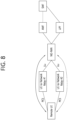
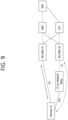
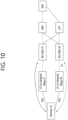
- FIGS. 7 to 10 illustrate scenarios in which the UE receives services from the network via two paths (Direct Path or Indirect Path).
- FIG. 7 illustrates a scenario in which the Direct Path and the Indirect Path are served to the UE via one and the same NG-RAN.
- FIG. 8 shows a scenario where two different Indirect Paths are served to a UE through one identical NG-RAN.
- FIG. 9 shows a scenario where Direct Path and Indirect Path are served to a UE through two different NG-RANs.
- FIG. 10 shows a scenario where two different Indirect Paths are served to a UE through two different NG-RANs.
- the connection/communication between the UE and the network on the path is 3GPP access (e.g., Uu interface).
- 3GPP access e.g., Uu interface
- the connection/communication between the UE and the network is made through 3GPP access.
- the connection/communication between the UE-to-Network Relay and the network is made through 3GPP access.
- FIGs. 7 to 10 show two paths, but this may be extended to three or more paths.
- FIGs. 7 to 10 multiple paths are shown to be served through the same PLMN. However, multiple paths may be served through different PLMNs.
- a UE using multiple paths may be assumed to support both non-roaming and roaming cases.
- Direct Path direct network communication path
- Indirect Path indirect network communication path
- Multi-path support may improve the stability and throughput of communication. Multiple paths may be utilized simultaneously. Switching between multiple paths may also be possible.
- a terminal may be connected to the same gNB using one Direct Path and one Indirect Path (Layer-2 UE-to-Network relay or Indirect Path through another UE).
- Layer-2 UE-to-Network relay or Indirect Path through another UE.
- the solution for Layer-2 UE-to-Network relay may be reused for another UE.
- both paths must be able to connect to the same base station.
- the base station to which the serving cell of the Remote UE related to the Direct Path belongs and the base station to which the serving cell of the Relay UE belongs must be the same.
- the terminal and the network may communicate through multi-path. Therefore, the Remote UE must consider this when selecting the Relay UE.
- the Remote UE cannot determine whether the Relay belongs to the same base station with only the NCGI information. Therefore, a method is needed to efficiently support the Remote UE to search for the Relay UE belonging to the same base station by considering the flexible gNB-ID.
- NCGI NR Cell Global identifier
- Cell Identity e.g., Cell Identity
- a method may be proposed to select a Relay capable of Multi-path transmission (e.g., when the Remote UE and the Relay UE belong to the same base station) by inferring the base station IDs to which the Remote UE and the Relay UE belong in two processes (e.g., Model A of FIG. 5 and Model B of FIG. 6 ) in which the Remote UE searches for the Relay UE.
- a Relay capable of Multi-path transmission e.g., when the Remote UE and the Relay UE belong to the same base station
- two processes e.g., Model A of FIG. 5 and Model B of FIG. 6
- a method for supporting a UE using Multi-path may be composed of a combination of one or more of the following operations/configurations/steps.
- the method for supporting a UE using Multi-path assumes that in the case of Indirect Network Communication, a network connection service is received through a Layer-2 UE-to-Network Relay.
- the method proposed in this specification may also be extended to a case in which an Indirect Network Communication service is received through a Layer-3 UE-to-Network Relay.
- a path is assumed to be a path through an NG-RAN (which may be only gNB, or may be both gNB and ng-eNB).
- NG-RAN which may be only gNB, or may be both gNB and ng-eNB.
- the proposed method may also be extended to paths via non-3GPP access.
- the contents of this specification may be applied not only to one-hop cases (e.g., when a UE (or Remote UE) receives a service from a network via one UE-to-Network Relay) but also to multi-hop cases (e.g., when a UE (or Remote UE) receives a service from a network via multiple UE-to-Network Relays).
- one-hop cases e.g., when a UE (or Remote UE) receives a service from a network via one UE-to-Network Relay
- multi-hop cases e.g., when a UE (or Remote UE) receives a service from a network via multiple UE-to-Network Relays.
- a path may mean a communication path, a routing path, a connection path, etc.
- UE User Equipment
- terminal terminal
- UE-to-Network Relay ProSe UE-to-Network Relay
- Relay Relay
- Relay UE UE-NW Relay
- 5G ProSe UE-to-Network Relay 5G ProSe UE-to-NW Relay
- 5G ProSe UE-to-Network Relay 5G ProSe UE-to-NW Relay
- 5G ProSe UE-to-Network Relay UE etc.
- Remote UE 5G Remote UE, etc. are used interchangeably.
- each path is assumed to have a different section between the UE and the NG-RAN, and the subsequent section (e.g., the section between the NG-RAN and the 5G CN) is assumed to have no difference between the paths.
- the contents of this specification may be applied even if the paths between the NG-RAN and the 5G CN for each path (which are control plane related paths and/or data plane related paths) are different.
- the method proposed in this specification may be interpreted as being performed or supported when the Remote UE uses the Relay UE for multi-path purposes/purposes.
- One or more of the following assumptions/prerequisites may be required for the method proposed in this specification.
- TS 23.304 V17.3.0, TS 38.300 V17.0.0, TS 38.331 V17.0.0 may be basically referred.
- the expressions 'a cell belongs to a base station' and 'a base station manages a cell' may be interpreted as having the same meaning.
- a base station may manage multiple cells.
- Model A of FIG. 5 and Model B of FIG. 6 are described separately below.
- FIG. 5 it is described below in comparison with the contents described above in FIG. 5 .
- the UE-to-Network Relay Discovery Announcement message and/or the UE-to-Network Relay Discovery Additional Information message transmitted by the relay UE may additionally include one or more of the following information.
- the base station may transmit system information to the relay UE.
- the relay UE may include the ID of the base station to which the serving cell of the relay UE belongs in the RRC container based on the received system information.
- the relay UE may include the RRC container including the ID of the base station to which the serving cell of the relay UE belongs in the UE-to-Network Relay Discovery Announcement message and/or the UE-to-Network Relay Discovery Additional Information message.
- the relay UE may include the base station ID (the ID of the base station to which the serving cell of the relay UE belongs) as a separate parameter in the UE-to-Network Relay Discovery Announcement message and/or the UE-to-Network Relay Discovery Additional Information message and transmit it to the remote UE.
- the base station ID the ID of the base station to which the serving cell of the relay UE belongs
- Base station ID length of the cell (or serving cell) to which the relay UE belongs (gNB-ID-Length):
- the base station may transmit system information to the relay UE.
- the relay UE may include the length of the ID of the base station to which the serving cell of the relay UE belongs in the RRC container based on the received system information.
- the relay UE may include the RRC container including the length of the ID of the base station to which the serving cell of the relay UE belongs in the UE-to-Network Relay Discovery Announcement message and/or the UE-to-Network Relay Discovery Additional Information message.
- the relay UE may include the base station ID length (the ID length of the base station to which the relay UE's serving cell belongs) as a separate parameter in the UE-to-Network Relay Discovery Announcement message and/or the UE-to-Network Relay Discovery Additional Information message and transmit it to the remote UE.
- the base station ID length (the ID length of the base station to which the relay UE's serving cell belongs) may be provisioned/configured in the relay UE.
- the base station or the PLMN may include the gNB-ID-Length and/or the gNB-ID in SIB1 and transmit it to the relay UE (e.g., in PLMN-IdentityInfoList or CellAccessRelatedInfo).
- the gNB-ID-Length and/or the gNB-ID may be included because the network supports multi-path operation.
- the gNB-ID-Length used by each PLMN capable of performing the UE-to-Network Relay operation may be configured/provisioned to the UE (remote UE and/or relay UE). Then, the UE (Remote UE and/or Relay UE) may extract the Base Station ID from the Cell Identity.
- the PLMNs may correspond to "PLMNs in which the UE is authorized to relay traffic for 5G ProSe Layer-3 and/or Layer-2 Remote UEs" in the case of Relay UE, and "For 5G ProSe Layer-2 Remote UE, indicates the PLMNs in which the UE is authorized to use a 5G ProSe Layer-2 UE-to-Network Relay” in the case of Remote UE (see clause 5.1.4.1 of TS 23.304 V17.3.0). This may be applied throughout this specification.
- the Base Station ID length used in a PLMN may vary.
- the Base Station ID length (gNB-ID-Length) value set/provisioned by the PLMN may represent a default value.
- the base station may include gNB-ID-Length in SIB1 only if the configured/provisioned base station ID length is different from the default value.
- the base station may provide the relay UE with the base station ID length (gNB-ID-Length) value. Then, the relay UE may use the received base station ID length (gNB-ID-Length) value with priority over the configured value if there is already a configured value.
- the base station may provide the remote UE with the base station ID length (gNB-ID-Length) value. Then, the remote UE may use the received base station ID length (gNB-ID-Length) value with priority over the configured value if there is already a configured value.
- the relay UE may provide the remote UE with the base station ID length (gNB-ID-Length) value. Then, the remote UE may use the received base station ID length (gNB-ID-Length) value with priority over the configured value if there is already a configured value.
- the above-mentioned i) and ii) information may be included in the UE-to-Network Relay Discovery Announcement message and/or the UE-to-Network Relay Discovery Additional Information message.
- the Remote UE may check whether the base station to which the cell (or serving cell) to which it belongs or the base station serving its Direct Path is the same as the base station of the Relay UE. In order for the Remote UE to check whether the base stations are the same, the Remote UE may determine its own base station ID and the base station ID of the discovered Relay UE.
- the Remote UE may use one or more of the following methods to determine its own base station ID. In this case, it is assumed that the cell of the Remote UE and the cell of the Relay UE are in the same PLMN. For example, only when the PLMN of the Remote UE's cell and the PLMN of the Relay UE's cell are the same, the Remote UE checks whether the base station of the Remote UE and the base station of the Relay UE are the same.
- the remote UE may use one or more of the following methods to determine the base station ID of the discovered Relay UE.
- the method for determining the base station ID of the Remote UE and the method for determining the base station ID of the Relay UE may be different from each other. Also, even if the remote UE cannot determine the actual base station ID of the Remote UE or Relay UE by the above-mentioned method (e.g., when the base station ID is not included and the gNB-ID-Length is unknown), the remote UE may determine the same base station by comparing only the NCGI of the Remote UE and the NCGI of the Relay UE, if i) all 32 bits of the left most bit of NCGI are the same (e.g., all 32 bits from the left of the NCGI are the same) or ii) the NCGI itself is the same.
- the remote UE may determine the same base station.
- the remote UE may select a relay UE having the same base station as the base station of the remote UE.
- the remote UE may include a relay UE having the same base station as the base station of the remote UE in the candidate relay UEs.
- the remote UE may establish a PC5 connection with the selected relay UE.
- the remote UE may communicate with the base station using Multi-Path.
- the Multi-Path may include i) an Indirect Path between the remote UE and the base station through the PC5 connection (via relay of the relay UE) and ii) a Direct Path between the remote UE and the base station without relay of the relay UE.
- Step 1 One or more of the following information may be additionally included in the UE-to-Network Relay Discovery Solicitation message sent by the remote UE.
- Step 2 If the UE-to-Network Relay Discovery Solicitation message received by the Relay UE includes additional information described in step 1 above, the Relay UE may check whether the base station of the cell (or serving cell) to which it belongs and the base station of the Remote UE are the same.
- the Relay UE may use one or more of the following methods to determine its base station ID:
- the Relay UE may use one of the following methods to determine the base station ID of the Remote UE:
- the method of determining the base station ID of the Remote UE and the method of determining the base station ID of the Relay UE may be different from each other.
- the remote UE may determine the same base station by comparing only the NCGI of the Remote UE and the NCGI of the Relay UE, if i) all 32 bits of the left most bit of NCGI are the same (e.g., all 32 bits from the left of the NCGI are the same) or ii) the NCGI itself is the same.
- the remote UE may determine the same base station.
- the Relay UE may transmit a UE-to-Network Relay Discovery Response message to the remote UE.
- the Relay UE may decide whether to transmit a UE-to-Network Relay Discovery Response message to the remote UE. If it decides to transmit the message, the UE-to-Network Relay Discovery Response message may include the additional information described in step 1 of section I (Model A) and transmit it to the remote UE.
- the Remote UE may check whether its base station and the base station of the Relay UE are the same. And only if they are the same, the remote UE may select a relay UE having the same base station as the base station of the remote UE. Or, the remote UE may include a relay UE having the same base station as the base station of the remote UE in the candidate relay UE.
- One or more of the following methods may be used for the above check:
- the Remote UE may establish a PC5 connection with the selected relay UE.
- the remote UE may communicate with the base station using Multi-Path.
- the above Multi-Path may include i) an Indirect Path between a remote UE and a base station via the PC5 connection (via relay of the relay UE) and ii) a Direct Path between a remote UE and a base station without relay of the relay UE.
- the Remote UE may quickly determine a base station to which a candidate Relay UE is connected and determine whether the Relay UE and the Remote UE belong to the same base station. Through this, if the Relay UE and the Remote UE belong to different base stations (e.g., if support for Multi-path transmission via the Relay UE is not possible), the selection of the Relay UE may be prevented, thereby avoiding unnecessary PC5 generation between the Relay UE and the Remote UE in advance.
- FIG. 11 shows the procedure of the remote UE according to disclosure of the present specification.
- the information on the first base station may include ID (identity) of the first base station.
- the information on the first base station may include base station ID length information and NCGI (NR Cell Global identifier) for a serving cell of the relay UE.
- NCGI NR Cell Global identifier
- the remote UE may determine ID of the first base station, based on the base station ID length(gNB-ID-Length) information and NCGI for the serving cell of the relay UE.
- the step of determining whether the first base station and the second base station are the same may be based on the determined ID of the first base station.
- the remote UE may receive, from the second base station, ID of the second base station.
- the step of determining whether the first base station and the second base station are the same may be based on the determined ID of the second base station.
- the remote UE may receive, from the second base station, base station ID length(gNB-ID-Length) information and NCGI for a serving cell of the remote UE.
- the remote UE may determine ID of the second base station, based on the base station ID length(gNB-ID-Length) information and NCGI for the serving cell of the remote UE.
- the step of determining whether the first base station and the second base station are the same may be based on the determined ID of the second base station.
- the remote UE may establish PC5 connection with the relay UE, based on the first base station and the second base station being the same.
- the remote UE may perform communication with the first base station via multi-path, based on the first base station and the second base station being the same.
- the multi-path may include i) indirect path between the remote UE and the first base station via the established PC5 connection and ii) direct path between the remote UE and the first base station without relaying of the relay UE.
- the remote UE may transmit, to the relay UE, discovery request message.
- the step of receiving the discovery message may be based on the discovery request message.
- the discovery request message may include ID of the first base station.
- the discovery message may be based on the determination that a base station to which a serving cell of the relay UE belongs and a base station to which a serving cell of the remote UE belongs are the same, based on the ID of the first base station.
- the discovery request message may include base station ID length(gNB-ID-Length) information and NCGI for a serving cell of the remote UE.
- the discovery message may be based on the determination that a base station to which a serving cell of the relay UE belongs and a base station to which a serving cell of the remote UE belongs are the same, based on the base station ID length(gNB-ID-Length) information and the NCGI for a serving cell of the remote UE.
- FIG. 12 shows the procedure of the relay UE according to disclosure of the present specification.
- the information on the second base station may include base station ID length information and NCGI (NR Cell Global identifier) for a serving cell of the remote UE.
- NCGI NR Cell Global identifier
- the relay UE may determine ID of the second base station, based on the base station ID length(gNB-ID-Length) information and NCGI for the serving cell of the remote UE.
- the step of determining whether the first base station and the second base station are the same may be based on the determined ID of the second base station.
- the relay UE may receive, from the first base station, ID of the first base station.
- the step of determining whether the first base station and the second base station are the same may be based on the determined ID of the first base station.
- the relay UE may receive, from the first base station, base station ID length(gNB-ID-Length) information and NCGI for a serving cell of the relay UE.
- the relay UE may determine ID of the first base station, based on the base station ID length(gNB-ID-Length) information and NCGI for the serving cell of the relay UE.
- the step of determining whether the first base station and the second base station are the same may be based on the determined ID of the first base station.
- the relay UE may establish PC5 connection with the remote UE, based on the first base station and the second base station being the same.
- the relay UE may relay communication between the remote UE and the first base station, based on the established PC5 connection.
- a target V-SMF may include a processor, a transceiver, and a memory.
- a processor may be configured to be operably coupled with a memory and a processor.
- the processor may perform: receiving, from a relay UE, a discovery message; wherein the discovery message includes information on a first base station serving the relay UE, determining whether the first base station and a second base station serving the remote UE are the same, based on the information on the first base station; selecting the relay UE for PC5 (device-to-device communication) connection, based on the first base station and the second base station being the same.
- the discovery message includes information on a first base station serving the relay UE, determining whether the first base station and a second base station serving the remote UE are the same, based on the information on the first base station; selecting the relay UE for PC5 (device-to-device communication) connection, based on the first base station and the second base station being the same.
- PC5 device-to-device communication
- the processor is configured to: receiving, from a relay UE, a discovery message; wherein the discovery message includes information on a first base station serving the relay UE, determining whether the first base station and a second base station serving the remote UE are the same, based on the information on the first base station; selecting the relay UE for PC5 (device-to-device communication) connection, based on the first base station and the second base station being the same.
- the discovery message includes information on a first base station serving the relay UE, determining whether the first base station and a second base station serving the remote UE are the same, based on the information on the first base station; selecting the relay UE for PC5 (device-to-device communication) connection, based on the first base station and the second base station being the same.
- PC5 device-to-device communication
- non-volatile computer readable medium storing one or more instructions for providing multicast service in wireless communication according to some embodiments of the present specification will be described.
- the technical features of the present disclosure may be directly implemented as hardware, software executed by a processor, or a combination of the two.
- a method performed by a wireless device may be implemented in hardware, software, firmware, or any combination thereof.
- the software may reside in RAM memory, flash memory, ROM memory, EPROM memory, EEPROM memory, registers, hard disk, removable disk, CD-ROM, or other storage medium.
- a storage medium are coupled to the processor such that the processor can read information from the storage medium.
- the storage medium may be integrated into the processor.
- the processor and storage medium may reside in the ASIC.
- a processor and a storage medium may reside as separate components.
- Computer-readable media can include tangible and non-volatile computer-readable storage media.
- non-volatile computer-readable media may include random access memory (RAM), such as synchronization dynamic random access memory (SDRAM), read-only memory (ROM), or non-volatile random access memory (NVRAM).
- RAM random access memory
- SDRAM synchronization dynamic random access memory
- ROM read-only memory
- NVRAM non-volatile random access memory
- EEPROM Read-only memory
- flash memory magnetic or optical data storage media, or other media that can be used to store instructions or data structures
- Non-volatile computer readable media may also include combinations of the above.
- the methods described herein may be realized at least in part by computer-readable communication media that carry or carry code in the form of instructions or data structures and that can be accessed, read, and/or executed by a computer.
- a non-transitory computer-readable medium has one or more instructions stored thereon.
- the stored one or more instructions may be executed by a processor of the base station.
- the stored one or more instructions cause the processors to: receiving, from a relay UE, a discovery message; wherein the discovery message includes information on a first base station serving the relay UE, determining whether the first base station and a second base station serving the remote UE are the same, based on the information on the first base station; selecting the relay UE for PC5 (device-to-device communication) connection, based on the first base station and the second base station being the same.
- PC5 device-to-device communication
- the present specification may have various effects.
- the remote UE can enable multi-path communication by selecting a relay UE belonging to the same base station by determining whether the base station serving the remote UE and the base station serving the relay UE are the same based on information received from the relay UE.
Landscapes
- Engineering & Computer Science (AREA)
- Computer Networks & Wireless Communication (AREA)
- Signal Processing (AREA)
- Databases & Information Systems (AREA)
- Mobile Radio Communication Systems (AREA)
Applications Claiming Priority (3)
| Application Number | Priority Date | Filing Date | Title |
|---|---|---|---|
| US202263394982P | 2022-08-04 | 2022-08-04 | |
| US202263395346P | 2022-08-05 | 2022-08-05 | |
| PCT/KR2023/011326 WO2024029923A1 (ko) | 2022-08-04 | 2023-08-02 | Multi-path 관리 방법 |
Publications (1)
| Publication Number | Publication Date |
|---|---|
| EP4568351A1 true EP4568351A1 (de) | 2025-06-11 |
Family
ID=89849575
Family Applications (1)
| Application Number | Title | Priority Date | Filing Date |
|---|---|---|---|
| EP23850423.7A Pending EP4568351A1 (de) | 2022-08-04 | 2023-08-02 | Mehrweg-verwaltungsverfahren |
Country Status (3)
| Country | Link |
|---|---|
| US (1) | US20260046741A1 (de) |
| EP (1) | EP4568351A1 (de) |
| WO (1) | WO2024029923A1 (de) |
Families Citing this family (1)
| Publication number | Priority date | Publication date | Assignee | Title |
|---|---|---|---|---|
| CN120730284A (zh) * | 2024-03-29 | 2025-09-30 | 华为技术有限公司 | 通信方法和通信装置 |
Family Cites Families (5)
| Publication number | Priority date | Publication date | Assignee | Title |
|---|---|---|---|---|
| WO2017014716A1 (en) * | 2015-07-23 | 2017-01-26 | Intel IP Corporation | Layer 2 relay protocols and mobility relay method |
| EP4136862B1 (de) * | 2020-05-15 | 2025-12-31 | ZTE Corporation | Verfahren zur sidelink-relaiskommunikation unter dualer konnektivität |
| WO2021236894A1 (en) * | 2020-05-20 | 2021-11-25 | Convida Wireless, Llc | Sidelink relay connectivity management |
| TWI804992B (zh) * | 2020-09-22 | 2023-06-11 | 聯發科技股份有限公司 | 層2使用者設備透過網路中繼進行信令傳輸的方法 |
| WO2022151003A1 (en) * | 2021-01-13 | 2022-07-21 | Qualcomm Incorporated | Measurement reporting and handover procedures between relay paths |
-
2023
- 2023-08-02 EP EP23850423.7A patent/EP4568351A1/de active Pending
- 2023-08-02 WO PCT/KR2023/011326 patent/WO2024029923A1/ko not_active Ceased
- 2023-08-02 US US19/100,890 patent/US20260046741A1/en active Pending
Also Published As
| Publication number | Publication date |
|---|---|
| US20260046741A1 (en) | 2026-02-12 |
| WO2024029923A1 (ko) | 2024-02-08 |
Similar Documents
| Publication | Publication Date | Title |
|---|---|---|
| US11765677B2 (en) | Efficient PLMN selection upon authentication failure for each network slice in roaming network | |
| EP4322691B1 (de) | Pdu-sitzungsverwaltungsverfahren | |
| US12432595B2 (en) | Method for supporting WLAN use experience analysis using UE WLAN user data | |
| US20230284119A1 (en) | Access to snpn by using credential owned by entity separated from snpn, and support for f1 interface therefor | |
| US12470987B2 (en) | N14 interface support indicator for service continuity | |
| EP4224930B1 (de) | Unterstützung der dienstkontinuität für eine heimgeroutete pdu-sitzung ohne n14-schnittstelle zwischen quellnetzwerk und zielnetzwerk | |
| US11800576B2 (en) | Session management method | |
| US12425951B2 (en) | Method for managing prohibited PLMN list during disaster roaming, and apparatus supporting same | |
| EP4213523A1 (de) | Verfahren zur berücksichtigung der sicherheitsanwendungsrichtlinie zwischen pc5-verbindung und uu-verbindung in der prose-relais-kommunikation und vorrichtung zur unterstützung davon | |
| EP4199586A1 (de) | Verfahren zur sitzungsverwaltung | |
| EP4568351A1 (de) | Mehrweg-verwaltungsverfahren | |
| US12526609B2 (en) | Communication method by means of multicast | |
| EP4568350A1 (de) | Mehrweg-verwaltungsverfahren | |
| EP4475601A1 (de) | Mbsr-verwaltungsverfahren | |
| EP4518566A1 (de) | Verfahren zur verwaltung von c2-kommunikation | |
| EP4598074A1 (de) | Verfahren zur bestimmung einer ursp-regel | |
| EP4661505A1 (de) | Verfahren zur verwaltung der abdeckung | |
| EP4496422A1 (de) | Verfahren zum umschalten zwischen uu und pc5 | |
| EP4503723A1 (de) | Verfahren zur verwaltung lokaler dienste | |
| EP4694070A1 (de) | Verfahren zur latenzmessung | |
| EP4712578A1 (de) | Snps-kommunikationsverfahren | |
| EP4583627A1 (de) | Duplikationsübertragungsverfahren mit mehrwege | |
| EP4593516A1 (de) | Duplikatübertragungsverfahren mit mehrwege | |
| EP4664991A1 (de) | Verwaltungsverfahren für easdf | |
| EP4376516A1 (de) | Kommunikationsfunkruf auf der basis mehrerer wege |
Legal Events
| Date | Code | Title | Description |
|---|---|---|---|
| STAA | Information on the status of an ep patent application or granted ep patent |
Free format text: STATUS: THE INTERNATIONAL PUBLICATION HAS BEEN MADE |
|
| PUAI | Public reference made under article 153(3) epc to a published international application that has entered the european phase |
Free format text: ORIGINAL CODE: 0009012 |
|
| STAA | Information on the status of an ep patent application or granted ep patent |
Free format text: STATUS: REQUEST FOR EXAMINATION WAS MADE |
|
| 17P | Request for examination filed |
Effective date: 20250127 |
|
| AK | Designated contracting states |
Kind code of ref document: A1 Designated state(s): AL AT BE BG CH CY CZ DE DK EE ES FI FR GB GR HR HU IE IS IT LI LT LU LV MC ME MK MT NL NO PL PT RO RS SE SI SK SM TR |
|
| DAV | Request for validation of the european patent (deleted) | ||
| DAX | Request for extension of the european patent (deleted) |