EP4571532A1 - Procédé et appareil de récupération intermodale, dispositif, support d'enregistrement et programme informatique - Google Patents
Procédé et appareil de récupération intermodale, dispositif, support d'enregistrement et programme informatique Download PDFInfo
- Publication number
- EP4571532A1 EP4571532A1 EP23862424.1A EP23862424A EP4571532A1 EP 4571532 A1 EP4571532 A1 EP 4571532A1 EP 23862424 A EP23862424 A EP 23862424A EP 4571532 A1 EP4571532 A1 EP 4571532A1
- Authority
- EP
- European Patent Office
- Prior art keywords
- visual data
- piece
- retrieval
- visual
- result
- Prior art date
- Legal status (The legal status is an assumption and is not a legal conclusion. Google has not performed a legal analysis and makes no representation as to the accuracy of the status listed.)
- Pending
Links
Images





Classifications
-
- G—PHYSICS
- G06—COMPUTING OR CALCULATING; COUNTING
- G06F—ELECTRIC DIGITAL DATA PROCESSING
- G06F16/00—Information retrieval; Database structures therefor; File system structures therefor
- G06F16/70—Information retrieval; Database structures therefor; File system structures therefor of video data
- G06F16/78—Retrieval characterised by using metadata, e.g. metadata not derived from the content or metadata generated manually
- G06F16/7867—Retrieval characterised by using metadata, e.g. metadata not derived from the content or metadata generated manually using information manually generated, e.g. tags, keywords, comments, title and artist information, manually generated time, location and usage information, user ratings
-
- G—PHYSICS
- G06—COMPUTING OR CALCULATING; COUNTING
- G06F—ELECTRIC DIGITAL DATA PROCESSING
- G06F16/00—Information retrieval; Database structures therefor; File system structures therefor
- G06F16/50—Information retrieval; Database structures therefor; File system structures therefor of still image data
- G06F16/53—Querying
- G06F16/532—Query formulation, e.g. graphical querying
-
- G—PHYSICS
- G06—COMPUTING OR CALCULATING; COUNTING
- G06F—ELECTRIC DIGITAL DATA PROCESSING
- G06F16/00—Information retrieval; Database structures therefor; File system structures therefor
- G06F16/30—Information retrieval; Database structures therefor; File system structures therefor of unstructured textual data
- G06F16/33—Querying
- G06F16/332—Query formulation
- G06F16/3329—Natural language query formulation
-
- G—PHYSICS
- G06—COMPUTING OR CALCULATING; COUNTING
- G06F—ELECTRIC DIGITAL DATA PROCESSING
- G06F16/00—Information retrieval; Database structures therefor; File system structures therefor
- G06F16/50—Information retrieval; Database structures therefor; File system structures therefor of still image data
- G06F16/58—Retrieval characterised by using metadata, e.g. metadata not derived from the content or metadata generated manually
- G06F16/583—Retrieval characterised by using metadata, e.g. metadata not derived from the content or metadata generated manually using metadata automatically derived from the content
-
- G—PHYSICS
- G06—COMPUTING OR CALCULATING; COUNTING
- G06F—ELECTRIC DIGITAL DATA PROCESSING
- G06F16/00—Information retrieval; Database structures therefor; File system structures therefor
- G06F16/50—Information retrieval; Database structures therefor; File system structures therefor of still image data
- G06F16/58—Retrieval characterised by using metadata, e.g. metadata not derived from the content or metadata generated manually
- G06F16/583—Retrieval characterised by using metadata, e.g. metadata not derived from the content or metadata generated manually using metadata automatically derived from the content
- G06F16/5846—Retrieval characterised by using metadata, e.g. metadata not derived from the content or metadata generated manually using metadata automatically derived from the content using extracted text
-
- G—PHYSICS
- G06—COMPUTING OR CALCULATING; COUNTING
- G06F—ELECTRIC DIGITAL DATA PROCESSING
- G06F40/00—Handling natural language data
- G06F40/20—Natural language analysis
- G06F40/279—Recognition of textual entities
-
- G—PHYSICS
- G06—COMPUTING OR CALCULATING; COUNTING
- G06V—IMAGE OR VIDEO RECOGNITION OR UNDERSTANDING
- G06V10/00—Arrangements for image or video recognition or understanding
- G06V10/40—Extraction of image or video features
-
- G—PHYSICS
- G06—COMPUTING OR CALCULATING; COUNTING
- G06V—IMAGE OR VIDEO RECOGNITION OR UNDERSTANDING
- G06V10/00—Arrangements for image or video recognition or understanding
- G06V10/70—Arrangements for image or video recognition or understanding using pattern recognition or machine learning
- G06V10/764—Arrangements for image or video recognition or understanding using pattern recognition or machine learning using classification, e.g. of video objects
-
- G—PHYSICS
- G06—COMPUTING OR CALCULATING; COUNTING
- G06V—IMAGE OR VIDEO RECOGNITION OR UNDERSTANDING
- G06V10/00—Arrangements for image or video recognition or understanding
- G06V10/70—Arrangements for image or video recognition or understanding using pattern recognition or machine learning
- G06V10/82—Arrangements for image or video recognition or understanding using pattern recognition or machine learning using neural networks
Definitions
- This application relates to the field of information retrieval, and in particular, to a cross-modal retrieval method and apparatus, a device, a storage medium, and a computer program.
- Cross-modal retrieval is a retrieval form in which data of one modality is used to retrieve data of another modality. For example, a user retrieves an image or a video by inputting a text.
- cross-modal retrieval still faces a great challenge. How to feed back an image or a video that a user wants without limiting content input by the user, to implement cross-modal retrieval of open content and meet actual experience of the user is a very important problem currently. Therefore, a cross-modal retrieval method is urgently needed.
- This application provides a cross-modal retrieval method and apparatus, a device, a storage medium, and a computer program, to implement cross-modal retrieval of open content in a plurality of scenarios.
- Technical solutions are as follows.
- a cross-modal retrieval method includes: extracting a text label and a text feature of a retrieval text; determining, based on the text label and a visual label of retrieved visual data, whether at least one piece of first visual data whose visual label matches the text label exists in the retrieved visual data, where the retrieved visual data includes an image and/or a video; determining, based on the text feature and a visual feature of the retrieved visual data, whether at least one piece of second visual data whose visual feature matches the text feature exists in the retrieved visual data; and determining a retrieval result based on the at least one piece of first visual data and the at least one piece of second visual data.
- the retrieval result is determined based on the at least one piece of first visual data and the at least one piece of second visual data.
- the first visual data determined based on the visual label of the retrieved visual data and the text label of the retrieval text is accurate. In other words, a retrieval range can be accurately controlled through label matching.
- the retrieval text is description information of a natural language with semantic openness
- the second visual data determined based on the visual feature of the retrieved visual data and the text feature of the retrieval text has no semantic limitation, and supports natural semantic retrieval. Retrieval is flexible, a retrieval range is wide, and fine-grained retrieval text, such as adjectives, can be identified. In this way, when both the first visual data and the second visual data exist in the retrieved visual data, the first visual data and the second visual data are fused, and both cross-modal retrieval precision and retrieval breadth can be improved.
- the cross-modal retrieval method provided in this application may be applied to a network-side scenario, or may be applied to a terminal-side scenario.
- the retrieval text is obtained in different manners based on different application scenarios. For example, in the network-side scenario, a user terminal provides a retrieval page for a user to enter a retrieval text in a retrieval box on the retrieval page, and then the user terminal sends the retrieval text entered in the retrieval box to a server, and the server extracts a text label and a text feature of the retrieval text.
- the user terminal provides a retrieval page for the user to enter a retrieval text in a retrieval box on the retrieval page, and then the user terminal directly extracts a text label and a text feature of the retrieval text entered in the retrieval box.
- the text label of the retrieval text is matched with the visual label of the retrieved visual data, to determine whether visual data whose visual label is the same as the text label or belongs to a synonym exists in the retrieved visual data. If the visual data whose visual label is the same as the text label of the retrieval text or belongs to the synonym exists in the retrieved visual data, it is determined that at least one piece of first visual data exists in the retrieved visual data, where the at least one piece of first visual data is visual data, in the retrieved visual data, whose visual label is the same as the text label of the retrieval text or belongs to the synonym. If visual data whose visual label is the same as the text label of the retrieval text or belongs to the synonym does not exist in the retrieved visual data, it is determined that at least one piece of first visual data does not exist in the retrieved visual data.
- a similarity between the text feature of the retrieval text and a visual feature of the retrieved visual data is determined. If visual data with a similarity between a visual feature of the visual data and the text feature of the retrieval text being greater than a second similarity threshold exists in the retrieved visual data, it is determined that at least one piece of second visual data exists in the retrieved visual data, where the at least one piece of second visual data is visual data, in the retrieved visual data, with a similarity between a visual feature of the visual data and the text feature of the retrieval text being greater than the second similarity threshold.
- both the at least one piece of first visual data and the at least one piece of second visual data may exist in the retrieved visual data, or only the at least one piece of first visual data or only at least one piece of second visual data may exist in the retrieved visual data. If both the at least one piece of first visual data and the at least one piece of second visual data exist in the retrieved visual data, the at least one piece of first visual data and the at least one piece of second visual data can be fused according to a fusion policy, to obtain a retrieval result. If the at least one piece of first visual data exists but the at least one piece of second visual data does not exist in the retrieved visual data, the at least one piece of first visual data is used as the retrieval result. If the at least one piece of second visual data exists but the at least one piece of first visual data does not exist in the retrieved visual data, the at least one piece of second visual data is used as the retrieval result.
- the fusion policy is preset, and a union set or an intersection set of the at least one piece of first visual data and the at least one piece of second visual data may be selected as the retrieval result based on degrees of focus of the application scenario on a quantity and accuracy of retrieval results.
- the union set of the at least one piece of first visual data and the at least one piece of second visual data is selected as the retrieval result.
- the intersection set of the at least one piece of first visual data and the at least one piece of second visual data is selected as the retrieval result.
- the visual label of the at least one piece of first visual data belongs to a first-type label
- an intersection set of the at least one piece of first visual data and the at least one piece of second visual data is used as the retrieval result, where the first-type label is a label having uncertainty when representing visual data.
- the first-type label is a label having uncertainty when representing visual data. Therefore, when the visual label of the at least one piece of first visual data belongs to the first-type label, it indicates that the visual label of the at least one piece of first visual data may not be able to accurately express content of corresponding visual data. In this case, to ensure accuracy of the retrieval result, the intersection set of the at least one piece of first visual data and the at least one piece of second visual data is used as the retrieval result.
- the visual label of the at least one piece of first visual data belongs to a second-type label
- a union set of the at least one piece of first visual data and the at least one piece of second visual data is used as the retrieval result, where the second-type label is a label having certainty when representing visual data.
- the second-type label is a label having certainty when representing visual data. Therefore, when the visual label of the at least one piece of first visual data belongs to the second-type label, it indicates that the visual label of the at least one piece of first visual data can accurately express content of corresponding visual data. In this case, to ensure a quantity of retrieval results, the union set of the at least one piece of first visual data and the at least one piece of second visual data is used as the retrieval result.
- the retrieval result may be directly determined based on the foregoing method. Certainly, the retrieval result may be determined based on the foregoing method after the at least one piece of second visual data is processed more accurately. There are a plurality of methods for more accurately processing the at least one piece of second visual data. The following describes one of the methods.
- the visual feature of the at least one piece of second visual data and the text feature are input into a neural network model, to obtain a model inference result, where the model inference result includes a similarity result and/or a pairing determining result, the similarity result indicates a similarity between each of the at least one piece of second visual data and the retrieval text, and the pairing determining result indicates whether each of the at least one piece of second visual data and the retrieval text can be paired; and the at least one piece of second visual data is processed based on the model inference result.
- the model inference result may include only the similarity result, or may include only the pairing determining result, or may include the similarity result and the pairing determining result.
- manners of processing the at least one piece of second visual data based on the model inference result are different. The following separately describes the manners.
- the model inference result includes the similarity result.
- second visual data whose similarity to the retrieval text is greater than a first similarity threshold is obtained through filtering from the at least one piece of second visual data based on the similarity result.
- the similarity result is obtained by performing fine-grained analysis after the neural network model combines the visual feature of the second visual data and the text feature of the retrieval text, the similarity result can more accurately represent the similarity between the second visual data and the retrieval text.
- Visual data that is really less similar to the retrieval text can be filtered out, and visual data that is really similar to the retrieval text can be retained by performing filtering on the at least one piece of second visual data based on the similarity result, thereby improving accuracy of a finally determined retrieval result.
- the model inference result includes the pairing determining result.
- second visual data that can be paired with the retrieval text is obtained through filtering from the at least one piece of second visual data based on the pairing determining result.
- the pairing determining result is obtained by performing fine-grained analysis after the neural network model combines the visual feature of the second visual data and the text feature of the retrieval text, the pairing determining result can more accurately represent whether the second visual data and the retrieval text can be paired.
- Visual data that is not paired with the retrieval text can be filtered out, and visual data that is paired with the retrieval text can be retained by performing filtering on the at least one piece of second visual data based on the pairing determining result, thereby filtering out improper visual data and improving accuracy of a finally determined retrieval result.
- the model inference result includes the similarity result and the pairing determining result.
- second visual data that can be paired with the retrieval text is obtained through filtering from the at least one piece of second visual data based on the pairing determining result; and the second visual data obtained through filtering is sorted based on the similarity result in descending order of similarity between the second visual data obtained through filtering and the retrieval text.
- filtering on the at least one piece of second visual data is first performed based on whether each of the at least one piece of second visual data can be paired with the retrieval text, to retain the second visual data that can be paired with the retrieval text, and delete the second visual data that cannot be paired with the retrieval text. Then, the second visual data obtained through filtering is sorted in descending order of similarity between the second visual data obtained through filtering and the retrieval text, thereby improving sorting rationality of the retrieval result finally fed back to a user.
- a cross-modal retrieval method includes:
- the label matching result includes at least one piece of first visual data
- the feature matching result includes at least one piece of second visual data
- the obtaining a retrieval result based on the label matching result and the feature matching result includes: using a union set or an intersection set of the at least one piece of first visual data included in the label matching result and the at least one piece of second visual data included in the feature matching result as the retrieval result.
- the label matching result includes at least one piece of first visual data
- the feature matching result indicates that matched data does not exist
- the obtaining a retrieval result based on the label matching result and the feature matching result includes: using the at least one piece of first visual data included in the label matching result as the retrieval result.
- the label matching result indicates that matched data does not exist
- the feature matching result includes at least one piece of second visual data
- the obtaining a retrieval result based on the label matching result and the feature matching result includes: using the at least one piece of second visual data included in the feature matching result as the retrieval result.
- the label matching result includes at least one piece of first visual data
- a visual label of a part or all of visual data in the at least one piece of first visual data includes the text label
- visual data that is in the at least one piece of first visual data and whose visual label includes the text label is used as the retrieval result.
- the retrieval result indicates that the matched data does not exist.
- the using a union set or an intersection set of the at least one piece of first visual data included in the label matching result and the at least one piece of second visual data included in the feature matching result as the retrieval result includes:
- the obtaining a feature matching result based on the text feature and a visual feature of the retrieved visual data includes:
- the method further includes: receiving the retrieval text input by a user.
- the retrieval result includes at least one image and/or video
- the method further includes: displaying the retrieval result.
- a cross-modal retrieval apparatus where the cross-modal retrieval apparatus has a function of implementing behavior of the cross-modal retrieval method according to the first aspect.
- the cross-modal retrieval apparatus includes at least one module, and the at least one module is configured to implement the cross-modal retrieval method provided in the first aspect or the second aspect.
- an electronic device including a processor and a memory, and the memory is configured to store a computer program for performing the cross-modal retrieval method provided in the first aspect or the second aspect.
- the processor is configured to execute the computer program stored in the memory, to implement the cross-modal retrieval method according to the first aspect or the second aspect.
- the electronic device may further include a communication bus, and the communication bus is configured to establish a connection between the processor and the memory.
- a computer-readable storage medium stores instructions. When the instructions are run on a computer, the computer is enabled to perform steps of the cross-modal retrieval method according to the first aspect or the second aspect.
- a computer program product including instructions is provided.
- the computer is enabled to perform steps of the cross-modal retrieval method according to the first aspect or the second aspect.
- a computer program is provided.
- the computer program is run on a computer, the computer is enabled to perform steps of the cross-modal retrieval method according to the first aspect or the second aspect.
- a chip is provided, where the chip includes a processor and an interface circuit, the interface circuit is configured to receive instructions and transmit the instructions to the processor, and the processor is configured to perform steps of the cross-modal retrieval method according to the first aspect or the second aspect.
- a retrieval system includes the cross-modal retrieval apparatus according to the third aspect and a model training apparatus.
- Cross-modal retrieval usually refers to retrieving, from multi-modal data, data of another modality by using data of one modality, for example, retrieving an image or a video by using a text, or retrieving a text or a video by using an image.
- Cross-modal retrieval is a bridge of interaction between data of different modalities, and focuses on automatically understanding, associating key elements of the data of different modalities, and implementing accurate cross matching.
- NLP Natural language processing, natural language processing
- CV Computer Vision, computer vision
- the cross-modal retrieval method provided in embodiments of this application may be applied to a network-side scenario like a search engine, or may be applied to a terminal-side scenario.
- a mobile phone retrieves an image or a video in an album of the mobile phone.
- the method is not limited to the album of the mobile phone, and is also applicable to another similar scenario, for example, a text is entered in history records of chat software to retrieve an image, a video, or the like.
- a more open and accurate retrieval result can be provided for the user, to meet actual experience of the user.
- the method may be applied not only to the network-side retrieval scenario like a search engine, but also to the network-side scenario like content recommendation including news recommendation, commodity purchase recommendation, and the like.
- a retrieval text is determined by collecting statistics on history records of news or commodities retrieved by the user, and then similar content is recommended.
- the cross-modal retrieval method provided in embodiments of this application may be applied to the network-side scenario, or may be applied to the terminal-side scenario. Therefore, embodiments of this application may be performed by a server, or may be performed by a user terminal. For ease of description, execution bodies of embodiments of this application are collectively referred to as an electronic device.
- the electronic device may be an independent server, may be a server cluster or a distributed system including a plurality of physical servers, may be a cloud server that provides basic cloud computing services such as a cloud service, a cloud database, cloud computing, a cloud function, cloud storage, a network service, cloud communication, a middleware service, a domain name service, a security service, a content delivery network CDN (Content Delivery Network, CDN), and a big data and artificial intelligence platform, or may be a cloud computing service center.
- a cloud server may be a server cluster or a distributed system including a plurality of physical servers
- a cloud server that provides basic cloud computing services such as a cloud service, a cloud database, cloud computing, a cloud function, cloud storage, a network service, cloud communication, a middleware service, a domain name service, a security service, a content delivery network CDN (Content Delivery Network, CDN), and a big data and artificial intelligence platform, or may be a cloud computing service center.
- CDN Content Delivery Network
- the electronic device When the electronic device is a user terminal, the electronic device may be any electronic product that can perform human-computer interaction with a user in one or more manners such as a keyboard, a touchpad, a touchscreen, a remote control, voice interaction, or a handwriting device.
- the electronic device may be a personal computer (personal computer, PC), a mobile phone, a smartphone, a personal digital assistant (personal digital assistant, PDA), a wearable device, a pocket personal computer (pocket pc, PPC), a tablet computer, or an intelligent on-board computer.
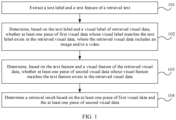
- FIG. 1 is a flowchart of a cross-modal retrieval method according to an embodiment of this application. The method is applied to an electronic device, and the method includes the following steps.
- Step 101 Extract a text label and a text feature of a retrieval text.
- the retrieval text is input into a first text model, to obtain the text label and the text feature of the retrieval text.
- the retrieval text may be input into a second text model, to obtain the text feature of the retrieval text, and the retrieval text may be input into a third text model, to obtain the text label of the retrieval text, or the text label of the retrieval text is extracted according to a text label extraction algorithm.
- an input of the first text model is the retrieval text
- an output of the first text model is the text label and the text feature of the retrieval text.
- an input of the second text model is the retrieval text
- an output of the second text model is the text feature of the retrieval text
- an input of the third text model is the retrieval text
- an output of the third text model is the text label of the retrieval text
- Structures of the first text model, the second text model, and the third text model may be different, and an implementation process of the text label extraction algorithm may also be different based on different requirements. This is not limited in this embodiment of this application.
- the text label indicates a classification result of an object retrieved by using the retrieval text. For example, if the retrieval text is "panda eating bamboo", it is determined that panda needs to be retrieved by using the retrieval text. In this way, "panda" can be determined as the text label of the retrieval text.
- the text feature indicates the feature of the retrieval text.
- the cross-modal retrieval method provided in embodiments of this application may be applied to a network-side scenario, or may be applied to a terminal-side scenario.
- the retrieval text is obtained in different manners based on different application scenarios. For example, in the network-side scenario, a user terminal provides a retrieval page for a user to enter a retrieval text in a retrieval box on the retrieval page, then the user terminal sends the retrieval text entered in the retrieval box to a server, and the server extracts a text label and a text feature of the retrieval text.
- the user terminal provides a retrieval page for the user to enter a retrieval text in a retrieval box on the retrieval page, and then the user terminal directly extracts a text label and a text feature of the retrieval text entered in the retrieval box.
- Step 102 Determine, based on the text label of the retrieval text and a visual label of retrieved visual data, whether at least one piece of first visual data whose visual label matches the text label exists in the retrieved visual data, where the retrieved visual data includes an image and/or a video.
- the text label of the retrieval text is matched with the visual label of the retrieved visual data, to determine whether visual data whose visual label is the same as the text label or belongs to a synonym exists in the retrieved visual data. If the visual data whose visual label is the same as the text label of the retrieval text or belongs to the synonym exists in the retrieved visual data, it is determined that the at least one piece of first visual data exists in the retrieved visual data, where the at least one piece of first visual data is visual data, in the retrieved visual data, whose visual label is the same as the text label of the retrieval text or belongs to the synonym. If visual data whose visual label is the same as the text label of the retrieval text or belongs to the synonym does not exist in the retrieved visual data, it is determined that the at least one piece of first visual data does not exist in the retrieved visual data.
- Labels belonging to synonyms are annotated in advance. For example, both the label “bloom” and the label “fresh flower” are synonyms of the label "flower.”
- An annotation method is not limited in this embodiment of this application.
- the visual label indicates a classification result of the visual data. For example, if the visual data is a picture of a fresh flower, the visual label of the visual data may be "fresh flower.”
- the visual label and a visual feature of the retrieved visual data further need to be extracted.
- the visual label and the visual feature of the retrieved visual data may be extracted before step 102 and step 103, or may be extracted before step 101, or certainly may be extracted when the electronic device is idle.
- An occasion for extracting the visual label and the visual feature of the retrieved visual data is not limited in this embodiment of this application.
- the retrieved visual data may be input into a first visual model, to obtain the visual label and the visual feature of the retrieved visual data.
- the retrieved visual data may be input into a second visual model to obtain the visual feature of the retrieved visual data
- the retrieved visual data may be input into a third visual model to obtain the visual label of the retrieved visual data.
- an input of the first visual model is the retrieved visual data
- an output of the first visual model is the visual label and the visual feature of the retrieved visual data.
- an input of the second visual model is the retrieved visual data
- an output of the second visual model is the visual feature of the retrieved visual data.
- an input of the third visual model is the retrieved visual data
- an output of the third visual model is the visual label of the retrieved visual data.
- Structures of the first visual model, the second visual model, and the third visual model may be different.
- the third visual model may be an OCR (Optical Character Recognition, optical character recognition) network model, and text information is obtained by performing analysis and recognition processing on the retrieved visual data. Then, a label of the text information is extracted as the visual label of the retrieved visual data.
- OCR Optical Character Recognition, optical character recognition
- the cross-modal retrieval method provided in embodiments of this application may be applied to a network-side scenario, or may be applied to a terminal-side scenario.
- the retrieved visual data is stored in different locations based on different application scenarios.
- the retrieved visual data is stored in a server.
- the retrieved visual data is stored in a user terminal.
- the retrieved visual data may include only an image, or may include only a video, or certainly may include both an image and a video.
- Step 103 Determine, based on the text feature of the retrieval text and the visual feature of the retrieved visual data, whether at least one piece of second visual data whose visual feature matches the text feature exists in the retrieved visual data.
- a similarity between the text feature of the retrieval text and the visual feature of the retrieved visual data is determined. If visual data with a similarity between a visual feature of the visual data and the text feature of the retrieval text being greater than a second similarity threshold exists in the retrieved visual data, it is determined that the at least one piece of second visual data exists in the retrieved visual data, where the at least one piece of second visual data is visual data, in the retrieved visual data, with a similarity between a visual feature of the visual data and the text feature of the retrieval text being greater than the second similarity threshold.
- the similarity between the text feature and the visual feature may be obtained by calculating a cosine distance between the text feature and the visual feature, or may be obtained through calculation in another manner. This is not limited in this embodiment of this application.
- the second similarity threshold is preset, for example, 0.8 or 0.85. In actual application, different values may be used based on different requirements. This is not limited in this embodiment of this application.
- the visual feature indicates a feature of the visual data.
- the visual data is an image
- the visual feature is a feature of the image.
- a same visual model may be used to extract the visual feature and the visual label of the retrieved visual data, or two different visual models may be used to separately extract the visual feature and the visual label of the retrieved visual data. This is not limited in this embodiment of this application.
- Step 104 If the at least one piece of first visual data and the at least one piece of second visual data exist in the retrieved visual data, a retrieval result is determined based on the at least one piece of first visual data and the at least one piece of second visual data.
- both the at least one piece of first visual data and the at least one piece of second visual data may exist in the retrieved visual data, or only the at least one piece of first visual data or only at least one piece of second visual data may exist in the retrieved visual data. If both the at least one piece of first visual data and the at least one piece of second visual data exist in the retrieved visual data, the at least one piece of first visual data and the at least one piece of second visual data can be fused according to a fusion policy, to obtain the retrieval result. If the at least one piece of first visual data exists but the at least one piece of second visual data does not exist in the retrieved visual data, the at least one piece of first visual data is used as the retrieval result. If the at least one piece of second visual data exists but the at least one piece of first visual data does not exist in the retrieved visual data, the at least one piece of second visual data is used as the retrieval result.
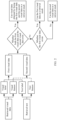
- FIG. 2 is a flowchart of another cross-modal retrieval method according to an embodiment of this application.
- a text label and a text feature of a retrieval text input by a user are extracted, and a visual label and a visual feature of retrieved visual data are determined.
- the text label of the retrieval text is matched with the visual label of the retrieved visual data, to determine whether first visual data whose visual label matches the text label of the retrieval text exists in the retrieved visual data; and the text feature of the retrieval text is matched with the visual feature of the retrieved visual data, to determine whether second visual data whose visual feature matches the text feature of the retrieval text exists in the retrieved visual data.
- the first visual data and the second visual data are fused by using a preconfigured fusion solution, and fused visual data is used as a retrieval result. If the first visual data and the second visual data do not exist at the same time, it is determined whether the first visual data exists. If the first visual data exists, the first visual data is used as a retrieval result. If the first visual data does not exist, the second visual data is used as a retrieval result.
- the fusion policy is preset, and a union set or an intersection set of the at least one piece of first visual data and the at least one piece of second visual data may be selected as the retrieval result based on degrees of focus of the application scenario on a quantity and accuracy of retrieval results.
- the union set of the at least one piece of first visual data and the at least one piece of second visual data is selected as the retrieval result.
- the intersection set of the at least one piece of first visual data and the at least one piece of second visual data is selected as the retrieval result.
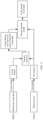
- FIG. 3 is a flowchart of a visual data fusion method according to an embodiment of this application. If both at least one piece of first visual data and at least one piece of second visual data exist in retrieved visual data, it is determined whether a visual label of the at least one piece of first visual data belongs to a first-type label or a second-type label. If the visual label of the at least one piece of first visual data belongs to the first-type label, an intersection set of the at least one piece of first visual data and the at least one piece of second visual data is used as a retrieval result, where the first-type label is a label having uncertainty when representing visual data.
- the visual label of the at least one piece of first visual data belongs to the second-type label
- a union set of the at least one piece of first visual data and the at least one piece of second visual data is used as a retrieval result, where the second-type label is a label having certainty when representing visual data.
- the first-type label is a label having uncertainty when representing visual data. Therefore, when the visual label of the at least one piece of first visual data belongs to the first-type label, it indicates that the visual label of the at least one piece of first visual data may not be able to accurately express content of corresponding visual data. In this case, to ensure accuracy of the retrieval result, the intersection set of the at least one piece of first visual data and the at least one piece of second visual data is used as the retrieval result.
- the second-type label is a label having certainty when representing visual data. Therefore, when the visual label of the at least one piece of first visual data belongs to the second-type label, it indicates that the visual label of the at least one piece of first visual data can accurately express content of corresponding visual data. In this case, to ensure a quantity of retrieval results, the union set of the at least one piece of first visual data and the at least one piece of second visual data is used as the retrieval result.
- the first-type label and the second-type label are set in advance, and different first-type labels and second-type labels may be set based on different product requirements and application scenario requirements.
- a method for setting the first-type label and the second-type label is not limited in this embodiment of this application.
- a process of matching a text label of a retrieval text with a visual label of retrieved visual data is referred to as label recall
- a process of matching a text feature of the retrieval text with a visual feature of the retrieved visual data is referred to as open semantic recall, and may also be referred to as vector recall.
- label recall A process of matching a text label of a retrieval text with a visual label of retrieved visual data
- open semantic recall a process of matching a text feature of the retrieval text with a visual feature of the retrieved visual data
- vector recall There may be three cases after label recall and open semantic recall.
- at least one piece of first visual data is obtained through label recall, but no result is obtained through open semantic recall
- at least one piece of second visual data is obtained through open semantic recall, but no result is obtained through label recall
- at least one piece of first visual data is obtained through label recall, and at least one piece of second visual data is obtained through open semantic recall.
- retrieval text is "panda eating bamboo"
- text label of the retrieval text is "panda”. If it is determined, through label recall, that "panda" hits the visual label of the retrieved visual data, but no result is obtained through open semantic recall, visual data whose visual label is "panda" in the retrieved visual data is used as a retrieval result.
- the retrieval text is "panda eating bamboo", and the text label of the retrieval text is "panda”. If it is determined, through label recall, that "panda" hits the visual label of the retrieved visual data, visual data whose visual label is "panda” in the retrieved visual data is determined as the at least one piece of first visual data.
- the at least one piece of second visual data is obtained through open semantic recall. In this case, an intersection set or a union set of the at least one piece of first visual data and the at least one piece of second visual data may be selected as the retrieval result.
- the retrieval text is "black lithography machine”
- the text label of the retrieval text is "lithography machine”. If it is determined, through label recall, that "lithography machine” misses the visual label of the retrieved visual data, but the at least one piece of second visual data is obtained through open semantic recall, the at least one piece of second visual data is used as the retrieval result.
- the retrieved visual data may alternatively include neither the at least one piece of first visual data nor the at least one piece of second visual data. In this case, it is determined that the retrieval result is empty.
- the retrieval result may be directly determined based on the foregoing method. Certainly, the retrieval result may be determined based on the foregoing method after the at least one piece of second visual data is processed more accurately. There are a plurality of methods for more accurately processing the at least one piece of second visual data. The following describes one of the methods.
- the visual feature of the at least one piece of second visual data and the text feature of the retrieval text are input into a neural network model, to obtain a model inference result, where the model inference result includes a similarity result and/or a pairing determining result, the similarity result indicates a similarity between each of the at least one piece of second visual data and the retrieval text, and the pairing determining result indicates whether each of the at least one piece of second visual data and the retrieval text can be paired; and the at least one piece of second visual data is processed based on the model inference result.
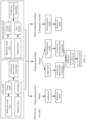
- FIG. 5 is a flowchart of a method for processing second visual data according to an embodiment of this application.
- a process of determining at least one piece of second visual data for the first time is described herein.
- visual parsing is performed on retrieved visual data by using a visual model, to obtain a visual feature of the retrieved visual data
- text parsing is performed on a retrieval text based on the retrieval text entered online by a user by using a text model, to obtain a text feature of the retrieval text
- feature retrieval is performed based on the text feature of the retrieval text and the visual feature of the retrieved visual data, to determine the at least one piece of second visual data.
- both the text feature of the retrieval text and a visual feature of the at least one piece of second visual data are input into a neural network model, and the at least one piece of second visual data is further processed through analysis of the neural network model, to obtain final second visual data.
- a model inference result may include only a similarity result, or may include only a pairing determining result, or may include a similarity result and a pairing determining result.
- manners of processing the at least one piece of second visual data based on the model inference result are different. The following separately describes the manners.
- Case 1 If the model inference result includes the similarity result but does not include the pairing determining result, second visual data whose similarity to the retrieval text is greater than a first similarity threshold is obtained through filtering from the at least one piece of second visual data based on the similarity result.
- the similarity result is obtained by performing fine-grained analysis after the neural network model combines the visual feature of the second visual data and the text feature of the retrieval text, the similarity result can more accurately represent the similarity between the second visual data and the retrieval text.
- Visual data that is really less similar to the retrieval text can be filtered out, and visual data that is really similar to the retrieval text can be retained by performing filtering on the at least one piece of second visual data based on the similarity result, thereby improving accuracy of the finally determined retrieval result.
- the first similarity threshold is preset, for example, 0.85 or 0.9. In actual application, the first similarity threshold may be set to different values based on different requirements. In addition, values of the first similarity threshold and a second similarity threshold may be the same or different. This is not limited in this embodiment of this application.
- the second visual data obtained through filtering may be further sorted in descending order of similarity, thereby improving sorting rationality of the retrieval result finally fed back to the user.
- Case 2 If the model inference result includes the pairing determining result but does not include the similarity result, second visual data that can be paired with the retrieval text is obtained through filtering from the at least one piece of second visual data based on the pairing determining result.
- the pairing determining result is obtained by performing fine-grained analysis after the neural network model combines the visual feature of the second visual data and the text feature of the retrieval text, the pairing determining result can more accurately represent whether the second visual data and the retrieval text can be paired.
- Visual data that is not paired with the retrieval text can be filtered out, and visual data that is paired with the retrieval text can be retained by performing filtering on the at least one piece of second visual data based on the pairing determining result, thereby filtering out improper visual data and improving accuracy of the finally determined retrieval result.
- Case 3 If the model inference result includes the similarity result and the pairing determining result, second visual data that can be paired with the retrieval text is obtained through filtering from the at least one piece of second visual data based on the pairing determining result; and the second visual data obtained through filtering is sorted based on the similarity result in descending order of similarity between the second visual data obtained through filtering and the retrieval text.
- filtering on the at least one piece of second visual data is first performed based on whether each of the at least one piece of second visual data can be paired with the retrieval text, to retain the second visual data that can be paired with the retrieval text, and delete the second visual data that cannot be paired with the retrieval text. Then, the second visual data obtained through filtering is sorted in descending order of similarity between the second visual data obtained through filtering and the retrieval text, thereby improving sorting rationality of the retrieval result finally fed back to the user.
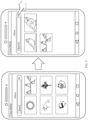
- a retrieval text is "sparrow", and at least one piece of second visual data includes four images: three images of "sparrows” and one image of "parrot” (an image in order 2). Because meaning of "parrot” does not conform to meaning of "sparrow”, but both "sparrow” and “parrot” belong to small birds, determining difficulty is high, and it is prone to error when a retrieval result is determined based on only the at least one piece of second visual data obtained for the first time. However, after filtering is performed based on a pairing determining result, the image of "parrot” is deleted from the at least one piece of second visual data obtained for the first time. This helps obtain a more accurate result.
- retrieved visual data whose visual feature is not good enough may be ranked in the front, but retrieved visual data whose visual feature is clearer is ranked in the back.
- the first image of "sparrow" is ranked in the front because the visual feature of the image is not good enough
- the third image of "sparrow” has a better visual feature and is ranked in the back. Therefore, in descending order of similarity between the second visual data obtained through filtering and the retrieval text, retrieved data whose visual feature is clearer is adjusted to the front, and retrieved visual data whose visual feature is not good enough is adjusted to the back, to obtain a more proper sorting result.
- the retrieval result may be fed back to a user.
- the cross-modal retrieval method provided in embodiments of this application may be applied to a network-side scenario, or may be applied to a terminal-side scenario.
- a server may send the retrieval result to a user terminal, and the user terminal displays the retrieval result.
- the user terminal may display the retrieval result.
- the user may enter "sparrow" in a search box.
- the mobile phone retrieves the album of the mobile phone by using the method provided in this embodiment of this application, three images of "sparrow" are obtained.
- an image whose visual feature is clearer is ranked in the front, and an image whose visual feature is not good enough is ranked in the back.
- the first visual data determined based on the visual label of the retrieved visual data and the text label of the retrieval text is accurate. In other words, a retrieval range can be accurately controlled through label matching.
- the retrieval text is description information of a natural language with semantic openness
- the second visual data determined based on the visual feature of the retrieved visual data and the text feature of the retrieval text has no semantic limitation, and supports natural semantic retrieval. Retrieval is flexible, a retrieval range is wide, and fine-grained retrieval text, such as adjectives, can be identified. In this way, when both the first visual data and the second visual data exist in the retrieved visual data, the first visual data and the second visual data are fused, and both cross-modal retrieval precision and retrieval breadth can be improved.
- both the visual feature of the second visual data and the text feature of the retrieval text may be input into the neural network model.
- the neural network model combines the visual feature and the text feature to implement fine-grained analysis, to perform filtering on the second visual data, thereby improving accuracy and rationality of the retrieval result.
- FIG. 8 is a flowchart of another cross-modal retrieval method according to an embodiment of this application. The method includes the following steps.
- Step 801 Extract a text label and a text feature of a retrieval text.
- the method further includes: receiving the retrieval text input by a user.
- Step 802 Obtain a label matching result based on the text label of the retrieval text and a visual label of retrieved visual data, where the retrieved visual data includes an image and/or a video.
- Step 803 Obtain a feature matching result based on the text feature of the retrieval text and a visual feature of the retrieved visual data.
- the obtaining a feature matching result based on the text feature and a visual feature of the retrieved visual data includes: performing feature matching on the text feature and the visual feature of the retrieved visual data, to obtain a first feature matching result, where the first feature matching result includes at least one piece of third visual data; and inputting the text feature and the first feature matching result into a preset model, to obtain the feature matching result, where the feature matching result includes a part or all of third visual data in the first feature matching result, and the third visual data included in the feature matching result is sorted based on a similarity between the third visual data and the text feature.
- the preset model may be a neural network model.
- Step 804 Obtain a retrieval result based on the label matching result and the feature matching result.
- the label matching result may include at least one piece of first visual data, or may not include at least one piece of first visual data.
- the feature matching result may include at least one piece of second visual data, or may not include at least one piece of second visual data.
- manners of determining the retrieval result are different. The following separately describes the manners.
- the label matching result includes the at least one piece of first visual data
- the feature matching result includes the at least one piece of second visual data.
- an implementation process of obtaining a retrieval result based on the label matching result and the feature matching result includes: using a union set or an intersection set of the at least one piece of first visual data included in the label matching result and the at least one piece of second visual data included in the feature matching result as the retrieval result.
- the using a union set or an intersection set of the at least one piece of first visual data included in the label matching result and the at least one piece of second visual data included in the feature matching result as the retrieval result includes: if a visual label of the at least one piece of first visual data belongs to a preset first-type label, using the intersection set of the at least one piece of first visual data and the at least one piece of second visual data as the retrieval result; or if a visual label of the at least one piece of first visual data belongs to a preset second-type label, using the union set of the at least one piece of first visual data and the at least one piece of second visual data as the retrieval result.
- the label matching result includes the at least one piece of first visual data
- the feature matching result indicates that matched data does not exist.
- an implementation process of obtaining a retrieval result based on the label matching result and the feature matching result includes: using the at least one piece of first visual data included in the label matching result as the retrieval result.
- Case 3 The label matching result indicates that matched data does not exist, and the feature matching result includes the at least one piece of second visual data.
- an implementation process of obtaining a retrieval result based on the label matching result and the feature matching result includes: using the at least one piece of second visual data included in the feature matching result as the retrieval result.
- Case 4 When the label matching result includes the at least one piece of first visual data, and a visual label of a part or all of visual data in the at least one piece of first visual data includes the text label, visual data that is in the at least one piece of first visual data and whose visual label includes the text label is used as the retrieval result.
- the retrieval result determined in the foregoing steps includes at least one image and/or video.
- the retrieval result may be further displayed.
- the first visual data determined based on the visual label of the retrieved visual data and the text label of the retrieval text is accurate. In other words, a retrieval range can be accurately controlled through label matching.
- the retrieval text is description information of a natural language with semantic openness
- the second visual data determined based on the visual feature of the retrieved visual data and the text feature of the retrieval text has no semantic limitation, and supports natural semantic retrieval. Retrieval is flexible, a retrieval range is wide, and fine-grained retrieval text, such as adjectives, can be identified. In this way, when both the first visual data and the second visual data exist in the retrieved visual data, the first visual data and the second visual data are fused, and both cross-modal retrieval precision and retrieval breadth can be improved.
- both the visual feature of the second visual data and the text feature of the retrieval text may be input into the neural network model.
- the neural network model combines the visual feature and the text feature to implement fine-grained analysis, to perform filtering on the second visual data, thereby improving accuracy and rationality of the retrieval result.
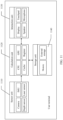
- FIG. 9 is a diagram of a structure of a cross-modal retrieval apparatus according to an embodiment of this application.
- the apparatus may be implemented as a part or the entire of an electronic device by using software, hardware, or a combination thereof. Refer to FIG. 9 .
- the apparatus includes: an extraction module 901, a first determining module 902, a second determining module 903, and a third determining module 904.
- the extraction module 901 is configured to extract a text label and a text feature of a retrieval text.
- a text label and a text feature of a retrieval text For a detailed implementation process, refer to corresponding content in the foregoing embodiments. Details are not described herein again.
- the first determining module 902 is configured to determine, based on the text label and a visual label of retrieved visual data, whether at least one piece of first visual data whose visual label matches the text label exists in the retrieved visual data, where the retrieved visual data includes an image and/or a video.
- the second determining module 903 is configured to determine, based on the text feature and a visual feature of the retrieved visual data, whether at least one piece of second visual data whose visual feature matches the text feature exists in the retrieved visual data.
- the third determining module 904 is configured to: if the at least one piece of first visual data and the at least one piece of second visual data exist in the retrieved visual data, determine a retrieval result based on the at least one piece of first visual data and the at least one piece of second visual data.
- the third determining module 904 is specifically configured to:
- the apparatus further includes: a fourth determining module, configured to: if the at least one piece of first visual data exists but the at least one piece of second visual data does not exist in the retrieved visual data, use the at least one piece of first visual data as the retrieval result.
- a fourth determining module configured to: if the at least one piece of first visual data exists but the at least one piece of second visual data does not exist in the retrieved visual data, use the at least one piece of first visual data as the retrieval result.
- the apparatus further includes: a fifth determining module, configured to: if the at least one piece of second visual data exists but the at least one piece of first visual data does not exist in the retrieved visual data, use the at least one piece of second visual data as the retrieval result.
- a fifth determining module configured to: if the at least one piece of second visual data exists but the at least one piece of first visual data does not exist in the retrieved visual data, use the at least one piece of second visual data as the retrieval result.
- the apparatus further includes:
- the model inference result includes the similarity result; and the processing module is specifically configured to: obtain, through filtering from the at least one piece of second visual data based on the similarity result, second visual data whose similarity to the retrieval text is greater than a first similarity threshold.
- the model inference result includes the pairing determining result; and the processing module is specifically configured to: obtain, through filtering from the at least one piece of second visual data based on the pairing determining result, second visual data that can be paired with the retrieval text.
- the model inference result includes the similarity result and the pairing determining result; and the processing module is specifically configured to:
- the first visual data determined based on the visual label of the retrieved visual data and the text label of the retrieval text is accurate. In other words, a retrieval range can be accurately controlled through label matching.
- the retrieval text is description information of a natural language with semantic openness
- the second visual data determined based on the visual feature of the retrieved visual data and the text feature of the retrieval text has no semantic limitation. Retrieval is flexible, a retrieval range is wide, and fine-grained retrieval text, such as adjectives, can be identified. In this way, when both the first visual data and the second visual data exist in the retrieved visual data, the first visual data and the second visual data are fused, and both cross-modal retrieval precision and retrieval breadth can be improved.
- both the visual feature of the second visual data and the text feature of the retrieval text may be input into the neural network model.
- the neural network model combines the visual feature and the text feature to implement fine-grained analysis, to perform filtering on the second visual data, thereby improving accuracy and rationality of the retrieval result.
- cross-modal retrieval apparatus when the cross-modal retrieval apparatus provided in the foregoing embodiment performs cross-modal retrieval, division of the foregoing functional modules is merely used as an example for description. In actual application, the foregoing functions can be allocated to different functional modules and implemented based on a requirement, that is, an inner structure of an apparatus is divided into different functional modules to implement all or part of the functions described above.
- the cross-modal retrieval apparatus provided in the foregoing embodiment belongs to a same concept as the cross-modal retrieval method embodiments. For a specific implementation process of the cross-modal retrieval apparatus provided in the foregoing embodiment, refer to the method embodiments. Details are not described herein again.
- FIG. 10 is a diagram of a structure of an electronic device according to an embodiment of this application.
- the electronic device includes at least one processor 1001, a communication bus 1002, a memory 1003, and at least one communication interface 1004.
- the processor 1001 may be a general-purpose central processing unit (central processing unit, CPU), a network processor (network processor, NP), or a microprocessor, or may be one or more integrated circuits configured to implement the solutions of this application, for example, an application-specific integrated circuit (application-specific integrated circuit, ASIC), a programmable logic device (programmable logic device, PLD), or a combination thereof.
- the PLD may be a complex programmable logic device (complex programmable logic device, CPLD), a field-programmable gate array (field-programmable gate array, FPGA), generic array logic (generic array logic, GAL), or any combination thereof.
- the communication bus 1002 is configured to transmit information between the foregoing components.
- the communication bus 1002 may be classified into an address bus, a data bus, a control bus, and the like. For ease of representation, only one thick line is used to represent the bus in the figure, but this does not mean that there is only one bus or only one type of bus.
- the memory 1003 may be a read-only memory (read-only memory, ROM), a random access memory (random access memory, RAM), an electrically erasable programmable read-only memory (electrically erasable programmable read-only memory, EEPROM), an optical disc (including a compact disc read-only memory (compact disc read-only memory, CD-ROM), a compact disc, a laser disc, a digital versatile disc, a Blu-ray disc, or the like), a magnetic disk storage medium or another magnetic storage device, or any other medium that can be configured to carry or store expected program code in a form of instructions or a data structure and that can be accessed by a computer.
- the memory 1003 is not limited thereto.
- the memory 1003 may exist independently, and is connected to the processor 1001 through the communication bus 1002.
- the memory 1003 may alternatively be integrated with the processor 1001.
- the communication interface 1004 is configured to communicate with another device or a communication network by using any transceiver-type apparatus.
- the communication interface 1004 includes a wired communication interface, and may further include a wireless communication interface.
- the wired communication interface may be, for example, an Ethernet interface.
- the Ethernet interface may be an optical interface, an electrical interface, or a combination thereof.
- the wireless communication interface may be a wireless local area network (wireless local area network, WLAN) interface, a cellular network communication interface, a combination thereof, or the like.
- the processor 1001 may include one or more CPUs, for example, a CPU 0 and a CPU 1 shown in FIG. 10 .
- the electronic device may include a plurality of processors, for example, the processor 1001 and a processor 1005 shown in FIG. 10 .
- Each of the processors may be a single-core processor, or may be a multi-core processor.
- the processor herein may be one or more devices, circuits, and/or processing cores configured to process data (for example, computer program instructions).
- the electronic device may further include an output device 1006 and an input device 1009.
- the output device 1006 communicates with the processor 1001, and may display information in a plurality of manners.
- the output device 1006 may be a liquid crystal display (liquid crystal display, LCD), a light emitting diode (light emitting diode, LED) display device, a cathode ray tube (cathode ray tube, CRT) display device, or a projector (projector).
- the input device 1009 communicates with the processor 1001, and may receive a user input in a plurality of manners.
- the input device 1009 may be a mouse, a keyboard, a touchscreen device, or a sensor device.
- the memory 1003 is configured to store program code 1010 for performing the solutions of this application, and the processor 1001 can execute the program code 1010 stored in the memory 1003.
- the program code 1010 may include one or more software modules.
- the electronic device may implement, by using the processor 1001 and the program code 1010 in the memory 1003, the cross-modal retrieval method provided in the foregoing embodiment.
- FIG. 11 is a diagram of a structure of a user terminal according to an embodiment of this application.
- the user terminal includes a sensor unit 1110, a calculation unit 1120, a storage unit 1140, and an interaction unit 1130.
- the sensor unit 1110 usually includes a visual sensor (for example, a camera), a depth sensor, an IMU, a laser sensor, and the like.
- the calculation unit 1120 usually includes a CPU, a GPU, a cache, a register, and the like, and is mainly configured to run an operating system.
- the storage unit 1140 mainly includes a memory and an external storage, and is mainly configured to: read and write local and temporary data of a user, and the like.
- the interaction unit 1130 mainly includes a display, a touchpad, a speaker, a microphone, and the like, and is mainly configured to: interact with the user, obtain a user input, implement and present algorithm effect, and the like.
- FIG. 12 is a diagram of a structure of a user terminal according to an embodiment of this application.
- the user terminal 100 may include a processor 110, an external memory interface 120, an internal memory 121, a universal serial bus (universal serial bus, USB) interface 130, a charging management module 140, a power management module 141, a battery 142, an antenna 1, an antenna 2, a mobile communication module 150, a wireless communication module 160, an audio module 170, a speaker 170A, a receiver 170B, a microphone 170C, a headset jack 170D, a sensor module 180, a button 190, a motor 191, an indicator 192, a camera 193, a display 194, a subscriber identification module (subscriber identification module, SIM) card interface 195, and the like.
- a processor 110 an external memory interface 120, an internal memory 121, a universal serial bus (universal serial bus, USB) interface 130, a charging management module 140, a power management module 141, a battery 142, an antenna 1, an antenna 2, a mobile communication module 150, a wireless communication module 160, an audio module 170,
- the sensor module 180 may include a pressure sensor 180A, a gyroscope sensor 180B, a barometric pressure sensor 180C, a magnetic sensor 180D, an acceleration sensor 180E, a distance sensor 180F, an optical proximity sensor 180G, a fingerprint sensor 180H, a temperature sensor 180J, a touch sensor 180K, an ambient light sensor 180L, a bone conduction sensor 180M, and the like.
- the structure shown in this embodiment of this application does not constitute a specific limitation on the user terminal 100.
- the user terminal 100 may include more or fewer components than those shown in the figure, or combine some components, or split some components, or have different component arrangements.
- the components shown in the figure may be implemented by hardware, software, or a combination of software and hardware.
- the processor 110 may include one or more processing units.
- the processor 110 may include an application processor (application processor, AP), a modem processor, a graphics processing unit (graphics processing unit, GPU), an image signal processor (image signal processor, ISP), a controller, a memory, a video codec, a digital signal processor (digital signal processor, DSP), a baseband processor, and/or a neural-network processing unit (neural-network processing unit, NPU).
- Different processing units may be independent components, or may be integrated into one or more processors.
- the processor 110 may execute a computer program, to implement any method in embodiments of this application.
- the controller may be a nerve center and a command center of the user terminal 100.
- the controller may generate an operation control signal based on an instruction operation code and a time sequence signal, to complete control of instruction fetching and instruction execution.
- a memory may be further disposed in the processor 110, and is configured to store instructions and data.
- the memory in the processor 110 is a cache memory.
- the memory may store instructions or data that has been used or cyclically used by the processor 110. If the processor 110 needs to use the instructions or the data again, the processor 110 may directly invoke the instructions or the data from the memory, to avoid repeated access and reduce waiting time of the processor 110. Therefore, system efficiency is improved.
- the processor 110 may include one or more interfaces.
- the interface may include an inter-integrated circuit (inter-integrated circuit, I1C) interface, an inter-integrated circuit sound (inter-integrated circuit sound, I1S) interface, a pulse code modulation (pulse code modulation, PCM) interface, a universal asynchronous receiver/transmitter (universal asynchronous receiver/transmitter, UART) interface, a mobile industry processor interface (mobile industry processor interface, MIPI), a general-purpose input/output (general-purpose input/output, GPIO) interface, a subscriber identity module (subscriber identity module, SIM) interface, a universal serial bus (universal serial bus, USB) interface, and/or the like.
- I1C inter-integrated circuit
- I1S inter-integrated circuit sound
- PCM pulse code modulation
- PCM pulse code modulation
- UART universal asynchronous receiver/transmitter
- MIPI mobile industry processor interface
- GPIO general-purpose input/output
- an interface connection relationship between the modules shown in this embodiment of this application is merely an example for description, and constitutes no limitation on the structure of the user terminal 100.
- the user terminal 100 may alternatively use an interface connection manner different from that in the foregoing embodiment, or a combination of a plurality of interface connection manners.
- the charging management module 140 is configured to receive a charging input from a charger.
- the charger may be a wireless charger or a wired charger.
- the charging management module 140 may receive a charging input of a wired charger through a USB interface 130.
- the power management module 141 is configured to connect the battery 142, the charging management module 140, and the processor 110.
- the power management module 141 receives an input of the battery 142 and/or the charging management module 140, to supply power to the processor 110, the internal memory 121, an external memory, the display 194, the camera 193, the wireless communication module 160, and the like.
- a wireless communication function of the user terminal 100 may be implemented by using the antenna 1, the antenna 2, the mobile communication module 150, the wireless communication module 160, the modem processor, the baseband processor, and the like.
- the user terminal 100 may communicate with another device by using the wireless communication function.
- the user terminal 100 may communicate with a second electronic device, the user terminal 100 establishes a projection connection to the second electronic device, and the user terminal 100 outputs projection data to the second electronic device.
- the projection data output by the user terminal 100 may be audio/video data.
- the antenna 1 and the antenna 2 are configured to transmit and receive an electromagnetic wave signal.
- Each antenna in the user terminal 100 may be configured to cover one or more communication frequency bands. Different antennas may be further multiplexed, to improve antenna utilization.
- the antenna 1 may be multiplexed as a diversity antenna of a wireless local area network. In some other embodiments, the antenna may be used in combination with a tuning switch.
- the mobile communication module 150 may provide a wireless communication solution that is applied to the user terminal 100 and that includes 1G/3G/4G/5G or the like.
- the mobile communication module 150 may include at least one filter, a switch, a power amplifier, a low noise amplifier (low noise amplifier, LNA), and the like.
- the mobile communication module 150 may receive an electromagnetic wave through the antenna 1, perform processing such as filtering or amplification on the received electromagnetic wave, and transmit the electromagnetic wave to the modem processor for demodulation.
- the mobile communication module 150 may further amplify a signal modulated by the modem processor, and convert the signal into an electromagnetic wave for radiation through the antenna 2.
- at least some functional modules in the mobile communication module 150 may be disposed in the processor 110.
- at least some functional modules of the mobile communication module 150 and at least some modules of the processor 110 may be disposed in a same component.
- the modem processor may include a modulator and a demodulator.
- the modulator is configured to modulate a to-be-sent low-frequency baseband signal into a medium-high frequency signal.
- the demodulator is configured to demodulate a received electromagnetic wave signal into a low-frequency baseband signal. Then, the demodulator transmits the low-frequency baseband signal obtained through demodulation to the baseband processor for processing.
- the low-frequency baseband signal is processed by the baseband processor and then transmitted to the application processor.
- the application processor outputs a sound signal by an audio device (which is not limited to the speaker 170A, the receiver 170B, or the like), or displays an image or a video by the display 194.
- the modem processor may be an independent component.
- the modem processor may be independent of the processor 110, and is disposed in a same component as the mobile communication module 150 or another functional module.
- the wireless communication module 160 may provide a wireless communication solution that is applied to the user terminal 100, and that includes a wireless local area network (wireless local area network, WLAN) (for example, a wireless fidelity (wireless fidelity, Wi-Fi) network), Bluetooth (Bluetooth, BT), a global navigation satellite system (global navigation satellite system, GNSS), frequency modulation (frequency modulation, FM), a near field communication (near field communication, NFC) technology, an infrared (infrared, IR) technology, or the like.
- the wireless communication module 160 may be one or more components integrating at least one communication processor module.
- the wireless communication module 160 receives an electromagnetic wave through the antenna 1, performs frequency modulation and filtering processing on an electromagnetic wave signal, and sends a processed signal to the processor 110.
- the wireless communication module 160 may further receive a to-be-sent signal from the processor 110, perform frequency modulation and amplification on the signal, and convert the signal into an electromagnetic wave for radiation through the antenna 2.
- the antenna 1 in the user terminal 100 is coupled to the mobile communication module 150, and the antenna 2 in the user terminal 100 is coupled to the wireless communication module 160, so that the user terminal 100 can communicate with a network and another device by using a wireless communication technology.
- the wireless communication technology may include a global system for mobile communications (global system for mobile communications, GSM), a general packet radio service (general packet radio service, GPRS), code division multiple access (code division multiple access, CDMA), wideband code division multiple access (wideband code division multiple access, WCDMA), time-division code division multiple access (time-division code division multiple access, TD-SCDMA), long term evolution (long term evolution, LTE), BT, a GNSS, a WLAN, NFC, FM, an IR technology, and/or the like.
- GSM global system for mobile communications
- GPRS general packet radio service
- code division multiple access code division multiple access
- CDMA wideband code division multiple access
- WCDMA wideband code division multiple access
- the GNSS may include a global positioning system (global positioning system, GPS), a global navigation satellite system (global navigation satellite system, GLONASS), a BeiDou navigation satellite system (BeiDou navigation satellite system, BDS), a quasi-zenith satellite system (quasi-zenith satellite system, QZSS), and/or a satellite based augmentation system (satellite based augmentation systems, SBAS).
- GPS global positioning system
- GLONASS global navigation satellite system
- BeiDou navigation satellite system BeiDou navigation satellite system
- BDS BeiDou navigation satellite system
- QZSS quasi-zenith satellite system
- SBAS satellite based augmentation system
- the user terminal 100 implements a display function by using the GPU, the display 194, the application processor, and the like.
- the GPU is a microprocessor for image processing, and is connected to the display 194 and the application processor.
- the GPU is configured to: perform mathematical and geometric computation, and render an image.
- the processor 110 may include one or more GPUs, which execute program instructions to generate or change display information.
- the display 194 is configured to display an image, a video, and the like.
- the display 194 includes a display panel.
- the display panel may be a liquid crystal display (liquid crystal display, LCD), an organic light-emitting diode (organic light-emitting diode, OLED), an active-matrix organic light-emitting diode (active-matrix organic light-emitting diode, AMOLED), a flexible light-emitting diode (flex light-emitting diode, FLED), a mini-LED, a micro-LED, a micro-OLED, a quantum dot light-emitting diode (quantum dot light-emitting diodes, QLED), or the like.
- the user terminal 100 may include one or N displays 194, where N is a positive integer greater than 1.
- the display 194 may be configured to display interfaces output by a system of the user terminal 100.
- the user terminal 100 may implement a photographing function by using the ISP, the camera 193, the video codec, the GPU, the display 194, the application processor, and the like.
- the ISP may be configured to process data fed back by the camera 193. For example, during photographing, a shutter is pressed, and light is transmitted to a photosensitive element of the camera through a lens. An optical signal is converted into an electrical signal, and the photosensitive element of the camera transmits the electrical signal to the ISP for processing, to convert the electrical signal into a visible image.
- the ISP may further perform algorithm optimization on noise, brightness, and complexion of the image.
- the ISP may further optimize parameters such as exposure and a color temperature of a photographing scenario.
- the ISP may be disposed in the camera 193.
- the camera 193 is configured to capture a static image or a video. An optical image of an object is generated through the lens, and is projected onto the photosensitive element.
- the photosensitive element may be a charge coupled device (charge coupled device, CCD) or a complementary metal-oxide-semiconductor (complementary metal-oxide-semiconductor, CMOS) phototransistor.
- CCD charge coupled device
- CMOS complementary metal-oxide-semiconductor
- the photosensitive element converts an optical signal into an electrical signal, and then transmits the electrical signal to the ISP to convert the electrical signal into a digital image signal.
- the ISP outputs the digital image signal to the DSP for processing.
- the DSP converts the digital image signal into an image signal in a standard format such as RGB or YUV
- the user terminal 100 may include one or N cameras 193, where N is a positive integer greater than 1.
- the digital signal processor is configured to process a digital signal, and may process another digital signal in addition to the digital image signal.
- the video codec is configured to compress or decompress a digital video.
- the user terminal 100 may support one or more video codecs. In this way, the user terminal 100 may play or record videos in a plurality of encoding formats, for example, moving picture experts group (moving picture experts group, MPEG)-1, MPEG-1, MPEG-3, and MPEG-4.
- moving picture experts group moving picture experts group, MPEG-1, MPEG-1, MPEG-3, and MPEG-4.
- the NPU is a neural-network (neural-network, NN) computing processor, quickly processes input information by drawing on a structure of a biological neural network, for example, by drawing on a transfer mode between human brain neurons, and may further continuously perform self-learning.
- Applications such as intelligent cognition of the user terminal 100 may be implemented by using the NPU, for example, image recognition, facial recognition, voice recognition, and text understanding.
- the external memory interface 120 may be configured to connect to an external memory card, for example, a micro-SD card, to extend a storage capability of the user terminal 100.
- the external memory card communicates with the processor 110 through the external memory interface 120, to implement a data storage function. For example, files such as music and videos are stored in the external memory card.
- the internal memory 121 may be configured to store computer-executable program code.
- the executable program code includes instructions.
- the processor 110 runs the instructions stored in the internal memory 121, to implement various function applications and data processing of the user terminal 100.
- the internal memory 121 may include a program storage area and a data storage area.
- the program storage area may store an operating system, an application required by at least one function (for example, the method in embodiments of this application), and the like.
- the data storage area may store data (for example, audio data or a phone book) created in a use process of the user terminal 100, and the like.
- the internal memory 121 may include a high-speed random access memory, or may include a non-volatile memory, for example, at least one magnetic disk storage device, a flash memory, or a universal flash storage (universal flash storage, UFS).
- the user terminal 100 may implement an audio function by using the audio module 170, the speaker 170A, the receiver 170B, the microphone 170C, the headset jack 170D, the application processor, and the like. For example, music playing and recording may be implemented.
- the audio module 170 may be configured to play a sound corresponding to a video. For example, when the display 194 displays a video play picture, the audio module 170 outputs a video play sound.
- the audio module 170 is configured to convert digital audio information into an analog audio signal for output, and is also configured to convert an analog audio input into a digital audio signal.
- the speaker 170A also referred to as a "loudspeaker" is configured to convert an audio electrical signal into a sound signal.
- the receiver 170B also referred to as an "earpiece" is configured to convert an audio electrical signal into a sound signal.
- the microphone 170C also referred to as a "mike” or a “mic”, is configured to convert a sound signal into an electrical signal.
- the headset jack 170D is configured to connect to a wired headset.
- the headset jack 170D may be the USB interface 130, or may be a 3.5 mm open mobile terminal platform (open mobile terminal platform, OMTP) standard interface, or a cellular telecommunications industry association of the USA (cellular telecommunications industry association of the USA, CTIA) standard interface.
- the pressure sensor 180A is configured to sense a pressure signal, and can convert the pressure signal into an electrical signal.
- the pressure sensor 180A may be disposed on the display 194.
- the gyroscope sensor 180B may be configured to determine a motion posture of the user terminal 100.
- the barometric pressure sensor 180C is configured to measure barometric pressure.
- the acceleration sensor 180E may detect magnitudes of accelerations of the user terminal 100 in various directions (including three axes or six axes). A magnitude and a direction of gravity may be detected when the user terminal 100 is still.
- the acceleration sensor 180E may be further configured to identify a posture of the user terminal, and is applied to an application such as switching between a landscape mode and a portrait mode or a pedometer.
- the distance sensor 180F is configured to measure a distance.
- the ambient light sensor 180L is configured to sense ambient light brightness.
- the fingerprint sensor 180H is configured to collect a fingerprint.
- the temperature sensor 180J is configured to detect a temperature.
- the touch sensor 180K is also referred to as a "touch panel”.
- the touch sensor 180K may be disposed on the display 194, and a touchscreen, also referred to as a "touch screen", is formed by the touch sensor 180K and the display 194.
- the touch sensor 180K is configured to detect a touch operation performed on or near the touch sensor.
- the touch sensor may transfer the detected touch operation to the application processor to determine a touch event type.
- a visual output related to the touch operation may be provided through the display 194.
- the touch sensor 180K may alternatively be disposed on a surface of the user terminal 100 at a location different from that of the display 194.
- the button 190 includes a power button, a volume button, and the like.
- the button 190 may be a mechanical button, or may be a touch button.
- the user terminal 100 may receive a button input, and generate a button signal input related to a user setting and function control of the user terminal 100.
- the motor 191 may generate a vibration prompt.
- the indicator 192 may be an indicator light, and may be configured to indicate a charging status and a power change, or may be configured to indicate a message, a missed call, a notification, and the like.
- the SIM card interface 195 is configured to connect to a SIM card.
- An embodiment of this application further provides a computer-readable storage medium, where the storage medium stores instructions, and when the instructions are run on a computer, the computer is enabled to perform the steps of the cross-modal retrieval method in the foregoing embodiments.
- An embodiment of this application further provides a computer program product including instructions.
- the instructions When the instructions are run on a computer, the computer is enabled to perform the steps of the cross-modal retrieval method in the foregoing embodiments.
- a computer program is provided.
- the computer program When the computer program is run on a computer, the computer is enabled to perform the steps of the cross-modal retrieval method in the foregoing embodiments.
- An embodiment of this application further provides a chip, where the chip includes a processor and an interface circuit, the interface circuit is configured to receive instructions and transmit the instructions to the processor, and the processor is configured to perform the steps of the cross-modal retrieval method in the foregoing embodiments.
- An embodiment of this application further provides a retrieval system, where the retrieval system includes the cross-modal retrieval apparatus and a model training apparatus in the foregoing embodiments.
- the model training apparatus is configured to train the model in the foregoing embodiments.
- All or a part of the foregoing embodiments may be implemented by software, hardware, firmware, or any combination thereof.
- all or a part of the embodiments may be implemented in a form of a computer program product.
- the computer program product includes one or more computer instructions.
- the computer may be a general-purpose computer, a dedicated computer, a computer network, or other programmable apparatuses.
- the computer instructions may be stored in a computer-readable storage medium, or may be transmitted from a computer-readable storage medium to another computer-readable storage medium.
- the computer instructions may be transmitted from a website, a computer, a server, or a data center to another website, computer, server, or data center in a wired (for example, a coaxial cable, an optical fiber, or a digital subscriber line (digital subscriber line, DSL)) or wireless (for example, infrared, radio, or microwave) manner.
- the computer-readable storage medium may be any usable medium accessible by the computer, or a data storage device, such as a server or a data center, integrating one or more usable media.
- the usable medium may be a magnetic medium (for example, a floppy disk, a hard disk, or a magnetic tape), an optical medium (for example, a digital versatile disc (digital versatile disc, DVD)), a semiconductor medium (for example, a solid-state disk (solid-state disk, SSD)), or the like.
- the computer-readable storage medium mentioned in embodiments of this application may be a non-volatile storage medium, that is, may be a non-transitory storage medium.
- Embodiments of this application are applied to a cross-modal search scenario, for example, a user enters a text to search for an image and a video. Classification and labeling and cross-modal feature extraction are completed by cooperating with a deep learning network, thereby completing cross-modal retrieval, including fields such as computer vision and natural language processing.
- a system architecture in embodiments of this application is shown in FIG. 2 , and mainly includes: 1. a dual-channel recall component (that is, matching between a text label and a visual label, and matching between a text feature and a visual feature), 2. a dual-channel fusion component (that is, a retrieval result is determined based on whether both at least one piece of first visual data and at least one piece of second visual data exist), and 3. a fine-grained ranking and filtering component (performing fine-grained processing on the at least one piece of second visual data) based on the dual-channel recall component.
- a dual-channel recall component that is, matching between a text label and a visual label, and
- more open and accurate cross-modal content search can be provided for the user.
- this solution provides a more open search capability in a terminal-side scenario (like an album of a mobile phone) and more accurate search effect in a cloud-side scenario (like a search engine).
- two technologies are integrated by designing the system: classification and labeling, and cross-modal comparison learning.
- the classification solution has high precision, which helps ensure recall effect in key scenarios.
- the cross-modal solution has an extensive recognition capability and has a detailed description capability to recognize adjectives, combined words, and the like. The two solutions are combined to complement each other, to comprehensively improve retrieval precision and breadth.
- the fine-grained ranking and filtering module uses a plurality of cross-modal features as an input to further improve the result.
- a core implementation apparatus in embodiments of this application is computer code, which is implemented as shown in FIG. 2 , and is divided into the dual-channel recall component, the dual-channel fusion component, and the fine-grained ranking and filtering component in the dual-channel recall component.
- the dual-channel recall component and the fine-grained ranking and filtering component need to be implemented by using a deep learning network.
- a core method procedure in embodiments of this application is as follows.
- Step 1 A user stores a to-be-retrieved image and a to-be-retrieved video in advance for analysis by a visual model.
- Step 2 A developer configures a fusion policy in the dual-channel fusion component in advance.
- Step 3 The visual model analyzes user data one by one to obtain a visual feature database and a visual label database, where the visual feature database is used in open semantic recall in a subsequent step, and the visual label database is used in label recall in a subsequent step.
- Step 4 The user inputs text description (query) to trigger cross-modal retrieval.
- Step 5 A retrieval system extracts label content based on the query in step 4, uses the label to retrieve the visual label database generated in step 3, and obtains a label recall result.
- Step 6 The retrieval system inputs the query in step 4 into a text model to generate a text feature, and retrieves, based on the text feature, the visual feature database generated in step 3, to obtain a first recall result.
- Step 7 Input both a visual feature and the text feature of the first recall result in step 6 into the fine-grained ranking and filtering module, to sort and filter the first recall result in step 6 in a fine-grained manner, to obtain an open semantic recall result.
- Step 8 Input both the label recall result in step 5 and the open semantic recall result in step 7 into the dual-channel fusion component. There are three cases based on whether dual-channel recall exists.
- Step 3.2 (the user input does not include a label):
- open semantic recall means that a search result that meets the user input is returned, for example, a returned picture and video. It is assumed that the user inputs "lithography machine", and "lithography machine” is not in the preset label. In this case, if the user inputs a label that is missed, the open semantic recall result is returned, and no label result is returned.
- Step 3.3 the user input includes a label:
- a retrieval statement input by the user includes a preset label or semantics indicated by the preset label (for example, a synonym of the preset label)
- a label recall result and an open semantic recall result need to be returned.
- the preset label includes "panda”
- the user input is "panda eating bamboo”.
- the label recall result and the open semantic recall result need to be returned. Because the label recall result and the open semantic recall result exist, fusion is needed.
- a fusion solution may be preset for the system based on the label and sensitivity of the label.
- the fusion solution can select a union set or an intersection set based on degrees of focus of the scenario on a recall quantity and accuracy. For example, if a non-sensitive label (for example, panda) is hit, it is recommended that a union set of a label hit result and a semantic hit result is selected. If a sensitive label is hit, for example, aggressive or sensitive content, it is recommended that the union set is selected to ensure that no error recall occurs to the maximum extent.
- a non-sensitive label for example, panda
- a semantic hit result is selected.
- a sensitive label for example, aggressive or sensitive content
- the classification solution has high precision, which helps ensure recall effect in key scenarios.
- the cross-modal solution has an extensive recognition capability and has a detailed description capability to recognize adjectives, combined words, and the like. The two solutions are combined to complement each other, to comprehensively improve retrieval precision and breadth.
- a difference between a solution that needs to be described by using a context and embodiments of this application lies in that a system solution that integrates a classification label technology and a cross-modal comparison learning technology is designed, to implement high-precision open content search without a context.
- An application scope is wider, and it can be extended to a terminal-side device usage scenario (like an album of a mobile phone).
- a difference between the classification label technology and the cross-modal comparison learning technology and embodiments of this application lies in that the two technologies are combined to complement each other, to comprehensively improve retrieval precision and breadth.
- the technical solution of fine-grained ranking and filtering shown in FIG. 5 may be used in a post-processing process of open semantic recall, or may be implemented with reference to the foregoing dual-channel fusion method. This is not limited herein. If the fine-grained ranking and filtering module is used in the open semantic recall procedure, open semantic recall quality can be improved, sorting can be optimized, and difficult and wrong examples can be deleted.
- the fine-grained ranking and filtering module in embodiments of this application needs to input both a visual feature and a text feature into the fine-grained ranking and filtering module based on the visual feature of first recall and the text feature of this retrieval, to improve recall effect.
- the steps are as follows:
- FIG. 6 shows effect of fine-grained ranking and filtering.
- the fine-grained ranking and filtering has the following two functions:
- this technical solution first performs first recall of decoupling the visual model from the text model, to ensure inference efficiency and achieve an extensive recognition capability, and have detailed description capability effect to recognize adjectives, combined words, and the like, and a fine-grained ranking and filtering range is narrowed down to a controllable range. Further, the fine-grained ranking and filtering module is added to exclude difficult and wrong examples, adjust a recall sequence, and improve recall quality.
- Dual-channel recall technology based on open semantic recall and label recall Both open semantics and label recall results are obtained to ensure recall integrity and provide a high-quality starting point for further fine-grained ranking and filtering.
- Multi-feature fine-grained ranking and filtering module Both visual information and text information are input into the model for fine-grained analysis to obtain better sorting results and delete difficult and wrong examples.
- Dual-channel fusion technology based on open semantics and labels Open semantics and label recall results are fused in a configurable manner. By adjusting the fusion manner, public opinion risks are not triggered in sensitive scenarios, and user recall satisfaction is improved in non-sensitive scenarios.
- information including but not limited to user equipment information, personal information of a user, and the like
- data including but not limited to data used for analysis, stored data, displayed data, and the like
- signals in embodiments of this application are used under authorization by the user or full authorization by all parties, and capturing, use, and processing of related data need to conform to related laws, regulations, and standards of related countries and regions.
Landscapes
- Engineering & Computer Science (AREA)
- Theoretical Computer Science (AREA)
- Physics & Mathematics (AREA)
- General Physics & Mathematics (AREA)
- Databases & Information Systems (AREA)
- Library & Information Science (AREA)
- General Engineering & Computer Science (AREA)
- Data Mining & Analysis (AREA)
- Artificial Intelligence (AREA)
- Multimedia (AREA)
- General Health & Medical Sciences (AREA)
- Health & Medical Sciences (AREA)
- Evolutionary Computation (AREA)
- Mathematical Physics (AREA)
- Medical Informatics (AREA)
- Computing Systems (AREA)
- Software Systems (AREA)
- Computer Vision & Pattern Recognition (AREA)
- Computational Linguistics (AREA)
- Audiology, Speech & Language Pathology (AREA)
- Human Computer Interaction (AREA)
- Information Retrieval, Db Structures And Fs Structures Therefor (AREA)
Applications Claiming Priority (3)
| Application Number | Priority Date | Filing Date | Title |
|---|---|---|---|
| CN202211091658 | 2022-09-07 | ||
| CN202311130428.3A CN117668290A (zh) | 2022-09-07 | 2023-08-31 | 跨模态检索方法、装置、设备、存储介质及计算机程序 |
| PCT/CN2023/117203 WO2024051730A1 (fr) | 2022-09-07 | 2023-09-06 | Procédé et appareil de récupération intermodale, dispositif, support d'enregistrement et programme informatique |
Publications (2)
| Publication Number | Publication Date |
|---|---|
| EP4571532A1 true EP4571532A1 (fr) | 2025-06-18 |
| EP4571532A4 EP4571532A4 (fr) | 2025-09-10 |
Family
ID=90068881
Family Applications (1)
| Application Number | Title | Priority Date | Filing Date |
|---|---|---|---|
| EP23862424.1A Pending EP4571532A4 (fr) | 2022-09-07 | 2023-09-06 | Procédé et appareil de récupération intermodale, dispositif, support d'enregistrement et programme informatique |
Country Status (4)
| Country | Link |
|---|---|
| US (1) | US20250200106A1 (fr) |
| EP (1) | EP4571532A4 (fr) |
| CN (1) | CN117668290A (fr) |
| WO (1) | WO2024051730A1 (fr) |
Families Citing this family (3)
| Publication number | Priority date | Publication date | Assignee | Title |
|---|---|---|---|---|
| CN118093936B (zh) * | 2024-04-26 | 2024-07-16 | 腾讯科技(深圳)有限公司 | 视频标签处理方法、装置、计算机设备和存储介质 |
| CN119313891B (zh) * | 2024-12-18 | 2025-03-21 | 浙江大华技术股份有限公司 | 目标识别方法、电子设备和计算机可读存储介质 |
| CN120821872B (zh) * | 2025-09-17 | 2025-12-26 | 成都考拉悠然科技有限公司 | 一种基于多模态特征融合的通用场景检索分析方法及系统 |
Family Cites Families (6)
| Publication number | Priority date | Publication date | Assignee | Title |
|---|---|---|---|---|
| US10042866B2 (en) * | 2015-06-30 | 2018-08-07 | Adobe Systems Incorporated | Searching untagged images with text-based queries |
| GB2586265B (en) * | 2019-08-15 | 2023-02-15 | Vision Semantics Ltd | Text based image search |
| WO2021042763A1 (fr) * | 2019-09-03 | 2021-03-11 | Guangdong Oppo Mobile Telecommunications Corp., Ltd. | Recherches d'image basées sur des vecteurs de mots et des vecteurs d'image |
| CN111353076B (zh) * | 2020-02-21 | 2023-10-10 | 华为云计算技术有限公司 | 训练跨模态检索模型的方法、跨模态检索的方法和相关装置 |
| CN114090823A (zh) * | 2021-09-09 | 2022-02-25 | 秒针信息技术有限公司 | 视频检索方法、装置、电子设备及计算机可读存储介质 |
| CN114996511B (zh) * | 2022-04-22 | 2024-08-20 | 北京爱奇艺科技有限公司 | 一种针对跨模态视频检索模型的训练方法及装置 |
-
2023
- 2023-08-31 CN CN202311130428.3A patent/CN117668290A/zh active Pending
- 2023-09-06 WO PCT/CN2023/117203 patent/WO2024051730A1/fr not_active Ceased
- 2023-09-06 EP EP23862424.1A patent/EP4571532A4/fr active Pending
-
2025
- 2025-03-06 US US19/072,290 patent/US20250200106A1/en active Pending
Also Published As
| Publication number | Publication date |
|---|---|
| WO2024051730A1 (fr) | 2024-03-14 |
| US20250200106A1 (en) | 2025-06-19 |
| CN117668290A (zh) | 2024-03-08 |
| EP4571532A4 (fr) | 2025-09-10 |
Similar Documents
| Publication | Publication Date | Title |
|---|---|---|
| US11900924B2 (en) | Semantic parsing method and server | |
| US20220214894A1 (en) | Command execution method, apparatus, and device | |
| US11636852B2 (en) | Human-computer interaction method and electronic device | |
| EP4571532A1 (fr) | Procédé et appareil de récupération intermodale, dispositif, support d'enregistrement et programme informatique | |
| CN112269853B (zh) | 检索处理方法、装置及存储介质 | |
| US12200345B2 (en) | Image selection method and electronic device | |
| US12056192B2 (en) | Word completion method and apparatus | |
| WO2021258797A1 (fr) | Procédé d'entrée d'informations d'image, dispositif électronique, et support de stockage lisible par ordinateur | |
| US20210150214A1 (en) | Method for Displaying Service Information on Preview Interface and Electronic Device | |
| US12050633B2 (en) | Data processing method and apparatus | |
| CN113497835B (zh) | 多屏交互方法、电子设备及计算机可读存储介质 | |
| CN114723987B (zh) | 图像标签分类网络的训练方法、图像标签分类方法及设备 | |
| CN107908770A (zh) | 一种照片搜索方法及移动终端 | |
| CN112036307A (zh) | 图像处理方法及装置、电子设备和存储介质 | |
| CN111626035B (zh) | 一种版面分析方法及电子设备 | |
| CN114077713B (zh) | 内容推荐方法、电子设备和服务器 | |
| US12259922B2 (en) | Search result feedback method and apparatus, and storage medium | |
| CN117130695A (zh) | 一种目标信息的处理方法、装置以及电子设备 | |
| CN114463762B (zh) | 一种数据的处理方法和装置 | |
| WO2024067630A1 (fr) | Procédé de saisie, dispositif électronique et support de stockage | |
| CN116860913A (zh) | 语音交互方法、装置、设备及存储介质 | |
| CN120129901A (zh) | 一种搜索方法、模型训练方法、装置及存储介质 | |
| CN115633114A (zh) | 通信录字母的显示方法、装置和终端设备 | |
| CN115841098B (zh) | 基于数据识别的交互式批量填充方法与系统 | |
| CN115019309A (zh) | 基于图像的字符识别方法、装置、设备及存储介质 |
Legal Events
| Date | Code | Title | Description |
|---|---|---|---|
| STAA | Information on the status of an ep patent application or granted ep patent |
Free format text: STATUS: THE INTERNATIONAL PUBLICATION HAS BEEN MADE |
|
| PUAI | Public reference made under article 153(3) epc to a published international application that has entered the european phase |
Free format text: ORIGINAL CODE: 0009012 |
|
| STAA | Information on the status of an ep patent application or granted ep patent |
Free format text: STATUS: REQUEST FOR EXAMINATION WAS MADE |
|
| 17P | Request for examination filed |
Effective date: 20250312 |
|
| AK | Designated contracting states |
Kind code of ref document: A1 Designated state(s): AL AT BE BG CH CY CZ DE DK EE ES FI FR GB GR HR HU IE IS IT LI LT LU LV MC ME MK MT NL NO PL PT RO RS SE SI SK SM TR |
|
| A4 | Supplementary search report drawn up and despatched |
Effective date: 20250808 |
|
| RIC1 | Information provided on ipc code assigned before grant |
Ipc: G06F 16/483 20190101AFI20250804BHEP Ipc: G06F 16/583 20190101ALI20250804BHEP Ipc: G06F 16/532 20190101ALI20250804BHEP |
|
| DAV | Request for validation of the european patent (deleted) | ||
| DAX | Request for extension of the european patent (deleted) |