EP4572207A1 - Csi-meldeverfahren, endgerät, netzwerkvorrichtung, vorrichtung und speichermedium - Google Patents
Csi-meldeverfahren, endgerät, netzwerkvorrichtung, vorrichtung und speichermedium Download PDFInfo
- Publication number
- EP4572207A1 EP4572207A1 EP23851940.9A EP23851940A EP4572207A1 EP 4572207 A1 EP4572207 A1 EP 4572207A1 EP 23851940 A EP23851940 A EP 23851940A EP 4572207 A1 EP4572207 A1 EP 4572207A1
- Authority
- EP
- European Patent Office
- Prior art keywords
- indication information
- resource
- resources
- groups
- resource indication
- Prior art date
- Legal status (The legal status is an assumption and is not a legal conclusion. Google has not performed a legal analysis and makes no representation as to the accuracy of the status listed.)
- Pending
Links
Images


Classifications
-
- H—ELECTRICITY
- H04—ELECTRIC COMMUNICATION TECHNIQUE
- H04B—TRANSMISSION
- H04B7/00—Radio transmission systems, i.e. using radiation field
- H04B7/02—Diversity systems; Multi-antenna system, i.e. transmission or reception using multiple antennas
- H04B7/04—Diversity systems; Multi-antenna system, i.e. transmission or reception using multiple antennas using two or more spaced independent antennas
- H04B7/06—Diversity systems; Multi-antenna system, i.e. transmission or reception using multiple antennas using two or more spaced independent antennas at the transmitting station
- H04B7/0613—Diversity systems; Multi-antenna system, i.e. transmission or reception using multiple antennas using two or more spaced independent antennas at the transmitting station using simultaneous transmission
- H04B7/0615—Diversity systems; Multi-antenna system, i.e. transmission or reception using multiple antennas using two or more spaced independent antennas at the transmitting station using simultaneous transmission of weighted versions of same signal
- H04B7/0619—Diversity systems; Multi-antenna system, i.e. transmission or reception using multiple antennas using two or more spaced independent antennas at the transmitting station using simultaneous transmission of weighted versions of same signal using feedback from receiving side
- H04B7/0621—Feedback content
- H04B7/0626—Channel coefficients, e.g. channel state information [CSI]
-
- H—ELECTRICITY
- H04—ELECTRIC COMMUNICATION TECHNIQUE
- H04B—TRANSMISSION
- H04B7/00—Radio transmission systems, i.e. using radiation field
- H04B7/02—Diversity systems; Multi-antenna system, i.e. transmission or reception using multiple antennas
- H04B7/04—Diversity systems; Multi-antenna system, i.e. transmission or reception using multiple antennas using two or more spaced independent antennas
- H04B7/06—Diversity systems; Multi-antenna system, i.e. transmission or reception using multiple antennas using two or more spaced independent antennas at the transmitting station
-
- H—ELECTRICITY
- H04—ELECTRIC COMMUNICATION TECHNIQUE
- H04B—TRANSMISSION
- H04B7/00—Radio transmission systems, i.e. using radiation field
- H04B7/02—Diversity systems; Multi-antenna system, i.e. transmission or reception using multiple antennas
- H04B7/04—Diversity systems; Multi-antenna system, i.e. transmission or reception using multiple antennas using two or more spaced independent antennas
- H04B7/08—Diversity systems; Multi-antenna system, i.e. transmission or reception using multiple antennas using two or more spaced independent antennas at the receiving station
-
- H—ELECTRICITY
- H04—ELECTRIC COMMUNICATION TECHNIQUE
- H04L—TRANSMISSION OF DIGITAL INFORMATION, e.g. TELEGRAPHIC COMMUNICATION
- H04L5/00—Arrangements affording multiple use of the transmission path
-
- H—ELECTRICITY
- H04—ELECTRIC COMMUNICATION TECHNIQUE
- H04L—TRANSMISSION OF DIGITAL INFORMATION, e.g. TELEGRAPHIC COMMUNICATION
- H04L5/00—Arrangements affording multiple use of the transmission path
- H04L5/003—Arrangements for allocating sub-channels of the transmission path
- H04L5/0053—Allocation of signalling, i.e. of overhead other than pilot signals
- H04L5/0057—Physical resource allocation for CQI
-
- H—ELECTRICITY
- H04—ELECTRIC COMMUNICATION TECHNIQUE
- H04L—TRANSMISSION OF DIGITAL INFORMATION, e.g. TELEGRAPHIC COMMUNICATION
- H04L5/00—Arrangements affording multiple use of the transmission path
- H04L5/0091—Signalling for the administration of the divided path, e.g. signalling of configuration information
- H04L5/0094—Indication of how sub-channels of the path are allocated
Definitions
- the present application relates to the field of communications, and in particular, to methods and apparatuses for channel state information (CSI) reporting, a terminal, a network device and a storage medium.
- CSI channel state information
- each beam group includes two channel state information reference signal resource indicators (CRIs) or synchronization signal/physical broadcast channel (PBCH) block resource indicators (SSBRIs).
- CRIs channel state information reference signal resource indicators
- PBCH synchronization signal/physical broadcast channel block resource indicators
- embodiments of the present application provide methods and apparatuses for channel state information (CSI) reporting, a terminal, a network device and a storage medium.
- CSI channel state information
- An embodiment of the present application provides a method for CSI reporting, including:
- transmitting the one or more CSI reports to the network device includes: determining the multiple groups of resource indication information, and transmitting one or more CSI reports including the multiple groups of resource indication information to the network device.
- transmitting the one or more CSI reports to the network device based on the CSI report indication information, where the one or more CSI reports include the multiple groups of resource indication information includes: transmitting one CSI report to the network device based on the CSI report indication information, where the one CSI report includes multiple groups of resource indication information.
- transmitting the one or more CSI reports to the network device based on the CSI report indication information, where the one or more CSI reports include the multiple groups of resource indication information includes: transmitting multiple CSI reports to the network device based on the CSI report indication information, where the multiple CSI reports include multiple groups of resource indication information, and different CSI reports include different groups of resource indication information.
- the method further includes:
- the one or more CSI reports further include second indication information, and the second indication information is used to indicate one or more of the following:
- determining the multiple groups of resource indication information includes:
- determining the multiple groups of resource indication information includes:
- determining the multiple groups of resource indication information includes:
- the uplink transmission related information includes one or more of the following:
- determining the multiple groups of resource indication information includes:
- the association relationship includes:
- two resources or two report configurations or two resource settings or two types of resource sets corresponding to different uplink transmission related information are capable of being used for uplink simultaneous transmission.
- the two report configurations or the two types of resource settings or the two resource sets are capable of being used for uplink simultaneous transmission includes: any two resources respectively corresponding to the two report configurations or the two types of resource settings or the two resource sets are capable of being used for uplink simultaneous transmission.
- the two resources are capable of being used for uplink simultaneous transmission includes one or more of the following:
- An embodiment of the present application further provides a method for channel state information (CSI) reporting, including:
- the multiple groups of resource indication information are determined by the terminal.
- receiving the one or more CSI reports transmitted from the terminal based on the CSI report indication information, where the one or more CSI reports include the multiple groups of resource indication information includes: receiving one CSI report transmitted from the terminal based on the CSI report indication information, where the one CSI report includes multiple groups of resource indication information.
- receiving the one or more CSI reports transmitted from the terminal based on the CSI report indication information, where the one or more CSI reports include the multiple groups of resource indication information includes: receiving multiple CSI reports transmitted from the terminal based on the CSI report indication information, where the multiple CSI reports include multiple groups of resource indication information, the multiple CSI reports include multiple groups of resource indication information, and different CSI reports include different groups of resource indication information.
- the method further includes: transmitting first indication information to the terminal, where the first indication information is used to indicate one or more of the following:
- the one or more CSI reports further include second indication information, and the second indication information is used to indicate one or more of the following:
- the method further includes:
- the method further includes:
- the method further includes:
- the uplink transmission related information includes one or more of the following:
- the method further includes: transmitting fifth indication information to the terminal, where the fifth indication information is used to indicate one or more of the following:
- the association relationship includes:
- two resources or two report configurations or two resource settings or two types of resource sets corresponding to different uplink transmission related information are capable of being used for uplink simultaneous transmission.
- the two report configurations or the two types of resource settings or the two resource sets are capable of being used for uplink simultaneous transmission includes: any two resources respectively corresponding to the two report configurations or the two types of resource settings or the two resource sets are capable of being used for uplink simultaneous transmission.
- the two resources are capable of being used for uplink simultaneous transmission includes one or more of the following:
- An embodiment of the present application further provides a terminal, including a memory, a transceiver and a processor, where the memory is used for storing a computer program, the transceiver is used for receiving and transmitting data under control of the processor, and the processor is used for reading the computer program in the memory and performing the method for channel state information (CSI) reporting described above.
- CSI channel state information
- An embodiment of the present application further provides a network device, including a memory, a transceiver and a processor, where the memory is used for storing a computer program, the transceiver is used for receiving and transmitting data under control of the processor, and the processor is used for reading the computer program in the memory and performing the method for channel state information (CSI) reporting described above.
- CSI channel state information
- An embodiment of the present application further provides an apparatus for channel state information (CSI) reporting, including:
- the transmitting unit is used for: determining the multiple groups of resource indication information, and transmitting one or more CSI reports including the multiple groups of resource indication information to the network device.
- the transmitting unit is used for: transmitting one CSI report to the network device based on the CSI report indication information, where the one CSI report includes multiple groups of resource indication information.
- the transmitting unit is used for: at least two groups of resource indication information correspond to multiple CSI reports, transmitting the multiple CSI reports to the network device, where the multiple CSI reports include multiple groups of resource indication information, and different CSI reports include different groups of resource indication information.
- the apparatus further includes:
- the one or more CSI reports further include second indication information, and the second indication information is used to indicate one or more of the following:
- the determining unit is used for:
- the determining unit is used for:
- the determining unit is used for:
- the uplink transmission related information includes one or more of the following:
- the determining unit is used for:
- the association relationship includes:
- two resources or two report configurations or two resource settings or two resource sets corresponding to different uplink transmission related information are capable of being used for uplink simultaneous transmission.
- the two report configurations or the two types of resource settings or the two resource sets are capable of being used for uplink simultaneous transmission includes: any two resources respectively corresponding to the two report configurations or the two types of resource settings or the two resource sets are capable of being used for uplink simultaneous transmission.
- the two resources are capable of being used for uplink simultaneous transmission includes one or more of the following:
- An embodiment of the present application further provides an apparatus for channel state information (CSI) reporting, including:
- the multiple groups of resource indication information are determined by the terminal.
- receiving the one or more CSI reports transmitted from the terminal based on the CSI report indication information, where the one or more CSI reports include the multiple groups of resource indication information includes: receiving one CSI report transmitted from the terminal based on the CSI report indication information, where the one CSI report includes multiple groups of resource indication information.
- receiving the one or more CSI reports transmitted from the terminal based on the CSI report indication information, where the one or more CSI reports include the multiple groups of resource indication information includes: receiving multiple CSI reports transmitted from the terminal based on the CSI report indication information, where the multiple CSI reports include multiple groups of resource indication information, the multiple CSI reports include multiple groups of resource indication information, and different CSI reports include different groups of resource indication information.
- the apparatus further includes: a first transmitting unit, used for transmitting first indication information to the terminal, where the first indication information is used to indicate one or more of the following:
- the one or more CSI reports further include second indication information, and the second indication information is used to indicate one or more of the following:
- the apparatus further includes:
- the apparatus further includes:
- the apparatus further includes:
- the uplink transmission related information includes one or more of the following:
- the apparatus further includes:
- the association relationship includes:
- two resources or two report configurations or two resource settings or two resource sets corresponding to different uplink transmission related information are capable of being used for uplink simultaneous transmission.
- the two report configurations or the two types of resource settings or the two resource sets are capable of being used for uplink simultaneous transmission includes: any two resources respectively corresponding to the two report configurations or the two types of resource settings or the two resource sets are capable of being used for uplink simultaneous transmission.
- the two resources are capable of being used for uplink simultaneous transmission includes one or more of the following:
- An embodiment of the present application further provides a processor-readable storage medium storing a computer program, where the computer program is used to cause a processor to perform the methods for CSI reporting described above.
- An embodiment of the present application further provides a computer-readable storage medium storing a computer program, where the computer program is used to cause a computer to perform the methods for CSI reporting described above.
- An embodiment of the present application further provides a communication device storing a computer program, where the computer program is used to cause the communication device to perform the methods for CSI reporting described above.
- An embodiment of the present application further provides a chip product storing a computer program, where the computer program is used to cause the chip product to perform the methods for CSI reporting described above.
- the network device may determine the resources capable of being used for uplink simultaneous transmission based on the multiple groups of resource indication information, and the terminal and the network device reach a consensus on which resources are capable of being used for uplink simultaneous transmission, which prevents the network devices from indicating resources that cannot be used simultaneously during uplink simultaneous transmissions.
- a new radio (NR) system supports a network device to indicate a terminal to report reference signal received power (RSRP) or reference signal received qualities (RSRQs) corresponding to multiple channel state information reference signal (CSI-RS) resources or synchronization signal/physical broadcast channel (PBCH) block (SSB) in one piece of channel state information (CSI).
- RSRP reference signal received power
- RSRQs reference signal received qualities
- CSI-RS channel state information reference signal
- PBCH synchronization signal/physical broadcast channel (SSB) block
- CSI channel state information
- indexes of each CSI-RS and SSB are different.
- a terminal reports two synchronization signal/PBCH block resource indicators (SSBRIs) or two channel state information reference signal resource indicators (CRIs) in one report, and CSI-RS resources corresponding to the two CRIs or SSB resources corresponding to the two SSBRIs may be received by the terminal simultaneously by one spatial relation filter or multiple spatial relation filters.
- SSBRIs synchronization signal/PBCH block resource indicators
- CRIs channel state information reference signal resource indicators
- CSI-RS resources corresponding to the two CRIs or SSB resources corresponding to the two SSBRIs may be received by the terminal simultaneously by one spatial relation filter or multiple spatial relation filters.
- beam measurement reporting enhancement is performed for a scenario of multiple transmission and/or reception points (TRPs) transmitting and multiple antenna panels receiving, and measurement results reported by the terminal are applicable to a scenario of multiple TRPs transmitting downlinks simultaneously.
- a group of beams or a group of resources may be reported in one CSI report, each group includes two CRIs/SSBRIs of resources (RS) indicated from a same CSI resource set, and the two CRIs/SSBRIs are configured in the same CSI resource set.
- RS CRIs/SSBRIs of resources
- groups of beams may be reported in one CSI report (a value of N is indicated by a radio resource control (RRC) signaling)
- each group includes two CRIs/SSBRIs, and the two CRIs/SSBRIs correspond to two CSI resource sets respectively.
- RRC radio resource control
- an NR system Based on a configuration of a base station, an NR system supports a terminal to report a capability value index when reporting an SSBRI or a CRI, layer 1 reference signal received power (L1-RSRP) or a layer 1 signal-to-noise and interference ratio (L1-SINR) (i.e., SSBRI/CRI + L1-RSRP/L1-SINR).
- a capability corresponding to the capability value index is a maximum number of sounding reference signal (SRS) antenna ports that a corresponding antenna panel may support. Different capability value indexes correspond to different maximum number of SRS antenna ports.
- SRS sounding reference signal
- the terminal determines a correspondence between the capability value index and a beam index (for example, SSBRI or CRI) by itself.
- a beam index for example, SSBRI or CRI
- the terminal reports the capability value index corresponding to the SSBRI/CRI to the base station when reporting SSBRI/CRI + L1-RSRP/L1-SINR, and the base station knows an uplink antenna panel corresponding to the SSBRI/CRI.
- the two CRIs or SSBRIs may be received simultaneously, it does not mean that uplink signals may be transmitted simultaneously, since the network device does not know whether the two CRIs or SSBRIs correspond to a same spatial relation filter or different spatial relation filters. Even if the two CRIs or SSBRIs correspond to different spatial relation filters, it does not mean that the uplink signals corresponding to the two CRIs or SSBRIs may be transmitted in parallel.
- a capability value index corresponding to a downlink reference signal such as CSI-RS1 or SSB
- a terminal has multiple uplink antenna panels corresponding to a same maximum number of SRS antenna ports
- a same capability value index is reported for the DL RS corresponding to these uplink antenna panels.
- a capability value index cannot guarantee a specific antenna panel. That is, based on a traditional mechanism, a base station may only know which DL RSs may be used as references for an uplink configuration corresponding to what maximum number of SRS antenna ports, but cannot know which DL RSs corresponds to which antenna panels.
- the terminal reports a same capability value index, resulting in a network device being unable to determine which two DL RSs may be used for simultaneous transmission for uplink multiple antenna panels based on a device of the terminal.
- the embodiments of the present application provide methods and apparatuses for CSI reporting, a terminal, a network device and a storage medium, and the network device may determine which resources may be used for uplink simultaneous transmission based on a CSI report transmitted from the terminal to avoid indicating two resources that cannot be used for simultaneous transmission during uplink simultaneous transmission.
- the term "and/or” describes a related relationship of associated objects, and indicates that there may be three kinds of relationships.
- a and/or B may represent that A exists alone, A and B exist simultaneously, and B exists alone.
- Character "/” generally indicates that the associated objects have an "or” relationship.
- first, second, etc. are only used for description purposes, and are used to distinguish features with similarity, and cannot be interpreted as indicating or suggesting relative importance or implicitly indicating the number of indicated technical features. Thus, the feature limited with “first” or “second” may explicitly or implicitly includes at least one of these features. In the embodiments of the present application, the term “multiple” refers to two or more than two, and other quantifiers are similar.
- determining B based on A in the present application means that the factor A should be considered when determining B. Not limited to "determining B based solely on A”, it should also include “determining B based on A and C", “determining B based on A, C, and E", “determining C based on A, and further determine B based on C” etc. In addition, it may also include using A as a condition for determining B, for example, "when A satisfies a first condition, using a first method to determine B"; for another example, “in case that A satisfies a second condition, determining B” and so on; for yet another example, “in case that A satisfies a third condition, determining B based on a first parameter” and so on. A may also be used as a condition for determining B, such as "in case that A satisfies the first condition, using the first method to determine C, and further determining B based on C", etc.
- the solutions according to the embodiments of the present application may be applicable to various systems, for example, 5 th generation (5G) systems, 6 th generation (6G) systems or their evolution systems, or other orthogonal frequency division multiplexing (OFDM) systems, discrete Fourier transform-spread-OFDM (DFT-S-OFDM) systems, etc.
- 5G 5 th generation
- 6G 6 th generation
- OFDM orthogonal frequency division multiplexing
- DFT-S-OFDM discrete Fourier transform-spread-OFDM
- the applicable systems may be a global system of mobile communication (GSM) system, a code division multiple access (CDMA) system, a wideband code division multiple access (WCDMA) general packet radio service (GPRS) system, a long term evolution (LTE) system, an LTE frequency division duplex (FDD) system, an LTE time division duplex (TDD) system, a long term evolution advanced (LTE-A) system, a universal mobile telecommunication system (UMTS), a worldwide interoperability for microwave access (WiMAX) system, a 5G new radio (NR) system, etc.
- GSM global system of mobile communication
- CDMA code division multiple access
- WCDMA wideband code division multiple access
- GPRS general packet radio service
- LTE long term evolution
- FDD LTE frequency division duplex
- TDD LTE time division duplex
- LTE-A long term evolution advanced
- UMTS universal mobile telecommunication system
- WiMAX worldwide interoperability for microwave access
- NR 5G new radio
- the terminal device in the embodiments of the present application may be a device that provides voice and/or data connectivity to a user, a handheld device with a wireless connection function, or other processing devices connected to a wireless modem.
- the names of the terminal device may be different.
- the terminal device may be called as a user equipment (LTE).
- a wireless terminal device may communicate with one or more core networks (CNs) via a radio access network (RAN), and the wireless terminal device may be a mobile terminal device, such as a mobile phone (or cellular phone), a computer with mobile terminal device, e.g., a portable mobile device, a pocket-sized mobile device, a handheld mobile device, a computer-built mobile device or a vehicle-mounted mobile device, which exchange language and/or data with the radio access network.
- a personal communication service (PCS) phone a radio phone, a session initiated protocol (SIP) phone, a wireless local loop (WLL) station, a personal digital assistant (PDA) and other devices.
- PCS personal communication service
- SIP session initiated protocol
- WLL wireless local loop
- PDA personal digital assistant
- a wireless terminal device may also be called a system, a subscriber unit, a subscriber station, a mobile station, a mobile, a remote station, an access point, a remote terminal, an access terminal, a user terminal, a user agent, or a user device, which is not limited in the embodiments of the present application.
- the network device in the embodiments of the present application may be a base station, and the base station may include multiple cells providing services for the terminal device.
- the base station may be called an access point, or a device communicating with a wireless terminal device through one or more sectors on the air interface in the access network, or other names.
- the network device may be used for exchanging received air frames with internet protocol (IP) packets, and acting as a router between the wireless terminal device and the rest of the access network, where the rest of the access network may include an IP communication network.
- IP internet protocol
- the network device may also coordinate attribute management for the air interface.
- the network device in the embodiments of the present application may be a base transceiver station (BTS) in a global system for mobile communications (GSM) or a code division multiple access (CDMA), a node B in a wide-band code division multiple access (WCDMA), an evolutional node B (eNB or e-Node B) in a long term evolution (LTE) system, a 5G base station (gNB) in 5G network architecture (next generation system), a home evolved node B (HeNB), a relay node, a femto, or a pico base station (pico), etc., which is not limited in the embodiments of the present application.
- the network device may include a centralized unit (CU) node and a distributed unit (DU) node, and the centralized unit and the distributed unit may be geographically separated.
- a multi-input multi-output (MIMO) transmission may be performed between the network device and the terminal device by using one or more antennas.
- the MIMO transmission may be single-user MIMO (SU-MIMO) or multi-user MIMO (MU-MIMO).
- MIMO transmission may be two-dimension MIMO (2D-MIMO), three-dimension MIMO (3D-MIMO), full-dimension MIMO (FD-MIMO) or massive-MIMO, and may also be diversity transmission, precoding transmission, beamforming transmission, etc.
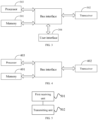
- FIG. 1 is a first schematic flowchart of a method for channel state information (CSI) reporting according to an embodiment of the present application. As shown in FIG. 1 , the method is performed by a terminal, and the method at least includes the following steps:
- the terminal receives the CSI report indication information transmitted from the base station, generates one or more CSI reports based on the CSI report indication information, and transmits the CSI reports to the network device, where the one or more CSI reports include multiple groups of resource indication information, and any two resources indicated inter at least two groups of resource indication information in the multiple groups of resource indication information may be used for uplink simultaneous transmission.
- the multiple groups of resource indication information refers to, for example, multiple groups of resource identifiers, multiple groups of resource indexes, etc.
- Each group of resource indication information indicates one group of resources or multiple resources, such as two downlink resources, two uplink resources, two SSB resources, two CSI-RS resources, etc.
- Each piece of resource indication information indicates one resource.
- the multiple groups of resource indication information may also be in a form of multiple resource indication information groups, and each resource indication information group indicates a group of resources or multiple resources, such as multiple resource identifier groups.
- each resource indication information group indicates a group of resources or multiple resources, such as multiple resource identifier groups.
- one or more CSI reports include multiple groups of resource indication information, each group of resource indication information indicates a group of resources or multiple resources, and each piece of resource indication information indicates one resource for explanation.
- any two resources indicated inter at least two groups of resource indication information in the multiple groups of resource indication information may be used for simultaneous uplink transmission.
- the terminal reports N groups of downlink resource identifiers in one or more CSI reports, and any two downlink resources inter at least two groups in the N groups may be used for simultaneous uplink transmission, where N is an integer greater than 1.
- the terminal reports N groups of SSB resource indexes in the CSI report, and any two SSB resources indicated inter at least two groups of SSB resource indexes in the N groups may be used for simultaneous uplink transmission.
- the terminal may determine a correspondence between a resource (SSB or CSI-RS) and an antenna panel by itself, and indicate the correspondence to the network device without exposing specific antenna panel information.
- a resource SSB or CSI-RS
- any two resources indicated inter at least two groups of resource indication information in the multiple groups of resource indication information are capable of being used for uplink simultaneous transmission refers to: any two resources indicated inter any two groups of resource indication information in the multiple groups of resource indication information are capable of being used for uplink simultaneous transmission.
- the network device may determine the resources capable of being used for uplink simultaneous transmission based on the multiple groups of resource indication information, and the terminal and the network device reach a consensus on which resources are capable of being used for uplink simultaneous transmission, which prevents the network devices from indicating resources that cannot be used simultaneously during uplink simultaneous transmissions.
- transmitting the one or more CSI reports to the network device based on the CSI report indication information, where the one or more CSI reports include the multiple groups of resource indication information includes: transmitting one CSI report to the network device based on the CSI report indication information, where the one CSI report includes multiple groups of resource indication information.
- transmitting the one or more CSI reports to the network device based on the CSI report indication information, where the one or more CSI reports include the multiple groups of resource indication information includes: at least two groups of resource indication information correspond to multiple CSI reports, transmitting the multiple CSI reports to the network device, where the multiple CSI reports include multiple groups of resource indication information, and different CSI reports include different groups of resource indication information.
- the terminal in case that the terminal performs CSI reporting, it may be one CSI reporting, in which multiple groups of beams or multiple groups of resources are reported, corresponding to one CSI report. At least two groups of resource indication information transmitted from the terminal to the network device correspond to the same CSI report. Furthermore, the multiple groups of resource indication information transmitted from the terminal to the network device correspond to the same CSI report.
- the terminal When the terminal is performing CSI reporting, it may also be multiple CSI reportings, in which one group of beams or one group of resources are reported in each CSI reporting, and each CSI reporting corresponds to one CSI report. At least two groups of resource indication information transmitted from the terminal to the network device may correspond to multiple CSI reports, and different groups of resource indication information correspond to different CSI reports. That is, beams in the two groups of beams included in the two CSI reports, or resources in the two groups of resources, may be used for uplink simultaneous transmission.
- the multiple groups of resource indication information transmitted from the terminal to the network device correspond to multiple CSI reports, and different groups of resource indication information correspond to different CSI reports.
- the method further includes:
- the terminal generates the CSI report based on assisted by the first indication information transmitted from the network device, and the first indication information is used to indicate one or more of the following.
- one group of resource indication information corresponds to one group of beams and/or corresponds to one group of resources (including SSB resources, CSI-RS resources, etc.). In an embodiment, all resources in one group of resources are different.
- the network device may indicate a corresponding number of resources/number of beams. For example, the network device may indicate one number of resources, which is applicable to all reported beam groups. The network device may also indicate a corresponding number of resources for each beam group.
- the first indication information may be indicated or configured in a CSI report configuration (CSI-ReportConfig), a CSI resource setting, a CSI report configuration, etc.
- the first indication information may be carried in the CSI report indication information, or may be independent from the CSI report indication information.
- the terminal when determining the CSI report, determines the information that needs to be reported based on and assisted by the indication information transmitted from the network device, such as multiple groups of resource indication information, the network device may determine the resources capable of being used for uplink simultaneous transmission based on the multiple groups of resource indication information, and the terminal and the network device reach a consensus on which resources are capable of being used for uplink simultaneous transmission, which prevents the network devices from indicating resources that cannot be used simultaneously during uplink simultaneous transmissions.
- the indication information transmitted from the network device such as multiple groups of resource indication information
- the network device may determine the resources capable of being used for uplink simultaneous transmission based on the multiple groups of resource indication information, and the terminal and the network device reach a consensus on which resources are capable of being used for uplink simultaneous transmission, which prevents the network devices from indicating resources that cannot be used simultaneously during uplink simultaneous transmissions.
- transmitting the one or more CSI reports to the network device includes: determining the multiple groups of resource indication information, and transmitting one or more CSI reports including the multiple groups of resource indication information to the network device.
- the terminal needs to first determine the multiple groups of resource indication information before transmitting the one or more CSI reports including the multiple groups of resource indication information to the network device.
- the terminal may determine the multiple groups of resource indication information by itself, or determine the multiple groups of resource indication information based on indication of the network device.
- the one or more CSI reports transmitted from the terminal to the network device further include second indication information, and the second indication information is used to indicate one or more of the following:
- the terminal transmits a CSI report to the network device, and the CSI report may also include one or more of the following.
- the second indication information may also be carried in the CSI report to assist the network device in determining the resources that may be used for uplink simultaneous transmission, and the terminal and the network device reach a consensus on which resources are capable of being used for uplink simultaneous transmission, which prevents the network devices from indicating resources that cannot be used simultaneously during uplink simultaneous transmissions.
- determining the multiple groups of resource indication information includes:
- the terminal may determine multiple groups of resource indication information based on the indication information transmitted from the network device, including: the terminal determines multiple groups of resource indication information based on the third indication information transmitted from the network device, and the third indication information is used to indicate one or more of the following.
- the terminal determines the multiple groups of resource indication information based on the third indication information transmitted from the network device, and the multiple groups of resource indication information are carried in the CSI report transmitted to the network device. Any two resources indicated inter at least two groups of resource indication information in the multiple groups of resource indication information may be used for uplink simultaneous transmission, the network device may determine the resources capable of being used for uplink simultaneous transmission based on the multiple groups of resource indication information, and the terminal and the network device reach a consensus on which resources are capable of being used for uplink simultaneous transmission, which prevents the network devices from indicating resources that cannot be used simultaneously during uplink simultaneous transmissions.
- the third indication information may be carried in the CSI report indication information, or may be independent from the CSI report indication information.
- determining the multiple groups of resource indication information includes:
- the terminal may determine the multiple groups of resource indication information based on the indication information transmitted from the network device, including: the terminal determines the multiple groups of resource indication information based on the fourth indication information transmitted from the network device, and the fourth indication information is used to indicate one or more of the following.
- the fourth indication information may be carried in the CSI report indication information, or may be independent from the CSI report indication information.
- the terminal determines the multiple groups of resource indication information based on the fourth indication information transmitted from the network device, and the multiple groups of resource indication information are carried in the CSI report transmitted to the network device. Any two resources indicated inter at least two groups of resource indication information in the multiple groups of resource indication information may be used for uplink simultaneous transmission, the network device may determine the resources capable of being used for uplink simultaneous transmission based on the multiple groups of resource indication information, and the terminal and the network device reach a consensus on which resources are capable of being used for uplink simultaneous transmission, which prevents the network devices from indicating resources that cannot be used simultaneously during uplink simultaneous transmissions.
- determining the multiple groups of resource indication information includes:
- CSI reporting associated setting information of the network device received by the terminal may be divided into different levels, namely, CSI report configuration, CSI resource setting, and CSI resource set.
- One report configuration corresponds to one or more resource settings, that is, one or more resource settings are configured in one report configuration.
- One type of resource setting corresponds to one or more resource sets, that is, one or more resource sets are configured in one resource setting.
- the terminal performs one CSI reporting, reports multiple groups of beams or multiple groups of resources, and transmits one CSI report
- the one CSI report corresponds to one report configuration
- resource settings corresponding to the multiple groups of beams or multiple groups of resources corresponding to the CSI report are the same or different
- resource sets corresponding to the multiple groups of beams or multiple groups of resources corresponding to the same resource setting are the same or different.
- each CSI reporting corresponds to one group of beams or one group of resources, and corresponds to one CSI report
- the multiple CSI reportings correspond to a same or different report configuration
- resource settings of all resources corresponding to the multiple CSI reportings corresponding to the same report configuration are the same or different
- resource sets corresponding to all resources corresponding to a same resource setting are the same or different.
- the terminal may determine the multiple groups of resource indication information based on setting information of different levels transmitted from the network device, all resources corresponding to one report configuration correspond to same uplink transmission related information; or one report configuration corresponds to one or more types of resource settings, and all resources corresponding to one type of resource setting correspond to same uplink transmission related information; or one report configuration corresponds to one or more resource sets, and all resources in one resource set correspond to same uplink transmission related information.
- the terminal when performing CSI reporting, may report based on the report configuration, resource setting or resource set configured by the network device. That is, the uplink transmission related information transmitted from the terminal for CSI reporting may be a reporting per CSI reporting, or per CSI resource setting, or per CSI resource set.
- the uplink transmission related information includes one or more of the following.
- the uplink transmission related information is used to indicate or characterize the information of the antenna panel.
- determining the multiple groups of resource indication information includes:
- the terminal may determine the multiple groups of resource indication information based on the indication information transmitted from the network device, including: the terminal determines the multiple groups of resource indication information based on the fifth indication information transmitted from the network device, and the fifth indication information is used to indicate one or more of the following.
- the fifth indication information may be carried in the CSI report indication information, or may be independent from the CSI report indication information.
- the association relationship between the report configurations may be that the network device indicates a report configuration pair, and the report configurations indicated in pair have an association relationship. The same applies to replacing the report configuration with the resource setting or the resource set.
- the association relationship between the report configurations may be that the network device indicates a parameter x with the same value.
- the parameter x included in multiple report configurations has the same value, it means that the multiple report configurations have an association relationship. The same applies to replacing the report configuration with the resource setting or the resource set.
- the association relationship between the report configurations may be that the network device indicates different uplink transmission related information, indicating that the resources/beams corresponding to the multiple report configurations may be used for uplink simultaneous transmission. The same applies to replacing the report configuration with the resource setting or the resource set.
- the terminal determines the multiple groups of resource indication information based on the fifth indication information transmitted from the network device, and the multiple groups of resource indication information are carried in the CSI report transmitted to the network device. Any two resources indicated inter at least two groups of resource indication information in the multiple groups of resource indication information may be used for uplink simultaneous transmission, the network device may determine the resources capable of being used for uplink simultaneous transmission based on the multiple groups of resource indication information, and the terminal and the network device reach a consensus on which resources are capable of being used for uplink simultaneous transmission, which prevents the network devices from indicating resources that cannot be used simultaneously during uplink simultaneous transmissions.
- the association relationship includes:
- the association relationship between report configurations, or the association relationship between resource settings, or the association relationship between resource sets may be whether they are capable of being used for uplink simultaneous transmission, and/or whether they correspond to the same uplink transmission related information.
- the network device indicates that the report configuration is capable of being used for uplink simultaneous transmission, it means that any two resources corresponding to and inter the report configurations may be used for uplink simultaneous transmission; in case that the network device indicates that the report configurations correspond to different uplink transmission related information, it means that any two resources corresponding to and inter the report configurations may be used for uplink simultaneous transmission.
- two resources or two report configurations or two resource settings or two resource sets corresponding to different uplink transmission related information are capable of being used for uplink simultaneous transmission.
- the uplink transmission related information corresponding to the two resources are different, it means that the two resources may be used for uplink simultaneous transmission.
- the uplink transmission related information corresponding to the two report configurations are different, it means that the two report configurations, and any two resources inter the two report configurations may be used for uplink simultaneous transmission.
- the uplink transmission related information corresponding to the two resource settings are different, it means that the two resource settings and any two resources inter the two resource settings may be used for uplink simultaneous transmission.
- the uplink transmission related information corresponding to the two resource sets are different, it means that the two resource sets and any two resources inter the two resource sets may be used for uplink simultaneous transmission.
- the two report configurations or the two types of resource settings or the two resource sets are capable of being used for uplink simultaneous transmission includes: any two resources respectively corresponding to the two report configurations or the two types of resource settings or the two resource sets are capable of being used for uplink simultaneous transmission.
- the two report configurations are capable of being used for uplink simultaneous transmission, and any two resources respectively corresponding to the two report configurations are capable of being used for uplink simultaneous transmission. The same applies to replacing the report configuration with the resource setting or the resource set.
- the two resources are capable of being used for uplink simultaneous transmission includes one or more of the following:
- the two resources are capable of being used for uplink simultaneous transmission, which may be one or more of the following.
- the first signal may be a physical uplink shared channel (PUSCH), a physical uplink control channel (PUCCH), an SRS, a physical random access channel (PRACH), etc.
- the spatial relation information may be a spatial relation filter, etc.
- Two uplink signals corresponding to the two resources are capable of simultaneous transmission. It is applicable to multiple TRPs in a multi-downlink control information (M-DCI) scenario.
- the two uplink signals may be the same or different, for example, both uplink signals are one of PUSCH, PUCCH, SRS, or PRACH, or one uplink signal is one of PUSCH, PUCCH, SRS, or PRACH, and the other uplink signal is another of PUSCH, PUCCH, SRS, or PRACH.
- Receive antennas corresponding to the two resources are different.
- uplink receive antennas corresponding to the two resources are different.
- downlink receive antennas corresponding to the two resources are different.
- the terminal when the terminal transmits the CSI report to the network device based on the CSI report indication information transmitted from the network device, multiple groups of resource indication information are carried in the CSI report, and any two resources indicated inter at least two groups of resource indication information in the multiple groups of resource indication information may be used for uplink simultaneous transmission.
- the network device may determine the resources capable of being used for uplink simultaneous transmission based on the multiple groups of resource indication information, and the terminal and the network device reach a consensus on which resources are capable of being used for uplink simultaneous transmission, which prevents the network devices from indicating resources that cannot be used simultaneously during uplink simultaneous transmissions.
- FIG. 2 is a second schematic flowchart of a method for CSI reporting according to an embodiment of the present application. As shown in FIG. 2 , the method is performed by a network device, such as a base station, etc. The method at least includes the following steps:
- the network device transmits the CSI report indication information to the terminal, and then receives the CSI report transmitted from the terminal.
- the CSI report transmitted from the terminal is triggered and generated after the terminal receives the CSI report indication information, which includes multiple groups of resource indication information. Any two resources indicated inter at least two groups of resource indication information in the multiple groups of resource indication information may be used for uplink simultaneous transmission.
- One group of resource indication information is used to indicate one group of resources or multiple resources.
- the network device determines which resources may be used for uplink simultaneous transmission based on the multiple groups of resource indication information included in the CSI report to avoid the uplink simultaneous transmission indicating resources that cannot be used simultaneously.
- the network device receives the CSI report carrying multiple groups of resource indication information transmitted from the terminal, and any two resources indicated inter at least two groups of resource indication information in the multiple groups of resource indication information may be used for uplink simultaneous transmission.
- the network device may determine the resources capable of being used for uplink simultaneous transmission based on the multiple groups of resource indication information, and the terminal and the network device reach a consensus on which resources are capable of being used for uplink simultaneous transmission, which prevents the network devices from indicating resources that cannot be used simultaneously during uplink simultaneous transmissions.
- the multiple groups of resource indication information are determined by the terminal.
- receiving the one or more CSI reports transmitted from the terminal based on the CSI report indication information, where the one or more CSI reports include the multiple groups of resource indication information includes: receiving one CSI report transmitted from the terminal based on the CSI report indication information, where the one CSI report includes multiple groups of resource indication information.
- receiving the one or more CSI reports transmitted from the terminal based on the CSI report indication information, where the one or more CSI reports include the multiple groups of resource indication information includes: receiving multiple CSI reports transmitted from the terminal based on the CSI report indication information, where the multiple CSI reports include multiple groups of resource indication information, and different CSI reports include different groups of resource indication information.
- the method further includes: transmitting first indication information to the terminal, where the first indication information is used to indicate one or more of the following:
- the one or more CSI reports further include second indication information, and the second indication information is used to indicate one or more of the following:
- the method further includes:
- the third indication information is used by the terminal to determine the CSI report.
- the third indication information is used by the terminal to determine multiple groups of resource indication information.
- the method further includes:
- the fourth indication information is used by the terminal to determine the CSI report.
- the fourth indication information is used by the terminal to determine multiple groups of resource indication information.
- the method further includes:
- the report configuration is used by the terminal to determine the CSI report.
- the report configuration is used by the terminal to determine multiple groups of resource indication information.
- the uplink transmission related information includes one or more of the following:
- the method further includes: transmitting fifth indication information to the terminal, where the fifth indication information is used to indicate one or more of the following:
- the fifth indication information is used by the terminal to determine the CSI report.
- the fifth indication information is used by the terminal to determine multiple groups of resource indication information.
- the association relationship includes:
- two resources or two report configurations or two resource settings or two resource sets corresponding to different uplink transmission related information are capable of being used for uplink simultaneous transmission.
- the two report configurations or the two types of resource settings or the two resource sets are capable of being used for uplink simultaneous transmission includes: any two resources respectively corresponding to the two report configurations or the two types of resource settings or the two resource sets are capable of being used for uplink simultaneous transmission.
- the two resources are capable of being used for uplink simultaneous transmission includes one or more of the following:
- resource indication information as a downlink resource identifier.
- Example one multiple groups of beams are reported in one CSI reporting.
- Step 1 a base station indicates a UE to perform CSI reporting, and the CSI reporting corresponds to one CSI report configuration.
- Step 2 in response to the indication of the base station, the UE reports N groups of downlink (DL) resource identifiers (i.e., N groups of beam reporting), and uplink (UL) beams corresponding to any two DL resource identifiers inter the N groups may be used for uplink transmission at the same time.
- N is an integer greater than or equal to 2.
- Example one among the N groups corresponding to the one CSI reporting, the UL beams corresponding to any two DL resource identifiers inter at least two groups may be used for uplink simultaneous transmission.
- all CRIs and SSBRIs in one group are different.
- the base station also indicates a number of reference signal resources corresponding to each beam group, which may be indicated in step 1 or independently from step 1.
- the base station indicates a number of reference signal resource applicable to all reported beam groups. In an embodiment, the base station indicates the number of reference signal resource for each beam group respectively.
- the number of groups (N) reported by the UE is indicated by the base station. For example, it is configured in a CSI report configuration, or in a CSI resource setting, or in a CSI resource set.
- the number of groups (N) reported by the UE is pre-determined. For example, it is agreed to be 2 in a protocol.
- the number of groups (N) reported by the UE is reported by the UE to the base station.
- step 1 in an embodiment, in step 1, the base station also indicates to the UE that the CSI reporting is a CSI reporting for uplink transmission (which may be indicated by the same signaling parameter as the one used to indicate the UE to perform CSI reporting or by a different signaling parameter).
- a reporting of the UE ensures that UL beams corresponding to any two DL resource identifiers inter groups may be used for uplink transmission at the same time.
- the UE also transmits information indicating whether the CSI reporting may be used for uplink simultaneous transmission. In case that the information indicates that the CSI reporting is used for uplink simultaneous transmission, a reporting of the UE ensures that UL beams corresponding to any two DL resource identifiers inter the N groups may be used for uplink transmission at the same time. In an embodiment, the UE also transmits information indicating whether the N groups may be used for uplink simultaneous transmission. In case that the information indicates that the N groups are used for uplink simultaneous transmission, a reporting of the UE ensures that UL beams corresponding to any two DL resource identifiers inter the N groups may be used for uplink transmission at the same time.
- the above information may be transmitted in step 2 or independently from step 2.
- the UE reports uplink transmission related information corresponding to each group.
- UL beams corresponding to any two DL resources inter two groups of reportings corresponding to different uplink transmission related information may be used for uplink transmission at the same time.
- the base station also indicates to the UE that the CSI reporting is a CSI reporting for uplink transmission. In response to the indication, the UE reports the uplink transmission related information corresponding to each group.
- the uplink transmission related information corresponding to the group may be reported in step 2 or independently from step 2.
- different groups correspond to different CSI resource sets.
- the UE also reports uplink transmission related information corresponding to each CSI resource set corresponding to the CSI reporting. UL beams corresponding to any two DL resources from different CSI resource sets may be used for uplink transmission at the same time.
- the base station also indicates to the UE that the CSI reporting is a CSI reporting for uplink transmission. In response to the indication, the UE reports the uplink transmission related information corresponding to each CSI resource set.
- the uplink transmission related information corresponding to a group may be reported in step 2 or independently from step 2.
- different groups correspond to different resource settings.
- the UE also reports uplink transmission related information corresponding to various resource settings.
- UL beams corresponding to any two DL resources corresponding to different resource settings may be used for uplink transmission at the same time.
- the base station also indicates to the UE that the CSI reporting is a CSI reporting for uplink transmission. In response to the indication, the UE reports the uplink transmission related information corresponding to each resource setting.
- the uplink transmission related information corresponding to a group may be reported in step 2 or independently from step 2.
- all groups correspond to a same CSI resource setting of the report configuration. That is, DL resource identifiers in all groups indicate the DL RS (CSI-RS or SSB) in a same CSI resource setting corresponding to the report configuration.
- DL resource identifiers in all groups indicate the DL RS (CSI-RS or SSB) in a same CSI resource setting corresponding to the report configuration.
- different groups correspond to different CSI resources of the report configuration. That is, DL resource identifiers in two groups should respectively indicate DL RSs (CSI-RSs or SSBs) in two CSI resource sets.
- CSI-RSs or SSBs DL RSs
- One way is that the UE reports (that is, beam reporting) the DL resource identifiers for different CSI resource sets.
- different groups correspond to different resource settings of the report configuration.
- One way is that the UE reports the DL resource identifiers (ie, beam reporting) for different resource settings respectively.
- Example two one group of beams are reported in one CSI reporting, beams in multiple CSI reportings may be used for uplink simultaneous transmission, and a UE determines which CSI reportings may be transmitted simultaneously.
- Step 1 a base station indicates the UE to perform CSI reporting, and one CSI reporting corresponds to one CSI reporting setting.
- Step 2 in response to the indication of the base station, for one CSI reporting, the UE reports a group of DL resource identifiers and reports uplink transmission related information corresponding to the CSI reporting.
- UL beams corresponding to any two DL resources inter two groups of reportings corresponding to different uplink transmission related information may be used for uplink transmission at the same time.
- Example 1 taking uplink transmission information as a capability index value as an example, it is assumed that a capability index value reported by CSI reporting 1 is Index 1 and a capability index value reported by CSI reporting 2 is Index 2, then a UL beam corresponding to any DL resource reported by CSI reporting 1 and a UL beam corresponding to any DL resource reported by CSI reporting 2 may be used for uplink transmission at the same time.
- Example 2 it is assumed that a capability index value reported by CSI reporting 1 is Index 1 and a capability index value reported by CSI reporting 2 is Index 1, then a UL beam corresponding to any DL resource reported by CSI reporting 1 and a UL beam corresponding to any DL resource reported by CSI reporting 2 are considered not to be used for uplink transmission at the same time.
- CSI reporting 1 indicates that its corresponding CSI report configuration corresponds to identifier 1
- CSI reporting 2 indicates that its corresponding CSI report configuration corresponds to identifier 2.
- UL beam corresponding to CSI reporting may be indicated by CRI and/or SSB in CSI reporting.
- the base station also indicates a number of reference signal resources corresponding to each beam group, which may be indicated in step 1 or independently from step 1. In an embodiment, the base station indicates a number of reference signal resources applicable to all reported beam groups. In an embodiment, the base station indicates a number of reference signal resources for each beam group.
- step 1 the base station indicates the UE to perform CSI reporting for uplink transmission.
- the UE reports uplink transmission information corresponding to the CSI reporting.
- UL beams corresponding to any two DL resources corresponding to different uplink transmission related information may be used for uplink transmission at the same time.
- uplink transmission related information corresponding to a CSI reporting is reported per CSI reporting.
- Uplink transmission related information may be reported for one or more CSI reports, and same or different uplink transmission related information may be reported in two CSI reports.
- Uplink transmission related information corresponding to multiple CSI reports may be reported independently or jointly.
- the uplink transmission related information corresponding to multiple CSI reports may be reported in one signaling, or in multiple signalings.
- the uplink transmission related information corresponding to multiple CSI reports may be reported in one resource, or in multiple resources (for example, reported through two PUSCHs respectively).
- all reference signal resources in one CSI report correspond to same uplink transmission related information.
- all reference signal resources reporting, whose identifiers and/or channel qualities are reported, in one CSI report correspond to same uplink transmission related information.
- uplink transmission related information corresponding to a CSI reporting is reported per CSI resource set.
- Uplink transmission related information may be reported for one or more CSI resource sets, and two CSI resource sets may report same or different uplink transmission related information.
- Uplink transmission related information corresponding to multiple CSI resource sets may be reported independently or jointly.
- the uplink transmission related information corresponding to multiple CSI resource sets may be reported in one signaling, or in multiple signalings.
- the uplink transmission related information corresponding to multiple CSI resource sets may be reported in one resource, or reported in multiple resources (for example, reported through two PUSCHs respectively).
- all reference signal resources in a CSI resource set correspond to same uplink transmission related information.
- all reference signal resources in a CSI resource set, whose identifiers and/or channel qualities are reported correspond to same uplink transmission related information.
- uplink transmission related information corresponding to a CSI reporting is reported per resource setting, that is, it is indicated respectively for various types of resource settings.
- Uplink transmission related information may be reported for one or more types of resource settings, and two types of resource settings may report same or different uplink transmission related information.
- Uplink transmission related information corresponding to multiple types of resource settings may be reported independently or jointly.
- the uplink transmission related information corresponding to multiple types of resource settings may be reported in one signaling, or reported in multiple signalings.
- the uplink transmission related information corresponding to multiple types of resource settings may be reported in one resource, or reported in multiple resources (for example, reported through two PUSCHs respectively).
- all reference signal resources in one resource setting correspond to same uplink transmission related information.
- all reference signal resources, whose identifiers and/or channel qualities are reported, in one type of resource setting correspond to same uplink transmission related information.
- the reporting may be in step 2 or independent from step 2.
- Example three one group of beams are reported in one CSI reporting, and beams in multiple CSI reportings may be used for uplink simultaneous transmission, and a base station dominates an antenna panel association relationship.
- Step 1 the base station indicates a UE to perform CSI reporting, and one CSI reporting corresponds to one CSI report configuration.
- the base station indicates uplink transmission related information corresponding to the CSI reporting, or uplink transmission related information corresponding to the CSI reporting is included in configuration information of the CSI reporting.
- Step 2 the UE reports DL resource identifiers based on the indication of the base station.
- UL beams corresponding to any two DL resources inter two groups of reportings corresponding to different uplink transmission related information may be used for uplink transmission at the same time, and/or UL beams corresponding to any two DL resources inter CSI reports corresponding to different uplink transmission related information may be used for uplink transmission at the same time.
- Example four one group of beams are reported in one CSI reporting, and beams in multiple CSI reportings may be used for uplink simultaneous transmission, and a base station dominates an antenna panel association relationship.
- Step 1 the base station indicates a UE to perform CSI reporting, and one CSI reporting corresponds to one CSI report configuration. Before step 1 or in step 1, the base station configures a association relationship between CSI reports.
- Step 2 the UE reports DL resource identifiers based on the indication of the base station.
- UL beams corresponding to any two reported DL resources inter two CSI reports with an association relationship may be used for uplink transmission at the same time, and/or UL beams corresponding to any two DL resources inter two CSI reports with an association relationship may be used for uplink transmission at the same time.
- the base station transmits a CSI report configuration to the terminal, and indicates the UE to perform a CSI reporting corresponding to the CSI report configuration.
- the CSI report configuration may be transmitted to the terminal before or at the same time as indicating the UE to perform CSI reporting corresponding to the CSI report configuration.
- the CSI report configuration may be transmitted through a same signaling or different signalings.
- the CSI report configuration in case that a CSI reporting is a periodic reporting, the CSI report configuration also indicates the UE to perform CSI reporting corresponding to the CSI report configuration.
- the UE reports DL resource identifiers based on the indication of the base station.
- UL beams corresponding to any two reported DL resources inter two CSI reports with an association relationship may be used for uplink transmission at the same time, and/or UL beams corresponding to any two DL resources inter two CSI reports with an association relationship may be used for uplink transmission at the same time.
- whether two CSI reports have an association relationship is indicated by the base station.
- the base station indicates some CSI report pairs (for example, some identifier pairs for CSI report configuration are indicated), and reports corresponding to CSI report configurations indicated in pairs are CSI reports with an association relationship.
- the base station indicates some CSI report groups (for example, some identifier groups for CSI report configuration are indicated), and reports corresponding to CSI report configurations in a same group are CSI reports with an association relationship
- two CSI reports have an association relationship refers to that they are indicated with a parameter x with a same value.
- the parameter x (x is only an example, and the parameter may also be represented as an antenna panel identifier or an association relationship table (RelationInfo), etc.) included in their corresponding CSI report configurations have the same value.
- FIG. 3 is a schematic structural diagram of a terminal according to an embodiment of the present application.
- the terminal includes a memory 301, a transceiver 302 and a processor 303, where the memory 301 is used for storing a computer program, and the transceiver 302 is used for receiving and transmitting data under control of the processor 303.
- the transceiver 302 is used for receiving and transmitting data under control of the processor 303.
- a bus architecture may include any number of interconnected buses and bridges, which are linked together through various circuits of one or more processors represented by the processor 303 and one or more memories represented by the memory 301.
- the bus architecture may also link together various other circuits, such as peripherals, voltage regulators, and power management circuits, etc., which are well known in the art, and therefore are not further described in the present application.
- the bus interface provides an interface.
- the transceiver 302 may include multiple elements, i.e., including a transmitter and a receiver, units for providing communication with various other devices over transmission media including wireless channels, wired channels, fiber optic cables, and the like.
- a user interface 304 may be an interface capable of externally or internally connecting the required equipment, and the connected equipment includes, but not limited to, a keypad, a display, a speaker, a microphone, a joystick, and the like.
- the processor 303 is responsible for managing the bus architecture and general processing, and the memory 301 may store data used by the processor 303 when performing operations.
- the processor 303 may be a central processing unit (CPU), an application specific integrated circuit (ASIC), a field-programmable gate array (FPGA), or a complex programmable logic device (CPLD), the processor may also use a multi-core architecture.
- CPU central processing unit
- ASIC application specific integrated circuit
- FPGA field-programmable gate array
- CPLD complex programmable logic device
- the processor calls the computer program stored in the memory to execute any of the methods provided by the embodiments of the present application in accordance with the obtained executable instructions.
- the processor and the memory may be physically arranged separately.
- the processor 303 is used to read the computer program in the memory 301 and perform the following operations:
- transmitting the one or more CSI reports to the network device includes: determining the multiple groups of resource indication information, and transmitting one or more CSI reports including the multiple groups of resource indication information to the network device.
- transmitting the one or more CSI reports to the network device based on the CSI report indication information, where the one or more CSI reports include the multiple groups of resource indication information includes: at least two groups of resource indication information correspond to multiple CSI reports, transmitting one CSI report to the network device based on the CSI report indication information, where the one CSI report includes multiple groups of resource indication information.
- transmitting the one or more CSI reports to the network device based on the CSI report indication information, where the one or more CSI reports include the multiple groups of resource indication information includes: transmitting multiple CSI reports to the network device based on the CSI report indication information, where the multiple CSI reports include multiple groups of resource indication information, and different CSI reports include different groups of resource indication information.
- the processor 303 is used to read the computer program in the memory 301 and further perform the following operations:
- the one or more CSI reports further include second indication information, and the second indication information is used to indicate one or more of the following:
- determining the multiple groups of resource indication information includes:
- determining the multiple groups of resource indication information includes:
- determining the multiple groups of resource indication information includes:
- the uplink transmission related information includes one or more of the following:
- determining the multiple groups of resource indication information includes:
- the association relationship includes:
- two resources or two report configurations or two resource settings or two resource sets corresponding to different uplink transmission related information are capable of being used for uplink simultaneous transmission.
- the two report configurations or the two types of resource settings or the two resource sets are capable of being used for uplink simultaneous transmission includes: any two resources respectively corresponding to the two report configurations or the two types of resource settings or the two resource sets are capable of being used for uplink simultaneous transmission.
- the two resources are capable of being used for uplink simultaneous transmission includes one or more of the following:
- the above terminal provided by the embodiments of the present application may implement all the method steps performed by the terminal in the above method embodiments, and may achieve the same effect.
- the same parts and beneficial effects as the same method embodiments are not repeated in the present application.
- FIG. 4 is a schematic structural diagram of a network device according to an embodiment of the present application.
- the network device includes a memory 401, a transceiver 402 and a processor 403, where the memory 401 is used for storing a computer program, and the transceiver 402 is used for receiving and transmitting data under control of the processor 403.
- the transceiver 402 is used for receiving and transmitting data under control of the processor 403.
- a bus architecture may include any number of interconnected buses and bridges, which are linked together through various circuits of one or more processors represented by the processor 403 and one or more memories represented by the memory 401.
- the bus architecture may also link together various other circuits, such as peripherals, voltage regulators, and power management circuits, etc., which are well known in the art, and therefore are not further described in the present application.
- the bus interface provides an interface.
- the transceiver 402 may include multiple elements, i.e., including a transmitter and a receiver, units for providing communication with various other devices over transmission media including wireless channels, wired channels, fiber optic cables, and the like.
- the processor 403 is responsible for managing the bus architecture and general processing, and the memory 401 may store data used by the processor 403 when performing operations.
- the processor 403 may be a central processing unit (CPU), an application specific integrated circuit (ASIC), a field-programmable gate array (FPGA), or a complex programmable logic device (CPLD), the processor may also use a multi-core architecture.
- CPU central processing unit
- ASIC application specific integrated circuit
- FPGA field-programmable gate array
- CPLD complex programmable logic device
- the processor 403 is used to read the computer program in the memory 401 and perform the following operations:
- the multiple groups of resource indication information are determined by the terminal.
- receiving the one or more CSI reports transmitted from the terminal based on the CSI report indication information, where the one or more CSI reports include the multiple groups of resource indication information includes: receiving one CSI report transmitted from the terminal based on the CSI report indication information, where the one CSI report includes multiple groups of resource indication information.
- receiving the one or more CSI reports transmitted from the terminal based on the CSI report indication information, where the one or more CSI reports include the multiple groups of resource indication information includes: receiving multiple CSI reports transmitted from the terminal based on the CSI report indication information, where the multiple CSI reports include multiple groups of resource indication information, and different CSI reports include different groups of resource indication information.
- the processor 403 is used to read the computer program in the memory 401 and further perform the following operations: transmitting first indication information to the terminal, where the first indication information is used to indicate one or more of the following:
- the one or more CSI reports further include second indication information, and the second indication information is used to indicate one or more of the following:
- the processor 403 is used to read the computer program in the memory 401 and further perform the following operations:
- the processor 403 is used to read the computer program in the memory 401 and further perform the following operations :
- the processor 403 is used to read the computer program in the memory 401 and further perform the following operations :
- the uplink transmission related information includes one or more of the following:
- the processor 403 is used to read the computer program in the memory 401 and further perform the following operations : transmitting fifth indication information to the terminal, where the fifth indication information is used to indicate one or more of the following:
- the association relationship includes:
- two resources or two report configurations or two resource settings or two resource sets corresponding to different uplink transmission related information are capable of being used for uplink simultaneous transmission.
- the two report configurations or the two types of resource settings or the two resource sets are capable of being used for uplink simultaneous transmission includes: any two resources respectively corresponding to the two report configurations or the two types of resource settings or the two resource sets are capable of being used for uplink simultaneous transmission.
- the two resources are capable of being used for uplink simultaneous transmission includes one or more of the following:
- the above network device provided by the embodiments of the present application may implement all the method steps performed by the network device in the above method embodiments, and may achieve the same effect.
- the same parts and beneficial effects as the same method embodiments are not repeated in the present application.
- FIG. 5 is a first schematic structural diagram of an apparatus for CSI reporting according to an embodiment of the present application. As shown in FIG. 5 , the apparatus includes:
- the transmitting unit 502 is used for: determining the multiple groups of resource indication information, and transmitting one or more CSI reports including the multiple groups of resource indication information to the network device.
- the transmitting unit 502 is used for: transmitting one CSI report to the network device based on the CSI report indication information, where the one CSI report includes multiple groups of resource indication information.
- the transmitting unit 502 is used for: at least two groups of resource indication information correspond to multiple CSI reports, transmitting the multiple CSI reports to the network device, where the multiple CSI reports include multiple groups of resource indication information, and different CSI reports include different groups of resource indication information.
- the apparatus further includes:
- the one or more CSI reports further include second indication information, and the second indication information is used to indicate one or more of the following:
- the determining unit is used for:
- the determining unit is used for:
- the determining unit is used for:
- the uplink transmission related information includes one or more of the following:
- the determining unit is used for:
- the association relationship includes:
- two resources or two report configurations or two resource settings or two resource sets corresponding to different uplink transmission related information are capable of being used for uplink simultaneous transmission.
- the two report configurations or the two types of resource settings or the two resource sets are capable of being used for uplink simultaneous transmission includes: any two resources respectively corresponding to the two report configurations or the two types of resource settings or the two resource sets are capable of being used for uplink simultaneous transmission.
- the two resources are capable of being used for uplink simultaneous transmission includes one or more of the following:
- FIG. 6 is a second schematic structural diagram of an apparatus for CSI reporting according to an embodiment of the present application. As shown in FIG. 6 , the apparatus includes:
- the multiple groups of resource indication information are determined by the terminal.
- receiving the one or more CSI reports transmitted from the terminal based on the CSI report indication information, where the one or more CSI reports include the multiple groups of resource indication information includes: receiving one CSI report transmitted from the terminal based on the CSI report indication information, where the one CSI report includes multiple groups of resource indication information.
- receiving the one or more CSI reports transmitted from the terminal based on the CSI report indication information, where the one or more CSI reports include the multiple groups of resource indication information includes: receiving multiple CSI reports transmitted from the terminal based on the CSI report indication information, where the multiple CSI reports include multiple groups of resource indication information, the multiple CSI reports include multiple groups of resource indication information, and different CSI reports include different groups of resource indication information.
- the apparatus further includes: a first transmitting unit, used for transmitting first indication information to the terminal, where the first indication information is used to indicate one or more of the following:
- the one or more CSI reports further include second indication information, and the second indication information is used to indicate one or more of the following:
- the apparatus further includes:
- the apparatus further includes:
- the apparatus further includes:
- the uplink transmission related information includes one or more of the following:
- the apparatus further includes:
- the association relationship includes:
- two resources or two report configurations or two resource settings or two resource sets corresponding to different uplink transmission related information are capable of being used for uplink simultaneous transmission.
- the two report configurations or the two types of resource settings or the two resource sets are capable of being used for uplink simultaneous transmission includes: any two resources respectively corresponding to the two report configurations or the two types of resource settings or the two resource sets are capable of being used for uplink simultaneous transmission.
- the two resources are capable of being used for uplink simultaneous transmission includes one or more of the following:
- the division of units in the embodiments of the present application is schematic, and is only a logical function division, and there may be other division manners in actual implementation.
- the functional units in the various embodiments of the present application may be integrated into one processing unit, or each unit may exist alone physically, or two or more units may be integrated into one unit.
- the above-mentioned integrated unit may be implemented in the form of hardware or software functional unit.
- the integrated unit may be stored in a processor readable storage medium.
- the solutions of the present application in essence or a part of the solutions that contributes to the prior art, or all or part of the solutions, may be embodied in the form of a software product, which is stored in a storage medium, including several instructions to cause a computer device (which may be a personal computer, server, or network device, etc.) or a processor to perform all or part of the steps of the methods described in the respective embodiments of the present application.
- the storage medium described above includes various media that may store program codes such as a flash disk, a mobile hard disk, a read-only memory (ROM), a random access memory (RAM), a magnetic disk, or a compact disk.
- An embodiment of the present application further provides a processor-readable storage medium storing a computer program, where the computer program is used to cause a processor to perform the method for CSI reporting provided by the above embodiments, including:
- the processor-readable storage medium may be any available medium or data storage device that may be accessed by a processor, including but not limited to, a magnetic storage (e.g., a floppy disk, a hard disk, a magnetic tape, a magneto-optical disk (MO), etc.), an optical memory (such as CD, DVD, BD, HVD, etc.), and a semiconductor memory (such as ROM, EPROM, EEPROM, a non-volatile memory (NAND FLASH), a solid-state drive (SSD)), etc.
- a magnetic storage e.g., a floppy disk, a hard disk, a magnetic tape, a magneto-optical disk (MO), etc.
- an optical memory such as CD, DVD, BD, HVD, etc.
- semiconductor memory such as ROM, EPROM, EEPROM, a non-volatile memory (NAND FLASH), a solid-state drive (SSD)
- embodiments of the present application may be provided as a method, system, or computer program product. Accordingly, the present application may take the form of an entirely hardware embodiment, an entirely software embodiment, or an embodiment combining software and hardware aspects. Furthermore, the present application may take the form of a computer program product embodied on one or more computer-usable storage media having computer-usable program code embodied therein, including but not limited to disk storage, optical storage, and the like.
- processor-executable instructions may also be stored in a processor-readable memory capable of directing a computer or other programmable data processing apparatus to operate in a particular manner, and the instructions stored in the processor-readable memory may result in a manufacture including instruction means, the instruction means may perform the functions specified in one or more flows of the flowchart and/or one or more blocks of the block diagram.
- processor-executable instructions may also be loaded onto a computer or other programmable data processing device to cause a series of operational steps to be performed on the computer or other programmable device to produce a computer-implemented process and instructions performed on the computer or other programmable devices provide steps for performing the functions specified in one or more flows of the flowchart and/or one or more blocks of the block diagram.
Landscapes
- Engineering & Computer Science (AREA)
- Signal Processing (AREA)
- Computer Networks & Wireless Communication (AREA)
- Mobile Radio Communication Systems (AREA)
Applications Claiming Priority (2)
| Application Number | Priority Date | Filing Date | Title |
|---|---|---|---|
| CN202210970544.5A CN117640035A (zh) | 2022-08-12 | 2022-08-12 | Csi报告方法、终端、网络设备、装置及存储介质 |
| PCT/CN2023/112240 WO2024032719A1 (zh) | 2022-08-12 | 2023-08-10 | Csi报告方法、终端、网络设备、装置及存储介质 |
Publications (2)
| Publication Number | Publication Date |
|---|---|
| EP4572207A1 true EP4572207A1 (de) | 2025-06-18 |
| EP4572207A4 EP4572207A4 (de) | 2025-12-17 |
Family
ID=89850992
Family Applications (1)
| Application Number | Title | Priority Date | Filing Date |
|---|---|---|---|
| EP23851940.9A Pending EP4572207A4 (de) | 2022-08-12 | 2023-08-10 | Csi-meldeverfahren, endgerät, netzwerkvorrichtung, vorrichtung und speichermedium |
Country Status (3)
| Country | Link |
|---|---|
| EP (1) | EP4572207A4 (de) |
| CN (1) | CN117640035A (de) |
| WO (1) | WO2024032719A1 (de) |
Family Cites Families (4)
| Publication number | Priority date | Publication date | Assignee | Title |
|---|---|---|---|---|
| WO2021166244A1 (ja) * | 2020-02-21 | 2021-08-26 | 株式会社Nttドコモ | 端末、無線通信方法及び基地局 |
| CN115211189A (zh) * | 2020-03-10 | 2022-10-18 | Oppo广东移动通信有限公司 | 一种确定上行传输参数的方法及终端设备 |
| CN113938171B (zh) * | 2020-07-14 | 2023-09-01 | 大唐移动通信设备有限公司 | Csi反馈方法、装置、电子设备及存储介质 |
| EP4193470A1 (de) * | 2020-08-05 | 2023-06-14 | InterDigital Patent Holdings, Inc. | Verfahren und verfahren für simultane übertragungen und empfang |
-
2022
- 2022-08-12 CN CN202210970544.5A patent/CN117640035A/zh active Pending
-
2023
- 2023-08-10 WO PCT/CN2023/112240 patent/WO2024032719A1/zh not_active Ceased
- 2023-08-10 EP EP23851940.9A patent/EP4572207A4/de active Pending
Also Published As
| Publication number | Publication date |
|---|---|
| WO2024032719A1 (zh) | 2024-02-15 |
| CN117640035A (zh) | 2024-03-01 |
| EP4572207A4 (de) | 2025-12-17 |
Similar Documents
| Publication | Publication Date | Title |
|---|---|---|
| US12538301B2 (en) | Communication method, user equipment, and network device | |
| CN114071748B (zh) | 信号传输方法、终端和网络设备 | |
| US20260082345A1 (en) | Ta transmission method and device | |
| US20240244451A1 (en) | Information processing method, information processing apparatus, terminal and network device | |
| CN115833896B (zh) | 波束指示方法、波束确定方法、装置、网络设备及终端 | |
| CN115334601B (zh) | 一种小区间测量上报方法、设备、装置及存储介质 | |
| EP4572206A1 (de) | Dmrs-portbestimmungsverfahren und -vorrichtung, vorrichtung und speichermedium | |
| CN115884406A (zh) | 一种波束生效时间确定方法、装置、终端和网络设备 | |
| EP4518493A1 (de) | Ressourcenauswahlverfahren, -vorrichtung und -vorrichtung sowie speichermedium | |
| US20250261265A1 (en) | Signal transmission method and device, ue, and network device | |
| AU2021418673B2 (en) | Beam indication method and apparatus, and storage medium | |
| EP4572207A1 (de) | Csi-meldeverfahren, endgerät, netzwerkvorrichtung, vorrichtung und speichermedium | |
| CN116208972B (zh) | 信号处理方法、装置、设备以及存储介质 | |
| US20240187996A1 (en) | Uplink channel power control method, apparatus, network device and terminal | |
| CN116095803B (zh) | Srs传输功率确定方法、设备、装置及存储介质 | |
| EP4572210A1 (de) | Csi-meldeverfahren und endgerätevorrichtung, netzwerkvorrichtung und speichermedium | |
| EP4645996A1 (de) | Strahlanzeigeverfahren, -vorrichtung und -vorrichtung | |
| EP4598199A1 (de) | Informationsbestimmungsverfahren, vorrichtung, endgerät und netzwerkvorrichtung | |
| EP4572208A1 (de) | Dmrs-portbestimmungsverfahren und -vorrichtung und speichermedium | |
| EP4668645A1 (de) | Signalübertragungsverfahren und -vorrichtung sowie speichermedium | |
| EP4597897A1 (de) | Verfahren und vorrichtung zur kohärenten gemeinsamen übertragung | |
| US20250063565A1 (en) | Pusch transmission method and apparatus and storage medium | |
| EP4668644A1 (de) | Srs-übertragungsverfahren, -vorrichtung und -vorrichtung sowie speichermedium | |
| EP4615100A1 (de) | Verfahren und vorrichtung zur bestimmung einer übertragungskonfiguration und speichermedium | |
| US20250150227A1 (en) | Information transmission method and apparatus, and storage medium |
Legal Events
| Date | Code | Title | Description |
|---|---|---|---|
| STAA | Information on the status of an ep patent application or granted ep patent |
Free format text: STATUS: THE INTERNATIONAL PUBLICATION HAS BEEN MADE |
|
| PUAI | Public reference made under article 153(3) epc to a published international application that has entered the european phase |
Free format text: ORIGINAL CODE: 0009012 |
|
| STAA | Information on the status of an ep patent application or granted ep patent |
Free format text: STATUS: REQUEST FOR EXAMINATION WAS MADE |
|
| 17P | Request for examination filed |
Effective date: 20250307 |
|
| AK | Designated contracting states |
Kind code of ref document: A1 Designated state(s): AL AT BE BG CH CY CZ DE DK EE ES FI FR GB GR HR HU IE IS IT LI LT LU LV MC ME MK MT NL NO PL PT RO RS SE SI SK SM TR |
|
| DAV | Request for validation of the european patent (deleted) | ||
| DAX | Request for extension of the european patent (deleted) | ||
| A4 | Supplementary search report drawn up and despatched |
Effective date: 20251113 |
|
| RIC1 | Information provided on ipc code assigned before grant |
Ipc: H04L 5/00 20060101AFI20251107BHEP Ipc: H04B 7/08 20060101ALI20251107BHEP Ipc: H04B 7/06 20060101ALI20251107BHEP |