EP4572247A1 - Dmrs-informationsanzeigeverfahren und -vorrichtung sowie vorrichtung und speichermedium - Google Patents
Dmrs-informationsanzeigeverfahren und -vorrichtung sowie vorrichtung und speichermedium Download PDFInfo
- Publication number
- EP4572247A1 EP4572247A1 EP22954221.2A EP22954221A EP4572247A1 EP 4572247 A1 EP4572247 A1 EP 4572247A1 EP 22954221 A EP22954221 A EP 22954221A EP 4572247 A1 EP4572247 A1 EP 4572247A1
- Authority
- EP
- European Patent Office
- Prior art keywords
- dmrs
- terminal
- mapping type
- indication information
- dmrs mapping
- Prior art date
- Legal status (The legal status is an assumption and is not a legal conclusion. Google has not performed a legal analysis and makes no representation as to the accuracy of the status listed.)
- Pending
Links
Images


Classifications
-
- H—ELECTRICITY
- H04—ELECTRIC COMMUNICATION TECHNIQUE
- H04L—TRANSMISSION OF DIGITAL INFORMATION, e.g. TELEGRAPHIC COMMUNICATION
- H04L5/00—Arrangements affording multiple use of the transmission path
- H04L5/003—Arrangements for allocating sub-channels of the transmission path
- H04L5/0048—Allocation of pilot signals, i.e. of signals known to the receiver
- H04L5/0051—Allocation of pilot signals, i.e. of signals known to the receiver of dedicated pilots, i.e. pilots destined for a single user or terminal
-
- H—ELECTRICITY
- H04—ELECTRIC COMMUNICATION TECHNIQUE
- H04L—TRANSMISSION OF DIGITAL INFORMATION, e.g. TELEGRAPHIC COMMUNICATION
- H04L5/00—Arrangements affording multiple use of the transmission path
- H04L5/0091—Signalling for the administration of the divided path, e.g. signalling of configuration information
- H04L5/0094—Indication of how sub-channels of the path are allocated
-
- H—ELECTRICITY
- H04—ELECTRIC COMMUNICATION TECHNIQUE
- H04L—TRANSMISSION OF DIGITAL INFORMATION, e.g. TELEGRAPHIC COMMUNICATION
- H04L5/00—Arrangements affording multiple use of the transmission path
- H04L5/0001—Arrangements for dividing the transmission path
- H04L5/0014—Three-dimensional division
- H04L5/0023—Time-frequency-space
-
- H—ELECTRICITY
- H04—ELECTRIC COMMUNICATION TECHNIQUE
- H04L—TRANSMISSION OF DIGITAL INFORMATION, e.g. TELEGRAPHIC COMMUNICATION
- H04L5/00—Arrangements affording multiple use of the transmission path
- H04L5/003—Arrangements for allocating sub-channels of the transmission path
- H04L5/0053—Allocation of signalling, i.e. of overhead other than pilot signals
Definitions
- the disclosure relates to the field of mobile communication technologies, and in particular to a method and an apparatus for indicating demodulation reference signal (DMRS) information, a device and a storage medium.
- DMRS demodulation reference signal
- an enhanced DMRS mapping type is proposed.
- a terminal that supports the enhanced DMRS mapping type can use the enhanced DMRS mapping type to communicate with a network device.
- the network device can communicate with a first terminal that supports the enhanced DMRS mapping type and a second terminal that does not support the enhanced DMRS mapping type at the same time, and the first terminal uses the enhanced DMRS mapping type and the second terminal uses a legacy DMRS mapping type, this will result in interference caused by the DMRS. How to avoid the interference caused by DMRS between the first terminal and the second terminal becomes an urgent problem that needs to be solved.
- Embodiments of the present disclosure provide a method and an apparatus for indicating DMRS information, a device and a storage medium to prevent the problem of interference between a first terminal and a second terminal, thereby improving reliability of communication between network device and each terminal.
- the technical solutions are as follows.
- a method for indicating DMRS information is provided.
- the method is performed by a first terminal supporting an enhanced DMRS mapping type, and the method includes: receiving DMRS indication information sent by a network device, in which the DMRS indication information is used to instruct the first terminal to use a legacy DMRS mapping type, or the DMRS indication information is used to indicate a starting position corresponding to the enhanced DMRS mapping type.
- a method for indicating DMRS information is provided.
- the method is performed by a network device, and includes:
- an apparatus for indicating DMRS information is provided.
- the first terminal supports an enhanced DMRS mapping type.
- the apparatus includes: a receiving module, configured to receive DMRS indication information sent by a network device, in which the DMRS indication information is used to instruct the first terminal to use a legacy DMRS mapping type, or the DMRS indication information is used to indicate a starting position corresponding to the enhanced DMRS mapping type.
- an apparatus for indicating DMRS information includes:
- a network device includes: a processor; a transceiver connected to the processor; and a memory for instructions executable by the processor.
- the processor is configured to load and execute the executable instructions, to implement the method for indicating DMRS information as described in the above aspect.
- a communication system includes a terminal and a network device.
- the terminal is configured to implement the method for indicating DMRS information as described in the first aspect.
- the network device is configured to implement the method for indicating DMRS information as described in the second aspect above.
- a computer-readable storage medium stores an executable program code.
- the executable program code is loaded and executed by a processor to implement the method for indicating DMRS information as described above.
- a chip is provided.
- the chip includes programmable logic circuits and/or program instructions. When the chip is run on a terminal or a network device, it is used to implement the method for indicating DMRS information in the above aspect.
- a computer program product is provided.
- the computer program product is executed by a processor of a terminal or a network device, it is used to implement the method for indicating DMRS information of the above aspects.
- the network device configures the legacy DMRS mapping type or the starting position corresponding to the enhanced DMRS mapping type for the first terminal, which ensures that when it occurs that the first terminal coexist with another terminal supporting the legacy DMRS mapping type, it is ensured that the first terminal can use a resource of the legacy DMRS mapping type or determine other resources based on the starting position, to prevent the interference problem between the first terminal and the second terminal, thereby improving the reliability of communication between the network device and various terminals.
- first, second, third, etc. may be used in the present disclosure to describe various information, the information should not be limited to these terms. These terms are only used to distinguish information of the same type from each other.
- first information may also be called second information, and similarly, the second information may also be called first information.
- word “if” as used herein may be interpreted as “when” or “in a case that” or “in response to determining that”.
- FIG. 1 shows a block diagram of a communication system provided by an exemplary embodiment of the present disclosure.
- the communication system may include: a terminal 10 and a network device 20.
- the number of terminals 10 is usually more than one, and one or more terminals 10 may be distributed in a cell managed by each network device 20.
- the terminal 10 may include various handheld devices, vehicle-mounted devices, wearable devices, computing devices or other processing devices connected to wireless modems with wireless communication functions, as well as various forms of user equipment (UE), mobile stations (MS) and so on.
- UE user equipment
- MS mobile stations
- the network device 20 is a device deployed in an access network to provide a wireless communication function for the terminal 10.
- the above-mentioned devices that provide the wireless communication function for the terminal 10 are collectively referred to as a network device.
- a connection can be established between the network device 20 and the terminal 10 through an air interface, so that communication, including signaling and data interaction, can be performed through the connection.
- the number of network devices 20 may be more than one, and communication between two adjacent network devices 20 may also be carried out in a wired or wireless manner.
- the terminal 10 can send a beam report among different network devices 20, that is, establish connections with different network devices 20.
- the network device 20 may include various forms of macro base stations, micro base stations, relay stations, access points, etc.
- the names of devices with network device functions may be different.
- a gNodeB or a gNB As communications technologies evolves, the name "network device" may change.
- the "5G NR system" in the embodiments of the present disclosure may also be called a 5G system or an NR system, but those skilled in the art can understand its meaning.
- the technical solutions described in the embodiments of the present disclosure can be applied to the 5G NR system, and can also be applied to subsequent evolution systems of the 5G NR system.
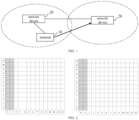
- the network device 20 may be configured with multiple Transmission-Reception Points (TRPs) to serve the terminal 10 through multiple TRPs.
- TRPs Transmission-Reception Points
- the network device 20 may transmit via multi-TRP joint transmission (JT) or coherent joint transmissions (CJT).
- JT multi-TRP joint transmission
- CJT coherent joint transmissions
- the network device 20 may jointly schedule multiple terminals through the multiple TRPs.
- the network device may jointly schedule the first terminal and the second terminal through the multiple TRPs.
- the first terminal and the second terminal support different mapping types.
- the first terminal is a terminal that supports an enhanced DMRS mapping type
- the second terminal is a terminal that supports a legacy DMRS mapping type.
- resources are provided for the first terminal and the second terminal through frequency division multiplexing and code domain orthogonality.
- the first terminal occupies a "+” resource
- the second terminal cannot occupy a "-" resource corresponding to "+” on the right.
- FIG. 3 shows a flow chart of a method for indicating DMRS information provided by an exemplary embodiment of the present disclosure.
- the method is exemplarily applicable to the first terminal and the network device as shown in FIG. 1 .
- the method includes at least the following contents.
- Step 301 the network device sends DMRS indication information to the first terminal.
- the DMRS indication information is used to instruct the first terminal to use a legacy DMRS mapping type, or the DMRS indication information is used to indicate a starting position corresponding to an enhanced DMRS mapping type.
- Step 302 the terminal receives the DMRS indication information sent by the network device.
- the DMRS indication information is used to instruct the first terminal to use the legacy DMRS mapping type, or the DMRS indication information is used to indicate the starting position corresponding to the enhanced DMRS mapping type.
- the first terminal supports the enhanced DMRS mapping type.
- the network device indicates a DMRS mapping type used by the first terminal through the DMRS indication information, so that after receiving the DMRS indication information, the first terminal determines to use the DMRS mapping type indicated by the DMRS indication information to determine a resource, and uses the determined resource for channel estimation.
- the DMRS mapping type indicated by the DMRS indication information includes two cases.
- a first case the DMRS indication information is used to instruct the first terminal to use the legacy DMRS mapping type.
- the first terminal can also support the legacy DMRS mapping type.
- the first terminal may use remaining resources when other terminals using the legacy DMRS mapping type do not fully use the resources.
- a second case the DMRS indication information is used to indicate the starting position corresponding to the enhanced DMRS mapping type.
- the starting position refers to a starting position of a resource corresponding to the enhanced DMRS mapping type in a slot in a time domain. It can also be understood that the starting position is a starting position of the time domain.
- the DMRS mapping type used by the first terminal at this time is the enhanced DRMS mapping type
- the network device may indicate the starting position corresponding to the enhanced DMRS mapping type through the DMRS indication information, so that the first terminal may use the DMRS indication information to facilitate the first terminal determines the resource based on the starting position.
- the first terminal needs to first report its own capability indication information to the network device.
- the capability indication information indicates whether the first terminal supports the enhanced DMRS mapping type, and then the network device determines the capability of the first terminal based on the capability indication information, and then sends the DMRS indication information to the first terminal.
- the first terminal sends the capability indication information to the network device, and the capability indication information indicates that the first terminal supports the enhanced DMRS mapping type.
- the network device receives the capability indication information sent by the first terminal, and then determines the DMRS mapping type indicated by the first terminal based on the capability indication information.
- the steps performed by the terminal can independently form a new embodiment
- the steps performed by the network device can independently form a new embodiment, which are not limited by the embodiments of the present disclosure.
- the network device configures the legacy DMRS mapping type or the starting position corresponding to the enhanced DMRS mapping type for the first terminal, to ensure that when the first terminal coexists with another terminal that supports the legacy DMRS mapping type, the first terminal can use the resource of the legacy DMRS mapping type or determine another resource based on the starting position, thereby preventing the problem of interference between the first terminal and the second terminal, and thus improving the reliability of communication between the network device and various terminals.
- the embodiment shown in FIG. 3 explains the function indicated by DMRS indication information.
- the following describes how to further indicate whether the terminal performs a fallback operation through an DCI when the DMRS indication information is used to indicate the enhanced DMRS mapping type.
- FIG. 4 shows a flow chart of a method for indicating DMRS information provided by an exemplary embodiment of the present disclosure.
- the method is exemplarily applicable to the first terminal and network device as shown in FIG. 1 .
- the method includes at least part of the following contents.
- Step 401 the network device sends a configuration signaling to the first terminal, in which the configuration signaling is used to configure the first terminal to use the enhanced DMRS mapping type.
- Step 402 the first terminal receives the configuration signaling sent by the network device.
- the network device instructs the first terminal to use the enhanced DMRS mapping type through the configuration signaling, and also instructs the first terminal, through DMRS indication information, whether to fall back to a legacy DMRS mapping type, so as to finally indicate a DMRS mapping type used by the first terminal.
- the manner in which the network device sends the DMRS indication information may be understood to mean that, every time the network device schedules, the network device uses the DMRS indication information to indicate the DMRS mapping type used by the first terminal.
- the configuration signaling is a radio resource control (RRC) signaling, which means that the network device configures the first terminal to use the enhanced DMRS mapping type through the RRC signaling in advance, and then configures whether the first terminal falls back to the legacy DMRS mapping type each time through the DMRS indication information.
- RRC radio resource control
- the DMRS indication information may be an RRC signaling, or downlink control information (DCI), or media access control control element (MAC CE), which is not limited in the embodiments of the present disclosure.
- DCI downlink control information
- MAC CE media access control control element
- the function of the DMRS indication information includes any of the following two cases.
- the DMRS indication information is used to instruct the first terminal to use the legacy DMRS mapping type, which means that the enhanced DMRS mapping type used by the first terminal falls back to the legacy DMRS mapping type.
- the network device determines that the first terminal can use a resource corresponding to the legacy DMRS mapping type, it sends to the first terminal the DMRS indication information that is used to instruct the first terminal to fall back from the enhanced DMRS mapping type used to the legacy DMRS mapping type, and then the first terminal may use the legacy DMRS mapping type.
- the DMRS indication information includes one bit. If the one bit included in the DMRS indication information is 1, it means that the DMRS indication information is used to indicate that the enhanced DMRS mapping type used by the first terminal falls back to the legacy DMRS mapping type. Alternatively, if the one bit included in the DMRS indication information is 0, it means that the DMRS indication information is used to indicate that the enhanced DMRS mapping type used by the first terminal falls back to the legacy DMRS mapping type.
- the DMRS indication information in the embodiments of the present disclosure refers to that, in a case that the first terminal coexists with the second terminal using the legacy DMRS mapping type, and the first terminal can also use a code division multiplexing resource of the second terminal, the network device sends the DMRS indication information to the first terminal to instruct the first terminal to fall back to the legacy DMRS mapping type, and then the first terminal uses the legacy DMRS mapping type.
- a second case the DMRS indication information is used to instruct the first terminal to keep using the enhanced DMRS mapping type.
- the network device determines that the first terminal can directly use a resource corresponding to the enhanced DMRS mapping type, it sends to the first terminal the DMRS indication information that is used to instruct the first terminal not to fall back to the legacy DMRS mapping type, that is, to keep using the enhanced DMRS mapping type, and then the first terminal may use the enhanced DMRS mapping type.
- the DMRS indication information includes one bit. If the one bit included in the DMRS indication information is 1, it means that the DMRS indication information is used to indicate that the enhanced DMRS mapping type used by the first terminal does not fall back to the legacy DMRS mapping type, and keeping using the enhanced DMRS mapping type. Alternatively, if the one bit included in the DMRS indication information is 0, it means that the DMRS indication information is used to indicate that the enhanced DMRS mapping type used by the first terminal does not fall back to the legacy DMRS mapping type, and keeping using the enhanced DMRS mapping type.
- the network device sends the DMRS indication information to the first terminal to instruct the first terminal to keep using the enhanced DMRS mapping type.
- the network device may not send the DMRS indication information. If the first terminal does not receive the DMRS indication information, it means that the first terminal determines to continue to use the enhanced DMRS mapping type by default.
- the first terminal uses a white resource and the second terminal uses a "+" resource.
- the network device indicates a frequency domain resource that can be used by the first terminal by indicating a DMRS port used by the first terminal.
- the network device sends port indication information to the first terminal, and the first terminal receives the port indication information sent by the network device.
- the port indication information is used to indicate the DMRS port used by the first terminal.
- the first terminal determines a DMRS mapping type to be used, and may also determine the DMRS port to be used based on the port indication information. Then the terminal may determine, based on a mapping relationship between the DMRS port corresponding to the DMRS mapping type and the frequency domain resource, a frequency domain resource corresponding to the DMRS port used by the terminal.
- the frequency domain resource corresponding to the DMRS port of the first terminal is different from a frequency domain resource corresponding to a DMRS port of a second terminal supporting the legacy DMRS mapping type.
- the DMRS indication information in the embodiments of the present disclosure means that, the first terminal does not coexist with the second terminal using the legacy DMRS mapping type. That is, the first terminal can directly use the enhanced DMRS mapping type to determine the resource and can use the determined resource for transmission, so that the network device sends to the terminal the DMRS indication information that is used to instruct the first terminal to keep using the enhanced DMRS mapping type, and then the first terminal uses the enhanced DMRS mapping type.
- the DMRS indication information in the embodiments of the present disclosure includes one bit
- different values need to be used for the above two cases. For example, if the one bit included in the DMRS indication information is 1, it means that the DMRS indication information is used to indicate that the enhanced DMRS mapping type used by the first terminal falls back to the legacy DMRS mapping type, and if the one bit included in the DMRS indication information is 0, it means that the DMRS indication information is used to indicate that the enhanced DMRS mapping type used by the first terminal does not fall back to the legacy DMRS mapping type.
- the one bit included in the DMRS indication information is 0, it means that the DMRS indication information is used to indicate that the enhanced DMRS mapping type used by the first terminal falls back to the legacy DMRS mapping type, and if the one bit included in the DMRS indication information is 1, it means that the DMRS indication information is used to indicate that the enhanced DMRS mapping type used by the first terminal does not fall back to the legacy DMRS mapping type.
- the terminal is first configured to use the enhanced DMRS mapping type, and then the terminal is instructed whether to fall back to using the legacy DMRS mapping type through the DMRS indication information, ensuring that when occurring the case that the first terminal coexists with the second terminal supporting the legacy DMRS mapping type, the first terminal can use the resource of the legacy DMRS mapping type or determine another resource based on the starting position, which prevents the problem of interference between the first terminal and the second terminal, and thus improves the reliability of communication between the network device and various terminals.
- the embodiment shown in FIG. 3 describes the functions indicated by the DMRS indication information.
- the following describes the DMRS indication information indicating a DMRS mapping type used by the first terminal through two indication information.
- the DMRS indication information includes first indication information and second indication information.
- the first indication information instructs the first terminal to use a first DMRS mapping type or a second DMRS mapping type.
- the second indication information indicates that the first DMRS mapping type or the second DMRS mapping type used by the first terminal belongs to the legacy DMRS mapping type or the enhanced DMRS mapping type.
- the first DMRS mapping type is a type1 DMRS mapping type
- the second DMRS mapping type is a type2 DMRS mapping type
- the network device instructs the terminal to use the first DMRS mapping type or the second DMRS mapping type through the first indication information of the DMRS indication information, and when it is determined that the first terminal can use the legacy DMRS mapping type, the second indication information of the DMRS indication information indicates that the first DMRS mapping type or the second DMRS mapping type used by the terminal belongs to the enhanced DMRS mapping type or the legacy DMRS mapping type.
- both the first indication information and the second indication information include one bit. If the first indication information is 0, it is used to instruct the terminal to use the first DMRS mapping type; if the first indication information is 1, it is used to instruct the terminal to use the first DMRS mapping type. Alternatively, if the first indication information is 0, it is used to instruct the terminal to use the second DMRS mapping type; if the first indication information is 1, it is used to instruct the terminal to use the second DMRS mapping type.
- the second indication information is 0, it is used to indicate that the first DMRS mapping type or the second DMRS mapping type used by the terminal belongs to the legacy DMRS mapping type; if the second indication information is 1, it is used to indicate the first DMRS mapping type or the second DMRS mapping type used by the terminal belongs to the legacy DMRS mapping type.
- the second indication information is 0, it is used to indicate that the first DMRS mapping type or the second DMRS mapping type used by the terminal belongs to the enhanced DMRS mapping type; if the second indication information is 1, it is used to indicate the first DMRS mapping type or the second DMRS mapping type used by the terminal belongs to the enhanced DMRS mapping type.
- the first indication information and the second indication information need to use different values to indicate the two cases. For example, if the first indication information is 0, it is used to instruct the terminal to use the first DMRS mapping type; if the first indication information is 1, it is used to instruct the terminal to use the second DMRS mapping type. For another example, if the first indication information is 0, it is used to instruct the terminal to use the second DMRS mapping type; if the first indication information is 1, it is used to instruct the terminal to use the first DMRS mapping type.
- the second indication information it is used to indicate that the first DMRS mapping type or the second DMRS mapping type used by the terminal belongs to the enhanced DMRS mapping type; if the second indication information is 1, it is used to indicate that the first DMRS mapping type or the second DMRS mapping type used by the terminal belongs to the legacy DMRS mapping type.
- the second indication information it is used to indicate that the first DMRS mapping type or the second DMRS mapping type used by the terminal belongs to the legacy DMRS mapping type; if the second indication information is 1, it is used to indicate that the first DMRS mapping type or the second DMRS mapping type used by the terminal belongs to the enhanced DMRS mapping type.
- the network device indicates the frequency domain resource that can be used by the first terminal by indicating the DMRS port used by the first terminal.
- the network device sends the port indication information to the first terminal, and the first terminal receives the port indication information sent by the network device.
- the port indication information is used to indicate the DMRS port used by the first terminal.
- the first terminal determines the DMRS mapping type to be used, and can also determine the DMRS port to be used based on the port indication information. Then the terminal can determine, based on the mapping relationship between the DMRS port corresponding to the DMRS mapping type and the frequency domain resource, the frequency domain resource corresponding to the DMRS port used by the terminal.
- the frequency domain resource corresponding to the DMRS port of the first terminal is different from the frequency domain resource corresponding to the DMRS port of the second terminal supporting the legacy DMRS mapping type.
- the first indication information of the DMRS indication information is carried on an RRC signaling, DCI, MAC CE or other signaling, which is not limited in the embodiments of the present disclosure.
- the second indication information can also be carried on an RRC signaling, DCI, MAC CE or other signaling, which is not limited in the embodiments of the present disclosure.
- the network device indicates the DMRS mapping type used by the terminal through two indication information, ensuring that when occurring the case that the first terminal coexists with another terminal that supports the legacy DMRS mapping type, the first terminal can use the resource of the legacy DMRS mapping type or determine another resource based on the starting position, which prevents the problem of interference between the first terminal and the second terminal, and thus improves the reliability of communication between the network device and various terminals.
- the embodiment shown in FIG. 3 describes the functions indicated by DMRS indication information.
- the following describes a signaling on which the DMRS indication information can be carried.
- the network device directly indicates the DMRS mapping type used by the first terminal through the DMRS indication information by way of dynamic scheduling.
- the DMRS indication information is carried on the MAC CE. That is, the network device sends the MAC CE to the terminal, and the DMRS indication information carried by the MAC CE indicates the DMRS mapping type used by the terminal.
- the DMRS indication information is carried on the DCI. That is, the network device sends the DCI to the terminal, and the DMRS indication information carried by the DCI indicates the DMRS mapping type used by the terminal.
- the DMRS indication information instructs the terminal to use the legacy DMRS mapping type.
- the DMRS indication information instructs the terminal to use the enhanced DMRS mapping type.
- the frequency domain resource corresponding to the DMRS port of the first terminal is different from the frequency domain resource corresponding to the DMRS port of the second terminal supporting the legacy DMRS Mapping type.
- the network device in the embodiments of the present disclosure directly carries the DMRS indication information through the MAC CE or DCI to indicate the DMRS mapping type used by the terminal.
- This enables the network device to dynamically configure the DMRS mapping type used by the terminal, ensuring that when occurring the case that the first terminal coexists with the second terminal supporting the legacy DMRS mapping type, the first terminal can use the resource of the legacy DMRS mapping type or determine another resource based on the starting position, which prevents the problem of interference between the first terminal and the second terminal, and thus improves the reliability of communication between the network device and various terminals.
- the embodiment shown in FIG. 3 describes the functions indicated by DMRS indication information.
- the following describes a case in which the DMRS indication information indicates the starting position of the enhanced DMRS mapping type.
- the first terminal may use the enhanced DMRS mapping type, and the network device informs the first terminal of the starting position of the enhanced DMRS mapping type through the DMRS indication information, and then the first terminal may determine the corresponding resource based on the starting position and the enhanced DMRS mapping type.
- the following describes information included in the DMRS indication information.
- the DMRS indication information when the DMRS indication information indicates the starting position corresponding to the enhanced DMRS mapping type, the DMRS indication information further includes a time domain offset, and the time domain offset is an offset relative to an initial position.
- the initial position is set by the network device or agreed by a communication protocol, which is not limited in the embodiments of the present disclosure.
- the starting position corresponding to the enhanced DMRS mapping type is a sum of the initial position and the time domain offset.
- the starting position corresponding to the enhanced DMRS mapping type is l 0 + offset.
- the time domain offset is 1, a DMRS of the second terminal uses a resource corresponding to a time domain position indicated by a first arrow, and a DMRS of the first terminal uses a resource corresponding to a time domain position indicated by a second arrow.
- a second case when the DMRS indication information indicates the starting position corresponding to the enhanced DMRS mapping type, the DMRS indication information also includes a time domain starting position.
- the time domain starting position is a starting position in the time domain corresponding to the enhanced DMRS mapping type.
- the time domain starting position refers to an actual position in the time domain, and there is no need to determine the starting position through the sum of the initial position and the offset.
- the time domain starting position is 3
- the DMRS of the second terminal uses a resource corresponding to the time domain position indicated by the first arrow
- the DMRS of the first terminal uses a resource corresponding to the time domain position indicated by the second arrow.
- a third case when the DMRS indication information indicates the starting position corresponding to the enhanced DMRS mapping type, the first terminal is instructed to use the initial position by default.
- the initial position is set by the network device or agreed by the communication protocol, which is not limited in the embodiments of the present disclosure.
- the DMRS indication information if the DMRS indication information does not include any information, it means that the first terminal is instructed to use the initial position by default.
- the network device in the embodiments of the present disclosure directly configures the starting position corresponding to the enhanced DMRS mapping type for the terminal, ensuring that when occurring the case that the first terminal coexists with the second terminal supporting the legacy DMRS mapping type, the first terminal can determine another resource based on the starting position, which prevents the problem of interference between the first terminal and the second terminal, and thus improves the reliability of communication between the network device and various terminals.
- FIG. 7 shows a flow chart of a method for indicating DMRS information provided by an exemplary embodiment of the present disclosure.
- the method is exemplarily applicable to the first terminal as shown in FIG. 2 .
- the method includes at least part of the following contents.
- Step 701 the first terminal receives DMRS indication information sent by a network device.
- the DMRS indication information is used to instruct the first terminal to use a legacy DMRS mapping type, or the DMRS indication information is used to indicate a starting position corresponding to an enhanced DMRS mapping type.
- the first terminal supports the enhanced DMRS mapping type.
- the network device indicates the DMRS mapping type to be used by the first terminal through the DMRS indication information, so that after receiving the DMRS indication information, the first terminal determines to use the DMRS mapping type indicated by the DMRS indication information to determine a resource, and uses the determined resource for channel estimation.
- the DMRS mapping type indicated by the DMRS indication information includes two cases.
- a first case the DMRS indication information is used to instruct the first terminal to use the legacy DMRS mapping type.
- the first terminal can also support the legacy DMRS mapping type.
- the first terminal may use remaining resources when other terminals using the legacy DMRS mapping type do not fully use the resources.
- a second case the DMRS indication information is used to indicate the starting position corresponding to the enhanced DMRS mapping type.
- the starting position refers to a starting position of a resource corresponding to the enhanced DMRS mapping type in a slot in a time domain. It can also be understood that the starting position is a starting position of the time domain.
- the DMRS mapping type used by the first terminal at this time is the enhanced DRMS mapping type
- the network device may indicate the starting position corresponding to the enhanced DMRS mapping type through the DMRS indication information, so that the first terminal determines the resource based on the starting position.
- the first terminal needs to first report its own capability indication information to the network device.
- the capability indication information indicates whether the first terminal supports the enhanced DMRS mapping type, and then the network device determines the capability of the first terminal based on the capability indication information, and then sends the DMRS indication information to the first terminal.
- the first terminal sends the capability indication information to the network device, and the capability indication information indicates that the first terminal supports the enhanced DMRS mapping type.
- the network device receives the capability indication information sent by the first terminal, and then determines the DMRS mapping type indicated by the first terminal based on the capability indication information.
- the network device configures the legacy DMRS mapping type or the starting position corresponding to the enhanced DMRS mapping type for the first terminal, to ensure that when the first terminal coexists with another terminal that supports the legacy DMRS mapping type, the first terminal can use the resource of the legacy DMRS mapping type or determine another resource based on the starting position, thereby preventing the problem of interference between the first terminal and the second terminal, and thus improving the reliability of communication between the network device and various terminals.
- the first terminal receives a configuration signaling sent by the network device, and the configuration signaling is used to configure the first terminal to use the enhanced DMRS mapping type.
- the network device instructs the first terminal to use the enhanced DMRS mapping type through the configuration signaling, and also instructs the first terminal whether to fall back to the legacy DMRS mapping type through the DMRS indication information, so as to finally indicate the DMRS mapping type used by the first terminal.
- the manner in which the network device sends the DMRS indication information may be understood to mean that every time the network device schedules, the network device uses the DMRS indication information to indicate the DMRS mapping type used by the first terminal.
- the configuration signaling is an RRC signaling, which means that the network device configures the first terminal to use the enhanced DMRS mapping type through the RRC signaling in advance, and then configures whether the first terminal falls back to the legacy DMRS mapping type each time through the DMRS indication information.
- the DMRS indication information may be an RRC signaling, or DCI, or MAC CE, which is not limited in the embodiments of the present disclosure.
- the function of the DMRS indication information includes any of the following two cases.
- the DMRS indication information is used to instruct the first terminal to use the legacy DMRS mapping type, which means that the enhanced DMRS mapping type used by the first terminal falls back to the legacy DMRS mapping type.
- the network device determines that the first terminal can use a resource corresponding to the legacy DMRS mapping type, it sends to the first terminal the DMRS indication information that is used to instruct the first terminal to fall back from the enhanced DMRS mapping type used to the legacy DMRS mapping type, and then the first terminal may use the legacy DMRS mapping type.
- the DMRS indication information includes one bit. If the one bit included in the DMRS indication information is 1, it means that the DMRS indication information is used to indicate that the enhanced DMRS mapping type used by the first terminal falls back to the legacy DMRS mapping type. Alternatively, if the one bit included in the DMRS indication information is 0, it means that the DMRS indication information is used to indicate that the enhanced DMRS mapping type used by the first terminal falls back to the legacy DMRS mapping type.
- the DMRS indication information in the embodiments of the present disclosure refers to that, in a case that the first terminal coexists with the second terminal using the legacy DMRS mapping type, and the first terminal can also use a code division multiplexing resource of the second terminal, the network device sends the DMRS indication information to the first terminal to instruct the first terminal to fall back to the legacy DMRS mapping type, and then the first terminal uses the legacy DMRS mapping type.
- a second case the DMRS indication information is used to instruct the first terminal to keep using the enhanced DMRS mapping type.
- the network device determines that the first terminal can directly use a resource corresponding to the enhanced DMRS mapping type, it sends to the first terminal the DMRS indication information that is used to instruct the first terminal not to fall back to the legacy DMRS mapping type, that is, to keep using the enhanced DMRS mapping type, and then the first terminal may use the enhanced DMRS mapping type.
- the DMRS indication information includes one bit. If the one bit included in the DMRS indication information is 1, it means that the DMRS indication information is used to indicate that the enhanced DMRS mapping type used by the first terminal does not fall back to the legacy DMRS mapping type, and keeping using the enhanced DMRS mapping type. Alternatively, if the one bit included in the DMRS indication information is 0, it means that the DMRS indication information is used to indicate that the enhanced DMRS mapping type used by the first terminal does not fall back to the legacy DMRS mapping type, and keeping using the enhanced DMRS mapping type.
- the network device sends the DMRS indication information to the first terminal to instruct the first terminal to keep using the enhanced DMRS mapping type.
- the network device may not send the DMRS indication information. If the first terminal does not receive the DMRS indication information, it means that the first terminal determines to continue to use the enhanced DMRS mapping type by default.
- the first terminal uses a white resource and the second terminal uses a "+" resource.
- the network device indicates a frequency domain resource that can be used by the first terminal by indicating a DMRS port used by the first terminal.
- the network device sends port indication information to the first terminal, and the first terminal receives the port indication information sent by the network device.
- the port indication information is used to indicate the DMRS port used by the first terminal.
- the first terminal determines a DMRS mapping type to be used, and may also determine the DMRS port to be used based on the port indication information. Then the terminal may determine, based on a mapping relationship between the DMRS port corresponding to the DMRS mapping type and the frequency domain resource, a frequency domain resource corresponding to the DMRS port used by the terminal.
- the frequency domain resource corresponding to the DMRS port of the first terminal is different from a frequency domain resource corresponding to a DMRS port of a second terminal supporting the legacy DMRS mapping type.
- the DMRS indication information in the embodiments of the present disclosure means that, the first terminal does not coexist with the second terminal using the legacy DMRS mapping type. That is, the first terminal can directly use the enhanced DMRS mapping type to determine the resource and can use the determined resource for transmission, so that the network device sends to the terminal the DMRS indication information that is used to instruct the first terminal to keep using the enhanced DMRS mapping type, and then the first terminal uses the enhanced DMRS mapping type.
- the DMRS indication information in the embodiments of the present disclosure includes one bit
- different values need to be used for the above two cases. For example, if the one bit included in the DMRS indication information is 1, it means that the DMRS indication information is used to indicate that the enhanced DMRS mapping type used by the first terminal falls back to the legacy DMRS mapping type, and if the one bit included in the DMRS indication information is 0, it means that the DMRS indication information is used to indicate that the enhanced DMRS mapping type used by the first terminal does not fall back to the legacy DMRS mapping type.
- the one bit included in the DMRS indication information is 0, it means that the DMRS indication information is used to indicate that the enhanced DMRS mapping type used by the first terminal falls back to the legacy DMRS mapping type, and if the one bit included in the DMRS indication information is 1, it means that the DMRS indication information is used to indicate that the enhanced DMRS mapping type used by the first terminal does not fall back to the legacy DMRS mapping type.
- the terminal is first configured to use the enhanced DMRS mapping type, and then the terminal is instructed whether to fall back to using the legacy DMRS mapping type through the DMRS indication information, ensuring that when occurring the case that the first terminal coexists with the second terminal supporting the legacy DMRS mapping type, the first terminal can use the resource of the legacy DMRS mapping type or determine another resource based on the starting position, which prevents the problem of interference between the first terminal and the second terminal, and thus improves the reliability of communication between the network device and various terminals.
- the DMRS indication information includes first indication information and second indication information.
- the first indication information instructs the first terminal to use a first DMRS mapping type or a second DMRS mapping type.
- the second indication information indicates that the first DMRS mapping type or the second DMRS mapping type used by the first terminal belongs to the legacy DMRS mapping type or the enhanced DMRS mapping type.
- the first DMRS mapping type is a type1 DMRS mapping type
- the second DMRS mapping type is a type2 DMRS mapping type
- the network device instructs the terminal to use the first DMRS mapping type or the second DMRS mapping type through the first indication information of the DMRS indication information, and when it is determined that the first terminal can use the legacy DMRS mapping type, the second indication information of the DMRS indication information indicates that the first DMRS mapping type or the second DMRS mapping type used by the terminal belongs to the enhanced DMRS mapping type or the legacy DMRS mapping type.
- both the first indication information and the second indication information include one bit. If the first indication information is 0, it is used to instruct the terminal to use the first DMRS mapping type; if the first indication information is 1, it is used to instruct the terminal to use the first DMRS mapping type. Alternatively, if the first indication information is 0, it is used to instruct the terminal to use the second DMRS mapping type; if the first indication information is 1, it is used to instruct the terminal to use the second DMRS mapping type.
- the second indication information is 0, it is used to indicate that the first DMRS mapping type or the second DMRS mapping type used by the terminal belongs to the legacy DMRS mapping type; if the second indication information is 1, it is used to indicate the first DMRS mapping type or the second DMRS mapping type used by the terminal belongs to the legacy DMRS mapping type.
- the second indication information is 0, it is used to indicate that the first DMRS mapping type or the second DMRS mapping type used by the terminal belongs to the enhanced DMRS mapping type; if the second indication information is 1, it is used to indicate the first DMRS mapping type or the second DMRS mapping type used by the terminal belongs to the enhanced DMRS mapping type.
- the first indication information and the second indication information need to use different values to indicate the two cases. For example, if the first indication information is 0, it is used to instruct the terminal to use the first DMRS mapping type; if the first indication information is 1, it is used to instruct the terminal to use the second DMRS mapping type. For another example, if the first indication information is 0, it is used to instruct the terminal to use the second DMRS mapping type; if the first indication information is 1, it is used to instruct the terminal to use the first DMRS mapping type.
- the second indication information it is used to indicate that the first DMRS mapping type or the second DMRS mapping type used by the terminal belongs to the enhanced DMRS mapping type; if the second indication information is 1, it is used to indicate that the first DMRS mapping type or the second DMRS mapping type used by the terminal belongs to the legacy DMRS mapping type.
- the second indication information it is used to indicate that the first DMRS mapping type or the second DMRS mapping type used by the terminal belongs to the legacy DMRS mapping type; if the second indication information is 1, it is used to indicate that the first DMRS mapping type or the second DMRS mapping type used by the terminal belongs to the enhanced DMRS mapping type.
- the network device indicates the frequency domain resource that can be used by the first terminal by indicating the DMRS port used by the first terminal.
- the network device sends the port indication information to the first terminal, and the first terminal receives the port indication information sent by the network device.
- the port indication information is used to indicate the DMRS port used by the first terminal.
- the first terminal determines the DMRS mapping type to be used, and can also determine the DMRS port to be used based on the port indication information. Then the terminal can determine, based on the mapping relationship between the DMRS port corresponding to the DMRS mapping type and the frequency domain resource, the frequency domain resource corresponding to the DMRS port used by the terminal.
- the frequency domain resource corresponding to the DMRS port of the first terminal is different from the frequency domain resource corresponding to the DMRS port of the second terminal supporting the legacy DMRS mapping type.
- the first indication information of the DMRS indication information is carried on an RRC signaling, DCI, MAC CE or other signaling, which is not limited in the embodiments of the present disclosure.
- the second indication information can also be carried on an RRC signaling, DCI, MAC CE or other signaling, which is not limited in the embodiments of the present disclosure.
- the network device indicates the DMRS mapping type used by the terminal through two indication information, ensuring that when occurring the case that the first terminal coexists with another terminal that supports the legacy DMRS mapping type, the first terminal can use the resource of the legacy DMRS mapping type or determine another resource based on the starting position, which prevents the problem of interference between the first terminal and the second terminal, and thus improves the reliability of communication between the network device and various terminals.
- the DMRS indication information is carried on the MAC CE. That is, the network device sends the MAC CE to the terminal, and the DMRS indication information carried by the MAC CE indicates the DMRS mapping type used by the terminal. The network device directly indicates the DMRS mapping type used by the first terminal through the DMRS indication information by way of dynamic scheduling.
- the DMRS indication information is carried on the DCI. That is, the network device sends the DCI to the terminal, and the DMRS indication information carried by the DCI indicates the DMRS mapping type used by the terminal.
- the DMRS indication information instructs the terminal to use the legacy DMRS mapping type.
- the DMRS indication information instructs the terminal to use the enhanced DMRS mapping type.
- the frequency domain resource corresponding to the DMRS port of the first terminal is different from the frequency domain resource corresponding to the DMRS port of the second terminal supporting the legacy DMRS Mapping type.
- the network device in the embodiments of the present disclosure directly carries the DMRS indication information through the MAC CE or DCI to indicate the DMRS mapping type used by the terminal.
- This enables the network device to dynamically configure the DMRS mapping type used by the terminal, ensuring that when occurring the case that the first terminal coexists with the second terminal supporting the legacy DMRS mapping type, the first terminal can use the resource of the legacy DMRS mapping type or determine another resource based on the starting position, which prevents the problem of interference between the first terminal and the second terminal, and thus improves the reliability of communication between the network device and various terminals.
- the first terminal may use the enhanced DMRS mapping type, and the network device informs the first terminal of the starting position of the enhanced DMRS mapping type through the DMRS indication information, and then the first terminal may determine the corresponding resource based on the starting position and the enhanced DMRS mapping type.
- the following describes information included in the DMRS indication information.
- the DMRS indication information when the DMRS indication information indicates the starting position corresponding to the enhanced DMRS mapping type, the DMRS indication information further includes a time domain offset, and the time domain offset is an offset relative to an initial position.
- the initial position is set by the network device or agreed by a communication protocol, which is not limited in the embodiments of the present disclosure.
- the starting position corresponding to the enhanced DMRS mapping type is a sum of the initial position and the time domain offset.
- the starting position corresponding to the enhanced DMRS mapping type is l 0 + offset.
- the time domain offset is 1, a DMRS of the second terminal uses a resource corresponding to a time domain position indicated by a first arrow, and a DMRS of the first terminal uses a resource corresponding to a time domain position indicated by a second arrow.
- a second case when the DMRS indication information indicates the starting position corresponding to the enhanced DMRS mapping type, the DMRS indication information also includes a time domain starting position.
- the time domain starting position is a starting position in the time domain corresponding to the enhanced DMRS mapping type.
- the time domain starting position refers to an actual position in the time domain, and there is no need to determine the starting position through the sum of the initial position and the offset.
- the time domain starting position is 3
- the DMRS of the second terminal uses a resource corresponding to the time domain position indicated by the first arrow
- the DMRS of the first terminal uses a resource corresponding to the time domain position indicated by the second arrow.
- a third case when the DMRS indication information indicates the starting position corresponding to the enhanced DMRS mapping type, the first terminal is instructed to use the initial position by default.
- the initial position is set by the network device or agreed by the communication protocol, which is not limited in the embodiments of the present disclosure.
- the DMRS indication information if the DMRS indication information does not include any information, it means that the first terminal is instructed to use the initial position by default.
- the network device in the embodiments of the present disclosure directly configures the starting position corresponding to the enhanced DMRS mapping type for the terminal, ensuring that when occurring the case that the first terminal coexists with the second terminal supporting the legacy DMRS mapping type, the first terminal can determine another resource based on the starting position, which prevents the problem of interference between the first terminal and the second terminal, and thus improves the reliability of communication between the network device and various terminals.
- FIG. 8 shows a flow chart of a method for indicating DMRS information provided by an exemplary embodiment of the present disclosure.
- the method is exemplarily applicable to the network device shown in FIG. 2 .
- the method includes at least part of the following contents.
- Step 801 the network device sends DMRS indication information to a first terminal.
- the DMRS indication information is used to instruct the first terminal to use a legacy DMRS mapping type, or the DMRS indication information is used to indicate a starting position corresponding to an enhanced DMRS mapping type.
- the first terminal supports the enhanced DMRS mapping type.
- the network device indicates the DMRS mapping type to be used by the first terminal through the DMRS indication information, so that after receiving the DMRS indication information, the first terminal determines to use the DMRS mapping type indicated by the DMRS indication information to determine a resource, and uses the determined resource for channel estimation.
- the DMRS mapping type indicated by the DMRS indication information includes two cases.
- a first case the DMRS indication information is used to instruct the first terminal to use the legacy DMRS mapping type.
- the first terminal can also support the legacy DMRS mapping type.
- the first terminal may use remaining resources when other terminals using the legacy DMRS mapping type do not fully use the resources.
- a second case the DMRS indication information is used to indicate the starting position corresponding to the enhanced DMRS mapping type.
- the starting position refers to a starting position of a resource corresponding to the enhanced DMRS mapping type in a slot in a time domain. It can also be understood that the starting position is a starting position of the time domain.
- the DMRS mapping type used by the first terminal at this time is the enhanced DRMS mapping type
- the network device may indicate the starting position corresponding to the enhanced DMRS mapping type through the DMRS indication information, so that the first terminal determines the resource based on the starting position.
- the first terminal needs to first report its own capability indication information to the network device.
- the capability indication information indicates whether the first terminal supports the enhanced DMRS mapping type, and then the network device determines the capability of the first terminal based on the capability indication information, and then sends the DMRS indication information to the first terminal.
- the first terminal sends the capability indication information to the network device, and the capability indication information indicates that the first terminal supports the enhanced DMRS mapping type.
- the network device receives the capability indication information sent by the first terminal, and then determines the DMRS mapping type indicated by the first terminal based on the capability indication information.
- the network device configures the legacy DMRS mapping type or the starting position corresponding to the enhanced DMRS mapping type for the first terminal, to ensure that when the first terminal coexists with another terminal that supports the legacy DMRS mapping type, the first terminal can use the resource of the legacy DMRS mapping type or determine another resource based on the starting position, thereby preventing the problem of interference between the first terminal and the second terminal, and thus improving the reliability of communication between the network device and various terminals.
- the network device sends a configuration signaling to the first terminal, and the configuration signaling is used to configure the first terminal to use the enhanced DMRS mapping type.
- the network device instructs the first terminal to use the enhanced DMRS mapping type through the configuration signaling, and also instructs the first terminal whether to fall back to the legacy DMRS mapping type through the DMRS indication information, so as to finally indicate the DMRS mapping type used by the first terminal.
- the manner in which the network device sends the DMRS indication information may be understood to mean that every time the network device schedules, the network device uses the DMRS indication information to indicate the DMRS mapping type used by the first terminal.
- the configuration signaling is an RRC signaling, which means that the network device configures the first terminal to use the enhanced DMRS mapping type through the RRC signaling in advance, and then configures whether the first terminal falls back to the legacy DMRS mapping type each time through the DMRS indication information.
- the DMRS indication information may be an RRC signaling, or DCI, or MAC CE, which is not limited in the embodiments of the present disclosure.
- the function of the DMRS indication information includes any of the following two cases.
- the DMRS indication information is used to instruct the first terminal to use the legacy DMRS mapping type, which means that the enhanced DMRS mapping type used by the first terminal falls back to the legacy DMRS mapping type.
- the network device determines that the first terminal can use a resource corresponding to the legacy DMRS mapping type, it sends to the first terminal the DMRS indication information that is used to instruct the first terminal to fall back from the enhanced DMRS mapping type used to the legacy DMRS mapping type, and then the first terminal may use the legacy DMRS mapping type.
- the DMRS indication information includes one bit. If the one bit included in the DMRS indication information is 1, it means that the DMRS indication information is used to indicate that the enhanced DMRS mapping type used by the first terminal falls back to the legacy DMRS mapping type. Alternatively, if the one bit included in the DMRS indication information is 0, it means that the DMRS indication information is used to indicate that the enhanced DMRS mapping type used by the first terminal falls back to the legacy DMRS mapping type.
- the DMRS indication information in the embodiments of the present disclosure refers to that, in a case that the first terminal coexists with the second terminal using the legacy DMRS mapping type, and the first terminal can also use a code division multiplexing resource of the second terminal, the network device sends the DMRS indication information to the first terminal to instruct the first terminal to fall back to the legacy DMRS mapping type, and then the first terminal uses the legacy DMRS mapping type.
- a second case the DMRS indication information is used to instruct the first terminal to keep using the enhanced DMRS mapping type.
- the network device determines that the first terminal can directly use a resource corresponding to the enhanced DMRS mapping type, it sends to the first terminal the DMRS indication information that is used to instruct the first terminal not to fall back to the legacy DMRS mapping type, that is, to keep using the enhanced DMRS mapping type, and then the first terminal may use the enhanced DMRS mapping type.
- the DMRS indication information includes one bit. If the one bit included in the DMRS indication information is 1, it means that the DMRS indication information is used to indicate that the enhanced DMRS mapping type used by the first terminal does not fall back to the legacy DMRS mapping type, and keeping using the enhanced DMRS mapping type. Alternatively, if the one bit included in the DMRS indication information is 0, it means that the DMRS indication information is used to indicate that the enhanced DMRS mapping type used by the first terminal does not fall back to the legacy DMRS mapping type, and keeping using the enhanced DMRS mapping type.
- the network device sends the DMRS indication information to the first terminal to instruct the first terminal to keep using the enhanced DMRS mapping type.
- the network device may not send the DMRS indication information. If the first terminal does not receive the DMRS indication information, it means that the first terminal determines to continue to use the enhanced DMRS mapping type by default.
- the first terminal uses a white resource and the second terminal uses a "+" resource.
- the network device indicates a frequency domain resource that can be used by the first terminal by indicating a DMRS port used by the first terminal.
- the network device sends port indication information to the first terminal, and the first terminal receives the port indication information sent by the network device.
- the port indication information is used to indicate the DMRS port used by the first terminal.
- the first terminal determines a DMRS mapping type to be used, and may also determine the DMRS port to be used based on the port indication information. Then the terminal may determine, based on a mapping relationship between the DMRS port corresponding to the DMRS mapping type and the frequency domain resource, a frequency domain resource corresponding to the DMRS port used by the terminal.
- the frequency domain resource corresponding to the DMRS port of the first terminal is different from a frequency domain resource corresponding to a DMRS port of a second terminal supporting the legacy DMRS mapping type.
- the DMRS indication information in the embodiments of the present disclosure means that, the first terminal does not coexist with the second terminal using the legacy DMRS mapping type. That is, the first terminal can directly use the enhanced DMRS mapping type to determine the resource and can use the determined resource for transmission, so that the network device sends to the terminal the DMRS indication information that is used to instruct the first terminal to keep using the enhanced DMRS mapping type, and then the first terminal uses the enhanced DMRS mapping type.
- the DMRS indication information in the embodiments of the present disclosure includes one bit
- different values need to be used for the above two cases. For example, if the one bit included in the DMRS indication information is 1, it means that the DMRS indication information is used to indicate that the enhanced DMRS mapping type used by the first terminal falls back to the legacy DMRS mapping type, and if the one bit included in the DMRS indication information is 0, it means that the DMRS indication information is used to indicate that the enhanced DMRS mapping type used by the first terminal does not fall back to the legacy DMRS mapping type.
- the one bit included in the DMRS indication information is 0, it means that the DMRS indication information is used to indicate that the enhanced DMRS mapping type used by the first terminal falls back to the legacy DMRS mapping type, and if the one bit included in the DMRS indication information is 1, it means that the DMRS indication information is used to indicate that the enhanced DMRS mapping type used by the first terminal does not fall back to the legacy DMRS mapping type.
- the terminal is first configured to use the enhanced DMRS mapping type, and then the terminal is instructed whether to fall back to using the legacy DMRS mapping type through the DMRS indication information, ensuring that when occurring the case that the first terminal coexists with the second terminal supporting the legacy DMRS mapping type, the first terminal can use the resource of the legacy DMRS mapping type or determine another resource based on the starting position, which prevents the problem of interference between the first terminal and the second terminal, and thus improves the reliability of communication between the network device and various terminals.
- the DMRS indication information includes first indication information and second indication information.
- the first indication information instructs the first terminal to use a first DMRS mapping type or a second DMRS mapping type.
- the second indication information indicates that the first DMRS mapping type or the second DMRS mapping type used by the first terminal belongs to the legacy DMRS mapping type or the enhanced DMRS mapping type.
- the first DMRS mapping type is a type1 DMRS mapping type
- the second DMRS mapping type is a type2 DMRS mapping type
- the network device instructs the terminal to use the first DMRS mapping type or the second DMRS mapping type through the first indication information of the DMRS indication information, and when it is determined that the first terminal can use the legacy DMRS mapping type, the second indication information of the DMRS indication information indicates that the first DMRS mapping type or the second DMRS mapping type used by the terminal belongs to the enhanced DMRS mapping type or the legacy DMRS mapping type.
- both the first indication information and the second indication information include one bit. If the first indication information is 0, it is used to instruct the terminal to use the first DMRS mapping type; if the first indication information is 1, it is used to instruct the terminal to use the first DMRS mapping type. Alternatively, if the first indication information is 0, it is used to instruct the terminal to use the second DMRS mapping type; if the first indication information is 1, it is used to instruct the terminal to use the second DMRS mapping type.
- the second indication information is 0, it is used to indicate that the first DMRS mapping type or the second DMRS mapping type used by the terminal belongs to the legacy DMRS mapping type; if the second indication information is 1, it is used to indicate the first DMRS mapping type or the second DMRS mapping type used by the terminal belongs to the legacy DMRS mapping type.
- the second indication information is 0, it is used to indicate that the first DMRS mapping type or the second DMRS mapping type used by the terminal belongs to the enhanced DMRS mapping type; if the second indication information is 1, it is used to indicate the first DMRS mapping type or the second DMRS mapping type used by the terminal belongs to the enhanced DMRS mapping type.
- the first indication information and the second indication information need to use different values to indicate the two cases. For example, if the first indication information is 0, it is used to instruct the terminal to use the first DMRS mapping type; if the first indication information is 1, it is used to instruct the terminal to use the second DMRS mapping type. For another example, if the first indication information is 0, it is used to instruct the terminal to use the second DMRS mapping type; if the first indication information is 1, it is used to instruct the terminal to use the first DMRS mapping type.
- the second indication information it is used to indicate that the first DMRS mapping type or the second DMRS mapping type used by the terminal belongs to the enhanced DMRS mapping type; if the second indication information is 1, it is used to indicate that the first DMRS mapping type or the second DMRS mapping type used by the terminal belongs to the legacy DMRS mapping type.
- the second indication information it is used to indicate that the first DMRS mapping type or the second DMRS mapping type used by the terminal belongs to the legacy DMRS mapping type; if the second indication information is 1, it is used to indicate that the first DMRS mapping type or the second DMRS mapping type used by the terminal belongs to the enhanced DMRS mapping type.
- the network device indicates the frequency domain resource that can be used by the first terminal by indicating the DMRS port used by the first terminal.
- the network device sends the port indication information to the first terminal, and the first terminal receives the port indication information sent by the network device.
- the port indication information is used to indicate the DMRS port used by the first terminal.
- the first terminal determines the DMRS mapping type to be used, and can also determine the DMRS port to be used based on the port indication information. Then the terminal can determine, based on the mapping relationship between the DMRS port corresponding to the DMRS mapping type and the frequency domain resource, the frequency domain resource corresponding to the DMRS port used by the terminal.
- the frequency domain resource corresponding to the DMRS port of the first terminal is different from the frequency domain resource corresponding to the DMRS port of the second terminal supporting the legacy DMRS mapping type.
- the first indication information of the DMRS indication information is carried on an RRC signaling, DCI, MAC CE or other signaling, which is not limited in the embodiments of the present disclosure.
- the second indication information can also be carried on an RRC signaling, DCI, MAC CE or other signaling, which is not limited in the embodiments of the present disclosure.
- the network device indicates the DMRS mapping type used by the terminal through two indication information, ensuring that when occurring the case that the first terminal coexists with another terminal that supports the legacy DMRS mapping type, the first terminal can use the resource of the legacy DMRS mapping type or determine another resource based on the starting position, which prevents the problem of interference between the first terminal and the second terminal, and thus improves the reliability of communication between the network device and various terminals.
- the DMRS indication information is carried on the MAC CE. That is, the network device sends the MAC CE to the terminal, and the DMRS indication information carried by the MAC CE indicates the DMRS mapping type used by the terminal. The network device directly indicates the DMRS mapping type used by the first terminal through the DMRS indication information by way of dynamic scheduling.
- the DMRS indication information is carried on the DCI. That is, the network device sends the DCI to the terminal, and the DMRS indication information carried by the DCI indicates the DMRS mapping type used by the terminal.
- the DMRS indication information instructs the terminal to use the legacy DMRS mapping type.
- the DMRS indication information instructs the terminal to use the enhanced DMRS mapping type.
- the frequency domain resource corresponding to the DMRS port of the first terminal is different from the frequency domain resource corresponding to the DMRS port of the second terminal supporting the legacy DMRS Mapping type.
- the network device in the embodiments of the present disclosure directly carries the DMRS indication information through the MAC CE or DCI to indicate the DMRS mapping type used by the terminal.
- This enables the network device to dynamically configure the DMRS mapping type used by the terminal, ensuring that when occurring the case that the first terminal coexists with the second terminal supporting the legacy DMRS mapping type, the first terminal can use the resource of the legacy DMRS mapping type or determine another resource based on the starting position, which prevents the problem of interference between the first terminal and the second terminal, and thus improves the reliability of communication between the network device and various terminals.
- the first terminal may use the enhanced DMRS mapping type, and the network device informs the first terminal of the starting position of the enhanced DMRS mapping type through the DMRS indication information, and then the first terminal may determine the corresponding resource based on the starting position and the enhanced DMRS mapping type.
- the following describes information included in the DMRS indication information.
- the DMRS indication information when the DMRS indication information indicates the starting position corresponding to the enhanced DMRS mapping type, the DMRS indication information further includes a time domain offset, and the time domain offset is an offset relative to an initial position.
- the initial position is set by the network device or agreed by a communication protocol, which is not limited in the embodiments of the present disclosure.
- the starting position corresponding to the enhanced DMRS mapping type is a sum of the initial position and the time domain offset.
- the starting position corresponding to the enhanced DMRS mapping type is l 0 + offset.
- the time domain offset is 1, a DMRS of the second terminal uses a resource corresponding to a time domain position indicated by a first arrow, and a DMRS of the first terminal uses a resource corresponding to a time domain position indicated by a second arrow.
- a second case when the DMRS indication information indicates the starting position corresponding to the enhanced DMRS mapping type, the DMRS indication information also includes a time domain starting position.
- the time domain starting position is a starting position in the time domain corresponding to the enhanced DMRS mapping type.
- the time domain starting position refers to an actual position in the time domain, and there is no need to determine the starting position through the sum of the initial position and the offset.
- the time domain starting position is 3
- the DMRS of the second terminal uses a resource corresponding to the time domain position indicated by the first arrow
- the DMRS of the first terminal uses a resource corresponding to the time domain position indicated by the second arrow.
- a third case when the DMRS indication information indicates the starting position corresponding to the enhanced DMRS mapping type, the first terminal is instructed to use the initial position by default.
- the initial position is set by the network device or agreed by the communication protocol, which is not limited in the embodiments of the present disclosure.
- the DMRS indication information if the DMRS indication information does not include any information, it means that the first terminal is instructed to use the initial position by default.
- the network device in the embodiments of the present disclosure directly configures the starting position corresponding to the enhanced DMRS mapping type for the terminal, ensuring that when occurring the case that the first terminal coexists with the second terminal supporting the legacy DMRS mapping type, the first terminal can determine another resource based on the starting position, which prevents the problem of interference between the first terminal and the second terminal, and thus improves the reliability of communication between the network device and various terminals.
- FIG. 9 shows a block diagram of an apparatus for indicating DMRS information provided by an exemplary embodiment of the present disclosure.
- the first terminal supports an enhanced DMRS mapping type.
- the apparatus includes:
- a receiving module 901 configured to receive DMRS indication information sent by a network device.
- the DMRS indication information is used to instruct the first terminal to use a legacy DMRS mapping type, or the DMRS indication information is used to indicate a starting position corresponding to the enhanced DMRS mapping type.
- the receiving module 901 is configured to receive a configuration signaling sent by the network device, in which the configuration signaling is used to configure the first terminal to use the enhanced DMRS mapping type;
- the DMRS indication information includes first indication information and second indication information.
- the first indication information indicates that the first terminal uses the first DMRS mapping type in DMRS mapping types.
- the second indication information indicates that the first DMRS mapping type used by the terminal belongs to the legacy DMRS mapping type or the enhanced DMRS mapping type; or the first indication information instructs the first terminal to use a second DMRS mapping type in the DMRS mapping types, and the second indication information indicates that the second DMRS mapping type used by the terminal belongs to the legacy DMRS mapping type or the enhanced DMRS mapping type.
- the DMRS indication information is carried on a MAC CE, or the DMRS indication information is carried on the DCI.
- the receiving module 901 is configured to receive port indication information sent by the network device, in which the port indication information is used to indicate a DMRS port used by the first terminal.
- a frequency domain resource corresponding to the DMRS port of the first terminal is different from a frequency domain resource corresponding to a DMRS port of a second terminal supporting the legacy DMRS Mapping type.
- the DMRS indication information in a case that the DMRS indication information indicates the starting position corresponding to the enhanced DMRS mapping type, the DMRS indication information further includes a time domain offset, and the time domain offset is an offset relative to the initial position;
- the apparatus further includes: a sending module 902, configured to send capability indication information to the network device, in which the capability indication information indicates that the first terminal supports the enhanced DMRS mapping type.
- FIG. 11 shows a block diagram of an apparatus for indicating DMRS information provided by an exemplary embodiment of the present disclosure.
- the apparatus includes:
- the sending module 1101 is also used to send a configuration signaling to the first terminal, in which the configuration signaling is used to configure the first terminal to use the enhanced DMRS mapping type;
- the DMRS indication information includes first indication information and second indication information.
- the first indication information indicates that the first terminal uses the first DMRS mapping type in DMRS mapping types.
- the second indication information indicates that the first DMRS mapping type used by the terminal belongs to the legacy DMRS mapping type or the enhanced DMRS mapping type; or the first indication information instructs the first terminal to use a second DMRS mapping type in the DMRS mapping types, and the second indication information indicates that the second DMRS mapping type used by the terminal belongs to the legacy DMRS mapping type or the enhanced DMRS mapping type.
- the DMRS indication information is carried on a MAC CE, or the DMRS indication information is carried on the DCI.
- the sending module 1101 is also configured to send port indication information to the first terminal, in which the port indication information is used to indicate a DMRS port used by the first terminal.
- a frequency domain resource corresponding to the DMRS port of the first terminal is different from a frequency domain resource corresponding to a DMRS port of a second terminal supporting the legacy DMRS Mapping type.
- the DMRS indication information in a case that the DMRS indication information indicates the starting position corresponding to the enhanced DMRS mapping type, the DMRS indication information further includes a time domain offset, and the time domain offset is an offset relative to the initial position;
- the apparatus further includes: a receiving module 1102, configured to receive capability indication information sent by the first terminal, in which the capability indication information indicates that the first terminal supports the enhanced DMRS mapping type.
- FIG. 13 shows a schematic structural diagram of a communication device provided by an exemplary embodiment of the present disclosure.
- the communication device includes: a processor 1301, a receiver 1302, a transmitter 1303, a memory 1304 and a bus 1305.
- the processor 1301 includes one or more processing cores.
- the processor 1301 executes various functional applications and information processing by running software programs and modules.
- the receiver 1302 and the transmitter 1303 may be implemented as a communication component, and the communication component may be a communication chip.
- the memory 1304 is connected to the processor 1301 through the bus 1305.
- the memory 1304 may be used to store at least one program code, and the processor 1301 is used to execute the at least one program code to implement each step in the above method embodiments.
- the communication device may be a terminal or a network device.
- the memory 1304 may be implemented by any type of volatile or non-volatile storage device, or combination thereof, including but not limited to: a magnetic or optical disk, an electrically erasable programmable read-only memory (EEPROM), an erasable programmable read-only memory (EPROM), a static read-only memory (SRAM), a read-only memory (ROM), a magnetic memory, a flash memory, a programmable read-only memory (PROM).
- EEPROM electrically erasable programmable read-only memory
- EPROM erasable programmable read-only memory
- SRAM static read-only memory
- ROM read-only memory
- magnetic memory a magnetic memory
- flash memory a flash memory
- PROM programmable read-only memory
- a computer-readable storage medium is also provided.
- An executable program code is stored in the readable storage medium, and the executable program code is loaded and executed by a processor to implement the above methods for indicating DMRS information, performed by the communication device, that are provided by the respective method embodiments.
- a chip is provided.
- the chip includes programmable logic circuits and/or program instructions. When the chip is run on a terminal or network device, it is used to implement the above methods for indicating DMRS information provided by the respective method embodiments.
- a communication system in an exemplary embodiment, includes a terminal and a network device.
- the terminal is used to implement the methods for indicating DMRS information as described above.
- the network device is used to implement the methods for indicating DMRS information as described above.
- a computer program product is provided.
- the computer program product is executed by a processor of a terminal or a network device, it is used to implement the method for indicating DMRS information provided by each of the above method embodiments.
- the program may be stored in a computer-readable storage medium.
- the above-mentioned storage medium mentioned may be a read-only memory, a magnetic disk or an optical disk, etc.
Landscapes
- Engineering & Computer Science (AREA)
- Signal Processing (AREA)
- Computer Networks & Wireless Communication (AREA)
- Mobile Radio Communication Systems (AREA)
Applications Claiming Priority (1)
| Application Number | Priority Date | Filing Date | Title |
|---|---|---|---|
| PCT/CN2022/110853 WO2024031241A1 (zh) | 2022-08-08 | 2022-08-08 | Dmrs信息指示方法、装置、设备及存储介质 |
Publications (2)
| Publication Number | Publication Date |
|---|---|
| EP4572247A1 true EP4572247A1 (de) | 2025-06-18 |
| EP4572247A4 EP4572247A4 (de) | 2025-10-01 |
Family
ID=89850212
Family Applications (1)
| Application Number | Title | Priority Date | Filing Date |
|---|---|---|---|
| EP22954221.2A Pending EP4572247A4 (de) | 2022-08-08 | 2022-08-08 | Dmrs-informationsanzeigeverfahren und -vorrichtung sowie vorrichtung und speichermedium |
Country Status (3)
| Country | Link |
|---|---|
| EP (1) | EP4572247A4 (de) |
| CN (1) | CN117859302A (de) |
| WO (1) | WO2024031241A1 (de) |
Family Cites Families (7)
| Publication number | Priority date | Publication date | Assignee | Title |
|---|---|---|---|---|
| JP5947240B2 (ja) * | 2013-03-28 | 2016-07-06 | パナソニック インテレクチュアル プロパティ コーポレーション オブ アメリカPanasonic Intellectual Property Corporation of America | 送信装置及び送信方法 |
| WO2017020201A1 (en) * | 2015-07-31 | 2017-02-09 | Nec Corporation | Methods and apparatuses for transmitting and receiving dmrs indication |
| CN109039566B (zh) * | 2017-07-17 | 2019-09-13 | 华为技术有限公司 | 用于传输dmrs的方法和通信设备 |
| WO2019050367A1 (ko) * | 2017-09-08 | 2019-03-14 | 엘지전자 주식회사 | 무선 통신 시스템에서 참조 신호를 송수신하기 위한 방법 및 이를 위한 장치 |
| CN111869140B (zh) * | 2018-09-11 | 2022-01-25 | Oppo广东移动通信有限公司 | 通信方法、终端设备和网络设备 |
| US11387957B2 (en) * | 2019-10-03 | 2022-07-12 | Ofinno, Llc | Antenna port indication for sidelink |
| CN112752259B (zh) * | 2019-10-31 | 2023-02-03 | 上海华为技术有限公司 | 一种终端类型的确定方法、网络设备及终端 |
-
2022
- 2022-08-08 EP EP22954221.2A patent/EP4572247A4/de active Pending
- 2022-08-08 WO PCT/CN2022/110853 patent/WO2024031241A1/zh not_active Ceased
- 2022-08-08 CN CN202280002999.6A patent/CN117859302A/zh active Pending
Also Published As
| Publication number | Publication date |
|---|---|
| WO2024031241A1 (zh) | 2024-02-15 |
| EP4572247A4 (de) | 2025-10-01 |
| CN117859302A (zh) | 2024-04-09 |
Similar Documents
| Publication | Publication Date | Title |
|---|---|---|
| US11234238B2 (en) | Method for resource configuration, terminal device and network device | |
| US20250253993A1 (en) | Tci state determining method and apparatus, device, and storage medium | |
| US20210250159A1 (en) | Resource configuration method and apparatus | |
| EP3833129A1 (de) | Verfahren zur übertragung von konfigurationsinformationen und endgerätevorrichtung | |
| US11128422B2 (en) | Narrowband physical broadcast channel transmission method and device | |
| CN110972280B (zh) | 一种资源配置方法、信息发送方法及装置 | |
| EP4561219A1 (de) | Verfahren und vorrichtung zur anzeige eines tci-status und speichermedium | |
| EP4583603A1 (de) | Informationsanzeigeverfahren und -vorrichtung, vorrichtung und speichermedium | |
| JP7575480B2 (ja) | 情報指示方法、装置、機器及び記憶媒体 | |
| EP3606209B1 (de) | Verfahren und vorrichtung zum senden von informationen, endgerät, zugriffsnetzwerkvorrichtung und system | |
| CN112534911A (zh) | 用于指示时隙格式信息的方法和装置 | |
| EP4572247A1 (de) | Dmrs-informationsanzeigeverfahren und -vorrichtung sowie vorrichtung und speichermedium | |
| EP4216473A1 (de) | Übertragungsverfahren und -vorrichtung sowie endgerät und netzwerkvorrichtung | |
| US20240275538A1 (en) | Scheduling method and apparatus | |
| EP4586720A1 (de) | Verfahren und vorrichtung zur bestimmung des tci-status sowie vorrichtung und speichermedium | |
| EP3461208A1 (de) | Verfahren und vorrichtung zur ressourcenzuweisung | |
| US12225544B2 (en) | Information determination method and apparatus, device, and storage medium | |
| EP4429149A1 (de) | Ressourcenbestimmungsverfahren und -vorrichtung, vorrichtung und speichermedium | |
| RU2839136C9 (ru) | Способ и устройство для определения ресурсов, устройство и носитель данных | |
| RU2839136C2 (ru) | Способ и устройство для определения ресурсов, устройство и носитель данных | |
| RU2814209C1 (ru) | Способ и устройство приема, терминальное устройство и носитель данных | |
| CN112640548A (zh) | 无线通信方法和终端设备 | |
| EP4443923A1 (de) | Verfahren und vorrichtung zur meldung von übertragungskapazitäten, verfahren und vorrichtung zum empfangen von übertragungskapazitäten sowie vorrichtung und speichermedium | |
| WO2024011618A1 (zh) | 资源激活方法、装置及存储介质 | |
| CN120835404A (zh) | 下行资源分配方法、电子设备、存储介质及程序产品 |
Legal Events
| Date | Code | Title | Description |
|---|---|---|---|
| STAA | Information on the status of an ep patent application or granted ep patent |
Free format text: STATUS: THE INTERNATIONAL PUBLICATION HAS BEEN MADE |
|
| PUAI | Public reference made under article 153(3) epc to a published international application that has entered the european phase |
Free format text: ORIGINAL CODE: 0009012 |
|
| STAA | Information on the status of an ep patent application or granted ep patent |
Free format text: STATUS: REQUEST FOR EXAMINATION WAS MADE |
|
| 17P | Request for examination filed |
Effective date: 20250305 |
|
| AK | Designated contracting states |
Kind code of ref document: A1 Designated state(s): AL AT BE BG CH CY CZ DE DK EE ES FI FR GB GR HR HU IE IS IT LI LT LU LV MC MK MT NL NO PL PT RO RS SE SI SK SM TR |
|
| A4 | Supplementary search report drawn up and despatched |
Effective date: 20250902 |
|
| RIC1 | Information provided on ipc code assigned before grant |
Ipc: H04L 27/00 20060101AFI20250827BHEP Ipc: H04L 5/00 20060101ALN20250827BHEP |
|
| DAV | Request for validation of the european patent (deleted) | ||
| DAX | Request for extension of the european patent (deleted) |