EP4572392A1 - Signalübertragungsverfahren und -vorrichtung, endgerät und speichermedium - Google Patents
Signalübertragungsverfahren und -vorrichtung, endgerät und speichermedium Download PDFInfo
- Publication number
- EP4572392A1 EP4572392A1 EP23856506.3A EP23856506A EP4572392A1 EP 4572392 A1 EP4572392 A1 EP 4572392A1 EP 23856506 A EP23856506 A EP 23856506A EP 4572392 A1 EP4572392 A1 EP 4572392A1
- Authority
- EP
- European Patent Office
- Prior art keywords
- resource domain
- signal
- modulation signal
- domain
- dimension
- Prior art date
- Legal status (The legal status is an assumption and is not a legal conclusion. Google has not performed a legal analysis and makes no representation as to the accuracy of the status listed.)
- Pending
Links
Images



Classifications
-
- H—ELECTRICITY
- H04—ELECTRIC COMMUNICATION TECHNIQUE
- H04W—WIRELESS COMMUNICATION NETWORKS
- H04W72/00—Local resource management
- H04W72/04—Wireless resource allocation
- H04W72/044—Wireless resource allocation based on the type of the allocated resource
-
- H—ELECTRICITY
- H04—ELECTRIC COMMUNICATION TECHNIQUE
- H04L—TRANSMISSION OF DIGITAL INFORMATION, e.g. TELEGRAPHIC COMMUNICATION
- H04L27/00—Modulated-carrier systems
- H04L27/26—Systems using multi-frequency codes
- H04L27/2601—Multicarrier modulation systems
- H04L27/2626—Arrangements specific to the transmitter only
- H04L27/2627—Modulators
-
- H—ELECTRICITY
- H04—ELECTRIC COMMUNICATION TECHNIQUE
- H04L—TRANSMISSION OF DIGITAL INFORMATION, e.g. TELEGRAPHIC COMMUNICATION
- H04L27/00—Modulated-carrier systems
- H04L27/26—Systems using multi-frequency codes
-
- H—ELECTRICITY
- H04—ELECTRIC COMMUNICATION TECHNIQUE
- H04L—TRANSMISSION OF DIGITAL INFORMATION, e.g. TELEGRAPHIC COMMUNICATION
- H04L27/00—Modulated-carrier systems
- H04L27/26—Systems using multi-frequency codes
- H04L27/2601—Multicarrier modulation systems
- H04L27/2602—Signal structure
- H04L27/261—Details of reference signals
-
- H—ELECTRICITY
- H04—ELECTRIC COMMUNICATION TECHNIQUE
- H04L—TRANSMISSION OF DIGITAL INFORMATION, e.g. TELEGRAPHIC COMMUNICATION
- H04L27/00—Modulated-carrier systems
- H04L27/26—Systems using multi-frequency codes
- H04L27/2601—Multicarrier modulation systems
- H04L27/2626—Arrangements specific to the transmitter only
- H04L27/2627—Modulators
- H04L27/2639—Modulators using other transforms, e.g. discrete cosine transforms, Orthogonal Time Frequency and Space [OTFS] or hermetic transforms
-
- H—ELECTRICITY
- H04—ELECTRIC COMMUNICATION TECHNIQUE
- H04L—TRANSMISSION OF DIGITAL INFORMATION, e.g. TELEGRAPHIC COMMUNICATION
- H04L27/00—Modulated-carrier systems
- H04L27/26—Systems using multi-frequency codes
- H04L27/2601—Multicarrier modulation systems
- H04L27/2626—Arrangements specific to the transmitter only
- H04L27/2646—Arrangements specific to the transmitter only using feedback from receiver for adjusting OFDM transmission parameters, e.g. transmission timing or guard interval length
Definitions
- Embodiments of the present application relate to the field of communications, in particular to a method and apparatus for transmitting a signal, a terminal, and a storage medium.
- LTE and NR systems mainly adopt single carrier and multicarrier waveform technologies of orthogonal frequency division multiplexing (OFDM).
- This waveform is more suitable for signal transmission for a low-speed mobile user from the perspective of a moving speed of the user, while a fast time-varying characteristic of a high-speed mobile user causes a certain situation of a limited demodulation performance under this waveform, and therefore, a mode for transmitting a signal for the high-speed mobile user that improves the signal demodulation performance is needed.
- OFDM orthogonal frequency division multiplexing
- Embodiments of the present application provide a method and apparatus for transmitting a signal, a terminal, and a storage medium, which can improve a signal demodulation performance for a high-speed mobile user.
- a method for transmitting a signal including: encoding bit data to be transmitted to obtain a modulation signal corresponding to the bit data to be transmitted; writing the modulation signal into a first resource domain constructed by means of a Doppler dimension and a frequency dimension to obtain a modulation signal in the first resource domain; transforming the modulation signal in the first resource domain into a second resource domain constructed by means of a time dimension and a frequency dimension to obtain a modulation signal in the second resource domain; and determining a transmittable signal of the bit data to be transmitted on the basis of the modulation signal in the second resource domain.
- a method for transmitting a signal including: receiving a transmittable signal, and determining a modulation signal in a second resource domain constructed by means of a time dimension and a frequency dimension corresponding to the transmittable signal; transforming the modulation signal in the second resource domain into a first resource domain constructed by means of a Doppler dimension and a frequency dimension to obtain a modulation signal in the first resource domain; and extracting the modulation signal in the first resource domain, and decoding the extracted modulation signal to obtain bit data to be processed.
- a transmitting device including: an encoding module, configured to encode bit data to be transmitted to obtain a modulation signal corresponding to the bit data to be transmitted; a writing module, configured to write the modulation signal into a first resource domain constructed by means of a Doppler dimension and a frequency dimension to obtain a modulation signal in the first resource domain; a transforming module, configured to transform the modulation signal in the first resource domain into a second resource domain constructed by means of a time dimension and a frequency dimension to obtain a modulation signal in the second resource domain; and a transmitting module, configured to determine a transmittable signal of the bit data to be transmitted on the basis of the modulation signal in the second resource domain.
- a receiving device including: a receiving module, configured to receive a transmittable signal, and determine a modulation signal in a second resource domain constructed by means of a time dimension and a frequency dimension corresponding to the transmittable signal; a transforming module, configured to transform the modulation signal in the second resource domain into a first resource domain constructed by means of a Doppler dimension and a frequency dimension to obtain a modulation signal in the first resource domain; and an extracting module, configured to extract the modulation signal in the first resource domain, and decode the extracted modulation signal to obtain bit data to be processed.
- a readable storage medium storing a program or instruction thereon, wherein the program or instruction, when executed by a processor, implements steps of the method according to the first aspect, or implements steps of the method according to the second aspect.
- a chip in a sixth aspect, includes a processor and a communication interface, the communication interface is coupled to the processor, and the processor is configured to run a program or instructions to implement the method according to the first aspect, or to implement the method according to the second aspect.
- a computer program/program product is provided, the computer program/program product is stored in a storage medium, and the computer program/program product is executed by at least one processor to implement steps of the method for transmitting the signal according to the first aspect or the second aspect.
- first, second and the like in the specification and claims of the present application are used to distinguish similar objects, and are not used to describe a specific order or sequence. It should be understood that the terms so used may be interchanged in appropriate cases so that the embodiments of the present application can be implemented in an order other than those illustrated or described here, the objects distinguished by “first” and “second” are usually of one type, and the number of the objects is not limited, e.g., there may be one or a plurality of first objects.
- “and/or” in the specification and claims indicates at least one of connected objects, and a character “/" universally indicates that front and back associated objects are in an "or” relationship.
- a technology described in the embodiments of the present application is not limited to a long term evolution (LTE)/LTE-advanced (LTE-A) system, but may further be used in other wireless communication systems such as code division multiple access (CDMA), time division multiple access (TDMA), frequency division multiple access (FDMA), orthogonal frequency division multiple access (OFDMA), single-carrier frequency-division multiple access (SC-FDMA), and other systems.
- CDMA code division multiple access
- TDMA time division multiple access
- FDMA frequency division multiple access
- OFDMA orthogonal frequency division multiple access
- SC-FDMA single-carrier frequency-division multiple access
- NR new radio
- 6G 6 th generation
- FIG. 1 shows a block diagram of a wireless communication system to which an embodiment of the present application may be applied.
- the wireless communication system includes a transmitting device 11 and a receiving device 12.
- the transmitting device 11 may be a mobile phone, a tablet personal computer, a laptop computer or referred to as a notebook computer, a personal digital assistant (PDA), a handheld computer, a netbook, an ultra-mobile personal computer (UMPC), a mobile Internet device (MID), an augmented reality (AR)/virtual reality (VR) device, a robot, a wearable device, vehicle user equipment (VUE), pedestrian user equipment (PUE), smart home (home devices with wireless communication functions, such as a refrigerator, a TV, a washing machine, or furniture), a game console, a personal computer (PC), teller machines, or kiosks, and other terminal-side devices.
- PDA personal digital assistant
- UMPC ultra-mobile personal computer
- MID mobile Internet device
- AR augmented reality
- VR virtual reality
- robot a wearable
- the wearable device includes: a smart watch, a smart bracelet, a smart headset, smart glasses, smart jewelry ( a smart bangle, a smart hand chain, a smart ring, a smart necklace, a smart anklet, a smart ankle chain, etc.), a smart wristband, smart clothing, and so on. It needs to be noted that the embodiment of the present application does not limit a specific type of the transmitting device 11.
- the receiving device 12 may include an access network device or a core network device, wherein the access network device 12 may also be referred to as a wireless access network device, a radio access network (RAN), a wireless access network function, or a wireless access network unit.
- RAN radio access network
- the access network device 12 may include a base station, a wireless local area network (WLAN) access point, or a WiFi node, etc.
- the base station may be referred to as a Node B, an evolved Node B (eNB), an access point, a base transceiver station (BTS), a radio base station, a radio transceiver, a basic service set (BSS), an extended service set (ESS), a home B node, a home evolved B node, a transmitting receiving point (TRP) or some other suitable term in the field.
- eNB evolved Node B
- BTS base transceiver station
- BSS basic service set
- ESS extended service set
- TRP transmitting receiving point
- the base station is not limited to a specific technical vocabulary.
- the core network device may include, but is not limited to, at least one of the following: a core network node, a core network function, a mobility management entity (MME), an access and mobility management function (AMF), a session management function (SMF), a user plane function (UPF), a policy control function (PCF), a policy and charging rules function (PCRF), an edge application server discovery function (EASDF), unified data management (UDM), a unified data repository (UDR), a home subscriber server (HSS), a centralized network configuration (CNC), a network repository function (NRF), a network exposure function (NEF), a local NEF or L-NEF, a binding support function (BSF), an application function (AF), and so on.
- MME mobility management entity
- AMF access and mobility management function
- SMF session management function
- UPF user plane function
- PCF policy control function
- PCF policy and charging rules function
- EASDF edge application server discovery function
- UDM unified data management
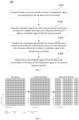
- an embodiment of the present application provides a method 200 for transmitting a signal, the method may be performed by a transmitting device, the transmitting device may be a terminal or a network-side device, and in other words, the method may be performed by software or hardware installed at a terminal.
- the method includes the following steps.
- bit data to be transmitted is encoded to obtain a modulation signal corresponding to the bit data to be transmitted.
- bit-level processing such as channel encoding may be performed according to a bit data stream to be transmitted to obtain the modulation signal corresponding to the bit data to be transmitted.
- the modulation signal is written into a first resource domain constructed by means of a Doppler dimension and a frequency dimension to obtain a modulation signal in the first resource domain.
- the modulation signal obtained by encoding may be mapped to the first resource domain (i.e., a Frequency-Doppler domain, which may be shortened to a DF domain) constructed by means of the Doppler dimension and the frequency dimension according to certain rules, and a specific mapping process of data symbols may be written sequentially in rows or sequentially in columns, which is not limited herein.
- the first resource domain i.e., a Frequency-Doppler domain, which may be shortened to a DF domain
- the modulation signal in the first resource domain is transformed into a second resource domain constructed by means of a time dimension and a frequency dimension to obtain a modulation signal in the second resource domain.
- a grid in the first resource domain may be the same or may be not the same size as a grid in the second resource domain.
- the modulation signal in the first resource domain may be directly transformed into the second resource domain constructed by means of the time dimension and the frequency dimension to obtain the modulation signal in the second resource domain.
- the modulation signal in the first resource domain may be transformed into a third resource domain (i.e., a Time-Frequency domain, which may be shortened to a virtual TF domain) constructed by means of a time dimension and a frequency dimension to obtain a modulation signal in the third resource domain.
- a grid in the third resource domain is the same size as the grid in the first resource domain. Then the modulation signal in the third resource domain is mapped to the second resource domain constructed by means of the time dimension and the frequency dimension and sequentially written into the second resource domain in rows or columns.
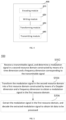
- FIG. 3 is a schematic diagram of a resource mapping process of a signal from a first resource domain to a second resource domain.
- the grid in the third resource domain may be the same size as the grid in the first resource domain, and a data stream in the first resource domain may be transformed into the third resource domain constructed by means of the time dimension and the frequency dimension.
- the modulation signal in the first resource domain may be transformed, in a Doppler direction and on the basis of an inverse Fourier transform, into the third resource domain constructed by means of the time dimension and the frequency dimension.
- the inverse Fourier transform may be such transform modes as an inverse discrete Fourier transform or a short-time inverse Fourier transform.
- a resource grid in the DF domain may be represented by M*N, M may be used to represent the number of sampling points in the frequency dimension, N may be used to represent the number of sampling points in the Doppler dimension, a modulation signal of each resource grid may be represented by X[m,d], and X[m,d] may be used to identify an m th modulation signal in the frequency dimension and a d th modulation signal in the Doppler dimension.
- N may be the number of points of the IDFT, which may take the same or different values in different frequency directions.
- a transmittable signal of the bit data to be transmitted is determined on the basis of the modulation signal in the second resource domain.
- a demodulation reference signal corresponding to the bit data to be transmitted may be mapped to the second resource domain to obtain a demodulation reference signal (DMRS) in the second resource domain.
- DMRS demodulation reference signal
- the DMRS and Data i.e., the modulation signal
- the transmittable signal is determined on the basis of the modulation signal and the demodulation reference signal in the second resource domain.
- the modulation signal in the second resource domain may be pre-encoded to obtain a pre-encoded signal corresponding to the modulation signal in the second resource domain, then the pre-encoded signal and the demodulation reference signal in the second resource domain are transformed into a time domain transmission signal, and the time domain transmission signal is determined as the transmittable signal.
- pre-encoding the modulation signal in the second resource domain not only a peak-to-average ratio can be reduced, but also a frequency diversity and a Doppler diversity gain can be obtained simultaneously, thus improving a demodulation performance of the user as a whole.
- DFT discrete Fourier transform
- the modulation signal in the second resource domain may be determined as the pre-encoded signal corresponding to the modulation signal in the second resource domain. That is, if the signal in the second resource domain is the multicarrier signal, there is no need for transmission pre-encoding for X[m, t], i.e., X[f, t] ⁇ X[m,t].
- resource mapping of ports and antennas may be performed on a resource block to be transmitted, and the process may realize mapping of data to the ports and the antennas through pre-encoded weights (which may be shortened to W weights).
- the pre-encoded weights on a data symbol (i.e., the pre-encoded signal) and a DMRS symbol may the same or different, specifically depending on the mode actually adopted by the system, which is not limited herein.
- the W weight may be calculated from a channel monitoring signal, or may also be obtained through feedback information of the transmitting device/receiving device, or may be selected and obtained from a preset weight set, and the process is not specifically limited by the present application.
- a frequency-time transform may be performed on the modulation signal and the demodulation reference signal in the second resource domain to obtain a time-domain signal (i.e., the transmittable signal), and then the transmittable signal may be transmitted out from radio-frequency radio at a radio-frequency unit through processes such as windowing and shaping filtering.
- the bit data to be transmitted is encoded to obtain the modulation signal corresponding to the bit data to be transmitted, the modulation signal is written into the first resource domain constructed by means of the Doppler dimension and the frequency dimension to obtain the modulation signal in the first resource domain, the modulation signal in the first resource domain is transformed into the second resource domain constructed by means of the time dimension and the frequency dimension to obtain the modulation signal in the second resource domain, and the transmittable signal of the bit data to be transmitted is determined on the basis of the modulation signal in the second resource domain.
- a new waveform-orthogonal frequency-Doppler space (OFDM) is proposed on the basis of an orthogonal frequency division multiplexing (OFDM) waveform.
- This waveform can not only be better downward compatible, but also may retain technical advantages of OFDM, at the same time has an effect of resisting the deterioration of the demodulation performance caused by a rapid time variation of a channel, increases the consideration of the Doppler diversity gain, and can improve the demodulation performance and user perception to a larger extent especially for a high-speed mobile user.
- the waveform technology can also weaken the influence of subband-level interference in the system or symbol-level interface of an inter-system, and improve an anti-interference capability.
- a performing subject for the method for transmitting the signal provided by the embodiment of the present application may be an apparatus for transmitting a signal.
- the apparatus for transmitting the signal performing a method for transmitting a loaded signal is used as an example in the embodiment of the present application to illustrate an apparatus for transmitting a signal provided by the embodiment of the present application.
- FIG. 4 is a schematic structural diagram of a transmitting device according to an embodiment of the present application.
- the transmitting device 400 includes: an encoding module 410, a writing module 420, a transforming module 430, and a transmitting module 440.
- the encoding module 410 is configured to encode bit data to be transmitted to obtain a modulation signal corresponding to the bit data to be transmitted.
- the writing module 420 is configured to write the modulation signal into a first resource domain constructed by means of a Doppler dimension and a frequency dimension to obtain a modulation signal in the first resource domain.
- the transforming module 430 is configured to transform the modulation signal in the first resource domain into a second resource domain constructed by means of a time dimension and a frequency dimension to obtain a modulation signal in the second resource domain.
- the transmitting module 440 is configured to determine a transmittable signal on the basis of the modulation signal in the second resource domain and transmit the transmittable signal of the bit data to be transmitted.
- the transmitting module 440 is configured to map a demodulation reference signal corresponding to the bit data to be transmitted to the second resource domain to obtain a demodulation reference signal in the second resource domain; and determine the transmittable signal on the basis of the modulation signal and the demodulation reference signal in the second resource domain.
- the transmitting module 440 is configured to pre-encode the modulation signal in the second resource domain to obtain a pre-encoded signal corresponding to the modulation signal in the second resource domain; and transform the pre-encoded signal and the demodulation reference signal in the second resource domain into a time domain transmission signal, and determine the time domain transmission signal as the transmittable signal.
- a grid in the first resource domain is not the same size as a grid in the second resource domain.
- the transforming module 430 is configured to transform the modulation signal in the first resource domain into a third resource domain constructed by means of a time dimension and a frequency dimension to obtain a modulation signal in the third resource domain, wherein a grid in the third resource domain is the same size as the grid in the first resource domain; and map the modulation signal in the third resource domain to the second resource domain constructed by means of the time dimension and the frequency dimension.
- the transforming module 430 is configured to transform, on the basis of an inverse Fourier transform, the modulation signal in the first resource domain into the third resource domain constructed by means of the time dimension and the frequency dimension.
- the modulation signal in the second resource domain is a single carrier signal
- the transmitting module is configured to pre-encode, on the basis of a discrete Fourier transform, the modulation signal in the second resource domain in a frequency direction to obtain the pre-encoded signal corresponding to the modulation signal in the second resource domain.
- the signal in the second resource domain is a multicarrier signal
- the transmitting module is configured to determine the modulation signal in the second resource domain as the pre-encoded signal corresponding to the modulation signal in the second resource domain.
- the modulation signal corresponding to the bit data to be transmitted is obtained by encoding the bit data to be transmitted, the modulation signal is written into the first resource domain constructed by means of the Doppler dimension and the frequency dimension to obtain the modulation signal in the first resource domain, the modulation signal in the first resource domain is transformed into the second resource domain constructed by means of the time dimension and the frequency dimension to obtain the modulation signal in the second resource domain, and the transmittable signal of the bit data to be transmitted is determined on the basis of the modulation signal in the second resource domain.
- OFDM waveform-orthogonal frequency-Doppler space
- OFDM orthogonal frequency division multiplexing
- This waveform can not only be better downward compatible, but also may retain technical advantages of OFDM, at the same time has an effect of resisting the deterioration of the demodulation performance caused by a rapid time variation of a channel, increases the consideration of the Doppler diversity gain, and can improve the demodulation performance and user perception to a larger extent especially for a high-speed mobile user.
- the waveform technology can also weaken the influence of subband-level interference in the system or symbol-level interface of an inter-system, and improve an anti-interference capability.
- the transmitting device in the embodiment of the present application may be an electronic device, such as an electronic device having an operating system, or may be a part in the electronic device, such as an integrated circuit or chip.
- the electronic device may be a terminal or may be a device other than the terminal.
- the transmitting device may include, but is not limited to, the types of the transmitting device 11 listed above, and the other device may be a server, network attached storage (NAS), etc., which is not specifically limited by the embodiment of the present application.
- the transmitting device provided by the embodiment of the present application can realize various processes realized by the method embodiments of FIG. 2 to FIG. 3 and achieve the same technical effect, which will not be repeated herein in order to avoid repetition.
- the method for transmitting the signal according to the embodiment of the present application is described in detail above in conjunction with FIG. 2 .
- a method for transmitting a signal according to another embodiment of the present application will be described in detail below in conjunction with FIG. 5 . It may be understood that the interaction of the receiving device with the transmitting device described from the side of the receiving device is the same as that described from the side of the transmitting device in the method shown in FIG. 2 , and the relevant description is appropriately omitted in order to avoid repetition.
- FIG. 5 is a schematic flowchart of implementing a method for transmitting a signal of an embodiment of the present application, which may be applied on the side of a receiving device, the receiving device may be a terminal or a network-side device, and as shown in FIG. 5 , the method 500 includes the following.
- S502 a transmittable signal is received, and a modulation signal in a second resource domain constructed by means of a time dimension and a frequency dimension corresponding to the transmittable signal is determined.
- a baseband obtains a time domain signal (i.e., the transmittable signal) in a digital domain through the transfer of a remote radio unit (RRU), then a frequency domain signal corresponding to the transmittable signal may be determined, and the frequency domain signal is inversely pre-encoded to obtain the modulation signal in the second resource domain constructed by means of the time dimension and the frequency dimension.
- a time domain signal i.e., the transmittable signal
- RRU remote radio unit
- a demodulation reference signal may be obtained on the basis of the frequency domain signal, a channel estimation and basis measurement are performed on the basis of the demodulation reference signal to determine a pre-encoded weight, the frequency domain signal is equalized on the basis of the pre-encoded weight to eliminate a channel response to obtain an equalized frequency domain signal, and inverse pre-encoding is performed using equalized X[f,t] to obtain X[m,t] (i.e., the modulation signal in the second resource domain).
- X[f,t] X[f, t].
- the modulation signal in the second resource domain is transformed into a first resource domain constructed by means of a Doppler dimension and a frequency dimension to obtain a modulation signal in the first resource domain.
- a grid in the first resource domain may be the same or may be not the same size as a grid in the second resource domain.
- the modulation signal in the second resource domain may be directly transformed into the first resource domain constructed by means of the Doppler dimension and the frequency dimension to obtain the modulation signal in the first resource domain.
- the modulation signal in the second resource domain may be mapped to a third resource domain constructed by means of a time dimension and a frequency dimension in accordance with a mapping relationship between a virtual DF domain and a physical DF domain consistent with the transmitting device.
- a grid in the third resource domain is the same size as the grid in the first resource domain, and a modulation signal in the third resource domain is transformed into the first resource domain constructed by means of the Doppler dimension and the frequency dimension to obtain the modulation signal in the first resource domain.
- inverse resource mapping may be performed on X[m,t] obtained by inverse pre-encoding and a virtual resource block in the virtual TF domain (i.e., the third resource domain) to obtain a TF domain signal on the virtual resource block, i.e., X[m, t] ⁇ X ⁇ [m ⁇ , t ⁇ ], and then, X ⁇ [m ⁇ , t ⁇ ] is transformed into the DF domain (i.e., the first resource domain).
- the transform of the signal from the virtual TF domain to the DF domain may be realized by means of transforms such as DFT and FFT/STFT.
- a value of N is related to whether a DMRS symbol carries data Re. Typically, there are only two values to select from, specifically related to a mapping pattern of the DMRS and the Data.
- a valid modulation signal may be extracted from the DF domain, and then modulation information is transferred to de-pre-encoding, de-modulation, a de-layering module and a bit-level processing module to obtain valid decoded bit data. If a DMRS and a modulation signal of a terminal use the same pre-encoded weight, inverse pre-encoding may not be performed here.
- the extracted modulation signal may be decoded to obtain the bit data to be processed and a first check result, wherein the first check result may be a check result generated by a transmitting device on the basis of the bit data to be processed, a second check result is then generated on the basis of the bit data to be processed, and whether the bit data to be processed is tampered within a transmission process is determined on the basis of the second check result and the first check result.
- the first check result may be a cyclic redundancy check (CRC) result.
- FIG. 6 is a performance comparison of two waveforms, ODFS and OFDM, in a line of sight (Los) channel scenario.
- FIG. 7 is a performance comparison of two waveforms, ODFS and OFDM, in a non line of sight (NLos) channel scenario.
- FIG. 6 and FIG. 7 are the performance comparisons of the two waveforms, ODFS and OFDM, in different channel scenarios obtained through simulation experiments, and from FIG. 6 and FIG. 7 , it may be seen that a performance of the OFDM waveform proposed by the present application is higher than that of the ODFS waveform in the Los channel scenario and in the NLos channel scenario.
- the transmittable signal is received, the modulation signal in the second resource domain constructed by means of the time dimension and the frequency dimension corresponding to the transmittable signal is determined, the modulation signal in the second resource domain is transformed into the first resource domain constructed by means of the Doppler dimension and the frequency dimension to obtain the modulation signal in the first resource domain, the modulation signal in the first resource domain is extracted, and the extracted modulation signal is decoded to obtain the bit data to be processed.
- OFDM waveform-orthogonal frequency-Doppler space
- OFDM orthogonal frequency division multiplexing
- This waveform can not only be better downward compatible, but also may retain technical advantages of OFDM, at the same time has an effect of resisting the deterioration of the demodulation performance caused by a rapid time variation of a channel, increases the consideration of the Doppler diversity gain, and can improve the demodulation performance and user perception to a larger extent especially for a high-speed mobile user.
- the waveform technology can also weaken the influence of subband-level interference in the system or symbol-level interface of an inter-system, and improve an anti-interference capability.
- an embodiment of the present application can realize various processes realized by the embodiments of the method for transmitting the signal of FIG. 2 to FIG. 3 or various processes corresponding thereto, and achieve the same or corresponding technical effect, which will not be repeated herein in order to avoid repetition.
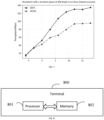
- an embodiment of the present application further provides a terminal 800, including a processor 801 and a memory 802, the memory 802 stores thereon a program or an instruction that can be run on the processor 801, and the program or instruction, when executed by the processor 801, implements the various steps of the embodiment of the method for transmitting the signal, and can achieve the same technical effect, which will not be repeated herein in order to avoid repetition.
- the terminal may further include but is not limited to: a radio frequency unit, a network module, an audio output unit, an input unit, a sensor, a display unit, a user input unit, an interface unit, a memory, and at least some of parts in a processor, etc.
- the terminal may further include a power source (e.g., a battery) that supplies power to various parts, and the power source may be logically connected to the processor through a power management system, so as to realize functions such as managing charging, discharging, and power consumption management through the power management system.
- a power source e.g., a battery
- the terminal structure illustrated in the drawing does not constitute a limitation of the terminal, and the terminal may include more or fewer parts than illustrated, or a combination of certain parts, or a different arrangement of parts, which will not be repeated herein.
- An embodiment of the present application further provides a readable storage medium, the readable storage medium stores a program or an instruction thereon, and the program or instruction, when executed by a processor, implements various processes of the embodiment of the method for transmitting the signal, and can achieve the same technical effect, which will not be repeated herein in order to avoid repetition.
- the processor is the processor in the terminal described in the above embodiment.
- the readable storage medium includes a computer-readable storage medium such as a computer read-only memory (ROM), a random access memory (RAM), a magnetic disk or an optical disk.
- FIG. 9 is a schematic structural diagram of a receiving device according to an embodiment of the present application.
- the receiving device 900 includes: a receiving module 910, a transforming module 920, and an extracting module 930.
- the receiving module 910 is configured to receive a transmittable signal, and determine a modulation signal in a second resource domain constructed by means of a time dimension and a frequency dimension corresponding to the transmittable signal.
- the transforming module 920 is configured to transform the modulation signal in the second resource domain into a first resource domain constructed by means of a Doppler dimension and a frequency dimension to obtain a modulation signal in the first resource domain.
- the extracting module 930 is configured to extract the modulation signal in the first resource domain, and decode the extracted modulation signal to obtain bit data to be processed.
- the receiving module 910 is configured to determine a frequency domain signal corresponding to the transmittable signal; and inversely pre-encode the frequency domain signal to obtain the modulation signal in the second resource domain constructed by means of the time dimension and the frequency dimension.
- a grid in the first resource domain is not the same size as a grid in the second resource domain.
- the transforming module 920 is configured to map the modulation signal in the second resource domain into a third resource domain constructed by means of a time dimension and a frequency dimension, wherein a grid in the third resource domain is the same size as the grid in the first resource domain; and transform a modulation signal in the third resource domain into the first resource domain constructed by means of the Doppler dimension and the frequency dimension to obtain the modulation signal in the first resource domain.
- the extracting module 930 is configured to decode the extracted modulation signal to obtain the bit data to be processed and a first check result, wherein the first check result is a check result generated by a transmitting device on the basis of the bit data to be processed; and generate a second check result on the basis of the bit data to be processed, and determine, on the basis of the second check result and the first check result, whether the bit data to be processed is tampered within a transmission process.
- the receiving module 910 is configured to obtain a demodulation reference signal on the basis of the frequency domain signal, and determine a pre-encoded weight on the basis of the demodulation reference signal; and equalize the frequency domain signal on the basis of the pre-encoded weight to obtain an equalized frequency domain signal, and determine the equalized frequency domain signal as the modulation signal in the second resource domain.
- the apparatus for transmitting the signal provided by the embodiment of the present application can realize various processes realized by the embodiment of the method for transmitting of FIG. 5 or various processes corresponding thereto, and achieve the same or corresponding technical effect, which will not be repeated herein in order to avoid repetition.
- An embodiment of the present application further provides a receiving device, the embodiment of the receiving device corresponds to the embodiment of the above method for transmitting the signal, and each implementation process and implementation mode of the above method embodiment may be applicable to the embodiment of the receiving device, and can achieve the same technical effect.
- the network device 1000 includes: an antenna 1001, a radio frequency apparatus 1002, a baseband apparatus 1003, a processor 1004, and a memory 1005.
- the antenna 1001 is connected to the radio frequency apparatus 1002.
- the radio frequency apparatus 1002 receives information through the antenna 1001 and transmits the received information to the baseband apparatus 1003 for processing.
- the baseband apparatus 1003 processes the information to be transmitted and transmits it to the radio frequency apparatus 1002, and the radio frequency apparatus 1002 processes the received information and transmits it through the antenna 1001.
- the method performed by the network-side device in the above embodiment may be realized in the baseband apparatus 1003, and the baseband apparatus 1003 includes a baseband processor.
- the baseband apparatus 1003 may, for example, include at least one baseband board on which a plurality of chips are arranged, and as shown in FIG. 10 , one of the chips, for example, is the baseband processor, and connected to the memory 1005 through a bus interface to call a program in the memory 1005 to perform the network device operation shown in the above method embodiment.
- the network-side device may further include a network interface 1006, which is, for example, a common public radio interface (CPRI).
- a network interface 1006 which is, for example, a common public radio interface (CPRI).
- CPRI common public radio interface
- the network-side device 1000 of the embodiment of the present application further includes: an instruction or program stored on the memory 1005 and runnable on the processor 1004, and the processor 1004 calls the instruction or program in the memory 1005 to perform the method performed by the modules shown in FIG. 9 , and achieves the same technical effect, which is not repeated herein in order to avoid repetition.
- An embodiment of the present application further provides a readable storage medium, the readable storage medium stores a program or an instruction thereon, and the program or instruction, when executed by a processor, implements the various processes of the embodiment of the method for transmitting the signal, and can achieve the same technical effect, which will not be repeated herein in order to avoid repetition.
- the processor is a processor in the transmitting device described in the above embodiment.
- the readable storage medium includes a computer-readable storage medium such as a computer read-only memory (ROM), a random access memory (RAM), a magnetic disk or an optical disk.
- An embodiment of the present application further provides a chip, the chip includes a processor and a communication interface, the communication interface and the processor are coupled, and the processor is configured to run a program or an instruction to implement the various processes of the above embodiment of the method for transmitting the signal, and can achieve the same technical effect, which will not be repeated herein in order to avoid repetition.
- the chip referred to in the embodiment of the present application may also be referred to as a system-level chip, a system chip, a chip system, or chip of a system on chip, etc.
- An embodiment of the present application further provides a computer program/program product, the computer program/program product is stored in a storage medium, and the computer program/program product is executed by at least one processor to implement the various processes of the embodiment of the method for transmitting the signal, and can achieve the same technical effect, which will not be repeated herein in order to avoid repetition.
- An embodiment of the present application further provides a system for transmitting a signal, including: a transmitting device and a receiving device, the transmitting device may be configured to perform the steps of the method for transmitting the signal as described above, and the receiving device may be configured to perform the steps of the method for transmitting the signal as described above.
- the technical solution of the present application can be embodied in a form of a computer software product essentially or on the part of contributions to the prior art.
- the computer software product is stored in a storage medium (such as the ROM/RAM, the magnetic disc and the optical disc) and includes a plurality of instructions used to enable a terminal (which may be a mobile phone, a computer, a server, an air conditioner, or a network device, etc.) to perform the methods described in various embodiments of the present application.
Landscapes
- Engineering & Computer Science (AREA)
- Computer Networks & Wireless Communication (AREA)
- Signal Processing (AREA)
- Physics & Mathematics (AREA)
- Discrete Mathematics (AREA)
- General Physics & Mathematics (AREA)
- Mobile Radio Communication Systems (AREA)
Applications Claiming Priority (2)
| Application Number | Priority Date | Filing Date | Title |
|---|---|---|---|
| CN202211006871.5A CN117675474B (zh) | 2022-08-22 | 信号的传输方法、装置、终端和存储介质 | |
| PCT/CN2023/113110 WO2024041416A1 (zh) | 2022-08-22 | 2023-08-15 | 信号的传输方法、装置、终端和存储介质 |
Publications (2)
| Publication Number | Publication Date |
|---|---|
| EP4572392A1 true EP4572392A1 (de) | 2025-06-18 |
| EP4572392A4 EP4572392A4 (de) | 2025-11-19 |
Family
ID=90012522
Family Applications (1)
| Application Number | Title | Priority Date | Filing Date |
|---|---|---|---|
| EP23856506.3A Pending EP4572392A4 (de) | 2022-08-22 | 2023-08-15 | Signalübertragungsverfahren und -vorrichtung, endgerät und speichermedium |
Country Status (3)
| Country | Link |
|---|---|
| US (1) | US20260059500A1 (de) |
| EP (1) | EP4572392A4 (de) |
| WO (1) | WO2024041416A1 (de) |
Family Cites Families (3)
| Publication number | Priority date | Publication date | Assignee | Title |
|---|---|---|---|---|
| EP3324591A1 (de) * | 2016-11-17 | 2018-05-23 | Nokia Technologies OY | Verarbeitung von modulierten signalen zur drahtlosen übertragung zwischen einem mobilknoten und einem weiteren knoten |
| EP3809656B1 (de) * | 2019-10-14 | 2024-08-14 | Volkswagen AG | Drahtloskommunikationsvorrichtung und zugehörige einrichtung, verfahren und computerprogramm |
| CN114158090B (zh) * | 2020-09-04 | 2025-07-15 | 维沃移动通信有限公司 | 数据发送方法、数据接收处理方法及相关设备 |
-
2023
- 2023-08-15 WO PCT/CN2023/113110 patent/WO2024041416A1/zh not_active Ceased
- 2023-08-15 EP EP23856506.3A patent/EP4572392A4/de active Pending
- 2023-08-15 US US19/105,797 patent/US20260059500A1/en active Pending
Also Published As
| Publication number | Publication date |
|---|---|
| WO2024041416A1 (zh) | 2024-02-29 |
| US20260059500A1 (en) | 2026-02-26 |
| EP4572392A4 (de) | 2025-11-19 |
| CN117675474A (zh) | 2024-03-08 |
Similar Documents
| Publication | Publication Date | Title |
|---|---|---|
| US20250220647A1 (en) | Resource configuration method and apparatus, and terminal and network side device | |
| EP4459941A1 (de) | Kommunikationsverfahren und -vorrichtung sowie zugehörige vorrichtung | |
| EP4462713A1 (de) | Portabbildungsverfahren für klangreferenzsignal und endgerät | |
| WO2023138456A1 (zh) | 信号处理方法、装置及通信设备 | |
| CN117015057A (zh) | 物理随机接入信道传输资源确定方法、装置、终端和设备 | |
| WO2023280094A1 (zh) | 信号发送方法、接收方法、装置及设备 | |
| CN115811386B (zh) | 信号传输方法、装置、设备及存储介质 | |
| EP4598200A1 (de) | Dci-analyseverfahren und -vorrichtung, dynamisches wellenformumschaltbestimmungsverfahren, uplink-empfangsbestimmungsverfahren, endgerät und netzwerkseitige vorrichtung | |
| WO2024017025A1 (zh) | 导频参数配置方法及设备 | |
| WO2023231924A1 (zh) | 信号发送方法、发送设备及接收设备 | |
| CN119212074A (zh) | 定位方法、装置及网通信设备 | |
| CN116896432A (zh) | 解调参考信号传输方法、装置、终端及网络侧设备 | |
| EP4572392A1 (de) | Signalübertragungsverfahren und -vorrichtung, endgerät und speichermedium | |
| US20250023686A1 (en) | Demodulation Reference Signal Transmission Method and Apparatus, Terminal, and Network-Side Device | |
| CN117675474B (zh) | 信号的传输方法、装置、终端和存储介质 | |
| WO2024217360A1 (zh) | 感知信号传输方法、装置、终端及网络侧设备 | |
| CN116684050B (zh) | 信息确定方法、装置、终端及可读存储介质 | |
| CN116346560B (zh) | 信号生成和接收方法及设备 | |
| CN115549853B (zh) | 传输处理方法、装置、通信设备及可读存储介质 | |
| CN107592676B (zh) | 一种数据生成方法及装置、发射机、终端 | |
| CN118523993A (zh) | 低功耗信号的生成方法、装置、终端及网络侧设备 | |
| CN102148779B (zh) | 一种信号检测的方法及装置 | |
| CN116938301A (zh) | 信息传输方法、装置、终端及网络侧设备 | |
| CN116938422A (zh) | Srs的序列生成方法、序列指示方法、终端及网络侧设备 | |
| CN116155445A (zh) | 上行预编码信息接收方法、指示方法、终端及网络侧设备 |
Legal Events
| Date | Code | Title | Description |
|---|---|---|---|
| STAA | Information on the status of an ep patent application or granted ep patent |
Free format text: STATUS: THE INTERNATIONAL PUBLICATION HAS BEEN MADE |
|
| PUAI | Public reference made under article 153(3) epc to a published international application that has entered the european phase |
Free format text: ORIGINAL CODE: 0009012 |
|
| STAA | Information on the status of an ep patent application or granted ep patent |
Free format text: STATUS: REQUEST FOR EXAMINATION WAS MADE |
|
| 17P | Request for examination filed |
Effective date: 20250314 |
|
| AK | Designated contracting states |
Kind code of ref document: A1 Designated state(s): AL AT BE BG CH CY CZ DE DK EE ES FI FR GB GR HR HU IE IS IT LI LT LU LV MC ME MK MT NL NO PL PT RO RS SE SI SK SM TR |
|
| REG | Reference to a national code |
Ref country code: DE Ref legal event code: R079 Free format text: PREVIOUS MAIN CLASS: H04W0028060000 Ipc: H04L0027260000 |
|
| A4 | Supplementary search report drawn up and despatched |
Effective date: 20251021 |
|
| RIC1 | Information provided on ipc code assigned before grant |
Ipc: H04L 27/26 20060101AFI20251015BHEP Ipc: H04W 28/06 20090101ALI20251015BHEP |
|
| DAV | Request for validation of the european patent (deleted) | ||
| DAX | Request for extension of the european patent (deleted) |