EP4573945A1 - Dispositif d'inhalation, procédé de commande et programme - Google Patents
Dispositif d'inhalation, procédé de commande et programme Download PDFInfo
- Publication number
- EP4573945A1 EP4573945A1 EP22955702.0A EP22955702A EP4573945A1 EP 4573945 A1 EP4573945 A1 EP 4573945A1 EP 22955702 A EP22955702 A EP 22955702A EP 4573945 A1 EP4573945 A1 EP 4573945A1
- Authority
- EP
- European Patent Office
- Prior art keywords
- heating
- temperature
- inhalation device
- unit
- authentication processing
- Prior art date
- Legal status (The legal status is an assumption and is not a legal conclusion. Google has not performed a legal analysis and makes no representation as to the accuracy of the status listed.)
- Pending
Links
Images







Classifications
-
- A—HUMAN NECESSITIES
- A24—TOBACCO; CIGARS; CIGARETTES; SIMULATED SMOKING DEVICES; SMOKERS' REQUISITES
- A24F—SMOKERS' REQUISITES; MATCH BOXES; SIMULATED SMOKING DEVICES
- A24F40/00—Electrically operated smoking devices; Component parts thereof; Manufacture thereof; Maintenance or testing thereof; Charging means specially adapted therefor
- A24F40/50—Control or monitoring
- A24F40/57—Temperature control
-
- A—HUMAN NECESSITIES
- A24—TOBACCO; CIGARS; CIGARETTES; SIMULATED SMOKING DEVICES; SMOKERS' REQUISITES
- A24F—SMOKERS' REQUISITES; MATCH BOXES; SIMULATED SMOKING DEVICES
- A24F40/00—Electrically operated smoking devices; Component parts thereof; Manufacture thereof; Maintenance or testing thereof; Charging means specially adapted therefor
- A24F40/10—Devices using liquid inhalable precursors
-
- A—HUMAN NECESSITIES
- A24—TOBACCO; CIGARS; CIGARETTES; SIMULATED SMOKING DEVICES; SMOKERS' REQUISITES
- A24F—SMOKERS' REQUISITES; MATCH BOXES; SIMULATED SMOKING DEVICES
- A24F40/00—Electrically operated smoking devices; Component parts thereof; Manufacture thereof; Maintenance or testing thereof; Charging means specially adapted therefor
- A24F40/20—Devices using solid inhalable precursors
-
- A—HUMAN NECESSITIES
- A24—TOBACCO; CIGARS; CIGARETTES; SIMULATED SMOKING DEVICES; SMOKERS' REQUISITES
- A24F—SMOKERS' REQUISITES; MATCH BOXES; SIMULATED SMOKING DEVICES
- A24F40/00—Electrically operated smoking devices; Component parts thereof; Manufacture thereof; Maintenance or testing thereof; Charging means specially adapted therefor
- A24F40/40—Constructional details, e.g. connection of cartridges and battery parts
-
- A—HUMAN NECESSITIES
- A24—TOBACCO; CIGARS; CIGARETTES; SIMULATED SMOKING DEVICES; SMOKERS' REQUISITES
- A24F—SMOKERS' REQUISITES; MATCH BOXES; SIMULATED SMOKING DEVICES
- A24F40/00—Electrically operated smoking devices; Component parts thereof; Manufacture thereof; Maintenance or testing thereof; Charging means specially adapted therefor
- A24F40/40—Constructional details, e.g. connection of cartridges and battery parts
- A24F40/46—Shape or structure of electric heating means
-
- A—HUMAN NECESSITIES
- A24—TOBACCO; CIGARS; CIGARETTES; SIMULATED SMOKING DEVICES; SMOKERS' REQUISITES
- A24F—SMOKERS' REQUISITES; MATCH BOXES; SIMULATED SMOKING DEVICES
- A24F40/00—Electrically operated smoking devices; Component parts thereof; Manufacture thereof; Maintenance or testing thereof; Charging means specially adapted therefor
- A24F40/40—Constructional details, e.g. connection of cartridges and battery parts
- A24F40/49—Child proofing
-
- A—HUMAN NECESSITIES
- A24—TOBACCO; CIGARS; CIGARETTES; SIMULATED SMOKING DEVICES; SMOKERS' REQUISITES
- A24F—SMOKERS' REQUISITES; MATCH BOXES; SIMULATED SMOKING DEVICES
- A24F40/00—Electrically operated smoking devices; Component parts thereof; Manufacture thereof; Maintenance or testing thereof; Charging means specially adapted therefor
- A24F40/50—Control or monitoring
-
- A—HUMAN NECESSITIES
- A24—TOBACCO; CIGARS; CIGARETTES; SIMULATED SMOKING DEVICES; SMOKERS' REQUISITES
- A24F—SMOKERS' REQUISITES; MATCH BOXES; SIMULATED SMOKING DEVICES
- A24F40/00—Electrically operated smoking devices; Component parts thereof; Manufacture thereof; Maintenance or testing thereof; Charging means specially adapted therefor
- A24F40/50—Control or monitoring
- A24F40/51—Arrangement of sensors
-
- A—HUMAN NECESSITIES
- A24—TOBACCO; CIGARS; CIGARETTES; SIMULATED SMOKING DEVICES; SMOKERS' REQUISITES
- A24F—SMOKERS' REQUISITES; MATCH BOXES; SIMULATED SMOKING DEVICES
- A24F40/00—Electrically operated smoking devices; Component parts thereof; Manufacture thereof; Maintenance or testing thereof; Charging means specially adapted therefor
- A24F40/50—Control or monitoring
- A24F40/53—Monitoring, e.g. fault detection
-
- A—HUMAN NECESSITIES
- A24—TOBACCO; CIGARS; CIGARETTES; SIMULATED SMOKING DEVICES; SMOKERS' REQUISITES
- A24F—SMOKERS' REQUISITES; MATCH BOXES; SIMULATED SMOKING DEVICES
- A24F40/00—Electrically operated smoking devices; Component parts thereof; Manufacture thereof; Maintenance or testing thereof; Charging means specially adapted therefor
- A24F40/60—Devices with integrated user interfaces
-
- A—HUMAN NECESSITIES
- A24—TOBACCO; CIGARS; CIGARETTES; SIMULATED SMOKING DEVICES; SMOKERS' REQUISITES
- A24F—SMOKERS' REQUISITES; MATCH BOXES; SIMULATED SMOKING DEVICES
- A24F40/00—Electrically operated smoking devices; Component parts thereof; Manufacture thereof; Maintenance or testing thereof; Charging means specially adapted therefor
- A24F40/65—Devices with integrated communication means, e.g. wireless communication means
Definitions
- the present invention relates to an inhalation device, a control method, and a program.
- an inhaler that generates an aerosol to which a flavor component is applied and allows a user to inhale the generated aerosol.
- Such an inhaler typically delivers, to the user, the aerosol generated by heating a base material containing an aerosol source with a heating unit (also referred to as a "heating element") which is an electrical resistance heater or an induction heater.
- a heating unit also referred to as a "heating element”
- such an inhaler also has a so-called "child resistance function" in order to prevent an occurrence of inconvenience caused by misuse by a child (for example, an infant and a young child).
- Patent Literature 1 discloses a technique in which a vaporizer receives information associated with a user of the vaporizer, determines an age of the user based on the received information, and unlocks the vaporizer to activate an operation of the vaporizer based on the age of the user satisfying a threshold.
- Patent Literature 2 discloses a technique in which use of an electronic smoking article is limited to an individual having a specific fingerprint or an individual having a mobile device having a key for unlocking the smoking article by a fingerprint authentication or a technique of performing unlocking after RFID check in a mobile device in which an RFID reader is installed.
- the present invention is to provide an inhalation device, a control method, and a program capable of improving safety and security of the inhalation device and preventing a decrease in convenience associated with the improvement in the safety and the security.
- a first aspect of the present invention is an inhalation device that generates an aerosol from a base material including an aerosol source, the inhalation device including:
- a second aspect of the present invention is a control method including: a computer, for controlling an operation of an inhalation device that includes a heating unit for heating a base material including an aerosol source and that generates an aerosol by the heating unit heating the base material, performing the following processing:
- a third aspect of the present invention is a program causing a computer, for controlling an operation of an inhalation device that includes a heating unit for heating a base material including an aerosol source and that generates an aerosol by the heating unit heating the base material, to perform the following processing:
- an inhalation device a control method, and a program capable of improving safety and security of the inhalation device and preventing a decrease in convenience associated with the improvement in the safety and the security.
- An inhalation device of the present embodiment is a device that generates a substance to be inhaled by a user.
- the substance generated by the inhalation device will be described as an aerosol.
- the substance generated by the inhalation device may be a gas.
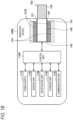
- FIG. 1A is a schematic diagram schematically illustrating a first configuration example of the inhalation device.
- an inhalation device 100A includes a power supply unit 110, a cartridge 120, and a flavor imparting cartridge 130.
- the power supply unit 110 includes a power supply 111A, a sensor unit 112A, a notification unit 113A, a storage unit 114A, a communication unit 115A, and a control unit 116A.
- the cartridge 120 includes a heating unit 121A, a liquid guide portion 122, and a liquid storage portion 123.
- the flavor imparting cartridge 130 includes a flavor source 131 and a mouthpiece 124.
- An air flow path 180 is formed in the cartridge 120 and the flavor imparting cartridge 130.
- the power supply 111A stores electric power.
- the power supply 111A supply the electric power to each component of the inhalation device 100A under control of the control unit 116A.
- the power supply 111A may be implemented by, for example, a rechargeable battery such as a lithium-ion secondary battery.
- the sensor unit 112A acquires various types of information related to the inhalation device 100A.
- the sensor unit 112A is implemented by a pressure sensor such as a condenser microphone, a flow rate sensor, a temperature sensor, or the like, and acquires a value associated with inhalation of the user.
- the sensor unit 112A is implemented by an input device for receiving an input of information from the user, such as an operation button or a switch.
- the sensor unit 112A includes a pressure sensor (also referred to as a "puff sensor”) that detects a change in a pressure (that is, an internal pressure) inside the inhalation device 100A caused by the inhalation of the user.
- the sensor unit 112A may include a flow rate sensor that detects a flow rate generated by the inhalation of the user, and a temperature sensor (also referred to as a "puff thermistor”) that detects a temperature of the heating unit 121A or around the heating unit 121A.
- the notification unit 113A notifies the user of the information.
- Examples of the notification unit 113A include a light emitting device (for example, a light emitting device 23a to be described later) that emits light, a display device (for example, a display device 23b to be described later) that displays an image, a sound output device that outputs sound, or a vibration device that vibrates.
- the storage unit 114A stores various types of information for an operation of the inhalation device 100A.
- the storage unit 114A is implemented by, for example, a nonvolatile storage medium such as a flash memory.
- the communication unit 115A is a communication interface capable of performing communication conforming to any wired or wireless communication standard.
- a communication standard for example, a standard using Wi-Fi (registered trademark), Bluetooth (registered trademark), Bluetooth Low Energy (BLE (registered trademark)), Near Field Communication (NFC), or Low Power Wide Area (LPWA) may be adopted.
- the control unit 116A functions as an arithmetic processing device and a control device, and controls overall operations in the inhalation device 100A according to various programs.
- the control unit 116A is implemented by, for example, an electronic circuit such as a central processing unit (CPU) or a microprocessor.
- the liquid storage portion 123 stores an aerosol source. That is, the cartridge 120 including the liquid storage portion 123 for storing the aerosol source is an example of a base material including the aerosol source.
- the aerosol source is atomized to generate an aerosol.
- the aerosol source is, for example, a liquid such as water or a polyhydric alcohol such as glycerin and propylene glycol.
- the aerosol source may contain a flavor component derived from tobacco or non-tobacco.
- the inhalation device 100A is a medical inhaler such as a nebulizer
- the aerosol source may include a medical agent.
- the liquid guide portion 122 guides the aerosol source, which is a liquid stored in the liquid storage portion 123, from the liquid storage portion 123 and holds the aerosol source.
- the liquid guide portion 122 is, for example, a wick formed by twisting a fibrous material such as glass fibers or a porous material such as porous ceramics. In that case, the aerosol source stored in the liquid storage portion 123 is induced by a capillary effect of the wick.
- the heating unit 121A heats the aerosol source to atomize the aerosol source to generate the aerosol.
- the heating unit 121A is implemented by a coil and wound around the liquid guide portion 122.
- the heating unit 121A generates heat, the aerosol source held by the liquid guide portion 122 is heated and atomized, and the aerosol is generated.
- the heating unit 121A generates heat when supplied with power from the power supply 111A.
- the heating unit 121A may be supplied with power when the sensor unit 112A detects that the user starts the inhalation and/or that predetermined information is input.
- the supply of power to the heating unit 121A may be stopped.
- An inhalation operation of the user with respect to the inhalation device 100A can be detected, for example, based on the fact that the pressure (internal pressure) inside the inhalation device 100A detected by the puff sensor exceeds a predetermined threshold.
- the flavor source 131 is a component for imparting the flavor component to the aerosol.
- the flavor source 131 may contain the flavor component derived from tobacco or non-tobacco.
- the air flow path 180 is a flow path of air inhaled by the user.
- the air flow path 180 has a tubular structure having an air inflow hole 181 which is an inlet of air into the air flow path 180 and an air outflow hole 182 which is an outlet of air from the air flow path 180 as both ends.
- the liquid guide portion 122 is disposed on an upstream side (a side close to the air inflow hole 181), and the flavor source 131 is disposed on a downstream side (a side close to the air outflow hole 182).
- the air flowing in from the air inflow hole 181 in response to the inhalation of the user is mixed with the aerosol generated by the heating unit 121A, passes through the flavor source 131, and is transported to the air outflow hole 182 as indicated by an arrow 190.
- a mixed fluid of the aerosol and the air passes through the flavor source 131, the flavor component contained in the flavor source 131 is imparted to the aerosol.
- the mouthpiece 124 is a member that can be held by the user in his/her mouth during the inhalation.
- the air outflow hole 182 is disposed in the mouthpiece 124. The user can take in the mixed fluid of the aerosol and the air into the oral cavity by holding the mouthpiece 124 in his/her mouth and inhaling the mouthpiece 124. That is, the inhalation device 100A delivers the generated aerosol to the user via the mouthpiece 124.
- the configuration example of the inhalation device 100A has been described above. It is needless to say that the configuration of the inhalation device 100A is not limited to the above, and may adopt various configurations as exemplified below.
- the inhalation device 100A may not include the flavor imparting cartridge 130.
- the mouthpiece 124 is provided on the cartridge 120.
- the inhalation device 100A may further include a second heating unit that heats the flavor source 131.
- the second heating unit is formed in a film shape, for example, and is disposed to cover an outer periphery of the flavor imparting cartridge 130. Then, the second heating unit generates heat when being supplied with electric power from the power supply 111A, and heats the flavor imparting cartridge 130 from the outer periphery.
- a temperature of the flavor source 131 can be increased and an amount of the flavor component applied to the aerosol can be increased, as compared with a case where the second heating unit is not provided.
- the second heating unit is controlled such that an actual temperature becomes a predetermined target temperature, for example, similarly to a heating unit 121B to be described later.
- a heating unit 121B similarly to a heating unit 121B to be described later.
- an inhalation device 100A having such a second heating unit is also referred to as a "hybrid-type inhalation device 100A".
- the inhalation device 100A may include a plurality of types of aerosol sources.
- a plurality of types of aerosols generated from the plurality of types of aerosol sources may be mixed in the air flow path 180 to cause a chemical reaction, thereby generating another type of aerosol.
- a method for atomizing the aerosol source is not limited to heating by the heating unit 121A.
- the method for atomizing the aerosol source may be vibratory atomization or induction heating.
- FIG. 1B is a schematic diagram schematically illustrating a second configuration example of the inhalation device.
- an inhalation device 100B according to the present configuration example includes a power supply 111B, a sensor unit 112B, a notification unit 113B, a storage unit 114B, a communication unit 115B, a control unit 116B, a heating unit 121B, an accommodating portion 140, and a heat insulating portion 144.
- the power supply 111B, the sensor unit 112B, the notification unit 113B, the storage unit 114B, the communication unit 115B, and the control unit 116B are substantially the same as the corresponding components provided in the inhalation device 100A according to the first configuration example.
- the accommodating portion 140 has an internal space 141, and holds the stick-type base material 150 while accommodating a part of the stick-type base material 150 in the internal space 141.
- the accommodating portion 140 has an opening 142 through which the internal space 141 communicates with the outside, and holds the stick-type base material 150 inserted into the internal space 141 from the opening 142.
- the accommodating portion 140 is a cylindrical body having the opening 142 and a bottom portion 143 as a bottom surface, and defines the columnar internal space 141.
- An air flow path for supplying air to the internal space 141 is connected to the accommodating portion 140.
- An air inflow hole which is an inlet of air to the air flow path, is disposed, for example, in a side surface of the inhalation device 100.
- An air outflow hole, which is an outlet of air from the air flow path to the internal space 141 is disposed, for example, in the bottom portion 143.
- the stick-type base material 150 includes a base material portion 151 and an inhalation port portion 152.
- the base material portion 151 includes the aerosol source. That is, the stick-type base material 150 is another example of the base material including the aerosol source.
- the aerosol source contains the flavor component derived from tobacco or non-tobacco.
- the aerosol source may include a medical agent.
- the aerosol source may be a liquid such as water and polyhydric alcohols such as glycerin and propylene glycol, including the flavor component derived from tobacco or non-tobacco, or may be a solid including the flavor component derived from tobacco or non-tobacco.
- the heating unit 121B is formed in a film shape, and is disposed to cover an outer periphery of the accommodating portion 140. Then, when the heating unit 121B generates heat, the base material portion 151 of the stick-type base material 150 is heated from the outer periphery thereof, and the aerosol is generated.
- the heat insulating portion 144 prevents heat transfer from the heating unit 121B to other components.
- the heat insulating portion 144 is made of a vacuum heat insulating material or an aerogel heat insulating material.
- the configuration example of the inhalation device 100B has been described above. It is needless to say that the configuration of the inhalation device 100B is not limited to the above, and may adopt various configurations as exemplified below.
- the heating unit 121B may be formed in a blade shape and disposed to protrude from the bottom portion 143 of the accommodating portion 140 into the internal space 141.
- the blade-shaped heating unit 121B is inserted into the base material portion 151 of the stick-type base material 150, and heats the base material portion 151 of the stick-type base material 150 from the inside.
- the heating unit 121B may be disposed to cover the bottom portion 143 of the accommodating portion 140.
- the heating unit 121B may be configured as a combination of two or more of a first heating unit covering the outer periphery of the accommodating portion 140, a blade-shaped second heating unit, and a third heating unit covering the bottom portion 143 of the accommodating portion 140.
- the accommodating portion 140 may include an opening and closing mechanism such as a hinge that opens and closes a part of an outer shell forming the internal space 141.
- the accommodating portion 140 may open and close the outer shell to sandwich and accommodate the stick-type base material 150 inserted into the internal space 141.
- the heating unit 121B may be provided at a sandwiching place in the accommodating portion 140, and may heat the stick-type base material 150 while pressing the stick-type base material 150.
- the method for atomizing the aerosol source is not limited to heating by the heating unit 121B.
- the method for atomizing the aerosol source may be induction heating.
- the inhalation device 100B at least includes an electromagnetic induction source such as a coil for generating a magnetic field, instead of the heating unit 121B.
- a susceptor that generates heat due to the induction heating may be provided in the inhalation device 100B or may be provided in the stick-type base material 150.
- the inhalation device 100B may further include the heating unit 121A, the liquid guide portion 122, the liquid storage portion 123, and the air flow path 180 according to the first configuration example, and the air flow path 180 may supply air to the internal space 141.
- the mixed fluid of the aerosol and the air generated by the heating unit 121A flows into the internal space 141, is further mixed with the aerosol generated by the heating unit 121B, and reaches the oral cavity of the user.
- an external configuration example of an inhalation device 100 (100A, 100B) of the present embodiment will be described.
- the inhalation device 100 is described as being the inhalation device 100B illustrated in FIG. 1B , but the present invention is not limited thereto, and the same can be applied to a case where the inhalation device 100 is the inhalation device 100A illustrated in FIG. 1A or a hybrid-type inhalation device 100A.
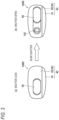
- FIG. 2 is an overall perspective view of the inhalation device 100B.
- FIG. 3 illustrate top views of the inhalation device 100B, and specifically, (a) of FIG. 3 illustrates the inhalation device 100B in a state where the opening 142 is closed by a shutter 50 to be described later, and (b) of FIG. 3 illustrates the inhalation device 100B in a state where the opening 142 is opened.
- the inhalation device 100B includes the panel 10, the main body housing 20 to which the panel 10 is detachably attached, and the shutter 50 which is slidable (that is, movable) with respect to the main body housing 20.
- the panel 10 and the main body housing 20 are formed as separated members.
- the panel 10 is mainly implemented by a member serving as a cover lid that forms at least a part of a housing 40 (to be described later) on the outmost of the inhalation device 100B.
- the panel 10 includes, on a surface (outer surface) thereof, a display part 18 and an operation part 19.
- the display part 18 is made of a transparent material capable of transmitting light.
- the light emitting device 23a as an example of the notification unit 113B is provided inside the inhalation device 100B (inside a main body 30 to be described later). The user can visually recognize the light from the light emitting device 23a from the outer surface of the panel 10 via the display part 18.
- the operation part 19 is configured to form a recess toward the main body housing 20. Accordingly, a position of the operation part 19 can be indicated to the user. Further, the position of the operation part 19 may be indicated to the user by printing a predetermined mark (indication) on the surface of the panel 10.
- the main body housing 20 accommodates the main body 30 of the inhalation device 100B.
- Components of the inhalation device 100B illustrated in FIG. 1B are accommodated in, for example, the main body 30.
- the panel 10 is attached to the main body housing 20 to form the outermost housing 40 of the inhalation device 100B.
- the user can make an appearance of the inhalation device 100B match his/her preference by attaching the panel 10 having a design matching his/her preference.
- the inhalation device 100B includes the panel 10, even when the main body 30 generates heat, the heat to be released to the outside can be buffered. That is, for example, the panel 10 may function to insulate heat generated from the main body 30(for example, the heating unit 121B).
- the housing 40 is preferably sized to be held in a hand of the user.
- the user holds the inhalation device 100B with one hand while bringing a fingertip into contact with the surface of the panel 10.
- the panel 10 is deformed such that the operation part 19 is further recessed toward the main body housing 20.
- an operation button 22 to be described later
- the user can power on the inhalation device 100B by pressing down the operation button 22 by pressing the operation part 19 with a finger.
- FIG. 2 and (a) of FIG. 3 illustrate the inhalation device 100B in a state where the opening 142 is closed by the shutter 50.
- the inhalation device 100B is in the state illustrated in (a) of FIG. 3
- the shutter 50 is moved from above the opening 142 and the opening 142 is opened, as illustrated in (b) of FIG. 3 .
- the user can insert the stick-type base material 150 into the opening 142.
- FIG. 4 is a view illustrating the inhalation device 100B in a state where the panel 10 is removed therefrom, and specifically illustrates an outer surface of the main body housing 20 which is exposed when the panel 10 is removed from the main body housing 20. That is, the outer surface of the main body housing 20 illustrated in FIG. 4 is covered with the panel 10 in the state where the panel 10 is attached to the main body housing 20.
- a magnet 21a, a magnet 21b, the operation button 22, and a display window 23 are provided on the outer surface of the main body housing 20.
- a sensor for detecting the attachment of the panel 10 to the main body housing 20 may be provided on the outer surface of the main body housing 20.
- the magnet 21a and the magnet 21b attract the panel 10 to the main body housing 20 by magnetic force (magnetic attraction). Accordingly, the panel 10 is held on the main body housing 20. More specifically, magnets (not illustrated) corresponding to the magnet 21a and the magnet 21b are provided on an inner surface of the panel 10 facing the outer surface of the main body housing 20 when the panel 10 is attached to the main body housing 20. Further, the panel 10 is held on the main body housing 20 by the magnets provided on the panel 10, and the magnet 21a and the magnet 21b.
- Each of the magnet 21a, the magnet 21b, and the magnets of the panel 10 is preferably formed of, for example, a permanent magnet.
- the operation button 22 is provided at a position corresponding to the operation part 19 of the panel 10 when the panel 10 is attached to the main body housing 20. Accordingly, as described above, the user can operate the operation button 22 via the operation part 19 of the panel 10.
- the display window 23 is an opening aligned in position with the light emitting device 23a provided in the main body 30, and transmits light from the light emitting device 23a to the display part 18 of the panel 10. Accordingly, as described above, the user can visually recognize the light from the light emitting device 23a from the outer surface of the panel 10.
- the light emitting device 23a is an example of a light emitting unit that emits light, and for example, includes one or more light emitting elements.
- the light emitting elements of the light emitting device 23a for example, light emitting diodes (LEDs) may be adopted.
- the light emitting device 23a includes a plurality of LEDs having different emission colors, and is configured to emit light in a plurality of emission colors including blue, yellow, and red.
- the light emitting device 23a notifies the user of predetermined information by emitting light in a predetermined light emitting mode.
- the light emitting mode can be, for example, a light emission color, but is not limited thereto, and may be, for example, an intensity of lighting (in other words, brightness) or a lighting pattern (for example, blinking at a predetermined time interval).
- Examples of the notification performed by the light emitting device 23a include a notification on operation information of the inhalation device 100B indicating whether the power supply of the inhalation device 100B is turned on (that is, in a power-on state). Further, in the present embodiment, the light emitting device 23a may notify the user of information related to a progress of authentication processing (to be described later).
- a control unit 116 (116A, 116B) may operate the inhalation device 100 based on an input from the user. As an example, the control unit 116 causes the inhalation device 100 to generate the aerosol in response to an aerosol generation request from the user.
- the aerosol generation request can be, for example, an operation (hereinafter, also referred to as a "heating start operation") instructing a start of the heating.
- the heating start operation can be pressing down the operation button 22 in a state where the inhalation device 100 is powered on.
- the heating start operation may be an inhalation operation on the inhalation device 100 in the state where the inhalation device 100 is powered on.
- the aerosol generation request is not limited to a direct operation on the inhalation device 100, and may be reception of predetermined information from another device capable of communicating with the inhalation device 100, such as a smartphone.
- the control unit 116 can detect the aerosol generation request based on, for example, information acquired by a sensor unit 112 or a communication unit 115.
- the control unit 116A supplies a predetermined amount of electric power to the heating unit 121A to generate the aerosol.
- the electric power supplied to the heating unit 121A is determined in advance by a manufacturer of the inhalation device 100A in order to generate an appropriate amount of aerosol including an appropriate amount of flavor components, for example. Accordingly, it is possible to provide a high-quality smoking experience to the user.
- the control unit 116B controls the temperature of the heating unit 121B based on a heating profile prepared in advance to generate the aerosol.
- the heating profile is information that defines a time-series transition of a target temperature that is a target value of the temperature of the heating unit 121B, and is stored in advance in the storage unit 114B, for example.
- the control unit 116B controls the temperature of the heating unit 121B based on a deviation between the target temperature corresponding to an elapsed time from the start of the heating control based on the heating profile and an actual temperature of the heating unit 121B (hereinafter also referred to as an "actual temperature”). More specifically, at this time, the control unit 116B controls the temperature of the heating unit 121B such that a time-series transition of the actual temperature of the heating unit 121B is the same as the time-series transition of the target temperature defined in the heating profile.
- the temperature control on the heating unit 121B can be achieved by, for example, known feedback control.
- the control unit 116B supplies the electric power from the power supply 111B to the heating unit 121B in a form of pulses subjected to pulse width modulation (PWM) or pulse frequency modulation (PFM).
- PWM pulse width modulation
- PFM pulse frequency modulation
- the control unit 116B can perform the temperature control on the heating unit 121B by adjusting a duty ratio of the power pulses.
- the control unit 116B may control the electric power supplied to the heating unit 121B, for example, the duty ratio based on a difference between the actual temperature and the target temperature and the like.
- the feedback control may be, for example, proportional-integral-differential controller (PID) control.
- PID proportional-integral-differential controller
- the control unit 116B may perform simple ON-OFF control. For example, the control unit 116B may perform the heating using the heating unit 121B before the actual temperature reaches the target temperature, stop the heating using the heating unit 121B when the actual temperature reaches the target temperature, and perform the heating using the heating unit 121B again when the actual temperature becomes lower than the target temperature.
- the temperature of the heating unit 121B can be acquired (in other words, quantified), for example, by measuring or estimating an electrical resistance value of a heating resistor constituting the heating unit 121B. This is because the electrical resistance value of the heating resistor changes according to the temperature.
- the electrical resistance value of the heating resistor can be estimated (that is, acquired), for example, by measuring a voltage drop amount in the heating resistor.
- the voltage drop amount in the heating resistor can be measured (that is, acquired) by a voltage sensor that measures a potential difference applied to the heating resistor.
- the temperature of the heating unit 121B may be measured by a temperature sensor (the puff thermistor) provided near the heating unit 121B.
- the heating profile (the heating profile for main heating control to be described later) is typically designed to optimize a flavor experienced by the user when the user inhales the aerosol generated from the stick-type base material 150.
- the heating profile is typically designed to optimize a flavor experienced by the user when the user inhales the aerosol generated from the stick-type base material 150.
- a so-called “child resistance function (hereinafter also referred to as an "CR function")" may be implemented.
- a CR function in such an inhaler, for example, it is conceivable to generate the aerosol after authenticity of the user is confirmed by a user authentication such as a fingerprint authentication.
- a certain amount of time after temperature rise of the heating unit is started is required for the heating unit that heats the aerosol source to reach a temperature sufficient to generate the aerosol. Further, when the temperature rise of the heating unit is started after the authenticity of the user is confirmed, a start of the temperature rise of the heating unit is delayed, and thus a time until the aerosol is generated is lengthened.
- the temperature of the heating unit 121 is raised within a range in which the aerosol is not generated, from when authentication processing related to availability of the inhalation device 100 (hereinafter, also simply referred to as an "authentication processing") is performed. Accordingly, since the temperature of the heating unit 121 is raised in advance during the authentication processing, a time required to raise the temperature of the heating unit 121 to a temperature at which the aerosol is generated can be shortened after the authentication processing is completed. Thus, even if completion of the authentication processing is required in order to generate the aerosol, a time required to generate the aerosol can be prevented from being lengthened, and a decrease in convenience caused by the lengthening of the time can be prevented.
- safety and security of the inhalation device 100 are improved by preventing the aerosol from being generated for a person other than the legitimate user such as a child, the decrease in the convenience associated with the improvement in the safety and the security can be prevented, and marketability of the inhalation device 100 is improved.
- the operation example of the inhalation device 100 of the present embodiment will be described more specifically.
- the inhalation device 100 of the present embodiment will be described as being the inhalation device 100B illustrated in FIG. 1B , but the present invention is not limited thereto.
- the same can be applied to the case where the inhalation device 100 is the hybrid-type inhalation device 100A.
- the "inhalation device 100B” may be read as the "hybrid-type inhalation device 100A”
- the "sensor unit 112B” may be read as the “sensor unit 112A”
- the “notification unit 113B” may be read as the “notification unit 113A”
- the “storage unit 114B” may be read as the “storage unit 114A”
- the "communication unit 115B” may be read as the “communication unit 115A”
- the "control unit 116B” may be read as the “control unit 116A”
- the "heating unit 121B” may be read as a "second heating unit in the hybrid-type inhalation device 100A (that is, a heating unit that heats the flavor imparting cartridge 130)”.
- control unit 116B of the inhalation device 100B controls the temperature of the heating unit 121B such that the actual temperature of the heating unit 121B becomes a predetermined target temperature.
- control unit 116B is configured to perform the during-authentication heating control and the main heating control.
- the during-authentication heating control is heating control in which a temperature lower than the lowest temperature at which the aerosol is generated (hereinafter, also simply referred to as the "lowest temperature") is set as the target temperature, and is an example of first heating control of the present invention.
- the lowest temperature is determined by, for example, physical properties of the aerosol source, and is, for example, 230 [°C] in the present embodiment.
- the aerosol By setting the target temperature in the during-authentication heating control (hereinafter, also referred to as a “during-authentication target temperature") to a temperature lower than the lowest temperature, the aerosol can be prevented from being generated during the authentication processing (in other words, before the authenticity of the user is confirmed) and the safety and the security of the inhalation device 100 can be improved.
- the during-authentication target temperature is set to a temperature lower than the lowest temperature
- consumption of the aerosol source of the stick-type base material 150 due to the temperature rise of the heating unit 121B when the during-authentication heating control is performed can be limited. Accordingly, even if the during-authentication heating control is performed, an appropriate amount of aerosol can be generated thereafter, and a high-quality smoking experience can be provided to the user. Further, since the consumption of the aerosol source when the during-authentication heating control is performed can be limited, even if the confirmation of the authenticity of the user by current authentication processing fails, the stick-type base material 150 heated during the current authentication processing can be continuously used thereafter.
- the during-authentication target temperature can be 100 [°C], for example.
- the during-authentication target temperature is not limited to a single temperature, and may be a plurality of temperatures such as 100 [°C], 150 [°C], and 200 [°C] (to be described later).
- the main heating control is heating control in which a temperature higher than the lowest temperature is set as the target temperature, and is an example of second heating control of the present invention.
- the target temperature in the main heating control (hereinafter, also referred to as a "during-main-heating target temperature") is typically determined such that a flavor that the user takes when the user inhales the generated aerosol is optimal.
- the during-main-heating target temperature can be set to 240 [°C], 260 [°C], or 300 [°C].
- the during-main-heating target temperature changes to 300 [°C], 240 [°C], and 260 [°C] according to an elapsed time from when the main heating control is started (to be described later).
- the control unit 116B configured to perform the during-authentication heating control and the main heating control performs the during-authentication heating control when the authentication processing is being performed. Then, when the authentication processing is completed, the control unit 116B ends the during-authentication heating control and performs the main heating control. Accordingly, the temperature of the heating unit 121B can be increased to the during-authentication target temperature during the authentication processing, and the time required to raise the temperature of the heating unit 121B to the temperature at which the aerosol is generated can be shortened by the main heating control performed after the authentication processing is completed. Thus, even if completion of the authentication processing is required in order to generate the aerosol, the time required to generate the aerosol can be prevented from being lengthened, and the decrease in the convenience caused by the lengthening of the time can be prevented.
- the "completion" of the authentication processing means that the authentication processing is ended when the authenticity of the user is confirmed by the authentication processing, for example. More specifically, for example, even if the authenticity of the user is not confirmed, the authentication processing also ends when a predetermined time elapses from the start (so-called timeout) or the authentication fails a predetermined number of times (for example, three times consecutively), but such an end of the authentication processing is not called “completion”.
- timeout a predetermined time elapses from the start
- the authentication fails a predetermined number of times (for example, three times consecutively)
- the end of the authentication processing without confirming the authenticity of the user is also referred to as "interruption".
- the authentication processing for example, user authentication is performed in which an input of predetermined authentication information (for example, fingerprint information to be described later) is received from the user, and the input authentication information is collated with information stored in advance to confirm the authenticity of the user.
- predetermined authentication information for example, fingerprint information to be described later
- a biometric authentication such as the fingerprint authentication, a gesture authentication, a person identification number (PIN) authentication, a password authentication, a voice authentication, or the like can be adopted.
- a communication authentication using communication between another device capable of communicating with the inhalation device 100B such as a smartphone and the inhalation device 100B may be adopted, as the user authentication in the authentication processing.
- the communication authentication for example, the gesture authentication or the password authentication using another device can be adopted. In this case, when the authenticity of the user is confirmed through the gesture authentication or the password authentication, the other device transmits information indicating the confirmation to the inhalation device 100B.
- the control unit 116B performs the authentication processing in response to detection of the heating start operation. More specifically, for example, the control unit 116B performs the authentication processing when detecting the press-down of the operation button 22 in a state where the inhalation device 100B is powered on.
- an operation that triggers the execution of the authentication processing is not limited to pressing down the operation button 22 as described above, and may be, for example, an operation of sliding the shutter 50 to open the opening 142, or an operation of inserting the stick-type base material 150 into the opening 142.
- the operation that triggers the execution of the authentication processing may be, for example, an operation of mounting the flavor imparting cartridge 130 on the inhalation device 100A.
- the sensor unit 112B includes a fingerprint sensor capable of acquiring fingerprint information representing a fingerprint of the user, and the control unit 116B performs, as the user authentication in the authentication processing, fingerprint authentication using the fingerprint information acquired by the fingerprint sensor. More specifically, when the fingerprint information is acquired by the fingerprint sensor during the authentication processing, the control unit 116B collates the acquired fingerprint information with collation information stored in advance in the storage unit 114B. When a fingerprint represented by the acquired fingerprint information matches a fingerprint represented by the collation information, the control unit 116B authenticates the user as the legitimate user.
- the control unit 116B does not authenticate the user as the legitimate user in the current fingerprint authentication, and determines an authentication result of the current fingerprint authentication as an authentication failure.
- a plurality of user authentications may be performed in the authentication processing, and the authentication processing may be completed when all of the plurality of user authentications is completed. In other words, when at least one user authentication is not completed among the plurality of user authentications performed in the authentication processing, the authentication processing may not be completed. Accordingly, as compared with a case where the authentication processing is completed with completion of a single user authentication, the safety and the security of the inhalation device 100B can be improved.
- the plurality of user authentications may include both a user authentication closed in the inhalation device 100B (for example, a user authentication that can be performed by the inhalation device 100B alone such as the fingerprint authentication) and a communication authentication using communication with another device.
- a user authentication closed in the inhalation device 100B for example, a user authentication that can be performed by the inhalation device 100B alone such as the fingerprint authentication
- a communication authentication using communication with another device for example, a user authentication that can be performed by the inhalation device 100B alone such as the fingerprint authentication
- the control unit 116B performs the authentication processing, but the present invention is not limited thereto.
- the authentication processing may be performed by another device capable of communicating with the inhalation device 100B such as a smartphone.
- the other device may notify the inhalation device 100B (for example, the control unit 116B) of a start of the authentication processing and notify the inhalation device 100B of the completion or interruption of the authentication processing.
- the authentication processing may be performed by the inhalation device 100B and another device in cooperation with each other while communicating with each other as appropriate.
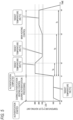
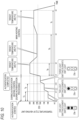
- FIG. 5 is a diagram illustrating a first example of the temperature transition of the heating unit 121B according to the during-authentication heating control and the main heating control.
- a horizontal axis represents a time
- a vertical axis represents a temperature [°C] of the heating unit 121B.
- [R. T] on the vertical axis in FIG. 5 represents the room temperature.
- the control unit 116B detects the heating start operation.
- the control unit 116B starts the authentication processing from the time t0 and starts the during-authentication heating control with the target temperature set to 100 [°C].
- the heating unit 121B is controlled such that the temperature thereof is raised toward 100 [°C] from the time t0, and is maintained at 100 [°C] after reaching 100 [°C].
- the control unit 116B ends the during-authentication heating control at the time t1 and starts the main heating control.
- the during-main-heating target temperature is changed according to an elapsed time from when the main heating control is started. More specifically, as illustrated in FIG. 5 , the during-main-heating target temperature when the elapsed time from the start of the main heating control is 0 [s] to Ta [s] (where Ta > 0) is set to 300 [°C]. Further, the during-main-heating target temperature when the elapsed time from the start of the main heating control is Ta [s] to Tb [s] (Tb > Ta) is set to 240 [°C]. Further, the during-main-heating target temperature when the elapsed time from the start of the main heating control is Tb [s] to Tc [s] (Tc > Tb) is set to 260 [°C].
- the heating unit 121B is controlled such that the temperature thereof is first raised toward 300 [°C], and is maintained at 300 [°C] until a time t2 after reaching 300 [°C].
- the time t2 is a time when Ta [s] elapses since the time t1.
- the heating unit 121B is controlled such that the temperature thereof is decreased toward 240 [°C], and is maintained at 240 [°C] until a time t3 after reaching 240 [°C].
- the time t3 is a time when Tb [s] elapses since the time t1.
- the heating unit 121B is controlled such that the temperature thereof is raised toward 260 [°C] again, and is maintained at 260 [°C] until a time t4 after reaching 260 [°C].
- the time t4 is a time when Tc [s] elapses since the time t1.
- the control unit 116B ends the main heating control. After the completion of the main heating control, the heating unit 121B naturally radiates heat, and the temperature of the heating unit 121B gradually decreases toward the room temperature.
- the control unit 116B can increase the temperature of the heating unit 121B to 100 [°C], which is the during-authentication target temperature, before starting the main heating control. Accordingly, after the start of the main heating control, it only needs to increase the temperature of the heating unit 121B from 100 [°C] to 300 [°C] which is an initial during-main-heating target temperature, and thus the time required to reach 300 [°C] can be shortened as compared with a case where the temperature is raised from the room temperature to 300 [°C]. Thus, after the completion of the authentication processing (that is, after the start of the main heating control), the temperature of the heating unit 121B can be quickly raised to the temperature at which the aerosol is generated.
- the during-authentication heating control is implemented by the control unit 116B performing heating control based on a heating profile for during-authentication heating control that defines the during-authentication target temperature.
- the main heating control is implemented by the control unit 116B performing heating control based on the heating profile for main heating control that defines the during-main-heating target temperature.
- the during-authentication heating control and the main heating control may be implemented by the control unit 116B performing heating control based on one heating profile that defines the during-authentication target temperature and the during-main-heating target temperature.
- the control unit 116 may interrupt the authentication processing at that time and end the during-authentication heating control.
- the during-authentication heating control can be prevented from continuing for a long time and an increase in power consumption of the inhalation device 100B can be prevented.
- deterioration of the stick-type base material 150 due to the during-authentication heating control being continued for a long time can be prevented, and the stick-type base material 150 heated during the current authentication processing can also be continuously used thereafter.
- the control unit 116B may decrease the during-authentication target temperature as compared with that before the predetermined time elapses.
- the during-authentication target temperature may be set to 100 [°C] during a period from the time t0 to when the predetermined time elapses, and the during-authentication target temperature may be set to 70 [°C] after the predetermined time elapses since the time t0.
- the electric power supplied to the heating unit 121B can be reduced and an increase in the power consumption of the inhalation device 100B can be prevented, as compared with a case where the during-authentication target temperature is maintained even after the predetermined time elapses.
- the during-authentication target temperature is a single temperature of 100 [°C] and the temperature of the heating unit 121B is raised to and maintained at 100 [°C] in the during-authentication heating control, but the present invention is not limited thereto.
- the authentication processing may be completed in a short time (for example, about 5 [s]) or may be lengthened (for example, about 20 [s] is required to complete) depending on whether the user authentication is smoothly performed. If the during-authentication target temperature is set to a single (that is, uniform) temperature, the time until the aerosol is generated may also be lengthened when the authentication processing is lengthened.
- a plurality of during-authentication target temperatures may be provided, and the during-authentication target temperature may be increased according to the elapsed time since the authentication processing is started.
- the during-authentication target temperature is increased according to the elapsed time since the authentication processing is started.
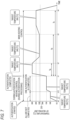
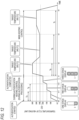
- FIG. 6 is a diagram illustrating a second example of the temperature transition of the heating unit 121B according to the during-authentication heating control and the main heating control.
- portions different from the description of FIG. 5 will be mainly described, and description of portions common to the description of FIG. 5 will be omitted or simplified as appropriate.
- the during-authentication target temperature when the elapsed time from the start of the during-authentication heating control is 0 [s] to Tx [s] (where Tx > 0) is set to 100 [°C].
- the during-authentication target temperature when the elapsed time from the start of the during-authentication heating control is Tx [s] to Ty [s] (where Ty > Tx) is set to 150 [°C].
- the during-authentication target temperature when the elapsed time from the start of the during-authentication heating control is Ty [s] or later is set to 200 [°C].
- the heating unit 121B is controlled such that the temperature thereof is first raised toward 100 [°C], and is maintained at 100 [°C] until a time t11 after reaching 100 [°C].
- the time t11 is a time when Tx [s] elapses since the time t0.
- the heating unit 121B is controlled such that the temperature thereof is decreased again toward 150 [°C], and is maintained at 150 [°C] until a time t12 after reaching 150 [°C].
- the time t12 is a time when Ty [s] elapses since the time t0.
- the heating unit 121B is controlled such that the temperature thereof is raised toward 200 [°C] again, and is maintained at 200 [°C] until the time t1 after reaching 200 [°C].
- the temperature of the heating unit 121B can be further increased accordingly during the authentication processing. Accordingly, the time required to raise the temperature of the heating unit 121B to the temperature at which the aerosol is generated can be shortened by the main heating control performed after the authentication processing is completed. Thus, even if the authentication processing is lengthened, the time required to generate the aerosol can be prevented from being lengthened, and the decrease in the convenience caused by the lengthening of the time can be prevented.
- the during-authentication target temperature is set to only a relatively low temperature of 100 [°C] and the temperature of the heating unit 121B is raised to and maintained at 100 [°C] during the authentication processing regardless of a length of the authentication processing.
- the temperature of the heating unit 121B is raised to and maintained at 100 [°C] during the authentication processing regardless of a length of the authentication processing.
- the authentication processing is lengthened, it is necessary to raise the temperature of the heating unit 121B from 100 [°C] to 300 [°C] which is the initial during-main-heating target temperature (that is, an increase amount of 200 [°C]), as the main heating control is started.
- the time until the aerosol is generated may also be lengthened.
- the during-authentication target temperature is set to only a relatively high temperature of 200 [°C] and the temperature of the heating unit 121B is raised to and maintained at 200 [°C] during the authentication processing regardless of the length of the authentication processing.
- the time required to raise the temperature of the heating unit 121B to the temperature at which the aerosol is generated can be shortened by the main heating control, the electric power supplied to the heating unit 121B during the authentication processing is increased, and the power consumption of the inhalation device 100B may increase.
- the electric power supplied to the heating unit 121B during the authentication processing can be reduced and the increase in the power consumption of the inhalation device 100B can be prevented, as compared with a case where the temperature of the heating unit 121B is raised to and maintained at a relatively high temperature during the authentication processing.
- the deterioration of the stick-type base material 150 during the authentication processing can also be prevented as compared with the case where the temperature of the heating unit 121B is raised to and maintained at a relatively high temperature during the authentication processing.
- the during-authentication target temperature is increased according to the elapsed time from the start of the during-authentication heating control, but the present invention is not limited thereto.
- the during-authentication target temperature may be increased according to a progress of the authentication processing.
- the progress of the authentication processing is an evaluation value representing a progress status (in other words, a degree of progress) of the authentication processing, and in the present embodiment, the progress status of the authentication processing is represented by a percentage from 0 [%] to 100 [%].
- a period from the time t0 to the time t11 illustrated in FIG. 6 is a period in which the progress of the authentication processing is less than 33 [%]. Further, a period from the time t11 to the time t12 is a period in which the progress of the authentication processing is 33 [%] or more and less than 66 [%]. Then, a period from the time t12 to the time t1 is a period in which the progress of the authentication processing is 66 [%] or more.
- the during-authentication target temperature when the progress of the authentication processing is 0 [%] to 33 [%] is set to 100 [°C]
- the during-authentication target temperature when the progress of the authentication processing is 33 [%] to 66 [%] is set to 150 [°C]
- the during-authentication target temperature when the progress of the authentication processing is 66 [%] to 100 [%] is set to 200 [°C].
- the control unit 116B derives the progress of the authentication processing while the authentication processing is being performed.
- the progress of the authentication processing can be derived based on, for example, a total amount of data required to be processed or communicated in order to complete the authentication processing, and an amount of data that has been processed or communicated until now.
- the progress of the authentication processing may be derived based on inputs (for example, operations) required to complete the authentication processing and inputs received until now. Further, when the authentication processing is divided into a plurality of phases in advance, the progress of the authentication processing may be derived based on the current number of phases.
- the control unit 116B sets the temperature of the heating unit 121B to 100 [°C] in the during-authentication heating control. Accordingly, in the present example, in the period from the time t0 to the time t11, the temperature of the heating unit 121B is raised to and maintained at 100 [°C].
- the control unit 116B sets the temperature of the heating unit 121B to 150 [°C] in the during-authentication heating control. Accordingly, in the present example, in the period from the time t11 to the time t12, the temperature of the heating unit 121B is raised to and maintained at 150 [°C].
- the control unit 116B sets the temperature of the heating unit 121B to 200 [°C] in the during-authentication heating control. Accordingly, in the present example, in the period from the time t12 to the time t1, the temperature of the heating unit 121B is raised to and maintained at 200 [°C].
- the same effects as in the case where the during-authentication target temperature is increased according to the elapsed time from the start of the during-authentication heating control can also be obtained.
- the plurality of user authentications may be performed in the authentication processing.
- the during-authentication target temperature may be set to be higher when at least one user authentication is completed than when all of the plurality of user authentication are not completed.
- the during-authentication target temperature is set to be higher when at least one user authentication is completed than when all of the plurality of user authentication are not completed.
- the fingerprint authentication that is, the user authentication closed in the inhalation device 100B
- the communication authentication that is, the user authentication using communication with another device
- the during-authentication target temperature from the start of the during-authentication heating control to the completion of the fingerprint authentication is set to 100 [°C]
- the during-authentication target temperature after the completion of the fingerprint authentication is set to 150 [°C].
- the heating unit 121B when the during-authentication heating control (that is, the fingerprint authentication) is started from the time t0, the heating unit 121B is controlled such that the temperature thereof is first raised toward 100 [°C], and is maintained at 100 [°C] until a time t13 after reaching 100 [°C].
- the time t13 is a time when the fingerprint authentication is completed.
- the heating unit 121B is controlled such that the temperature thereof is raised toward 150 [°C] again, and is maintained at 150 [°C] until the time t1 after reaching 150 [°C].
- the during-authentication target temperature when the plurality of user authentications are performed in the authentication processing, the during-authentication target temperature may be set to be higher when at least one user authentication is completed than when all of the plurality of user authentication are not completed. In such a configuration, the during-authentication target temperature can also be increased according to the progress status of the authentication processing. Thus, the same effects as in the case where the during-authentication target temperature is increased according to the progress of the authentication processing described above may be obtained.
- the control unit 116B may notify the user of information related to the progress of the authentication processing (hereinafter also referred to as "progress information") via the notification unit 113B.
- the progress information can be, for example, information indicating the progress of the authentication processing.
- the progress information is not limited to information clearly indicating the progress of the authentication processing such as " OO [%]", and may be, for example, information indicating the progress of the authentication processing to such an extent that the user can roughly grasp the progress.
- the progress information is notified to the user by making the emission color of the light emitting device 23a different according to the progress of the authentication processing. Accordingly, the progress of the authentication processing can be notified to the user in an intuitive and easy-to-understand manner.
- FIG. 8 is a diagram illustrating a first example of a notification of the progress information.
- a period from the time t0 to the time t11 is a period in which the progress of the authentication processing is less than 33 [%].
- a period from the time t11 to the time t12 is a period in which the progress of the authentication processing is 33 [%] or more and less than 66 [%].
- a period from the time t12 to the time t1 is a period in which the progress of the authentication processing is 66 [%] or more.
- the control unit 116B when the progress of the authentication processing is less than 33 [%], the control unit 116B causes the light emitting device 23a to emit red light. Further, when the progress of the authentication processing is 33% or more and less than 66 [%], the control unit 116B causes the light emitting device 23a to emit yellow light. Further, when the progress of the authentication processing is 66 [%] or more, the control unit 116B causes the light emitting device 23a to emit blue light.
- the progress of the authentication processing can be indicated to the user by the emission color of the light emitting device 23a.
- the user can grasp the progress of the authentication processing, and the convenience of the inhalation device 100B is improved.
- the progress information is notified to the user by making the emission color of the light emitting device 23a different according to the progress of the authentication processing, but the present invention is not limited thereto.
- examples of a case where the progress information is notified to the user by methods other than the emission color of the light emitting device 23a will be described.
- FIG. 9 is a diagram showing a modification of the light emitting device 23a.
- the light emitting device 23a includes a first light emitting element 23a_1, a second light emitting element 23a_2, and a third light emitting element 23a_3.
- LEDs may be adopted as the first light emitting element 23a_1, the second light emitting element 23a_2, and the third light emitting element 23a_3.
- Emission colors of the first light emitting element 23a_1, the second light emitting element 23a_2, and the third light emitting element 23a_3 may be the same or different.
- FIG. 10 is a diagram illustrating a second example of the notification of the progress information.
- portions different from the description of FIG. 8 will be mainly described, and description of portions common to the description of FIG. 8 will be omitted or simplified as appropriate.
- the control unit 116B notifies the user of the progress information by making the number of light emitting elements that emit light among the light emitting elements provided in the light emitting device 23a different according to the progress of the authentication processing. Accordingly, the progress of the authentication processing can be notified to the user in an intuitive and easy-to-understand manner.
- the control unit 116B when the progress of the authentication processing is less than 33 [%], the control unit 116B causes one light emitting element (for example, the first light emitting element 23a_1) among the light emitting elements provided in the light emitting device 23a to emit light. Further, when the progress of the authentication processing is 33 [%] or more and less than 66 [%], the control unit 116B causes two light emitting elements (for example, the first light emitting element 23a_1 and the second light emitting element 23a_2) among the light emitting elements provided in the light emitting device 23a to emit light.
- the control unit 116B causes three light emitting elements (that is, the first light emitting element 23a_1, the second light emitting element 23a_2, and the third light emitting element 23a_3) among the light emitting elements provided in the light emitting device 23a to emit light.
- the progress of the authentication processing can be indicated to the user by the number of light emitting elements that emit light.
- the user can grasp the progress of the authentication processing, and the convenience of the inhalation device 100B is improved.
- control unit 116B may notify the user of the progress information by making the light emitting element that emits light among the light emitting elements provided in the light emitting device 23a different according to the progress of the authentication processing.
- the control unit 116B may cause, for example, the first light emitting element 23a_1 among the light emitting elements provided in the light emitting device 23a to emit light. Further, when the progress of the authentication processing is 33 [%] or more and less than 66 [%], the control unit 116B may cause, for example, the second light emitting element 23a_2 among the light emitting elements provided in the light emitting device 23a to emit light. Further, when the progress of the authentication processing is 66 [%] or more, the control unit 116B may cause, for example, the third light emitting element 23a_3 among the light emitting elements provided in the light emitting device 23a to emit light.
- the progress of the authentication processing can be indicated to the user by the light emitting element that emits light.
- the user can grasp the progress of the authentication processing, and the convenience of the inhalation device 100B is improved.
- the notification unit 113B includes a display unit that displays an image
- the progress information may be notified to the user by making a display mode of the display unit different according to the progress of the authentication processing.
- the progress of the authentication processing can also be notified to the user in an intuitive and easy-to-understand manner.
- an example will be described in which the user is notified of the information related to the progress of the authentication processing via a display device 23b as an example of the display unit provided in the notification unit 113B.
- FIG. 11 is a diagram illustrating an example of the display device 23b.
- the display device 23b is provided at a position visible to the user in the inhalation device 100B.
- As the display device 23b for example, a liquid crystal display or an organic electro-luminescence (EL) display may be adopted.
- EL organic electro-luminescence
- the display device 23b displays, for example, an indicator I as an image for notifying the user of the progress information.
- the indicator I indicates the progress of the authentication processing in three stages.
- FIG. 12 is a diagram illustrating a third example of the notification of the progress information.
- portions different from the description of FIG. 8 will be mainly described, and description of portions common to the description of FIG. 8 will be omitted or simplified as appropriate.
- the control unit 116B displays the indicator I of the display device 23b in a first-stage display. Further, when the progress of the authentication processing is 33 [%] or more and less than 66 [%], the control unit 116B displays the indicator I of the display device 23b in a second-stage display. Further, when the progress of the authentication processing is 66 [%] or more, the control unit 116B displays the indicator I of the display device 23b in a third-stage display.
- the progress of the authentication processing can be indicated to the user by the display mode of the display device 23b.
- the user can grasp the progress of the authentication processing, and the convenience of the inhalation device 100B is improved.
- the progress of the authentication processing is notified to the user in three stages, but the present invention is not limited thereto.
- the progress of the authentication processing may be notified to the user in two stages, or may be notified to the user in four or more stages.
- the control unit 116B may notify the user of the progress information (that is, the progress of the authentication processing), by a vibration mode of the vibration device. In this case, the number of times of vibration or a vibration pattern of the vibration device may be changed according to the progress of the authentication processing.
- the control unit 116B may notify the user of the progress information (that is, the progress of the authentication processing), by the sound output from the sound output device.
- a sound output device for example, a speaker
- the progress of the authentication processing is indicated to the user by notifying the user of the progress information, but the present invention is not limited thereto.
- the progress information instead of the progress information, information indicating the elapsed time from the start of the authentication processing may be notified to the user.
- the authentication processing occurs every time the new stick-type base material 150 is used, time and efforts of the user at the time of the chain smoking may be increased, and the convenience of the inhalation device 100B may be decreased.
- control unit 116B may be configured to, when the main heating control is performed after the authentication processing is completed, perform the main heating control without requiring completion of the authentication processing, within a certain period of time after the main heating control is completed (hereinafter also referred to as a "restriction-disabled period of time"). Accordingly, an increase in the time and efforts of the user at the time of the chain smoking can be prevented, and the decrease in the convenience of the inhalation device 100B can be prevented.
- a length of the restriction-disabled period of time is determined in advance by, for example, the manufacturer of the inhalation device 100.
- a time from the start to the completion of the main heating control is set as X [s] (for example, 300 [s]).
- X [s] for example, 300 [s]
- the user who performs the chain smoking starts the main heating control again before 2 ⁇ X [s] elapses, after the main heating control is completed. That is, if the main heating control is not started again before 2 ⁇ X [s] elapses after the main heating control is completed, there is a high possibility that the user does not intend to perform the chain smoking.
- the restriction-disabled period of time may have a length twice a time from the start to the completion of the main heating control, that is, a length of 2 ⁇ X [s]. Accordingly, the length of the restriction-disabled period of time can be set to an appropriate length, and the decrease in the safety and the security of the inhalation device 100B can be prevented while preventing the increase in the time and efforts of the user at the time of chain smoking.
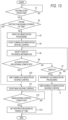
- FIG. 13 is a flowchart illustrating an example of processing performed by the control unit 116B. For example, when the power supply of the inhalation device 100B is turned on, the control unit 116B performs the series of processing illustrated in FIG. 13 at a predetermined cycle.
- the control unit 116B determines whether the heating start operation is performed (step S1). When it is determined that no heating start operation is performed (step S1: No), the control unit 116B repeats the processing of step S1 until the heating start operation is performed.
- step S1 the control unit 116B determines whether the heating start operation is performed within the restriction-disabled period of time (step S2). When it is determined that the heating start operation is performed within the restriction-disabled period of time (step S2: Yes), the control unit 116B proceeds to processing of step S10 to be described later. When it is determined that the heating start operation is not performed within the restriction-disabled period of time (step S2: No), the control unit 116B starts the authentication processing (step S3) and starts the during-authentication heating control (step S4). Then, the control unit 116B derives the progress of the authentication processing and notifies the user of the progress information (step S5).
- step S6 determines whether the authentication processing is completed.
- step S7 determines whether a timeout occurs. In step S7, for example, the control unit 116B determines that the timeout occurs under a condition that a predetermined time elapses from the start of the authentication processing.
- step S7 When it is determined that the timeout does not occur (step S7: No), the control unit 116B returns to the processing of step S5. When it is determined that the timeout occurs (step S7: Yes), the control unit 116B interrupts the authentication processing (step S8), ends the during-authentication heating control (step S9), and ends the series of processing illustrated in FIG. 13 . In this case, the main heating control is not performed.
- Step S6 When it is determined that the authentication processing is completed (Step S6: Yes), the control unit 116B ends the during-authentication heating control (Step S10) and starts the main heating control (Step S11).
- control unit 116B determines whether the main heating control is completed (step S12). When it is determined that the main heating control is not completed (step S12: No), the control unit 116B waits for the completion of the main heating control while performing the processing of step S12. When it is determined that the main heating control is completed (Step S12: Yes), the control unit 116B sets the restriction-disabled period of time (Step S13) and ends the series of processing illustrated in FIG. 13 .
- the temperature of the heating unit 121 is raised within a range in which the aerosol is not generated, from when the authentication processing related to the availability of the inhalation device 100 is performed. Accordingly, since the temperature of the heating unit 121 is raised in advance during the authentication processing, the time required to raise the temperature of the heating unit 121 to the temperature at which the aerosol is generated can be shortened after the authentication processing is completed. Thus, even if the completion of the authentication processing is required in order to generate the aerosol, the time required to generate the aerosol can be prevented from being lengthened, and the decrease in convenience caused by the lengthening of the time can be prevented.
- the safety and the security of the inhalation device 100 are improved by preventing the aerosol from being generated for a person other than the legitimate user such as a child, the decrease in the convenience associated with the improvement in the safety and the security can be prevented, and the marketability of the inhalation device 100 is improved.
- a control method of the inhalation device 100 described in the above embodiment can be achieved by executing a program prepared in advance on a computer (a processor).
- the program is stored in a computer-readable storage medium and is executed by being read from the storage medium. Further, the program may be provided in a form of being stored in a non-transitory storage medium such as a flash memory, and may be provided via a network such as the Internet.
- the computer that executes the program can be, for example, a component provided in the inhalation device 100 (for example, the CPU of the inhalation device 100), but is not limited thereto, and may be a component provided in another device (for example, a smartphone or a server) capable of communicating with the inhalation device 100.
- the temperature of the heating unit is raised within a range in which the aerosol is not generated, from when the authentication processing related to the availability of the inhalation device is performed. Accordingly, since the temperature of the heating unit is raised in advance during the authentication processing, a time required to raise the temperature of the heating unit to a temperature at which the aerosol is generated can be shortened after the authentication processing is completed. Thus, even if the completion of the authentication processing is required in order to perform the second heating control for generating the aerosol, a time required to generate the aerosol can be prevented from being lengthened, and a decrease in convenience caused by the lengthening of the time can be prevented.
- the aerosol is prevented from being generated for a person other than a legitimate user such as a child, safety and security of the inhalation device are improved, a decrease in the convenience associated with the improvement in the safety and the security can be prevented, and marketability of the inhalation device is improved.
- the temperature of the heating unit can be raised to a temperature higher than the room temperature and within a range in which the aerosol is not generated.
- the temperature of the heating unit can be further increased accordingly during the authentication processing. Accordingly, the time required to raise the temperature of the heating unit to the temperature at which the aerosol is generated can be shortened by the second heating control performed after the authentication processing is completed. Thus, even if the authentication processing is lengthened, the time required to generate the aerosol can be prevented from being lengthened, and the decrease in the convenience caused by the lengthening of the time can be prevented.
- the temperature of the heating unit can be further increased accordingly during the authentication processing. Accordingly, the time required to raise the temperature of the heating unit to the temperature at which the aerosol is generated can be shortened by the second heating control performed after the authentication processing is completed. Thus, even if the authentication processing is lengthened, the time required to generate the aerosol can be prevented from being lengthened, and the decrease in the convenience caused by the lengthening of the time can be prevented.
- the target temperature in the first heating control can be increased according to the progress of the authentication processing.
- control unit notifies a user of information related to a progress of the authentication processing via a notification unit (notification unit 113, 113A, 113B) configured to notify predetermined information.
- notification unit notification unit 113, 113A, 113B
- the user can grasp the progress of the authentication processing, and the convenience of the inhalation device is improved.
- the progress of the authentication processing can be notified to the user in an intuitive and easy-to-understand manner.
- the progress of the authentication processing can be notified to the user in an intuitive and easy-to-understand manner.
- the progress of the authentication processing can be notified to the user in an intuitive and easy-to-understand manner.
- the progress of the authentication processing can be notified to the user in an intuitive and easy-to-understand manner.
- control unit configured to, when the second heating control is performed, perform the second heating control without requiring completion of the authentication processing, within a certain period of time after the second heating control is completed.
- a length of the certain period of time during which the second heating control can be performed without requiring the completion of the authentication processing can be set to an appropriate length.
- the aerosol can be prevented from being generated for a person other than the legitimate user such as a child, and the safety and the security of the inhalation device can be improved.
- a control method including a computer (control unit 116, 116A, 116B), for controlling an operation of an inhalation device (inhalation device 100, 100A, 100B) that includes a heating unit (heating unit 121B) for heating a base material (flavor imparting cartridge 130, stick-type base material 150) including an aerosol source and that generates an aerosol by the heating unit heating the base material, performing the following processing:
- the temperature of the heating unit is raised within the range in which the aerosol is not generated, from when the authentication processing related to the availability of the inhalation device is performed. Accordingly, since the temperature of the heating unit is raised in advance during the authentication processing, the time required to raise the temperature of the heating unit to the temperature at which the aerosol is generated can be shortened after the authentication processing is completed. Thus, even if the completion of the authentication processing is required in order to perform the second heating control for generating the aerosol, the time required to generate the aerosol can be prevented from being lengthened, and the decrease in the convenience caused by the lengthening of the time can be prevented.
- the aerosol is prevented from being generated for a person other than the legitimate user such as a child, the safety and the security of the inhalation device are improved, the decrease in the convenience associated with the improvement in the safety and the security can be prevented, and the marketability of the inhalation device is improved.
- a program causing a computer (control unit 116, 116A, 116B), for controlling an operation of an inhalation device (inhalation device 100, 100A, 100B) that includes a heating unit (heating unit 121B) for heating a base material (flavor imparting cartridge 130, stick-type base material 150) including an aerosol source and that generates an aerosol by the heating unit heating the base material, to perform the following processing:
- the temperature of the heating unit is raised within the range in which the aerosol is not generated, from when the authentication processing related to the availability of the inhalation device is performed. Accordingly, since the temperature of the heating unit is raised in advance during the authentication processing, the time required to raise the temperature of the heating unit to the temperature at which the aerosol is generated can be shortened after the authentication processing is completed. Thus, even if the completion of the authentication processing is required in order to perform the second heating control for generating the aerosol, the time required to generate the aerosol can be prevented from being lengthened, and the decrease in the convenience caused by the lengthening of the time can be prevented.
- the aerosol is prevented from being generated for a person other than the legitimate user such as a child, the safety and the security of the inhalation device are improved, the decrease in the convenience associated with the improvement in the safety and the security can be prevented, and the marketability of the inhalation device is improved.
Landscapes
- Engineering & Computer Science (AREA)
- Human Computer Interaction (AREA)
- Health & Medical Sciences (AREA)
- Child & Adolescent Psychology (AREA)
- General Health & Medical Sciences (AREA)
- Computer Networks & Wireless Communication (AREA)
- Medicinal Preparation (AREA)
- Catching Or Destruction (AREA)
- Disinfection, Sterilisation Or Deodorisation Of Air (AREA)
Applications Claiming Priority (1)
| Application Number | Priority Date | Filing Date | Title |
|---|---|---|---|
| PCT/JP2022/031132 WO2024038528A1 (fr) | 2022-08-17 | 2022-08-17 | Dispositif d'inhalation, procédé de commande et programme |
Publications (1)
| Publication Number | Publication Date |
|---|---|
| EP4573945A1 true EP4573945A1 (fr) | 2025-06-25 |
Family
ID=89941533
Family Applications (1)
| Application Number | Title | Priority Date | Filing Date |
|---|---|---|---|
| EP22955702.0A Pending EP4573945A1 (fr) | 2022-08-17 | 2022-08-17 | Dispositif d'inhalation, procédé de commande et programme |
Country Status (6)
| Country | Link |
|---|---|
| US (1) | US20250185727A1 (fr) |
| EP (1) | EP4573945A1 (fr) |
| JP (1) | JP7823201B2 (fr) |
| KR (1) | KR20250038708A (fr) |
| CN (1) | CN119677425A (fr) |
| WO (1) | WO2024038528A1 (fr) |
Family Cites Families (5)
| Publication number | Priority date | Publication date | Assignee | Title |
|---|---|---|---|---|
| EP3307098B1 (fr) | 2015-06-12 | 2019-08-07 | Philip Morris Products S.a.s. | Détection dans des articles de génération d'aérosol |
| US10327479B2 (en) * | 2017-03-15 | 2019-06-25 | Canopy Growth Corporation | System and method for an improved personal vapourization device |
| JP7323529B2 (ja) | 2017-12-21 | 2023-08-08 | ジュール・ラブズ・インコーポレイテッド | 気化器の制御 |
| JP2020195347A (ja) * | 2019-06-04 | 2020-12-10 | Smk株式会社 | 煙霧質発生装置および煙霧質発生方法 |
| EP4108109A1 (fr) * | 2020-06-25 | 2022-12-28 | Japan Tobacco Inc. | Dispositif d'inhalation, procédé de commande et programme |
-
2022
- 2022-08-17 JP JP2024541334A patent/JP7823201B2/ja active Active
- 2022-08-17 WO PCT/JP2022/031132 patent/WO2024038528A1/fr not_active Ceased
- 2022-08-17 EP EP22955702.0A patent/EP4573945A1/fr active Pending
- 2022-08-17 CN CN202280099099.8A patent/CN119677425A/zh active Pending
- 2022-08-17 KR KR1020257004782A patent/KR20250038708A/ko active Pending
-
2025
- 2025-02-14 US US19/053,439 patent/US20250185727A1/en active Pending
Also Published As
| Publication number | Publication date |
|---|---|
| US20250185727A1 (en) | 2025-06-12 |
| JP7823201B2 (ja) | 2026-03-03 |
| WO2024038528A1 (fr) | 2024-02-22 |
| CN119677425A (zh) | 2025-03-21 |
| KR20250038708A (ko) | 2025-03-19 |
| JPWO2024038528A1 (fr) | 2024-02-22 |
Similar Documents
| Publication | Publication Date | Title |
|---|---|---|
| EP4331408A1 (fr) | Unité d'alimentation pour inhalateur | |
| US20230000152A1 (en) | Inhaling device, control method, and non-transitory computer readable medium | |
| JP7529803B2 (ja) | 制御方法、吸引装置、端末装置、及びプログラム | |
| JP7827746B2 (ja) | 情報処理装置、情報処理方法、及びプログラム | |
| EP4573945A1 (fr) | Dispositif d'inhalation, procédé de commande et programme | |
| EP4573942A1 (fr) | Dispositif d'inhalation, procédé de commande et programme | |
| EP4573944A1 (fr) | Dispositif d'inhalation, procédé de commande et programme | |
| EP4573941A1 (fr) | Dispositif d'inhalation, procédé de commande et programme | |
| EP4635342A1 (fr) | Dispositif d'inhalation, procédé de commande et programme | |
| JP7692052B2 (ja) | 吸引装置 | |
| EP4635341A1 (fr) | Dispositif d'inhalation, procédé de commande et programme | |
| JP7717181B2 (ja) | 吸引装置 | |
| US20250204613A1 (en) | Aerosol generation system, control method, and non-transitory computer readable medium | |
| US20250169549A1 (en) | Aerosol generation system, control method, and non-transitory computer readable medium | |
| CN121532083A (zh) | 气溶胶产生系统、控制方法和程序 | |
| EA051686B1 (ru) | Блок питания для ингалятора | |
| EA048460B1 (ru) | Блок питания для ингалятора | |
| WO2024047705A1 (fr) | Dispositif d'inhalation, matériau de base et système d'inhalation |
Legal Events
| Date | Code | Title | Description |
|---|---|---|---|
| STAA | Information on the status of an ep patent application or granted ep patent |
Free format text: STATUS: THE INTERNATIONAL PUBLICATION HAS BEEN MADE |
|
| PUAI | Public reference made under article 153(3) epc to a published international application that has entered the european phase |
Free format text: ORIGINAL CODE: 0009012 |
|
| STAA | Information on the status of an ep patent application or granted ep patent |
Free format text: STATUS: REQUEST FOR EXAMINATION WAS MADE |
|
| 17P | Request for examination filed |
Effective date: 20250217 |
|
| AK | Designated contracting states |
Kind code of ref document: A1 Designated state(s): AL AT BE BG CH CY CZ DE DK EE ES FI FR GB GR HR HU IE IS IT LI LT LU LV MC MK MT NL NO PL PT RO RS SE SI SK SM TR |
|
| DAV | Request for validation of the european patent (deleted) | ||
| DAX | Request for extension of the european patent (deleted) |