EP4574144A1 - Verfahren zur behandlung von peripheren nervenhüllentumoren - Google Patents
Verfahren zur behandlung von peripheren nervenhüllentumoren Download PDFInfo
- Publication number
- EP4574144A1 EP4574144A1 EP23218354.1A EP23218354A EP4574144A1 EP 4574144 A1 EP4574144 A1 EP 4574144A1 EP 23218354 A EP23218354 A EP 23218354A EP 4574144 A1 EP4574144 A1 EP 4574144A1
- Authority
- EP
- European Patent Office
- Prior art keywords
- pharmaceutical composition
- group
- weight
- subject
- present disclosure
- Prior art date
- Legal status (The legal status is an assumption and is not a legal conclusion. Google has not performed a legal analysis and makes no representation as to the accuracy of the status listed.)
- Pending
Links
Images


Classifications
-
- A—HUMAN NECESSITIES
- A61—MEDICAL OR VETERINARY SCIENCE; HYGIENE
- A61K—PREPARATIONS FOR MEDICAL, DENTAL OR TOILETRY PURPOSES
- A61K31/00—Medicinal preparations containing organic active ingredients
- A61K31/16—Amides, e.g. hydroxamic acids
- A61K31/18—Sulfonamides
-
- A—HUMAN NECESSITIES
- A61—MEDICAL OR VETERINARY SCIENCE; HYGIENE
- A61P—SPECIFIC THERAPEUTIC ACTIVITY OF CHEMICAL COMPOUNDS OR MEDICINAL PREPARATIONS
- A61P35/00—Antineoplastic agents
Definitions
- the present disclosure relates to methods for treating peripheral nerve sheath tumor (PNST), and particularly to methods for treating malignant peripheral nerve sheath tumor (MPNST).
- PNST peripheral nerve sheath tumor
- MPNST malignant peripheral nerve sheath tumor
- PNST Peripheral nerve sheath tumor
- MPNST Malignant PNSTs
- MPNSTs arise most commonly from peripheral nerves, spinal roots, and cranial nerves in dogs. MPNSTs occur in middle-aged to older dogs, particularly in medium- to large-breeds and are characterized by slow growth and rare metastasis.
- Canine PNSTs resemble malignant PNSTs in humans, regarding both histology and behavior. Histologically, the PNST is characterized by interacting patterns of spindle cells. There are two histological patterns including Antoni types A and B, which are dense areas of spindle-shaped cells and less cellular areas with more pleomorphic cells, respectively. This kind of tumor spreads proximally and distally along the nerve and may ultimately involve the spinal cord, causing compression and associated neurological deficits. Despite metastases being rare, lung and uveal metastases have been reported.
- MPNST MPNST
- radiotherapy radiotherapy
- chemotherapy early detection of the mass and correct diagnosis is the core of this tumor for complete surgical resection and postsurgical radiotherapy could reduce local recurrences.
- Recommended chemotherapeutic method is a combination of vincristine, doxorubicin, and cyclophosphamide.
- the novel therapy of metronomic therapy has recently become one of the therapeutic options.
- the present disclosure provides effective and safe pharmaceutical compositions that can be used for the treatment or adjuvant treatment of MPNST.
- the pharmaceutical composition comprises a benzenesulfonamide derivative and a pharmaceutically acceptable carrier thereof.
- the term “comprise,” “comprising,” “include,” “including,” “have,” “having,” “contain,” “containing,” and any other variations thereof are intended to cover a non-exclusive inclusion.
- an object “comprises” a limitation, unless otherwise specified, it may additionally include other ingredients, elements, components, structures, regions, parts, devices, systems, steps, or connections, etc., and should not exclude other limitations.
- the terms “at least one” and “one or more” may have the same meaning and include one, two, three, or more.
- ordinal numbers e.g., first, second, third, etc.
- an element i.e., any noun in the application.
- the use of ordinal numbers is not to imply or create an ordering of the elements nor to limit any element to being only a single element unless expressly indicated, such as by the use of the terms "before,” “after,” “single,” and other such terminology. Rather, the use of ordinal numbers is to distinguish between the elements.
- a first element is distinct from a second element, and the first element may encompass more than one element and succeed (or precede) the second element in an ordering of elements.
- the term “about” generally means within ⁇ 20%, ⁇ 10%, ⁇ 5%, ⁇ 1% ⁇ 0.5%, and ⁇ 0.1 % of a given value or range. Alternatively, the term “about” means within an acceptable standard error of the mean when considered by one of ordinary skill in the art.
- any numeral value that falls within the numeral scope herein could be taken as a maximum or minimum value to derive the sub-ranges therefrom.
- the numeral range "1% to 50%” comprises any sub-ranges between the minimum value of 1% to the maximum value of 50%, such as the sub-ranges from 1% to 20%, from 30% to 50%, and from 15% to 45%.
- a plurality of numeral values used herein can be optionally selected as maximum and minimum values to derive numerical ranges. For instance, the numerical ranges of 10% to 25%, 10% to 50%, and 25% to 50% can be derived from the numeral values of 10%, 25%, and 50%.
- the term “treat,” “treating” or “treatment” encompasses partially or completely preventing, ameliorating, mitigating and/or managing a symptom, a disorder or a condition associated with a disease.
- the term “treat,” “treating” or “treatment” as used herein refers to application or administration of one or more therapeutic agent or surgery to a subject, who has a symptom, a disorder or a condition associated with a disease, with the purpose to partially or completely alleviate, ameliorate, relieve, delay onset of, inhibit progression of, reduce severity of, and/or reduce incidence of one or more symptoms, disorders or conditions associated with the disease. Treatment may be administered to a subject who exhibits only an early sign of such symptoms, disorders, and/or conditions for the purpose of decreasing the risk of developing the symptoms, disorders, and/or conditions associated with a disease.
- the terms “subject,” “individual” and “patient” may be interchangeable and refer to an animal, e.g., a mammal.
- the term “subject” is intended to refer to both the male and female gender unless one gender is specifically indicated.
- the subject is selected from the group consisting of a rodent, a murine, a monkey, a guinea pig, a dog, a cat, a cow, a sheep, a pig, a horse, a rabbit, and a human.
- the subject is a dog or a cat.
- the subject is a human.
- substituted when used to describe a chemical structure or moiety, refers to a derivative of that structure or moiety, wherein one or more of its hydrogen atoms is/are substituted with one or more substituent(s). Unless otherwise indicated, a “substituted" structure or moiety has a substituent at one or more substitutable positions of the structure or moiety, and when more than one position in any given structure or moiety is substituted, the substituent is either the same or different at each position.
- the present disclosure is directed to a pharmaceutical composition for treating MPNST in a subject in need thereof, comprising a benzenesulfonamide derivative in a therapeutically effective amount and a pharmaceutically acceptable carrier thereof.
- the present disclosure is further directed to a method for treating MPNST, comprising administering a therapeutically effective amount of the pharmaceutical composition of the present disclosure to the subject in need thereof.
- the benzenesulfonamide derivative is represented by formula (I) below: or a pharmaceutically acceptable salt thereof, wherein R 1 to R 7 are independently selected from the group consisting of H, a C 1 -C 6 linear or branched alkyl group, a C 1 -C 6 linear or branched alkoxy group, a C 3 -C 6 cycloalkyl group, a C 3 -C 6 cycloheteroalkyl group, an amino group, and a halo group, or R 6 and R 7 are linked to each other to form a ring.
- R 1 to R 7 are independently selected from the group consisting of H, a C 1 -C 6 linear or branched alkyl group, a C 1 -C 6 linear or branched alkoxy group, a C 3 -C 6 cycloalkyl group, a C 3 -C 6 cycloheteroalkyl group, an amino group, and a halo group, or R 6 and R
- the alkyl group, the alkoxy group, the cycloalkyl group, the cycloheteroalkyl group, and the ring in R 1 to R 7 are independently unsubstituted or substituted with one or more substituents.
- the substituent is selected from the group consisting of phenyl, halo, oxo, ether, hydroxyl, carboxyl, amino, sulfo, and sulfonamide group.
- the benzenesulfonamide derivative may be, but not limited to, para -toluene sulfonamide ( p -TSA), ortho -toluene sulfonamide, meta -toluene sulfonamide, N-ethyl- ortho -toluene sulfonamide, N-ethyl- para -toluene sulfonamide, or N-cyclohexyl- para -toluene sulfonamide.
- para -toluene sulfonamide p -TSA
- ortho -toluene sulfonamide ortho -toluene sulfonamide
- meta -toluene sulfonamide meta -toluene sulfonamide
- N-ethyl- ortho -toluene sulfonamide N-ethyl- para
- the benzenesulfonamide derivative is at least one of para -toluene sulfonamide, ortho -toluene sulfonamide, and meta-toluene sulfonamide.
- the monomer of the benzenesulfonamide derivative is in the form of white crystal.
- the pharmaceutical composition comprises a combination of two or more different benzenesulfonamide derivatives in any ratio.
- the pharmaceutically acceptable carrier contained in the pharmaceutical composition of the present disclosure may be at least one selected from the group consisting of a filler, a binder, a preservative, a disintegrating agent, a lubricant, a suspending agent, a wetting agent, a biocompatible solvent, a penetration enhancer, a surfactant, a thickening agent, an acid, a flavoring agent, a complexing agent, and any combination thereof.
- the pharmaceutically acceptable carrier contained in the pharmaceutical composition of the present disclosure may be at least one selected from the group consisting of alkylene glycol, sebacic acid, dimethyl sulfoxide, ethanol, and any combination thereof.
- the examples of the binder include, but are not limited to, paste, sorbitol, guar gum, polyvinyl pyrrolidone, cellulose derivatives, such as hydroxypropyl methylcellulose, carboxymethyl cellulose, carbomer (commercially available as Carbopols), and any combination thereof.
- the examples of the preservative include, but are not limited to, sodium benzoate, methyl paraben, propyl paraben, cresol, and any combination thereof.
- the examples of the lubricant include, but are not limited to, metal stearates (such as magnesium stearate, calcium stearate, and sodium stearate), stearic acid, talc, polyethylene glycol, soluble salts (such as sodium chloride and sodium benzoate), and any combination thereof.
- metal stearates such as magnesium stearate, calcium stearate, and sodium stearate
- stearic acid such as magnesium stearate, calcium stearate, and sodium stearate
- stearic acid such as magnesium stearate, calcium stearate, and sodium stearate
- stearic acid such as magnesium stearate, calcium stearate, and sodium stearate
- stearic acid such as magnesium stearate, calcium stearate, and sodium stearate
- talc such as magnesium stearate, calcium stearate, and sodium stearate
- polyethylene glycol such as sodium chloride and sodium
- the examples of the wetting agent include, but are not limited to, glycerin, sorbitol, polypropylene glycol, and any combination thereof.
- the examples of the flavoring agent include, but are not limited to, peppermint oil, menthol, lemon oil, orange oil, cinnamon oil, and any combination thereof.
- the pharmaceutically acceptable carrier may be polyethylene glycol (PEG), alkylene glycol, propylene glycol, sebacic acid, dimethyl sulfoxide (DMSO), ethanol, or any combination thereof.
- the examples of the alkylene glycol include, but are not limited to, polyethylene glycol, propylene glycol, hexylene glycol, and any combination thereof.
- the pharmaceutically acceptable carrier is chosen from at least one of 1% to 50% by weight of polyethylene glycol 400, 1 % to 10% by weight of 1,2-propylene glycol, 1% to 10% by weight of sebacic acid, 1% to 20% by weight of 2-ethyl-1,3-hexanediol, 0% to 20% by weight of dimethyl sulfoxide, and 0% to 20% by weight of ethanol.
- the benzenesulfonamide derivative is present in an amount of from 1% to 60% of the pharmaceutical composition by weight, such as about 1%, 2%, 5%, 10%, 15%, 20%, 25%, 30%, 33%, 35%, 40%, 45%, 50%, 53%, 55% and 60%.
- an amount of the benzenesulfonamide derivative in the pharmaceutical composition has a lower limit chosen from about 1%, 5%, 10%, 15%, 20%, and 25% of the composition by weight, and an upper limit chosen from about 60%, 55%, 50%, 45%, 40%, and 35% of the composition by weight.
- the benzenesulfonamide derivative is present in an amount of from 20% to 40% of the composition by weight.
- the pharmaceutical composition GW-MP101 provided herein comprises 1% to 50% by weight of para-toluene sulfonamide, 1% to 40% by weight of PEG 400, 4% to 10% by weight of 1,2-propylene glycol, 1% to 5% by weight of sebacic acid, 0% to 15% by weight of para-toluene sulfonic acid, 1% to 20% by weight of 2-ethyl-1,3-hexanediol, 0% to 10% by weight of dimethyl sulfoxide, and 0% to 20% by weight of ethanol.
- the pharmaceutical composition comprises at least one of 10% to 40% by weight of polyethylene glycol 400, 1% to 10% by weight of 1,2-propylene glycol, 1% to 5% by weight of sebacic acid, 10% to 20% by weight of 2-ethyl-1,3-hexanediol, 0% to 40% by weight of dimethyl sulfoxide, and 0% to 20% by weight of ethanol
- the process for preparing an injection formulation of the GW-MP101 preparation can be carried out by, for example, adding an adjuvant and/or a solvent to adjust the mixture to be isotonic. Further, the step of filtering in the process can be carried out by, for example, using a microporous filter.
- the pharmaceutical composition may be formulated into a form suitable for the following administration routes: enteral administration, sublingual administration, subcutaneous administration, rectal administration, and parenteral administration, such as subcutaneous injection, intramuscular injection, intravenous injection, intratumoral injection, abdominal injection, intraarterial injection, and subarachnoid injection.
- the pharmaceutical composition may be in a form selected from the group consisting of an injection formulation, a dry powder, a tablet, an oral liquid, a flake, a film, a lozenge, a capsule, a granule, a pill, a gel, a lotion, an ointment, an emulsifier, a paste, a cream, an eye drop, and a salve.
- the pharmaceutical composition may be administered to the subject intratumorally, intravenously, subcutaneously, intradermally, orally, intrathecally, intraperitoneally, intranasally, intramuscularly, intrapleurally, topically, or through nebulization.
- the pharmaceutical composition may be used to treat a canine MPNST by triggering ablation of the MPNST.
- the GW-MP101 preparation of the present disclosure for triggering ablation of the canine MPNST may be in the form of an injection formulation and administered to the subject by intratumoral injection.
- the intratumoral injection dose for canine MPNST ablation may be from 0.1 mL/injection to 5 mL/injection (about 33 mg to 1650 mg of para -toluene sulfonamide or other benzenesulfonamide derivatives).
- a therapeutically effective amount refers to the amount of an active ingredient (e.g., the benzenesulfonamide derivative) that is required to confer a desired therapeutic effect (e.g., triggering ablation of a canine MPNST) on the treated subject.
- Effective doses will vary, as recognized by one of ordinary skill in the art, depending on routes of administration, excipient usage, the possibility of co-usage with other therapeutic treatment, and the condition to be treated.
- the benzenesulfonamide derivative may be administered to the subject in a therapeutically effective amount of from about 1 mg/day to about 2000 mg/day during a treatment period or a treatment cycle, such as 10 mg/day to 450 mg/day, 30 mg/day to 200mg/day, or 40 mg/day to 150 mg/day.
- treatment cycle refers to a treatment period followed by a rest period without treatment that is repeated on a regular schedule.
- the injection dosage for treating canine MPNST may be in a range of from about 0.5 mg/day to 950 mg/day, from 1 mg/day to 900 mg/day, from 3 mg/day to 800 mg/day, from 5 mg/day to 750 mg/day, from 8 mg/day to 700 mg/day, from 10 mg/day to 650 mg/day, from 15 mg/day to 600 mg/day, from 25 mg/day to 550 mg/day, from 35 mg/day to 500 mg/day, from 45 mg/day to 450 mg/day, from 50 mg/day to 400mg/day, from 55 mg/day to 350 mg/day, from 60 mg/day to 300 mg/day, and from 65 mg/day to 250 mg/day of p-toluenesulfonamide or other benzenesulfonamide derivatives.
- the dosage of intratumoral injection for the ablation of MPNST is 19.4 mL to 50 mL about 6,400 mg to 16,500 mg of p- toluenesulfonamide or other benzenesulfonamide derivatives.
- the pharmaceutical composition may be administered to the subject 1 to 2 times per day, 1 to 7 times per week, or 1 to 14 times per month. In at least one embodiment of the present disclosure, the pharmaceutical composition may be administered to the subject for a 1- to 4-week or 1- to 4-month treatment period or treatment cycle. In some embodiments, the pharmaceutical composition may be administered to the subject 2 to 3 times per week for a 2-week treatment period. In some embodiments, the pharmaceutical composition is administered to the subject equal to or more than 6 times in the first treatment period.
- the pharmaceutical composition can be directly injected into MPNST or injected into the area surrounding the MPNST.
- the dosage can be proportionally increased or decreased according to a therapeutic situation.
- the administration may continue until the tumor shrinks about 5%, 10%, 15%, 20%, 25%, 30%, 35%, 40%, 45%, 50%, 55%, 60%, 65%, 70%, 75%, 80%, 85%, 90%, or 95% (by volume or weight), or until the tumor is fully eliminated.
- the present disclosure also provides a use of a pharmaceutical composition in the manufacture of a medicament for treating a canine MPNST, wherein the pharmaceutical composition comprises a benzenesulfonamide derivative of the present disclosure and a pharmaceutically acceptable carrier thereof.
- the present disclosure also provides a use of a pharmaceutical composition in the manufacture of a medicament for treating MPNST, and the pharmaceutical composition comprises the benzenesulfonamide derivative and the pharmaceutically acceptable carrier thereof as mentioned above.
- the present disclosure further provides the pharmaceutical composition for use in the treatment of MPNST, and the pharmaceutical composition comprises the benzenesulfonamide derivative and the pharmaceutically acceptable carrier thereof as mentioned above.
- the pharmaceutical composition GW-MP101 for intratumoral injection administration was a clear, colorless, oily, sterile solution, containing the components as listed in Table 1, and that could be packaged in 5 mL glass ampoules.
- GW-MP101 contains 330 mg/mL of the active drug p-TSA.
- Table 1 p -Toluenesulfonamide 1%-60% PEG-400 10%-40% 1,2-Propylene glycol 1%-10% Sebacic acid 1%-5% p -Toluenesulfonic acid 0%-5% 2-Ethyl-1,3-hexanediol 10%-20% Dimethyl sulfoxide 0-40% Ethanol 0-20%
- Preparation of the composition of the present disclosure includes the process of: adding and mixing the solvents and adjuvants in a given ratio; heating the mixture to 80°C to 110°C with stirring to form a clear oily liquid; gradually adding the sulfa drug with stirring until completely dissolved; filtering and cooling the mixture to obtain the composition of the present disclosure in an oily liquid form GW-MP101.
- the preparation of the GW-MP101 injection may be conducted by some techniques known in the art, e.g., adding an adjuvant and/or solvent to adjust the mixture to an isotonic state, or filtering the mixture by using a microporous filter.
- the present disclosure also provides the use of GW-MP101 as a medicament for promoting tumor ablation in the body of the subject.
- the efficacy of the tumor disclosed in the present disclosure was assessed by the following veterinary clinical trials. The trials followed the relevant ethical principles of Veterinary Good Clinical Practice.
- the inclusion criteria are: (A) the dog is greater than or equal to 1-year-old; (B) the dog is diagnosed with MPNST by cytology or histopathology; (C) the trial veterinarian assesses that the dog is unsuitable for removal of the tumor by surgery; (D) the dog has at least one measurable tumor that is larger than 1 cm in diameter; (E) the trial veterinarian assesses the life expectancy of the dog to exceed 3 months; and (F) the owner can understand and abide by the experimental procedure and is willing to sign an informed consent form.
- the exclusion criteria are: (A) the dog has received systemic chemotherapy within 4 weeks before entering the trial; (B) the dog has received radiotherapy within 4 weeks before entering the trial; (C) the dog has undergone a major operation (for example, thoracotomy is not allowed, but the non-invasive operation, such as biopsy, is allowed) within 4 weeks before entering the trial; (D) the dog is treated by any other experimental drugs, biological formulations, medical materials, or other anti-tumor treatments (such as immunomodulators and radiotherapy) within 4 weeks before entering this trial or during the period of this trial experiment; (E) the dog has the following abnormal value of blood tests before entering the trial: a. hemoglobin ⁇ 6.0 g/dL; b.
- ANC absolute neutrophil count
- c albumin ⁇ 1.5 g/dL
- d total bilirubin ⁇ 2mg/dL
- e alanine aminotransferase (ALT) and aspartate aminotransferase (AST) > 5 ⁇ upper normal limit (UNL);
- f alanine aminotransferase (ALT) and aspartate aminotransferase (AST) > 5 ⁇ upper normal limit (UNL);
- CKD chronic kidney disease
- IRIS International Renal Interest Society
- CDVD chronic degenerative valve disease
- CDVD one of the heart diseases
- gastric ulcer severe autoimmune disease
- the trial veterinarian restricts the animal from participating in this trial after the assessment
- G the dog is known or suspected of having allergic reactions to the ingredients contained in any p -toluenesulfonamide drugs
- H the trial veterinarian diagnoses that the dog's tumor was blocked by important blood vessels, so it is difficult to perform intratumoral injection therein
- I the dog is pregnant
- J the trial veterinarian determines that the dog is unsuitable for participating in this trial.
- Those who met at least one of the following criteria should be withdrawn from clinical trials: (A) the informed consent form is withdrawn; (B) the dog receives the treatment prohibited by this trial; (C) after assessing any pathological characteristics, clinical adverse events, or any changes in the condition of the animal, the trial veterinarian determines that it is not the most advantageous situation to allow the dog to continue participating in the trial; (D) the dog is pregnant during the treatment period or is suspected of being pregnant by its owner or the trial veterinarian; (E) the dog has an adverse event of grade 3 or above according to international adverse events of oncology organization (Veterinary Cooperative Oncology Group - Common Terminology Criteria for Adverse Events, VCOG-CTCAE) and cannot return to grade 1 within 7 days after the adverse event, or the grade 3 or above adverse event still occurs after 2 dose reductions in the dog; (F) signs and symptoms of disease progression or deterioration (assessment of deterioration was based on Veterinary Cooperative Oncology Group - Response Evaluation Criteria in Solid Tumors v1.0 (
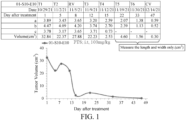
- test dog was given intratumoral injections of 3.8, 3.7, 1, 3.7, 3.6, 3.6 mL of the GW-MP101 drug on Day 1, 5, 8, 12, 15, 22, 33, 47 (each time about 1180 to 1250 mg of p- toluenesulfonamide).
- the injections were carried out in single, multi-point (2 to 10 points) intratumoral injections.
- the electronic vernier caliper measurement was performed before each administration, and the computed tomography (CT) scan was performed before the first administration and at the conclusion visit.
- Complete response means that a measurable or evaluable tumor disappears completely, and no new tumors appear for more than four weeks.
- Partial response means that a measurable or evaluable tumor shrinks by more than or equal to 30%, and no new tumors appear for more than four weeks.
- Stable disease (SD) means that a measurable or evaluable tumor shrinks by less than or equal to 30% or enlarges by less than or equal to 20%.
- Disease progression (PD) means that a measurable or evaluable tumor enlarges by more than or equal to 20%, or other tumors deteriorate, and new tumors appear.
- Tumor volume change (measured with the electronic vernier caliper):
- the measurement range thereof was located in the MPNST of the right limb of the dog. After 6 times administrations of the GW-MP101 drug, the volume of the tumor changed. The volume of the tumor was 32.84 cm 3 before treatment, 22.37 cm 3 before the 2nd administration, and 0.30 cm 3 at the assessment visit (6 weeks after the 2nd administration). Comparing the volume of the tumor before the first administration with that at the assessment visit, the measurable or assessable tumor shrinks by 100%, and the result was a complete response (CR) (referring to Table 1 below and FIG. 1 ).
- CR complete response
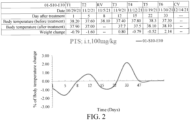
- the pharmaceutical composition of the present disclosure can effectively reduce or ablate tumor and thereby improve the quality of life and clinical symptoms of dogs with MPNST. Furthermore, no significant increase in adverse reactions has been observed in the clinical trials.
Landscapes
- Health & Medical Sciences (AREA)
- Animal Behavior & Ethology (AREA)
- Chemical & Material Sciences (AREA)
- Veterinary Medicine (AREA)
- Medicinal Chemistry (AREA)
- Public Health (AREA)
- General Health & Medical Sciences (AREA)
- Pharmacology & Pharmacy (AREA)
- Life Sciences & Earth Sciences (AREA)
- General Chemical & Material Sciences (AREA)
- Organic Chemistry (AREA)
- Nuclear Medicine, Radiotherapy & Molecular Imaging (AREA)
- Chemical Kinetics & Catalysis (AREA)
- Epidemiology (AREA)
- Acyclic And Carbocyclic Compounds In Medicinal Compositions (AREA)
Priority Applications (1)
| Application Number | Priority Date | Filing Date | Title |
|---|---|---|---|
| EP23218354.1A EP4574144A1 (de) | 2023-12-19 | 2023-12-19 | Verfahren zur behandlung von peripheren nervenhüllentumoren |
Applications Claiming Priority (1)
| Application Number | Priority Date | Filing Date | Title |
|---|---|---|---|
| EP23218354.1A EP4574144A1 (de) | 2023-12-19 | 2023-12-19 | Verfahren zur behandlung von peripheren nervenhüllentumoren |
Publications (1)
| Publication Number | Publication Date |
|---|---|
| EP4574144A1 true EP4574144A1 (de) | 2025-06-25 |
Family
ID=89430352
Family Applications (1)
| Application Number | Title | Priority Date | Filing Date |
|---|---|---|---|
| EP23218354.1A Pending EP4574144A1 (de) | 2023-12-19 | 2023-12-19 | Verfahren zur behandlung von peripheren nervenhüllentumoren |
Country Status (1)
| Country | Link |
|---|---|
| EP (1) | EP4574144A1 (de) |
Citations (6)
| Publication number | Priority date | Publication date | Assignee | Title |
|---|---|---|---|---|
| US9938273B2 (en) * | 2015-12-07 | 2018-04-10 | Plexxikon Inc. | Compounds and methods for kinase modulation, and indications therefor |
| JP2020533329A (ja) * | 2017-09-11 | 2020-11-19 | サイティアー セラピューティクス,インコーポレイティド | Rad51阻害剤 |
| WO2023091565A1 (en) * | 2021-11-17 | 2023-05-25 | The University Of North Carolina At Chapel Hill | Nsd2-targeted chemical degraders and compositions and methods of use thereof |
| WO2023146513A1 (en) * | 2022-01-25 | 2023-08-03 | Vivace Therapeutics, Inc. | Compounds and methods of use thereof |
| WO2023217758A1 (en) * | 2022-05-09 | 2023-11-16 | Oryzon Genomics, S.A. | Methods of treating malignant peripheral nerve sheath tumor (mpnst) using lsd1 inhibitors |
| US20240082182A1 (en) * | 2022-08-30 | 2024-03-14 | Gongwin Biopharm Co., Ltd | Method for treating peripheral nerve sheath tumor |
-
2023
- 2023-12-19 EP EP23218354.1A patent/EP4574144A1/de active Pending
Patent Citations (6)
| Publication number | Priority date | Publication date | Assignee | Title |
|---|---|---|---|---|
| US9938273B2 (en) * | 2015-12-07 | 2018-04-10 | Plexxikon Inc. | Compounds and methods for kinase modulation, and indications therefor |
| JP2020533329A (ja) * | 2017-09-11 | 2020-11-19 | サイティアー セラピューティクス,インコーポレイティド | Rad51阻害剤 |
| WO2023091565A1 (en) * | 2021-11-17 | 2023-05-25 | The University Of North Carolina At Chapel Hill | Nsd2-targeted chemical degraders and compositions and methods of use thereof |
| WO2023146513A1 (en) * | 2022-01-25 | 2023-08-03 | Vivace Therapeutics, Inc. | Compounds and methods of use thereof |
| WO2023217758A1 (en) * | 2022-05-09 | 2023-11-16 | Oryzon Genomics, S.A. | Methods of treating malignant peripheral nerve sheath tumor (mpnst) using lsd1 inhibitors |
| US20240082182A1 (en) * | 2022-08-30 | 2024-03-14 | Gongwin Biopharm Co., Ltd | Method for treating peripheral nerve sheath tumor |
Similar Documents
| Publication | Publication Date | Title |
|---|---|---|
| US12023310B2 (en) | Method for treating peripheral nerve sheath tumor | |
| US12491181B2 (en) | Nimodipine injection composition and preparation method therefor | |
| WO2021180111A1 (zh) | 包括吡啶并[1,2-a]嘧啶酮化合物的药物组合 | |
| CA2003856C (en) | Therapeutic agent for renal disorders | |
| JP2018522941A (ja) | セバコイルジナルブフィンエステルの徐放のための医薬製剤 | |
| TW202114694A (zh) | 四環化合物及其鹽類、組合物、及彼等之使用方法 | |
| EP4574144A1 (de) | Verfahren zur behandlung von peripheren nervenhüllentumoren | |
| CN113329749A (zh) | 用于治疗葡萄膜黑色素瘤的联合疗法 | |
| AU2023285788B2 (en) | Method for treating peripheral nerve sheath tumor | |
| JP2025011312A (ja) | p-ボロノフェニルアラニンを含有する注射液剤の析出防止方法 | |
| JP2025084138A (ja) | 悪性末梢神経鞘を治療するための方法 | |
| US12109210B2 (en) | Methods for treating mast cell tumors | |
| TWI919005B (zh) | 治療肥大細胞瘤之方法 | |
| CN116249524A (zh) | 通过给药苯磺酰胺组合物来减少脂肪的方法 | |
| TW202412750A (zh) | 治療肥大細胞瘤之方法 | |
| CN115120732B (zh) | 一种喹唑啉化合物的药物组合物及其制备方法 | |
| EP4635480A1 (de) | Zusammensetzungen mit einer benzensulfonamidthiazolverbindung | |
| HK40105532A (zh) | 治疗肥大细胞瘤的方法 | |
| US20260124193A1 (en) | Pharmaceutical composition for the treatment of radiation induced toxicity | |
| US20260060982A1 (en) | Use of btk inhibitor and single-dose drug | |
| RU2464984C2 (ru) | Нестероидное противовоспалительное лекарственное средство | |
| WO2025052179A1 (en) | Cannabinoid for use in treating eye disorders | |
| WO2025026307A1 (zh) | 吡啶酮甲酰胺化合物治疗i型神经纤维瘤相关疾病的用途 | |
| TWI676477B (zh) | 苯并咪唑衍生物用於夜間酸突破的用途 | |
| CN121401261A (zh) | 喹诺林化合物治疗甲状腺癌的用途 |
Legal Events
| Date | Code | Title | Description |
|---|---|---|---|
| PUAI | Public reference made under article 153(3) epc to a published international application that has entered the european phase |
Free format text: ORIGINAL CODE: 0009012 |
|
| STAA | Information on the status of an ep patent application or granted ep patent |
Free format text: STATUS: THE APPLICATION HAS BEEN PUBLISHED |
|
| AK | Designated contracting states |
Kind code of ref document: A1 Designated state(s): AL AT BE BG CH CY CZ DE DK EE ES FI FR GB GR HR HU IE IS IT LI LT LU LV MC ME MK MT NL NO PL PT RO RS SE SI SK SM TR |
|
| STAA | Information on the status of an ep patent application or granted ep patent |
Free format text: STATUS: REQUEST FOR EXAMINATION WAS MADE |
|
| 17P | Request for examination filed |
Effective date: 20251205 |